
Why Questions List: 10 Prompt Types Worth Asking
On this page· 22
A why-question can sound simple while asking for very different kinds of thinking. “Why is the sky blue?” invites an explanation. “Why does that explanation work?” asks you to examine the mechanism, not just repeat the result. What changes when you ask what would have happened under different conditions, or why a popular explanation falls short?
A useful why questions list isn't sorted only by subject. It's organized by the reasoning each question calls for: tracing causes, testing alternatives, spotting misconceptions, and connecting ideas across fields. Knowing the difference helps you write questions that teach more than a fact, and helps you recognize what a good answer needs to explain.
The same care applies to questions about personal decisions. A useful starting point is how to phrase tarot questions: wording can shape whether you get a focused answer or a vague one.
Below are ten prompt types, each with a distinct way into a subject. For each, notice the mechanism it asks about, the kind of example that works, and the trap to avoid. You can use them to build a quiz, guide a class discussion, or follow your own curiosity. The aim isn't to make every answer long. It's to make the important reasoning visible.
1. Causal Chain Why Prompts
A causal chain prompt asks what happened between a starting condition and an outcome. It turns “Why did this occur?” into a sequence of links, so learners can see how one change leads to another.
Take the question, “Why does sliced fruit brown after being exposed to air?” A useful answer doesn't stop at “because of oxidation.” It explains that cutting damages the fruit's cells, exposing compounds to oxygen and enzymes that produce brown pigments. Each link gives the learner something to picture and remember.
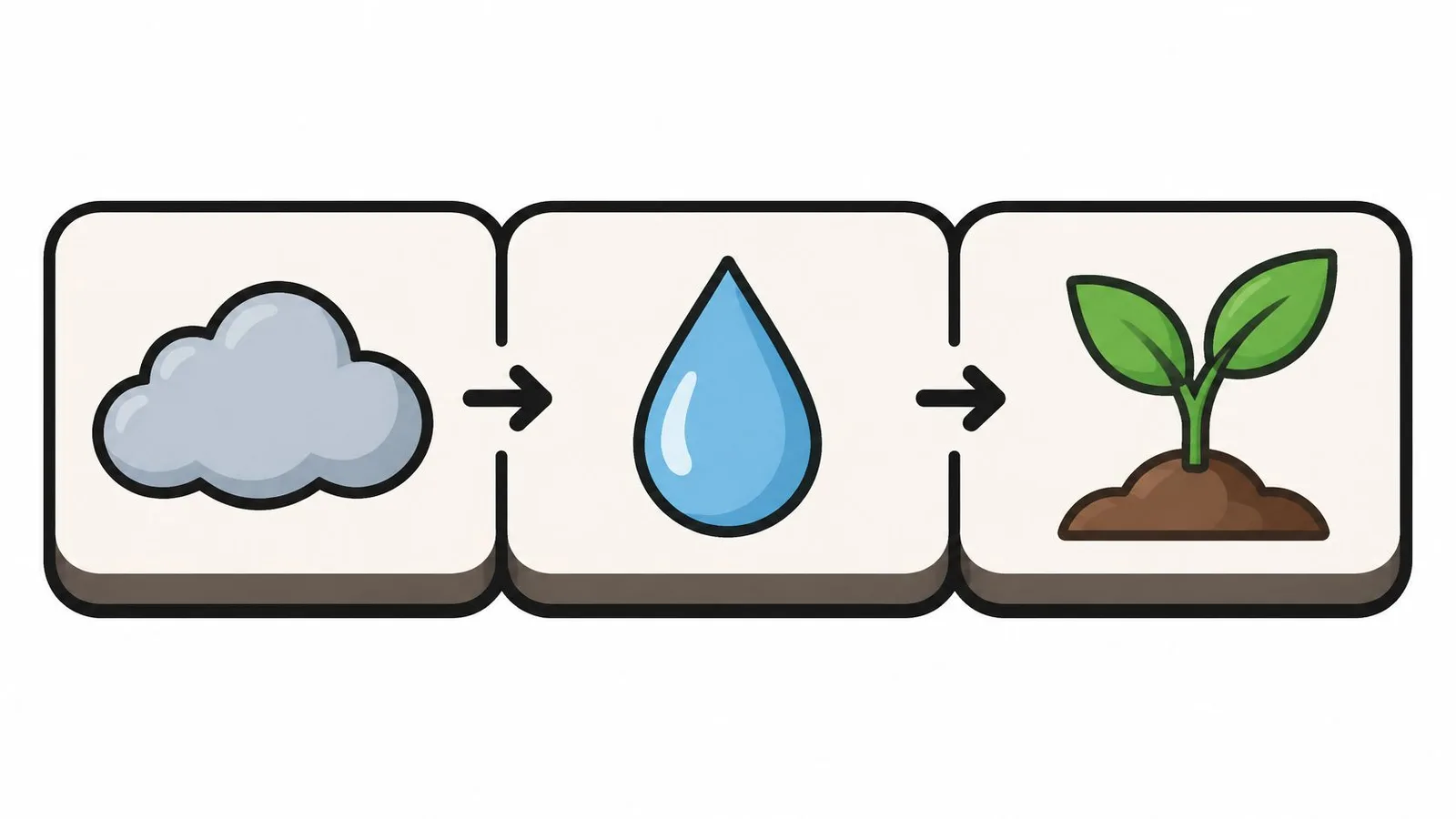
Follow the next link
A chain can also reveal when an explanation is incomplete. “The fruit browns because it's exposed to air” names a condition, but leaves out the role of damaged cells and the chemical reaction. That gap makes a strong teaching moment.
Ask for the next causal link rather than demanding a full essay. In a multiple-choice question, include a plausible but incomplete explanation, then explain why it doesn't account for the whole sequence.
Practical rule: Make every step answer “what changed next?” A chain is only useful when its links are clear.
The same structure can clarify ocean waves, historical change, or a plant growing after rain. Keep the chain focused enough that a learner can follow how the outcome develops.
Question 1 of 4
Why do apples turn brown when cut?
2. Counterfactual Why Prompts
Counterfactual prompts compare what happened with a plausible alternative. They ask learners to identify which conditions mattered, rather than treating the actual outcome as inevitable.
Consider, “Why might a city with more bike lanes see fewer traffic injuries?” The question invites a comparison: what might change if people had safer places to cycle? A careful answer might discuss how protected routes can separate cyclists from moving traffic, while noting that design, driver behavior, and street layout also matter. The alternative is a way to inspect a possible mechanism, not proof that the same result must occur everywhere.
Change one condition
A useful counterfactual changes one major condition at a time. For instance, ask why the printing press might have had less influence without a reliable supply of paper. That makes the learner focus on how a technology depends on materials, distribution, and people ready to use it.
Be explicit that the alternative is hypothetical, not a prediction. Avoid asking learners to invent certainty about a past that didn't happen. Instead, ask which conditions appear necessary for the actual outcome.
For a science example about rotation and its effects, a follow-up can build on what might happen if Earth stopped spinning. The comparison helps learners separate the role of one condition from the rest of a complex system.
3. Counterintuitive Why Prompts
A counterintuitive prompt begins with an outcome that seems to contradict a learner's expectations. The surprise earns attention; the explanation should then show exactly which assumption needs updating.
“Why can adding salt to ice lower its melting point?” may sound backwards if you expect salt to make things hotter. The key is to distinguish salt's effect on ice from its effect on temperature: dissolved salt changes the conditions under which water freezes, so ice can melt at a lower temperature than pure water. The prompt works when the answer names the mistaken expectation and replaces it with a mechanism.

Surprise needs a sound explanation
Other examples include why a heavy object may not fall faster than a light one in a vacuum, or how an animal can find its way without using a human-like map. In each case, the question should point toward an explanation, not announce that something is “impossible” or “mind-bending.”
Before using a surprising claim in a quiz, verify it against reliable scientific or historical material. Then explain both parts: why the result seems wrong at first and what mechanism makes it understandable.
A surprise is a doorway, not the lesson. Walk the learner through what their first guess missed.
Question 2 of 4
Why does spreading salt on icy roads make the ice melt?
4. First-Principles Why Prompts
First-principles prompts ask learners to reason from basic constraints instead of relying on habit, convention, or a memorized rule. They're useful when a familiar design or practice has several possible explanations.
“Why does a bridge need to expand and contract with temperature changes?” Start with the material: many materials change size as their temperature changes. A bridge needs room to accommodate those movements, or its parts can push or pull against one another in damaging ways. The design detail makes more sense once the learner sees the physical constraint it addresses.
Separate necessity from convention
First-principles reasoning also helps with questions about airplanes, business decisions, or everyday systems. Ask what must be true for the system to work, then distinguish that requirement from one common way of meeting it. A business might lower costs without reducing customer value by removing steps customers don't need, but the answer depends on which parts create value in the first place.
For a strong prompt, name the basic constraints before presenting answer choices. Then use follow-ups to move from a component to the whole system. Be careful not to label a widely used design as a physical necessity when it's one solution among several.
Question 3 of 4
Why do some bridges have gaps or expansion joints between sections?
5. Misconception-Diagnosis Why Prompts
A misconception-diagnosis prompt puts a familiar explanation under examination. Rather than asking only for the right answer, it asks why an appealing answer doesn't fit all the evidence.
For example: “Why is the claim that people use only a small fraction of their brains misleading?” The question directs attention to the difference between a catchy claim and how brain activity varies across tasks and regions. A good explanation corrects the claim without suggesting that every part of the brain is equally active at every moment.
Correct the idea, not the learner
The wording matters. Present a mistaken explanation as an idea someone may encounter, not as an authoritative fact. That gives the learner room to reconsider without feeling mocked. Then show what evidence or mechanism makes the better explanation more convincing.
For instance, “cracking your knuckles causes arthritis” can be framed as a claim to assess, not a diagnosis of someone's health. The prompt should clarify what it can and can't establish, and avoid implying that one habit explains a complex medical condition.
A collection of common science misconceptions can help spark questions. For each answer choice, explain both its appeal and its limitation. That's especially useful in a quiz: a wrong prediction can expose a specific assumption worth correcting.
Question 4 of 4
Why is the claim that people use only a small fraction of their brains misleading?
6. Systems and Feedback-Loop Why Prompts
Some outcomes persist because they feed back into the conditions that produced them. A systems prompt asks how a repeating loop maintains or changes a behavior, instead of treating the visible symptom as the whole explanation.
Think of a popular app. More users can attract more contributors, and more contributions can make the app more useful to new users. That's a reinforcing loop: each change can strengthen the next. But an explanation should also ask what might limit the loop, such as crowded feeds or people losing interest.
Keep the loop readable
Climate is another place to ask about feedback. If warming reduces reflective ice cover, darker surfaces can absorb more sunlight and contribute to further warming. The loop helps explain how an initial change can reinforce itself, but it doesn't mean every related outcome has one cause or happens in the same way.
Use one central loop per question. If the explanation becomes hard to follow, draw the steps and mark any delay between cause and effect. A follow-up can ask which part of the loop might strengthen it or slow it down. For a learning platform, adaptive learning offers a related question: how can a system adjust what it presents based on what a learner needs?
7. Human-Motivation Why Prompts
A human-motivation prompt asks why people act as they do without pretending to read their minds. It looks beneath the visible choice for possible incentives, emotions, constraints, identity, or social context.
“Why might people say they value exercise but choose the easier option?” The answer could involve convenience, fatigue, cost, time, or the fact that the immediate reward of resting feels more noticeable than a distant benefit. These are possible mechanisms, not a verdict on any particular person.
Offer explanations, not diagnoses
A small first step can make a large task feel more manageable because it reduces the effort needed to begin. But people may respond differently depending on what the task involves and what else competes for their attention. A useful prompt leaves room for those differences rather than claiming one universal motive.
The same care applies to questions about sharing information that supports someone's identity. Ask what social or emotional rewards might matter, and what limits that explanation. Keep the question about mechanisms and contexts, not about diagnosing a fictional person or reducing human behavior to a single trait.
8. Historical-Contingency Why Prompts
Historical-contingency prompts ask why a change happened when it did, rather than treating it as the only possible outcome. They direct learners to the conditions that opened one path and left other paths less likely.
“Why did the industrial revolution begin in Britain rather than China?” needs more than a claim about national character. A sound answer considers the conditions of the period, including available resources, institutions, markets, technologies, and choices. It also makes clear that historians may weigh causes differently and that no single factor explains the whole development.
Put the event in its setting
The same approach works for the spread of electric power or the development of reusable rockets. Ask what materials, technical knowledge, political decisions, economic incentives, or earlier inventions made a particular step possible at that point in time. Then compare the conditions with another place or period.
Avoid writing history as a story in which the winner was destined to win. A contingency prompt should help learners see that people acted within specific circumstances, and that different circumstances could have led to different outcomes. The question becomes more instructive when it asks what changed, who made decisions, and which conditions made those decisions consequential.
9. Evidence-and-Claim Why Prompts
Evidence-and-claim prompts ask why one explanation deserves more confidence than another. They help learners distinguish a claim from the evidence offered in its support.
“Why shouldn't a correlation be treated as proof of causation?” If two things change together, one may affect the other, but a third factor could influence both. The question asks learners to inspect the inference, not just repeat a slogan about correlation.
Weigh the evidence
A pile of testimonials may show that people had an experience, but it can't by itself establish how common that experience is or what caused it. A study may offer more systematic evidence, yet still have limitations in how it was designed or who it included. Good answers explain what a type of evidence can support and where its reach ends.
When forecasts disagree, ask which assumptions each one uses and how they shape the result. If uncertainty matters, say so plainly rather than presenting a tentative explanation as settled. This prompt type is useful for science, consumer choices, news, and checking AI-generated answers: ask what the evidence shows and what remains unproven.
10. Synthesis Why Prompts
Synthesis prompts connect subjects that look different on the surface. They ask why the same underlying mechanism can help explain both, while also asking where the comparison stops working.
A crowded marketplace and an ecosystem can both involve competition for limited resources. That shared idea can help learners recognize a pattern across economics and biology. But businesses and organisms don't make decisions in the same way, so the analogy shouldn't erase the differences.
Connect without flattening
Other pairings can link pattern recognition in music and speech, or redundant signaling in immune systems and computer networks. Start by naming the shared mechanism, such as information flow or resilience. Then state one important difference that prevents the analogy from becoming an overclaim.
A useful synthesis question gives learners two clear examples and asks what idea travels between them. Follow-ups can explore where the comparison holds, where it breaks, and what new question the connection suggests. In a knowledge collection, link the prompt to both subjects so learners can explore each one separately before comparing them.
Ten Why-Prompt Types at a Glance
| Prompt Type | Core Question It Answers | Best Subject Areas | Main Risk |
|---|---|---|---|
| Causal Chain Why Prompts | What sequence of causes produced this outcome? | Science, history, economics, psychology, everyday phenomena | Oversimplifying outcomes with multiple or disputed causes |
| Counterfactual Why Prompts | How would the outcome differ if a key condition had changed? | History, public policy, business, science | Treating unverifiable alternatives as certain or inevitable |
| Counterintuitive Why Prompts | Why does this surprising result occur despite intuition? | Science, animals, psychology, economics, everyday life | Making surprising claims misleading or sensational |
| First-Principles Why Prompts | What basic facts and constraints explain this phenomenon? | Engineering, physics, education, economics, decision-making | Becoming too abstract or confusing foundational facts with conventions |
| Misconception-Diagnosis Why Prompts | Why does a common explanation fail to fit the evidence? | Science, health, education, everyday beliefs | Reinforcing misconceptions through careless wording |
| Systems and Feedback-Loop Why Prompts | What system patterns and feedback loops make this outcome persist? | Climate, organizations, public health, technology, finance, habits | Oversimplifying complex systems or overwhelming learners with detail |
| Human-Motivation Why Prompts | What incentives, constraints, emotions, or social factors may explain behavior? | Psychology, economics, education, consumer behavior, relationships | Presenting unverifiable motives as certain or universal |
| Historical-Contingency Why Prompts | Why did a development occur when and where it did, rather than inevitably? | History, technology, politics, economics, culture | Overstating evidence or imposing present-day assumptions |
| Evidence-and-Claim Why Prompts | Which explanation is best supported by the available evidence? | Media literacy, science, statistics, history, consumer decisions | Compressing complex evidence or uncertainty into a simple answer |
| Synthesis Why Prompts | What shared underlying idea explains two seemingly different subjects? | Cross-disciplinary topics, including science, engineering, history, music, and psychology | Treating an analogy as an exact equivalence |
Turn This Why Questions List Into a Daily Practice
Reading a list can give you language for better questions, but answering one is how you find out what you understand. Pick a prompt type that interests you. Ask its next question, then keep going wherever the answer leaves you curious.
You don't need to turn every moment of curiosity into a project. If you wonder why fruit browns, try tracing the causes. If a familiar explanation sounds too neat, ask what evidence supports it. If two subjects seem unrelated, look for a shared mechanism and then check where the comparison stops working.
A useful habit is to make a prediction before you reveal an answer. That gives you a clear starting point: you can notice which assumption shaped your guess and what the explanation changes. When an answer choice is wrong, don't treat it as wasted effort. Work out why it seemed plausible and what it missed.
Million Whys is one way to build this kind of practice into a short break. The site offers The Daily Quiz, Trivia Question of the Day, Random Trivia Generator, and Trivia Quizzes With Answers. Each question takes about ten seconds, and the recommended pace is five questions a day, which fits into two to three minutes. Every answer choice gets an explanation, so a wrong prediction can still teach you something.
You can begin with a question about something familiar, then follow up on whatever still puzzles you. Try carrying the same idea into another field: a pattern you notice in a natural system might help you think about technology, or a question about history might lead you to ask how incentives shape people's choices. In Million Whys, follow-up questions users ask on explanation screens can become new questions for the next visitor. Your curiosity can help another learner find their next step.
The best why-question doesn't have to be grand or difficult. It has to open a path from a guess to a clearer explanation. Choose one question today, make your prediction, and stay with the answer long enough to understand why it works.
Million Whys turns everyday curiosity into short, interactive questions with explanations for every answer choice. Use it to practice tracing causes, challenging assumptions, and connecting ideas across fields, one question at a time. Visit Million Whys and follow the question that keeps you curious.
Keep Exploring



Related Posts
Questions About AI: Learn by Asking Better Whys
Questions about AI work best when they expose a real gap. Use this guide to learn with AI without losing curiosity, judgment, or real closure in practice.
Daily Quiz Questions to Spark Curiosity
A daily quiz built from real why-questions: science, nature, space, and everyday facts with instant answers and tiny explanations.
Understanding AI Through Better Questions
Understanding AI starts with better questions: patterns, training data, feedback, verification, and curiosity-first tools that give real closure today.