

Understanding AI Through Better Questions
On this page· 16
Understanding AI does not start with memorizing model names. It starts when you can ask a better question: what is this system predicting, what data shaped it, what feedback changed it, and where could it be confidently wrong? Once you learn to see those gaps, AI stops feeling like magic and starts becoming a set of mechanisms you can reason about.
TL;DR
The fastest honest path to understanding AI is question-first. Learn the few mechanisms that explain most behavior: prediction, training data, feedback, embeddings, and evaluation. Then use AI tools as conversation partners that reveal gaps, not answer machines that erase them.
Short answer: understanding AI means understanding how machines learn patterns from data, generate outputs from probabilities, and improve through feedback and evaluation. You do not need to become a machine-learning engineer first. You need a reliable loop: ask a concrete question, test the answer against sources, notice what still feels fuzzy, and close the next gap.
The question-first map of AI
Most beginner explanations start with a taxonomy: artificial intelligence, machine learning, deep learning, generative AI. That map is useful, but it can feel like someone handed you a subway diagram before telling you where you are. A more natural doorway is the question you already have: "why did ChatGPT make that mistake?", "how does an image model know what a cat looks like?", "what does training actually mean?"
That question-first doorway matches the psychology of curiosity. Loewenstein's information-gap theory says curiosity grows when you can sense the distance between what you know and what you want to know. Kang and colleagues later found that epistemic curiosity activates reward-related circuitry and can improve later recall. In plain English: half-knowing is powerful. You need enough understanding to feel the itch, then enough closure to feel the click.

Question 1 of 4
What makes a person feel most curious about a topic?
Mechanism one: AI predicts from patterns
The simplest useful model is this: many AI systems learn statistical patterns from examples and use those patterns to make predictions. In image recognition, the system may learn visual features. In language models, the system predicts text-like continuations based on patterns learned during training and later instruction tuning. That does not make the system a human mind. It makes it a powerful pattern machine.
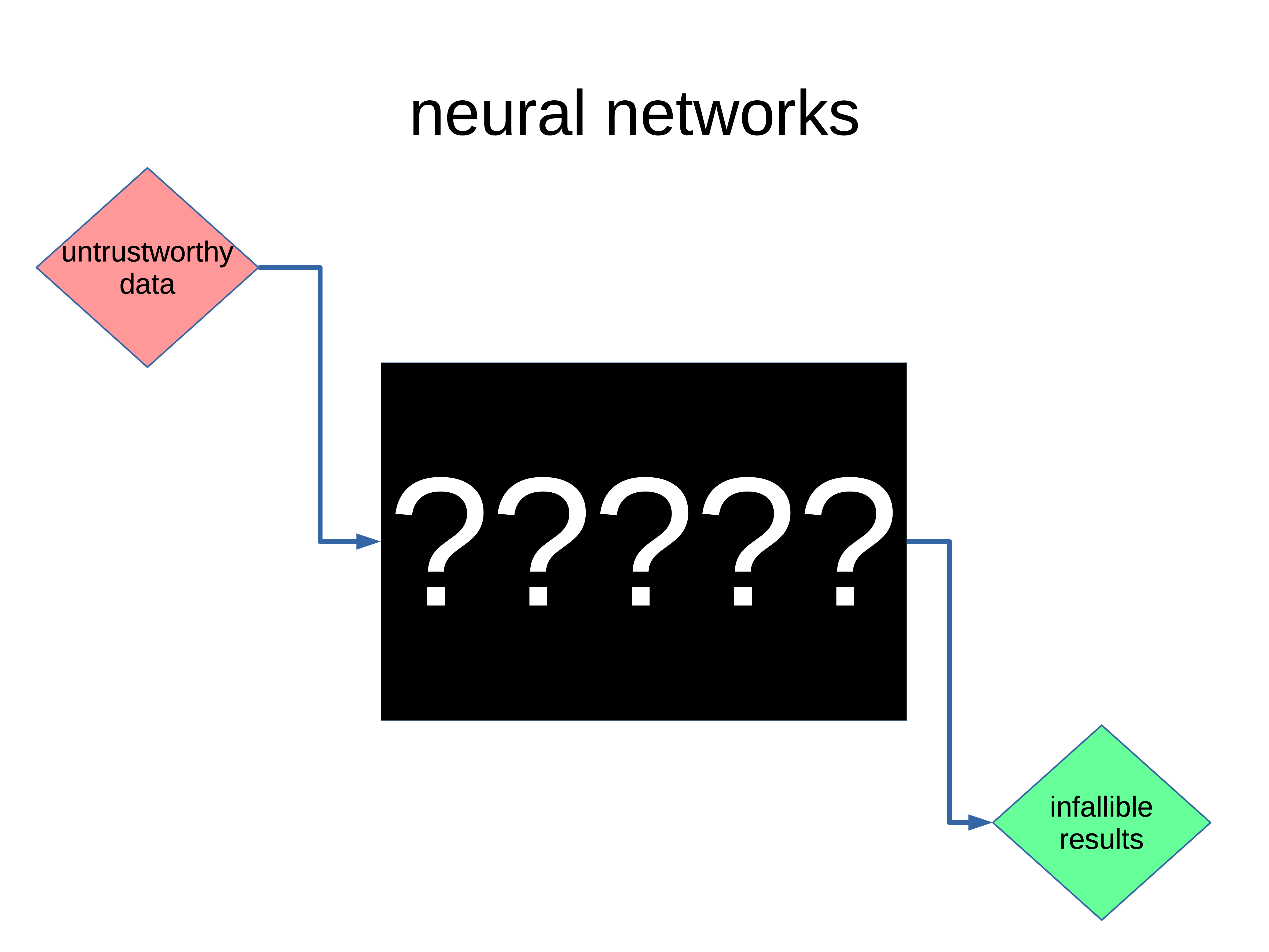
This is why "AI is smart" and "AI is just autocomplete" are both too flat. A modern model can connect ideas, write code, summarize documents, and ask helpful follow-up questions. But it can also produce a confident answer whose surface looks right while the underlying claim is wrong. The useful question is not "does it think?" The useful question is "what signal did it optimize, and how would I know if the output is grounded?"
Question 2 of 4
What is a chat assistant actually doing when it types out an answer to a question it has never seen before?
Mechanism two: training is not the same as understanding
Training a model means adjusting internal parameters so outputs become better according to a learning objective. A workflow may include data collection, training, validation, testing, deployment, and monitoring. The details differ by system, but the question stays the same: what counted as "better" during training?
That question explains many surprises. If a model is rewarded for pleasing answers, it may sound more certain than it should. If a dataset over-represents certain languages, communities, or time periods, the model can inherit those patterns. If an evaluation misses a real-world failure mode, a model can pass the benchmark and still fail in your hands. Understanding AI is partly understanding optimization pressure.

Question 3 of 4
Why can an AI model end up favoring one language or community even when nobody programmed that preference in?
Mechanism three: generative AI works by representing meaning as structure
When people say an AI model "understands" a sentence, they often mean it can place that sentence in a useful relationship to other concepts. In practice, many systems represent words, images, or documents as mathematical structures, often called embeddings, so related things end up near each other in a learned space. That is how a model can retrieve related passages, cluster similar questions, or notice that two different phrasings point to the same idea.
This matters for learning because a good question is also a navigation tool. "What is a neural network?" opens one path. "Why can a neural network recognize a face but still fail on a weirdly cropped image?" opens a better one. The second question contains a gap, a mechanism, and a test. It invites closure instead of just collecting a definition.

Question 4 of 4
How can an AI system tell that 'the car won't start' and 'my vehicle is refusing to turn over' mean the same thing?
Use AI tools without letting them flatten your curiosity
Current AI learning tools are getting better at slowing the learner down. OpenAI's Study Mode, updated in its help center three days before this run, is available across ChatGPT plans and is designed to guide users with Socratic-style questions, scaffolded explanations, knowledge checks, and feedback. OpenAI's product note says Study Mode was built to help learners work step by step instead of just receiving quick answers, while also acknowledging that the feature can still make mistakes.
Google's Learn About experiment also points in this direction: an AI learning companion with explanations, images, videos, misconception cards, and quizzes. Elements of AI, created by the University of Helsinki and MinnaLearn, shows another useful path: a free structured course for broad public AI literacy. DeepLearning.AI's short courses serve a different need again: practical tool skills in compact formats. None of these replaces curiosity. The best ones preserve friction at the right moment: they make you think before they close the gap.

What people usually miss
The common mistake is treating AI literacy as tool literacy. Tool literacy asks: which button do I press? AI literacy asks: what kind of system am I dealing with, what failure modes should I expect, and what would count as evidence? Tool literacy expires quickly. Mechanism literacy compounds.
The second mistake is using AI to remove every productive itch. If a chatbot instantly smooths every confusion into a confident paragraph, you may feel fluent without becoming more capable. Real closure is different. It leaves you with a cleaner mental model and often with a better next question. That is the MillionWhys view: the point is not endless stimulation, and it is not passive answer consumption. The point is itch, closure, and the next sharper itch.
A simple loop for understanding AI this week
Pick one AI behavior you have personally seen. Maybe it hallucinated a citation, misunderstood a date, wrote bland code, or gave an answer that improved after you added context. Then ask four questions. What input did I give it? What pattern might it have matched? What source would verify the claim? What would I change to test whether my explanation is right?
That loop turns AI from a black box into a curiosity object. You do not have to master the whole field to begin. You only have to close one real gap at a time.

Related videos
FAQ
What is the easiest way to start understanding AI?
Start with one behavior you have seen, then ask what the system was predicting, what data or context shaped it, and how you could verify the answer. Concrete questions beat abstract definitions.
Do I need math to understand AI?
You need some math for engineering depth, especially probability, linear algebra, and optimization. But you can build useful everyday AI literacy before that by understanding patterns, training data, feedback, evaluation, and failure modes.
Is ChatGPT Study Mode enough to learn AI?
It can help, especially because it asks questions and checks understanding instead of always jumping to the answer. It is still an AI system that can make mistakes, so important claims should be checked against reliable sources.
What is the difference between learning AI and understanding AI?
Learning AI often means taking courses or gaining tool skills. Understanding AI means building a mental model of how these systems behave, why they fail, and what kind of evidence should change your mind.
What does this have to do with AIgneous Million Whys?
AIgneous Million Whys treats AI as a way to return learning to its natural shape: one question, one satisfying closure, then the next better question. Understanding AI is not a separate subject from curiosity; it is one of the best places to practice it.
Sources
OpenAI Help Center: ChatGPT Study Mode FAQ
OpenAI: Introducing study mode
University of Helsinki: Elements of AI has introduced one million people to AI basics
DeepLearning.AI course catalog
Kang et al. 2009: epistemic curiosity, reward circuitry, and memory
Kidd and Hayden: The psychology and neuroscience of curiosity
Keep Exploring
Related Posts
Questions About AI: Learn by Asking Better Whys
Questions about AI work best when they expose a real gap. Use this guide to learn with AI without losing curiosity, judgment, or real closure in practice.
AI for Learning Works When Curiosity Leads
AI for learning works when curiosity leads: use AI to expose gaps, close them with real explanations, and turn each answer into a better why, not a shortcut.
Learning Anything Starts With Tiny Questions
Learning anything works better when the unit is a tiny question: curiosity opens the gap, real answers close it, and knowledge compounds over time.