A good daily quiz should not feel like homework. It should feel like a small door opening: why thunder arrives after lightning, why a rainbow has no fixed end, why a river learns to curve. These questions are built for the 10-second window: choose an answer, get the reason, and leave with a little more closure than you had before.
Daily Trivia Questions
AThunder causes lightning flash
✗Not quite — Lightning causes thunder, not vice versa. Electrical discharge heats air explosively—rapid expansion creates thunder shockwave.
BLight faster than sound waves
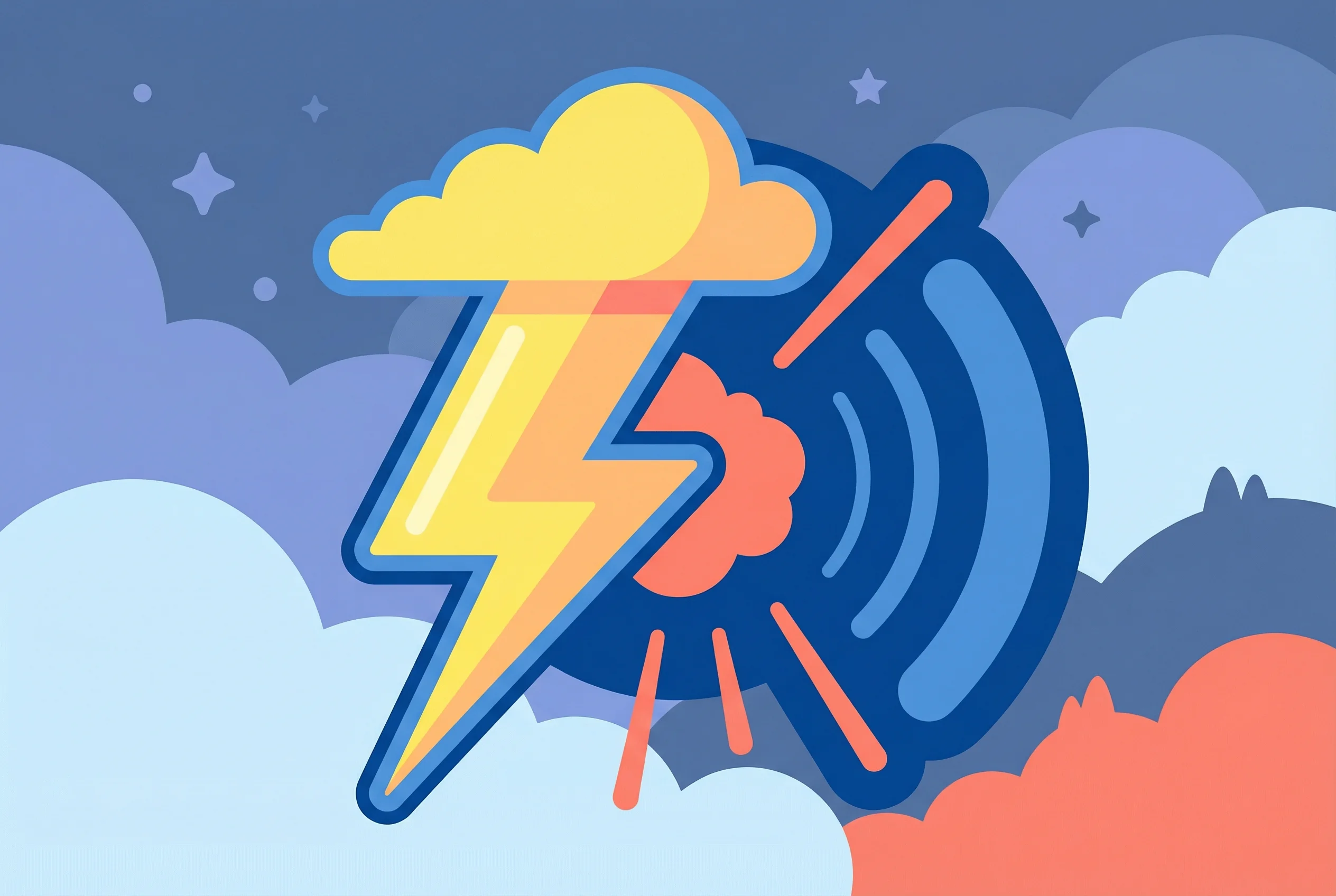
✓Correct — Speed difference! Lightning and thunder occur simultaneously, but perceived separately: (1) Lightning—see instantly (light: 300,000 km/s). (2) Thunder—hear delayed (sound: 343 m/s in air). (3) Count seconds between flash and boom—divide by 3 about distance in km (or by 5 for miles). Thunder: rapid air heating from lightning bolt (30,000°C)—explosive expansion creates shockwave. Close lightning: immediate crack. Distant: low rumble (sound waves refract). Can't hear thunder beyond ~25km!
CLightning and thunder are unrelated
✗Not quite — Thunder is direct result of lightning—electrical discharge superheats air channel, creating explosive expansion we hear as thunder.
Answer this question
AWater droplets refract sunlight
✓Correct — Light refraction and dispersion! Rainbows form when: (1) Sunlight enters raindrop—refracts (bends). (2) Disperses—different wavelengths bend differently (red least, violet most). (3) Reflects off back of droplet. (4) Exits droplet—refracts again. (5) Separated colors reach eyes. Conditions needed: sun behind observer, rain ahead. Rainbow angle: 42° from antisolar point. Double rainbows—second reflection inside droplet (reversed colors). Circular rainbow (from airplane). Moonbows exist! Each person sees unique rainbow—depends on viewing angle. ROYGBIV order!
BClouds reflect colorful light
✗Not quite — Rainbows form inside individual raindrops—sunlight refracts, disperses into colors, then reflects back to observer's eyes.
CChemical reaction in rainwater
✗Not quite — No chemical reaction—purely physical optics. Light refracts and disperses through water droplets, separating into visible spectrum.
Answer this question
AHumid air is actually hotter
✗Not quite — Humidity doesn't change air temperature—thermometer reads same. Feels hotter because sweat evaporation (body's cooling) is inhibited.
BWater vapor conducts heat better
✗Not quite — Water vapor isn't better heat conductor. High humidity feels worse because it prevents efficient sweat evaporation cooling.
CSweat can't evaporate efficiently
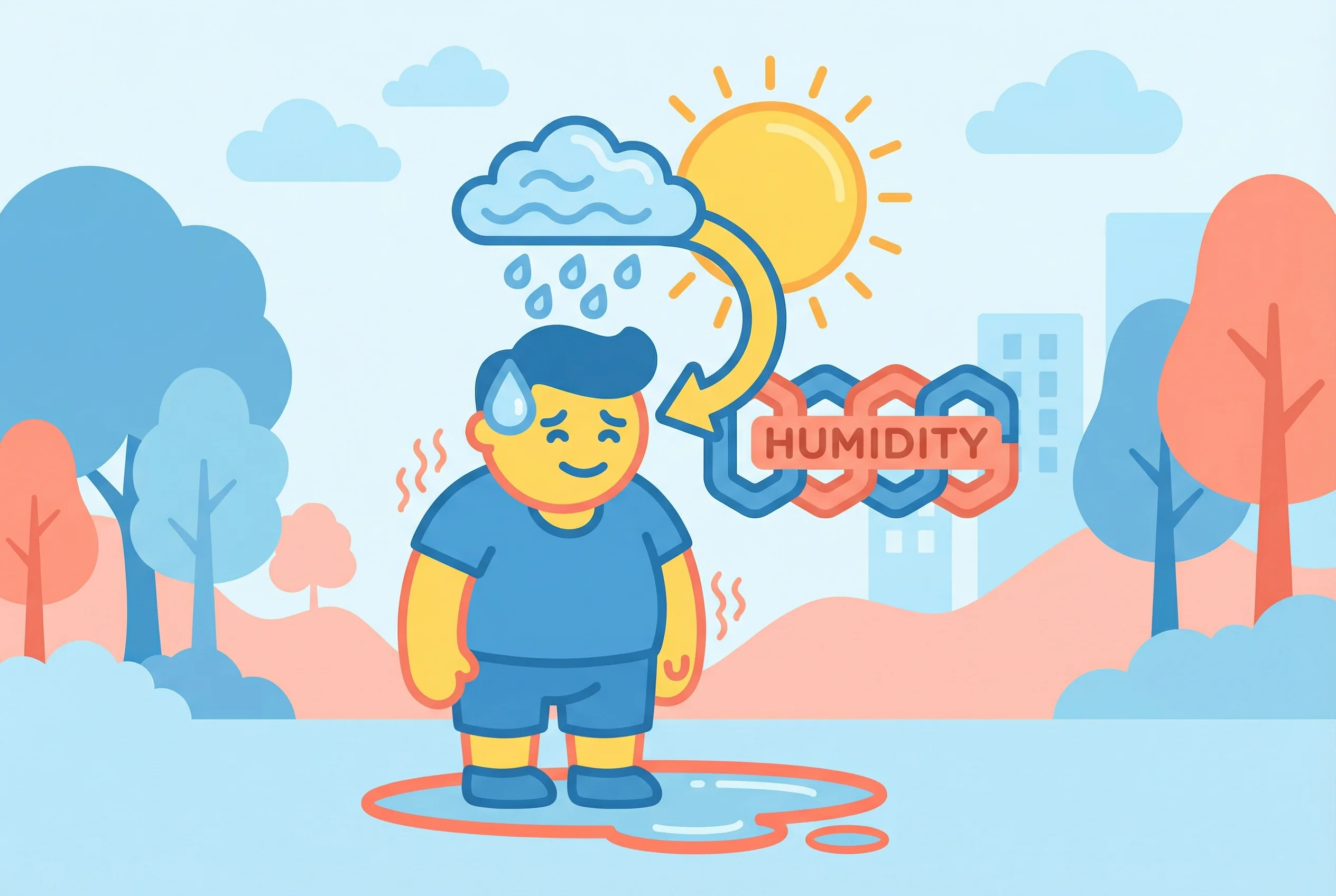
✓Correct — Evaporative cooling blocked! Humidity makes heat feel worse: (1) Body cools through sweat evaporation. (2) Evaporation requires dry air—water molecules escape into air. (3) High humidity—air already saturated with moisture. (4) Sweat can't evaporate—stays on skin. (5) No evaporation = no cooling. Heat index: combines temperature + humidity (how hot it feels). 35°C with 80% humidity feels like 50°C+! Dangerous: heat stroke risk. Dry heat (deserts): sweat evaporates instantly—better cooling despite high temperature!
Answer this question
AIce crystals grow randomly
✗Not quite — Growth isn't random—highly structured! Water molecules form hexagonal lattices following thermodynamic rules, creating fractal patterns.
BTemperature variations pattern it
✗Not quite — Temperature affects growth rate, but basic patterns from hexagonal ice crystal structure—molecular bonding geometry.
CCrystal growth follows physics
✓Correct — Fractal crystal growth! Frost patterns form from: (1) Water vapor contacts cold surface below freezing. (2) Deposition—gas directly to solid (bypasses liquid). (3) Ice crystals: hexagonal structure (H₂O molecular bonding). (4) Branching growth—faster at tips (more exposed surface). (5) Self-similar fractal patterns (dendrites). Window frost: feather-like patterns. Each pattern unique—depends on temperature, humidity, surface imperfections. Similar to snowflakes—hexagonal symmetry. Thermodynamics + crystal physics create art!
Answer this question
AWater vapor condenses visibly
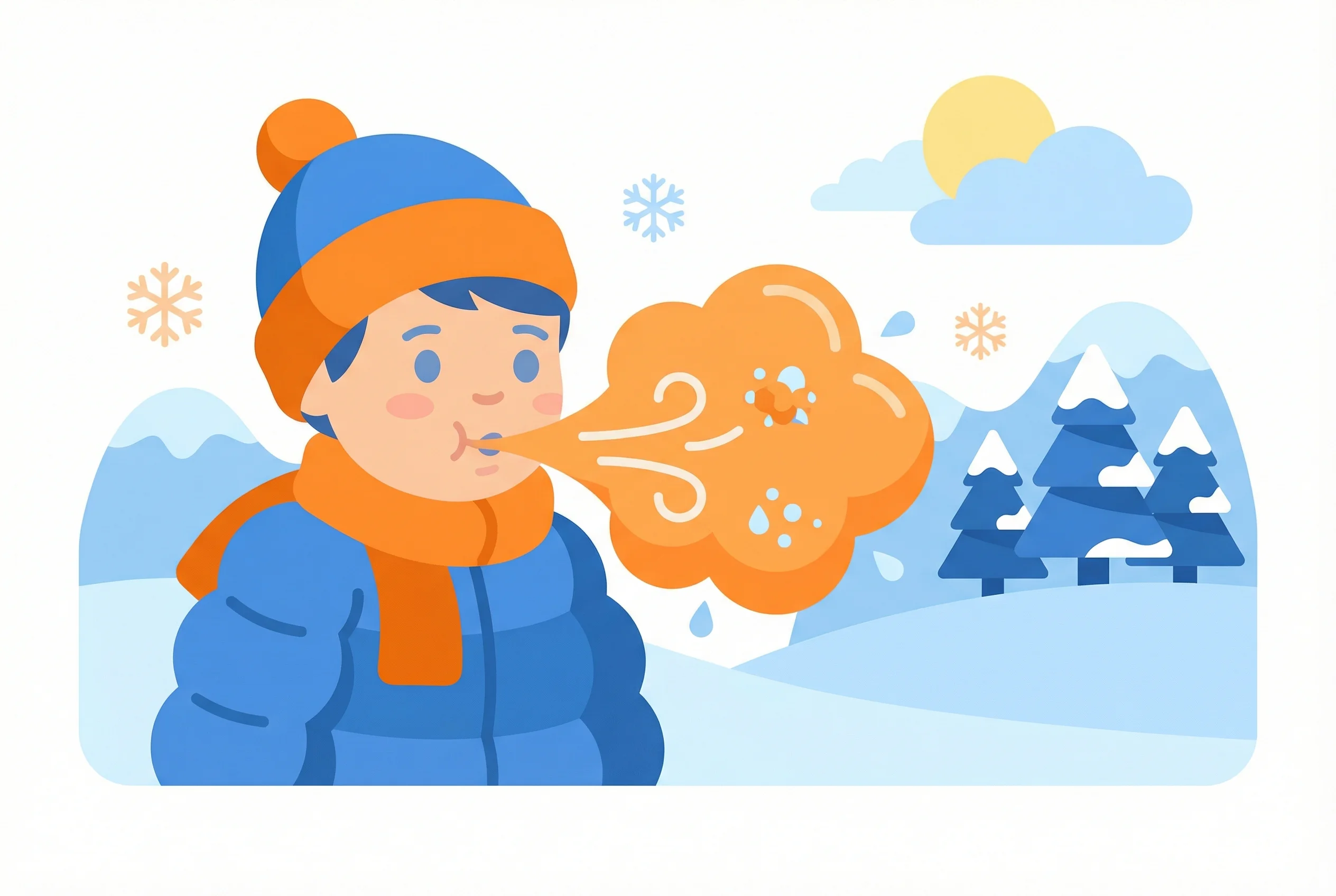
✓Correct — Condensation cloud! Visible breath in cold: (1) Exhaled air: warm and humid (from lungs—saturated with moisture). (2) Meets cold air—temperature drops rapidly. (3) Cold air can't hold as much water vapor. (4) Excess moisture condenses into tiny droplets. (5) Droplets scatter light—appear as white cloud. Same principle as fog/clouds. Warmer days: air holds moisture (invisible). Very cold: might see ice crystals instead of droplets. Breath condensation temperature varies—depends on humidity (visible around 7°C or colder typically)!
BBreath freezes into ice crystals
✗Not quite — In extreme cold, ice crystals can form, but typically it's liquid water droplets condensing from warm breath cooling rapidly.
CCarbon dioxide turns white
✗Not quite — CO₂ is colorless gas. Visible breath is water vapor (H₂O) condensing into droplets when warm exhaled air cools.
Answer this question
Quiz of the Day With Answers
AWe are inside it
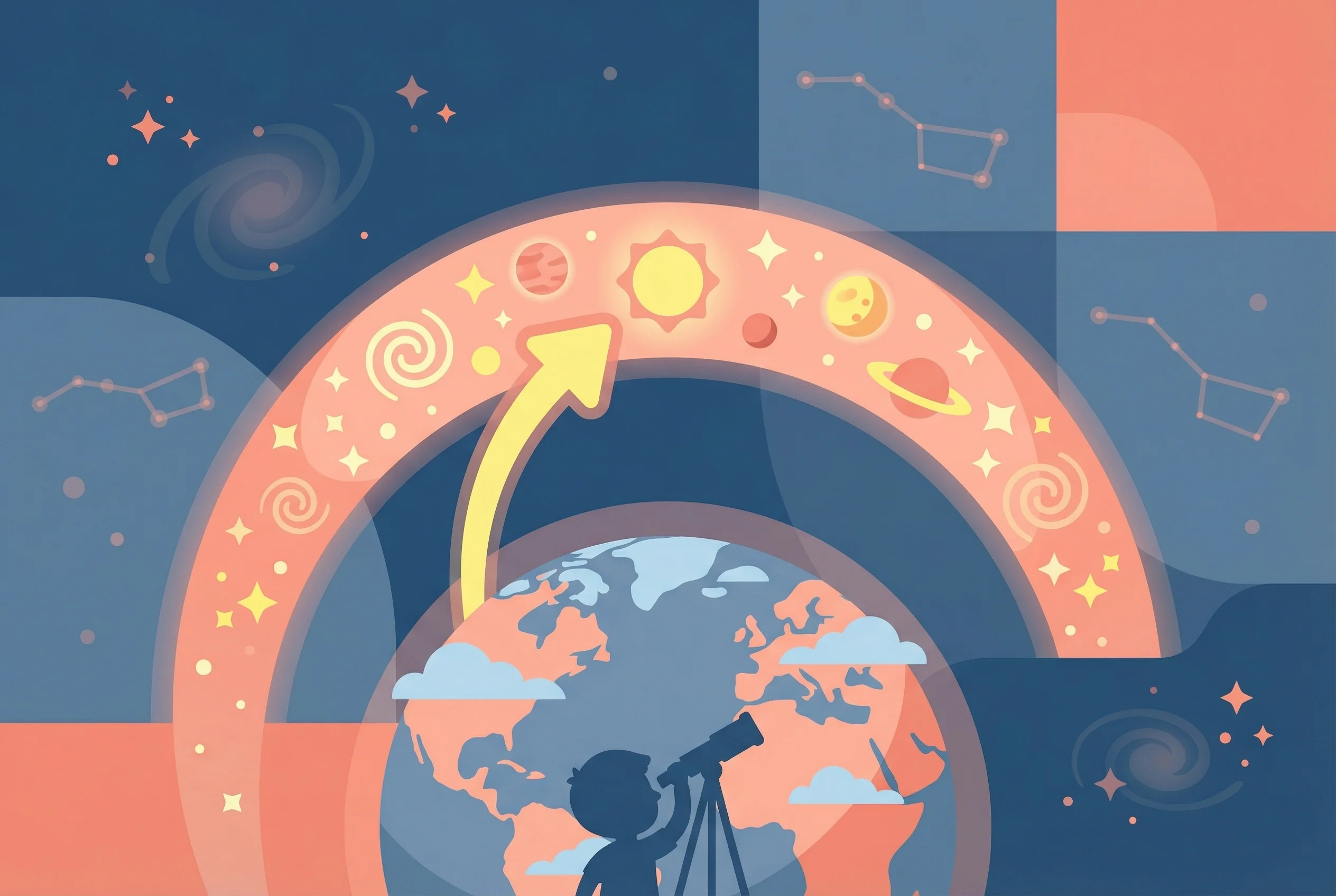
✓Correct — The Milky Way is our galaxy—we're inside it! The band of light we see is looking edge-on through the galactic disk (100,000 light-years across). We're in a spiral arm ~26,000 light-years from the center. Dense star concentrations appear as milky band across the night sky. Best viewed from dark locations away from light pollution. Ancient cultures saw it as celestial river!
BIt's brightest galaxy
✗Not quite — We see the Milky Way brightly because we're inside it—viewing our own galaxy from within. Other galaxies appear dimmer due to distance.
CReflects sunlight to Earth
✗Not quite — Galaxies don't reflect sunlight—they emit light from billions of stars. We see the Milky Way because we're part of it.
Answer this question
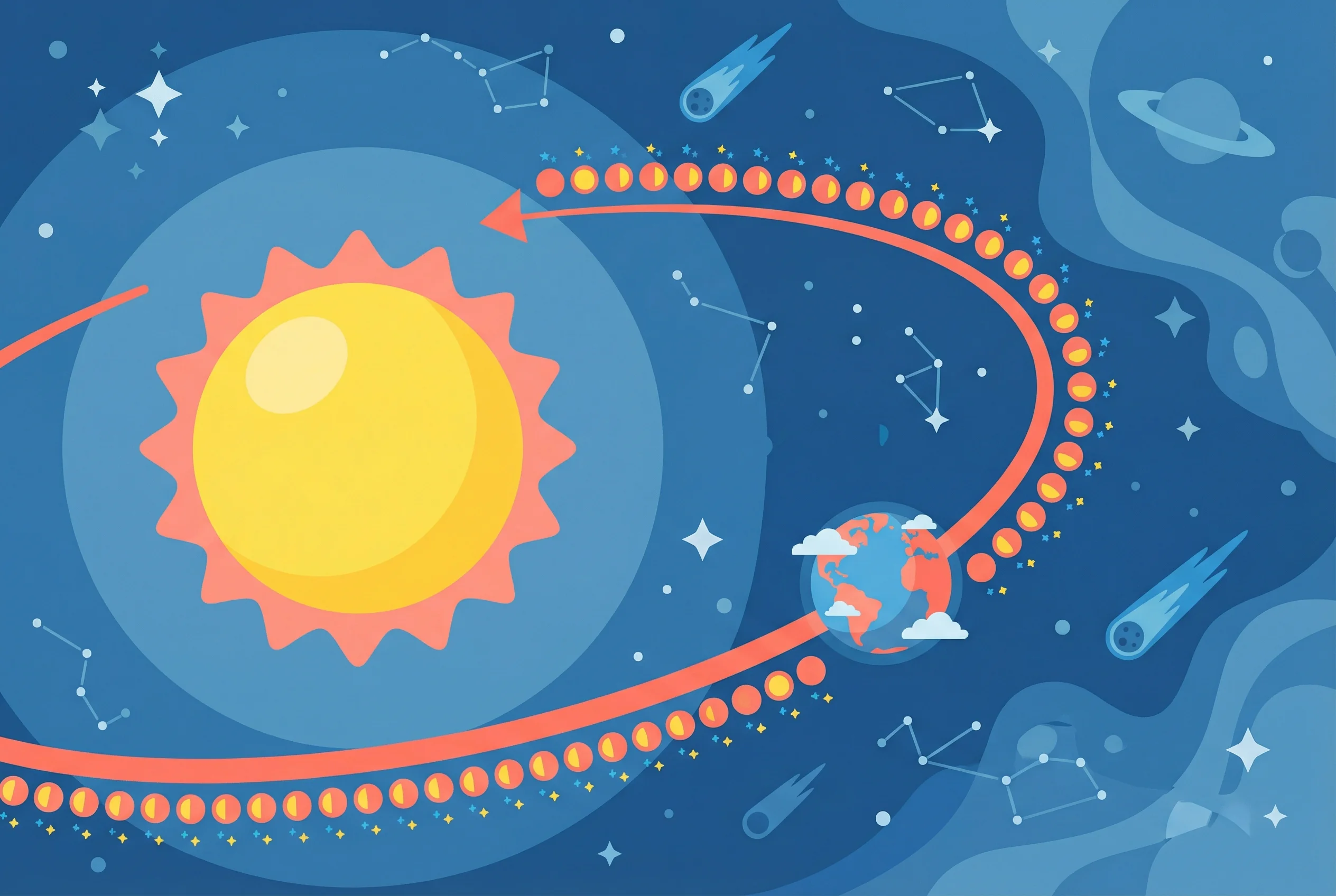
AEarth rotates 365 times yearly
✗Not quite — Earth actually rotates about 366 times during one orbit of the Sun, not 365. We count 365 days because a 'day' is based on the Sun's position in the sky, which is affected by Earth's orbit as well as rotation.
BTime for Earth to orbit the Sun
✓Correct — A year is defined by how long Earth takes to complete one full orbit around the Sun - approximately 365.25 days. This is determined by Earth's orbital distance (93 million miles) and speed (67,000 mph). We round to 365 days for convenience, adding a leap day every 4 years to account for the extra 0.25 days. This orbital period is a natural astronomical fact, not a human invention.
CThe Moon's cycle determines it
✗Not quite — The Moon's cycle (29.5 days) doesn't determine Earth's year. Some ancient calendars were lunar-based, but Earth's year is determined by its orbit around the Sun. The Moon's orbit around Earth and Earth's orbit around the Sun are independent cycles.
Answer this question
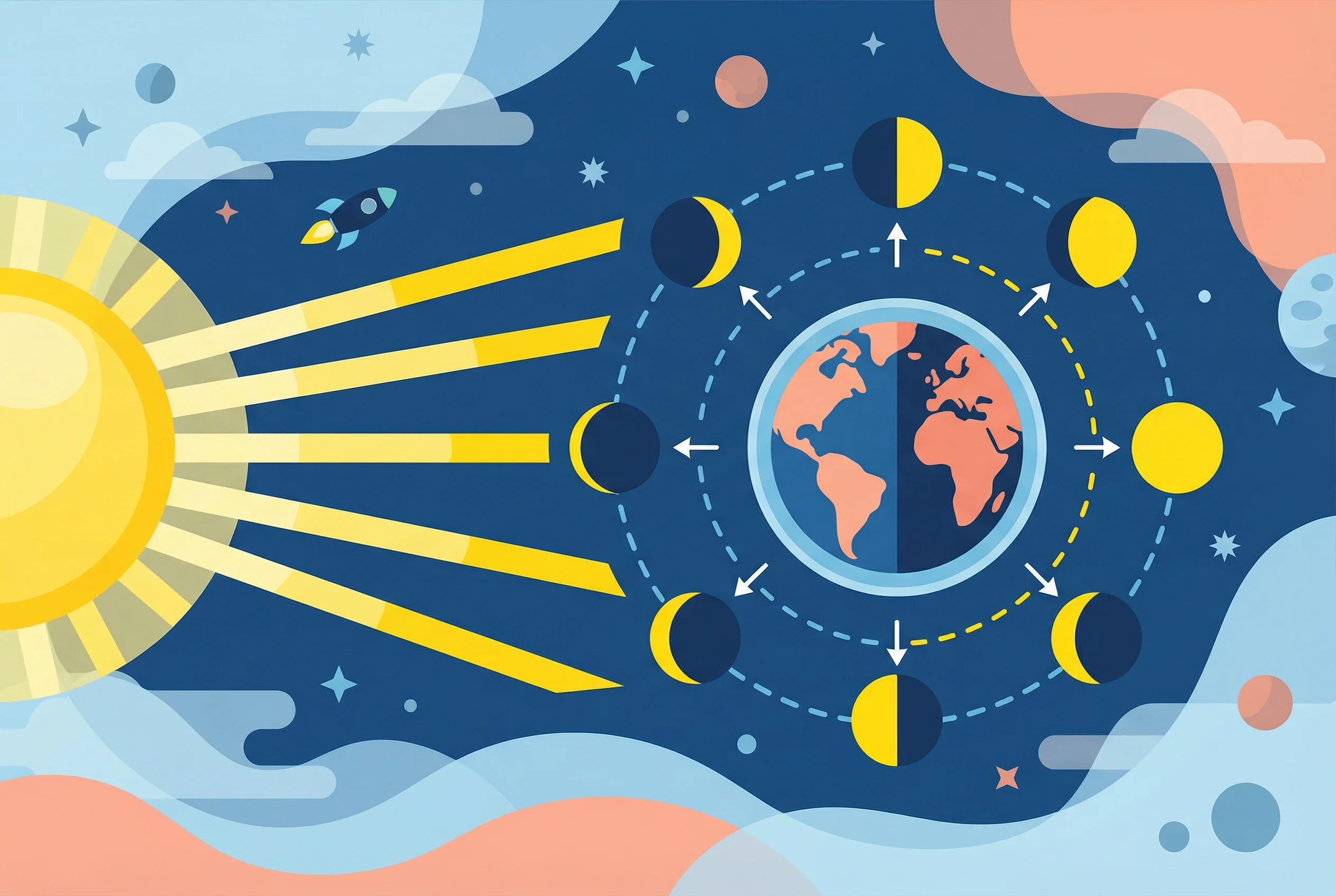
AEarth's shadow covers parts
✗Not quite — Earth's shadow creates lunar eclipses, not phases. Phases occur because we see different portions of the sun-lit half as the moon orbits Earth.
BSun lights different moon sides
✓Correct — The moon doesn't produce light—it reflects sunlight. As the moon orbits Earth (~29.5 days), the angle between sun, moon, and Earth changes. We see varying amounts of the lit half: new moon (dark), crescent, first quarter (half), gibbous, full moon (fully lit), and back. Phases result from changing viewing angles!
CAtmosphere distorts moonlight
✗Not quite — Atmosphere doesn't create phases. Phases occur because the moon orbits Earth, changing how much of its sun-lit surface we see.
Answer this question
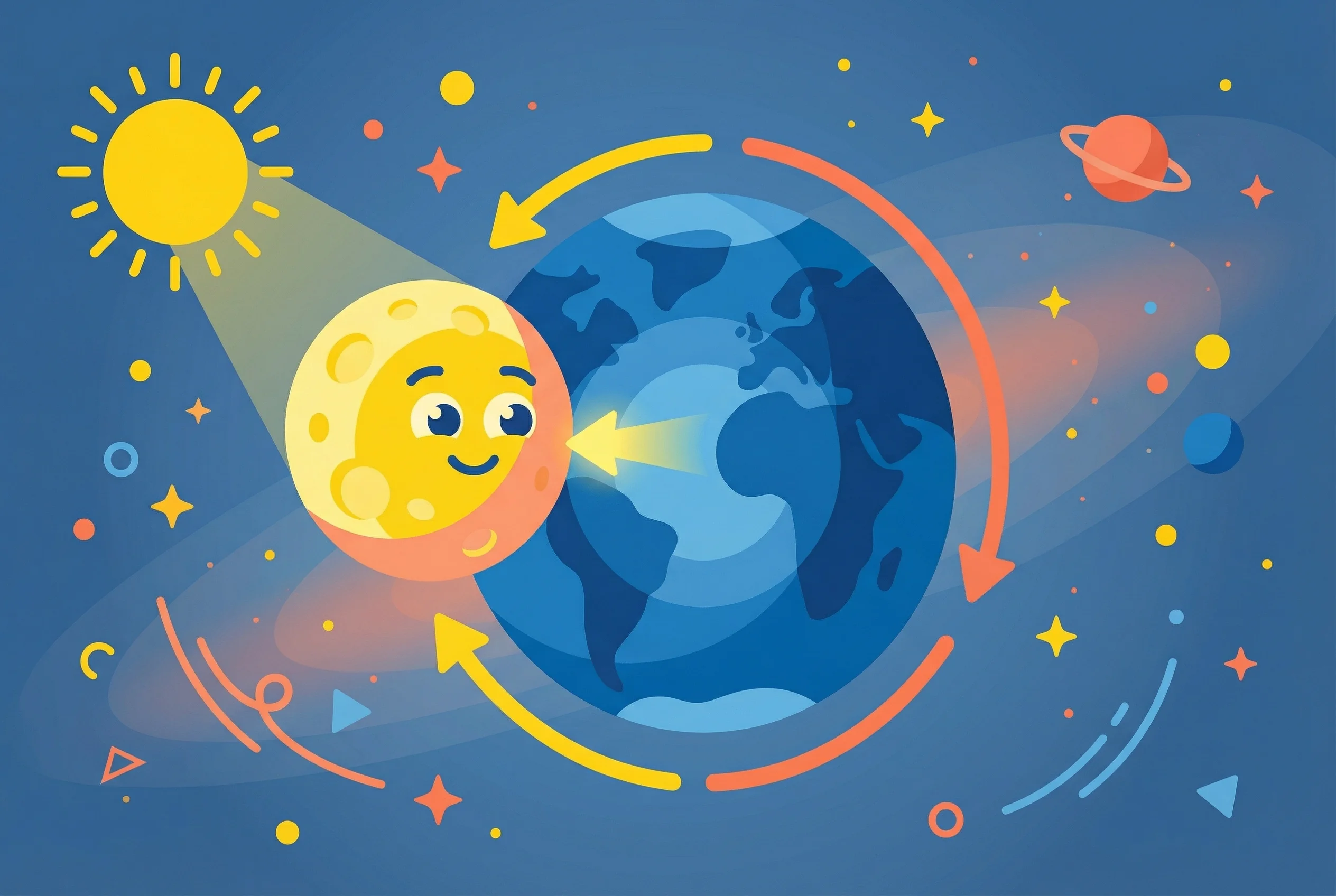
AMoon doesn't rotate at all
✗Not quite — The moon does rotate—once per orbit (~27.3 days). We see the same face because its rotation period equals its orbital period (tidal locking).
BTidal locking synchronizes rotation
✓Correct — Tidal locking (synchronous rotation) means the moon's rotation period equals its orbital period around Earth. Earth's gravity created tidal bulges on the moon long ago. These bulges experienced torque, gradually slowing the moon's rotation until it matched the orbit. Now the same face always points Earthward. Many moons are tidally locked to their planets!
CMoon is perfectly spherical
✗Not quite — Shape doesn't determine this. Tidal locking occurs when gravitational interactions synchronize rotation and orbital periods over time.
Answer this question
ANeutron stars rotate with beams
✓Correct — Pulsars are rapidly rotating neutron stars (collapsed star cores, ~20km diameter). They have powerful magnetic fields with radiation beams emitted from magnetic poles (not aligned with rotation axis). As the star rotates (milliseconds to seconds per rotation), beams sweep across space like lighthouse. When beam points at Earth, we detect a pulse. Incredibly precise—used for testing relativity, detecting gravitational waves!
BMagnetic fields oscillate naturally
✗Not quite — Magnetic fields are strong but don't oscillate to create pulses. Pulses come from rotation—beams sweep past Earth as neutron star spins.
CGravitational waves create pulses
✗Not quite — Gravitational waves don't cause pulses (though pulsars help detect them!). Pulses result from rotating neutron star's beamed radiation sweeping past Earth.
Answer this question
Daily Quiz With Answers
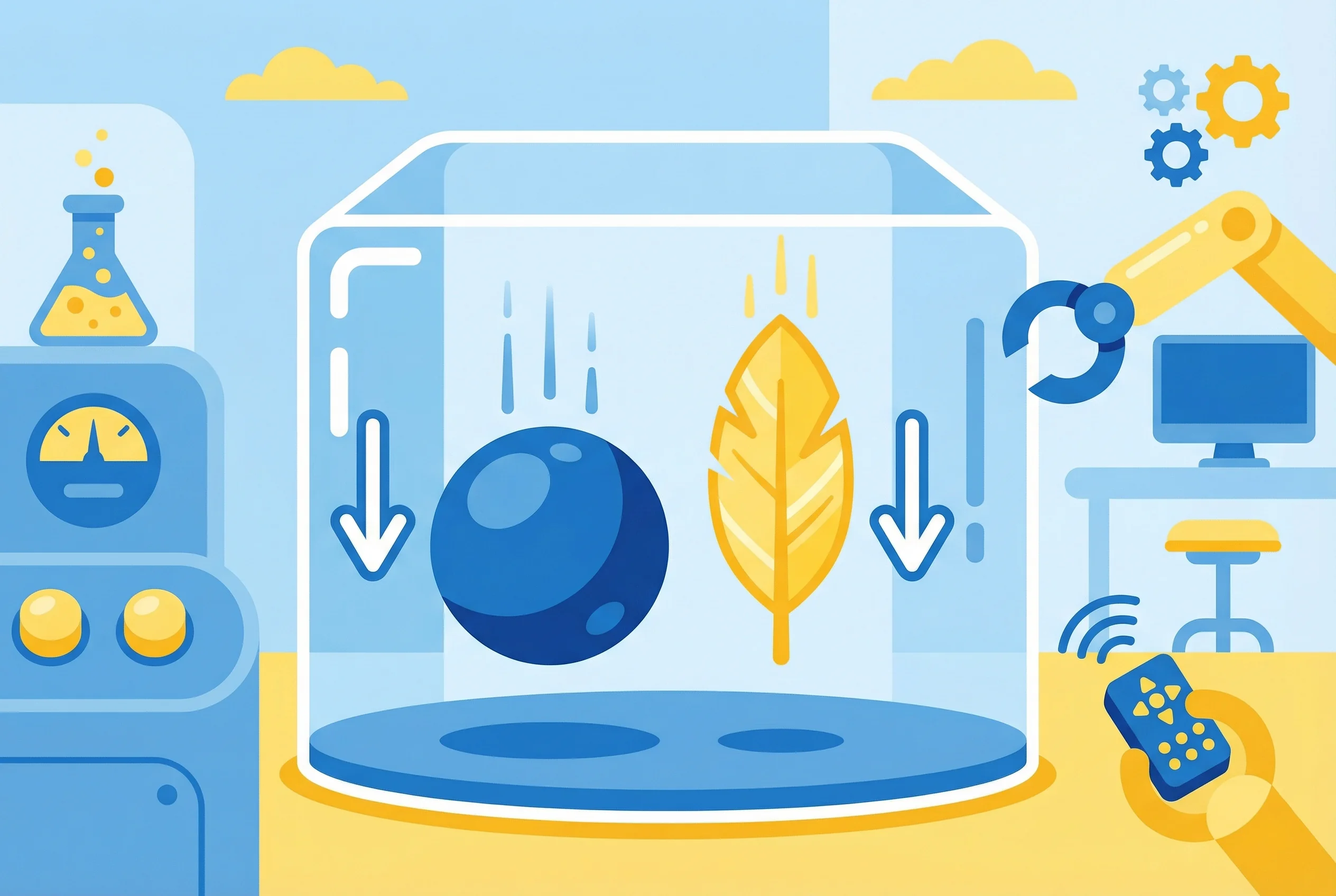
AAir resistance equalizes them
✗Not quite — Air resistance actually makes lighter objects fall slower (feathers vs. Rocks). Without air, all objects fall at same rate—Galileo's discovery!
BGravity accelerates all equally
✓Correct — Gravity accelerates all objects equally regardless of mass—9.8 m/s² on Earth. Heavier objects experience more force (F=mg) BUT also have proportionally more inertia (resistance to acceleration). F=ma, so a=F/m=g (mass cancels!). Apollo 15 astronaut dropped hammer and feather on Moon (no air)—fell together! Galileo proved this centuries ago from Leaning Tower of Pisa (probably apocryphal story, but concept correct)!
CWeight doesn't affect motion
✗Not quite — Weight (gravitational force) does affect motion, but it's perfectly balanced by mass (inertia), resulting in constant acceleration for all objects.
Answer this question
AThin film interference patterns
✓Correct — Thin film interference! Bubble wall has two surfaces (front and back). Light reflects from both—waves recombine. Film thickness (wavelength-scale) determines which colors constructively interfere (brighten) vs destructively interfere (cancel). Thickness varies across bubble—different areas show different colors. As bubble thins, colors shift (thicker=red, thinner=blue/violet). Just before popping, bubble appears black (too thin for visible light interference). Oil slicks show same phenomenon!
BWater refracts like prism
✗Not quite — Water can refract, but bubble colors are interference pattern from light waves reflecting off front/back surfaces, not dispersion.
CLight bounces multiple times
✗Not quite — Multiple reflections occur, but colors arise from interference—waves from front and back surfaces combining constructively or destructively.
Answer this question
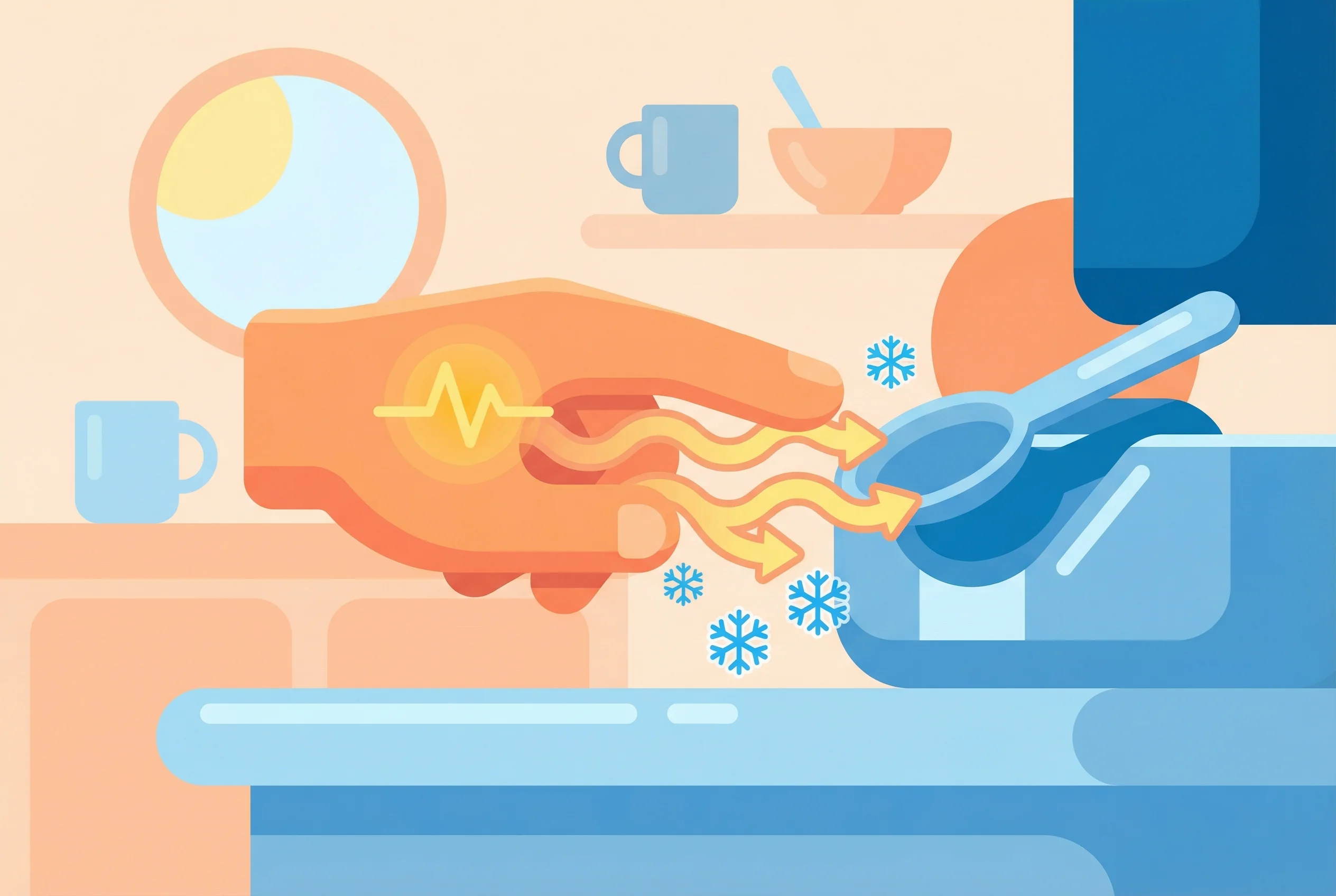
AMetals conduct heat faster
✓Correct — Thermal conductivity! Metal and wood at same room temperature, but metal FEELS colder because it conducts heat much better. Metal rapidly draws heat from your skin (hundreds of times faster than wood)—triggering cold sensation. Your skin loses heat quickly = feels cold. Wood draws heat slowly = feels neutral. Same reason: tile floors feel colder than carpet, stainless steel benches feel cold. Not temperature—heat transfer rate!
BMetals are actually colder
✗Not quite — At room temperature, both same temp. Metal feels colder because high thermal conductivity rapidly draws heat from your skin.
CSkin sensors react differently
✗Not quite — Sensors respond to heat loss rate, but physical reason is metal's high thermal conductivity removing heat from skin rapidly.
Answer this question
AHot air is less dense
✓Correct — Heating air makes molecules move faster, spreading apart—same mass occupies more volume = less dense. Hot air inside balloon (~100°C) is less dense than cool outside air (~20°C). Buoyancy: denser fluid pushes less dense object upward. Volume of displaced cool air weighs more than hot air inside—net upward force (buoyancy). Same principle as boats floating. Cool balloon—descends. Heat air—rises! Vents control altitude.
BHeat creates upward force
✗Not quite — Heat does create effect, but mechanism is density difference—hot air is less dense, so buoyancy pushes balloon up.
CAir pressure pushes them up
✗Not quite — Pressure gradients exist, but specific mechanism is buoyancy from density difference between hot and cool air.
Answer this question
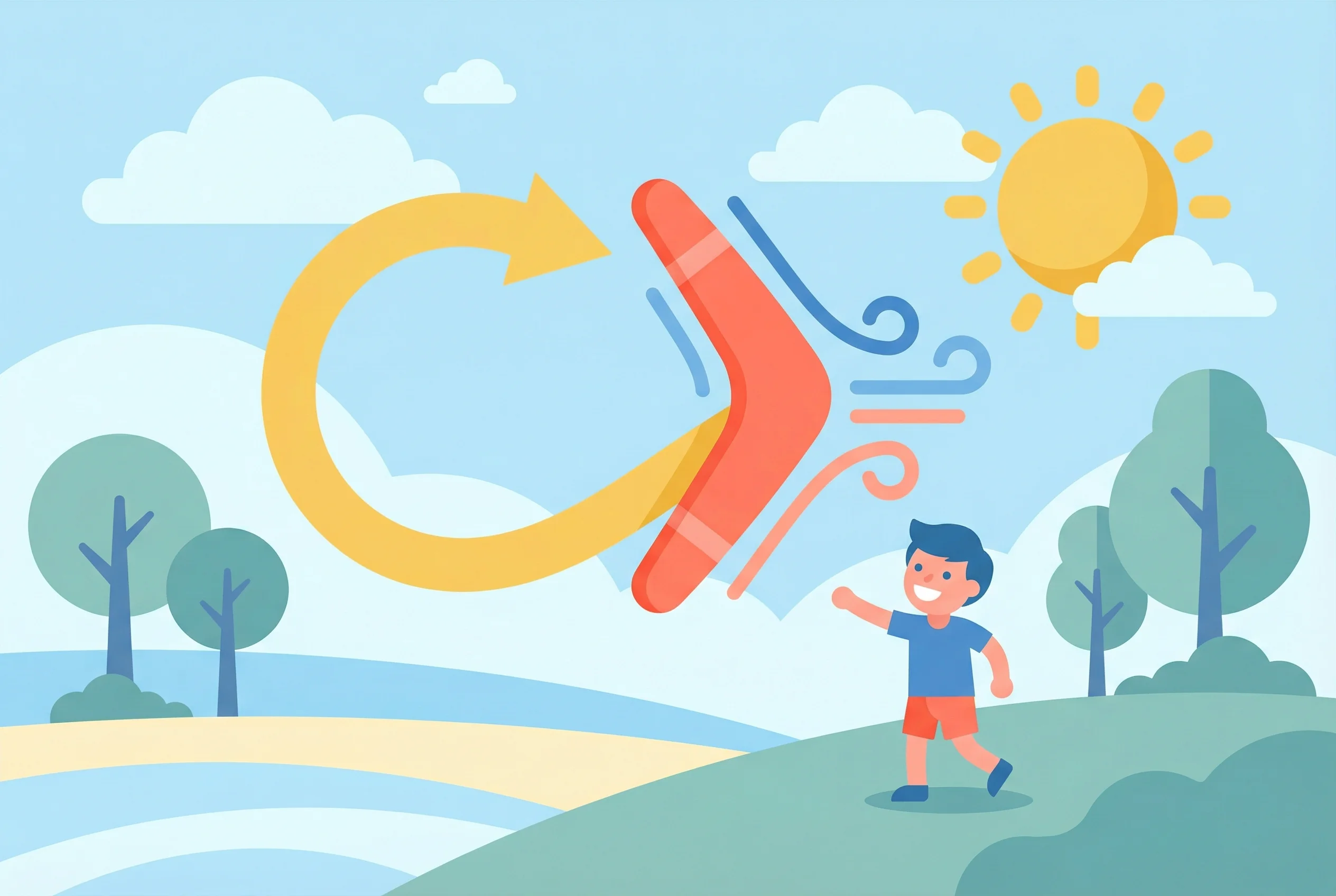
ASpinning creates unequal lift
✓Correct — Boomerang has two airfoil-shaped arms—like airplane wings. Spin creates gyroscopic precession. As boomerang spins, one arm moves forward through air faster (spin + throw velocity), other slower. Faster arm generates more lift than slower arm—unequal lift creates torque perpendicular to spin axis. Gyroscopic precession: torque causes rotation axis to precess (tilt), curving flight path in circle! Returns to thrower. Right-handed throw: spins counterclockwise, curves left. Complex aerodynamics!
BShape makes them bounce
✗Not quite — Boomerang doesn't bounce. It flies in curved path due to gyroscopic precession from unequal lift on spinning arms.
CMagnetic force attracts them
✗Not quite — No magnetism. Boomerang returns through aerodynamic forces—spinning airfoil arms generate unequal lift creating torque and curved path.
Answer this question
Daily Fun Facts
AAttracting mates with scent
✗Not quite — The spray is extremely unpleasant and repels all animals, including potential mates. Skunks use completely different, milder scents for attraction.
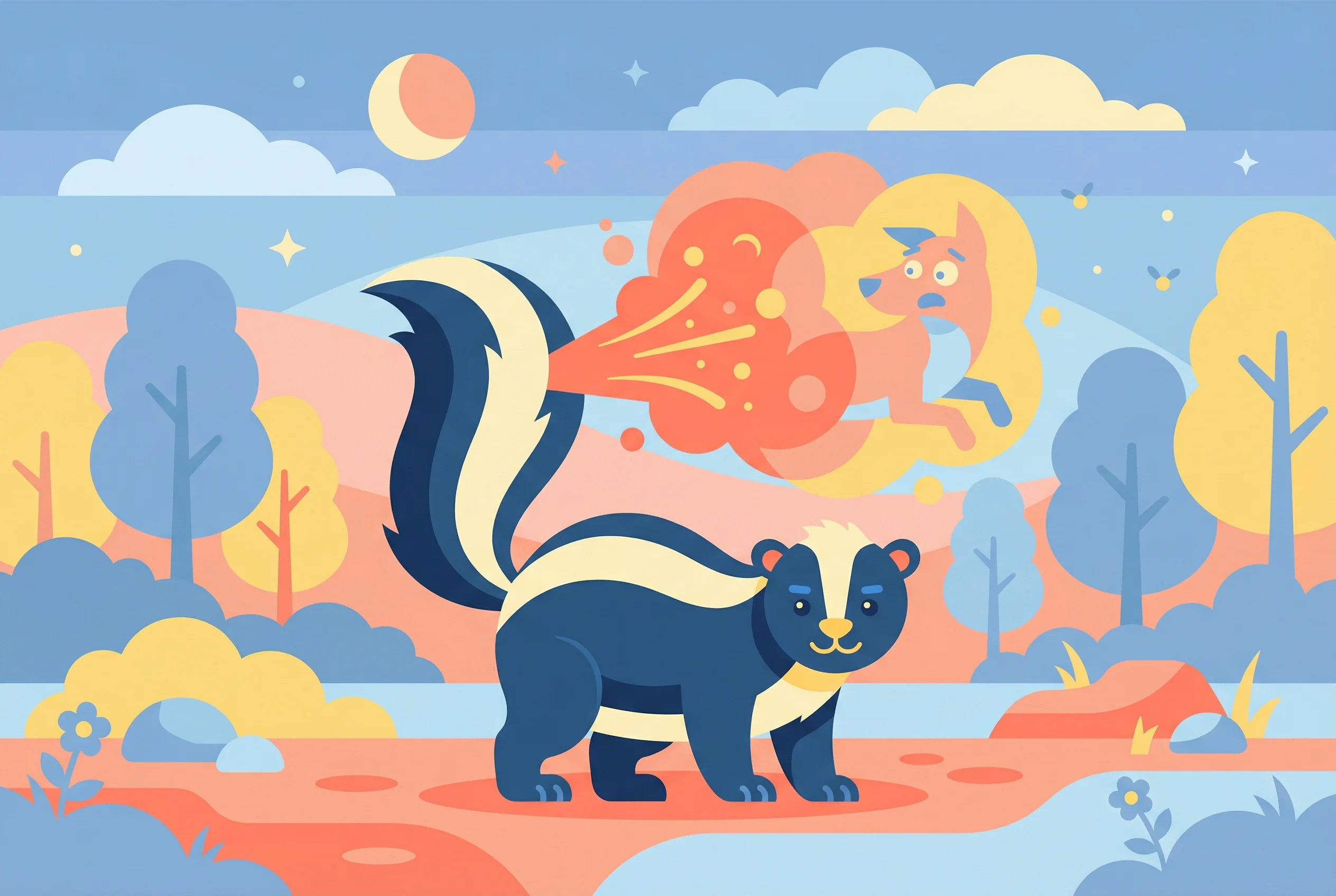
BLast-resort predator defense
✓Correct — Chemical warfare defense! Skunk spray: last resort against threats. Composition: sulfur-containing thiols (mercaptans)—extremely pungent. Process: (1) Warning signals first—stomping, tail raising, hissing. (2) If threat persists—spray from anal glands. (3) Accurate aim up to 10ft. Effects on predators: temporary blindness, nausea, intense smell (lasts days-weeks). Limited supply (5-6 sprays)—takes 10 days to replenish. Effective deterrent—most predators learn avoidance. Great horned owls (no smell sense) are main predators!
CKeeping their fur clean
✗Not quite — Spray doesn't clean fur—it's an oily, foul-smelling substance that animals try to avoid. Skunks groom themselves like other mammals.
Answer this question
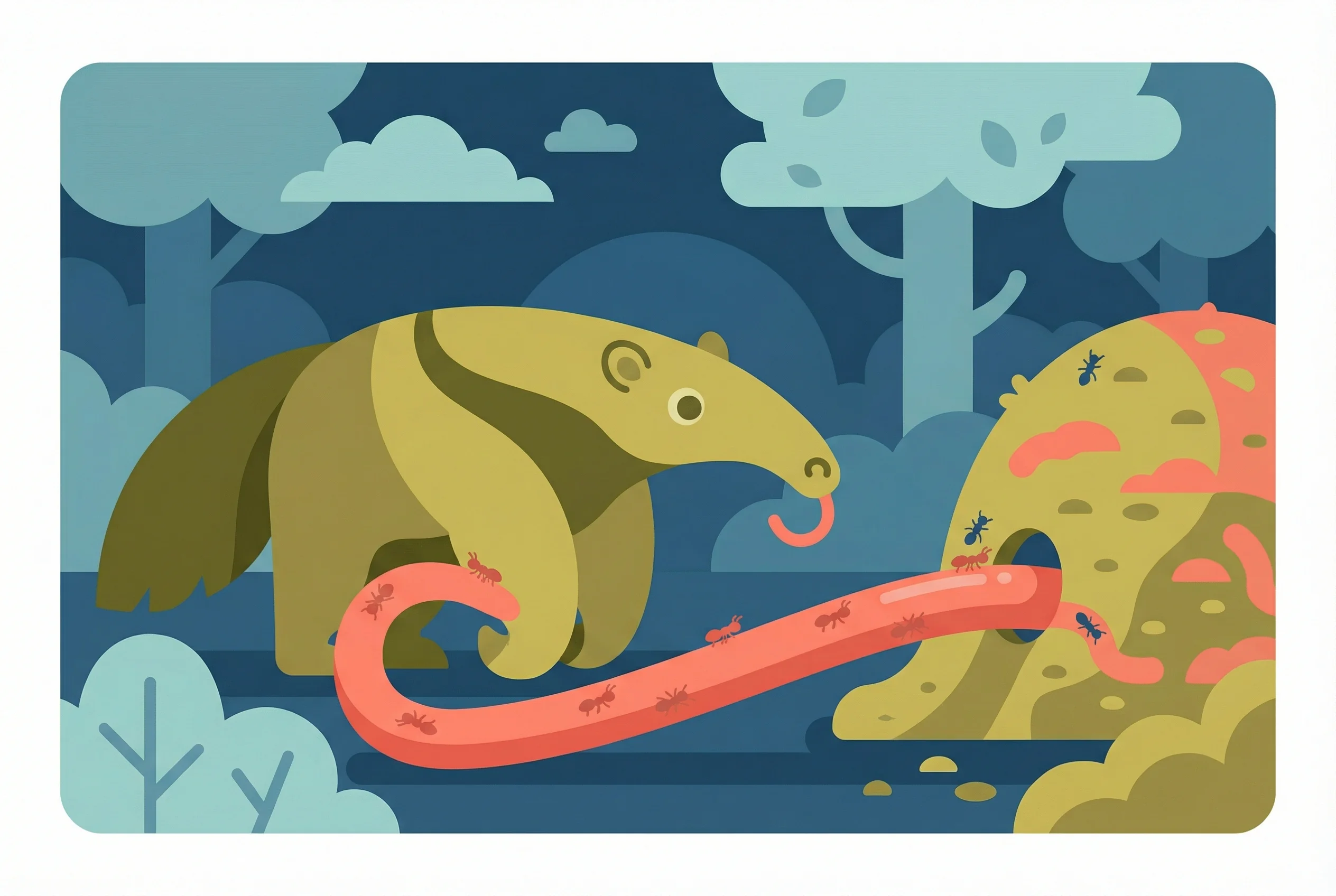
AReaching deep into ant nests
✓Correct — Specialized feeding! Giant anteater tongue: 2ft long! Adaptations: (1) Length—reaches deep into ant/termite tunnels. (2) Sticky saliva—insects adhere to tongue. (3) Rapid flicking—160 times/minute! (4) Attached to sternum—extends far. No teeth—swallows insects whole. Strong stomach grinds food. Eats 30,000 ants/termites daily! Also: powerful claws rip open nests. Narrow snout fits in tunnels. Specialized myrmecophage (ant-eater). Tongue moves so fast it's nearly invisible!
BIt helps regulate body temperature
✗Not quite — Tongue doesn't regulate temperature. It's specialized feeding tool—extremely long and sticky for extracting ants/termites from nests.
CFighting off predators
✗Not quite — Anteaters use powerful claws for defense, not tongues. Long tongue is feeding adaptation—reaching deep into insect colonies.
Answer this question
ACourtship ritual for mating
✗Not quite — Bee dances aren't mating behavior—they're communication system. Waggle dance conveys food source location/quality to hive mates.
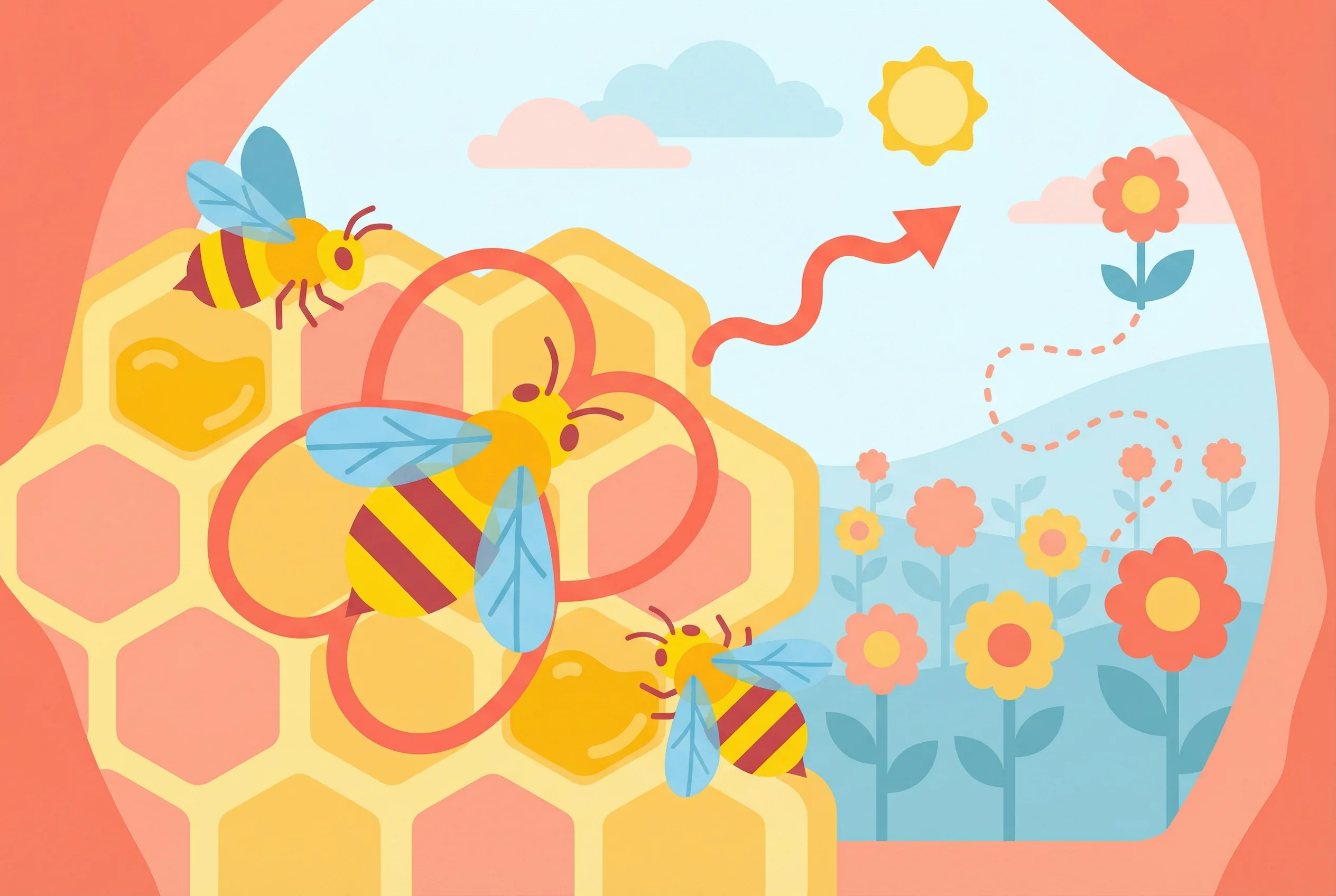
BCommunicating food locations
✓Correct — Spatial communication! Waggle dance: figure-8 pattern communicating flower location. Information encoded: (1) Angle—sun direction vs food direction. (2) Duration—distance to source (1 sec about 1km). (3) Vigor—food quality. Round dance: food nearby (<50m). Von Frisch discovered this (Nobel Prize). Bees dance on vertical comb in dark hive—gravity substitutes for sun reference. Remarkable navigation and abstract communication in insects!
CWarming up flight muscles
✗Not quite — Bees do warm muscles through shivering, but waggle dance specifically communicates food source location/distance to colony.
Answer this question
AEscaping ocean predators
✗Not quite — Ocean has predators, but upstream migration is for reproduction—returning to natal streams to spawn.
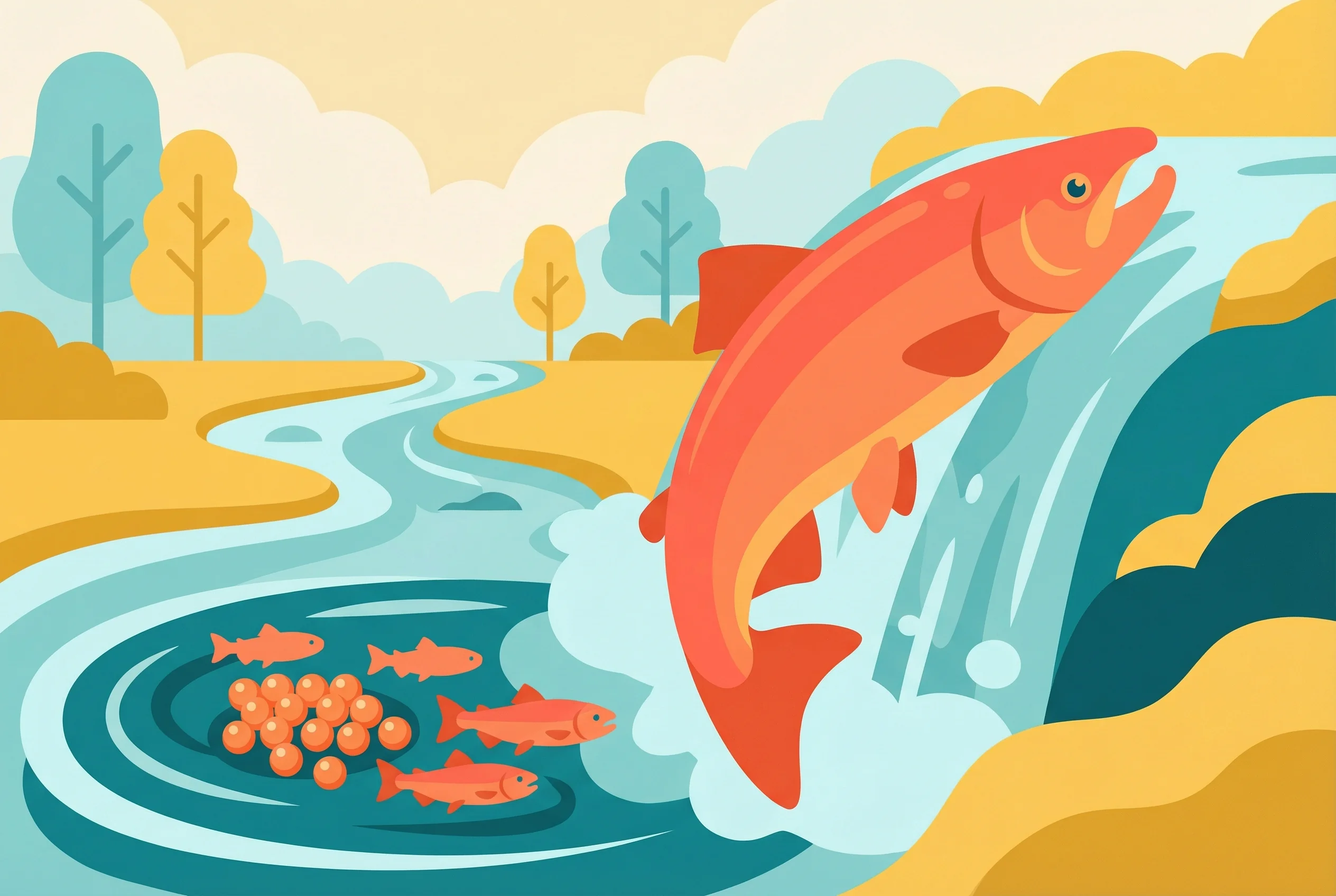
BSpawning in birthplace
✓Correct — Natal homing! Salmon return to birthplace to spawn: (1) Imprinting—remember birth stream's chemical signature. (2) Olfactory navigation—follow scent upstream. (3) best conditions—gravel beds for eggs. Incredible journey: hundreds of miles, swimming against current, jumping waterfalls. Anadromous life cycle—born in freshwater, mature in ocean, return to spawn. Most Pacific salmon die after spawning (semelparous). Exhausting migration—use all energy reserves. Magnetic sense aids ocean navigation!
CSearching for more food
✗Not quite — Salmon don't feed during spawning migration—use stored energy. Upstream journey is reproduction-driven, not foraging.
Answer this question
ACooling system in Arctic
✗Not quite — Arctic doesn't need cooling—needs insulation! White fur provides camouflage. Black skin underneath actually absorbs heat.
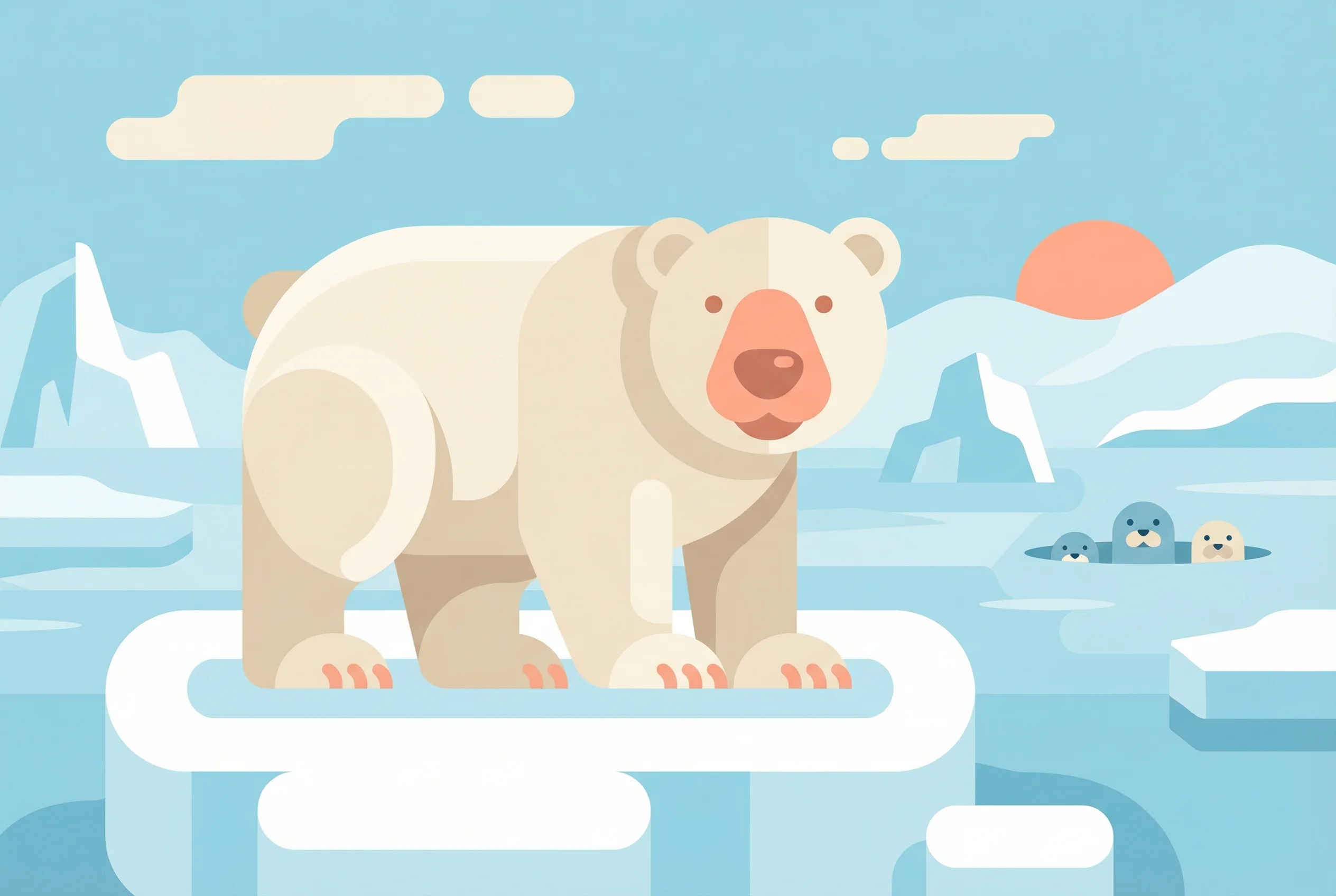
BCamouflage in snow and ice
✓Correct — Arctic camouflage! Polar bear fur appears white: (1) Camouflage—blends with snow/ice during seal hunting (stalking). (2) Individual hairs are transparent, hollow—scatter light (appears white). (3) Skin underneath is black—absorbs heat. Fur isn't actually white—light reflection creates color. Can appear yellow/brown from oxidation/algae. Dense undercoat + guard hairs insulate. Cubs born with white fur. Excellent stealth predator—seals don't see approach!
CWhite attracts prey animals
✗Not quite — White doesn't attract prey—it conceals predator. Polar bears hunt seals, using white fur as camouflage on ice.
Answer this question
Free Daily Quiz Questions
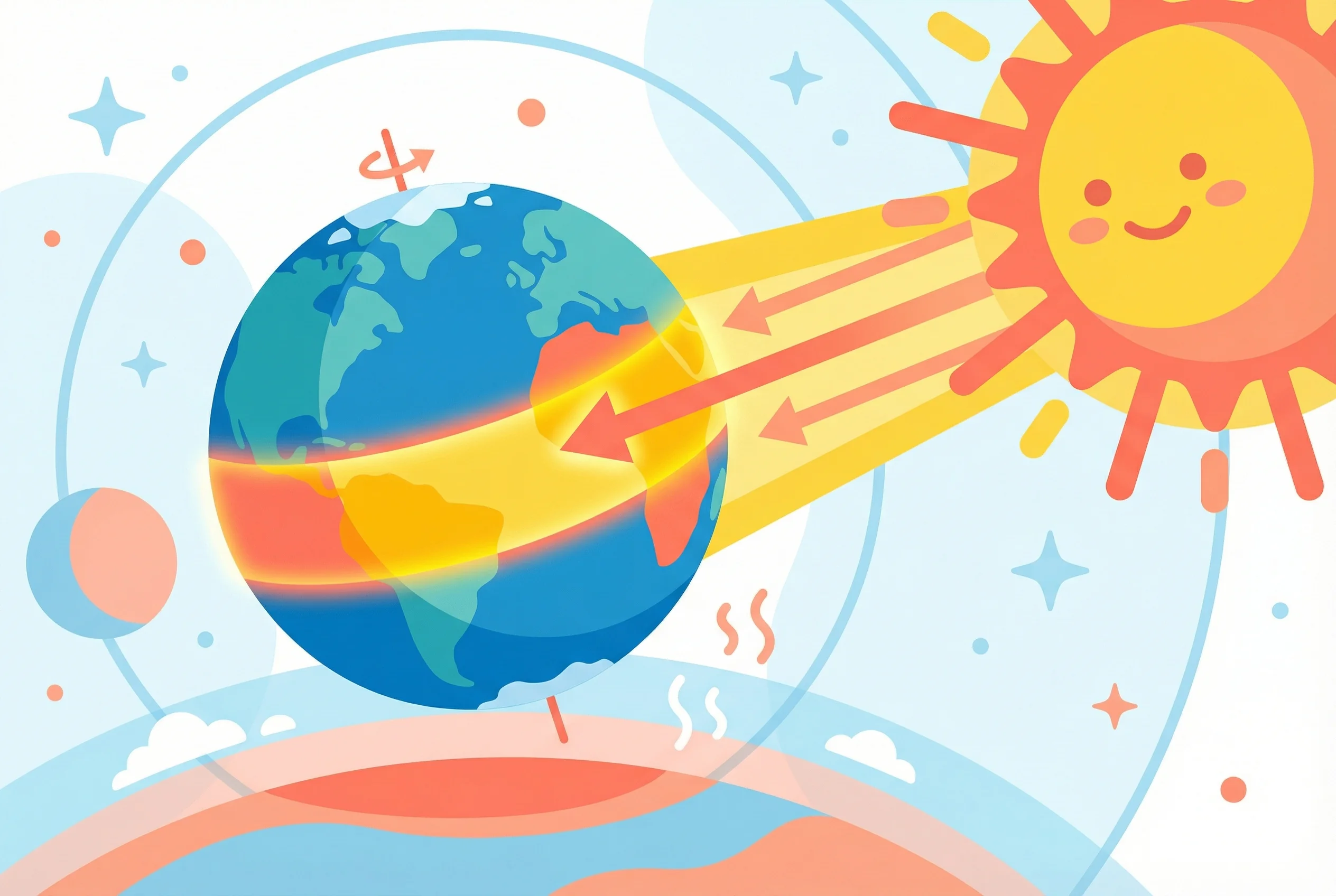
ASun directly overhead year-round
✓Correct — The equator receives direct (near-90°) sunlight year-round. Solar rays hit perpendicular to Earth's surface, concentrating energy per square meter. At poles, sunlight arrives at low angles, spreading over larger areas—less intense. Earth's tilt gives temperate zones seasons, but the equator always gets direct sun. Maximum solar concentration = perpetual warmth!
BCloser to the sun
✗Not quite — The equator isn't closer to the sun (Earth-sun distance varies minimally). It's warm because it receives direct overhead sunlight concentrating solar energy.
COcean currents bring heat
✗Not quite — Ocean currents do distribute heat, but the equator is warm mainly because it receives direct overhead sunlight year-round.
Answer this question
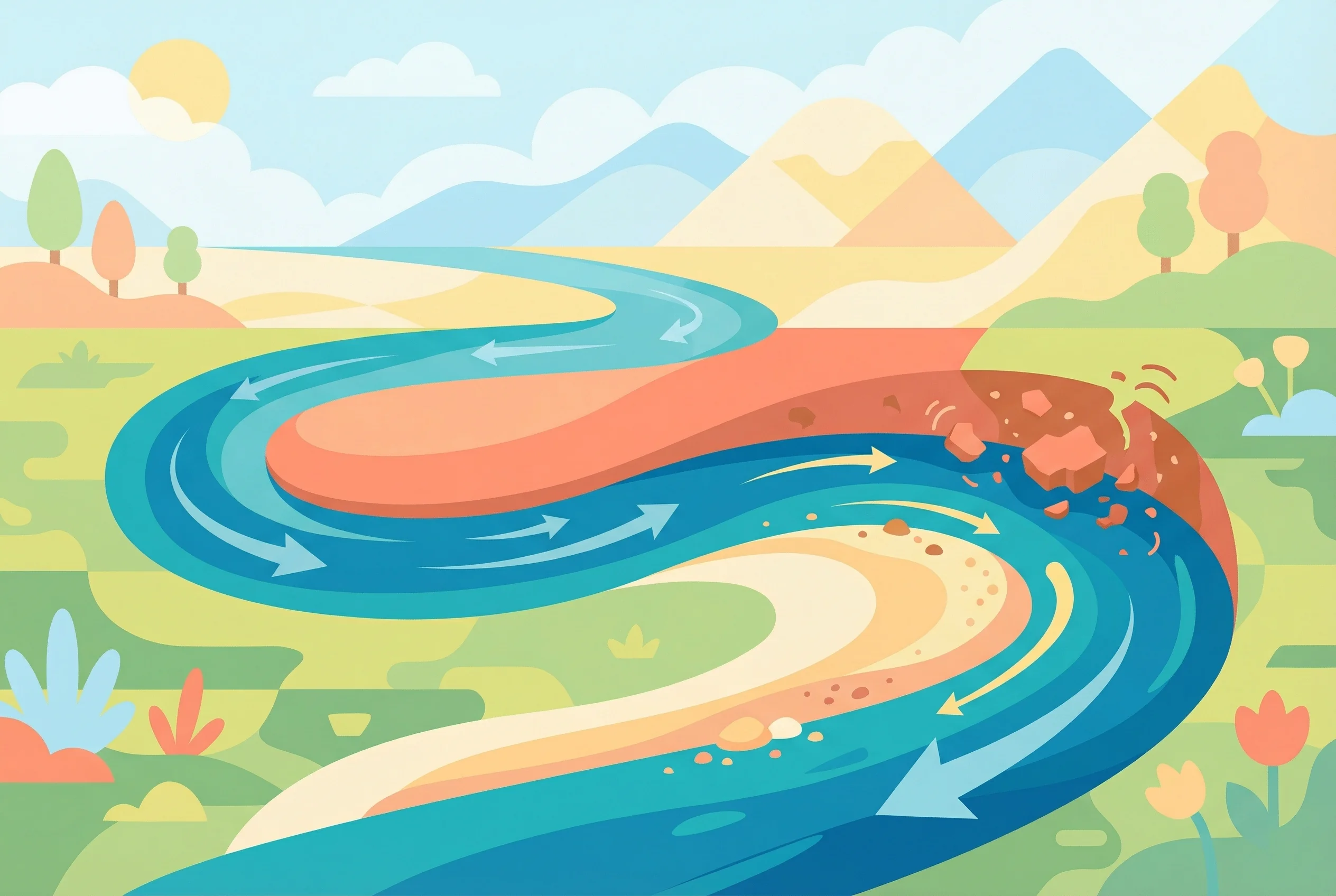
AFollowing underground rocks
✗Not quite — Rivers don't follow underground rocks. Meanders form because water flows faster on the outside of bends, eroding banks and creating curves.
BErosion on outside of bends
✓Correct — Water flows faster on the outside of river bends (longer path), eroding banks there. Inside bends have slower water, depositing sediment. Over time, this differential erosion amplifies curves, creating snake-like meanders. Eventually, curves can become so extreme they cut through, forming oxbow lakes!
CEarth's rotation deflects flow
✗Not quite — Coriolis effect does deflect large rivers slightly, but meanders form primarily from differential erosion on bend outsides versus deposition on insides.
Answer this question
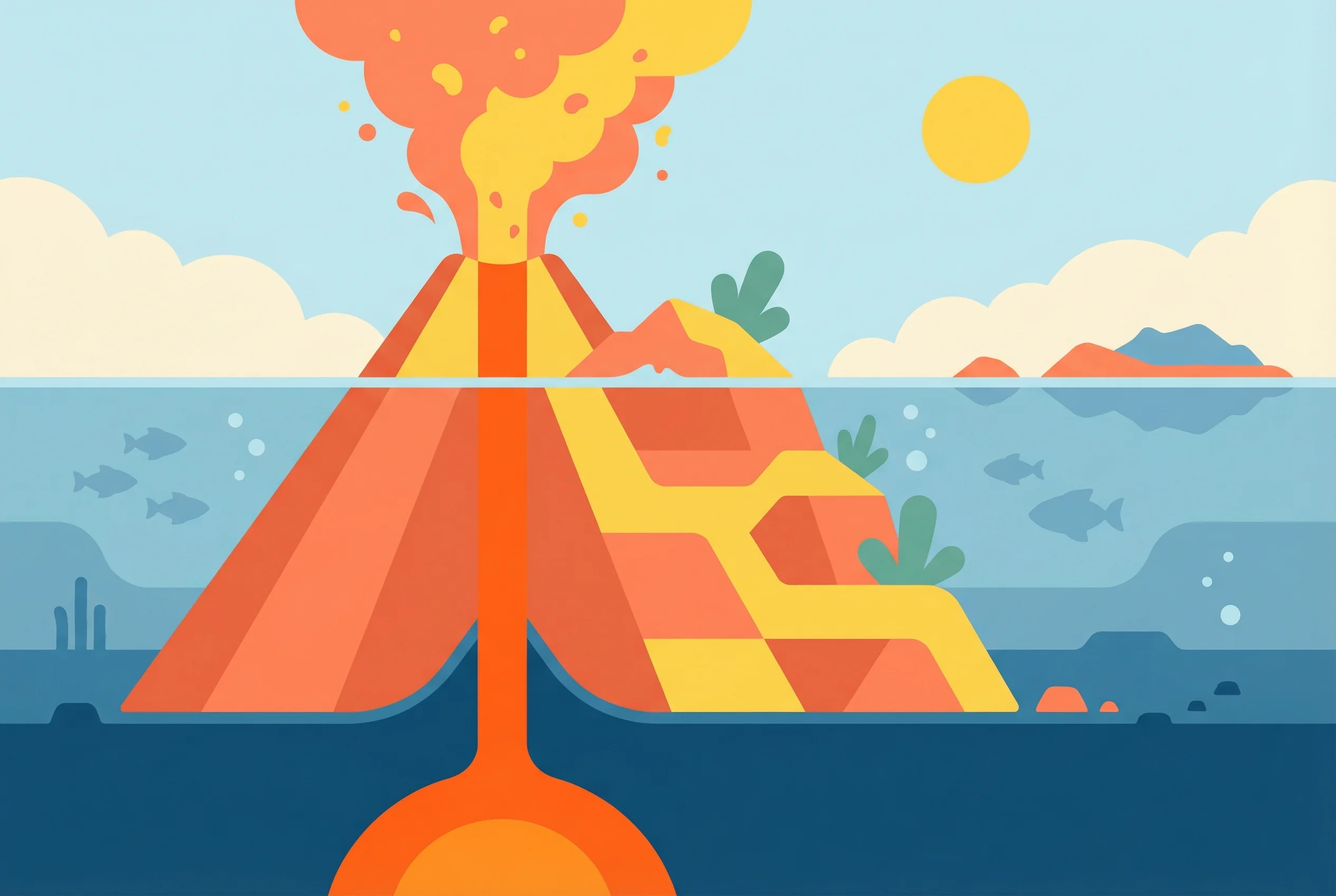
AVolcanic activity builds up
✓Correct — Most oceanic islands form from underwater volcanic eruptions. Magma builds up over millions of years until it breaks the surface. Hawaii formed this way over a hotspot. Some islands form from coral reefs growing in shallow water. Continental islands (like Britain) are parts of continents separated by rising sea levels!
BCoral piles create land
✗Not quite — Coral atolls do form from reef growth, but most oceanic islands form from volcanic activity building up from the seafloor.
COcean floor rises randomly
✗Not quite — The ocean floor doesn't rise randomly. Islands form through specific processes: volcanic activity, coral reef building, or continental separation.
Answer this question
APlants create moisture
✗Not quite — Plants don't create oases—water does! Oases form where groundwater springs reach the surface, allowing plants to grow.
BDesert mirage effect
✗Not quite — Mirages are optical illusions. Oases are real—underground water reaching the surface through springs or shallow water tables.
CGroundwater reaches surface
✓Correct — Oases form where underground water (aquifer) surfaces due to geological features—faults, impermeable rock layers, or depressions reaching the water table. Water from distant rain (sometimes mountains) travels underground and emerges, creating isolated fertile spots. Sahara oases sustained ancient trade routes!
Answer this question
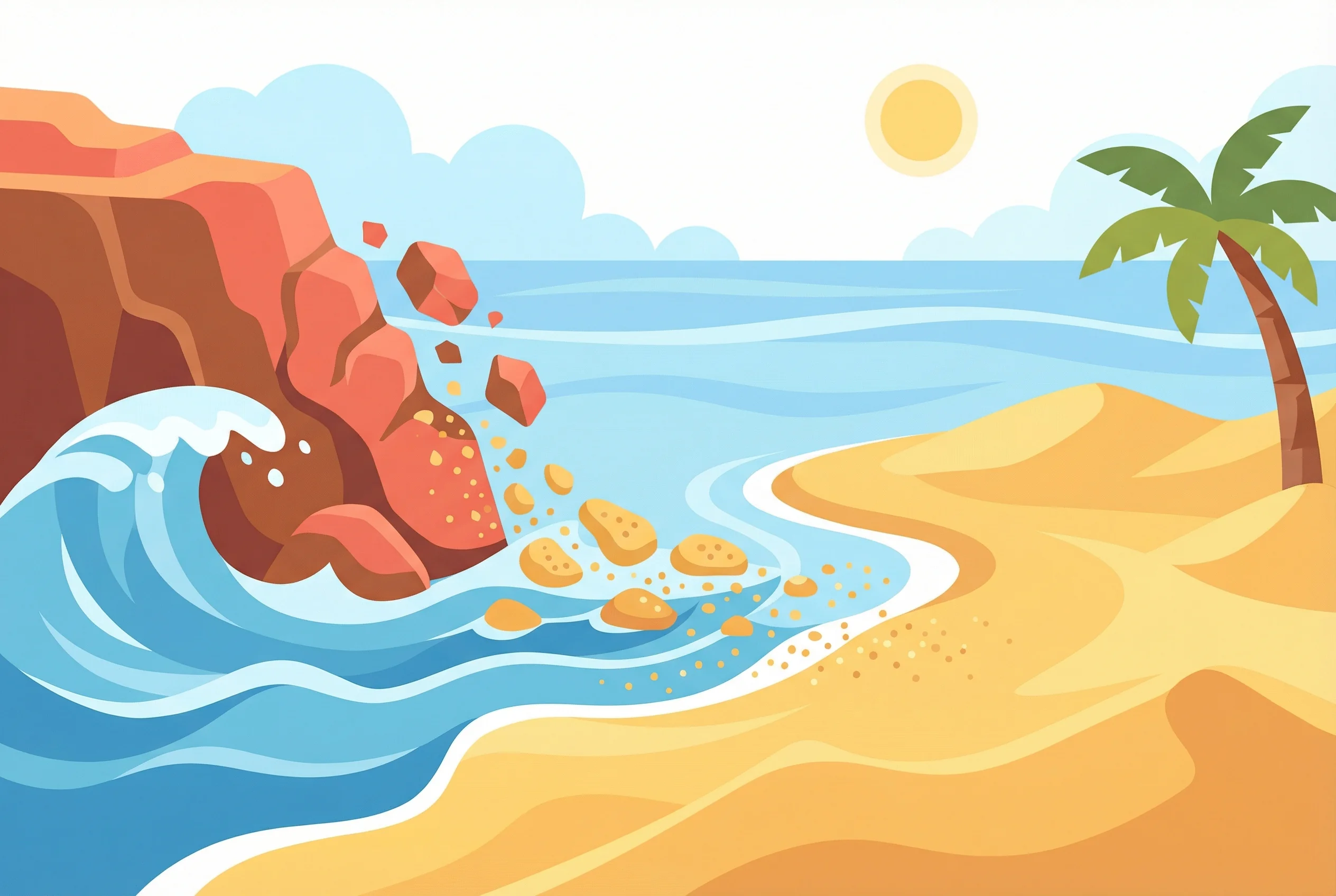
AFish create sand particles
✗Not quite — Parrotfish do produce some sand from eating coral, but the vast majority comes from wave erosion of rocks and shells.
BUnderwater volcanoes erupt sand
✗Not quite — Volcanoes produce lava/ash, not sand directly. Beach sand forms primarily from wave erosion breaking down rocks over time.
CWaves grind rock into particles
✓Correct — Waves constantly crash against rocks, breaking them into smaller pieces. Rivers carry eroded rock to coasts. Continuous wave action grinds rocks, shells, and coral into sand-sized particles. Quartz is common in sand because it resists weathering. Black sand beaches form from volcanic rock. White sand from coral/shells!
Answer this question
Want a new one every day?
AIgneous Million Whys turns idle moments into tiny curiosity sparks: one question, one answer, one explanation that actually closes the loop.
Play today's daily quizFrequently Asked Questions
What makes a daily quiz worth doing?
The useful kind gives you quick closure, not a score to worry about. You should know why the answer is right before you move on.
Can a quiz of the day help adults learn without studying?
Yes, if the unit is small enough. A single question can open an information gap, then close it with a crisp explanation.
Where can I find daily trivia questions with answers?
This page collects daily trivia-style questions from the Million Whys bank, and /daily gives you a fresh playable question.
Is this a daily quiz app or a trivia game?
It borrows the lightness of a trivia game, but the point is curiosity: each answer is there to make one mechanism click.
What does this have to do with AIgneous Million Whys?
Million Whys is built around the idea that learning starts as fragments: one question at a time. The app lets those fragments compound without turning them into exam prep.