

10 Common Science Misconceptions Debunked for 2026
On this page· 15
Most science myths survive because they sound tidy. “Closer to the Sun means hotter.” “The brain has hidden unused capacity.” “Sugar makes every child bounce off the walls.” Those ideas feel intuitive, which is exactly why they spread. The better habit is to ask what a claim would look like under a simple test, then check whether the explanation still holds up.
These common science misconceptions are a good place to practice that habit. Each one below includes the wrong idea, why it sounds believable, the accurate correction, and a small test you can try with everyday objects. If you want more hands-on ideas, a set of captivating science projects for kids can help turn curiosity into something you can see and measure.
1. Seasons are caused by Earth being closer to or farther from the Sun
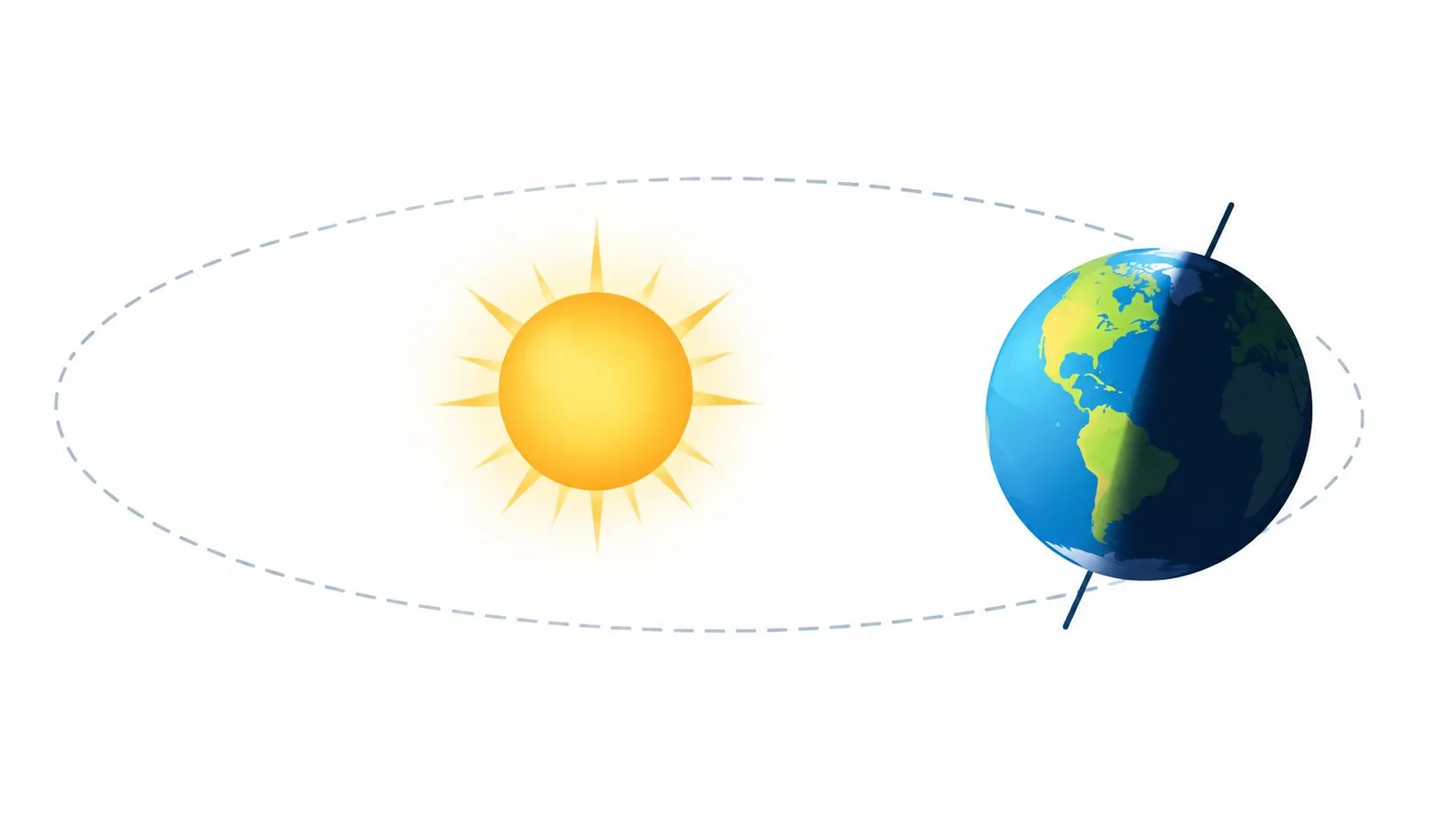
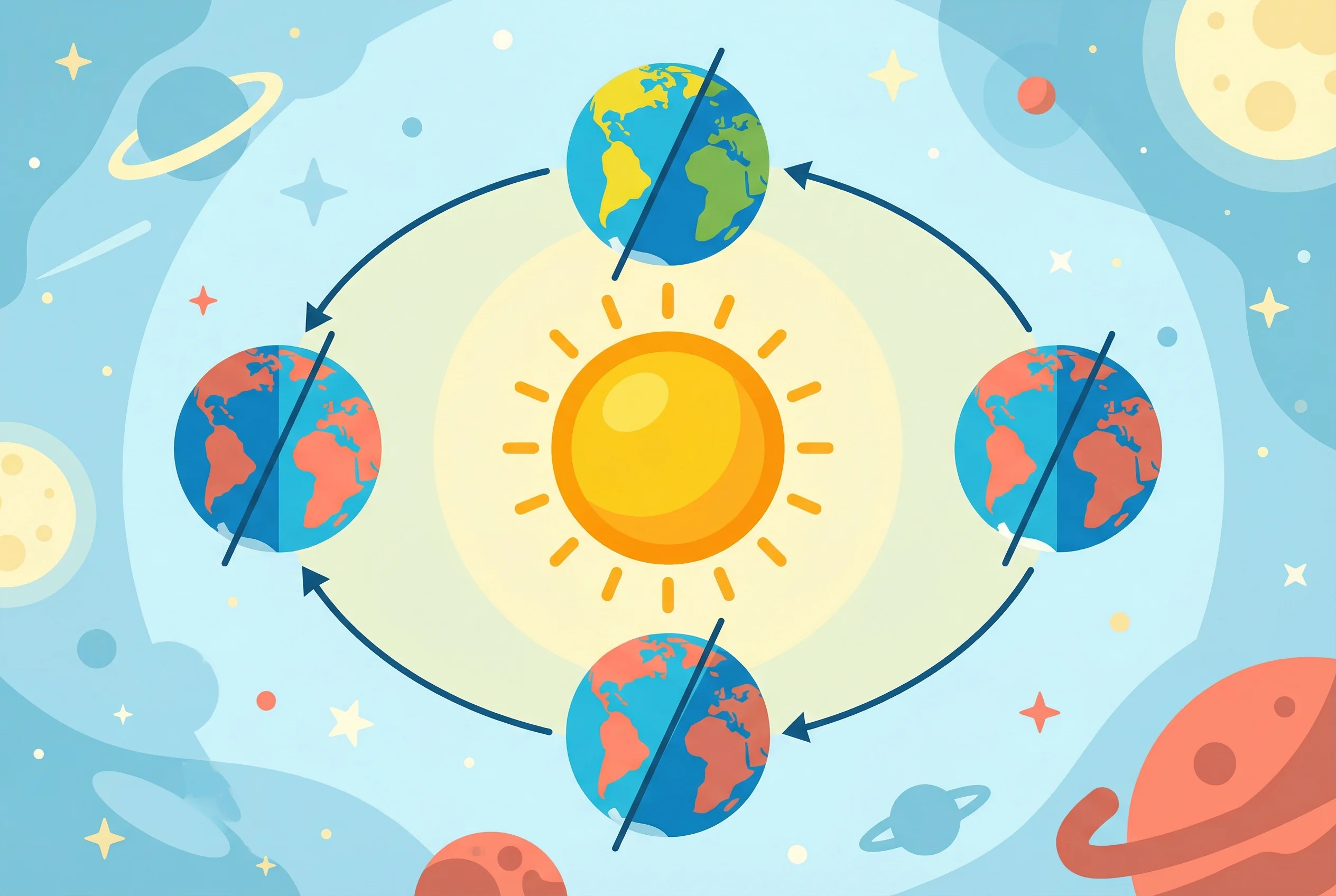
This myth sticks because it feels obvious. A warm day feels like a “nearer Sun” day, and a cold day feels like a “farther Sun” day. But Earth's seasons come from its 23.4° axial tilt, not from a simple distance change.
When the Northern Hemisphere tilts toward the Sun, sunlight hits more directly and daylight lasts longer. That gives the surface more energy over the day. Earth is closest to the Sun in early January, during Northern Hemisphere winter, so distance alone can't explain the seasons.
Try it with a lamp and globe
Use a lamp as the Sun and a tilted globe as Earth. Shine the light straight onto one part of the globe, then compare it with light that hits at a shallow angle. The angled light spreads over a wider area, so each square inch gets less energy.
Simple test: Shine a flashlight straight down on paper, then at an angle. The straight beam makes a smaller, brighter spot, which matches why direct sunlight warms Earth more than slanted sunlight.
Australia can have summer in December while the US has winter because each hemisphere gets a different tilt at the same time. That's the correction people usually need to see, not just hear.
Question 1 of 6
Why is Earth actually closest to the sun during winter in the Northern Hemisphere?
2. Humans only use 10% of their brains
This one feels hopeful. It suggests there is a secret reserve of unused power sitting inside your head. The problem is that it does not fit what brain imaging and brain injury evidence shows.
Different brain regions handle different jobs, and those regions light up during different tasks. A small stroke can affect speech, movement, or memory because the injured area had a real role. The brain is also expensive tissue. It makes up about 2% of body weight but uses roughly 20% of the body's resting energy, so it would make no evolutionary sense for 90% of it to sit idle.
A simple way to test the idea is to think about damage. If most of the brain were unused, losing a small part shouldn't matter much. But in real life, even tiny injuries can change language, balance, attention, or movement.
Practical rule: If a body part is costly to maintain, you should expect it to do work. The brain does work almost all the time.
Brain scans show activity across many regions during ordinary tasks like reading or listening to music, and that is part of why the myth falls apart. For a related curiosity trail, see the neuroscience of curiosity.
Question 2 of 6
Why does the brain's high energy cost make the idea that we only use 10% of it unlikely?
3. Heavier objects fall faster than lighter ones
This belief sounds right because heavy things feel more forceful when you hold them. A bowling ball seems like it should beat a feather every time. In air, it usually does, but not for the reason people assume.
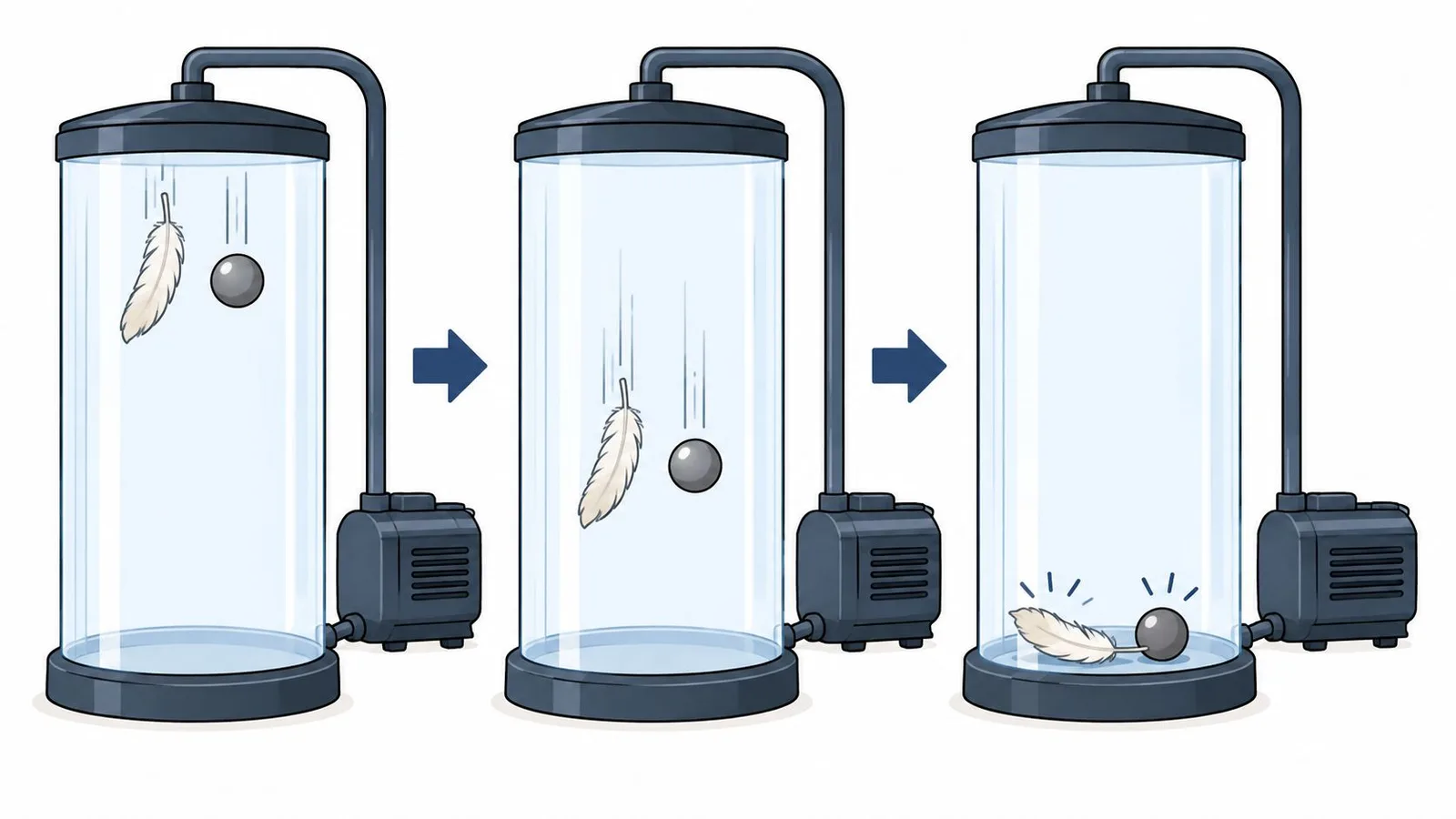
Near Earth's surface, gravity accelerates objects at the same rate regardless of mass. The difference you see in daily life comes from air resistance. A feather has a lot of drag compared with its weight, so it slows down much more than a dense object.
The cleanest test is the classic one. Drop a crumpled paper ball and a flat sheet of paper together. The flat sheet falls slower because air pushes on it more strongly. In a vacuum, objects fall together.
During the Apollo 15 mission in 1971, astronaut David Scott dropped a hammer and a feather on the Moon, and they landed together. That is the kind of check that makes a misconception hard to keep.
Predict first, then compare
Ask the question before you show the result. Prediction makes the explanation stick because the brain has to confront its own expectation.
If you want a home version, use the paper test above or compare a dense object with a light one in still air. The key correction is simple. Mass changes how much an object resists being pushed around, but gravity pulls on all objects.
Question 3 of 6
Why does a feather fall slower than a hammer on Earth?
4. Lightning never strikes the same place twice
People repeat this because it sounds comforting. If lightning is random, then maybe danger moves on after one strike. But lightning often does return to the same place, especially when the target is tall, pointed, or isolated.
Lightning follows a conductive path through air to the ground, and tall structures are attractive targets. A single flash can also contain multiple return strokes along the same channel. That means the same place can be hit repeatedly, not once and done.
The safest example is a skyscraper. Lightning rods exist because they provide a controlled path to ground. Tall buildings, church steeples, and trees can get struck again and again during storms.
The Empire State Building is a famous case, and storm-season explainers like fun facts about weather can make the pattern easier to remember. The takeaway is practical. Lightning is not polite, and it does not “use up” a target after one strike.
Weather rule: If an object is taller than everything around it, assume lightning may come back to it.
Question 4 of 6
Why can a tall building like the Empire State Building get struck by lightning many times during a single storm?
5. Blood is blue inside the body until it touches oxygen
This myth comes from looking at veins through skin. Veins often appear blue or green, so people assume the blood inside them must be blue too. It isn't.
Human blood is always red because hemoglobin carries iron. Oxygen-rich blood is brighter red, and oxygen-poor blood is darker red. The blue look comes from light scattering in skin, not from blue blood moving under it.
A simple test is medical rather than dramatic. Blood drawn into a tube looks dark red, even when it came from a vein that looked blue. That's the correction in plain sight.
Some animals really do have blue blood, such as horseshoe crabs and octopuses. Their oxygen carrier is different from ours, which is why the color changes. But human blood never turns blue inside the body.
The useful habit here is to separate appearance from substance. Veins can look one way through skin and blood can be another color entirely. Once you notice that difference, the myth stops feeling convincing.
6. Goldfish have a memory of only three seconds
This myth survives because it fits a simple story. People see a small fish in a bowl and assume it must be limited. Goldfish are more capable than that.
They can learn feeding cues, lights, sounds, and training routines. They also form associations that last much longer than a few seconds. The "three-second memory" idea is catchy, but it does not match how goldfish behave.
A simple check is easy to picture at home. If a goldfish swims to the front of the tank at feeding time, it is responding to a remembered pattern. That is a real memory, even if it is not the kind humans use for names or stories.
The myth sticks more easily when goldfish are kept in plain, undersized setups. In that setting, the fish has fewer chances to show learning, so people mistake a limited environment for a limited mind.
Goldfish do not need a human-style autobiography to have memory. They only need enough memory to recognize useful cues and repeat learned behavior. That is enough to dismiss the three-second claim.
If you enjoy animal misconceptions, this one pairs naturally with fun facts about the human body, because both challenge oversimplified ideas about living systems.
7. Sugar makes children hyperactive
This myth sounds convincing because the timing is noisy. A birthday party adds cake, candy, bright lights, and excitement, then a child may seem hard to settle. Sugar gets the blame because it is the most visible part of the scene.
Controlled, double-blind studies did not find a reliable link between sugar and hyperactivity. A 1995 JAMA meta-analysis by Wolraich and colleagues reviewed 16 double-blind trials and found no effect of sugar on children's behavior or cognitive performance. Parents' expectations matter too. When they believed a child had eaten sugar, they often rated that child as more hyperactive, even when the child had received a placebo.
The correction is simple. Sugar can appear in an exciting setting, but excitement is not proof of a sugar effect. If a child is bouncing around, the room, the noise, and the crowd may explain more than the snack does.
Good test: Compare behavior after a calm afternoon snack and after a birthday party. If the setting changes, sugar is only one small part of the picture.
That is why this misconception is useful. It shows how easy it is to mistake what stands out for what caused the behavior.
Question 5 of 6
In double-blind trials where neither parents nor children knew who got sugar, what happened to the sugar-hyperactivity link?
8. Cold weather causes colds
This misunderstanding is easy to forgive. People catch colds in winter, so winter seems like the cause. But colds are caused by viruses, especially rhinoviruses. Cold air alone does not create the infection.
Weather still matters, just not in the way the myth claims. People spend more time indoors in close contact, and ventilation often drops. Dry air may also affect the nose's defenses. Those conditions can raise transmission risk without being the actual germ.
A clear test is conceptual. If cold weather itself caused colds, everyone would get sick just by stepping outside. That doesn't happen. The virus has to be present.
The best correction is to separate cause from risk factor. Virus causes the disease. Winter conditions can make spread more likely. Those are different ideas, and mixing them up leads to bad prevention advice.
You can also explain why two claims both sound true. “It was cold when I got sick” may be accurate as a memory, but it doesn't prove the weather caused the illness. The infection still came from a virus.
9. Different parts of the tongue detect different tastes
The classic tongue map feels neat because it divides the tongue into tidy zones. Sweet at the tip, bitter at the back, and so on. The problem is that it came from a misunderstanding of early research.
The map traces back to a 1901 German thesis by David Hänig, which found small sensitivity differences across the tongue. Later, Edwin Boring misread that work and turned small differences into strict taste zones. That is how a neat diagram became a widely repeated misconception.
Modern research shows that taste receptor cells for all basic tastes are distributed across the tongue. There are minor sensitivity differences, but not exclusive regions. Taste is also only part of flavor. Smell and texture matter a lot.
A simple test is to eat something sweet while blocking your nose. The sweetness is still there, but the flavor feels flatter. That tells you taste and smell work together.
Why the map felt believable
People like tidy maps. They help memory. But biology is usually messier than a diagram in a textbook.
The right correction is not “the tongue map is completely useless.” It is that the map oversimplified a real pattern and then got treated like a hard rule.
Question 6 of 6
Where did the famous tongue map, with sweet at the tip and bitter at the back, actually come from?
10. Humans have five senses
Five senses is a tidy schoolroom summary, so it sticks. Sight, hearing, smell, taste, and touch do cover the obvious ones. They do not cover everything your body uses to understand the world.
Modern neuroscience also includes balance, body position, temperature, pain, and internal sensing. Closing your eyes and touching your nose shows proprioception, the sense that tells you where your hand is. Spinning until you feel dizzy shows the vestibular system working on balance. Hunger and heartbeat belong to internal sensing too.
A simple test makes the limit clear. Close your eyes and point to your shoulder or nose. You can still do it because your body tracks position, not just touch. That is why “five senses” is a shortcut, not a full count.
The count also changes with the definition. A narrow definition gives one answer. A function-based definition gives more. A short explainer like fun facts about the human body can help readers see why the count changes.
A better question: Which sense tells you where your hand is when your eyes are closed?
The answer is proprioception, not one of the classic five.
10 Common Science Misconceptions: Myth vs. Fact
| Topic | Common Misconception | Accurate Explanation | 📊 Key Evidence or Example | 💡 Teaching Tip |
|---|---|---|---|---|
| Seasons | Seasons happen because Earth moves closer to or farther from the Sun. | Earth's roughly 23.4° axial tilt changes sunlight angle and day length across the year. | Earth is closest to the Sun in early January; the hemispheres have opposite seasons. | 🔄 Use a tilted globe and lamp to show changing sunlight. |
| Brain use | Humans use only 10% of their brains. | Brain regions have different functions and become active at different times; the brain uses about 20% of resting energy. | Damage to a small brain area can impair specific abilities. | 📊 Compare the brain's energy use with its share of body weight. |
| Falling objects | Heavier objects fall faster than lighter ones. | In a vacuum, objects fall with the same acceleration; in air, drag affects them differently. | A feather and hammer fell together in Apollo 15's lunar demonstration. | 🔄 Compare a flat sheet of paper with a crumpled one. |
| Lightning | Lightning never strikes the same place twice. | Lightning can strike the same location repeatedly, especially tall or isolated structures. | The Empire State Building is struck many times each year. | 💡 Explain how lightning rods provide a path to ground. |
| Blood color | Blood is blue inside the body and turns red when exposed to oxygen. | Human blood is always red: oxygen-rich blood is brighter red, and oxygen-poor blood is darker red. | Veins appear blue through skin because of how light interacts with tissue. | ⭐ Contrast the appearance of veins with blood in a tube. |
| Goldfish memory | Goldfish remember things for only three seconds. | Goldfish can learn associations and retain memories for weeks or months. | They can learn feeding cues, navigate mazes, and perform simple tasks. | 💡 Demonstrate how a fish can learn a consistent feeding signal. |
| Sugar and hyperactivity | Sugar reliably makes children hyperactive. | Controlled studies have found no consistent link; expectations and exciting settings can influence perceptions. | A 1995 review of 16 double-blind studies found no reliable behavioral effect. | 📊 Use the example to discuss placebo effects and cause versus correlation. |
| Colds and cold weather | Cold weather directly causes colds. | Viruses cause colds; winter conditions may increase exposure or affect defenses. | People often spend more time indoors in close contact during colder months. | 💡 Distinguish an infectious cause from factors that affect risk. |
| Tongue map | Different tongue regions detect only specific tastes. | Taste qualities can be detected across the tongue, with some small sensitivity differences. | Sweetness can be detected at the tip, sides, and back of the tongue. | 🔄 Compare taste with and without the nose available for smelling. |
| Human senses | Humans have only five senses. | People also sense balance, body position, temperature, pain, and internal bodily states. | Touching your nose with your eyes closed uses proprioception. | ⭐ Ask learners to identify the sense used in everyday activities. |
Test One Myth Before You Repeat the Next
The safest way to handle common science misconceptions is to slow down before you pass them on. Ask what evidence would change the claim, then try a simple check. Use a lamp and globe for seasons, a paper drop for falling objects, or a controlled comparison when behavior is involved. If a claim only sounds right because it matches a story you've heard before, it deserves a test, not automatic repetition.
That habit matters because bad explanations travel faster than careful ones. A myth is usually memorable because it gives one clean cause for a messy world. Real science often asks for two things at once, the correct answer and the reasoning that proves it.
Million Whys uses that same habit in everyday curiosity. Its short why-questions pair each answer choice with an explanation, so readers can see why the right answer works and why the tempting wrong answer feels convincing. That makes it easier to spot a misconception before it turns into a habit.
For a quick way to practice the same skill with students or at home, try a true false worksheet creator and make each item ask for a reason, not just a guess. The best learning move is still the simplest one, test the idea before you repeat it.
If you want more short, explained questions that turn science confusion into clear understanding, visit Igneous AI, LLC. Their Million Whys format fits this topic well because each answer choice comes with an explanation, including the wrong ones, so you can see why a myth feels true and what the correct idea really means.
Keep Exploring
Why do we have seasons?
Astronomy & Space

Why do we often ignore facts that contradict our existing beliefs?
Psychology & Behavior
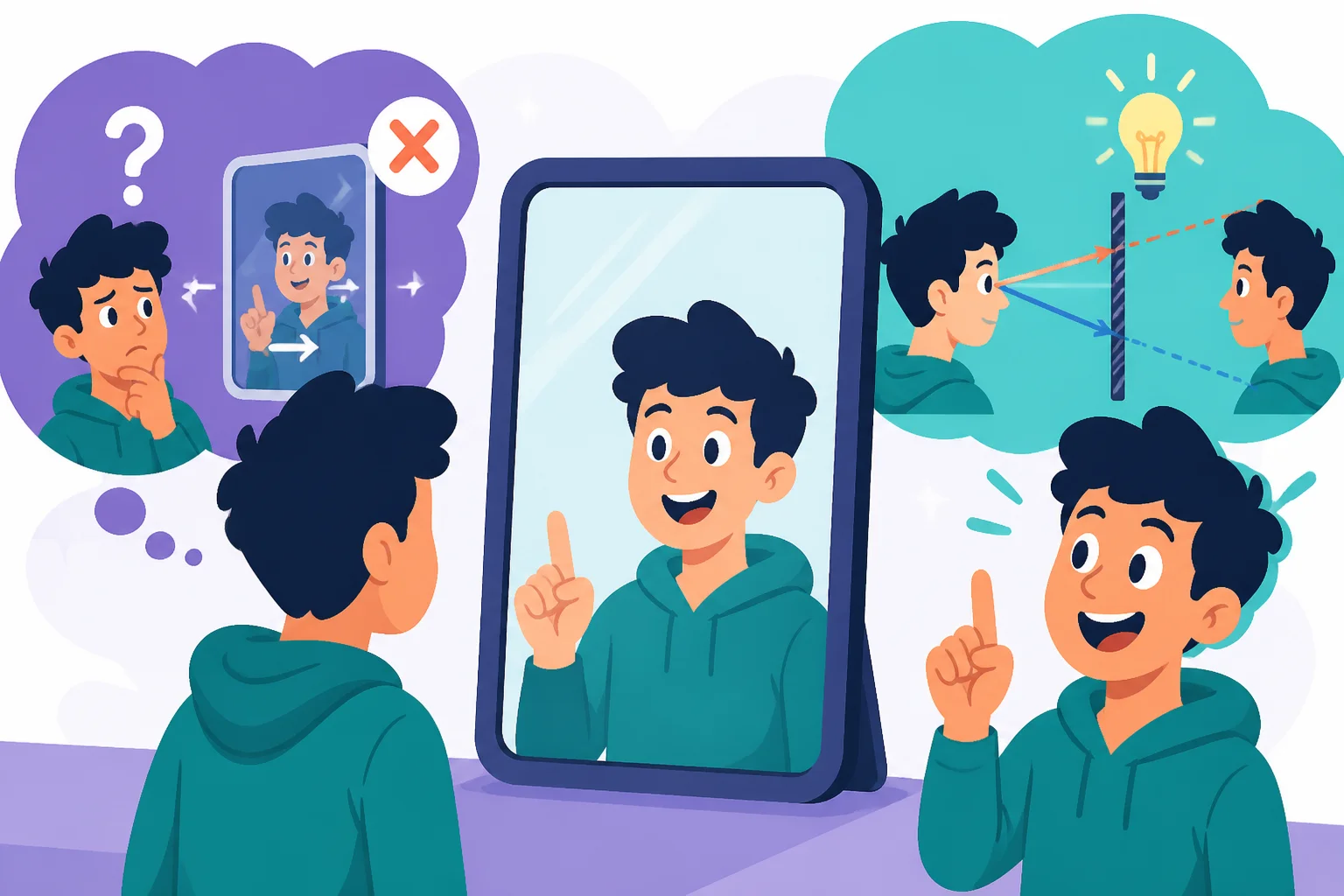
Why does a wrong guess about something familiar, like why a mirror swaps left and right, make the real explanation land better than being told it straight away?
Psychology & Behavior
Related Posts
The Everyday Science Questions Most Adults Get Wrong: What 55,918 Answers Show
We analysed 55,918 answers from 3,981 people to short why-questions. Most people missed 122 of them; the hardest were about mirrors, fevers, zebras and why astronauts float.
Fun Facts About Weather: Everyday Sky Physics
Fun facts about weather, explained through why raindrops flatten, clouds float, thunder rolls, snow survives warm layers, fog forms, and rainbows circle.
Why Is the Sky Blue? The Science of Light Scattering
Why is the sky blue? Follow sunlight through air molecules to see why noon turns blue, sunsets redden, Mars flips the palette, and blue oceans differ.