

Fun Facts About Human Body: Everyday Biology
On this page· 16
The best fun facts about human body biology do not feel like memorizing anatomy. They feel like catching your own body in the act: a blink you never noticed, a stomach noise at the worst possible time, a heart rate that jumps before you have fully decided to run, or a sneeze triggered by sunlight. The hook is not that the body is weird. The hook is that the weirdness is useful.
TL;DR
Fun facts about human body systems are most satisfying when they close a small information gap: your eyes blink to rebuild a tear film, your heart speeds up to move oxygen faster, your gut rumbles because smooth muscle is still working, and your body clock keeps time even when you are not watching one. The everyday body is not random. It is a stack of reflexes, pumps, rhythms, and feedback loops quietly keeping you usable.
Short answer: the human body is full of tiny automatic mechanisms that solve problems before conscious thought gets involved. Blinking protects the cornea, heart rate tracks oxygen demand, peristalsis moves fluid and gas through the gut, sneezing can be triggered by crossed sensory reflexes, and circadian clocks coordinate sleep, hormones, and metabolism across roughly a day.
Curious? Try one 👇
Why is the sky blue?
Jump into the daily quiz →Your eyes blink to rebuild a living film
Blinking looks like a momentary blackout, but the point is maintenance. The front of the eye depends on a thin tear film that keeps the cornea smooth, wet, and optically clear. The National Eye Institute explains that every blink spreads tear film across the cornea, and that tears help keep eyes wet, smooth, focused, and protected from irritants (NEI, How Tears Work). A review of tear-film biochemistry adds that irritation can trigger reflex tearing and blinking (StatPearls, Tear Film). That is why staring at a screen can make your eyes feel dry before you feel tired: the surface is losing its protective coating faster than you are refreshing it.
The usual blink-rate number is not a law, but it gives the scale. A tear-film modeling paper summarizes earlier work by saying typical resting blink rates are about 12 to 20 blinks per minute, while real rates vary widely with task and environment (Braun et al., 2015). The interesting part is the closure: a blink is not wasted time. It is a tiny reset of the optical surface, so your brain can keep pretending vision is continuous.

Your heart rate changes because muscles ask for delivery
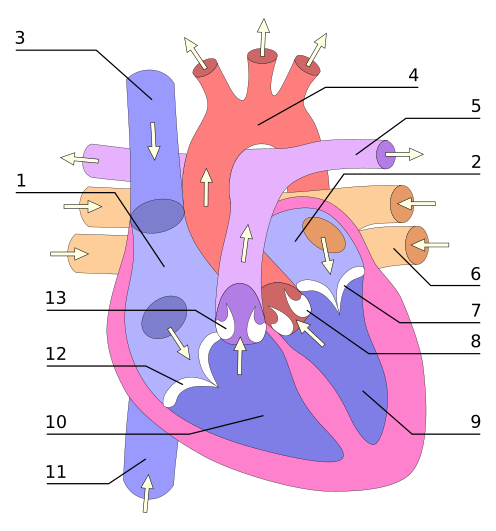
Your heart is not speeding up during exercise because it is panicking. It is responding to a delivery problem. The body has tissues that need oxygen and nutrients, and the heart is the pump that moves blood through that network. NCBI's InformedHealth overview puts the job plainly: the heart supplies organs and tissues with blood, oxygen, and nutrients, and it beats faster when we exert ourselves (NCBI Bookshelf, How the heart works).
NHLBI describes aerobic activity as activity that makes your heart beat faster than usual (NHLBI, Physical Activity and Your Heart). The small fact that closes the gap is this: the faster beat is not the goal. Flow is the goal. Working muscle consumes oxygen and produces carbon dioxide faster, so the circulatory system increases rate and force to move more blood per minute. You experience that as a pounding heart; your cells experience it as a supply chain catching up.
Your stomach can growl even when nothing is wrong
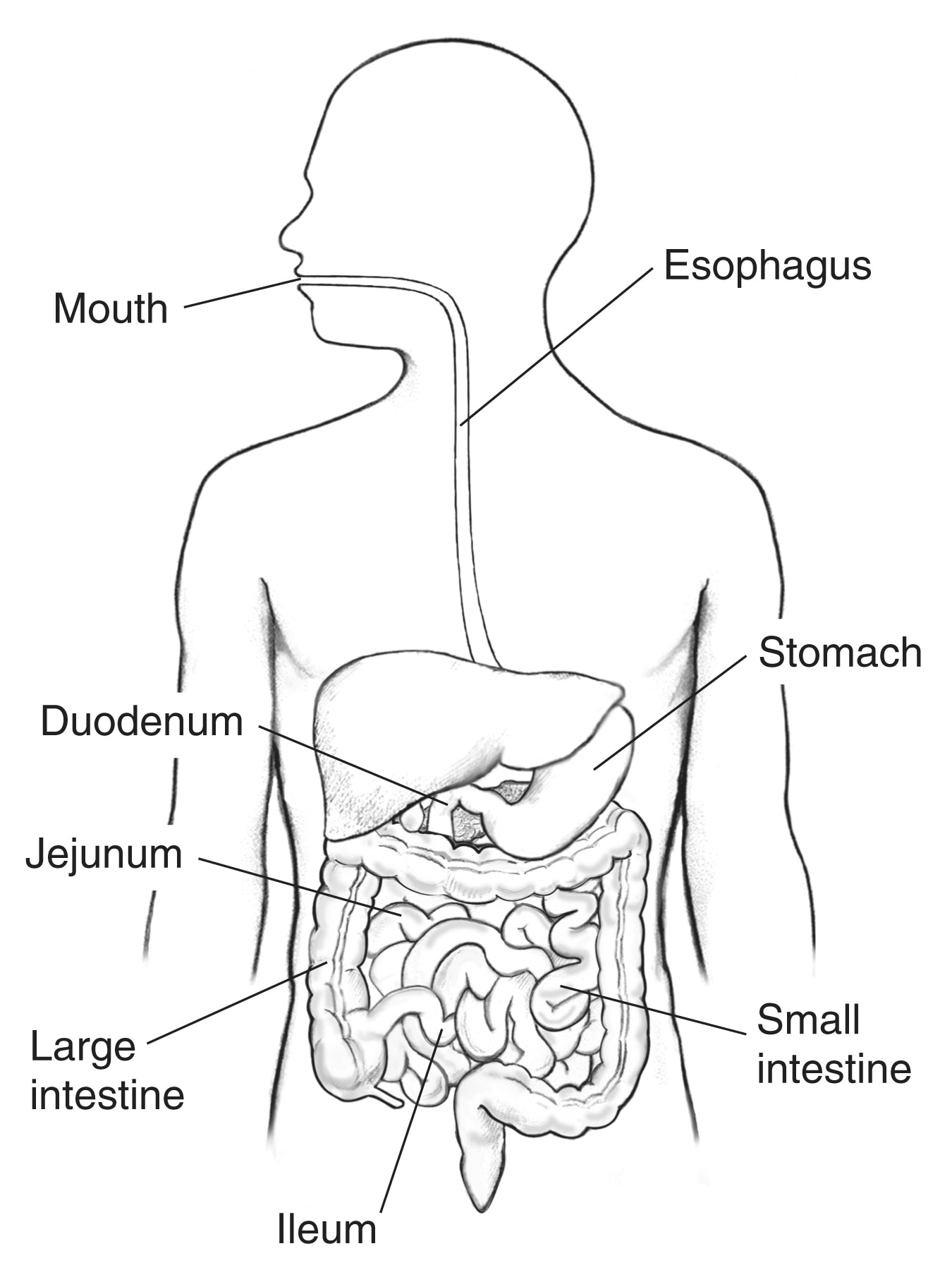
A stomach growl is one of the body's least dignified notifications, but it is not simply the sound of emptiness. The digestive tract moves material by peristalsis: coordinated waves of smooth-muscle contraction. StatPearls describes peristalsis as movement through hollow organs such as the gastrointestinal tract (StatPearls, Peristalsis). When those contractions move air and fluid, you can hear the plumbing.
Hunger adds another layer. Motilin is one hormone involved in gastrointestinal motility; StatPearls notes that it stimulates gastric and small-intestinal movement and is connected with the migrating motor complex between meals (StatPearls, Motilin). That means the rumble is not proof that your stomach is "asking" in words. It is your gut doing housekeeping, moving contents along, and sometimes turning a normal motor pattern into a public sound effect.
Your body has clocks, not just a clock
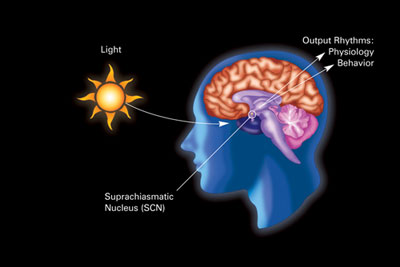
The phrase "body clock" makes it sound as if one small timer sits in the brain. The real story is more distributed. The National Institute of General Medical Sciences explains that circadian rhythms are physical, mental, and behavioral changes that follow a roughly 24-hour cycle, and that biological clocks are made of specific molecules interacting in cells (NIGMS, Circadian Rhythms). Light is the strongest outside cue, but the timing machinery reaches into sleep, hormones, digestion, and body temperature.
This is why jet lag feels so strangely total. It is not just sleepiness. Your internal timing system is trying to reconcile daylight, meals, temperature, and habit after the outside world suddenly moved. The satisfying answer is that your body is not waiting for a wall clock. Many cells keep time locally, while the brain helps synchronize the orchestra.
A sneeze can start from a crossed signal
Most sneezes make obvious sense: an irritant reaches the nose, sensory nerves report the problem, and the body expels air. But the photic sneeze reflex is stranger. Some people sneeze when they move into bright light. NCBI's Medical Genetics Summaries lists ACHOO syndrome as a named condition tied to photic sneezing and points to the inherited nature described in the literature (NCBI Bookshelf, ACHOO Syndrome).
The mechanism is still not perfectly settled, so the honest version is cautious: bright light is not heating the nose, and it is not dust. It appears to be a reflex wiring problem, where strong visual input can spill into pathways connected with nasal sensation and sneezing. That is a lovely example of curiosity at the half-known edge. The phenomenon is familiar enough to joke about, but the explanation still has a little scientific fuzz around it.

What people usually miss
The common mistake is treating human body facts as a pile of trivia. "You blink 12 to 20 times a minute" is a number. The more useful question is why a blink has to exist at all. "Your stomach growls" is a familiar embarrassment. The more useful question is why the gut keeps moving even between meals. The body becomes more interesting when every fact is attached to a job.
That is also why a good body fact should leave you slightly more observant, not just slightly more informed. The next time your eyes dry out, your stomach talks, or daylight makes you sneeze, the fact is no longer floating loose. It has a place to land in experience.
That is the Million Whys angle too: knowledge compounds when a small answer changes what you notice next. After you learn what a blink does, every dry-eye moment has a mechanism. After you learn what peristalsis does, a stomach rumble stops being a vague hunger alarm and becomes motion. Real closure is not the end of curiosity; it gives the next question somewhere to attach.

Related videos
FAQ
What are the most interesting fun facts about human body biology?
The strongest ones explain something you already experience: blinking, hunger, stomach growling, sneezing, heartbeat changes, sleep timing, balance, taste, or pain. They work because the mystery is close enough to notice.
Is a blink really doing anything important?
Yes. A blink spreads and renews the tear film over the cornea, helping keep the optical surface wet, clean, and smooth. The brain edits out most of the interruption, so you rarely notice the maintenance.
Why does the heart beat faster during exercise?
Working muscles need faster oxygen delivery and faster carbon dioxide removal. Increasing heart rate and pumping force helps move more blood per minute through the body.
Why does my stomach growl when I am hungry?
Digestive smooth muscle keeps contracting in waves. Between meals, those waves can move mostly air and fluid, making the sound louder. Hunger hormones and gut motility can make the timing more noticeable.
Are body clocks real?
Yes. Circadian rhythms are roughly 24-hour biological cycles, and the underlying clocks involve molecular feedback loops in cells. Light helps synchronize them, but the timing system is internal too.
What does this have to do with AIgneous Million Whys?
These are exactly the questions Million Whys is built around: small, familiar gaps that can close in seconds and leave you more alert to the world. It is not exam prep. It is curiosity that keeps attaching to real mechanisms.
Curious? Try one 👇
Why is the sky blue?
Jump into the daily quiz →Keep Exploring



Related Posts
Human Body Trivia Questions With Answers
Human body trivia questions with answers about heart rate, hunger, tears, digestion, shivering, wrinkles, fingerprints, and why your body works daily.
Interesting Facts About the Human Body: A Quiz
Interesting facts about the human body — why fingers go pruney, why your brain cleans itself as you sleep and what earwax is for. Guess, then see why.
Health Trivia Questions About the Body
Health trivia questions about everyday body mechanisms: sleep, senses, pain, hydration, joints, immunity, and what your body is doing, without medical advice.