

Neuroscience of Curiosity: Why Wonder Sticks
The neuroscience of curiosity begins with a small, familiar feeling: you almost know something, but not quite. That "not quite" matters. A blank fact dumped onto a page can slide away in seconds, while a question that catches you halfway between knowing and not knowing can make the answer feel like closure. The useful surprise is not that curiosity feels good. It is that the brain treats an answer you want as a reward, and that reward state can change what you remember next.
TL;DR
The neuroscience of curiosity shows why a small daily question can be more than entertainment. Curiosity recruits reward and memory systems, especially when a person can sense the gap between what they know and what they want to know. The practical lesson is simple: do not start with a lecture; start with a question that can actually close.
Short answer: curiosity is a learnable state, not just a personality label. Research on trivia questions, brain imaging, memory, and aging suggests that curiosity works best when a person is close enough to care, uncertain enough to wonder, and then given real closure. That is why a 10-second question can be a serious learning unit without pretending to be school.
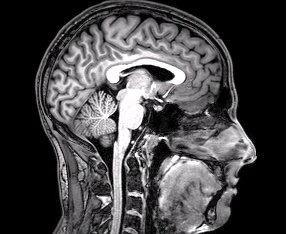
Curious? Try one 👇
Why is the sky blue?
Jump into the daily quiz →Neuroscience of curiosity starts with the information gap
George Loewenstein's 1994 review is still the cleanest doorway into the mechanism. His information-gap account says curiosity appears when attention focuses on a gap in knowledge: not a total void, and not something already settled, but a missing piece you can feel. That is why a good question has a different texture from a random fact. "Your hippocampus helps memory" is a fact. "Why do you remember an answer better after you wanted it?" creates the gap first.
This is also why curiosity is not just pleasant. Loewenstein described curiosity as a kind of cognitively induced deprivation, which sounds harsher than the dinner-party version but matches the experience. You feel a small itch. You want the missing piece. Then the answer lands and the system relaxes. In MillionWhys language, that closure is the payoff: not endless stimulation, but the satisfying click of "oh, that is why."
The important part for daily learning is the middle distance. If the gap is too wide, the question feels like homework from a planet you do not live on. If it is too small, there is no spark. The best curiosity prompts live in the half-known zone: "I have seen this, I kind of know the answer, but wait, why exactly?" A daily curiosity practice should keep returning you to that zone, because that is where the brain has something to bite.
This also explains why adults often feel less curious than they actually are. The curiosity is still there, but the available formats are poorly sized. A textbook chapter may be too heavy for the five-minute window you have. A short video may be too slippery to leave an answer behind. A search box may demand that you already know what to ask. A good curiosity unit does a smaller job: it names a gap that was already nearby, then gives you enough closure to carry the answer into the rest of the day.
The phrase "daily curiosity practice" can sound precious if it is treated like a ritual. It is simpler than that. It means letting one real question interrupt the default scroll. Why does mint feel cold? Why do songs from your teenage years feel louder in memory? Why does the Moon look bigger near the horizon? These are not "academic" questions in the school sense, but they are serious cognitive openings. Each one asks the brain to connect the familiar surface to a mechanism underneath.
Curiosity and the brain: reward is the spark
Kang, Hsu, Krajbich, Loewenstein, McClure, Wang, and Camerer tested this with trivia questions in a 2009 Psychological Science paper called The Wick in the Candle of Learning. Participants rated their curiosity about trivia questions while researchers used fMRI. Higher curiosity was associated with activity in caudate regions, which are involved in reward anticipation. The paper also found that curiosity related to later memory for the answers.
That finding matters because it moves curiosity out of the motivational poster category. The brain was not merely "interested" in a vague way. It was treating the pending answer as something worth pursuing. In plain English: when a question hooks you, the answer is not just information; it is a small reward your brain has been waiting for.
This does not mean every surprising sentence becomes learning. The study used trivia questions, which is useful because trivia has a built-in gap: the question arrives first, the answer later. That order is the mechanism. A fact list that starts with the answer can skip the very state that makes the answer memorable. The wick has to catch before the candle burns.
There is a practical writing lesson here. A curiosity page should not begin by proving how much it knows. It should begin by letting the reader feel what is missing. "Dopamine is involved in reward" is accurate but inert. "Why does an unanswered trivia question feel a little like waiting for a reward?" is more alive because it gives the reader a place to stand. The answer can then cite the caudate, reward anticipation, and memory effects without turning into a lecture.
That is also why MillionWhys avoids the exam mood. The point of a question is not to judge the user. It is to make the gap visible. A wrong answer is not a failure state; it is often the moment the gap becomes sharp enough to close. If the feedback explains why the tempting wrong option was tempting, the mistake becomes part of the learning path instead of a red mark.

How curiosity primes memory beyond one answer
The next useful piece comes from Gruber, Gelman, and Ranganath's 2014 Neuron paper, States of Curiosity Modulate Hippocampus-Dependent Learning via the Dopaminergic Circuit. In that study, high-curiosity states improved memory for the trivia answers people wanted, and also improved memory for incidental face images shown during the waiting period. The authors connected this to activity in dopaminergic circuitry and the hippocampus, the brain region closely involved in forming new memories.
That incidental-memory result is the part people often miss. Curiosity did not only help people remember the answer they came for. It changed the surrounding learning state. When the brain is hungry for an answer, nearby information can hitch a ride. The implication is not "curiosity magically teaches everything." It is more precise: a curious state can make the learning window more receptive.
For daily curiosity, this is a beautiful design constraint. The unit should be small enough that you actually enter the state, then receive closure before the itch decays into distraction. That is why a single question can be stronger than a tiny lecture. The question opens the gate; the answer walks through it.
The incidental-memory result also gives a clue about why curiosity can feel like momentum. One answer does not merely end a question. It changes what the next few seconds can hold. After learning why the sky is blue, you may suddenly care about why sunsets are red, why deep water looks blue, or why some animals see ultraviolet. The original answer has altered the local landscape. You are not "studying optics." You are following a chain of gaps that optics happens to explain.
That is the compounding part. Curiosity does not compound because every answer is equally important. It compounds because each closure increases the number of nearby doors. The user leaves with more questions, but not in the frustrating sense of being unresolved. They leave with better-shaped questions. A good curiosity product should optimize for that: more visible, more answerable, more connected gaps.

Benefits of curiosity are real, but not magic
It is tempting to turn curiosity into a wellness cure-all. That would be sloppy. The research supports a more useful, more honest claim: curiosity is linked to exploration, learning, memory, wellbeing, and adaptive aging, but the size and direction of those links depend on context. Kashdan and colleagues' Curiosity and Exploration Inventory-II work treats curiosity as something measurable through stretching toward new experience and embracing uncertainty. That is a long way from "just be more curious" as advice.
For older adults, Sakaki, Yagi, and Murayama's 2018 review, Curiosity in Old Age: A Possible Key to Achieving Adaptive Aging, proposes that curiosity may help maintain cognitive function, mental health, and physical health in later life. The cautious words matter: "may" and "possible key" are not guarantees. The paper does not promise dementia prevention, and neither should an article about curiosity. What it does support is the idea that novelty-seeking and question-asking remain relevant as people age.
That is a better promise anyway. Daily curiosity should not be sold as brain insurance. It should be treated as a humane way to keep the world porous. You notice something. You ask why. You close one gap. Then you can see the next gap. That loop is small, but it compounds because each answer changes the questions you are capable of asking.
Kashdan's measurement work is useful here because it separates curiosity from mere novelty-chasing. The CEI-II focuses on stretching toward new experiences and embracing uncertainty. Those are not the same as consuming a parade of random content. A person can see a thousand new things and never really stretch. The stretch appears when the new thing meets an existing map and asks the map to update.
For an adult, that updating often matters more than collecting facts. A fact about sleep can change how you read your own fatigue. A fact about attention can change how you design your morning. A fact about ocean pressure can make a documentary feel less like scenery and more like physics. The value is not that you have memorized a line. It is that the next encounter with the world has more handles on it.

Daily curiosity practice works when the unit stays small
A practical curiosity habit does not need a grand curriculum. In fact, forcing curiosity into a large syllabus can flatten the whole thing. The MillionWhys thesis is that learning input is naturally fragmented: one question, one uncertainty, one tiny closure at a time. Structure is the output that emerges later. You do not need to begin by knowing the whole subject. You need a good next question.
That is where the 10-second nano-learning loop earns its keep. The first two seconds are recognition: "Wait, I want to know that." The next few seconds are commitment: you pick an answer, even if you are not sure. The final few seconds are closure: the explanation either confirms you or corrects you. The cycle is short, but it includes the whole curiosity arc: gap, guess, answer, next gap.
For adults, this is often the difference between a habit and a fantasy. A 30-minute learning session is lovely when you have it. Most days, attention arrives in scraps: the coffee line, the train platform, the minute before a meeting, the little impulse to scroll. A curiosity-first product should meet that rhythm without punishing people for being human. The point is not to make learning smaller because adults are lazy. It is to respect that the question is already the natural unit of attention.
There is another reason to keep the unit small: a question gives the learner agency before the answer arrives. Even a quick multiple-choice guess asks the person to take a position. That tiny commitment changes the reveal. If you guessed right, the explanation stabilizes the reason. If you guessed wrong, the explanation has a misconception to repair. Either way, the answer lands on an active prediction rather than a passive surface.
This is one of the reasons AI can help when it is used carefully. AI is not valuable here because it can pour out infinite information. Infinite information is cheap and often numbing. AI is valuable because it can help turn a messy human "wait, why?" into a small, fact-checkable answer with the right level of closure. Humans supply the curiosity; AI can help scaffold the knowledge layer. That division keeps the product from becoming either a chatbot void or a fixed curriculum.
Daily curiosity is not the same as productivity
The easiest way to ruin curiosity is to make it justify itself too early. If every question has to become a goal, a certificate, or a measurable productivity gain, the question gets heavier before it has had a chance to breathe. Daily curiosity works better when it is allowed to begin as a small honest want: "I want to know why that happens."
That does not make it frivolous. The paradox is that low-pressure curiosity can produce durable learning because it is more likely to happen. The brain does not need a formal lesson to begin building structure. It needs repeated contact with answerable gaps. Over time, those small contacts create routes: biology to sleep, physics to cooking, psychology to memory, astronomy to time, history to language. The structure arrives after the fragments have had time to connect.
This is why "curiosity, not guilt" is more than a brand preference. Guilt can force attendance, but it is a poor engine for wonder. A streak says, "Come back or lose." Curiosity says, "Come back because the next answer might change how today looks." The second engine is gentler, but it is also more honest about why people learn when no one is grading them.

Curiosity-based learning needs closure, not endless itch
The dark pattern version of curiosity is the feed that keeps opening gaps and never closes them. A headline teases. A video loops. A thread promises the answer after twelve more swipes. That kind of stimulation can feel like curiosity, but it is often only unresolved itch. It keeps attention moving while understanding stays thin.
Real curiosity-based learning should do the opposite. It should respect the gap enough to close it. If the answer is uncertain, say it is uncertain. If the evidence is mixed, name the boundary. If the explanation is only a first layer, make the next question visible instead of pretending the subject is done. Closure is not the end of curiosity; it is what makes the next curiosity cleaner.
This is where fact-checking becomes part of the voice, not just an editorial chore. A curious friend with a fact to share says, "Here is what we found, here is the source, and here is where the claim stops." That posture keeps curiosity from becoming trivia confetti. The goal is not to be the loudest answer machine. It is to make the world feel answerable one gap at a time.
The best closure also leaves a clean edge. If a topic is settled, the answer should say so. If a topic is debated, the answer should make the debate legible without pretending to finish it. If a study is about memory for trivia answers, do not inflate it into a claim that curiosity makes everyone smarter at everything. A smaller true answer is more satisfying than a larger fake one because the user can trust the next gap it opens.
That trust is the difference between curiosity and content churn. Content churn asks for another click. Curiosity asks for a better question. The first can run forever without compounding. The second needs closure because closure is what lets the next question become sharper instead of merely louder.
What people usually miss
People usually talk about curiosity as if it were a personality trait: some people have it, some people lost it, some people should "be more curious." The neuroscience points to a more useful framing. Curiosity is a state you can enter when the gap is the right size and the answer is close enough to feel reachable. That means product design, writing, teaching, and daily habits can make curiosity more likely.
The second thing people miss is that curiosity is not the same as novelty. Novelty says, "new thing." Curiosity says, "missing piece." A random new thing can be entertaining and vanish. A missing piece can reorganize what you already know. That is why the strongest question often starts with something familiar: sky, coffee, memory, sleep, language, a sound in the kitchen. The answer does not create curiosity from nothing. It closes a gap you had finally noticed.
The third thing people miss is that "fragmented" does not mean "shallow." A fragment can be shallow if it never connects. But a fragment can also be the natural input unit of learning. The mind often understands large structures by closing small gaps in sequence. A daily question is not a replacement for deep reading, research, or practice. It is the on-ramp that keeps the knowledge network alive between the heavier sessions.
Related videos
- This is Your Brain on Curiosity | Matthias Gruber | TEDxUCDavisSalon
- How Curiosity Changes the Brain and Enhances Learning
FAQ
What is the neuroscience of curiosity in simple terms?
The neuroscience of curiosity studies how wanting an answer changes brain activity, motivation, and memory. The short version is that a good question can recruit reward systems and make the answer more memorable.
Why does curiosity help memory?
Curiosity appears to put the brain into a more receptive learning state. In Gruber, Gelman, and Ranganath's 2014 study, high-curiosity states improved memory for trivia answers and for incidental faces shown nearby.
Is curiosity a personality trait or a state?
It can be measured as a trait, but it also clearly works as a state. A person can become more curious when a question is close enough to understand and uncertain enough to feel unfinished.
How can adults practice daily curiosity?
Keep the unit small. Notice one "wait, why?" moment, commit to a guess before checking, read a real explanation, and let the answer suggest the next question. Five minutes is enough if the loop is honest.
What does this have to do with AIgneous Million Whys?
AIgneous Million Whys is built around the same curiosity arc: a small question, a real answer, and the satisfying closure that makes the next question visible. It is not a study product; it is a way to let everyday curiosity compound.
Keep reading
Sources
Loewenstein 1994: The Psychology of Curiosity
Kang et al. 2009: The Wick in the Candle of Learning
Gruber, Gelman, and Ranganath 2014: States of Curiosity Modulate Hippocampus-Dependent Learning
Kashdan et al. 2009: The Curiosity and Exploration Inventory-II
Curious? Try one 👇
Why is the sky blue?
Jump into the daily quiz →Keep Exploring
Related Posts
Why Are Fun Facts Interesting? Memory Science
Why are fun facts interesting? Cognitive science says surprise creates a curiosity gap, primes memory, and turns answers into satisfying closure that sticks.
AI for Learning Works When Curiosity Leads
AI for learning works when curiosity leads: use AI to expose gaps, close them with real explanations, and turn each answer into a better why, not a shortcut.
Learning Anything Starts With Tiny Questions
Learning anything works better when the unit is a tiny question: curiosity opens the gap, real answers close it, and knowledge compounds over time.