

Why Are Fun Facts Interesting? Memory Science
You can read a hundred sentences in a row and remember almost none of them. Then one strange fact catches: a smell can pull back a childhood room, a rainbow is not really sitting "over there," a giraffe has to manage blood pressure like an engineering problem. Why are fun facts interesting when so much other information slides off? It is not because the facts are decorative. It is because the right fact arrives as a small violation of expectation, opens a gap you can feel, and then closes it with an answer that makes the world click into a slightly sharper shape.
TL;DR
Fun facts are interesting because they create a reachable information gap: you know enough to care, but not enough to close the question yourself. Surprise gives the brain a reason to pay attention, curiosity makes the answer rewarding, and the reveal gives satisfying closure. A random fact sticks best when it is presented as a question first, not as a loose item in a long list.
Short answer: fun facts work when they are not just facts. They work when they are tiny curiosity machines. A good fun fact starts with an expectation, breaks it, asks your memory to search, and then gives an explanation that connects the surprise to a mechanism. The memorable part is often not the fact itself, but the emotional-cognitive shape around it: "wait, really?" followed by "oh, that makes sense."
Curious? Try one 👇
Why is the sky blue?
Jump into the daily quiz →Why are fun facts interesting to the brain?
The brain is not equally hungry for all information. It does not treat "The sky is blue" and "Some animals can see patterns in the sky that humans cannot" the same way. The second sentence has a hook because it hints at a world just outside your current model. You understand enough to be oriented, but not enough to be finished.
Loewenstein's information-gap theory gives a clean explanation. In his 1994 review, curiosity is framed as a response to a perceived gap between what a person knows and what they want to know (Loewenstein, 1994). The important word is perceived. You cannot feel a gap if the topic is too distant. You also cannot feel much curiosity if the answer is obvious. The sweet spot is half-knowing.
Fun facts often sit exactly there. "Bananas are berries" is interesting because you already have categories for bananas, berries, fruit, and everyday food. The sentence violates the casual category system without being so technical that you give up. It says: your map is close, but not quite right. That tiny mismatch is enough to make the brain lean forward.
This is why a good fun fact is not the same as a random fact. Randomness alone can be dull. "The 1879 municipal code contained 42 clauses" may be factual, but it has no felt gap for most people. A fun fact needs a familiar doorway and a surprising turn. The familiar doorway lets you enter. The surprise makes you care.
Why do we love fun facts and surprise?
Before information-gap theory, curiosity research often focused on arousal, novelty, complexity, and conflict. D. E. Berlyne's 1960 book Conflict, Arousal and Curiosity helped make those variables central to curiosity psychology (Berlyne, 1960). In plain language: we pay attention when something does not fit smoothly into what we expected.
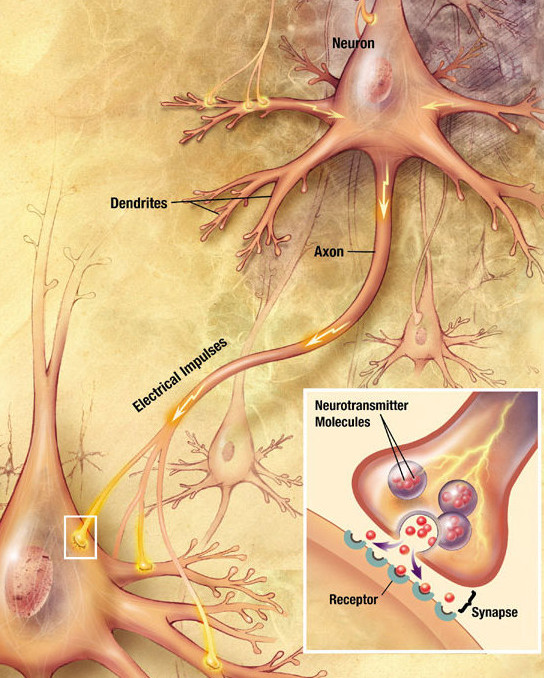
That does not mean surprise is automatically good. Too much surprise becomes noise. If a fact is bizarre but unconnected, it may get a quick laugh and disappear. If it is surprising and explainable, it becomes satisfying. The difference is closure. The brain does not merely want to be poked; it wants the poke to resolve into a better model.
Take "hot water can freeze faster than cold water under some conditions." The interesting part is not the sentence alone. It is the tension between your expectation and the possibility that the expectation has exceptions. Then the explanation opens mechanisms: evaporation, convection, dissolved gases, container conditions, and the fact that the Mpemba effect is more complex than a slogan. The fact becomes a doorway into physical reasoning.
That is the social appeal too. Fun facts are shareable because they reproduce the same mini-drama in another mind. You are not just transferring a sentence. You are inviting someone else into the "wait, what?" and then offering the "here is why." At their best, fun facts are small acts of epistemic companionship: I noticed a gap; maybe you will feel it too.
Science of curiosity: the information gap
The information gap is strongest when the missing piece feels close enough to reach. That is why "Why do cats knead blankets?" usually works better than "What are the tensor properties of spacetime curvature?" for a general audience. The first question attaches to a familiar observation. The second may be fascinating, but if the gap is too wide, curiosity can collapse into distance.

This is one of the reasons MillionWhys uses ten-second nano-learning as a primitive. The point is not to compress a textbook into a snack. The point is to honor the native shape of curiosity: one question, one prediction, one closure. Learning input is naturally fragmented. Structure comes later, after enough fragments connect.
A fun fact that starts as a question respects that shape. "What color is a polar bear's skin?" makes you search your existing map: white fur, snow, camouflage, Arctic. The answer - black skin under translucent-looking fur - lands because it has a job. It repairs the map. A list item that simply says "Polar bears have black skin" is still interesting, but weaker. It skipped the gap.
So when people ask why fun facts are interesting, part of the answer is format. The content matters, but the sequence matters more. A question makes the gap visible. A prediction makes the learner participate. The reveal gives closure. The explanation lets the answer compound into understanding.
Fun facts memory science: dopamine and hippocampus
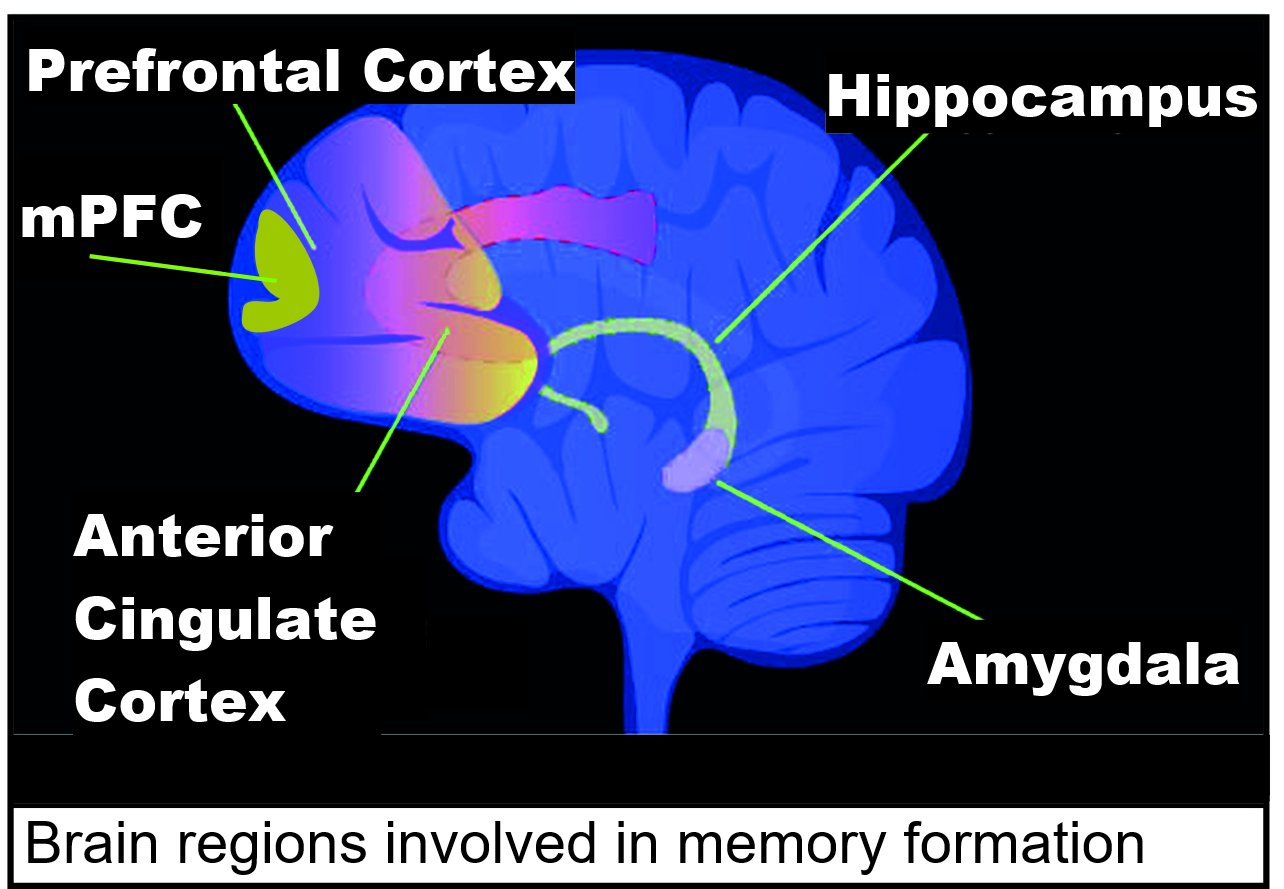
Several curiosity studies use trivia questions precisely because trivia creates measurable curiosity states. Kang and colleagues' 2009 Psychological Science paper, "The Wick in the Candle of Learning," reported that epistemic curiosity activated reward-related circuitry and enhanced memory for answers (Kang et al., 2009). That title is apt: curiosity can act like a wick, helping the answer catch.
Gruber, Gelman, and Ranganath extended this line in a 2014 Neuron paper. Using trivia questions, they found that states of curiosity modulated hippocampus-dependent learning via dopaminergic circuitry (Gruber, Gelman & Ranganath, 2014). The study is often summarized too broadly, so it is worth being precise: it does not mean any interesting sentence upgrades all memory. It means curiosity states can influence memory systems, including memory for targeted answers and some incidental information presented during that state.

This is the difference between stimulation and closure. Social feeds are good at stimulation: a cliffhanger, a tease, a bright novelty. But stimulation without closure can leave you more restless than informed. A well-built fun fact should do the opposite. It should provoke the itch and then actually scratch it.
The hippocampus angle also explains why context helps. A fact with no connections is hard to store. A fact that fits into a network has more retrieval paths. "The caudate nucleus lit up in a curiosity study" is not very useful by itself. It becomes meaningful when connected to reward, anticipation, memory, and the subjective feeling of wanting an answer. The network is what lets the fact come back later.
Why some facts stick after a wrong guess
One of the strangest parts of learning is that a wrong guess can help. The pretesting effect studies this directly: trying to answer before being taught can improve later learning, even when the attempt is unsuccessful. Richland, Kornell, and Kao's 2009 paper, "The Pretesting Effect: Do Unsuccessful Retrieval Attempts Enhance Learning?", examined how unsuccessful attempts can support subsequent learning (Richland, Kornell & Kao, 2009).
That is exactly what a good trivia format does. The point of multiple choice is not only to score you. It creates a commitment. You pick "A," then the answer is "C," and now the correction has contrast. The brain can encode not just the right answer, but the difference between the model you had and the model you need.
This is why "I got it wrong" can be a productive feeling rather than a failure. The wrong guess exposes the shape of the gap. If the explanation is clear, the correction can be more memorable than being told the answer first. The small embarrassment of being wrong is converted into closure.
The caveat is feedback. Wrong guessing without feedback can reinforce confusion. Pretesting helps when the correct answer arrives and the learner can compare it to the guess. In trivia terms: do not stop at "Not quite." Give the why. A wrong answer plus a mechanism is a repaired model.
Why listicles of fun facts often fail
Long fun-fact lists often look rich and feel empty. The headline promises "100 facts you won't believe," but the format removes the very thing that makes facts interesting. It gives answer after answer after answer without asking the reader to want any of them first.
That is why a list can be entertaining in the moment and gone an hour later. It skips prediction. It skips retrieval. It skips the feeling of "I need to know." It often skips the mechanism too. The reader receives novelty but not a place to put it.
A question-first format changes the same material. "Which animal has fingerprints so similar to humans that they can confuse crime scenes?" makes you search. "Koalas" is the answer, but the explanation - convergent gripping pads, tree climbing, and ridged skin - is the sticky part. You now have a mechanism and a comparison. The fact is no longer floating.
The best fun-fact pages should therefore be less like a pile and more like a trail. Each item should let you feel a gap, answer it, and leave with a slightly better model. That is not exam prep. It is closer to how curiosity naturally moves: one small why at a time.
How to make fun facts more interesting
If you are writing, teaching, or just sharing a fact over coffee, start with the gap. Do not begin with the answer. Begin with the expectation. "You would think..." is often a useful first move because it surfaces the model that is about to break. Then ask the question. Only then give the answer.

Second, make the answer explainable. Some facts are surprising because they are rare. Better facts are surprising because they reveal a mechanism. "A mantis shrimp punches fast" is fun. "A mantis shrimp punch can create cavitation bubbles, so the collapsing bubble adds a second hit" is better because it turns the fact into physics.
Third, keep the gap close. If the listener has no foothold, the fact becomes trivia in the bad sense: unconnected data. If the listener already knows the answer, there is no itch. The best fun facts are close enough to recognize and strange enough to reopen the map.
Fourth, end with a next question. A fact should not slam the door. It should close one gap and make the outline of another visible. "If curiosity helps memory, what happens when feeds create endless curiosity without closure?" That next question is where knowledge compounds.
Why fun facts feel like real closure
The satisfying part of a fun fact is not only novelty. It is the moment a loose piece snaps into place. Before the answer, the mind carries a small unresolved prediction. After the answer, the prediction is corrected, and the world becomes a little less blurry. That feeling is closure.

This is where curiosity content has to be careful. It is easy to manufacture the itch and never give the scratch. A headline can promise a secret, a video can withhold the answer, and a feed can keep the brain chasing the next half-open loop. That kind of stimulation may hold attention, but it does not necessarily compound knowledge. It leaves the person with more unresolved fragments.
A real fun fact should do the opposite. It should respect the itch enough to close it. If the question is "Why do onions make you cry?", the answer should not stop at "chemicals." It should name the sulfur compounds, the enzyme reaction after the onion cells are damaged, and the irritating gas that reaches the eyes. The pleasure comes from realizing that a familiar kitchen annoyance is a little chemical drama.
That is also why the best fun facts often make people quieter for a second. The reaction is not just "cool." It is "I have been seeing this for years and never understood it." That is the MillionWhys-shaped moment: the world was already there, but one small answer made it newly legible.
What people usually miss
People often say a fact is "sticky" as if stickiness belongs to the fact alone. But a fact becomes sticky through a relationship between content and presentation. The same sentence can be forgettable as a bullet and memorable as the answer to a question you just tried to solve.
So the deeper answer to "why are fun facts interesting" is not "because humans like novelty." That is true but incomplete. We like novelty that threatens a model we already have, then rewards us with a cleaner model. Fun facts are interesting when they create a gap, invite a guess, and deliver closure. Format does not merely package curiosity. Format creates it.
Related videos
How Curiosity Changes the Brain and Enhances Learning
This is Your Brain on Curiosity | Matthias Gruber | TEDxUCDavisSalon
FAQ
Why are fun facts interesting even when they seem useless?
Because their value is often not immediate utility. A good fun fact reveals a gap in your model of the world, closes it, and gives you a new connection that may become useful later.
Why do we love fun facts more than ordinary facts?
Fun facts usually contain surprise, contrast, or a broken expectation. Ordinary facts may be true, but they do not always create a felt information gap.
Do fun facts help memory?
They can, especially when they are presented as questions first. Curiosity and retrieval practice both help explain why a guessed-and-revealed answer can stick better than a fact you merely read.
Why do I remember random facts but forget important things?
The "random" fact may not be random to your brain. It may have been surprising, emotionally colored, or connected to something you already knew. Important information can still fade if it arrives without curiosity, retrieval, or context.
Are fun facts a good way to learn?
They are a good starting unit, not a whole curriculum by themselves. A fun fact becomes learning when it includes a mechanism and leads to another question, so fragments can connect into structure over time.
What does this have to do with AIgneous Million Whys?
AIgneous Million Whys treats every fact as the closure to a question, not as a loose item in a list. The goal is a ten-second curiosity loop: feel the gap, make a guess, get the answer, and leave with one more connected piece of the world.
Keep reading
Sources
Loewenstein, G. (1994). The Psychology of Curiosity: A Review and Reinterpretation.
Curious? Try one 👇
Why is the sky blue?
Jump into the daily quiz →Keep Exploring
Related Posts
Neuroscience of Curiosity: Why Wonder Sticks
The neuroscience of curiosity explains why small daily wonders prime reward, memory, and better questions without turning learning into homework or hype.
Are Trivia Games Good for Your Brain? Honest Science
Are trivia games good for your brain? This evidence-based guide explains retrieval practice, curiosity, memory benefits, and the honest limits of brain games.
Testing Effect: Why Trivia Beats Re-Reading
The testing effect explains why answering a question first can make memory stronger than re-reading. Here is the research, the limits, and the trivia link.