★ Sports Trivia
Sports Trivia Questions & Answers
Quick sports science questions about running, lifting, basketball, soccer, climbing, hydration, recovery, and the little mechanisms behind big performances.
Sports Trivia Game
ACools internal organs
✗Not quite — water helps cooling through sweat, but the core reason is replacing sweat fluid loss.
BFlushes out toxins
✗Not quite — kidneys handle waste. Exercise hydration is about fluid balance, blood volume, and temperature control.
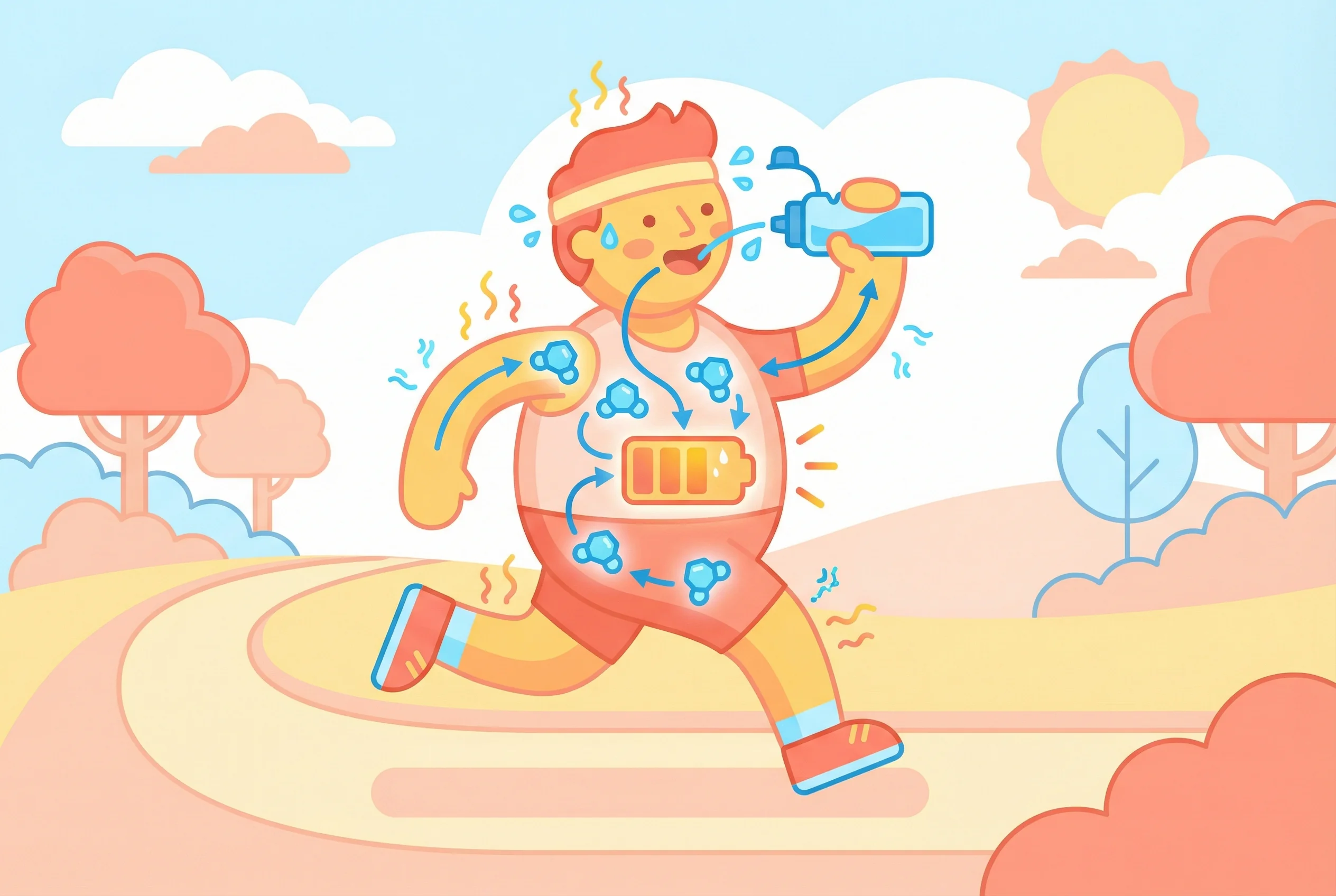
CReplaces sweat fluid loss
✓Correct — sweating cools you, but it also removes fluid. Replacing that loss helps maintain blood volume, sweat production, and performance.
Answer this question
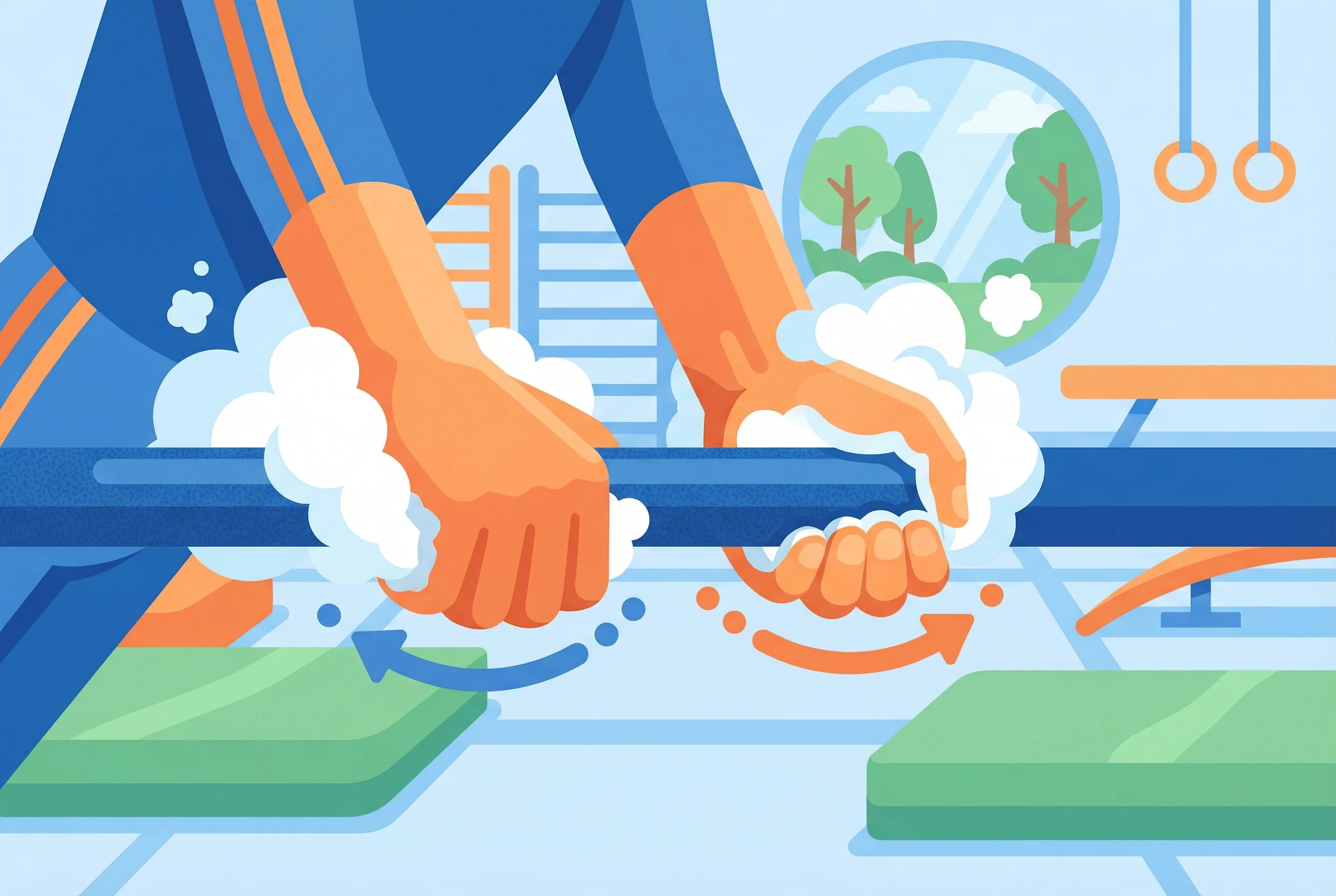
AAbsorbs sweat improving grip
✓Correct — chalk is magnesium carbonate, an absorbent powder that keeps hands dry so friction stays high on bars, rings, and other equipment.
BMarks hand positions
✗Not quite — gymnasts learn positions by practice. Chalk is mainly for dry, safer grip.
CCools hands during routines
✗Not quite — chalk does not cool hands. It absorbs moisture so the surface is less slippery.
Answer this question
ADries air around hands
✗Not quite — chalk absorbs sweat on skin, not moisture from the air around the climber.
BPrevents rope burns
✗Not quite — chalk is for grip on holds. Rope-burn prevention is a separate safety problem.
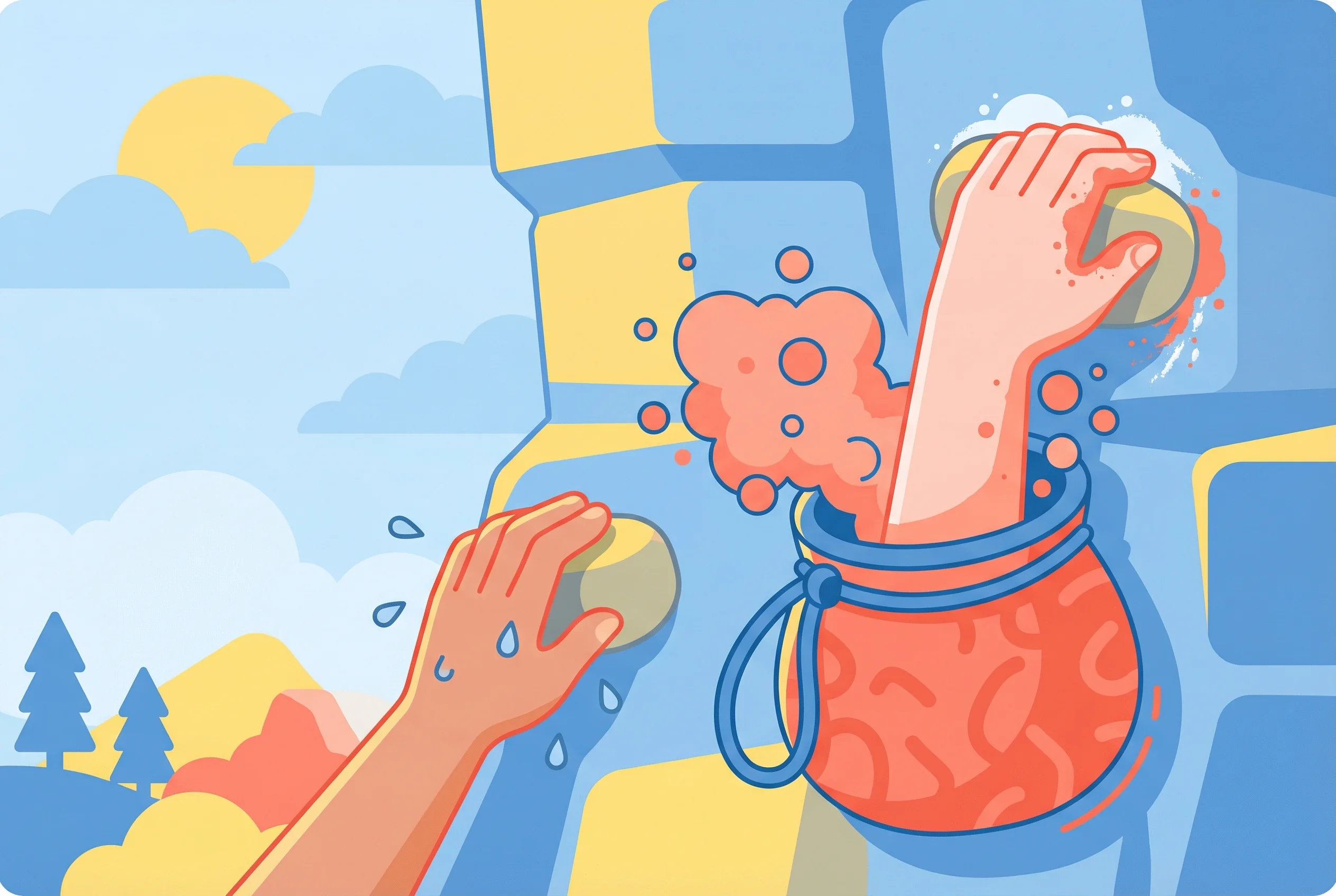
CAbsorbs hand sweat continuously
✓Correct — a chalk bag lets climbers refresh their grip mid-climb by absorbing sweat and restoring friction on small holds.
Answer this question
AMakes stick waterproof
✗Not quite — tape may help with ice buildup, but the main purpose is puck control.
BAdds weight for harder shots
✗Not quite — the added weight is tiny. Tape changes grip and feel more than shot power.
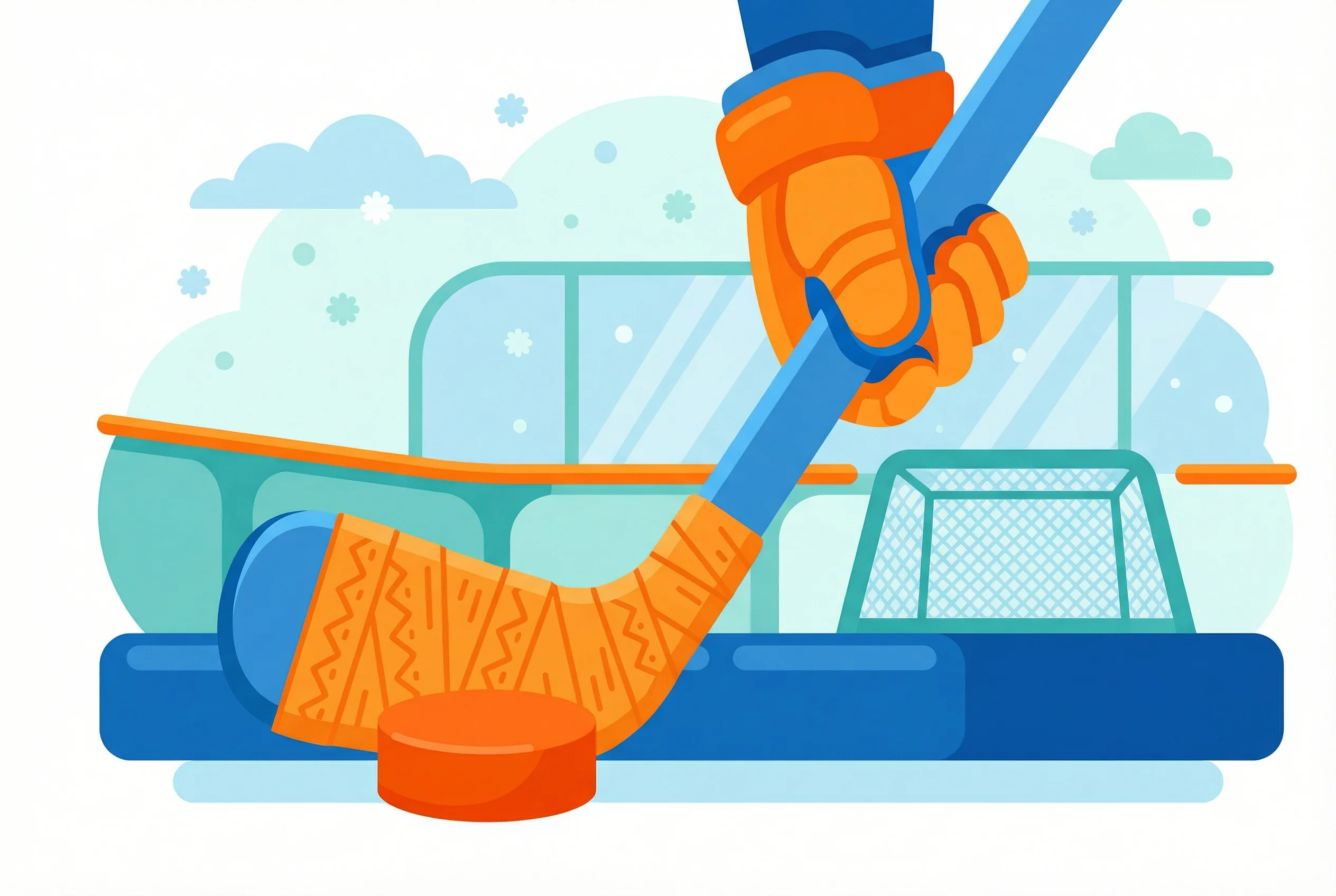
CImproves puck grip and feel
✓Correct — textured tape helps the blade catch the puck for stickhandling, passing, and shooting while also protecting the blade.
Answer this question
Sports Trivia Questions
AStores glycogen for energy
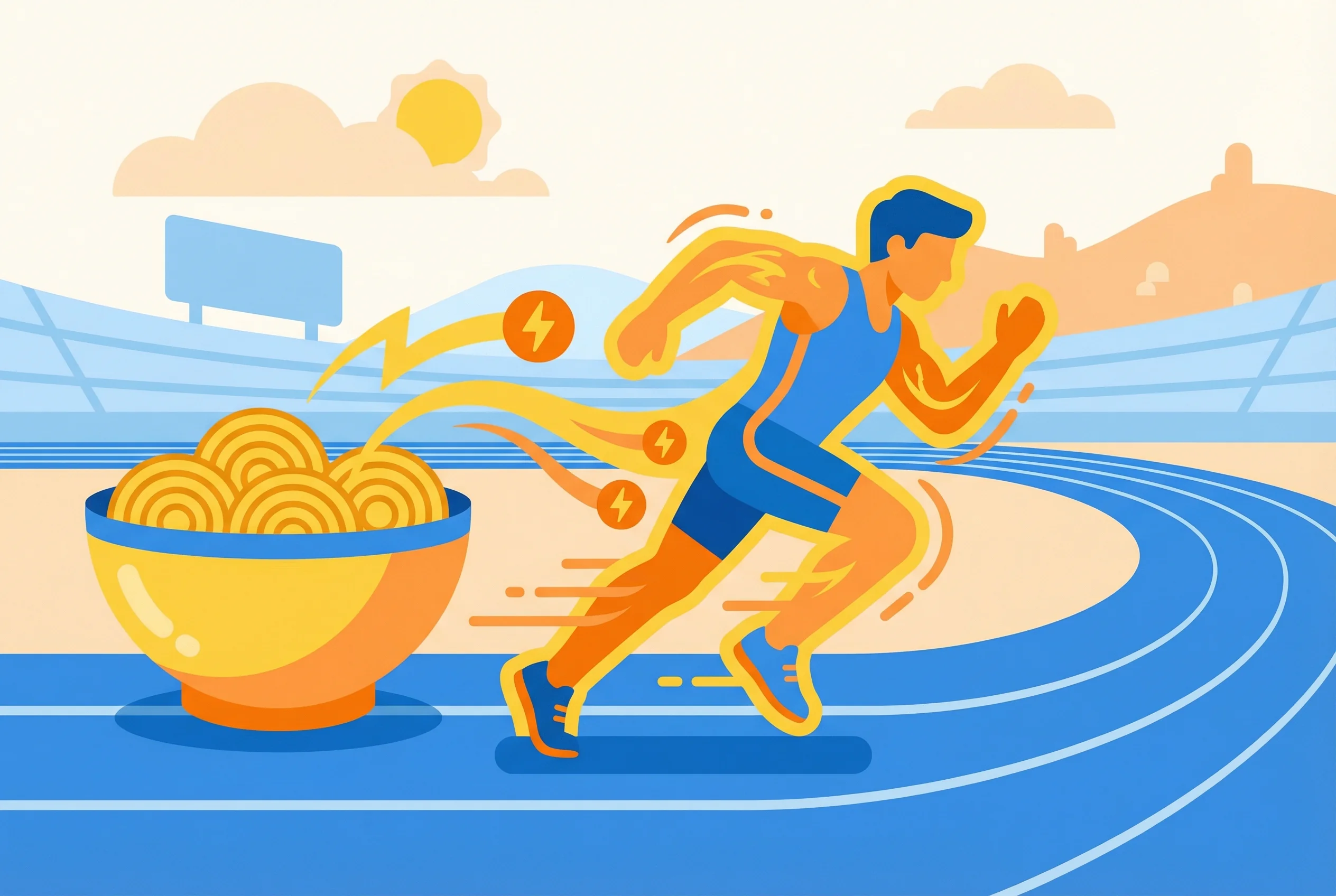
✓Correct — carbohydrates become glucose, then glycogen in muscles and liver. For long efforts, that stored fuel delays fatigue.
BIncreases muscle mass quickly
✗Not quite — muscle growth depends on training and protein. Carb-loading stores fuel.
CBoosts protein synthesis
✗Not quite — the key effect is glycogen storage for endurance, not protein synthesis.
Answer this question
ALungs expand too much
✗Not quite — lung expansion is not the main explanation for side stitches.
BDiaphragm muscle cramps
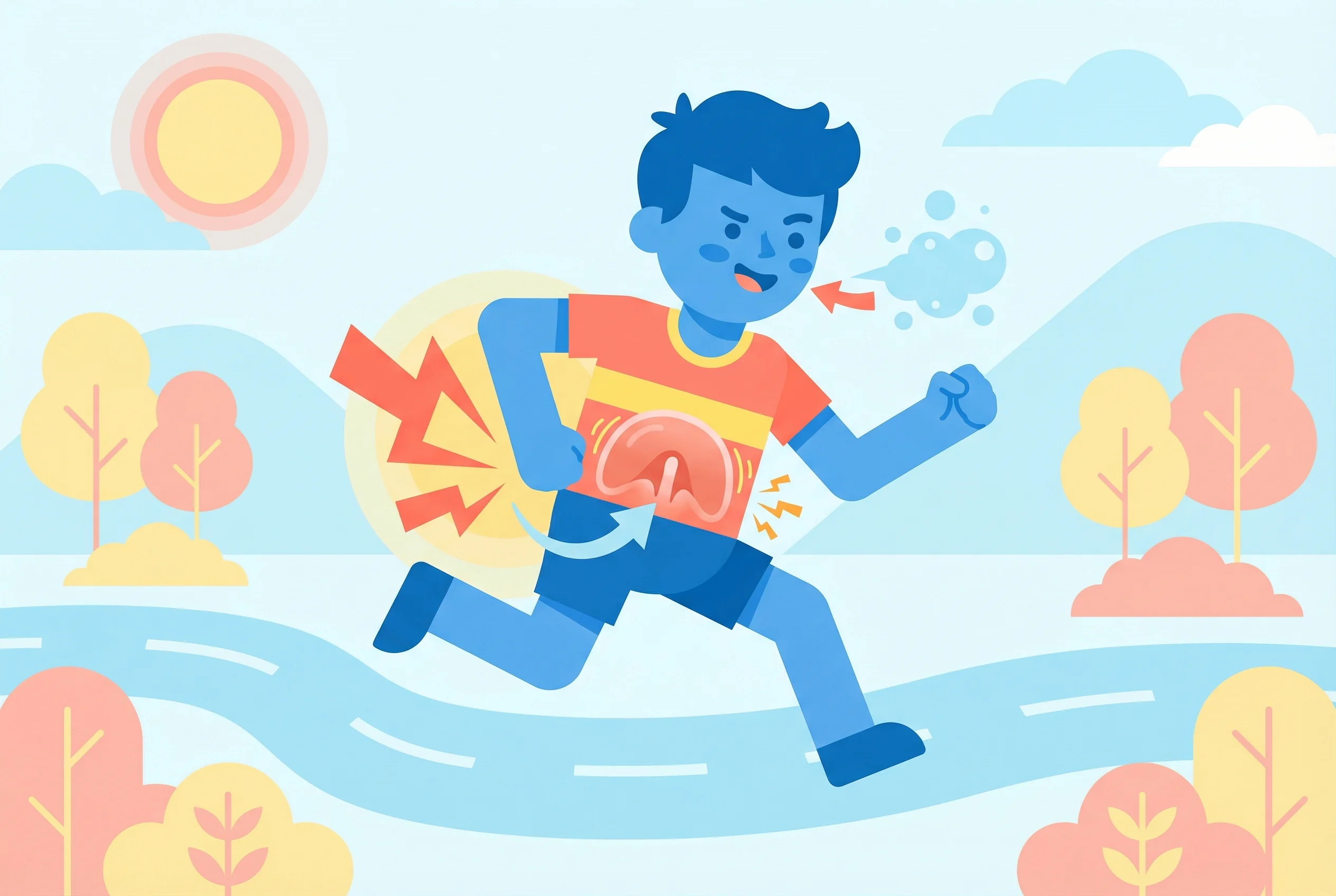
✓Correct — exercise-related side pain is often linked to diaphragm stress, cramping, and jolting forces on ligaments near the ribs.
CRib bones rub together
✗Not quite — bones are not rubbing. The pain is tied to soft tissue, breathing, and movement mechanics.
Answer this question
ABalances rotational momentum
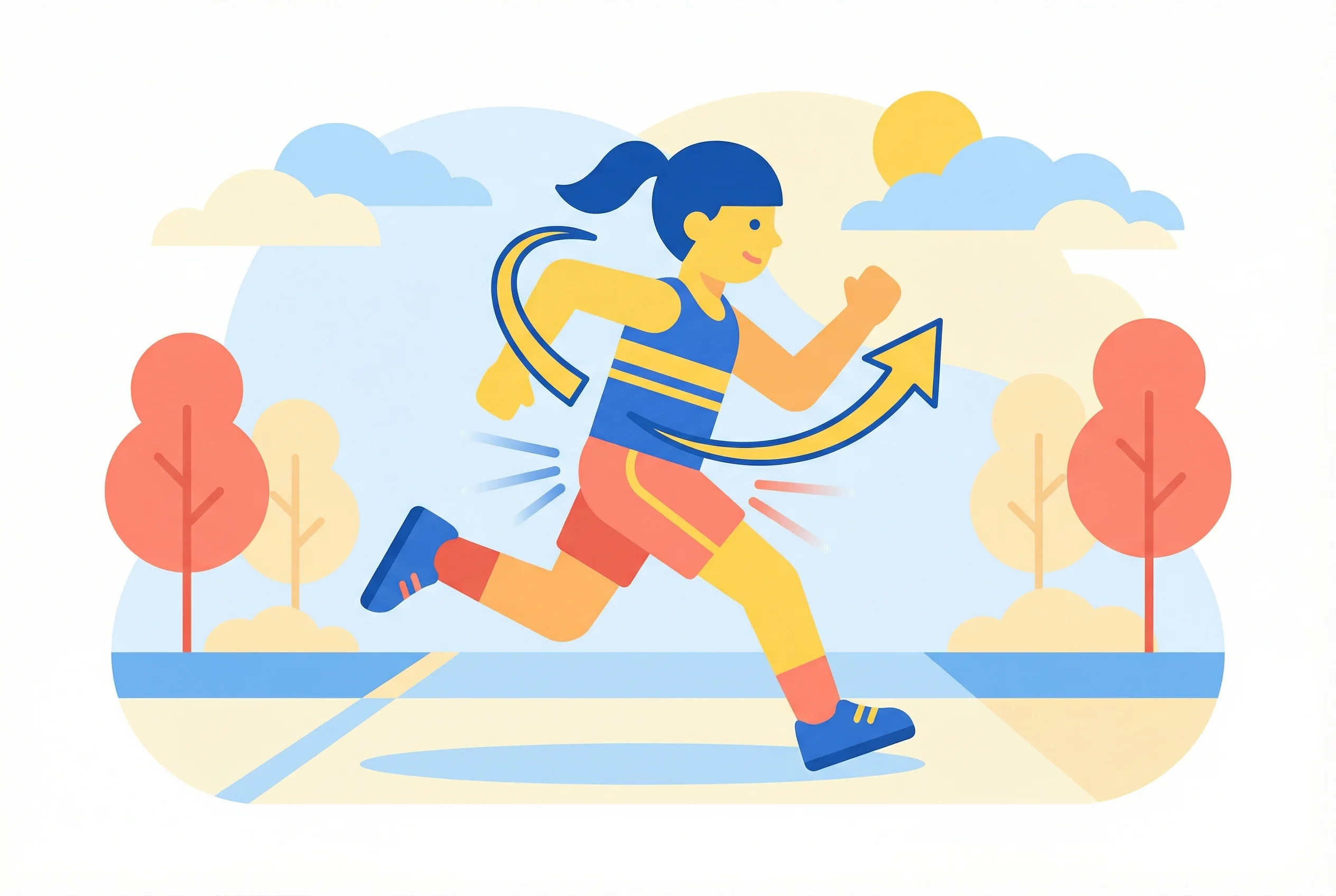
✓Correct — legs create rotational forces as they swing. Opposite arm swing helps cancel that motion and keeps the torso stable.
BIncreases oxygen to muscles
✗Not quite — oxygen delivery is not controlled by arm swing. The key mechanism is balance and efficiency.
CMakes running feel easier
✗Not quite — it can feel easier because it is more efficient, but the mechanism is angular momentum balance.
Answer this question
AMuscles run out of oxygen
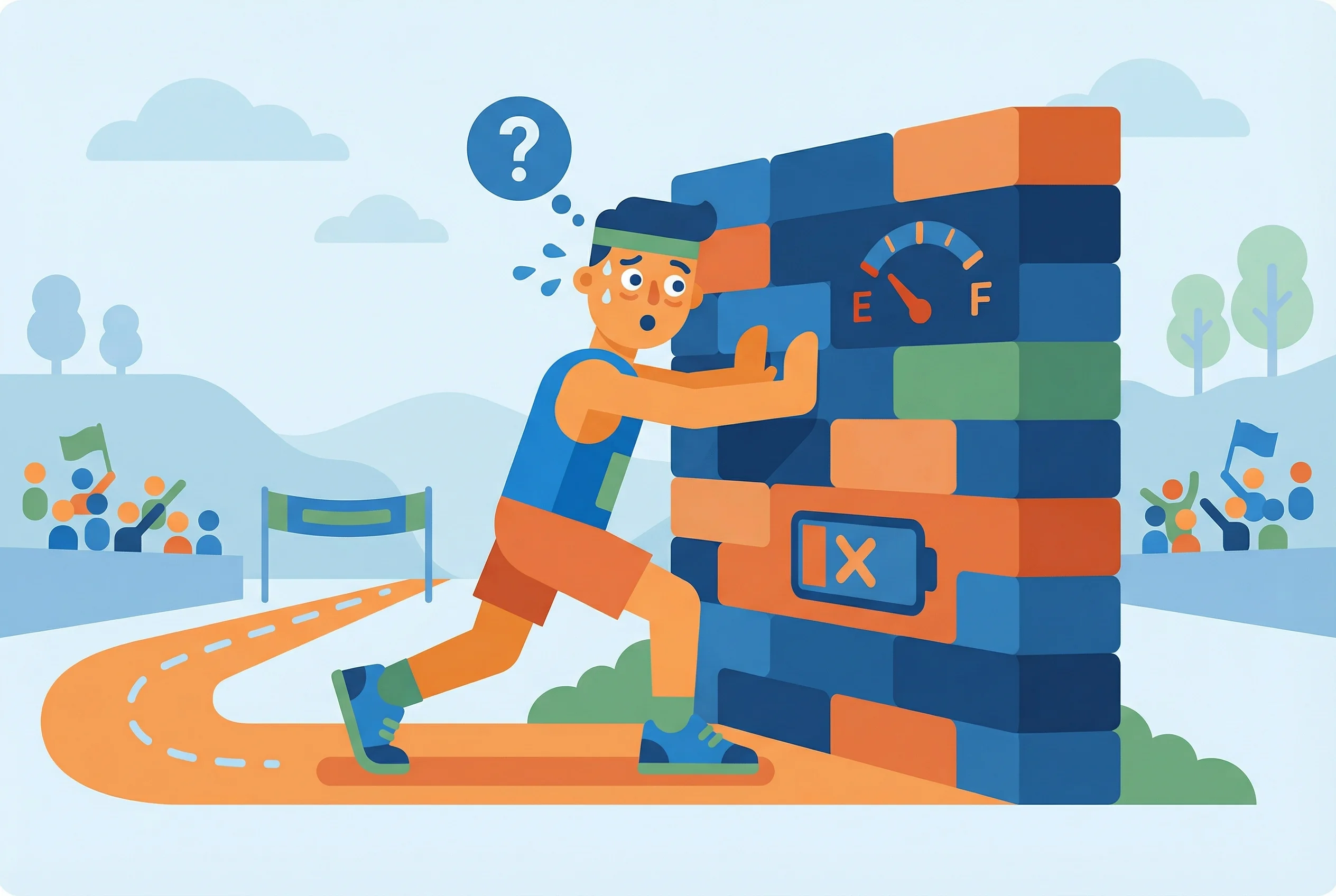
✗Not quite — in endurance events, the wall is less about oxygen and more about fast fuel running low.
BGlycogen stores deplete
✓Correct — when glycogen is depleted, the body leans harder on slower fat metabolism, so pace and mental sharpness can collapse.
CLactic acid accumulates
✗Not quite — lactate is not the classic marathon wall. Glycogen depletion is the main story.
Answer this question
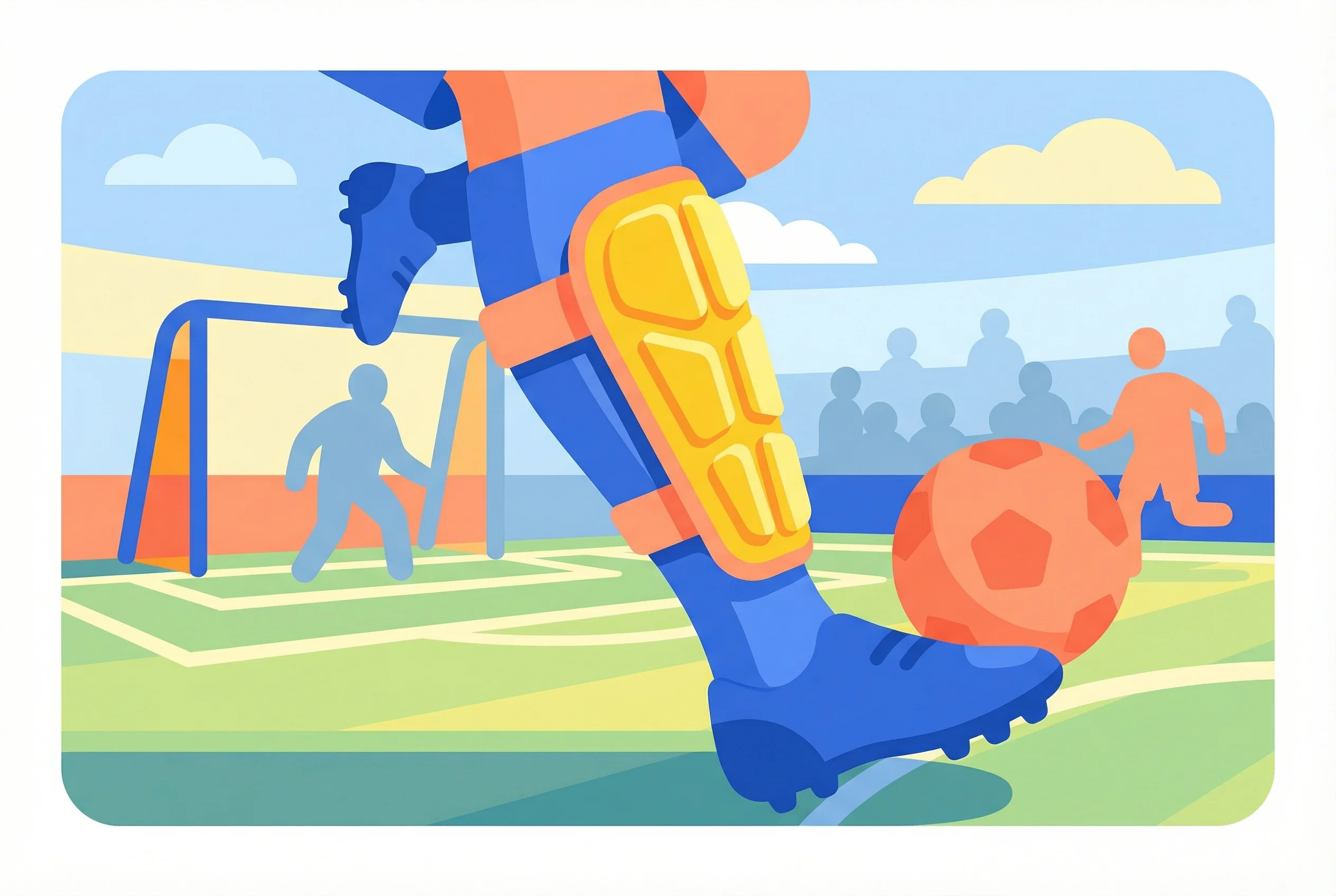
AProtects tibia from impacts
✓Correct — the shin bone sits close to the skin, so a guard spreads impact force from kicks, tackles, and collisions.
BRequired by tradition only
✗Not quite — it is a rule because the injury risk is real, not because of tradition alone.
CSupports ankle stability
✗Not quite — some designs add ankle coverage, but the main target is the tibia.
Answer this question
Hard Sports Trivia
APrevents muscle shaking
✗Not quite — bracing is about spinal stability, not stopping normal muscle tremor.
BReduces heart rate
✗Not quite — the maneuver can raise pressure. The benefit is mechanical support.
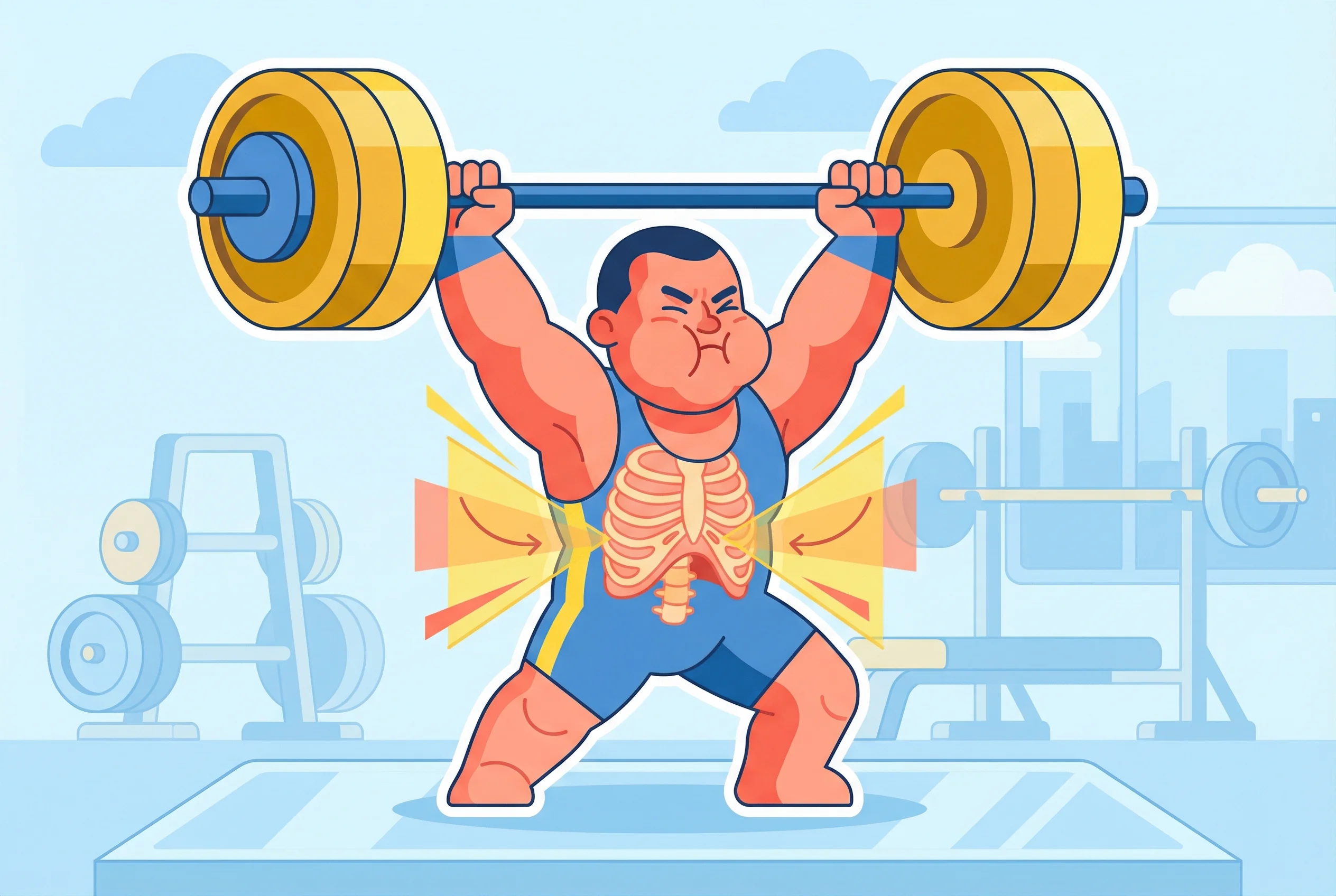
CCreates core stability
✓Correct — bracing with breath increases intra-abdominal pressure, stiffening the torso so the spine is better supported under heavy load.
Answer this question
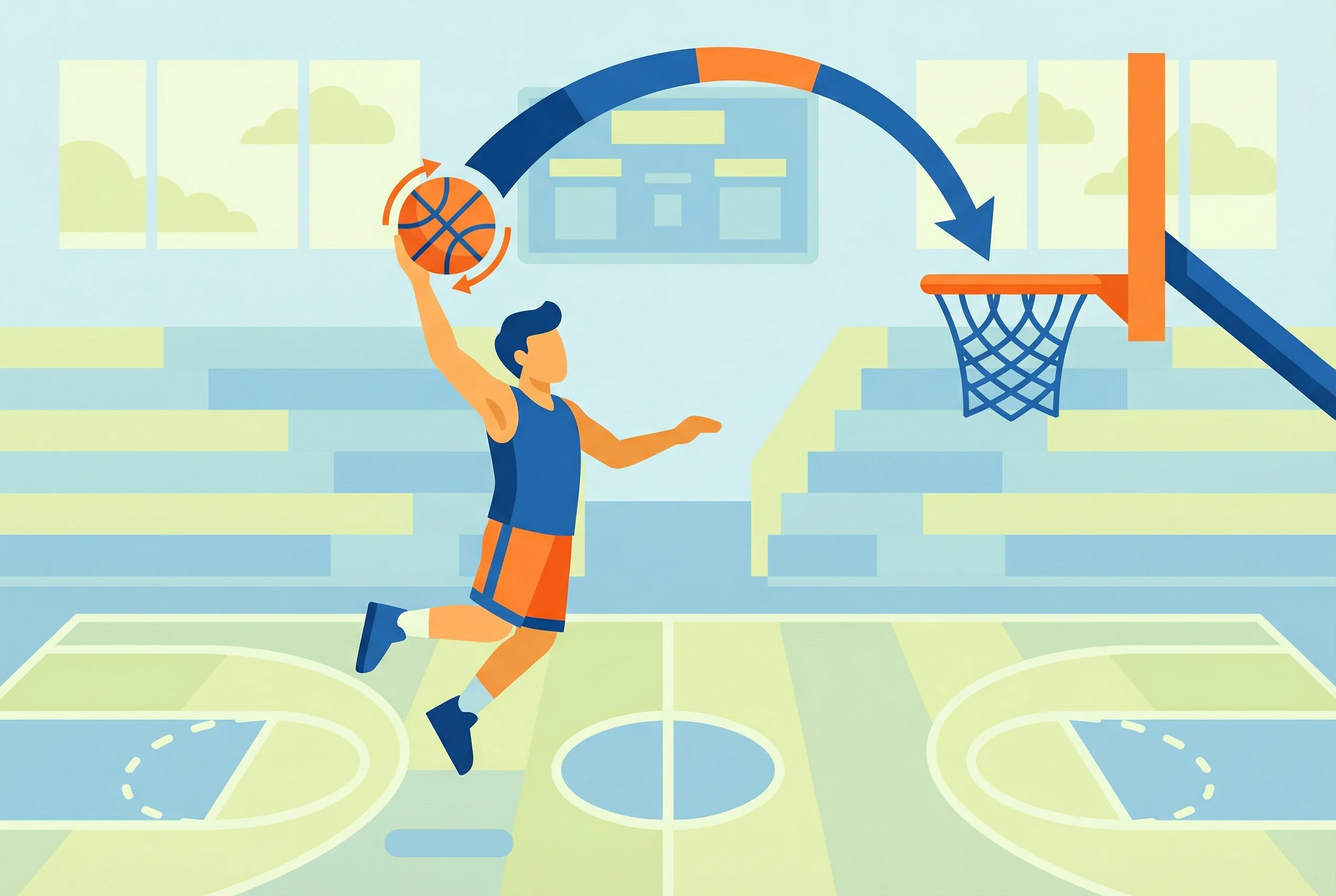
ABackspin softens bounce off rim
✓Correct — backspin works against forward motion at contact, reducing bounce velocity so the ball is more likely to drop through.
BSpin increases shooting range
✗Not quite — backspin can add tiny lift, but its bigger value is a softer rim or backboard contact.
CLooks more professional
✗Not quite — spin is functional. It changes how the ball behaves when it hits the rim.
Answer this question
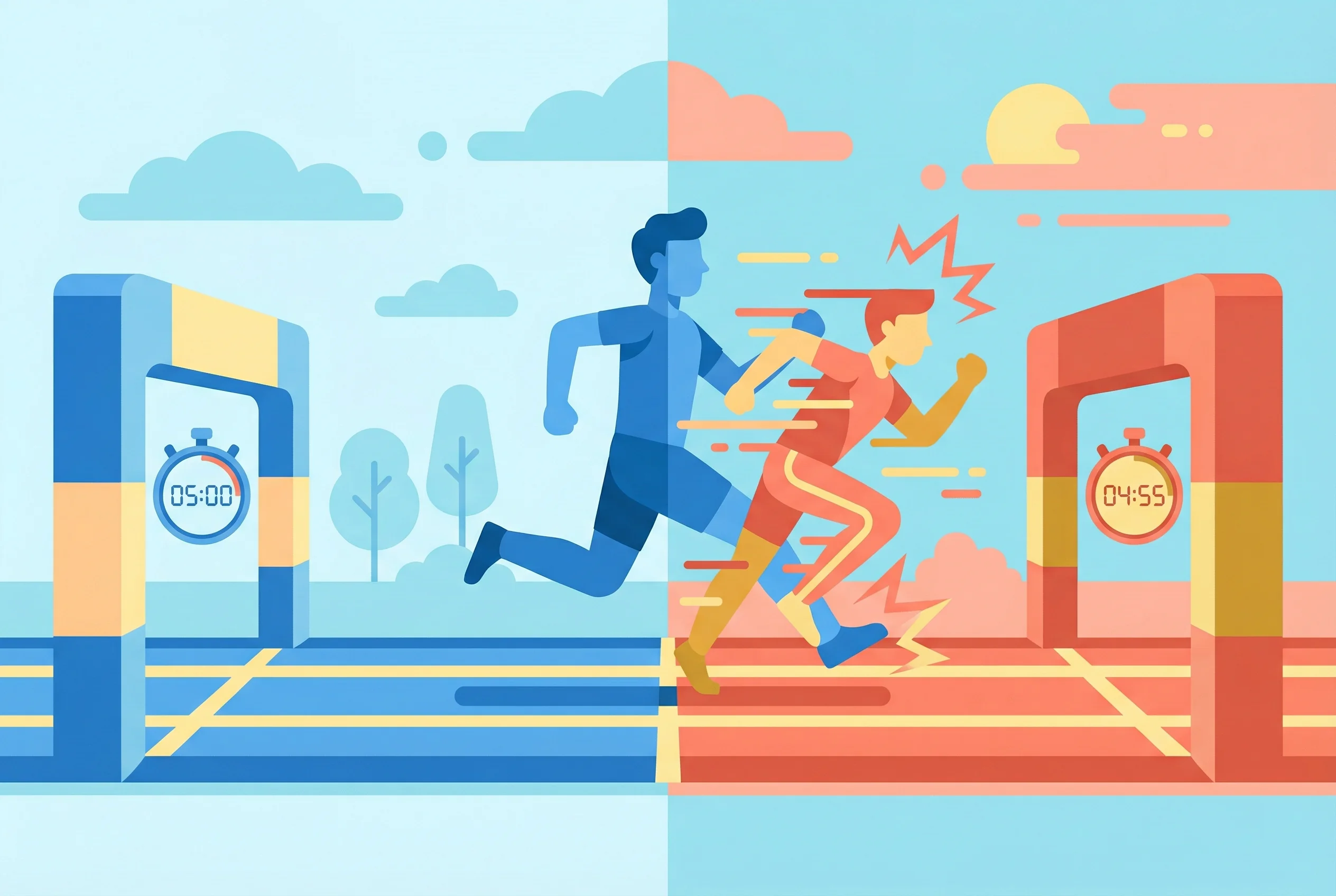
AConserves energy for faster finish
✓Correct — starting controlled saves reserves, reduces early burnout risk, and makes a stronger second half possible.
BPrevents lactic acid buildup
✗Not quite — pacing can reduce early stress, but the main idea is conserving energy for a faster finish.
CLooks more professional
✗Not quite — it is a performance strategy, not a style choice.
Answer this question
Sports Trivia Questions and Answers
ATiny muscle tears repair
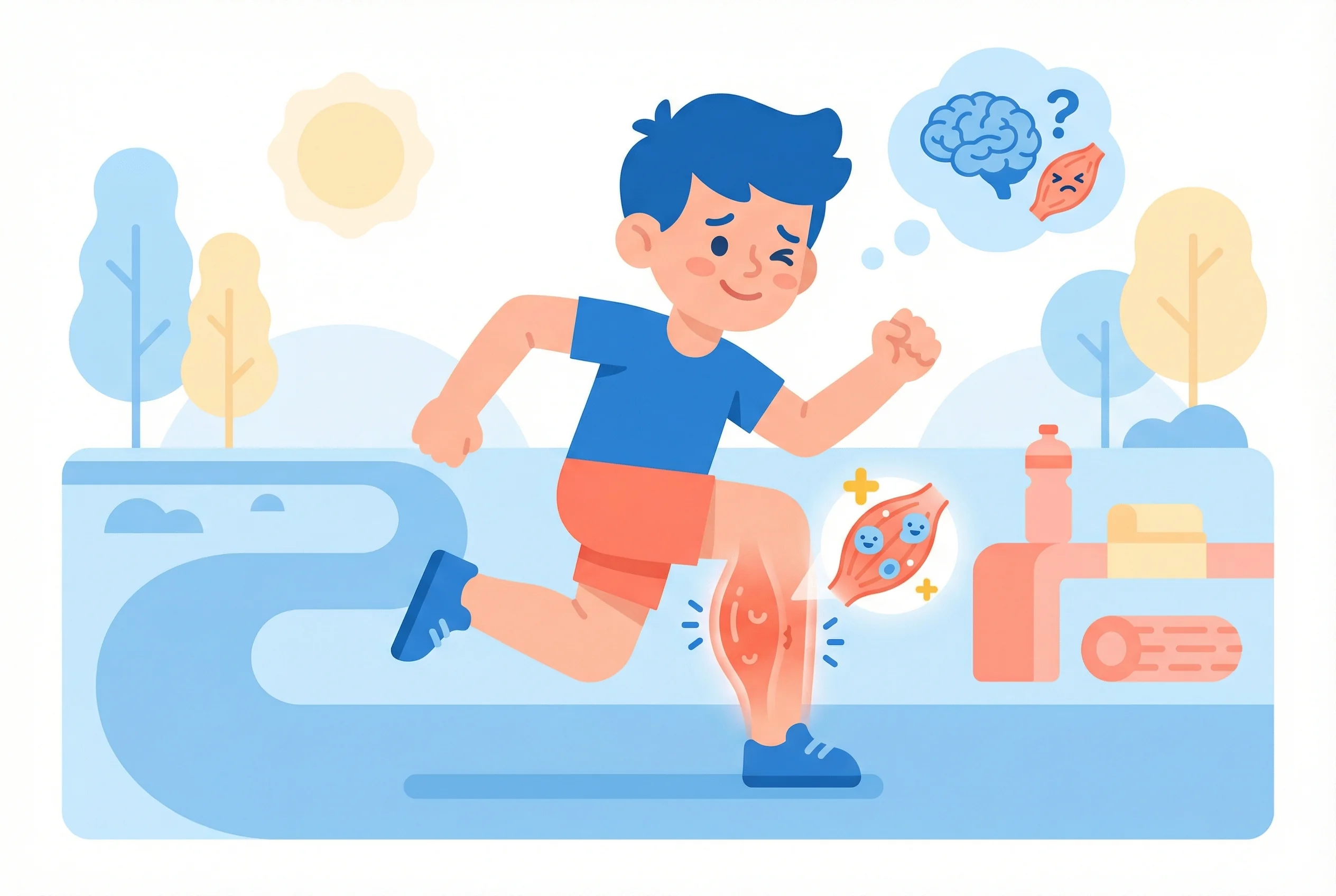
✓Closest answer — unfamiliar exercise, especially lengthening contractions, can stress muscle and connective tissue. The later soreness involves a complex inflammatory and pain response; it is not a scorecard proving that a workout caused growth. A systematic review describes the mechanism as multifactorial. BMuscles run out of oxygen
✗Not quite — oxygen demand can make a working muscle feel tired now, but delayed-onset soreness typically arrives hours later.
CBlood flow decreases
✗Not quite — soreness is not simply low blood flow. Mechanical stress, inflammation, swelling, and sensitized pain pathways all contribute.
Answer this question
ATo make the ball curve downward and stay in bounds
BTo make the ball bounce higher and confuse opponents
✗Not quite — topspin can produce a lively, high bounce, but the in-flight dip is what gives a hard groundstroke its margin over the net and inside the baseline.
CTo reduce air resistance and increase ball speed
✗Not quite — spin does not simply erase drag. Its useful trick is creating a force that bends the flight path.
Answer this question
AThe curve converts speed into useful rotation
BThe curve only helps judge distance
✗Not quite — consistency matters, but the curve also changes body lean and rotation before takeoff.
CRunning in curves uses less energy
✗Not quite — changing direction costs force. Jumpers accept that cost because the resulting position and rotation help them clear the bar.
Answer this question
AForceful exhalation can increase output
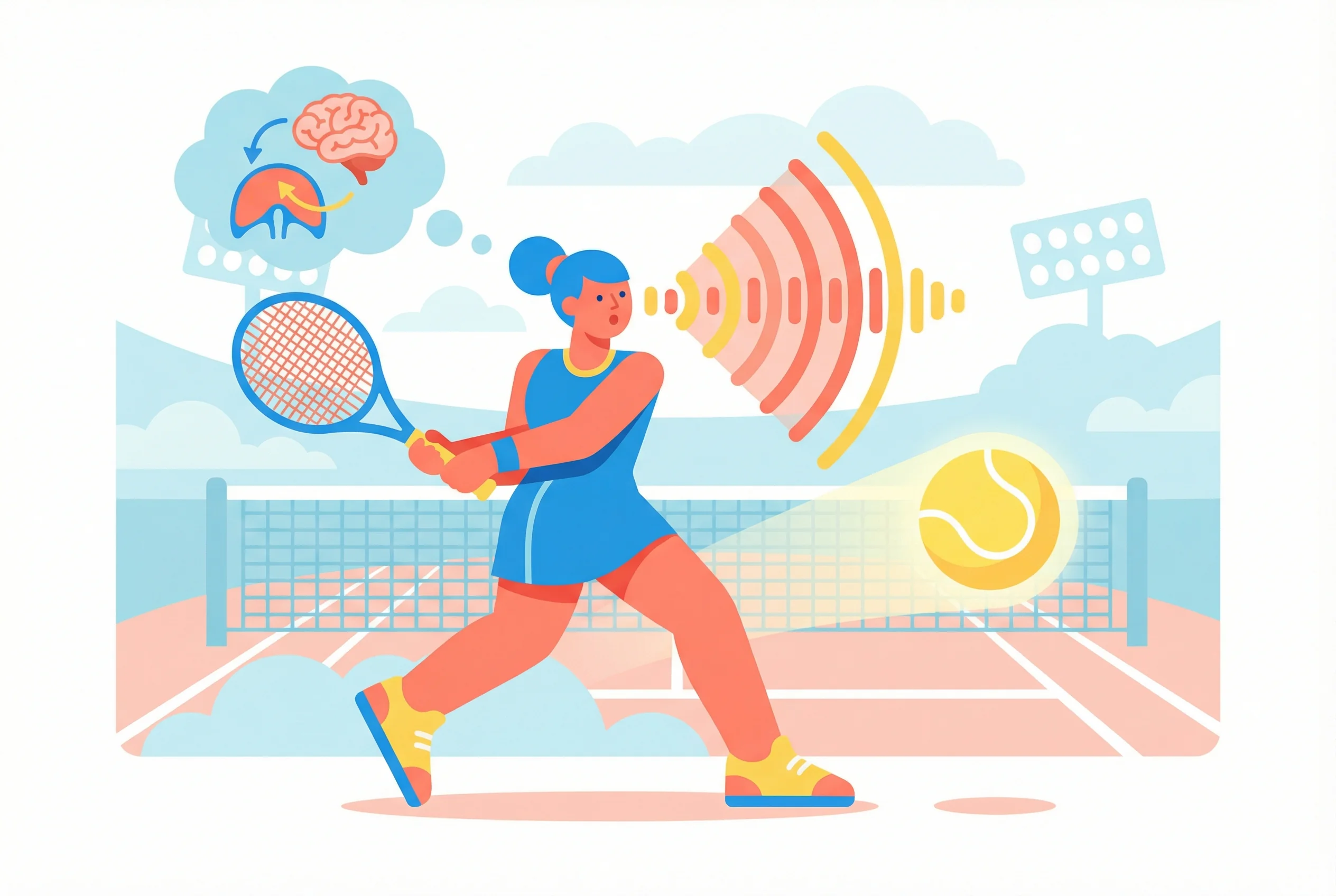
✓Correct — in a study of 32 collegiate players, grunted serves and forehands had greater velocity and isometric force than silent trials. That shows an association under the test conditions, not a universal requirement for every stroke. Read the peer-reviewed study abstract. BIt only distracts opponents
✗Not quite — distraction is debated, but measured changes in stroke velocity and force suggest the sound can accompany a real exertion effect.
CIt prevents all breath-holding
✗Not quite — grunting usually comes with exhalation, but the evidence does not support an absolute claim that it prevents every breath hold.
Answer this question
Basketball Trivia
AIt lengthens deceleration and lets muscles absorb energy
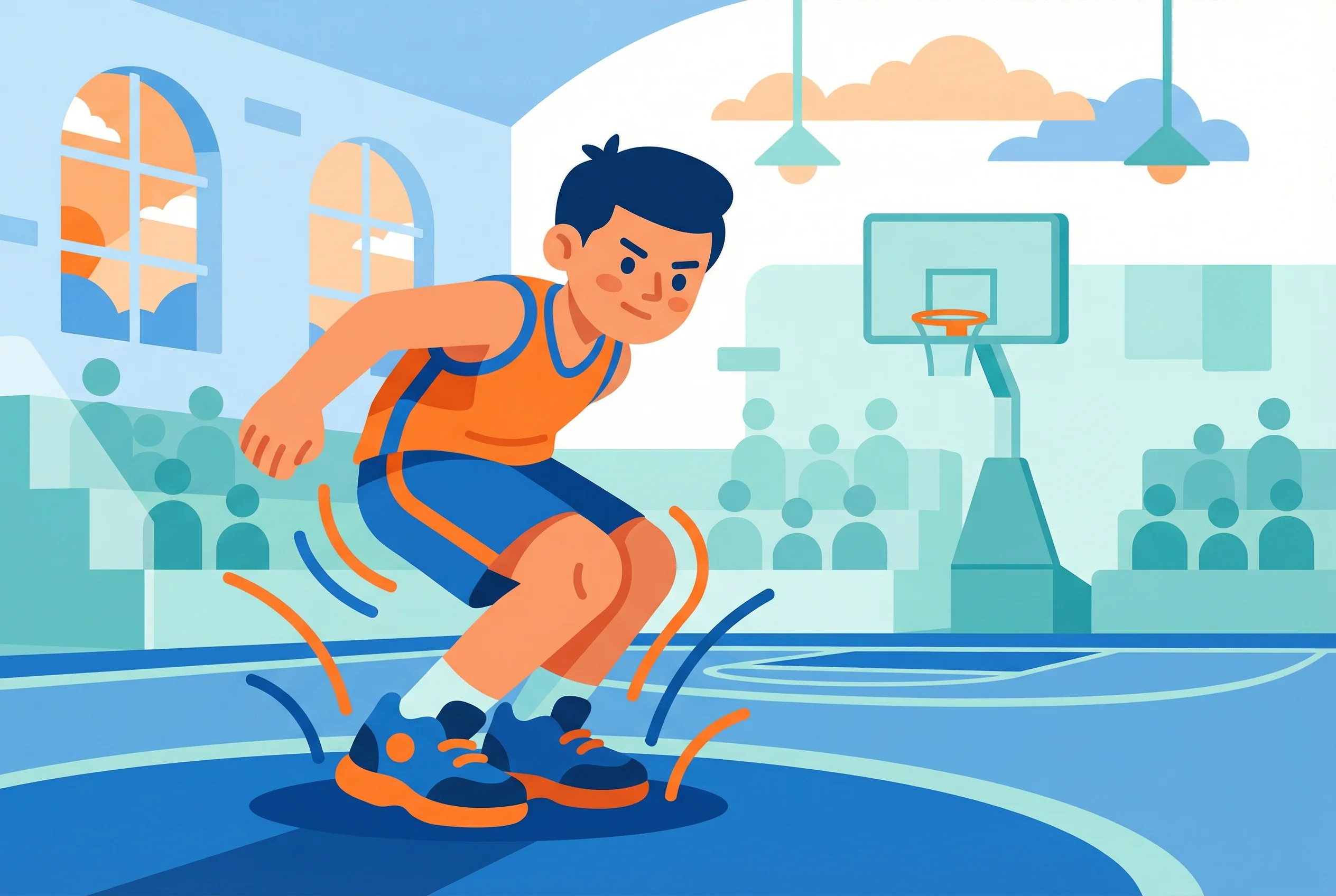
✓Correct — flexing at the hips and knees spreads the change in momentum over more time and lets muscle do more of the energy absorption. Landing studies link smaller knee-flexion angles with less favorable loading patterns; technique reduces risk but never guarantees an injury-free landing. See the prospective basketball study. BIt improves balance only
✗Not quite — balance helps, but knee and hip flexion also change the time and tissues over which the landing force is absorbed.
CKnees store energy like batteries
✗Not quite — the joint is not a battery. Muscles and tendons manage mechanical energy as the body slows down.
Answer this question
AComfort, feel, support, and personal preference
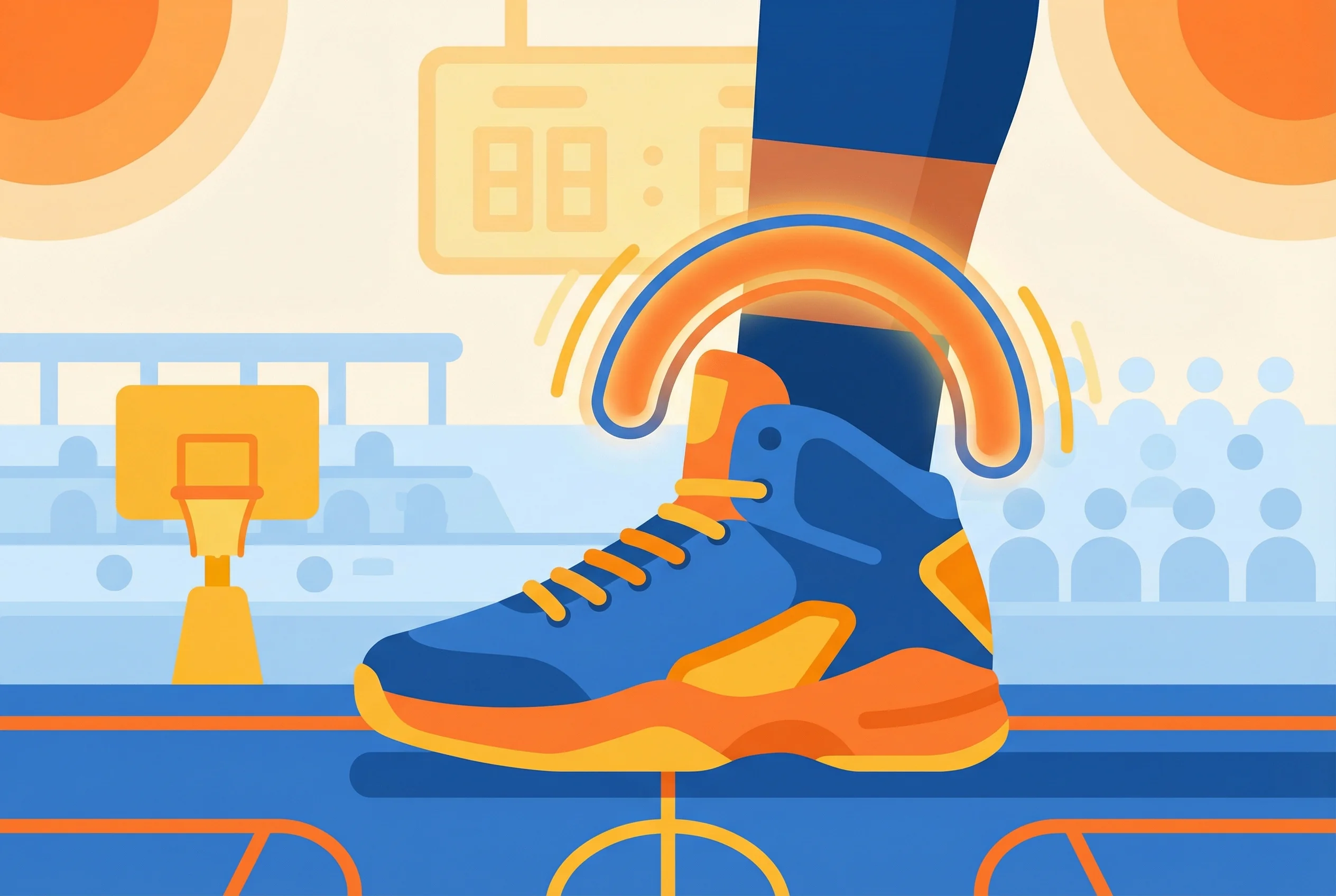
✓Best answer — collar height can change how a shoe feels and moves, but it is not a magic ankle shield. A randomized season-long study found no strong relationship between the tested shoe heights and ankle-sprain rates, while newer laboratory work suggests high collars can alter inversion mechanics. Preference remains reasonable; certainty does not. See the randomized study. BThey are proven to prevent all ankle injuries
✗Not quite — no shoe prevents all ankle injuries, and injury rates depend on much more than collar height.
CBasketball rules require them
✗Not quite — players can choose low-, mid-, or high-top designs within league equipment rules.
Answer this question
Want to play these for real?
Turn questions like these into a 10-second daily quiz that follows your curiosity, closes one gap, and opens the next one.
Play live on AIgneous Million Whys →Frequently Asked Questions
What is sports trivia?
Sports trivia is a set of quick questions about games, athletes, equipment, strategy, and the science behind movement. The best questions do more than name records; they explain why something works.
Are these sports trivia questions good for adults?
Yes. These questions are designed for curious adults who want the mechanism behind the play: glycogen, friction, momentum, grip, pacing, and recovery.
Can sports trivia help me understand sports better?
It can. A good trivia question creates a small information gap, then closes it with a clear explanation. After that, the next game or workout is easier to read.
What sports topics are included here?
This set covers running, weightlifting, basketball, soccer, hockey, climbing, gymnastics, hydration, and endurance nutrition.
What does this have to do with AIgneous Million Whys?
Million Whys turns everyday curiosity into answerable questions. Sports are full of tiny "why" moments, and each one can become a quick spark of understanding.