A hand-curated geography trivia set — 24 quick "why" questions about continents, oceans, mountains, deserts, climate, and the natural systems that shape Earth's surface. Each question has three plausible answers and a one-tap reveal explaining the geological or climate mechanism behind it.
Geography Trivia About Continents, Plates, and the Equator
ACoincidence in shapes
✗Not quite — the coastlines match because the continents were once joined.
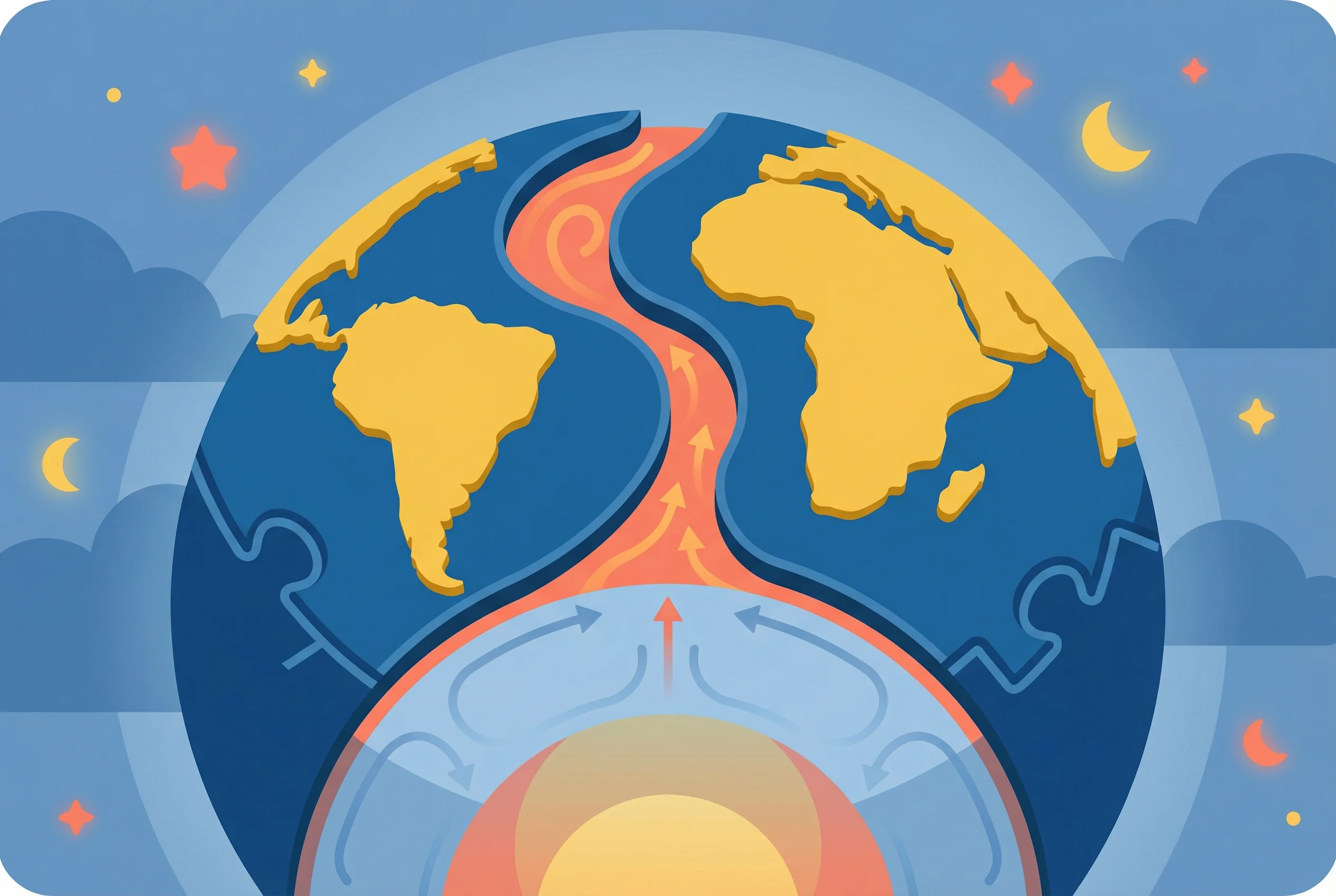
BOnce joined supercontinent
✓Correct — the continents were once joined in Pangaea, and plate tectonics later split them apart.
COcean erosion shaped edges
✗Not quite — erosion modifies coastlines, but it did not create the continental fit.
Answer this question
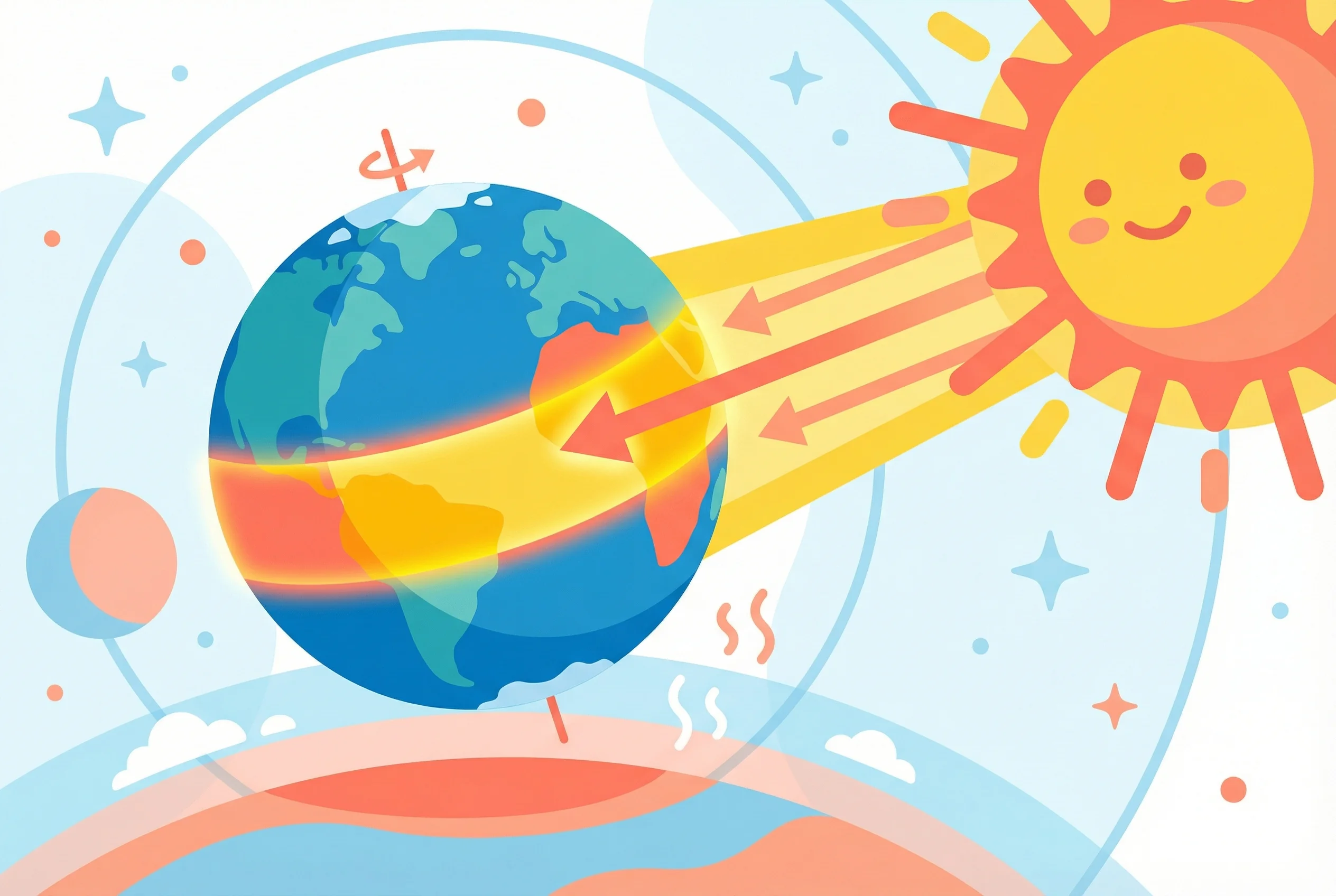
ASun directly overhead year-round
✓Correct — the equator receives high-angle sunlight through the year, concentrating solar energy over a smaller surface area.
BCloser to the sun
✗Not quite — the equator is not meaningfully closer to the Sun. The angle of sunlight is the big difference.
COcean currents bring heat
✗Not quite — currents move heat around, but the equator's baseline warmth comes from direct solar energy.
Answer this question
ADifferent salt levels
✗Not quite — salinity varies, but the sea-ocean distinction is mostly about geography.
BLocated in warmer climates
✗Not quite — seas exist in many climates. Warmth is not the naming rule.
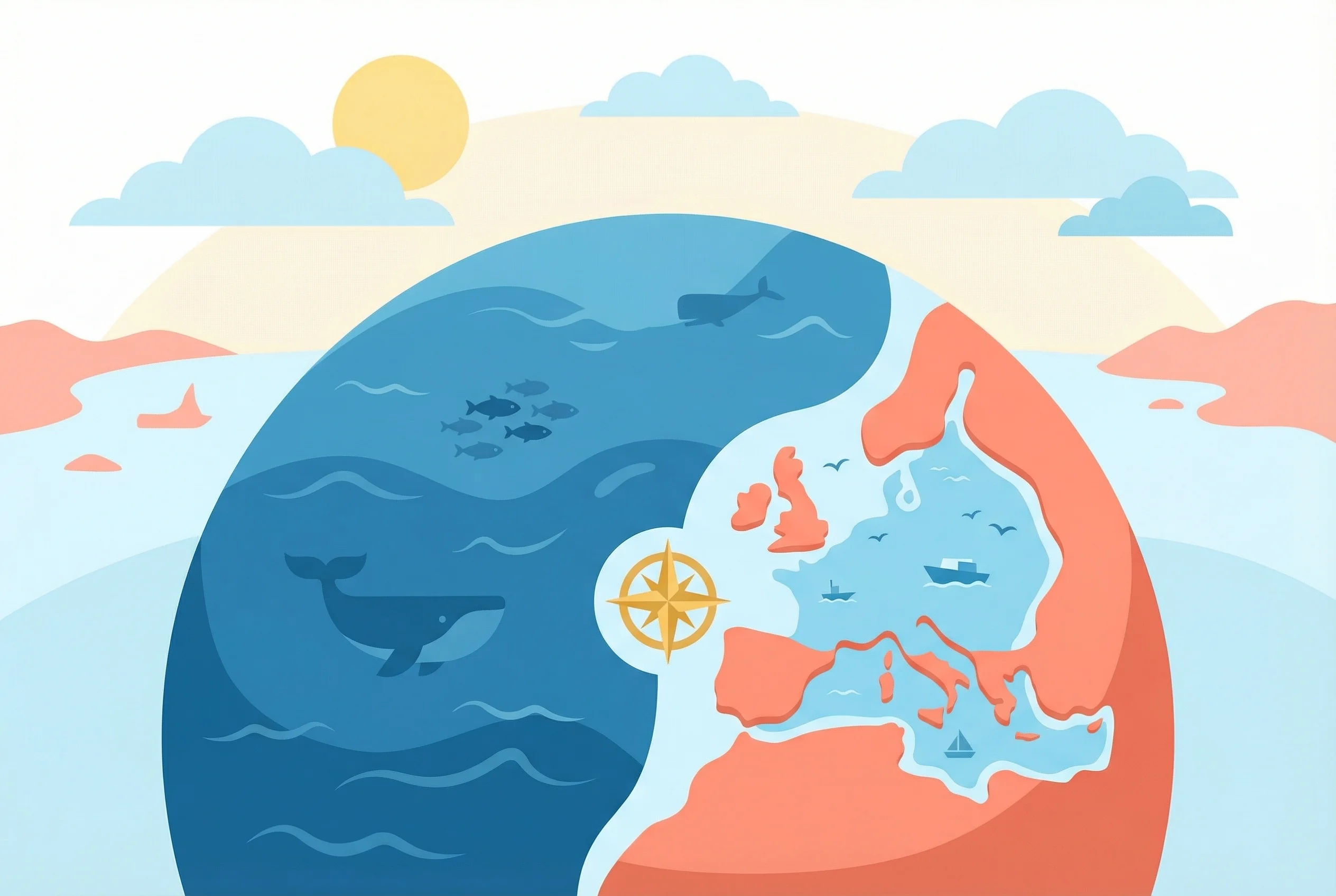
CPartially enclosed by land
✓Correct — seas are usually smaller bodies of salt water partly enclosed by land and connected to an ocean.
Answer this question
Geography Questions About Mountains and Valleys
AWind blows snow upward
✗Not quite — wind moves snow around, but it does not explain why high peaks stay cold.
BMountains attract cold air
✗Not quite — mountains do not attract cold air. Temperature usually drops with altitude.
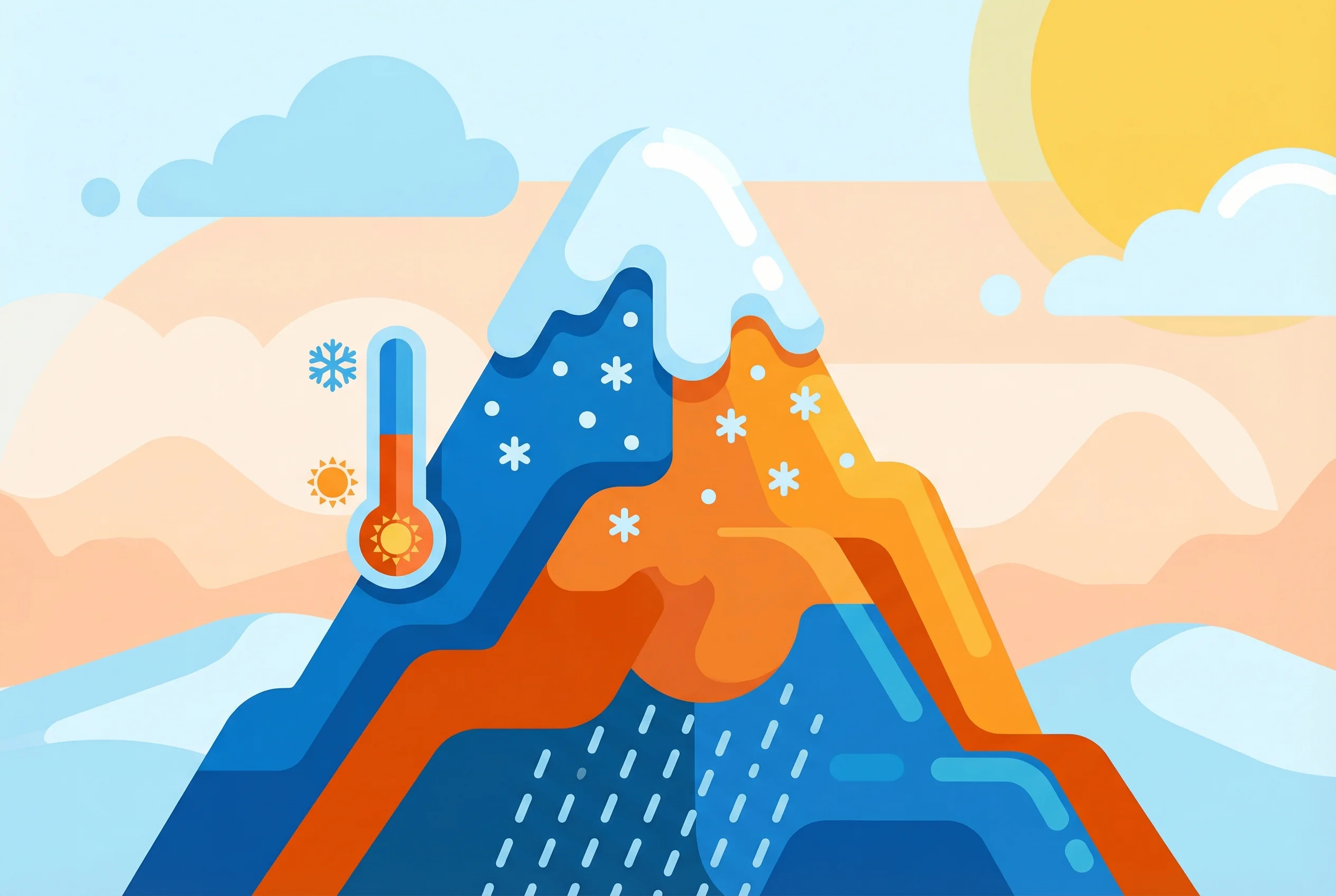
CTemperature drops with altitude
✓Correct — higher air pressure is lower and air is colder, so mountain tops can hold snow while valleys thaw.
Answer this question
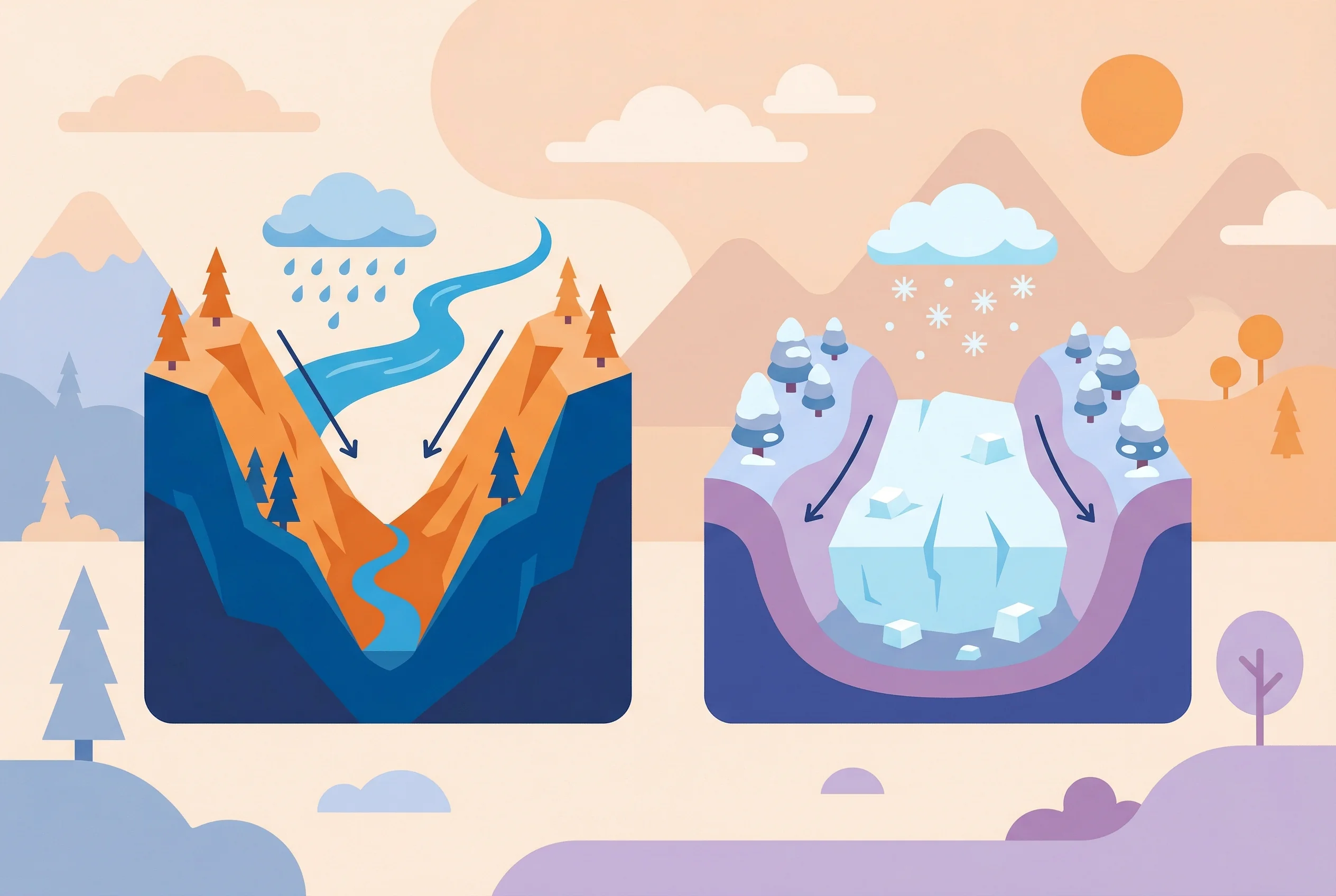
ARiver vs glacier erosion
✓Correct — rivers cut narrow V-shaped valleys; glaciers scour wider U-shaped valleys.
BRainfall amount varies
✗Not quite — rainfall can affect erosion speed, but the tool doing the erosion shapes the valley.
CAge of valley determines shape
✗Not quite — age matters less than whether water or ice carved the valley.
Answer this question
Interesting Geography Facts About Deserts, Oases, and Cliffs
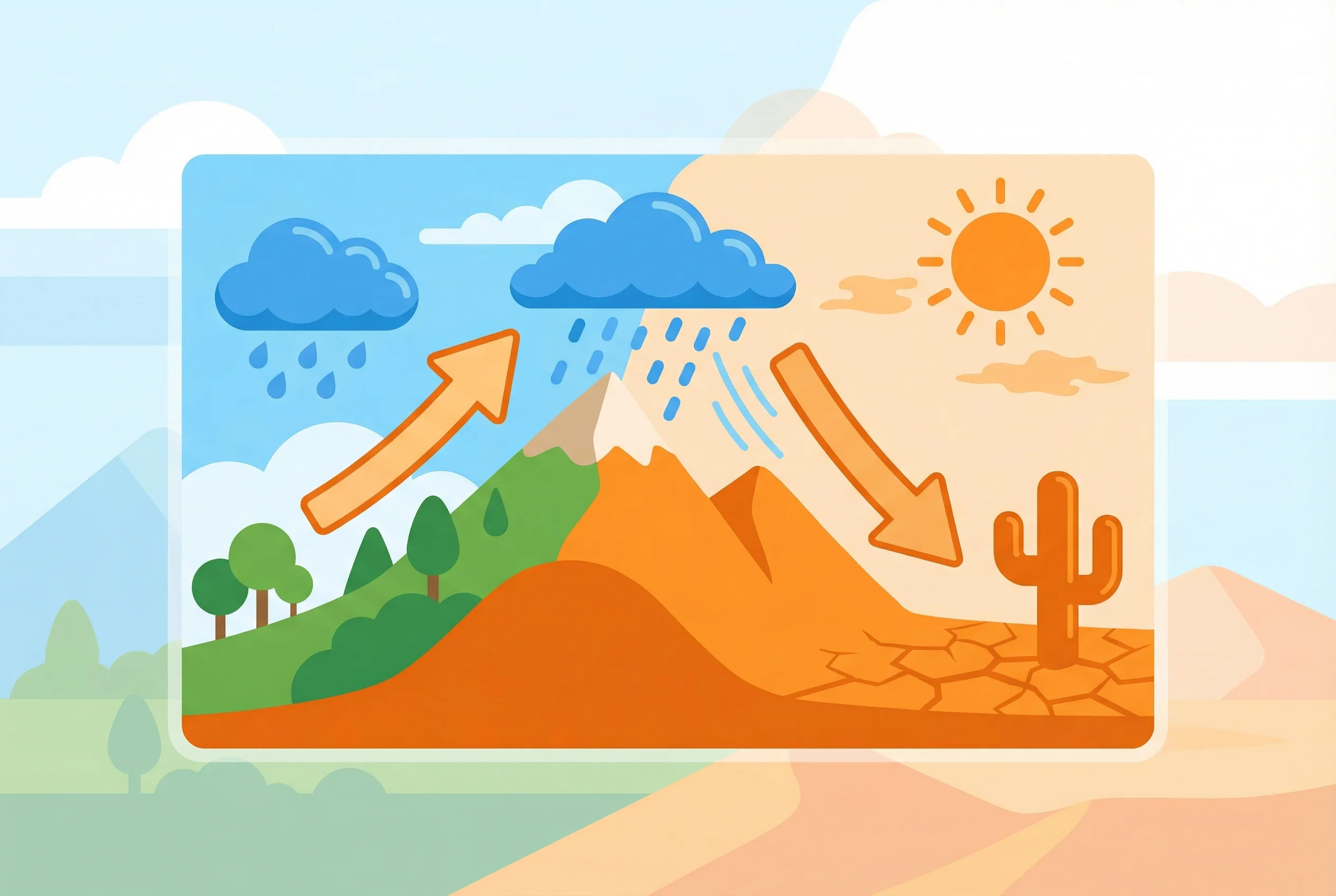
AAir circulation patterns
✓Correct — many deserts sit where dry, descending air suppresses clouds and rainfall.
BToo much sun evaporates water
✗Not quite — evaporation matters, but deserts are dry mainly because little rain arrives.
CSand absorbs all moisture
✗Not quite — sand is not the cause. Atmospheric circulation and geography shape desert rainfall.
Answer this question
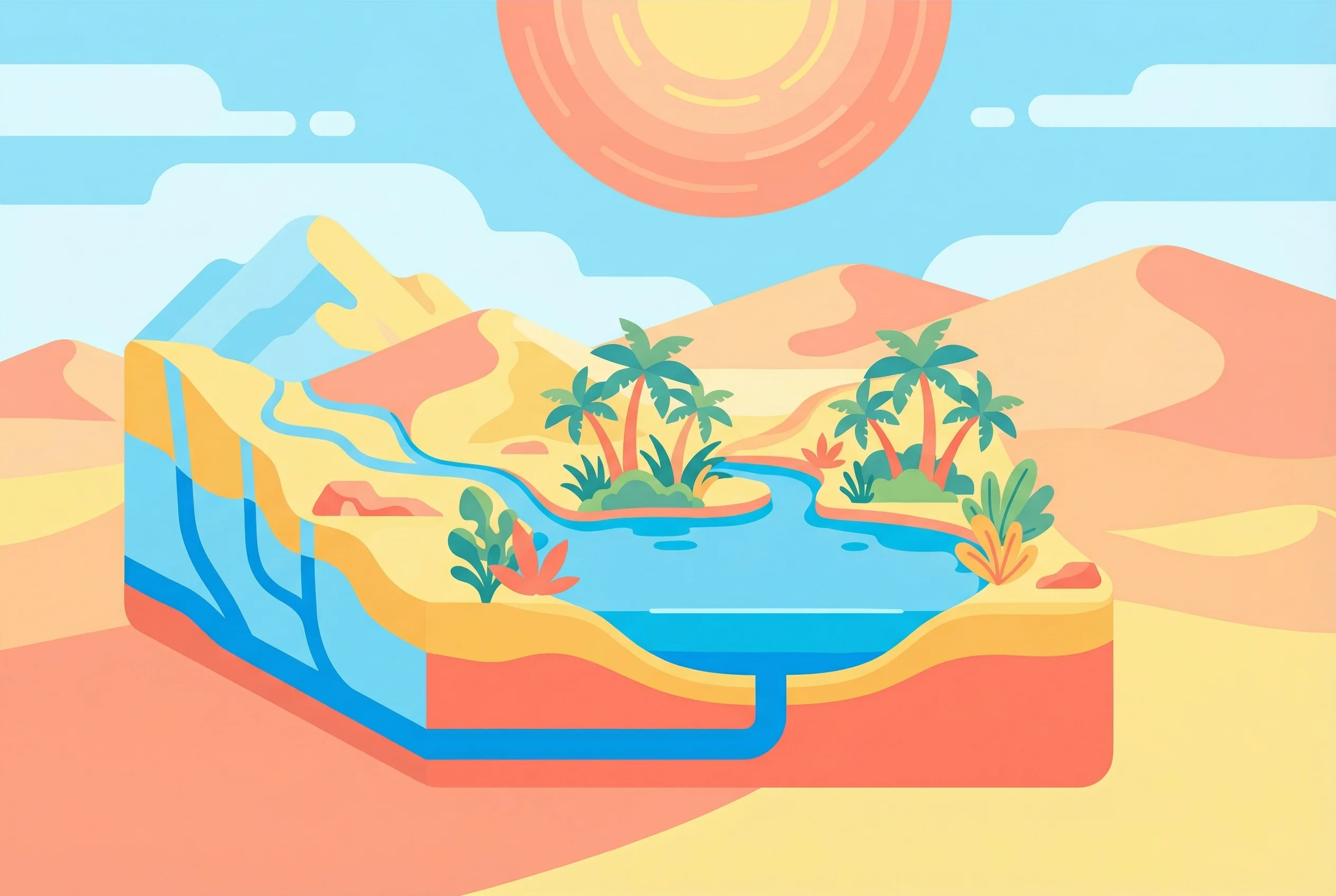
APlants create moisture
✗Not quite — plants grow because water is available; they do not create the oasis by themselves.
BDesert mirage effect
✗Not quite — a mirage is optical. An oasis is a real place where water reaches the surface.
CGroundwater reaches surface
✓Correct — oases form where groundwater rises through springs, faults, depressions, or shallow water tables.
Answer this question
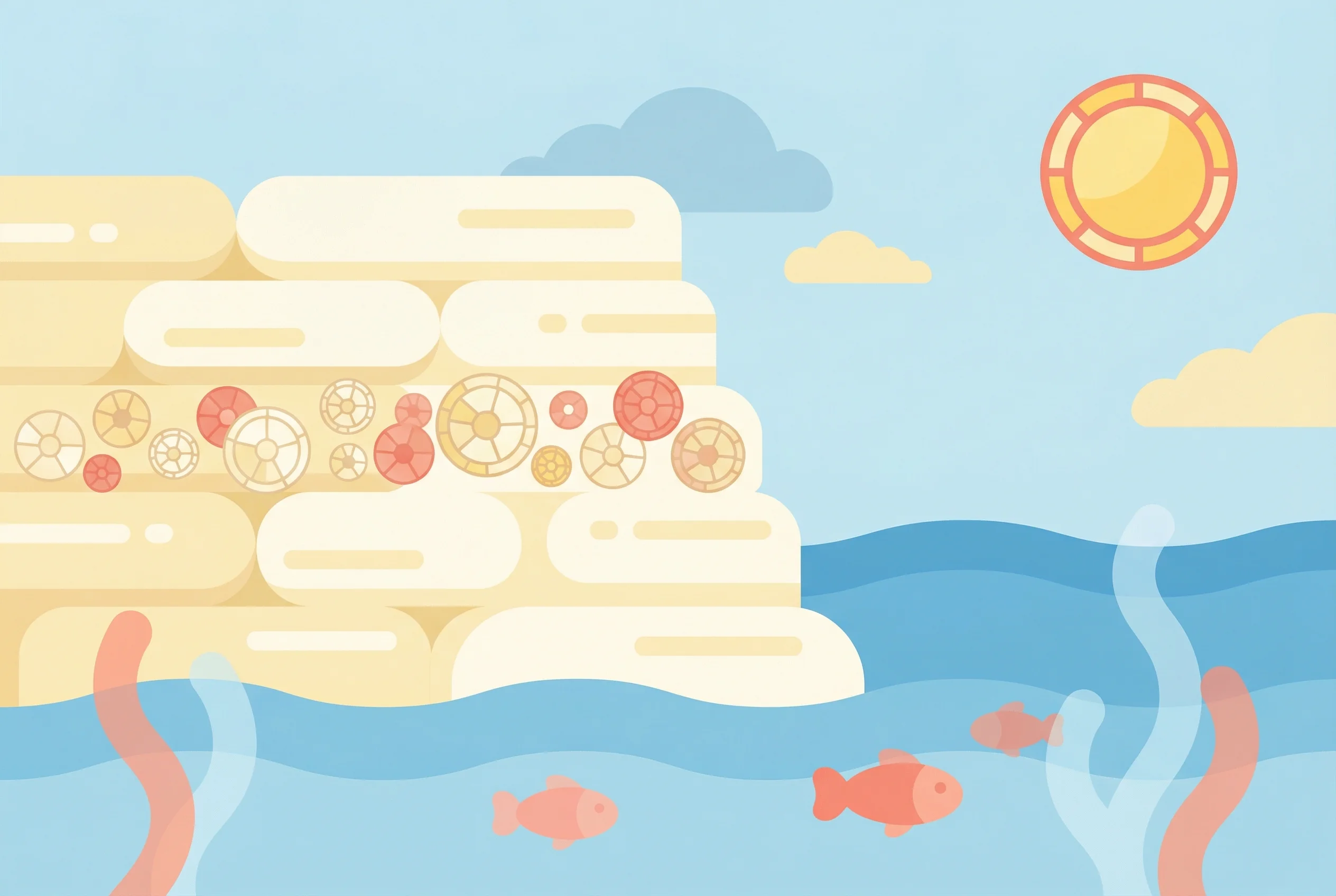
AMade of chalk or limestone
✓Correct — white cliffs can be made of chalk, a soft limestone built from calcium carbonate-rich marine remains.
BBird droppings accumulate
✗Not quite — birds can stain cliffs, but famous white cliffs are white because of their rock.
CBleached by sunlight
✗Not quite — sunlight does not bleach whole cliffs white; calcium carbonate-rich rock creates the color.
Answer this question
Geography Trivia About Rivers, Islands, and Oceans
AFollowing underground rocks
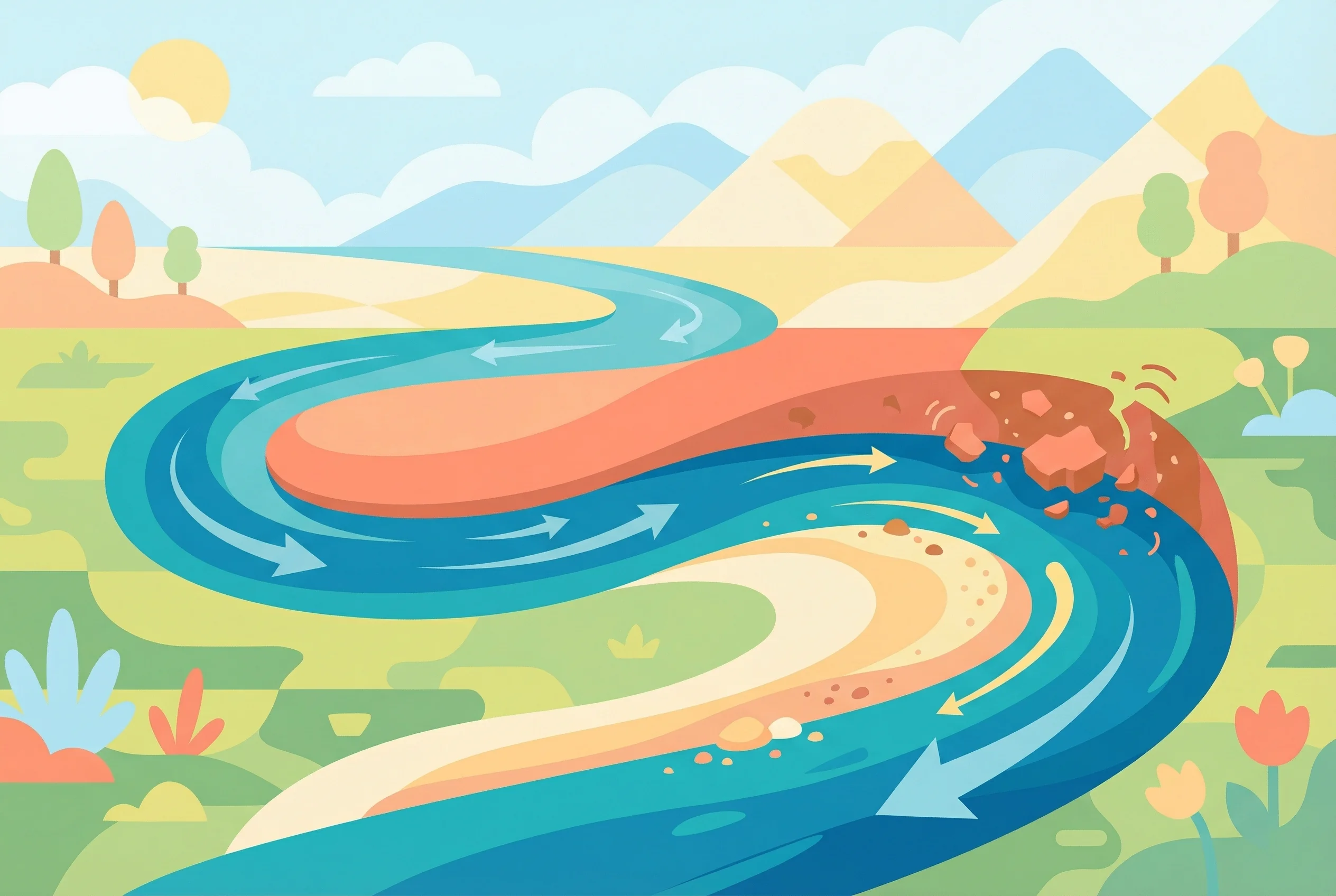
✗Not quite — local geology matters, but meanders grow mainly from erosion and deposition at bends.
BErosion on outside of bends
✓Correct — faster water erodes the outside bank while slower water deposits sediment on the inside bank.
CEarth's rotation deflects flow
✗Not quite — Earth's rotation has small large-scale effects, but meanders are mostly bend-by-bend erosion.
Answer this question
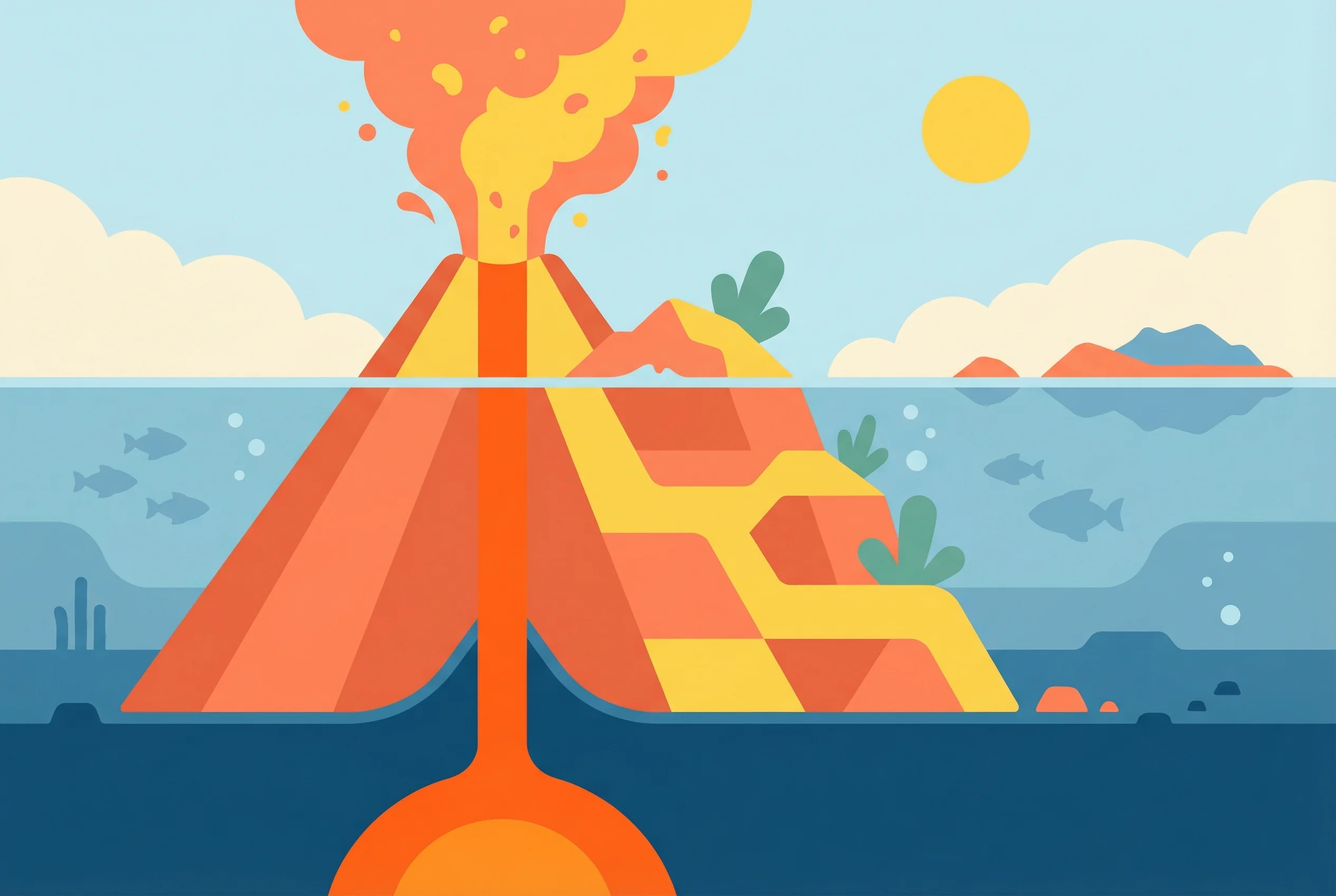
AVolcanic activity builds up
✓Correct — many oceanic islands grow from undersea volcanoes until the seafloor-built cone reaches the surface.
BCoral piles create land
✗Not quite — coral can build some islands and atolls, but many oceanic islands begin as volcanic piles.
COcean floor rises randomly
✗Not quite — islands form through specific processes such as volcanism, reef growth, and continental separation.
Answer this question
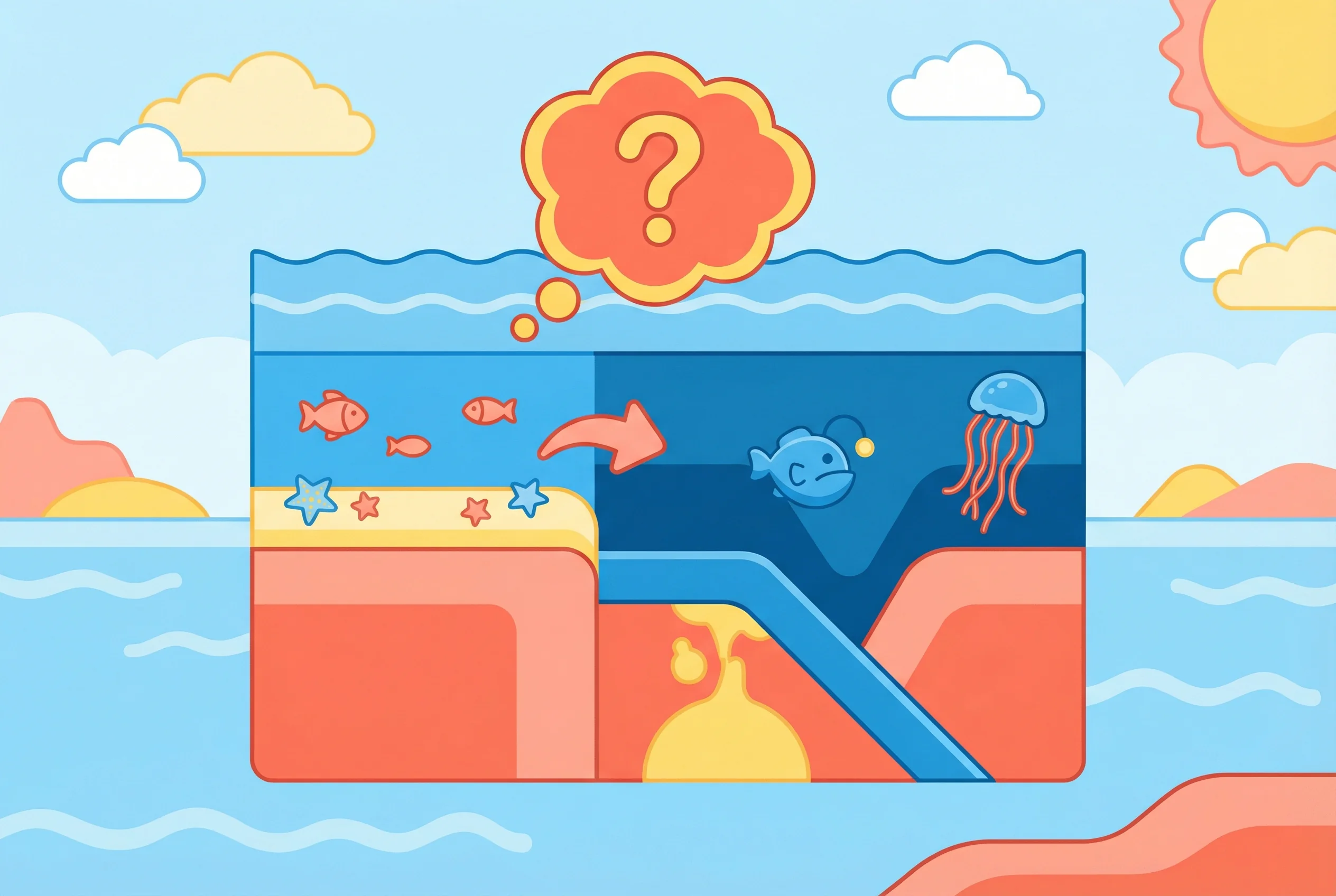
ATectonic activity varies
✓Correct — ocean depth depends on seafloor age, cooling crust, mid-ocean ridges, and subduction trenches.
BEvaporation lowers levels
✗Not quite — evaporation does not explain deep basins and trenches.
CPolar ice melts unevenly
✗Not quite — ice melt changes sea level, but ocean depth differences are mostly seafloor geology.
Answer this question
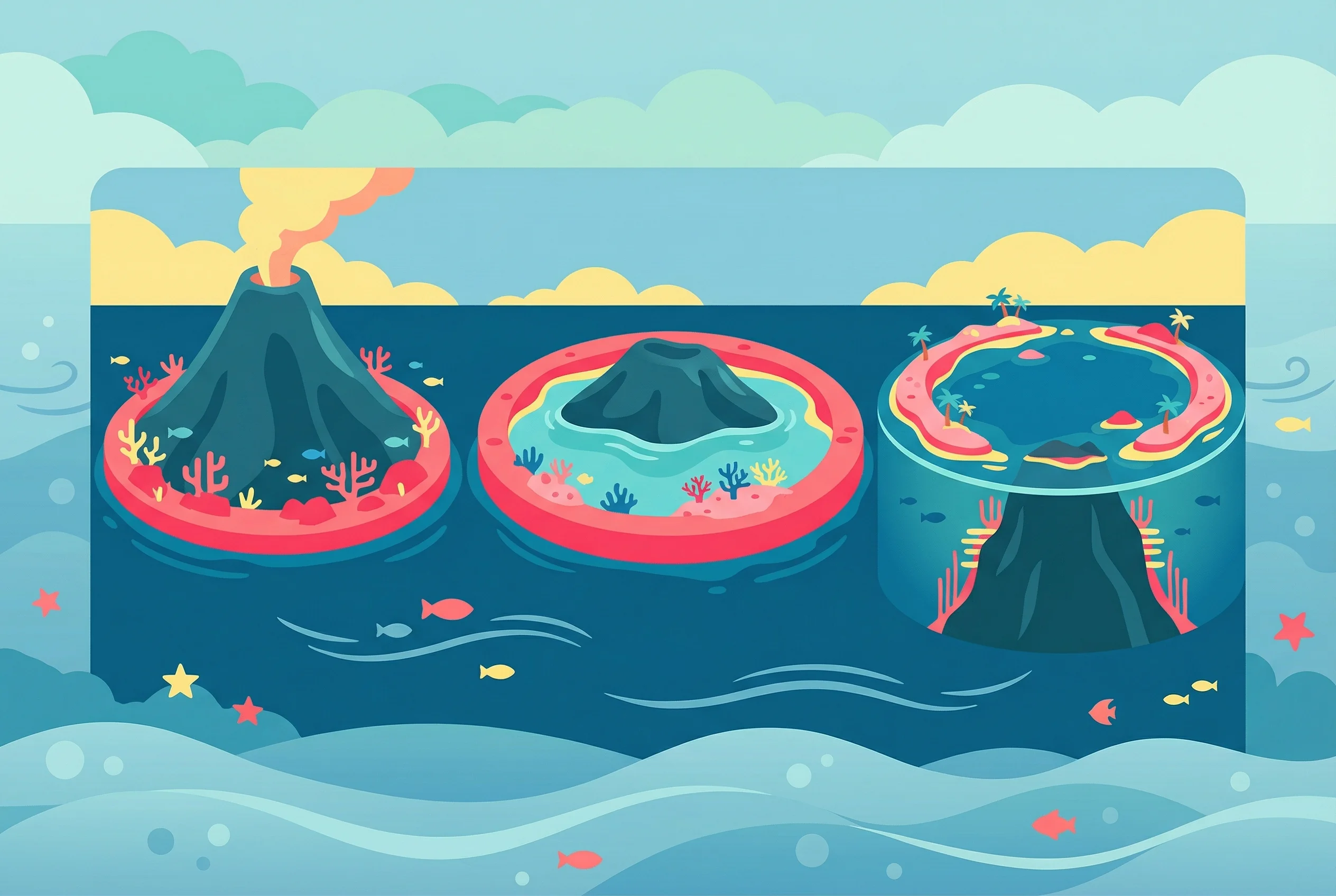
AOcean currents circle
✗Not quite — currents affect reefs, but they do not carve the ring.
BCoral grows around sinking island
✓Correct — coral keeps growing upward around a slowly sinking volcanic island, leaving a ring around a lagoon.
CUnderwater meteor impacts
✗Not quite — atolls are reef-and-island stories, not impact craters.
Answer this question
Geography Trivia Questions About Time Zones and Climate
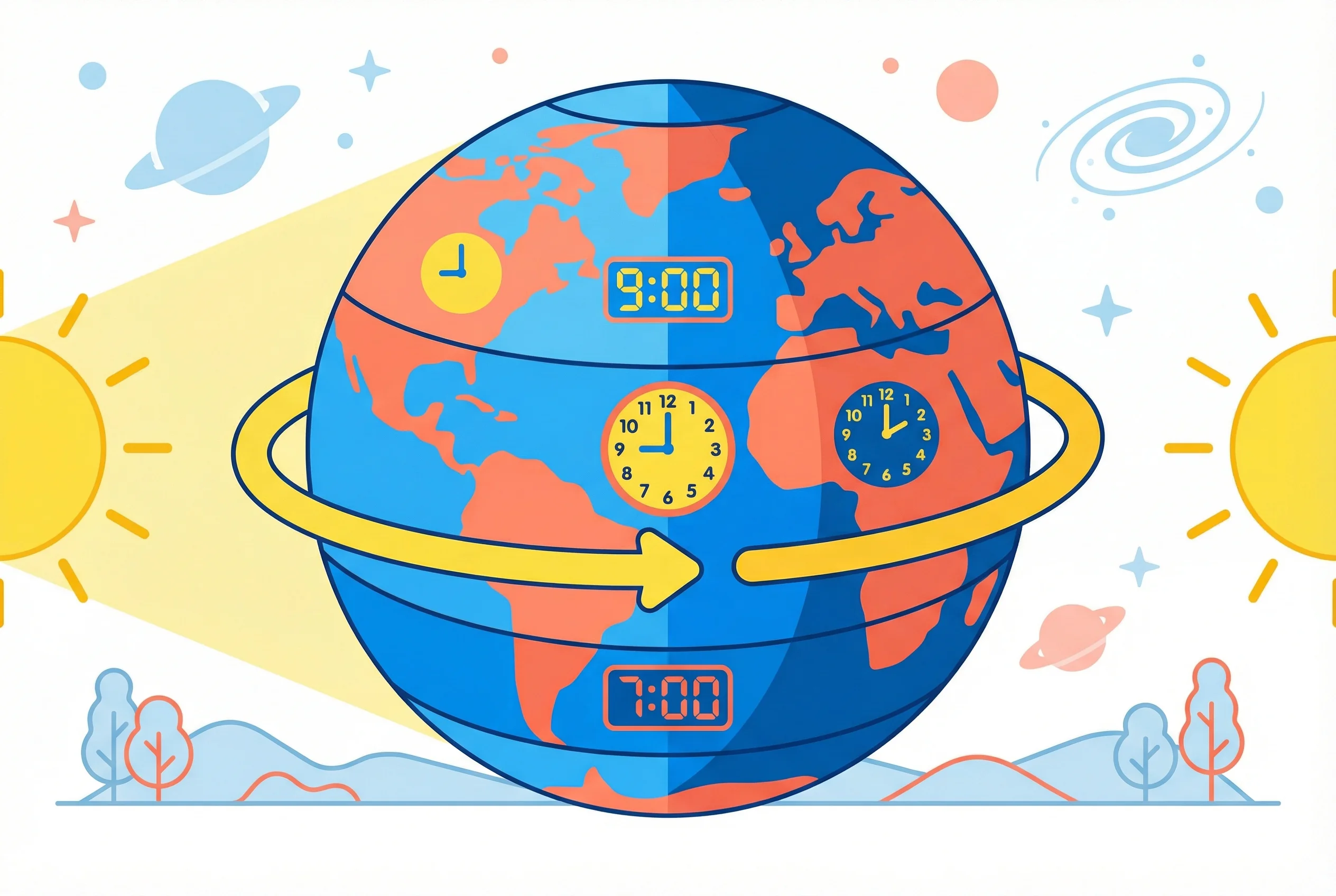
AHistorical tradition varies
✗Not quite — the best answer is B: Earth rotates 15° per hour. Open that choice for the mechanism.
BEarth rotates 15° per hour
✓Correct — Earth turns 360 degrees in about 24 hours, so idealized time zones average 15 degrees of longitude per hour; real boundaries bend for political and practical reasons.
CDistance from equator
✗Not quite — the best answer is B: Earth rotates 15° per hour. Open that choice for the mechanism.
Answer this question
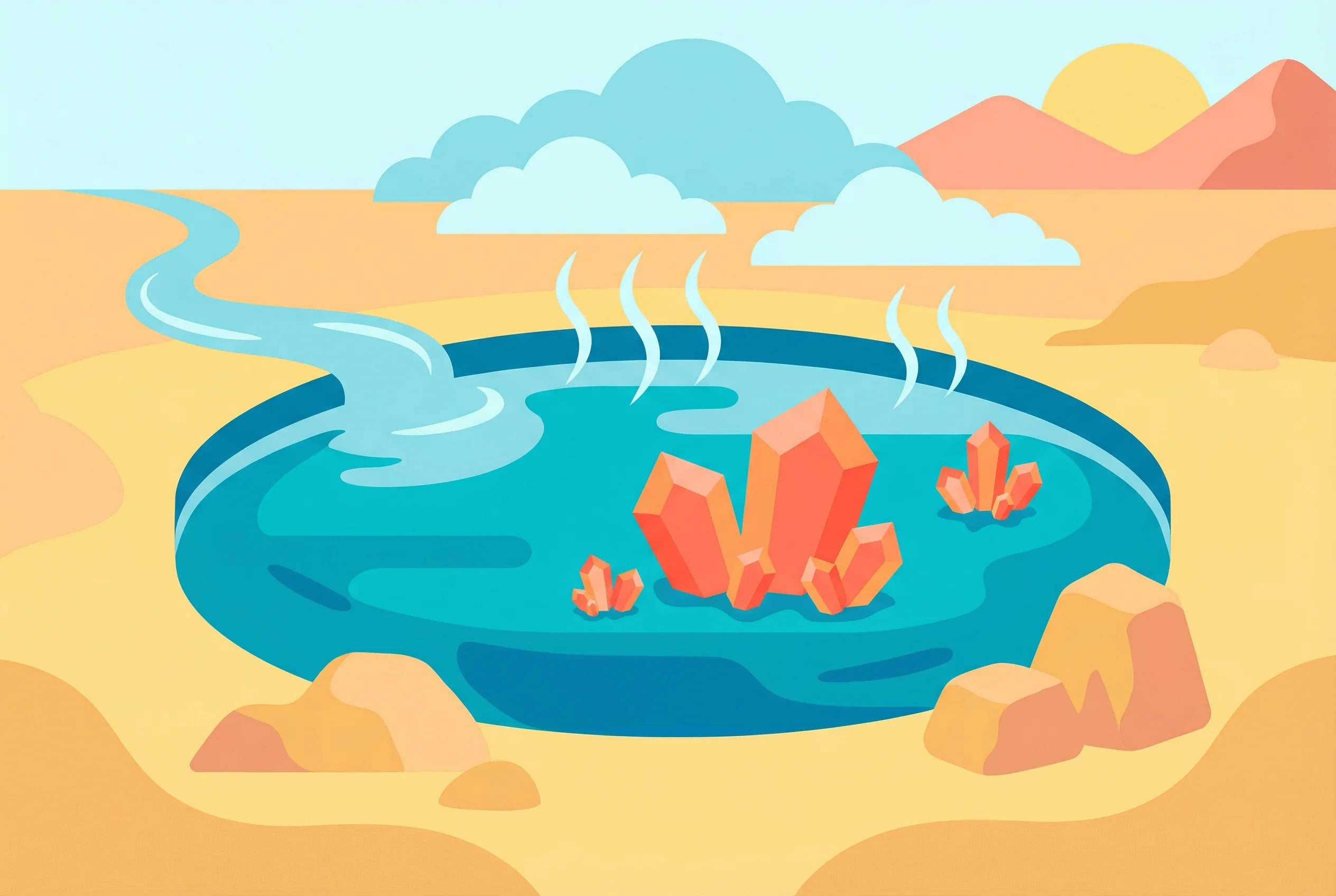
AUnderground salt deposits dissolve
✗Not quite — the best answer is C: No outlet causes accumulation. Open that choice for the mechanism.
BSeawater trapped long ago
✗Not quite — the best answer is C: No outlet causes accumulation. Open that choice for the mechanism.
CNo outlet causes accumulation
✓Correct — A salt lake usually has no outlet. Rivers bring dissolved minerals in, evaporation removes water, and the minerals remain and concentrate.
Answer this question
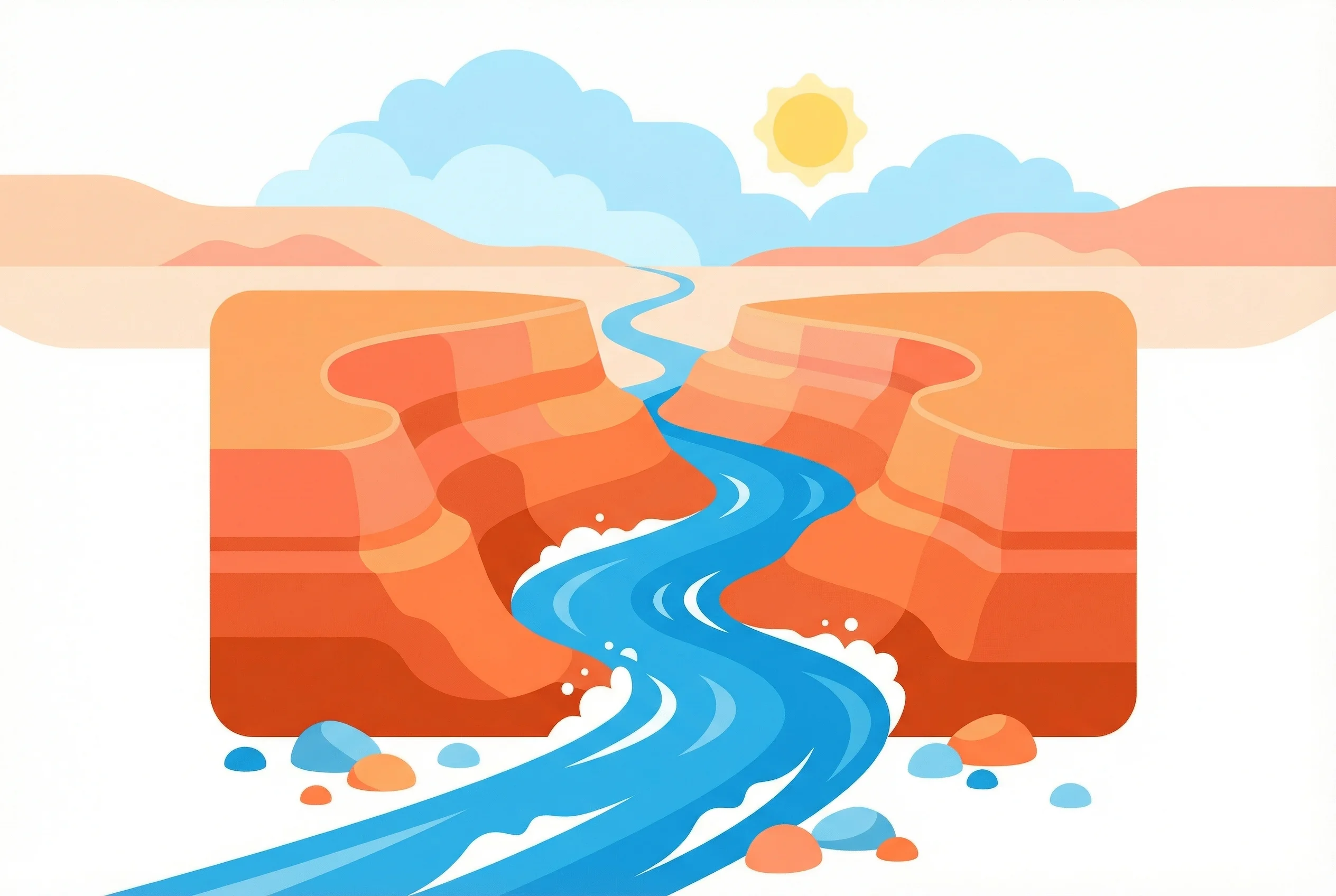
ARivers erode rock over time
✓Correct — Many canyons are cut as rivers and their sediment erode downward through rock over long periods; uplift and differences in rock resistance shape the result.
BWind carves deep valleys
✗Not quite — the best answer is A: Rivers erode rock over time. Open that choice for the mechanism.
CGlaciers dig trenches
✗Not quite — the best answer is A: Rivers erode rock over time. Open that choice for the mechanism.
Answer this question
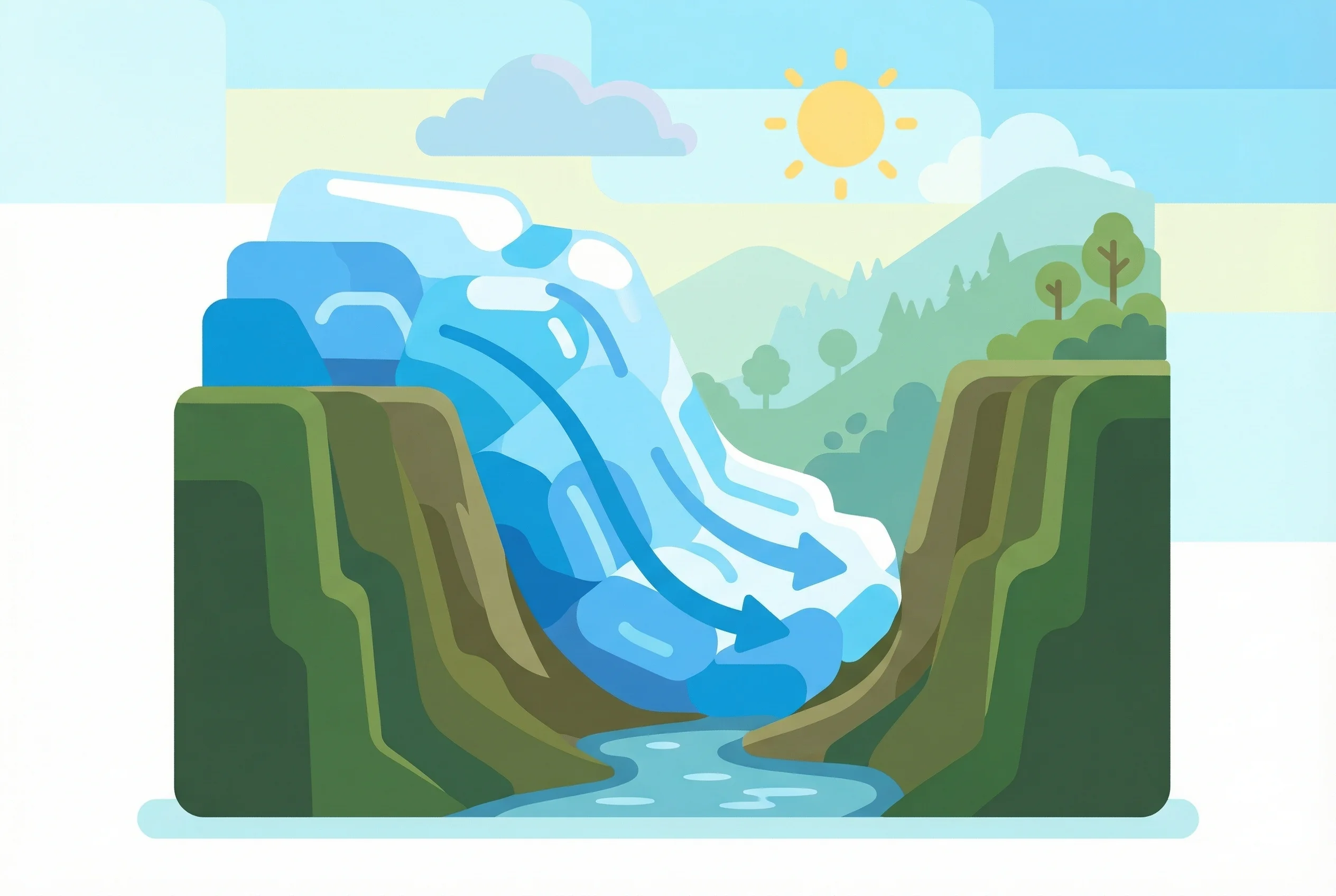
AOcean waves erode cliffs
✗Not quite — the best answer is C: Glaciers carve U-shaped valleys. Open that choice for the mechanism.
BVolcanic explosions carve valleys
✗Not quite — the best answer is C: Glaciers carve U-shaped valleys. Open that choice for the mechanism.
CGlaciers carve U-shaped valleys
✓Correct — Glaciers widen and deepen valleys into steep-sided U shapes. Where the valley floor lies below sea level, ocean water can flood it to make a fjord.
Answer this question
ARain collects at edges
✗Not quite — the best answer is C: Hard rock resists erosion. Open that choice for the mechanism.
BUnderground rivers surface
✗Not quite — the best answer is C: Hard rock resists erosion. Open that choice for the mechanism.
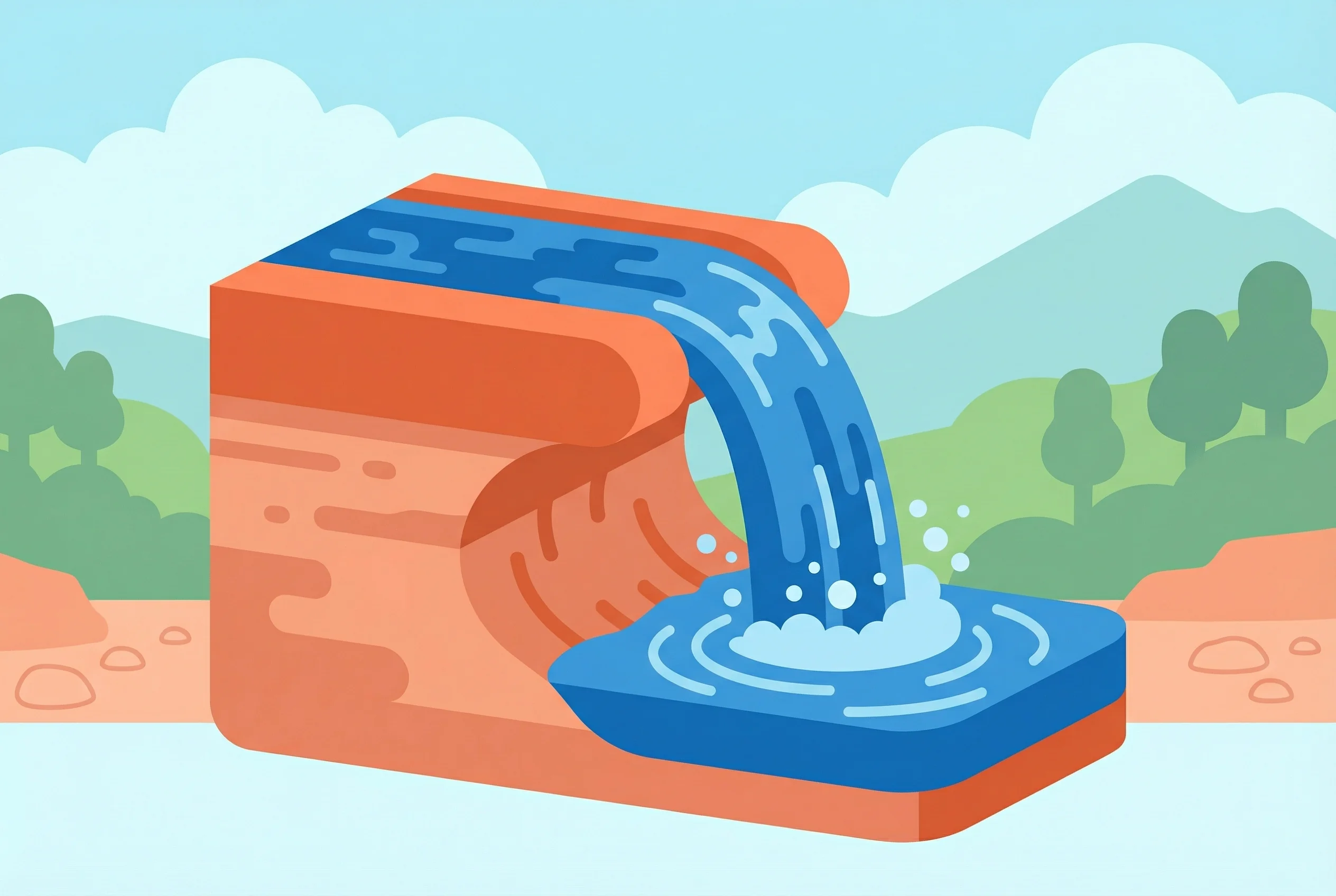
CHard rock resists erosion
✓Correct — Many waterfalls form where resistant rock overlies rock that erodes faster. Others occupy glacial hanging valleys or fault-controlled steps.
Answer this question
AFish prefer warm temperatures
✗Not quite — the best answer is B: Coral needs warmth to grow. Open that choice for the mechanism.
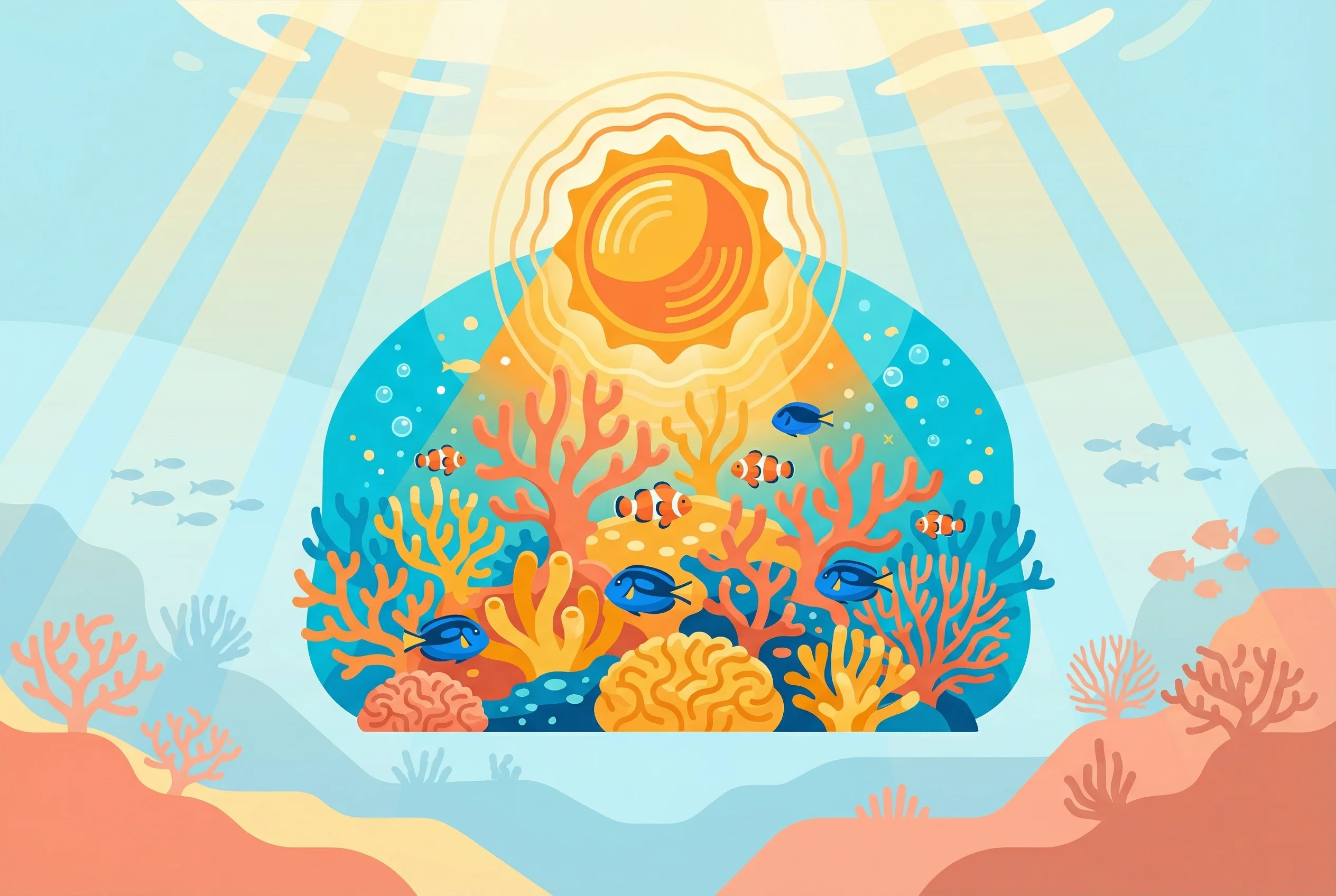
BCoral needs warmth to grow
✓Correct — Shallow reef-building corals rely heavily on photosynthetic algae and thrive in clear, sunlit, warm water. Deep-sea corals are an important exception.
CLess pollution in tropics
✗Not quite — the best answer is B: Coral needs warmth to grow. Open that choice for the mechanism.
Answer this question
Geography Trivia About Canyons, Caves, Rivers, and Straits
ARivers split into branches
✗Not quite — the best answer is B: Sediment deposits build land. Open that choice for the mechanism.
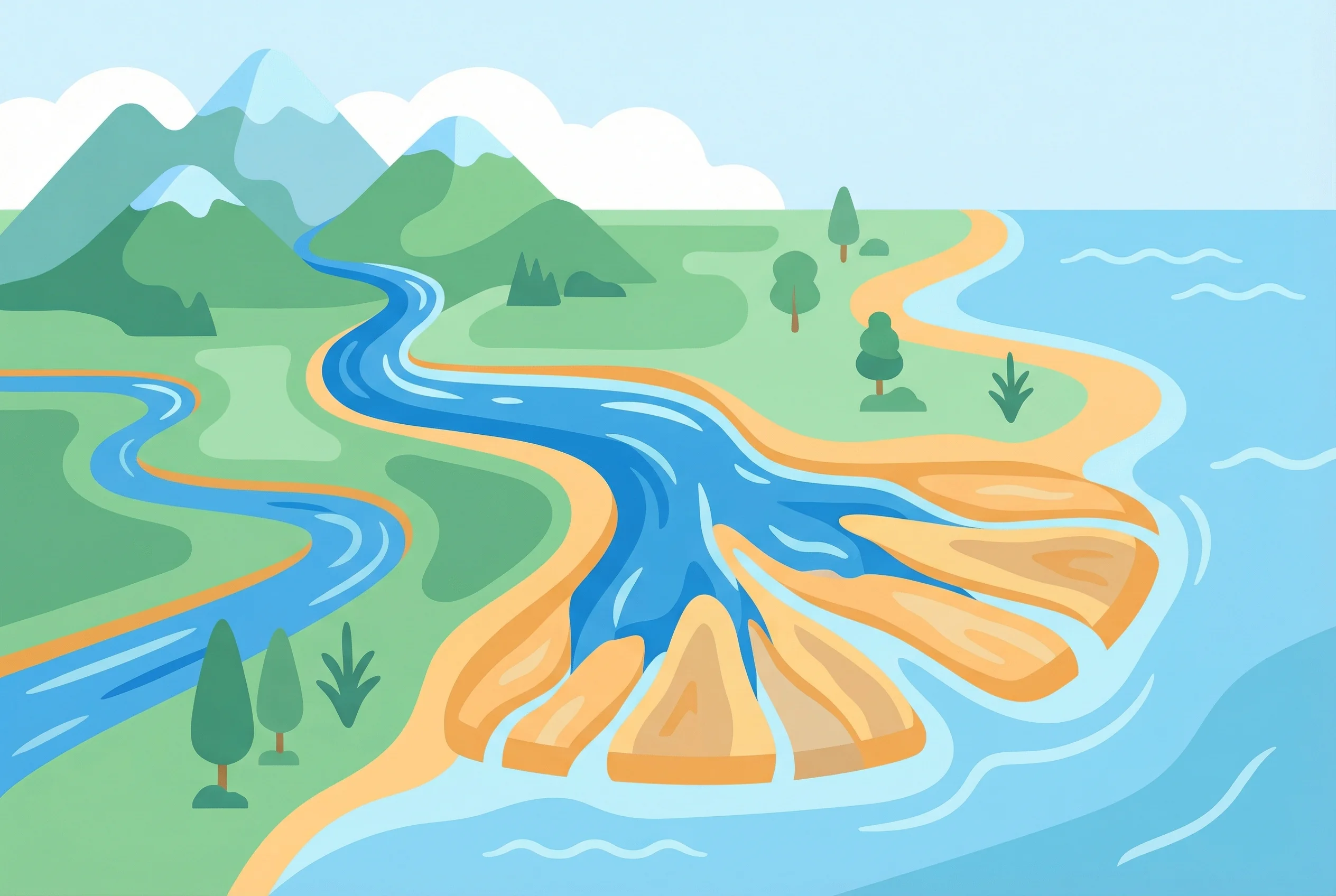
BSediment deposits build land
✓Correct — When a sediment-carrying river reaches a lake or sea, its flow spreads and slows, allowing sediment to settle. A delta grows where deposition outpaces waves and tides.
COcean pushes water back
✗Not quite — the best answer is B: Sediment deposits build land. Open that choice for the mechanism.
Answer this question
ATyphoons cause monsoons
✗Not quite — the best answer is C: Seasonal wind shifts bring moisture. Open that choice for the mechanism.
BOcean storms hit land
✗Not quite — the best answer is C: Seasonal wind shifts bring moisture. Open that choice for the mechanism.
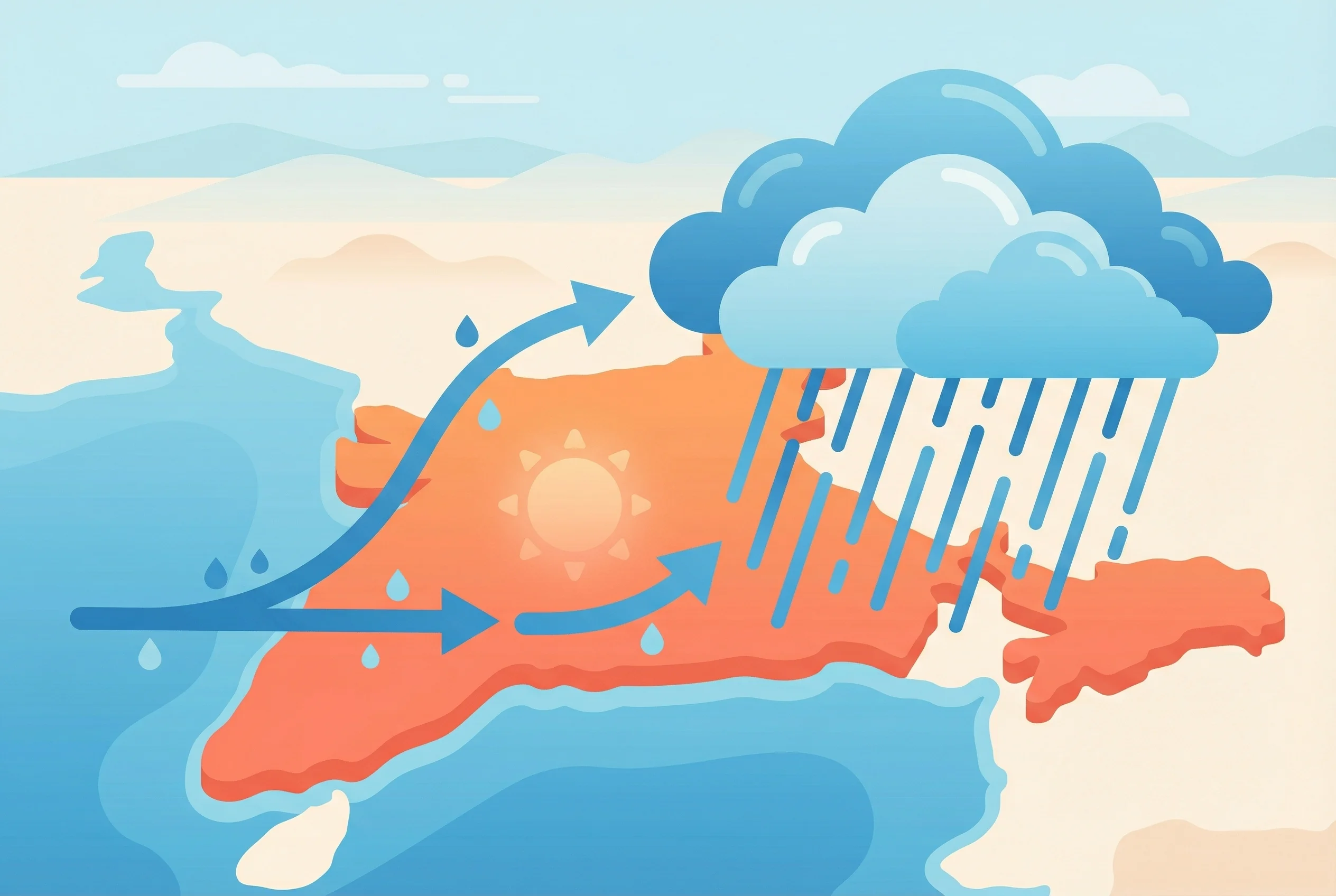
CSeasonal wind shifts bring moisture
✓Correct — A monsoon is a seasonal wind shift. Summer heating over land helps draw moist ocean air inland, where rising air cools and releases heavy rain.
Answer this question
AFish follow currents to food
✗Not quite — the best answer is B: Distribute heat around Earth. Open that choice for the mechanism.
BDistribute heat around Earth
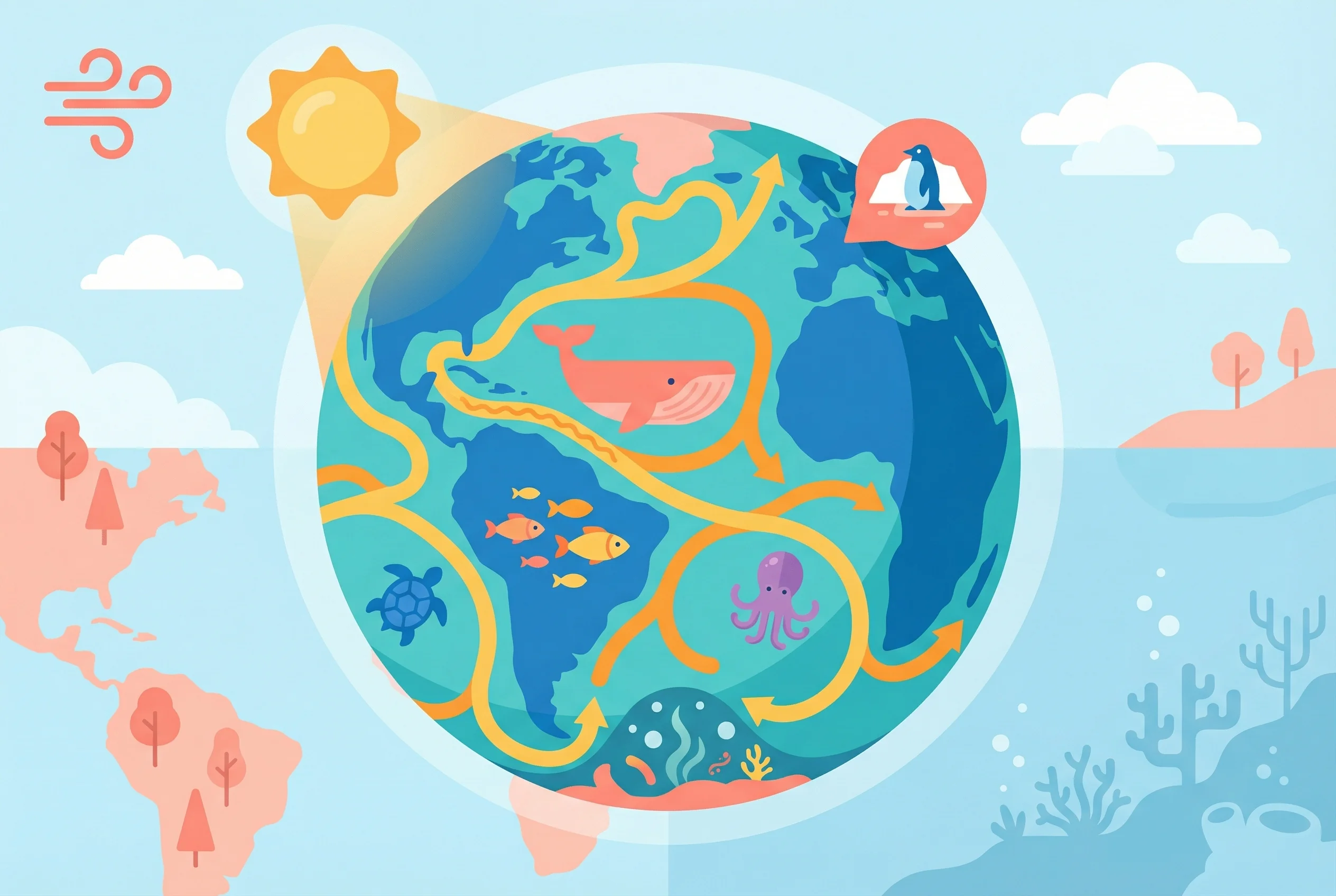
✓Correct — Ocean currents redistribute heat around the planet and also move nutrients, linking ocean circulation to regional climate and marine ecosystems.
CCreate shipping lanes
✗Not quite — the best answer is B: Distribute heat around Earth. Open that choice for the mechanism.
Answer this question
AEarthquakes create cracks
✗Not quite — the best answer is B: Water dissolves limestone. Open that choice for the mechanism.
BWater dissolves limestone
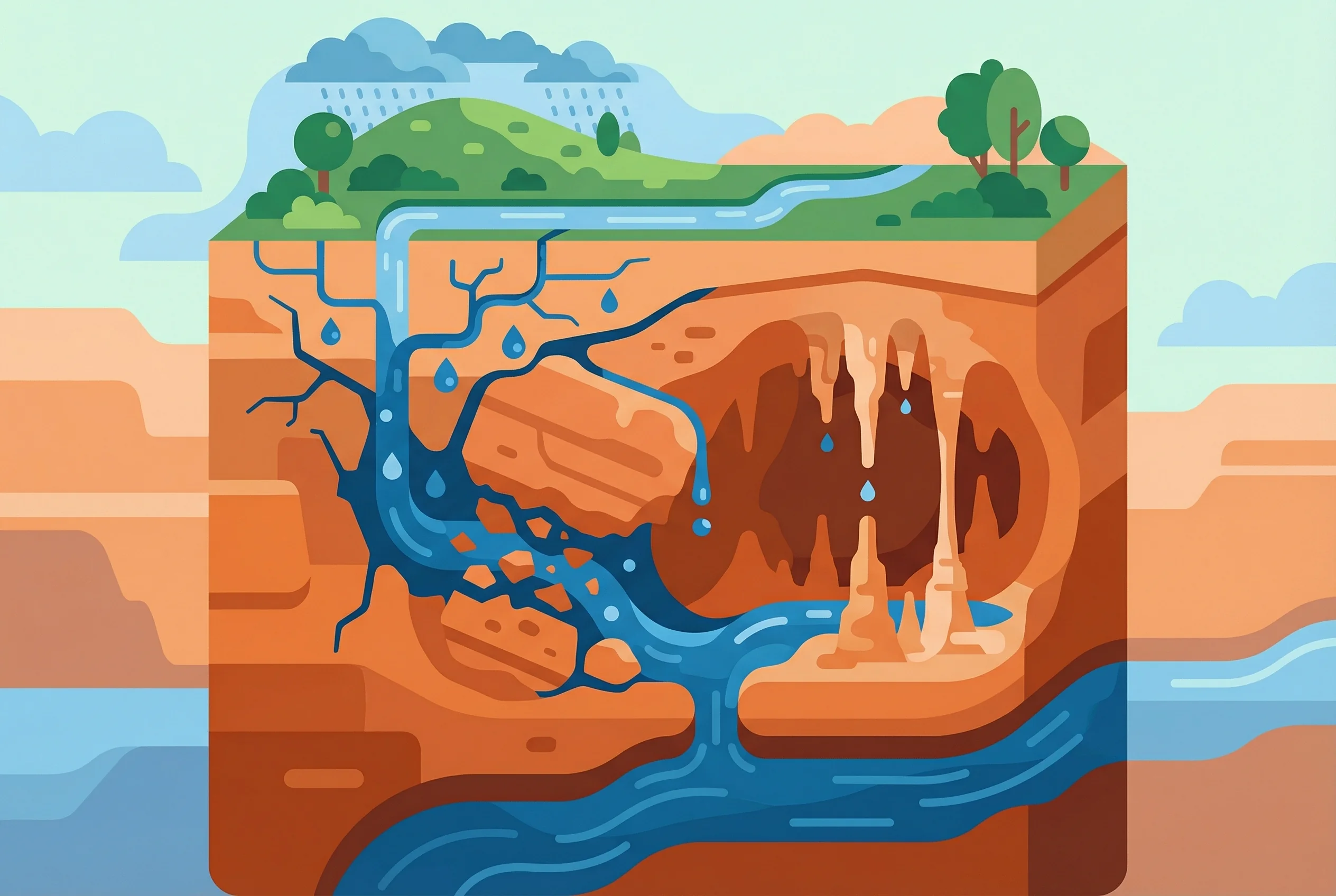
✓Correct — Most solution caves form where slightly acidic water follows cracks and dissolves limestone over long periods, though lava tubes and other cave types also exist.
CLava tubes hollow out
✗Not quite — the best answer is B: Water dissolves limestone. Open that choice for the mechanism.
Answer this question
AFarthest from equator
✗Not quite — the best answer is C: Sunlight hits at low angle. Open that choice for the mechanism.
BThin atmosphere there
✗Not quite — the best answer is C: Sunlight hits at low angle. Open that choice for the mechanism.
CSunlight hits at low angle
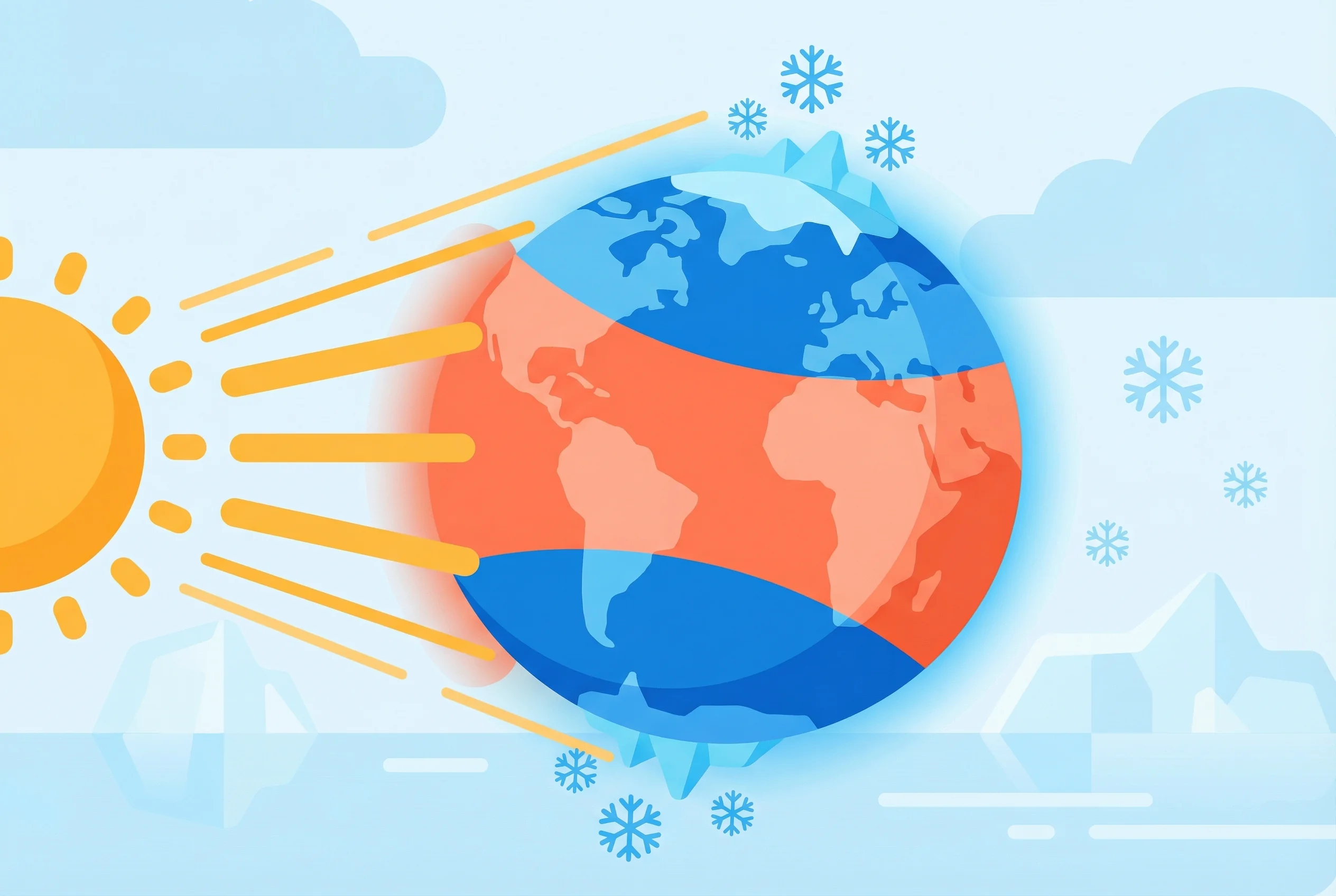
✓Correct — Polar sunlight arrives at a low angle and polar winters bring long darkness; snow and ice also reflect much of the sunlight that does arrive.
Answer this question
ARising seas flood valleys
✓Correct — Many straits occupy low passages that were flooded as sea level rose. Tectonics and erosion can create or reshape straits too.
BRivers carved through land
✗Not quite — the best answer is A: Rising seas flood valleys. Open that choice for the mechanism.
CTectonic plates split land
✗Not quite — the best answer is A: Rising seas flood valleys. Open that choice for the mechanism.
Answer this question
Want to play these for real?
Turn geography questions into a 10-second daily quiz that follows your curiosity from one map-shaped mystery to the next.
Play live on AIgneous Million WhysFrequently Asked Questions
What counts as geography trivia?
Geography trivia asks why places look and work the way they do: continents, rivers, mountains, deserts, islands, oceans, climates, and landforms.
Are these geography trivia questions fact-checked?
Yes. These cards come from the active AIgneous Million Whys question bank, where each question has answer choices and explanation text attached to the same source record.
Why do so many geography answers involve geology and weather?
Because maps are not just names. They are the surface trace of plate tectonics, erosion, climate, rivers, waves, ice, and long-running Earth systems.
Can I open the same questions in the daily quiz?
Yes. Each card links to the matching live question with a /daily?q= deep link.
What does this have to do with AIgneous Million Whys?
AIgneous Million Whys is built for exactly this kind of half-known question: a familiar map feature, a quick guess, and then the satisfying closure of the real mechanism.