Good ocean trivia questions do more than ask what lives in the water. They make the blue surface feel less flat: a turtle that seems to cry is desalting, a fish that flies is escaping, and a dark deep-sea body is solving pressure, oxygen, and light at once. Each card below gives you the answer and the little mechanism that makes it satisfying.
For the daily-habit version of this, there is one question a day with the same answer-then-why structure at Trivia Question of the Day — free, no account needed.
For the slower explainer version, read Fun Facts About the Ocean: Pressure, Light, Life.
Ocean Trivia Questions for the Surface and the Coast
APlaying and having fun
✗Wrong. Leaping is energy-expensive and risky (birds can catch them). It's escape behavior, not recreation.
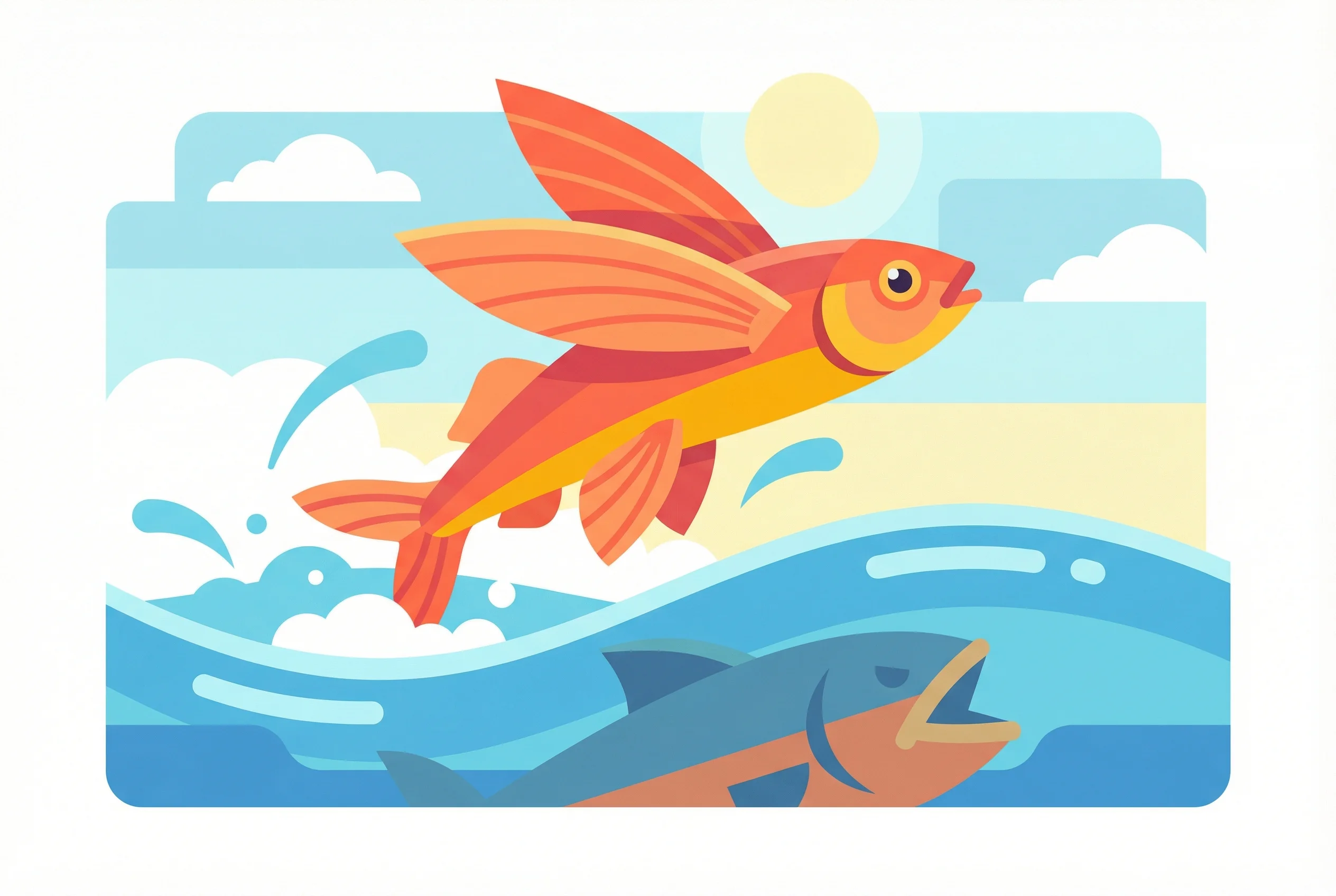
BEscaping underwater predators
✓Correct - When chased by tuna, dolphins, or swordfish, flying fish burst through the surface at 35+ mph, spread their enlarged pectoral fins like wings, and glide up to 650 feet through the air! Predators can't follow. They 'taxi' on their tail to extend flights. Pure aerial escape!
CBreathing air like dolphins
✗Wrong. Flying fish have gills and breathe underwater. They leap to escape predators, not to breathe air.
Answer this question
ATheir leg joints bend sideways
✓Correct - Crab legs attach at the sides and have joints that bend best sideways. This body structure makes sideways movement most efficient. Some crabs can walk forward, but it's slower and awkward!
BTo move faster underwater
✗Wrong. Sideways walking isn't faster than forward movement. It's simply how crab anatomy works—their leg joints naturally bend in that direction.
CTheir shells block forward motion
✗Wrong. The shell doesn't block forward motion. Crabs walk sideways because their leg joints are designed to bend that way, making it their most natural gait.
Answer this question
ACracking open shellfish
✓Correct - Sea otters are one of the few tool-using animals! They dive for clams, sea urchins, and mussels, then float on their backs using their chest as an 'anvil.' They pound the shells against a rock until they crack open. Some otters have favorite rocks they keep in their armpit skin folds!
BAnchoring themselves while sleeping
✗Wrong. Sea otters do wrap themselves in kelp to avoid drifting, but rocks are primarily tools for cracking shells, not anchors.
CPlaying games together
✗Wrong. While otters are playful, rock use is serious business—it's a learned hunting skill passed from mother to pup for accessing hard-shelled food.
Answer this question
ACooling tired muscles
✗Not quite - the answer is C. Eye-side desalting. Cooling tired muscles fits the hot beach, but it misses the chemistry. The secretion is not mainly a sweat substitute. A cooling liquid would not need to be saltier than seawater; that detail points to export of excess ions, not temperature control.
BWashing beach sand
✗Not quite - the answer is C. Eye-side desalting. Washing beach sand feels plausible because the fluid appears near the eye. But sea turtles make salty secretions because feeding and living at sea load them with salt. The eye location is an exit route, not the main purpose; the gland is doing body chemistry.
CEye-side desalting
✓Correct - Eye-side desalting is the useful job. Sea turtles ingest seawater while feeding, then large glands near the eyes release salt in fluid more concentrated than seawater. What looks emotional is a survival mechanism for keeping internal salt lower than the ocean.
Answer this question
AProtection and smoother swimming
✓Correct - Fish scales act like armor, protecting against predators and parasites. They also overlap to reduce drag, helping fish glide smoothly through water. Some scales even provide camouflage!
BTo store nutrients
✗Wrong. Scales don't store nutrients. Fish store energy in their liver and muscles, not in their scales which are made of bone-like material.
CFor temperature regulation
✗Wrong. Fish are cold-blooded and regulate temperature through behavior, not scales. Scales primarily serve protection and hydrodynamic functions.
Answer this question
Ocean Quiz Questions About the Sunlit Zone
ATo maintain body temperature
✗Wrong. While some sharks are warm-blooded, constant swimming isn't primarily for temperature. It's about breathing for species that lack the ability to pump water over gills.
BTo push water over their gills
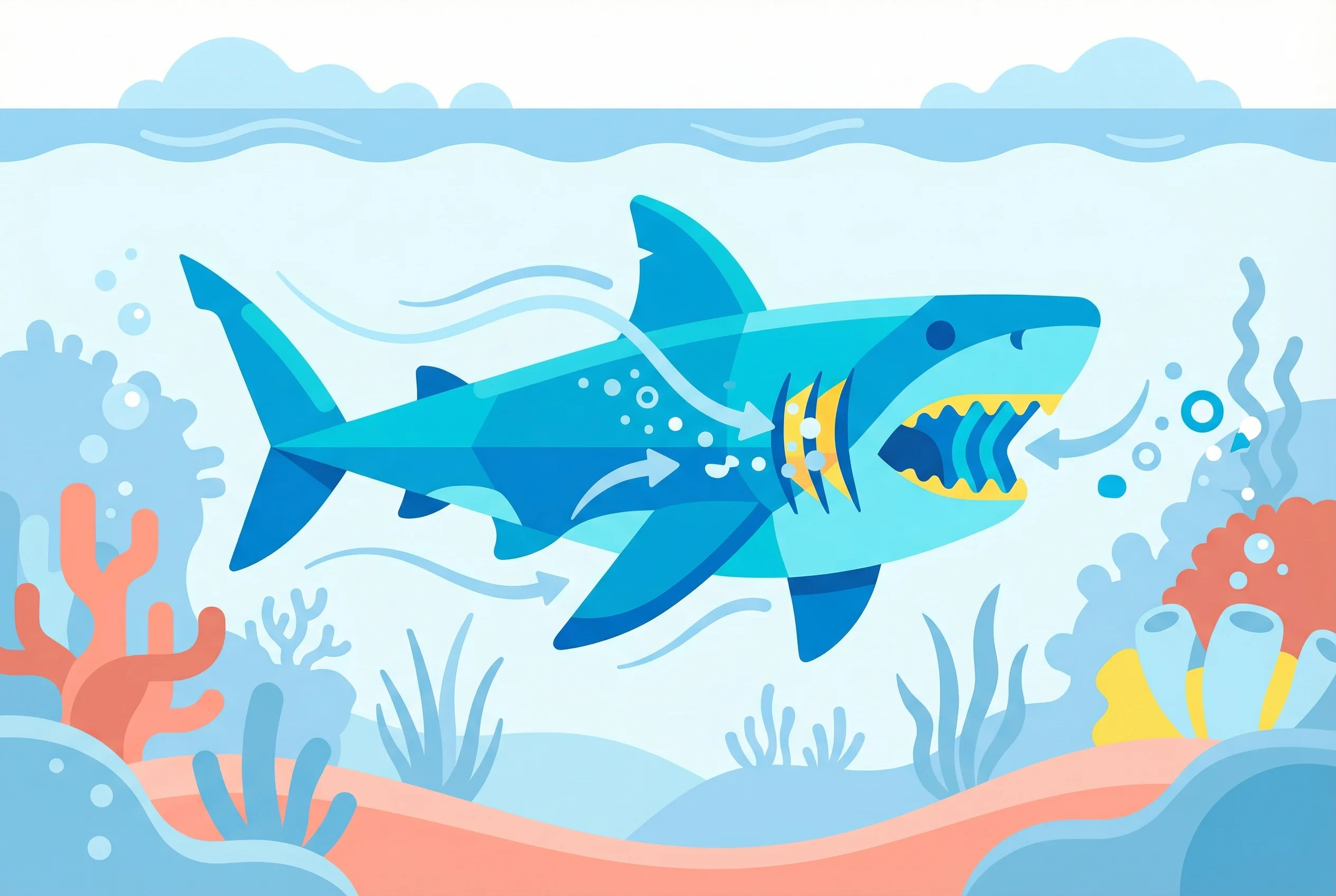
✓Correct - Some shark species like great whites must swim to force water over their gills—this is called ram ventilation. Without swimming, they can't breathe! Other sharks can pump water while resting.
CTo avoid predators
✗Wrong. Adult sharks have few natural predators. They swim constantly because some species physically cannot breathe without water flowing over their gills.
Answer this question
ATo communicate with others
✗Wrong. Jellyfish don't communicate through stinging. They're actually quite simple organisms without brains, communicating through chemical signals instead.
BTo catch prey and defend
✓Correct - Jellyfish have specialized cells called nematocysts that fire tiny harpoon-like structures. These inject venom to paralyze prey and deter predators. They fire automatically on contact!
CTo attract mates
✗Wrong. Jellyfish don't use stinging for mating. Many reproduce by releasing eggs and sperm into the water where fertilization occurs externally.
Answer this question
ASpecial stem cells throughout body
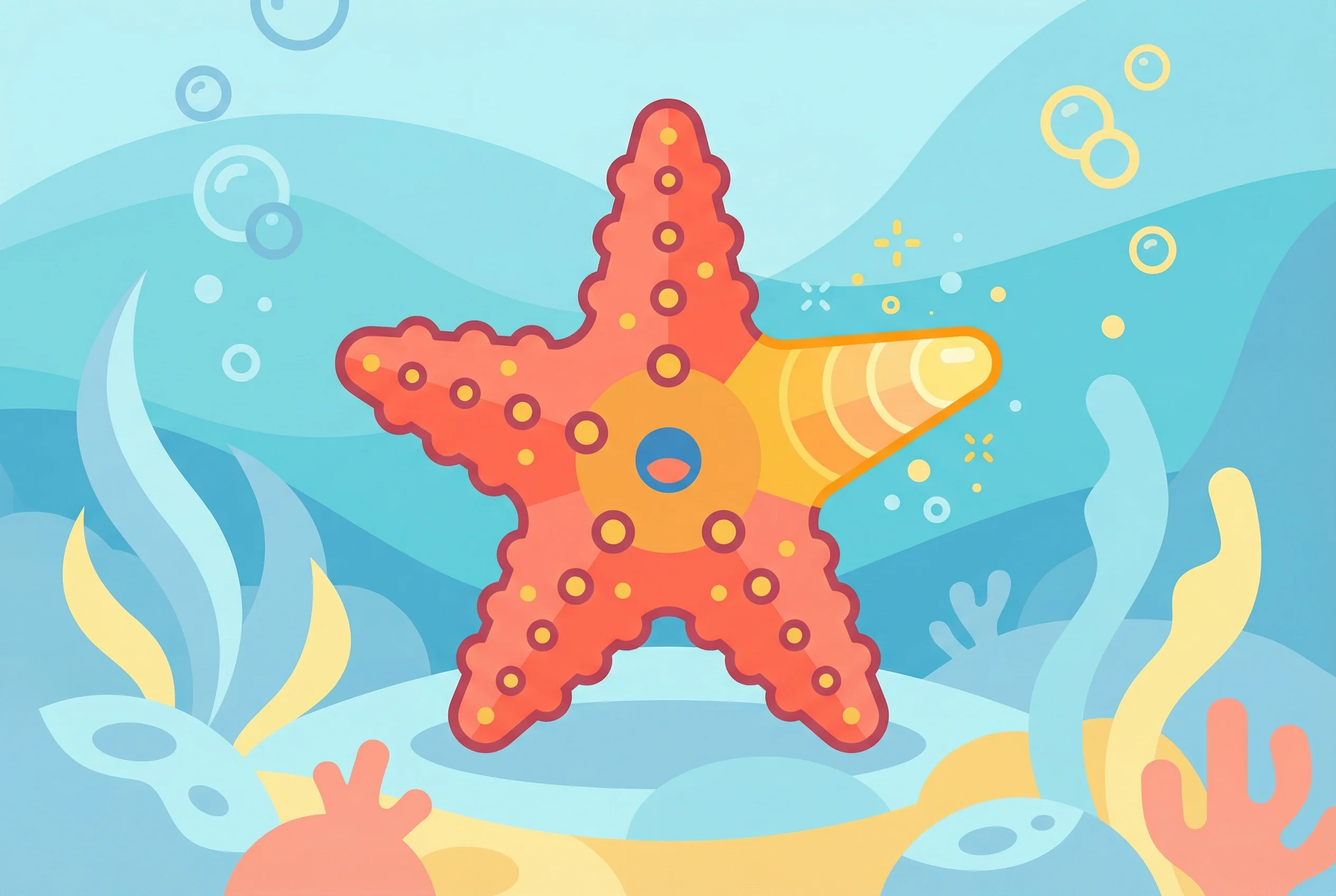
✓Correct - Starfish have stem cells distributed throughout their bodies that can become any cell type. When an arm is lost, these cells multiply and differentiate to rebuild the entire limb—some species can even regrow from just one arm!
BArms aren't vital organs
✗Wrong. Arms actually contain important organs in starfish! Each arm has digestive glands and parts of the nervous system. They regenerate due to stem cell abilities, not because arms are unimportant.
CSeawater promotes healing
✗Wrong. Seawater doesn't promote regeneration. The ability comes from starfish having stem cells that can transform into any tissue type needed for regrowth.
Answer this question
ATwo for gills, one for body
✓Correct - Two branchial hearts pump blood through the gills to pick up oxygen. The main systemic heart pumps oxygenated blood to the body. This helps their copper-based blue blood deliver oxygen efficiently!
BBackup if one heart fails
✗Wrong. The three hearts aren't backups—each has a specific job. Losing one would seriously impair the octopus's circulation system.
CEach controls different arms
✗Wrong. Hearts don't control arms. Octopuses do have neurons in their arms for some independent movement, but hearts only pump blood.
Answer this question
AEach of their eight arms has its own 'mini-brain' that can think independently
✓Correct - Octopuses have about 500 million neurons total, with roughly 350 million (two-thirds) distributed across their eight arms. Each arm contains clusters of nerve cells that function like mini-brains, allowing the arms to taste, touch, and even make decisions independently. This is why a severed octopus arm can still react to stimuli and grab food. Their central brain coordinates overall behavior, but the distributed intelligence lets them multitask - one arm can open a jar while others explore different areas simultaneously.
BThey have the largest eyes in the animal kingdom to see solutions clearly
✗Wrong. While octopuses do have excellent vision and large eyes relative to body size, they do not have the largest eyes in the animal kingdom - that title belongs to the colossal squid. Their intelligence comes from their unique nervous system structure, not eye size. In fact, octopuses are colorblind despite their amazing camouflage abilities, relying more on texture sensors in their skin than visual processing for color matching.
CTheir three hearts pump extra blood to their brain during problem-solving
✗Wrong. Octopuses do have three hearts (two pump blood to the gills, one to the body), but this is for efficient oxygen delivery throughout their body, not for boosting brain power during problem-solving. The three-heart system helps them survive in oxygen-poor ocean environments. Their intelligence stems from having neurons distributed throughout their arms, creating a decentralized 'thinking' system rather than relying solely on increased blood flow to a central brain.
Answer this question
Deep-Sea Trivia From the Twilight Zone
ATo allow their tubular eyes to rotate and see in multiple directions
✓Correct - Fish like the barreleye have transparent, dome-shaped heads filled with fluid. Their tubular eyes point upward to spot prey silhouettes against faint light from above, but can rotate to look forward when feeding. The transparent shield protects these delicate eyes from jellyfish stings while maintaining visibility.
BTo avoid detection by predators in the dark ocean depths
✗Wrong. In the deep ocean where almost no light penetrates, transparency provides little camouflage advantage. Most deep-sea creatures rely on bioluminescence or specialized eyes rather than visual camouflage. The transparent head actually serves a mechanical function for eye movement.
CTo reduce their body weight for efficient swimming
✗Wrong. The transparent head is filled with fluid and tissue, so it does not significantly reduce weight. Deep-sea fish have other adaptations for buoyancy like reduced bone density and specialized swim bladders. The transparent head's primary purpose is optical, not weight reduction.
Answer this question
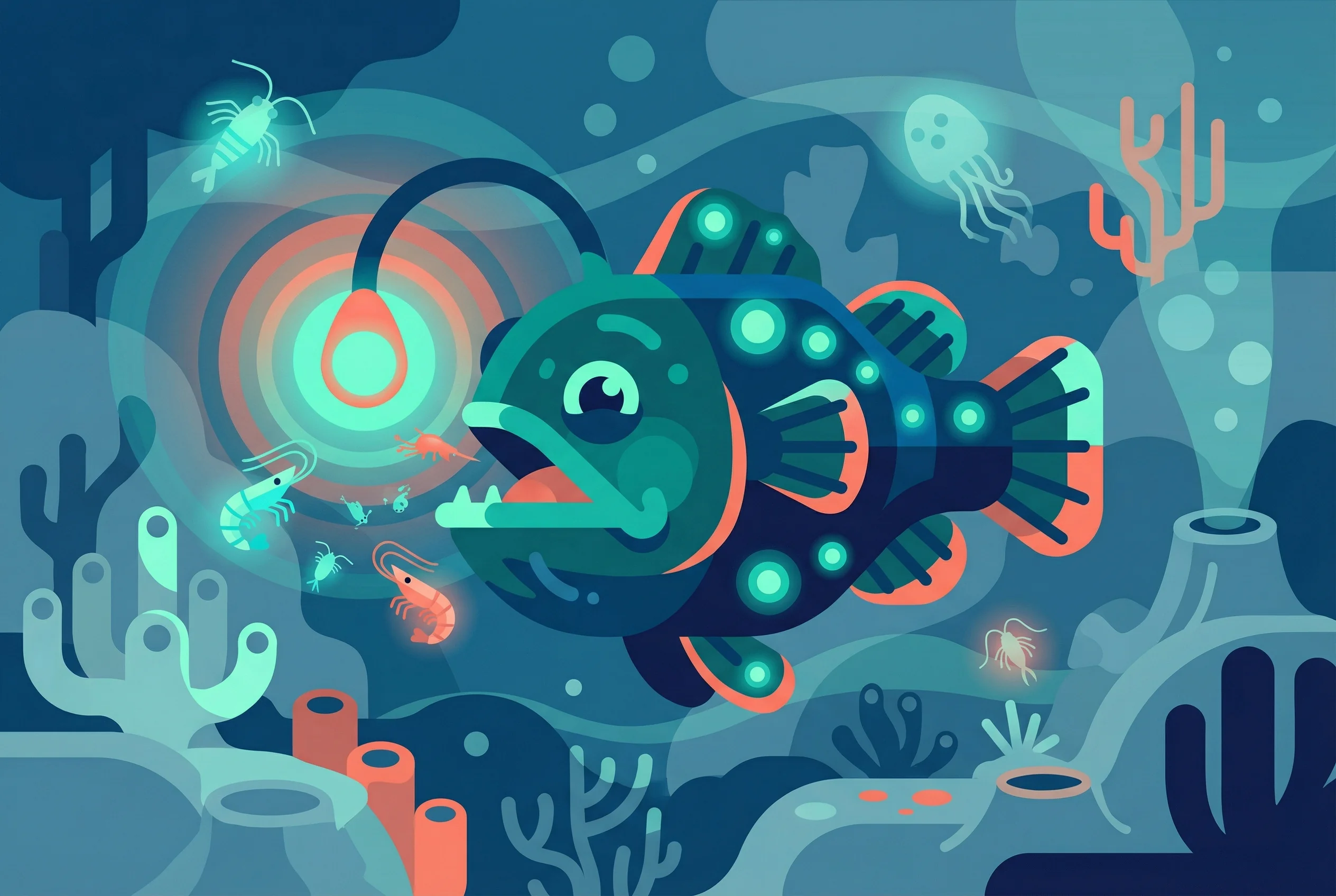
ATotal darkness in deep ocean makes self-made light extremely valuable
✓Correct - Below 1,000 meters, sunlight cannot penetrate, creating perpetual darkness. Here, bioluminescence becomes incredibly useful for finding mates, luring prey, confusing predators, and communicating. On land, sunlight provides free illumination during the day, making the energy cost of producing light not worth the benefit. The few land bioluminescent species like fireflies use it specifically for nighttime mating signals.
BOcean water amplifies light signals better than air does
✗Wrong. Ocean water actually absorbs and scatters light more than air does, making light signals travel shorter distances underwater. Blue and green wavelengths travel farthest in water, which is why most bioluminescent creatures produce these colors. If water amplified light better, we would expect more bioluminescence on land where air transmits light more efficiently.
CDeep-sea creatures have more energy available for light production
✗Wrong. Deep-sea creatures actually have less energy available due to scarce food sources in the abyss. Producing light through chemical reactions (luciferin-luciferase) costs metabolic energy. These animals evolved bioluminescence despite energy constraints because the survival advantages in total darkness outweigh the costs. On land, animals have access to more food but less need for self-generated light.
Answer this question
ATo detect faint bioluminescence from approaching whales in the dark deep sea
✓Correct - Giant squid eyes (up to 30cm across) are optimized to detect the faint bioluminescent glow created when sperm whales (their main predators) move through water containing tiny glowing plankton. At depths of 1000+ meters where no sunlight reaches, this gives squid precious seconds to escape. The massive size collects more photons of light, like a bigger telescope sees fainter stars.
BTo see tiny prey clearly in the murky ocean water
✗Wrong. While large eyes help with low light, giant squid do not need dinner-plate sized eyes just for hunting prey. Their prey (fish and smaller squid) are relatively easy to detect at close range. The extraordinary size is specifically for detecting very dim light sources (like whale-disturbed bioluminescence) from extremely far distances in absolute darkness.
CTo communicate with other squid using light signals
✗Wrong. Giant squid do not use their eyes to send light signals to communicate. While many deep-sea creatures produce bioluminescence for communication, giant squid eyes only receive light, they do not emit it. The massive eye size is purely for detecting extremely faint light sources in the pitch-black abyss, particularly the glow that reveals approaching predators.
Answer this question
AFrom eating glowing bacteria
✗Wrong. While some fish do host light-producing bacteria, many create light themselves through chemical reactions in specialized organs called photophores.
BBioluminescence for survival
✓Correct - Deep-sea fish use bioluminescence to find mates, lure prey, confuse predators, or camouflage against faint surface light. In the pitch-black deep ocean, making your own light is a powerful survival tool!
CReflection of surface light
✗Wrong. No sunlight reaches the deep sea—it's completely dark below 1,000 meters. Fish must produce their own light through chemical reactions called bioluminescence.
Answer this question
AAttracting prey or mates
✓Correct - Bioluminescent jellyfish produce light through chemical reactions (luciferase enzyme + luciferin). They use it to attract small prey, startle predators, or communicate with other jellyfish. Some deep-sea species use glowing lures to catch prey in pitch-black waters!
BWarming up cold water
✗Wrong. Light production doesn't generate significant heat. Bioluminescence is 'cold light'—nearly 100% of energy becomes light, not heat.
CAbsorbing moonlight energy
✗Wrong. Jellyfish don't absorb moonlight for energy. They generate their own light through chemical reactions in specialized cells.
Answer this question
Hard Ocean Trivia About Pressure and the Abyss
ADeep-sea pressure compresses their jelly-like bodies into normal fish shape
✓Correct - Blobfish live 600-1200m deep where pressure is 60-120 times surface pressure. Their gelatinous, low-density tissue is perfectly adapted to this environment, compressed into a normal fish shape. When brought to the surface rapidly, the sudden pressure drop causes their soft tissue to expand and sag dramatically, creating the iconic 'sad blob' appearance. This is similar to how deep-sea organisms can be damaged by decompression.
BThey puff up with air to avoid being crushed by surface predators
✗Wrong. Blobfish do not have swim bladders or the ability to gulp air like some surface fish. Their gelatinous body composition actually makes them poorly suited to surface conditions. The 'blobby' appearance is not a defensive mechanism but rather the result of their specialized deep-sea anatomy failing under low surface pressure. In their natural habitat, they look like normal fish.
CSunlight causes their scales to melt and droop downward
✗Wrong. Blobfish do not have traditional scales, and sunlight does not melt biological tissue. The droopy appearance is entirely due to pressure changes, not light exposure. Their gelatinous body is adapted for the crushing pressure of the deep ocean, where sunlight never reaches. When this pressure support is removed at the surface, their low-density tissue simply cannot maintain its shape against gravity alone.
Answer this question
ATheir soft bodies equalize pressure, preventing crushing at extreme depths
✓Correct - At depths beyond 1,000 meters, water pressure can exceed 100 times surface pressure. Gelatinous bodies are mostly water and incompressible, so internal pressure matches external pressure perfectly. Rigid skeletons and gas-filled spaces would collapse under such extreme forces. This adaptation allows creatures like jellyfish and certain fish to thrive where pressure would crush most other organisms.
BBones would dissolve in the high-salt deep ocean water
✗Wrong. While deep ocean water is salty, it does not dissolve bones. Many deep-sea fish actually do have bones, but they are small and flexible. The real challenge is pressure, not chemical dissolution. Whale bones can remain on the ocean floor for decades without dissolving, proving that salt water does not break down bone structure.
CThey need flexible bodies to squeeze through narrow underwater caves
✗Wrong. While some deep-sea creatures do navigate rocky terrain, this is not the primary reason for their gelatinous bodies. Most deep-sea organisms live in open water or on soft sediment, not in cave systems. The gelatinous adaptation is specifically about surviving crushing pressure, not about flexibility for movement through tight spaces.
Answer this question
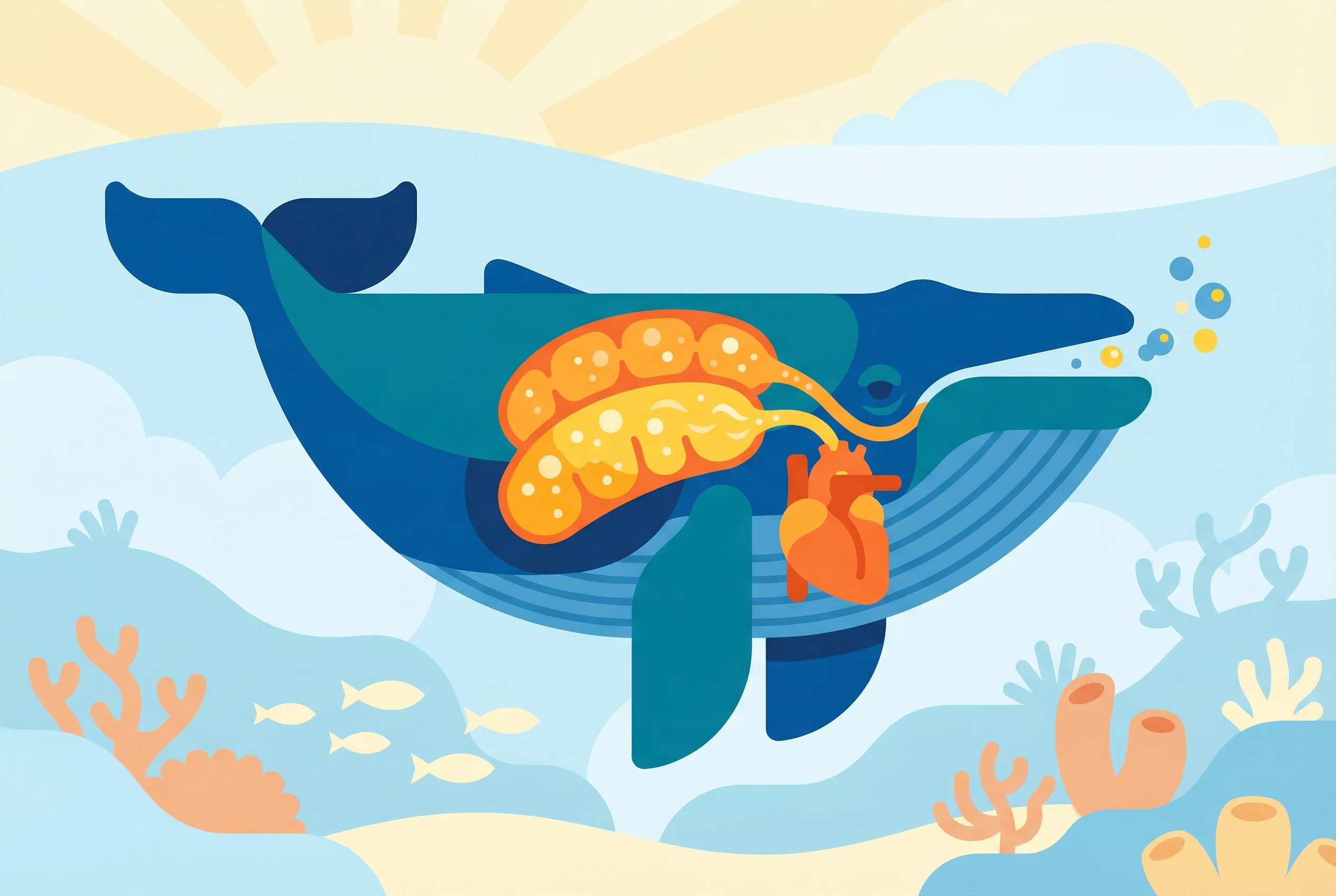
AWhales have collapsible lungs and store oxygen in blood, not air spaces
✓Correct - Deep-sea fish have gas-filled swim bladders that expand violently when pressure drops rapidly, rupturing organs. Whales evolved collapsible lungs that compress under pressure, and they store most oxygen chemically bound in myoglobin (in muscles) and hemoglobin (in blood), not as gas. This eliminates dangerous air spaces that would expand.
BWhales have thicker skin that can withstand the pressure changes
✗Wrong. Skin thickness does not prevent internal gas expansion. The real issue is that fish have rigid swim bladders filled with gas that expands according to Boyle's Law when external pressure decreases. A thicker skin cannot contain the explosive force of rapidly expanding gases inside the body.
CWhales surface slowly enough that their bodies adjust to pressure
✗Wrong. While ascent speed matters for human divers (to avoid 'the bends'), deep-sea fish brought up even slowly still die because their swim bladder gas expands too much. Whales are safe regardless of speed because they exhale before diving, eliminating most air spaces, and their remaining lung tissue collapses under pressure.
Answer this question
ATheir lungs collapse during dives, preventing nitrogen absorption
✓Correct - Whales have highly flexible ribcages and collapsible lungs. As they dive deeper, the increasing water pressure compresses their lungs, forcing air into their trachea and upper airways where gas exchange cannot occur. This brilliant adaptation means nitrogen cannot dissolve into their bloodstream even at extreme depths, preventing the dangerous nitrogen bubbles that cause decompression sickness in human divers who breathe compressed air.
BTheir blood cannot dissolve nitrogen gas at any pressure
✗Wrong. Whale blood can dissolve nitrogen just like human blood - the physics of gas dissolving in liquid applies to all mammals. The key difference is that whales prevent nitrogen from entering their blood in the first place by collapsing their lungs during dives. Human scuba divers continuously breathe compressed air underwater, forcing nitrogen into their blood under pressure.
CThey surface so slowly that nitrogen naturally escapes their blood
✗Wrong. While whales do sometimes ascend slowly, many species make rapid ascents without problems. Sperm whales, for example, can surface from 3,000-foot dives in just 10-15 minutes - far too fast for gradual nitrogen release. The real protection comes from their collapsed lungs preventing nitrogen absorption during the dive, not slow surfacing speeds.
Answer this question
ABlue copper-based blood carries oxygen better in cold water
✓Correct - Octopuses use hemocyanin, a copper-based protein that turns blue when carrying oxygen. Unlike our iron-based hemoglobin, hemocyanin works much more efficiently in cold temperatures and low-oxygen conditions found in deep oceans. This gives octopuses a survival advantage in their cold-water habitats.
BBlue blood camouflages them from predators in deep water
✗Wrong. While octopuses are masters of camouflage, they change their skin color and texture using special cells called chromatophores. Their blood color is internal and not visible to predators. The blue color comes from copper in their oxygen-carrying protein, not for camouflage purposes.
CBlue blood absorbs more heat from surrounding water
✗Wrong. Blood does not absorb heat from water to warm the body. Octopuses are cold-blooded animals, meaning their body temperature matches their surroundings. The blue color comes from copper-based hemocyanin, which is specialized for oxygen transport in cold environments, not heat absorption.
Answer this question
Ocean Trivia on Tides, Currents, and Seafloor Motion
AMoon's light heats the water
✗Wrong. Moonlight is just reflected sunlight and is very weak - it doesn't heat the ocean significantly. Temperature changes don't cause the regular twice-daily tides we observe. The tides are caused by gravitational forces, not thermal effects.
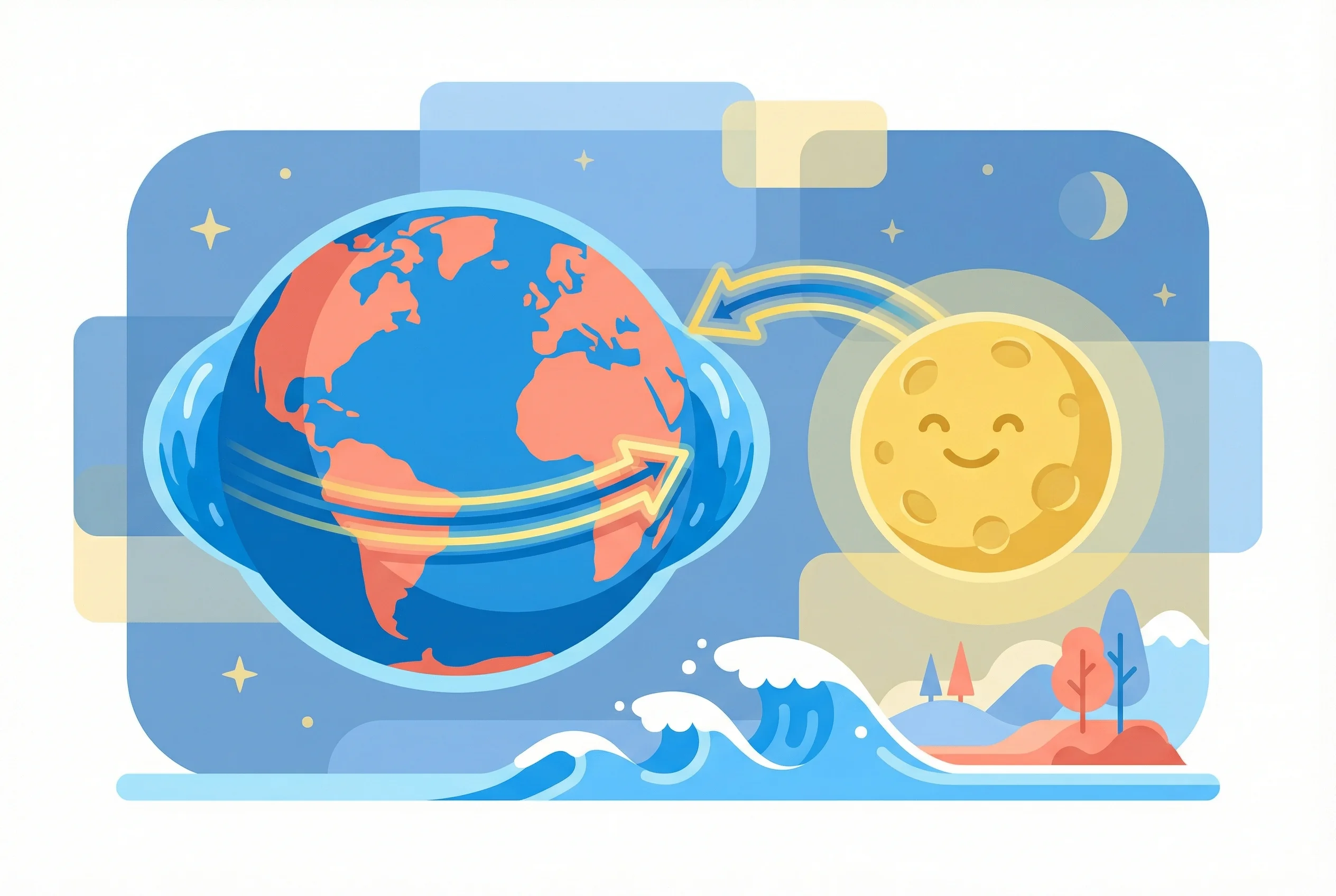
BMoon's gravity pulls the water
✓Correct - The Moon's gravity pulls on Earth's oceans. The side of Earth facing the Moon experiences stronger pull, creating a bulge of water (high tide). Surprisingly, the opposite side also gets high tide because Earth itself is pulled more than that distant water, leaving it 'behind' in a bulge. As Earth rotates, locations pass through these bulges, experiencing two high tides daily (every 12.4 hours). The Sun also affects tides but less strongly due to greater distance.
CMoon's magnetism attracts water
✗Wrong. The Moon has no significant magnetic field, and water isn't magnetically attracted anyway. Tides are caused by gravitational pull, not magnetism.
Answer this question
AOnly underwater earthquakes that move the seafloor vertically can displace enough water
✓Correct - Tsunami generation requires three key factors: the earthquake must occur underwater or very close to the ocean, it must be relatively shallow (usually less than 70km deep), and most importantly, it must cause vertical movement of the seafloor. When tectonic plates thrust upward or drop downward during an earthquake, they displace enormous volumes of water above them. This displaced water then travels outward as tsunami waves. Horizontal sliding earthquakes, even if powerful, typically do not generate tsunamis because they do not lift or drop water masses. The 2004 Indian Ocean tsunami was caused by a magnitude 9.1 earthquake where one plate thrust under another, lifting the seafloor by several meters.
BOnly earthquakes above magnitude 8.0 have enough power to create tsunamis
✗Wrong. While larger earthquakes are more likely to cause tsunamis, magnitude 8.0 is not a strict threshold. Tsunamis have been generated by earthquakes as small as magnitude 6.5 when conditions are right. What matters more than raw magnitude is the location (underwater), depth (shallow), and type of fault movement (vertical displacement). A magnitude 7.5 underwater earthquake with strong vertical movement can create a devastating tsunami, while a magnitude 8.5 earthquake on land or with only horizontal movement will not. The key is how much water gets displaced, not just the earthquake's total energy.
CEarthquakes during high tide push more water and create tsunamis
✗Wrong. Tides have no significant effect on tsunami generation. Tsunamis are caused by the sudden vertical displacement of the ocean floor during underwater earthquakes, not by the amount of water present. A tsunami can be generated equally during low tide or high tide. The ocean is so deep (average 3,800 meters) that tidal variations of 1-2 meters make no practical difference to tsunami formation. What matters is whether the earthquake moves the seafloor up or down, displacing the entire water column above it from the bottom to the surface. Tides may slightly affect tsunami wave height when it reaches shore, but they do not determine whether a tsunami forms.
Answer this question
ACold water stops magma
✗Not quite - the answer is B. Seawater pressure cages gases. Cold water does chill the outside of lava fast, making glassy crusts and pillow shapes. But cooling alone would not make an eruption quiet; sudden water heating can also help explosions. The deep-ocean difference is the heavy water column, which keeps bubbles and steam from expanding freely.
BSeawater pressure cages gases
✓Correct - Deep water adds a huge confining load, so gas bubbles in rising magma cannot swell the way they do near air. Around most mid-ocean ridges, that pressure favors effusive lava and pillow flows rather than ash columns. At 2,500 m, the water adds roughly 250 atmospheres, a quieting lid most land volcanoes never feel.
CThe lava has no gas
✗Not quite - the answer is B. Seawater pressure cages gases. Basalt is often less gas-rich and less sticky than rhyolite, but it is not bubble-free. The Surtsey system was basaltic and still produced phreatomagmatic blasts when it reached shallow water. Composition matters, yet the surprising switch in the Reykjanes case is mostly the pressure drop with depth.
Answer this question
ARising sea levels from melting ice sheets submerged it
✓Correct - During the last Ice Age, so much water was locked in massive ice sheets that global sea levels were about 120 meters (390 feet) lower than today. This exposed a wide land bridge between Siberia and Alaska. When Earth warmed around 11,000-15,000 years ago, these ice sheets melted, releasing enormous amounts of water back into the oceans. The rising seas gradually flooded the low-lying Bering Land Bridge, creating the Bering Strait we see today. This land bridge was crucial in human history, as it allowed the first people to migrate from Asia to the Americas.
BVolcanic eruptions caused the land to sink below sea level
✗Wrong. While volcanic activity does occur in the Bering region (part of the 'Ring of Fire'), volcanism did not cause Beringia to sink. The land bridge was a relatively flat, stable area of continental shelf. Its disappearance was caused by rising water levels, not geological subsidence. Volcanic islands can sink over geological time, but the timescale and mechanism are completely different from what happened to the Bering Land Bridge.
CTectonic plate movements pulled the continents farther apart
✗Wrong. While tectonic plate movements do separate continents, this happens extremely slowly over millions of years. The Bering Land Bridge disappeared rapidly in geological terms (within a few thousand years), far too quickly to be caused by plate tectonics. Also, the distance between Asia and North America at the Bering Strait has remained relatively constant for millions of years. The bridge's appearance and disappearance was controlled by changing sea levels, not continental drift.
Answer this question
AThe Pacific Plate has heavy edges sinking into the mantle, pulling it along
✓Correct - The Pacific Plate moves about 7-11 cm per year because it has subduction zones where heavy oceanic crust sinks into the mantle. This 'slab pull' force is the strongest driver of plate motion, much more powerful than the push from mid-ocean ridges. The African Plate, surrounded mostly by mid-ocean ridges with little subduction, moves only 2-3 cm per year.
BThe Pacific Plate is smaller and lighter, so it floats faster
✗Wrong. Size and weight do not determine plate speed. In fact, the Pacific Plate is actually one of the largest plates on Earth, yet it moves fastest. What matters is the driving forces acting on the plate, particularly whether it has subducting edges that pull it forward through 'slab pull' force.
COcean water on the Pacific Plate makes it more slippery
✗Wrong. Ocean water has no significant effect on plate movement. Plates move because of forces deep in the Earth's mantle, not surface conditions. The tectonic plates themselves are made of solid rock (oceanic or continental crust plus upper mantle), and they move through convection and gravitational forces, not sliding friction.
Answer this question
Ocean Questions Adults Get Wrong
AMyoglobin stores extra oxygen
✓Correct - Whales have high levels of myoglobin, a protein that stores oxygen in muscles. They also slow their heart rate dramatically during dives—some to just 2 beats per minute!
BThey breathe underwater slowly
✗Wrong. Whales are mammals and cannot breathe underwater at all. They must surface to breathe air through their blowholes.
CTheir blood has more iron
✗Wrong. While blood carries oxygen, the key is myoglobin in muscles. This protein stores oxygen for use during long dives when they can't breathe.
Answer this question
AMuscles are 10x stronger
✗Wrong. Mantis shrimp muscles aren't unusually strong. The power comes from a spring mechanism that stores and releases energy explosively.
BUsing electric muscle power
✗Wrong. The punch is mechanical, not electrical. Mantis shrimp use spring-loaded appendages that release stored energy in milliseconds.
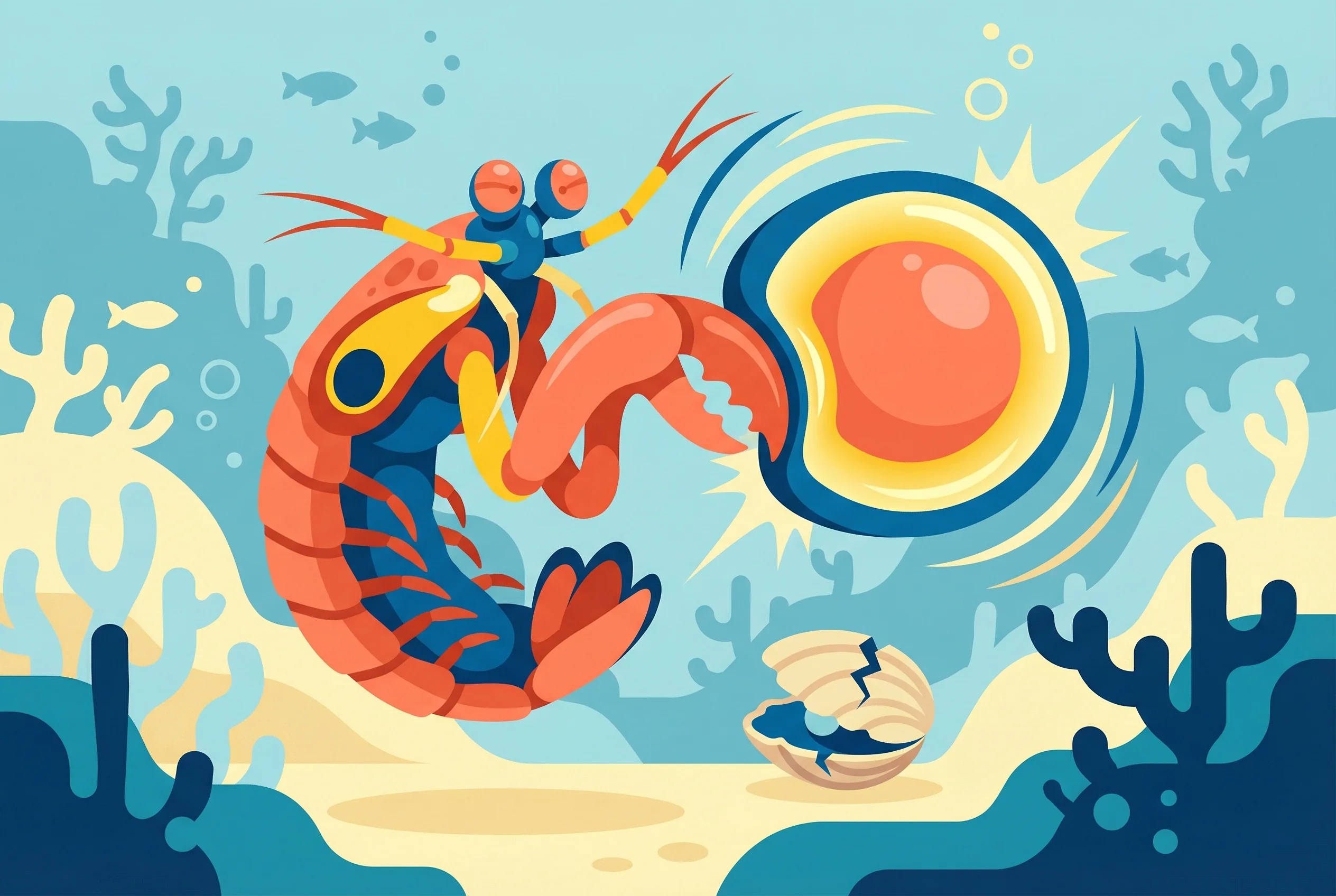
CThey have spring-loaded appendages
✓Correct - Mantis shrimp have spring-loaded appendages (like a crossbow). Muscles slowly load the spring, then a latch releases it—the club accelerates at 10,000x gravity, reaching 50+ mph! The punch is so fast it creates cavitation bubbles that collapse with a second shockwave. They can crack aquarium glass!
Answer this question
ATwo hearts pump blood through gills at high pressure during fast swimming
✓Correct - Squids are speed demons of the sea, using jet propulsion to escape predators at speeds up to 25 mph. Their two branchial hearts specifically pump deoxygenated blood through the gills under high pressure, rapidly extracting oxygen needed for burst swimming. The systemic heart then circulates this oxygen-rich blood to muscles. This three-heart system is perfectly adapted for their high-energy, predator-evading lifestyle, unlike octopuses who move more slowly and use their hearts differently for arm manipulation and crawling.
BThree hearts take turns beating to save energy during long migrations
✗Wrong. Hearts do not 'take turns' in squids or any animal - all three hearts beat continuously and simultaneously. The two branchial hearts beat slightly before the systemic heart in each cycle, creating a coordinated pumping system. Squids are actually sprint swimmers, not long-distance migrators, so energy conservation through alternating hearts would not match their biology. Their three-heart design is about power and speed, not energy saving.
CExtra hearts store backup blood in case one heart gets injured
✗Wrong. Hearts do not store blood - that is the function of blood vessels and sinuses. All three hearts actively pump blood continuously; they are not 'backup' organs. In fact, if a squid loses function in even one branchial heart, it severely impacts their ability to oxygenate blood efficiently during swimming, potentially proving fatal. The three-heart system works as an integrated unit optimized for their active predatory lifestyle, not as a redundancy system.
Answer this question
ATheir slow metabolism and thin bodies allow simple diffusion to work
✓Correct - Deep-sea creatures like sea cucumbers and certain jellyfish live in extremely cold water where their metabolism is very slow. Their bodies are often thin or have large surface areas, allowing oxygen and nutrients to diffuse directly through their tissues without needing a heart to pump blood. The cold temperature also means oxygen dissolves better in water, making diffusion more efficient.
BThey absorb oxygen directly from minerals on the ocean floor
✗Wrong. While deep-sea creatures do encounter minerals on the ocean floor, they cannot absorb oxygen from solid minerals. All animals need oxygen in a dissolved form, either from water or air. These creatures still rely on dissolved oxygen in the water around them, just delivered through diffusion rather than circulation.
CThey have backup hearts stored in their tentacles
✗Wrong. This is not how biology works. Animals either have hearts or they do not - there is no such thing as 'backup hearts' stored in body parts. Some animals like octopuses have multiple hearts (three in their case), but these work together continuously, not as backups. Heartless deep-sea creatures genuinely lack any pumping organ.
Answer this question
Frequently Asked Questions
What are good ocean trivia questions and answers for adults?
Good adult ocean trivia should pair a surprising surface fact with the mechanism underneath it: pressure, buoyancy, salt balance, bioluminescence, tides, or predator escape. A question is stronger when the answer feels obvious only after you see the why.
What is a hard ocean trivia question?
A hard one is not just obscure. "Why do deep-sea fish look damaged at the surface while whales can dive safely?" is hard because it asks you to connect pressure, gas spaces, lungs, and dissolved nitrogen.
Are ocean quiz questions better when they include explanations?
Yes. The explanation is the closure. Without it, a quiz can feel like guessing; with it, each wrong answer becomes a clean little map of what people often misunderstand about the ocean.
Can I use these ocean trivia questions for a quiz night?
Yes. The cards are written so you can read the question and choices aloud, then use the feedback line as the reveal. The mix moves from beach-friendly questions into deeper and stranger ocean systems.
Where can I play more ocean questions daily?
AIgneous Million Whys turns questions like these into a 10-second daily curiosity loop: answer one, see the why, and leave with one more thread to pull tomorrow.