A contrail can vanish while the next one spreads, a lake freezes at the surface instead of the bottom, and a ring around the Moon can be made by ice crystals miles overhead. These weather trivia questions start with sky scenes you already recognize, then close the information gap with the mechanism underneath. Guess first—the answer is more satisfying when you can feel exactly where your intuition changed.
Weather Trivia Questions
AIce crystals grow randomly
✗Not quite — tiny differences matter, but ice growth still follows crystal physics.
BTemperature variations pattern it
✗Not quite — temperature shapes details, but the deeper reason is how water molecules join the ice lattice.
CCrystal growth follows physics
✓Correct — water vapor deposits onto cold surfaces, and ice crystals branch as they grow.
Answer this question
ATo capture uncertainty - tiny measurement errors grow into different outcomes
✓Correct — An ensemble starts many model runs with slightly different initial conditions or model assumptions. Agreement among the runs raises confidence; a wide spread reveals that small uncertainties can grow into different outcomes.
BTo average out computer calculation errors and get more accurate numbers
✗Not quite — the answer is A. To capture uncertainty - tiny measurement errors grow into different outcomes.
CTo compare which computer brand produces the most accurate forecasts
✗Not quite — the answer is A. To capture uncertainty - tiny measurement errors grow into different outcomes.
AHeavy clouds sink lower
✗Not quite — the answer is C. Temperature and moisture vary.
BOlder clouds rise higher
✗Not quite — the answer is C. Temperature and moisture vary.
CTemperature and moisture vary
✓Correct — Cloud height depends on where rising air cools to saturation and on the atmosphere's stability. Low stratus, mid-level alto clouds, high icy cirrus, and vertically growing cumulonimbus occupy different layers for those reasons.
AWater droplets scatter all light
✓Correct — Cloud droplets and ice crystals scatter the visible wavelengths of sunlight broadly, so the combined light looks white. A thick cloud looks gray because much less light makes it through to its base.
BClouds contain white chemicals
✗Not quite — the answer is A. Water droplets scatter all light.
COxygen makes clouds appear white
✗Not quite — the answer is A. Water droplets scatter all light.
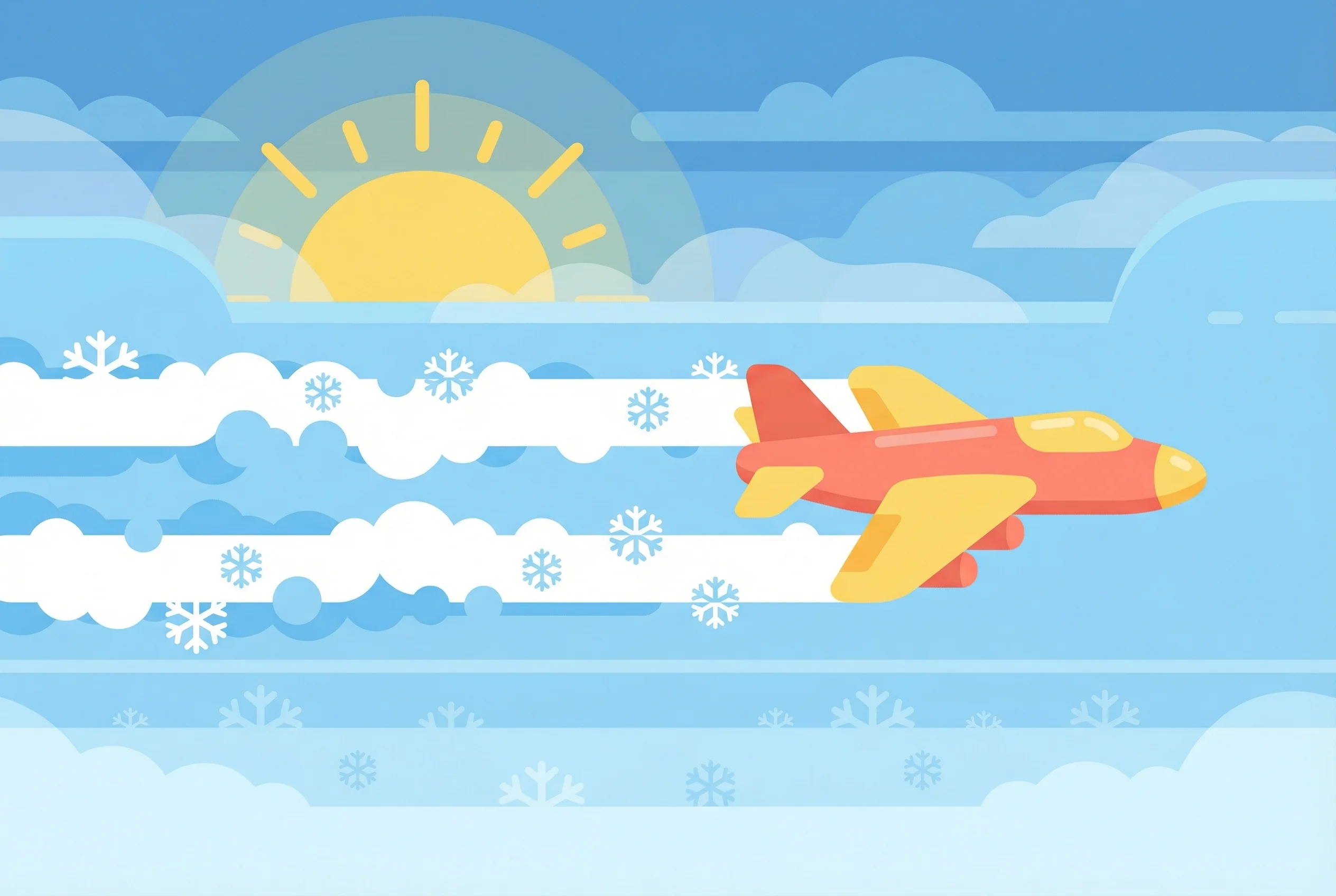
AEngines release water vapor
✗Not quite — the answer is B. Humidity determines persistence.
BHumidity determines persistence
✓Correct — Jet exhaust supplies water vapor and particles, but persistence depends on the surrounding upper air. In sufficiently cold, ice-supersaturated air, ice crystals survive and spread; in drier air they sublimate and the trail fades.
CHigh altitude air is polluted
✗Not quite — the answer is B. Humidity determines persistence.
AWater molecules bond hexagonally
✓Correct — the arrangement of water molecules in ice gives snow crystals their six-fold symmetry.
BSix is nature's lucky number
✗Not quite — the shape comes from molecular geometry, not luck.
CWind creates six-sided patterns
✗Not quite — wind can change a flake's trip, but the crystal symmetry starts with ice structure.
Answer this question
Weather Trivia
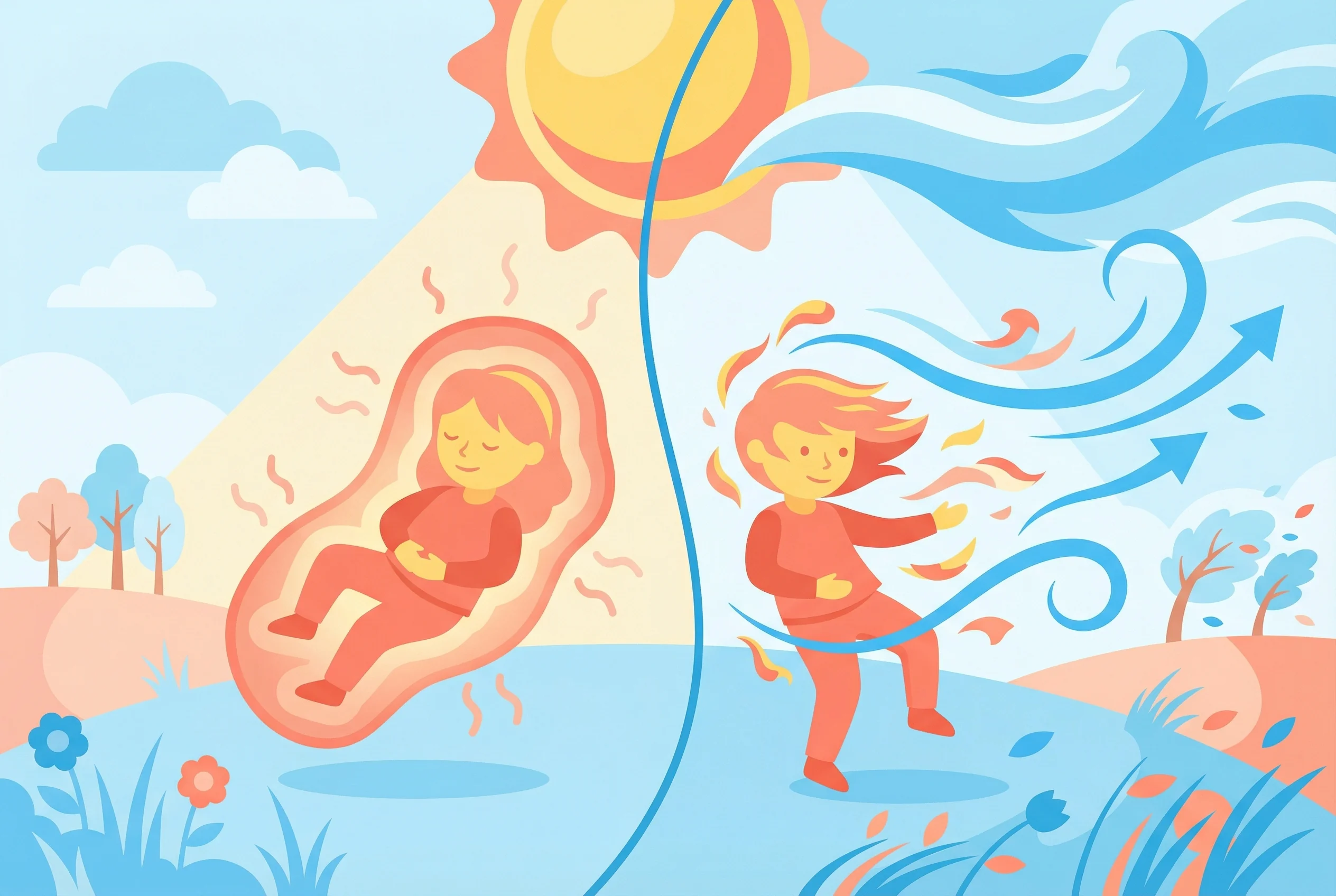
AWind removes warm air near skin
✓Correct — wind carries heat away from exposed skin faster, so the same air temperature feels colder.
BMoving air has less heat
✗Not quite — moving air at the same temperature is not automatically colder. It increases heat loss from your body.
CWind increases air pressure
✗Not quite — the chilly feeling comes from faster heat loss, not a pressure change you can feel.
Answer this question
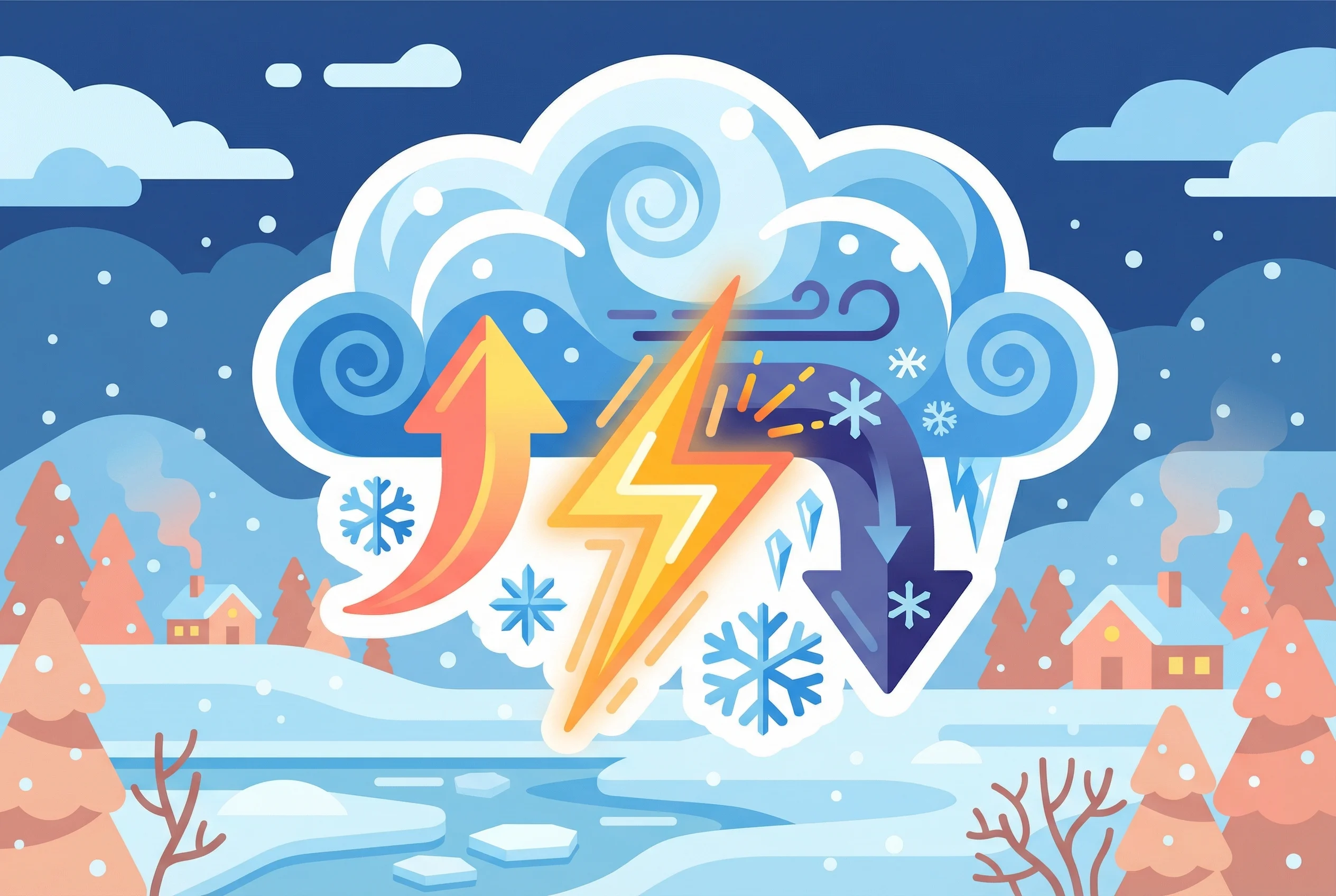
AThunder causes lightning flash
✗Not quite — lightning heats air explosively, and that expanding air makes thunder.
BLight travels faster than sound waves
✓Correct — the flash and sound start together, but light reaches you almost instantly while sound lags behind.
CLightning and thunder are unrelated
✗Not quite — thunder is the sound made by the air channel heated by lightning.
Answer this question
AOcean currents distribute cold
✗Not quite — the answer is B. High water heat capacity.
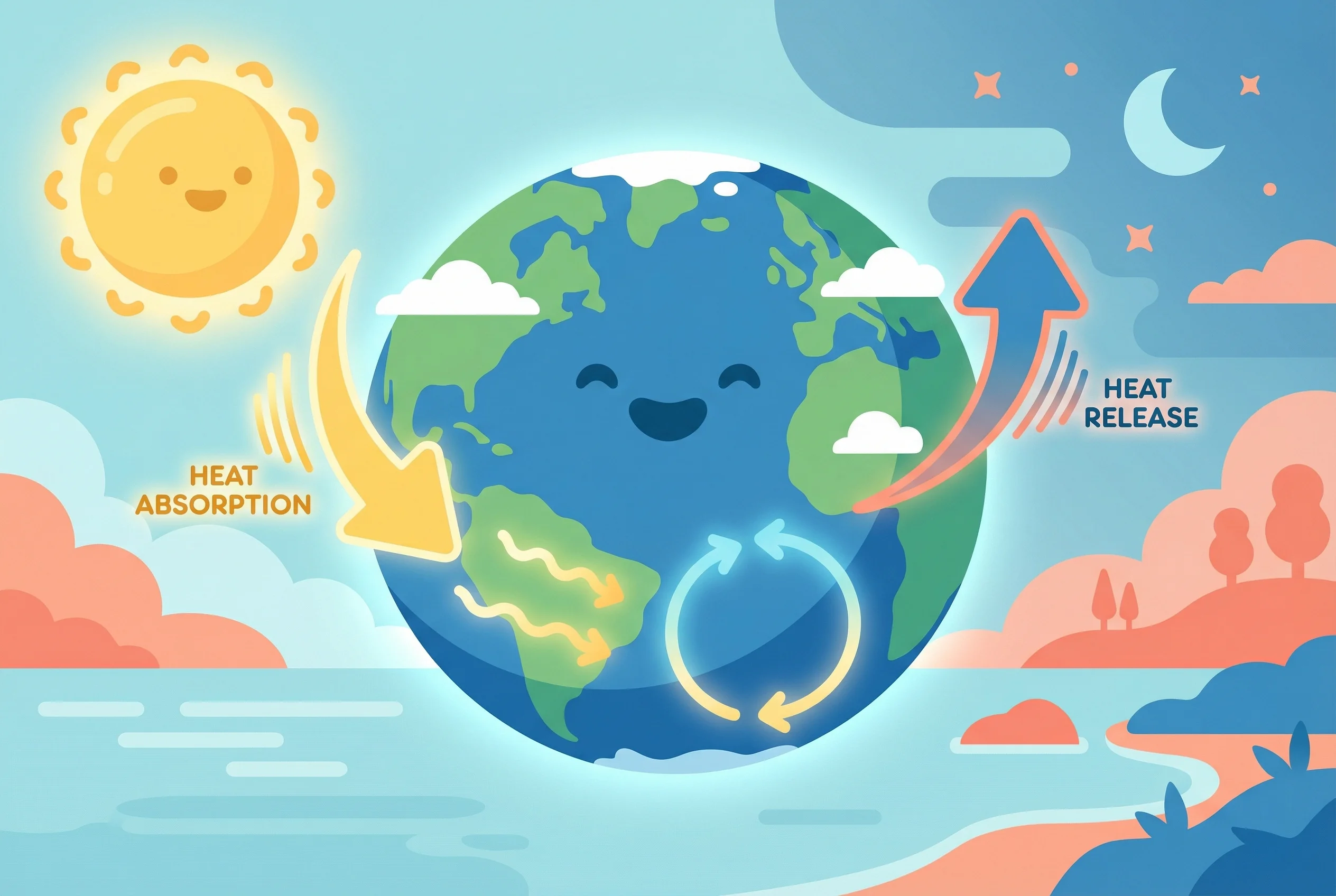
BHigh water heat capacity
✓Correct — Water has a high heat capacity, so the ocean warms and cools more slowly than land. That thermal storage, plus currents that move heat, softens temperature swings near many coasts.
CSalt water stores more heat
✗Not quite — the answer is B. High water heat capacity.
ACoriolis effect from rotation
✓Correct — Air moving toward a tropical cyclone's low-pressure center is deflected by Earth's rotation. That Coriolis deflection helps organize the circulation, while angular momentum makes the flow spin faster closer to the center.
BMoon's gravity pulls storms
✗Not quite — the answer is A. Coriolis effect from rotation.
CWind patterns push hurricanes
✗Not quite — the answer is A. Coriolis effect from rotation.
ALightning converts air nitrogen into absorbable nitrogen compounds
✓Correct — A lightning channel supplies enough energy to break stable nitrogen molecules in the air. The resulting nitrogen oxides can dissolve in rain and reach soil as plant-available nitrate, a natural form of nitrogen fixation.
BLightning's heat melts minerals in rocks into plant nutrients
✗Not quite — the answer is A. Lightning converts air nitrogen into absorbable nitrogen compounds.
CLightning kills harmful bacteria, making soil healthier
✗Not quite — the answer is A. Lightning converts air nitrogen into absorbable nitrogen compounds.
Fun Facts About Rain
AWater droplets refract sunlight
✓Correct — droplets bend, reflect, and spread sunlight into colors when the Sun and viewer line up.
BClouds reflect colorful light
✗Not quite — individual water droplets do the optical work, not a colored reflection from clouds.
CChemical reaction in rainwater
✗Not quite — rainbows are optics: refraction, internal reflection, and dispersion.
Answer this question
AIt measures temperature changes
✗Not quite — a barometer measures air pressure, not temperature.
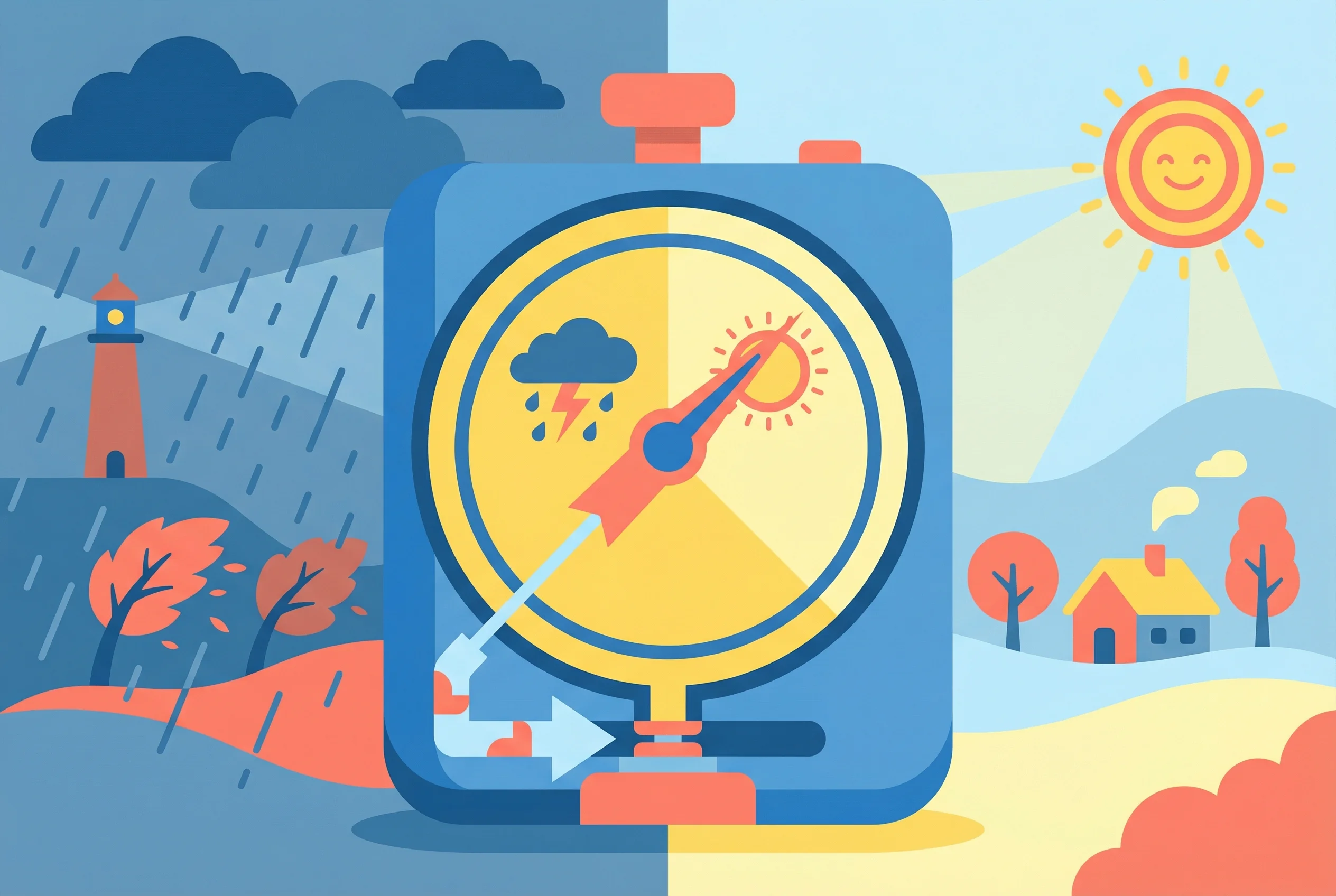
BLow pressure often brings storms
✓Correct — falling pressure often points to approaching unsettled weather; high pressure often brings clearer skies.
CIt detects wind speed
✗Not quite — wind speed is measured with an anemometer. A barometer tracks atmospheric pressure.
Answer this question
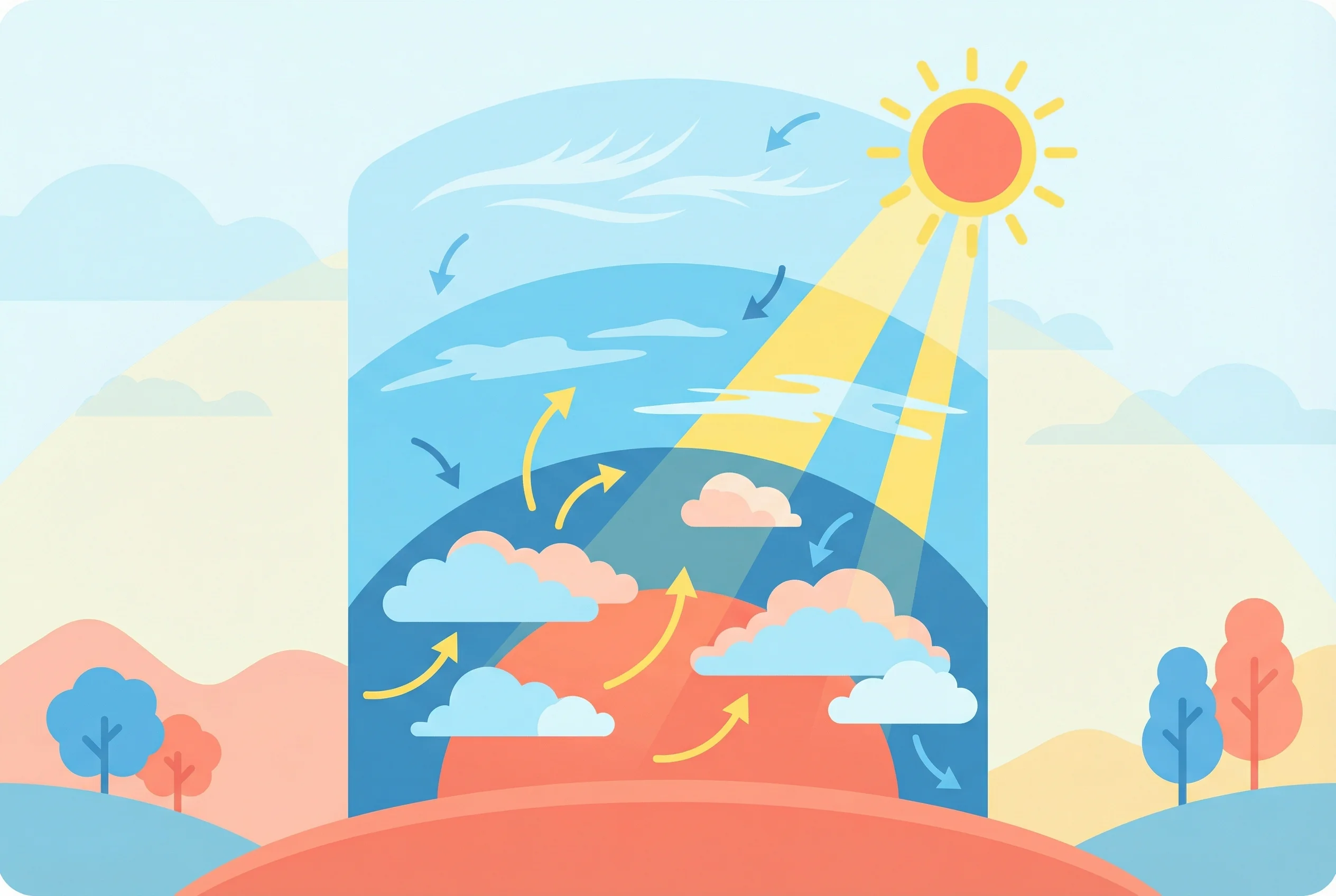
AIntense heating drives convection
✓Correct — Strong solar heating near the equator drives moist air upward, especially along the Intertropical Convergence Zone. The rising air cools, water vapor condenses, and frequent showers and thunderstorms follow.
BTropical plants create rain
✗Not quite — the answer is A. Intense heating drives convection.
CTrade winds push moisture there
✗Not quite — the answer is A. Intense heating drives convection.
AMountains force the moist air upward, causing rapid condensation and heavy rain
✓Correct — An atmospheric river is a narrow corridor carrying concentrated water vapor. When coastal mountains force that air upward, it cools and condenses, turning transported moisture into intense rain or snow on the windward slopes.
BThe river water physically flows down the mountains into cities below
✗Not quite — the answer is A. Mountains force the moist air upward, causing rapid condensation and heavy rain.
COcean waves become stronger and push water onto the land
✗Not quite — the answer is A. Mountains force the moist air upward, causing rapid condensation and heavy rain.
Fun Facts About Snow
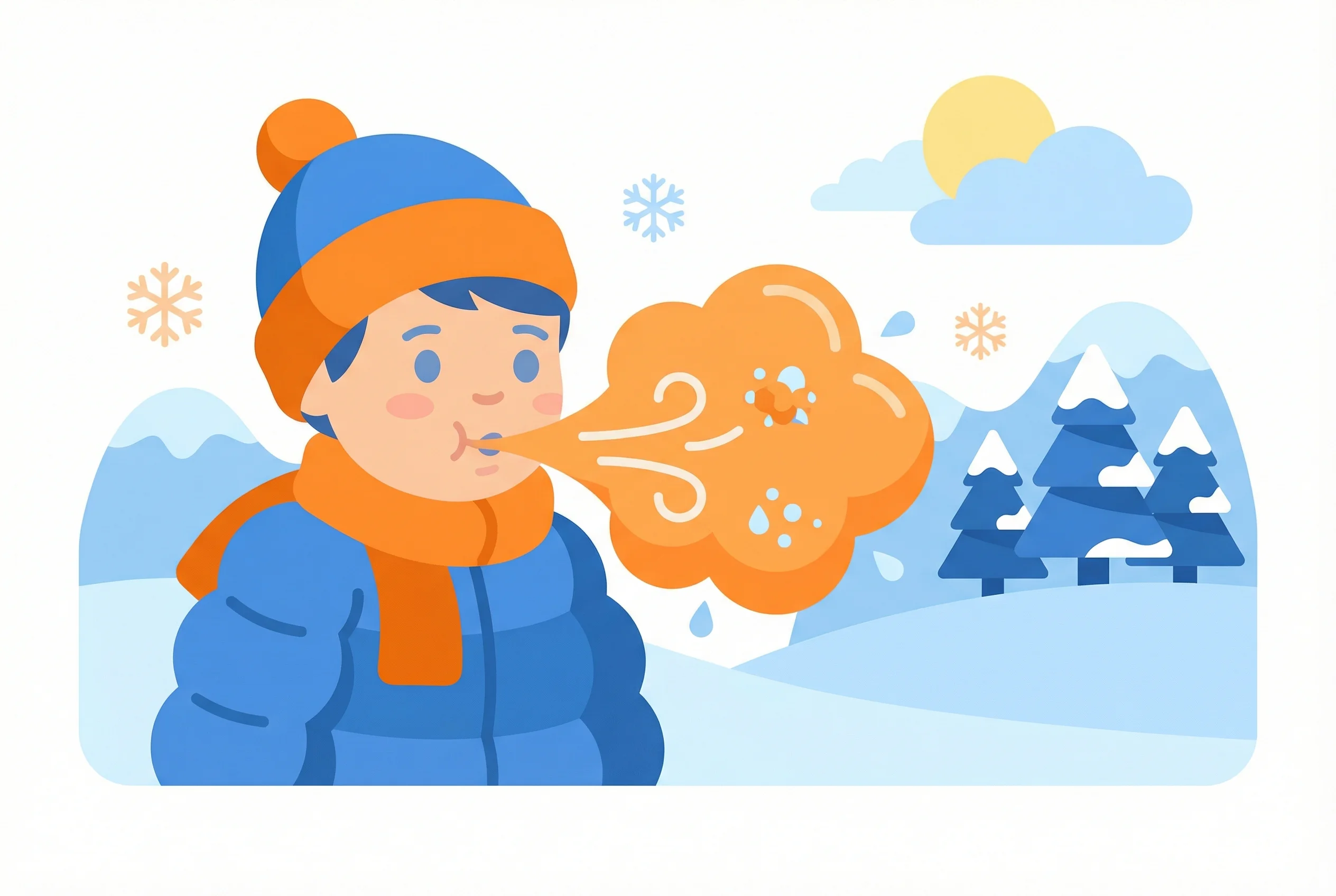
AWater vapor condenses visibly
✓Correct — warm, moist breath cools fast and water vapor condenses into tiny droplets that scatter light.
BBreath freezes into ice crystals
✗Not quite — in most cold weather the white cloud is liquid droplets, though ice crystals can appear in extreme cold.
CCarbon dioxide turns white
✗Not quite — carbon dioxide is colorless. The visible cloud is mostly condensed water.
Answer this question
AHumid air is actually hotter
✗Not quite — the thermometer can read the same. Humidity changes how well your body cools.
BWater vapor conducts heat better
✗Not quite — the big effect is blocked sweat evaporation, not water vapor acting like a heat wire.
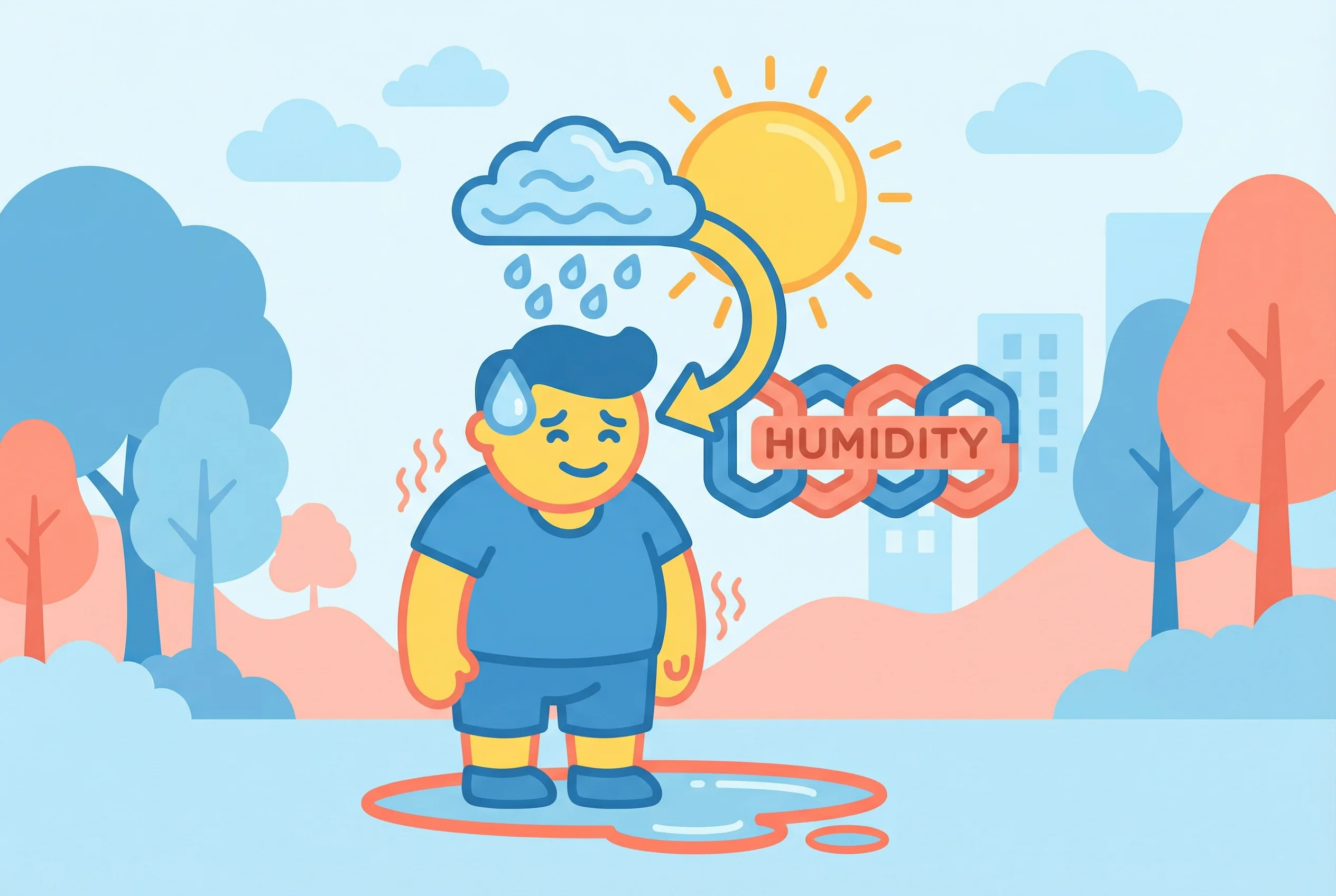
CSweat can't evaporate efficiently
✓Correct — humid air slows evaporation, so sweat removes less heat from your skin.
Answer this question
AStrong sustained winds create whiteout conditions by lifting existing snow
✓Correct — the danger is sustained wind plus falling or blowing snow that can crush visibility for hours.
BWinds above 35 mph keep snowflakes frozen
✗Not quite — temperature controls freezing. The wind threshold is about visibility and travel danger.
CThe 3-hour rule ensures roads are blocked
✗Not quite — the official threshold separates brief squalls from prolonged low-visibility hazards.
Answer this question
AOvernight cooling reaches dew point
✓Correct — near-ground air cools overnight, reaches saturation, and water vapor condenses into tiny droplets.
BPlants release water at dawn
✗Not quite — plants add moisture, but morning fog usually needs cooling to the dew point.
CWind stirs up ground moisture
✗Not quite — radiation fog favors calm air; strong wind tends to mix or disperse fog.
Answer this question
AAir pockets collapse loudly
✗Not quite — the answer is B. Crystals fracture under pressure.
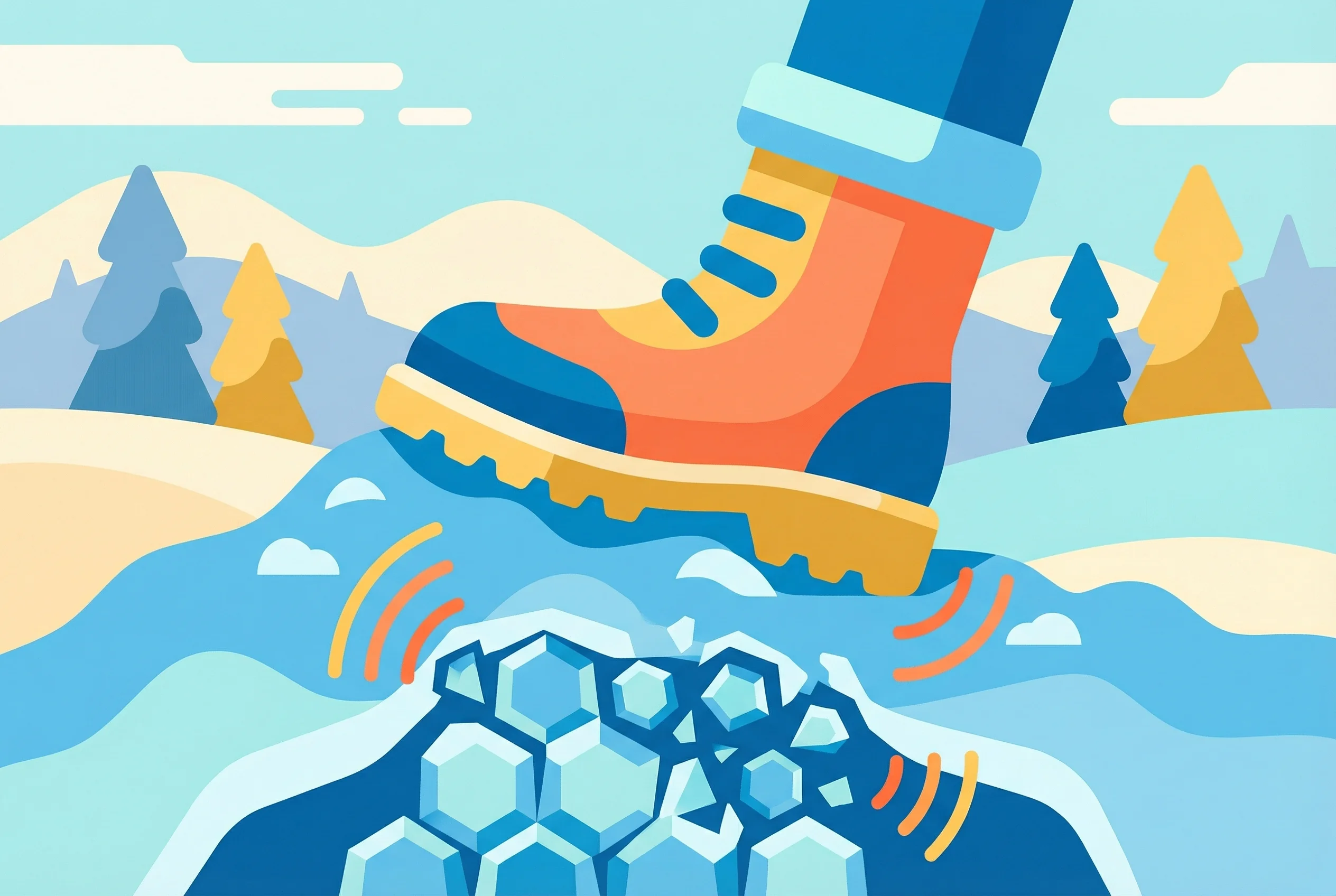
BCrystals fracture under pressure
✓Correct — A footstep compresses and fractures many ice crystals at once. Cold, dry crystals are more brittle and tend to make a sharper crunch; wetter snow near melting point deforms more quietly.
CFrozen water squeaks naturally
✗Not quite — the answer is B. Crystals fracture under pressure.
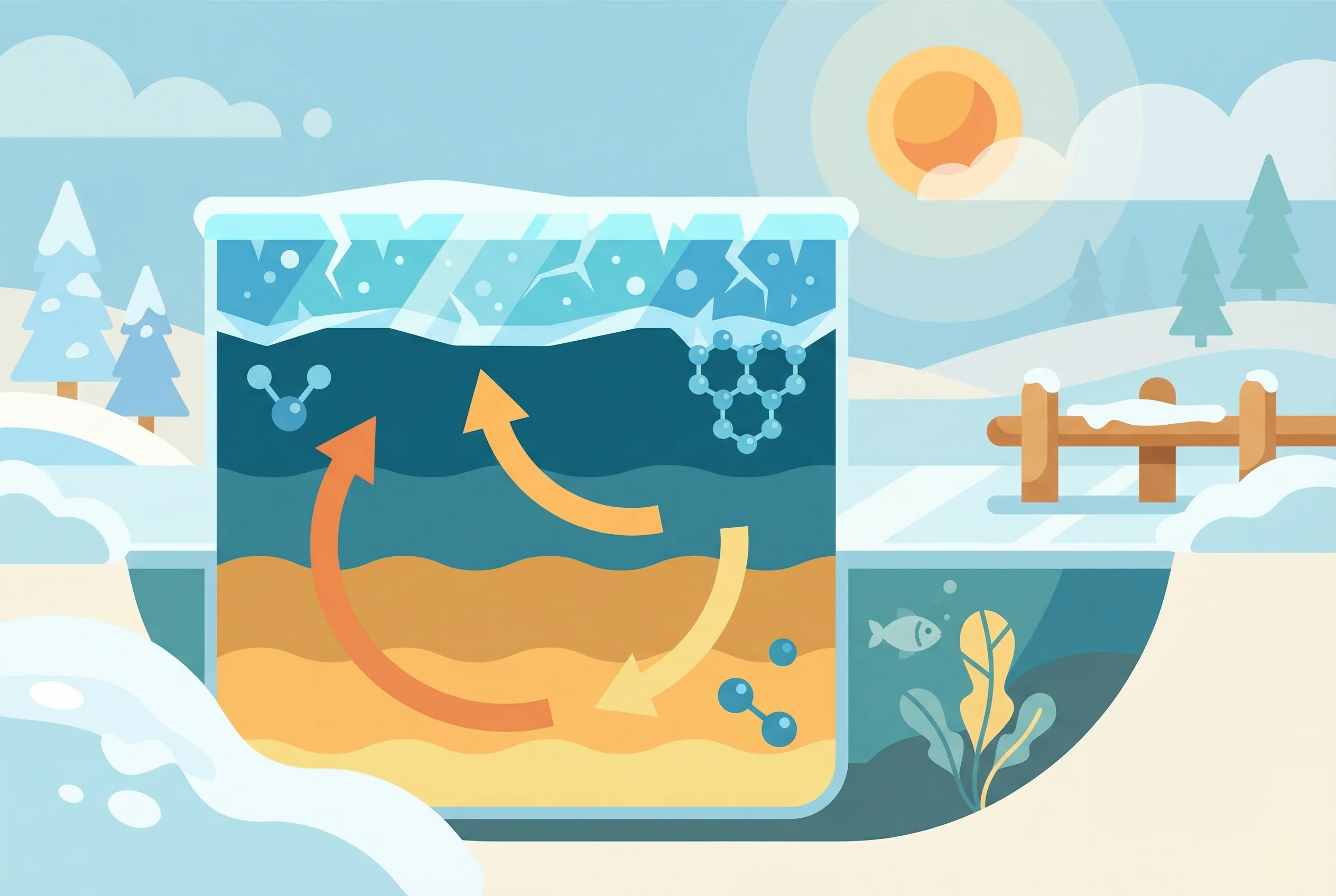
AIce is less dense than water
✓Correct — Liquid water is densest near 4°C, while ice is less dense and floats. A surface ice layer then slows heat loss from the water below, so a lake can remain liquid underneath through winter.
BDeep water is naturally warmer
✗Not quite — the answer is A. Ice is less dense than water.
CWind cools surface first
✗Not quite — the answer is A. Ice is less dense than water.
AIce crystals in high clouds bend the moonlight at a specific angle
✓Correct — A common lunar halo forms when moonlight is refracted through hexagonal ice crystals in high, thin clouds. Their geometry concentrates light near a 22-degree angle, so the glow appears as a ring around the Moon.
BThe moon's atmosphere reflects light back toward Earth
✗Not quite — the answer is A. Ice crystals in high clouds bend the moonlight at a specific angle.
CWater vapor near Earth's surface scatters the moonlight outward
✗Not quite — the answer is A. Ice crystals in high clouds bend the moonlight at a specific angle.
Frequently Asked Questions
Why do some contrails disappear while others spread?
The surrounding upper air decides. Ice crystals vanish quickly in dry air, but in sufficiently cold, ice-supersaturated air they can persist, spread, and resemble thin cirrus clouds.
Why do lakes freeze at the top instead of the bottom?
Ice is less dense than liquid water, so it floats. The surface layer then insulates the water below, slowing further heat loss and helping the deeper lake remain liquid.
How do weather forecast ensembles show uncertainty?
Forecasters run many simulations with slightly different starting conditions or assumptions. A tight cluster of outcomes suggests confidence; a wide spread is a visible warning that the atmosphere can take several paths.
Can a lunar halo tell you anything about the weather?
It tells you that high, thin clouds containing ice crystals are present. Those clouds can arrive ahead of a weather system, but the halo alone is not a precise rain forecast.
What does this have to do with AIgneous Million Whys?
Weather is full of half-known moments: you recognize the cloud, chill, or ring of light but not quite the mechanism. Million Whys turns that itch into a quick answer with real closure, then lets the next why appear.