

Facts About Nature: Hidden Systems That Keep Life Moving
Facts about nature are easiest to remember when they stop being trivia and start behaving like a machine you can see. A stream is not just pretty water. A leaf is not just green decoration. A fallen log is not dead scenery. The surprise is that nature's most familiar scenes are built from loops: water moves, carbon changes hands, roots trade with fungi, pollinators move genetic possibility, and decay returns yesterday's life to tomorrow's growth.
TL;DR
Facts about nature become more interesting when you ask what each scene is doing. Water cycles through air, soil, rivers, and bodies; plants turn sunlight into carbon-rich structure; fungi and roots trade underground; pollinators connect plants across distance; decomposers turn dead material back into usable nutrients. Nature is not a collection of objects. It is a set of closure loops that keep reopening into new life.
The short answer: the best facts about nature are not isolated "did you know" items. They are mechanisms. A forest works because water, carbon, minerals, microbes, plants, animals, and light keep passing energy and matter around. Once you see those handoffs, a walk outside stops looking static and starts looking like a million tiny exchanges happening at once.
Curious? Try one 👇
Why is the sky blue?
Jump into the daily quiz →Water is nature's courier system
The water cycle is usually drawn as a tidy diagram: evaporation, condensation, precipitation, runoff, infiltration, repeat. That diagram is useful, but the living version is messier and more interesting. Water evaporates from oceans and lakes, leaves plants through transpiration, condenses into clouds, falls as rain or snow, sinks into soil, feeds rivers, and returns to the ocean. National Geographic's water-cycle overview frames it as a continuous movement of water on, above, and below Earth's surface (National Geographic: The Water Cycle).
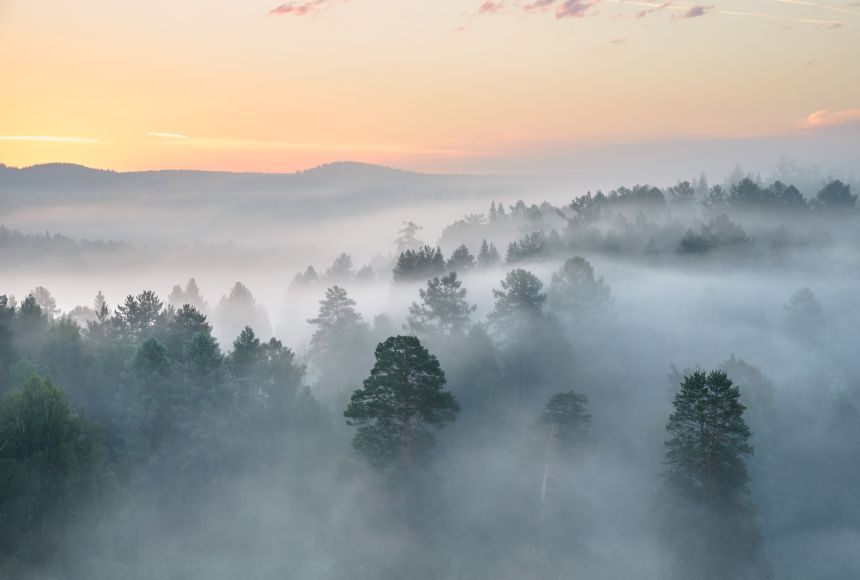
The curiosity payoff is that water is not just a background ingredient. It is a courier. It moves heat through oceans and atmosphere, dissolves minerals, swells seeds, carries nutrients through plants, shapes river valleys, and gives microbes the thin film they need to live in soil. If a place gets too little water, life slows. If it gets too much at once, soil erodes, roots drown, and rivers rearrange the land. The same molecule that makes a leaf crisp can also carve a canyon.
Plants are carbon machines wearing leaves
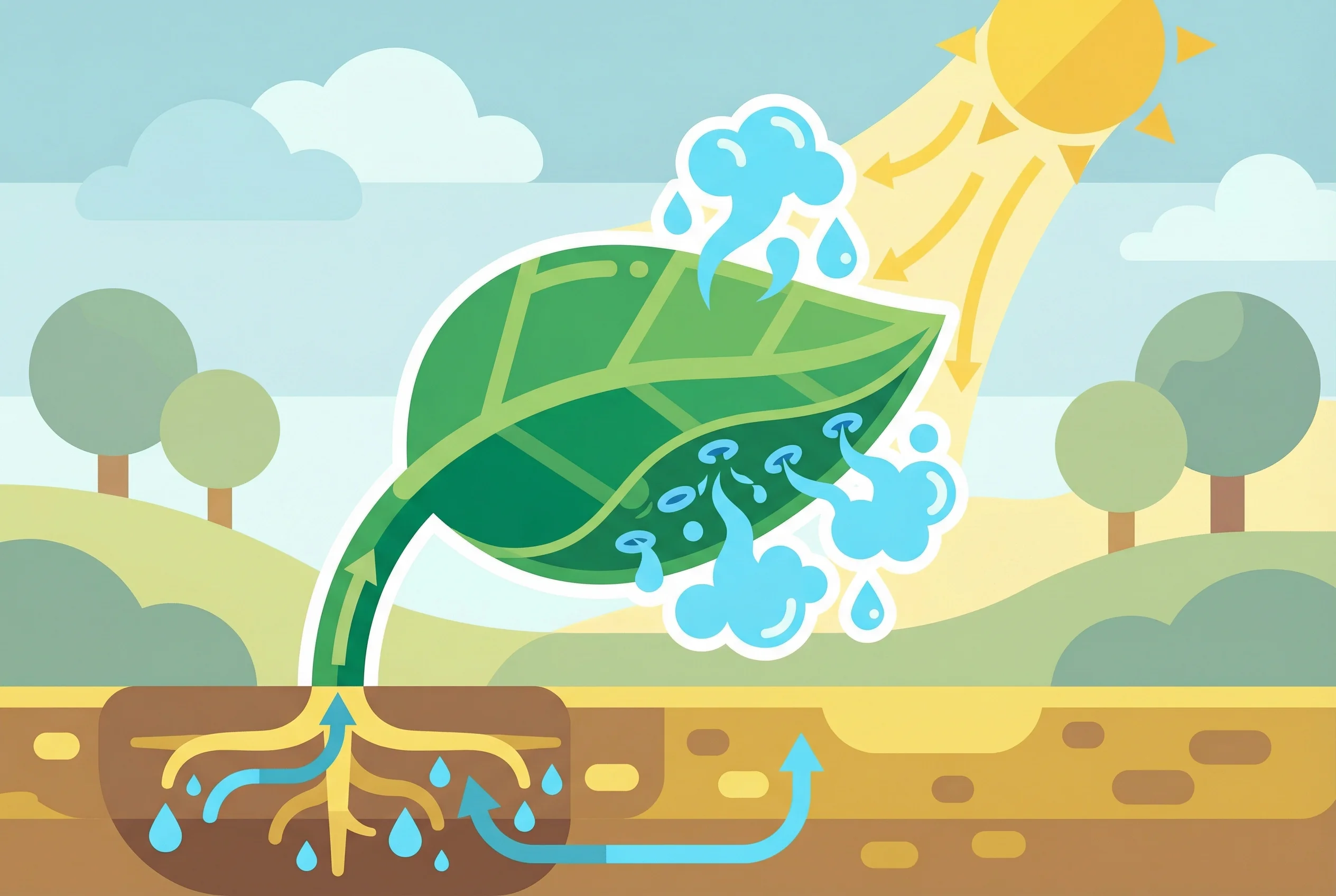
One of the most retellable facts about nature is that a tree's mass does not mostly come from dirt. It comes largely from carbon dioxide in the air, fixed into sugars through photosynthesis, then built into wood, roots, leaves, and seeds. NASA's carbon-cycle explainer describes carbon moving among the atmosphere, land, ocean, rocks, and living things, with photosynthesis pulling carbon dioxide from air into plant matter (NASA Science: The Carbon Cycle).


That flips the ordinary picture. The forest is not passively sitting under the sky; it is actively rewriting air into structure. Every new leaf is a temporary answer to a physics problem: how do you catch light, open tiny pores for carbon dioxide, avoid drying out, and still make enough sugar to pay for the whole body? A leaf is a solar panel, a gas-exchange surface, and a water-risk negotiation in one thin object.
What makes this feel like closure is the chain: sunlight supplies energy, carbon dioxide supplies carbon, water supplies electrons and transport, and chlorophyll helps capture light. The result is not just "plants make food." It is the start of almost every food web a person notices. The apple, the grass, the deer, the mushroom on the log, and the oxygen in your next breath all connect back to plants and other photosynthetic organisms doing this work at scale.
Fungi make the underground economy visible
Forests look vertical, but much of their action is horizontal and underground. Mycorrhizal fungi grow in association with plant roots. In broad terms, plants can trade carbon-rich sugars for mineral nutrients and water that fungal networks help access. The exact relationships vary by species and environment, but the important mechanism is real: roots are not working alone.

This is where the phrase "nature is connected" can become concrete instead of vague. A root tip is limited by its surface area. Fungal hyphae are thin and branching, so they explore soil differently. Together, plant and fungus create a trade interface. The plant pays with products of photosynthesis; the fungus helps with phosphorus, nitrogen, water, and soil contact. Not every online version of the "wood wide web" story is equally careful, but the basic root-fungus exchange is one of the great hidden facts about nature.
That exchange also shows why a forest cannot be understood tree by tree. The visible trunk is only one part of the organism's economy. Below the path, soil particles, roots, fungal threads, bacteria, nematodes, and decaying matter create a market where carbon and nutrients keep changing hands. The familiar smell of forest soil is not just atmosphere. It is chemistry from active life.
Pollination is plant movement without legs
Plants often look stuck, but pollination lets them move genetic material through the world. Wind can carry pollen, but animals make the story more vivid. Bees, butterflies, moths, flies, beetles, birds, and bats visit flowers for nectar or pollen and can move pollen between blossoms. The U.S. Forest Service explains pollination's importance for flowering plants, ecosystems, and human food systems (US Forest Service: Why is Pollination Important?).

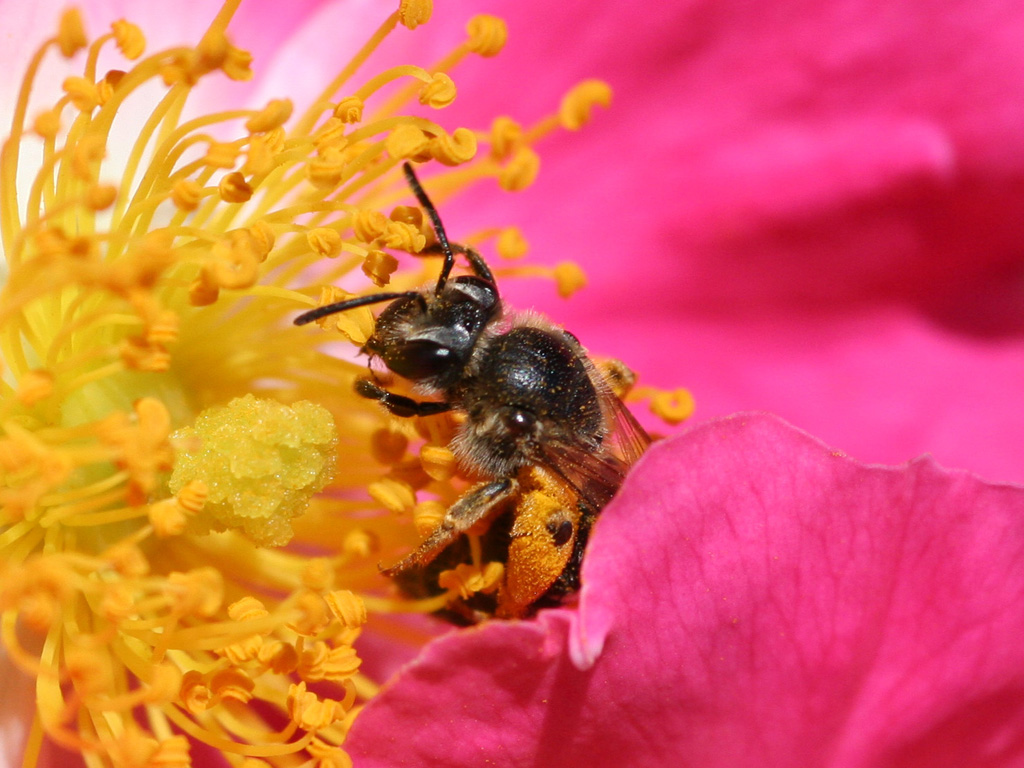
The non-obvious part is that a flower is not simply beautiful. It is a negotiation device. Color, scent, shape, timing, and nectar can all affect who visits. A pollinator gets a reward. The plant gets a chance to reproduce with another plant rather than only with itself. In that sense, a meadow is full of tiny logistics systems. Some use wind. Some use insects. Some are highly specialized. Some are flexible.
That is why pollinator decline matters beyond the sadness of fewer butterflies. It changes connections. If a pollinator disappears from a place, the plants that relied on it may reproduce less successfully, and animals that relied on those plants may feel the change later. Nature often breaks indirectly: not because one thing vanishes, but because a handoff quietly stops happening.
Wetlands are filters, buffers, and nurseries
Wetlands can look like land that failed to be land, which is exactly why people used to drain them so casually. The mechanism says the opposite. The U.S. Environmental Protection Agency describes wetlands as important for water quality, flood protection, shoreline erosion control, and wildlife habitat (EPA: Why Are Wetlands Important?).

A wetland slows water down. That sounds minor until you ask what fast water does: it carries soil away, pushes floods downstream, and gives pollutants less time to settle, bind, or transform. Slow water lets sediment drop. Plant roots and microbes alter chemistry. Shallow, messy edges become habitat for amphibians, insects, fish, birds, and plants that cannot live in a clipped lawn or a concrete channel.
The thing people miss is that "messy" is often the feature. Straight lines are easy for humans to manage, but nature's productive edges are frequently irregular: marsh edges, stream banks, fallen logs, leaf litter, root zones. A wetland is a reminder that efficiency in a living system rarely looks like a clean spreadsheet.
Decomposition is not the end; it is the reset button
A fallen log is one of nature's best slow-motion experiments. It looks like a finished tree, but fungi, bacteria, insects, moisture, oxygen, and time turn it into habitat and then into soil ingredients. Decomposition releases locked-up nutrients and returns carbon to the wider cycle. Without decomposers, ecosystems would fill with dead material while living things ran short of usable nutrients.

This is the closure loop nature keeps performing: growth borrows matter, life rearranges it, death releases it, and new growth borrows it again. The log is not waste. It is a pantry, apartment building, sponge, carbon store, and classroom. Moss grows on it. Beetles tunnel through it. Fungi digest parts that many animals cannot use directly. Seedlings may start on it because it holds moisture better than bare ground.
That is also why "dead" is a misleading word outdoors. Dead tissue can be ecologically busy for years. A forest with no fallen wood would be cleaner, but poorer. The fallen pieces are where the next layer of the system begins.
What people usually miss
The usual mistake is thinking nature's beauty is separate from nature's mechanics. A misty stream, a green leaf, a bee on a flower, a wetland, and a mushroom-covered log are beautiful because they are doing work. They move water, carbon, pollen, nutrients, and energy. The beauty is the visible surface of the exchange.
The second missed point is that nature's loops are satisfying because they close without staying closed. A question gets answered: where does the tree's mass come from? Mostly air, via photosynthesis. But that closure opens the next gap: how does carbon move after the leaf falls? What eats the fungus? What happens when the wetland is drained? That is the curiosity-compounding pattern in the wild: every real answer makes the next question easier to see.
Related videos
FAQ
What are the most interesting facts about nature?
The most interesting facts about nature are usually mechanisms: trees build much of their mass from carbon dioxide, wetlands slow and filter water, fungi trade with roots, pollinators move plant genes, and decomposers recycle dead matter into future growth.
Why does nature depend so much on cycles?
Earth receives a steady input of sunlight, but matter has to be reused. Water, carbon, nitrogen, and minerals keep moving through living and nonliving parts of the planet, so cycles let ecosystems keep working without a fresh shipment of ingredients every day.
Are plants really making food from air?
Yes, with an important caveat: plants use sunlight, water, and carbon dioxide to make sugars through photosynthesis. The carbon in plant tissue largely comes from carbon dioxide, while minerals and water still matter for structure, chemistry, and transport.
Why are fungi so important in nature?
Fungi help decompose dead material, form root partnerships with many plants, and move nutrients through soil. They are not just mushrooms above ground; much of the important action is in the threadlike mycelium below the surface.
What does this have to do with AIgneous Million Whys?
Million Whys is built for this exact kind of curiosity: a familiar scene, a half-known answer, then a satisfying mechanism that opens the next question. Nature is not a list of facts to memorize; it is a set of tiny whys that compound.
Keep reading
Sources
National Geographic Education: The Water Cycle
NASA Science: The Carbon Cycle
Curious? Try one 👇
Why is the sky blue?
Jump into the daily quiz →Keep Exploring
Related Posts
Fun Facts About Human Body: Everyday Biology
Fun facts about human body biology: why blinking, heart rate, gut rumbles, body clocks, and sneezing work as tiny automatic survival systems inside you.
Fun Facts About Beavers: Nature's Water Engineers
Fun facts about beavers explain orange teeth, dams, lodges, wetlands, and why these rodents quietly redesign streams for other species.
Fun Facts About the Earth: Why It Never Sits Still
Fun facts about the earth: why Earth bulges, moves plates, shifts its magnetic field, loses air, trades tides with the Moon, and stays hot inside.