

Facts About Ice: Why Frozen Water Gets Weird
On this page· 16
Ice looks like the simple part of water: cold, hard, white, done. But the useful facts about ice start when you notice how many ordinary things it refuses to behave like. It floats when most solids would sink. It expands when most liquids contract. It can turn a road into glass, build six-sided crystals from invisible vapor, and push salt out of seawater as it freezes. Ice is not just frozen water. It is water revealing the strange rules it was following all along.
TL;DR
Ice is weird because water molecules lock into an open crystal lattice when they freeze. That lattice makes ordinary ice less dense than liquid water, which is why ice floats, why lakes freeze from the top down, and why a frozen planet still has liquid refuges underneath. The same molecular structure also shapes snowflakes, sea ice, and the slippery skin that makes winter sidewalks feel personally targeted.
The short answer
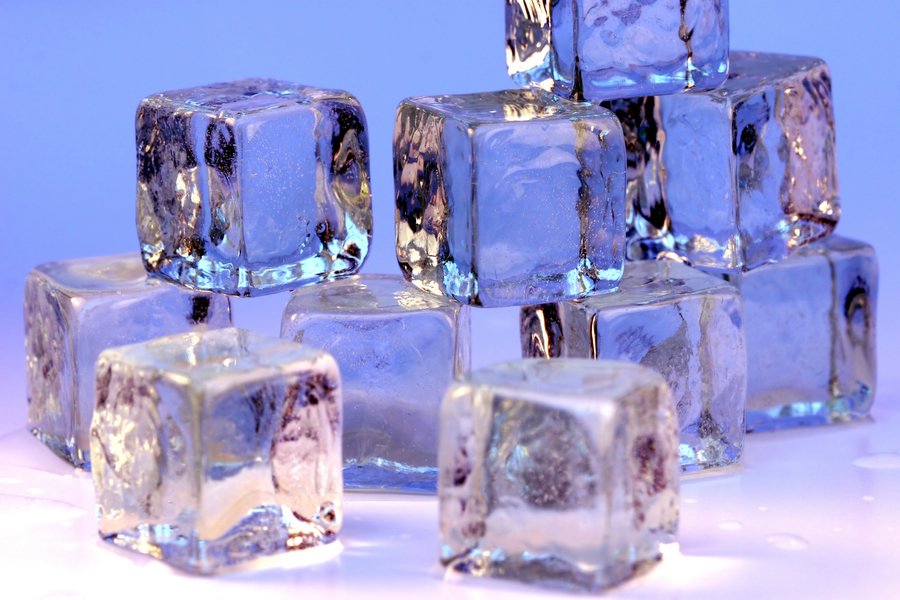
The best one-sentence fact about ice is this: freezing does not simply slow water down; it reorganizes water into a more open structure. The U.S. Geological Survey explains that ice is about 90 percent as dense as liquid water, with roughly 10 percent of an ice cube or iceberg sitting above the waterline (USGS Water Density). That one structural quirk is why ice floats, why fish survive winter under frozen lakes, and why your freezer can split a full bottle if you forget it overnight.
Question 1 of 6
Why does roughly a tenth of a floating ice cube stick up above the waterline?
Ice floats because freezing opens the structure
Most substances get denser when they become solid. Their molecules slow down and pack more tightly. Water does something less tidy. Each water molecule can form hydrogen bonds with neighboring molecules, and in ordinary ice those bonds arrange the molecules into a spacious crystal lattice. The molecules are more ordered, but they are also held farther apart than they are in liquid water. That is why the same H2O takes up more room as ice.
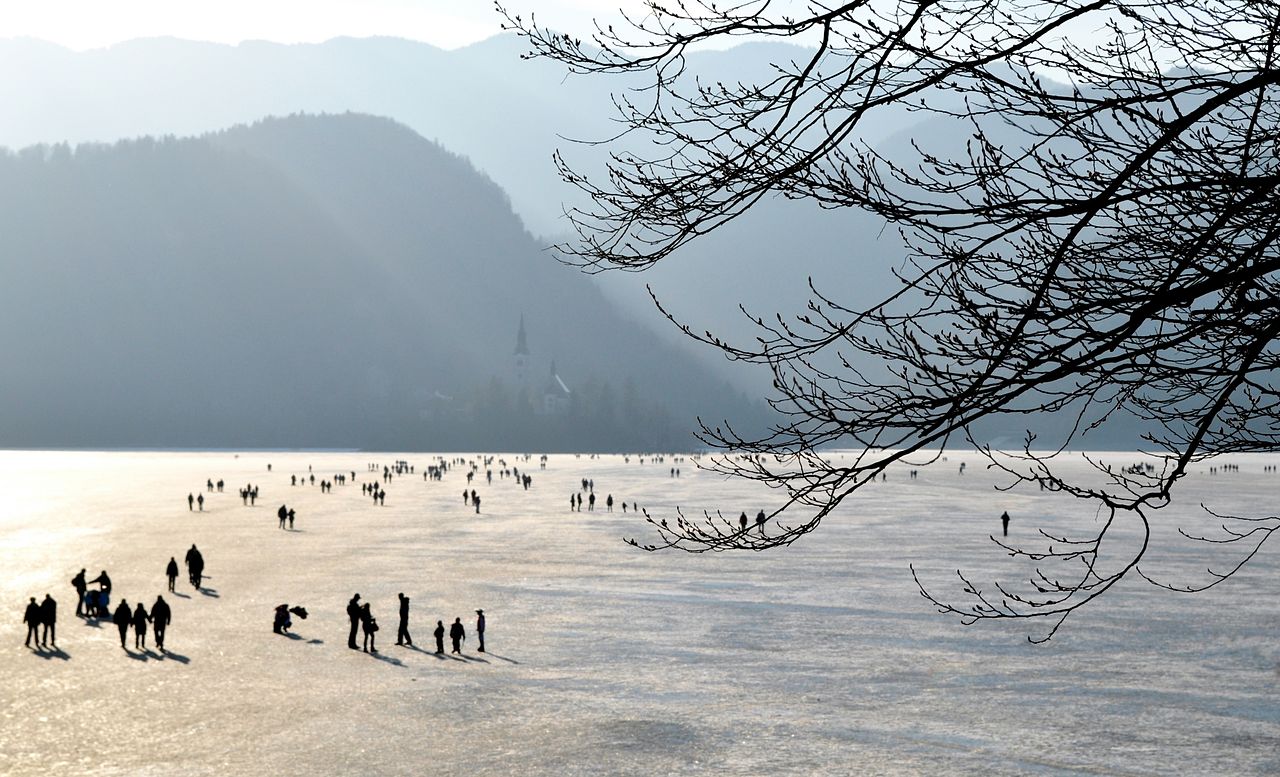
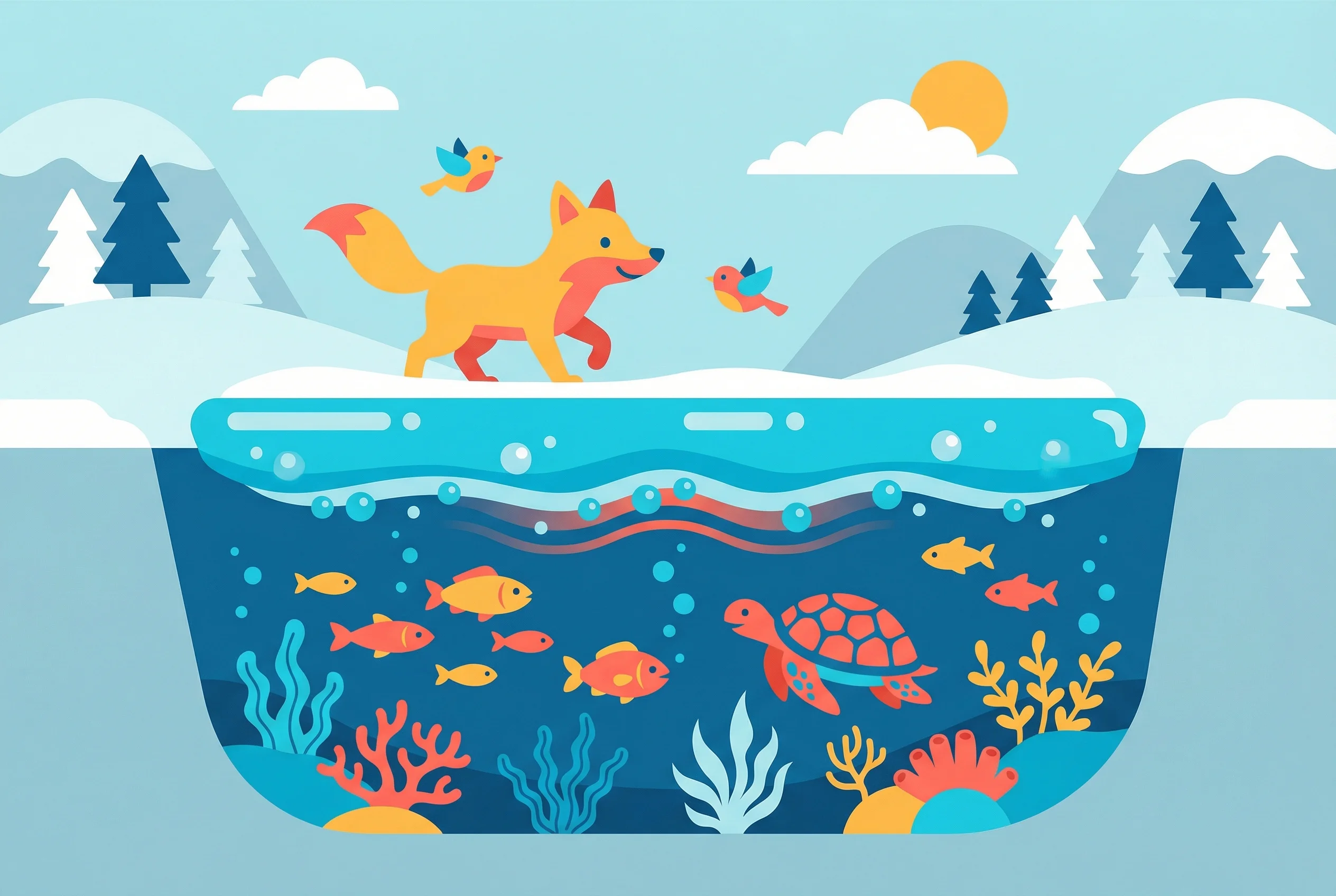
The USGS gives the life-sized version of this fact: water is densest near 4 degrees Celsius, not at its freezing point, and ice is less dense than the liquid underneath it (USGS Water Density). That means cold surface water sinks until it reaches that near-4 degree maximum, then colder water and ice stay nearer the top. A lake does not freeze from the bottom upward. It freezes from the air-facing surface downward, leaving liquid water below.
That is the closure hiding in the familiar phrase "ice floats." It is not just a party trick for drinks. Floating ice creates an insulating lid. If ice sank, winter would keep delivering new cold solid water to the bottom, and many lakes could freeze much more completely. A tiny geometry decision inside the molecule scales up into a habitat rule for whole ecosystems.
Question 2 of 6
Why do lakes freeze from top down?
Snowflakes inherit ice's six-sided grammar
Snowflakes are not frozen raindrops. SnowCrystals.com, the snow-crystal guide maintained by physicist Kenneth Libbrecht, explains that a snow crystal forms when water vapor turns directly into ice and grows molecule by molecule in cold air (SnowCrystals.com). The six-fold pattern comes from the arrangement of water molecules in the ice crystal lattice.
The fun part is that the lattice gives snowflakes a grammar, not a script. The basic hexagonal structure explains why six arms are common. The exact shape depends on temperature, humidity, and the path the crystal takes through the cloud. As the snow crystal tumbles through changing conditions, its arms grow in related but slightly irregular ways. That is why snowflakes can look symmetrical without being perfect, and why the "no two are alike" saying is more a useful intuition than a mathematical guarantee.
This is a good example of the curiosity gap at work. From far away, a snowflake is decoration. Up close, it is a weather diary written in ice. Every branch is a small record of changing air around the crystal. The satisfying answer is not "magic symmetry." It is "molecular order plus a chaotic trip through the cloud."

Question 3 of 6
Why do snowflakes always have six-fold symmetry?
Ice is slippery because the surface is not simply solid
The schoolbook answer says skates press on ice, pressure melts a thin film of water, and the film makes the skate glide. That answer is too neat. UCAR's Center for Science Education puts the practical point plainly: what makes ice slippery is a small amount of water on top of the ice acting as a lubricant (UCAR Center for Science Education). But modern ice friction research is careful about how that water-like layer appears.
Pressure alone cannot explain everything. People slip while standing still, and ice can be slippery at temperatures where simple pressure-melting arguments are weak. A better answer is a combination: ice surfaces can have a quasi-liquid or mobile molecular layer, sliding can create frictional heating, and the details depend on temperature, surface texture, and the material touching the ice. The frozen part is not a perfectly dry block. Its outer skin is where the weirdness lives.
That is why ice can be both sticky and slippery in different situations. Wet skin can freeze to cold metal or ice because water makes intimate contact and then locks in place. A shoe on a slick sidewalk meets a thin lubricating layer and loses traction. Same material, different interface. The important word is interface: what matters is not just ice, but ice plus whatever is touching it.

Question 4 of 6
What actually makes ice slippery underfoot?
Sea ice is not frozen ocean in the way you think
Freshwater ice and sea ice both start with water molecules joining an ice lattice, but ocean salt changes the story. The National Snow and Ice Data Center explains that seawater freezes at about -1.8 degrees Celsius in polar regions, lower than the 0 degrees Celsius freezing point of fresh water, because dissolved salt lowers the freezing point (NSIDC Science of Sea Ice). When the first needle-like ice crystals form, the salt mostly does not fit into the crystal structure. It is pushed into salty droplets and channels called brine.
That means new sea ice is not a simple slab of salty solid. It is a changing material made of ice crystals, brine pockets, air, and later drainage channels. Over time, some brine leaves the ice, so older sea ice can become much fresher than young sea ice. The rejected salt also matters below the surface: saltier water is denser, so brine rejection can help make nearby seawater sink and influence polar ocean circulation (NSIDC Science of Sea Ice).
This is one of those facts that quietly upgrades the whole picture. Sea ice is not just white ground for polar animals. It is a porous, seasonal, salt-sorting skin between ocean and atmosphere. It grows, drains, fractures, melts, and helps move salt and heat around the polar ocean.

Question 5 of 6
What happens to the salt in seawater when polar sea ice forms at temperatures below zero?
White ice changes how much sunlight Earth keeps
Ice also changes the planet's energy budget because bright surfaces reflect sunlight. NOAA's National Environmental Satellite, Data, and Information Service notes that sea ice affects climate by reflecting sunlight back to space instead of absorbing it (NOAA NESDIS Sea Ice). NOAA's Science On a Sphere materials give the simple contrast: snow and ice can have high albedo, while open ocean has low albedo (NOAA Science On a Sphere: Albedo).
That creates a feedback loop. When reflective ice is present, more incoming sunlight bounces away. When ice retreats and darker ocean is exposed, more sunlight is absorbed, which can add heat and encourage more melt. The mechanism is not mysterious, but the consequences are large because the polar surface is huge and seasonal. A white lid and a dark ocean do not treat sunlight the same way.
The important caution is that "ice reflects sunlight" is a mechanism, not the whole climate system. Clouds, snow cover, ice thickness, ocean mixing, and weather patterns all matter. But the albedo fact is a clean starting point: the color and state of water at the surface can change how much solar energy stays in the Earth system.

Question 6 of 6
Why does losing bright sea ice make the ocean warm up even faster?
What people usually miss
The usual ice facts get presented as separate trivia: ice floats, snowflakes have six sides, seawater freezes below zero, ice is slippery, white ice reflects sunlight. The better answer is that these are not separate. They are all consequences of water molecules bonding, arranging, rejecting what does not fit, and behaving differently at surfaces than they do in the middle. Ice is a collection of closures: one small molecular shape explains the drink, the lake, the snowflake, the sidewalk, the sea, and part of the planet's heat balance.
That is also why ice makes such a good curiosity topic. You already half-know it. You have seen ice cubes float and snowflakes fall. The missing piece is the mechanism. Once the lattice clicks, the familiar world gets a little sharper.
FAQ
What is the weirdest fact about ice?
The weirdest everyday fact is that ordinary ice is less dense than liquid water. That is why it floats, why lakes freeze from the top down, and why freezing water can expand enough to crack containers.
Why does ice float on water?
Ice floats because water molecules form an open crystal lattice when they freeze. That lattice spreads the molecules farther apart than in liquid water, lowering the density of the solid.
Why are snowflakes usually six-sided?
The six-sided pattern comes from the hexagonal arrangement of water molecules in the ice crystal lattice. Weather conditions then sculpt that basic structure into plates, columns, branches, and irregular crystals.
Is ice always slippery?
No. Ice friction depends on temperature, surface texture, motion, and what is touching it. The common slippery feeling comes from a thin water-like layer at the interface, but ice can also stick strongly in other conditions.
What does this have to do with AIgneous Million Whys?
Ice is exactly the kind of half-known thing Million Whys is built for. You already know the surface fact; one good question closes the gap and leaves you seeing the next glass of ice, frozen lake, or snowflake differently.
Keep Exploring
Related Posts
Facts About Glaciers: Ice That Moves
Facts about glaciers: how snow becomes moving ice, why glacier ice turns blue, how glaciers shape valleys, and when melting land ice raises sea level.
Fun Facts About Weather: Everyday Sky Physics
Fun facts about weather, explained through why raindrops flatten, clouds float, thunder rolls, snow survives warm layers, fog forms, and rainbows circle.
Fun Facts About the Earth: Why It Never Sits Still
Fun facts about the earth: why Earth bulges, moves plates, shifts its magnetic field, loses air, trades tides with the Moon, and stays hot inside.