Food trivia works best when it starts with something you already half-know. You have seen pasta stick, onions sweeten, coffee change flavor, and steak behave differently in a pan. These questions turn those familiar moments into small closures: one answer, one explanation, one more useful piece of everyday biology and chemistry.
Hosting a round instead of playing through this mixed set? Use the newer food trivia questions and answers page for six table-ready rounds with clear answer-key pacing.
Easy
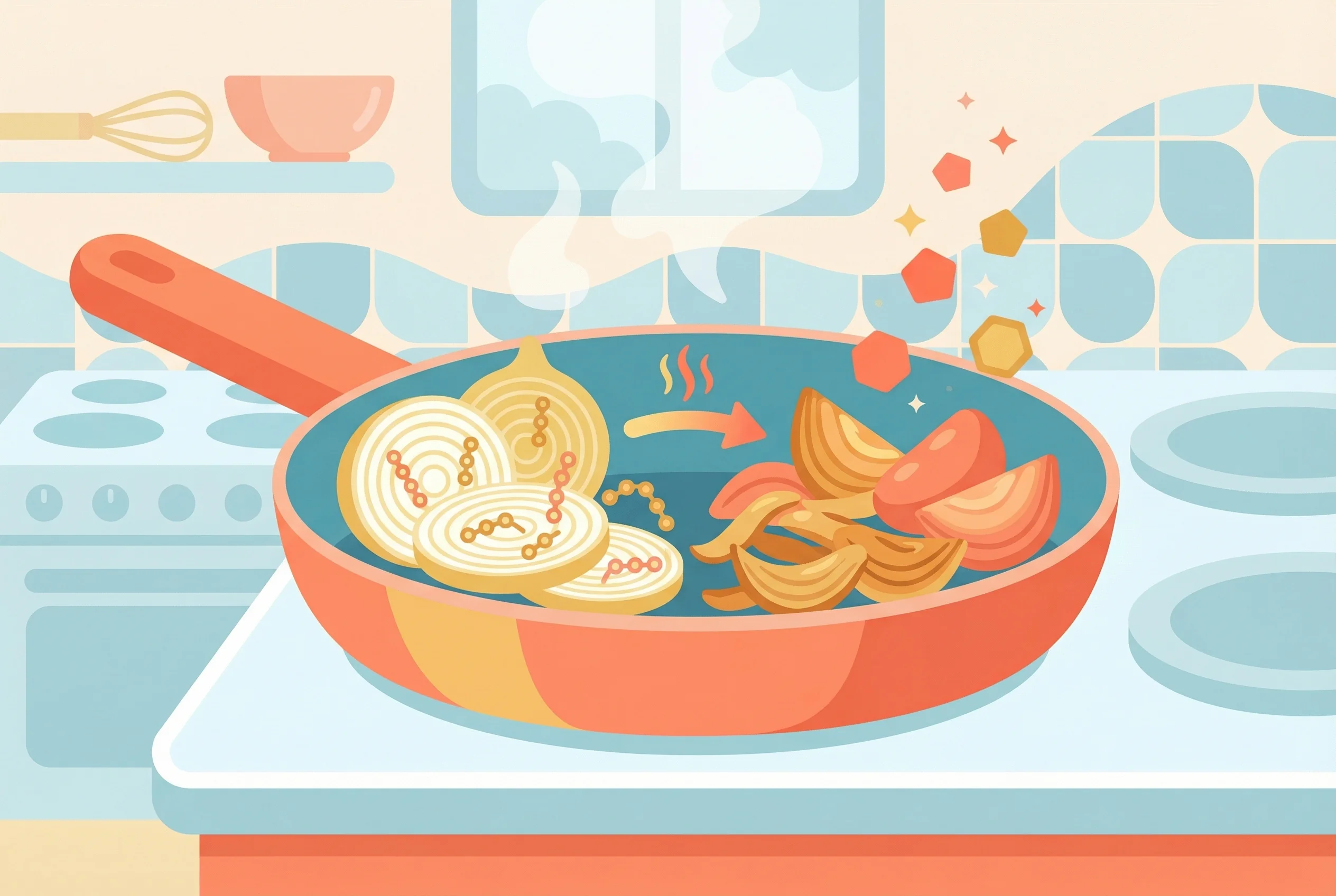
ARaw onions are less ripe
✗Not quite — Wrong. Raw and cooked onions are the same ripeness. Heat chemically transforms the compounds responsible for onion flavor.
BHeat converts sulfur compounds
✓Correct — Correct! Raw onions contain sulfur compounds that taste sharp and make you cry. When cooked, heat breaks down these harsh sulfurs (like propanethial S-oxide) and converts them into sweeter, milder compounds. Caramelization of onion sugars also adds sweetness. Same onion, completely different chemistry!
CCooking adds salt and seasoning
✗Not quite — Wrong. Even plain cooked onions without seasoning taste different from raw. The change is chemical transformation from heat, not added ingredients.
Answer this question
ADark roasts are more bitter, light roasts more acidic
✓Correct — Correct! During roasting, compounds like chlorogenic acid and quinic acid undergo chemical transformations. Light roasts preserve more of the original acidic compounds, giving a brighter, more acidic taste. Dark roasts experience more prolonged heat, creating more bitter compounds through extended chemical reactions.
BLight roasts are more bitter due to raw compounds
✗Not quite — This is backwards! Light roasts actually have less bitterness because the beans spend less time undergoing heat-induced chemical changes. The 'raw' compounds in lighter roasts tend to be more acidic rather than bitter.
CRoasting level only affects color, not taste
✗Not quite — Roasting level dramatically affects taste, not just appearance. The color change is actually a visible indicator of the chemical transformations happening inside the bean - the darker the roast, the more chemical changes have occurred, fundamentally altering the flavor profile.
Answer this question
Medium
AAll plant milks contain mostly hard fats
✗Not quite — Almost! Many plant oils — like olive, canola, and sunflower — are rich in unsaturated fats and stay liquid at room temperature. Coconut is an exception, not the rule; its high saturated fat content is an adaptation to its tropical habitat, where liquid oils would be less stable for storage.
BCows produce low-fat milk for calf agility
✗Not quite — Not quite. Cow's milk fat content varies by breed and diet, but it's not intentionally low for agility. The key difference is function: cow's milk provides balanced nutrition for rapid calf growth, while coconut fat serves as a dense, stable energy reserve for the seed — hence the high saturated fat content.
CSaturated fat resists melting in tropical heat
✓Correct — Correct! Coconut palms evolved in tropical heat. Saturated fats have high melting points, remaining solid for energy storage — essential in warm climates. Cow's milk, by contrast, has much less total fat (about 3.5%) and a different fatty acid profile, optimized for calf nutrition, not energy storage.
Answer this question
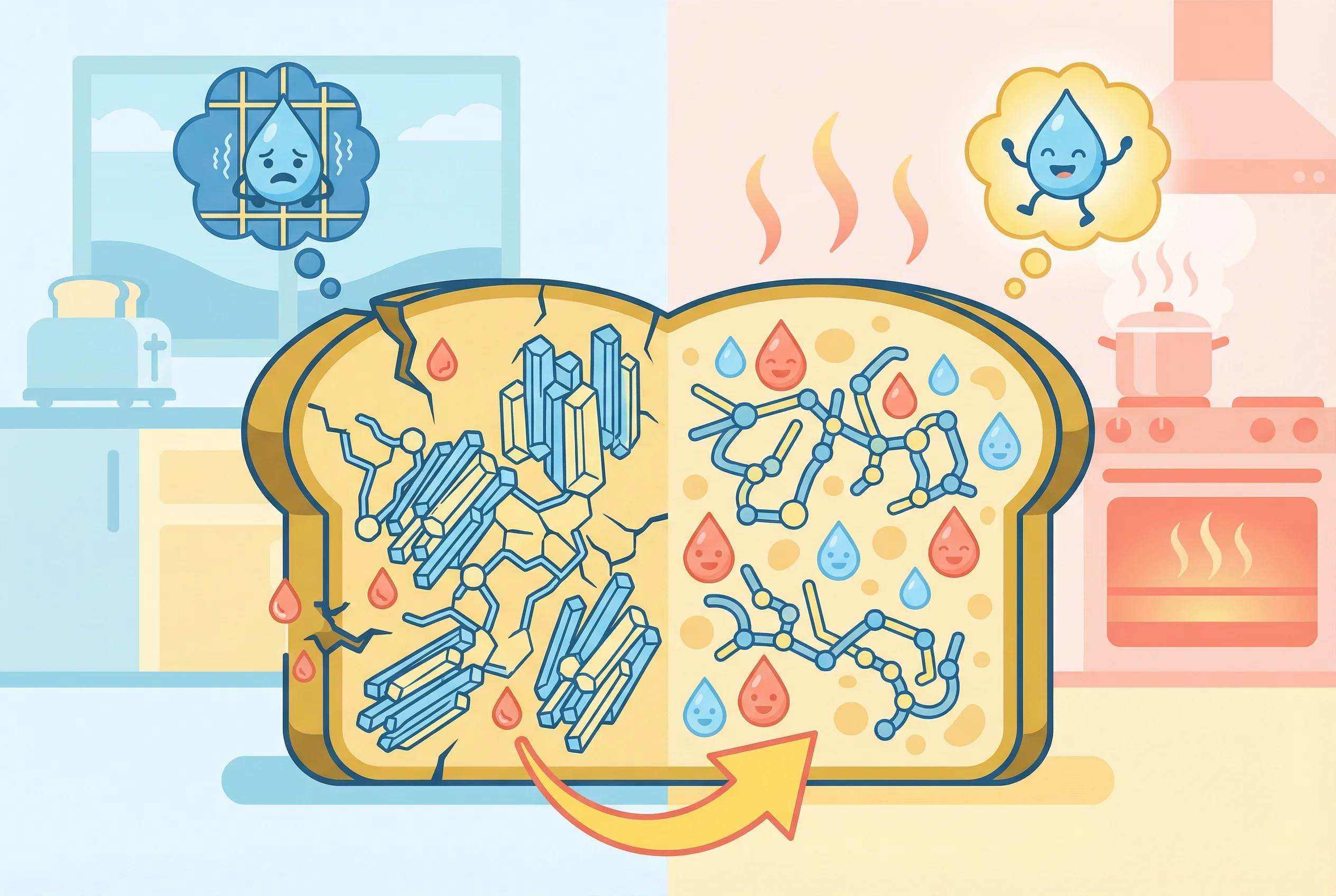
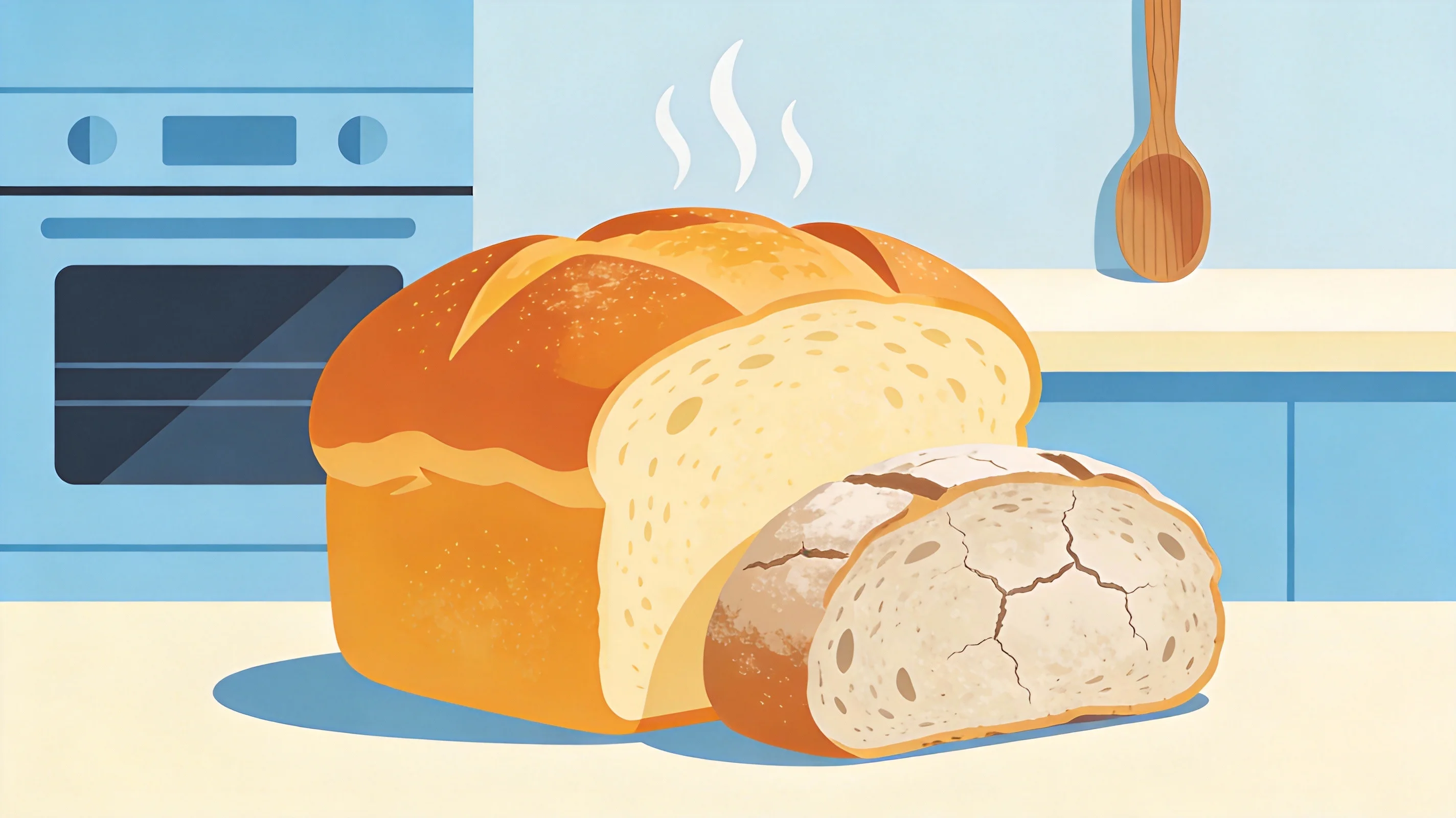
AIt aligns gluten proteins into elastic networks
✓Correct — Correct! When you knead dough, two wheat proteins (gliadin and glutenin) combine with water to form gluten. The mechanical action of kneading aligns these gluten strands into organized, springy networks that can stretch and trap gas bubbles produced by yeast. This is why bread dough becomes smooth, elastic, and can be stretched thin without tearing - the gluten network acts like tiny springs throughout the dough.
BIt adds air bubbles that make the dough expand
✗Not quite — Wrong. While kneading does incorporate some air, this is not what creates stretchiness. The air bubbles you see are mainly produced later by yeast fermentation. Kneading's main job is developing gluten proteins into elastic networks. Without proper gluten development, dough would tear easily even if it contained air bubbles.
CIt breaks down starch into sticky sugar chains
✗Not quite — Wrong. Kneading does not break down starch molecules. Starch breakdown happens during fermentation when enzymes convert starch to sugars that feed the yeast, but this is a chemical process, not a mechanical one. The stretchy quality comes from gluten protein development, not starch transformation. In fact, over-kneading can eventually break down the gluten network you worked to build.
Answer this question
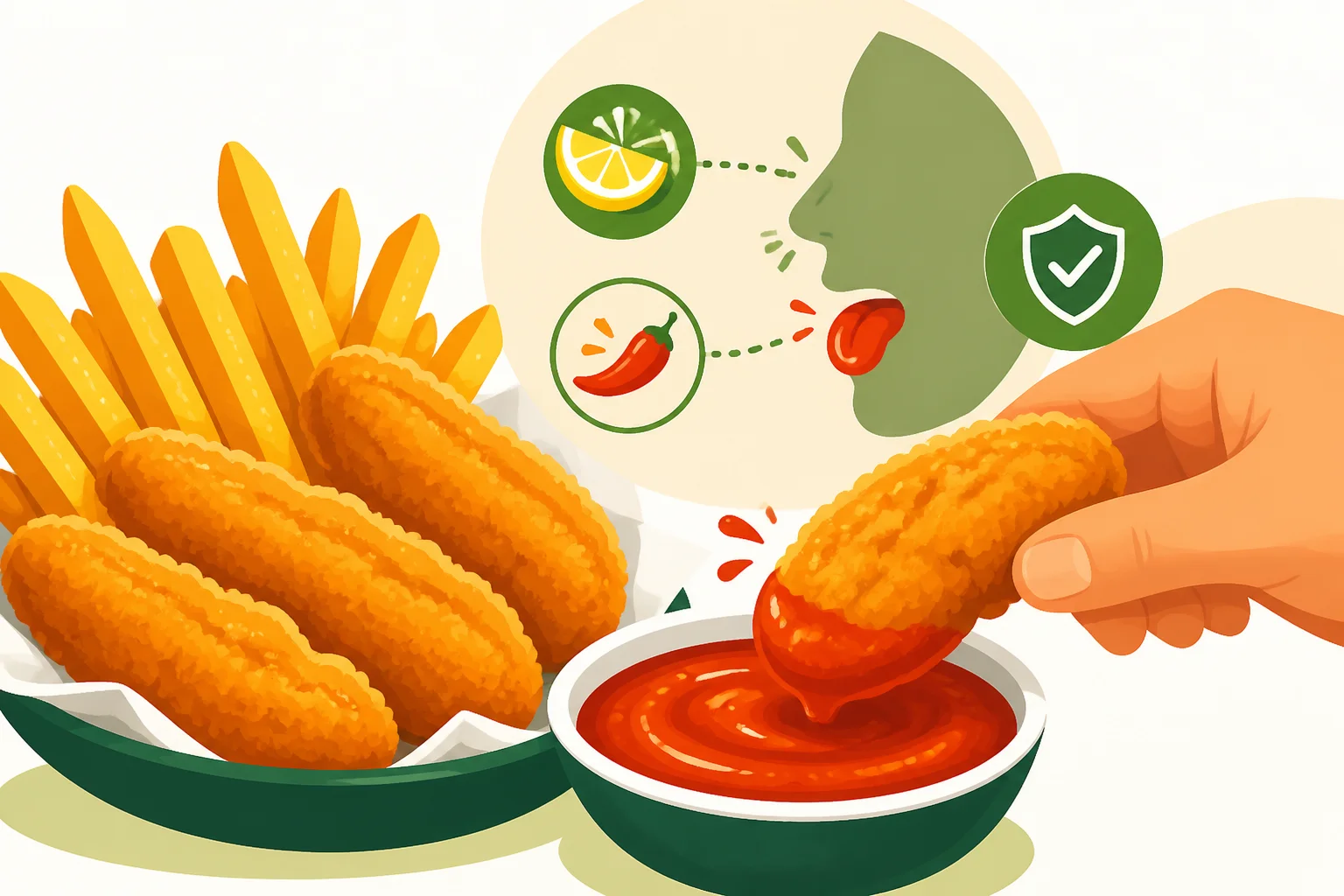
ASugar balances sour taste on tongue, acidity stays same
✓Correct — Correct! Sugar does not change the actual acid content or pH of tomato sauce. Instead, it works through taste perception. Our tongue has different taste receptors for sweet and sour. When both are present, the sweet signals partially mask the sour signals sent to our brain, making the sauce taste less acidic even though the acidity remains unchanged. This is why a squeeze of lemon on bitter greens or a pinch of salt on watermelon enhances flavor - taste interaction, not chemistry!
BSugar neutralizes citric acid through chemical reaction
✗Not quite — Wrong. Sugar (sucrose) does not chemically react with the citric acid or malic acid in tomatoes under normal cooking conditions. A true neutralization reaction requires a base (like baking soda) to react with acid, producing water and a salt. Sugar is neither acidic nor basic - it is pH-neutral. If sugar actually neutralized the acid, the tomatoes would lose their characteristic tangy flavor entirely, which does not happen.
CSugar raises pH level making sauce less acidic
✗Not quite — Wrong. Adding sugar does NOT change the pH of tomato sauce. Tomatoes typically have a pH of 4.2-4.9, and this remains the same whether sugar is added or not. You can test this with pH strips - sugared and unsugared tomato sauce will show identical pH readings. Only adding a base like baking soda would raise pH. The perceived reduction in sourness is purely a sensory effect happening on your taste buds and in your brain's flavor processing.
Answer this question
AFat melts and lubricates muscle fibers while releasing flavor compounds
✓Correct — Correct! Marbling is intramuscular fat that melts at around 130-140°F during cooking. As it melts, it physically separates and lubricates the muscle fibers, making them easier to chew. The fat also contains flavor compounds and amino acids that create rich, savory tastes when heated, producing the characteristic 'beefy' flavor we love in well-marbled steaks.
BWhite fat strands make the meat look prettier so it tastes better psychologically
✗Not quite — Wrong. While presentation affects perception, marbling's benefits are physical and chemical, not psychological. The fat actually melts during cooking and cannot be seen in the finished steak. The tenderness and flavor improvements are real biochemical effects from fat interacting with muscle tissue and heat, not just visual appeal.
CFat absorbs more heat so the steak cooks faster and stays juicier
✗Not quite — Wrong. Fat actually conducts heat more slowly than muscle tissue, not faster. Additionally, fat melting does not make steak cook quicker. The tenderness comes from fat lubricating fibers as it melts, and juiciness is maintained because the melted fat coats the meat, but this is different from cooking speed or heat absorption.
Answer this question
ARibeye comes from a muscle group with more intramuscular fat
✓Correct — Correct! Ribeye comes from the rib section where muscles have abundant marbling (intramuscular fat streaks). This fat melts during cooking, creating rich flavor and juicy texture. Filet mignon comes from the tenderloin, a muscle that does very little work, so it is extremely tender but has minimal fat marbling, resulting in milder flavor.
BRibeye is cut from older cattle than filet mignon
✗Not quite — Wrong. Both cuts can come from cattle of the same age. The difference is anatomical location, not age. Ribeye comes from the rib area with more fat deposits, while filet mignon comes from the underused tenderloin muscle beneath the spine. Age affects overall meat quality but does not explain the specific differences between these cuts.
CRibeye is exposed to more oxygen during aging
✗Not quite — Wrong. Oxygen exposure during dry-aging affects the outer surface and can intensify flavor in any cut, but it does not create the fundamental differences between ribeye and filet mignon. The marbling pattern is determined by the muscle's original fat distribution and function in the living animal, not by the aging process.
Answer this question
ANot enough water in pot
✗Not quite — Wrong. More water helps prevent sticking by diluting released starch, but the root cause is starch on pasta surfaces binding together.
BStarch gelatinizes on surface
✓Correct — Correct! Pasta surfaces release starch granules during cooking. These granules absorb water, swell, and become sticky gel (gelatinization). When pasta touches, the gelatinized starch acts like glue! Stirring prevents contact, and rinsing removes surface starch (but also removes sauce-gripping ability). Adding oil coats pasta, preventing starch adhesion.
CBoiling too rapidly
✗Not quite — Wrong. Boiling intensity doesn't cause sticking—it's surface starch gelatinizing. Vigorous boiling actually helps by keeping pasta moving.
Answer this question
ABeneficial bacteria produce acid that kills harmful microbes and creates vitamins
✓Correct — Correct! During fermentation, beneficial bacteria like Lactobacillus convert sugars into lactic acid, lowering pH to around 4.0-4.5, which inhibits spoilage bacteria. These microbes also synthesize B vitamins, vitamin K, and produce probiotics that support gut health. The acidic environment acts as a natural preservative, allowing foods to last months without refrigeration.
BHeat from fermentation sterilizes the food and seals it from air exposure
✗Not quite — Wrong. Fermentation is actually a cool-temperature process, typically occurring at 15-25°C (59-77°F). It does not generate significant heat, and the process specifically requires some oxygen initially for most fermentations. The preservation comes from acid production, not heat sterilization or air sealing.
CSugar crystallization forms a protective barrier preventing bacterial growth
✗Not quite — Wrong. While some sugars are present in fermented foods, they are consumed by bacteria rather than crystallizing. Fermentation actually breaks down sugars into acids and other compounds. The preservation mechanism is the acidic environment created by lactic acid, not any physical barrier from sugar crystals.
Answer this question
ACoffee's chlorogenic acids improve insulin sensitivity and reduce inflammation
✓Correct — Correct! Chlorogenic acids and other polyphenols in coffee enhance how cells respond to insulin signals and reduce chronic inflammation that impairs glucose metabolism. Studies show this protective effect works with both caffeinated and decaf coffee, suggesting compounds beyond caffeine are responsible.
BCaffeine speeds up metabolism so sugar burns faster in the bloodstream
✗Not quite — Wrong. While caffeine does temporarily boost metabolism, this effect is too short-lived to explain diabetes prevention. The protective benefit comes from coffee's antioxidant compounds improving long-term insulin function, not from burning sugar faster.
CCoffee directly lowers blood sugar by blocking glucose absorption in intestines
✗Not quite — Wrong. Coffee does not block glucose absorption in the intestines. Instead, it works at the cellular level by making muscle and liver cells more responsive to insulin, allowing them to take up and use glucose more efficiently over time.
Answer this question
APlants produce them to shield against UV damage and insects
✓Correct — Correct! Coffee plants naturally synthesize polyphenols and chlorogenic acids as protective chemicals against environmental threats like ultraviolet radiation, drought, and insect attacks. These same compounds act as antioxidants in our bodies, neutralizing free radicals that damage cells. A single cup contains more antioxidants than many fruits and vegetables, making coffee one of the largest sources of dietary antioxidants in Western diets.
BRoasting creates antioxidants from sugar caramelization
✗Not quite — Wrong. While roasting does create some beneficial compounds through chemical reactions, it actually destroys 50-95% of the original antioxidants present in raw green coffee beans. The chlorogenic acids and polyphenols that make coffee so antioxidant-rich are produced by the living coffee plant, not created during the roasting process. Light roasts retain more antioxidants than dark roasts for this reason.
CCoffee absorbs antioxidants from volcanic soil minerals
✗Not quite — Wrong. While soil minerals do affect coffee flavor, antioxidants are organic molecules biosynthesized inside the coffee plant's cells through metabolic pathways, not absorbed from soil. The plant actively manufactures these protective compounds using sunlight, water, and carbon dioxide through photosynthesis and secondary metabolism. Volcanic soil may provide nutrients for growth, but the antioxidants themselves are the plant's own chemical creations.
Answer this question
AGrains provide concentrated calories that promote intramuscular fat storage
✓Correct — Correct! Grains like corn and soy are calorie-dense and rich in carbohydrates. This high-energy diet causes cattle to store excess energy as intramuscular fat, creating the characteristic marbling. Grain feeding also produces omega-6 fatty acids that contribute to a buttery, mild flavor profile.
BGrain-fed cattle drink more water which creates fat pockets in the muscle
✗Not quite — Wrong. While hydration is important for cattle health, water intake does not create fat deposits. Marbling is specifically intramuscular fat that develops from excess dietary calories being stored within muscle tissue, not from water consumption.
CGrains contain special proteins that transform directly into marbling fat
✗Not quite — Wrong. Grains do not contain proteins that directly become fat. Instead, the body converts excess calories from carbohydrates in grains into fatty acids through metabolic processes. Grass-fed beef has less marbling because grass provides fewer calories and more fiber, resulting in leaner muscle development.
Answer this question
ARibeye comes from a less-used muscle with more marbling (fat between fibers)
✓Correct — Correct! The ribeye comes from the rib section, where muscles do less work during the cow's life. This results in less connective tissue and more intramuscular fat (marbling), which melts during cooking and creates that tender, juicy, flavorful texture. In contrast, leg muscles work constantly for movement, developing tough connective tissue and staying lean.
BRibeye is always aged longer than other cuts before being sold
✗Not quite — Wrong. While aging does improve tenderness, ribeye is not systematically aged longer than other cuts. Its superior tenderness comes from its anatomical location and natural marbling. All premium steaks can be aged, and aging time depends on the butcher's process, not the cut type.
CRibeye contains special enzymes that naturally tenderize the meat
✗Not quite — Wrong. There are no special enzymes unique to ribeye. All beef contains similar enzymes that break down after slaughter. The tenderness difference is purely anatomical: ribeye's location in the rib area means the muscle worked less and developed more fat marbling, making it naturally tender regardless of enzymes.
Answer this question
ARelease of trapped moisture
✗Not quite — Moisture can help spread aroma, but the main reason is that heat increases the kinetic energy of molecules, making aroma compounds evaporate faster. Water itself doesn't produce the characteristic strawberry scent.
BIncreased volatility of aroma compounds
✓Correct — Correct! Warmth gives volatile organic compounds more energy to escape the fruit's surface. More odor molecules reach your nose, making the smell seem stronger. This is a physical change.
CActivation of heat-sensitive enzymes
✗Not quite — Some fruits do produce aroma through enzymes, but the immediate boost from warmth is physical, not biochemical. The aroma compounds are already present; heat just releases them more quickly.
Answer this question
Want to play these for real?
Turn questions like these into a 10-second daily curiosity loop that follows the food, science, and tiny mysteries you actually notice.
Play live on AIgneous Million Whys →Frequently Asked Questions
What is food trivia?
Food trivia is a set of short questions about cooking, ingredients, nutrition, taste, and food chemistry. The best version does not stop at the answer; it explains why the answer works.
Are these food trivia questions based on real science?
Yes. These cards come from the active Million Whys question bank and focus on mechanisms such as gluten networks, starch gelatinization, fermentation, aroma volatility, and taste perception.
Can I use these food trivia questions for a quiz night?
Yes. Each card has a question, three answer choices, and crawlable feedback for every option, so you can use the page as a ready-made food trivia round.
Why do so many food questions feel surprising?
Food sits in the half-known zone: you have handled bread, pasta, coffee, onions, and strawberries before, but the hidden chemistry is just far enough away to make the answer satisfying.
What does this have to do with AIgneous Million Whys?
Million Whys is built for exactly this kind of closure: a familiar moment, a small information gap, and a 10-second answer that leaves you with a sharper curiosity for the next question.