Hard trivia questions work best when they are not just obscure. The satisfying kind makes you half-know the answer, commit to a guess, and then discover the mechanism underneath: a planet that is hotter than the one closer to the Sun, a river that carves its own bends, a body that manages force in midair.
Hard Trivia Questions and Answers
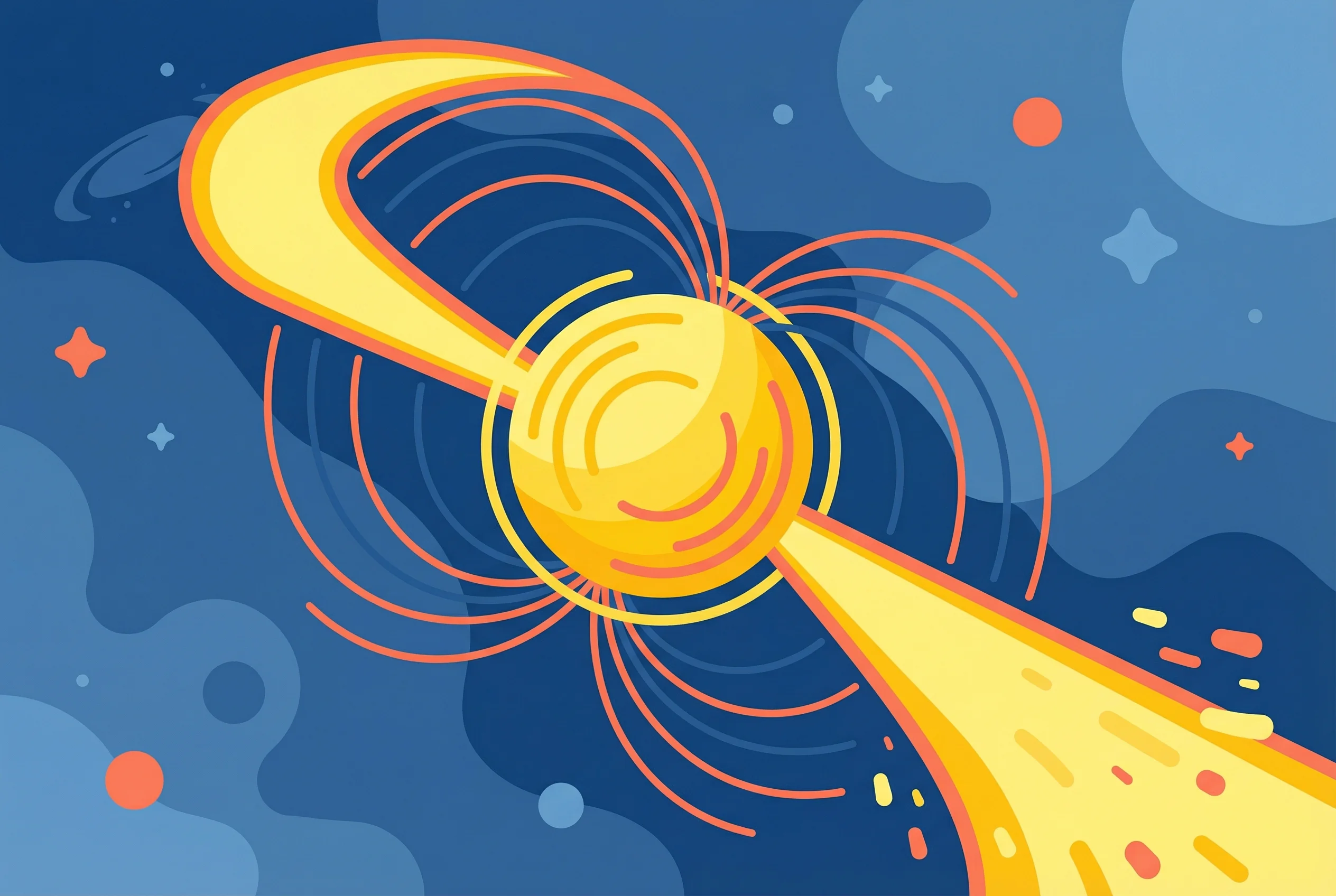
ANeutron stars rotate with beams
✓Correct — Pulsars are rapidly rotating neutron stars (collapsed star cores, ~20km diameter). They have powerful magnetic fields with radiation beams emitted from magnetic poles (not aligned with rotation axis). As the star rotates (milliseconds to seconds per rotation), beams sweep across space like lighthouse. When beam points at Earth, we detect a pulse. Incredibly precise—used for testing relativity, detecting gravitational waves!
BMagnetic fields oscillate naturally
✗Not quite — Magnetic fields are strong but don't oscillate to create pulses. Pulses come from rotation—beams sweep past Earth as neutron star spins.
CGravitational waves create pulses
✗Not quite — Gravitational waves don't cause pulses (though pulsars help detect them!). Pulses result from rotating neutron star's beamed radiation sweeping past Earth.
Answer this question
AStars are too far apart
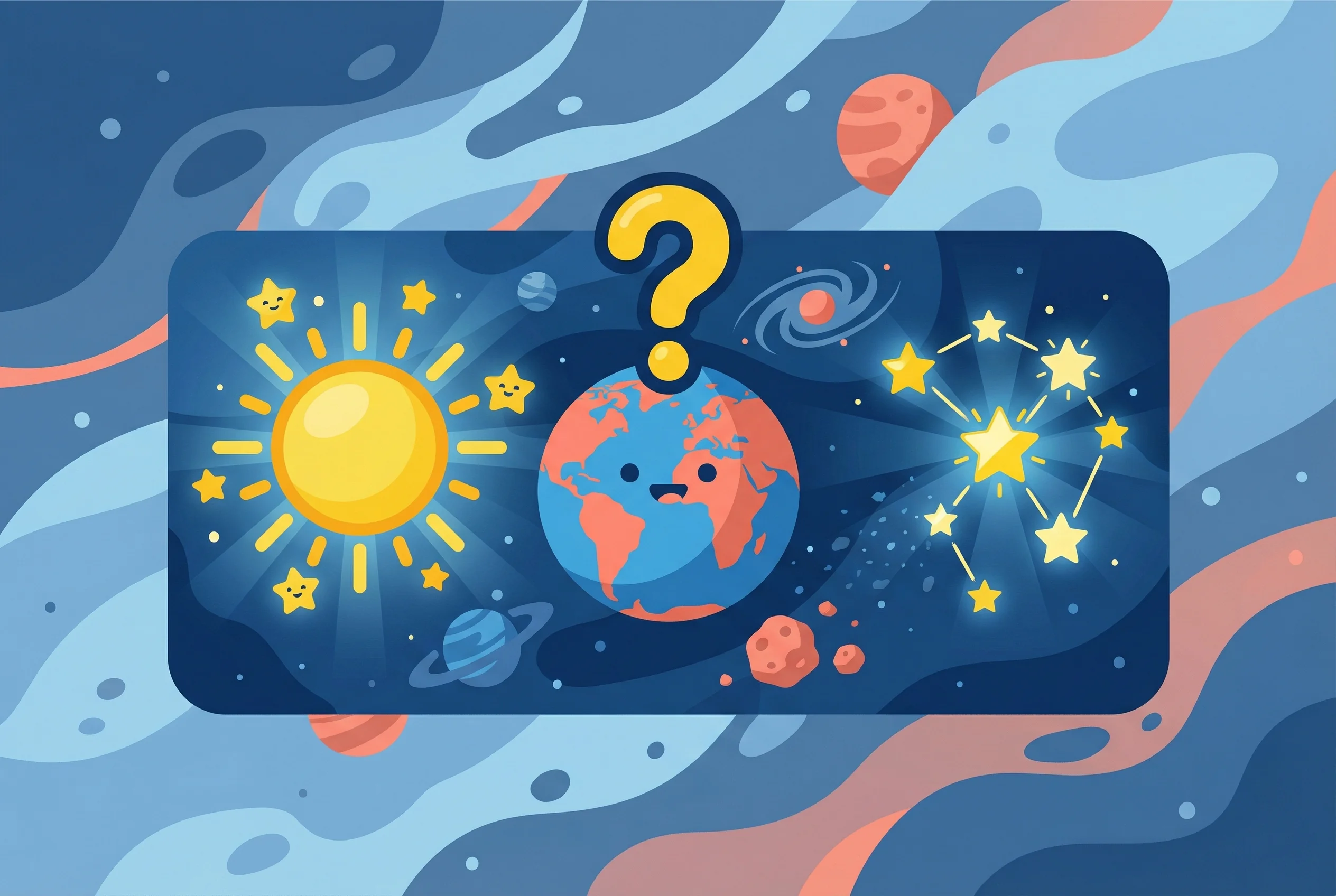
✓Correct — Although there are billions of stars, they're incredibly far apart. Space is about 99.9999999999999% empty vacuum. Light from stars spreads out in all directions, getting dimmer with distance. Most light from distant stars is too faint to see. Also, the universe has a finite age (13.8 billion years), so light from the most distant stars hasn't reached us yet. The vast emptiness between stars makes space appear dark.
BThere aren't enough stars
✗Not quite — There are hundreds of billions of stars just in our galaxy alone, and billions of galaxies in the observable universe. The number of stars is enormous. The darkness comes from their vast separation and the finite age of the universe, not insufficient quantity.
CDark matter blocks light
✗Not quite — Dark matter doesn't block or absorb light - it doesn't interact with light at all, which is why it's called 'dark.' Dark matter only interacts through gravity. The darkness of space is due to the vast distances between stars and limited observable universe.
Answer this question
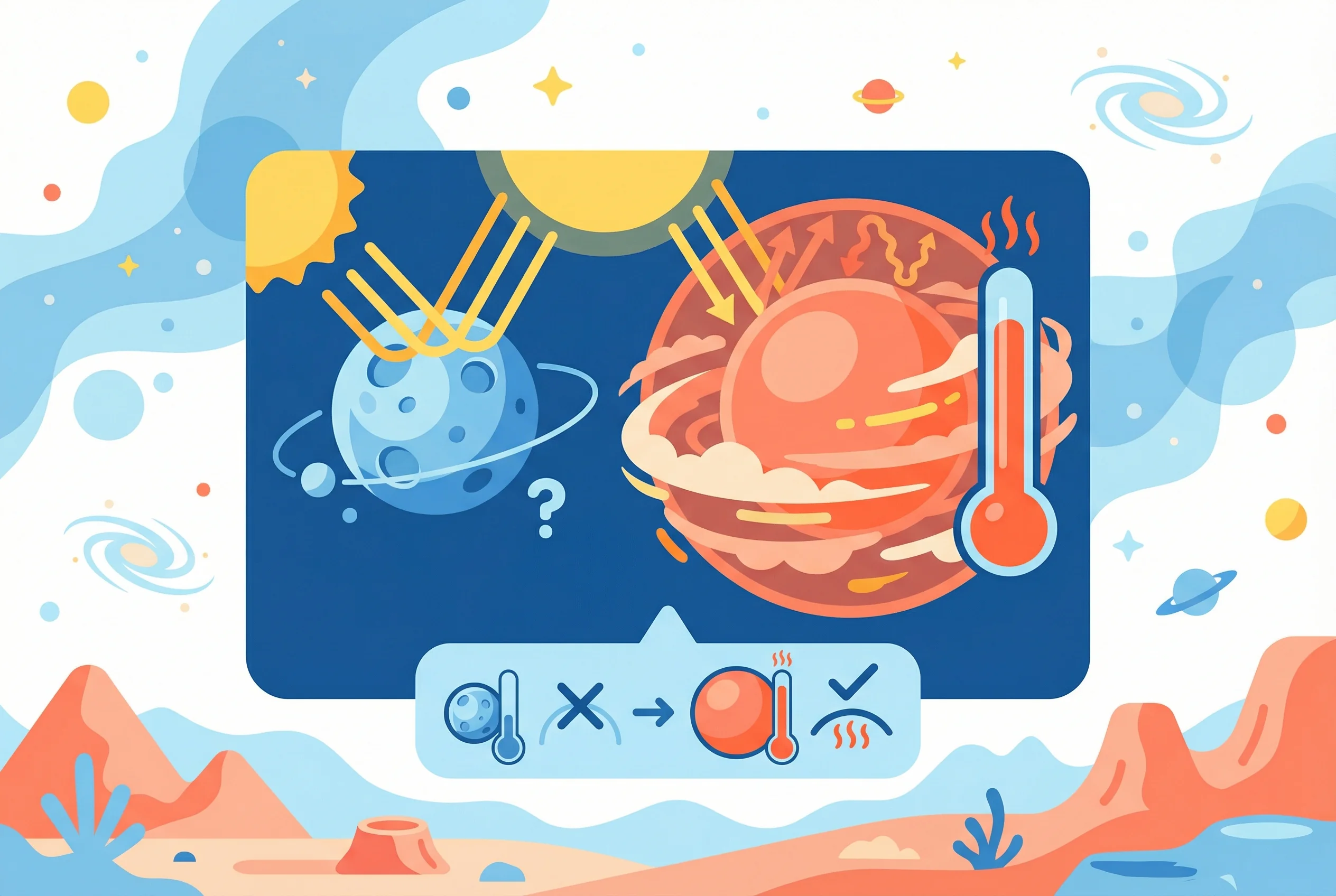
AThick CO₂ atmosphere traps heat
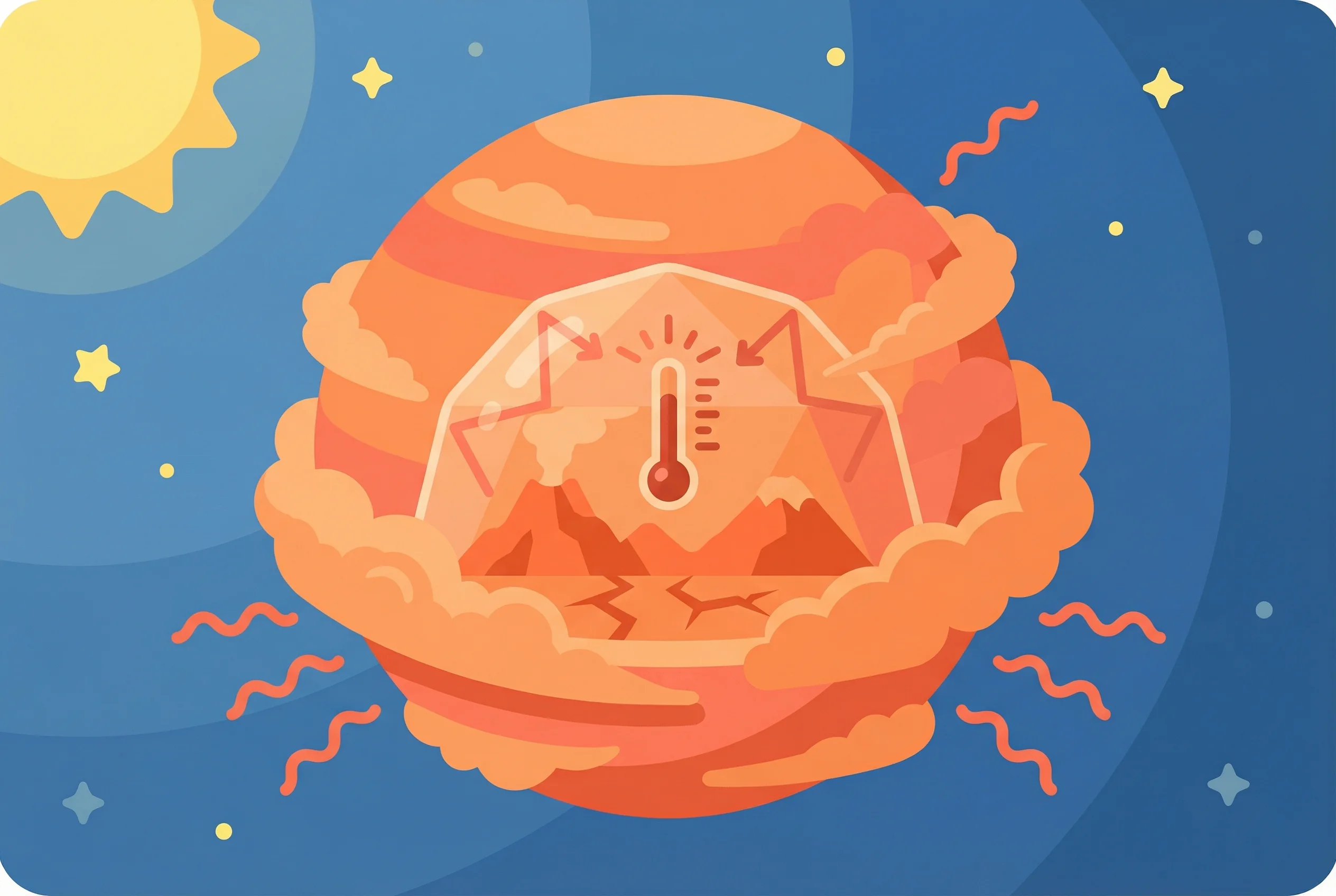
✓Correct — Venus has a runaway greenhouse effect. Its atmosphere is 96% carbon dioxide and 90 times thicker than Earth's - like being 900 meters underwater! Sunlight passes through but heat can't escape. This trapped heat raises surface temperature to 464°C (867°F) - hot enough to melt lead. The thick clouds of sulfuric acid reflect sunlight but also trap heat. Even though Mercury is closer to the Sun, Venus is hotter because of this extreme atmospheric insulation.
BVolcanoes heat the surface
✗Not quite — While Venus may have some volcanic activity, active volcanoes don't significantly contribute to its extreme surface temperature. The heat comes from solar energy trapped by the thick CO₂ atmosphere (greenhouse effect), not from internal volcanic heat.
CIts core is extremely hot
✗Not quite — All planets have hot cores, but core heat doesn't significantly warm the surface. Venus's extreme 464°C surface temperature is caused by its thick CO₂ atmosphere trapping solar heat (greenhouse effect), not by heat from its interior rising to the surface.
Answer this question
AEarth's wobble causes movement
✗Not quite — Earth's axial precession is too slow. Retrograde motion happens because Earth and planets orbit at different speeds—creating apparent backward loops.
BMagnetic fields push them
✗Not quite — Magnetic fields don't affect planetary motion. Retrograde motion is an optical illusion from Earth's faster orbit passing slower outer planets.
CRelative motion creates patterns
✓Correct — Ancient Greeks called them 'wanderers' (planetes). From Earth, planets usually move eastward against stars (prograde). But when Earth passes slower outer planets (or faster inner ones pass us), they appear to move backward (retrograde). It's like passing a slower car—it seems to move backward! Copernicus' heliocentric model explained this perfectly!
Answer this question
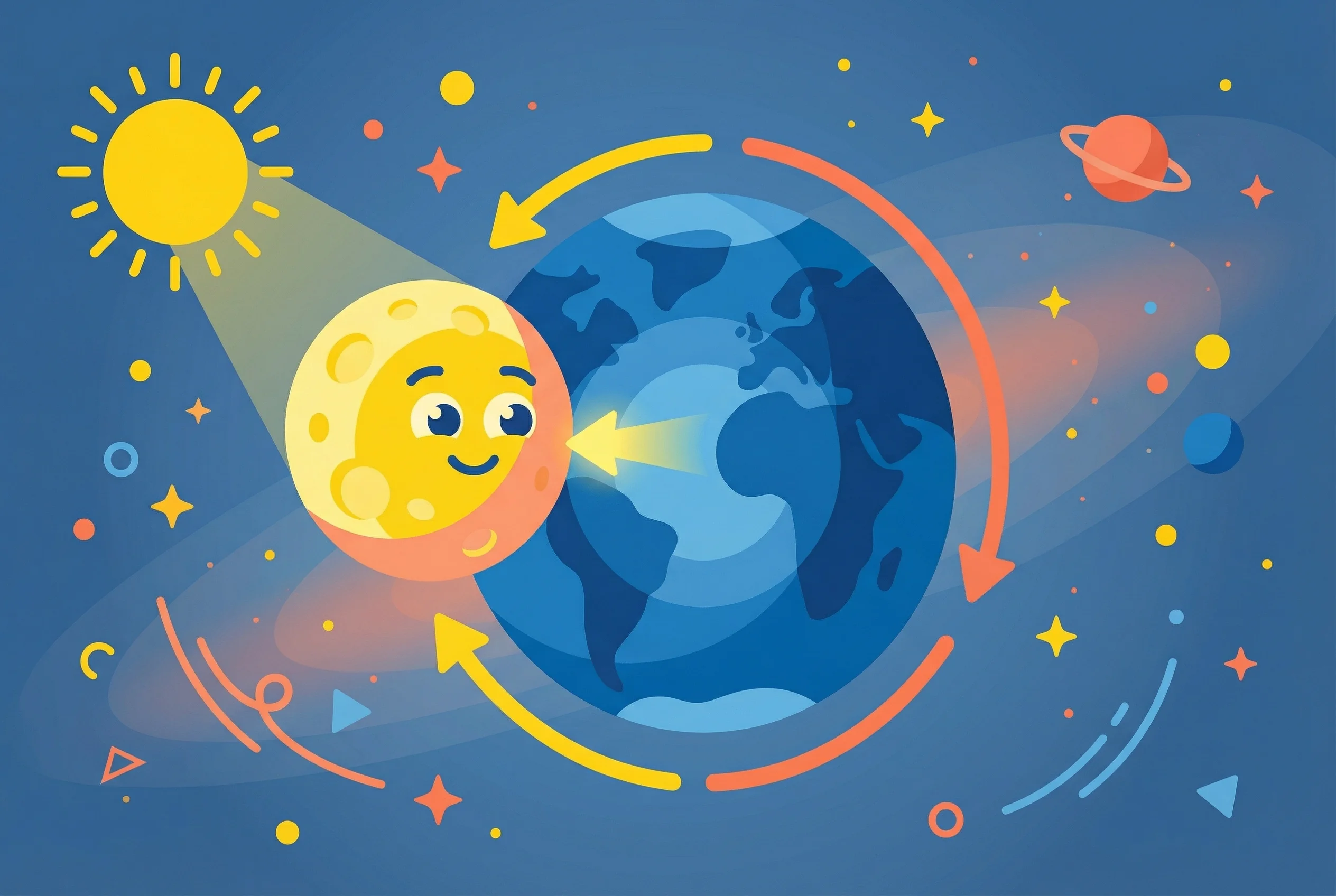
AMoon doesn't rotate at all
✗Not quite — The moon does rotate—once per orbit (~27.3 days). We see the same face because its rotation period equals its orbital period (tidal locking).
BTidal locking synchronizes rotation
✓Correct — Tidal locking (synchronous rotation) means the moon's rotation period equals its orbital period around Earth. Earth's gravity created tidal bulges on the moon long ago. These bulges experienced torque, gradually slowing the moon's rotation until it matched the orbit. Now the same face always points Earthward. Many moons are tidally locked to their planets!
CMoon is perfectly spherical
✗Not quite — Shape doesn't determine this. Tidal locking occurs when gravitational interactions synchronize rotation and orbital periods over time.
Answer this question
Difficult Trivia Questions
AIron oxide like Mars
✗Not quite — Jupiter is gaseous (hydrogen, helium). The red color likely comes from complex organic compounds created by solar radiation, not iron oxide.
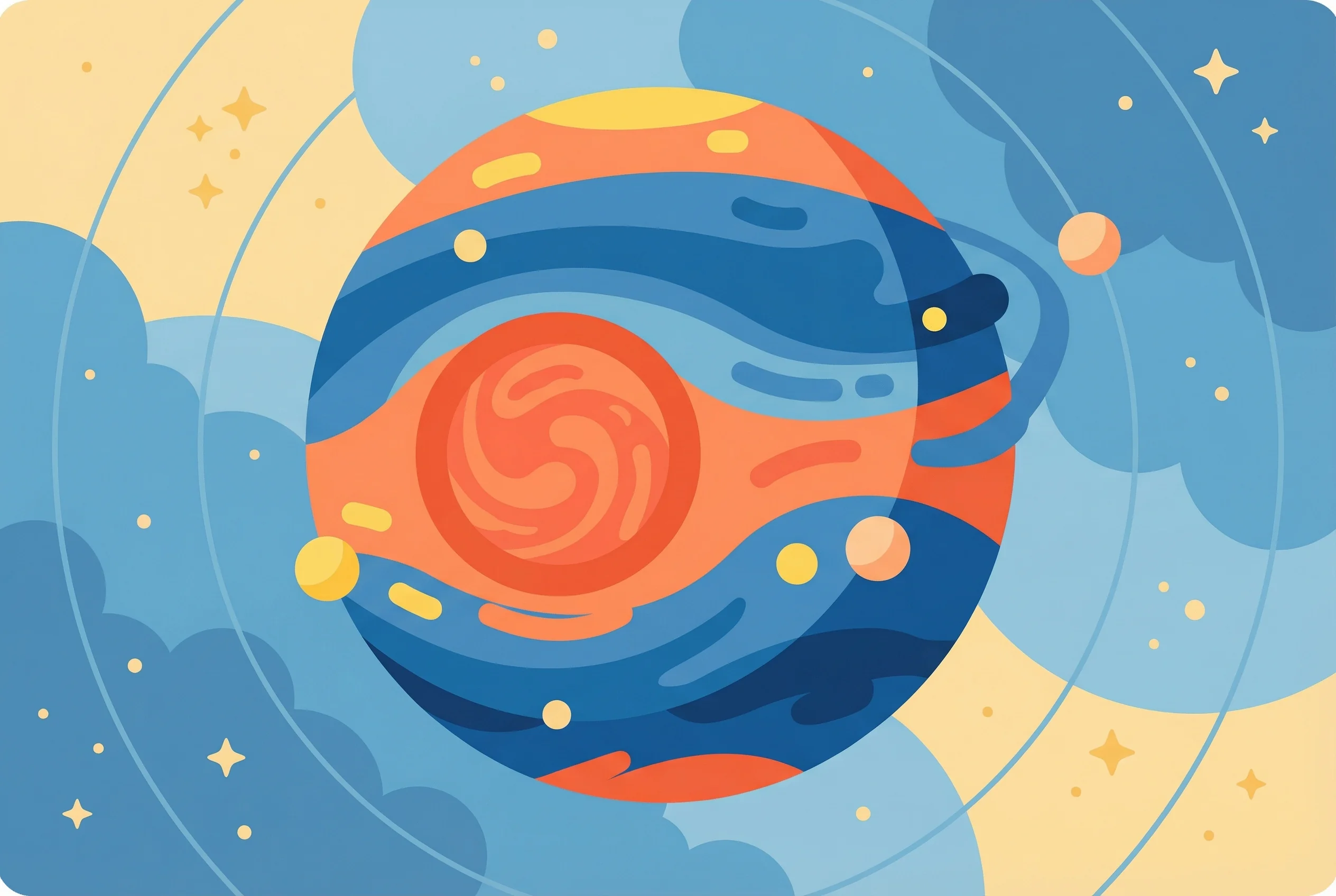
BGiant storm system persisting
✓Correct — The Great Red Spot is a massive anticyclonic storm—been observed for ~350+ years! It's ~2x Earth's diameter but shrinking. Storms on gas giants can persist far longer than on Earth because there's no land to disrupt them. The red color may be from phosphorus or sulfur compounds brought up from deeper atmospheric layers!
CShadow from Jupiter's moons
✗Not quite — Moon shadows are temporary. The Great Red Spot is a persistent storm feature in Jupiter's atmosphere visible for centuries.
Answer this question
AThick atmosphere traps heat
✓Correct — Mercury is closer to the sun, but Venus is hotter (~465°C vs Mercury's ~430°C dayside). Venus has extremely thick CO₂ atmosphere (90x Earth's pressure) creating runaway greenhouse effect. Sunlight enters, heats surface, but infrared radiation can't escape—trapped by CO₂ and sulfuric acid clouds. Mercury has almost no atmosphere—no heat retention. Venus is hottest planet despite being second from sun!
BVenus is larger than Mercury
✗Not quite — Size doesn't determine temperature. Venus is hotter because its thick CO₂ atmosphere creates extreme greenhouse effect trapping heat.
CMercury has no core
✗Not quite — Mercury does have an iron core. Venus is hotter because its dense CO₂ atmosphere creates greenhouse effect, not Mercury's internal structure.
Answer this question
APlanets compress together
✗Not quite — Planets don't have enough mass. Black holes form when massive stars (>20 solar masses) collapse under gravity after supernova.
BSpace tears from rotation
✗Not quite — Space doesn't tear. Black holes form from gravitational collapse of massive stars—density becomes so high nothing escapes, not even light.
CMassive stars collapse
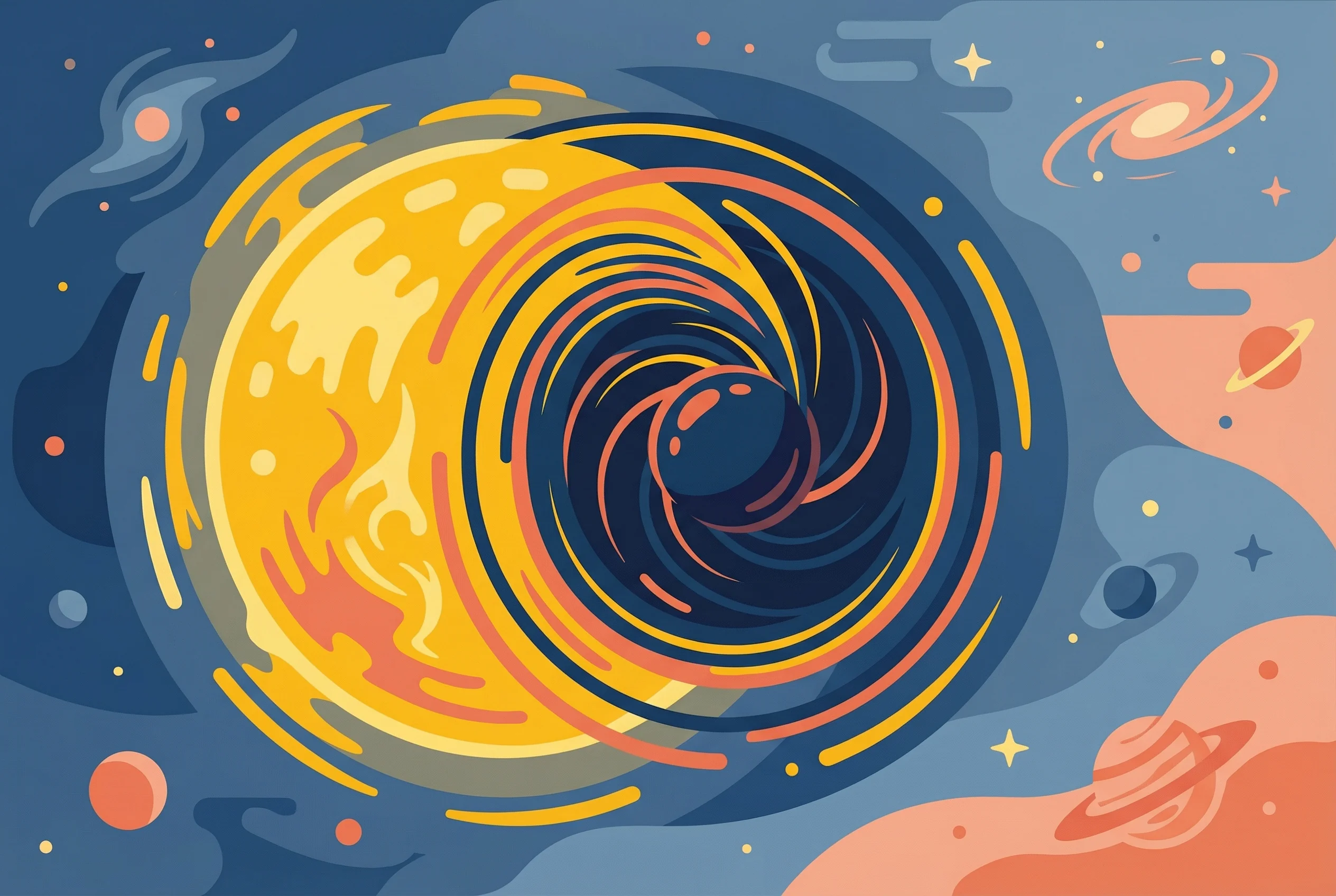
✓Correct — When massive stars (>20 solar masses) exhaust fuel, fusion stops. Gravity collapses the core. If massive enough, no force can stop collapse—it becomes black hole. Escape velocity exceeds light speed—even light can't escape! Event horizon marks point of no return. Schwarzschild radius depends on mass. Stellar-mass black holes form this way. Supermassive black holes (galactic centers) formed differently—still debated!
Answer this question
AGravity allows only one
✗Not quite — Gravity doesn't limit moon number—Mars has two, Jupiter has 95! Earth has one because of how it formed—giant impact hypothesis.
BGiant impact formed it
✓Correct — Giant Impact Hypothesis: ~4.5 billion years ago, Mars-sized object (Theia) collided with proto-Earth. Impact ejected massive debris into orbit. This debris coalesced into the Moon. Evidence: Moon's composition matches Earth's mantle, low iron content, Earth-Moon system angular momentum. This explains Moon's unusual size relative to Earth (largest moon-to-planet ratio for rocky planets). Dramatic formation!
CEarth captured it passing by
✗Not quite — Capture is possible (Neptune's Triton), but our Moon formed from debris after a giant impact, not capture.
Answer this question
AThin film interference patterns
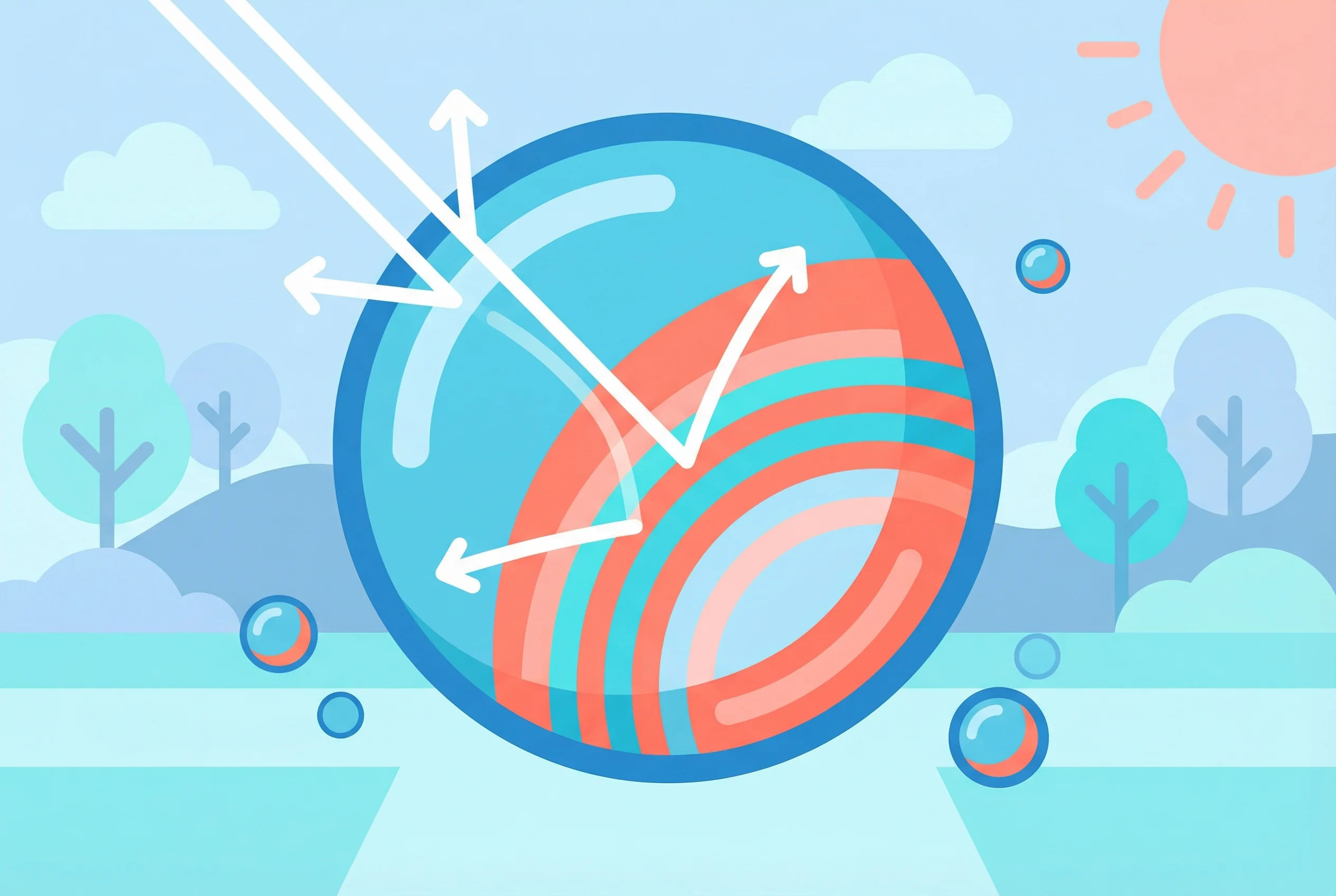
✓Correct — Thin film interference! Bubble wall has two surfaces (front and back). Light reflects from both—waves recombine. Film thickness (wavelength-scale) determines which colors constructively interfere (brighten) vs destructively interfere (cancel). Thickness varies across bubble—different areas show different colors. As bubble thins, colors shift (thicker=red, thinner=blue/violet). Just before popping, bubble appears black (too thin for visible light interference). Oil slicks show same phenomenon!
BWater refracts like prism
✗Not quite — Water can refract, but bubble colors are interference pattern from light waves reflecting off front/back surfaces, not dispersion.
CLight bounces multiple times
✗Not quite — Multiple reflections occur, but colors arise from interference—waves from front and back surfaces combining constructively or destructively.
Answer this question
Hard Science Questions With Answers
AMagnetism stabilizes axis
✗Not quite — No magnetism. Gyroscope stability is mechanical—spinning creates angular momentum that resists changes to rotation axis direction.
BAngular momentum resists tipping
✓Correct — Conservation of angular momentum: L = Ixω (moment of inertia x angular velocity). Spinning gyroscope has large angular momentum. Newton's 1st Law for rotation: angular momentum stays constant without external torque. Try to tip gyroscope—changes rotation axis direction—requires torque. Result: precession (axis traces cone) instead of falling! Bikes stay upright when moving (wheels are gyroscopes). Spacecraft use gyroscopes for orientation. Nature's gyroscope: Earth's axis!
CHeavy wheel balances itself
✗Not quite — Weight distribution matters, but stability comes from angular momentum—spinning resists changes to rotation axis orientation.
Answer this question
ARain falls in arc patterns
✗Not quite — Rain falls straight down. Rainbow's arc comes from refraction angle—light bends 40-42° inside raindrops, creating circular arc centered opposite sun.
BLight refracts at specific angle
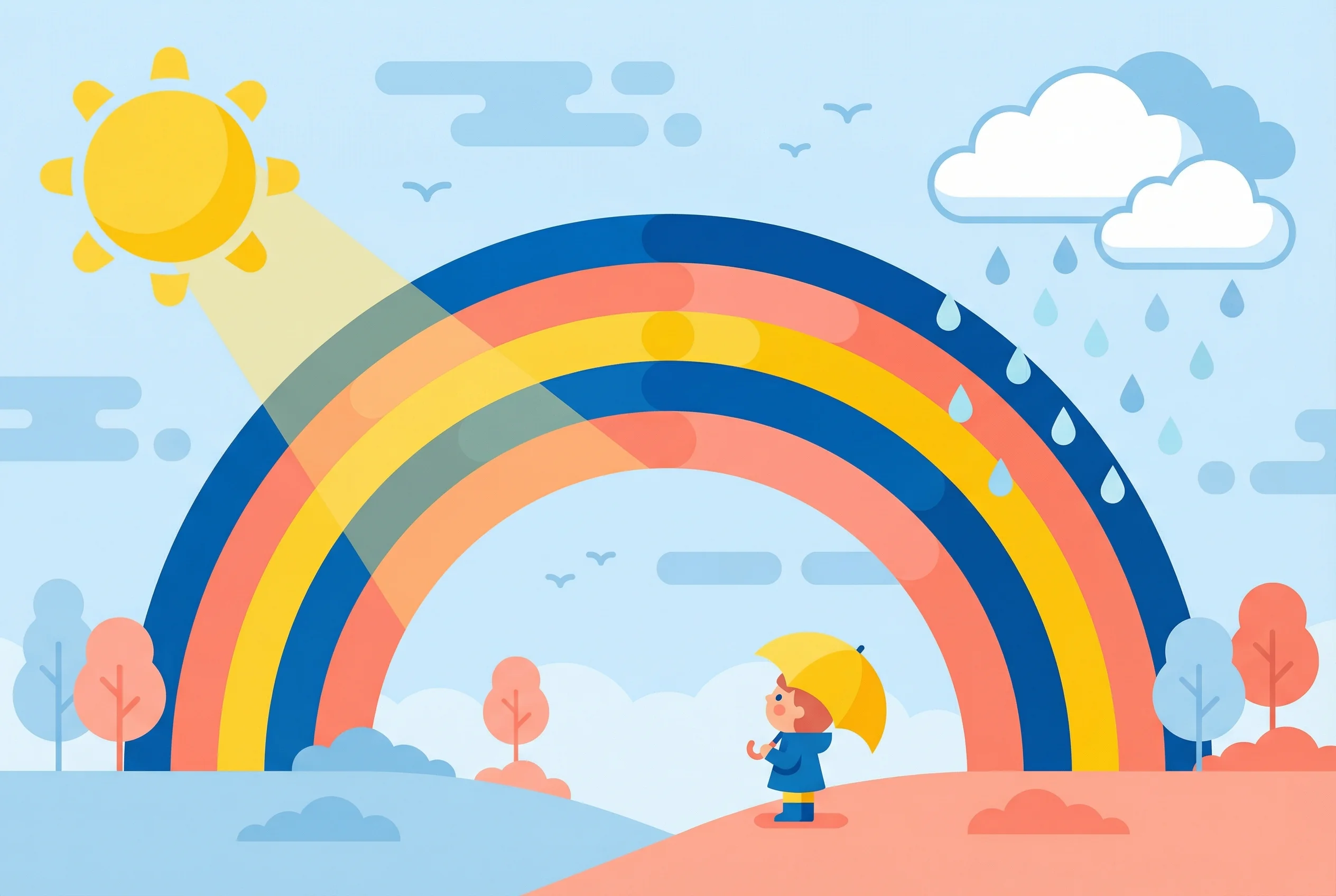
✓Correct — Rainbows form at specific angle: light enters raindrop, refracts (bends), reflects internally, refracts again exiting—total deviation ~42° (red) to 40° (violet). All raindrops at this angle from antisolar point contribute to rainbow—forms cone/circle with your eye at apex. Ground blocks lower half—you see semicircle. From airplane, you see full circle! Double rainbows have secondary reflection (50-53°, reversed colors)!
CGravity bends light downward
✗Not quite — Gravity doesn't bend visible light significantly (only in extreme cases like black holes). Rainbow arc comes from refraction geometry—42° angle.
Answer this question
AColor temperature varies widely
✗Not quite — the answer is B. Flicker too fast to perceive. Partly true — color temperature changes the mood of a room (warm vs cool white), but it doesn't cause the eye strain and headaches people report. That points to something faster than the eye can see.
BFlicker too fast to perceive
✓Correct — Cheap LEDs flicker at 100–120 Hz (twice the AC line frequency) because they use low-cost drivers. It's too fast to see consciously, but the eyes and brain still register it, causing eye strain and headaches for some people. Quality LEDs use better drivers — higher frequency or smoothed DC — to remove the flicker.
CLEDs produce directional beams
✗Not quite — LEDs are directional, but a focused beam doesn't cause eye strain. The real culprit behind LED discomfort is high-frequency flicker from the power supply.
Answer this question
AConservation of angular momentum
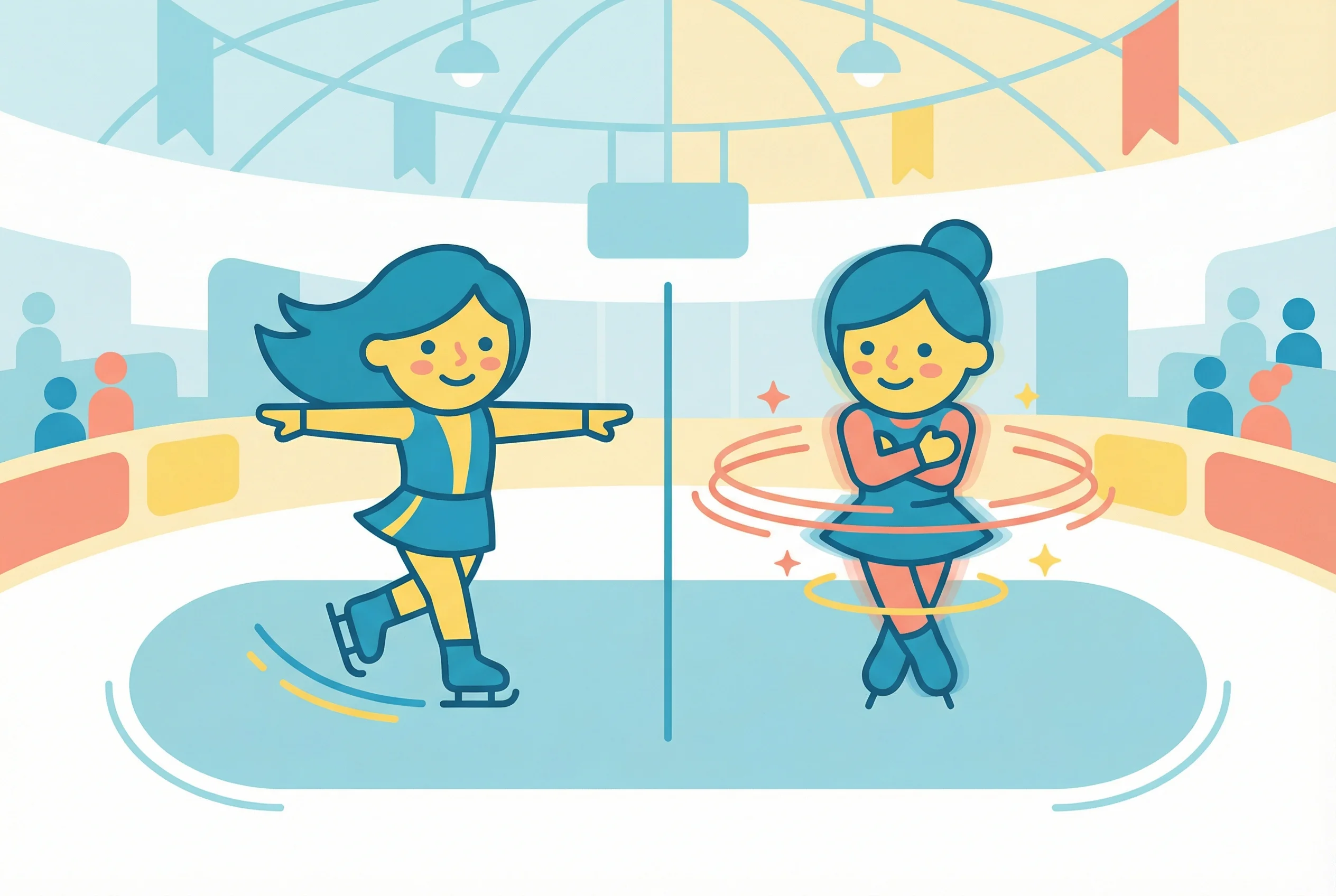
✓Correct — Angular momentum (L = Ixω) is conserved without external torque. Moment of inertia I = mass x radius². Arms out: large radius, large I, slower rotation ω. Arms in: small radius, small I—to conserve L, rotation ω increases! Same physics: divers tuck for spins, planets orbit faster when closer to sun. Skater doesn't add energy—redistributes existing rotational energy. Pull arms in = speed up dramatically!
BFriction decreases with arms in
✗Not quite — Friction change is minimal. Speed increase is from angular momentum conservation—pulling arms in reduces moment of inertia, increasing rotation rate.
CMuscles push harder when tucked
✗Not quite — Muscles don't create the spin increase—they pull arms in. Angular momentum conservation (L = Ixω constant) automatically increases rotation when reducing radius.
Answer this question
ASpinning creates unequal lift
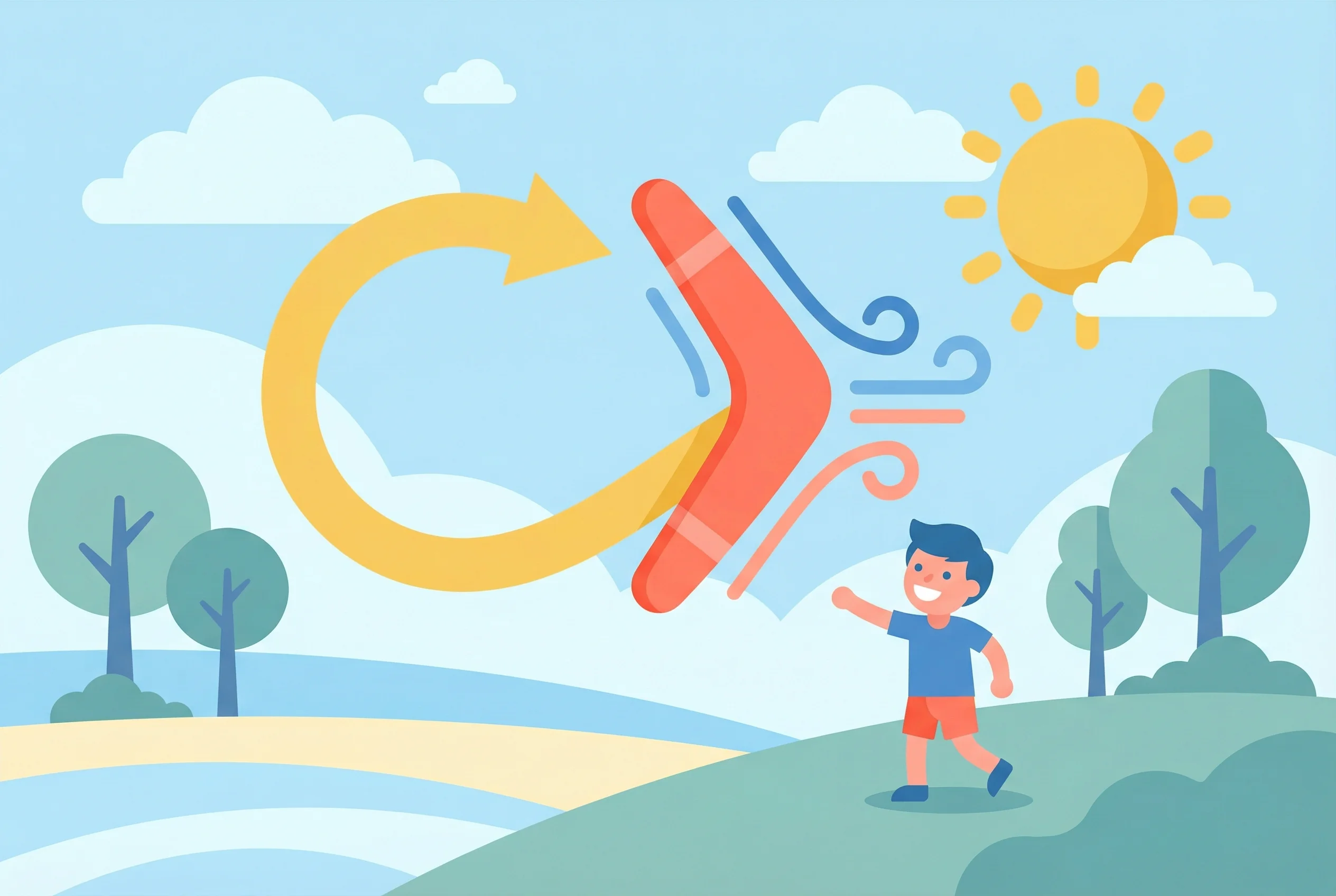
✓Correct — Boomerang has two airfoil-shaped arms—like airplane wings. Spin creates gyroscopic precession. As boomerang spins, one arm moves forward through air faster (spin + throw velocity), other slower. Faster arm generates more lift than slower arm—unequal lift creates torque perpendicular to spin axis. Gyroscopic precession: torque causes rotation axis to precess (tilt), curving flight path in circle! Returns to thrower. Right-handed throw: spins counterclockwise, curves left. Complex aerodynamics!
BShape makes them bounce
✗Not quite — Boomerang doesn't bounce. It flies in curved path due to gyroscopic precession from unequal lift on spinning arms.
CMagnetic force attracts them
✗Not quite — No magnetism. Boomerang returns through aerodynamic forces—spinning airfoil arms generate unequal lift creating torque and curved path.
Answer this question
AEqualize pressure between panes
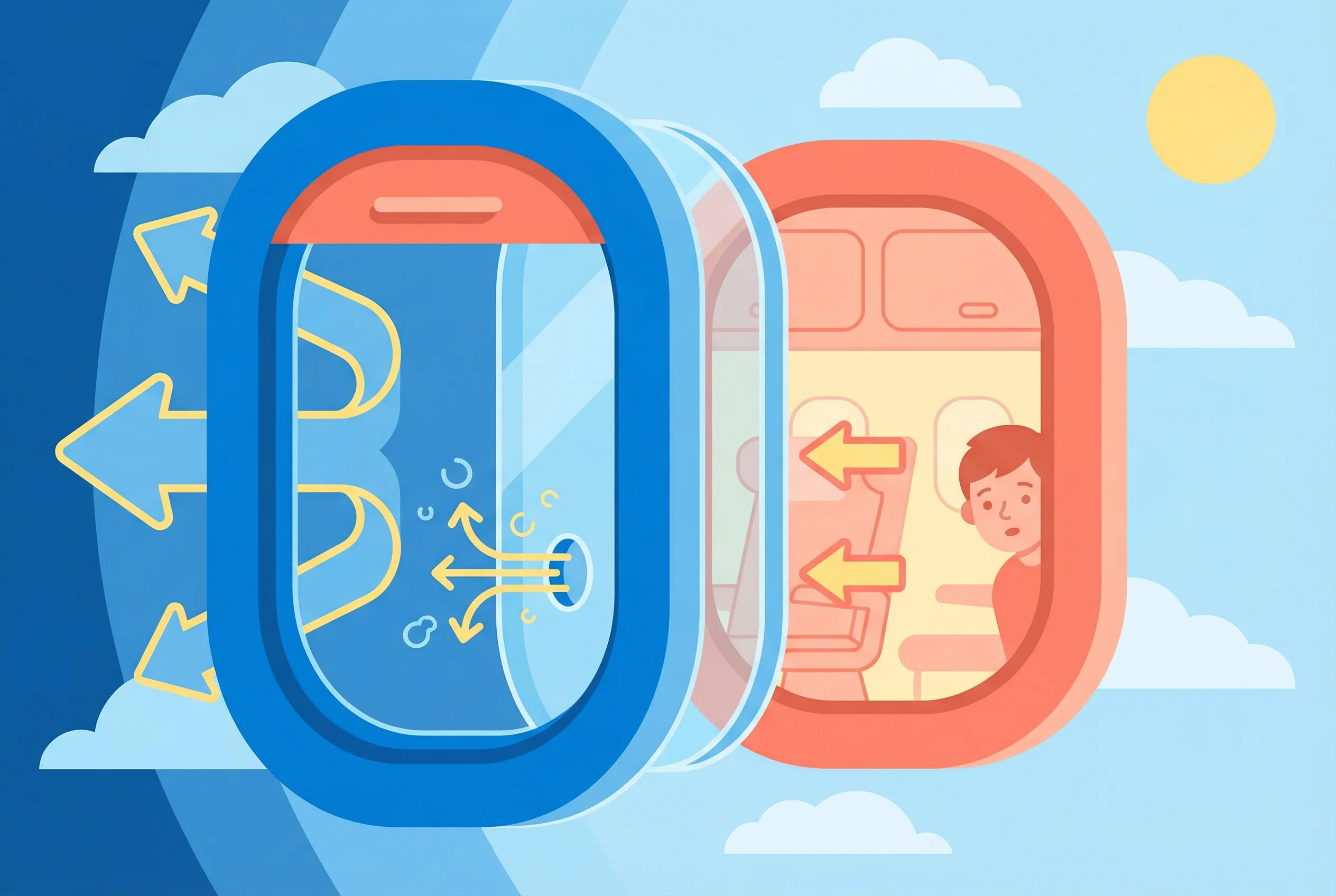
✓Correct — Airplane windows have 3 panes: outer (structural), middle (with tiny hole—breather hole), inner (scratch shield). Cabin pressurized to ~8,000 ft equivalent; outside ~35,000 ft = huge pressure difference. Breather hole equalizes pressure between middle and inner panes—outer pane bears full pressure load. Also prevents moisture condensation between panes (would fog view). Hole ~0.5mm diameter. Redundancy: if outer pane fails, middle pane holds pressure!
BPrevent condensation buildup
✗Not quite — Hole does prevent condensation, but primary purpose is pressure equalization—outer pane bears full cabin pressure load safely.
CEmergency pressure release
✗Not quite — Hole does allow pressure relief, but designed function is equalizing pressure between panes, not emergency release.
Answer this question
Hard Geography Trivia
ACoincidence in shapes
✗Not quite — It's not coincidence. Continental shapes match because they were once joined as the supercontinent Pangaea before plate tectonics split them apart.
BOnce joined supercontinent
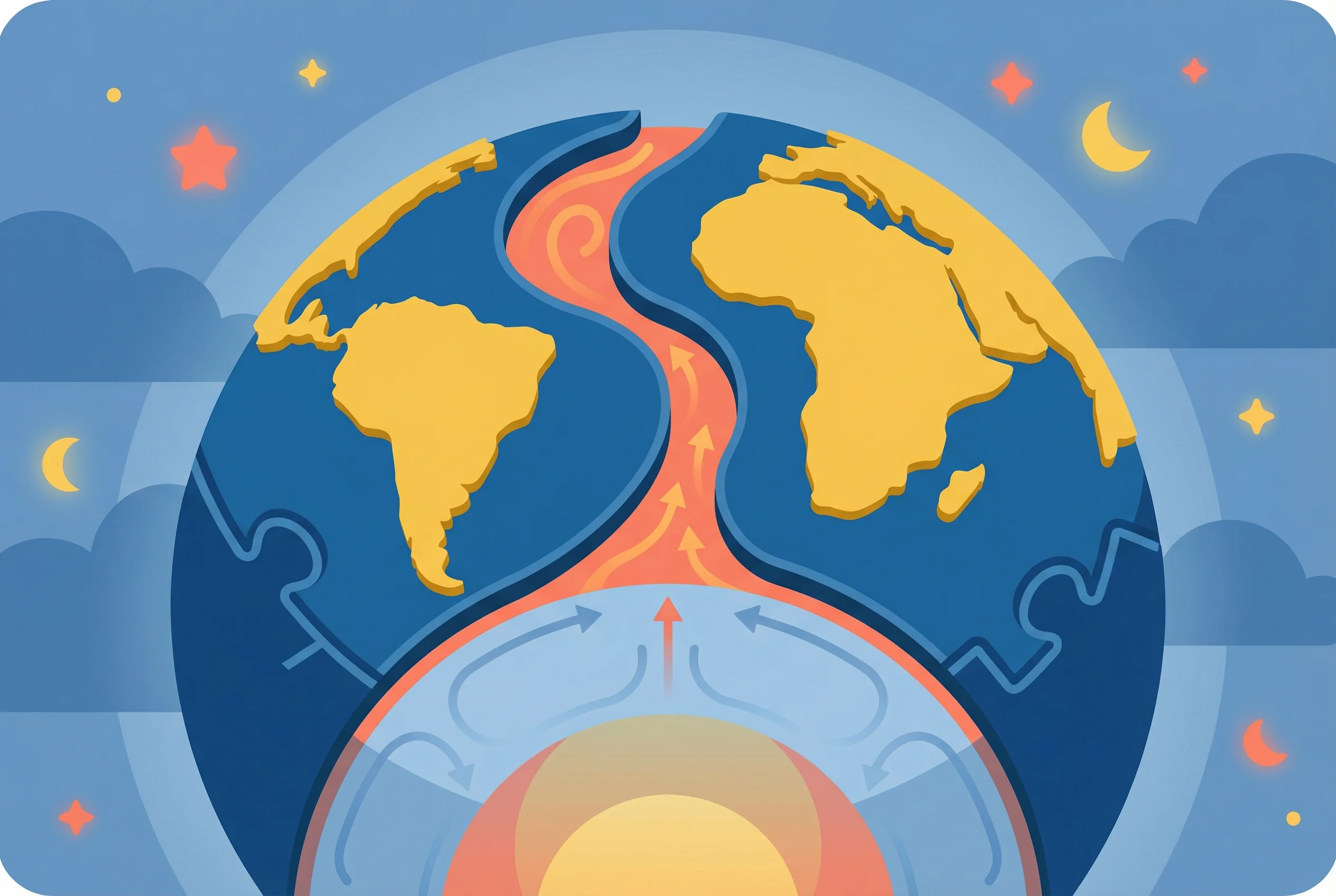
✓Correct — About 200 million years ago, all continents formed one supercontinent called Pangaea. Plate tectonics (driven by mantle convection) split it apart. Africa and South America's coastlines fit together because they were once connected! Fossil evidence, rock formations, and matching coastlines prove continental drift!
COcean erosion shaped edges
✗Not quite — Erosion doesn't create the fit. Continents match because they split from Pangaea through plate tectonics, not from coastal shaping.
Answer this question
AFollowing underground rocks
✗Not quite — Rivers don't follow underground rocks. Meanders form because water flows faster on the outside of bends, eroding banks and creating curves.
BErosion on outside of bends
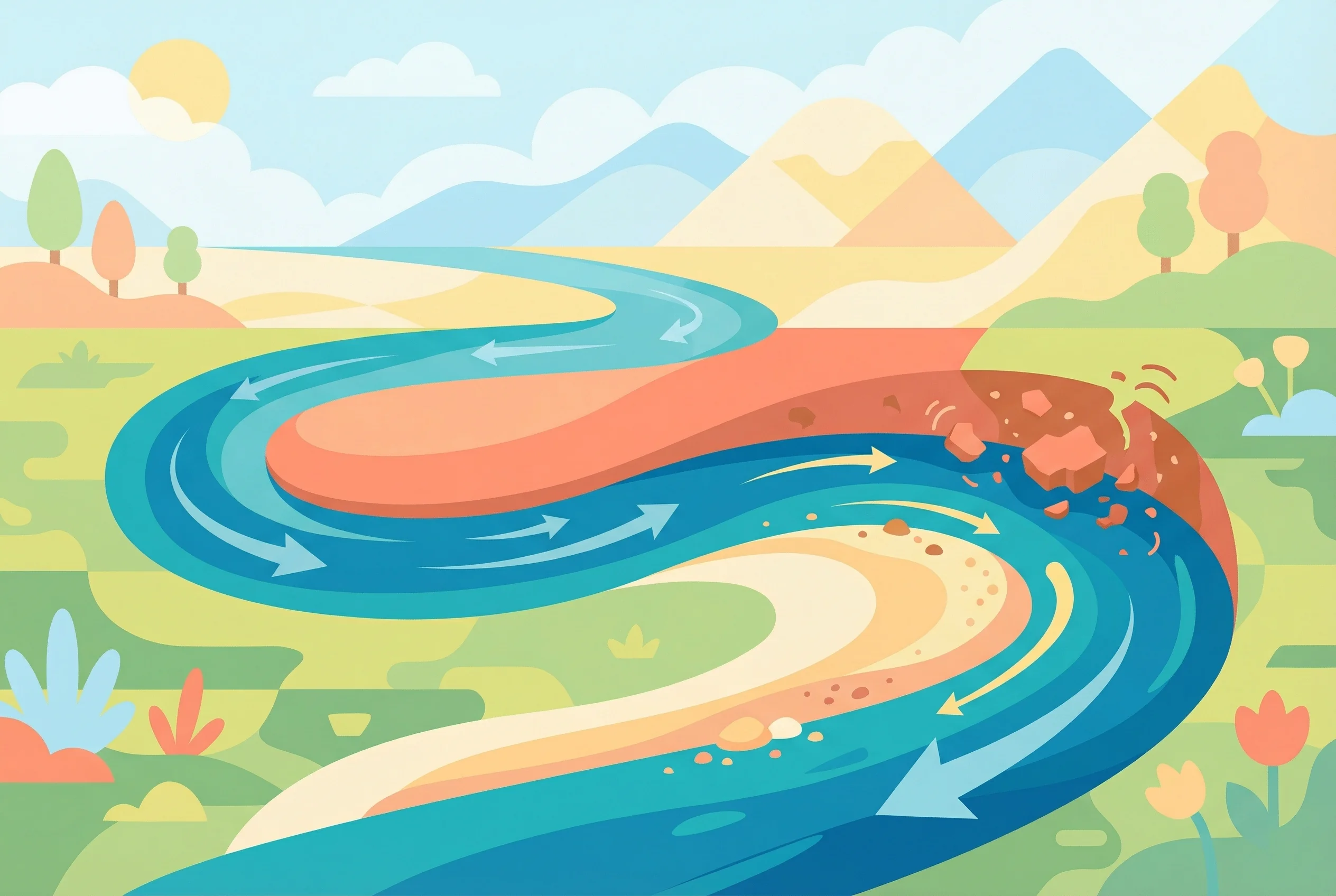
✓Correct — Water flows faster on the outside of river bends (longer path), eroding banks there. Inside bends have slower water, depositing sediment. Over time, this differential erosion amplifies curves, creating snake-like meanders. Eventually, curves can become so extreme they cut through, forming oxbow lakes!
CEarth's rotation deflects flow
✗Not quite — Coriolis effect does deflect large rivers slightly, but meanders form primarily from differential erosion on bend outsides versus deposition on insides.
Answer this question
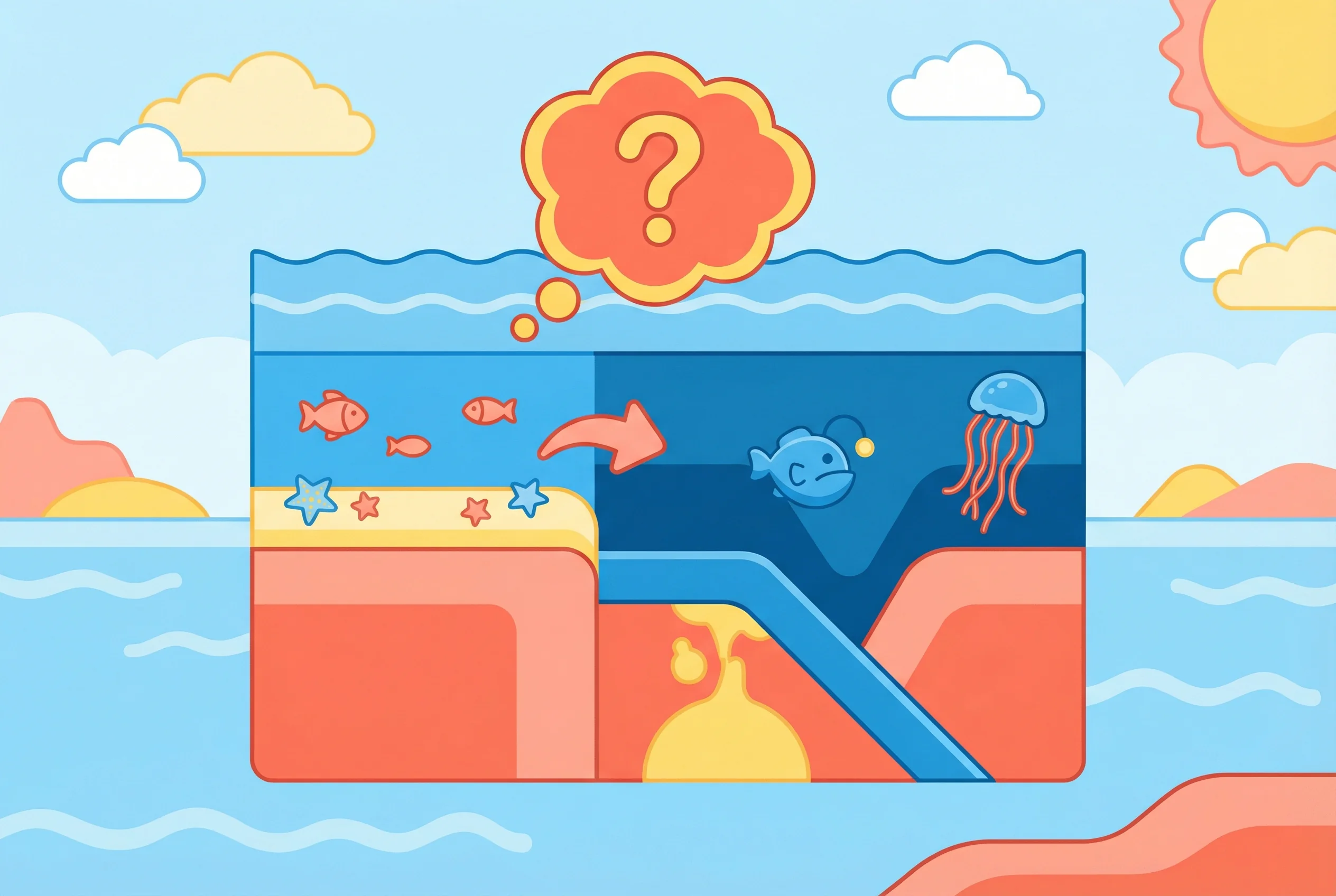
ATectonic activity varies
✓Correct — Ocean depth depends on seafloor age and tectonic processes. At mid-ocean ridges, new crust forms (shallow). As crust moves away, it cools, becomes denser, and sinks—creating deeper basins. Trenches form where plates subduct (Mariana: 11km deep). Pacific has old, deep seafloor; Atlantic is younger and shallower overall!
BEvaporation lowers levels
✗Not quite — Evaporation doesn't significantly lower ocean levels or depth. Depth is determined by seafloor geology and plate tectonics.
CPolar ice melts unevenly
✗Not quite — Ice melt raises sea level slightly but doesn't explain depth differences. Ocean depth depends on seafloor age and tectonic activity.
Answer this question
AOcean currents push islands close
✗Not quite — Currents don't push islands. Archipelagos cluster because they formed from the same geological process—volcanic hotspots or oceanic ridges.
BVolcanic chains or submerged ridge
✓Correct — Archipelagos (island groups) form from shared geology. Hawaii: volcanic hotspot creating island chain as plate moves. Philippines/Japan: volcanic arcs above subduction zones. Indonesia: volcanic ring of fire. Or former land bridge now submerged (Florida Keys). Shared origin = clustered location!
CAncient bridges connected them
✗Not quite — Some archipelagos are former highlands separated by rising seas, but most form from volcanic chains along tectonic features.
Answer this question
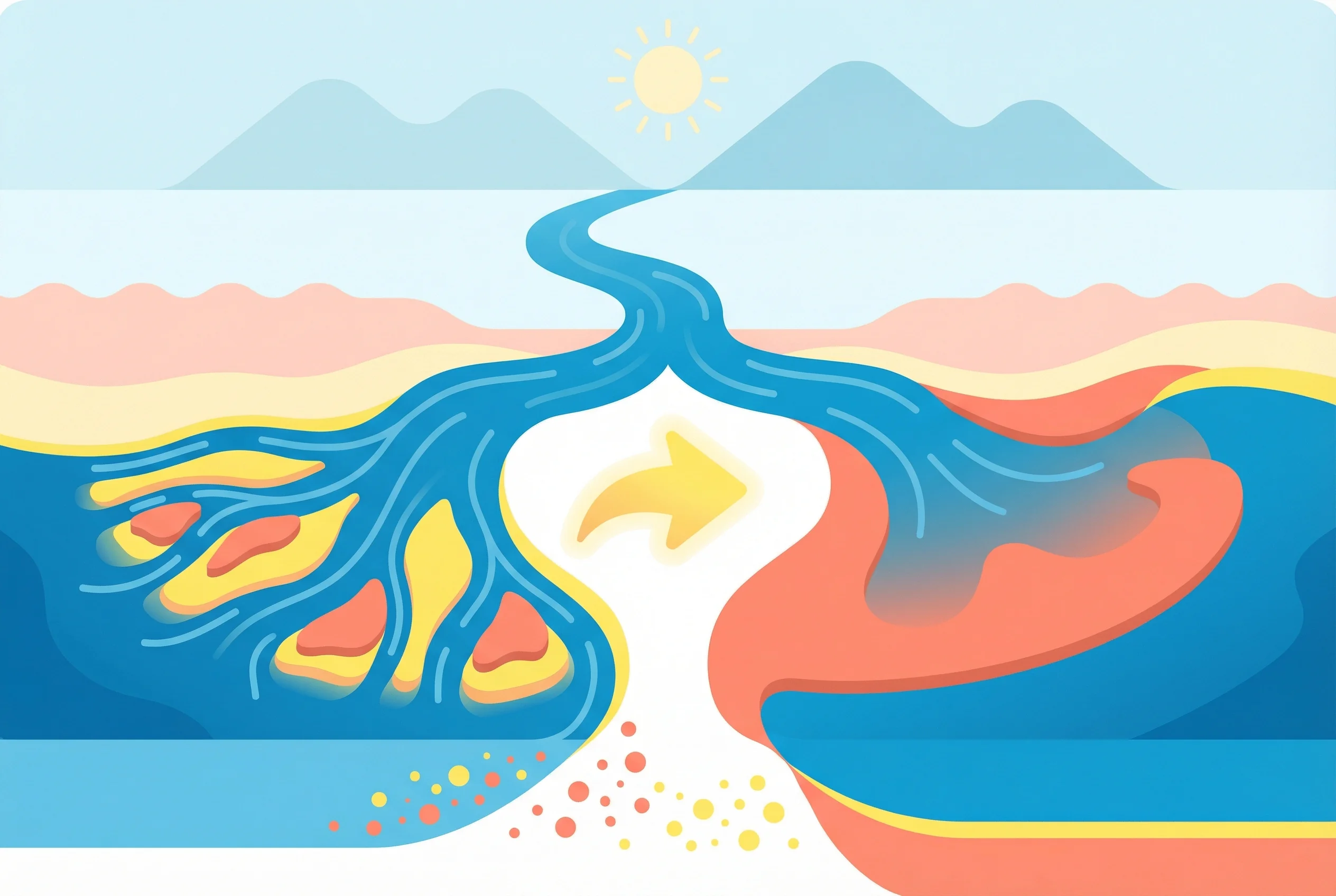
ASediment vs tidal strength
✓Correct — Deltas form when rivers deposit sediment faster than waves/tides can remove it—building new land (Nile, Mississippi). Estuaries form when tides/waves are strong, preventing sediment accumulation—creating drowned river valleys (Chesapeake Bay). It's a balance: sediment supply vs erosional forces!
BOcean salinity affects deposition
✗Not quite — Salinity doesn't determine the landform. Delta vs estuary depends on whether sediment deposition or tidal/wave erosion dominates.
CAge of river matters
✗Not quite — Age doesn't determine type. The balance between sediment deposition rate and tidal/wave erosion strength determines delta vs estuary formation.
Answer this question
AOcean waves erode cliffs
✗Not quite — Waves erode coastlines, but fjords form from glacier erosion. Glaciers carved deep valleys with steep walls; when ice melted, seawater flooded them.
BVolcanic explosions carve valleys
✗Not quite — Fjords aren't volcanic. They're drowned glacial valleys—glaciers carved deep U-shaped troughs that filled with seawater after the ice age.
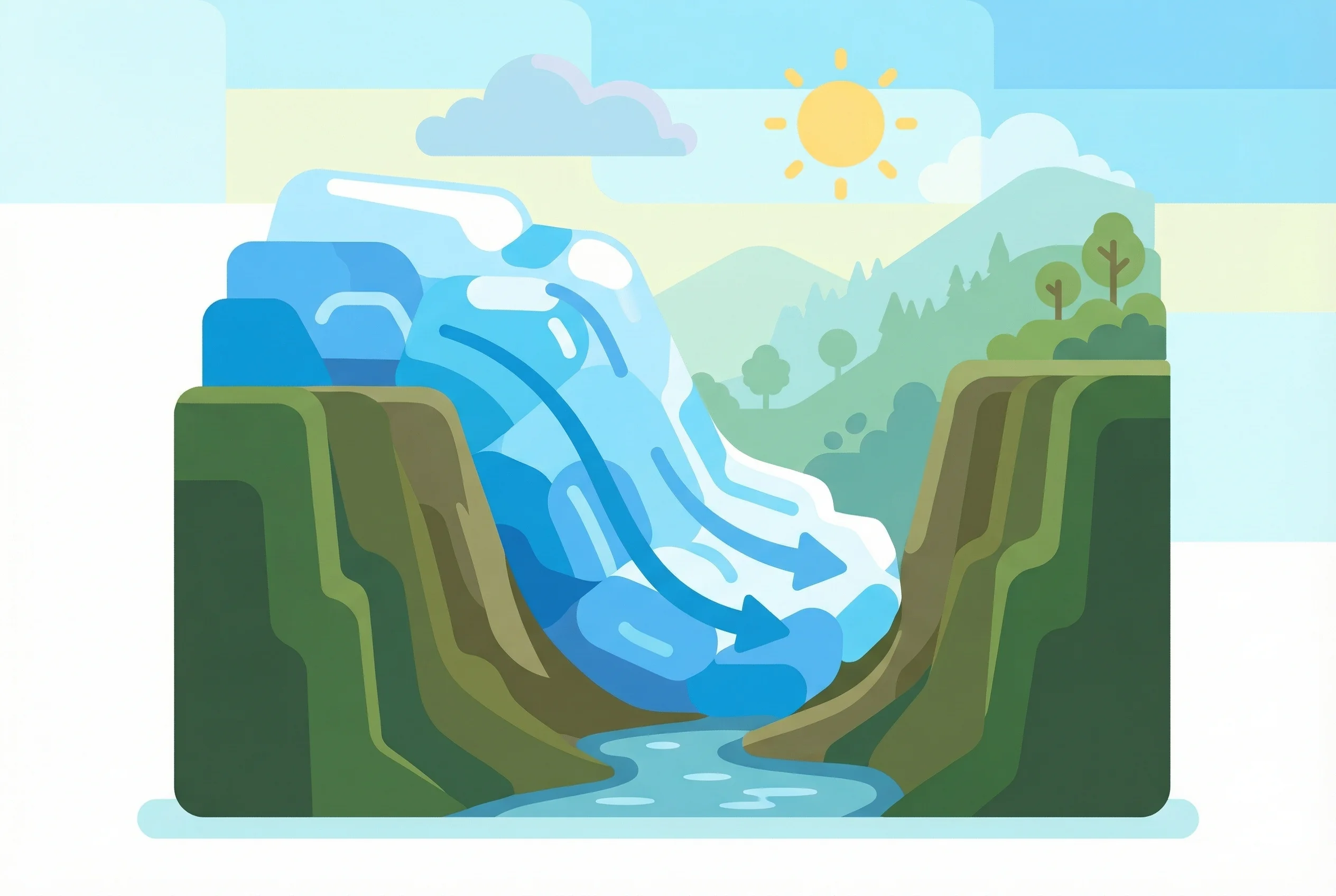
CGlaciers carve U-shaped valleys
✓Correct — Fjords are glacial valleys flooded by the sea. During ice ages, massive glaciers carved U-shaped valleys with steep sides. When glaciers melted, rising seas flooded these deep valleys. Norway's fjords reach 1300m deep! The characteristic straight, steep-walled profile shows glacial erosion, not river valleys (V-shaped).
Answer this question
Hard Sports Trivia
APrevents muscle shaking
✗Not quite — Breath-holding doesn't prevent shaking. It creates intra-abdominal pressure to stabilize the spine during heavy lifts.
BReduces heart rate
✗Not quite — Holding breath during exertion actually temporarily raises heart rate and blood pressure. The benefit is spinal stability, not cardiovascular.
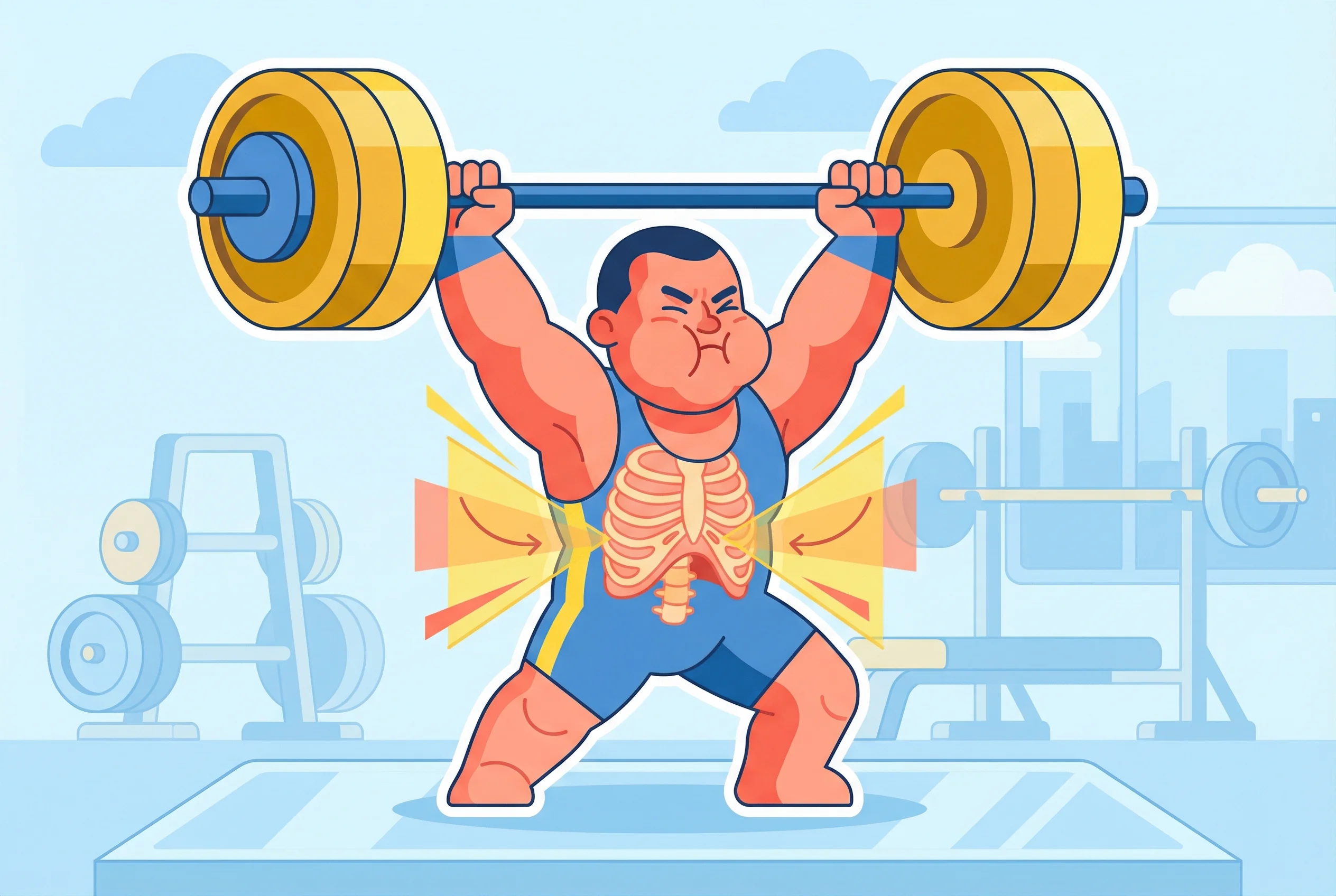
CCreates core stability
✓Correct — Holding breath while bracing your core creates intra-abdominal pressure—like inflating a balloon in your torso. This stiffens your spine, preventing injury during maximum lifts. It's called the Valsalva maneuver!
Answer this question
ABackspin softens bounce off rim
✓Correct — Softer bounce! Backspin (bottom of ball rotating toward shooter): when ball hits rim/backboard, spin counteracts forward momentum—reduces bounce velocity. Ball more likely to drop through hoop rather than bouncing away. Physics: angular momentum creates force opposing forward motion upon contact. 'Touch' shooters use backspin. Also: Magnus effect causes slight upward lift extending range marginally. NBA players practice consistent backspin (1-3 revolutions during flight). Free throw technique!
BSpin increases shooting range
✗Not quite — Magnus effect from backspin provides tiny lift, but main benefit is softer bounce reducing rim-outs.
CLooks more professional
✗Not quite — Spin serves functional purpose—reduces bounce velocity off rim through rotational momentum opposing forward motion.
Answer this question
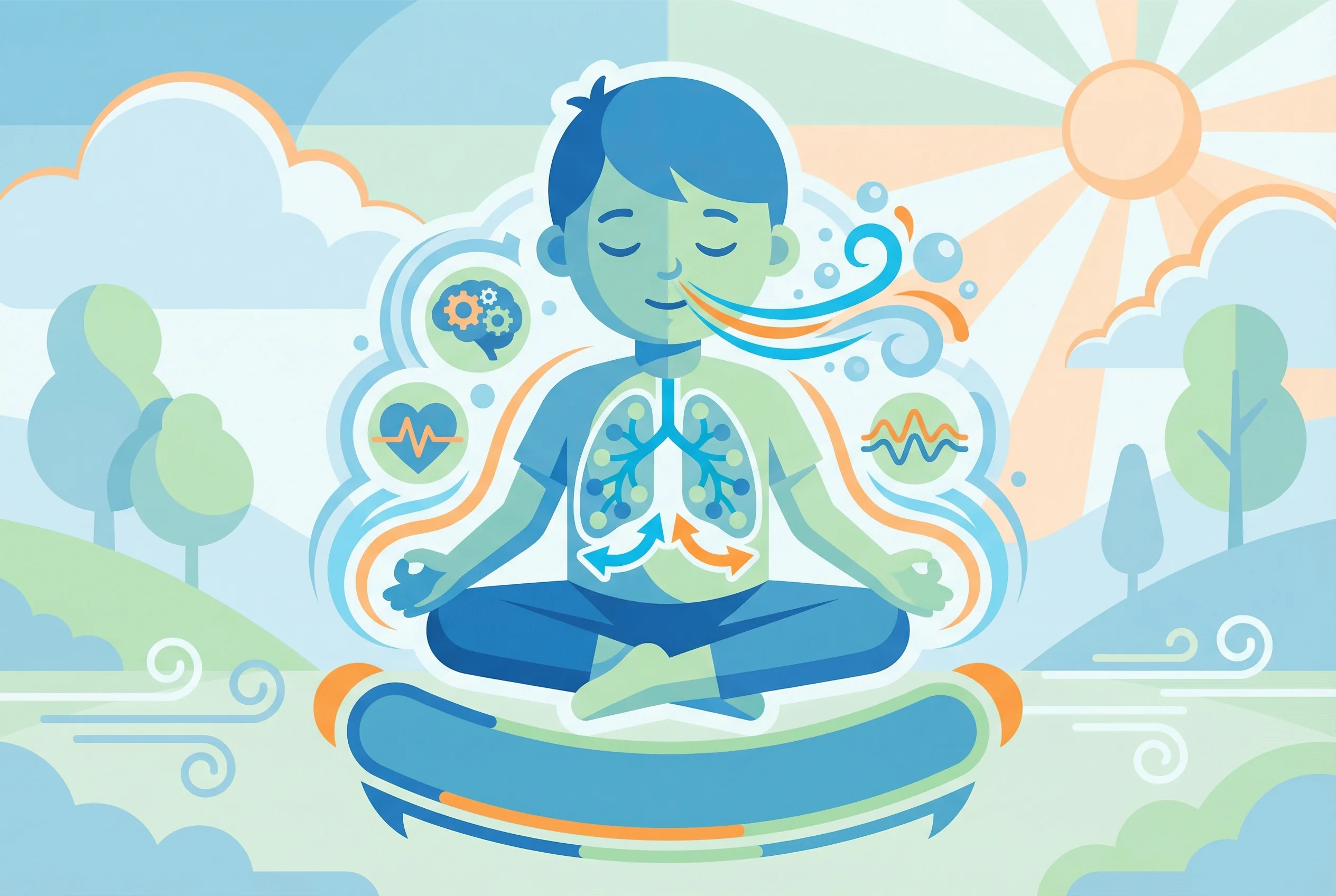
ABreath controls nervous system
✓Correct — Nervous system regulation! Breath directly affects autonomic nervous system (ANS): (1) Slow, deep breathing activates parasympathetic (rest/digest)—lowers heart rate, blood pressure, stress hormones. (2) Fast breathing activates sympathetic (fight/flight)—increases alertness. Pranayama (breath control): matches movement with breath. Benefits: mental calm, improved focus, emotional regulation, better oxygenation. Research shows reduced cortisol, anxiety. Vagus nerve stimulation through breathing—mind-body connection! basic yoga principle.
BOxygen increases flexibility
✗Not quite — Oxygen doesn't directly increase flexibility. Breathing regulates nervous system—relaxation allows deeper stretching, but mechanism is neurological not chemical.
CPrevents muscle growth
✗Not quite — Breathing doesn't prevent muscle growth. It regulates stress response and oxygenation—supporting overall health and mental focus during practice.
Answer this question
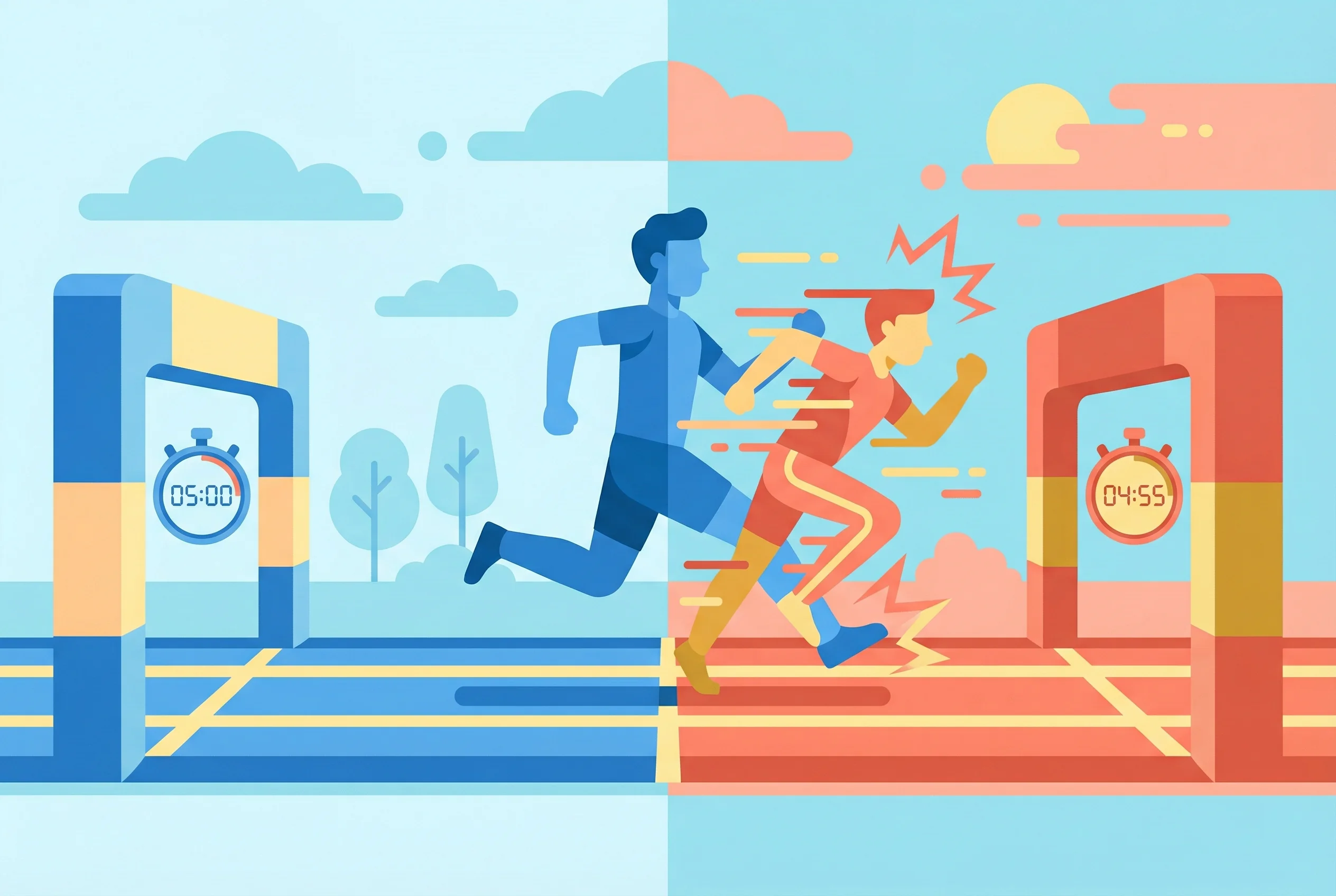
AConserves energy for faster finish
✓Correct — Pacing strategy! Negative split: run second half faster than first. Strategy: (1) First half: conservative pace—conserves glycogen, stays aerobic. (2) Second half: increase pace—use reserves built early. Benefits: avoid early burnout, finish strong, better overall time often. Positive split (opposite): start fast, fade—less efficient. Requires discipline—feeling 'easy' early is uncomfortable. Elite marathoners often negative split. Mental advantage—passing tiring runners motivates!
BPrevents lactic acid buildup
✗Not quite — Conservative early pace does limit lactate, but negative split's benefit is energy conservation for strong finish, not just lactate management.
CLooks more professional
✗Not quite — Negative split is performance strategy—conserving energy early for faster finish. Not aesthetic—it's metabolically efficient racing.
Answer this question
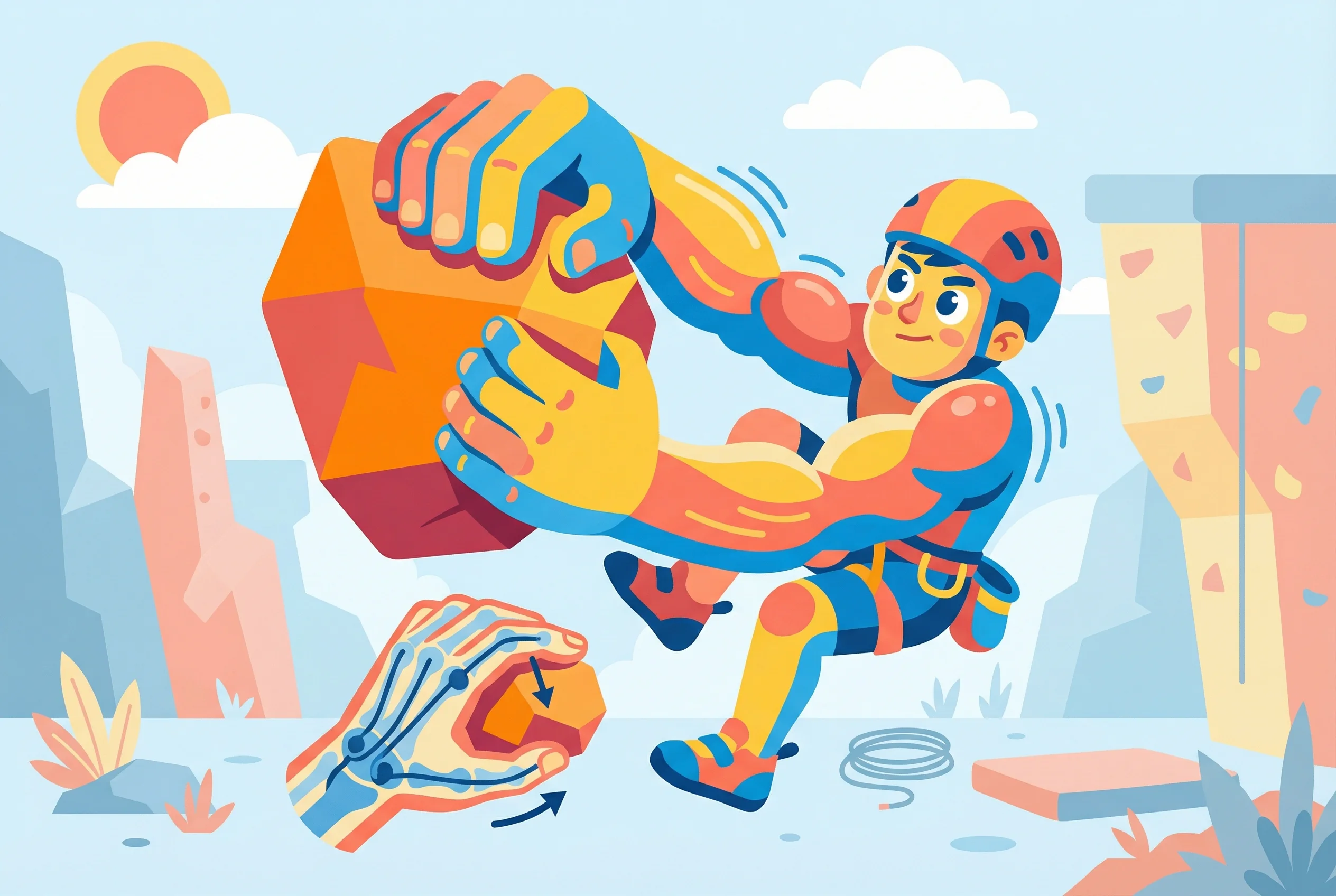
AFingers bear most body weight
✓Correct — Primary load-bearing! Climbing: body weight often supported by fingertips on small holds (edges, crimps). Finger flexor tendons (forearms) generate gripping force. Training: hangboards (specific finger positions), campus boards (dynamic), weighted hangs. Crimp strength critical—half-pad/full-crimp positions. Overuse risks: tendon injuries (pulley strains), tendinopathy. Progressive training important—tendons adapt slower than muscles. Elite climbers have extraordinary finger strength—hanging one-arm on tiny holds. Foundation for advanced climbing!
BStrong fingers prevent blisters
✗Not quite — Finger strength doesn't prevent blisters (calluses do). Fingers bear body weight on holds—training needed for tendon/muscle strength.
CFinger muscles largest in arms
✗Not quite — Finger muscles (flexors) in forearms, not largest arm muscles. But critical for climbing—body weight hangs from fingertips.
Answer this question
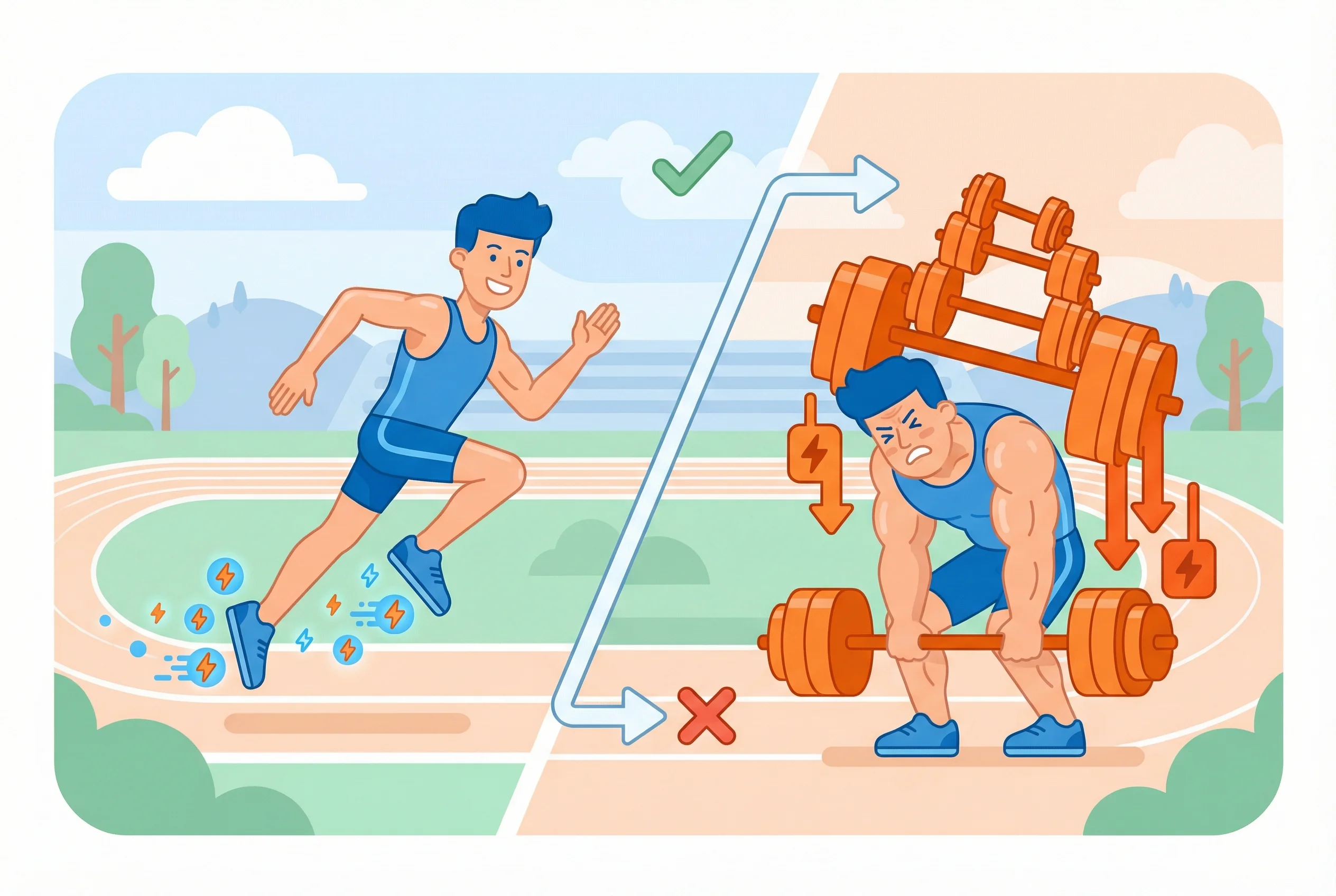
AWeights damage joints permanently
✗Not quite — Proper lifting doesn't damage joints. Distance runners avoid heavy hypertrophy training because added muscle mass reduces running economy (efficiency).
BHypertrophy adds inefficient mass
✓Correct — Running economy concern! Distance running = power-to-weight ratio critical. Heavy strength training (bodybuilding-style) causes hypertrophy—muscle mass increases. Problem: (1) More mass = more weight to carry. (2) Doesn't improve running-specific strength proportionally. (3) Reduces economy (oxygen cost per distance). Runners do light strength training—injury prevention, maintaining power, but avoid bulk. Sprinters opposite—need explosive power, mass less critical. Trade-off: strength vs. Efficiency!
CHeavy weights always cause injury
✗Not quite — Proper technique makes weights safe. Runners avoid heavy lifting because muscle hypertrophy reduces power-to-weight ratio needed for efficiency.
Answer this question
ASaves energy for competition
✗Not quite — Does conserve energy, but taper's purpose is allowing muscle repair and glycogen supercompensation while maintaining cardiovascular fitness.
BIncreases muscle glycogen only
✗Not quite — Glycogen does increase, but taper allows complete muscle repair, nervous system recovery, and immune system restoration—not just fuel storage.
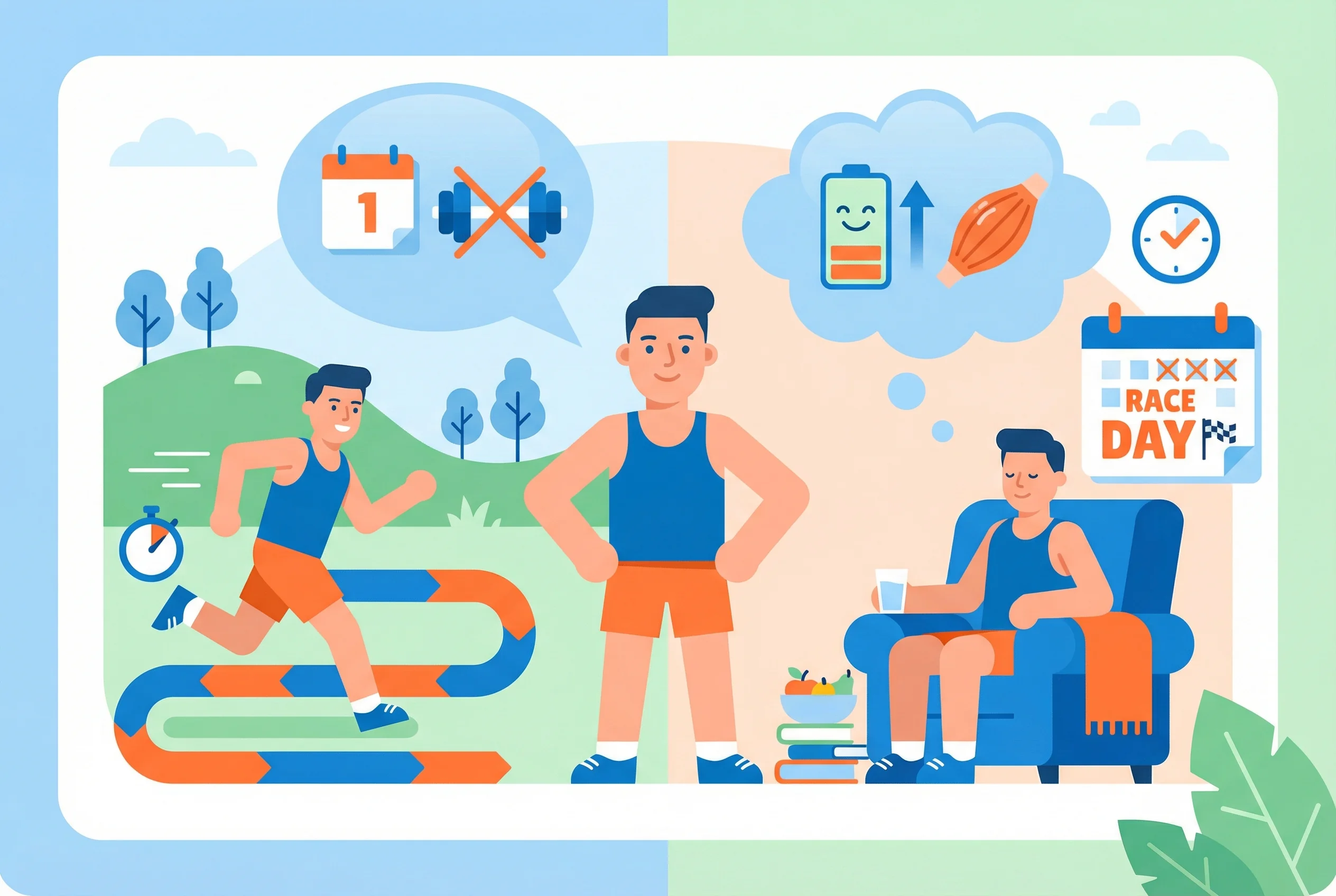
CRecovery while keeping fitness
✓Correct — Peak performance timing! Taper = reducing training volume (50-70%) last 1-3 weeks before race while maintaining intensity. Benefits: (1) Muscle repair—heals micro-damage from training. (2) Glycogen supercompensation—stores maximize. (3) Nervous system recovery—freshness returns. (4) Immune system restoration. (5) Mental freshness. Maintains fitness (cardio stays adapted) while body recovers. Too long = detraining; too short = insufficient recovery. Art of timing peak performance!
Answer this question
AAdapts body to bike-run transition stress
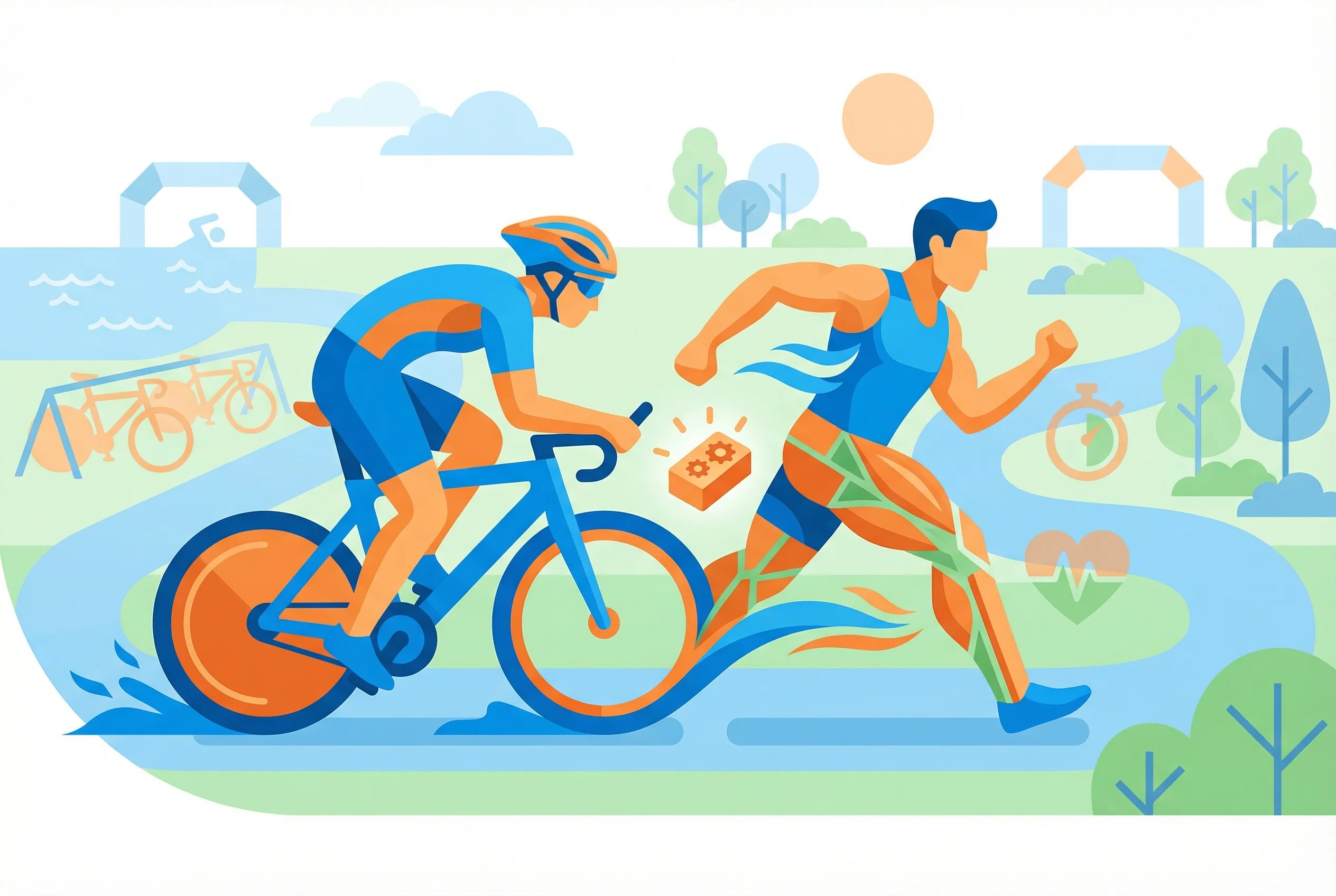
✓Correct — When you hop off the bike, your legs feel like bricks—that's where the name comes from! Cycling directs blood to your quads; running needs hamstrings and calves. Your body needs time to redistribute blood flow and switch neural activation patterns. Brick training teaches your nervous system to handle this transition. The heavy-leg feeling typically fades after 5-10 minutes as muscles adapt. Training bricks before race day means no surprises in competition!
BBurns more calories than single workouts
✗Not quite — Calorie burn isn't the goal. Brick workouts train your body for the unique stress of switching sports mid-race. Blood must redirect from cycling muscles to running muscles, and your brain must change movement patterns instantly.
CBuilds mental toughness for race day
✗Not quite — Mental prep helps, but the main benefit is physiological. Your nervous system learns to activate running muscles right after cycling fatigue. Without brick training, the first kilometers of the run feel terrible—legs heavy, rhythm off.
Answer this question
Hard History and Culture Trivia
AAncient speakers classified objects by traits like shape or size
✓Correct — Linguistic research shows grammatical gender evolved from ancient classification systems. Early speakers grouped objects by observable traits - animate vs. inanimate, large vs. small, round vs. long. Over thousands of years, these categories simplified into 'masculine' and 'feminine' labels, though they no longer reflect the original logic. For example, Proto-Indo-European likely had animate/inanimate categories before they became gender distinctions.
BReligious rules required objects to match biblical gender roles
✗Not quite — While religion influenced many aspects of language development, grammatical gender predates organized religion in most language families. The gender systems in Romance and Germanic languages trace back to Proto-Indo-European (4500-2500 BCE), long before biblical texts existed. Additionally, languages with grammatical gender exist in cultures with vastly different religious traditions, showing it is not religiously motivated.
CTraders invented it to prevent translation errors in contracts
✗Not quite — Grammatical gender existed thousands of years before organized trade and written contracts. Proto-Indo-European already had gender categories around 4500 BCE, while extensive trade documentation only emerged with writing systems around 3200 BCE. Moreover, gender actually complicates translation rather than preventing errors - translators must constantly navigate gender mismatches between languages, like Spanish 'la luna' (feminine moon) versus German 'der Mond' (masculine moon).
Answer this question
AMen abandoned heels as 'impractical' when masculinity became linked to rationality
✓Correct — In the 1600s, Persian cavalry and European aristocrats (including King Louis XIV) wore heels for riding and status. But Enlightenment philosophy in the 1700s redefined masculinity around 'rational practicality' and femininity around 'decorative beauty.' Men adopted flat, functional shoes while women retained heels as fashion. This gender reversal shows how clothing meanings change with cultural values, not biology.
BWomen's feet grew smaller during the Industrial Revolution, making heels necessary
✗Not quite — There is no evidence that women's feet shrank during industrialization. In fact, the Industrial Revolution (1760-1840) came after heels had already become feminized in the early 1700s. Foot size is determined by genetics and nutrition, not historical period. Heels were never 'necessary' - they became a fashion symbol through cultural shifts, not physical changes.
CMedical studies in the 1700s proved heels were healthier for female spines
✗Not quite — No such medical studies existed. In reality, 18th-century doctors began criticizing heels as unhealthy for everyone. The real reason was cultural: Enlightenment thinkers promoted a new ideal where men should be 'rational and practical' (flat shoes) while women should be 'decorative and refined' (heels). This gender stereotype - not health benefits - drove the fashion change.
Answer this question
Want harder questions in the wild?
Play AIgneous Million Whys when you want a quick challenge with a real explanation at the end, not just an answer key.
Try a live questionFrequently Asked Questions
What makes a trivia question hard?
Good hard trivia is not random obscurity. It asks for a distinction, mechanism, or hidden cause that feels obvious only after the answer lands.
Are these hard trivia questions with answers?
Yes. Each card includes the correct option plus the reason, so the payoff is understanding rather than just checking a key.
What are good difficult trivia questions for adults?
Adults usually enjoy questions that connect to real-world mechanisms: space, sports science, geography, history, optics, and everyday physics.
Can I use these hard trivia questions for a quiz night?
Yes. The cards are multiple-choice, and the explanations give you a short host note after each answer.
What does this have to do with AIgneous Million Whys?
Million Whys treats challenge as curiosity, not pressure. A hard question is useful when it creates a clean information gap and then closes it with a fact-checked explanation.