These food trivia questions and answers are built for a host who wants the room to say, "wait, why does that happen?" Each round starts with something familiar - pasta, coffee, cheese, strawberries - and closes the gap with one clean mechanism instead of a fact that just sits there.
For a fresh warm-up, start with our trivia question of the day, then use this host-ready set as six readable rounds. If you want the more general play page, keep food trivia open too; this version is organized for answer keys and table conversation.
Food Trivia Questions for Heat and Texture
AStarch is hydrated
✓Right. The useful boundary is hydration: heat and water have cooked the pasta enough that it is no longer chalky, while the dense center still resists. La Cucina Italiana describes al dente starch as hydrated but not released into the water. The trick is stopping after cooking begins to work, not before.
BStarch is leached out
✗No. If starch has fully leaked, you are past the al dente window and moving toward a softer, stickier noodle. The surprising part is that the same starch can be useful in pasta water for sauce, but losing too much from the noodle means the noodle's own architecture has weakened.
CStarch is still dry
✗No. A firm center is not the same as a dry raw core. In al dente pasta, enough water has moved in to cook away the chalky rawness, but not so much that starch floods out. Bite is controlled hydration, not dryness.
Answer this question
AGluten becomes stronger
✗Not quite. Gluten can give pasta a skeleton, but extra boiling does not keep strengthening it like a tightening cable. As water keeps moving in, swollen starch and weakened structure dominate the bite. That is why overcooked spaghetti feels slack even though wheat protein is still present.
BSalt pulls water out
✗No. Salted water mainly seasons pasta, and the cited salt sources treat boiling-point and texture effects as secondary. That does not explain why a noodle turns limp after too much time in hot water. The limpness comes from excess hydration and starch release, not salt pulling water out.
CStarch swells and leaks
✓Right. Heat and water make starch granules hydrate, swell, and gelatinize; pushed too far, more starch escapes into the water and onto the surface. That makes noodles sticky while the internal network loses spring. It is the same starch that later helps sauce, but inside overcooked pasta it marks structural failure.
Answer this question
AMaillard reaction between amino acids and sugars
✓Correct! The Maillard reaction between amino acids and reducing sugars at around 140-165°C creates hundreds of flavor compounds and brown pigments. It is the primary reaction for golden-brown color in baked goods, not just caramelization.
BPure sugar caramelization at high heat
✗Almost! Caramelization of sugar does produce browning, but it requires higher temperatures (above 160°C) and occurs only with sugars. In waffles, the Maillard reaction starts earlier and is the main contributor to the golden hue, while caramelization plays a smaller role at the surface.
CMoisture evaporation from the batter
✗Not quite. While moisture evaporation is essential for waffle structure and crispiness, it does not cause browning. Evaporation cools the surface initially, but once moisture reduces, the temperature rises enough for Maillard and caramelization reactions to occur.
Answer this question
Taste and Smell Food Trivia Questions
ARelease of trapped moisture
✗Not quite - the answer is B. Moisture can help spread aroma, but the main reason is that heat increases the kinetic energy of molecules, making aroma compounds evaporate faster. Water itself doesn't produce the characteristic strawberry scent.
BIncreased volatility of aroma compounds
✓Correct! Warmth gives volatile organic compounds more energy to escape the fruit's surface. More odor molecules reach your nose, making the smell seem stronger. This is a physical change.
CActivation of heat-sensitive enzymes
✗Not quite - the answer is B. Some fruits do produce aroma through enzymes, but the immediate boost from warmth is physical, not biochemical. The aroma compounds are already present; heat just releases them more quickly.
Answer this question
ASalt blocks bitter taste receptors and enhances sweetness
✓Correct! Sodium ions physically interfere with bitter taste receptors on your tongue, preventing them from detecting bitter compounds. Additionally, sodium enhances our perception of sweet and umami flavors, making the coffee taste more balanced. This works even with tiny amounts - just a pinch can transform overly bitter coffee without adding noticeable saltiness.
BSalt neutralizes the acidic compounds causing bitterness
✗Wrong. While coffee does contain acids, salt does not chemically neutralize them. Coffee bitterness comes primarily from compounds like caffeine and chlorogenic acid lactones, not from acidity. Salt works through taste perception, not chemical reactions. In fact, coffee acidity contributes pleasant brightness to the flavor, not bitterness.
CSalt raises the boiling point making coffee less concentrated
✗Wrong. Adding salt to brewed coffee does not change its concentration or affect brewing temperature. Salt's effect happens entirely on your tongue during tasting. The concentration of coffee is determined during brewing by the ratio of coffee grounds to water and extraction time, not by what you add afterward.
Answer this question
ADifferent chemical compounds activate specific taste receptors on our tongue
✓Correct! Our tongue contains thousands of taste receptor cells organized into taste buds. Sweet receptors respond to sugars and certain proteins, while bitter receptors detect alkaloids and other compounds. This system evolved to help us identify nutritious foods (sweet often indicates energy-rich sugars) and avoid potentially poisonous substances (many toxins taste bitter). Each type of receptor sends different signals to our brain, creating distinct taste sensations.
BSweet foods have lighter molecules while bitter foods have heavier molecules
✗Wrong. Molecular weight has no direct relationship to taste. For example, saccharin is a light molecule that tastes intensely sweet, while some light amino acids taste bitter. Taste depends on the specific shape and chemical properties of molecules and how they interact with taste receptors, not their weight. The 'lock and key' fit between molecules and receptors determines the taste we perceive.
CThe temperature of food determines whether we taste sweetness or bitterness
✗Wrong. While temperature can affect how strongly we perceive tastes (cold can dull sweetness, warmth can enhance it), temperature does not change a sweet taste into a bitter one or vice versa. Ice cream tastes sweet whether frozen or melted, and coffee tastes bitter whether hot or cold. Temperature influences taste intensity through its effect on molecule volatility and receptor sensitivity, but the fundamental taste type remains unchanged.
Answer this question
Ingredient Science Food Trivia Questions
AMilder acidity prevents rapid clumping
✗Not quite - the answer is B. This is a common misconception. While acidity does cause curdling (lower pH precipitates casein), ginger's pH is around 6.0-6.5, similar to milk, so it's not acidic enough. The real mechanism is enzymatic, not acidic.
BGinger proteases create smooth curd
✓Correct! Ginger contains the enzyme zingibain, a protease that specifically cleaves casein proteins, forming a fine, smooth gel. Unlike acid coagulation which causes large, grainy clumps, enzymatic coagulation creates a nanoscale network. This is why ginger milk curd has its signature silky texture.
CNatural starches thicken the milk
✗Almost! Ginger does contain starch, but at only about 1-2% by weight, it's far too little to thicken milk. The gel you see is purely from protein coagulation. Interestingly, this is similar to how rennet works in cheese making, but with a plant protease.
Answer this question
AStraight-chain starch forms gels when cooled
✓Correct! The straight-chain starch in green beans undergoes retrogradation when cooled, where starch molecules realign and form a gel-like network that thickens the liquid.
BProteins coagulate and create thickness
✗While proteins are present, the thickening effect is primarily due to starch behavior, not protein coagulation. Green beans' high straight-chain starch content is the key factor.
CWater evaporates leaving concentrated solids
✗Not quite - the answer is A. Minimal evaporation occurs in covered, cooling soup. The thickening is a chemical process where starch molecules reorganize their structure as temperature drops.
Answer this question
AAcid makes proteins coagulate faster, preventing spreading
✓Correct! The acetic acid in vinegar lowers the pH of the water, which causes the proteins in egg whites (primarily albumin) to denature and coagulate more rapidly. This quick setting prevents the egg white from dispersing into wispy strands throughout the water, keeping it wrapped tightly around the yolk.
BVinegar creates a protective film around the egg
✗Wrong. Vinegar doesn't form a physical barrier or film. Instead, it chemically alters how the egg white proteins behave by changing the water's acidity. The proteins themselves coagulate faster due to pH changes, not because of any protective coating.
CAcid increases water surface tension to hold the egg
✗Wrong. Vinegar actually slightly decreases surface tension rather than increasing it. The key mechanism is chemical, not physical - the acid causes faster protein denaturation and coagulation through pH changes, which has nothing to do with surface tension effects.
Answer this question
Nutrition Mechanism Food Trivia Questions
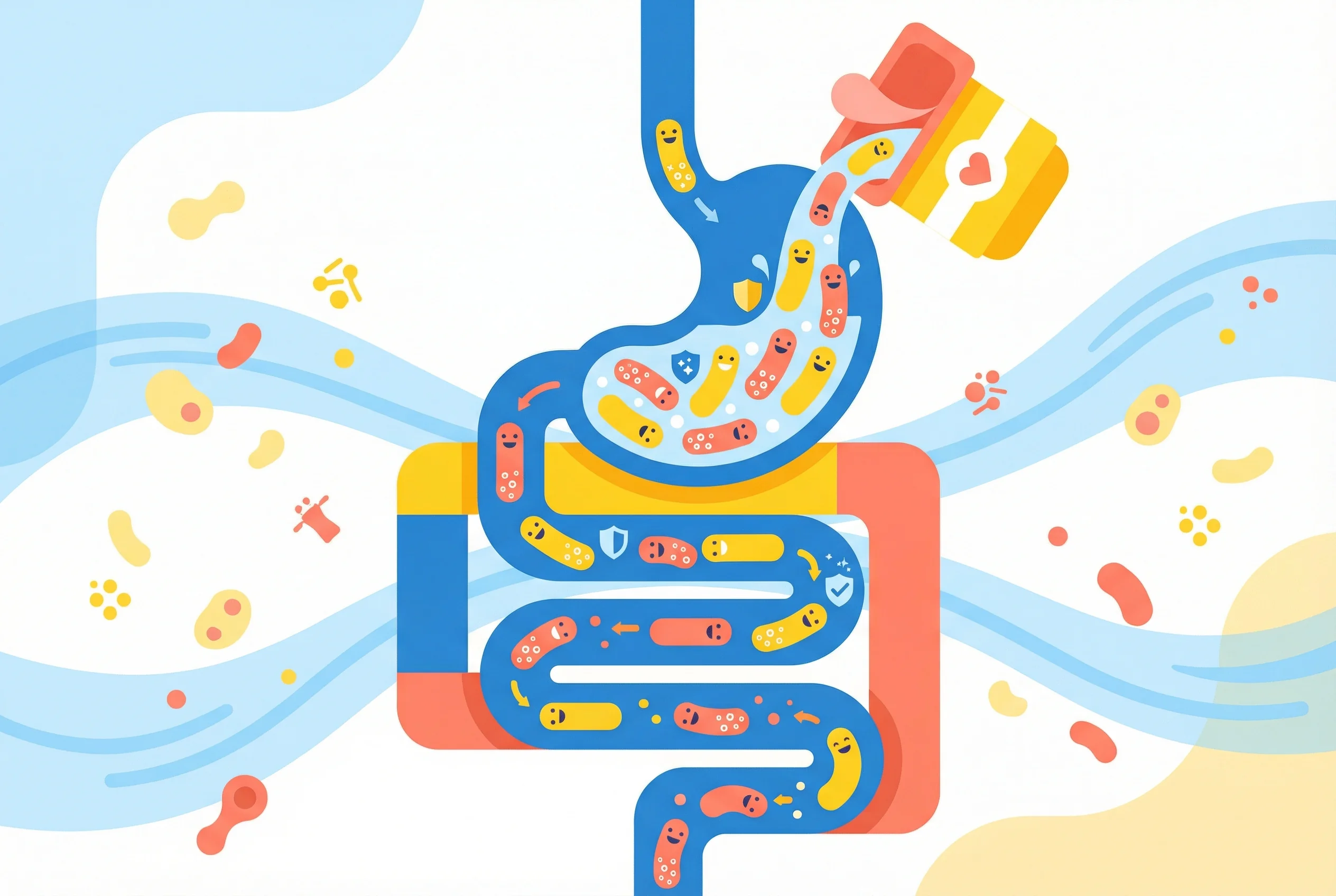
ABeneficial bacteria ferment milk
✓Correct! Yogurt is made by adding beneficial bacteria (mainly Lactobacillus bulgaricus and Streptococcus thermophilus) to warm milk. These bacteria ferment lactose (milk sugar) into lactic acid, which thickens milk and gives yogurt its tangy taste. These living cultures are probiotics-good bacteria that can benefit gut health!
BNatural fruit sugars grow microbes
✗Wrong. Probiotics come from bacterial cultures added to milk, not from fruit. Fruit-flavored yogurt is made after fermentation.
CPreservatives create probiotics
✗Wrong. Preservatives kill bacteria, not create them. Probiotics are living bacteria deliberately added to ferment milk into yogurt.
Answer this question
AIt has less carbohydrate
✗Not quite - the answer is C. Tempting, but the carbohydrate in the serving has not vanished just because the pasta is firmer. Glycemic response changes because starch is presented differently to water and digestive enzymes. The same grams of carbohydrate can behave differently when locked in a dense matrix.
BFiber blocks digestion
✗Not quite - the answer is C. Not the main story for classic dried pasta. Fiber can slow digestion in many foods, but refined durum pasta can still show a lower glycemic response because of its compact starch-protein structure. The useful surprise is that architecture can matter even before you add extra fiber.
CEnzymes reach less starch
✓Right. Pasta is often low-to-medium GI because its compact structure and gluten network slow enzymatic attack on starch. Studies report that reducing cooking from fully cooked to al dente lowers starch digestion extent. The calorie label may look the same, but the traffic pattern for enzymes changes.
Answer this question
AIt retains antioxidants like chlorogenic acid that fight cell damage
✓Correct! Coffee beans naturally contain powerful antioxidants called polyphenols, especially chlorogenic acids. The decaffeination process (using water or CO2) removes about 97% of caffeine but leaves these beneficial plant compounds intact. These antioxidants help neutralize harmful free radicals in your body, reduce inflammation, and may lower risks of certain diseases. Studies show decaf coffee provides similar antioxidant benefits to regular coffee, just without the stimulant effects.
BThe decaffeination process creates new protective compounds
✗Wrong. The decaffeination process does not create new compounds. It is designed to selectively extract caffeine molecules while preserving the existing beneficial substances already present in the coffee beans. Methods like the Swiss Water Process or CO2 extraction specifically target caffeine's molecular structure without chemically altering other components. No new protective compounds are formed during this removal process.
CRemoving caffeine makes the remaining vitamins more concentrated
✗Wrong. Coffee is not a significant source of vitamins, and the decaffeination process does not concentrate them. While coffee contains small amounts of B vitamins like niacin and riboflavin, these are present in tiny quantities and remain unchanged during decaffeination. The health benefits of decaf come from its polyphenols and antioxidants, which are different types of compounds than vitamins and were already abundant in the original beans.
Answer this question
Fermentation and Preservation Food Trivia Questions
ABeneficial bacteria produce acid that kills harmful microbes and creates vitamins
✓Correct! During fermentation, beneficial bacteria like Lactobacillus convert sugars into lactic acid, lowering pH to around 4.0-4.5, which inhibits spoilage bacteria. These microbes also synthesize B vitamins, vitamin K, and produce probiotics that support gut health. The acidic environment acts as a natural preservative, allowing foods to last months without refrigeration.
BHeat from fermentation sterilizes the food and seals it from air exposure
✗Wrong. Fermentation is actually a cool-temperature process, typically occurring at 15-25°C (59-77°F). It does not generate significant heat, and the process specifically requires some oxygen initially for most fermentations. The preservation comes from acid production, not heat sterilization or air sealing.
CSugar crystallization forms a protective barrier preventing bacterial growth
✗Wrong. While some sugars are present in fermented foods, they are consumed by bacteria rather than crystallizing. Fermentation actually breaks down sugars into acids and other compounds. The preservation mechanism is the acidic environment created by lactic acid, not any physical barrier from sugar crystals.
Answer this question
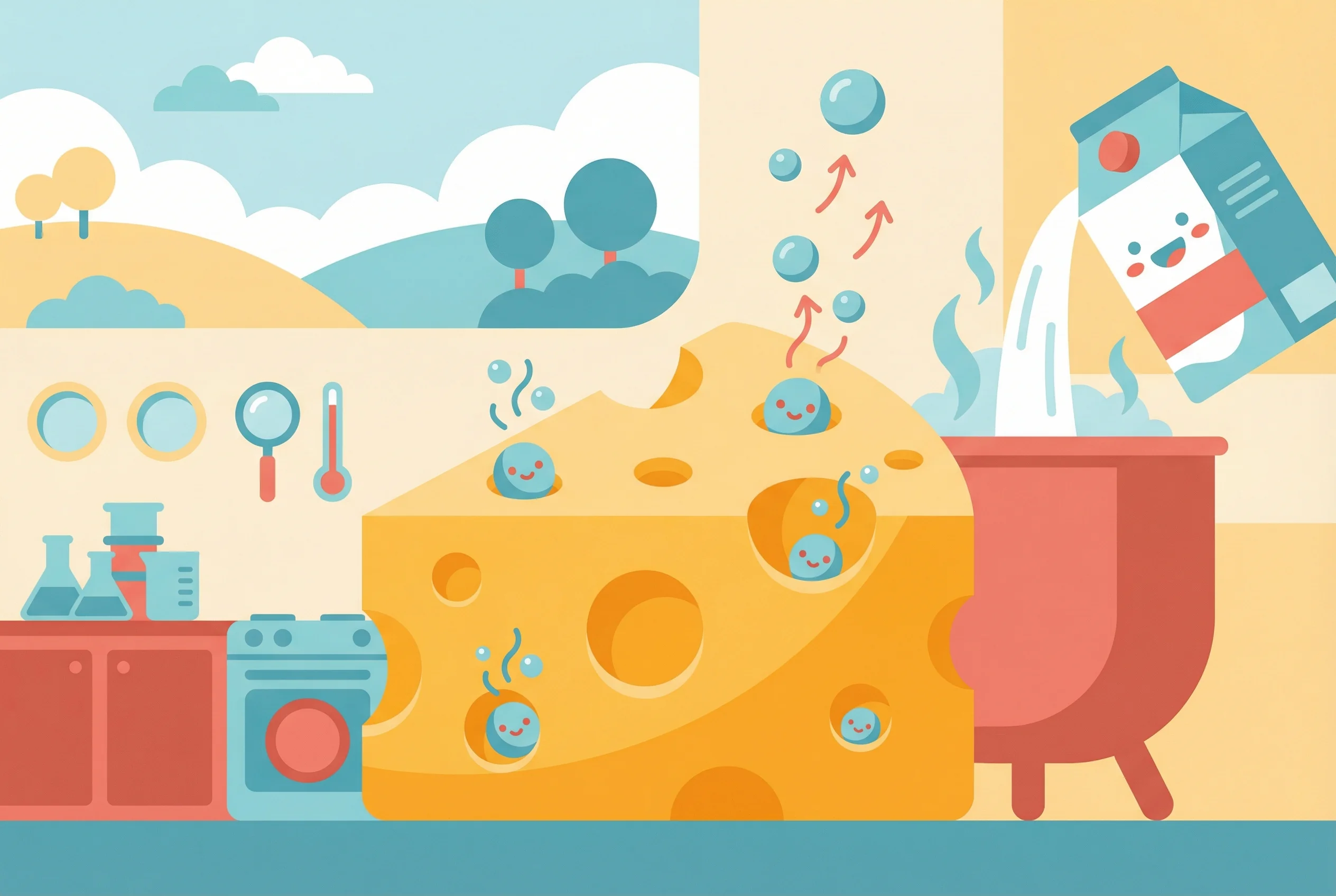
ABacteria produce carbon dioxide
✓Correct! Swiss cheese holes (eyes) form from Propionibacterium freudenreichii bacteria added during cheese-making. These bacteria consume lactic acid and produce carbon dioxide gas. As cheese ages, CO2 bubbles get trapped in the elastic curd, forming holes. More bacteria = more holes. Modern clean milk produces fewer holes (less hay dust for bubbles to nucleate on)!
BMold eats passages through cheese
✗Wrong. Mold grows on cheese surfaces (like blue cheese veins), but Swiss cheese holes are gas bubbles from bacterial CO2 production.
CCheese shrinks leaving gaps
✗Wrong. Cheese doesn't shrink enough to create large holes. Holes are CO2 gas pockets from bacterial fermentation.
Answer this question
ALoss of protective waxy coating
✓Correct! Strawberries have a natural waxy cuticle that repels water and blocks microbes. Washing strips this layer, allowing moisture to penetrate berries and enzymes to break down tissues, speeding spoilage.
BIncreased sugar content from water
✗Not quite. While washing adds surface moisture, it does not increase sugar content. The sugar level remains the same; spoilage is due to microbial growth and tissue breakdown, not sugar changes.
CActivation of mold spores by water
✗Not quite - the answer is A. Common myth. Mold spores are always present on berries, but they are not 'activated' by water alone. The real issue is the removal of the waxy coating, which normally inhibits spore germination and water entry.
Answer this question
Food Trivia Questions for Table Talk
AMasks food spoilage
✗While pepper's strong aroma can mask off-flavors, historically it was not used primarily for that. Salt and smoke were better at hiding spoilage; pepper's value was always about taste.
BEnhances flavor perception
✓Correct - Piperine in pepper stimulates salivary glands and enhances the perception of other flavors, making food taste more vibrant. This universal flavor-boosting property led to its global table adoption.
CPreserves food
✗Not quite - the answer is B. Pepper has mild antimicrobial properties but not enough to preserve food effectively. Its historical role was as a flavor enhancer and luxury spice, not a preservative.
Answer this question
AThe bubbles escape and it goes flat
✓Correct! 'Breathing' means leaving wine exposed to air, which can soften a young red. But that same exposure lets dissolved carbon dioxide escape from sparkling wine, and the bubbles are most of the point: they carry aroma upward and give the crisp, prickly texture. Serve it cold, straight from the bottle, and let it open in the glass instead.
BThe foam makes it taste smoother
✗Not quite. Foam does feel soft on the tongue, but it is a sign that gas is leaving the liquid. As the mousse collapses the wine turns slack and syrupy rather than smoother, which is why flat champagne tastes oddly sweet.
CThe aromas need oxygen to open up
✗Not quite - the answer is A. This is true for many still wines: air helps a tight young red release its aromatics. Sparkling wine works the other way round, because the rising bubbles already ferry aroma compounds to your nose, and losing them costs more than the air gains.
Answer this question
AThe filling is frozen solid before cooking
✗Not quite. While some pastries use frozen fillings to prevent leakage, fish-shaped waffle fillings are typically at room temperature or pre-cooked. Freezing could cause uneven cooking and a soggy texture because the ice melts and steams during baking.
BTwo-stage batter pouring creates a sealed pocket
✓Correct! The batter is poured in two stages: first a thin layer, then the filling is placed, followed by more batter. The first layer partially cooks and creates a barrier that seals the filling inside, preventing leaks. This technique ensures the filling stays soft and contained.
CNon-stick coating traps the filling inside
✗Not quite - the answer is B. Common myth. Non-stick coatings help release the waffle from the mold, but they do not trap the filling. The filling is held in place by the batter that envelops it; the coating only prevents sticking, not leaking.
Answer this question
Want one more question after this?
Turn a spare 10 seconds into a small piece of closure, then let the next question appear only if you still feel curious.
Play live on AIgneous Million WhysFrequently Asked Questions
How do I use these food trivia questions and answers at dinner?
Pick one round, read the three questions aloud, and let people argue for 20-30 seconds before revealing the answer. The explanation is the payoff; it gives the table something to react to after the guess.
Are these food trivia questions more about recipes or science?
They are about the hidden science inside ordinary cooking. You will find pasta texture, bread structure, fermentation, flavor perception, and preservation, not instructions for making a dish.
How many food trivia questions should go in one round?
Three to five is usually enough. Food mechanisms are memorable because people can picture them, but the round works best when each answer gets room to breathe.
Can I mix easy and hard food questions in the same game?
Yes. Put an easy sensory question first, then move into the harder chemistry. Curiosity tends to peak when people half-know the scene but do not yet know the mechanism.
Where can I get a new food-style trivia question every day?
Use the trivia question of the day when you want one quick question instead of a full host set. It is the same answer-first rhythm in a smaller dose.
What does this have to do with AIgneous Million Whys?
Million Whys treats knowledge as a chain of small, satisfying closures. A food question is perfect for that: you already know the kitchen moment, then one answer changes how you see it.