These music trivia questions and answers are for the kind of round where the answer is not a celebrity birthday, but the tiny mechanism that makes sound feel alive. Strings, rooms, ears, rhythm, and memory all get their turn.
Start with a trivia question of the day if you want a quick warm-up, then use these six music rounds for a host-ready set. For a shorter general play page, see our earlier music trivia collection.
Music Trivia Questions About Instruments
ADifferent air temperatures
✗Wrong. Temperature affects pitch slightly but doesn't explain why a piano sounds different from a violin playing the same note.
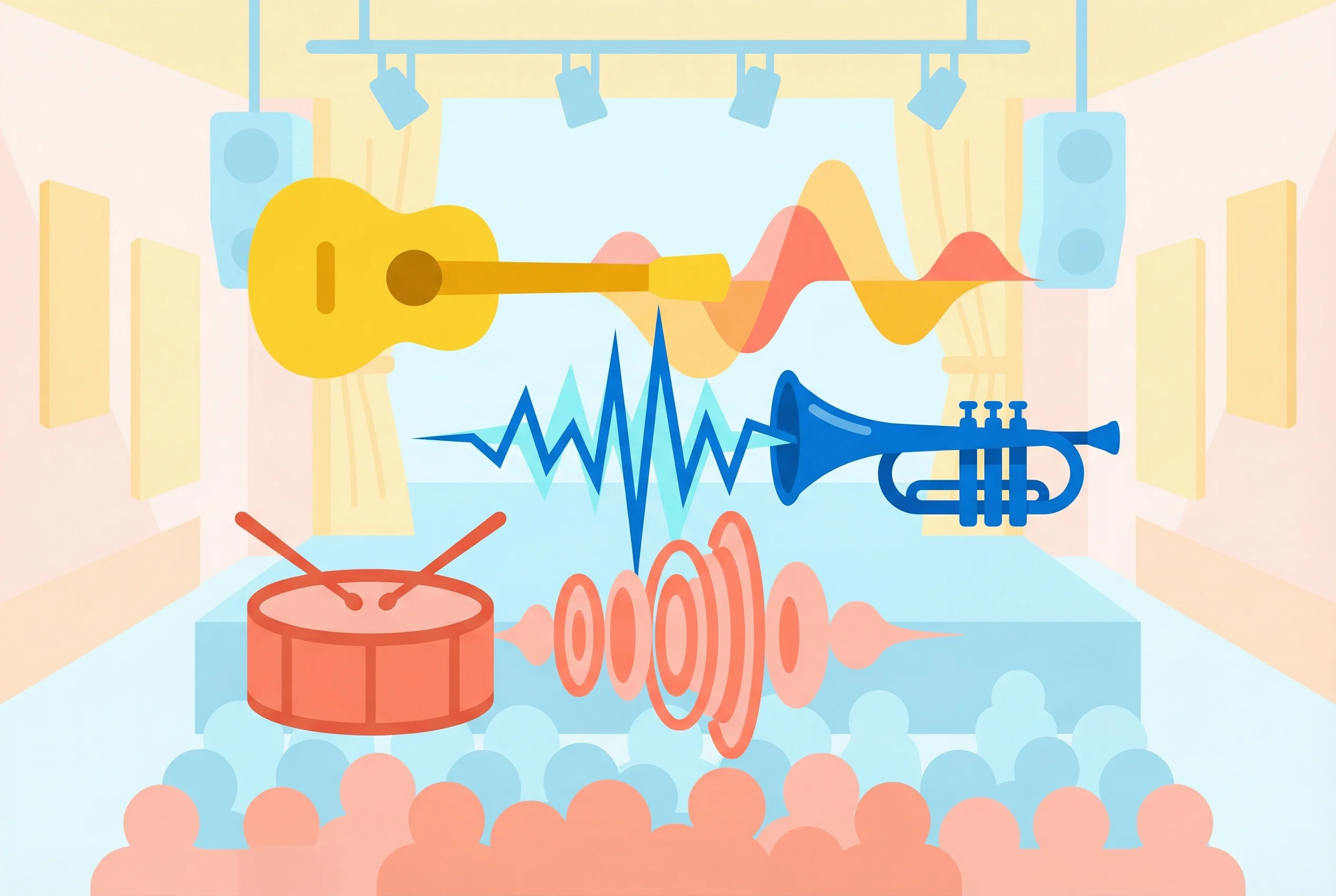
BUnique overtone patterns
✓Correct! Each instrument produces a unique mix of overtones (harmonics) along with the main note. A violin and piano playing the same note have different overtone patterns-that's their timbre or 'color' of sound!
COur ears hear selectively
✗Wrong. Our ears hear all instruments similarly. The difference is in the actual sound waves each instrument produces.
Answer this question
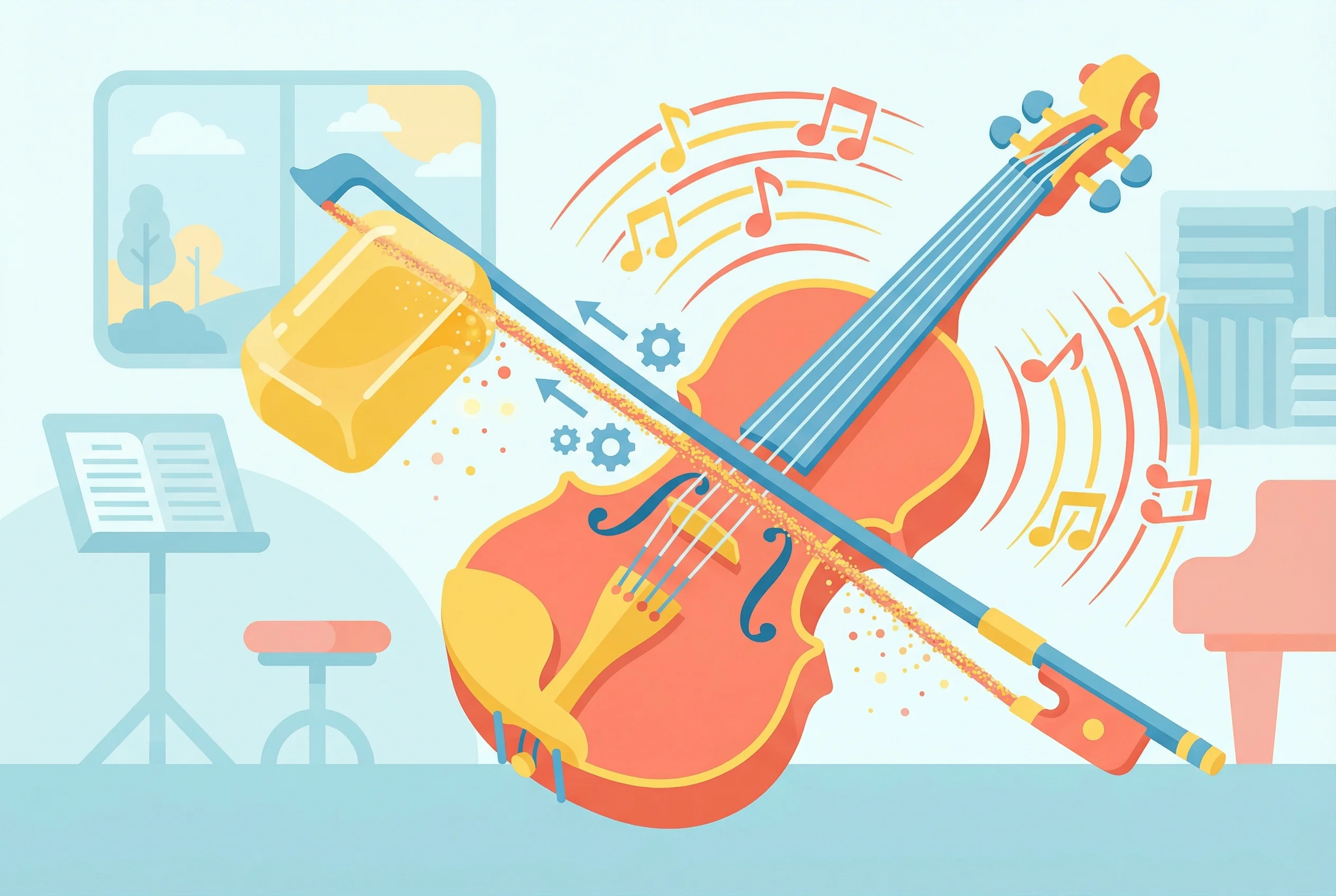
ACreates friction to vibrate strings
✓Correct! Rosin is sticky tree resin that creates friction when bow hair rubs across strings. Without rosin, the bow would slide smoothly without making strings vibrate. The friction from rosin causes strings to stick and slip rapidly, creating the vibrations that produce sound.
BProtects strings from damage
✗Wrong. Rosin is for the bow, not string protection. It helps the bow grip strings to make them vibrate and produce sound.
CMakes bow slide more smoothly
✗Wrong. Rosin does the opposite-it makes the bow sticky, creating the friction needed to vibrate strings and produce sound.
Answer this question
AAir splits at the sharp mouth hole edge, creating vibrating vortices
✓Correct! Flutes use the 'edge-tone' principle discovered by physicist John William Strutt. When you blow across the mouth hole, the air stream hits the sharp opposite edge and splits. This creates alternating vortices (spinning air pockets) that oscillate back and forth, generating sound waves. The air column inside the tube resonates at specific frequencies, determined by which holes are covered. This is why flutes are called 'edge-tone' or 'air-reed' instruments - the vibrating air at the edge acts like a reed.
BThe metal tube itself vibrates to produce the sound waves
✗Wrong. While the tube does resonate, it does not vibrate like a tuning fork or bell. Metal flutes remain essentially stationary during play. The sound comes from vibrating air, not the instrument body itself. You can test this: touch a playing flute and you will feel minimal vibration compared to a struck bell or plucked guitar string. The tube's shape and the open/closed holes determine which air frequencies resonate, but the initial sound generation happens at the mouth hole edge where air splits.
CThe player's breath pressure directly vibrates the air column inside
✗Wrong. Breath pressure alone cannot make air vibrate at musical frequencies - it would just create wind noise. The key is the sharp edge at the mouth hole that disrupts the airflow. This edge causes the Bernoulli effect: as air crosses it, alternating high and low pressure zones form, creating oscillating vortices. Without this edge mechanism, no clear pitch would form. This is why you cannot get a musical tone by simply blowing into a smooth, open tube - you need that critical sharp edge to split the air stream.
Answer this question
Pitch and Tuning Music Trivia Questions
AHigher tension makes the string vibrate faster, creating higher frequency waves
✓Correct! When you tighten a guitar string, you increase its tension. Higher tension makes the string harder to displace and causes it to snap back faster when plucked, resulting in more rapid vibrations. Since pitch is directly related to vibration frequency, faster vibrations produce higher-pitched sounds. This is why guitarists tune their instruments by adjusting string tension.
BTightening the string makes it thinner, so sound travels through it faster
✗Wrong. While string thickness does affect pitch (thinner strings generally produce higher pitches), tightening a string does not actually make it thinner. The string's physical dimensions remain the same. The pitch change comes from increased tension affecting vibration speed, not from the string becoming thinner or sound traveling faster through the material itself.
CThe increased pressure compresses air molecules more, making sharper sounds
✗Wrong. The pitch of a guitar string is not determined by how air molecules are compressed. While sound does travel through air as pressure waves, the pitch is set by how fast the string itself vibrates. Tightening increases the string's tension, which changes its vibration frequency. The air simply carries whatever frequency the string produces to your ears.
Answer this question
ATo control the pitch - tighter drumheads vibrate faster and produce higher sounds
✓Correct! Drumhead tension directly affects vibration frequency. When you tighten the drumhead, you increase the restoring force that pulls the membrane back to its resting position. This makes it vibrate faster (higher frequency), producing a higher-pitched sound. Professional drummers adjust tension to tune their drums to specific notes, just like tuning a guitar string.
BTo make the drum louder - tight drumheads amplify sound waves more
✗Wrong. While tension affects sound quality, it does not primarily control volume. Loudness depends more on how hard you hit the drum and the drum's size and construction. A loose drumhead can actually produce quite loud sounds, though the tone quality may be poor and the pitch lower.
CTo prevent the drumhead from tearing - loose drumheads break easily when hit
✗Wrong. Although proper tension does help drumhead longevity, this is not the main reason for tightening. Drumheads are made from durable materials like Mylar or animal skin designed to withstand repeated impacts. The primary purpose of tension adjustment is sound control - to achieve the desired pitch and tone quality for musical performance.
Answer this question
ATemperature changes string tension
✓Correct! String instruments go out of tune as temperature and humidity cause wood to expand/contract and strings to stretch. Wind instruments change pitch with temperature affecting air density and metal expansion. Mechanical stress from playing also gradually changes tension and shape.
BSound waves wear down materials
✗Wrong. Sound waves don't wear materials. Instruments detune from physical changes-wood movement, string stretching, and temperature effects.
CAge weakens the instrument
✗Wrong. Age can affect tuning stability, but the main causes are environmental factors (temperature, humidity) and mechanical stress.
Answer this question
Acoustics and Room Sound Music Trivia
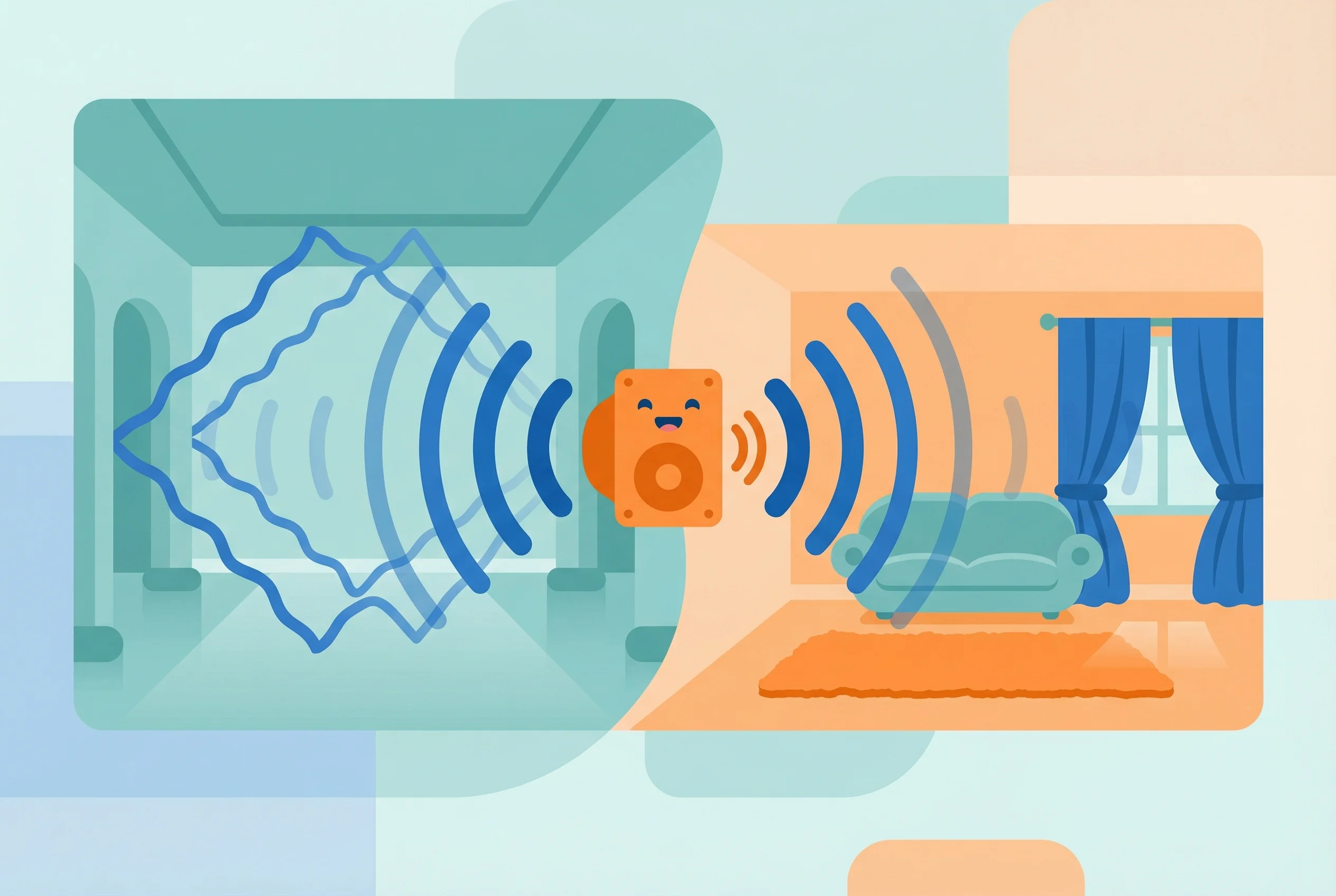
AAir temperature varies by room
✗Wrong. While temperature does affect sound speed slightly (sound travels about 0.6 m/s faster per degree Celsius), this isn't why rooms sound different acoustically. The main factors are surface materials, room geometry, and objects in the space that absorb or reflect sound waves.
BSurfaces reflect sound differently
✓Correct! Different surfaces absorb and reflect sound differently. Hard surfaces (tile, concrete, glass) reflect sound creating echoes and reverb. Soft surfaces (carpet, curtains, furniture) absorb sound reducing echoes. Concert halls use acoustic panels strategically. Empty rooms sound 'hollow' because hard walls reflect sound; furnished rooms sound 'warmer' because objects absorb sound.
CRoom size doesn't affect sound
✗Wrong. Room size significantly affects acoustics through resonance and reflection patterns. Large rooms create longer echo delays and can resonate at lower frequencies. Small rooms have shorter echoes and resonate at higher frequencies. Cathedral acoustics differ dramatically from bathroom acoustics precisely because of size differences.
Answer this question
ASoft furniture absorbs sound waves instead of reflecting them
✓Correct! Soft materials like fabric, foam, and wood absorb sound energy by converting it to tiny amounts of heat through friction. Hard surfaces like walls and floors reflect sound waves back, creating echoes. This is why recording studios use acoustic panels and why furnished rooms sound 'warmer' than empty ones.
BFurniture breaks sound waves into smaller pieces that disappear
✗Wrong. Sound waves are not broken into pieces by furniture. Instead, soft materials absorb the wave's energy through their porous structure and internal friction. The sound energy is converted to heat (though imperceptibly small amounts). Hard surfaces simply reflect the waves intact, which is what creates echoes.
CThe air is thicker in furnished rooms, slowing down sound
✗Wrong. Air density does not change noticeably between empty and furnished rooms. Sound travels at the same speed in both. The difference is that soft furnishings absorb sound waves, while hard empty walls reflect them back to create echoes. Temperature affects air density much more than furniture does.
Answer this question
ACurved walls focus sound waves
✓Correct! Whispering galleries (like in domes) have curved walls that reflect and focus sound waves. When you whisper at one focal point, the sound waves travel along the curved wall to another focal point across the room. This creates the effect of hearing a whisper clearly from far away.
BDome shape filters out noise
✗Wrong. The dome doesn't filter noise-it focuses sound. The curved shape directs sound waves along specific paths to focal points.
CAir pressure carries whispers far
✗Wrong. Air pressure doesn't change significantly in these chambers. The effect comes from sound wave reflection and focusing by curved walls.
Answer this question
Hearing and Vibration Music Trivia Questions
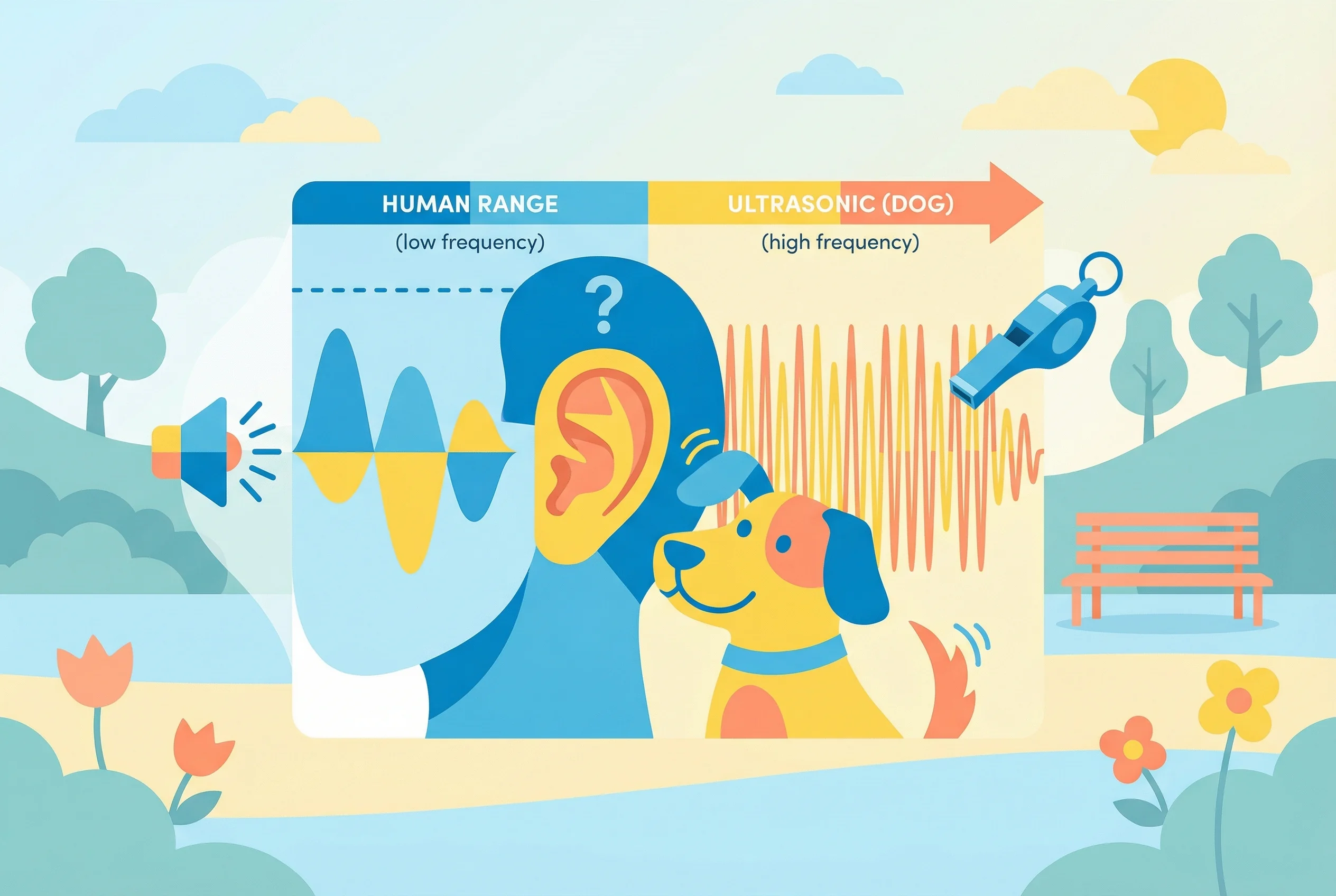
AFrequency too high for human ears
✓Correct! Dog whistles produce ultrasonic sounds above 20,000 Hz (20 kHz), higher than the upper limit of human hearing (about 20 kHz). Dogs can hear up to 65 kHz, so they hear the whistle clearly while humans hear nothing. Frequency, not volume, makes it inaudible to us.
BWhistles are designed too quietly
✗Wrong. Dog whistles aren't quiet-they're loud at frequencies humans can't hear. Dogs hear them clearly because they detect higher frequencies.
CDogs have better hearing organs
✗Wrong. Dogs do have better high-frequency hearing, but the specific reason we can't hear dog whistles is that they operate above human hearing range.
Answer this question
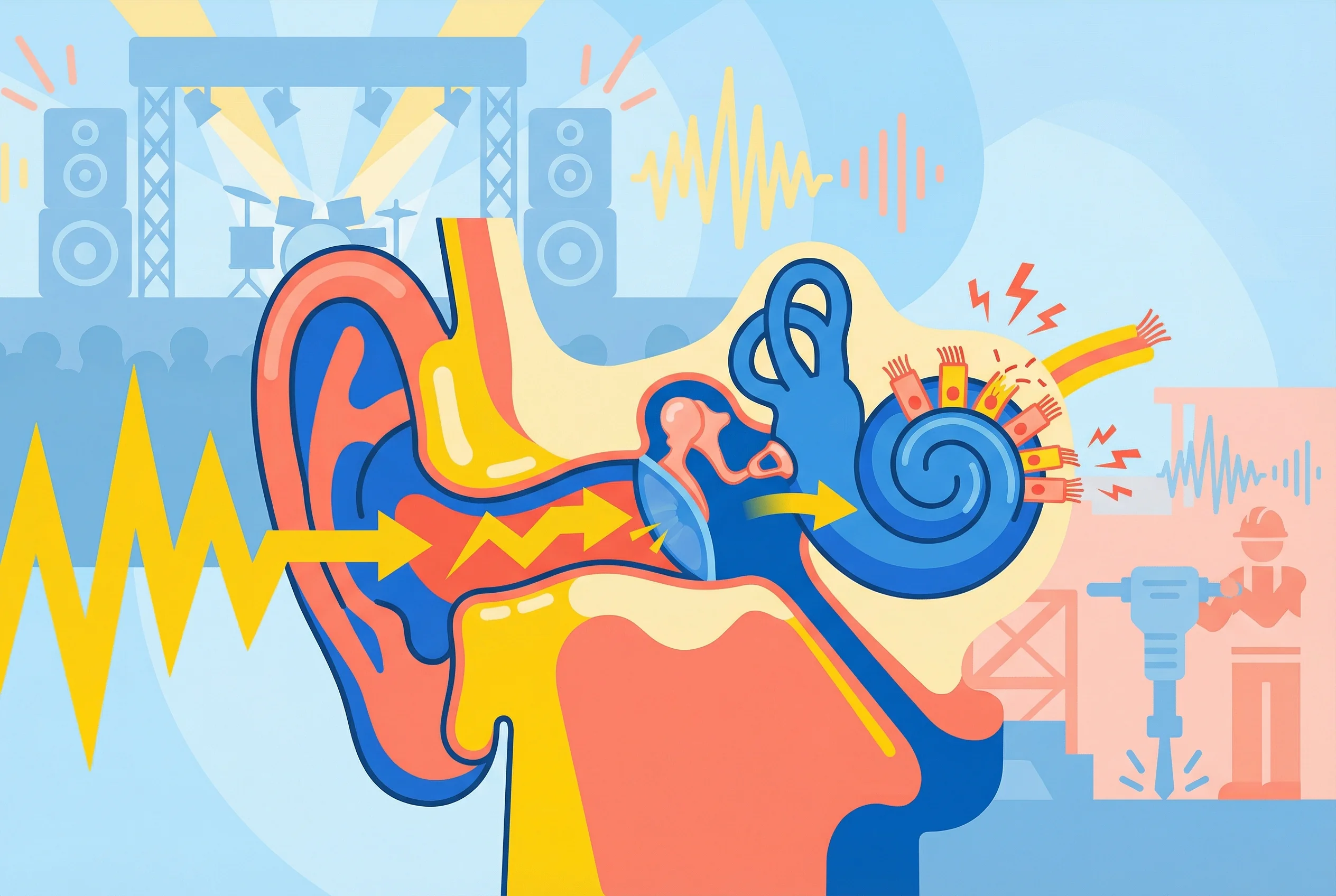
AStrong vibrations damage cells
✓Correct! Loud sounds create powerful pressure waves that can damage delicate hair cells in your inner ear. These cells don't regenerate! That's why hearing protection matters-damage from loud noise is permanent.
BLoud sounds are hot
✗Wrong. Sound waves don't carry significant heat. The damage is mechanical, from excessive vibration.
CEars run out of energy
✗Wrong. Ears don't tire out. Loud sounds physically damage the sensitive structures inside.
Answer this question
ABass has longer wavelengths that vibrate your whole body, not just ears
✓Correct! Bass frequencies (20-250 Hz) have wavelengths up to 17 meters long. These long waves can physically move air in ways that vibrate your chest, bones, and internal organs. You are literally 'feeling' the sound through touch receptors in your skin and tissues, not just hearing it. High-pitched sounds have tiny wavelengths that only vibrate your eardrum efficiently.
BBass sounds are always played at higher volume levels than high notes
✗Wrong. While bass is sometimes played louder at concerts, the chest vibration happens even at moderate volumes. A 100 Hz bass note at the same decibel level as a 2000 Hz treble note will still feel more physical. The difference is the wavelength, not volume. High notes at extreme volumes would damage hearing before creating body vibrations.
COur chest contains special organs that only respond to bass frequencies
✗Wrong. There are no special 'bass-only' organs in your chest. What you feel is the result of long sound waves physically moving your entire torso. Your ribcage, lungs, and chest wall all vibrate mechanically when hit by bass waves. Any body part can vibrate to bass - it is basic physics of wave energy transfer, not specialized biology.
Answer this question
Rhythm and Memory Music Trivia
AOur brain recognizes patterns in melodies and stores them as chunks
✓Correct! Your brain uses 'chunking' to group musical notes into meaningful patterns based on rhythm, pitch relationships, and repetition. A simple melody might contain 20 notes, but your brain remembers it as just 3-4 musical phrases. Random sounds lack these predictable patterns, forcing your brain to memorize each sound individually - much harder! This is why phone numbers are grouped (555-1234) rather than given as single digits.
BMusical notes have stronger sound waves than random beeps
✗Wrong. Sound wave strength relates to volume, not memorability. Random beeps can be just as loud as musical notes. The difference lies in how our brain processes patterns, not in the physical properties of the sound waves. Even very quiet melodies are easier to remember than loud random noises because of their structured patterns.
CWe can only remember sounds that make us feel emotions
✗Wrong. While emotions can enhance memory, pattern recognition is the primary factor. You can easily remember simple melodies even from songs you dislike or feel neutral about. Meanwhile, random sequences remain difficult to recall regardless of emotional context. Babies recognize lullaby patterns before understanding emotions, proving structure matters more than feelings for basic memory.
Answer this question
ABrain loops incomplete patterns
✓Correct! Earworms often happen with songs we haven't finished or fully processed. Your brain keeps 'playing' it trying to complete the pattern. Simple, repetitive melodies are most likely to stick because they're easy to partially remember!
BWe secretly like the song
✗Wrong. Earworms happen with songs we dislike too. It's about how our brain processes incomplete musical patterns.
CHearing triggers replay
✗Wrong. Just hearing a song doesn't guarantee an earworm. The brain's attempt to complete patterns causes them.
Answer this question
AMemory bias inflates tempo at night
✓Correct! Memory reconstruction often recalls familiar songs at a slightly faster tempo, especially during low-arousal states like nighttime. This 'tempo memory shift' occurs because your brain fills in details from memory, which tends to compress or speed up events.
BYour internal clock slows at night
✗Not quite. While your internal clock does slow slightly at night, this would make a song feel slower, not faster, because you perceive fewer 'ticks' per beat. The actual effect is opposite: songs feel faster due to memory bias.
CRecording tempo varies with temperature
✗Not quite - the answer is A. Nope. Recordings are fixed; temperature fluctuations affect tuning (pitch) of instruments but not playback tempo. Digital recordings are especially stable. The speed difference you perceive comes from your own memory, not the file.
Answer this question
Music Trivia Questions About Emotion
ACertain patterns relax the brain
✓Correct! Gentle, predictable sounds with slow rhythms activate our parasympathetic nervous system. Nature sounds like rain, waves, or birdsong have patterns our brains evolved with. Sudden, unpredictable sounds trigger alertness instead!
BCalm sounds have no bass
✗Wrong. Bass frequencies can be calming (like thunder in rain sounds). Calmness comes from patterns, not frequency ranges.
CFamiliar sounds feel safe
✗Wrong. Familiarity helps, but unfamiliar nature sounds can calm us too. It's about the predictable, gentle patterns.
Answer this question

AHigh frequencies hurt our ears
✗Wrong. While very high frequencies (above 20 kHz) or very loud high frequencies can be uncomfortable, many pleasant sounds contain high frequencies-birds singing, violins, wind chimes. What matters more is context, harmonic content, predictability, and learned associations. A baby's cry (with high frequencies) is annoying even at moderate volumes because of evolutionary and contextual factors.
BContext and learned associations
✓Correct! Sound perception is biopsychological. Some factors are universal (sudden loud sounds startle us, babies' cries demand attention evolutionarily), but much is learned. Classical music lovers might find heavy metal annoying and vice versa. Context matters-neighbor's music at 2am is annoying; same music at a party is fun. Predictability, control, and association affect our reactions as much as acoustic properties.
COnly music sounds pleasant
✗Wrong. Many non-musical sounds are pleasant: rainfall, ocean waves, crackling fireplace, purring cats, wind in trees. Meanwhile, some music sounds unpleasant to some people. Pleasantness depends on acoustic properties (consonance, predictability), context, personal preference, cultural background, and associations. Music is just organized sound-neither inherently pleasant nor unpleasant.
Answer this question
AYour body can physically feel the low-frequency vibrations
✓Correct! Large speakers produce powerful low-frequency sound waves (like bass) that create physical vibrations you can feel throughout your body. Special receptors in your skin and tissues detect these vibrations separately from hearing, creating a multi-sensory experience. This is why you feel the 'thump' of bass in your chest - you are literally feeling sound pressure waves.
BThe sound waves heat up the air around you
✗Wrong. While sound does carry tiny amounts of energy, it does not significantly heat the air. The intense feeling comes from vibrations detected by touch receptors in your body, not temperature changes. Even extremely loud concerts only raise air temperature by an unmeasurable fraction of a degree.
CYour ears work better when closer to the source
✗Wrong. Your ears' sensitivity does not improve based on distance to the source - in fact, being too close can damage hearing. The intense feeling comes from your body's touch sensors detecting vibrations, which is a completely different sensory system from hearing. This is why deaf people can still enjoy concerts by feeling the vibrations.
Answer this question
Want one more question after this?
Turn a spare 10 seconds into a small piece of closure, then let the next question appear only if you still feel curious.
Play live on AIgneous Million WhysFrequently Asked Questions
How do I host music trivia questions and answers without pop-culture arguments?
Use mechanism questions. A singer, genre, or decade can start a debate; a vibrating string or echoing room gives everyone a fair way in, even if they do not follow charts.
Why are so many music trivia questions about physics?
Because music reaches you as moving air. Once you see that, pitch, echo, bass, tuning, and timbre become answerable instead of mysterious vocabulary.
Can non-musicians enjoy these music trivia questions?
Yes. The set is written around experiences almost everyone has had: a song stuck in the head, bass in the chest, a room that sounds strange, or a voice that changes in helium.
What is a good mix for a music trivia round?
Use one instrument question, one room or hearing question, one memory question, and one emotion question. That mix keeps the round from turning into either music theory homework or pure guessing.
Where can I find one daily music-style question?
The trivia question of the day is the lightest version: one question, one answer, one explanation, and no pressure to keep going unless curiosity does it for you.
What does this have to do with AIgneous Million Whys?
Million Whys is built around the small closure that comes after a good question. Music is full of those gaps: you half-know the feeling, then the answer gives it shape.