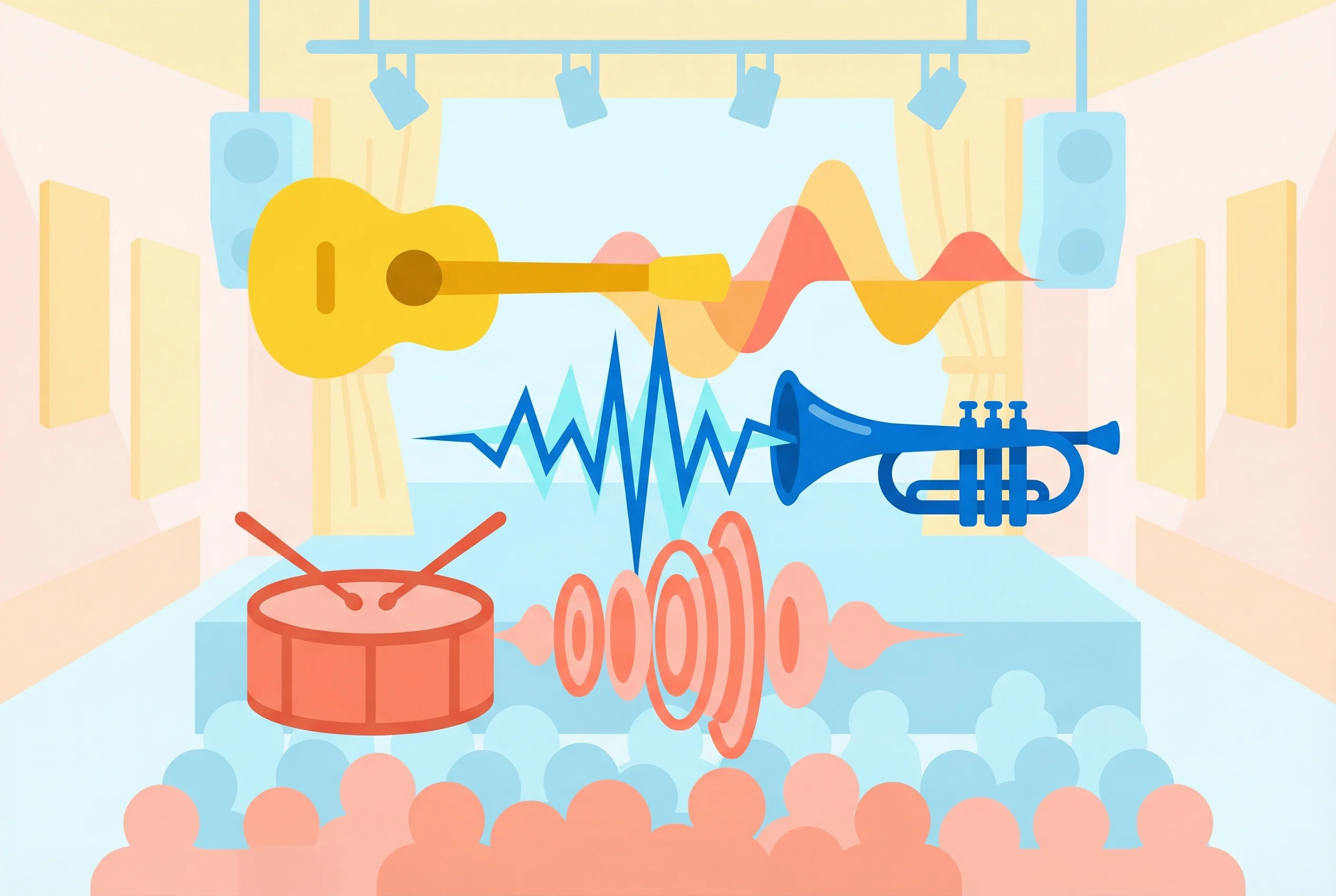
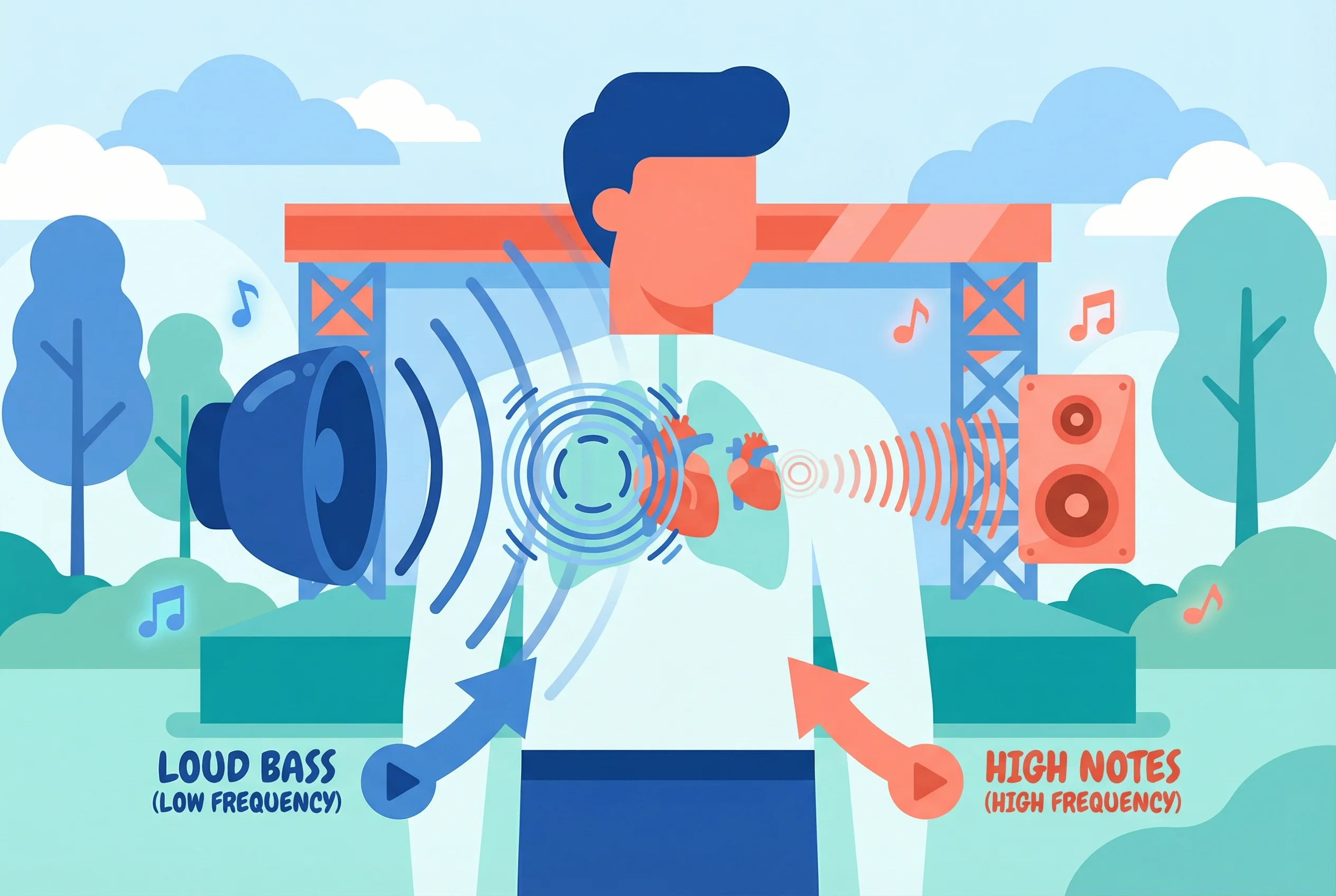
A piano key, a bell, and a dog whistle look unrelated until you notice the same hidden actor: vibration. These music trivia questions let you guess first, then close the gap with the mechanism behind each sound. If you want a larger round spanning rhythm, hearing, and emotion too, continue with our music trivia questions and answers.
Music Trivia Questions
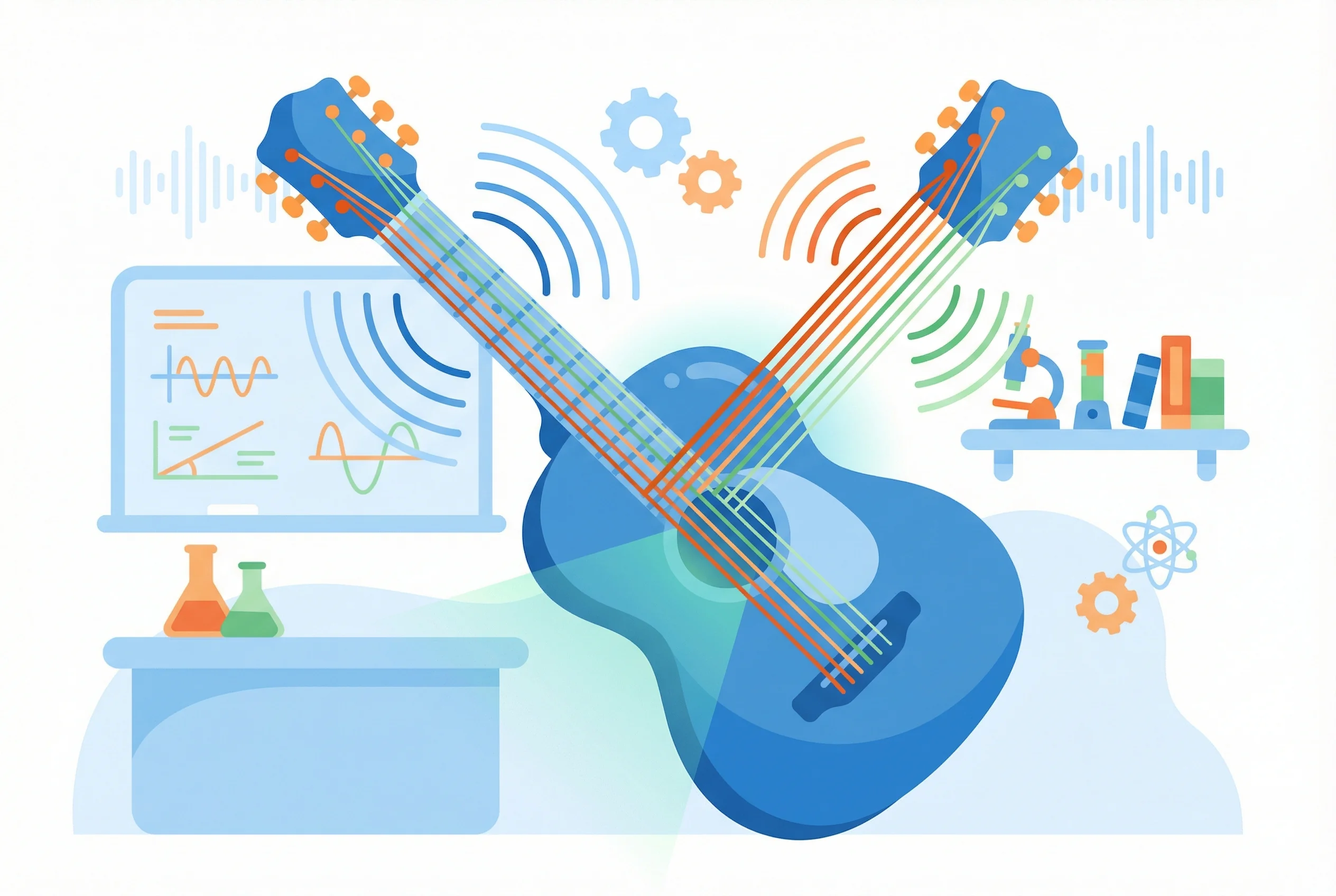
AEach string plays one song
✗Not quite - the answer is C. Each string doesn't play a specific song. Strings produce different pitches that combine to play any music.
BStrings wear out at different rates
✗Not quite - the answer is C. Strings do wear differently, but their main purpose is to produce different pitches through varied thickness and tension.
CThickness changes pitch produced
✓Correct! Guitar strings vary in thickness (gauge). Thicker strings vibrate more slowly, producing lower pitches, while thinner strings vibrate faster for higher pitches. Combined with different tensions, this creates the range of notes a guitar can play.
Answer this question
ACheaper to make two colors only
✗Not quite - the answer is B. The two colors serve a musical purpose, not economic. They help distinguish between natural notes and sharps/flats.
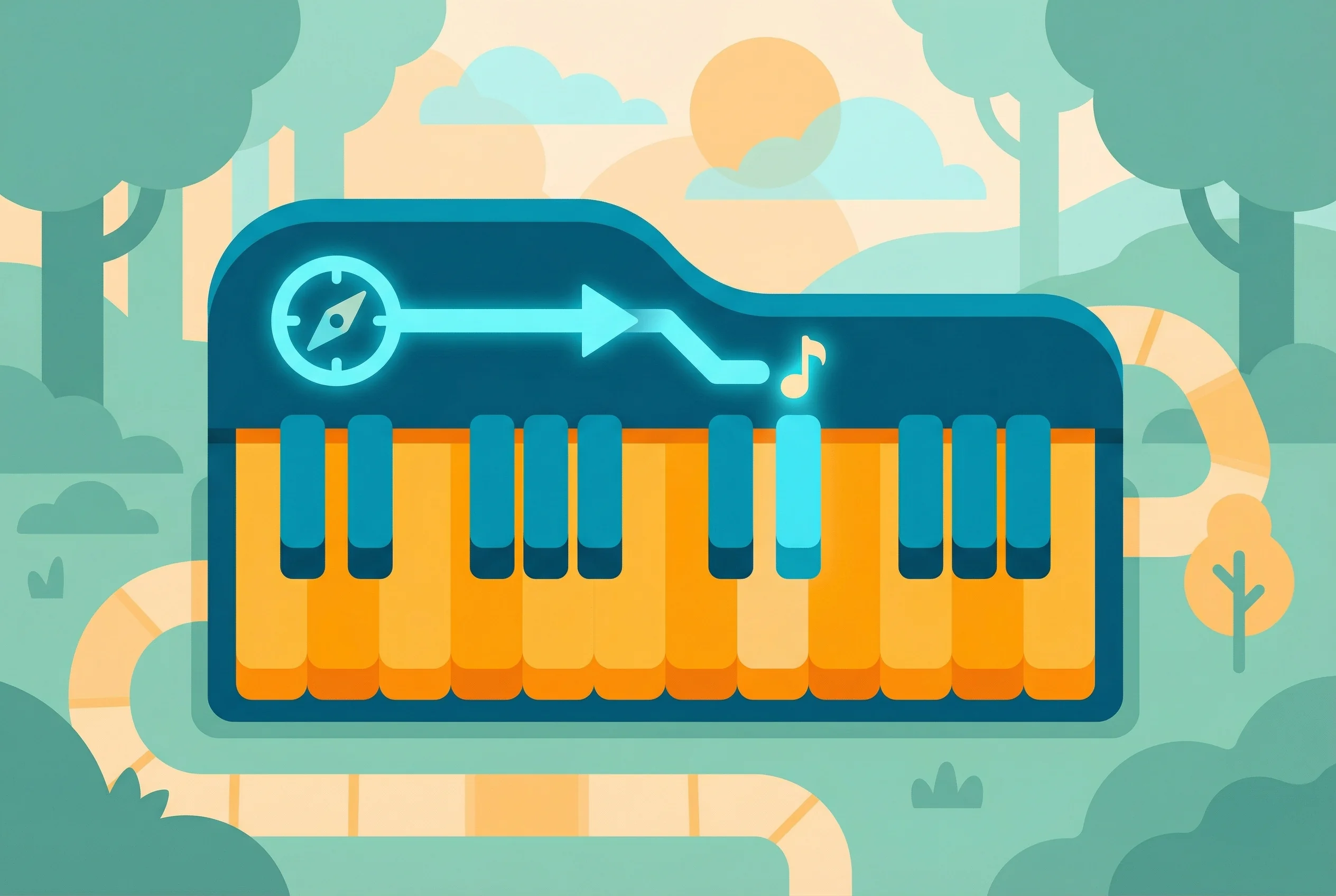
BShows sharps/flats vs natural notes
✓Correct! White keys represent the seven natural notes (C, D, E, F, G, A, B) in Western music. Black keys are the sharps and flats between them. This visual pattern helps pianists quickly identify notes and navigate the keyboard without looking.
CWhite keys play melody only
✗Not quite - the answer is B. Both black and white keys can play melody or harmony. The colors indicate note type (natural vs sharp/flat), not musical function.
Answer this question
AClapper bounces back repeatedly
✗Not quite - the answer is C. A clapper may bounce or strike again as a bell swings, but the sustained tone after each impact comes from vibration of the bell itself.
BMetal heats up from impact
✗Not quite - the answer is C. Impact doesn't create enough heat to make sound. Bells ring because the metal vibrates, creating sound waves.
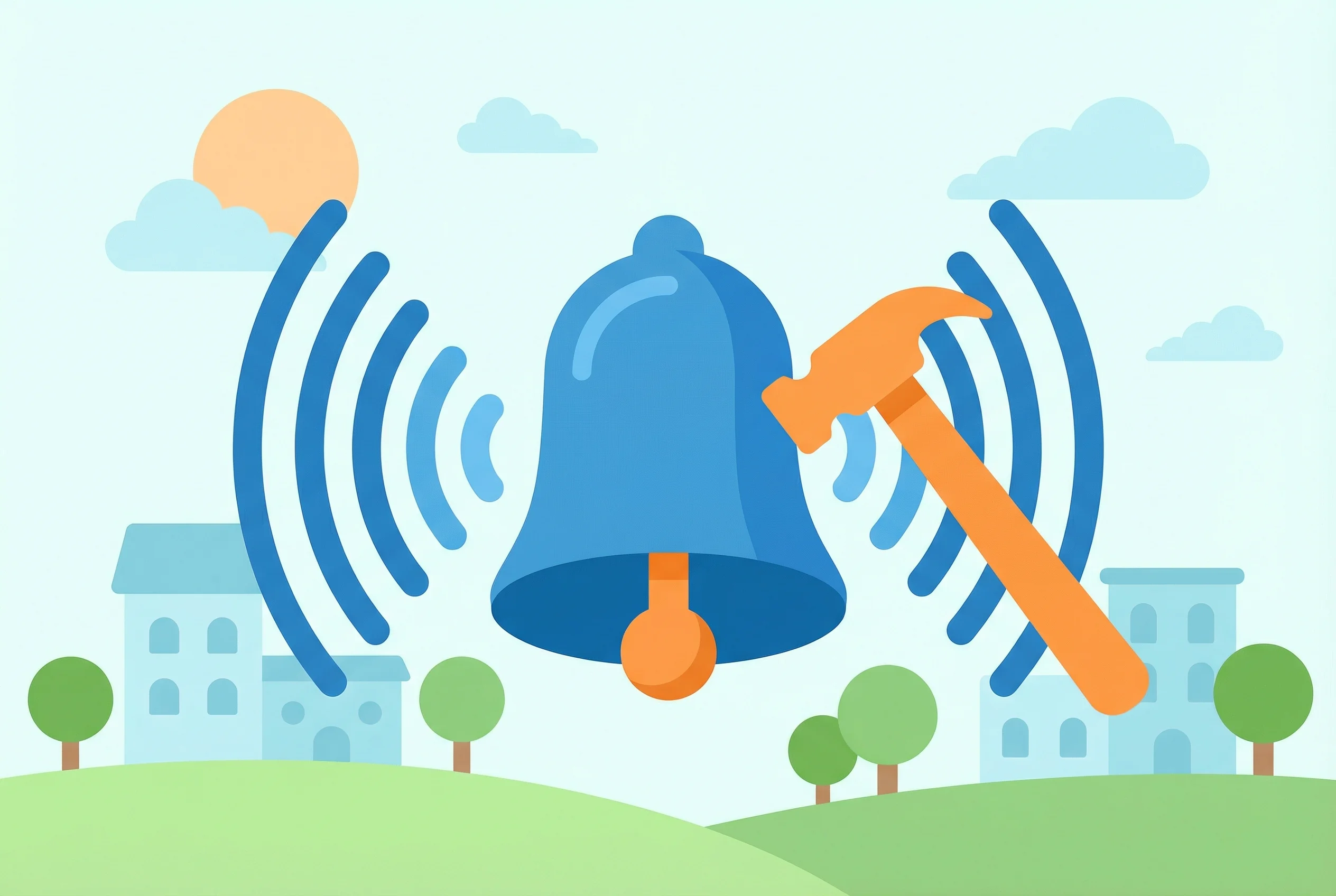
CMetal vibrates after being hit
✓Correct! When the clapper strikes, the bell flexes in several resonant modes and radiates those vibrations into the air. Its geometry and material set the mix of frequencies; size is one reason larger bells generally have lower prominent tones.
Answer this question
Music Trivia Questions and Answers
AGas pressure squeezes the throat
✗Not quite - the answer is B. Gas pressure isn't what changes your voice. It's the speed of sound in helium versus air that creates the high-pitched effect.
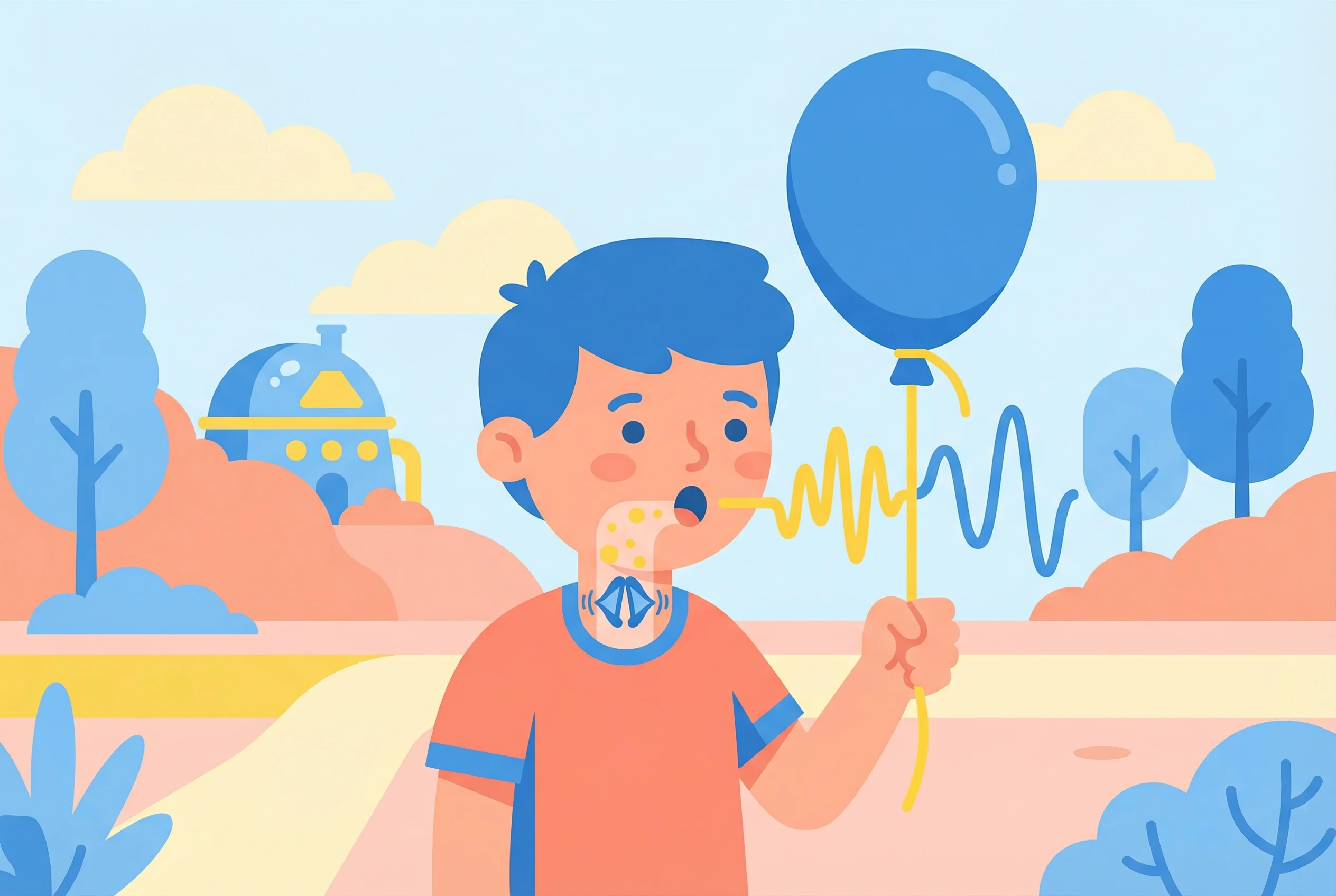
BSound travels faster in helium
✓Correct! Sound travels nearly 3 times faster in helium than in air. This raises the resonant frequencies, or formants, of the vocal tract. The vocal folds' fundamental frequency changes much less, but the shifted formants make the voice sound squeakier.
CHelium chemically changes voice box
✗Not quite - the answer is B. Helium is inert and doesn't react chemically with your body. The effect is purely physical—sound waves move faster through helium.
Answer this question
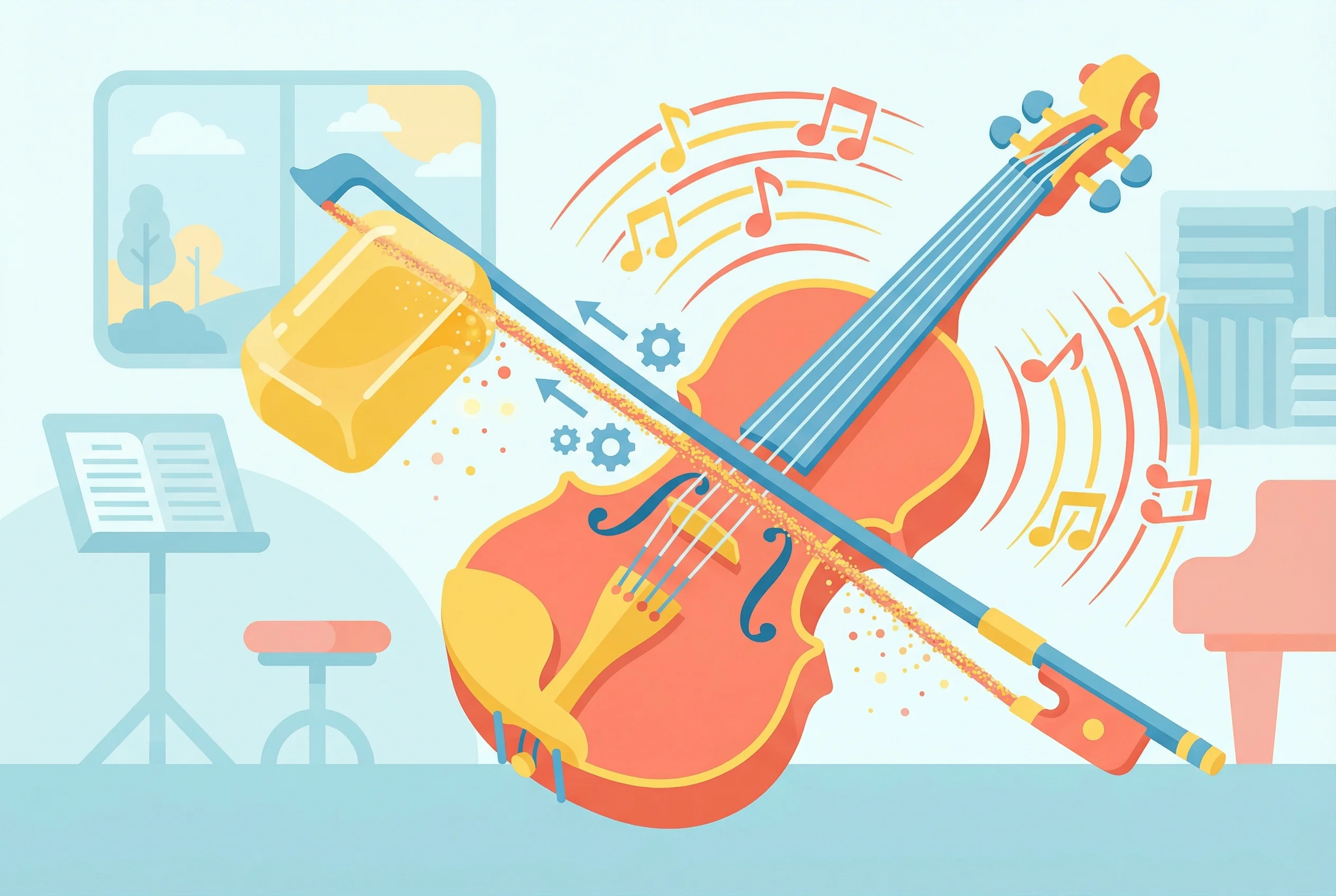
ACreates friction to vibrate strings
✓Correct! Rosin is sticky tree resin that creates friction when bow hair rubs across strings. Without rosin, the bow would slide smoothly without making strings vibrate. The friction from rosin causes strings to stick and slip rapidly, creating the vibrations that produce sound.
BProtects strings from damage
✗Not quite - the answer is A. Rosin is for the bow, not string protection. It helps the bow grip strings to make them vibrate and produce sound.
CMakes bow slide more smoothly
✗Not quite - the answer is A. Rosin does the opposite—it makes the bow sticky, creating the friction needed to vibrate strings and produce sound.
Answer this question
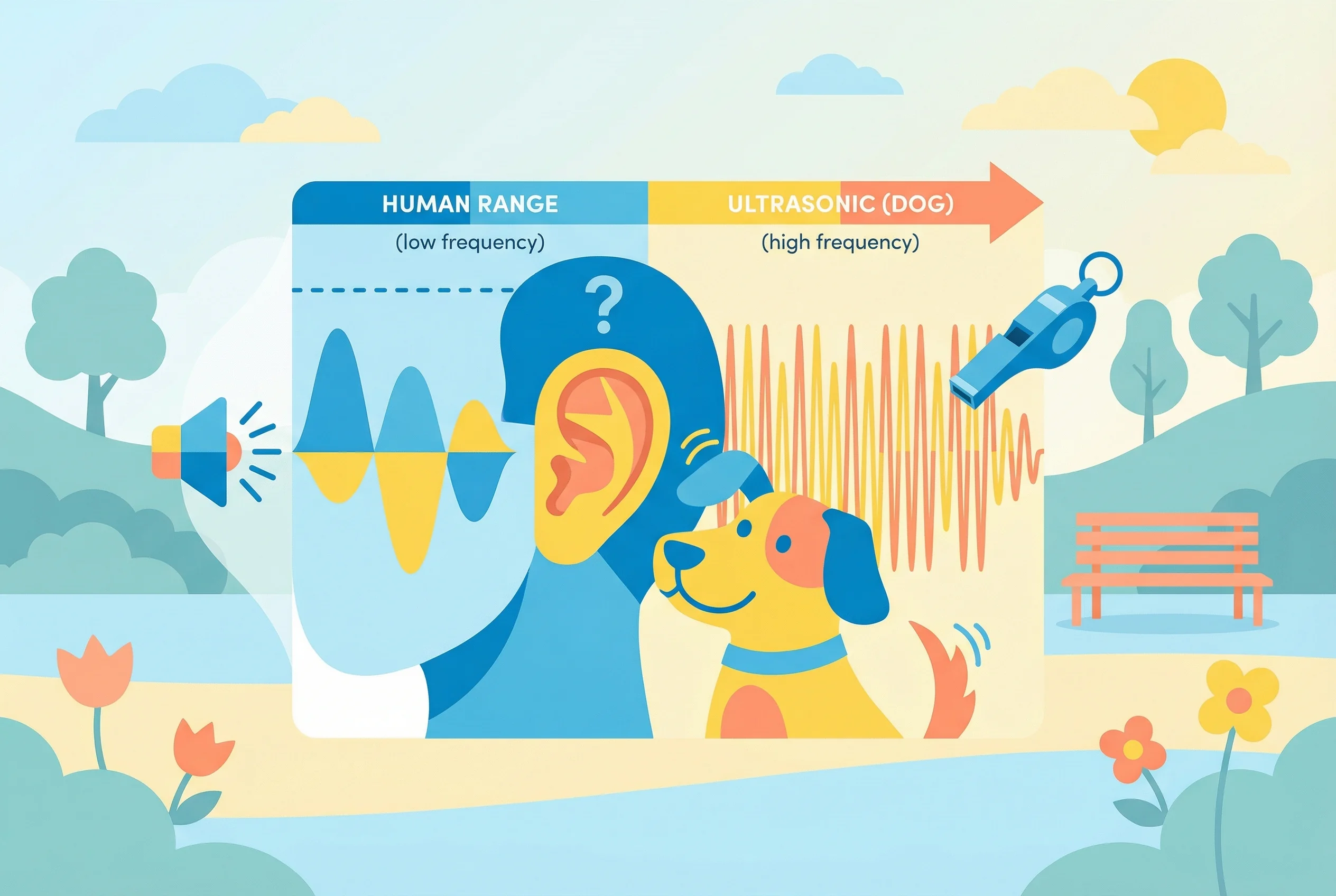
AFrequency too high for human ears
✓Correct! Dog whistles produce ultrasonic sounds above 20,000 Hz (20 kHz), higher than the upper limit of human hearing (about 20 kHz). Dogs can detect frequencies well above the nominal human limit, with published canine ranges extending to about 45 kHz, so many dog whistles are audible to them but not to us. Frequency, not volume, makes it inaudible to us.
BWhistles are designed too quietly
✗Not quite - the answer is A. Dog whistles aren't quiet—they can produce sound at frequencies humans can't hear. Dogs hear them clearly because they detect higher frequencies.
CDogs have better hearing organs
✗Not quite - the answer is A. Dogs do have better high-frequency hearing, but the specific reason we can't hear dog whistles is that they operate above human hearing range.
Answer this question
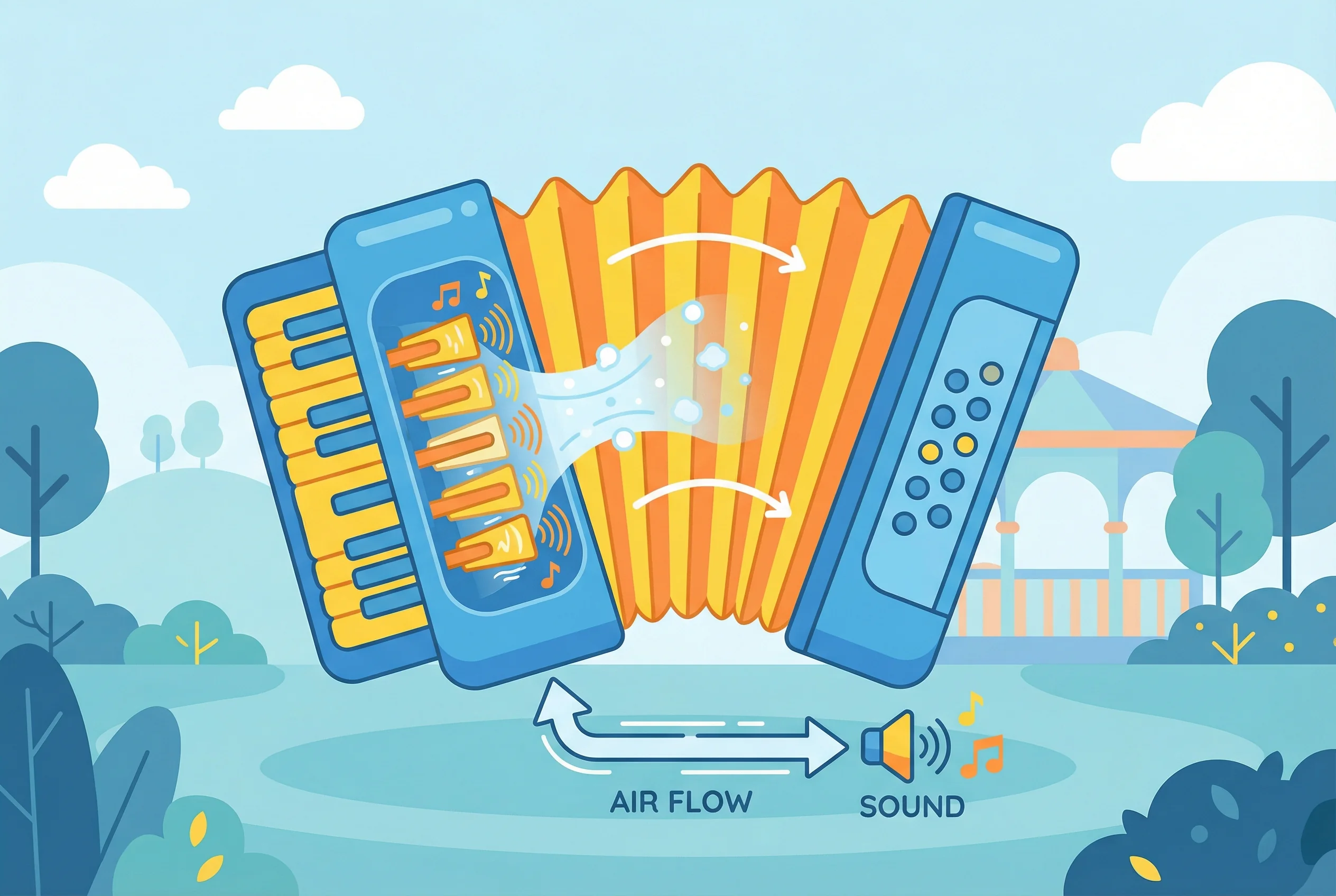
ABellows push air through reeds
✓Correct! Accordions use bellows (the expandable middle section) to push and pull air across metal reeds inside the instrument. When air flows over the reeds, they vibrate at specific frequencies, producing musical notes. Different keys and buttons direct air to different reed sets, creating different pitches.
BButtons compress gas cylinders
✗Not quite - the answer is A. Accordions use simple air pressure from bellows, not gas cylinders. The bellows push air across vibrating reeds.
CFolding creates friction noise
✗Not quite - the answer is A. The folding motion isn't what makes sound. Bellows create air pressure that flows over reeds, causing them to vibrate and produce musical notes.
Answer this question
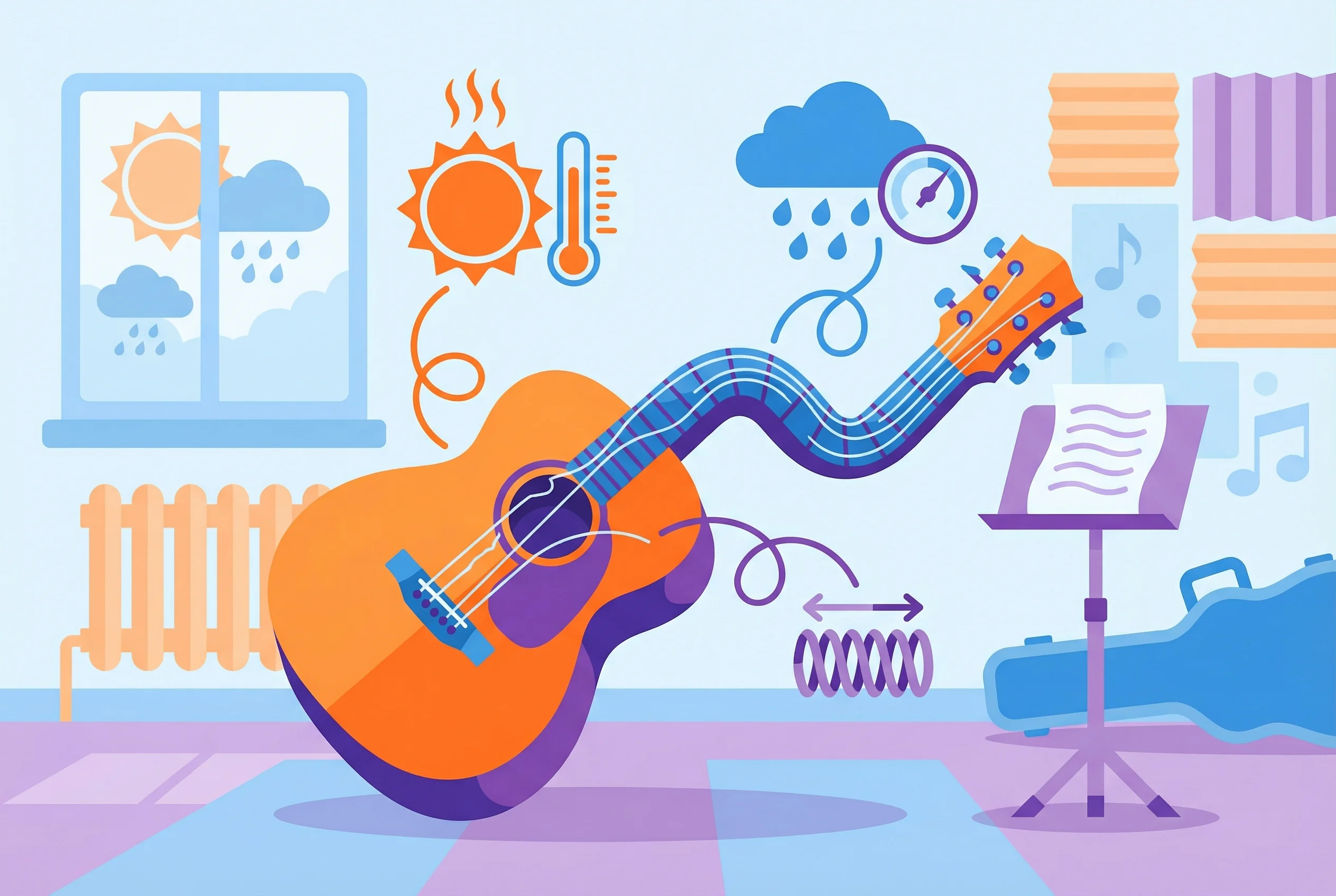
ATemperature changes string tension
✓Correct! String pitch depends on tension, vibrating length, and mass per length, all of which can shift as strings stretch and an instrument responds to temperature or humidity. In wind instruments, warmer air increases the speed of sound and tends to raise the pitch of the air column. Playing and handling also change these conditions, which is why musicians recheck tuning.
BSound waves wear down materials
✗Not quite - the answer is A. Sound waves don't wear materials. Instruments detune from physical changes—wood movement, string stretching, and temperature effects.
CAge weakens the instrument
✗Not quite - the answer is A. Age can affect tuning stability, but the main causes are environmental factors (temperature, humidity) and mechanical stress.
Answer this question
Music Quiz
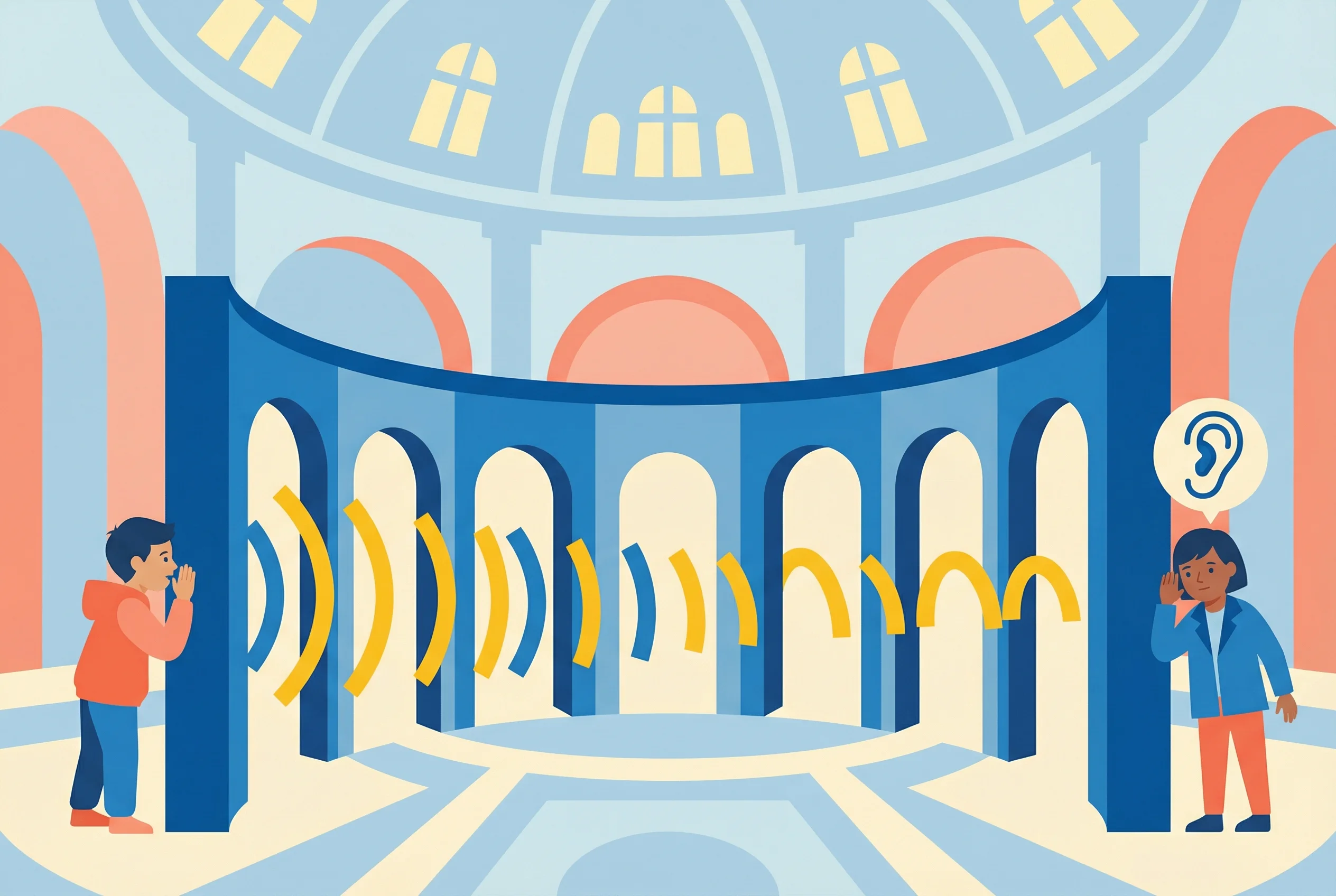
ACurved walls guide reflected sound
✓Correct! In a circular whispering gallery, repeated reflections can guide sound around a smooth curved wall with relatively little loss. Elliptical whispering rooms can instead concentrate reflections between focal regions. The exact path depends on the geometry.
BDome shape filters out noise
✗Not quite - the answer is A. The dome does not simply filter background noise. Its curved boundary redirects reflections along paths set by the room's geometry.
CAir pressure carries whispers far
✗Not quite - the answer is A. Air pressure doesn't change significantly in these chambers. The effect comes from sound wave reflection and focusing by curved walls.
Answer this question
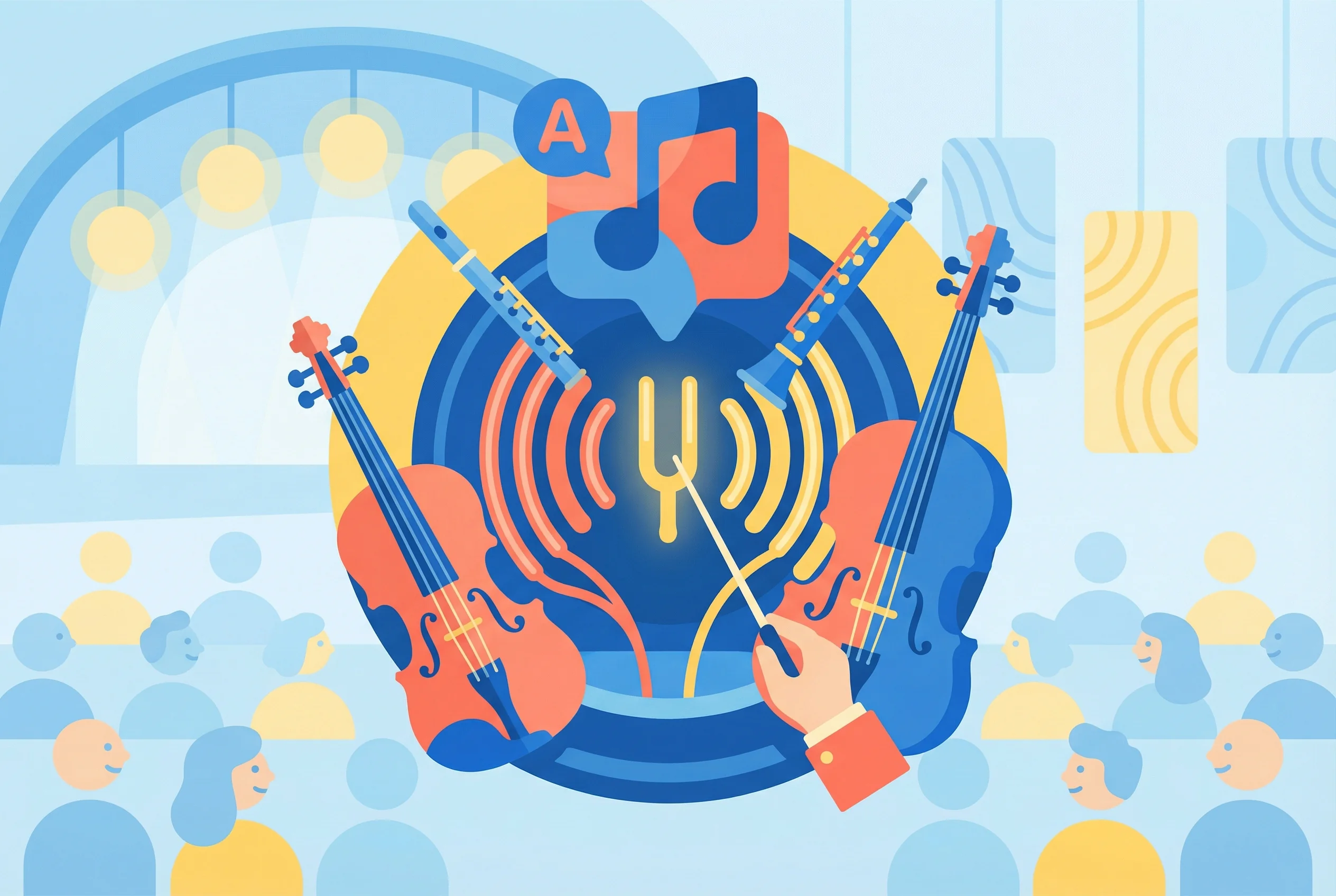
AEnsure instruments share a pitch reference
✓Correct! Players need a shared pitch reference before their parts can align. ISO 16 defines the A above middle C as 440 Hz, although an ensemble may choose another agreed pitch. The important part is agreement, not the letter A by itself. ISO 16:1975 BThe same note tests every instrument
✗Not quite — one note cannot test every pitch or timbre an instrument can make. It gives the ensemble one common frequency from which each player checks tuning.
CMusicians simply like the tuning sound
✗Not quite — the sound is functional. Without a common reference, instruments can each be internally consistent yet disagree with one another when they play together.
Answer this question
AThe gears can turn in only one direction
✗Not quite — the gears regulate motion, but they do not contain the melody.
BThe spring stores a melody
✗Not quite — the spring stores mechanical energy. It powers the movement but does not encode which notes play.
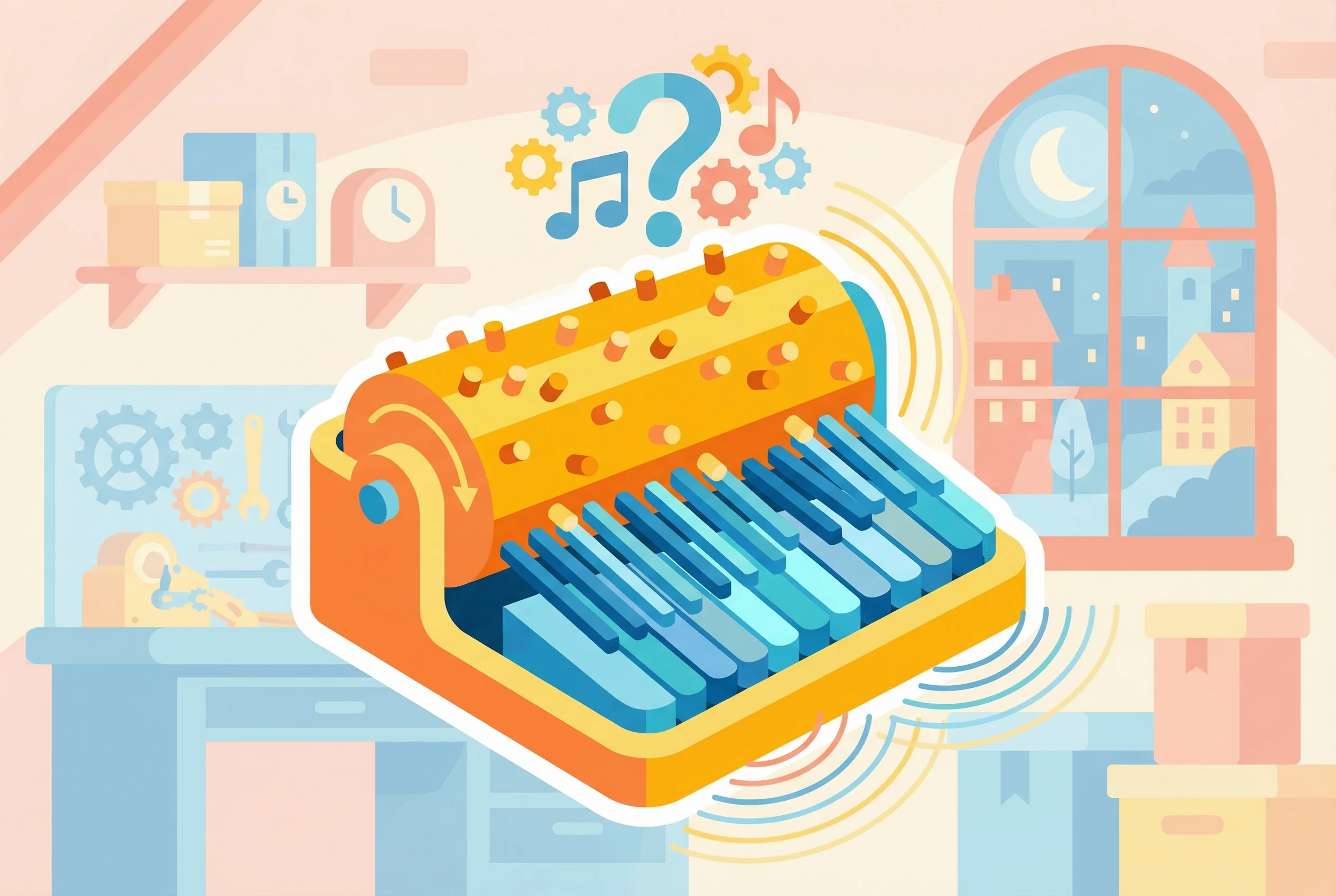
CPins on the cylinder encode a fixed sequence
✓Correct! As the cylinder rotates, fixed pins pluck tuned teeth in a metal comb. Their positions act like a mechanical score, so the sequence repeats each revolution. Some historical cylinders encode several tunes, but each pin pattern is fixed. Musical Instruments Museum
Answer this question
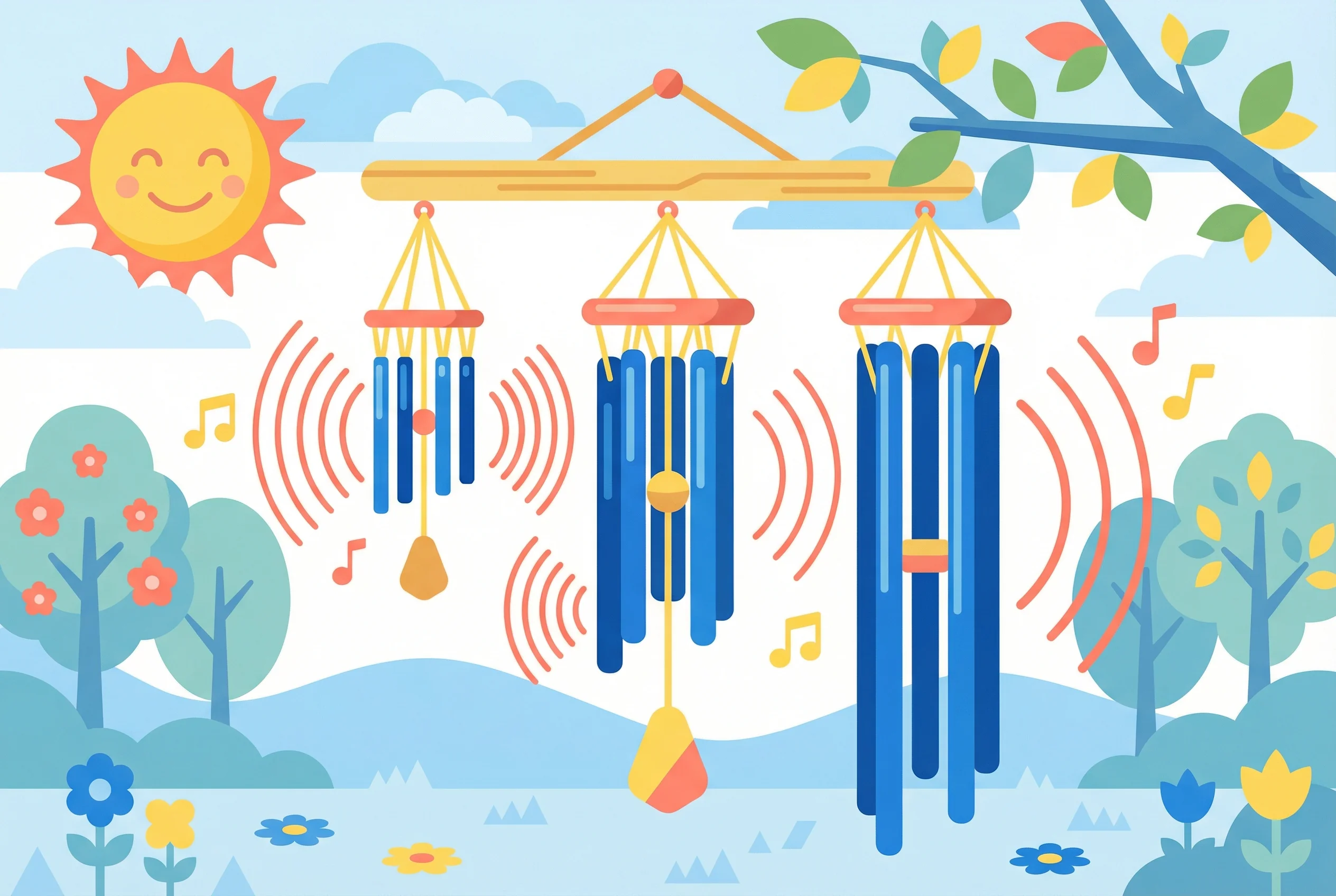
AEach tube has a different length
✓Correct! A chime tube bends as it vibrates, and its resonant frequency depends strongly on length as well as diameter, wall thickness, and material. Within a matched set, longer tubes generally carry lower fundamentals and shorter tubes higher ones. wind-chime acoustics handbook BEvery tube uses a different metal
✗Not quite — material affects resonance and timbre, but a matched set can produce different pitches using tubes of the same material cut to different lengths.
CThe clapper changes the pitch by angle
✗Not quite — strike position changes which vibration modes are emphasized and how loud they are, but the tube's physical dimensions set its resonant frequencies.
Answer this question
Want to play these for real?
Turn tiny music questions into a 10-second curiosity loop: guess, see why, and leave with one more sound-world pattern in your head.
Play live on AIgneous Million Whys →Frequently Asked Questions
What is music trivia?
Music trivia is a set of quick questions about instruments, sound, rhythm, pitch, and listening. The best questions do more than name songs; they explain why sound behaves the way it does.
Are these music trivia questions good for adults?
Yes. These are built for curious adults who want the mechanism behind familiar sounds: vibrating strings, tuned drumheads, bell metal, echoes, reeds, and ultrasonic frequencies.
Can music trivia help me understand music better?
It can. A good trivia question creates a small information gap, then closes it with a clear explanation. After that, a piano, guitar, drum, or tunnel echo becomes easier to read.
What music topics are included here?
This set covers guitars, pianos, violins, drums, bells, accordions, dog whistles, helium voice effects, tuning, and whispering galleries.
What does this have to do with AIgneous Million Whys?
Million Whys turns everyday curiosity into answerable questions. Music is full of tiny "why" moments, and each one can become a fast spark of understanding.