Pub quiz questions and answers work best when the room gets a small itch before it gets the answer. This set is built for hosts: six rounds, ten questions each, a mix of easy, medium, and hard cards, and a short why behind every answer. If you want the one-question daily version, try Trivia Question of the Day before the next round starts.
How to run it: give teams about 60-90 seconds per question, read choices aloud, and save the explanation until after each answer key. The goal is not to catch people out. It is to make the table say, "wait, that makes sense," and immediately want the next one.
General Knowledge Pub Quiz Questions
ATo prevent copy-pasting passwords
✗Not quite — Special characters don't prevent copying. They increase password entropy—more possible combinations, making brute-force attacks harder.
BSlow down typing speed
✗Not quite — Slowing typing isn't the goal. Special characters expand the character set (letters + numbers + symbols), exponentially increasing cracking time.
CIncrease cracking difficulty
✓Correct — Password strength depends on entropy—possible combinations. Using only lowercase (26 chars): 8-char password = 26^8 combos. Adding uppercase, numbers, symbols (~94 chars): 94^8 combos—thousands of times stronger! Special characters prevent dictionary attacks (common words) and brute force. Modern recommendations: length matters most (12+ chars), but character variety helps. Password managers handle complexity!
Answer this question
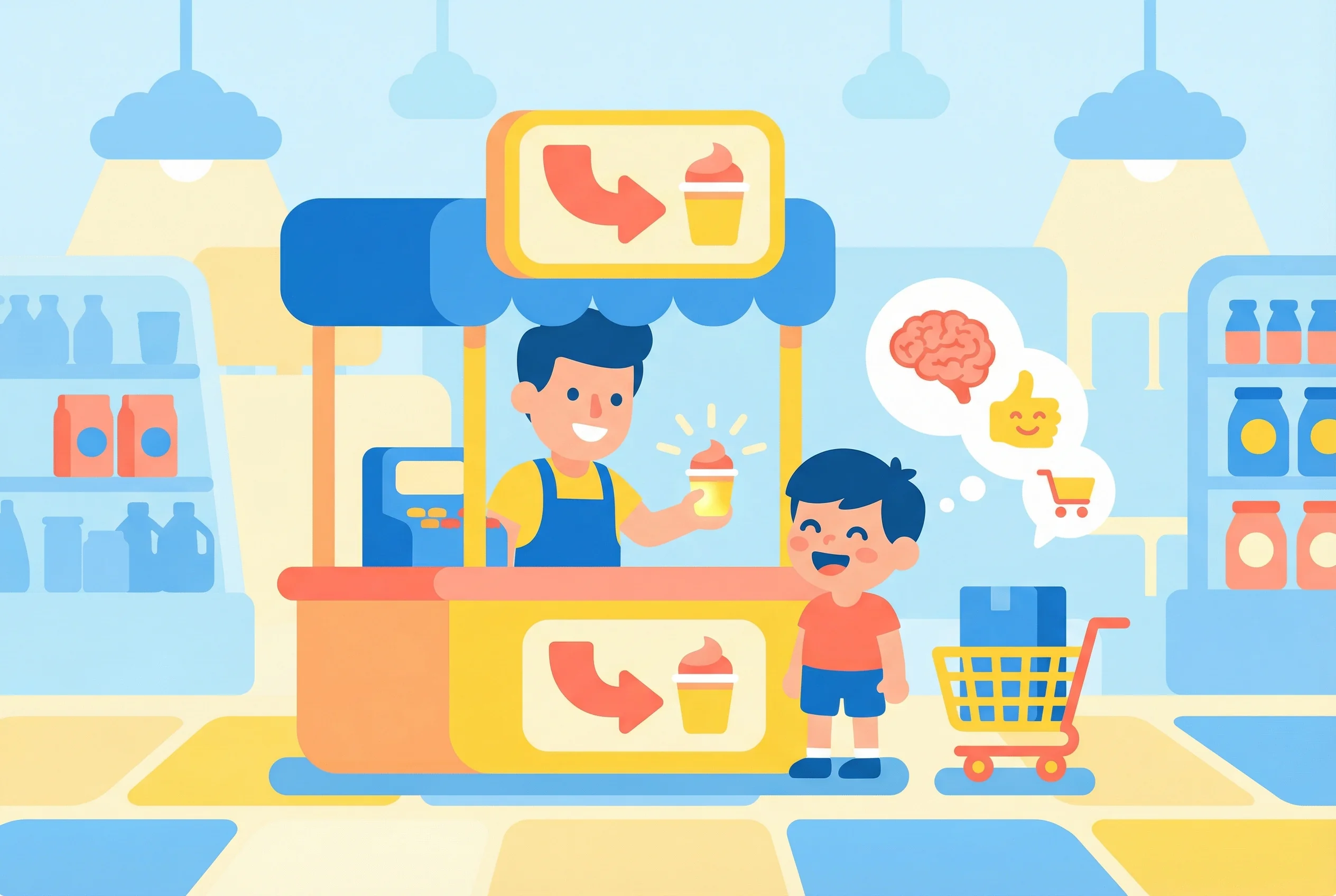
AReciprocity makes people buy
✓Correct — Free samples exploit psychological reciprocity—when someone gives you something, you feel obligated to return the favor. After accepting a free sample, many people feel compelled to make a purchase. Samples also reduce purchase risk (try before buying), create familiarity, and demonstrate product quality. The small sample cost often generates significant sales.
BSamples are better than products
✗Not quite — Samples are identical to regular products, just smaller portions. They work through psychology (reciprocity, reduced risk) and marketing (product trial, brand awareness), not because they're different or better than the full-size version.
CPeople collect free items
✗Not quite — While some people do enjoy free samples, companies offer them to drive purchases, not for collector value. The strategy works because many recipients feel obligated to reciprocate by buying, or the sample reduces their hesitation to try the full product.
Answer this question
AEarth rotates 365 times yearly
✗Not quite — Earth actually rotates about 366 times during one orbit of the Sun, not 365. We count 365 days because a 'day' is based on the Sun's position in the sky, which is affected by Earth's orbit as well as rotation.
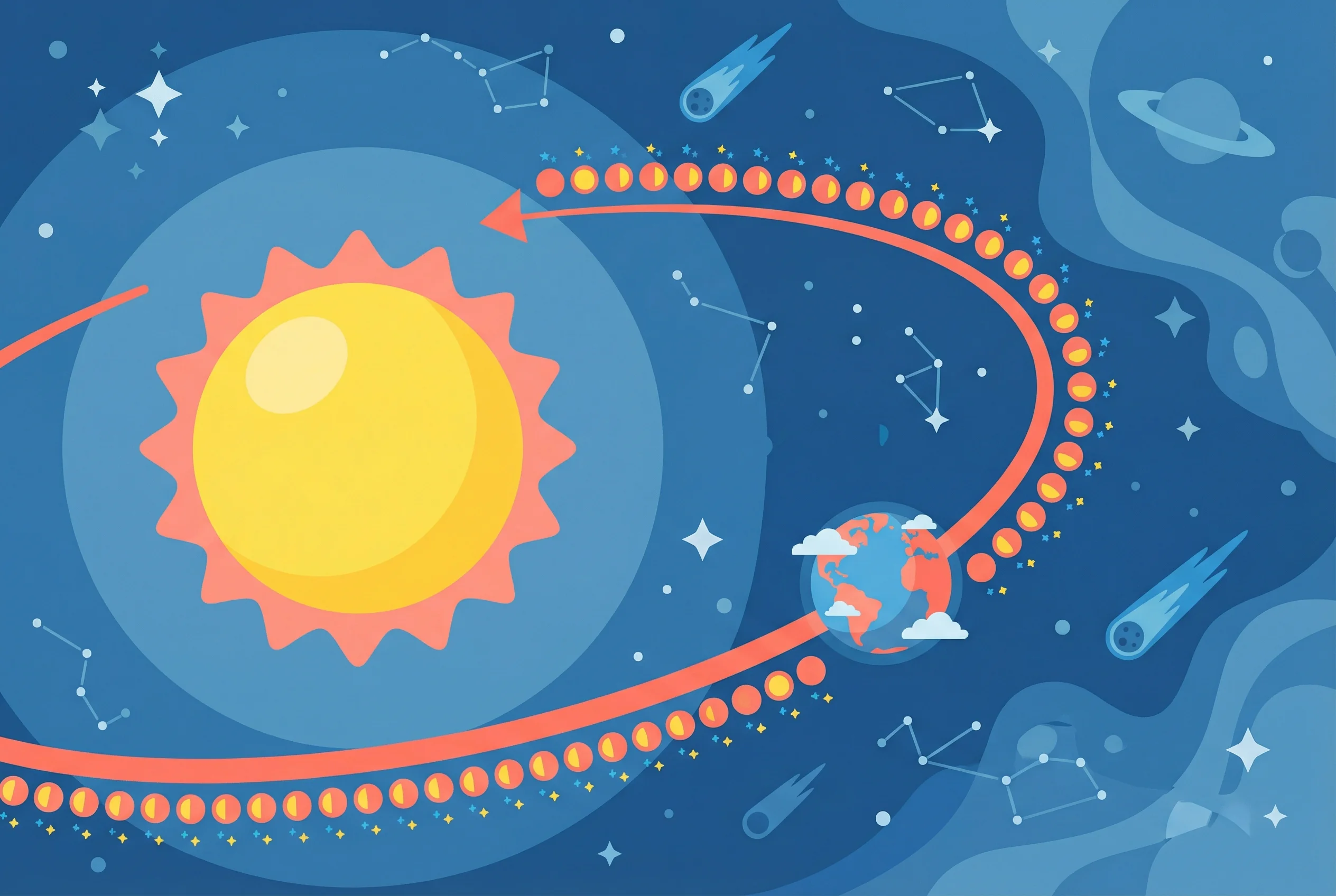
BTime for Earth to orbit the Sun
✓Correct — A year is defined by how long Earth takes to complete one full orbit around the Sun - approximately 365.25 days. This is determined by Earth's orbital distance (93 million miles) and speed (67,000 mph). We round to 365 days for convenience, adding a leap day every 4 years to account for the extra 0.25 days. This orbital period is a natural astronomical fact, not a human invention.
CThe Moon's cycle determines it
✗Not quite — The Moon's cycle (29.5 days) doesn't determine Earth's year. Some ancient calendars were lunar-based, but Earth's year is determined by its orbit around the Sun. The Moon's orbit around Earth and Earth's orbit around the Sun are independent cycles.
Answer this question
AAttracting mates with scent
✗Not quite — The spray is extremely unpleasant and repels all animals, including potential mates. Skunks use completely different, milder scents for attraction.
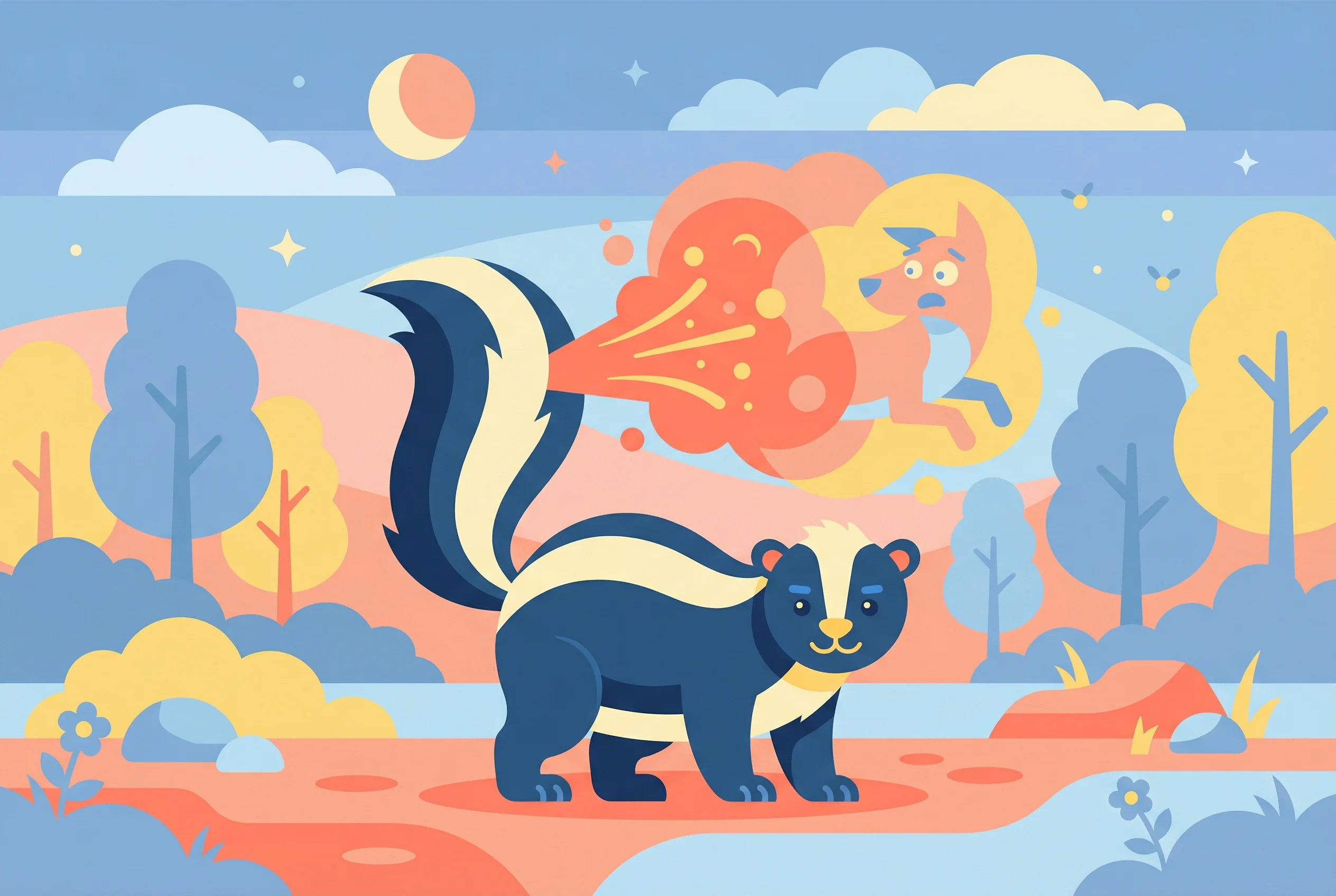
BLast-resort predator defense
✓Correct — Chemical warfare defense! Skunk spray: last resort against threats. Composition: sulfur-containing thiols (mercaptans)—extremely pungent. Process: (1) Warning signals first—stomping, tail raising, hissing. (2) If threat persists—spray from anal glands. (3) Accurate aim up to 10ft. Effects on predators: temporary blindness, nausea, intense smell (lasts days-weeks). Limited supply (5-6 sprays)—takes 10 days to replenish. Effective deterrent—most predators learn avoidance. Great horned owls (no smell sense) are main predators!
CKeeping their fur clean
✗Not quite — Spray doesn't clean fur—it's an oily, foul-smelling substance that animals try to avoid. Skunks groom themselves like other mammals.
Answer this question
ARaw onions are less ripe
✗Not quite — Raw and cooked onions are the same ripeness. Heat chemically transforms the compounds responsible for onion flavor.
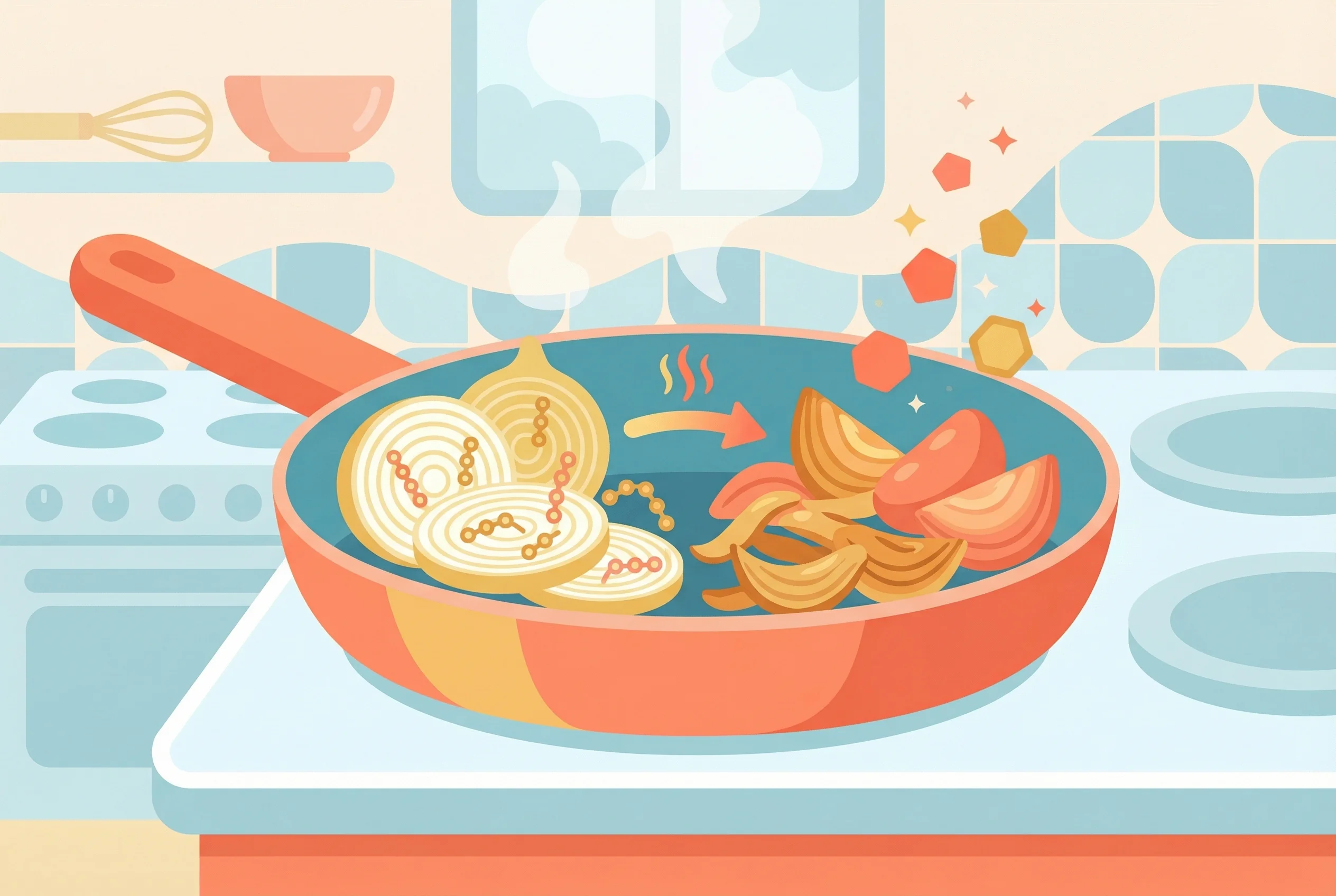
BHeat converts sulfur compounds
✓Correct — Raw onions contain sulfur compounds that taste sharp and make you cry. When cooked, heat breaks down these harsh sulfurs (like propanethial S-oxide) and converts them into sweeter, milder compounds. Caramelization of onion sugars also adds sweetness. Same onion, completely different chemistry!
CCooking adds salt and seasoning
✗Not quite — Even plain cooked onions without seasoning taste different from raw. The change is chemical transformation from heat, not added ingredients.
Answer this question
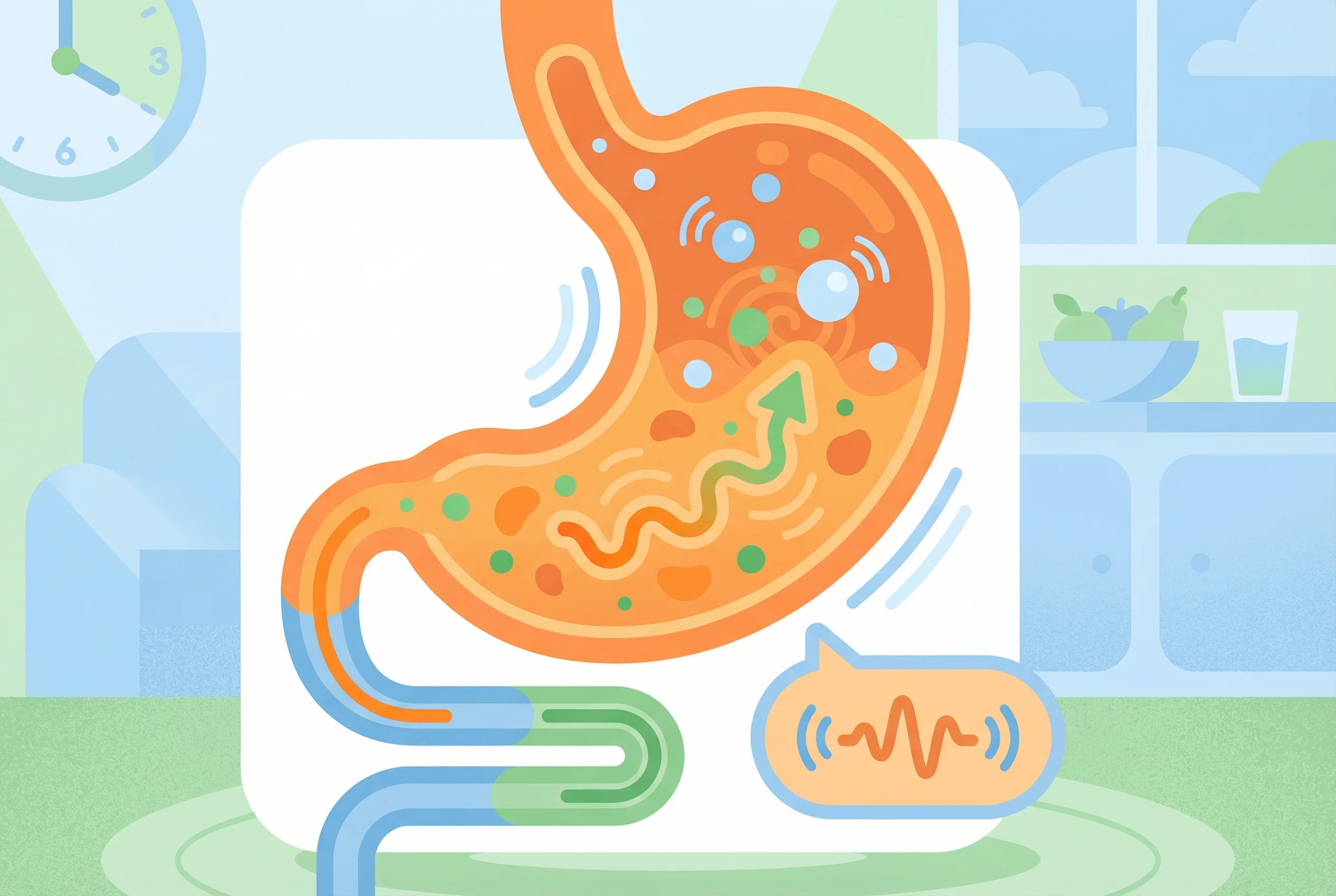
ADigestive muscles contracting
✓Correct — Stomach growling, called borborygmi, happens when digestive muscles contract in waves called peristalsis. These contractions move food, fluids, and air through your intestines. When your stomach is empty, the contractions squeeze mostly air, creating louder rumbling sounds. Hormones like motilin trigger these contractions, especially when you're hungry.
BFood is fermenting inside
✗Not quite — Food fermentation by gut bacteria does produce gas, but stomach growling is caused by peristaltic muscle contractions moving contents through the digestive tract.
CStomach acid bubbling
✗Not quite — Stomach acid doesn't bubble to create growling sounds. The noise comes from peristaltic contractions of smooth muscles squeezing air and fluids through the digestive system.
Answer this question
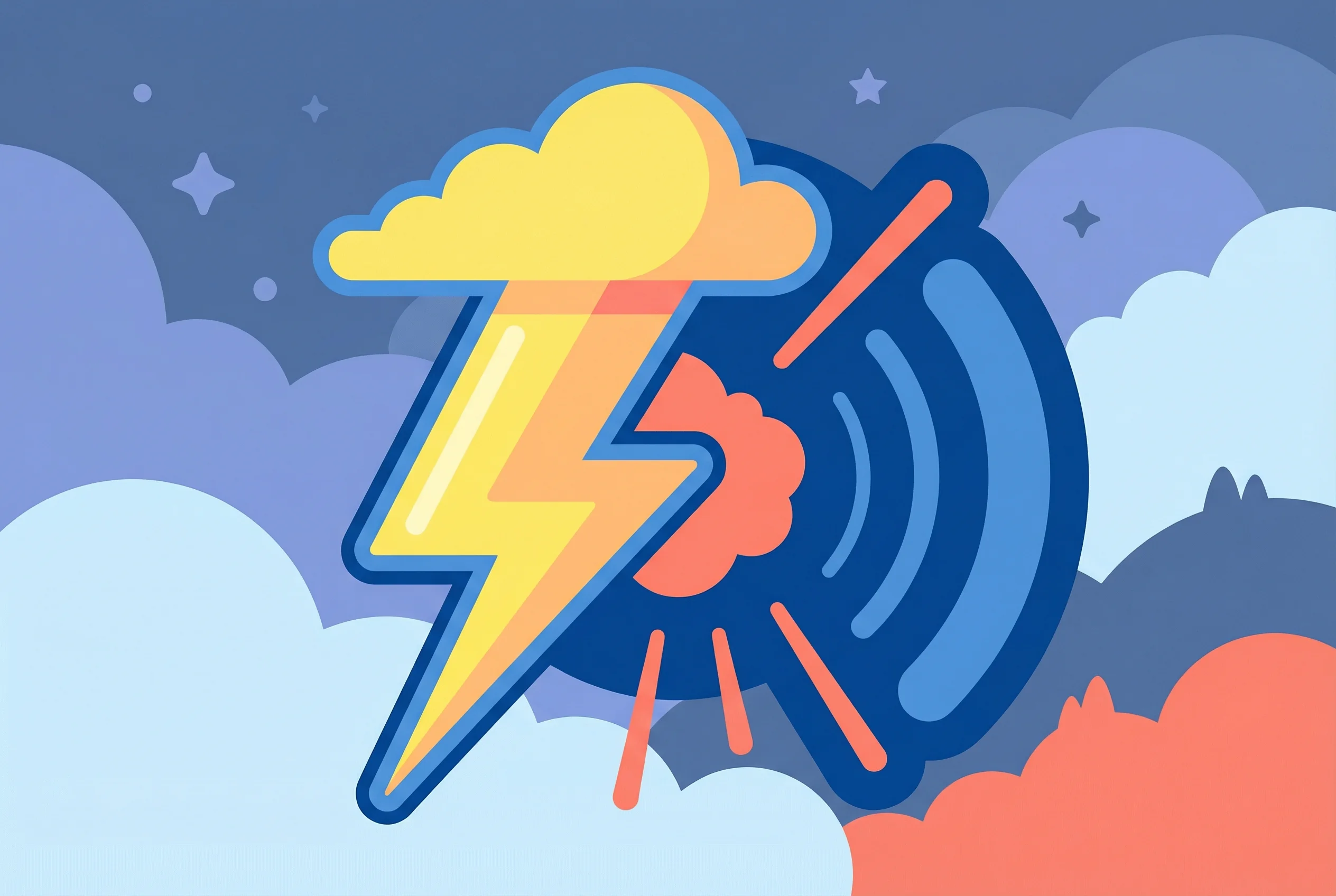
AThunder causes lightning flash
✗Not quite — Lightning causes thunder, not vice versa. Electrical discharge heats air explosively—rapid expansion creates thunder shockwave.
BLight faster than sound waves
✓Correct — Speed difference! Lightning and thunder occur simultaneously, but perceived separately: (1) Lightning—see instantly (light: 300,000 km/s). (2) Thunder—hear delayed (sound: 343 m/s in air). (3) Count seconds between flash and boom—divide by 3 ≈ distance in km (or by 5 for miles). Thunder: rapid air heating from lightning bolt (30,000°C)—explosive expansion creates shockwave. Close lightning: immediate crack. Distant: low rumble (sound waves refract). Can't hear thunder beyond ~25km!
CLightning and thunder are unrelated
✗Not quite — Thunder is direct result of lightning—electrical discharge superheats air channel, creating explosive expansion we hear as thunder.
Answer this question
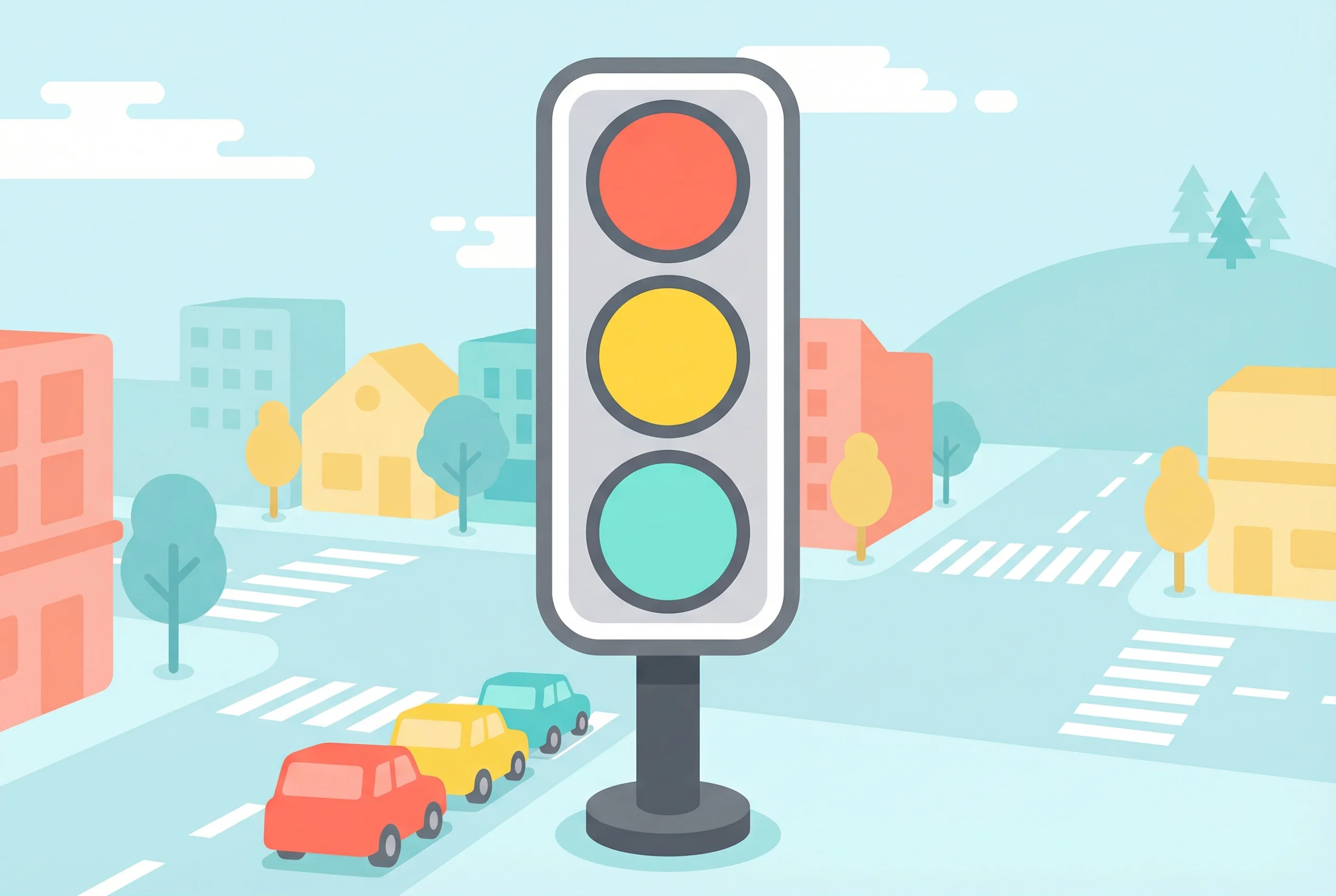
AThese are the brightest colors
✗Not quite — Red, yellow, and green aren't the brightest colors—white or yellow are actually brightest. These specific colors were chosen for other reasons: red was already used for 'stop' in railroads (it's highly visible and associated with danger), green meant 'go' (caution, safety), and yellow/amber was added as a warning transition. The association is now universal and hardwired into driver training.
BRed is visible from far away
✓Correct — Red light has the longest wavelength of visible light, so it scatters less in atmosphere and fog, remaining visible from greater distances. This is important for 'stop' signals. Red was already used for 'danger/stop' in railroads before cars existed. Green (shortest visible wavelength) meant 'safe/go.' Yellow/amber was added later as a transition warning. This color system is now standardized worldwide.
CInternational law requires it
✗Not quite — While there are international standards (Vienna Convention on Road Signs and Signals), countries chose red-yellow-green before international law formalized it. The colors emerged from practical needs: red was already used for 'stop' in railroads due to high visibility and danger association, green for 'safe,' and yellow as warning. International agreements standardized this existing practical system.
Answer this question
AFlags required by international law
✗Not quite — While international conventions govern flag use (ships, embassies), countries adopted flags to represent identity and unity, not because of requirements. Flags emerged from military banners and became symbols of sovereignty and national character.
BHistorical accident from wars
✗Not quite — Flags evolved from military banners used to identify armies, but they became national symbols representing identity, values, and unity. Their adoption was deliberate—expressing sovereignty and shared identity—not accidental.
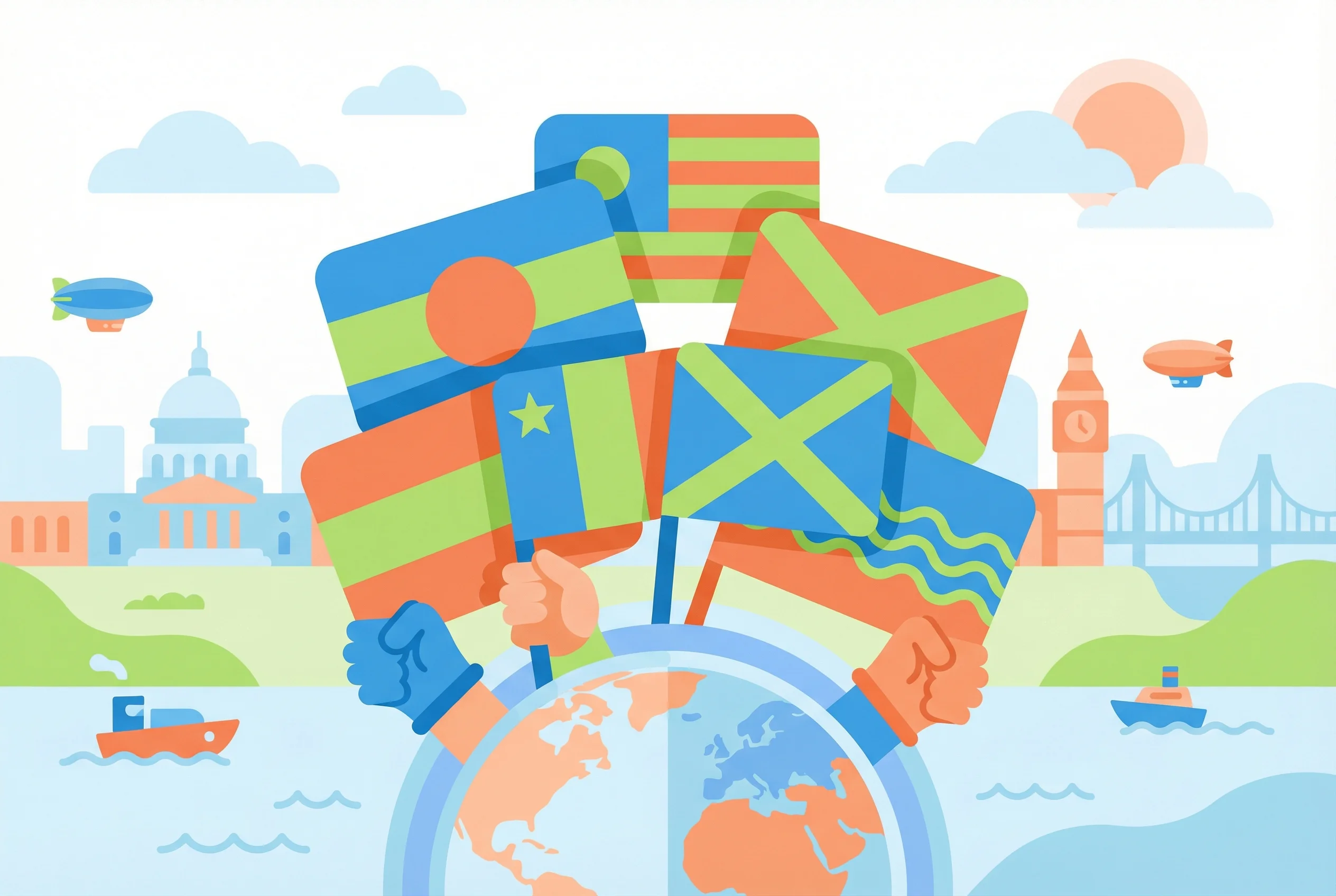
CSymbol of identity and unity
✓Correct — Flags symbolize national identity, values, and unity. They emerged from military banners (identifying armies in battle) and became powerful symbols of sovereignty and shared identity. Colors and symbols convey history and values (stars, stripes, crescents, etc.). Flags mark territory, represent countries diplomatically, and create emotional bonds among citizens.
Answer this question
ACheaper to make two colors only
✗Not quite — The two colors serve a musical purpose, not economic. They help distinguish between natural notes and sharps/flats.
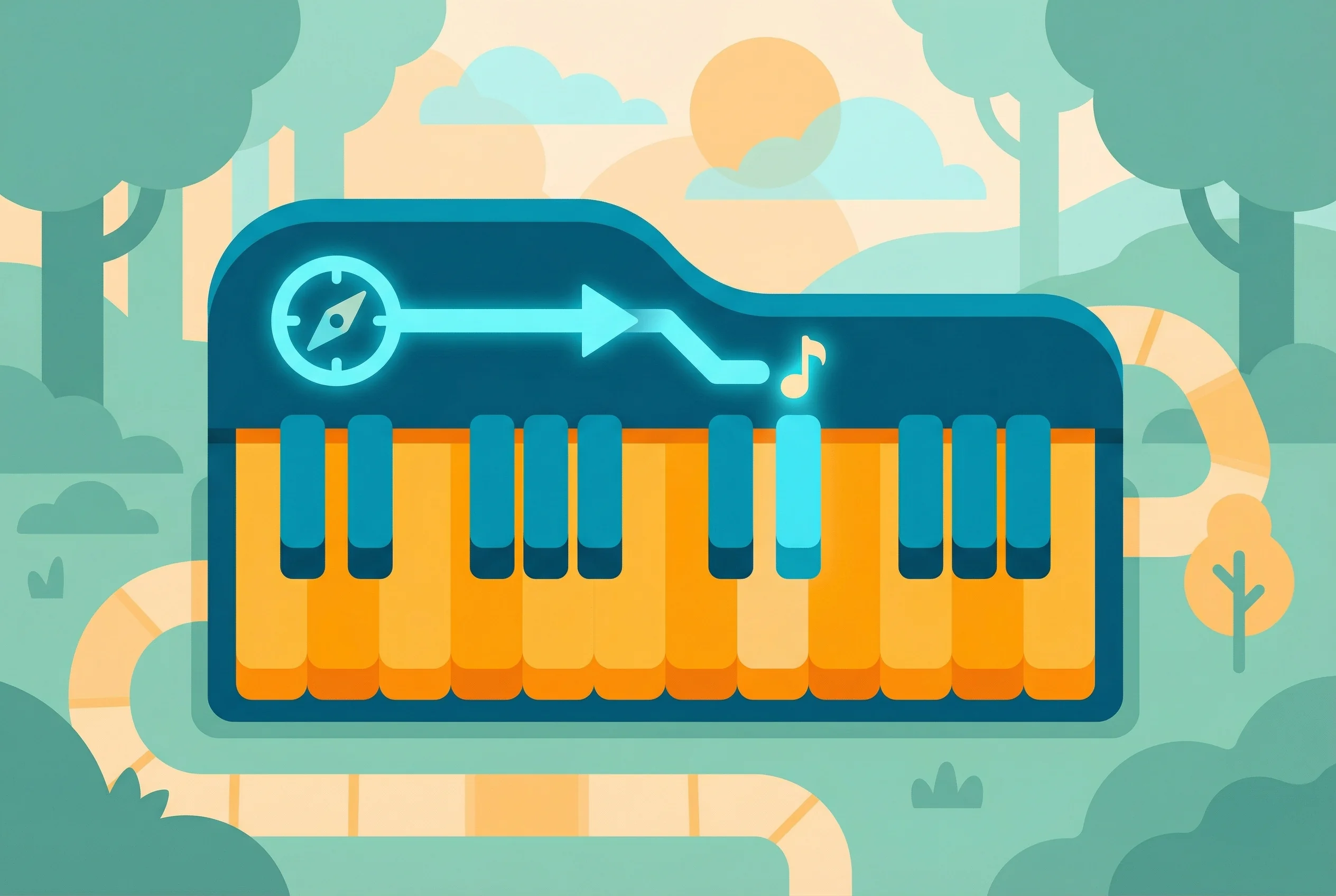
BShows sharps/flats vs natural notes
✓Correct — White keys represent the seven natural notes (C, D, E, F, G, A, B) in Western music. Black keys are the sharps and flats between them. This visual pattern helps pianists quickly identify notes and navigate the keyboard without looking.
CWhite keys play melody only
✗Not quite — Both black and white keys can play melody or harmony. The colors indicate note type (natural vs sharp/flat), not musical function.
Answer this question
Answer key: 1. C; 2. A; 3. B; 4. B; 5. B; 6. A; 7. B; 8. B; 9. C; 10. B.
Science Pub Quiz Questions You Can Picture
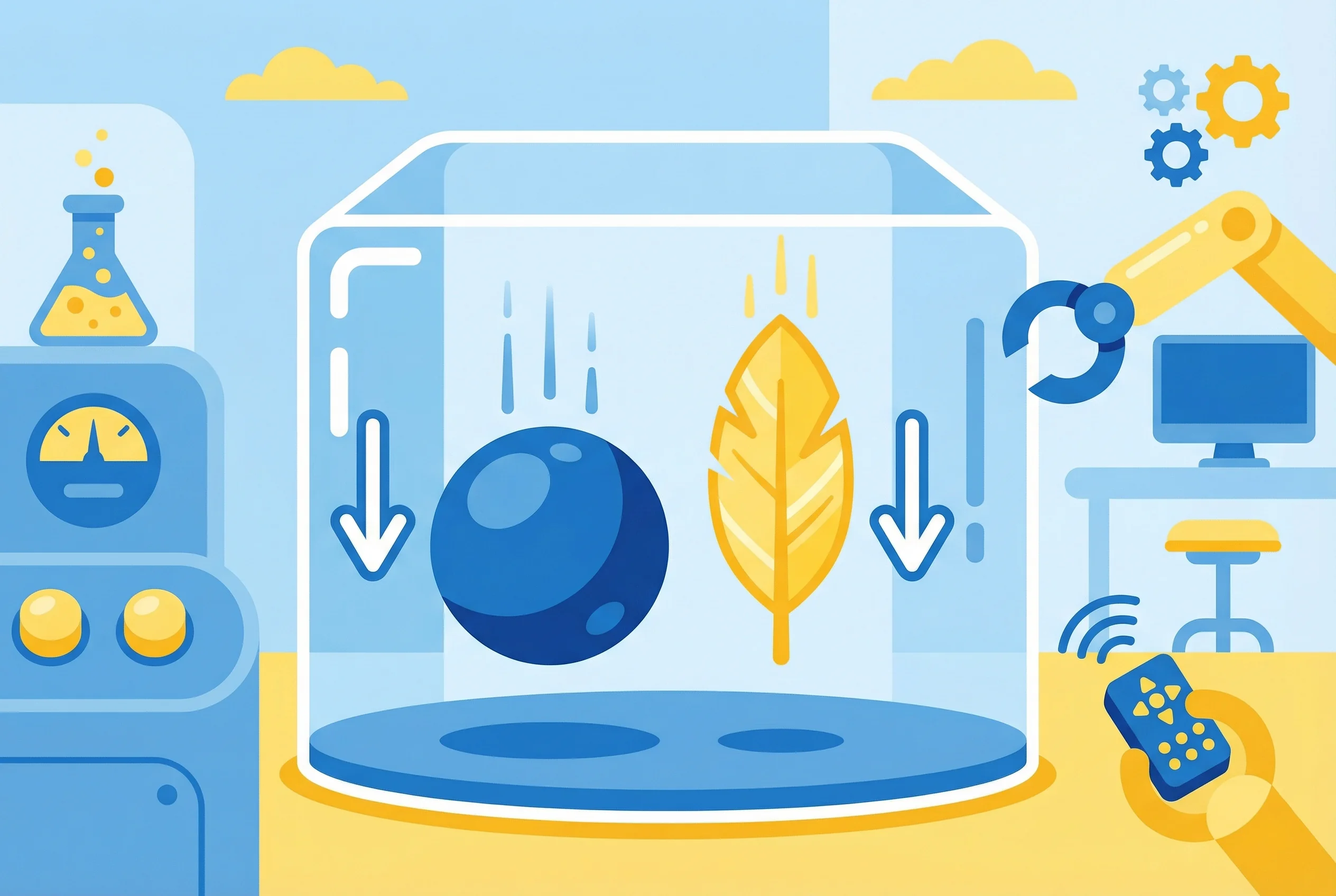
AAir resistance equalizes them
✗Not quite — Air resistance actually makes lighter objects fall slower (feathers vs. Rocks). Without air, all objects fall at same rate—Galileo's discovery!
BGravity accelerates all equally
✓Correct — Gravity accelerates all objects equally regardless of mass—9.8 m/s² on Earth. Heavier objects experience more force (F=mg) BUT also have proportionally more inertia (resistance to acceleration). F=ma, so a=F/m=g (mass cancels!). Apollo 15 astronaut dropped hammer and feather on Moon (no air)—fell together! Galileo proved this centuries ago from Leaning Tower of Pisa (probably apocryphal story, but concept correct)!
CWeight doesn't affect motion
✗Not quite — Weight (gravitational force) does affect motion, but it's perfectly balanced by mass (inertia), resulting in constant acceleration for all objects.
Answer this question
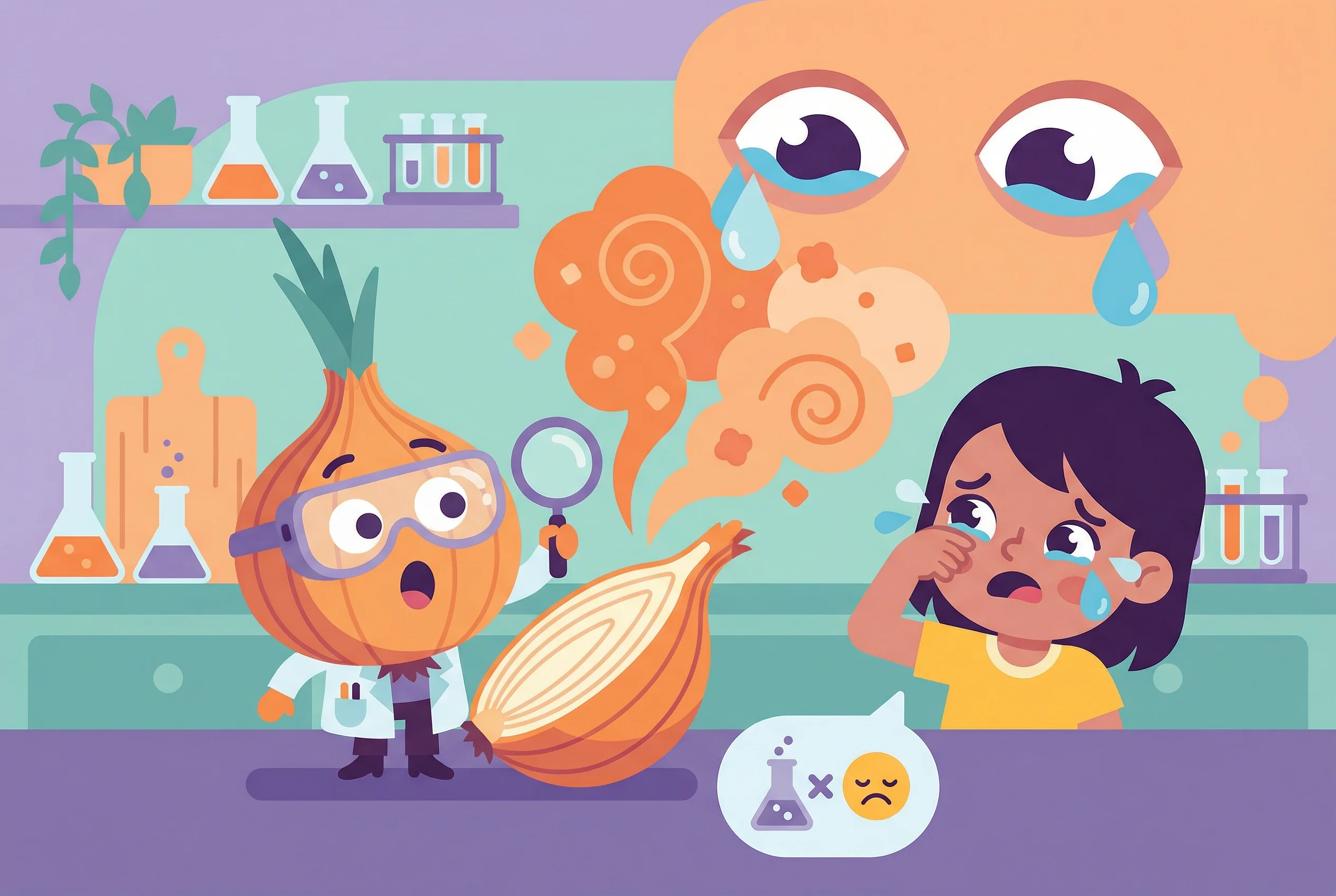
AThey contain spicy chemicals
✗Not quite — While onions do have strong compounds, it's not just 'spiciness' causing tears. The specific mechanism involves a chemical reaction that produces sulfuric acid in your eyes.
BThey release gas forming acid
✓Correct — When you cut onions, enzymes are released that react with sulfur compounds to create a gas. This gas reaches your eyes and reacts with your tears to form sulfuric acid. Your eyes produce more tears to wash away the irritation. Chilling onions helps reduce this reaction!
CThe smell triggers tears
✗Not quite — It's not the smell that triggers tears. The gas from onions chemically reacts with the moisture in your eyes to form acid, which causes the irritation and tearing.
Answer this question
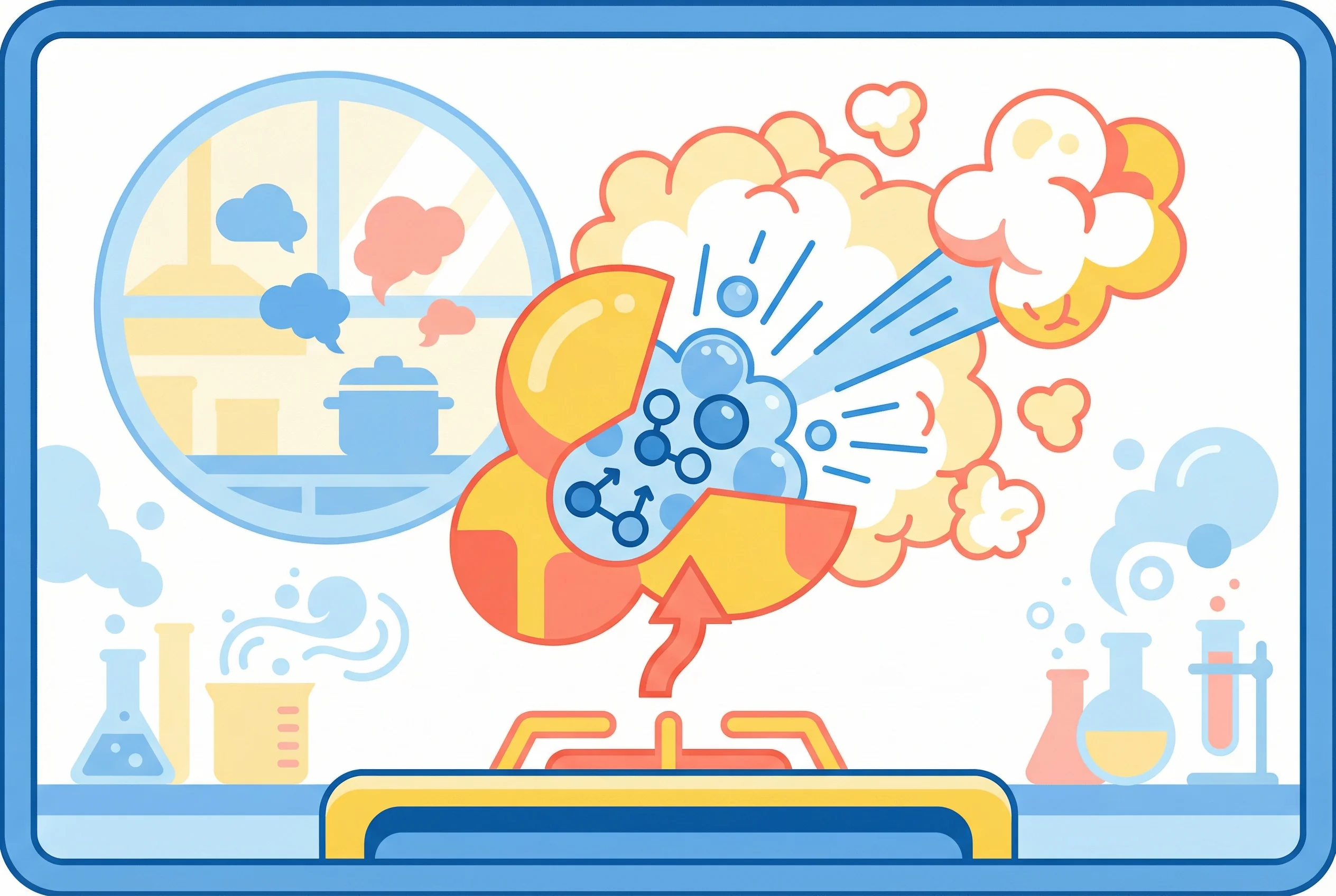
AHeat breaks the kernel
✗Not quite — Heat doesn't directly break the kernel. The shell is tough and can withstand high temperatures. What breaks it is the pressure buildup from water turning into steam inside the kernel.
BWater vapor builds pressure
✓Correct — Each popcorn kernel contains about 14% water inside a hard shell. When heated, this water turns to steam and builds up pressure. At about 180°C, the pressure reaches 9 times normal atmospheric pressure and the shell ruptures. The starch inside instantly expands into the fluffy white foam we love!
CAir expands inside
✗Not quite — There's no air pocket inside popcorn kernels. The pressure comes from water molecules turning into steam vapor. This phase change from liquid to gas creates much more pressure than air expansion would.
Answer this question
AWater molecules bond hexagonally
✓Correct — Water molecules bond at 120-degree angles due to hydrogen bonding. When ice crystals form, this angle creates six-fold symmetry. Each snowflake branch grows differently based on temperature and humidity it encounters—that's why each is unique!
BSix is nature's lucky number
✗Not quite — Six isn't lucky—it's physics! Water's molecular bonding angle naturally creates hexagonal structures.
CWind creates six-sided patterns
✗Not quite — Wind doesn't create the six-sided shape. The structure is determined by water's molecular bonding angles.
Answer this question
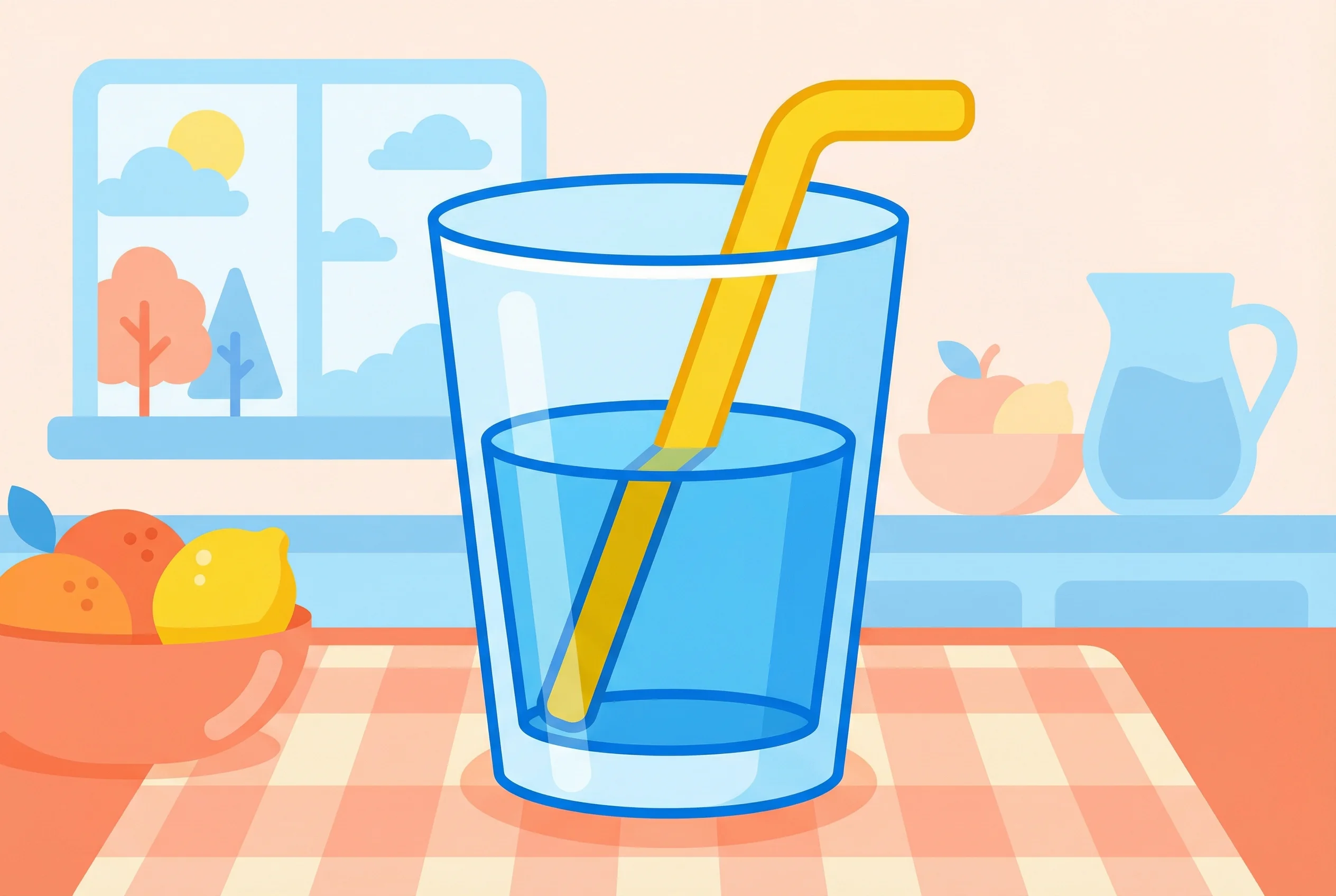
AWater pressure bends the straw
✗Not quite — The straw isn't actually bent. It appears bent because light refracts (bends) when crossing from water to air, changing the angle we see.
BEyes see underwater differently
✗Not quite — Eyes work the same. The bent appearance is real optical refraction—light changes direction crossing from water to air due to density difference.
CLight refracts at water surface
✓Correct — Light travels at different speeds in different materials. When light from the submerged part travels from water to air, it bends (refracts) because air is less dense. This makes the underwater portion appear offset from the above-water portion. It's refraction—light bending at interfaces!
Answer this question
AMetals are very dense materials
✗Not quite — Density doesn't determine conductivity. Metals conduct because they have free electrons—in metallic bonds, outer electrons aren't bound to specific atoms but move freely. These mobile electrons carry electric current efficiently. Some dense materials (like lead) conduct poorly; some light metals (like aluminum) conduct well.
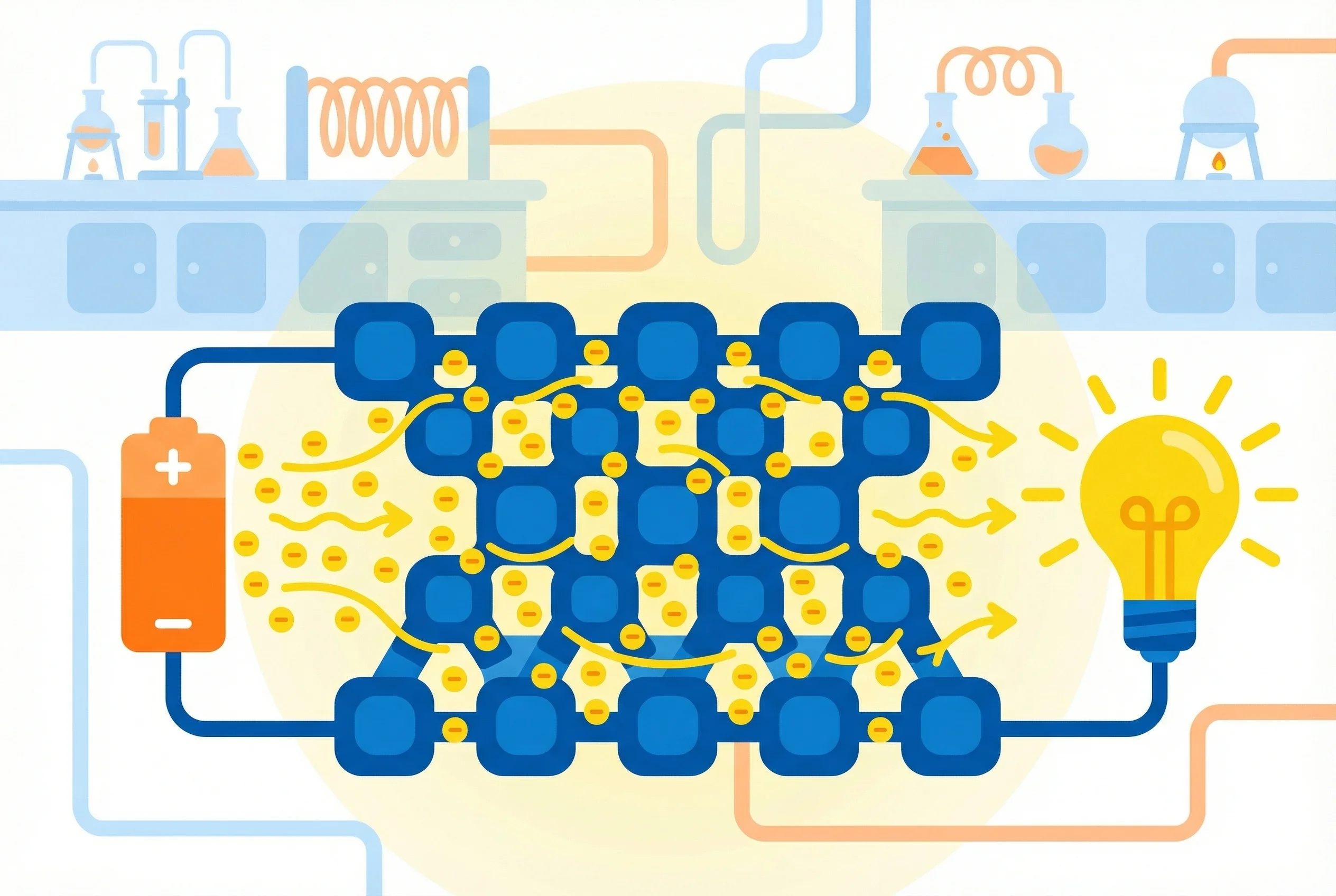
BFree electrons carry electricity
✓Correct — Metallic bonds create a 'sea' of free electrons—outer electrons aren't bound to specific atoms but move freely throughout the metal. When voltage is applied, these mobile electrons drift, carrying electric current. This electron mobility makes metals excellent conductors of electricity (and heat). Copper and silver have particularly mobile electrons, making them the best conductors.
CMetal atoms touch each other
✗Not quite — Atoms touching doesn't create conductivity—many solids have atoms in contact. Metals conduct because metallic bonds create free electrons that can move throughout the material, carrying current. It's electron mobility, not atom proximity, that creates conductivity.
Answer this question
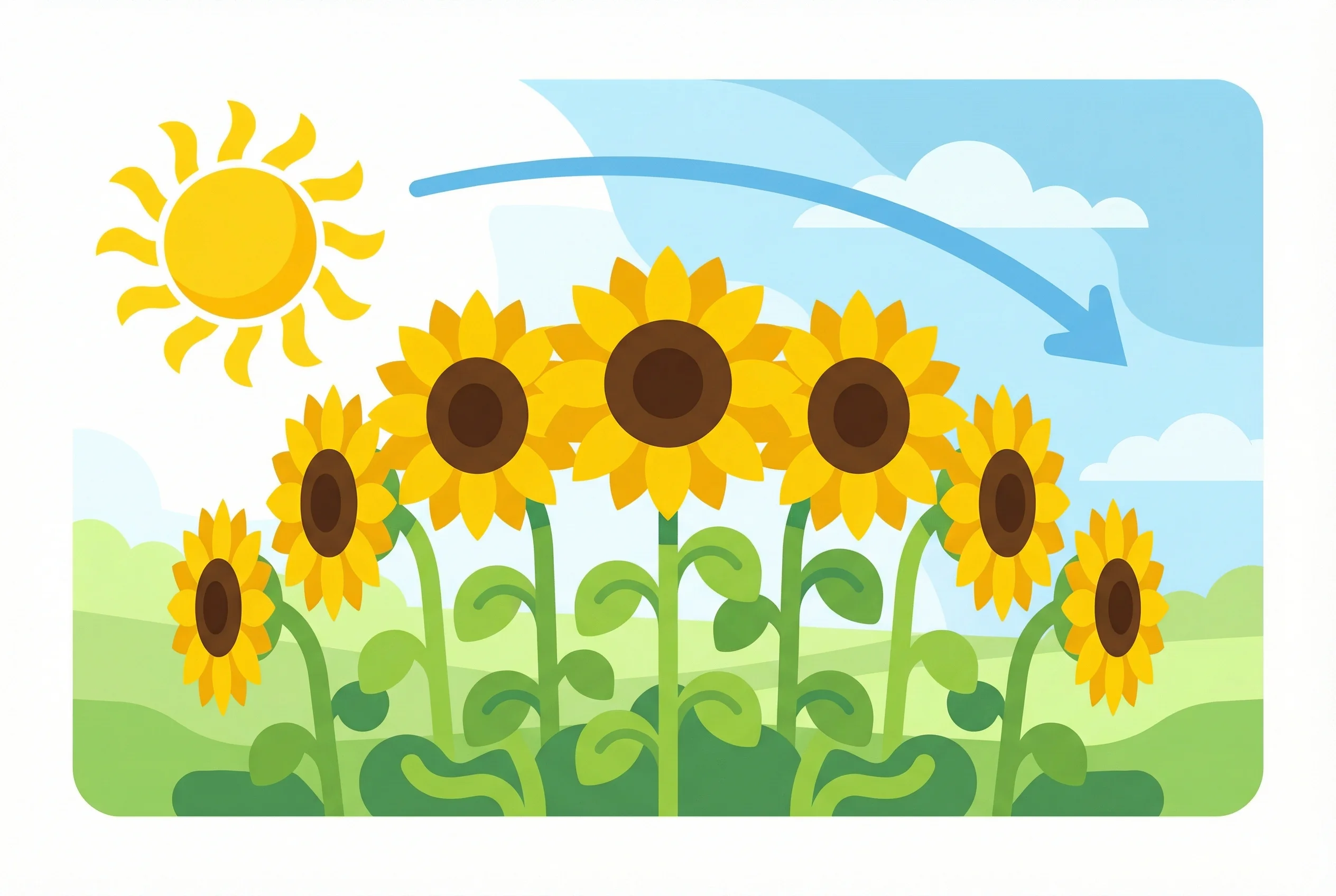
AIt maximizes photosynthesis
✓Correct — Young sunflowers track the sun from east to west during the day (heliotropism). This maximizes photosynthesis by keeping leaves perpendicular to sunlight. At night, they turn back east to greet the sunrise. The mechanism involves growth hormones: auxin accumulates on the shaded side, causing faster growth there, turning the plant toward light. Mature sunflowers stop and face east!
BAttract more bees
✗Not quite — While east-facing mature sunflowers do attract more bees in warm morning sun, young sunflowers track the sun specifically to maximize photosynthesis for growth.
CPrevent water loss
✗Not quite — Sun tracking isn't about water conservation. Sunflowers follow the sun to capture maximum light for photosynthesis. They use auxin hormones to grow faster on shaded sides, turning toward light.
Answer this question
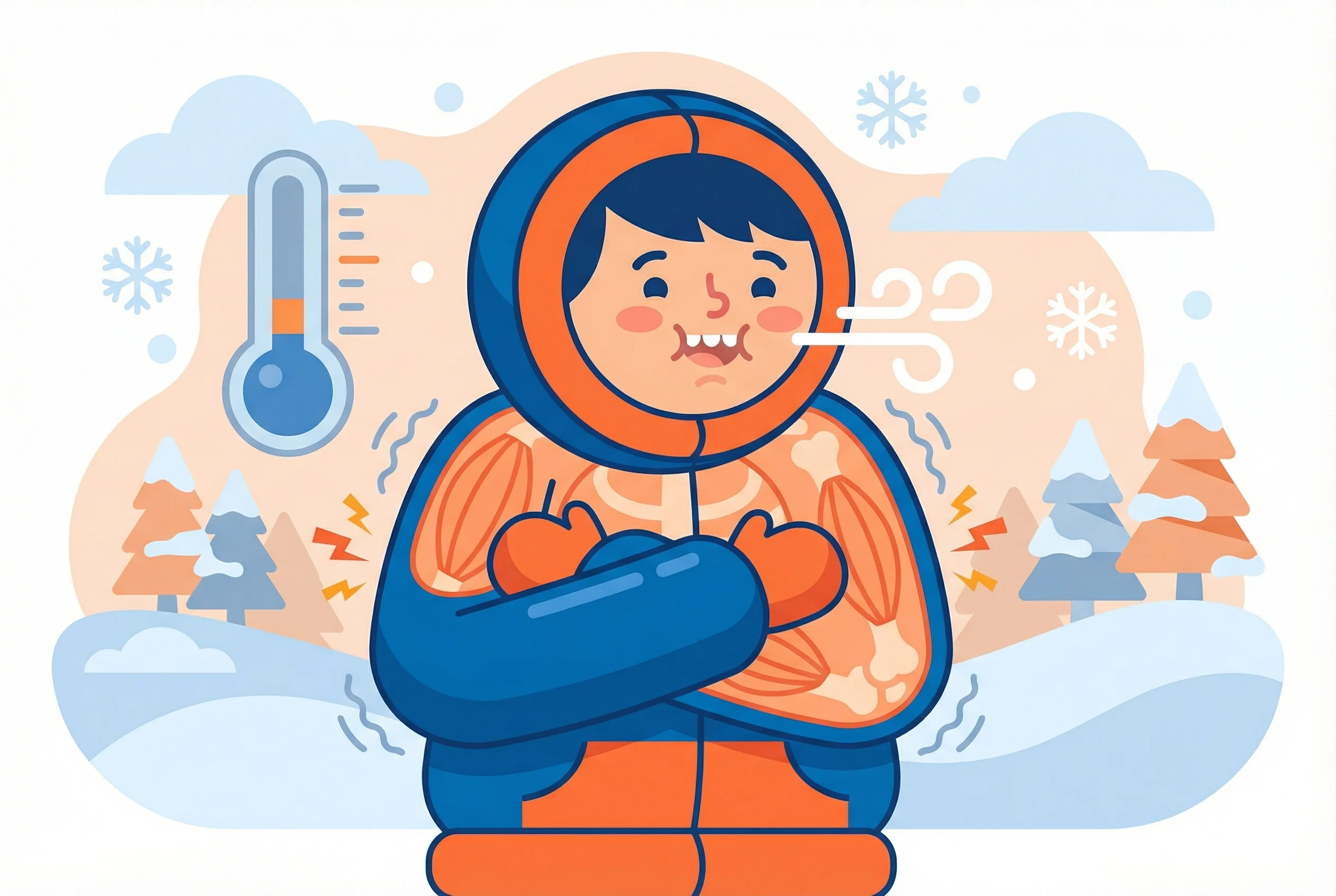
AMuscles contract to generate heat
✓Correct — Shivering is your body's automatic response to cold, controlled by the hypothalamus. When body temperature drops, your brain triggers rapid muscle contractions. These involuntary movements burn energy and generate heat through friction and metabolic activity. Shivering can increase heat production by up to five times, helping maintain your core temperature at 98.6°F (37°C).
BNerves are misfiring from cold
✗Not quite — Shivering isn't a nerve malfunction—it's a precisely controlled warming mechanism. The hypothalamus deliberately triggers muscle contractions to generate heat through metabolic activity.
CMuscles tense to conserve heat
✗Not quite — Simple muscle tension doesn't generate significant heat. Shivering involves rapid, repeated muscle contractions that burn energy and produce heat as a byproduct, actively warming the body.
Answer this question
AMoon's light heats the water
✗Not quite — Moonlight is just reflected sunlight and is very weak - it doesn't heat the ocean significantly. Temperature changes don't cause the regular twice-daily tides we observe. The tides are caused by gravitational forces, not thermal effects.
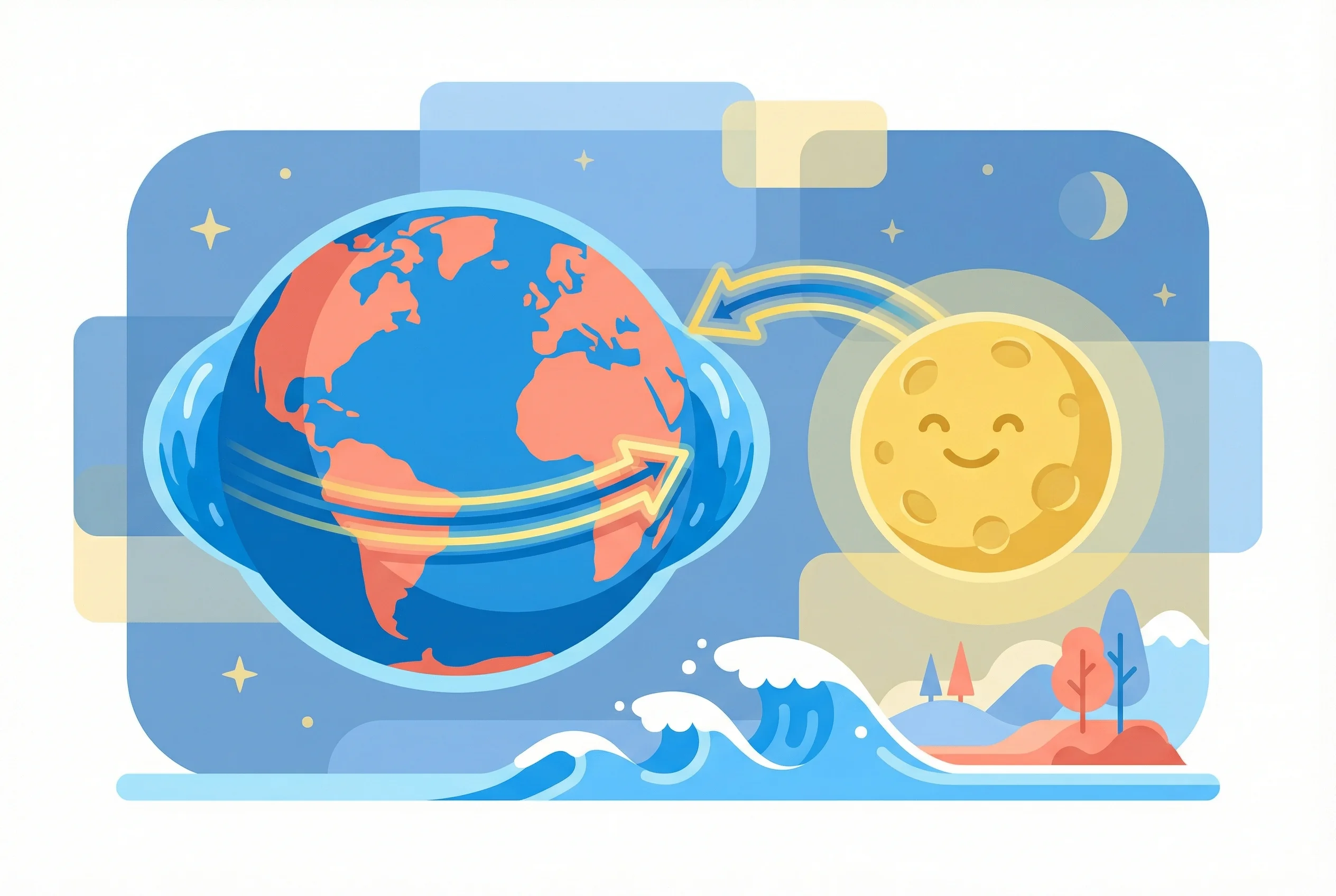
BMoon's gravity pulls the water
✓Correct — The Moon's gravity pulls on Earth's oceans. The side of Earth facing the Moon experiences stronger pull, creating a bulge of water (high tide). Surprisingly, the opposite side also gets high tide because Earth itself is pulled more than that distant water, leaving it 'behind' in a bulge. As Earth rotates, locations pass through these bulges, experiencing two high tides daily (every 12.4 hours). The Sun also affects tides but less strongly due to greater distance.
CMoon's magnetism attracts water
✗Not quite — The Moon has no significant magnetic field, and water isn't magnetically attracted anyway. Tides are caused by gravitational pull, not magnetism.
Answer this question
AHoney's large sugar molecules and strong bonds create high viscosity
✓Correct — Honey contains large sugar molecules (like fructose and glucose) that form strong hydrogen bonds with each other. These intermolecular forces make the molecules resist sliding past one another, creating high viscosity. Water molecules are much smaller and have weaker bonds, allowing them to flow freely. This is why honey flows about 10,000 times slower than water at room temperature.
BHoney is heavier, so gravity pulls it down more slowly
✗Not quite — While honey is denser than water (about 1.4 times heavier), density does not determine flow speed. Gravity pulls on all liquids equally based on their mass. Mercury is much heavier than honey but flows quickly because it has low viscosity. The flow resistance comes from internal friction between molecules (viscosity), not weight.
CHoney has tiny air bubbles that block the flow
✗Not quite — Pure honey contains virtually no air bubbles - it is nearly 80% sugars dissolved in 20% water. Air bubbles would actually make a liquid flow slightly faster by reducing friction, not slower. Honey's slow flow is entirely due to viscosity from intermolecular forces, not trapped air. You can verify this by observing that clear, bubble-free honey still flows very slowly.
Answer this question
Answer key: 1. B; 2. B; 3. B; 4. A; 5. C; 6. B; 7. A; 8. A; 9. B; 10. A.
Geography and Places Pub Quiz Questions
ACoincidence in shapes
✗Not quite — It's not coincidence. Continental shapes match because they were once joined as the supercontinent Pangaea before plate tectonics split them apart.
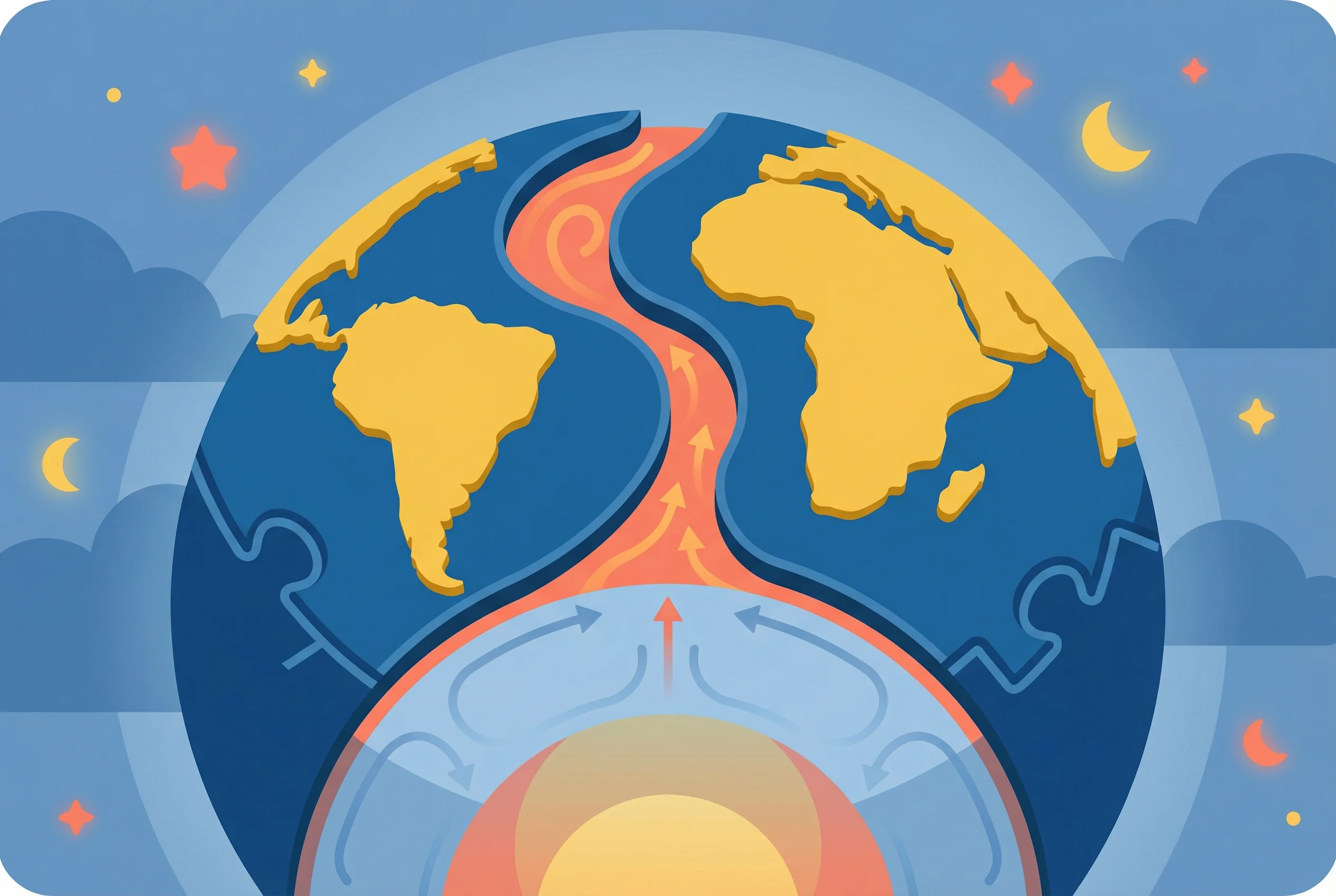
BOnce joined supercontinent
✓Correct — About 200 million years ago, all continents formed one supercontinent called Pangaea. Plate tectonics (driven by mantle convection) split it apart. Africa and South America's coastlines fit together because they were once connected! Fossil evidence, rock formations, and matching coastlines prove continental drift!
COcean erosion shaped edges
✗Not quite — Erosion doesn't create the fit. Continents match because they split from Pangaea through plate tectonics, not from coastal shaping.
Answer this question
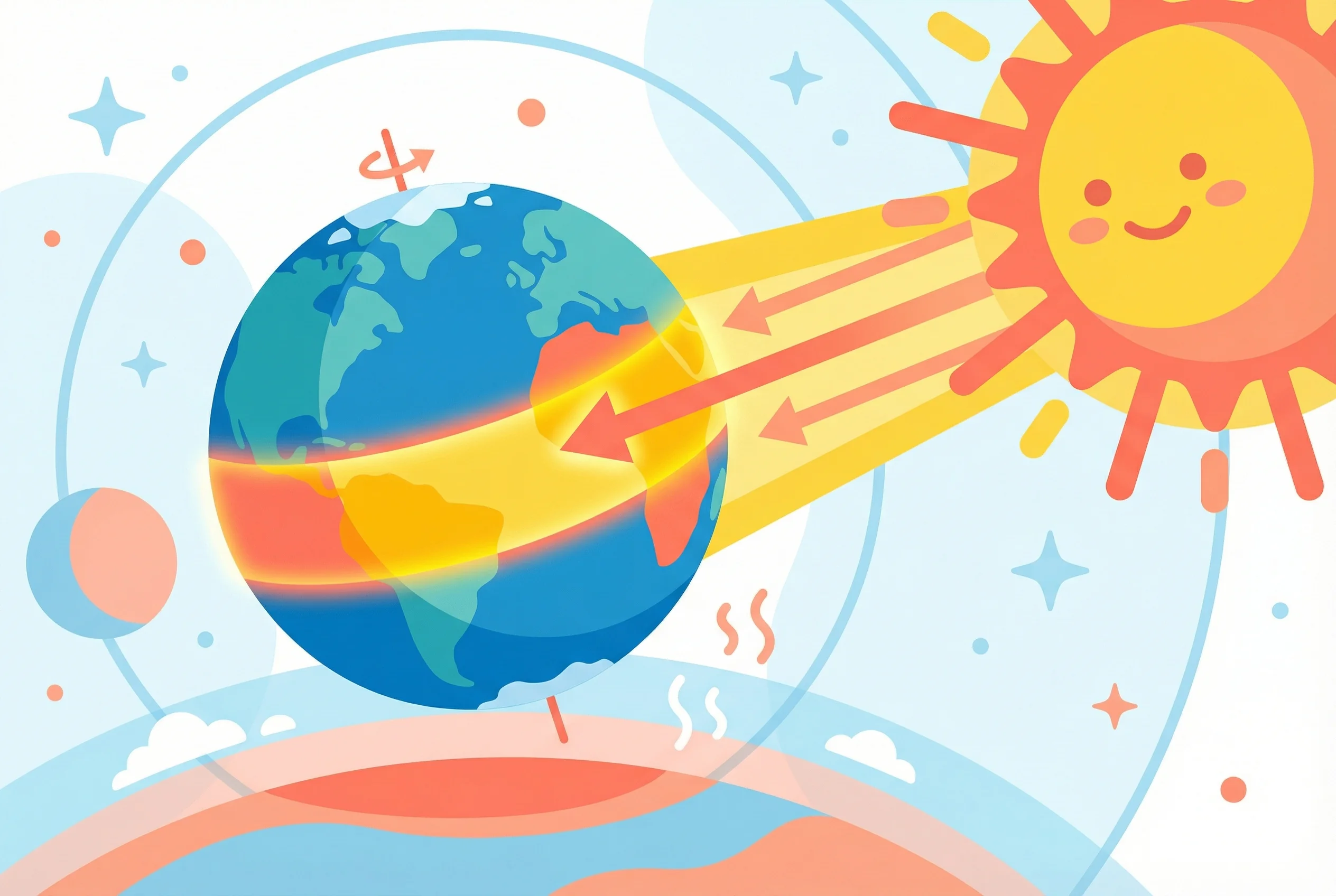
ASun directly overhead year-round
✓Correct — The equator receives direct (near-90°) sunlight year-round. Solar rays hit perpendicular to Earth's surface, concentrating energy per square meter. At poles, sunlight arrives at low angles, spreading over larger areas—less intense. Earth's tilt gives temperate zones seasons, but the equator always gets direct sun. Maximum solar concentration = perpetual warmth!
BCloser to the sun
✗Not quite — The equator isn't closer to the sun (Earth-sun distance varies minimally). It's warm because it receives direct overhead sunlight concentrating solar energy.
COcean currents bring heat
✗Not quite — Ocean currents do distribute heat, but the equator is warm mainly because it receives direct overhead sunlight year-round.
Answer this question
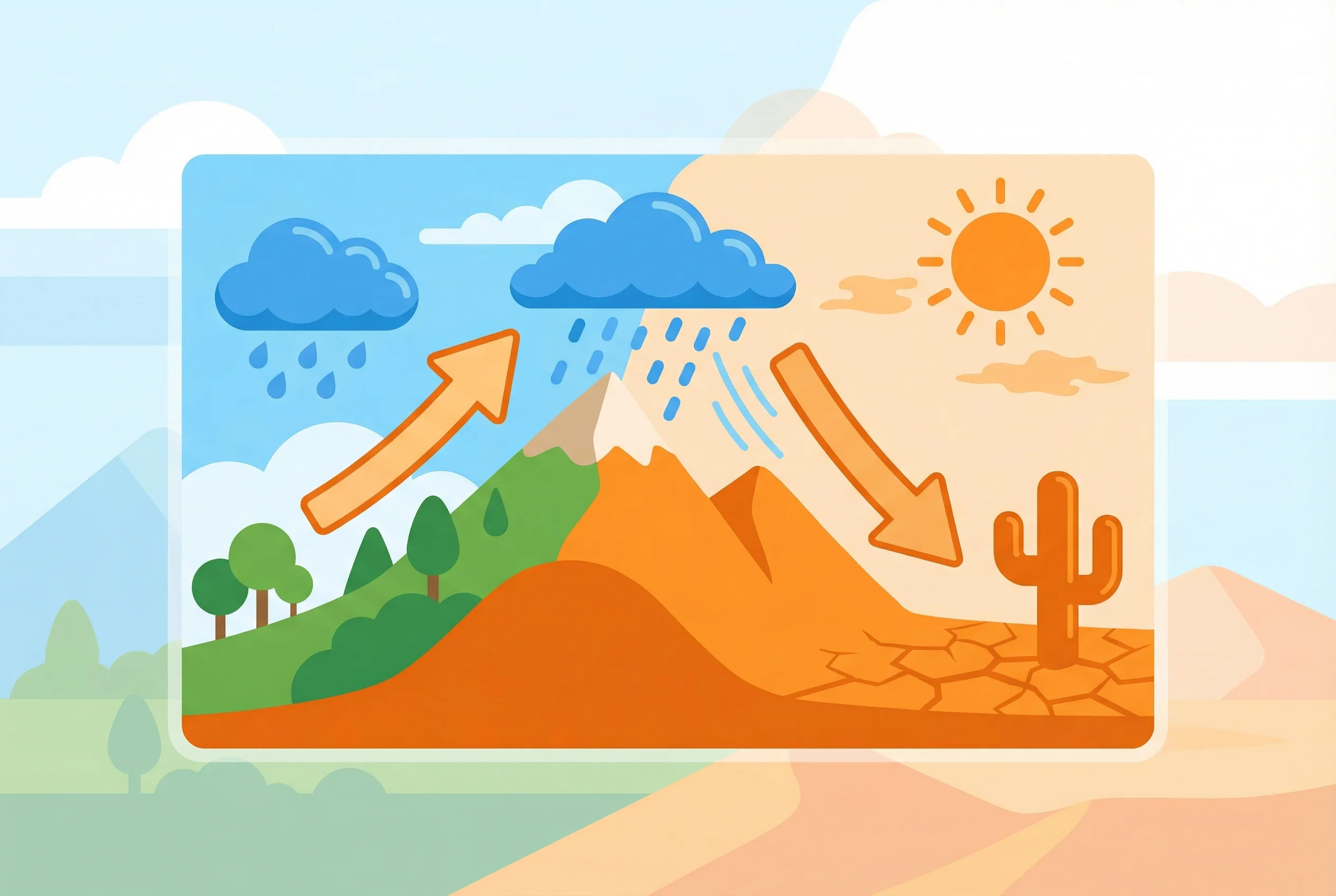
AAir circulation patterns
✓Correct — Most deserts form around 30° latitude where atmospheric circulation creates high-pressure zones. Air rises at the equator (releasing moisture as rain), flows toward poles, cools and descends at 30°, warming as it falls. Warm descending air can't form rain clouds. This creates arid zones like Sahara, Arabian, and Australian deserts!
BToo much sun evaporates water
✗Not quite — Evaporation is high, but deserts exist primarily because atmospheric circulation brings dry descending air that prevents rain cloud formation.
CSand absorbs all moisture
✗Not quite — Sand doesn't absorb moisture to create deserts. Deserts form because of atmospheric circulation patterns that bring dry air, not sand properties.
Answer this question
AWind blows snow upward
✗Not quite — Wind doesn't blow snow upward. Mountains have snow because temperature decreases with altitude—about 6.5°C per 1000m. High peaks stay below freezing.
BMountains attract cold air
✗Not quite — Mountains don't attract cold air. Snow caps form because temperature drops with altitude (lapse rate), keeping peaks below freezing even when valleys are warm.
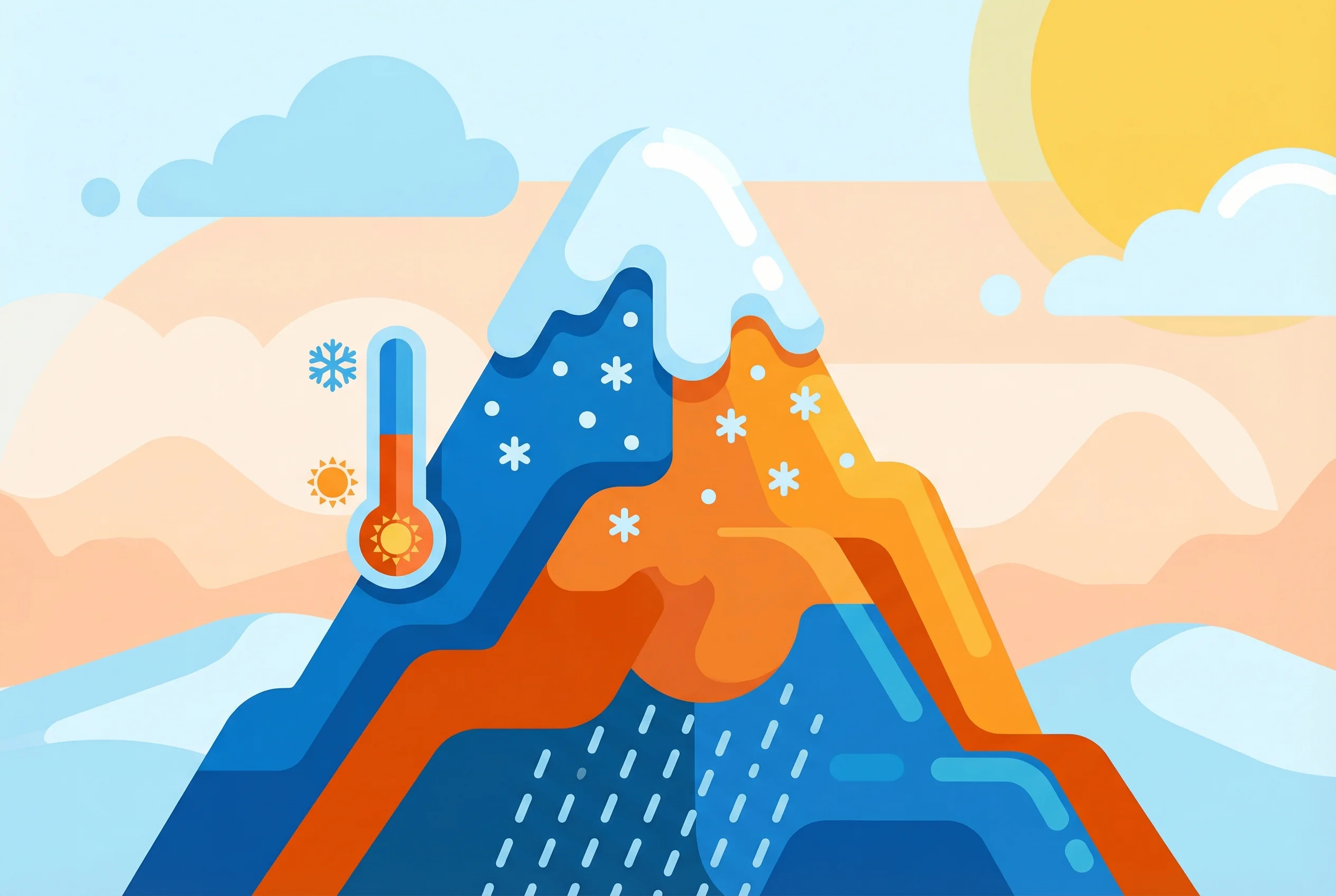
CTemperature drops with altitude
✓Correct — Atmospheric temperature decreases with altitude (about 6.5°C per 1000 meters). High mountain peaks are so cold that snow never melts, even in summer. The snow line varies by latitude—near equator it's ~5000m, at poles it's sea level. That's why tropical mountains like Kilimanjaro have snow!
Answer this question
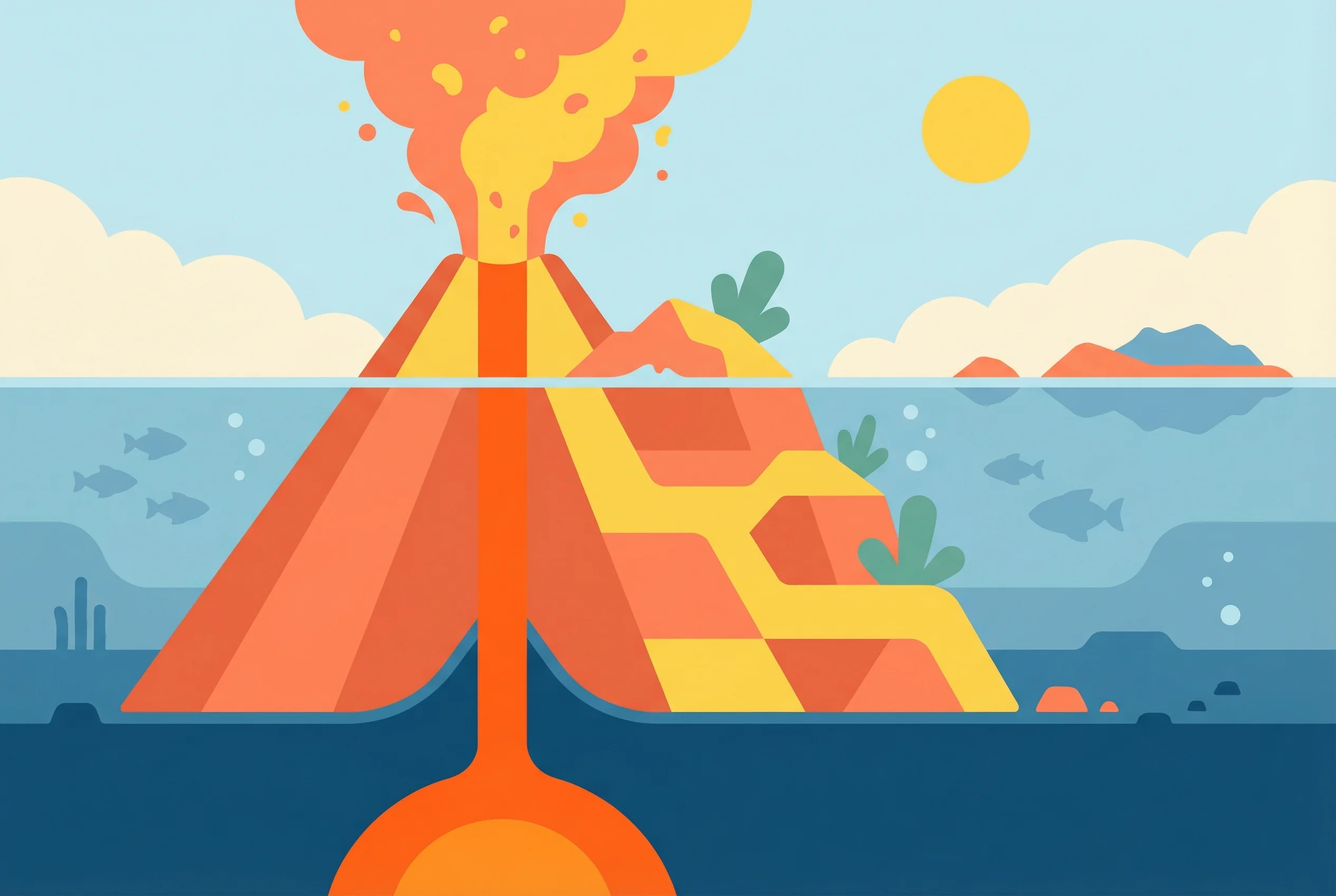
AVolcanic activity builds up
✓Correct — Most oceanic islands form from underwater volcanic eruptions. Magma builds up over millions of years until it breaks the surface. Hawaii formed this way over a hotspot. Some islands form from coral reefs growing in shallow water. Continental islands (like Britain) are parts of continents separated by rising sea levels!
BCoral piles create land
✗Not quite — Coral atolls do form from reef growth, but most oceanic islands form from volcanic activity building up from the seafloor.
COcean floor rises randomly
✗Not quite — The ocean floor doesn't rise randomly. Islands form through specific processes: volcanic activity, coral reef building, or continental separation.
Answer this question
AUnderground salt deposits dissolve
✗Not quite — Dissolved minerals do contribute, but salt lakes form primarily because they have no outlet—water evaporates leaving minerals behind.
BSeawater trapped long ago
✗Not quite — Most salt lakes weren't formed from trapped seawater. They become salty because water flows in carrying dissolved minerals, then evaporates, leaving salt behind with no outlet to the ocean.
CNo outlet causes accumulation
✓Correct — Salt lakes (Dead Sea, Great Salt Lake) are endorheic—no outlet river. Rivers flow in carrying dissolved minerals, water evaporates, but minerals stay. Over thousands of years, salts concentrate, becoming more saline than oceans! The Dead Sea is 34% salt (ocean is 3.5%). It's mineral accumulation through evaporation!
Answer this question
ADifferent salt levels
✗Not quite — Salinity doesn't define seas versus oceans. Both can have varying salt levels. The distinction is geographic: seas are partially enclosed by land.
BLocated in warmer climates
✗Not quite — Climate has nothing to do with the naming. The Arctic Sea is freezing! Seas exist in all climate zones. The distinction is purely geographic—seas are smaller bodies partially enclosed by land.
CPartially enclosed by land
✓Correct — Seas are bodies of water partially or fully enclosed by land (Mediterranean Sea, Caribbean Sea). Oceans are vast open waters between continents (Pacific, Atlantic). Seas are generally smaller, shallower, and connected to oceans. Some 'seas' (Dead Sea, Caspian Sea) are actually landlocked lakes—historical naming!
Answer this question
ALand extends into water
✓Correct — A peninsula is land connected to a larger landmass but extending into surrounding water on three sides (peninsula = 'almost island' in Latin). Florida, Italy, and Korea are peninsulas. They form from coastal erosion shaping land, or land extending into rising seas, or tectonic activity creating jutting landforms!
BErosion isolates land
✗Not quite — Erosion can shape peninsulas, but they're defined as land extending into water while remaining connected to mainland—not isolated.
CFloodwaters surround land
✗Not quite — Floods don't create peninsulas. Peninsulas are permanent geographic features—land connected to mainland but extending into water.
Answer this question
APlants create moisture
✗Not quite — Plants don't create oases—water does! Oases form where groundwater springs reach the surface, allowing plants to grow.
BDesert mirage effect
✗Not quite — Mirages are optical illusions. Oases are real—underground water reaching the surface through springs or shallow water tables.
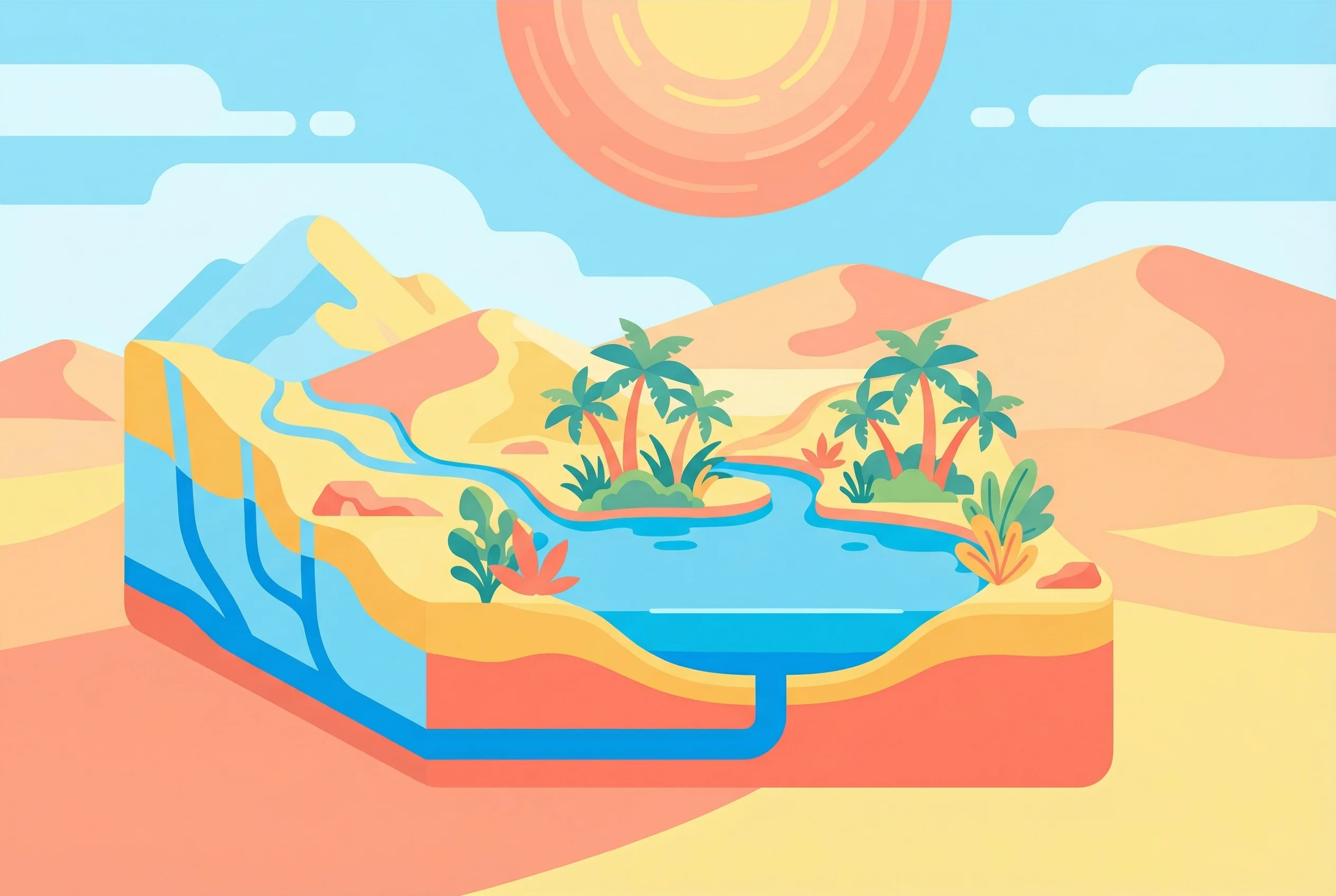
CGroundwater reaches surface
✓Correct — Oases form where underground water (aquifer) surfaces due to geological features—faults, impermeable rock layers, or depressions reaching the water table. Water from distant rain (sometimes mountains) travels underground and emerges, creating isolated fertile spots. Sahara oases sustained ancient trade routes!
Answer this question
AOcean pulls water magnetically
✗Not quite — The ocean doesn't have magnetic properties that pull water. Water is not magnetic. Rivers flow because of gravity - they follow the path of least resistance downhill, and oceans are at the lowest elevation.
BGravity pulls water downhill
✓Correct — Water always flows downhill due to gravity, following the path of least resistance. Rivers start at high elevations (mountains, hills) and flow toward the lowest point - usually the ocean. The land surface naturally slopes toward the sea. Rivers carve valleys over time, creating channels that guide the flow. All rivers eventually reach the ocean or an inland lake/sea at a lower elevation!
CRivers follow underground tunnels
✗Not quite — Rivers don't follow underground tunnels - they flow on the surface along channels they've carved through erosion. Groundwater can flow underground, but rivers are surface water flowing downhill due to gravity, creating their own paths over geological time.
Answer this question
Answer key: 1. B; 2. A; 3. A; 4. C; 5. A; 6. C; 7. C; 8. A; 9. C; 10. B.
History and Culture Pub Quiz Questions
ATo show you're not holding a weapon
✓Correct — Historical evidence suggests handshaking originated in ancient Greece and Rome as a gesture of peace. By extending your right hand (the weapon hand) and grasping another person's hand, you demonstrated you weren't holding a weapon. The up-and-down shaking motion may have helped dislodge any daggers hidden in sleeves. This practical security check evolved into a universal greeting symbolizing trust and goodwill.
BTo check if someone has a fever
✗Not quite — While modern infrared thermometers can detect fever through the forehead, handshaking was never designed for health checks. In fact, handshaking can spread germs, which is why many cultures developed alternative greetings like bowing. The original purpose was to demonstrate you weren't carrying weapons in your dominant hand.
CTo exchange good luck through touch
✗Not quite — Though many cultures have superstitions about touch, handshaking's origin was purely practical, not mystical. The custom developed as a security measure - showing your weapon hand was empty. The symbolism of trust and friendship came later, after the gesture became common. Some cultures believed in 'luck transfer' through touch, but this wasn't why handshaking started.
Answer this question
AFlags required by international law
✗Not quite — While international conventions govern flag use (ships, embassies), countries adopted flags to represent identity and unity, not because of requirements. Flags emerged from military banners and became symbols of sovereignty and national character.
BHistorical accident from wars
✗Not quite — Flags evolved from military banners used to identify armies, but they became national symbols representing identity, values, and unity. Their adoption was deliberate—expressing sovereignty and shared identity—not accidental.
CSymbol of identity and unity
✓Correct — Flags symbolize national identity, values, and unity. They emerged from military banners (identifying armies in battle) and became powerful symbols of sovereignty and shared identity. Colors and symbols convey history and values (stars, stripes, crescents, etc.). Flags mark territory, represent countries diplomatically, and create emotional bonds among citizens.
Answer this question
ARabbits became spring symbols in European folklore
✓Correct — The Easter Bunny comes from later European folk traditions, where rabbits were linked with spring and fertility.
BThe Gospels place a rabbit at the tomb
✗Not quite — The Easter Bunny is not part of the Gospel resurrection story.
CChurch law chose rabbits as Easter animals
✗Not quite — Rabbits entered Easter through folklore and custom, not through a universal church law.
Answer this question
AThe Bible requires Easter egg exchange
✗Not quite — The Bible does not command people to exchange Easter eggs; that custom developed later.
BSpring eggs kept longer than other foods
✗Not quite — Eggs became symbolic mainly because of what they represented, not because they stored better.
CEggs symbolized new life and later resurrection
✓Correct — The egg had long symbolized new life in spring, and Christians later connected it to Jesus’ resurrection.
Answer this question
AThey turned the egg symbol into a family game
✓Correct — Egg hunts made a religious-seasonal symbol fun and participatory, especially for children and families.
BPeople once buried eggs to keep them fresh
✗Not quite — Easter egg hunts did not come from a food-storage trick; they grew as a holiday custom and game.
CChurches required children to find eggs first
✗Not quite — Egg hunts are a later family tradition, not a universal church requirement.
Answer this question
AThey kept the symbol but worked better as gifts
✓Correct — Chocolate eggs kept the egg symbol while becoming easier to package, sell, gift, and mass-produce in modern Easter culture.
BChurches banned decorated real eggs
✗Not quite — Decorated real eggs were not universally banned; chocolate eggs rose because they fit modern gifting and candy markets.
CChocolate eggs came from Passover ritual food
✗Not quite — Chocolate eggs are a later confectionery product, not an ancient Passover ritual food.
Answer this question
AIt follows a spring moon-and-Sunday rule
✓Correct — In Western Christianity, Easter is set as the first Sunday after the first full moon on or after the spring equinox, so its date moves each year.
BIt is fixed to April's first Sunday
✗Not quite — Easter is not simply April's first Sunday; it can fall from late March to late April.
CChurch leaders pick a new date each year
✗Not quite — Easter follows a rule-based calculation, not a new annual choice by church leaders.
Answer this question
ATo show their weapon hand is empty and they come in peace
✓Correct — The salute originated in medieval times when knights would raise their visors or weapon hands to show they held no weapons and meant no harm. This gesture evolved into the modern military salute - raising the right hand (traditionally the sword hand) to the forehead demonstrates the hand is empty and the person comes in peace. The crisp, formal gesture became standardized as a sign of respect and discipline.
BTo shade their eyes from the sun while recognizing officers
✗Not quite — While the salute does raise the hand near the eyes, this is not its purpose. The gesture predates modern military uniforms and was practiced even without hats or in indoor settings where sun glare was not a factor. The salute's origins relate to showing peaceful intentions, not practical vision concerns.
CTo touch their hat as a sign of removing it out of respect
✗Not quite — Though touching the hat brim became part of saluting etiquette in some periods, this is not the origin. Removing one's hat was indeed a civilian gesture of respect, but the military salute specifically comes from the medieval practice of raising the weapon hand to show it was empty. The standardized hand-to-forehead position evolved from this security gesture, not from hat-removal customs.
Answer this question
AHe traveled slowly overland and stayed years at different rulers' courts
✓Correct — Marco Polo left Venice in 1271 and reached China around 1275 (4 years), but then served Kublai Khan for 17 years before returning home in 1295. Medieval travel was slow - crossing mountains, deserts, and dealing with bandits. The Polo family also stopped for extended periods at various courts to trade, rest, and gain safe passage. The return journey alone took 3 years by sea.
BHe got lost in the desert multiple times and had to backtrack
✗Not quite — While the Silk Road did cross harsh deserts like the Gobi and Taklamakan, Marco Polo had experienced guides and traveled in caravans. Getting lost was not the main reason for the long duration. The journey was well-established by merchants and diplomats, though it was dangerous due to bandits, extreme weather, and difficult terrain.
CHe was imprisoned by Mongol raiders for 15 years before reaching China
✗Not quite — Marco Polo was never imprisoned by raiders during his journey to China. He actually enjoyed the protection and favor of powerful rulers, especially Kublai Khan, who employed him as a diplomatic envoy. The Mongol Empire at that time had established the 'Pax Mongolica' which made Silk Road travel safer than in previous centuries.
Answer this question
AHer own memoirs were lost
✗Not quite — A common myth: Some Qing women did write memoirs or poetry. The real barrier was not illiteracy but the social prohibition on women seeking public recognition. For instance, the poet Wang Duan published under a male pseudonym, showing that skill wasn't the issue.
BPreserved through husband's memoir
✓Correct — This is correct. Chen Yun's memory survives almost entirely through her husband Shen Fu's autobiographical work 'Six Records of a Floating Life'. Qing gender norms prohibited women from publishing, so her voice is filtered through his perspective. This makes her story a rare glimpse into a woman's inner life, but mediated by male narration.
CHer family destroyed her records
✗Not quite — While Chen Yun died young, that is not the main reason. Many women died young without being remembered. The key is that Shen Fu's literary skill and willingness to write about domestic life made her story endure despite gender barriers. Most Qing women with similar fates were simply forgotten.
Answer this question
Answer key: 1. A; 2. C; 3. A; 4. C; 5. A; 6. A; 7. A; 8. A; 9. A; 10. B.
Music and Sound Pub Quiz Questions
ATo control the pitch - tighter drumheads vibrate faster and produce higher sounds
✓Correct — Drumhead tension directly affects vibration frequency. When you tighten the drumhead, you increase the restoring force that pulls the membrane back to its resting position. This makes it vibrate faster (higher frequency), producing a higher-pitched sound. Professional drummers adjust tension to tune their drums to specific notes, just like tuning a guitar string.
BTo make the drum louder - tight drumheads amplify sound waves more
✗Not quite — While tension affects sound quality, it does not primarily control volume. Loudness depends more on how hard you hit the drum and the drum's size and construction. A loose drumhead can actually produce quite loud sounds, though the tone quality may be poor and the pitch lower.
CTo prevent the drumhead from tearing - loose drumheads break easily when hit
✗Not quite — Although proper tension does help drumhead longevity, this is not the main reason for tightening. Drumheads are made from durable materials like Mylar or animal skin designed to withstand repeated impacts. The primary purpose of tension adjustment is sound control - to achieve the desired pitch and tone quality for musical performance.
Answer this question
AStrings stretch and lose tension, changing their vibration frequency
✓Correct — Guitar strings are under high tension (around 75-90 pounds total). Temperature changes, humidity, and repeated playing cause the metal strings to gradually stretch and lose tension. Since frequency = √(tension/mass per length), lower tension means lower frequency, making notes sound 'flat' or off-pitch. This is why guitars need tuning before each playing session.
BThe wood body shrinks and expands, moving the strings closer together
✗Not quite — While wood does expand and contract with humidity and temperature, this affects the neck relief and action (string height), not the spacing between strings. The tuning issue comes from changes in string tension itself. String spacing remains constant because strings are anchored at fixed positions on the nut and bridge.
CSound waves from playing gradually wear down the metal coating
✗Not quite — While strings do wear out over time from oxidation and accumulated finger oils, this wearing process takes weeks or months, not the hours between tuning sessions. The immediate need for tuning comes from tension loss, not material degradation. Worn strings sound dull but can still hold tune if tension is maintained.
Answer this question
AThey feel the vibrations and bass through their body and floor
✓Correct — Sound is vibration traveling through air. Deaf dancers feel these physical vibrations through their feet on the floor, their hands on speakers, and pressure changes in their chest. Bass frequencies (low notes) create especially strong vibrations that can be felt throughout the body. Many deaf dancers also learn to interpret visual cues from other dancers and feel the rhythm structure through tactile sensation. This shows that 'hearing' music is not just about ears - it is about perceiving vibrations!
BThey memorize exact timing by counting seconds in their head
✗Not quite — While some dancers might count beats mentally, this method would not allow them to stay synchronized with live music that varies in tempo or has complex rhythms. Counting seconds is too rigid and does not account for the natural flow and changes in actual music. Deaf dancers need real-time feedback from the music itself, which they get through feeling vibrations, not through mental counting alone.
CThey watch flashing lights that are synchronized to the beat
✗Not quite — While visual cues like flashing lights can help, they are not the primary method deaf dancers use. Relying solely on lights would be limiting and would not convey the richness of rhythm, intensity changes, or the emotional quality of music. The main way deaf people experience music is through physical vibrations - the same sound waves hearing people detect with ears, but perceived through touch receptors in the skin and body instead.
Answer this question
AGas pressure squeezes the throat
✗Not quite — Gas pressure isn't what changes your voice. It's the speed of sound in helium versus air that creates the high-pitched effect.
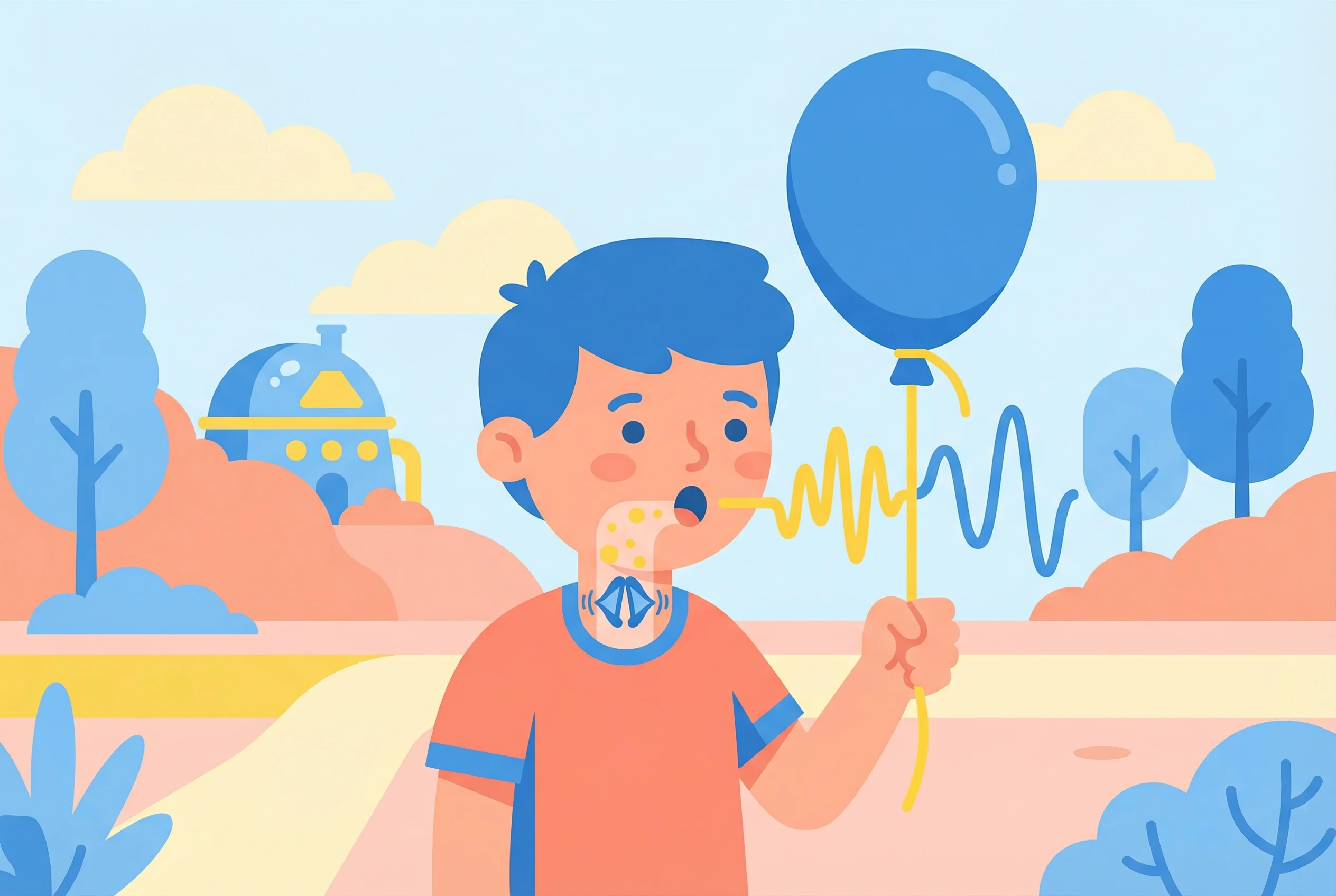
BSound travels faster in helium
✓Correct — Sound travels nearly 3 times faster in helium than in air. This increases the resonant frequencies in your vocal tract, making your voice sound higher-pitched. Your vocal cords vibrate the same, but the sound quality changes.
CHelium chemically changes voice box
✗Not quite — Helium is inert and doesn't react chemically with your body. The effect is purely physical—sound waves move faster through helium.
Answer this question
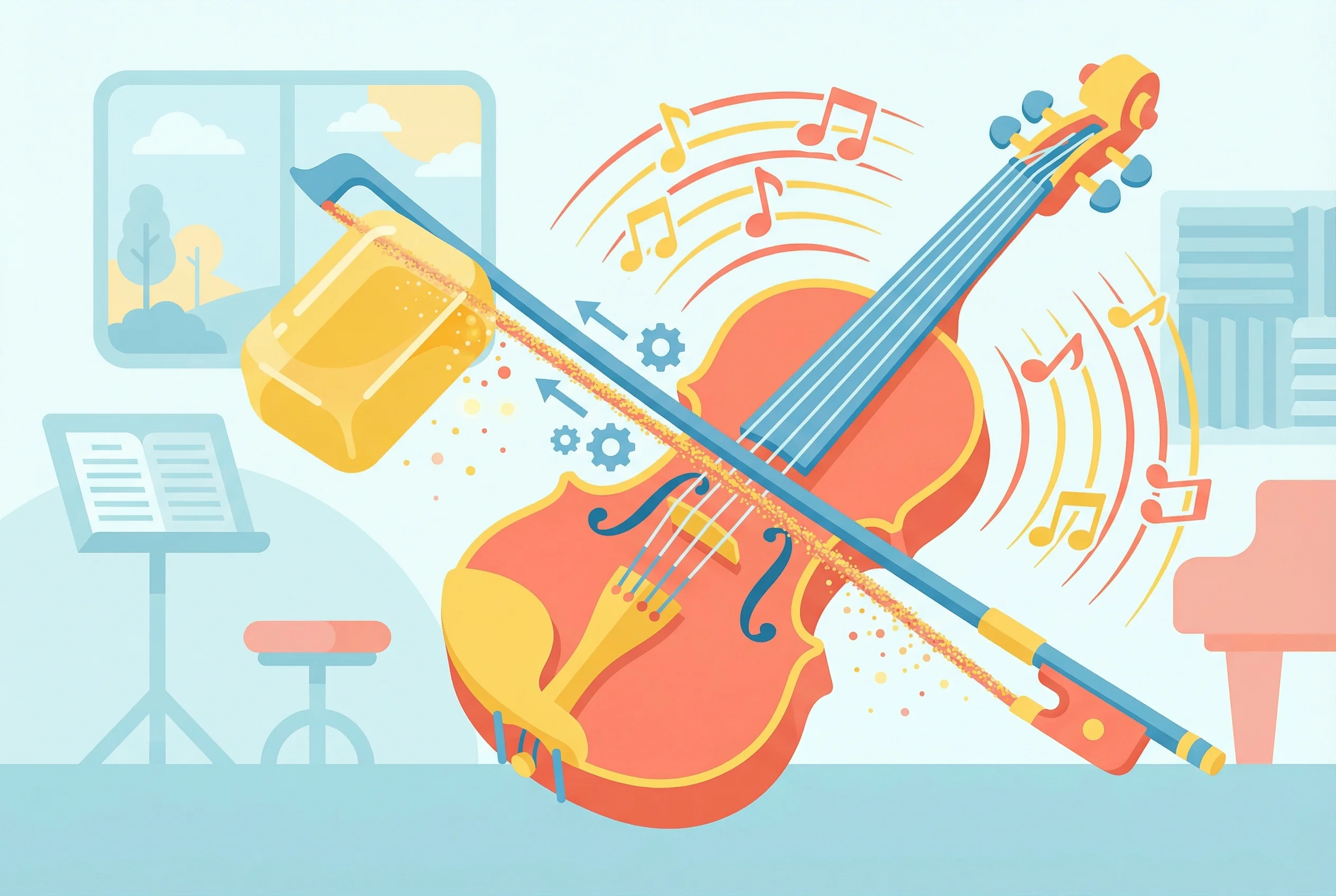
ACreates friction to vibrate strings
✓Correct — Rosin is sticky tree resin that creates friction when bow hair rubs across strings. Without rosin, the bow would slide smoothly without making strings vibrate. The friction from rosin causes strings to stick and slip rapidly, creating the vibrations that produce sound.
BProtects strings from damage
✗Not quite — Rosin is for the bow, not string protection. It helps the bow grip strings to make them vibrate and produce sound.
CMakes bow slide more smoothly
✗Not quite — Rosin does the opposite—it makes the bow sticky, creating the friction needed to vibrate strings and produce sound.
Answer this question
ACheaper to make two colors only
✗Not quite — The two colors serve a musical purpose, not economic. They help distinguish between natural notes and sharps/flats.
BShows sharps/flats vs natural notes
✓Correct — White keys represent the seven natural notes (C, D, E, F, G, A, B) in Western music. Black keys are the sharps and flats between them. This visual pattern helps pianists quickly identify notes and navigate the keyboard without looking.
CWhite keys play melody only
✗Not quite — Both black and white keys can play melody or harmony. The colors indicate note type (natural vs sharp/flat), not musical function.
Answer this question
AClapper bounces back repeatedly
✗Not quite — The clapper only strikes once per ring. The sustained sound comes from the bell's metal continuing to vibrate.
BMetal heats up from impact
✗Not quite — Impact doesn't create enough heat to make sound. Bells ring because the metal vibrates, creating sound waves.
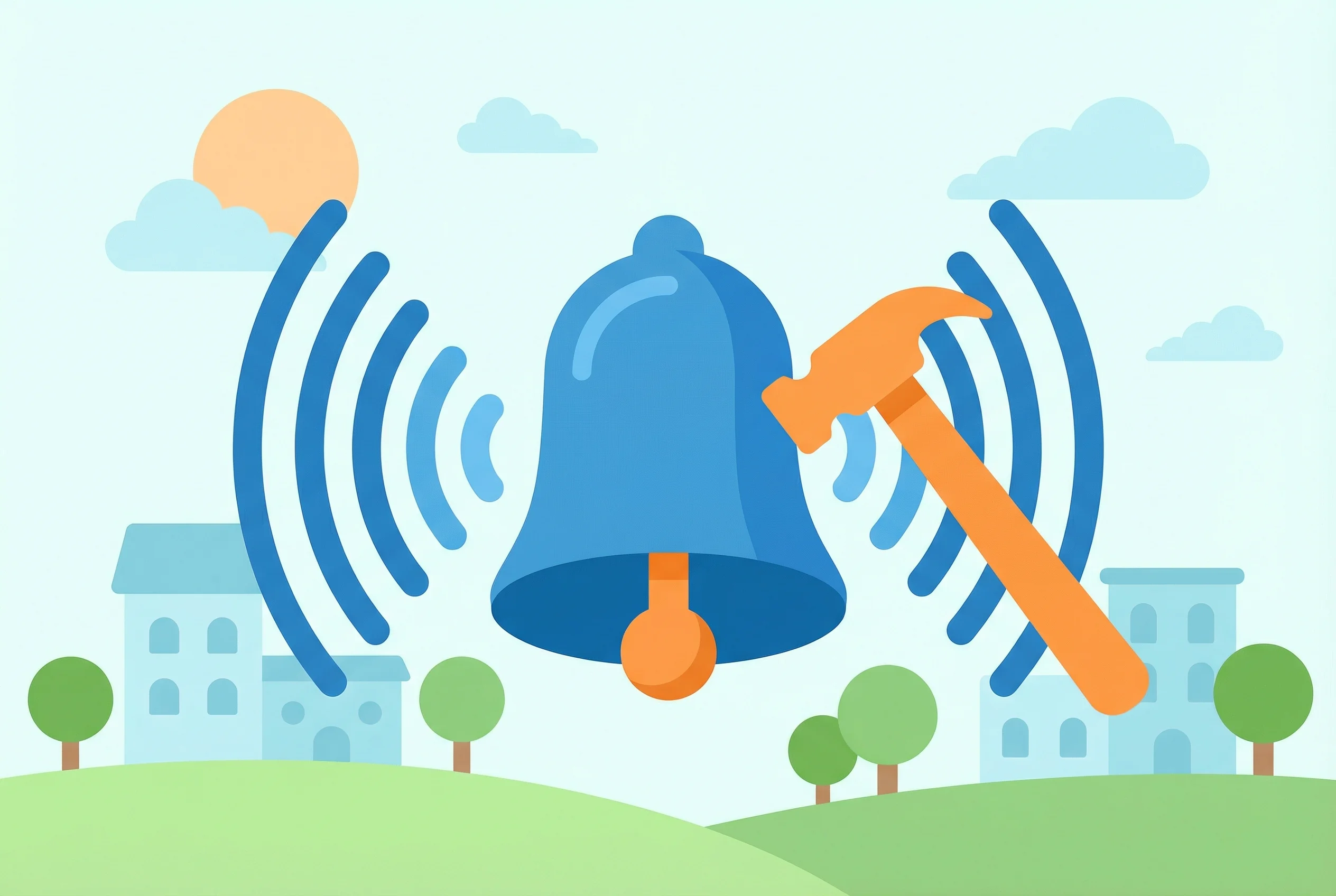
CMetal vibrates after being hit
✓Correct — When the clapper strikes a bell, it makes the metal vibrate. The bell's curved shape and metal properties cause it to vibrate at specific frequencies, creating a sustained ringing sound. Larger bells vibrate more slowly, producing lower tones.
Answer this question
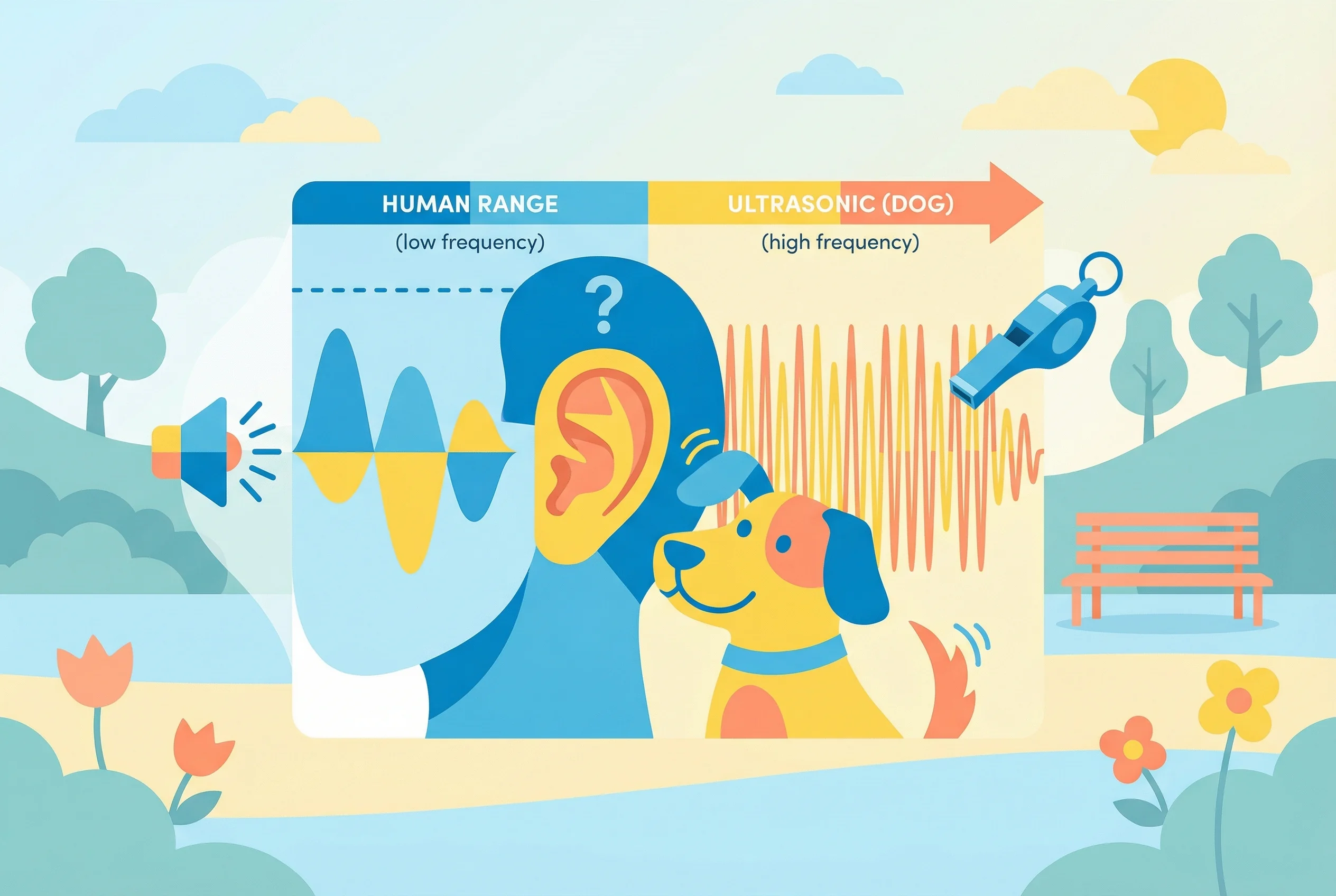
AFrequency too high for human ears
✓Correct — Dog whistles produce ultrasonic sounds above 20,000 Hz (20 kHz), higher than the upper limit of human hearing (about 20 kHz). Dogs can hear up to 65 kHz, so they hear the whistle clearly while humans hear nothing. Frequency, not volume, makes it inaudible to us.
BWhistles are designed too quietly
✗Not quite — Dog whistles aren't quiet—they're loud at frequencies humans can't hear. Dogs hear them clearly because they detect higher frequencies.
CDogs have better hearing organs
✗Not quite — Dogs do have better high-frequency hearing, but the specific reason we can't hear dog whistles is that they operate above human hearing range.
Answer this question
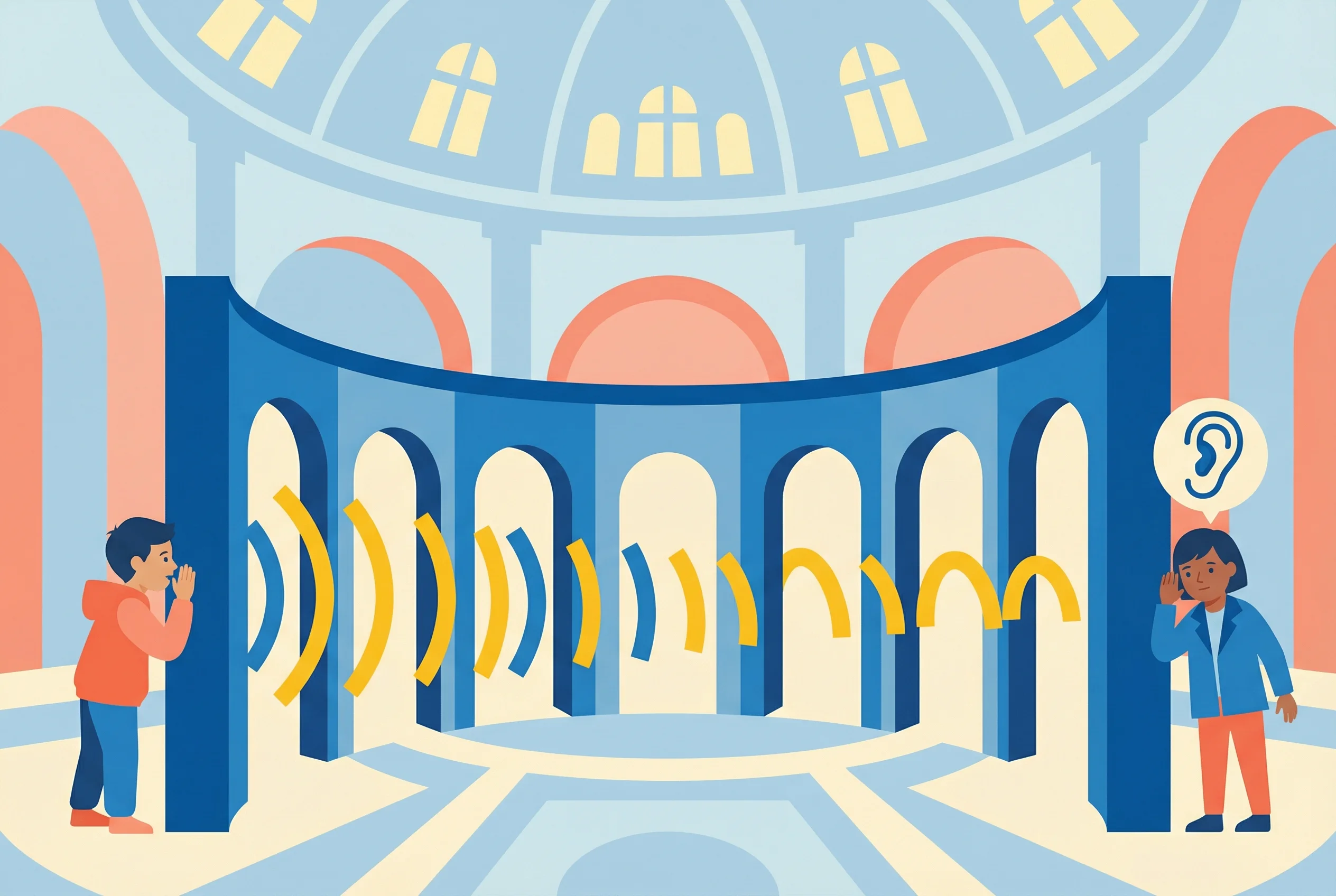
ACurved walls focus sound waves
✓Correct — Whispering galleries (like in domes) have curved walls that reflect and focus sound waves. When you whisper at one focal point, the sound waves travel along the curved wall to another focal point across the room. This creates the effect of hearing a whisper clearly from far away.
BDome shape filters out noise
✗Not quite — The dome doesn't filter noise—it focuses sound. The curved shape directs sound waves along specific paths to focal points.
CAir pressure carries whispers far
✗Not quite — Air pressure doesn't change significantly in these chambers. The effect comes from sound wave reflection and focusing by curved walls.
Answer this question
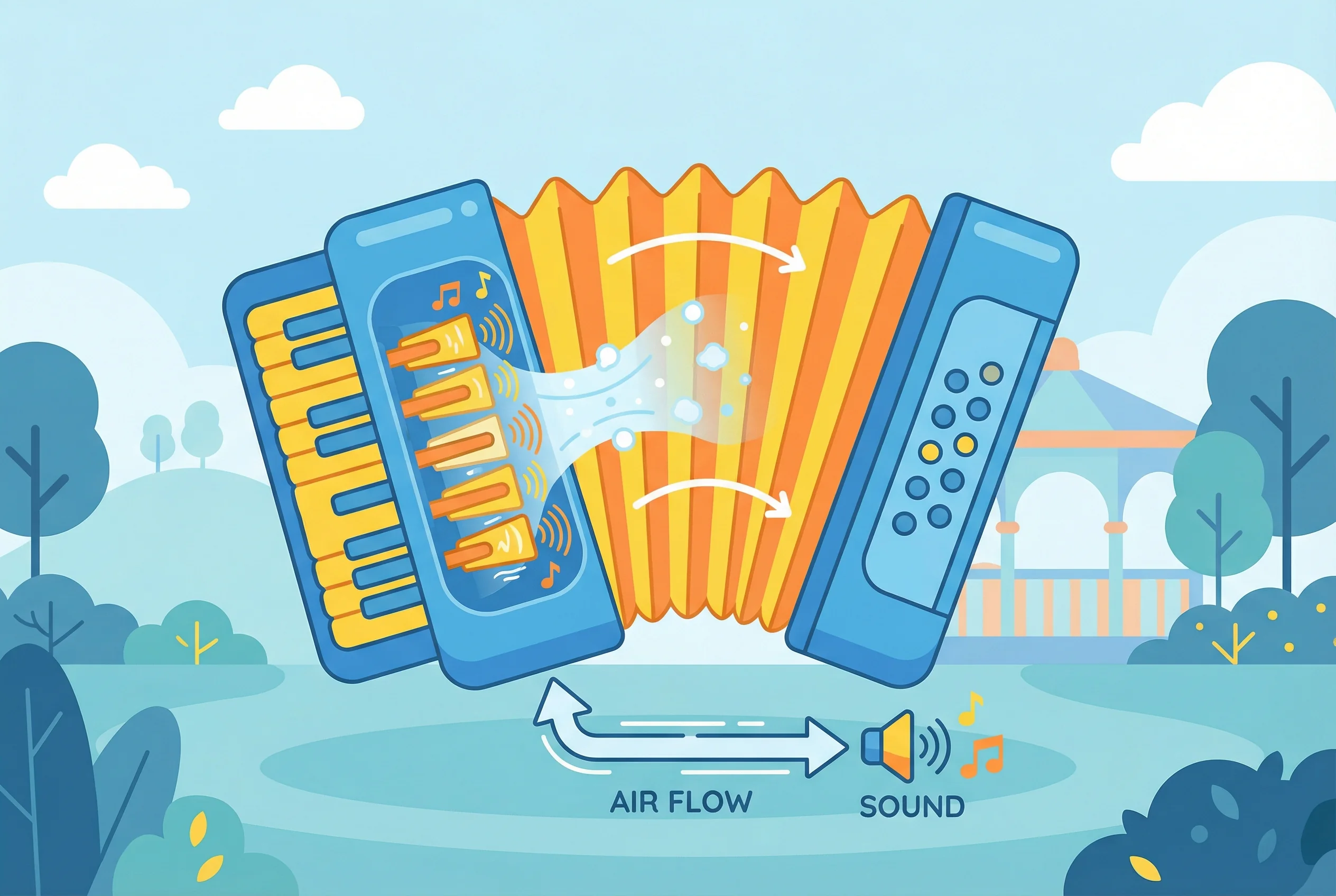
ABellows push air through reeds
✓Correct — Accordions use bellows (the expandable middle section) to push and pull air across metal reeds inside the instrument. When air flows over the reeds, they vibrate at specific frequencies, producing musical notes. Different keys and buttons direct air to different reed sets, creating different pitches.
BButtons compress gas cylinders
✗Not quite — Accordions use simple air pressure from bellows, not gas cylinders. The bellows push air across vibrating reeds.
CFolding creates friction noise
✗Not quite — The folding motion isn't what makes sound. Bellows create air pressure that flows over reeds, causing them to vibrate and produce musical notes.
Answer this question
Answer key: 1. A; 2. A; 3. A; 4. B; 5. A; 6. B; 7. C; 8. A; 9. A; 10. A.
Tie-Breaker Pub Quiz Questions With Mechanisms
AStrong sustained winds create whiteout conditions by lifting existing snow, making visibility dangerous even without new snowfall
✓Correct — The defining danger of a blizzard is not just snowfall, but the combination of wind and reduced visibility. Winds of 35+ mph pick up already-fallen snow from the ground and suspend it in the air, creating 'ground blizzards' where visibility drops to near zero even on sunny days. The 3-hour duration threshold distinguishes life-threatening blizzards from brief snow squalls. This sustained whiteout condition makes travel extremely dangerous, as drivers cannot see the road, other vehicles, or even their own car hood.
BWinds above 35 mph are needed to keep snowflakes frozen in the air and prevent them from melting
✗Not quite — Wind speed does not affect whether snowflakes remain frozen - temperature determines that. Snow stays solid well below 32°F (0°C) regardless of wind speed. In fact, strong winds can actually cause some surface melting through friction. The 35 mph threshold is specifically about creating dangerous whiteout conditions through blowing snow, not preserving snowflake integrity.
CThe 3-hour wind requirement ensures enough snow accumulates on the ground to block roads completely
✗Not quite — While blizzards do cause snow accumulation that blocks roads, the official definition focuses on visibility and safety during the storm, not total snowfall amounts. Some blizzards are 'ground blizzards' with little new snow but extremely dangerous conditions from blowing existing snow. The wind and duration requirements define the immediate danger to people caught outside, not the aftermath of blocked roads.
Answer this question
AEarth rotates 365 times yearly
✗Not quite — Earth actually rotates about 366 times during one orbit of the Sun, not 365. We count 365 days because a 'day' is based on the Sun's position in the sky, which is affected by Earth's orbit as well as rotation.
BTime for Earth to orbit the Sun
✓Correct — A year is defined by how long Earth takes to complete one full orbit around the Sun - approximately 365.25 days. This is determined by Earth's orbital distance (93 million miles) and speed (67,000 mph). We round to 365 days for convenience, adding a leap day every 4 years to account for the extra 0.25 days. This orbital period is a natural astronomical fact, not a human invention.
CThe Moon's cycle determines it
✗Not quite — The Moon's cycle (29.5 days) doesn't determine Earth's year. Some ancient calendars were lunar-based, but Earth's year is determined by its orbit around the Sun. The Moon's orbit around Earth and Earth's orbit around the Sun are independent cycles.
Answer this question
AThey produce 5-10 times more ethylene gas than apples
✓Correct — Bananas produce ethylene gas at much higher rates than other fruits. This natural ripening hormone accelerates the aging process dramatically.
BThey have thinner skin that lets air in faster
✗Not quite — While banana skin is relatively thin, the main factor is ethylene production, not air permeability. The ripening happens from inside out.
CThey contain more sugar that ferments quickly
✗Not quite — Sugar content affects taste but not ripening speed. The key factor is ethylene gas production, which triggers enzymatic reactions that ripen the fruit.
Answer this question
APrevents muscle shaking
✗Not quite — Breath-holding doesn't prevent shaking. It creates intra-abdominal pressure to stabilize the spine during heavy lifts.
BReduces heart rate
✗Not quite — Holding breath during exertion actually temporarily raises heart rate and blood pressure. The benefit is spinal stability, not cardiovascular.
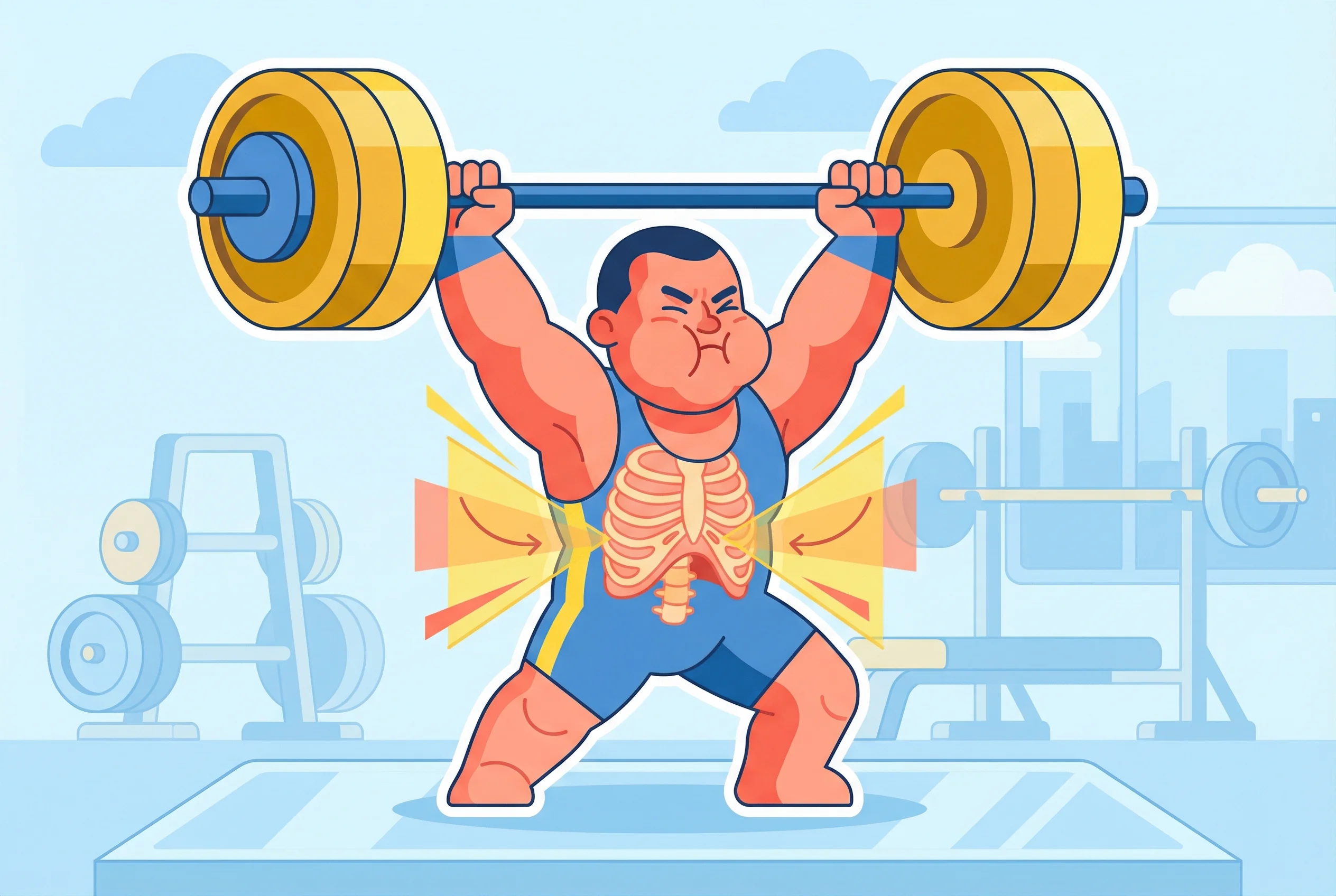
CCreates core stability
✓Correct — Holding breath while bracing your core creates intra-abdominal pressure—like inflating a balloon in your torso. This stiffens your spine, preventing injury during maximum lifts. It's called the Valsalva maneuver!
Answer this question
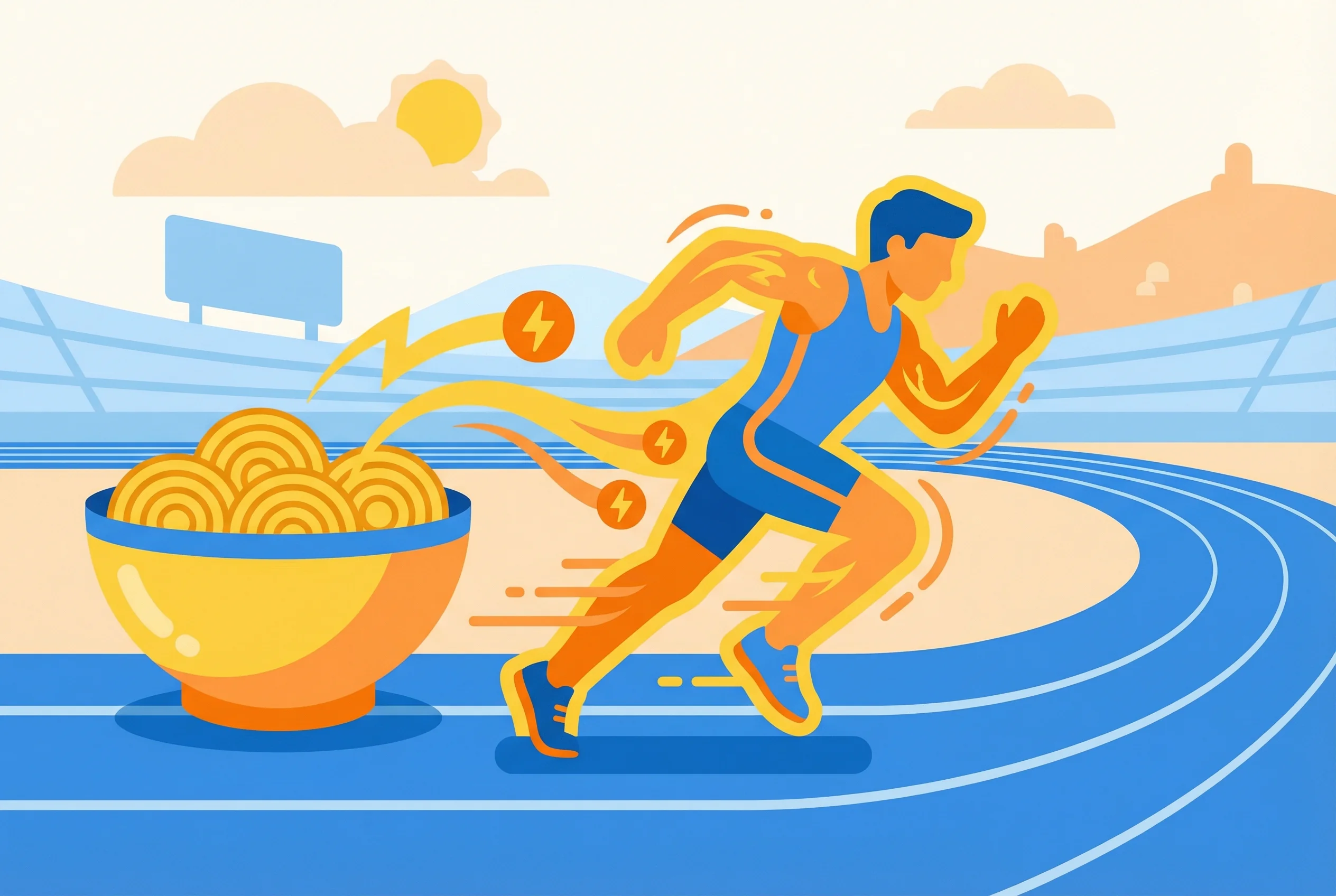
AStores glycogen for energy
✓Correct — Glycogen storage! Carbohydrates convert to glucose → stored as glycogen in muscles and liver. During endurance exercise (>90 min), body depletes glycogen—'hitting the wall' (fatigue). Carb-loading (eating extra carbs 2-3 days before): maximizes glycogen stores (~2× normal). More fuel = better endurance performance! Marathon runners, cyclists benefit most. Not useful for short events (<90 min). Modern protocol: 8-12g carbs/kg body weight. Also drink fluids—glycogen binds water (3g water per 1g glycogen)!
BIncreases muscle mass quickly
✗Not quite — Carbs don't build muscle—protein does. Carb-loading stores glycogen (fuel) for endurance, not muscle growth.
CBoosts protein synthesis
✗Not quite — Protein drives synthesis, not carbs. Carbohydrates store as glycogen—primary fuel for prolonged exercise preventing fatigue.
Answer this question
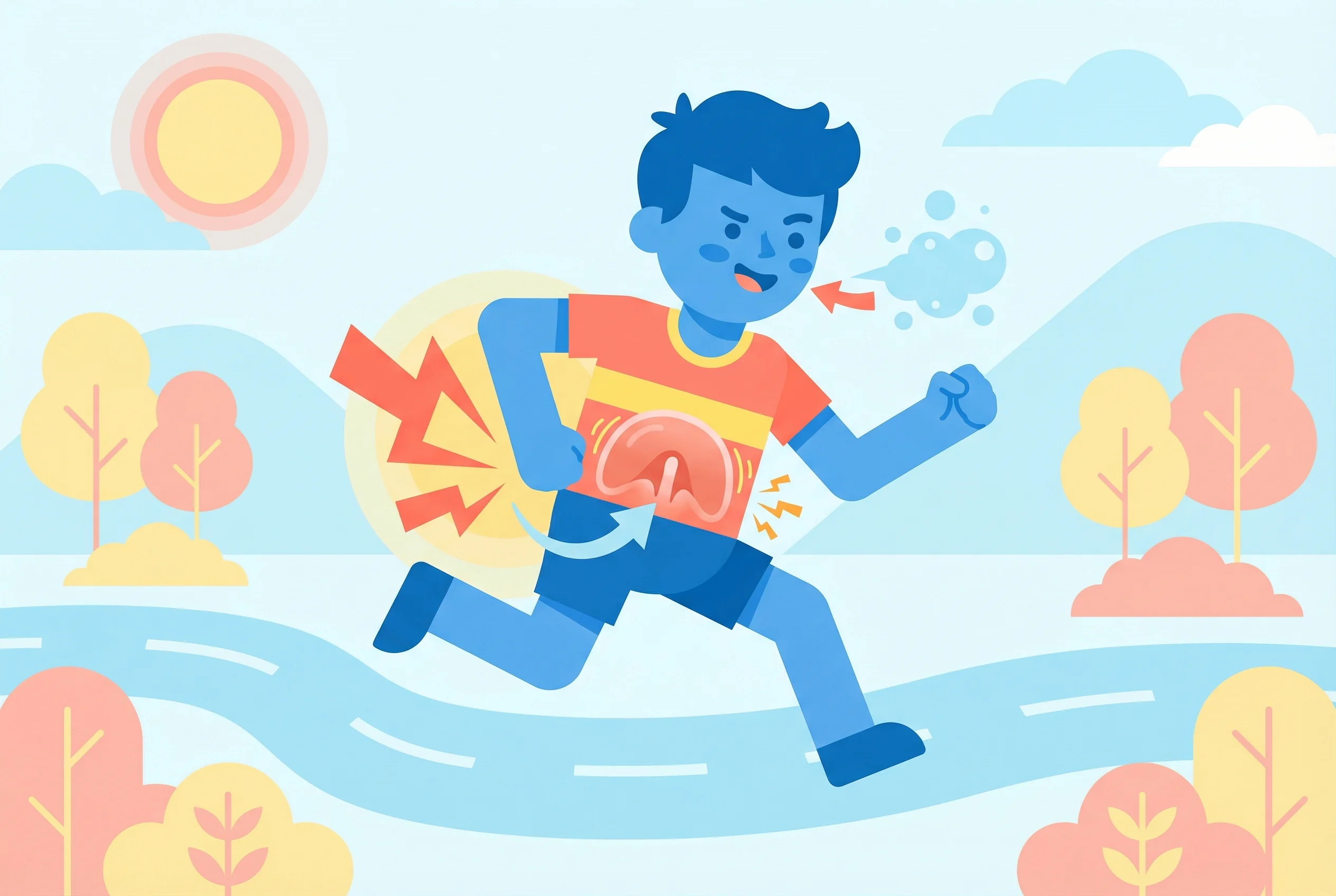
ALungs expand too much
✗Not quite — Lung expansion doesn't cause stitches. Current theory: diaphragm muscle spasms from inadequate blood flow during intense exercise.
BDiaphragm muscle cramps
✓Correct — Diaphragm theory! Side stitch (ETAP—exercise-related transient abdominal pain): sharp pain below ribs. Likely cause: diaphragm muscle cramps from: (1) Inadequate blood flow (diverted to legs). (2) Repetitive jolting stresses ligaments supporting organs, pulling on diaphragm. (3) Eating before running makes it worse. Prevention: proper breathing (deep belly breaths), gradual intensity increase, avoid food 2-3 hours before. Treatment: slow down, deep breathing, press on area. Common in running/swimming!
CRib bones rub together
✗Not quite — Bones don't cause pain. Stitch from diaphragm cramping likely due to blood flow issues and organ ligament stress during running.
Answer this question
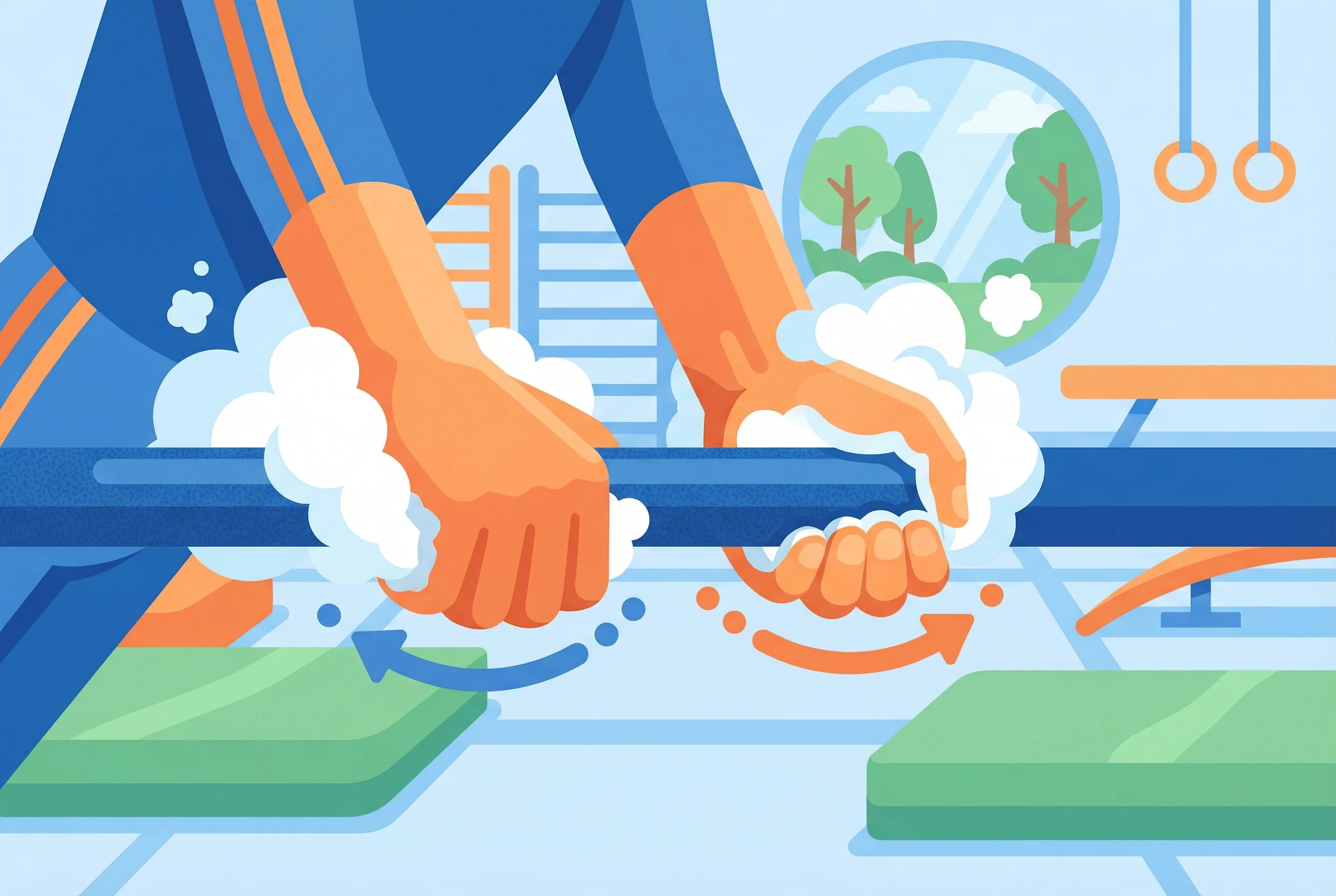
AAbsorbs sweat improving grip
✓Correct — Moisture management! Chalk (magnesium carbonate—MgCO₃): highly absorbent powder. Hands sweat during intense exercise—moisture makes bars, rings, beam slippery. Chalk absorbs sweat—maintains dry, high-friction contact. Prevents dangerous slips during skills. Also used in: rock climbing, weightlifting, pole vault. Liquid chalk (chalk + alcohol) alternative—less messy. Some competitions limit chalk use (floor exercise). Physics: dry surfaces have higher friction coefficient than wet!
BMarks hand positions
✗Not quite — Chalk doesn't mark positions—it absorbs sweat for grip. Gymnasts memorize hand placements through repetition.
CCools hands during routines
✗Not quite — Chalk doesn't cool hands. It's absorbent powder that removes moisture (sweat) maintaining friction for safe grip.
Answer this question
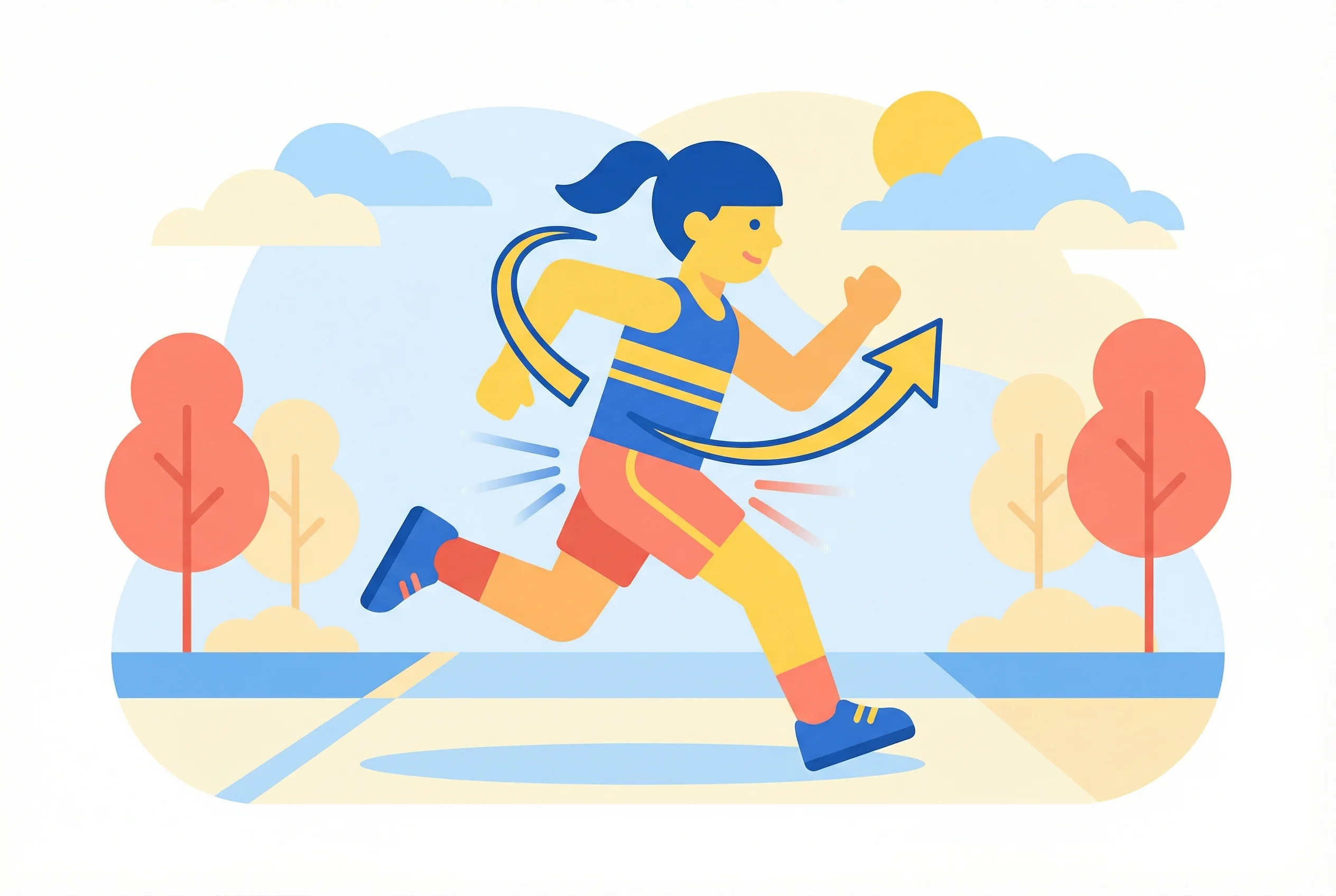
ABalances rotational momentum
✓Correct — Angular momentum balance! Running: legs drive body forward. Each leg swing creates rotational torque on torso (Newton's 3rd law—action/reaction). Without arm swing: torso would rotate excessively—unstable, inefficient. Arms swing opposite to legs: right arm forward with left leg, vice versa. Angular momentum cancels out—torso stays stable. More efficient biomechanics. Faster running = more vigorous arm swing (greater momentum to balance). Tying arms behind back makes running very difficult—research shows ~10% more energy!
BIncreases oxygen to muscles
✗Not quite — Arm position doesn't affect oxygen delivery. Arms balance rotational momentum from leg swing—prevents torso rotation.
CMakes running feel easier
✗Not quite — Proper arm swing does make running more efficient, but mechanism is balancing angular momentum—not psychological.
Answer this question
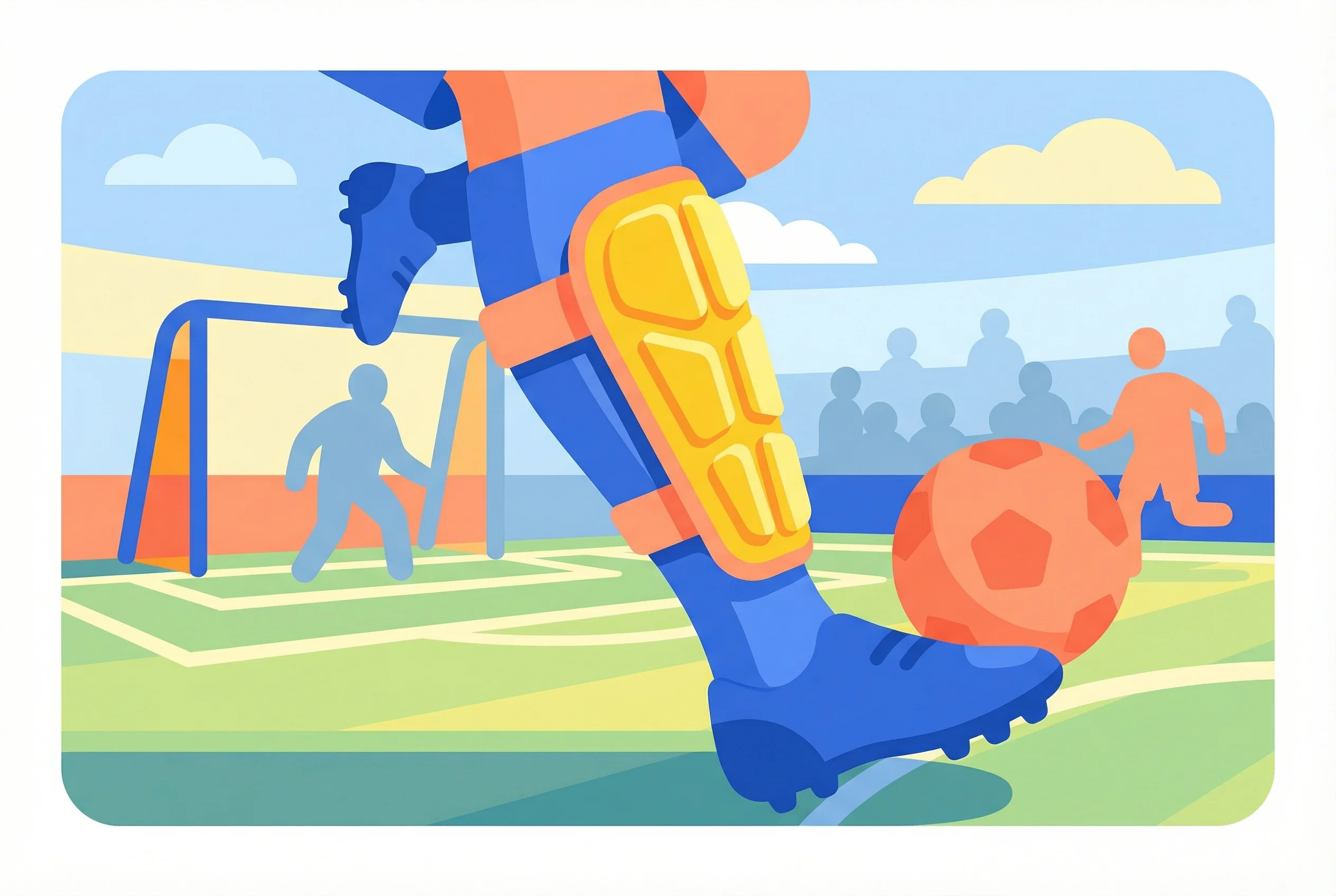
AProtects tibia from impacts
✓Correct — Tibia protection! Tibia (shin bone) is directly under skin—minimal natural padding, very vulnerable. Soccer: frequent contact—accidental kicks, tackles, collisions. Shin guards (plastic shell + foam) distribute impact force—prevent fractures, contusions. Required equipment at all competitive levels (FIFA rules). Types: slip-in (lightweight) vs ankle guards (more protection). Despite guards, shin injuries still common. Protects one of most painful impact zones!
BRequired by tradition only
✗Not quite — Now mandatory (FIFA), but rule exists because of real injury prevention—not arbitrary tradition.
CSupports ankle stability
✗Not quite — Shin guards protect tibia, not ankles. Some designs extend to ankles, but primary purpose is shin bone protection from impacts.
Answer this question
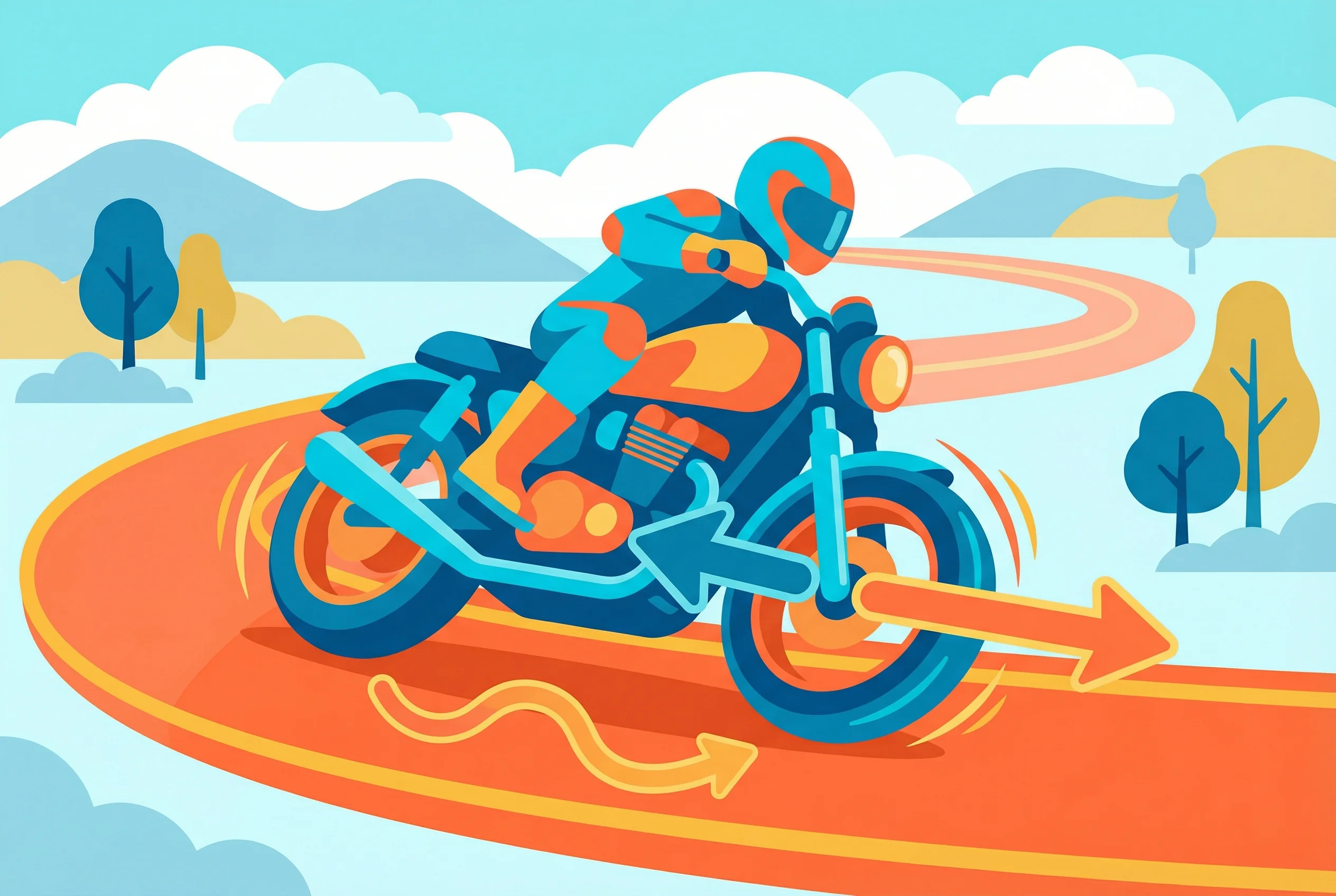
ARiders enjoy the thrill of leaning
✗Not quite — While riders may enjoy leaning, it's not optional—it's physics. When turning, centrifugal force pushes the motorcycle outward. Leaning inward shifts the center of gravity to balance this outward force, preventing the bike from tipping over. Without leaning, the bike would fall outward. Cars don't lean because they have four wide-set wheels for stability; bikes balance on two narrow wheels.
BCounteracts centrifugal force
✓Correct — During turns, centrifugal force pushes the bike outward. To balance this, the rider must lean inward, shifting the combined center of gravity so the inward pull of gravity counteracts the outward centrifugal force. The faster the speed or tighter the turn, the more lean required. Without proper lean, the bike would tip over. This is pure physics—cars don't lean because four wide-set wheels provide stability.
CGravity pulls them sideways
✗Not quite — Gravity pulls straight down, not sideways. Motorcycles lean to counteract centrifugal force—when turning, inertia pushes the bike outward. Leaning inward shifts the center of gravity so the inward component of gravity (and friction from the tires) balances the outward centrifugal force. The lean angle must match the turn's speed and radius to maintain balance.
Answer this question
Answer key: 1. A; 2. B; 3. A; 4. C; 5. A; 6. B; 7. A; 8. A; 9. A; 10. B.
Frequently Asked Questions
Where can I find free pub quiz questions and answers?
This page gives you 60 free pub quiz questions and answers from the Million Whys bank, grouped into rounds so you can host without building the whole night from scratch.
How many rounds should a pub quiz have?
Five to seven rounds is usually enough for a casual night. Six rounds of ten questions gives you a full event without making the room feel trapped at the table.
What makes a good pub quiz tie-breaker question?
A good tie-breaker should be answerable with reasoning, not just a wild guess. The bank did not have enough numeric-answer cards for a pure numeric tie-breaker, so this round uses harder mechanism questions instead of invented numbers.
How hard should pub quiz questions be?
Mix the difficulty. A room needs easy wins to stay warm, medium questions for discussion, and a few hard ones that split confident teams.
Can I use these pub quiz questions at a bar or dinner party?
Yes. Read the question and choices aloud, collect answers by round, then use the explanation as the payoff. That keeps the quiz social instead of turning it into silent worksheet time.
What does this have to do with AIgneous Million Whys?
Million Whys treats every question as a tiny curiosity gap. A pub quiz is the same loop in public: wonder first, guess together, then enjoy the answer landing.