A good fun quiz does not feel like school. It feels like someone asked, "wait, why does that happen?" and gave you three tempting answers before the truth clicks into place. These questions are built for quick play, but every answer leaves a small piece of understanding behind.
Fun Quiz Questions and Answers
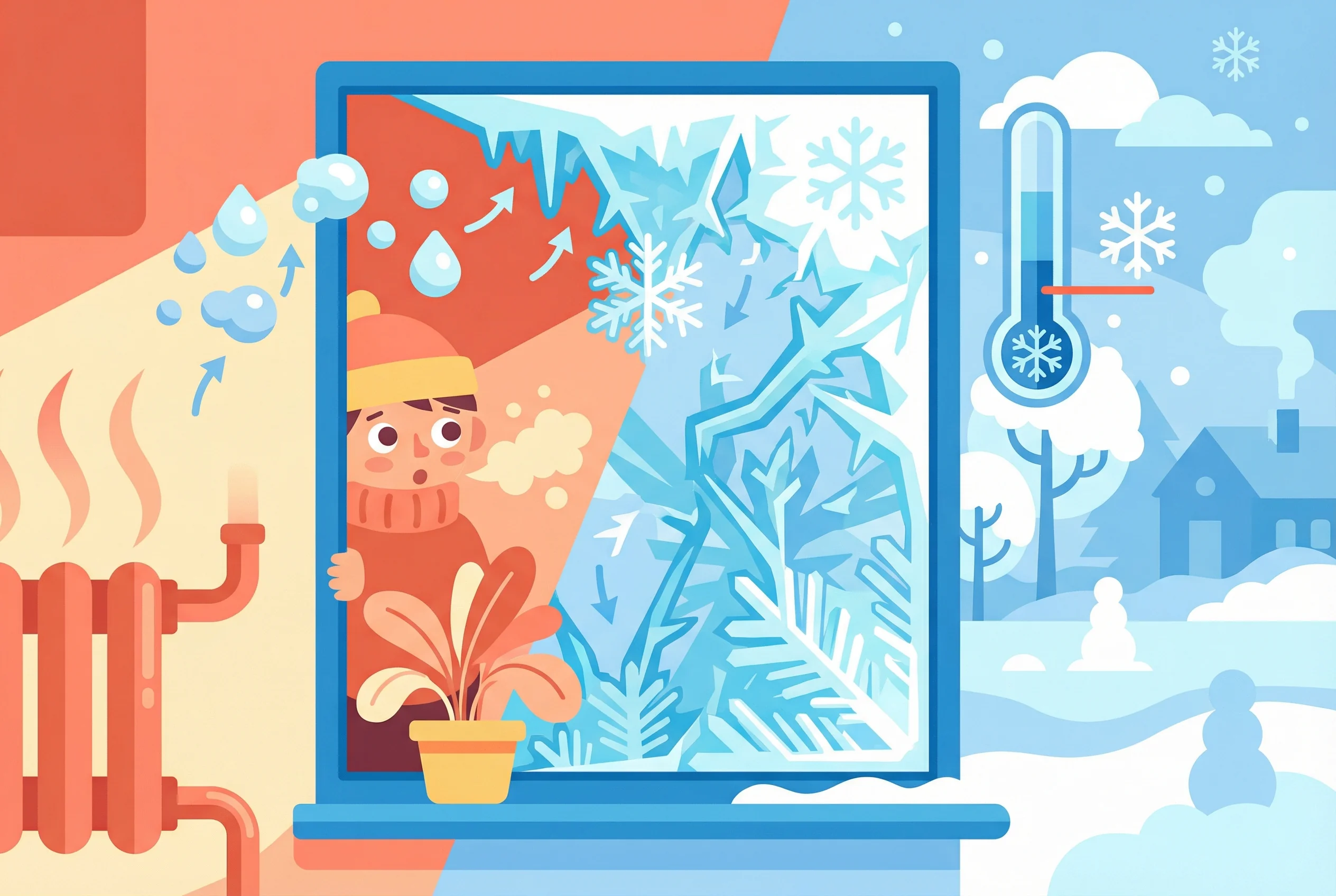
AIndoor moisture on cold glass
✓Correct — Indoor air contains water vapor from breathing, cooking, and other activities. When this warm, moist air touches a very cold window (below 0°C), the vapor deposits directly as ice crystals, skipping the liquid phase - a process called deposition. The beautiful frost patterns form because ice grows along scratches and imperfections in the glass!
BCold air contains ice crystals
✗Not quite — the answer is A. Indoor moisture on cold glass. Cold air can hold very little moisture. The ice on windows comes from indoor water vapor that freezes when it contacts the cold glass surface.
CGlass attracts frozen particles
✗Not quite — the answer is A. Indoor moisture on cold glass. Glass doesn't attract ice particles. Ice forms when water vapor in warm indoor air deposits directly onto the cold window surface, creating frost crystals.
Answer this question
AIncrease signal strength
✗Not quite — the answer is C. Calculate precise position. More satellites don't strengthen signal. Multiple satellites are needed for trilateration—calculating distance from each to pinpoint your location.
BCover more geographic area
✗Not quite — the answer is C. Calculate precise position. Constellation coverage matters, but even in one area, your device needs signals from 4+ satellites simultaneously for 3D positioning.
CCalculate precise position
✓Correct — GPS uses trilateration. Each satellite transmits time-stamped signals. Your device calculates distance from signal travel time (light speed). 3 satellites determine 2D position (latitude, longitude), 4th adds altitude. More satellites improve accuracy. The GPS constellation has 24-32 satellites ensuring 4+ are always visible anywhere on Earth. Math requires multiple measurements!
Answer this question
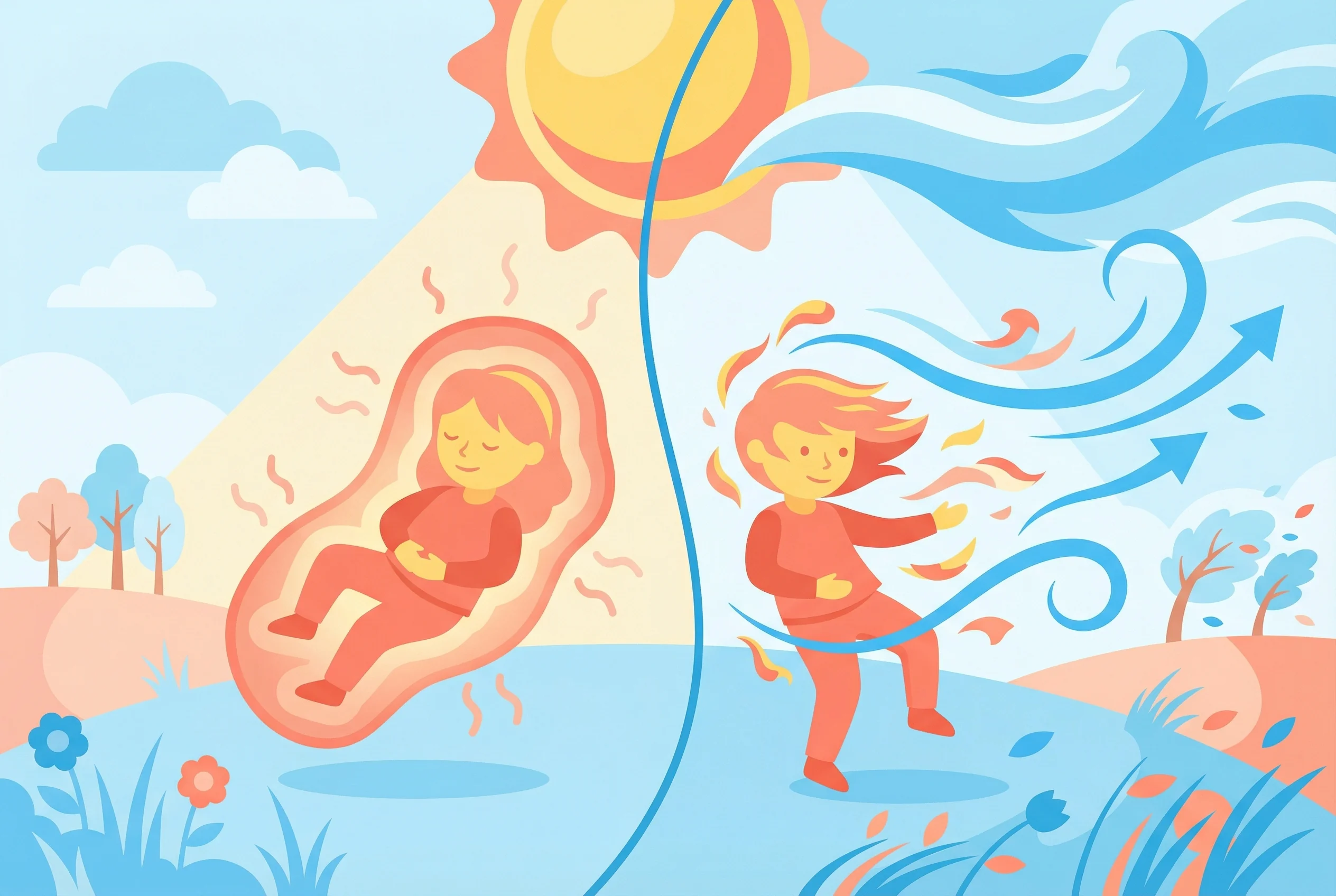
AWind removes warm air near skin
✓Correct — Your body warms a thin layer of air next to your skin. In still air, this warm layer insulates you. But wind constantly blows this warm air away and replaces it with cooler air, forcing your body to work harder to stay warm. This 'wind chill' effect makes 10°C with wind feel much colder than 10°C without wind!
BMoving air has less heat
✗Not quite — the answer is A. Wind removes warm air near skin. Moving air doesn't have less heat than still air at the same temperature. Wind feels colder because it removes the warm insulating layer of air around your body faster than still air.
CWind increases air pressure
✗Not quite — the answer is A. Wind removes warm air near skin. Wind doesn't increase air pressure in a way that affects temperature sensation. Wind feels colder because it removes the warm air layer your body creates, increasing heat loss.
Answer this question
AThunder causes lightning flash
✗Not quite — the answer is B. Light faster than sound waves. Lightning causes thunder, not vice versa. Electrical discharge heats air explosively—rapid expansion creates thunder shockwave.
BLight faster than sound waves
✓Correct — Speed difference! Lightning and thunder occur simultaneously, but perceived separately: (1) Lightning—see instantly (light: 300,000 km/s). (2) Thunder—hear delayed (sound: 343 m/s in air). (3) Count seconds between flash and boom—divide by 3 ≈ distance in km (or by 5 for miles). Thunder: rapid air heating from lightning bolt (30,000°C)—explosive expansion creates shockwave. Close lightning: immediate crack. Distant: low rumble (sound waves refract). Can't hear thunder beyond ~25km!
CLightning and thunder are unrelated
✗Not quite — the answer is B. Light faster than sound waves. Thunder is direct result of lightning—electrical discharge superheats air channel, creating explosive expansion we hear as thunder.
Answer this question
Fun Quizzes for Adults
APrevents muscle shaking
✗Not quite — the answer is C. Creates core stability. Breath-holding doesn't prevent shaking. It creates intra-abdominal pressure to stabilize the spine during heavy lifts.
BReduces heart rate
✗Not quite — the answer is C. Creates core stability. Holding breath during exertion actually temporarily raises heart rate and blood pressure. The benefit is spinal stability, not cardiovascular.
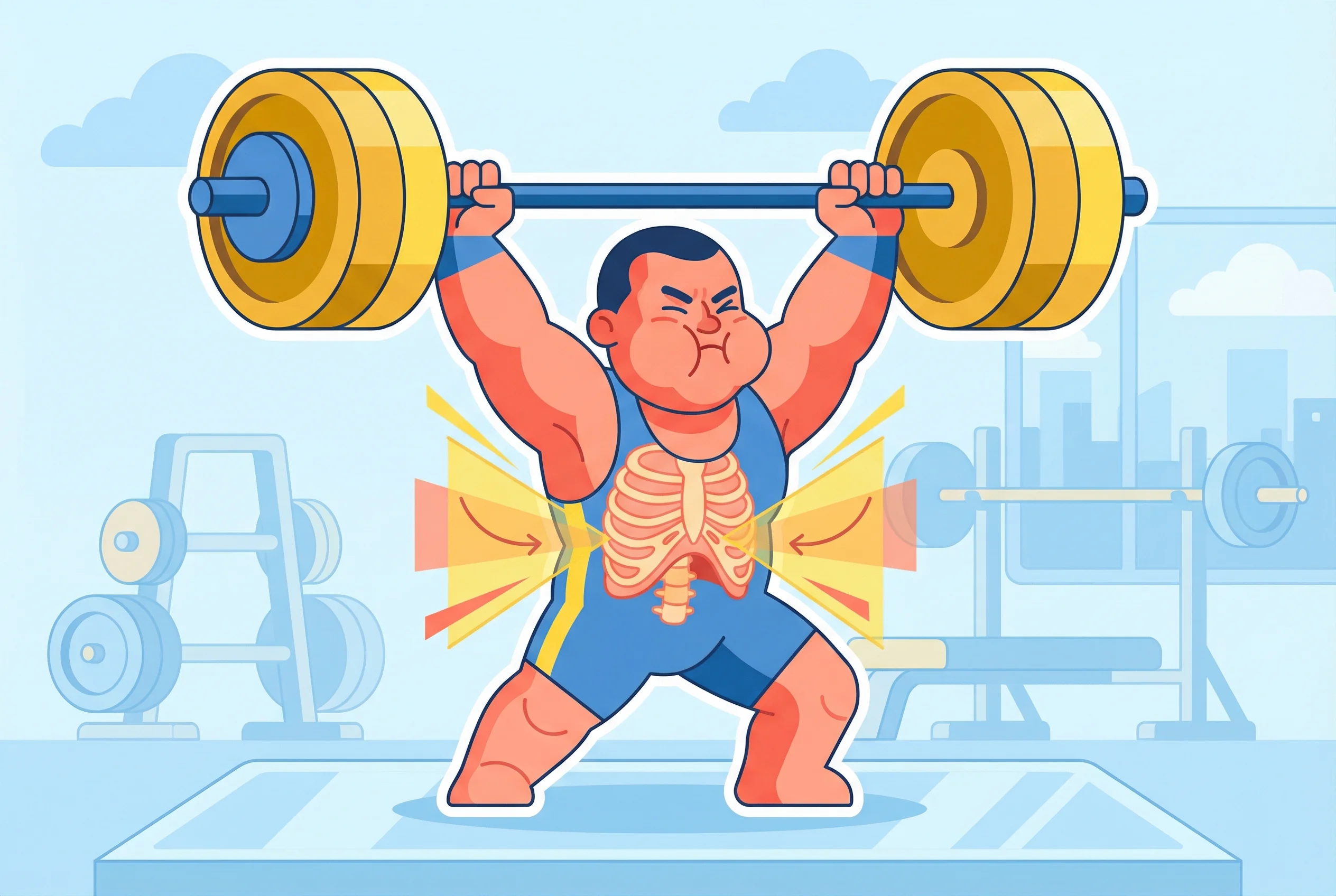
CCreates core stability
✓Correct — Holding breath while bracing your core creates intra-abdominal pressure—like inflating a balloon in your torso. This stiffens your spine, preventing injury during maximum lifts. It's called the Valsalva maneuver!
Answer this question

AReciprocity makes people buy
✓Correct — Free samples exploit psychological reciprocity—when someone gives you something, you feel obligated to return the favor. After accepting a free sample, many people feel compelled to make a purchase. Samples also reduce purchase risk (try before buying), create familiarity, and demonstrate product quality. The small sample cost often generates significant sales.
BSamples are better than products
✗Not quite — the answer is A. Reciprocity makes people buy. Samples are identical to regular products, just smaller portions. They work through psychology (reciprocity, reduced risk) and marketing (product trial, brand awareness), not because they're different or better than the full-size version.
CPeople collect free items
✗Not quite — the answer is A. Reciprocity makes people buy. While some people do enjoy free samples, companies offer them to drive purchases, not for collector value. The strategy works because many recipients feel obligated to reciprocate by buying, or the sample reduces their hesitation to try the full product.
Answer this question
ATo prevent copy-pasting passwords
✗Not quite — the answer is C. Increase cracking difficulty. Special characters don't prevent copying. They increase password entropy—more possible combinations, making brute-force attacks harder.
BSlow down typing speed
✗Not quite — the answer is C. Increase cracking difficulty. Slowing typing isn't the goal. Special characters expand the character set (letters + numbers + symbols), exponentially increasing cracking time.
CIncrease cracking difficulty
✓Correct — Password strength depends on entropy—possible combinations. Using only lowercase (26 chars): 8-char password = 26^8 combos. Adding uppercase, numbers, symbols (~94 chars): 94^8 combos—thousands of times stronger! Special characters prevent dictionary attacks (common words) and brute force. Modern recommendations: length matters most (12+ chars), but character variety helps. Password managers handle complexity!
Answer this question
ACoffee stimulates stomach acid production and speeds up digestion
✓Correct — Coffee contains compounds that trigger your stomach to produce more acid, even before you take your first sip. It also stimulates the colon to contract more frequently, which can speed up digestion too much. This double effect can cause heartburn, acid reflux, or urgent bathroom trips, especially on an empty stomach when there is no food to buffer the acid.
BThe caffeine blocks water absorption in your intestines
✗Not quite — the answer is A. Coffee stimulates stomach acid production and speeds up digestion. While caffeine is a mild diuretic that affects the kidneys and can increase urination, it does not directly block water absorption in the intestines. The digestive issues from coffee come from acid stimulation and increased muscle contractions in the digestive tract, not from dehydration of intestinal contents.
CCoffee beans contain natural toxins that irritate the stomach lining
✗Not quite — the answer is A. Coffee stimulates stomach acid production and speeds up digestion. Coffee beans are not toxic. While coffee does contain various compounds including acids and oils, these are not toxins but natural substances. The digestive discomfort comes from coffee's effect on stomach acid production and digestive motility, not from any poisonous substances. Millions of people drink coffee daily without harm.
Answer this question
Fun Quiz Questions
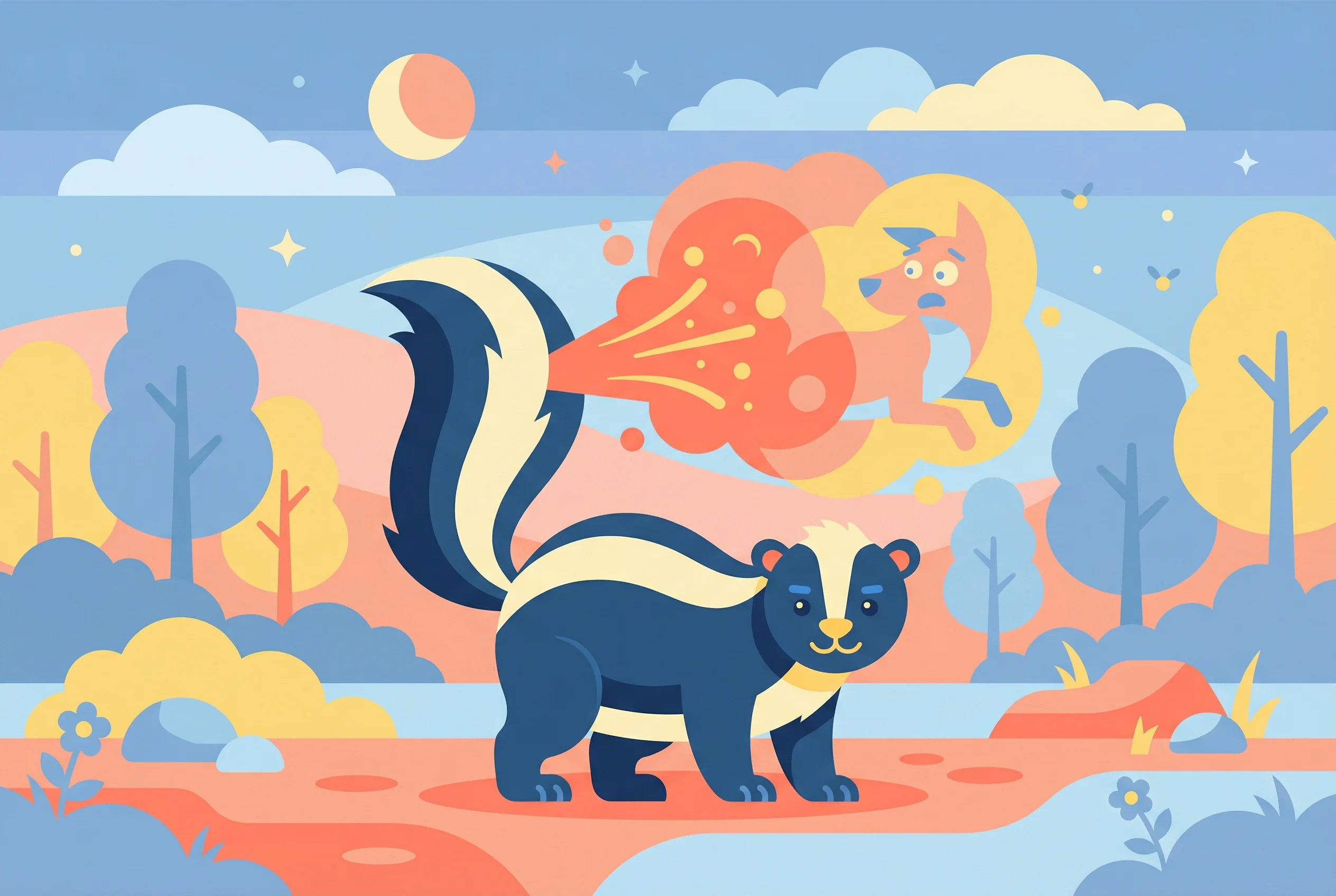
AAttracting mates with scent
✗Not quite — the answer is B. Last-resort predator defense. The spray is extremely unpleasant and repels all animals, including potential mates. Skunks use completely different, milder scents for attraction.
BLast-resort predator defense
✓Correct — Chemical warfare defense! Skunk spray: last resort against threats. Composition: sulfur-containing thiols (mercaptans)—extremely pungent. Process: (1) Warning signals first—stomping, tail raising, hissing. (2) If threat persists—spray from anal glands. (3) Accurate aim up to 10ft. Effects on predators: temporary blindness, nausea, intense smell (lasts days-weeks). Limited supply (5-6 sprays)—takes 10 days to replenish. Effective deterrent—most predators learn avoidance. Great horned owls (no smell sense) are main predators!
CKeeping their fur clean
✗Not quite — the answer is B. Last-resort predator defense. Spray doesn't clean fur—it's an oily, foul-smelling substance that animals try to avoid. Skunks groom themselves like other mammals.
Answer this question
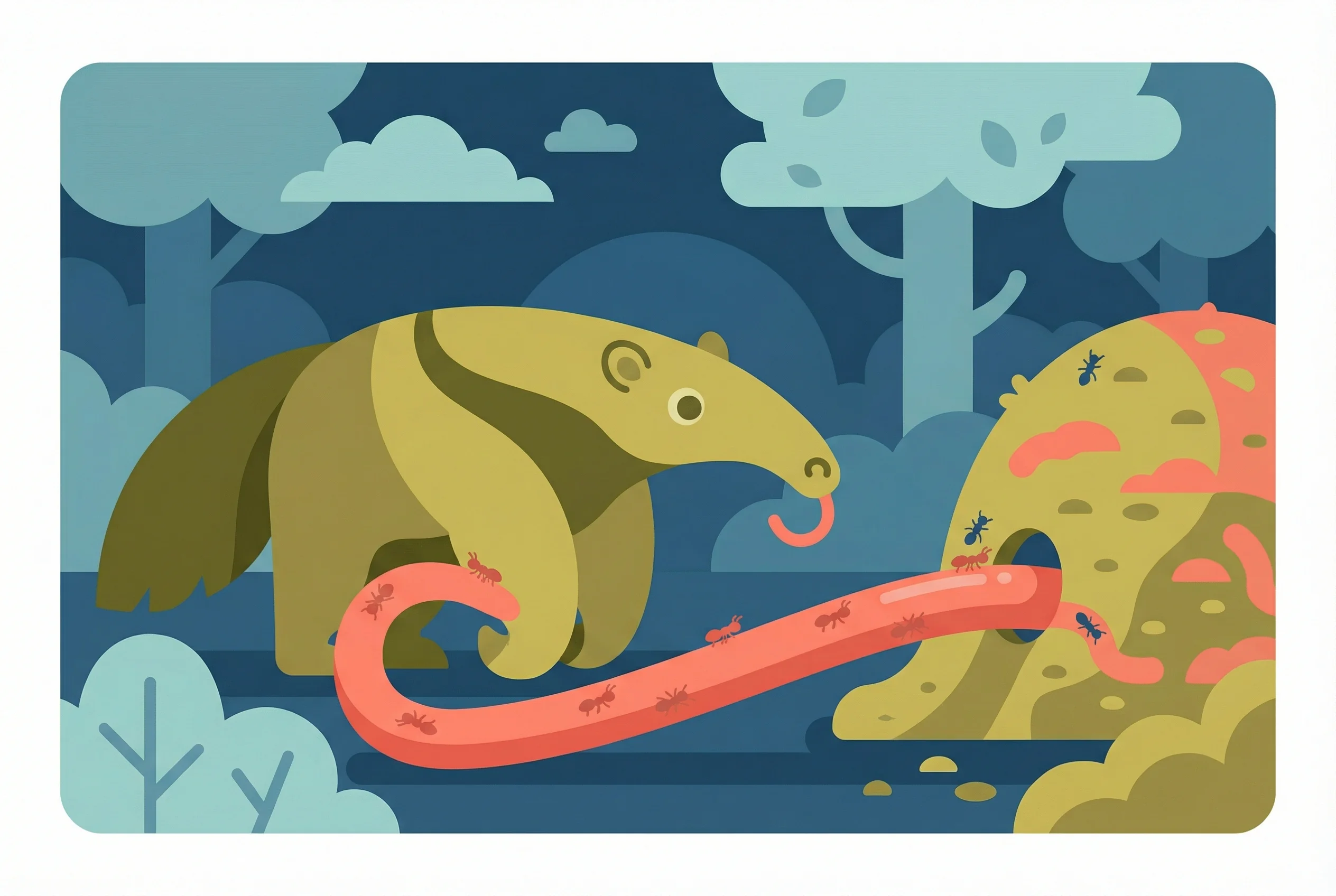
AReaching deep into ant nests
✓Correct — Specialized feeding! Giant anteater tongue: 2ft long! Adaptations: (1) Length—reaches deep into ant/termite tunnels. (2) Sticky saliva—insects adhere to tongue. (3) Rapid flicking—160 times/minute! (4) Attached to sternum—extends far. No teeth—swallows insects whole. Strong stomach grinds food. Eats 30,000 ants/termites daily! Also: powerful claws rip open nests. Narrow snout fits in tunnels. Specialized myrmecophage (ant-eater). Tongue moves so fast it's nearly invisible!
BIt helps regulate body temperature
✗Not quite — the answer is A. Reaching deep into ant nests. Tongue doesn't regulate temperature. It's specialized feeding tool—extremely long and sticky for extracting ants/termites from nests.
CFighting off predators
✗Not quite — the answer is A. Reaching deep into ant nests. Anteaters use powerful claws for defense, not tongues. Long tongue is feeding adaptation—reaching deep into insect colonies.
Answer this question
AWe are inside it
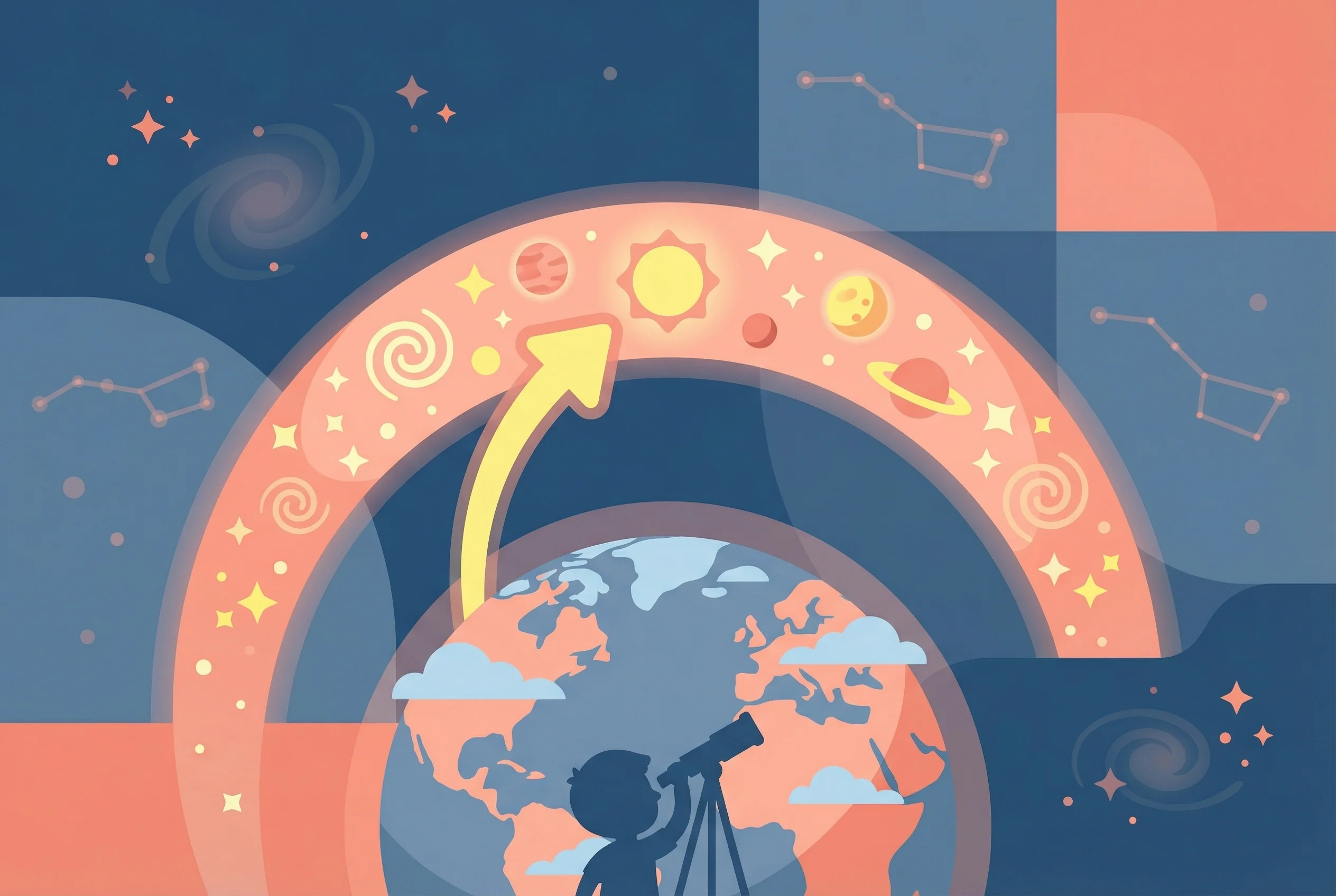
✓Correct — The Milky Way is our galaxy—we're inside it! The band of light we see is looking edge-on through the galactic disk (100,000 light-years across). We're in a spiral arm ~26,000 light-years from the center. Dense star concentrations appear as milky band across the night sky. Best viewed from dark locations away from light pollution. Ancient cultures saw it as celestial river!
BIt's brightest galaxy
✗Not quite — the answer is A. We are inside it. We see the Milky Way brightly because we're inside it—viewing our own galaxy from within. Other galaxies appear dimmer due to distance.
CReflects sunlight to Earth
✗Not quite — the answer is A. We are inside it. Galaxies don't reflect sunlight—they emit light from billions of stars. We see the Milky Way because we're part of it.
Answer this question
ADistance makes light flicker
✗Not quite — the answer is C. Atmosphere turbulence bends light. Distance doesn't cause twinkling. Atmospheric turbulence does—moving air pockets of different temperatures/densities bend light differently, creating twinkle.
BSpace dust blocks starlight
✗Not quite — the answer is C. Atmosphere turbulence bends light. Dust can dim starlight, but twinkling comes from atmospheric turbulence—moving air with varying density randomly bending light paths.
CAtmosphere turbulence bends light
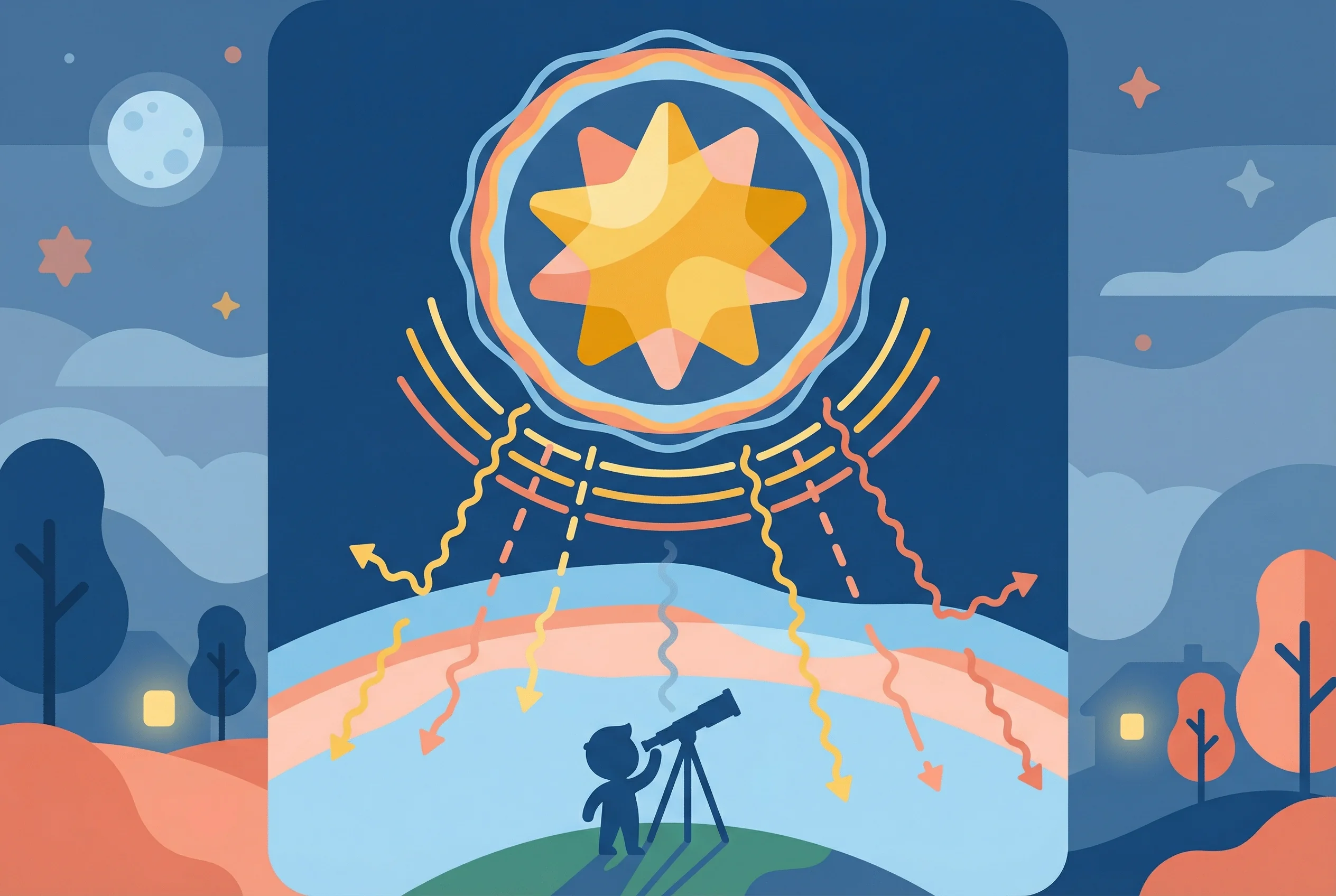
✓Correct — Twinkling (scintillation) occurs when starlight passes through Earth's turbulent atmosphere. Moving pockets of air with different temperatures and densities bend light slightly differently, causing rapid brightness/position changes. Planets don't twinkle much because they're closer—larger apparent size averages out the atmospheric effects. Astronomers build telescopes on mountains to reduce atmospheric turbulence!
Answer this question
Fun Quiz Games Online
AFilters detect suspicious patterns
✓Correct — Spam filters use machine learning analyzing: (1) Content—suspicious keywords ('free money', excessive caps). (2) Sender reputation—known spammers, authentication (SPF, DKIM). (3) Behavior patterns—mass sending, similar to reported spam. (4) Links/attachments—malicious URLs. (5) User feedback—training the filter. False positives happen—check spam folders regularly!
BEmails arrive too quickly
✗Not quite — the answer is A. Filters detect suspicious patterns. Arrival speed isn't the main factor. Filters analyze content patterns, sender reputation, and known spam characteristics.
CAttachments are too large
✗Not quite — the answer is A. Filters detect suspicious patterns. Attachment size doesn't trigger spam filters. Filters look for malicious content, suspicious patterns, and sender reputation.
Answer this question
AOld viruses become stronger
✗Not quite — the answer is B. New malware appears constantly. Old viruses don't change. New malware variants constantly appear—antivirus needs updated definitions to recognize and block them.
BNew malware appears constantly
✓Correct — Malware evolves constantly—thousands of new variants daily. Antivirus uses: (1) Signature-based detection—database of known malware patterns. (2) Heuristic analysis—detecting suspicious behavior. (3) Machine learning—identifying new threats. Updates add new signatures and improve detection algorithms. Without updates, antivirus can't recognize new threats. Update frequency matters—daily updates recommended!
CUpdates increase scan speed
✗Not quite — the answer is B. New malware appears constantly. Updates may improve performance, but primary purpose is adding new malware definitions to detect emerging threats.
Answer this question
AHides location completely
✗Not quite — the answer is B. Doesn't save browsing history. Incognito doesn't hide your IP or location—ISPs and websites still see you. It only prevents local history saving.
BDoesn't save browsing history
✓Correct — Incognito/Private mode prevents the browser from: (1) Saving browsing history. (2) Storing cookies after session ends. (3) Remembering passwords/form data. Useful for shared computers or privacy. BUT: ISPs, websites, and network admins can still track you. Not anonymous—just doesn't save local traces. For true anonymity, use VPN or Tor!
CBlocks all advertisements
✗Not quite — the answer is B. Doesn't save browsing history. Incognito doesn't block ads—it prevents local history storage. Ad blockers are separate tools. Incognito stops browser from saving your activity.
Answer this question
ABypass character limits
✗Not quite — the answer is B. Express emotion in text. Emojis count as characters. Their purpose is expressing emotion and tone that's lost in plain text communication.
BExpress emotion in text
✓Correct — Text lacks vocal tone and facial expressions. Emojis add emotional context—😊 vs 😂 vs 😢 change meaning. Unicode Consortium standardizes emojis across platforms. Benefits: (1) Convey tone/sarcasm. (2) Cultural expression. (3) Visual communication. (4) Universal (mostly)—transcend language. 3000+ emojis exist! Started in Japan (1990s), now global standard!
CWork across all devices
✗Not quite — the answer is B. Express emotion in text. Unicode standardization helps cross-device compatibility, but emojis primarily add emotional expression to text communication.
Answer this question
Fun Quiz Questions for Adults
AThey're too fragile and error-prone for most AI tasks
✓Correct — Quantum computers must operate at temperatures colder than outer space (near absolute zero) and their 'qubits' lose information within microseconds. Current quantum systems have high error rates and only solve very specific mathematical problems. Most successful AI today (like image recognition and language models) relies on massive data processing where classical computers excel, not the narrow optimization tasks where quantum computers show advantage.
BAI algorithms can't be translated to quantum format
✗Not quite — the answer is A. They're too fragile and error-prone for most AI tasks. Researchers have already developed quantum versions of machine learning algorithms like quantum neural networks and quantum support vector machines. The translation isn't the bottleneck... the problem is that current quantum hardware is too unstable and error-prone to run these algorithms reliably on real-world data at useful scales.
CThey're fast but AI needs storage capacity instead
✗Not quite — the answer is A. They're too fragile and error-prone for most AI tasks. While storage matters for AI, quantum computers actually struggle with memory... qubits can't store information long-term like classical bits. The real issue is reliability: quantum computers make too many errors during calculations. AI tasks like training neural networks need billions of consistent, accurate operations, which today's noisy quantum processors can't deliver.
Answer this question
ANeutron stars rotate with beams
✓Correct — Pulsars are rapidly rotating neutron stars (collapsed star cores, ~20km diameter). They have powerful magnetic fields with radiation beams emitted from magnetic poles (not aligned with rotation axis). As the star rotates (milliseconds to seconds per rotation), beams sweep across space like lighthouse. When beam points at Earth, we detect a pulse. Incredibly precise—used for testing relativity, detecting gravitational waves!
BMagnetic fields oscillate naturally
✗Not quite — the answer is A. Neutron stars rotate with beams. Magnetic fields are strong but don't oscillate to create pulses. Pulses come from rotation—beams sweep past Earth as neutron star spins.
CGravitational waves create pulses
✗Not quite — the answer is A. Neutron stars rotate with beams. Gravitational waves don't cause pulses (though pulsars help detect them!). Pulses result from rotating neutron star's beamed radiation sweeping past Earth.
Answer this question
AStars are too far apart
✓Correct — Although there are billions of stars, they're incredibly far apart. Space is about 99.9999999999999% empty vacuum. Light from stars spreads out in all directions, getting dimmer with distance. Most light from distant stars is too faint to see. Also, the universe has a finite age (13.8 billion years), so light from the most distant stars hasn't reached us yet. The vast emptiness between stars makes space appear dark.
BThere aren't enough stars
✗Not quite — the answer is A. Stars are too far apart. There are hundreds of billions of stars just in our galaxy alone, and billions of galaxies in the observable universe. The number of stars is enormous. The darkness comes from their vast separation and the finite age of the universe, not insufficient quantity.
CDark matter blocks light
✗Not quite — the answer is A. Stars are too far apart. Dark matter doesn't block or absorb light - it doesn't interact with light at all, which is why it's called 'dark.' Dark matter only interacts through gravity. The darkness of space is due to the vast distances between stars and limited observable universe.
Answer this question

AIce crystals grow randomly
✗Not quite — the answer is C. Crystal growth follows physics. Growth isn't random—highly structured! Water molecules form hexagonal lattices following thermodynamic rules, creating fractal patterns.
BTemperature variations pattern it
✗Not quite — the answer is C. Crystal growth follows physics. Temperature affects growth rate, but basic patterns from hexagonal ice crystal structure—molecular bonding geometry.
CCrystal growth follows physics
✓Correct — Fractal crystal growth! Frost patterns form from: (1) Water vapor contacts cold surface below freezing. (2) Deposition—gas directly to solid (bypasses liquid). (3) Ice crystals: hexagonal structure (H₂O molecular bonding). (4) Branching growth—faster at tips (more exposed surface). (5) Self-similar fractal patterns (dendrites). Window frost: feather-like patterns. Each pattern unique—depends on temperature, humidity, surface imperfections. Similar to snowflakes—hexagonal symmetry. Thermodynamics + crystal physics create art!
Answer this question
Daily Fun Quiz

AOvernight cooling reaches dew point
✓Correct — Radiative cooling! Morning fog forms from overnight temperature drop: (1) Clear night—ground radiates heat to space (radiative cooling). (2) Air near ground cools. (3) Reaches dew point—air can't hold moisture, condenses into tiny droplets. (4) Fog: cloud at ground level. (5) Sun rises—warms air, fog evaporates ('burns off'). Radiation fog most common. Valley fog: cold air settles in low areas. Advection fog: warm moist air over cold surface. Fog vs mist: visibility <1km = fog. Dew forms same way on surfaces!
BPlants release water at dawn
✗Not quite — the answer is A. Overnight cooling reaches dew point. Plants release moisture (transpiration), but fog mainly from radiative cooling overnight lowering air temperature to dew point.
CWind stirs up ground moisture
✗Not quite — the answer is A. Overnight cooling reaches dew point. Wind disperses fog rather than creating it. Morning fog forms in calm, still conditions when overnight radiative cooling drops air temperature to dew point.
Answer this question
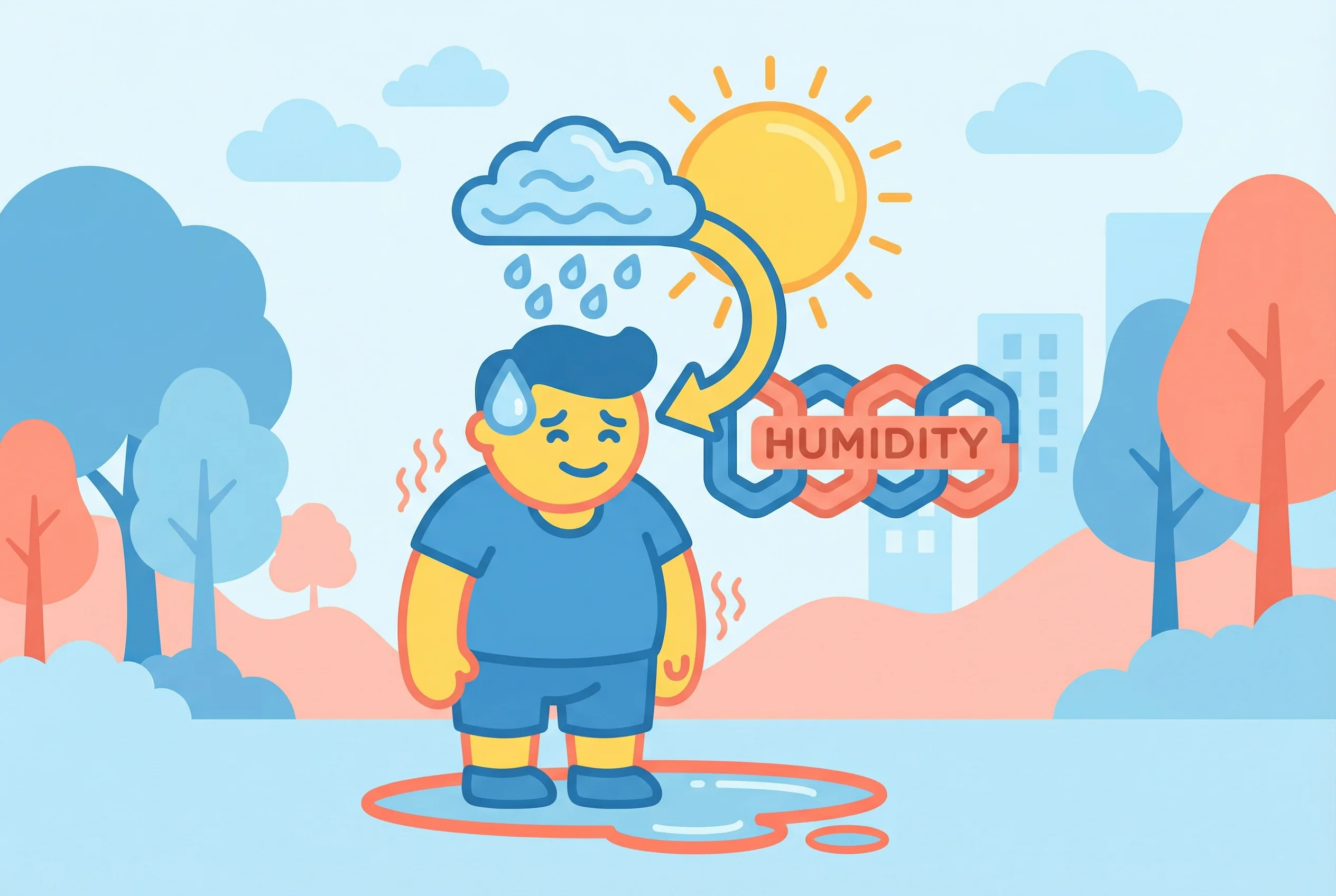
AHumid air is actually hotter
✗Not quite — the answer is C. Sweat can't evaporate efficiently. Humidity doesn't change air temperature—thermometer reads same. Feels hotter because sweat evaporation (body's cooling) is inhibited.
BWater vapor conducts heat better
✗Not quite — the answer is C. Sweat can't evaporate efficiently. Water vapor isn't better heat conductor. High humidity feels worse because it prevents efficient sweat evaporation cooling.
CSweat can't evaporate efficiently
✓Correct — Evaporative cooling blocked! Humidity makes heat feel worse: (1) Body cools through sweat evaporation. (2) Evaporation requires dry air—water molecules escape into air. (3) High humidity—air already saturated with moisture. (4) Sweat can't evaporate—stays on skin. (5) No evaporation = no cooling. Heat index: combines temperature + humidity (how hot it feels). 35°C with 80% humidity feels like 50°C+! Dangerous: heat stroke risk. Dry heat (deserts): sweat evaporates instantly—better cooling despite high temperature!
Answer this question
AWater vapor condenses visibly
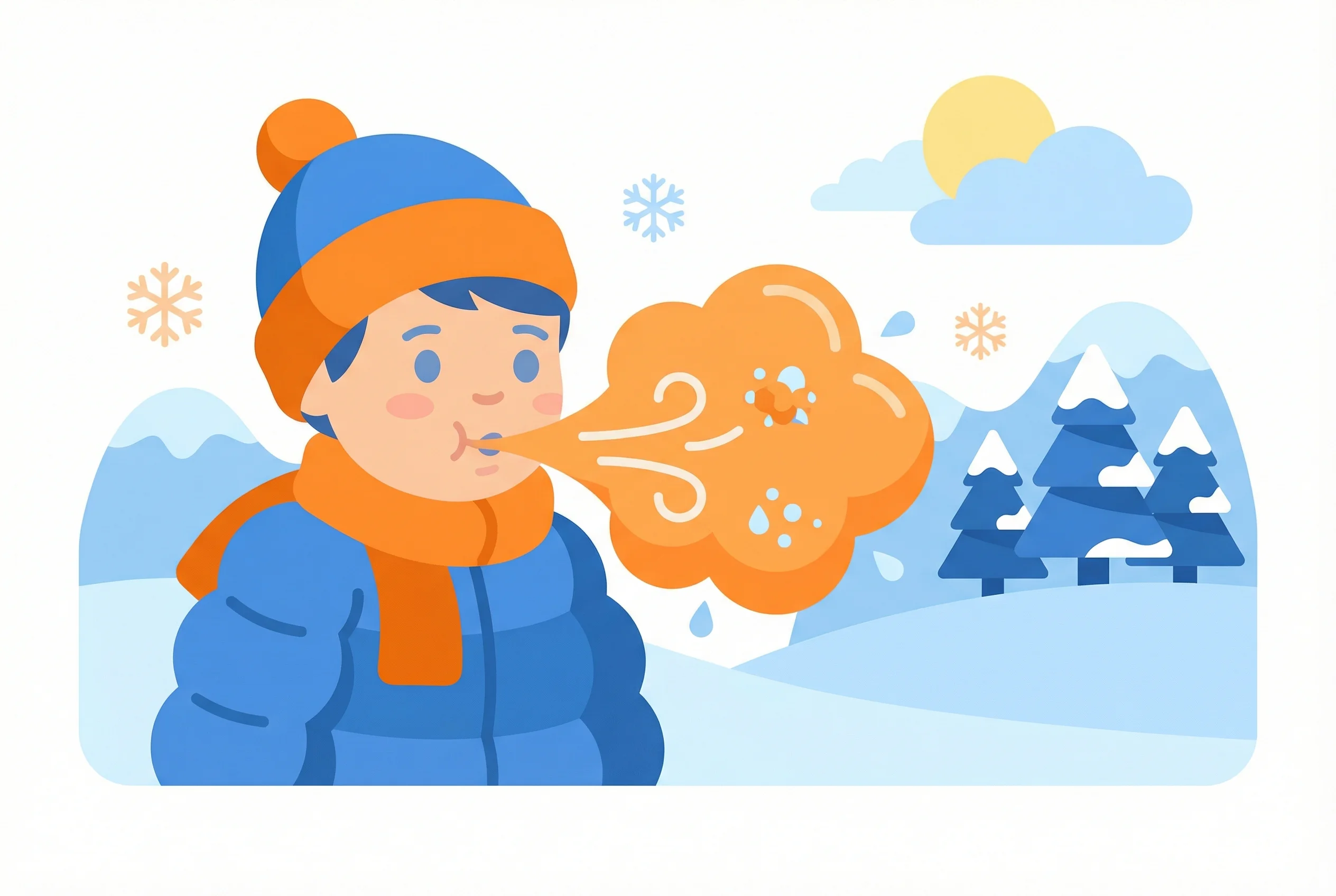
✓Correct — Condensation cloud! Visible breath in cold: (1) Exhaled air: warm and humid (from lungs—saturated with moisture). (2) Meets cold air—temperature drops rapidly. (3) Cold air can't hold as much water vapor. (4) Excess moisture condenses into tiny droplets. (5) Droplets scatter light—appear as white cloud. Same principle as fog/clouds. Warmer days: air holds moisture (invisible). Very cold: might see ice crystals instead of droplets. Breath condensation temperature varies—depends on humidity (visible around 7°C or colder typically)!
BBreath freezes into ice crystals
✗Not quite — the answer is A. Water vapor condenses visibly. In extreme cold, ice crystals can form, but typically it's liquid water droplets condensing from warm breath cooling rapidly.
CCarbon dioxide turns white
✗Not quite — the answer is A. Water vapor condenses visibly. CO₂ is colorless gas. Visible breath is water vapor (H₂O) condensing into droplets when warm exhaled air cools.
Answer this question
AMeasures temperature changes
✗Not quite — the answer is B. Low pressure brings storms. Barometer measures atmospheric pressure, not temperature. Pressure changes indicate approaching weather systems—low pressure = storms.
BLow pressure brings storms
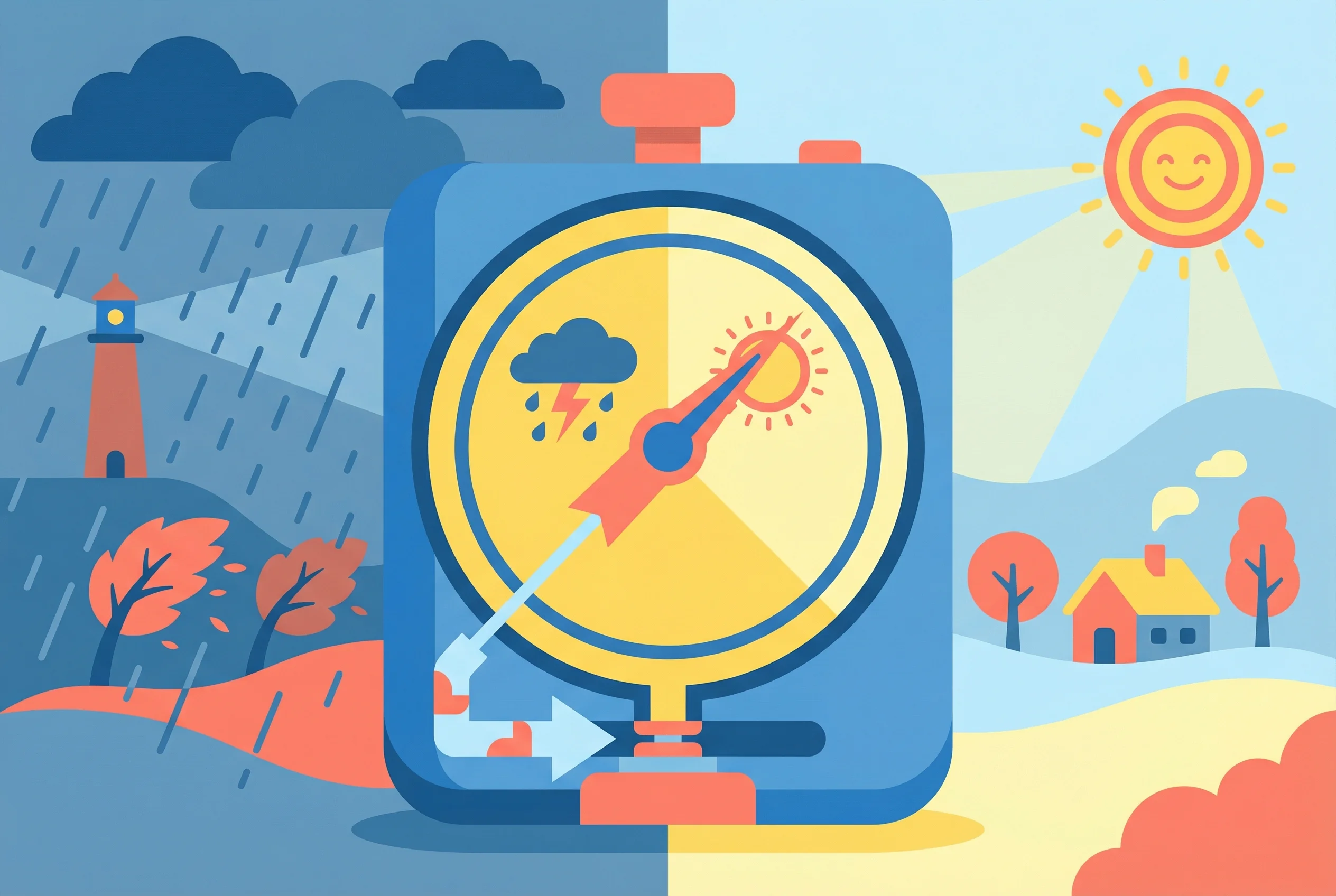
✓Correct — Rising pressure means a high-pressure system is coming (clear weather). Falling pressure means low pressure approaching (clouds, rain, storms). A rapid drop warns of severe weather. In low-pressure areas, air rises and cools, causing condensation and rain. In high pressure, air sinks and warms, clearing skies. Sailors have long used barometers—'glass falling' means storms ahead!
CBarometer detects wind speed
✗Not quite — the answer is B. Low pressure brings storms. Barometer measures air pressure, not wind speed (anemometer does that). Pressure changes indicate weather systems—low pressure = storms approaching.
Answer this question
Funny Quiz for Friends
ASmooth surfaces reflect light rays in parallel directions
✓Correct — When light hits a smooth surface like a mirror, the microscopic flatness means all light rays bounce off at the same angle (angle of incidence equals angle of reflection). This 'specular reflection' preserves the image. Rough surfaces have tiny bumps and valleys that scatter light in random directions ('diffuse reflection'), destroying the image but making the surface visible from all angles.
BMirrors contain special chemicals that capture light
✗Not quite — the answer is A. Smooth surfaces reflect light rays in parallel directions. Mirrors do not contain chemicals that 'capture' light. A typical mirror is simply glass with a thin aluminum or silver coating on the back. The reflection happens because of the smooth surface geometry, not chemical properties. Even polished metal or calm water can create clear reflections without special chemicals.
CRough surfaces absorb all the light that hits them
✗Not quite — the answer is A. Smooth surfaces reflect light rays in parallel directions. Rough surfaces actually reflect most light - that is why you can see a white wall! The wall appears white because it reflects light in all directions (diffuse reflection). If it absorbed all light, it would appear black. The difference is not absorption versus reflection, but organized reflection (smooth) versus scattered reflection (rough).
Answer this question
AThe brain creates 'event boundaries' when entering new spaces, separating memories
✓Correct — This is called the 'doorway effect.' Research shows that passing through doorways signals the brain to file away memories from the previous room and prepare for new information. Doorways act as 'event boundaries' that compartmentalize our experiences. Going back to the original room often helps you remember because you return to the same mental context.
BNew rooms have different air pressure that temporarily affects brain function
✗Not quite — the answer is A. The brain creates 'event boundaries' when entering new spaces, separating memories. While air pressure changes can affect us (like on airplanes), normal room-to-room pressure differences are too small to impact brain function. The forgetting happens due to how our brain organizes memories by location and context, not physical environmental factors like air pressure.
CThe eyes need time to adjust to new lighting, pausing memory recall
✗Not quite — the answer is A. The brain creates 'event boundaries' when entering new spaces, separating memories. Our eyes adapt to lighting changes in milliseconds, far too quickly to explain the doorway effect. The forgetting occurs because the brain treats the new room as a separate 'mental chapter,' filing away the previous room's context. Vision adjustment does not pause our memory systems.
Answer this question
AHoney's large sugar molecules and strong bonds create high viscosity
✓Correct — Honey contains large sugar molecules (like fructose and glucose) that form strong hydrogen bonds with each other. These intermolecular forces make the molecules resist sliding past one another, creating high viscosity. Water molecules are much smaller and have weaker bonds, allowing them to flow freely. This is why honey flows about 10,000 times slower than water at room temperature.
BHoney is heavier, so gravity pulls it down more slowly
✗Not quite — the answer is A. Honey's large sugar molecules and strong bonds create high viscosity. While honey is denser than water (about 1.4 times heavier), density does not determine flow speed. Gravity pulls on all liquids equally based on their mass. Mercury is much heavier than honey but flows quickly because it has low viscosity. The flow resistance comes from internal friction between molecules (viscosity), not weight.
CHoney has tiny air bubbles that block the flow
✗Not quite — the answer is A. Honey's large sugar molecules and strong bonds create high viscosity. Pure honey contains virtually no air bubbles - it is nearly 80% sugars dissolved in 20% water. Air bubbles would actually make a liquid flow slightly faster by reducing friction, not slower. Honey's slow flow is entirely due to viscosity from intermolecular forces, not trapped air. You can verify this by observing that clear, bubble-free honey still flows very slowly.
Answer this question
AThe long polymer molecules uncoil when stretched and naturally recoil back
✓Correct — Rubber is made of long, tangled polymer chains (like cooked spaghetti). When you stretch a rubber band, these molecules straighten out and uncoil. When you let go, they naturally spring back to their coiled state because that arrangement has lower energy. This elastic property is why rubber is so useful in countless applications, from hair ties to car tires.
BTiny air pockets inside compress and then expand back to normal size
✗Not quite — the answer is A. The long polymer molecules uncoil when stretched and naturally recoil back. While some materials do rely on air pockets for cushioning (like foam), rubber's elasticity comes from its molecular structure, not air compression. Pure rubber is actually quite dense with very few air pockets. If this were true, puncturing a rubber band would make it lose its stretch, but it doesn't work that way.
CThe rubber remembers its shape through magnetic forces between molecules
✗Not quite — the answer is A. The long polymer molecules uncoil when stretched and naturally recoil back. Rubber molecules are not magnetic, and magnetism plays no role in elasticity. The 'memory' of rubber comes from entropy - the natural tendency of tangled molecules to return to their most disordered, coiled state. This is a thermodynamic property, not a magnetic one. Temperature actually affects rubber's elasticity more than any magnetic field could.
Answer this question
Frequently Asked Questions
What are good fun quiz questions?
Good fun quiz questions create a tiny information gap: familiar enough to guess, surprising enough that the answer feels like closure. Weather, animals, everyday tech, food, and space all work because everyone has lived near them.
How do I run a fun quiz for parties?
Pick short multiple-choice questions, read the options out loud, and let people argue for ten seconds before revealing the answer. The argument is usually half the fun.
Can I use this fun quiz for work meetings?
Yes. Choose the quick-fire and daily sections first, keep score lightly, and avoid treating it like a test. The point is to wake up curiosity, not rank coworkers.
What makes a quiz fun instead of stressful?
A fun quiz gives people permission to guess. The answer should explain why, so even a wrong guess ends with a satisfying little discovery.
What does this have to do with AIgneous Million Whys?
AIgneous Million Whys is built around this exact loop: notice a question, make a quick guess, get real closure, then let the next question appear. Curiosity compounds better when it stays playful.