

Physics Quiz Questions and Answers
Everyday physics questions with answers that explain the little mechanisms you have already felt, heard, dropped, spun, heated, or wondered about.
Physics quiz questions and answers are better when they start from lived experience, not a formula sheet. This set works as a host-ready round, but it is also a trail of tiny closures: the car turn, the hot glass, the weird siren, the floating astronaut. For a fresh daily version of this format, try the trivia question of the day after this page.
Motion You Can Feel
AThe coin keeps moving forward at the car's speed due to inertia
BAir inside the car pushes the coin forward as it falls
CThe car's magnetic field pulls the coin along with it
AYour body's inertia makes it continue straight while the car turns
BCentrifugal force pushes you outward from the center of the turn
CThe car's tilting creates a downward slope that you slide along
ATheir moment of inertia decreases, so spin speed increases to conserve angular momentum
BPulling arms in creates more air resistance that pushes them around faster
CThe muscle force from pulling generates extra rotational energy
Heat and Cold
AThe inner surface expands faster than the outer surface, creating stress
BThe hot water dissolves the chemical bonds in the glass structure
CAir trapped inside expands and creates too much pressure
ADark fabric absorbs light energy and converts it to molecular vibrations (heat)
BDark colors attract more sunlight rays like a magnet pulls metal
CDark dye molecules generate their own heat when exposed to any light
Light and Colour

AStroboscopic effect from lighting
BOptical illusion from rotation
CAir pressure distorts vision
ALarger bubbles have more buoyant force compared to drag resistance
BLarger bubbles contain warmer gas that makes them lighter
CLarger bubbles attract nearby CO2 molecules creating upward current
Sound
ASound waves bunch up in front of the moving vehicle, increasing frequency
BThe driver increases the siren volume when approaching intersections
CYour ears naturally amplify high-frequency sounds from approaching objects

ASpace is too cold for sound
BNo air molecules to vibrate
CHelmets block all sound
Electricity in the House
AThe balloon becomes electrically charged and attracts the wall
BThe rubbing makes the balloon surface sticky and adhesive
CThe balloon heats up and melts slightly to grip the wall
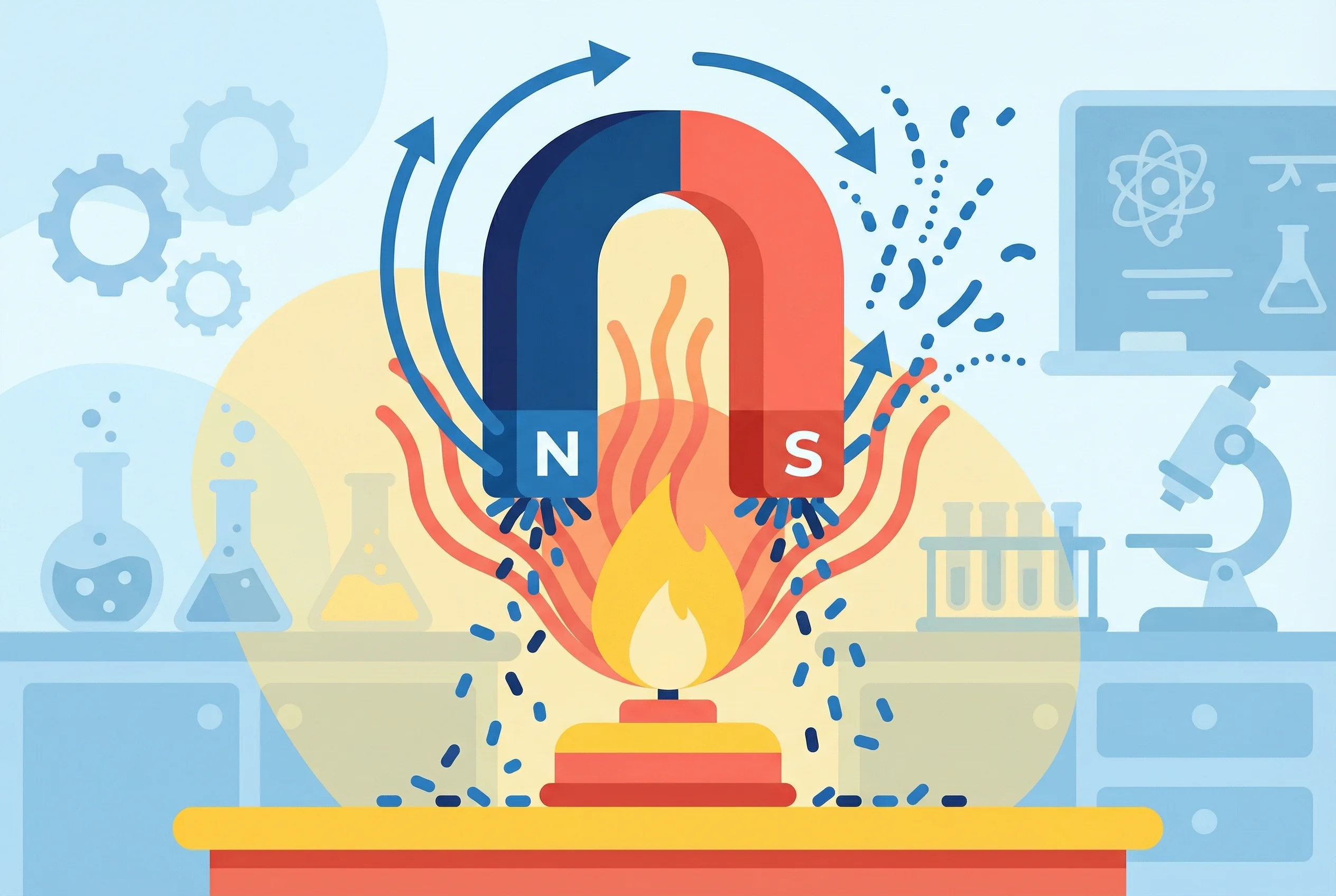
AHeat melts magnetic coating
BElectrons move slower when hot
CHeat disrupts atomic alignment
Space and Scale

AThey're falling with the ship
BNo gravity exists in space
CShip engines cancel gravity

ASun's gravity pulls them
BMagnetic forces attract them
CSpace vacuum pulls them inward
Want adjacent rounds? Try the broader daily science quiz, the general science quiz questions and answers, the adult-focused science quiz for adults, or the living-systems companion biology quiz questions and answers.
Turn physics questions into a 10-second daily curiosity loop: answer, get closure, and leave with one more piece of the world connected.
Play live on AIgneous Million WhysFrequently Asked Questions
What makes a good physics quiz question?
A good physics quiz question starts with something people have actually noticed: a siren changing pitch, a hot glass cracking, a balloon sticking to a wall. The answer should close the gap with a mechanism, not just name a law.
Are these physics quiz questions and answers for adults?
Yes. The questions are friendly enough for mixed groups, but the explanations are written for curious adults who want the "why" behind everyday motion, heat, light, sound, electricity, and space.
How many questions should I use in a physics quiz round?
For a quick round, use 8 to 12. For a longer game, split them by mechanism: motion, heat, light, sound, electricity, and space. That keeps the round varied instead of turning it into one long formula check.
Can I use these physics questions without making it feel like homework?
Yes. Read the question first, let people guess, then reveal the explanation. The fun is the small click of closure: "oh, that thing I have felt has a name."
What does this have to do with AIgneous Million Whys?
AIgneous Million Whys treats physics as curiosity in motion, not a class period. One 10-second question can turn a familiar moment into a fact that sticks, then point you toward the next thing you half-know.
Keep Exploring

Why does a quiz make you curious about the explanation only after you have already committed to an answer?
Psychology & Behavior

Why do free daily quiz apps make you commit to a guess before they explain the answer?
Psychology & Behavior

Why does asking questions help you learn better than just listening?
Psychology & Behavior
Related Posts
Science Quiz Questions and Answers
Science quiz questions and answers about physics, chemistry, biology, space, hard mechanisms, and everyday whys that make small facts click for curious adults.
Science Quiz for Adults: Questions With Answers
A science quiz for adults with 18 grown-up questions and answers about bodies, kitchens, weather, money, devices, materials, and curious debates with the why.
Fun Quiz Questions and Answers to Play Anywhere
A fun quiz with quick multiple-choice questions, explained answers, and playful rounds for parties, meetings, or a 10-second curiosity break for adults.