A daily science quiz works best when it gives you a small itch and then closes it properly. These are not school-subject drills; they are 30 tiny whys about your body, the weather, the night sky, materials in your hands, and animals doing things that look odd until the mechanism clicks. For the live one-question habit, start at Trivia Question of the Day or jump straight into /daily. For the tougher adult sibling, try Science Quiz for Adults.
Questions About Your Own Body
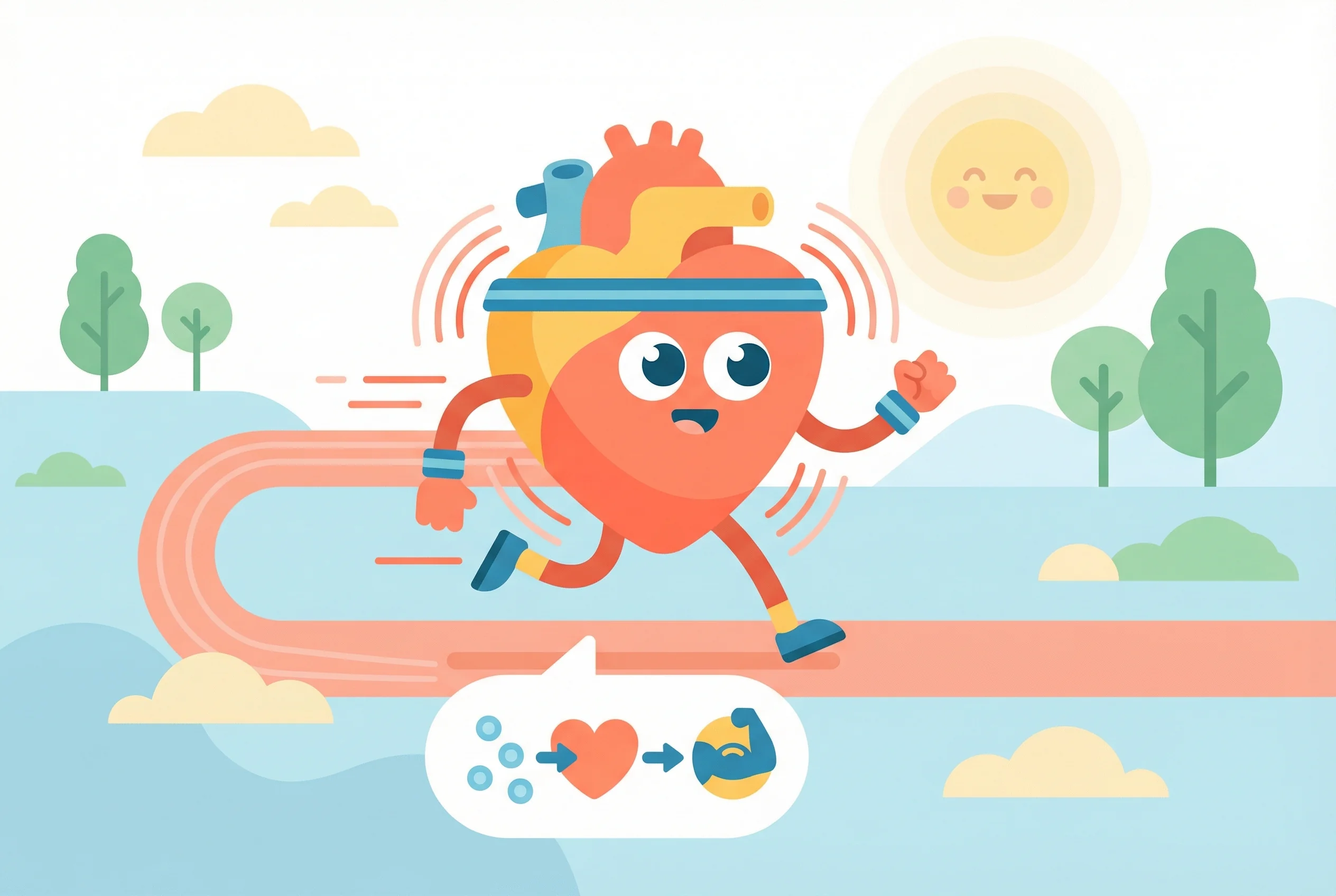
ATo deliver more oxygen to muscles
✓Correct — During exercise, your muscles need more oxygen to produce energy. Your heart beats faster to pump oxygen-rich blood to muscles more quickly. The sympathetic nervous system releases adrenaline, which increases heart rate. Working muscles also produce carbon dioxide that must be removed. Your heart rate can double or triple to meet these demands!
BHeart muscles need warming up
✗Not quite — The heart doesn't beat faster to warm itself up—it's already continuously working. The increased rate is driven by your muscles' oxygen demands, not by the heart's own needs.
CTo remove sweat faster
✗Not quite — Sweat is produced by sweat glands, not the heart. Heart rate increases to pump oxygen-rich blood to muscles and remove metabolic waste like carbon dioxide.
Answer this question
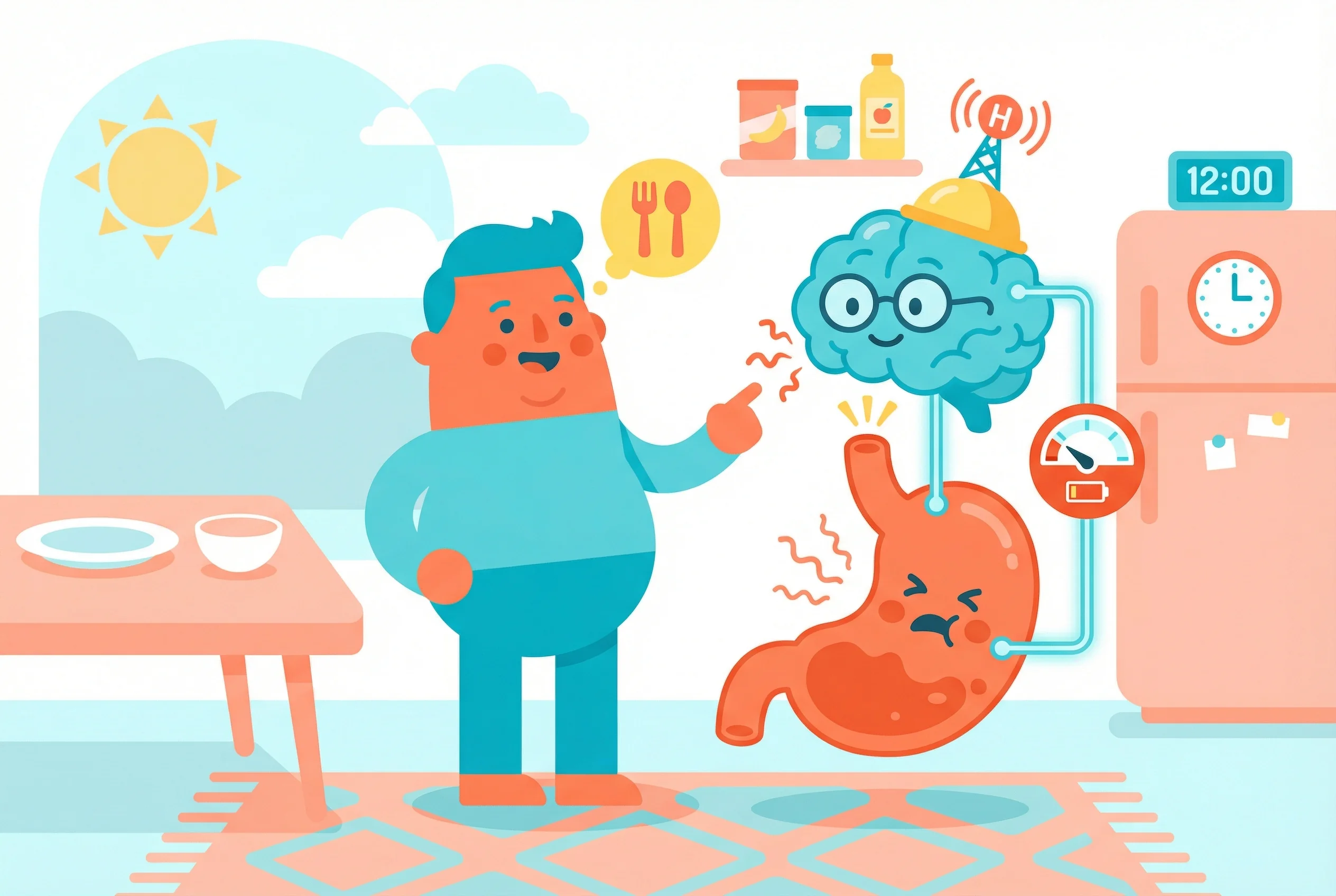
ABlood sugar drops trigger brain
✓Correct — Hunger is controlled by your brain, not your stomach. When blood sugar levels drop, your brain detects this change. It releases hormones like ghrelin that signal hunger. Your stomach may growl, but that's just movement, not emptiness. This system ensures your body gets energy before reserves run too low.
BDigestive system needs work
✗Not quite — The digestive system doesn't need to work constantly. Hunger signals come from the brain detecting low blood sugar, not from the digestive system needing activity.
CBody temperature decreases
✗Not quite — While body temperature affects metabolism, hunger is primarily triggered by the brain detecting drops in blood sugar levels, not temperature changes.
Answer this question
ABrain signals stimulate tear glands
✓Correct — Emotional crying follows a neural pathway: the limbic system (which processes emotions) sends signals to the lacrimal nucleus in the brainstem. Parasympathetic nerve impulses then travel to the lacrimal glands, stimulating tear production. This is how strong emotions—sadness, joy, frustration—can trigger tears automatically.
BEyes need cleaning when upset
✗Not quite — Cleaning is what reflex tears do (blinking spreads them). Emotional tears come from neural signals—your limbic system tells your tear glands to produce tears through the parasympathetic nervous system.
CBody temperature rises too high
✗Not quite — Body temperature doesn't trigger crying. Emotional tears result from brain signals traveling from the limbic system through the brainstem to stimulate the lacrimal glands.
Answer this question
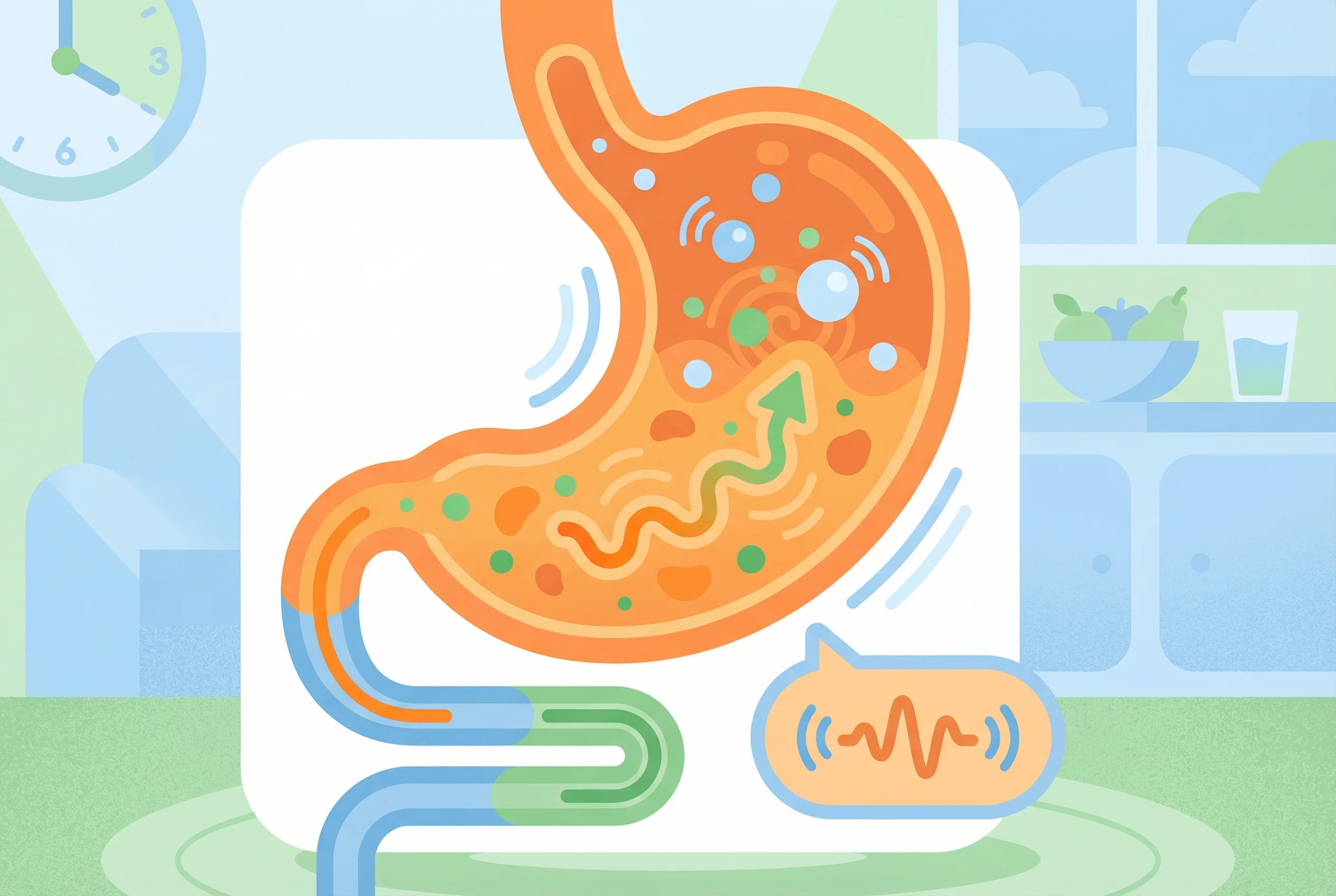
ADigestive muscles contracting
✓Correct — Stomach growling, called borborygmi, happens when digestive muscles contract in waves called peristalsis. These contractions move food, fluids, and air through your intestines. When your stomach is empty, the contractions squeeze mostly air, creating louder rumbling sounds. Hormones like motilin trigger these contractions, especially when you're hungry.
BFood is fermenting inside
✗Not quite — Food fermentation by gut bacteria does produce gas, but stomach growling is caused by peristaltic muscle contractions moving contents through the digestive tract.
CStomach acid bubbling
✗Not quite — Stomach acid doesn't bubble to create growling sounds. The noise comes from peristaltic contractions of smooth muscles squeezing air and fluids through the digestive system.
Answer this question
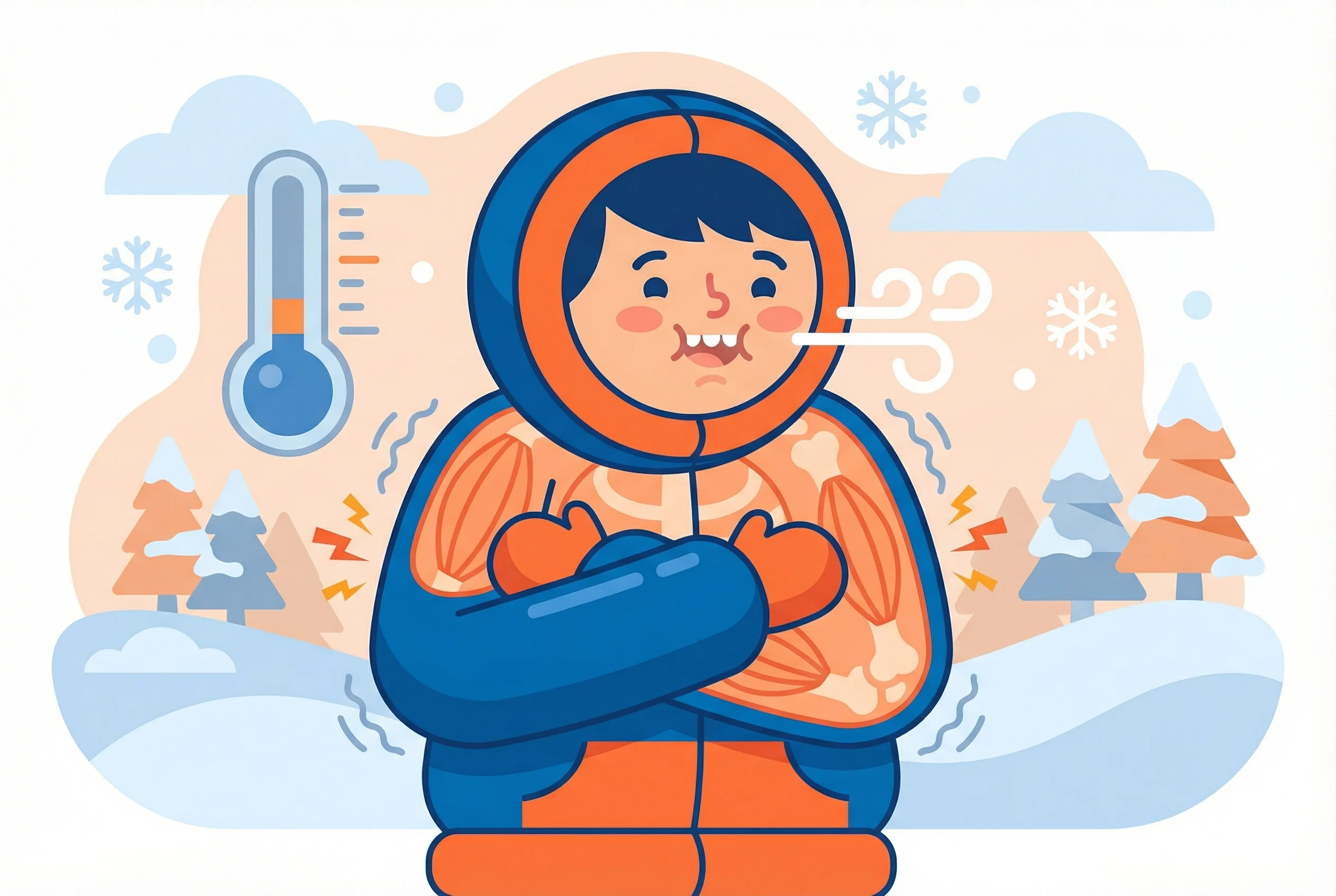
AMuscles contract to generate heat
✓Correct — Shivering is your body's automatic response to cold, controlled by the hypothalamus. When body temperature drops, your brain triggers rapid muscle contractions. These involuntary movements burn energy and generate heat through friction and metabolic activity. Shivering can increase heat production by up to five times, helping maintain your core temperature at 98.6°F (37°C).
BNerves are misfiring from cold
✗Not quite — Shivering isn't a nerve malfunction—it's a precisely controlled warming mechanism. The hypothalamus deliberately triggers muscle contractions to generate heat through metabolic activity.
CMuscles tense to conserve heat
✗Not quite — Simple muscle tension doesn't generate significant heat. Shivering involves rapid, repeated muscle contractions that burn energy and produce heat as a byproduct, actively warming the body.
Answer this question
Questions About Weather You've Stood In
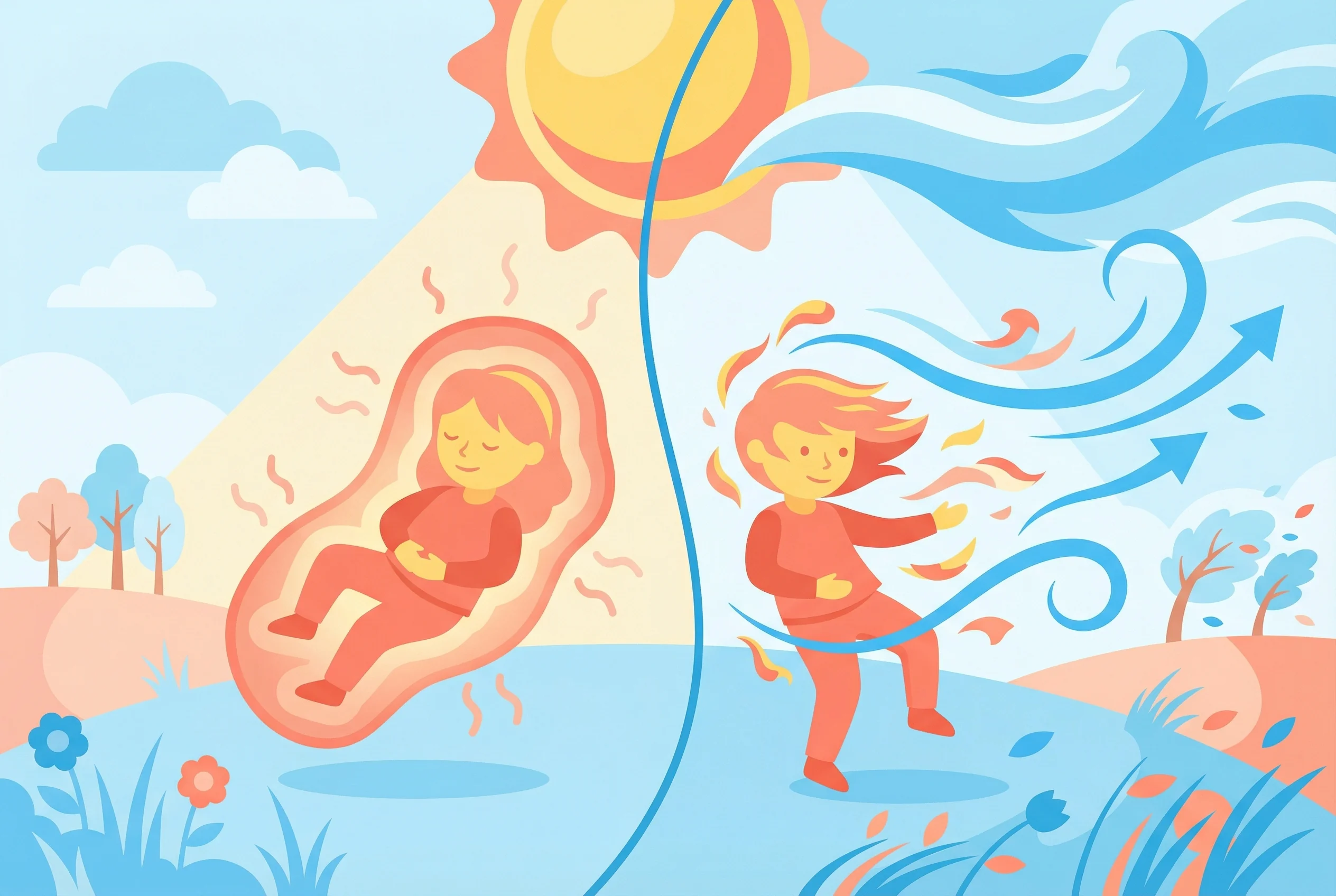
AWind removes warm air near skin
✓Correct — Your body warms a thin layer of air next to your skin. In still air, this warm layer insulates you. But wind constantly blows this warm air away and replaces it with cooler air, forcing your body to work harder to stay warm. This 'wind chill' effect makes 10°C with wind feel much colder than 10°C without wind!
BMoving air has less heat
✗Not quite — Moving air doesn't have less heat than still air at the same temperature. Wind feels colder because it removes the warm insulating layer of air around your body faster than still air.
CWind increases air pressure
✗Not quite — Wind doesn't increase air pressure in a way that affects temperature sensation. Wind feels colder because it removes the warm air layer your body creates, increasing heat loss.
Answer this question
AWater molecules bond hexagonally
✓Correct — Water molecules bond at 120-degree angles due to hydrogen bonding. When ice crystals form, this angle creates six-fold symmetry. Each snowflake branch grows differently based on temperature and humidity it encounters—that's why each is unique!
BSix is nature's lucky number
✗Not quite — Six isn't lucky—it's physics! Water's molecular bonding angle naturally creates hexagonal structures.
CWind creates six-sided patterns
✗Not quite — Wind doesn't create the six-sided shape. The structure is determined by water's molecular bonding angles.
Answer this question
AThunder causes lightning flash
✗Not quite — Lightning causes thunder, not vice versa. Electrical discharge heats air explosively—rapid expansion creates thunder shockwave.
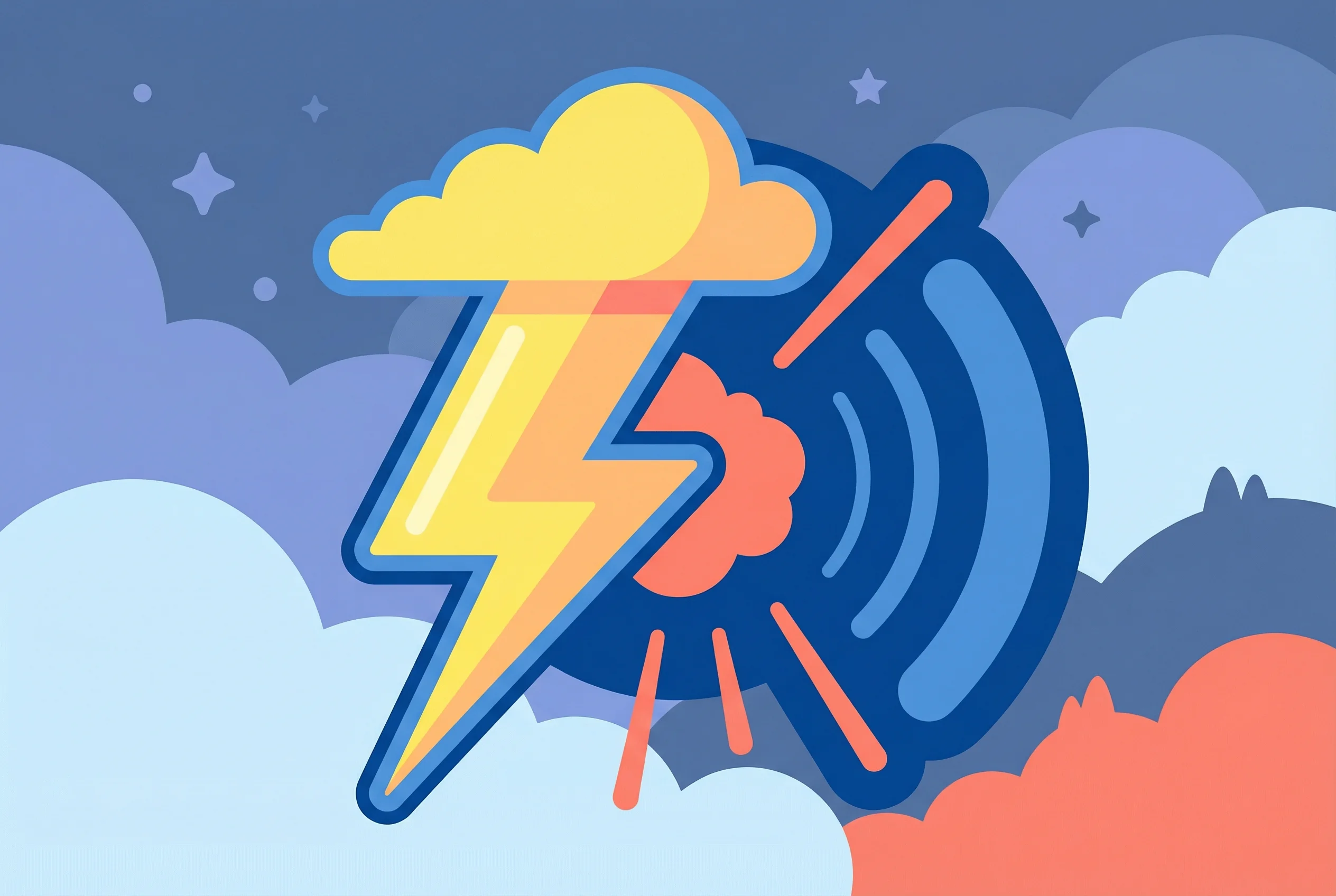
BLight faster than sound waves
✓Correct — Speed difference! Lightning and thunder occur simultaneously, but perceived separately: (1) Lightning—see instantly (light: 300,000 km/s). (2) Thunder—hear delayed (sound: 343 m/s in air). (3) Count seconds between flash and boom—divide by 3 ≈ distance in km (or by 5 for miles). Thunder: rapid air heating from lightning bolt (30,000°C)—explosive expansion creates shockwave. Close lightning: immediate crack. Distant: low rumble (sound waves refract). Can't hear thunder beyond ~25km!
CLightning and thunder are unrelated
✗Not quite — Thunder is direct result of lightning—electrical discharge superheats air channel, creating explosive expansion we hear as thunder.
Answer this question
AWater droplets refract sunlight
✓Correct — Light refraction and dispersion! Rainbows form when: (1) Sunlight enters raindrop—refracts (bends). (2) Disperses—different wavelengths bend differently (red least, violet most). (3) Reflects off back of droplet. (4) Exits droplet—refracts again. (5) Separated colors reach eyes. Conditions needed: sun behind observer, rain ahead. Rainbow angle: 42° from antisolar point. Double rainbows—second reflection inside droplet (reversed colors). Circular rainbow (from airplane). Moonbows exist! Each person sees unique rainbow—depends on viewing angle. ROYGBIV order!
BClouds reflect colorful light
✗Not quite — Rainbows form inside individual raindrops—sunlight refracts, disperses into colors, then reflects back to observer's eyes.
CChemical reaction in rainwater
✗Not quite — No chemical reaction—purely physical optics. Light refracts and disperses through water droplets, separating into visible spectrum.
Answer this question
AHumid air is actually hotter
✗Not quite — Humidity doesn't change air temperature—thermometer reads same. Feels hotter because sweat evaporation (body's cooling) is inhibited.
BWater vapor conducts heat better
✗Not quite — Water vapor isn't better heat conductor. High humidity feels worse because it prevents efficient sweat evaporation cooling.
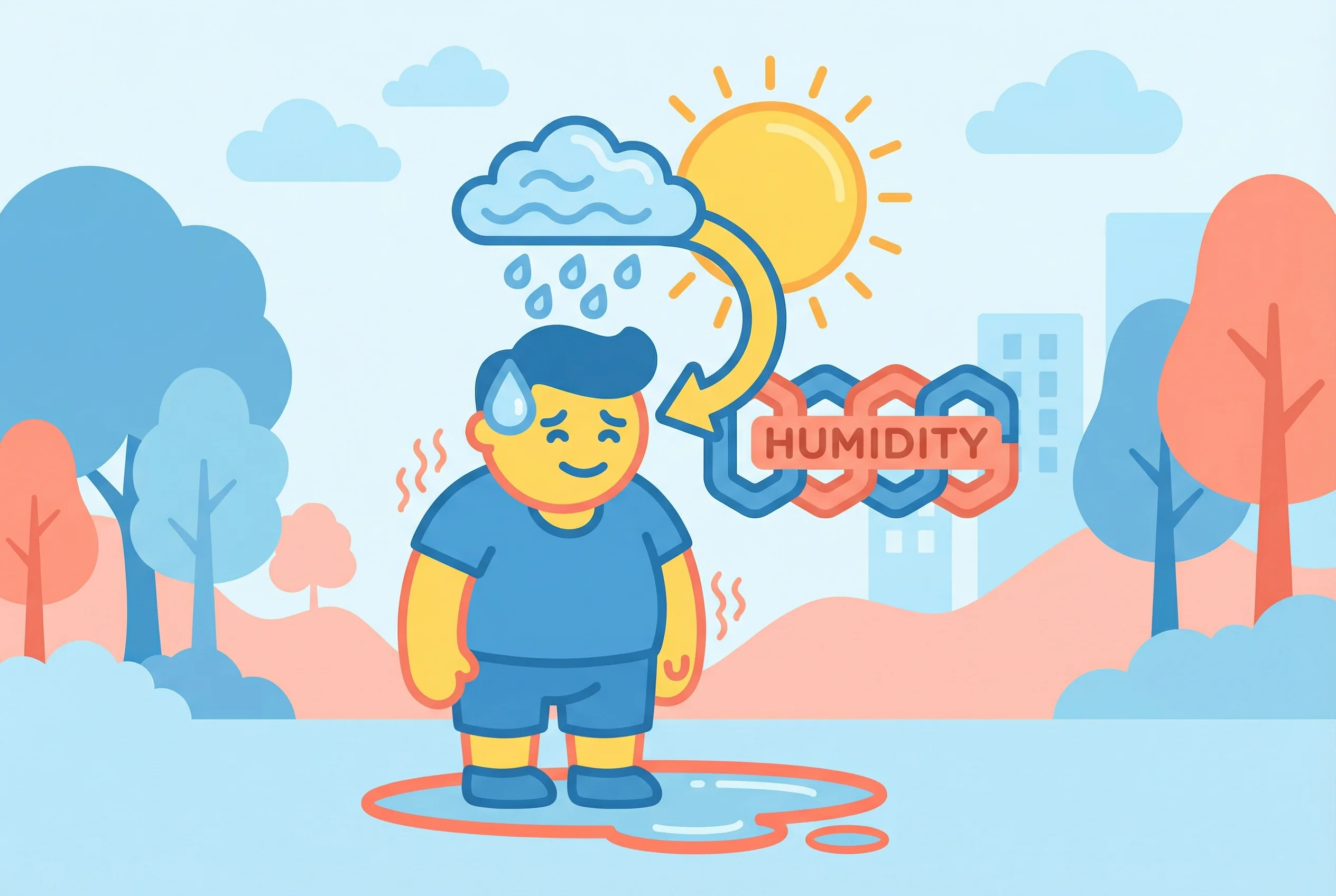
CSweat can't evaporate efficiently
✓Correct — Evaporative cooling blocked! Humidity makes heat feel worse: (1) Body cools through sweat evaporation. (2) Evaporation requires dry air—water molecules escape into air. (3) High humidity—air already saturated with moisture. (4) Sweat can't evaporate—stays on skin. (5) No evaporation = no cooling. Heat index: combines temperature + humidity (how hot it feels). 35°C with 80% humidity feels like 50°C+! Dangerous: heat stroke risk. Dry heat (deserts): sweat evaporates instantly—better cooling despite high temperature!
Answer this question
Questions About Space You Can See
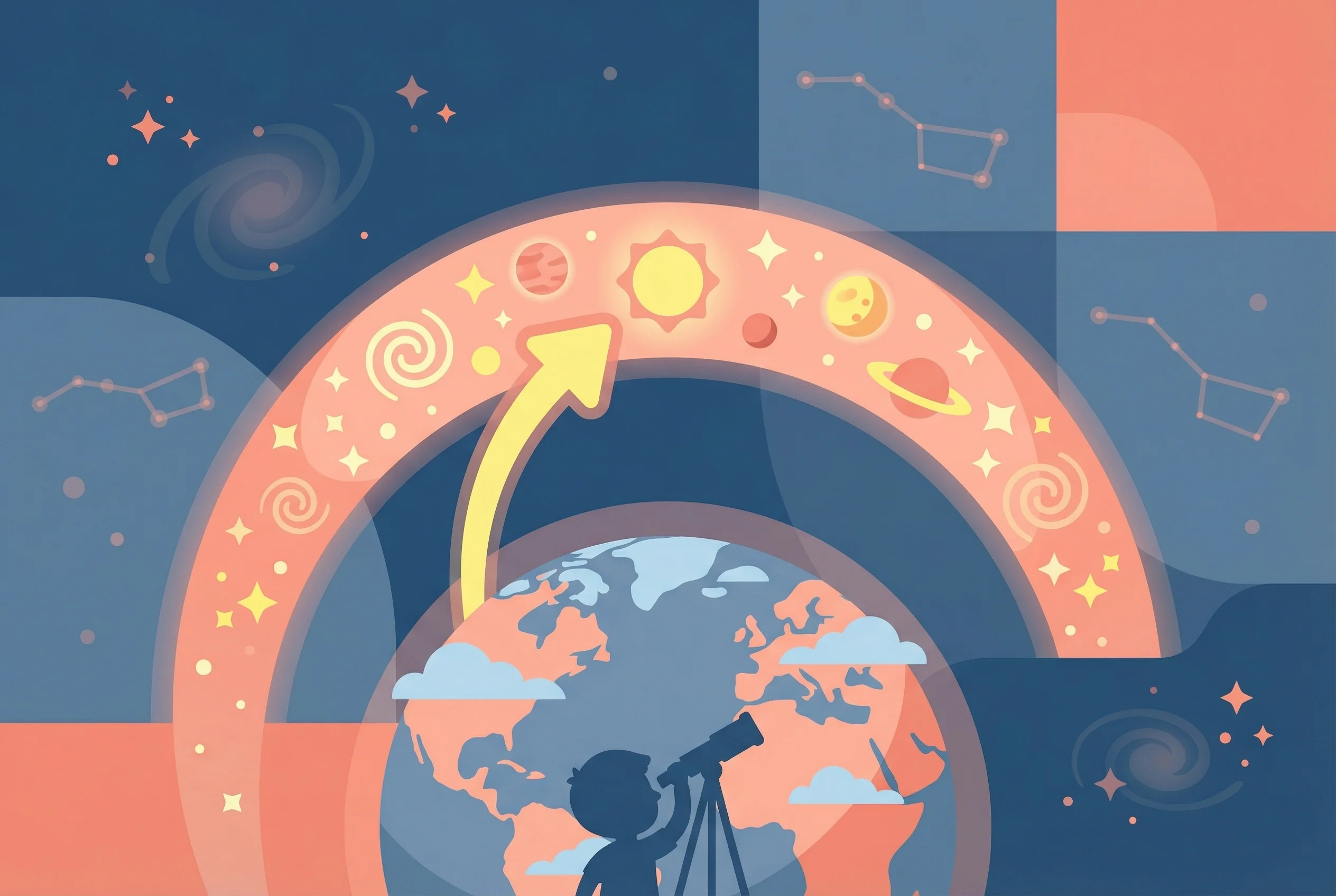
AWe are inside it
✓Correct — The Milky Way is our galaxy—we're inside it! The band of light we see is looking edge-on through the galactic disk (100,000 light-years across). We're in a spiral arm ~26,000 light-years from the center. Dense star concentrations appear as milky band across the night sky. Best viewed from dark locations away from light pollution. Ancient cultures saw it as celestial river!
BIt's brightest galaxy
✗Not quite — We see the Milky Way brightly because we're inside it—viewing our own galaxy from within. Other galaxies appear dimmer due to distance.
CReflects sunlight to Earth
✗Not quite — Galaxies don't reflect sunlight—they emit light from billions of stars. We see the Milky Way because we're part of it.
Answer this question
AStars are too far apart
✓Correct — Although there are billions of stars, they're incredibly far apart. Space is about 99.9999999999999% empty vacuum. Light from stars spreads out in all directions, getting dimmer with distance. Most light from distant stars is too faint to see. Also, the universe has a finite age (13.8 billion years), so light from the most distant stars hasn't reached us yet. The vast emptiness between stars makes space appear dark.
BThere aren't enough stars
✗Not quite — There are hundreds of billions of stars just in our galaxy alone, and billions of galaxies in the observable universe. The number of stars is enormous. The darkness comes from their vast separation and the finite age of the universe, not insufficient quantity.
CDark matter blocks light
✗Not quite — Dark matter doesn't block or absorb light - it doesn't interact with light at all, which is why it's called 'dark.' Dark matter only interacts through gravity. The darkness of space is due to the vast distances between stars and limited observable universe.
Answer this question
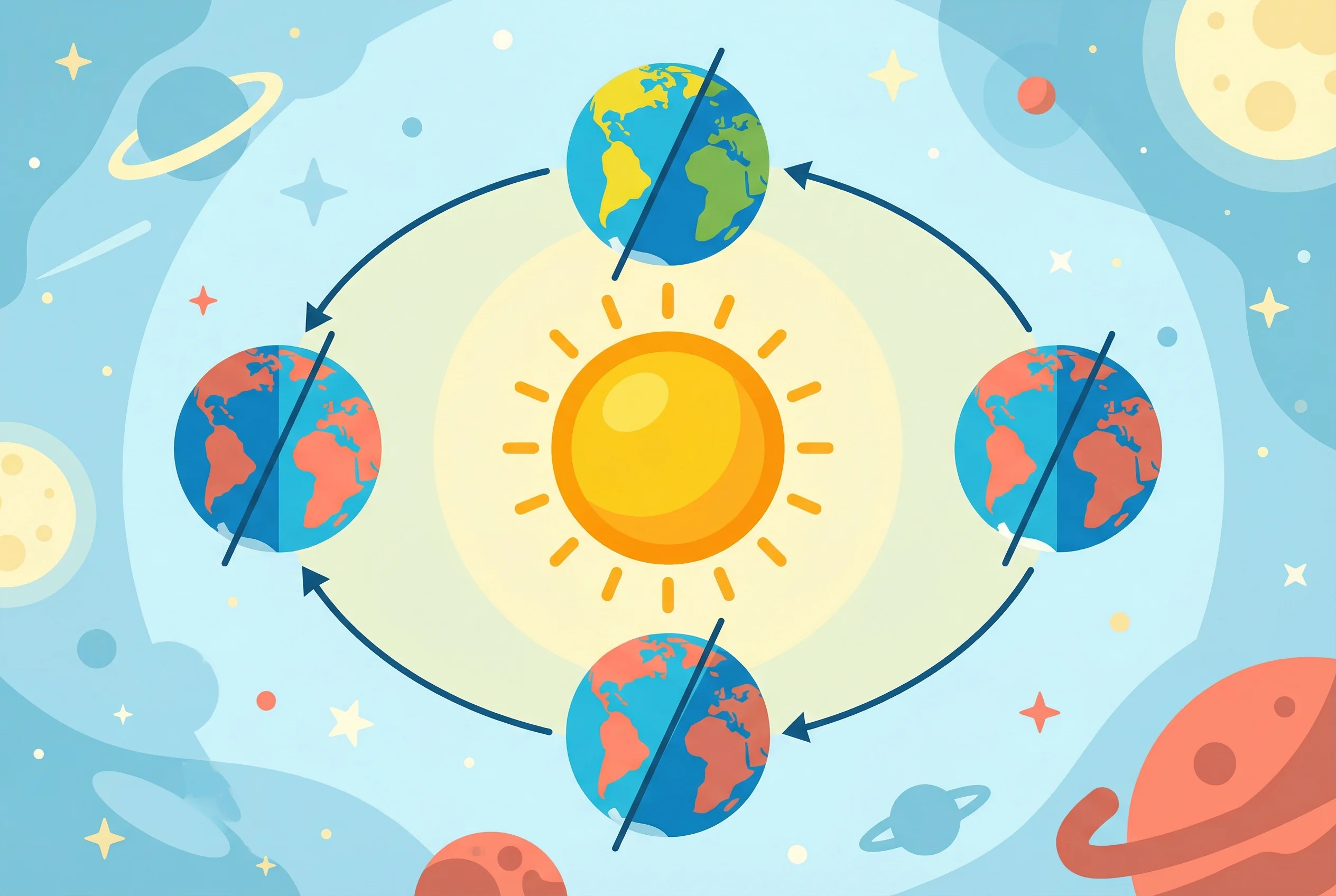
AEarth's axis is tilted
✓Correct — Earth's axis is tilted 23.5° from vertical. As Earth orbits the Sun, this tilt means the Northern Hemisphere points toward the Sun in June (summer there) and away in December (winter). When tilted toward the Sun, that hemisphere gets more direct sunlight and longer days, creating summer. The opposite hemisphere experiences winter. This tilt causes seasons.
BThe Sun's heat output changes
✗Not quite — The Sun's energy output is remarkably constant over short timescales like years. Small variations (about 0.1%) follow an 11-year solar cycle, but this doesn't cause our annual seasons.
CEarth's speed varies in orbit
✗Not quite — Earth's orbital speed doesn't cause seasons—Earth moves at nearly constant speed throughout its orbit. The 23.5° axial tilt is responsible for the dramatic seasonal temperature and daylight changes we experience.
Answer this question
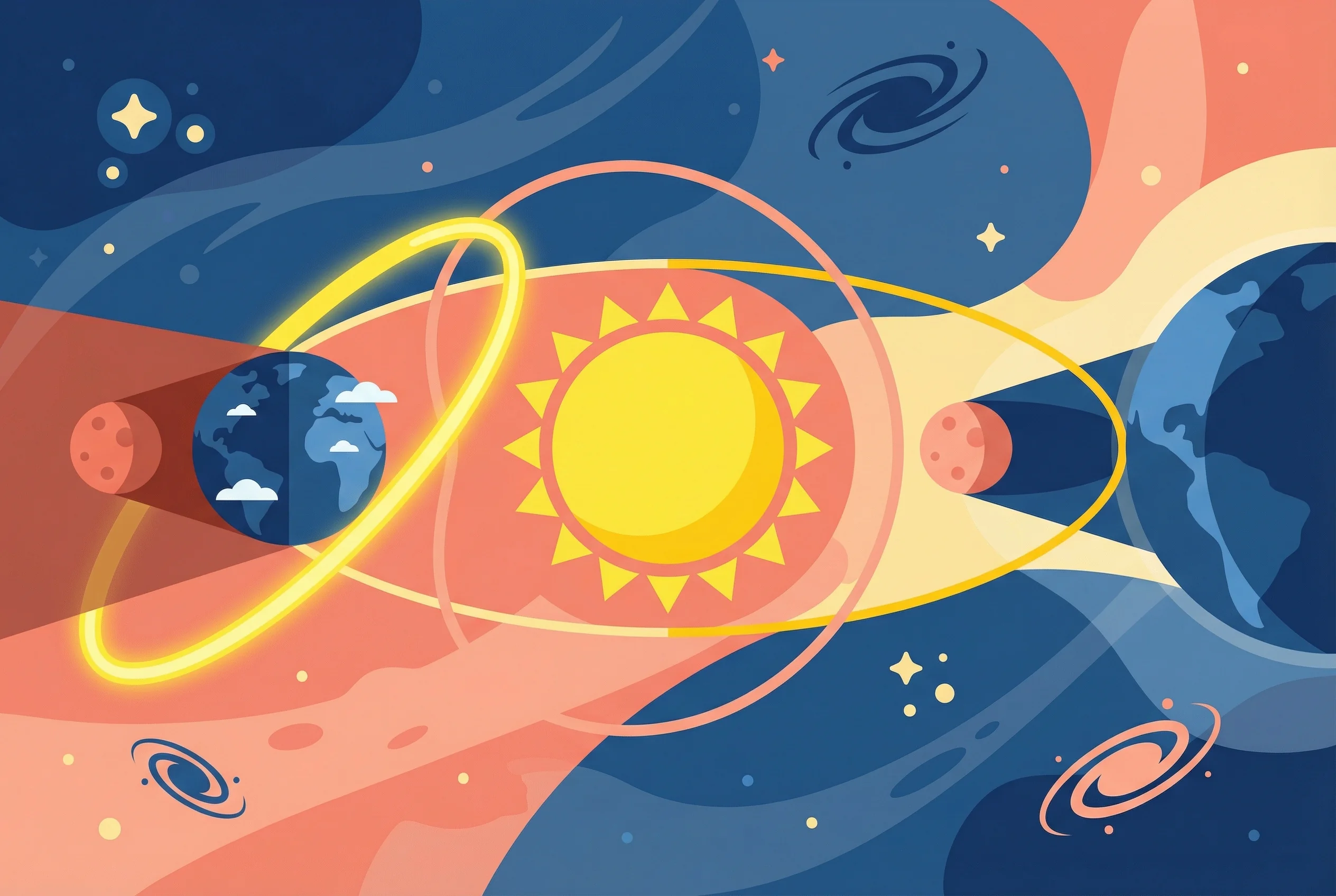
AMoon blocks or enters shadow
✓Correct — Solar eclipse: Moon passes between Sun and Earth, blocking sunlight and casting a shadow on Earth. This only happens at new moon when all three align. Lunar eclipse: Earth passes between Sun and Moon, and Earth's shadow falls on the Moon. This only happens at full moon. We don't get eclipses every month because the Moon's orbit is tilted 5° to Earth's orbit, so alignment is rare.
BSun's light dims periodically
✗Not quite — The Sun's brightness is remarkably constant. It doesn't dim on a predictable schedule. Eclipses are caused by the Moon blocking the Sun's light (solar eclipse) or Earth's shadow falling on the Moon (lunar eclipse), not by changes in the Sun itself.
CEarth's rotation causes them
✗Not quite — Earth's rotation causes day and night but doesn't cause eclipses. Eclipses require the Sun, Moon, and Earth to align in specific ways during the Moon's orbit around Earth. This alignment only happens occasionally, not daily as rotation would suggest.
Answer this question

ASun's gravity pulls them
✓Correct — The Sun contains 99.8% of our solar system's mass, creating enormous gravitational pull. Planets would fly off in straight lines, but the Sun's gravity constantly pulls them inward. The result is a balance: the planet's forward motion combined with inward gravitational pull creates a curved orbit. The stronger the Sun's gravity and the closer the planet, the faster it must move to maintain orbit. This is why Mercury orbits in 88 days while Neptune takes 165 years.
BMagnetic forces attract them
✗Not quite — While the Sun and planets have magnetic fields, these forces are extremely weak compared to gravity. Magnetic forces affect charged particles and some spacecraft, but they don't control planetary orbits. Gravity is the dominant force keeping planets in orbit.
CSpace vacuum pulls them inward
✗Not quite — Vacuum doesn't pull or push anything—it's simply empty space. Planets orbit because the Sun's gravity attracts them, not because space itself exerts any force.
Answer this question
Questions About Everyday Materials
AAir resistance equalizes them
✗Not quite — Air resistance actually makes lighter objects fall slower (feathers vs. Rocks). Without air, all objects fall at same rate—Galileo's discovery!
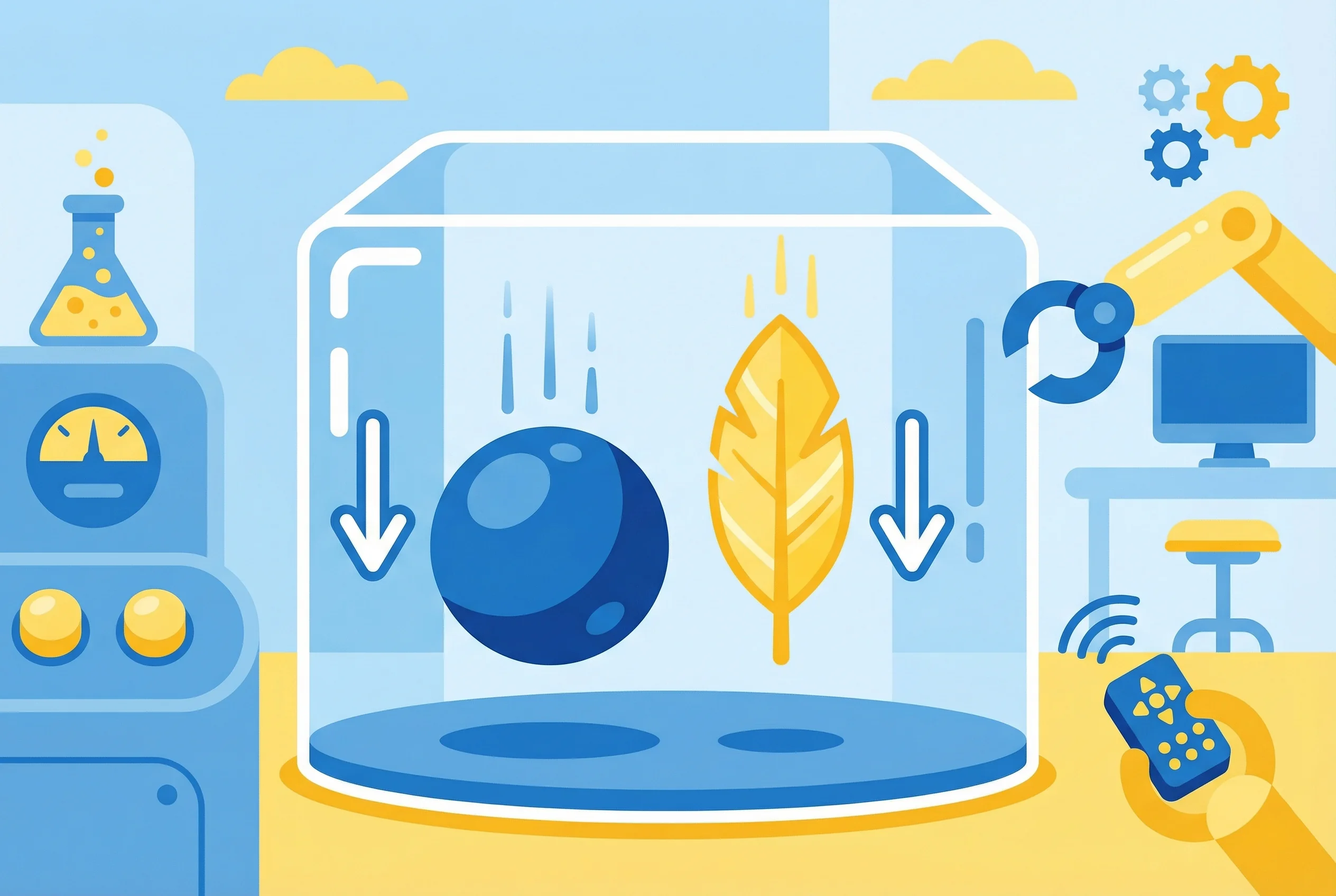
BGravity accelerates all equally
✓Correct — Gravity accelerates all objects equally regardless of mass—9.8 m/s² on Earth. Heavier objects experience more force (F=mg) BUT also have proportionally more inertia (resistance to acceleration). F=ma, so a=F/m=g (mass cancels!). Apollo 15 astronaut dropped hammer and feather on Moon (no air)—fell together! Galileo proved this centuries ago from Leaning Tower of Pisa (probably apocryphal story, but concept correct)!
CWeight doesn't affect motion
✗Not quite — Weight (gravitational force) does affect motion, but it's perfectly balanced by mass (inertia), resulting in constant acceleration for all objects.
Answer this question
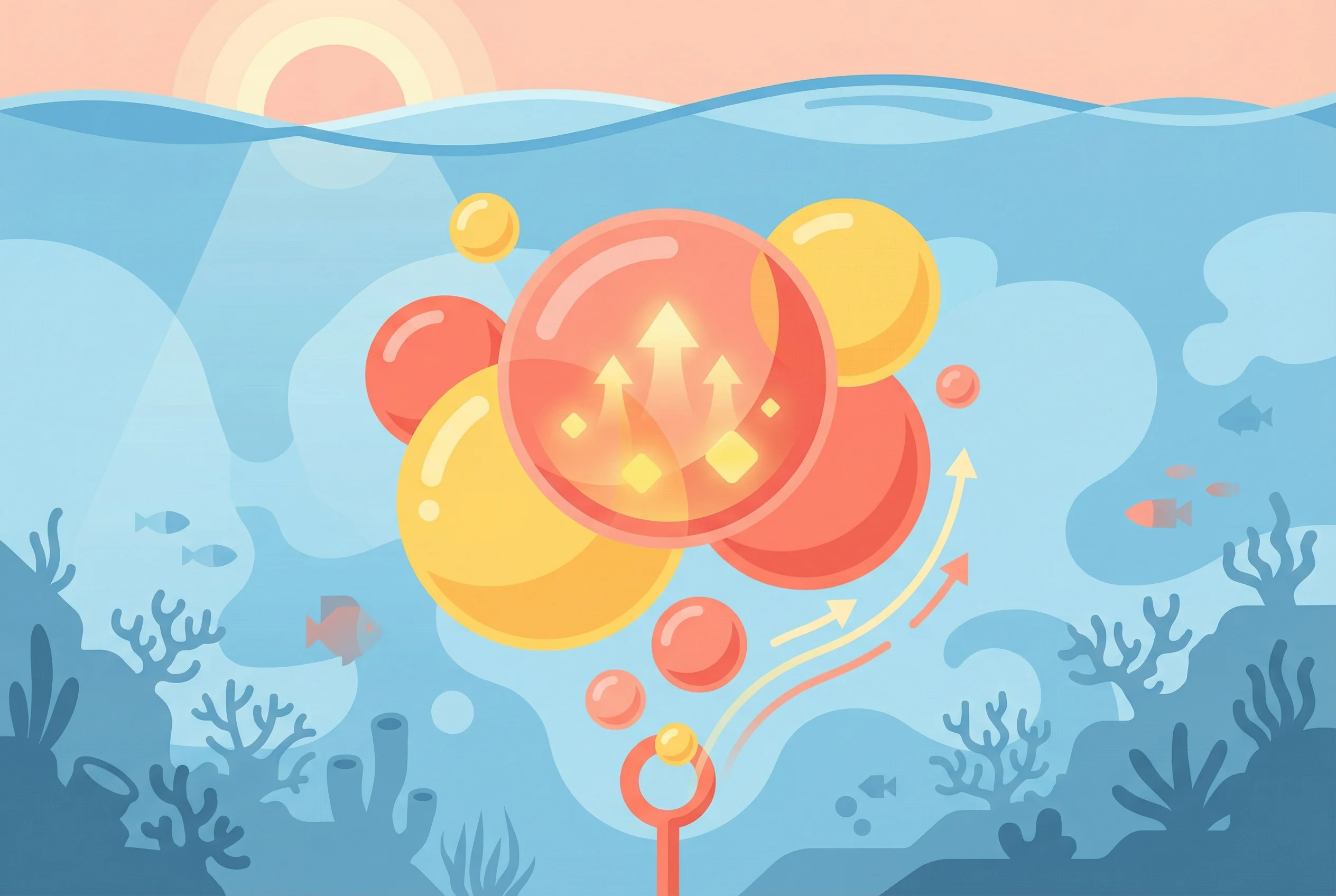
AAir is less dense than water
✓Correct — Buoyancy principle: objects less dense than surrounding fluid float upward. Bubble contains air/gas (~0.0012 g/cm³) surrounded by water (1.0 g/cm³)—air is ~800 times less dense! Water's weight pushes air upward (buoyant force). Same reason hot air balloons rise, oil floats on water, helium balloons ascend. Bubble size affects rise speed (larger = faster). Pop at surface—air rejoins atmosphere!
BWater pressure forces them
✗Not quite — Pressure exists but doesn't force bubbles up. Buoyancy drives upward motion—displaced water weighs more than air inside bubble.
CHeat makes air rise
✗Not quite — Heated air rises (convection), but bubbles rise in cold water too—buoyancy from density difference, not temperature.
Answer this question
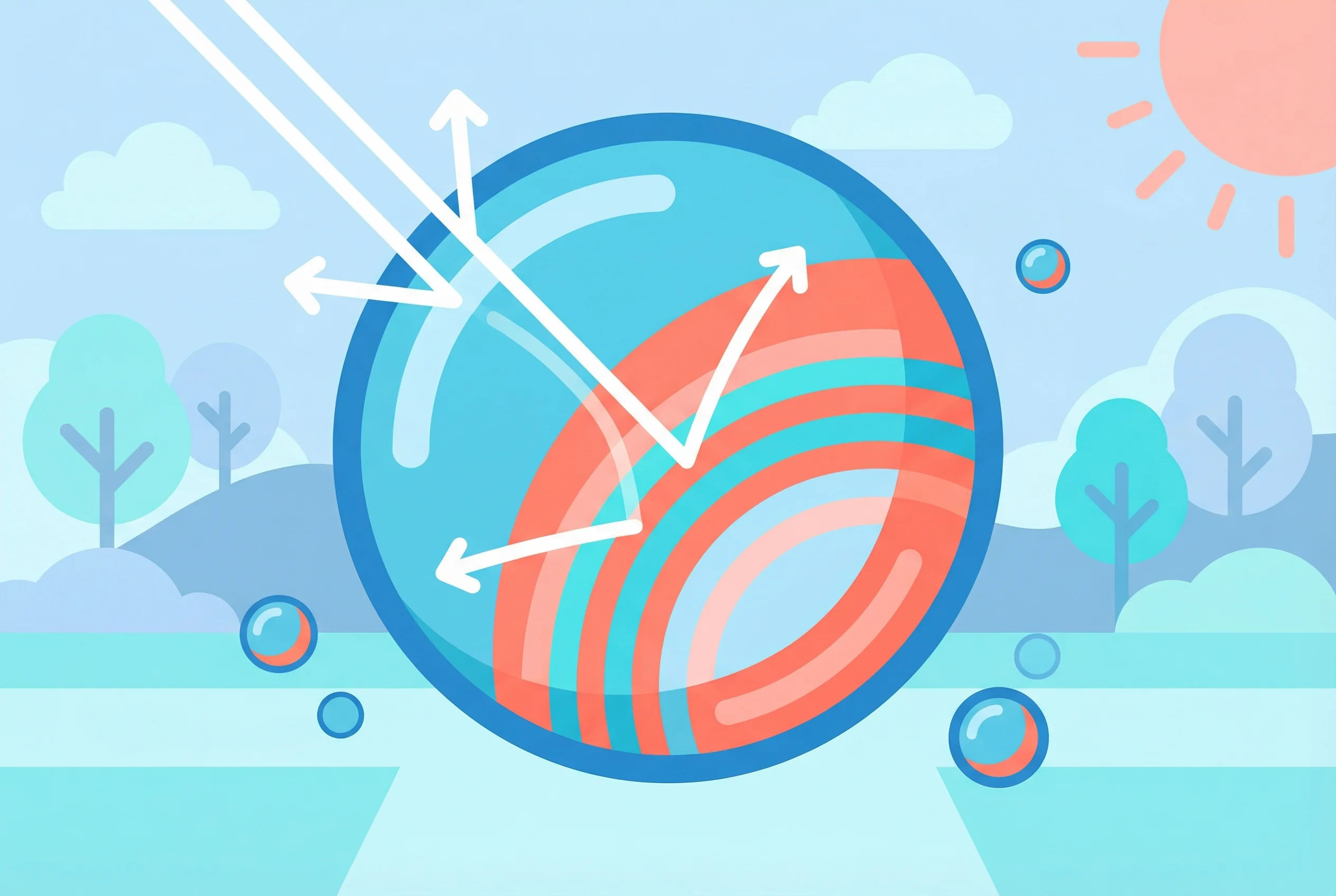
AThin film interference patterns
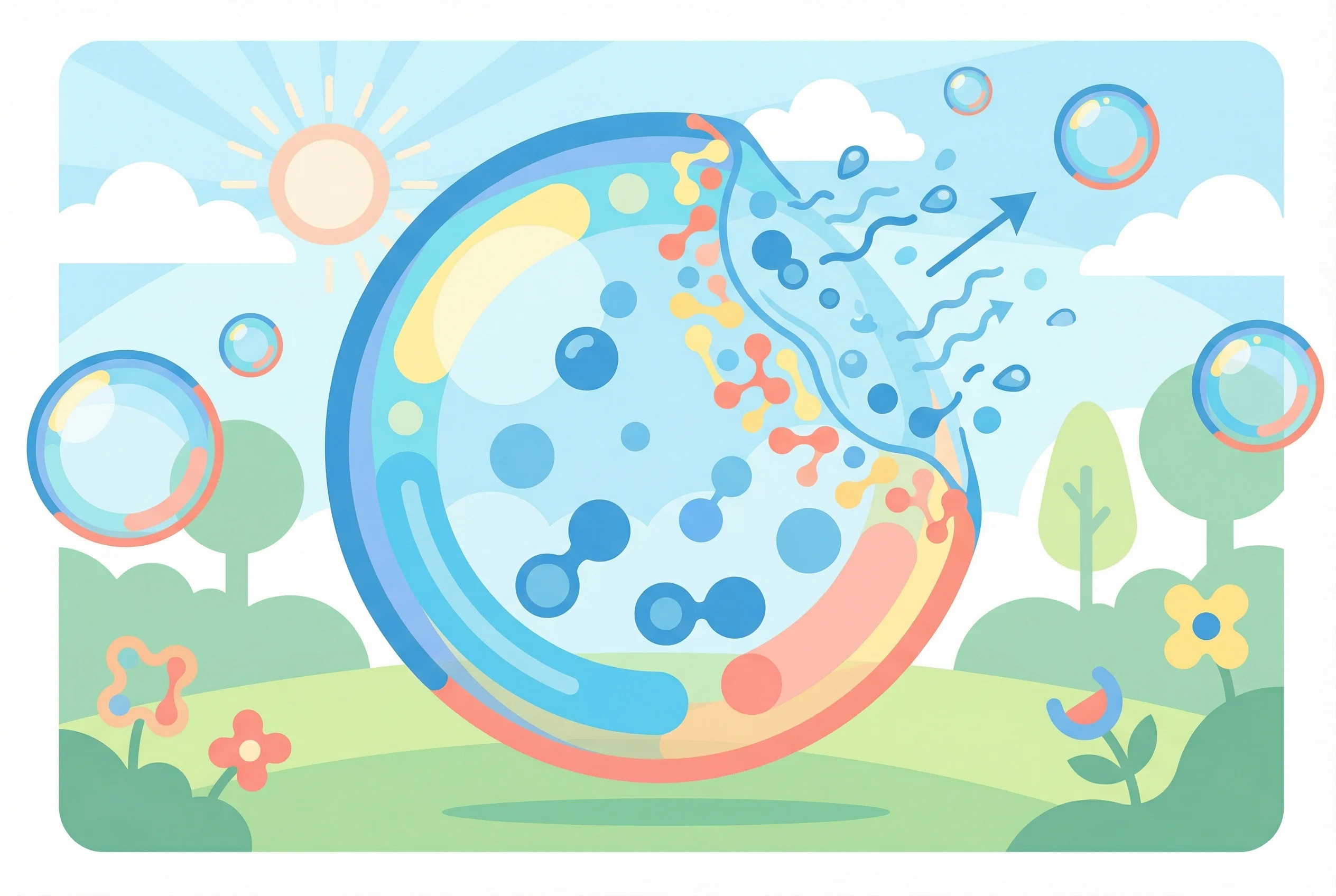
✓Correct — Thin film interference! Bubble wall has two surfaces (front and back). Light reflects from both—waves recombine. Film thickness (wavelength-scale) determines which colors constructively interfere (brighten) vs destructively interfere (cancel). Thickness varies across bubble—different areas show different colors. As bubble thins, colors shift (thicker=red, thinner=blue/violet). Just before popping, bubble appears black (too thin for visible light interference). Oil slicks show same phenomenon!
BWater refracts like prism
✗Not quite — Water can refract, but bubble colors are interference pattern from light waves reflecting off front/back surfaces, not dispersion.
CLight bounces multiple times
✗Not quite — Multiple reflections occur, but colors arise from interference—waves from front and back surfaces combining constructively or destructively.
Answer this question
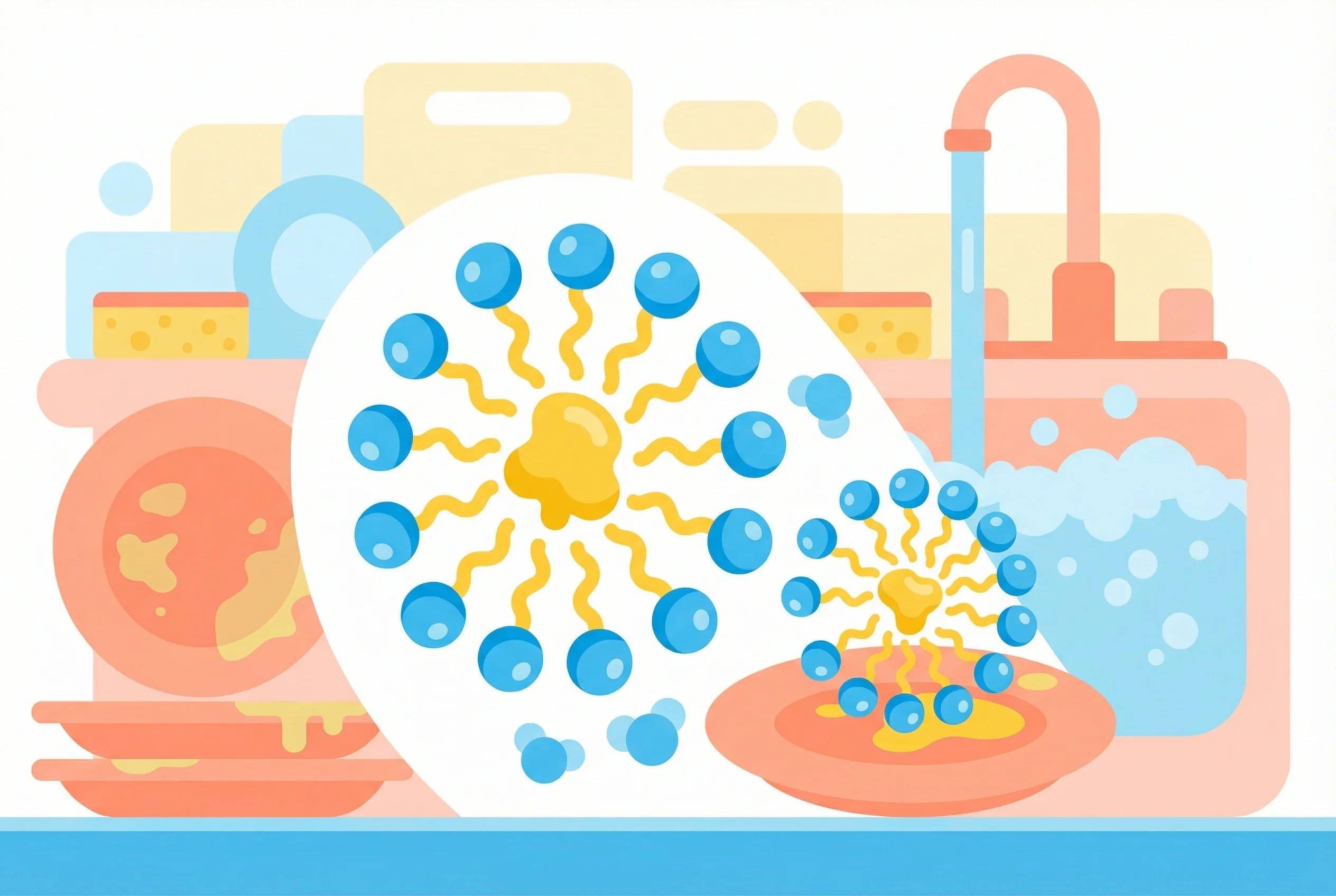
AMolecules grab water and oil
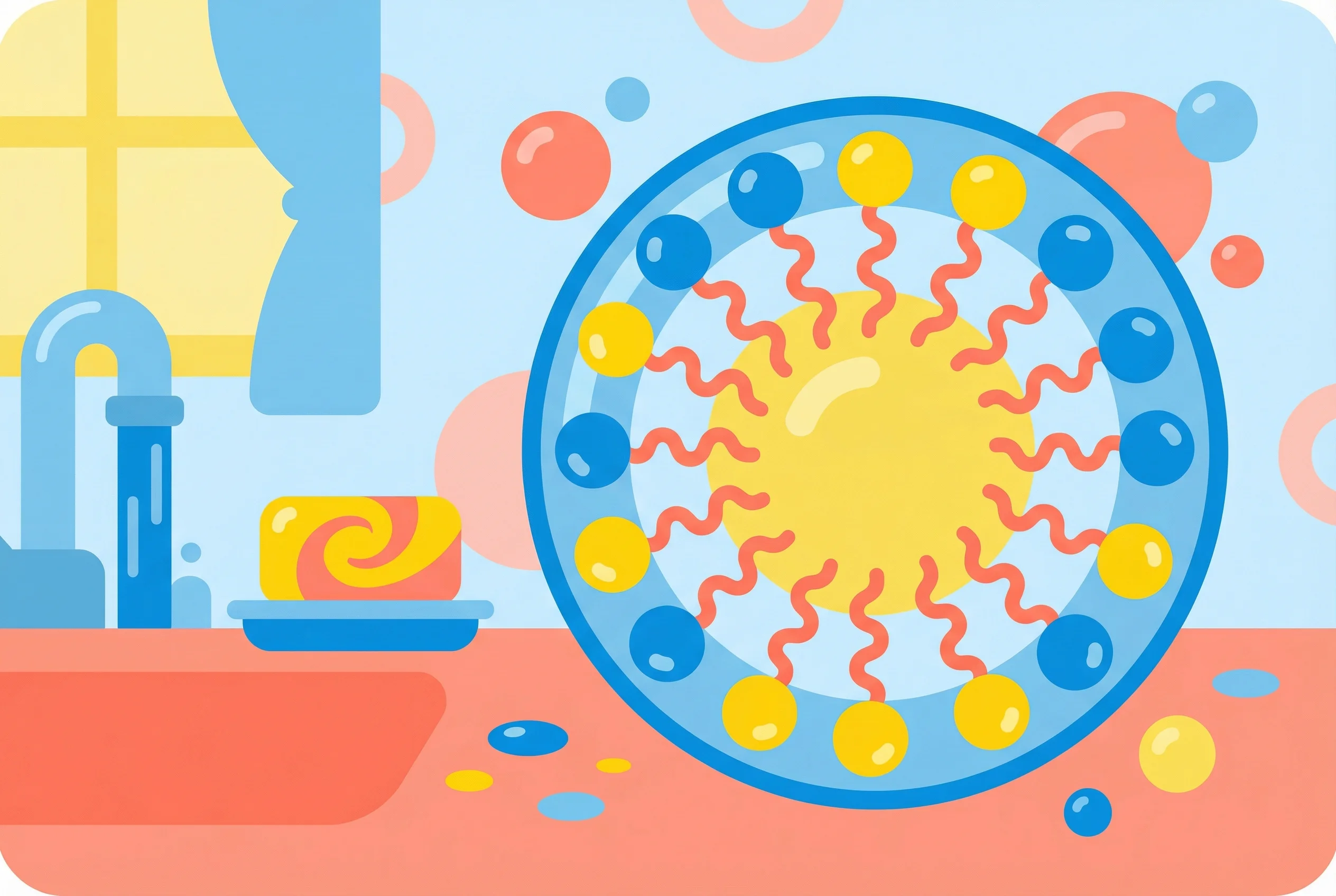
✓Correct — Soap molecules are special: one end likes water, the other likes oil and grease. When you wash dishes, soap surrounds grease with its oil-loving ends, while water-loving ends face outward. This lets water rinse away the grease. It's like a molecular bridge between oil and water!
BIt kills all bacteria
✗Not quite — While some soaps have antibacterial properties, that's not how they clean dishes. The primary cleaning action comes from the molecular structure that allows soap to bind both water and oils, lifting away grease.
CIt dissolves grease directly
✗Not quite — Soap doesn't dissolve grease chemically. Instead, soap molecules physically surround grease droplets and suspend them in water. The grease is lifted and washed away, not dissolved or broken down.
Answer this question
AHeat breaks the kernel
✗Not quite — Heat doesn't directly break the kernel. The shell is tough and can withstand high temperatures. What breaks it is the pressure buildup from water turning into steam inside the kernel.
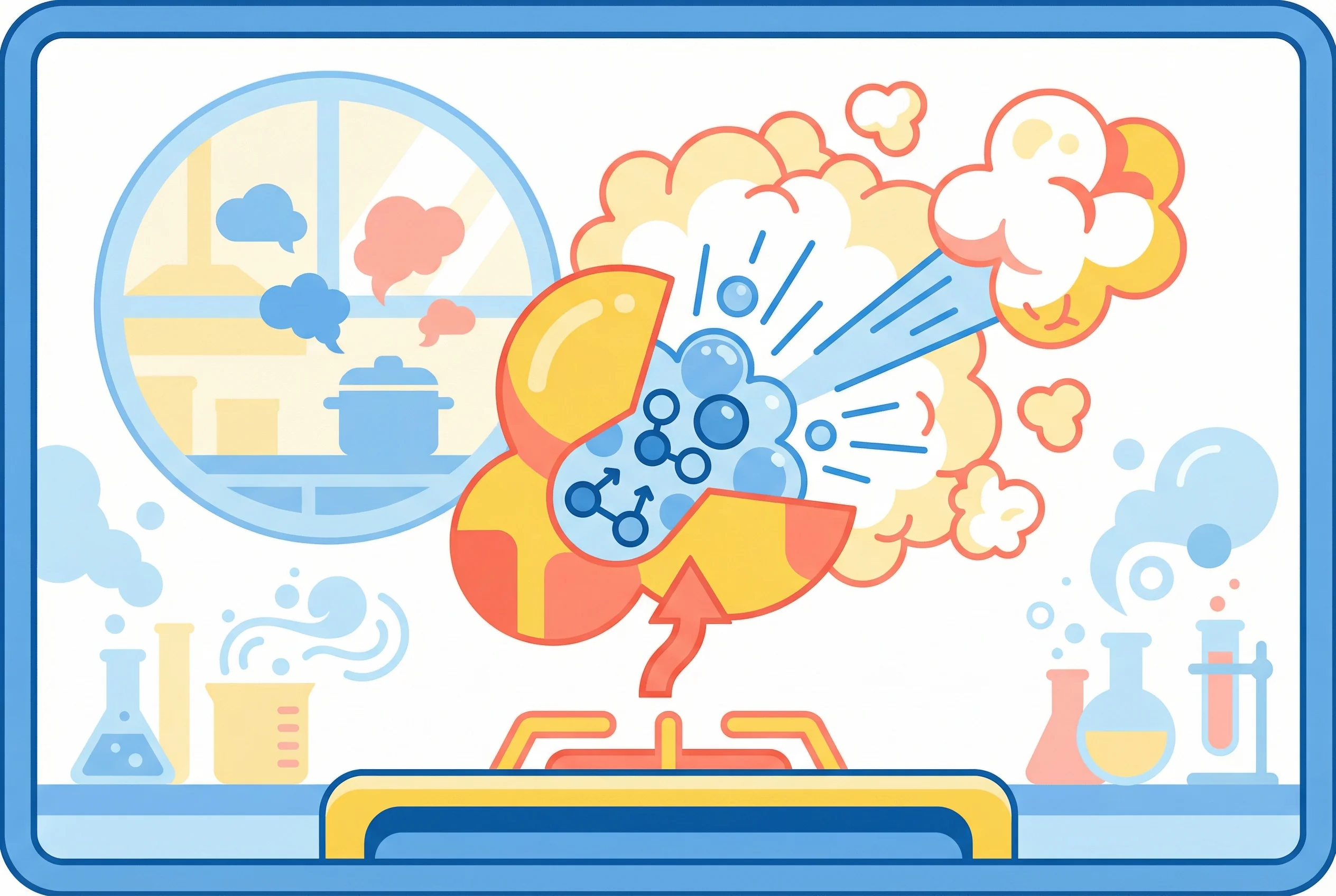
BWater vapor builds pressure
✓Correct — Each popcorn kernel contains about 14% water inside a hard shell. When heated, this water turns to steam and builds up pressure. At about 180°C, the pressure reaches 9 times normal atmospheric pressure and the shell ruptures. The starch inside instantly expands into the fluffy white foam we love!
CAir expands inside
✗Not quite — There's no air pocket inside popcorn kernels. The pressure comes from water molecules turning into steam vapor. This phase change from liquid to gas creates much more pressure than air expansion would.
Answer this question
Questions About Animals Doing Strange Things
AAttracting mates with scent
✗Not quite — The spray is extremely unpleasant and repels all animals, including potential mates. Skunks use completely different, milder scents for attraction.
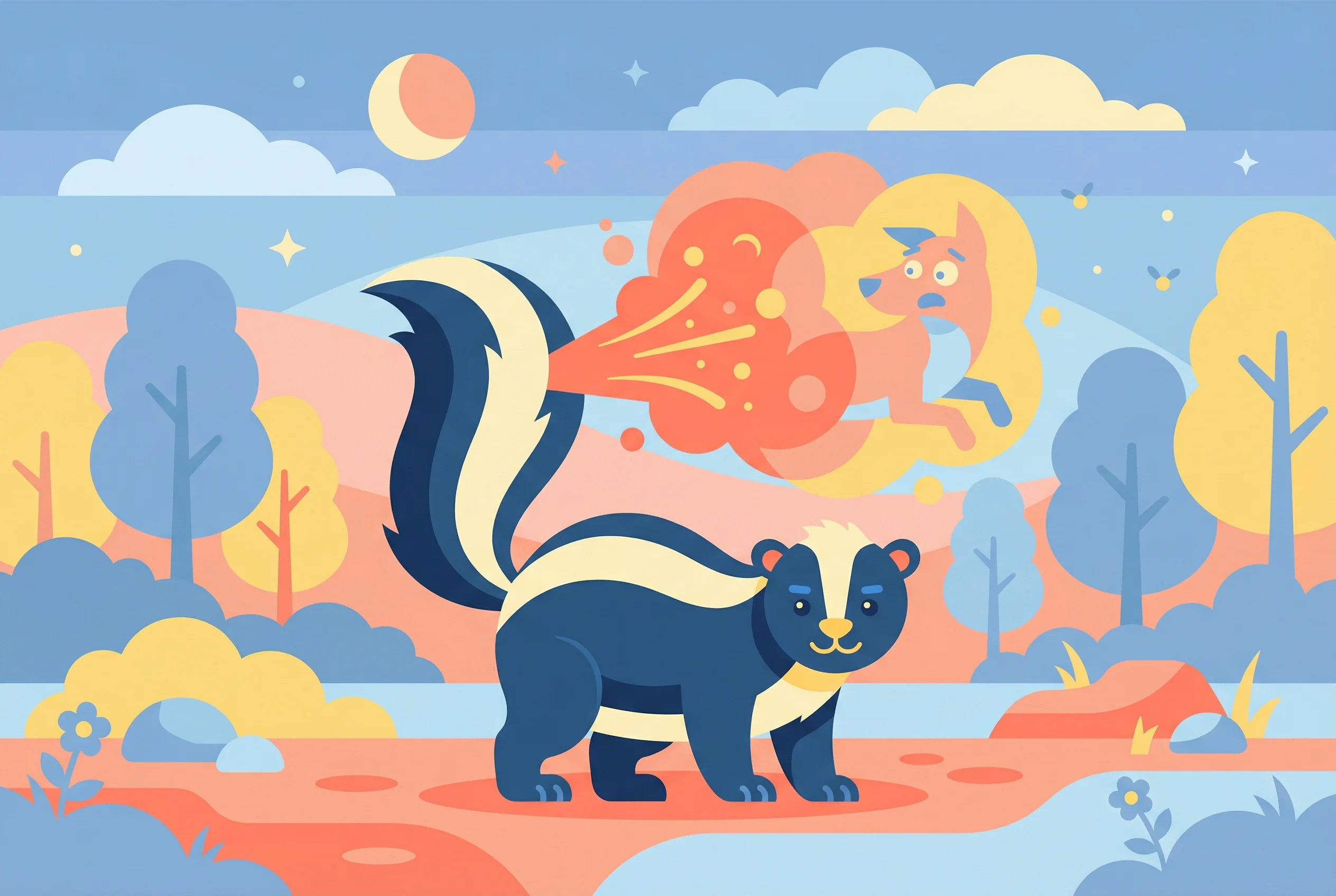
BLast-resort predator defense
✓Correct — Chemical warfare defense! Skunk spray: last resort against threats. Composition: sulfur-containing thiols (mercaptans)—extremely pungent. Process: (1) Warning signals first—stomping, tail raising, hissing. (2) If threat persists—spray from anal glands. (3) Accurate aim up to 10ft. Effects on predators: temporary blindness, nausea, intense smell (lasts days-weeks). Limited supply (5-6 sprays)—takes 10 days to replenish. Effective deterrent—most predators learn avoidance. Great horned owls (no smell sense) are main predators!
CKeeping their fur clean
✗Not quite — Spray doesn't clean fur—it's an oily, foul-smelling substance that animals try to avoid. Skunks groom themselves like other mammals.
Answer this question
ACourtship ritual for mating
✗Not quite — Bee dances aren't mating behavior—they're communication system. Waggle dance conveys food source location/quality to hive mates.
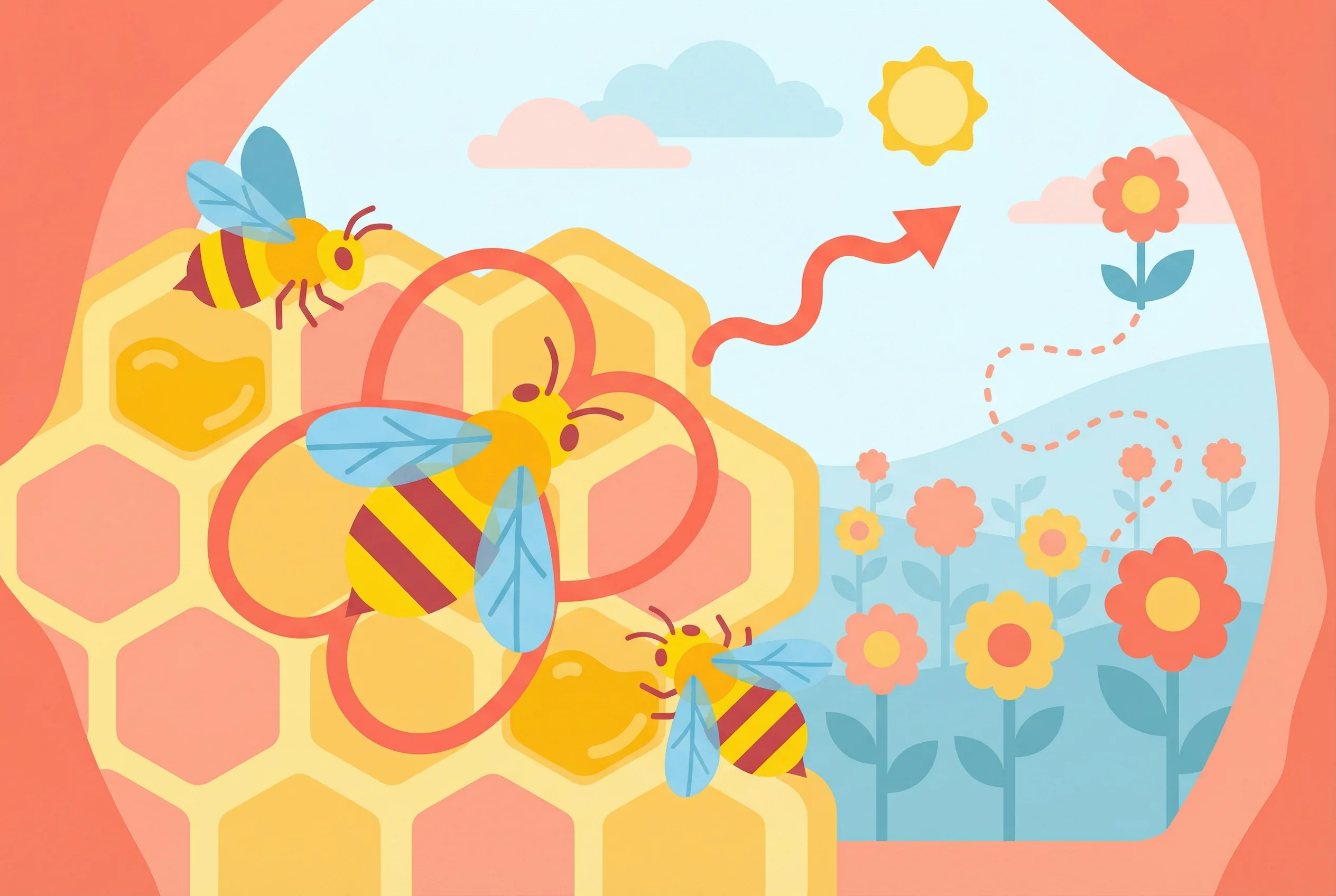
BCommunicating food locations
✓Correct — Spatial communication! Waggle dance: figure-8 pattern communicating flower location. Information encoded: (1) Angle—sun direction vs food direction. (2) Duration—distance to source (1 sec ≈ 1km). (3) Vigor—food quality. Round dance: food nearby (<50m). Von Frisch discovered this (Nobel Prize). Bees dance on vertical comb in dark hive—gravity substitutes for sun reference. Remarkable navigation and abstract communication in insects!
CWarming up flight muscles
✗Not quite — Bees do warm muscles through shivering, but waggle dance specifically communicates food source location/distance to colony.
Answer this question
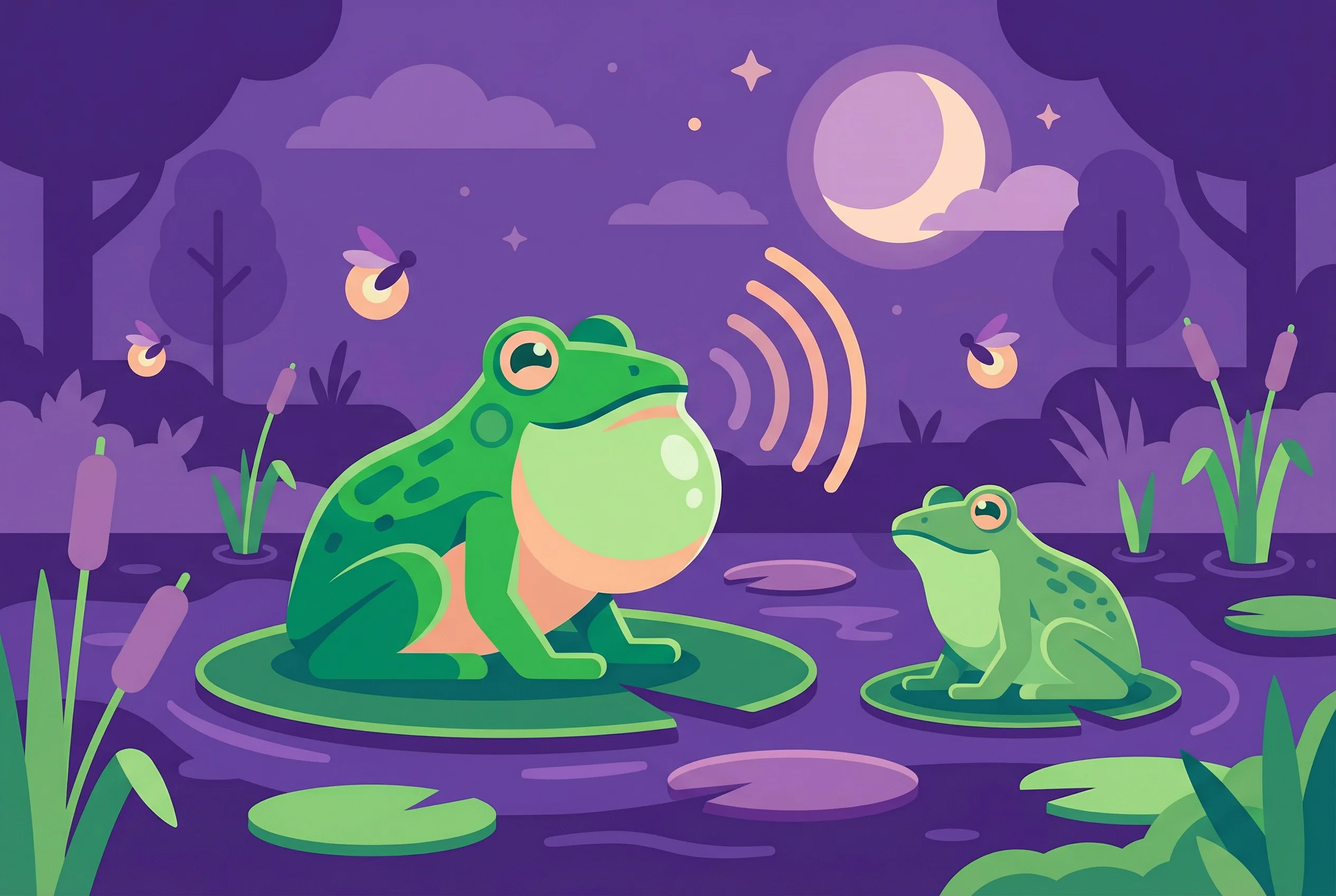
AAttracts mates and defends
✓Correct — Vocal mating and territory! Male frogs croak primarily for: (1) Attracting females—species-specific calls (each species unique frequency/pattern). (2) Territory defense—warning other males. (3) Chorus effect—synchronized calling amplifies signal. Mechanism: vocal sacs inflate (amplify sound), can be very loud (some 100+ decibels)! Females choose mates by call quality. Bigger frogs = deeper calls. Only males croak in most species. Peak during breeding season (spring). Croaking uses enormous energy!
BHelps with breathing underwater
✗Not quite — Croaking doesn't aid breathing. Frogs breathe through skin underwater. Croaking is vocal mating call and territory defense.
CCroaking clears their throat
✗Not quite — Frogs don't clear throats. Croaking is deliberate vocal signal—attracting mates and warning rival males during breeding.
Answer this question
ATheir leg joints bend sideways
✓Correct — Crab legs attach at the sides and have joints that bend best sideways. This body structure makes sideways movement most efficient. Some crabs can walk forward, but it's slower and awkward!
BTo move faster underwater
✗Not quite — Sideways walking isn't faster than forward movement. It's simply how crab anatomy works—their leg joints naturally bend in that direction.
CTheir shells block forward motion
✗Not quite — The shell doesn't block forward motion. Crabs walk sideways because their leg joints are designed to bend that way, making it their most natural gait.
Answer this question
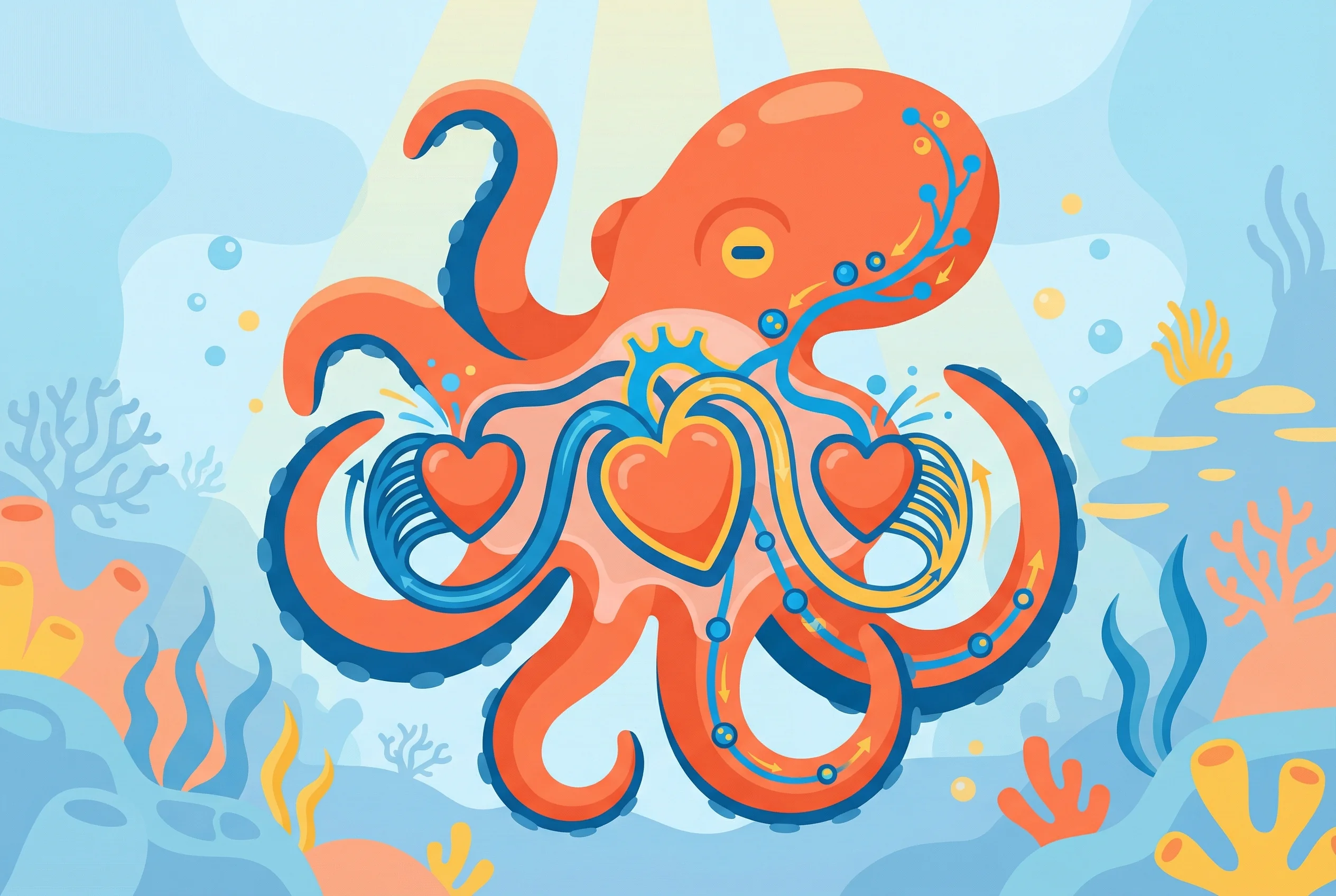
ATwo for gills, one for body
✓Correct — Two branchial hearts pump blood through the gills to pick up oxygen. The main systemic heart pumps oxygenated blood to the body. This helps their copper-based blue blood deliver oxygen efficiently!
BBackup if one heart fails
✗Not quite — The three hearts aren't backups—each has a specific job. Losing one would seriously impair the octopus's circulation system.
CEach controls different arms
✗Not quite — Hearts don't control arms. Octopuses do have neurons in their arms for some independent movement, but hearts only pump blood.
Answer this question
Hard Ones Most People Get Wrong
ACoincidence in shapes
✗Not quite — It's not coincidence. Continental shapes match because they were once joined as the supercontinent Pangaea before plate tectonics split them apart.
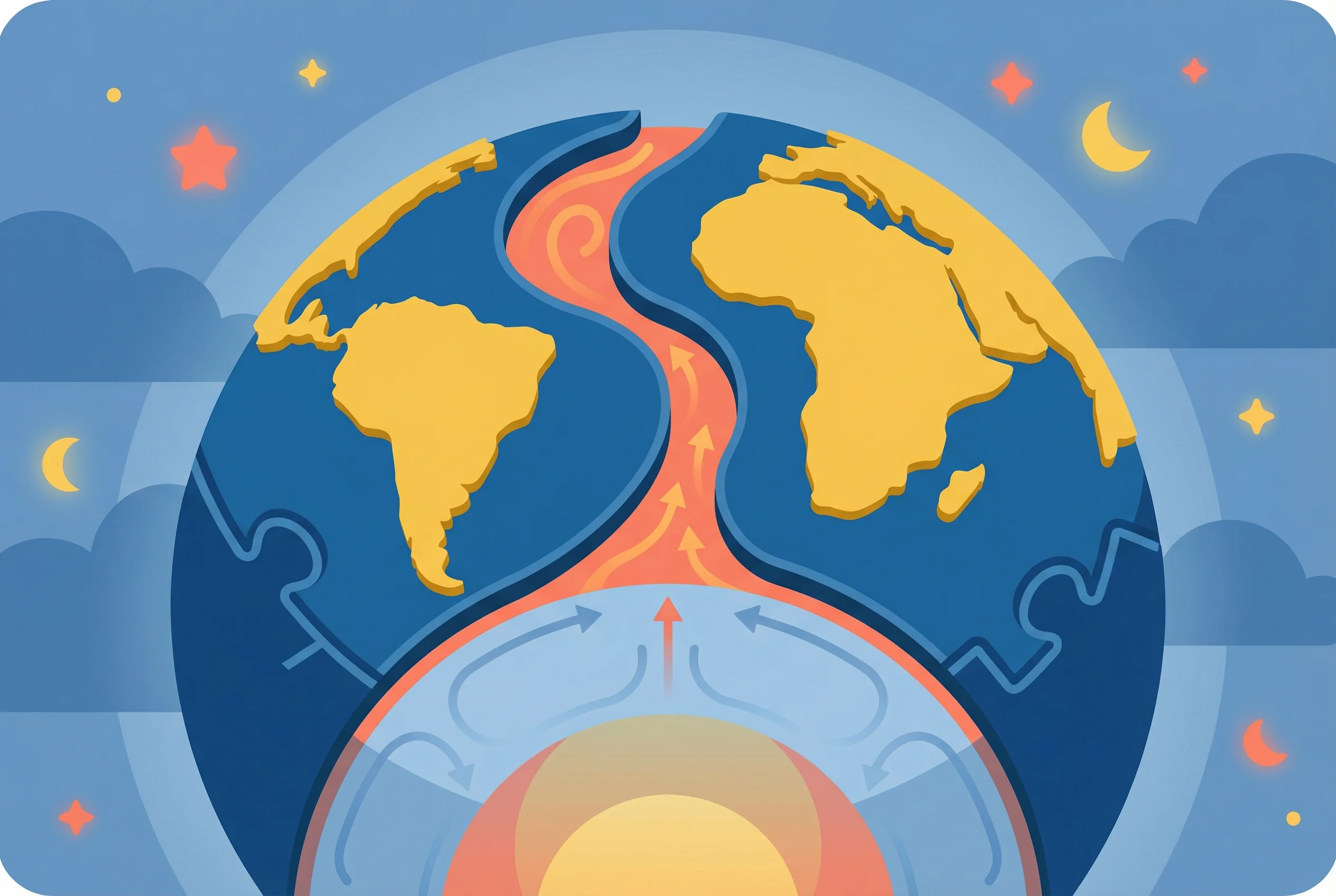
BOnce joined supercontinent
✓Correct — About 200 million years ago, all continents formed one supercontinent called Pangaea. Plate tectonics (driven by mantle convection) split it apart. Africa and South America's coastlines fit together because they were once connected! Fossil evidence, rock formations, and matching coastlines prove continental drift!
COcean erosion shaped edges
✗Not quite — Erosion doesn't create the fit. Continents match because they split from Pangaea through plate tectonics, not from coastal shaping.
Answer this question

ALow rainfall due to air patterns
✓Correct — Most deserts form due to atmospheric circulation. At the equator, hot air rises and releases moisture as rain (tropical forests). This dry air moves toward 30° latitude, sinks, and warms - the sinking air prevents clouds and rain. This creates subtropical deserts like the Sahara! Rain shadow deserts form when mountains block moisture. Cold ocean currents and distance from water also create deserts.
BSun evaporates all water
✗Not quite — While the sun does cause evaporation, this alone doesn't create deserts. The basic cause is lack of rainfall due to atmospheric circulation patterns, geographical barriers, or cold ocean currents. Some deserts like the Atacama receive almost no rain for decades!
CNo plants grow there
✗Not quite — Plants don't grow because it's a desert, not the other way around. Deserts exist primarily due to lack of rainfall from atmospheric and geographical factors. The absence of vegetation is a consequence, not a cause. Some plants do survive in deserts by adapting to extreme water scarcity.
Answer this question
AIncrease signal strength
✗Not quite — More satellites don't strengthen signal. Multiple satellites are needed for trilateration—calculating distance from each to pinpoint your location.
BCover more geographic area
✗Not quite — Constellation coverage matters, but even in one area, your device needs signals from 4+ satellites simultaneously for 3D positioning.
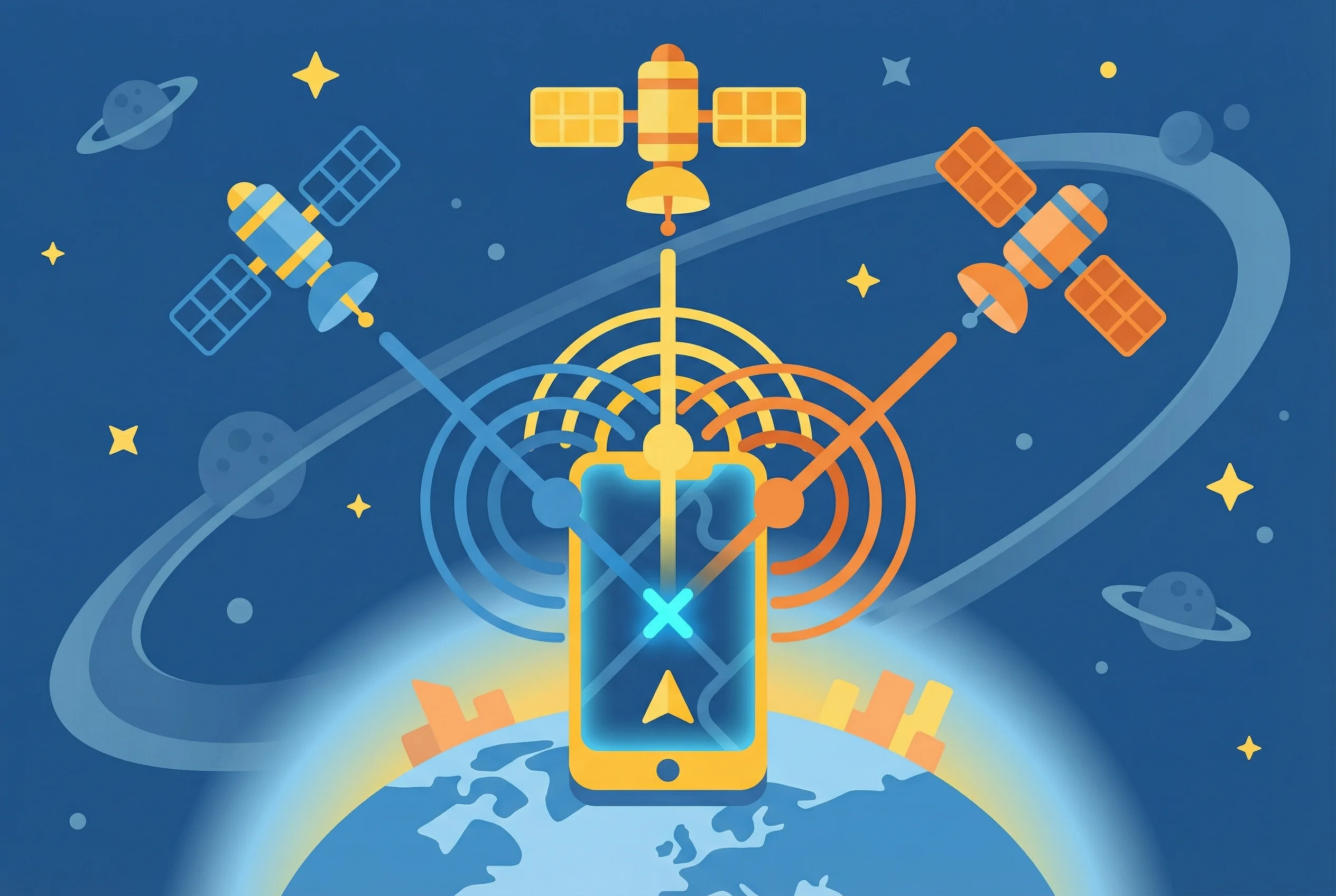
CCalculate precise position
✓Correct — GPS uses trilateration. Each satellite transmits time-stamped signals. Your device calculates distance from signal travel time (light speed). 3 satellites determine 2D position (latitude, longitude), 4th adds altitude. More satellites improve accuracy. The GPS constellation has 24-32 satellites ensuring 4+ are always visible anywhere on Earth. Math requires multiple measurements!
Answer this question
ADistance makes light flicker
✗Not quite — Distance doesn't cause twinkling. Atmospheric turbulence does—moving air pockets of different temperatures/densities bend light differently, creating twinkle.
BSpace dust blocks starlight
✗Not quite — Dust can dim starlight, but twinkling comes from atmospheric turbulence—moving air with varying density randomly bending light paths.
CAtmosphere turbulence bends light
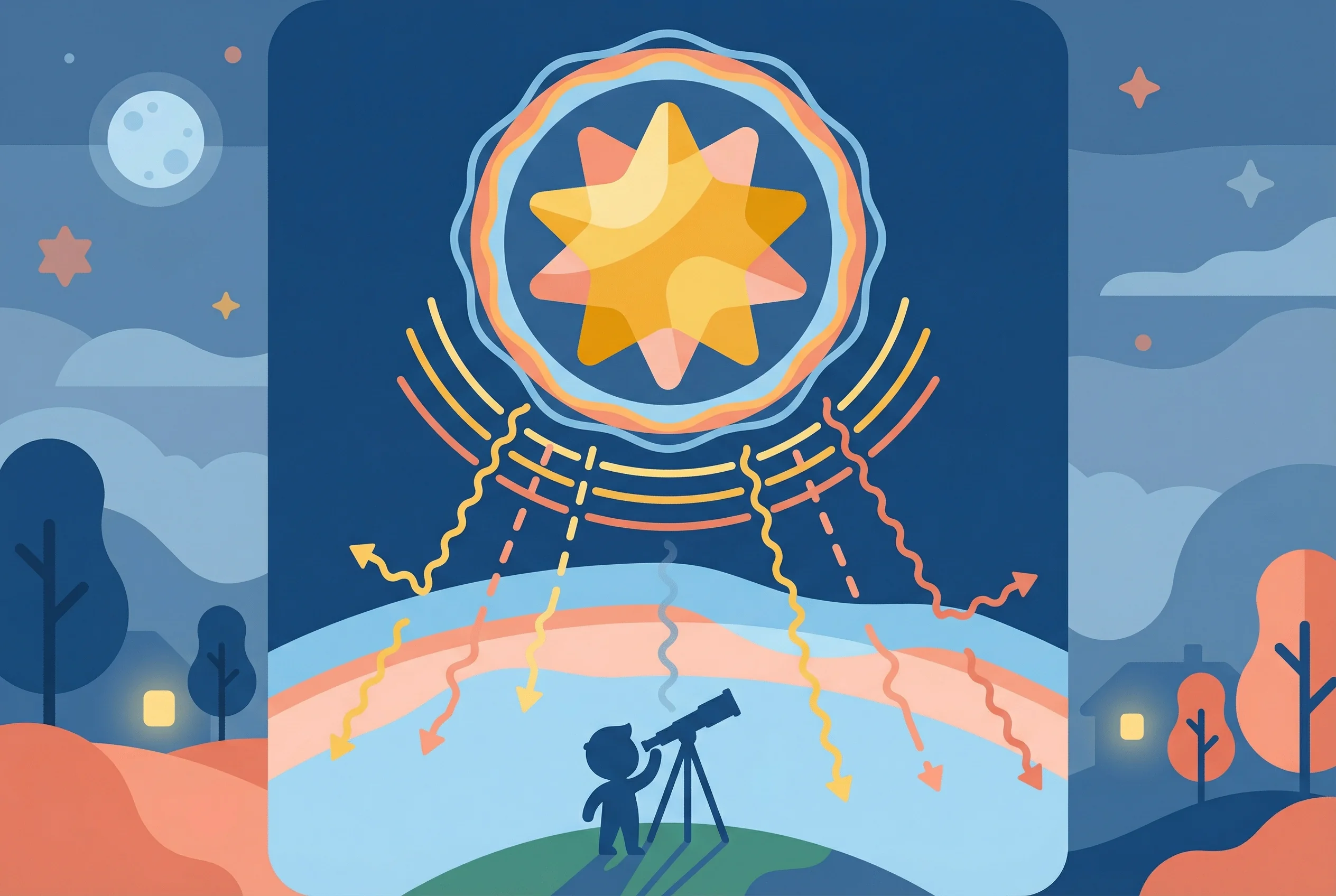
✓Correct — Twinkling (scintillation) occurs when starlight passes through Earth's turbulent atmosphere. Moving pockets of air with different temperatures and densities bend light slightly differently, causing rapid brightness/position changes. Planets don't twinkle much because they're closer—larger apparent size averages out the atmospheric effects. Astronomers build telescopes on mountains to reduce atmospheric turbulence!
Answer this question
AChaotic flows in molten iron core reorganize and flip polarity
✓Correct — Earth's magnetic field is generated by a 'geodynamo' - the movement of electrically conducting molten iron in the outer core. These flows are turbulent and chaotic, like weather patterns. Occasionally, the flow patterns reorganize into the opposite configuration, causing the magnetic poles to flip. This process typically takes 1,000 to 10,000 years and has happened hundreds of times throughout Earth's history.
BThe Sun's gravity pulls and twists Earth's magnetic field
✗Not quite — While the Sun does produce a magnetic field and solar wind, it does not control Earth's internal magnetic field. Earth's magnetism is generated deep inside our planet by movements in the molten iron core, independent of external influences. The Sun's magnetic field actually interacts with Earth's field to create phenomena like auroras, but cannot cause pole reversals.
CContinental drift pushes magnetic rocks to opposite hemispheres
✗Not quite — Continental drift moves tectonic plates at the surface, but Earth's magnetic field originates from the liquid outer core about 3,000 kilometers below the surface. While rocks can record the direction of past magnetic fields (providing evidence of reversals), the movement of magnetic rocks at the surface cannot influence or cause the deep core processes that generate the magnetic field.
Answer this question
Frequently Asked Questions
Where can I find a daily science quiz with answers?
This page gives you 30 science questions with answers and short explanations. For a new live prompt, use AIgneous Million Whys daily, where each question is built around a quick why rather than a memorized fact.
What is a good science question of the day?
A good one feels half-known: simple enough to enter quickly, but surprising enough that the answer changes how you see something ordinary. “Why does wind feel colder than still air?” is better than a bare definition because it closes a real gap.
Is a daily quiz good for your brain?
A tiny quiz can be useful when it gives feedback right away. The point is not scorekeeping; it is noticing an information gap, making a guess, and getting the mechanism while your curiosity is still warm.
Are these science quiz questions for adults?
Yes. The wording is friendly, but the explanations do real mechanism work: light scattering, plate motion, physiology, fluid flow, and animal behavior all show up here.
What does this have to do with AIgneous Million Whys?
Million Whys is built around the 10-second curiosity loop: see a question, make a guess, get the why. The closure is the payoff, and each closed gap makes the next one easier to notice.