Easy
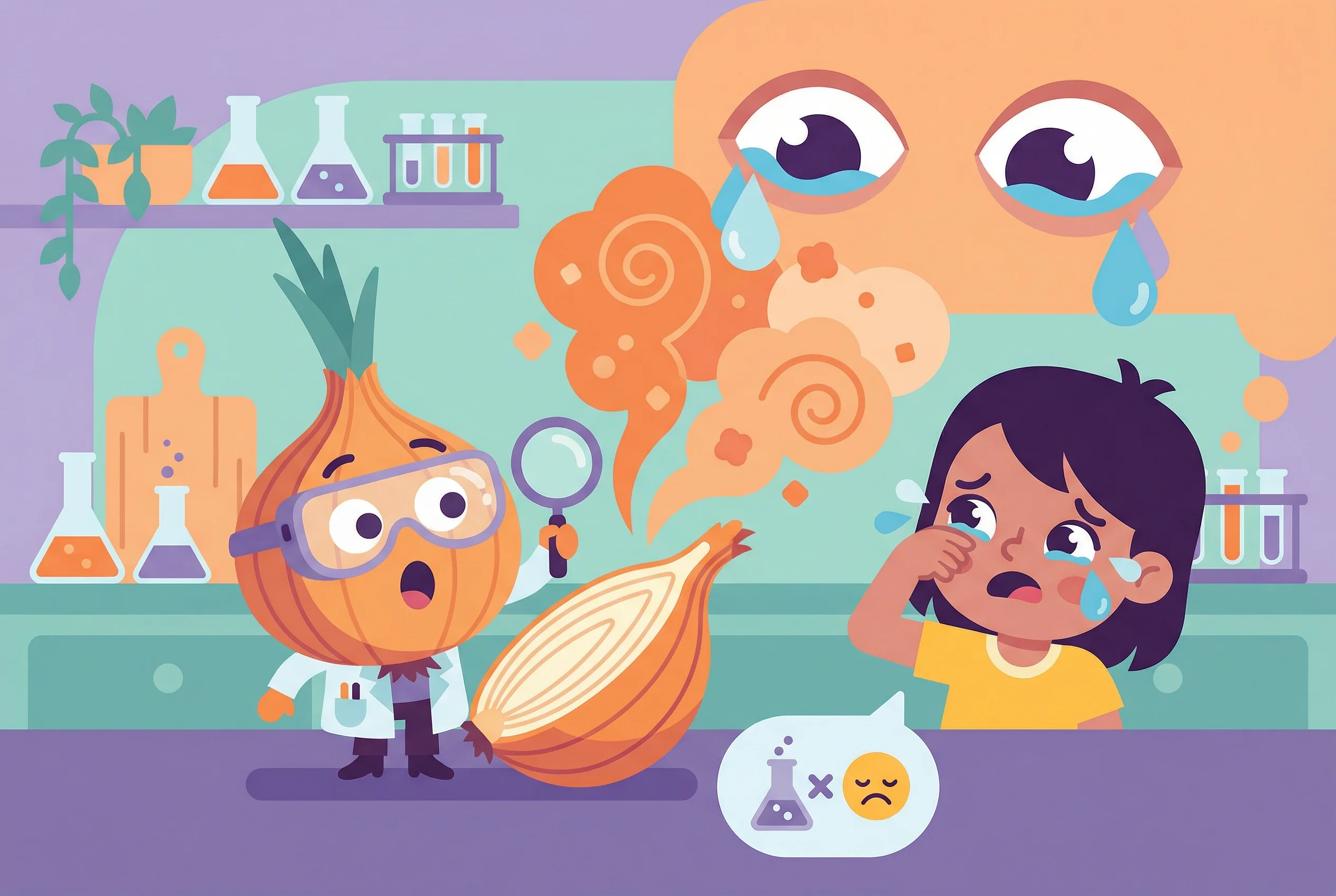
AThey contain spicy chemicals
✗Not quite. The tearing is not just spice; a gas forms and irritates your eyes.
BThey release gas forming acid
✓Correct. Cutting onions releases enzymes that react with sulfur compounds, producing a gas that reaches your eyes and triggers tears.
CThe smell triggers tears
✗Not quite. It is a chemical reaction with eye moisture, not smell alone.
Answer this question
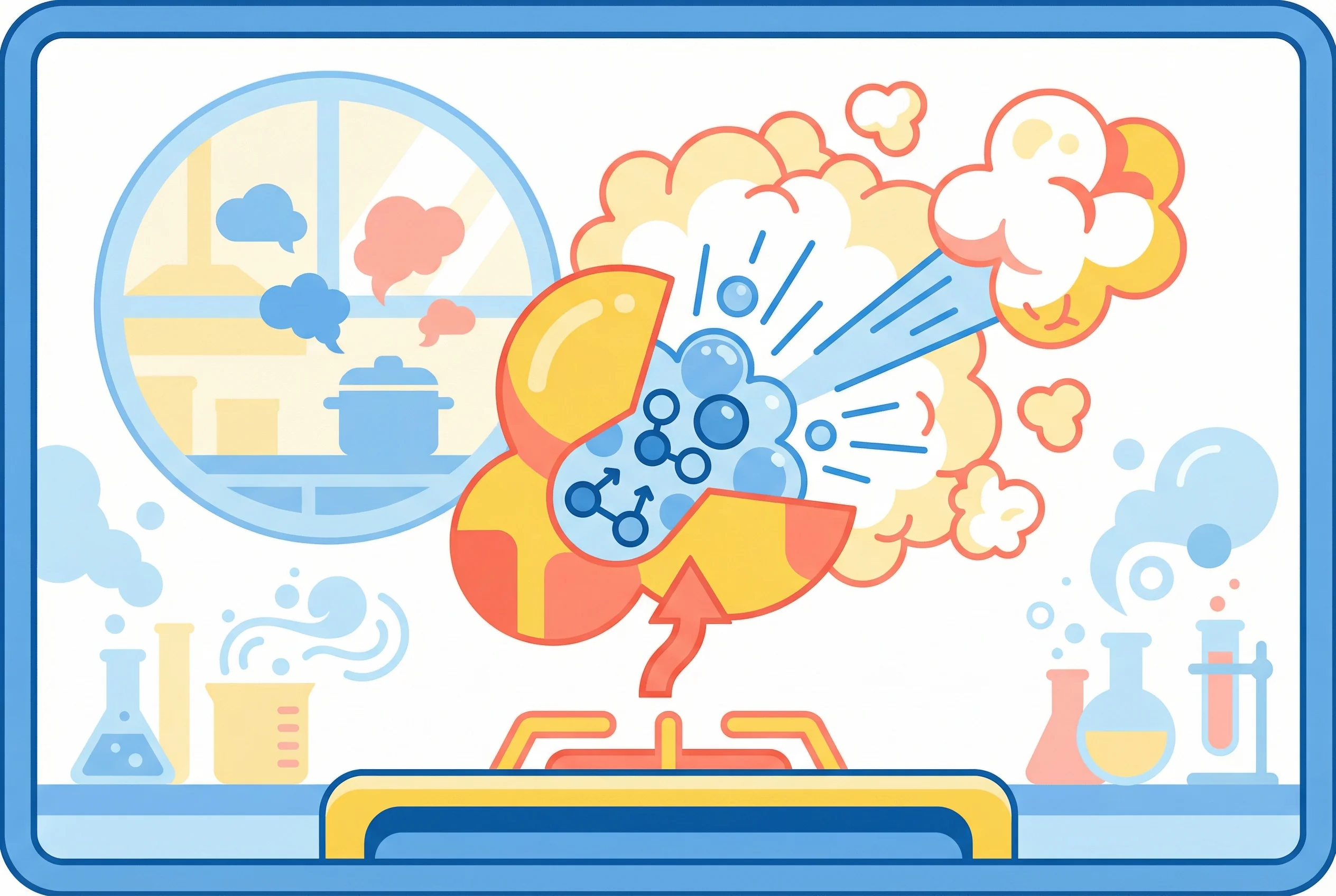
AHeat breaks the kernel
✗Not quite. Heat matters, but pressure from steam is what ruptures the shell.
BWater vapor builds pressure
✓Correct. Water inside the kernel turns to steam, pressure rises, and the starch expands when the shell gives way.
CAir expands inside
✗Not quite. The pressure comes from liquid water changing into steam.
Answer this question
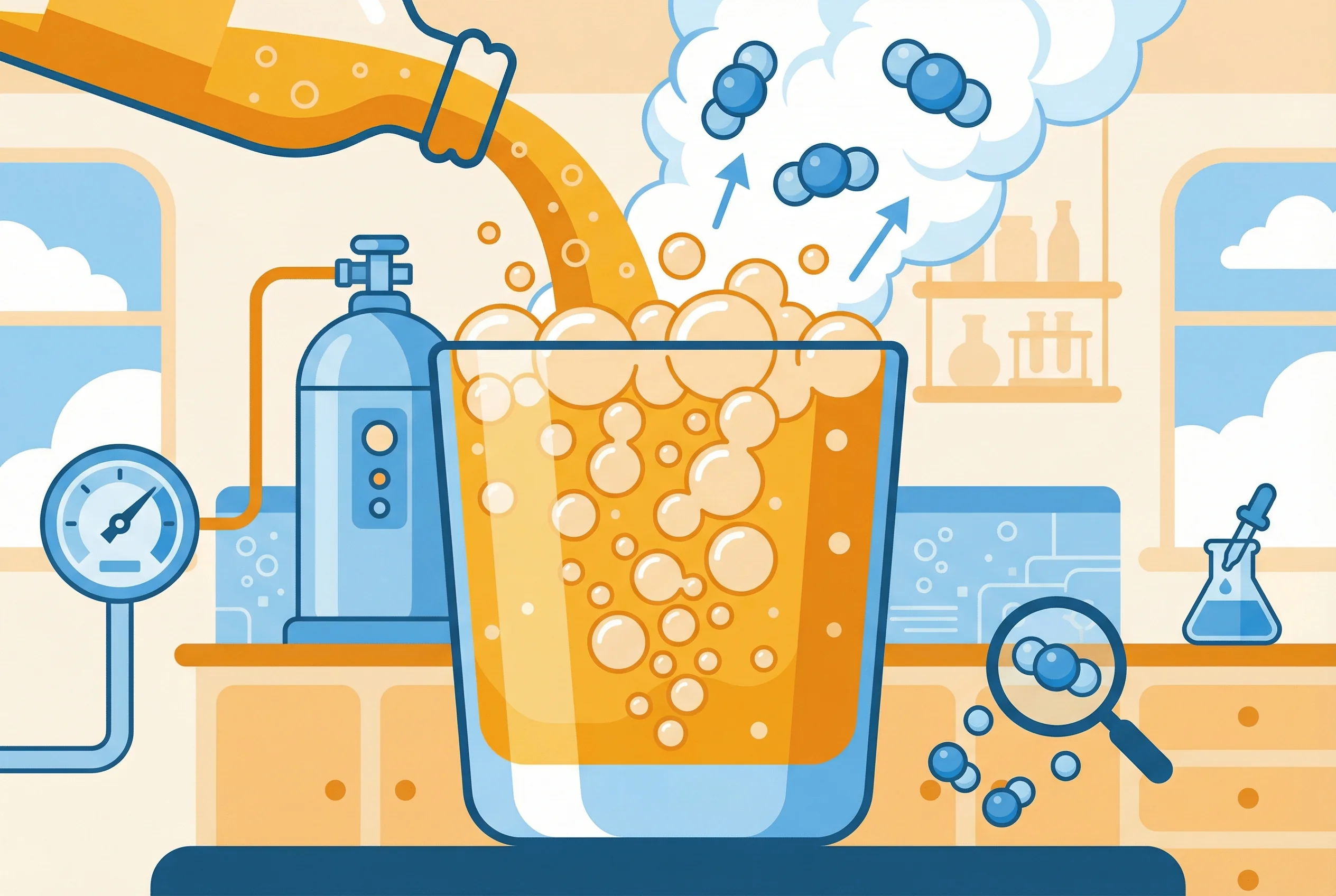
ACO2 escapes from solution
✓Correct. Carbon dioxide is dissolved under pressure; opening the bottle lets it escape as bubbles.
BAir gets mixed in
✗Not quite. The bubbles are carbon dioxide that was already dissolved in the drink.
CChemical reaction occurs
✗Not quite. Opening releases pressure; it does not create a new reaction.
Answer this question
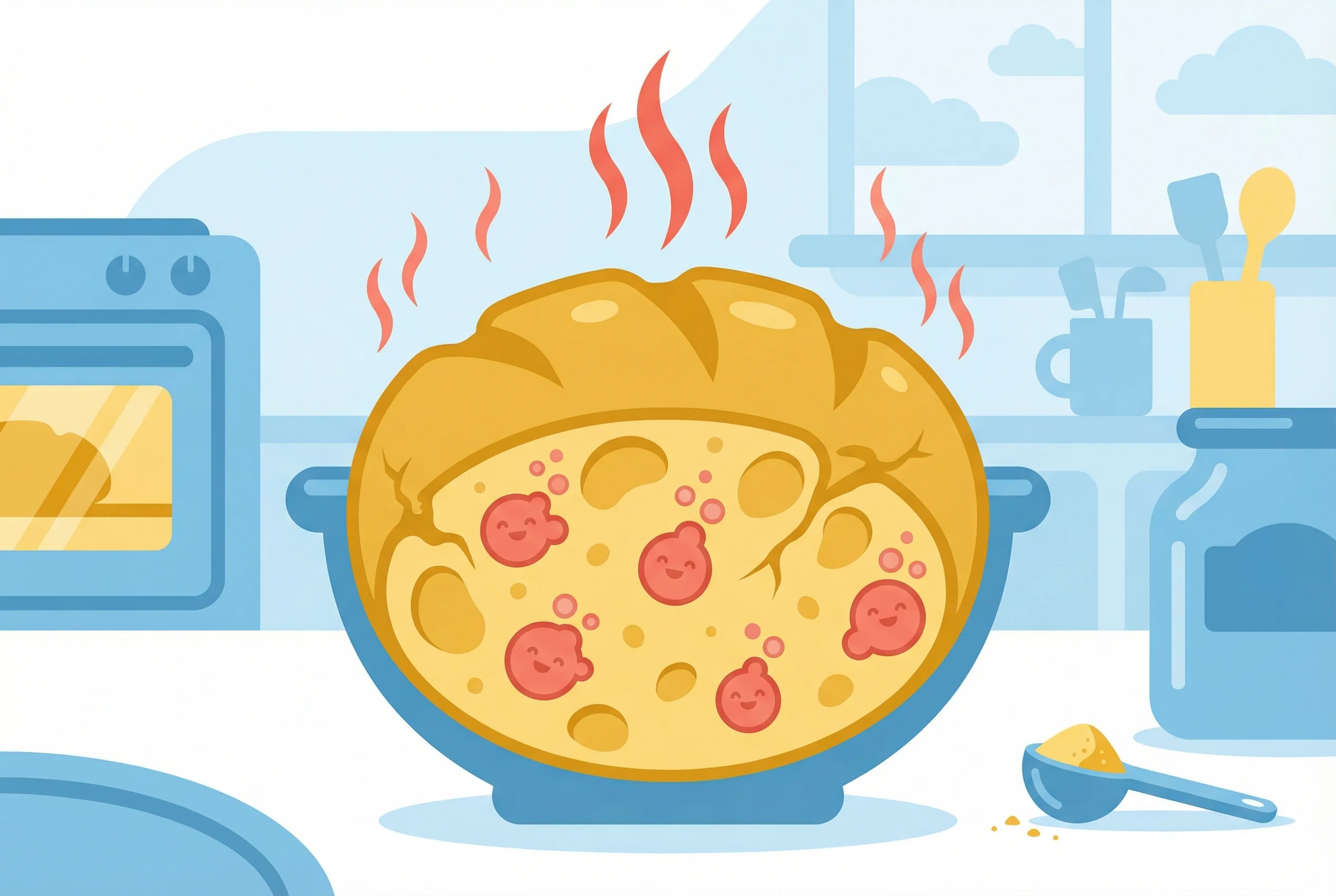
AThe dough is hot enough for water to boil
✗Not quite. Dough can rise before it goes into the oven, without its water boiling. Baking later adds gas expansion and steam, but this question concerns the resting, or proofing, stage.
BYeast produces gas that the dough holds
✓Correct. Yeast uses sugars and releases carbon dioxide. The dough's gluten network helps hold that gas in pockets, so the dough expands during proofing. Both producing gas and retaining it matter.
Read the science CThe yeast cells grow large enough to fill the loaf
✗Not quite. The yeast cells do grow and multiply, but their physical size is not what inflates the dough. The increase in volume mainly comes from gas held in pockets.
Answer this question
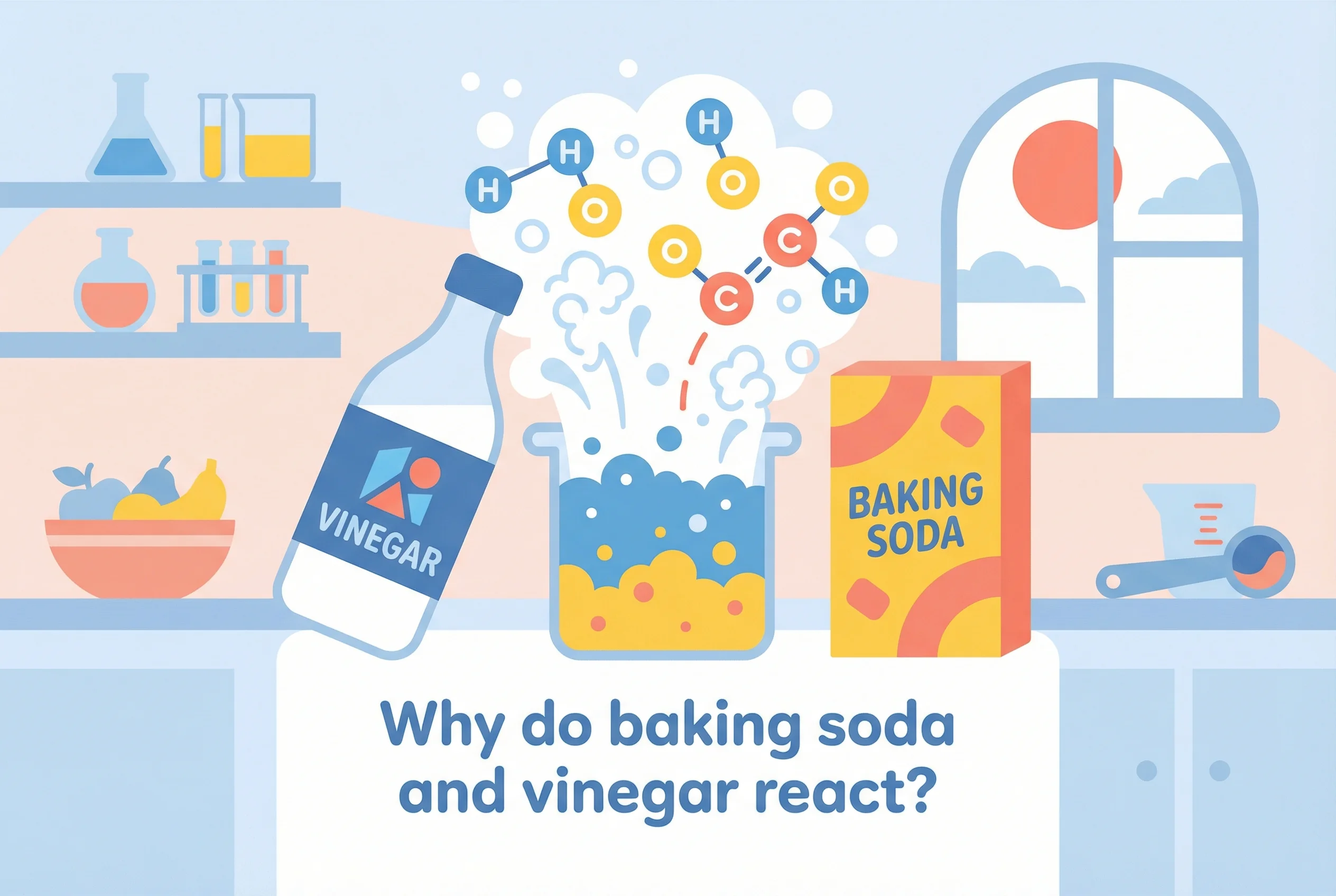
AAcid neutralizes base
✓Correct. Vinegar contains acetic acid and baking soda contains sodium bicarbonate. Their reaction produces carbon dioxide gas, along with water and dissolved sodium acetate. The carbon dioxide creates the fizz.
Read the science BThey create heat
✗Not quite. In the usual baking-soda-and-vinegar mixture, the temperature falls rather than rises. Seeing bubbles does not tell you that a reaction releases heat; gas production and temperature change are separate observations.
CBubbles form naturally
✗Not quite. The bubbles have a specific source: carbon dioxide made by the reaction. Stirring helps the ingredients meet, but it does not supply the gas.
Answer this question
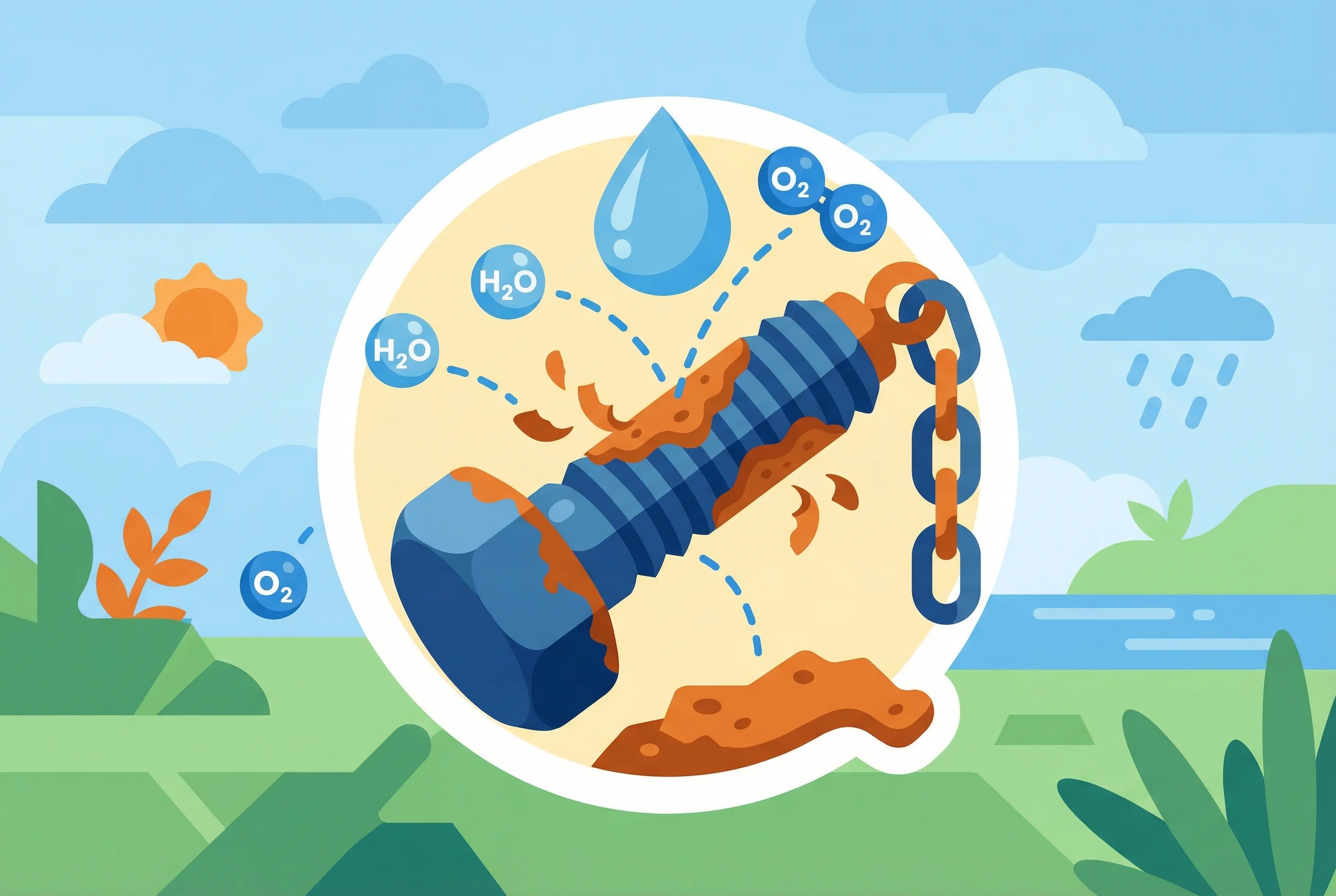
AIron oxidizes with oxygen
✓Correct. Rust is iron oxide (Fe2O3), formed when iron reacts with oxygen in the presence of water. Iron atoms lose electrons (oxidize) to oxygen atoms.
BIron absorbs moisture from air
✗Not quite. Iron doesn't absorb moisture like a sponge. Rust forms through a chemical reaction where iron, oxygen, and water combine to form iron oxide.
CAcid dissolves the surface
✗Not quite. While acid can corrode iron, common rust is from oxidation, not acid dissolution. Normal rust forms in regular air and moisture conditions without acid.
Answer this question
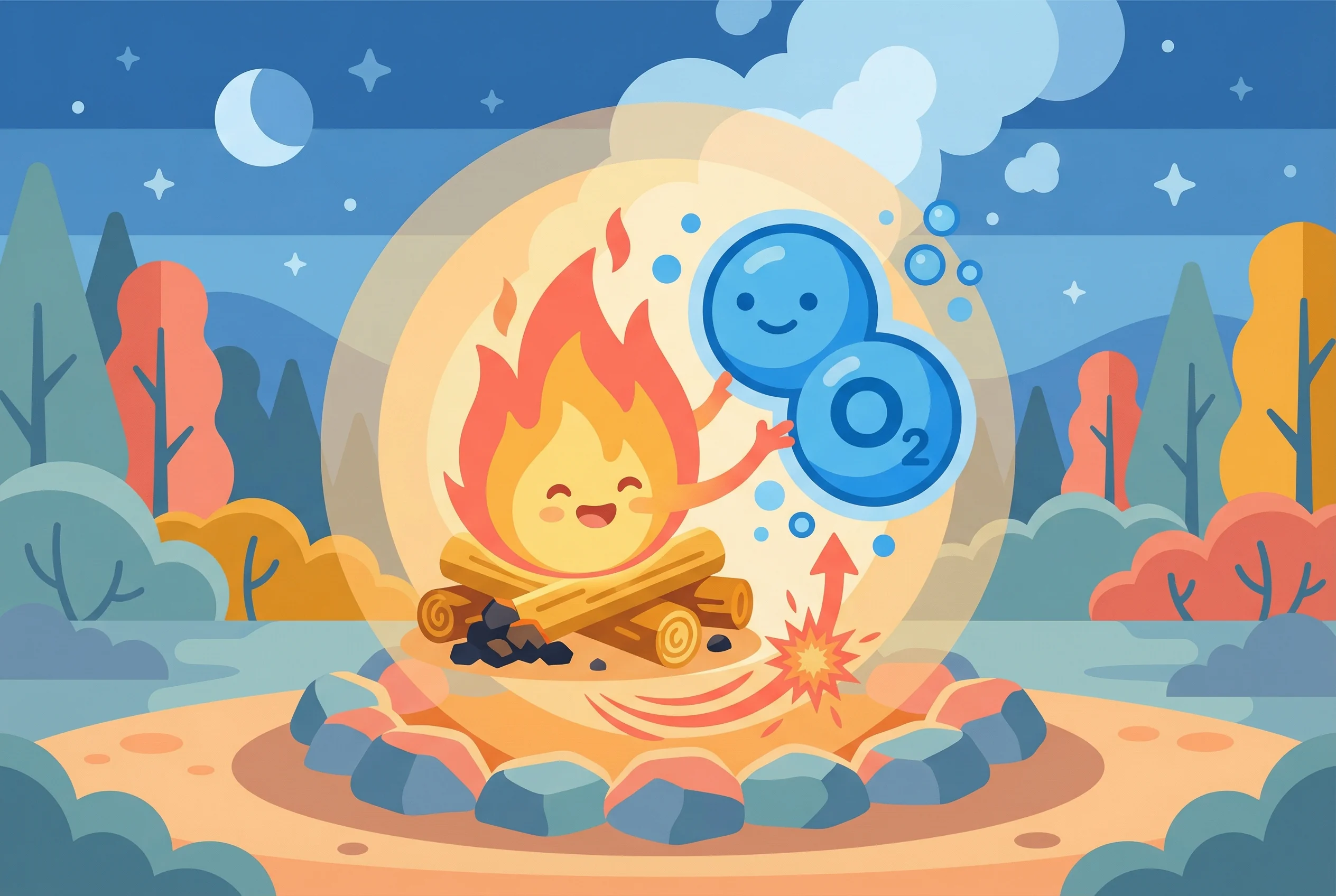
AOxygen enables combustion
✓Correct. Fire is a rapid oxidation reaction. Fuel molecules react with oxygen, breaking chemical bonds and forming new ones (like CO2 and H2O), releasing energy as heat and light.
BIt makes flames visible
✗Not quite. Flames are visible because of glowing hot particles and excited molecules, not because of oxygen.
CIt provides fuel
✗Not quite. Oxygen is not the fuel - it's the oxidizer. The fuel is what burns (wood, gasoline, etc.).
Answer this question
AIt creates air pockets
✗Not quite. Baking powder supplies gas through a chemical reaction. It does not lift a cake simply by mechanically punching air pockets into the batter.
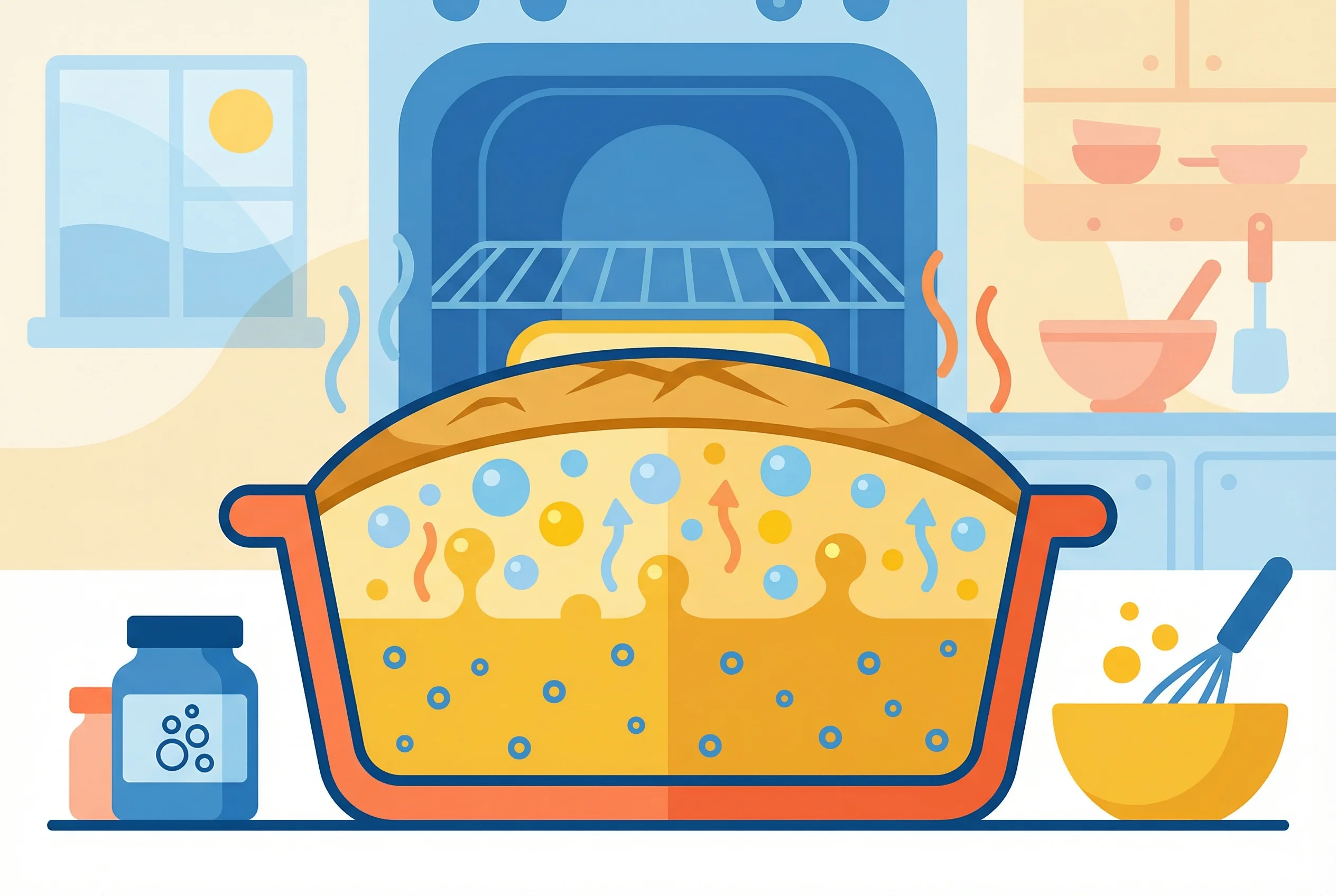
BIts ingredients react to release carbon dioxide
✓Correct. Baking powder contains bicarbonate and acid ingredients. Moisture lets them react and release carbon dioxide; double-acting powders release more during heating. The gas expands bubbles in the batter as the cake sets.
Read the science CIt adds volume to batter
✗Not quite. The small amount of powder does not itself provide the cake's extra volume. Gas produced by its ingredients expands bubbles already held in the batter.
Answer this question
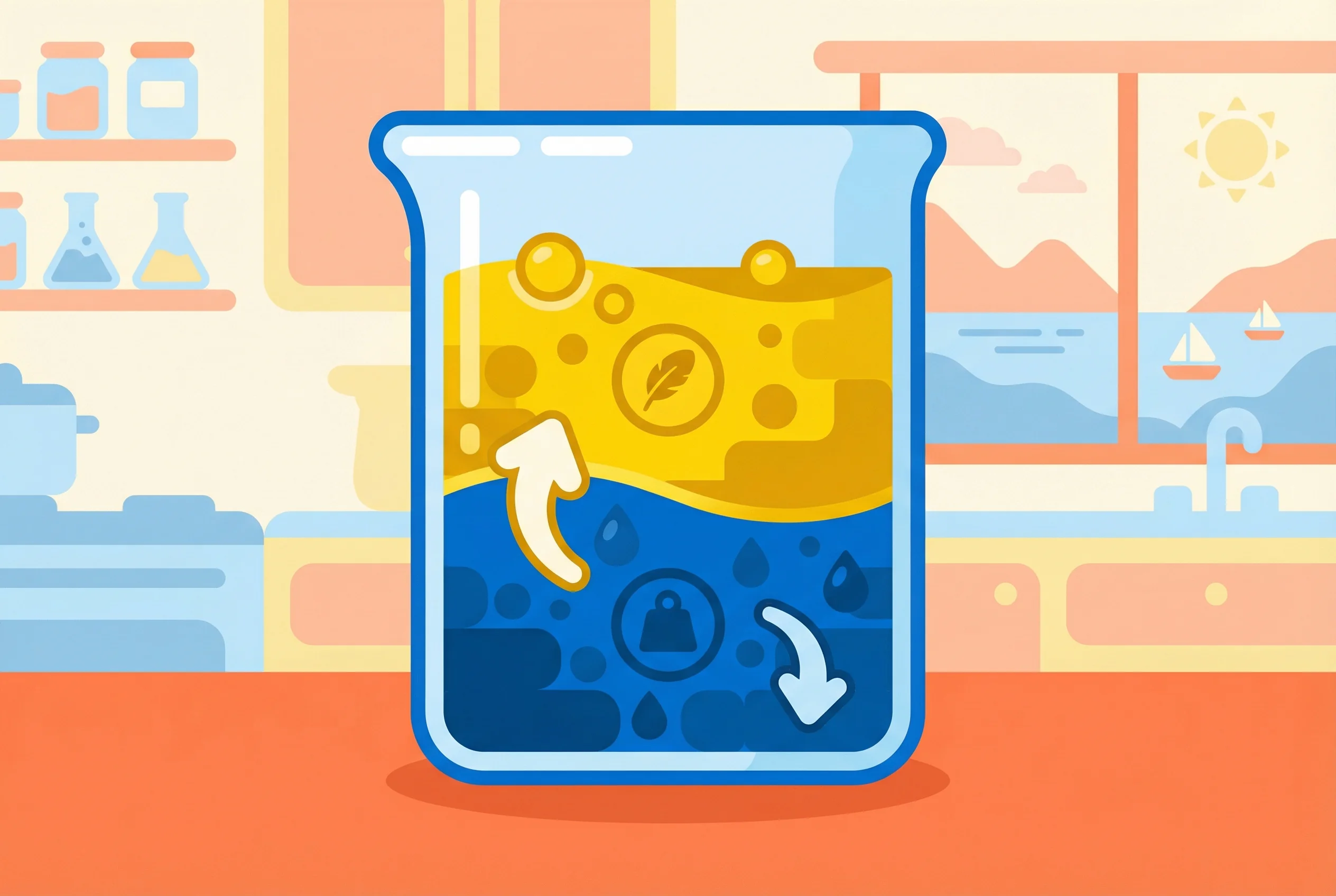
AOil is less dense than water
✓Correct. Oil molecules are less tightly packed than water molecules, making oil less dense. Less dense substances float on denser ones.
BWater pushes oil upward
✗Not quite. Water doesn't actively push oil. Oil floats passively because it's less dense.
COil repels water molecules
✗Not quite. While oil and water don't mix, floating is about density, not repulsion.
Answer this question
AAir carries different weights
✗Not quite. While molecules have different weights, smell detection works through shape recognition, not weight.
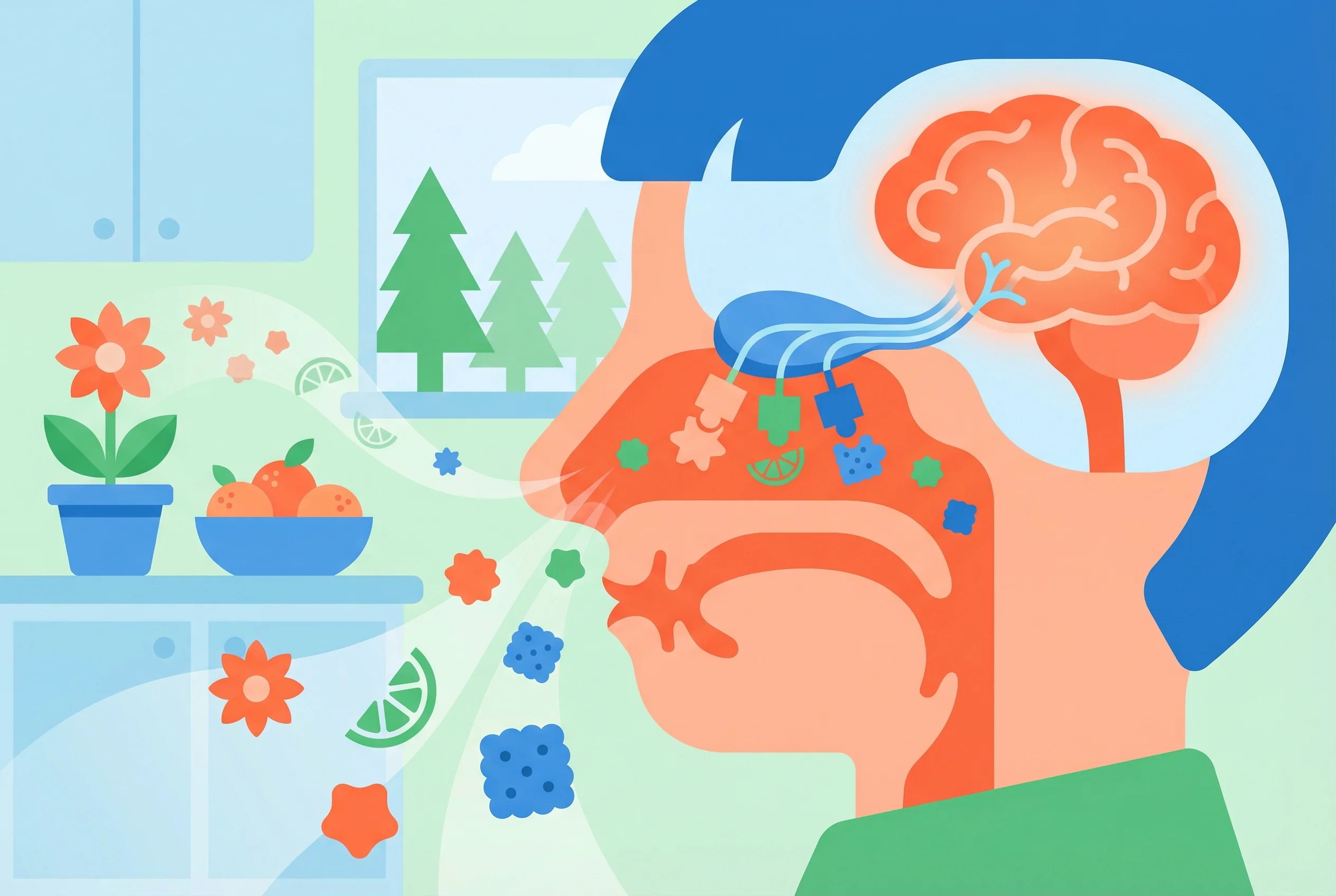
BUnique molecules fit receptors
✓Correct. Every substance releases unique molecules. Your nose has hundreds of receptor types, each fitting different molecule shapes like keys in locks.
CTemperature changes smells
✗Not quite. Temperature affects how fast molecules evaporate, but the unique smell comes from molecular shape.
Answer this question
Medium
AVitamins break down in air
✗Not quite. Vitamin loss is a different, slower process.
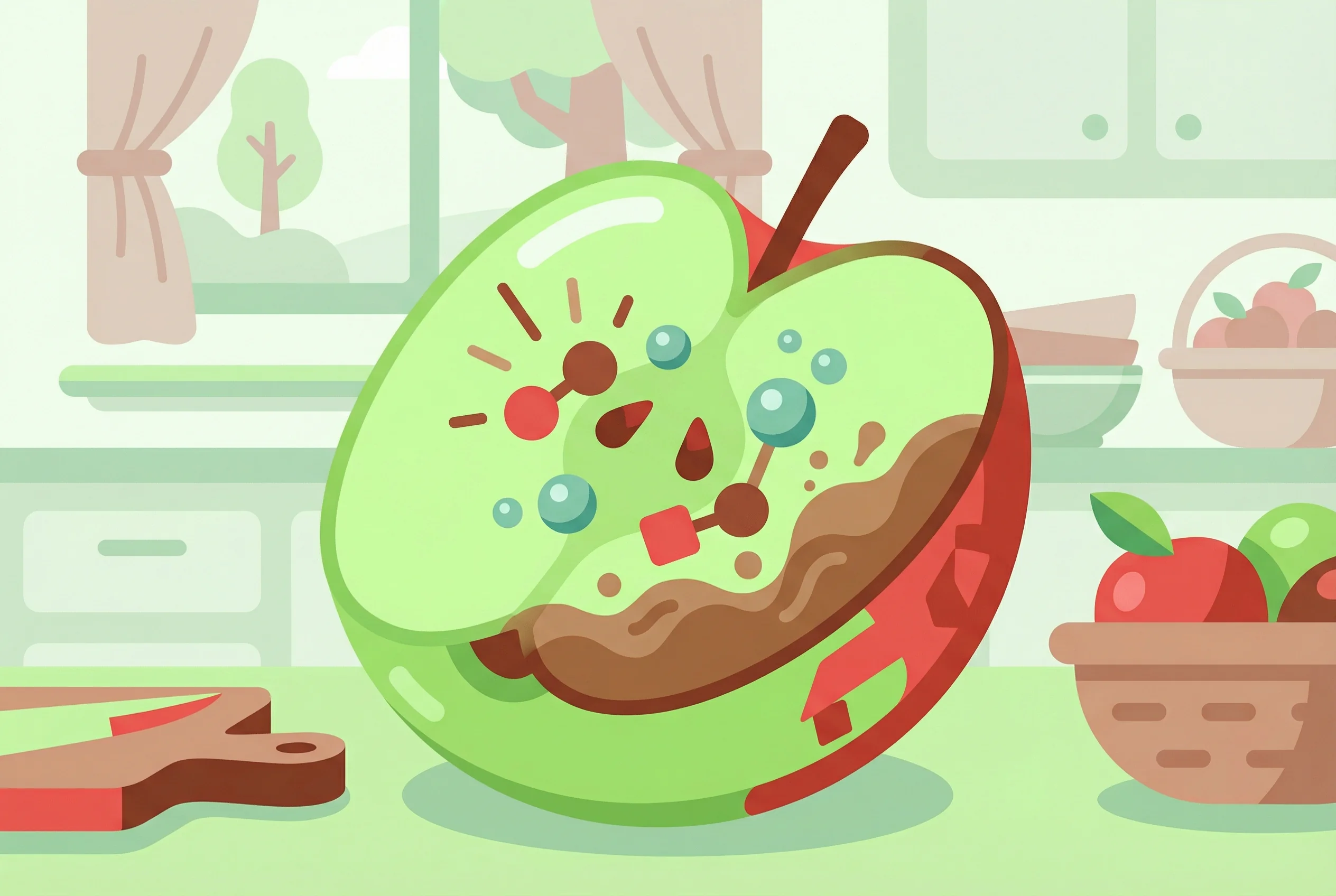
BEnzymes react with oxygen
✓Correct. Polyphenol oxidase meets oxygen and helps create brown melanin pigments.
CCells die and decay
✗Not quite. Browning happens too quickly to be ordinary decay.
Answer this question
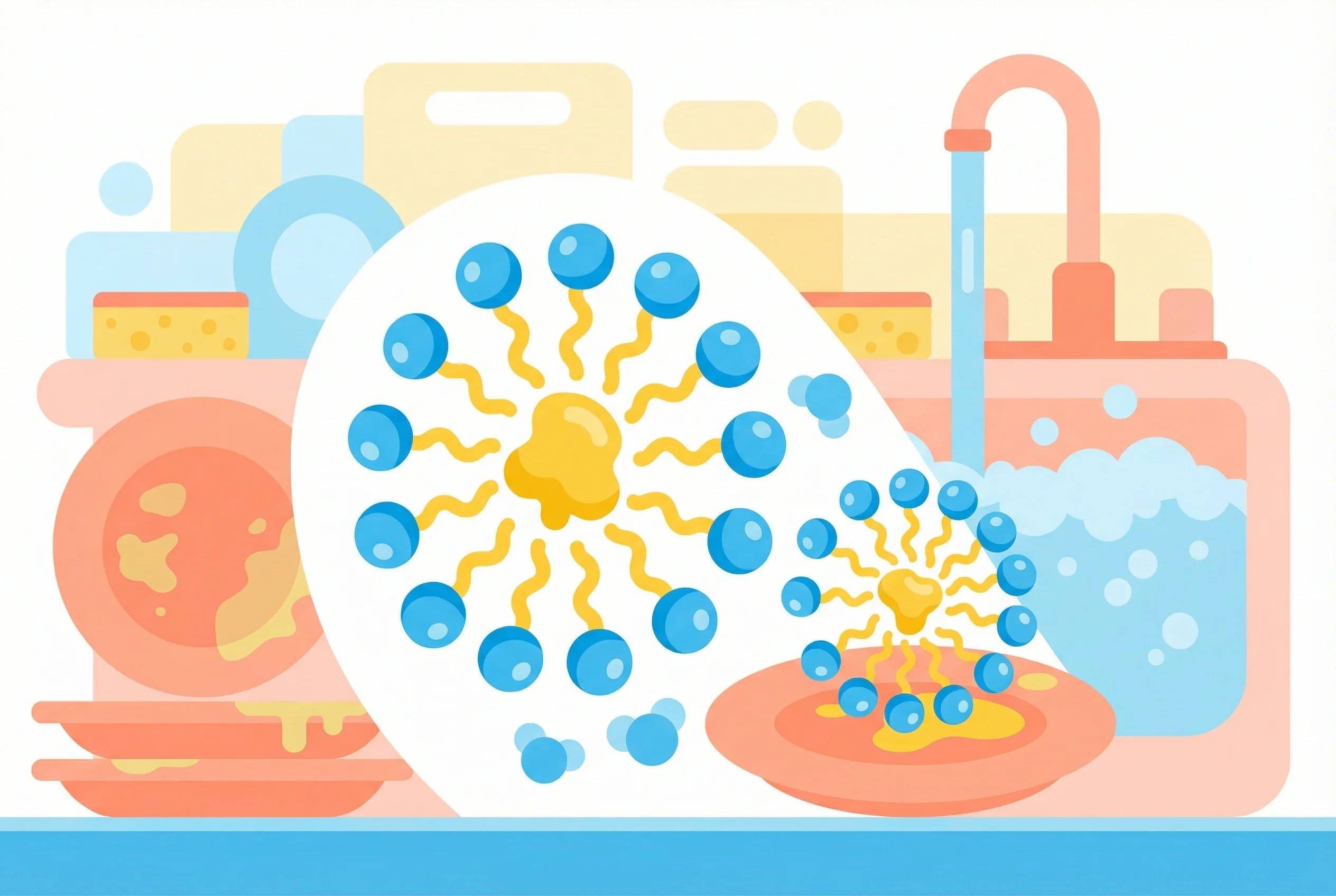
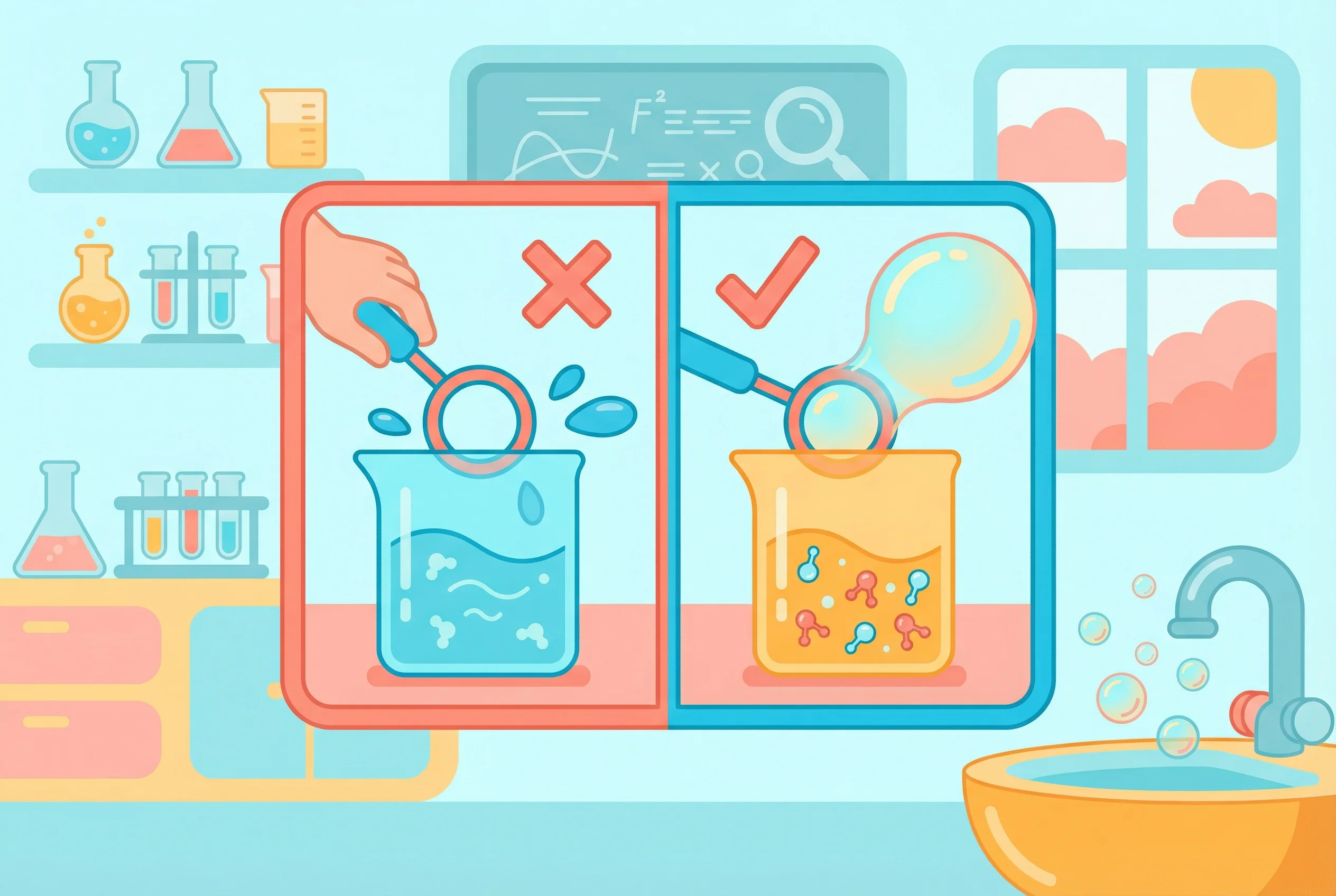
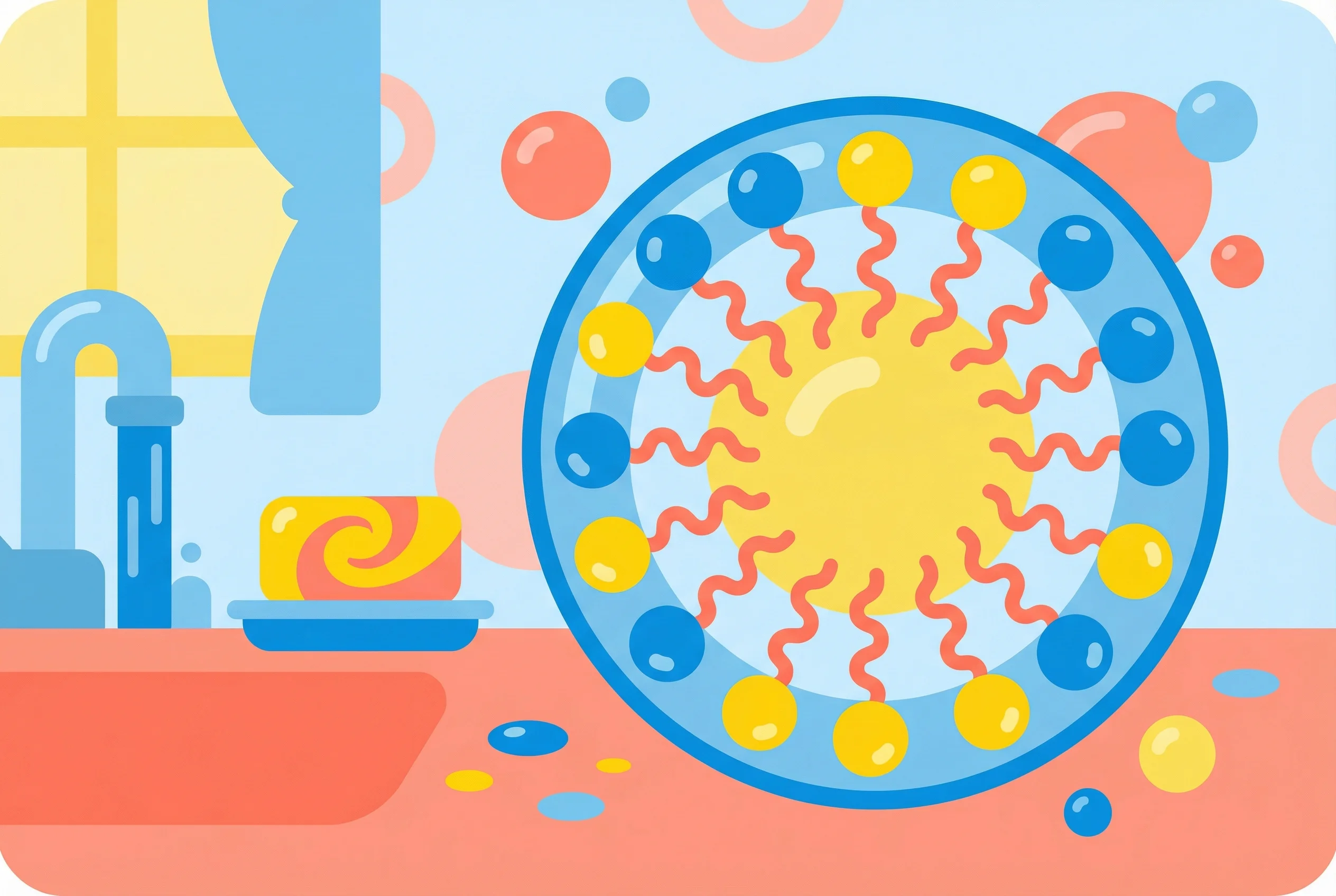
AMolecules grab water and oil
✓Correct. Soap has a water-loving end and an oil-loving end, so it helps water rinse grease away.
BIt kills all bacteria
✗Not quite. Some soaps can be antibacterial, but dish cleaning is mainly about lifting grease.
CIt dissolves grease directly
✗Not quite. Soap surrounds grease droplets so they can be suspended and rinsed away.
Answer this question
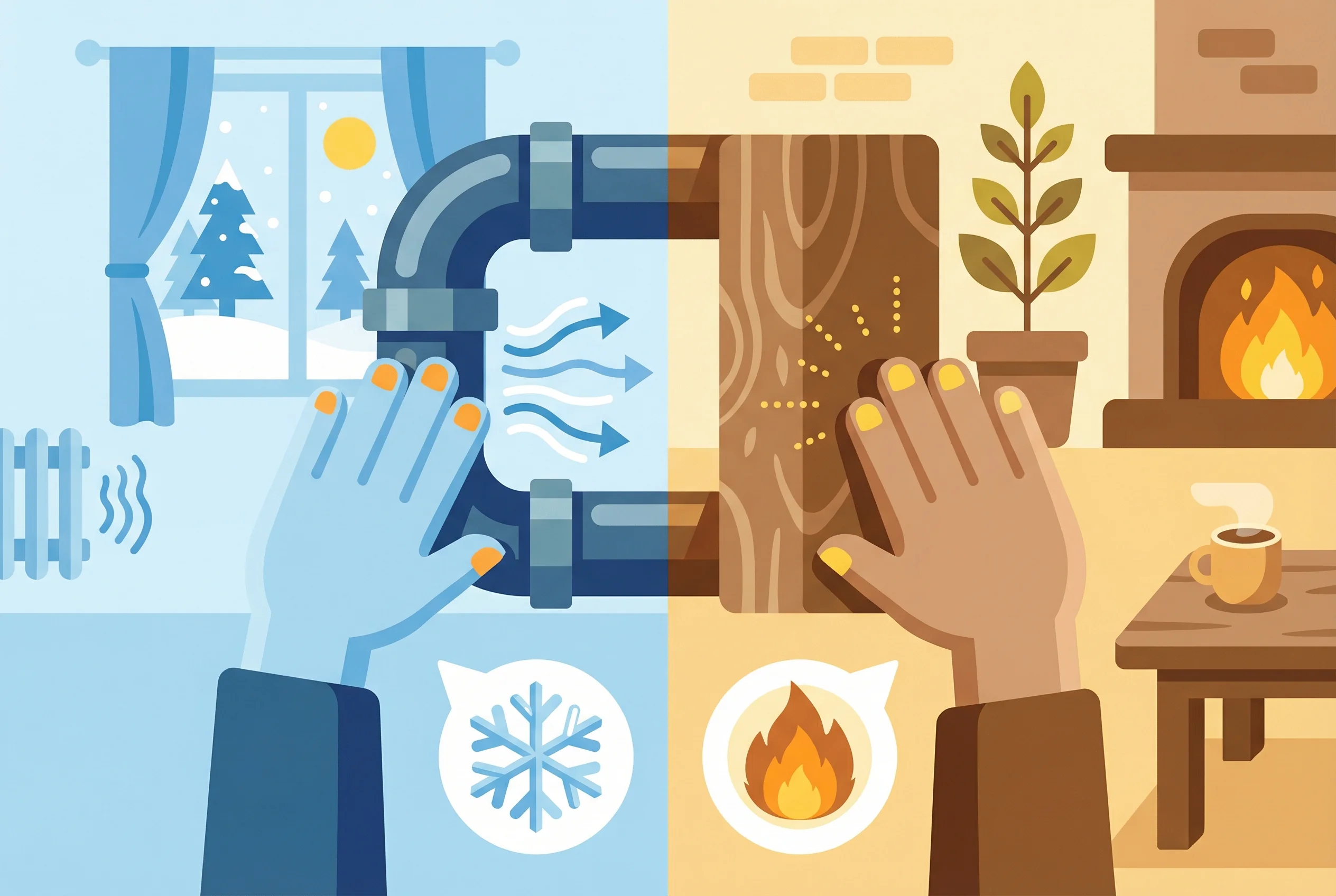
AMetal conducts heat faster
✓Correct. Metal pulls heat from your hand faster than wood, so it feels colder even at the same temperature.
BWood generates heat
✗Not quite. Wood simply conducts heat away more slowly.
CMetal is actually colder
✗Not quite. At room temperature, both materials can be the same temperature.
Answer this question
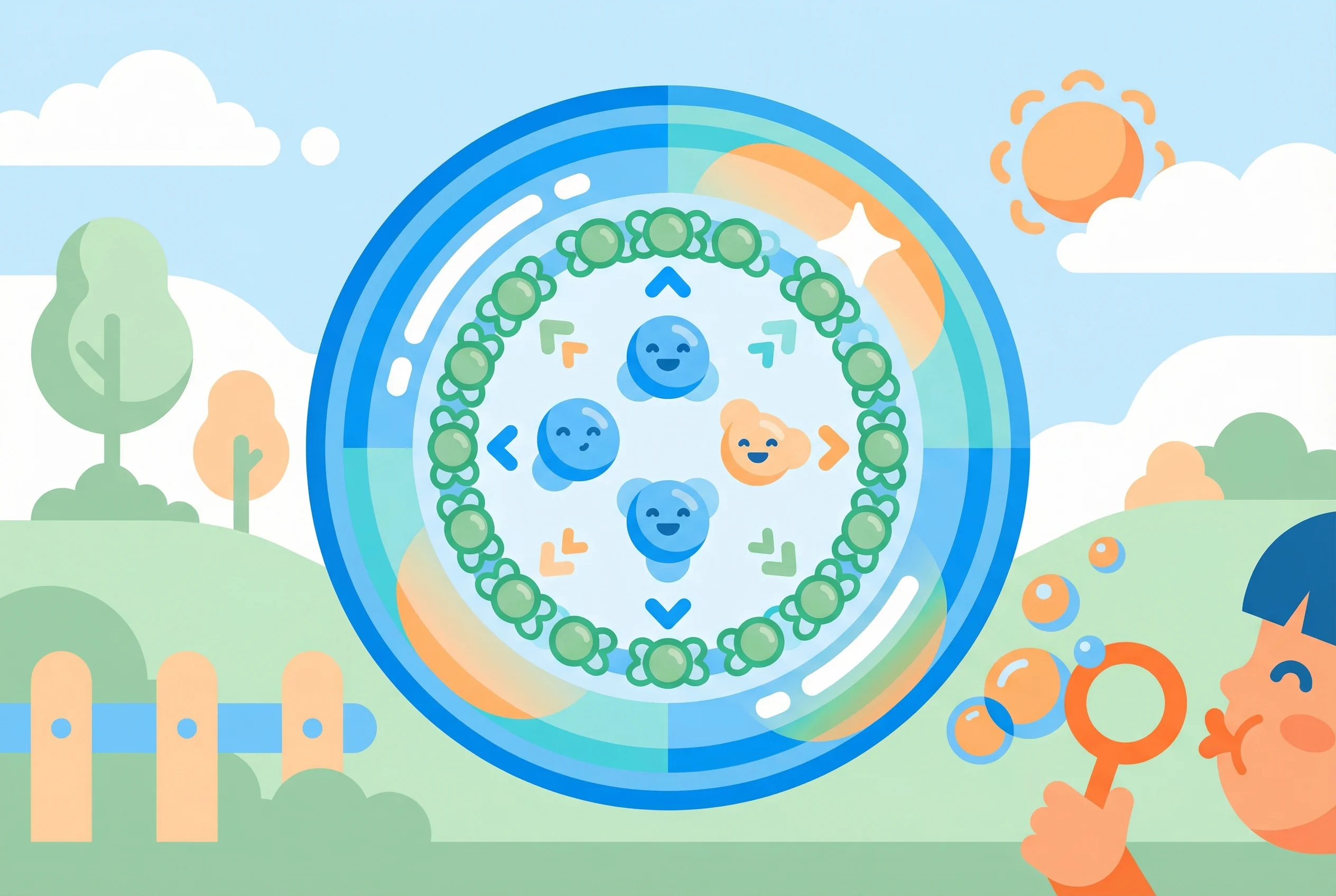
AWind shapes them into spheres
✗Not quite. Wind can distort bubbles; it does not create the spherical shape.
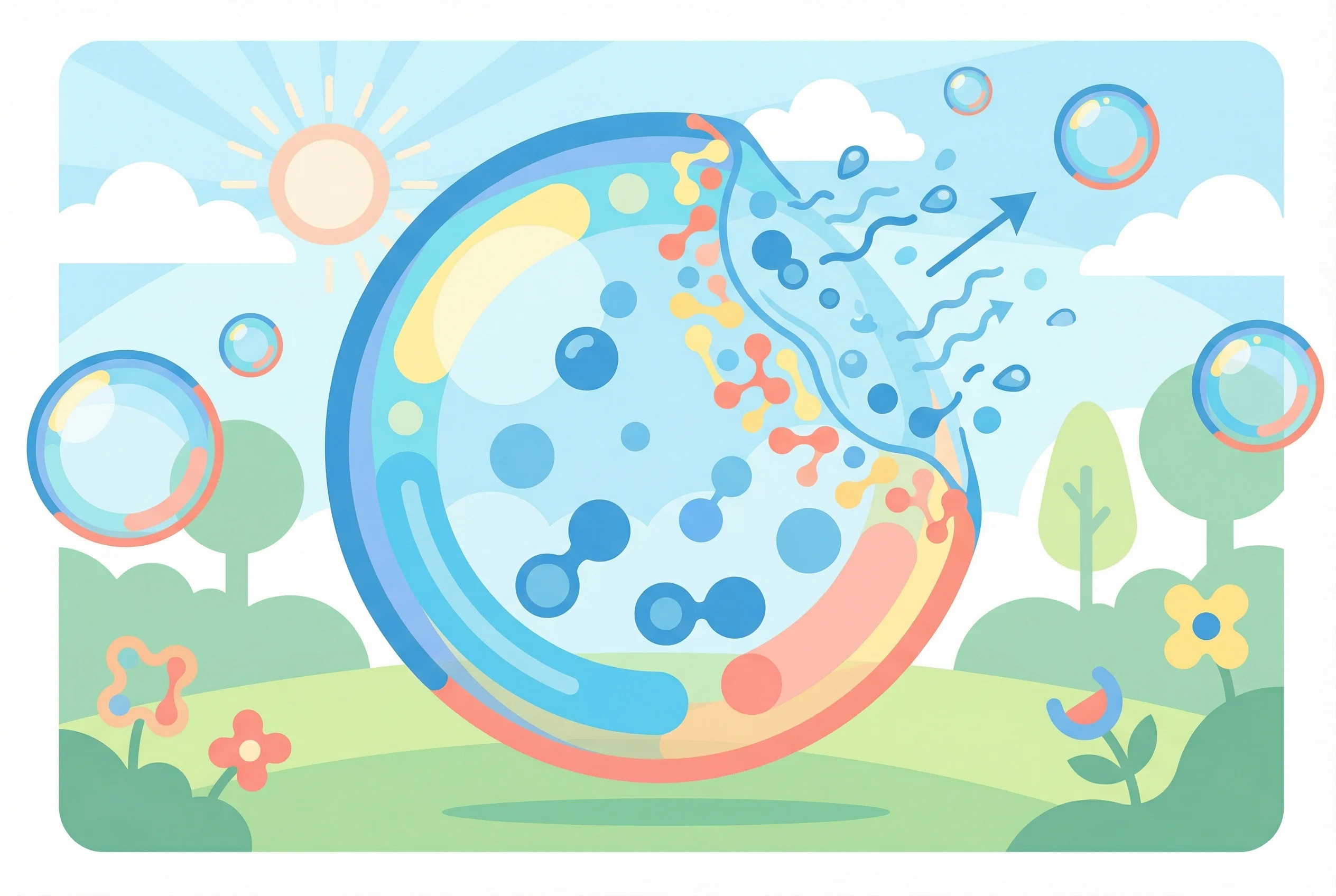
BSurface tension minimizes area
✓Correct. Surface tension pulls the film toward the smallest surface area for its volume: a sphere.
CSoap molecules form circles
✗Not quite. The whole film is pulled by surface tension; individual molecules are not drawing circles.
Answer this question
ASoap reduces surface tension, letting water form thin films
✓Correct. Soap weakens water's grip on itself and stabilizes a stretchy film around air.
BSoap produces gas that inflates the bubbles
✗Not quite. The air comes from your breath or mixing, not from soap producing gas.
CSoap makes water lighter so it floats as bubbles
✗Not quite. The key is film stability, not making water lighter.
Answer this question
ABacteria produce lactic acid
✓Correct. Bacteria feed on lactose and produce lactic acid, lowering pH and curdling proteins.
BMilk proteins start decomposing
✗Not quite. Protein breakdown happens later; sourness mainly comes from lactic acid.
CSugar ferments to alcohol
✗Not quite. Milk souring is lactic acid fermentation, not alcohol fermentation.
Answer this question
AIt grows mold
✗Not quite. The green layer is chemical patina, not biological growth.
BIt forms copper carbonate
✓Correct. Copper reacts with oxygen, water, and carbon dioxide to form green corrosion compounds that can protect the surface.
CPaint oxidizes on it
✗Not quite. The color comes from the copper itself reacting with the environment.
Answer this question
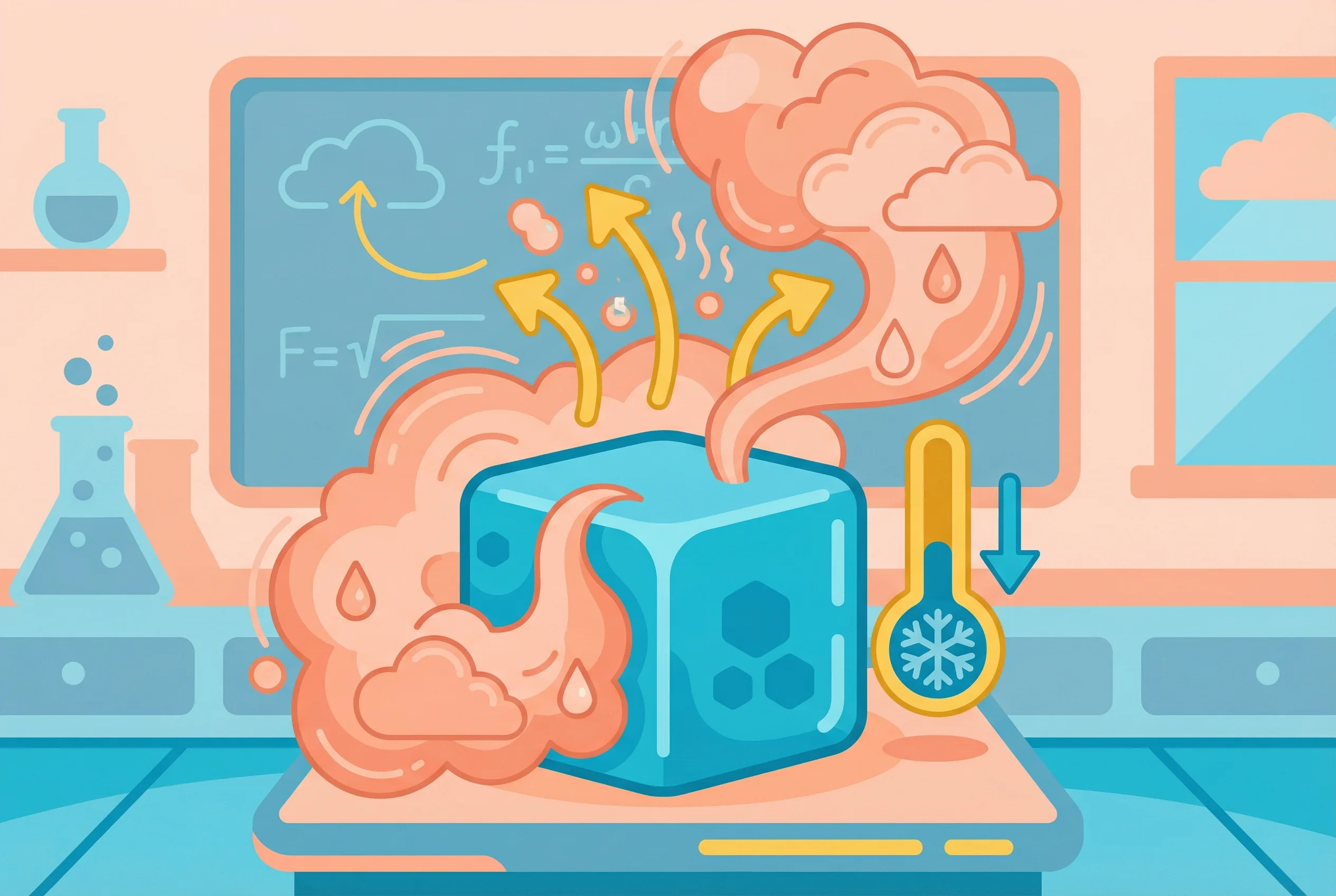
ACO2 gas condenses water vapor
✓Correct. Cold carbon dioxide chills nearby water vapor into tiny droplets, which you see as fog.
BCold air becomes visible
✗Not quite. Air itself is not becoming visible; water droplets are.
CFrozen smoke is released
✗Not quite. There is no smoke trapped inside dry ice.
Answer this question
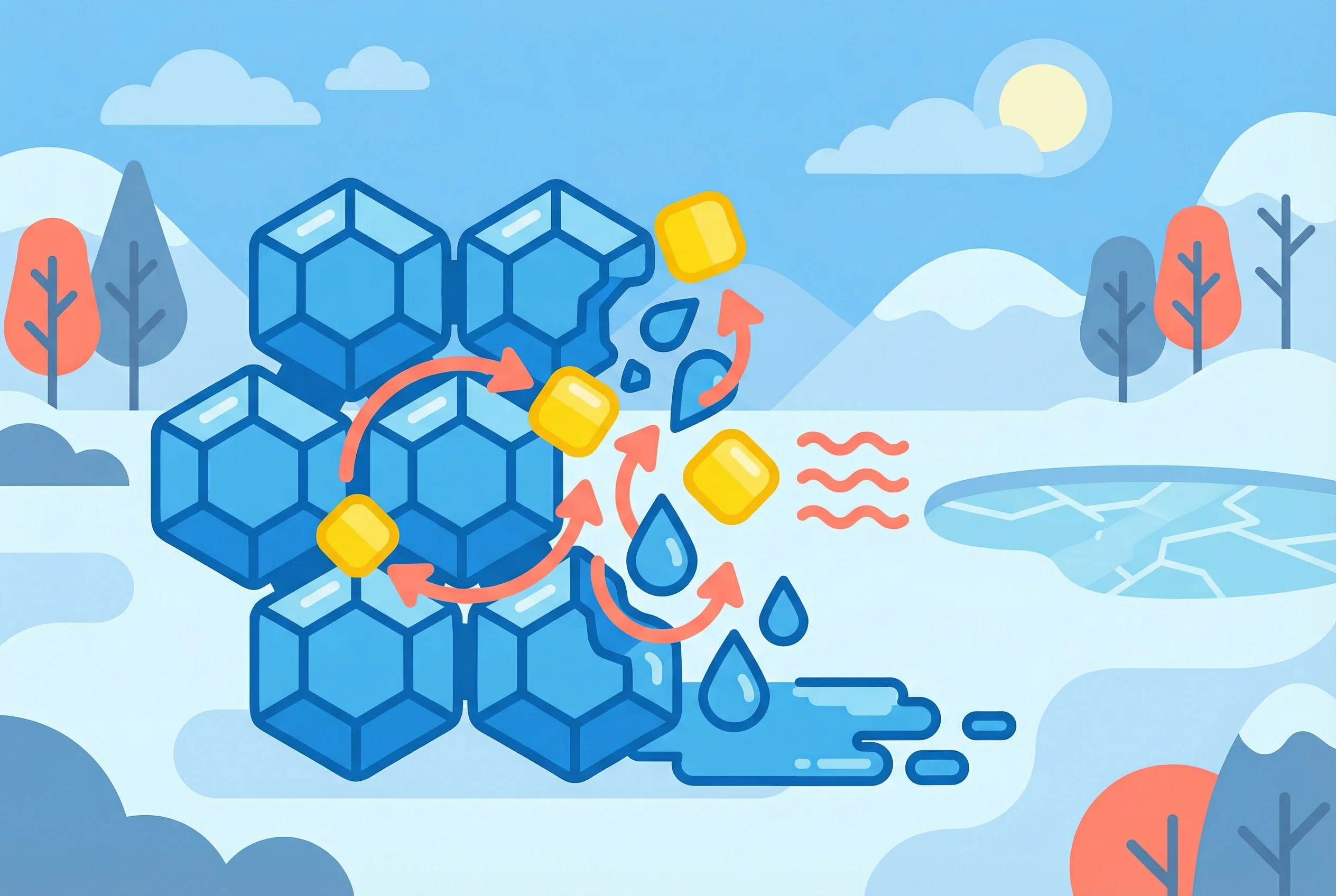
AIt generates heat
✗Not quite. Salt doesn't generate heat. The melting process actually absorbs heat from surroundings, making it colder.
BIt lowers freezing point
✓Correct. Salt lowers water's freezing point through 'freezing point depression'. Pure water freezes at 0°C, but salt water can stay liquid below 0°C.
CIt breaks ice crystals
✗Not quite. Salt doesn't physically break ice crystals. It works at the molecular level by interfering with how water molecules bond together to form ice.
Answer this question
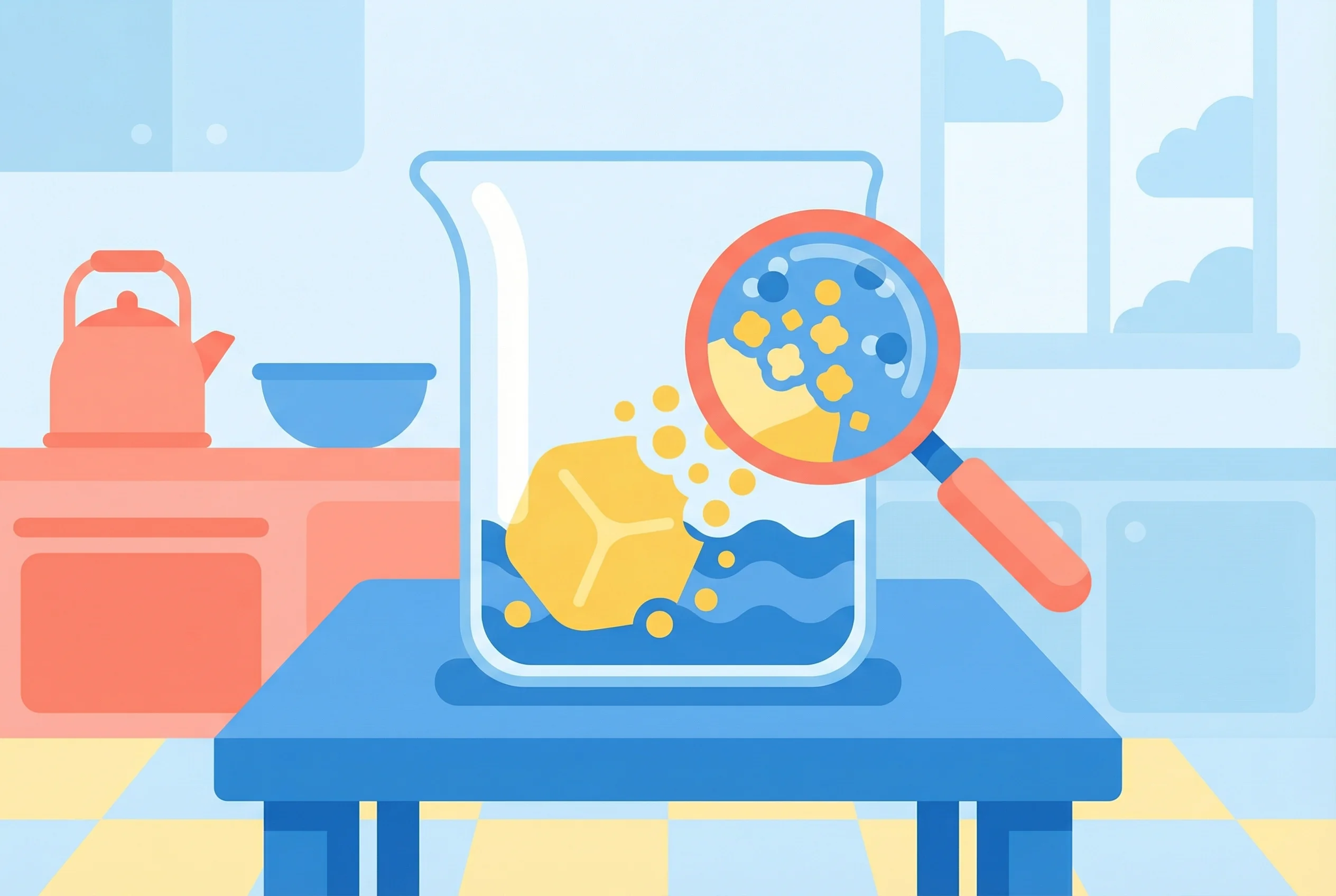
AWater molecules surround sugar
✓Correct. Sugar dissolves because 'like dissolves like' - both water and sugar are polar molecules. Water's polar molecules are attracted to sugar's polar regions.
BSugar melts in liquid
✗Not quite. Dissolving and melting are different processes. Melting requires heat to change from solid to liquid.
CChemical reaction occurs
✗Not quite. Dissolving sugar in water is a physical change, not a chemical reaction. The sugar molecules remain as sucrose - they don't change into different substances.
Answer this question
AFlames burn at different temperatures
✗Not quite. While temperature affects brightness, specific colors come from chemical composition, not heat levels.
BDifferent metal compounds
✓Correct. Different metals emit specific colors when heated. Copper makes blue, strontium makes red, barium makes green, sodium makes yellow.
CColored paper wrappings
✗Not quite. Colors come from inside the firework, not external wrapping. Metal compounds burning create the light.
Answer this question
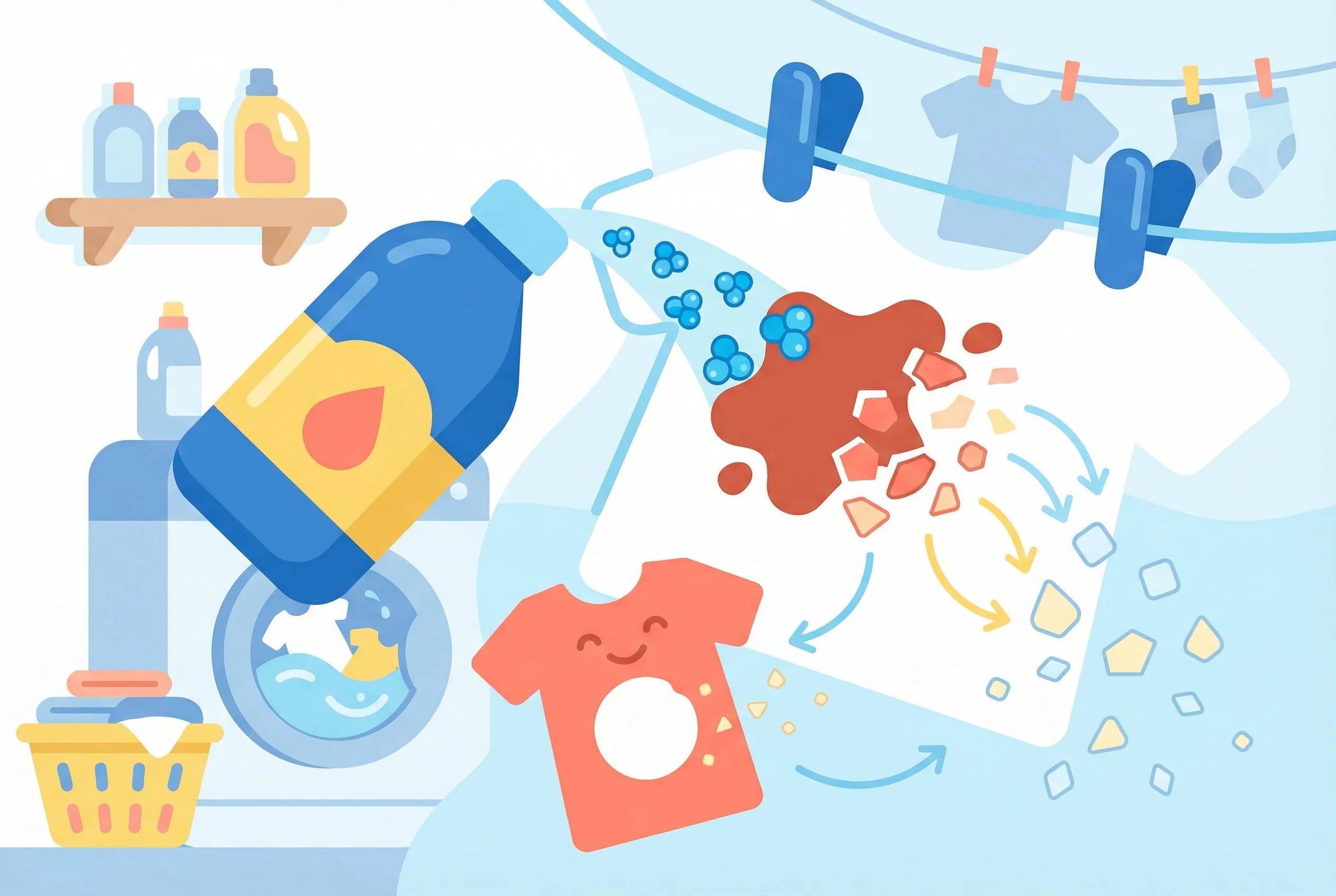
ABreaks apart color molecules
✓Correct. Bleach releases oxygen that breaks chemical bonds in stain molecules. This process called oxidation destroys the chromophores—the parts that absorb light and create color.
BKills bacteria causing stains
✗Not quite. While bleach does kill bacteria, stain removal works by breaking down color-causing molecules.
CMakes stains invisible
✗Not quite. Bleach actually destroys stains chemically, it doesn't hide them.
Answer this question
AAlcohol is very hot
✗Not quite. Alcohol at room temperature isn't hot. It evaporates quickly due to molecular properties.
BWeak bonds between molecules
✓Correct. Alcohol molecules have weaker attractions to each other than water molecules do. Less energy is needed for molecules to escape into the air.
CAlcohol weighs very little
✗Not quite. Molecular weight isn't the main factor. The weak intermolecular bonds allow easy evaporation.
Answer this question
Hard
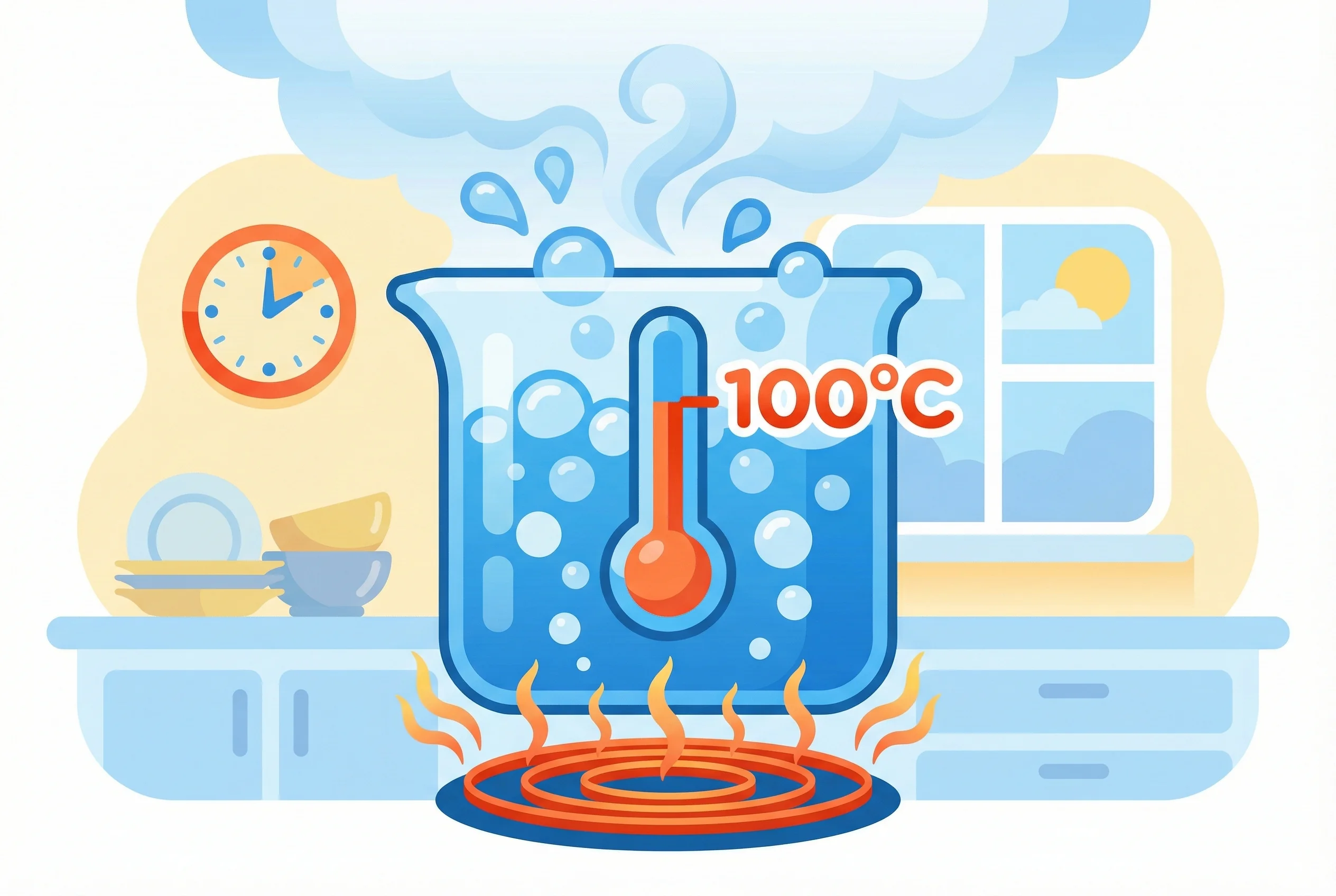
AIt is a universal constant
✗Not quite. Water boils at lower temperatures at high altitude and higher temperatures under pressure.
BVapor pressure equals air pressure
✓Correct. Boiling starts when water's vapor pressure matches the surrounding atmospheric pressure.
CMaximum temperature for water
✗Not quite. Water and steam can get hotter than 100 degrees C under pressure.
Answer this question
ABoils at room temperature
✗Not quite. The bubbling is not boiling.
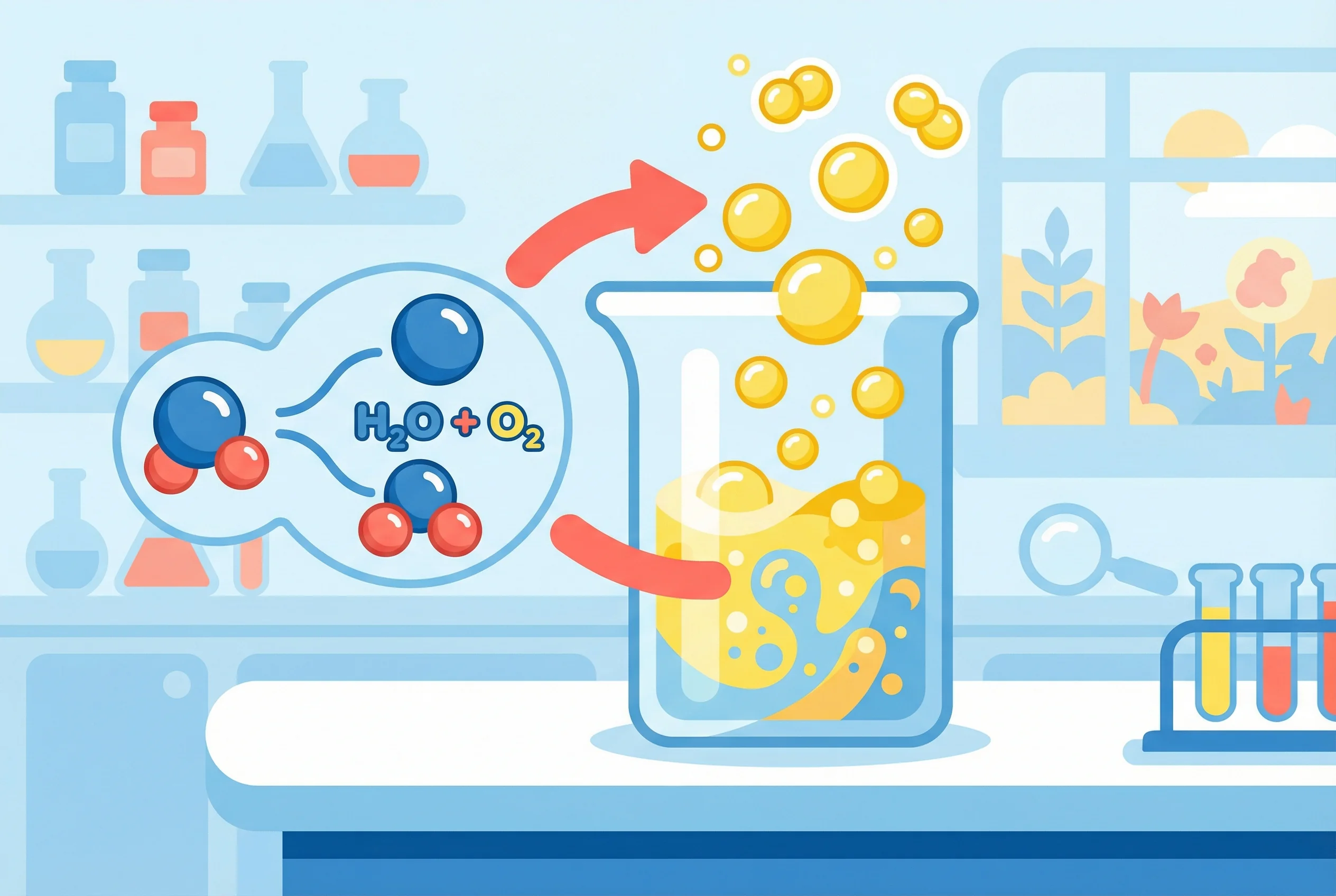
BDecomposes releasing oxygen
✓Correct. Hydrogen peroxide breaks down into water and oxygen, and catalysts make that gas appear as bubbles.
CMixes with air molecules
✗Not quite. The oxygen is produced by decomposition of H2O2.
Answer this question
ASulfur in the air reacts with silver atoms on the surface
✓Correct. Trace sulfur compounds react with silver to form black silver sulfide.
BOxygen rusts the silver the same way it rusts iron
✗Not quite. Silver tarnish is not iron-style rust; sulfur is the main actor.
CSilver naturally darkens with age like an old photograph
✗Not quite. Age alone is not enough; silver needs to react with environmental compounds.
Answer this question
AThey store static charge
✗Not quite. Batteries don't store static electricity. They store chemical energy that gets converted to electrical energy through controlled chemical reactions.
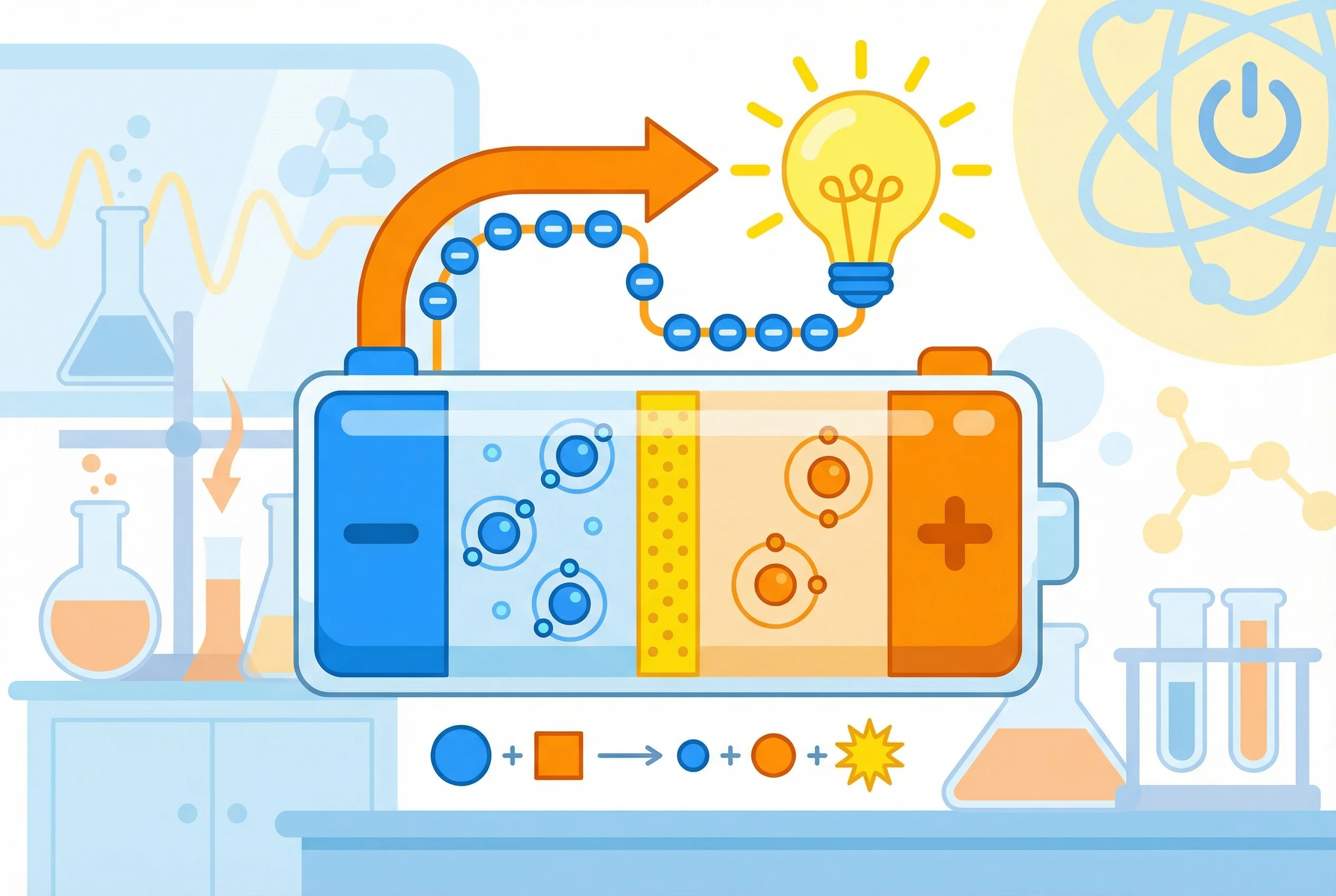
BChemical reactions move electrons
✓Correct. Batteries have two electrodes (anode and cathode) in an electrolyte. Chemical reactions at the anode release electrons, while reactions at the cathode accept them.
CMetals generate current
✗Not quite. Metals alone don't generate electricity. You need specific metals in a chemical system where one metal oxidizes (loses electrons) and the other reduces (gains electrons).
Answer this question
Frequently Asked Questions
What is chemistry trivia?
Chemistry trivia is a set of quick questions about how substances change, react, dissolve, bubble, tarnish, clean, boil, and smell in everyday life.
Are these chemistry trivia questions good for adults?
Yes. The questions are light enough to play quickly, but the answers explain real mechanisms: surface tension, oxidation, vapor pressure, fermentation, and molecular polarity.
Can chemistry trivia help me understand daily life?
It can. A good chemistry question turns a familiar object into a small information gap, then closes it with a mechanism you can notice again later.
What topics are included here?
These 27 questions cover kitchen chemistry (onions, popcorn, bread, baking powder, sugar, fizzy drinks), cleaning chemistry (soap, bleach, baking soda with vinegar), metals and corrosion (copper, silver, rust, batteries), and everyday physical chemistry like boiling, salt on ice, fireworks colors, smells, and dry ice.
What does this have to do with AIgneous Million Whys?
Million Whys is built around the moment when an ordinary thing suddenly becomes a real question. Chemistry is full of those moments, and each one can become a quick spark of understanding.