
Fun Facts About Psychology: 10 Surprising Findings
On this page· 25
Have you ever stood in a crowd while someone collapsed and felt your own feet stay planted? Or crammed a term's worth of material into one night and watched it evaporate by morning? Those moments are often filed under personal weakness. Psychology files them under pattern.
The gap worth noticing is this. The explanation that feels obvious in the moment is usually the wrong one. You didn't stay put because you're cold or indifferent. You stayed put partly because other people were standing there too, and your brain outsourced the decision to the group.
That gap between the tempting explanation and the actual mechanism is what makes fun facts about psychology worth more than party conversation. Every item below works the same way. You get a quick setup, you guess the reason, then you find out why a common answer doesn't survive contact with the evidence. You'll meet the original experiments, the replication problems where they exist, and the practical moves that follow from each one. If a fact here lands close to home and you'd rather talk it through with someone, therapy options for Kelowna families are a reasonable place to start. Otherwise, start guessing.
1. The Bystander Effect
Here's a question worth answering before you read on.
A man collapses on a busy sidewalk. Who is more likely to help him, one passing stranger or a crowd of twenty?
Many would pick the crowd. That's the tempting answer, and it's the one the evidence knocks down.
The smoke that filled the room
John Darley and Bibb Latané ran a 1968 experiment in which participants filled out questionnaires while smoke seeped into the room. People working alone got up and reported it. People who believed others were also present sat still, coughed, and waited. More witnesses didn't produce more help. They divided the responsibility until nobody owned it. Each person assumed someone else had already noticed, or read the calm faces around them as proof there was nothing to worry about.
The 1964 Kitty Genovese case is usually told as the origin story, and its newspaper reporting has since been questioned. The experimental effect doesn't depend on that story. It holds up in study after study.
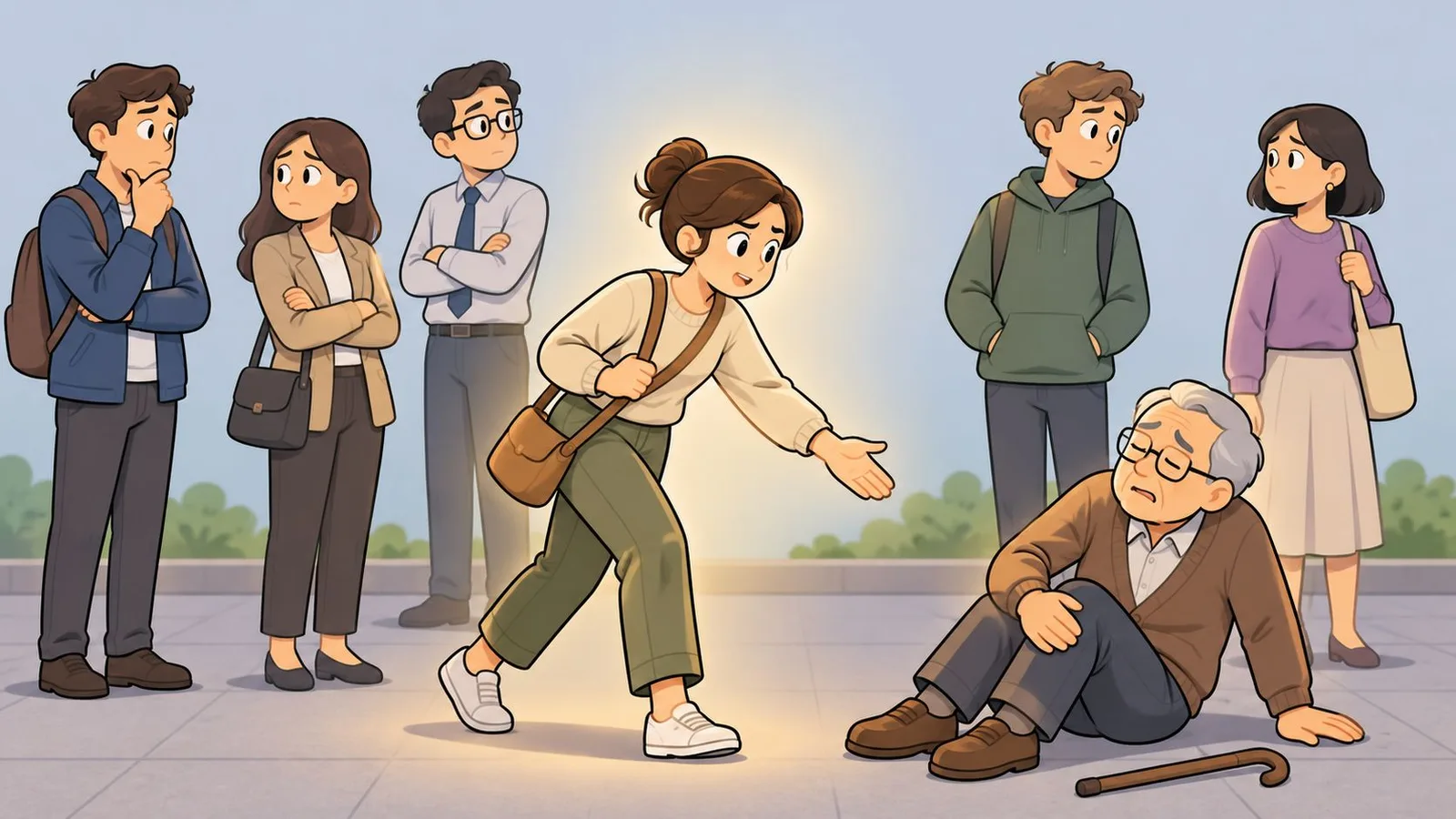
Practical rule: never address a crowd in an emergency. Pick one person, point, and say "You in the blue jacket, call 911."
Three ways to apply it:
- Name a single person. A directed instruction converts a bystander into a responder, because it removes the option of assuming someone else has it covered.
- Act on your first flicker of concern. Hesitation grows the longer the group stays quiet, so move before the silence hardens.
- Use it as a discussion prompt. Ask students why a crowd waits, and let them reason their way to diffusion of responsibility instead of being told.
2. The Spacing Effect
Two students put in the same four hours on one topic. The first does it in a single Sunday night block. The second spreads it across eight half-hour sessions over two weeks.
Which one remembers more a month later? Many pick the marathon, because a long session feels productive and eight short ones feel like barely starting. That guess fails.
Ebbinghaus measured the fade
Hermann Ebbinghaus published systematic experiments on memory in 1885, much of it built on his own learning performance. The Verywell Mind timeline of modern psychology credits that work with introducing quantitative methods for studying forgetting, which is why the forgetting curve still carries his name.
Memory fades along a curve, steep at first and flatter later. A review that lands before the fade runs too deep restarts the curve from a higher point, so the next decline is slower. One long block gives your brain no gap to consolidate in, which is why the tempting answer, total time on task, loses.
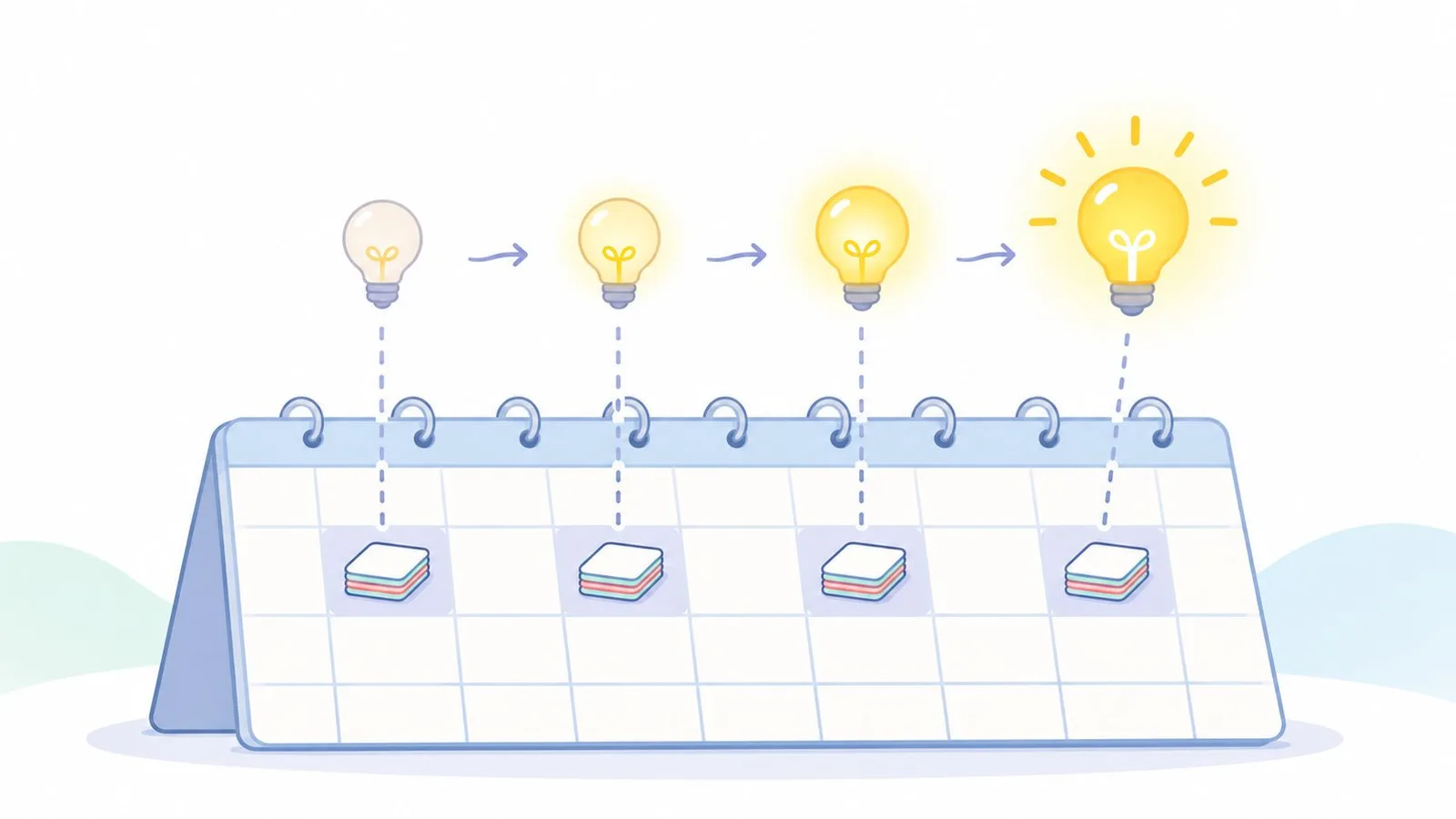
Spacing gets stronger when each review involves honest retrieval rather than rereading. The technique behind active recall is the partner habit that makes the interval count.
- Review the next day, then after a few days, then after a week.
- Open with a two-minute revisit of yesterday's topic before starting anything new.
- Book short daily reviews instead of one heroic weekend session.
Workplace training programs often spread their review sessions across weeks for the same reason, as this workplace training guide for Australian L D describes. The gap does work that extra hours cannot.
Question 1 of 5
Why can reviewing an idea twice, with a break in between, leave you remembering it better a week later than one long session?
3. The Testing Effect
Which group scores higher a week later? Group A rereads the chapter four times. Group B reads it once, then takes three practice quizzes and gets some answers wrong. The intuitive pick is Group A, the thorough rereaders. The evidence points the other way.
Why pulling beats pushing
Henry Roediger and Jeffrey Karpicke demonstrated this in a 2006 study: students who practiced retrieving material outperformed students who kept restudying the same text on a delayed test. Retrieval does more than measure learning. It causes it. Reaching for an answer strengthens the route back to it, and the effort of a near-miss does more than a smooth reread.
The tempting explanation is that rereading feels productive because the text looks familiar. That familiarity is not the same as being able to produce the answer when the page is gone. The struggle to retrieve is the mechanism, not proof that the method is failing.
The size of the advantage is well documented. A 2017 meta-analysis of practice testing pooled 272 independent effects from 118 experiments and found an overall benefit of approximately g = 0.61, with a moderate edge over restudying at g = 0.51 and a much larger one against filler activity at g = 0.93.
Practical rule: close the book and write down everything you remember before you check. The blank page is the workout.
Try these:
- Answer before flipping. Cover the explanation and commit to something, even if you're unsure.
- Open lessons with a low-stakes quiz on last week's material rather than a recap slide.
- Review the wrong options too. Knowing why a plausible answer fails is often more durable than the correct answer alone.
Question 2 of 5
Why can testing yourself on a chapter several times in one study session beat rereading it when you check a week later?
4. Hindsight Bias
Prediction test. A company launches a product that flops. Two weeks later, ask the team whether they saw it coming. Most will say the warning signs were obvious.
They almost never saw it coming. That's hindsight bias, and it rewrites your memory of what you knew at the time.
The experiment that named it
Baruch Fischhoff's 1975 research gave people an outcome and then asked how likely they'd have been to predict it beforehand. People told the answer overestimated how predictable it had seemed. People kept in the dark gave lower odds. Same event, different remembered certainty.
The tempting explanation is that the team was careless, and that a sharper group would have caught it. That account skips the mechanism. Knowing how something turned out reshapes the story you tell about your own past judgment, then feeds overconfidence into your next call.
Elections are the classic showcase. In 2024, 77% of U.S. adults identified the future of the nation as a significant source of stress, according to the APA Stress in America survey conducted with Harris Poll among 3,305 adults. High stakes plus a known result is exactly where "I knew it all along" breeds.
Keep a prediction log for a month. Write the call and the date before the outcome lands, then compare later. In post-mortems, ask the room one question before anyone speaks: what did we know on the day we decided?
Question 3 of 5
Why do people become more certain they called an outcome once they learn what it was?
5. The Frequency Illusion
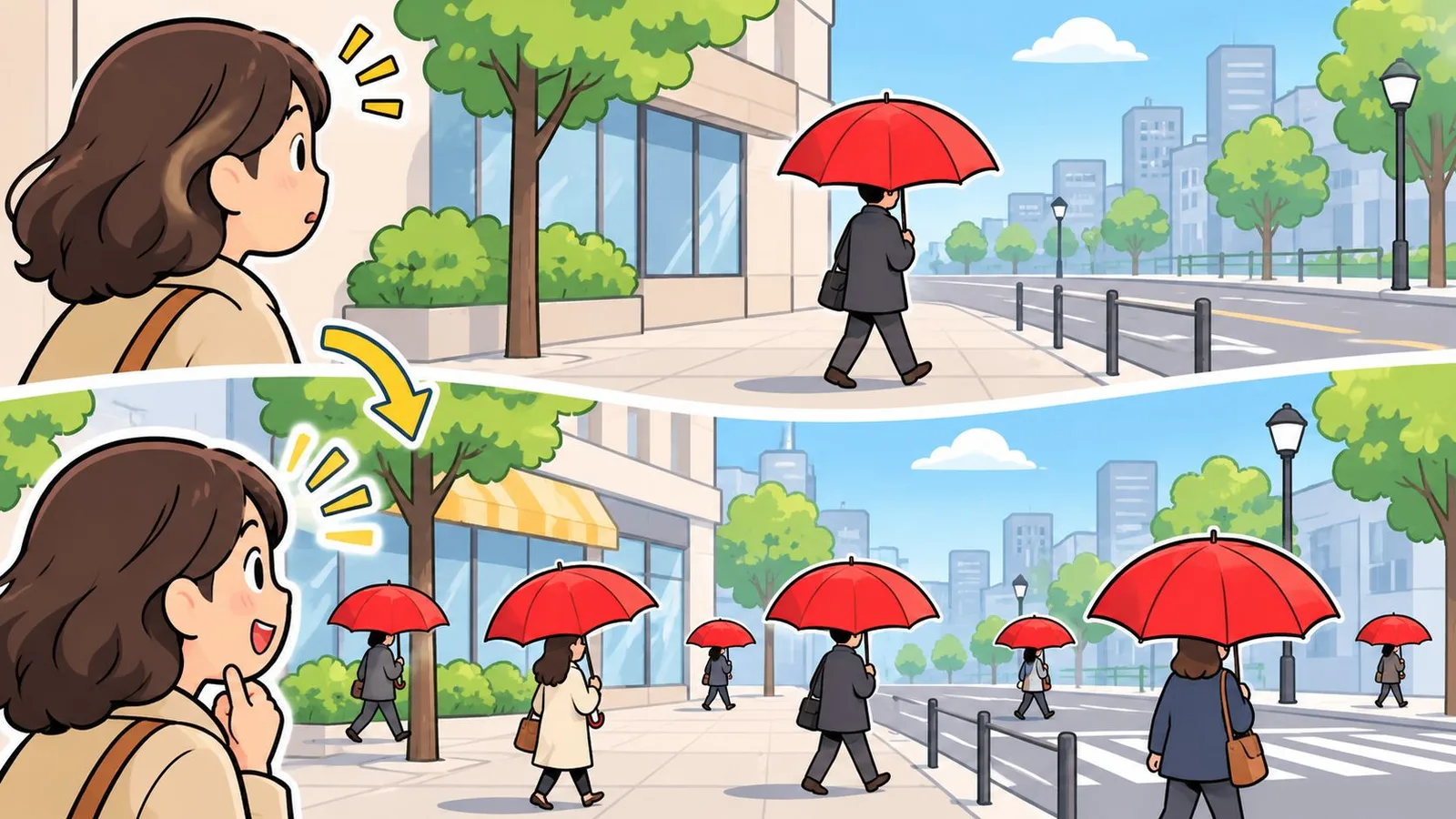
Guess first. You buy a blue hatchback. Within a week you see that exact model at every junction. Did the town's drivers suddenly switch cars?
No. You switched attention.
A nickname from a 1994 newsgroup
The label Baader-Meinhof phenomenon came from a 1994 newsgroup post about a German militant group the poster had just learned about, then kept encountering. The name stuck. The cause is selective attention: once something matters to you, your brain flags it, and a run of flags feels like a rise in frequency.
The tempting answer is that the world changed. What changed is your filter. The number of blue hatchbacks on the road stayed flat while your notice-ability jumped.
Testing a hunch with a tally
When something seems to be everywhere, count it for a week before you believe the pattern. A simple tally in a notes app settles most of these questions in a few days.
- Check the baseline. Ask what the frequency was before you started noticing, not after.
- Separate noticing from occurrence. Your attention is a filter, and filters make things look denser than they are.
- Use it to teach coincidence. A classroom example about a new word or song works better than any definition of confirmation bias.
The skill underneath is the same one that keeps a good fact list honest: noticing when your own attention is doing the persuading.
Question 4 of 5
You buy a blue hatchback and suddenly see that exact model at every junction. What makes it seem like the roads are full of them?
6. The Zeigarnik Effect
Question first. You're watching a series and the episode cuts off mid-sentence. Which stays with you longer, that cliffhanger or the episode that wrapped up neatly at the end?
The unfinished one, many readers guess, and this time the guess is close to right.
Waiters, tabs, and a mixed record
Bluma Zeigarnik reported in 1927 that waiters remembered unpaid orders more clearly than settled ones. The idea holds that unfinished goals stay active in memory and create a kind of mental tension until they close.
The record since then is uneven, so treat the effect as useful rather than guaranteed. A large international replication project covering 164 social and behavioral science papers found that 49.3% of replications reproduced the original direction with statistical significance, 40.4% produced null results, and 9.7% produced significant results in the opposite direction, as PsyPost's report on the project sets out. Who gets studied matters as well. In 2024, 59% of human-subject samples in six leading psychology journals were based in the United States, per the American Psychological Association's benchmark analysis of 1,217 studies.
The tempting answer is that interruption sharpens memory. It's messier than that, and the honest version of this fact is: unfinished tasks sometimes linger, and the effect depends on how much the goal matters to you.
End a lesson on an open question instead of a summary. If you must stop work mid-task, stop at a clean point and write the next step, so resuming costs nothing.
7. The Ben Franklin Effect
You want a colleague to warm to you. Do you do them a favor, or ask them for a small one? The instinct is to give. Franklin chose to ask, and got a friendship out of it.
The book, the rival, and the flip
Franklin describes asking a political rival to lend him a rare book. The man sent it, and later became friendly. Later research on the pattern points the same way: people asked for a modest favor often warm to the requester afterward. The result is not magic. A small favor is a tiny door you ask someone to open. Once they open it, they have a reason to tell themselves the room is worth entering.
Why the tempting answer fails is worth sitting with. Doing someone a favor does not manufacture warmth inside them. Asking for one creates a small inconsistency: I helped this person, so I must feel positively about them. People resolve that discomfort by adjusting the feeling, not the behavior.

The effect has limits. Small studies with narrow samples do not license a universal claim. Demand for fast explanations is real, too. APA journal findings received nearly 11,000 media citations in 2025, a 43% increase from 2024, as Psychology Today's review of how much psychology to trust notes. That appetite makes oversimplifying tempting.
Ask for one specific piece of advice, keep the request modest, and thank the person properly. That warmth also colors unrelated judgments, which is part of the halo effect.
8. The Google Effect
Prediction. You're told a trivia fact will be saved to a folder on a computer. Later, are you more likely to remember the fact itself or the folder it went into?
Many people assume the fact. The study found the folder.
Saving changes what you store
Betsy Sparrow, Jenny Liu, and Daniel Wegner's 2011 research found participants were less likely to recall trivia statements when they expected them to be saved, and better at remembering where the information lived. Expecting a safety net changes what your memory bothers to keep.
The tempting answer is that search engines are making you forgetful. That gets the direction right and the blame wrong. Memory has always been selective about what's worth holding, and location is a perfectly good thing to hold. You didn't lose your friends' phone numbers to Google. You lost them to a contact list that never fails.
The practical version is simple. Look things up freely, then write one line about why the answer matters, because that line is what survives. Answer from memory before you search on the concepts you want to keep, and keep that short list short.
9. The Curiosity Gap
Guess. Which question makes you want the answer more, one you're certain about or one you're about 60% sure about?
The certain one feels comfortable, and many pick it. Curiosity peaks somewhere else.
Loewenstein's information gap
Economist George Loewenstein proposed in 1994 that curiosity arises when you notice a gap between what you know and what you want to know. The gap feels uncomfortable until it closes, which is what drives you to look.
Recent experiments summarized in Psychological Research found the highest curiosity for information gaps people judged important. When importance was lower, curiosity followed an inverted-U relationship with confidence, peaking at moderate confidence rather than at either extreme. Related work found that illustrating moderate knowledge gaps increased information seeking and produced better post-test performance than a control condition.
That's why the tempting answer fails. A bigger gap isn't automatically more engaging. Too obscure and the reader feels lost instead of curious, so the useful zone sits at moderate, consequential uncertainty.
Frame a lesson as a question someone can answer in seconds, then explain. Ask for a prediction before revealing anything, and the neuroscience of curiosity explains why that commitment sharpens attention. Keep hooks honest, because a promise the explanation can't keep teaches people to stop guessing.
10. The Stroop Effect
Try this before reading further. Name the ink color of the word RED printed in green ink. Do it ten times fast. It feels like walking through water.
Why reading won't stand down
Before the explanation, guess what is slowing you down. A common first guess is that the color is hard to see or the task is just unfamiliar. The snag is that reading is automatic for literate adults. John Ridley Stroop described the effect in 1935. The meaning of a word gets processed whether you want it to or not, and that fast meaning collides with the slower job of naming a color. The delay is the cost of overriding a habit.
Attention research became a serious scientific subject in the mid-twentieth century, as psychology moved beyond behaviorism, the stimulus-and-response tradition the Stanford Encyclopedia of Philosophy's entry on behaviorism surveys. Around 1956, George Miller summarized evidence that short-term memory could hold approximately seven items in "The Magical Number Seven, Plus or Minus Two." Interference tasks like Stroop's became a standard way to study how automatic and deliberate processes compete.
So the tempting answer, that you are just slow, fails. The interference is proof that your automatic system is working exactly as designed, and that deliberate control has to fight for the wheel. The struggle is the finding.
When a habit clashes with a task, slow down on purpose and name what you are doing out loud. Use the ink-color demonstration with students before defining automaticity. They will feel the concept before they can spell it.
Question 5 of 5
Why does it take longer to say the ink color of the word RED printed in green than to name the color of a plain green square?
How the 10 psychology effects compare
Before you scroll the table, try a quick prediction test. Pick any row and ask yourself why the effect happens. The mechanism is usually not the one that comes to mind first, and that gap between your first guess and the correct explanation is the whole point of comparing them side by side.
| Item | Core mechanism | Classic study or source | Everyday application |
|---|---|---|---|
| The Bystander Effect | Shared responsibility and uncertainty reduce helping | Darley and Latané's 1968 smoke-filled room experiment | Direct a specific person to call for help |
| The Spacing Effect | Spreading reviews over time strengthens retention | Hermann Ebbinghaus, 1885 | Review notes at increasing intervals |
| The Testing Effect (Retrieval Practice) | Recalling information strengthens memory more than rereading | Roediger and Karpicke, 2006 | Use flashcards or self-quizzes |
| Hindsight Bias | Knowing an outcome makes it seem more predictable in retrospect | Baruch Fischhoff, 1975 | Record predictions before outcomes are known |
| The Frequency Illusion (Baader-Meinhof Phenomenon) | Increased attention makes recently encountered things seem more common | Term from a 1994 Usenet post | Track sightings to check whether frequency actually changed |
| The Zeigarnik Effect | Unfinished tasks can remain active in memory | Bluma Zeigarnik, 1927 | Write down the next step of an unfinished task |
| The Ben Franklin Effect | Doing a small favor can increase positive feelings toward the recipient | Jecker and Landy, 1969; Franklin's autobiography | Ask a colleague for modest advice |
| The Google Effect (Digital Amnesia) | Expecting information to be available externally can reduce recall of it | Sparrow, Liu, and Wegner, 2011 | Recall key ideas before searching online |
| The Curiosity Gap (Information Gap Theory) | A perceived gap between knowledge and desired knowledge motivates seeking answers | George Loewenstein, 1994 | Open a lesson with a focused question |
| The Stroop Effect | Automatic reading interferes with deliberate color naming | John Ridley Stroop, 1935 | Try naming ink colors while ignoring the words |
Read down the mechanism column and a pattern appears. Three effects, spacing, testing, and the curiosity gap, describe how memory and motivation respond to timing. Three others, the bystander effect, the Ben Franklin effect, and the Google effect, describe how the presence of other people or of an external store of information changes what you do. Hindsight bias, the frequency illusion, and the Stroop effect all show attention and judgment bending around a habit you cannot switch off.
The tempting wrong answer is that these are ten separate quirks to memorize. They are closer to four families of the same underlying machinery: how memory consolidates, how attention allocates, how responsibility gets divided, and how automatic processes collide with deliberate ones. Once you see the family, a new example is easier to place.
That framing also makes the prediction test useful. If you guess "I'd definitely help in a crowd" and the bystander effect says diffusion of responsibility will slow you down, the correction lands harder than a fact you nodded at. Guess first, then read the mechanism, and the mechanism has somewhere to stick.
Pick the row that surprised you most and carry it into the week ahead.
Test One Fact on Yourself This Week
Reading about an effect and catching it in your own day are different skills. The second one is where fun facts about psychology stop being trivia and start being useful, so here's a small experiment you can run over the next seven days.
Pick one item from this list. The bystander effect is the easiest to watch in public. The spacing effect is the easiest to test against a real deadline. Hindsight bias is the easiest to catch in conversation, because someone will always claim they called it.
Then write a prediction down before you watch for anything. That step matters more than it sounds. Something like "next time something goes wrong in a crowd, I'll be the one who hesitates," or "I'll hold this material better if I split studying into three sessions." Keep it where you'll see it, in a notes app or on the back of a notebook.
Observe, then compare. If the crowd stands still and you stand with it, you've watched diffusion of responsibility happen in real time with no lab required. If the split sessions hold better than your usual cram, you've felt the mechanism instead of reading about it.
The habit worth keeping
Guess first, then check. That order turns a list like this into something you can use, because a prediction forces you to commit before the explanation arrives, and a committed guess is what makes the correction stick. Many readers read a fact and nod. Guessing first makes you notice the exact moment your intuition is wrong, and that moment is the part you keep.
Run the same loop with shorter material. A daily why-question takes about ten seconds and asks you to pick an answer before it explains anything, which is the format Million Whys builds around topics like memory, bias, perception and everyday mental patterns.
Where to look next
Keep a short list of effects you've caught in the wild. Three entries are plenty for a first week: one social effect, one memory effect, one judgment effect. Compare notes with someone reading the same list and see whether they catch the same ones you do.
Curiosity works better as a daily habit than a weekend binge, which is the spacing principle wearing a different costume.
Every question on Million Whys opens with a prediction, so you guess before the explanation arrives and then see exactly why the other options fall short, including the ones you almost picked. If this list left you hungry for more of those small reversals, the psychology and behavior library covers memory, bias, perception and everyday mental patterns, one ten-second question at a time. Visit Million Whys to try today's question and start a daily habit of guessing first.
Keep Exploring
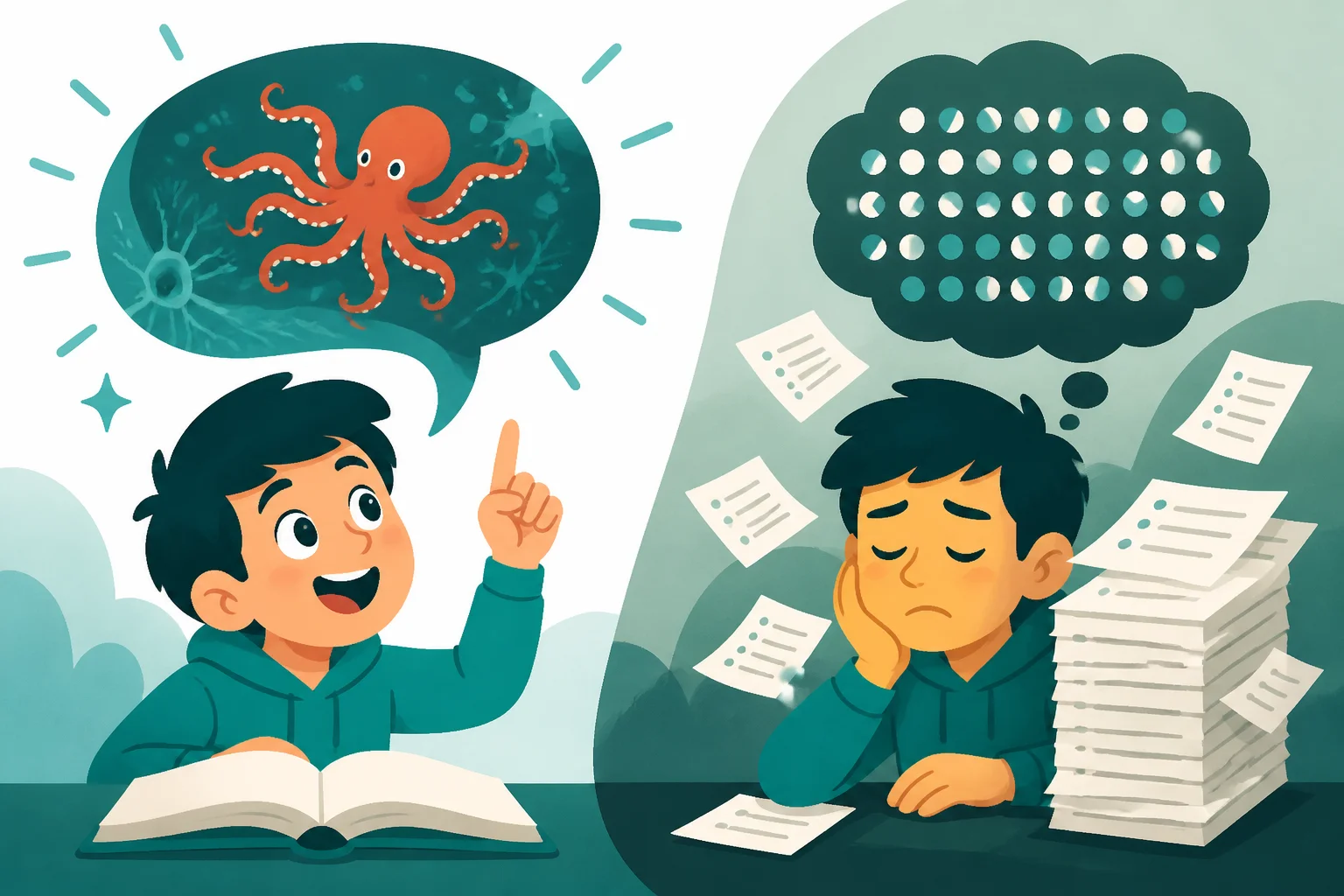
Why can one surprising fact make you want to keep learning, while a list of fifty random facts leaves you bored?
Psychology & Behavior
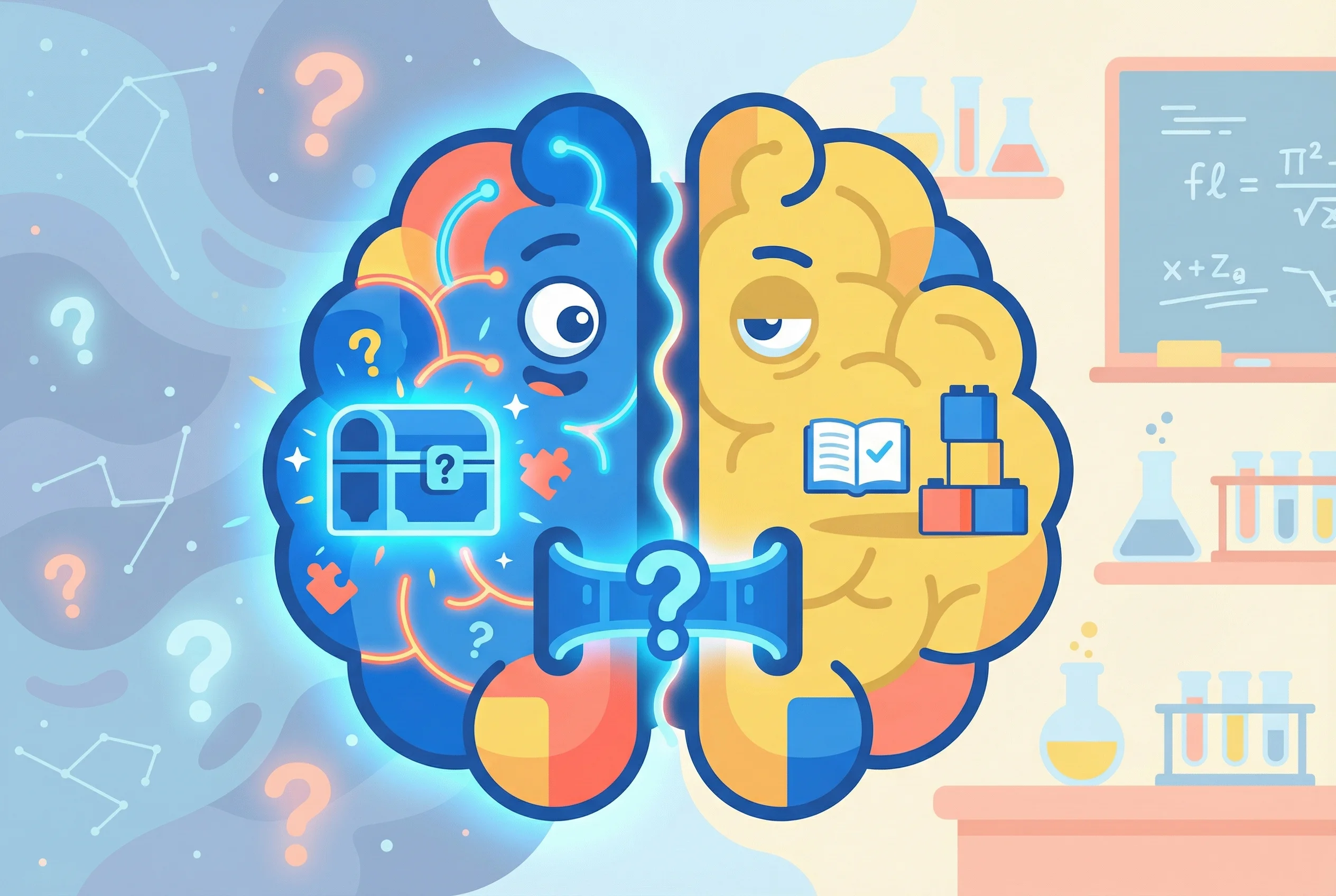
Why does our brain find unsolved mysteries more exciting than known facts?
Psychology & Behavior
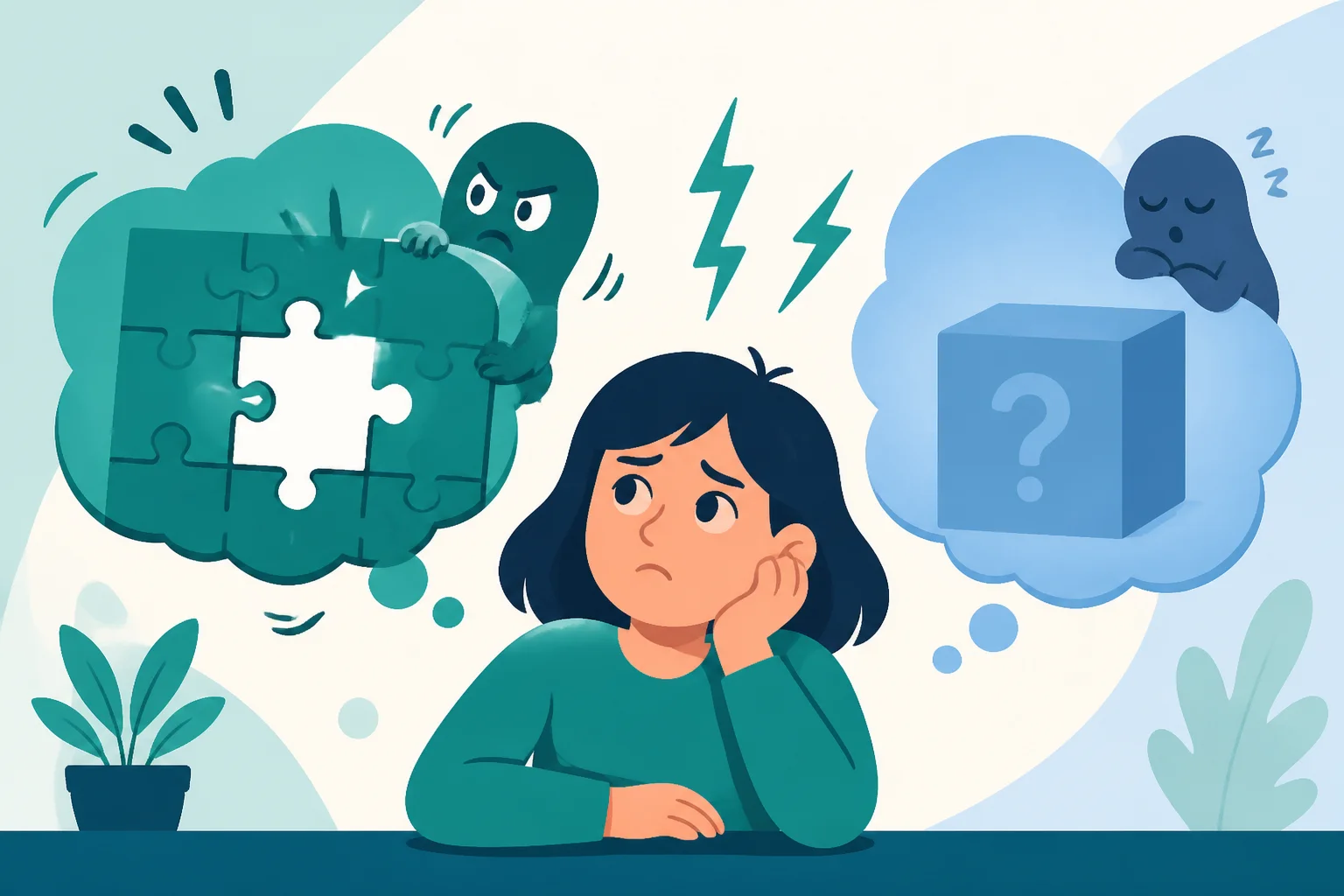
Why does a half-known fact nag at you far more than something you know nothing about?
Psychology & Behavior
Related Posts
Random Facts for Curious Conversations
Random facts for curious conversations, with quick answers about animals, science, history, food, psychology, space, everyday objects, and odd human behavior.
Interesting History Facts: 10 Surprising Stories Explained
Discover 10 interesting history facts, from Cleopatra's timeline to Boston's 1919 molasses flood, each with quick context on why it still matters.
10 Crazy Facts About the World, Explained by Science
Discover 10 crazy facts about the world, from honey that never spoils to lightning hotter than the Sun. Each one comes with a clear, science-backed explanation.