

10 Crazy Facts About the World, Explained by Science
On this page· 12
A fact that sounds made up is usually the one you remember, right up until the reason clicks and it stops feeling like a party trick. These crazy facts about the world work the same way. The surprise is the hook. The mechanism is what you keep.
Every item below is a why question. You'll see the answer people reach for first, then the part that answer misses. Moisture, copper, spin, fossils, and the rules of measurement show up again and again. Once you can spot which of those is doing the work, you can pressure-test the next wild claim without a trivia book.
Teachers and counselors already use this move. Career exploration resources for school counselors lean on curiosity because a student who asks why tends to stay with a hard problem longer, whether that's a lab bench, a history timeline, or a first job. Say a friend swears sharks showed up after forests. You don't need a museum label to push back. You need the order of the fossil record, and a habit of asking what the claim is measuring.
No ranking system here, and no scavenger hunt for the weirdest headline. Ten mechanisms, plain language, and a wrong answer you can retire.
1. Honey Almost Never Spoils
Why does honey last so long without going bad? Sweetness is the answer many reach for, and it's the wrong one. Sugar helps, but it isn't a seal on the jar.
Honey holds very little free water, so bacteria can't live in it the way they do in juice or milk. It is also acidic, with a pH around 3.5 to 4.5, which inhibits many microbes. An enzyme in the honey slowly releases hydrogen peroxide. Low moisture, acid, and that peroxide determine the shelf life. A grocery jar can sit unrefrigerated for years because of that chemistry, not because of fancy packaging.
Tomb jars from ancient Egypt are the story people repeat. Exact ages and conditions vary, so don't treat every jar as a lab sample. The lesson still holds for a squeeze bottle left by a cafe counter.
Practical rule: If a food's shelf life sounds magical, ask what the water and the acid are doing before you credit the container.
Crystals don't mean it spoiled. Glucose can fall out of solution and turn grainy while microbes stay out. Warm the jar in water and it loosens again.
Question 1 of 6
Why can honey last for thousands of years without spoiling?
2. Octopuses Have Three Hearts and Blue Blood

Why does an octopus need three hearts? Muscle count is a tempting guess. The split is about gills and the rest of the body.
Two hearts push blood through the gills, where it picks up oxygen. A third heart sends that blood out to the organs and arms. Cold, low-oxygen seawater is a hard place to move oxygen with the iron-based hemoglobin you and I use. Octopus blood uses hemocyanin, a protein built around copper. When that copper binds oxygen, the blood looks blue.
A common wrong turn is "blue means it's cold" or "blue means it's sick." Color here is chemistry, the same way rust color tracks iron. Giant Pacific octopus work and everyday common octopus anatomy both show this layout. If you want more of the same ocean logic, fun facts about the ocean are a good next pass.
Picture a diver watching an octopus jet off a rock. Two hearts handle the gills. One handles the sprint. Copper does the oxygen job iron can't do as well down there.
Question 2 of 6
Why do octopuses have three hearts?
3. Oxford University Is Older Than the Aztec Empire
Which came first, Oxford or the Aztec capital? A lot of people put the university in the "modern Europe" bin and the empire in "deep antiquity." The dates run the other way.
Teaching at Oxford is generally dated to 1096. Tenochtitlan, the Aztec capital, was founded around 1325. That's more than two centuries of classes before that city existed. Oxford is often cited as the oldest university in the English-speaking world. Tenochtitlan later became one of the largest cities in the Americas, and Spanish conquest still lay ahead of it.
The miss isn't bad memory. It's a habit of sorting "old" by culture instead of by year. A timeline fixes it faster than a superlative.
- Oxford, about 1096: Teaching is already underway in England.
- Tenochtitlan, about 1325: The Aztec capital is founded, long after those early Oxford classes.
- What to ask next: When did Bologna, Paris, or your own city's oldest school start?
Say you're building a classroom poster. Put the two dates on one line before you add art. Students stop treating "ancient" and "medieval" as moods and start treating them as gaps you can count.
4. Sharks Are Older Than Trees
Which evolved first, sharks or trees? Trees feel older because a forest looks permanent and a shark looks like a modern hunter. Fossils don't agree.
Sharks, or shark-like fish with the right scales and teeth, show up roughly 450 million years ago. Trees arrive later. Archaeopteris, a tree-like plant, appears around 385 million years ago in Devonian rock. Marine life and land plants were on different clocks. The ocean already had a predator body plan while the land was still building tall wood.
Sharks had been swimming for a span longer than the entire age of trees before the first real trunks stood up.
Museum halls make this concrete. Early shark teeth in older rock sit below Archaeopteris in younger layers. Dinosaurs are the follow-up that usually breaks people's sense of scale, because they arrive much later than either. A homeschool timeline on the floor, with tape marks for "first sharks" and "first trees," does more than a paragraph of names. The wrong answer, "everything ancient happened together," is what that tape is there to kill.
5. A Day on Venus Is Longer Than Its Year
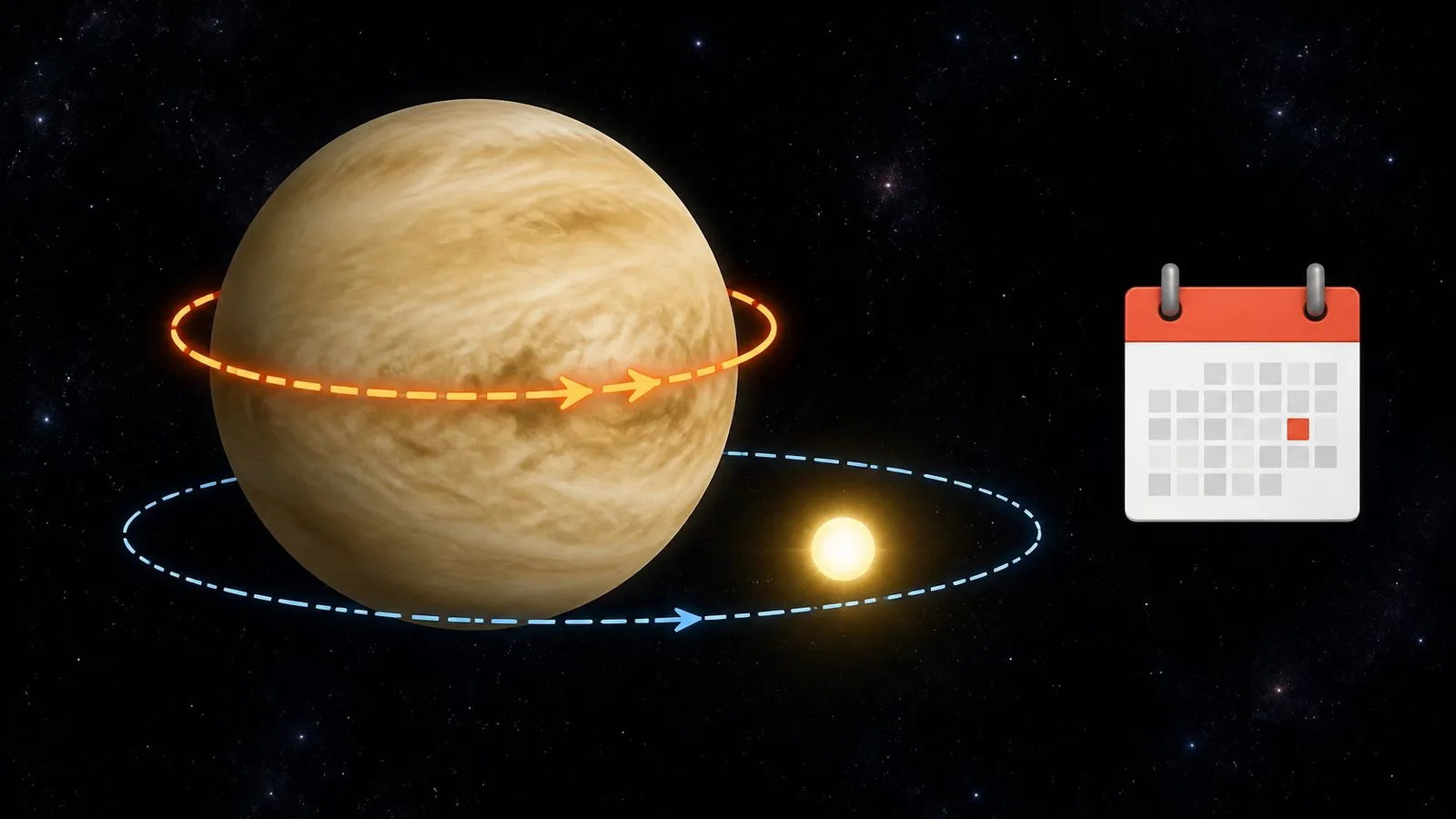
A Venus day lasts longer than a Venus year, but the answer depends on which kind of day you mean. A planet's rotation and its orbit are separate clocks: one measures a spin, the other a trip around the Sun.
Venus takes about 243 Earth days to spin once on its axis, and about 225 Earth days to orbit the Sun. Its rotation runs backward compared with Earth's. Because the planet turns slowly in the opposite direction to its orbit, the interval from one sunrise to the next is about 117 Earth days. NASA's Magellan mission mapped the surface through Venus's clouds and helped establish how slowly the planet rotates.
That distinction explains a common wrong answer: “A day is how long a planet takes to go around the Sun.” That describes a year. A sidereal day measures one full rotation relative to distant stars; a solar day measures the time between one sunrise and the next. On Earth the two are close, but on Venus they differ sharply. To study introductory astronomy with ClassLecture.ai, start by keeping rotation and orbit on separate clocks.
Question 3 of 6
How can Venus take longer to turn around once on its axis than to travel all the way around the Sun?
6. Wombat Droppings Are Cube-Shaped
Why are wombat droppings cube-shaped? Bones, diet myths, and "they chew them square" all lose. The intestine does the shaping.
Researchers, including a 2020 study in the journal Soft Matter, found that the intestinal wall isn't equally stretchy all the way around. Stiffer and softer bands squeeze the feces into corners as it dries and moves. Cubes don't roll. Wombats leave them on rocks and logs, where they stay put as territorial marks. A round pellet would tumble into the grass and waste the signal.
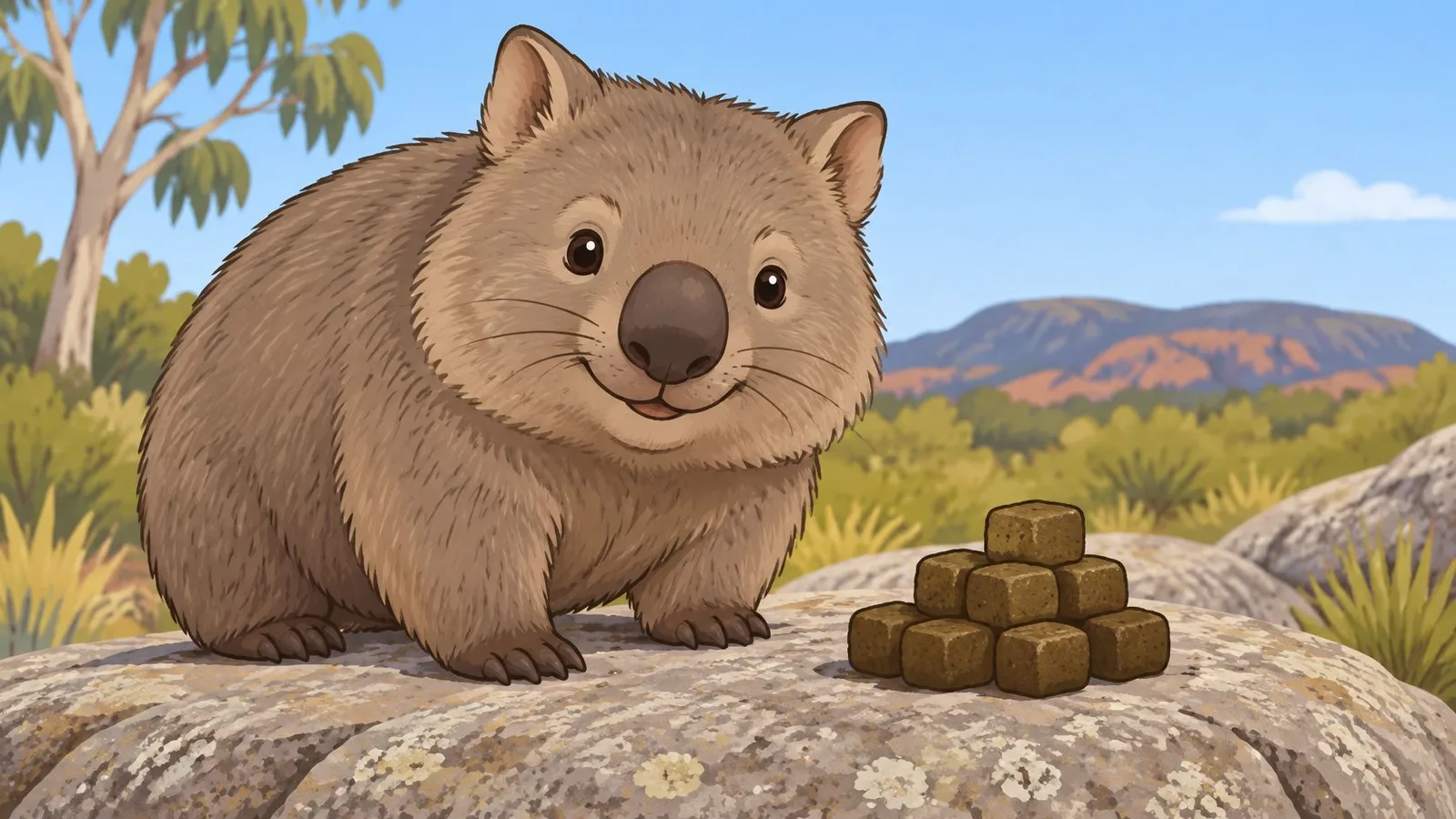
That's biomechanics, not a party gag. Variable elasticity is the same idea engineers use when they want a soft tube to form edges instead of a cylinder. A homeschool afternoon can test the "why not round" half without a lab: roll a marble and a sugar cube down a slanted book. The marble leaves. The cube stays. Territory marking only works if the marker stays where you put it.
7. Mauna Kea Is Taller Than Mount Everest From Base to Peak
Which is taller, Mauna Kea or Everest? If "taller" means "farther above the ocean you can see," Everest wins. If it means base to peak, the Hawaiian volcano does.
Mauna Kea rises about 10,200 meters from its base on the seafloor. Mount Everest is about 8,849 meters above sea level. Most of Mauna Kea is underwater, so postcards hide the larger part of the mountain. The number changes because the starting line changes. Everest's fame is a sea-level fame. Mauna Kea's claim is a full-structure claim.
The same peak carries major astronomical observatories, which is a handy reminder that "height" also depends on what you came to measure, stars or summits. Hawaii's volcanoes show up in geology class for a related reason. The seafloor base is real rock, not a technicality.
Change the zero point and you change the winner. Ask which baseline a record is using before you repeat it.
For more cases where the measurement rule is the whole trick, see these fun facts about the Earth. A family arguing over a map can settle it in one sentence: above the sea, or from the bottom of the mountain.
Question 4 of 6
Why is Mauna Kea considered taller than Mount Everest when measured from base to peak?
8. Cleopatra Lived Closer to the Moon Landing Than to the Great Pyramid
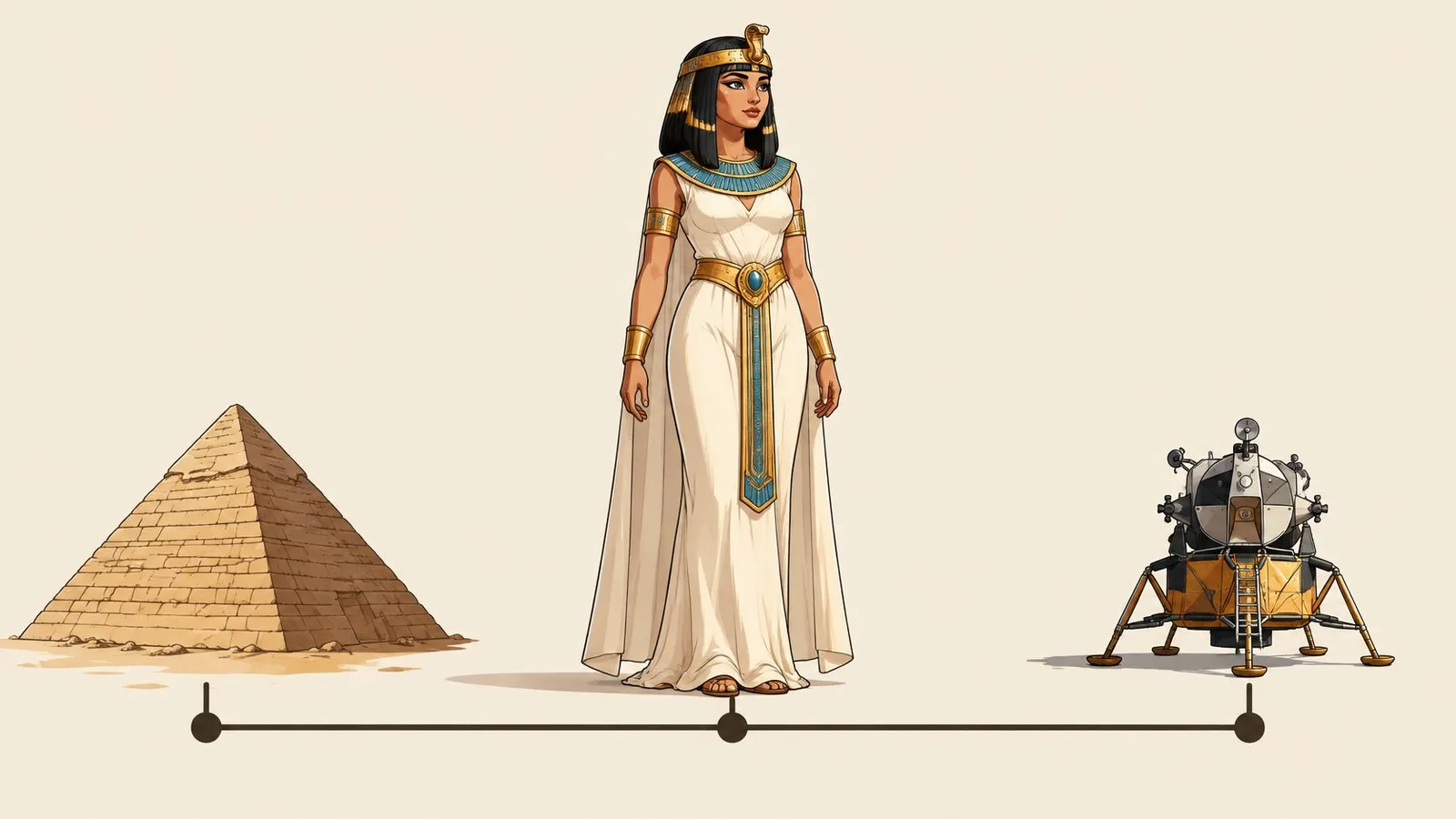
Cleopatra lived closer in time to the Moon landing than to the Great Pyramid. The dates explain why: the pyramid was completed around 2560 BCE, while Cleopatra VII lived from 69 to 30 BCE. That leaves roughly 2,500 years between her and the pyramid.
Apollo 11 landed in 1969, about 2,000 years after Cleopatra died. The surprising comparison works because “ancient Egypt” spans thousands of years, not one shared moment. Grouping Cleopatra and the pyramids together because both are Egyptian is like placing two distant chapters side by side and overlooking the pages in between.
A timeline makes the gaps easier to compare. The same habit of lining up dates appears in business intelligence and data analysis software, where comparisons depend on which points are placed side by side. Try the reasoning with Rome and the iPhone: choose two events, compare their dates, and check whether familiarity is making them seem closer than they are.
Question 5 of 6
Why is Cleopatra closer in time to the 1969 Moon landing than to the building of the Great Pyramid?
9. Tyrannosaurus Rex Lived Closer in Time to Humans Than to Stegosaurus
Which dinosaur lived closer in time to you, Stegosaurus or Tyrannosaurus rex? The poster that says "the dinosaur era" pushes both into one bucket. The rocks don't.
Stegosaurus lived in the Late Jurassic, roughly 150 million years ago. Tyrannosaurus rex lived about 68 to 66 million years ago, near the end of the Cretaceous. The gap between those two animals is on the order of 80 million years. Humans show up only about 300,000 years ago. T. rex is far nearer to us than to that plated Jurassic neighbor.
Geologic periods are the fix for the wrong answer. Jurassic and Cretaceous are both "dinosaur time," and they are not the same chapter. A natural history hall that walks you from older bone beds to younger ones makes the split physical. Families can do a shorter version at the kitchen table: write Jurassic, Cretaceous, and "us" on three cards and space them with the gaps, not with equal sticky notes. Equal spacing is how the myth survives.
10. Lightning Is Hotter Than the Surface of the Sun
Why is lightning hotter than the Sun's surface? "The Sun is the hottest thing" is the reflex, and it mixes up a surface with a brief channel in the air.
A lightning channel can reach about 30,000 kelvin. The Sun's surface sits around 5,500 kelvin, so the bolt is roughly five times hotter at that instant. The heat comes from a huge electrical discharge racing through air. The air superheats, expands, and the shock is the thunder you hear. Heat and sound are partners, not the same measurement. Summer storms are the everyday lab. Building codes and aircraft rules exist because that channel is brief and still violent.
- Electricity: The discharge dumps energy into a narrow path.
- Expansion: Superheated air shoves outward as a shock wave.
- Sound: Thunder is that shock, not the light itself.
A classroom demo doesn't need a storm. Clap once for thunder, flash a lamp for the channel, and say the lamp is the hot part and the clap is the air moving. More weather mechanisms in the same spirit sit in these fun facts about weather.
Question 6 of 6
Why can a lightning bolt be five times hotter than the Sun's visible surface?
Quick comparison of the 10 surprising facts
| Item | Key Number | Core Science | Best For |
|---|---|---|---|
| Honey Almost Never Spoils | 17–18% moisture; pH 3.5–4.5 | Low water activity, acidity, and hydrogen peroxide inhibit microbes. | Food science and shelf-life questions |
| Octopuses Have Three Hearts and Blue Blood | 3 hearts | Two hearts pump blood through the gills; copper-based hemocyanin carries oxygen and makes blood blue. | Marine biology and animal anatomy |
| Oxford University Is Older Than the Aztec Empire | Oxford: around 1096; Tenochtitlan: around 1325 | Historical dates show Oxford teaching began more than two centuries before the Aztec capital was founded. | History timelines and cross-cultural comparisons |
| Sharks Are Older Than Trees | Sharks: around 450 million years; trees: around 385 million years | Fossils show sharks appeared before the earliest tree-like plants. | Evolution and deep-time lessons |
| A Day on Venus Is Longer Than Its Year | Rotation: 243 Earth days; orbit: 225 Earth days | Venus rotates slowly and backward; its solar day lasts about 117 Earth days. | Introductory astronomy and planetary motion |
| Wombat Droppings Are Cube-Shaped | Cube-shaped droppings | Variable elasticity in the intestinal wall shapes the feces into cubes that resist rolling. | Animal biology and biomechanics |
| Mauna Kea Is Taller Than Mount Everest From Base to Peak | Mauna Kea: about 10,200 m; Everest: 8,849 m | Mauna Kea's full height includes its submerged base, unlike Everest's sea-level measurement. | Geography and measurement comparisons |
| Cleopatra Lived Closer to the Moon Landing Than to the Great Pyramid | About 2,500 years from the pyramid; about 2,000 years to Apollo 11 | Comparing dates puts Cleopatra closer to the 1969 Moon landing than to the pyramid's completion. | History timelines and perspective on ancient history |
| Tyrannosaurus Rex Lived Closer in Time to Humans Than to Stegosaurus | About 80 million years between T. rex and Stegosaurus | T. rex lived much later than Stegosaurus, while modern humans appeared only around 300,000 years ago. | Paleontology and deep-time learning |
| Lightning Is Hotter Than the Surface of the Sun | Lightning: about 30,000 K; Sun's surface: about 5,500 K | Electrical discharge superheats air, which rapidly expands and creates thunder. | Weather science and lightning safety |
Turn Your Next Surprising Fact Into a Real Question
Pick one fact from this list and don't stop at the punchline. Write the why in your own words, then write two answers you know are wrong and say why they fail. Honey isn't "just sweet." An octopus isn't blue because it's cold. Venus isn't breaking the calendar. Mauna Kea doesn't shrink when you only count the dry part. That extra minute is the whole skill.
A reusable check looks like this. Name the thing being measured, name the process that produces it, and name the decoy. For lightning, the thing is temperature in a thin channel, the process is a sudden electrical discharge, and the decoy is "the Sun must be hotter everywhere." For Cleopatra, the thing is years between events, the process is subtraction on a timeline, and the decoy is a single label called ancient Egypt. You can run that check on a headline, a museum caption, or a claim in a group chat.
Million Whys is built around that exact move. We put a short why-question in front of you, and every answer choice comes with an explanation, including the ones that are wrong. Questions are hand-curated and AI-assisted, and every one is fact-checked. Topics cover science, nature, history, psychology, technology, and whatever is trending when it matters. Daily Wonder is one featured question each day, with a knowledge card, an image, and a fuller explanation if you want to keep going.
You can play four ways: The Daily Quiz, Trivia Question of the Day, Random Trivia Generator, and Trivia Quizzes With Answers. On a phone, daily wonder and fast quiz batches sit next to a Create flow, rankings, streaks, and reminders. People in 49 countries and 299 cities already use it for the spare minute between things, which is enough time to test one mechanism and drop one bad shortcut.
Try it on a fact you already think you know. Predict first. Then read why the other choices lose. That's how a weird sentence becomes something you can explain to someone else without looking it up mid-sentence.
Million Whys turns everyday curiosity into a 10-second why-question, with a clear explanation on every choice so the wrong answers teach you something too. The same science, nature, and history surprises in this list show up as short daily questions you can play on the web or on your phone. Visit Million Whys and try today's question before the next "that can't be right" fact finds you first.
Keep Exploring

Why can one surprising fact make you want to keep learning, while a list of fifty random facts leaves you bored?
Psychology & Behavior
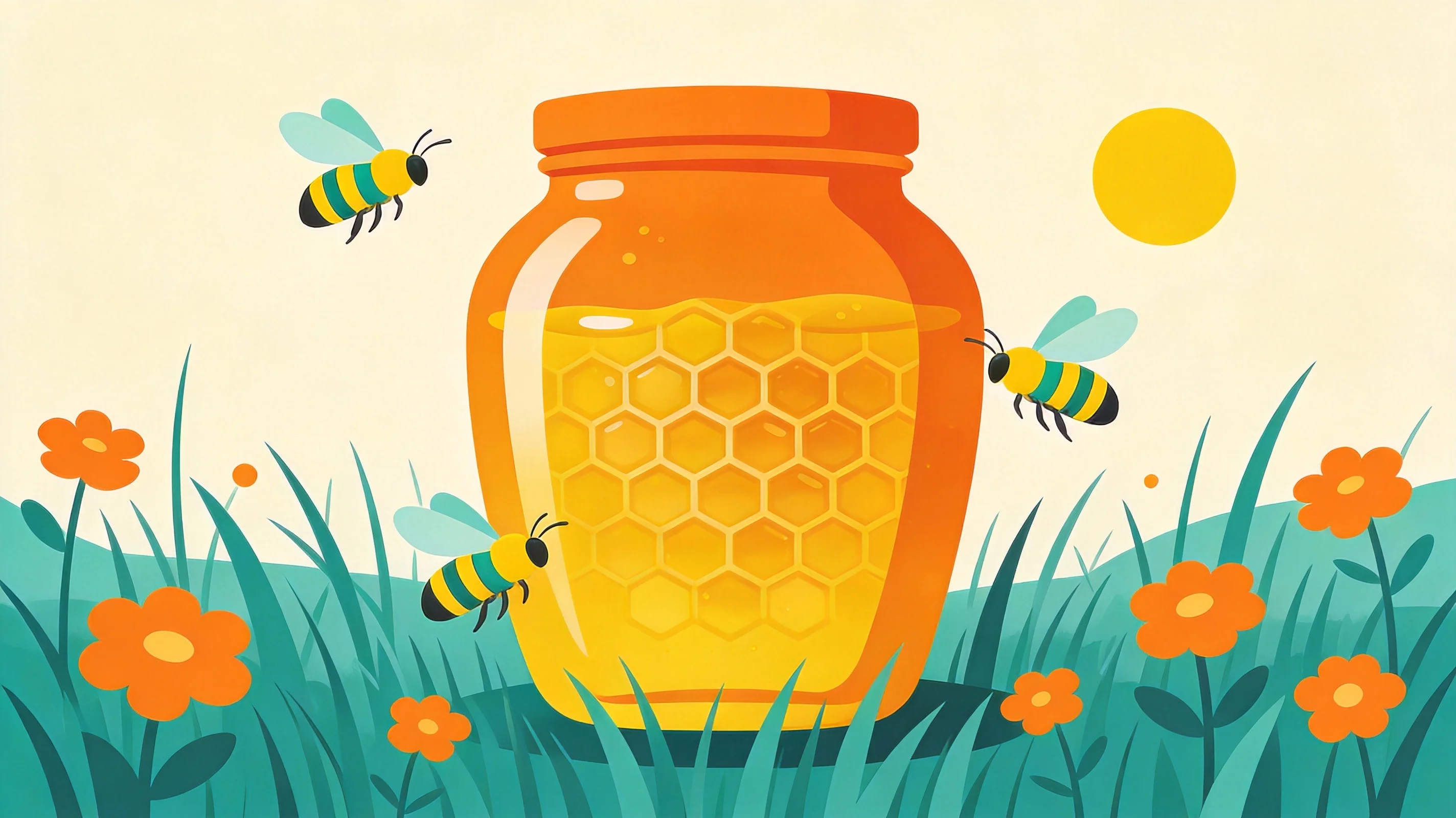
Why can honey last for thousands of years without spoiling?
Food & Nutrition

Why does our brain find unsolved mysteries more exciting than known facts?
Psychology & Behavior
Related Posts
10 Common Science Misconceptions Debunked for 2026
Explore 10 common science misconceptions with clear corrections and short explanations, from why seasons happen to why blood is never blue.
Weird Facts That Sound Fake But Are True
Weird facts that sound fake but are true, explained through quick science, nature, food, space, history, and everyday mystery cards you can actually play.
Random Facts for Curious Conversations
Random facts for curious conversations, with quick answers about animals, science, history, food, psychology, space, everyday objects, and odd human behavior.