The best weird facts do not just make you say "no way." They close a tiny information gap: why a skunk can weaponize chemistry, why Venus outruns Mercury for heat, why a flat soda suddenly tastes too sweet. Tap a choice, get the closure, then notice the next weird little gap opening up.
Weird But True Facts That Sound Fake
AAttracting mates with scent
✗Not quite — The spray is extremely unpleasant and repels all animals, including potential mates. Skunks use completely different, milder scents for attraction.
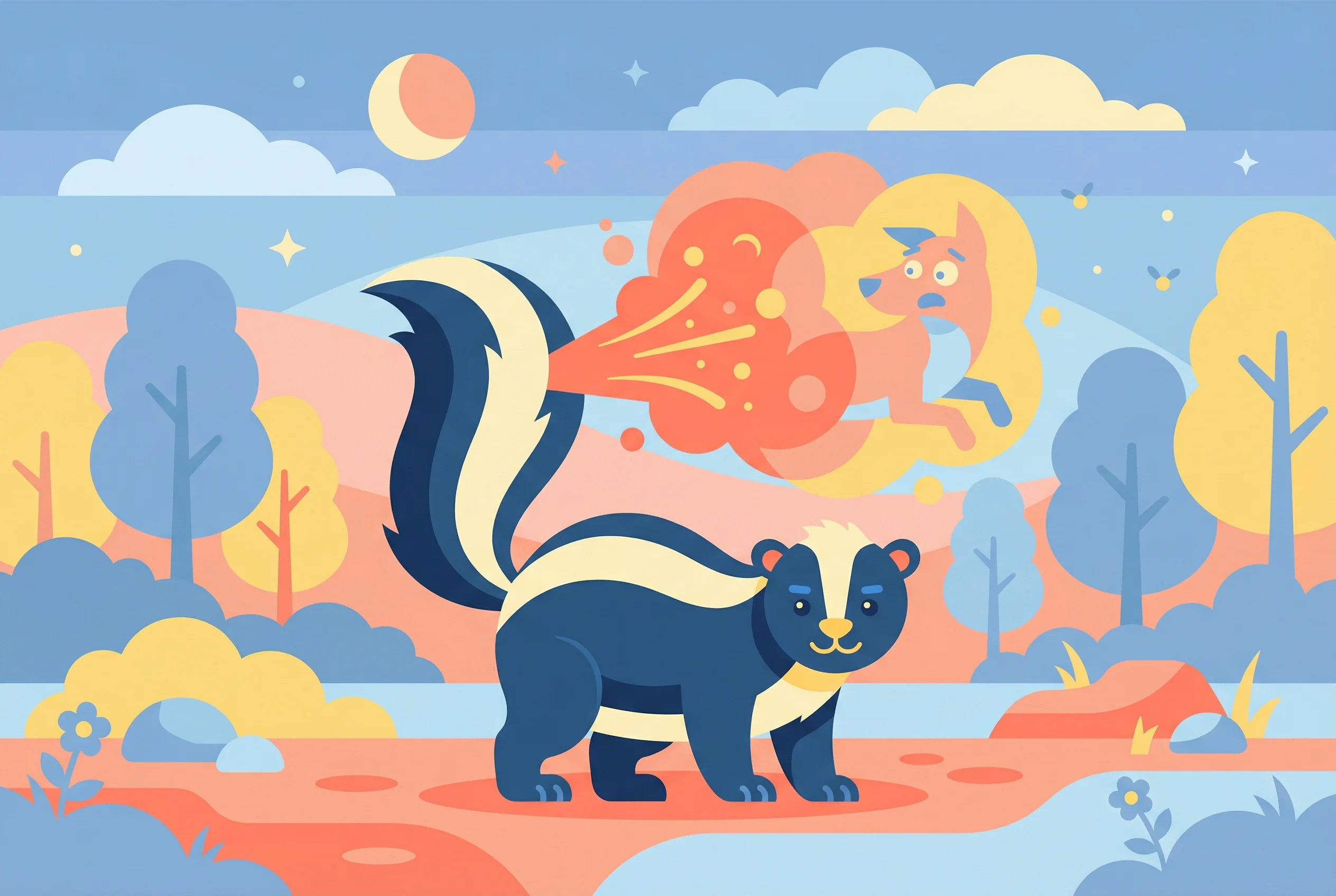
BLast-resort predator defense
✓Correct — Chemical warfare defense! Skunk spray: last resort against threats. Composition: sulfur-containing thiols (mercaptans)—extremely pungent. Process: (1) Warning signals first—stomping, tail raising, hissing. (2) If threat persists—spray from anal glands. (3) Accurate aim up to 10ft. Effects on predators: temporary blindness, nausea, intense smell (lasts days-weeks). Limited supply (5-6 sprays)—takes 10 days to replenish. Effective deterrent—most predators learn avoidance. Great horned owls (no smell sense) are main predators!
CKeeping their fur clean
✗Not quite — Spray doesn't clean fur—it's an oily, foul-smelling substance that animals try to avoid. Skunks groom themselves like other mammals.
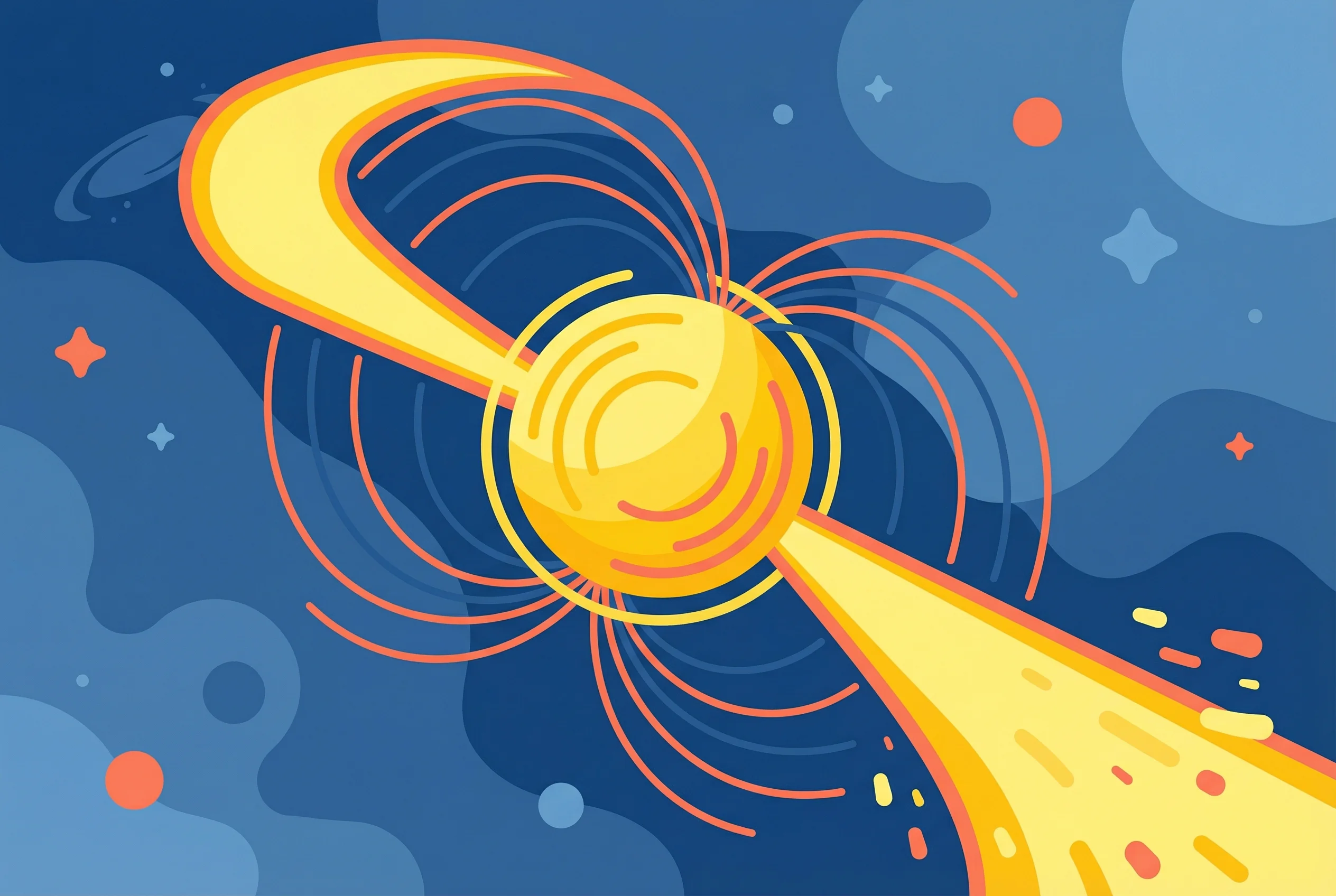
ANeutron stars rotate with beams
✓Correct — Pulsars are rapidly rotating neutron stars (collapsed star cores, ~20km diameter). They have powerful magnetic fields with radiation beams emitted from magnetic poles (not aligned with rotation axis). As the star rotates (milliseconds to seconds per rotation), beams sweep across space like lighthouse. When beam points at Earth, we detect a pulse. Incredibly precise—used for testing relativity, detecting gravitational waves!
BMagnetic fields oscillate naturally
✗Not quite — Magnetic fields are strong but don't oscillate to create pulses. Pulses come from rotation—beams sweep past Earth as neutron star spins.
CGravitational waves create pulses
✗Not quite — Gravitational waves don't cause pulses (though pulsars help detect them!). Pulses result from rotating neutron star's beamed radiation sweeping past Earth.
AStars are too far apart
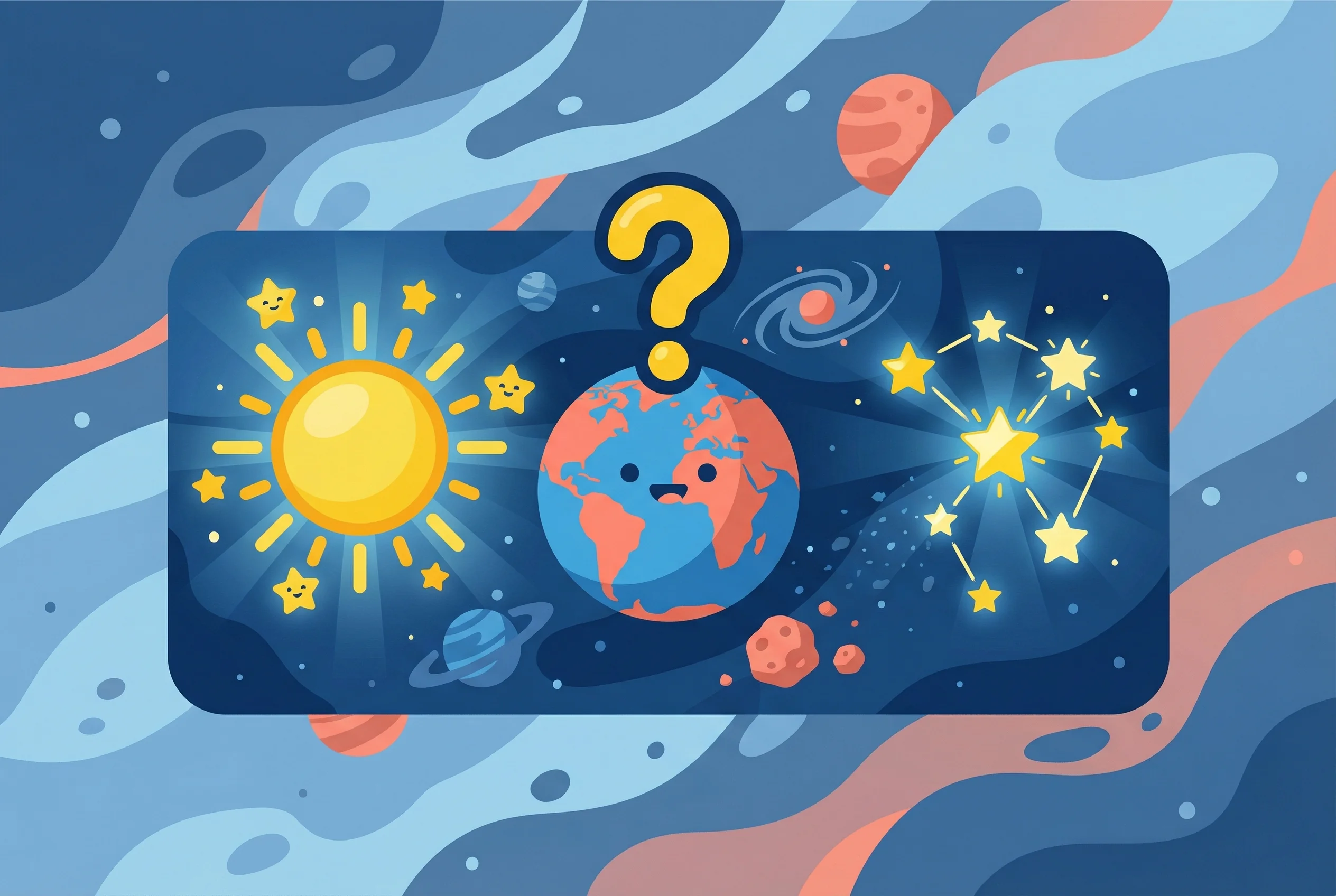
✓Correct — Although there are billions of stars, they're incredibly far apart. Space is about 99.9999999999999% empty vacuum. Light from stars spreads out in all directions, getting dimmer with distance. Most light from distant stars is too faint to see. Also, the universe has a finite age (13.8 billion years), so light from the most distant stars hasn't reached us yet. The vast emptiness between stars makes space appear dark.
BThere aren't enough stars
✗Not quite — There are hundreds of billions of stars just in our galaxy alone, and billions of galaxies in the observable universe. The number of stars is enormous. The darkness comes from their vast separation and the finite age of the universe, not insufficient quantity.
CDark matter blocks light
✗Not quite — Dark matter doesn't block or absorb light - it doesn't interact with light at all, which is why it's called 'dark.' Dark matter only interacts through gravity. The darkness of space is due to the vast distances between stars and limited observable universe.
Weird Science Facts Hiding in Plain Sight
AWater molecules bond hexagonally
✓Correct — Water molecules bond at 120-degree angles due to hydrogen bonding. When ice crystals form, this angle creates six-fold symmetry. Each snowflake branch grows differently based on temperature and humidity it encounters—that's why each is unique!
BSix is nature's lucky number
✗Not quite — Six isn't lucky—it's physics! Water's molecular bonding angle naturally creates hexagonal structures.
CWind creates six-sided patterns
✗Not quite — Wind doesn't create the six-sided shape. The structure is determined by water's molecular bonding angles.
AAngular momentum conservation keeps the spinning axis stable
✓Correct — When a gyroscope spins, it has angular momentum - a property of rotating objects that resists change. Any force trying to tip it creates a perpendicular motion (precession) rather than tipping, keeping the axis stable. This is why spacecraft and smartphones use gyroscopes for orientation sensing.
BStrong magnets inside counteract Earth's gravitational pull
✗Not quite — The answer is A. Angular momentum conservation keeps the spinning axis stable. Gyroscopes do not use magnets to stay upright. Their stability comes purely from the physics of rotation. While magnets can create levitation effects, the gyroscope's resistance.
CRapid spinning creates an anti-gravity force field
✗Not quite — The answer is A. Angular momentum conservation keeps the spinning axis stable. There is no 'anti-gravity field' created by spinning. Gravity still acts on the gyroscope normally - it has weight. The gyroscope appears to defy gravity because the rotational.
AThey create 'anti-sound' waves that are opposite in phase to cancel noise
✓Correct — Noise-canceling headphones use microphones to detect incoming noise, then instantly generate sound waves with the same frequency but opposite phase (180 degrees out of sync). When these opposing waves meet, they experience destructive interference - the peaks of one wave align with the troughs of the other, canceling each other out. This is why adding sound can create silence, a counterintuitive but scientifically elegant solution.
BThey produce high-frequency sounds that confuse your brain into ignoring noise
✗Not quite — The answer is A. They create 'anti-sound' waves that are opposite in phase to cancel noise. While the brain can adapt to certain sounds, noise-canceling technology does not rely on psychological tricks or confusion. It uses physical wave interference to actually.
CThey emit ultrasonic pulses that physically block sound waves from entering
✗Not quite — The answer is A. They create 'anti-sound' waves that are opposite in phase to cancel noise. Sound waves cannot be 'physically blocked' by other sound waves like a barrier. Ultrasonic frequencies (above human hearing range) would simply pass through or around other sound.
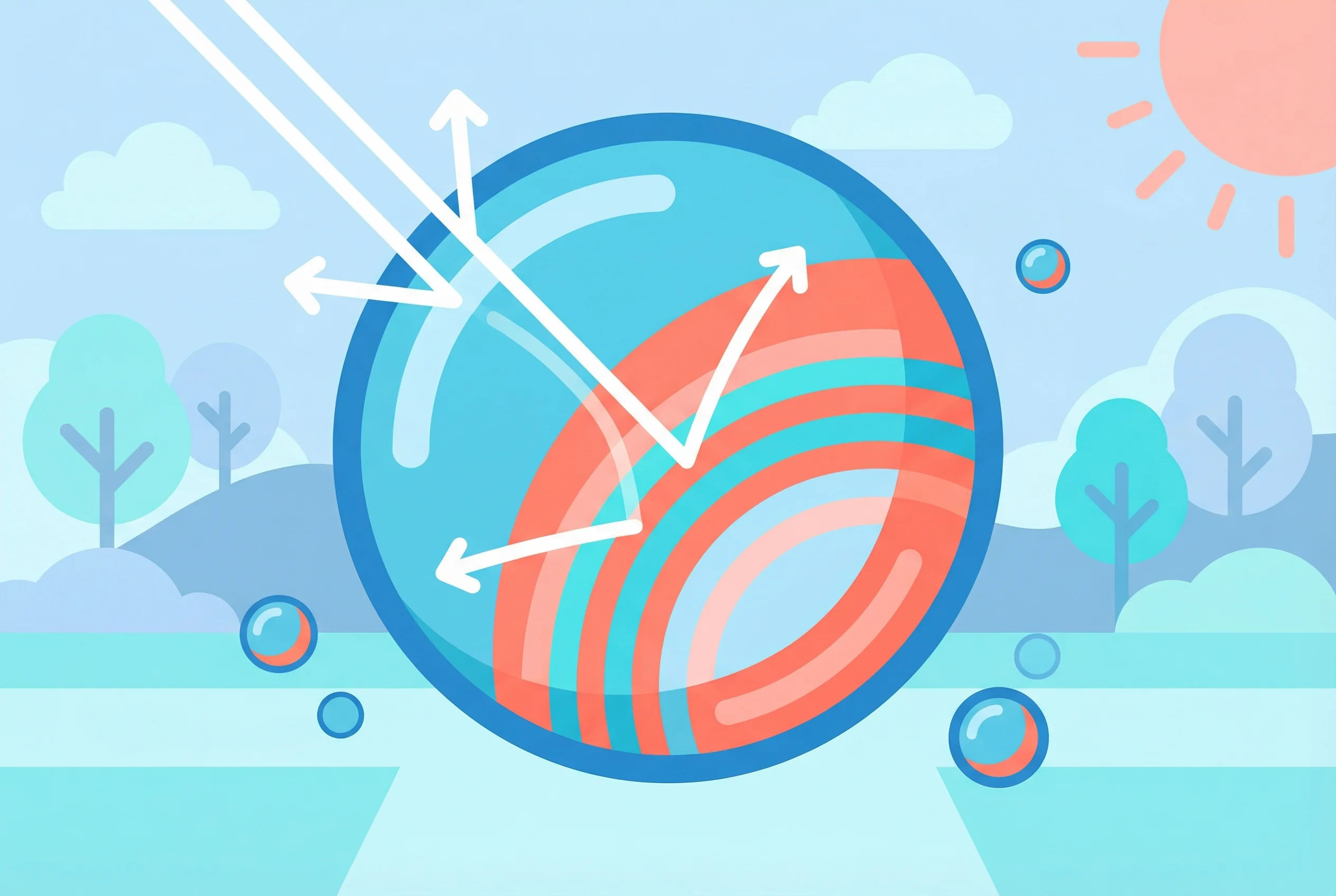
AThin film interference patterns
✓Correct — Thin film interference! Bubble wall has two surfaces (front and back). Light reflects from both—waves recombine. Film thickness (wavelength-scale) determines which colors constructively interfere (brighten) vs destructively interfere (cancel). Thickness varies across bubble—different areas show different colors. As bubble thins, colors shift (thicker=red, thinner=blue/violet). Just before popping, bubble appears black (too thin for visible light interference). Oil slicks show same phenomenon!
BWater refracts like prism
✗Not quite — Water can refract, but bubble colors are interference pattern from light waves reflecting off front/back surfaces, not dispersion.
CLight bounces multiple times
✗Not quite — Multiple reflections occur, but colors arise from interference—waves from front and back surfaces combining constructively or destructively.
Weird Facts About the Human Body
ABrain cells are too tightly packed, blocking fluid flow
✓Correct — During sleep, brain cells shrink by about 60%, creating channels for cerebrospinal fluid to rush through and wash away toxic proteins like beta-amyloid. When awake, cells are swollen and tightly packed, leaving almost no space for this cleaning process. It's like trying to mop a crowded room versus an empty one.
BThe cleaning fluid only gets produced during sleep
✗Not quite — The answer is A. Brain cells are too tightly packed, blocking fluid flow. Cerebrospinal fluid is produced continuously throughout the day and night by structures called choroid plexuses in the brain. The fluid itself is always present, but during.
CBlood pressure is too high to allow gentle cleaning
✗Not quite — The answer is A. Brain cells are too tightly packed, blocking fluid flow. While blood flow patterns do change between sleep and wakefulness, blood pressure is not the limiting factor for brain cleaning. The glymphatic system uses cerebrospinal fluid,.
AOur emotional brain evolved before fiction existed, so it treats compelling stories as real
✓Correct — The limbic system (our emotional center) evolved millions of years ago to help us learn from social experiences. It processes movie characters' struggles as real social situations, triggering genuine sadness. This 'emotional learning' helped our ancestors understand consequences and build empathy, even though movies did not exist then.
BWe cry because our eyes need to release excess water when focusing on screens
✗Not quite — The answer is A. Our emotional brain evolved before fiction existed, so it treats compelling stories as real. While screen time can cause eye strain and dryness, crying at sad movies involves emotional tears from the lacrimal glands, triggered by the limbic system's response to the.
CSad movies contain special sound frequencies that directly trigger tear glands
✗Not quite — The answer is A. Our emotional brain evolved before fiction existed, so it treats compelling stories as real. While music and sound design enhance emotional impact, there are no 'special frequencies' that directly control tear production. Sadness responses come from how our brain.
AOur brain misinterprets normal nerve signals as phone vibrations
✓Correct — This is called 'phantom vibration syndrome.' Your brain becomes hypersensitive to sensations in the leg pocket area where you carry your phone. Normal nerve signals from muscle twitches, fabric friction, or blood flow get misinterpreted as phone vibrations because your brain is constantly anticipating notifications. Studies show up to 90% of phone users experience this occasionally.
BStatic electricity from our clothes creates real vibrations
✗Not quite — The answer is A. Our brain misinterprets normal nerve signals as phone vibrations. While static electricity can create small shocks, it does not produce sustained vibrations that mimic phone alerts. The sensation comes entirely from within your nervous system.
CPhone signals can still reach us even when the phone is off
✗Not quite — The answer is A. Our brain misinterprets normal nerve signals as phone vibrations. Phone signals are radio waves that interact with the phone's antenna and circuitry, not directly with human tissue. When your phone is off or not actually vibrating, no physical.
Weird Food Facts That Change the Taste
AThey produce ethylene gas that triggers ripening
✓Correct — Climacteric fruits like bananas, tomatoes, and avocados produce ethylene gas, a natural plant hormone that triggers the ripening process. This is why placing these fruits in a paper bag speeds up ripening - the ethylene gas becomes concentrated. This evolutionary trait helped fruits ripen together, attracting animals to spread seeds.
BSunlight stored in the fruit powers the ripening
✗Not quite — While fruits need sunlight during growth for photosynthesis, they cannot store sunlight as energy for later use. Once picked, fruits cannot perform photosynthesis. The ripening process is driven by ethylene gas production, not stored solar energy.
CNatural bacteria on the skin break down the fruit
✗Not quite — The answer is A. They produce ethylene gas that triggers ripening. While bacteria eventually do cause fruit decay and spoilage, this is decomposition, not ripening. Ripening is a controlled biological process driven by the fruit's own ethylene.
ASalt blocks bitter receptors and enhances sweet taste contrast
✓Correct — Salt suppresses bitter taste receptors on your tongue while simultaneously enhancing sweet receptors through a phenomenon called 'taste contrast.' This makes the sweetness seem more intense. Additionally, salt balances flavors by reducing any slight bitterness in ingredients like chocolate or vanilla, allowing the sweetness to shine through. This is why professional bakers always add a pinch of salt to cookies, cakes, and caramel.
BSalt dissolves sugar faster, releasing more sweetness
✗Not quite — The answer is A. Salt blocks bitter receptors and enhances sweet taste contrast. Salt does not significantly affect how fast sugar dissolves. Dissolution speed depends mainly on temperature, stirring, and particle size. The enhanced sweetness comes from how.
CSalt chemically reacts with sugar to create new sweet compounds
✗Not quite — The answer is A. Salt blocks bitter receptors and enhances sweet taste contrast. Salt and sugar do not chemically react with each other in desserts. They remain as separate compounds: sodium chloride and sucrose. The enhanced sweetness is purely a sensory.
AThe escaping CO2 removes carbonic acid that balanced the sweetness
✓Correct — When CO2 dissolves in water, it forms carbonic acid (H2CO3), which gives soda a tangy, slightly sour taste. This acidity balances the high sugar content. When soda goes flat, CO2 escapes, removing this acid and making the drink taste cloyingly sweet. The fizzy sensation also stimulates nerve endings that make the drink feel more refreshing.
BSugar molecules break down and become sweeter over time
✗Not quite — The answer is A. The escaping CO2 removes carbonic acid that balanced the sweetness. Sugar molecules (sucrose) are actually quite stable in soda and do not break down or become sweeter over time. The amount of sugar remains constant whether the soda is fizzy or.
CThe bubbles physically block sugar from reaching taste buds
✗Not quite — The answer is A. The escaping CO2 removes carbonic acid that balanced the sweetness. Bubbles do not block taste buds from detecting sugar. In fact, the bubbles burst on your tongue and release CO2 gas. The popping sensation and carbonic acid they create actually.
AVitamins break down in air
✗Not quite — While vitamins do degrade over time, that's not what causes browning. The brown color comes from enzymatic oxidation of phenolic compounds, not vitamin breakdown. Vitamin loss is a separate, slower process.
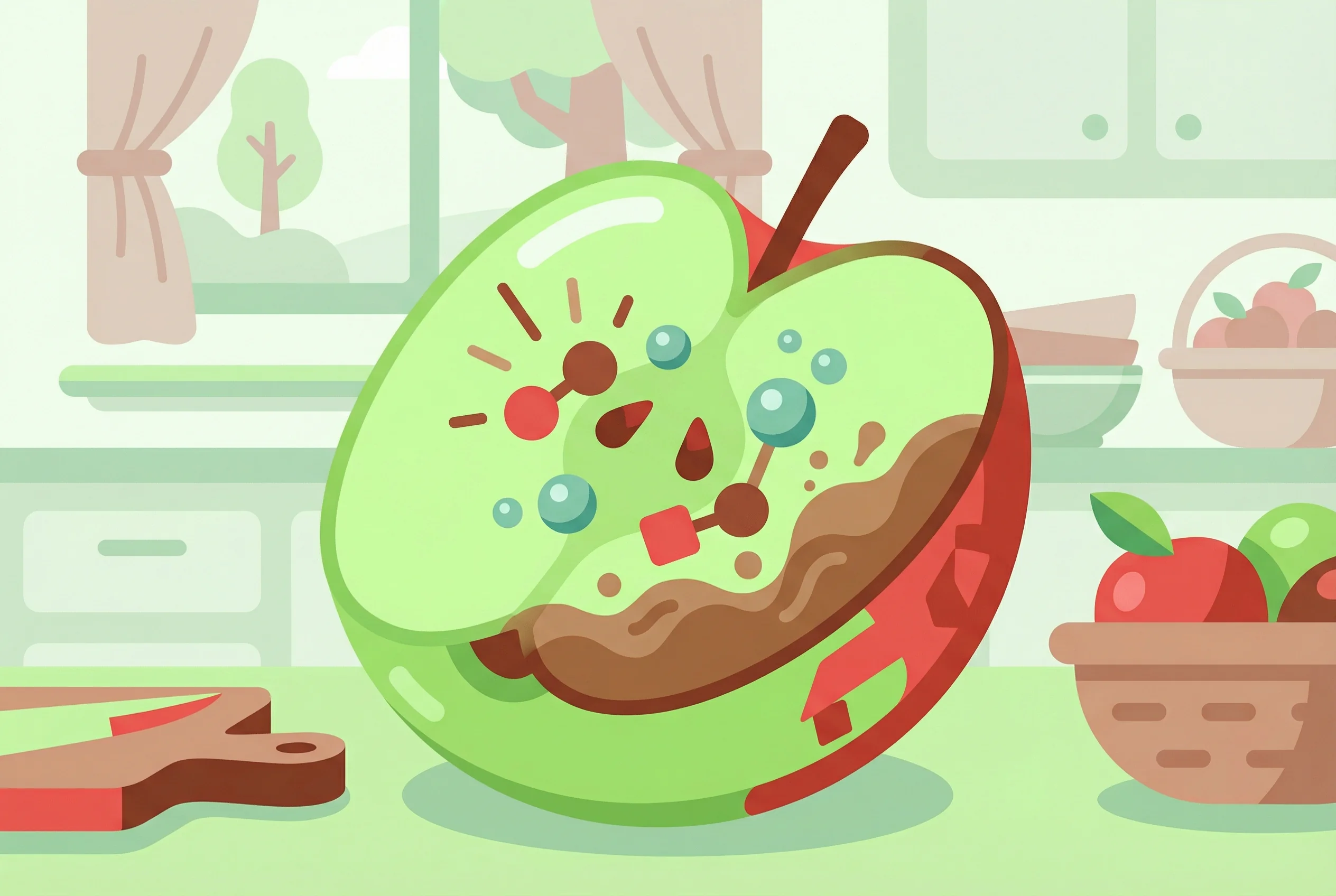
BEnzymes react with oxygen
✓Correct — Apples contain enzymes called polyphenol oxidase and compounds called phenols. When you cut an apple, these enzymes mix with oxygen in the air and oxidize the phenols, creating brown melanin pigments. This is the same process that makes bruises brown! Lemon juice prevents this by lowering pH.
CCells die and decay
✗Not quite — While cells are damaged when cut, the browning is specifically from enzymatic oxidation, not decay. The process happens in minutes, far too fast to be decay. It's a chemical defense mechanism, not decomposition.
Weird Ocean Facts and Space-Scale Water
AMoon's light heats the water
✗Not quite — Moonlight is just reflected sunlight and is very weak - it doesn't heat the ocean significantly. Temperature changes don't cause the regular twice-daily tides we observe. The tides are caused by gravitational forces, not thermal effects.
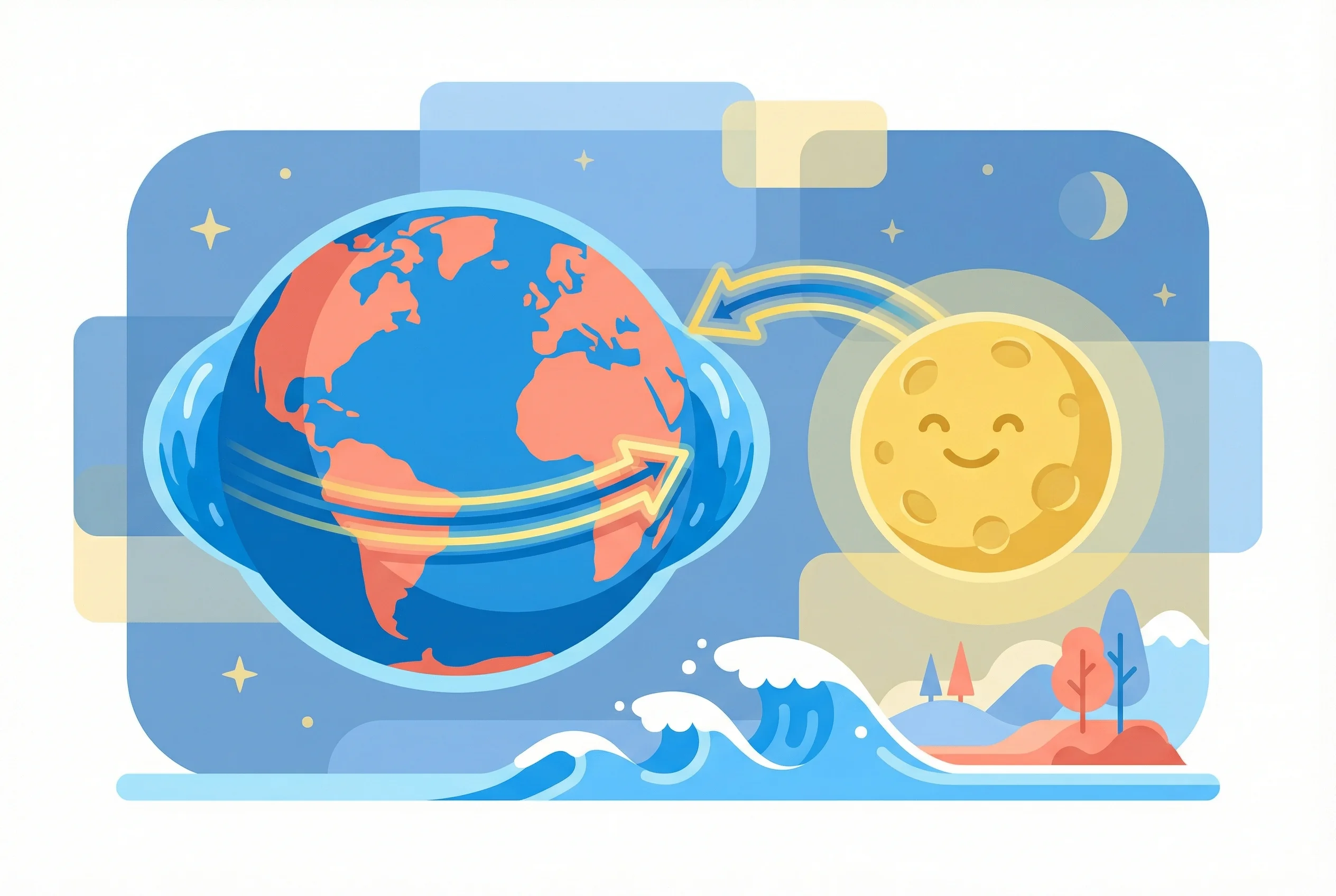
BMoon's gravity pulls the water
✓Correct — The Moon's gravity pulls on Earth's oceans. The side of Earth facing the Moon experiences stronger pull, creating a bulge of water (high tide). Surprisingly, the opposite side also gets high tide because Earth itself is pulled more than that distant water, leaving it 'behind' in a bulge. As Earth rotates, locations pass through these bulges, experiencing two high tides daily (every 12.4 hours). The Sun also affects tides but less strongly due to greater distance.
CMoon's magnetism attracts water
✗Not quite — The Moon has no significant magnetic field, and water isn't magnetically attracted anyway. Tides are caused by gravitational pull, not magnetism.
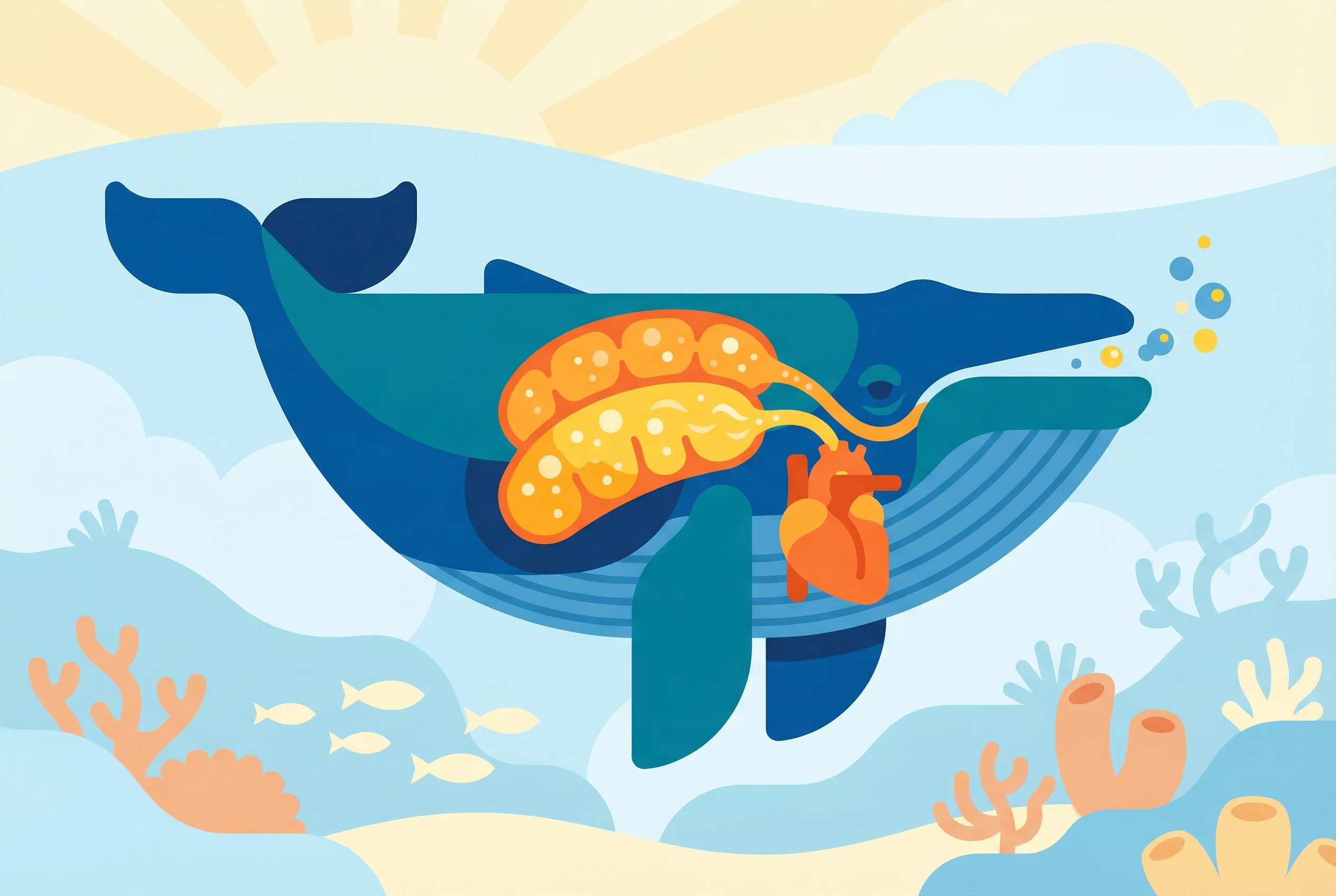
AMyoglobin stores extra oxygen
✓Correct — Whales have high levels of myoglobin, a protein that stores oxygen in muscles. They also slow their heart rate dramatically during dives—some to just 2 beats per minute!
BThey breathe underwater slowly
✗Not quite — Whales are mammals and cannot breathe underwater at all. They must surface to breathe air through their blowholes.
CTheir blood has more iron
✗Not quite — While blood carries oxygen, the key is myoglobin in muscles. This protein stores oxygen for use during long dives when they can't breathe.
AWater droplets refract sunlight
✓Correct — Light refraction and dispersion! Rainbows form when: (1) Sunlight enters raindrop—refracts (bends). (2) Disperses—different wavelengths bend differently (red least, violet most). (3) Reflects off back of droplet. (4) Exits droplet—refracts again. (5) Separated colors reach eyes. Conditions needed: sun behind observer, rain ahead. Rainbow angle: 42° from antisolar point. Double rainbows—second reflection inside droplet (reversed colors). Circular rainbow (from airplane). Moonbows exist! Each person sees unique rainbow—depends on viewing angle. ROYGBIV order!
BClouds reflect colorful light
✗Not quite — Rainbows form inside individual raindrops—sunlight refracts, disperses into colors, then reflects back to observer's eyes.
CChemical reaction in rainwater
✗Not quite — No chemical reaction—purely physical optics. Light refracts and disperses through water droplets, separating into visible spectrum.
Weird Geography Facts Under Your Feet
AChaotic flows in molten iron core reorganize and flip polarity
✓Correct — Earth's magnetic field is generated by a 'geodynamo' - the movement of electrically conducting molten iron in the outer core. These flows are turbulent and chaotic, like weather patterns. Occasionally, the flow patterns reorganize into the opposite configuration, causing the magnetic poles to flip. This process typically takes 1,000 to 10,000 years and has happened hundreds of times throughout Earth's history.
BThe Sun's gravity pulls and twists Earth's magnetic field
✗Not quite — The answer is A. Chaotic flows in molten iron core reorganize and flip polarity. While the Sun does produce a magnetic field and solar wind, it does not control Earth's internal magnetic field. Earth's magnetism is generated deep inside our planet by movements.
CContinental drift pushes magnetic rocks to opposite hemispheres
✗Not quite — The answer is A. Chaotic flows in molten iron core reorganize and flip polarity. Continental drift moves tectonic plates at the surface, but Earth's magnetic field originates from the liquid outer core about 3,000 kilometers below the surface. While rocks can.
AThe Pacific Plate has heavy edges sinking into the mantle, pulling it along
✓Correct — The Pacific Plate moves about 7-11 cm per year because it has subduction zones where heavy oceanic crust sinks into the mantle. This 'slab pull' force is the strongest driver of plate motion, much more powerful than the push from mid-ocean ridges. The African Plate, surrounded mostly by mid-ocean ridges with little subduction, moves only 2-3 cm per year.
BThe Pacific Plate is smaller and lighter, so it floats faster
✗Not quite — The answer is A. The Pacific Plate has heavy edges sinking into the mantle, pulling it along. Size and weight do not determine plate speed. In fact, the Pacific Plate is actually one of the largest plates on Earth, yet it moves fastest. What matters is the driving forces.
COcean water on the Pacific Plate makes it more slippery
✗Not quite — The answer is A. The Pacific Plate has heavy edges sinking into the mantle, pulling it along. Ocean water has no significant effect on plate movement. Plates move because of forces deep in the Earth's mantle, not surface conditions. The tectonic plates themselves are made.
AThey contain iron bands that only form in oxygen-poor conditions
✓Correct — Banded iron formations contain layers of iron that could only accumulate in ocean water when oxygen was scarce. Iron dissolves easily in oxygen-free water but immediately rusts and sinks when oxygen is present. These distinctive red and black bands formed before cyanobacteria filled the atmosphere with oxygen about 2.4 billion years ago, creating a chemical 'snapshot' of ancient air.
BThey are darker in color, showing lack of sunlight back then
✗Not quite — The answer is A. They contain iron bands that only form in oxygen-poor conditions. Rock color can change due to many factors like mineral content and heat, not atmospheric conditions. Dark rocks exist in both oxygen-rich and oxygen-poor environments. Scientists.
CThey contain fossils of animals that did not need oxygen
✗Not quite — The answer is A. They contain iron bands that only form in oxygen-poor conditions. The oldest rocks with these oxygen clues are 3.8 billion years old, but complex animals did not appear until about 600 million years ago. Early Earth had only simple single-celled.
Weird Everyday Things Hiding in Plain Sight
AInterlocking of wedge-shaped teeth
✓Correct — The zipper slider forces the teeth together, causing the wedge-shaped protrusions to interlock securely. This design distributes stress evenly, making it stronger than a single latch or friction-based fastener.
BFriction between angled surfaces
✗Not quite — The answer is A. Interlocking of wedge-shaped teeth. While friction does help keep the zipper closed, the primary mechanism is geometric interlocking. Without the wedge shape, friction alone would be insufficient to hold fabric.
CMagnetic attraction of metal teeth
✗Not quite — Most zipper teeth are made of non-magnetic materials like brass, nickel, or aluminum. The locking comes from mechanical interlocking, not magnetic forces. Plastic zippers further prove this, as they have no magnetic properties yet lock just as well.
ASmooth surfaces reflect light rays in parallel directions
✓Correct — When light hits a smooth surface like a mirror, the microscopic flatness means all light rays bounce off at the same angle (angle of incidence equals angle of reflection). This 'specular reflection' preserves the image. Rough surfaces have tiny bumps and valleys that scatter light in random directions ('diffuse reflection'), destroying the image but making the surface visible from all angles.
BMirrors contain special chemicals that capture light
✗Not quite — The answer is A. Smooth surfaces reflect light rays in parallel directions. Mirrors do not contain chemicals that 'capture' light. A typical mirror is simply glass with a thin aluminum or silver coating on the back. The reflection happens because of the.
CRough surfaces absorb all the light that hits them
✗Not quite — The answer is A. Smooth surfaces reflect light rays in parallel directions. Rough surfaces actually reflect most light - that is why you can see a white wall! The wall appears white because it reflects light in all directions (diffuse reflection). If it.
ADelayed buses pick up more passengers, falling further behind while early buses speed up
✓Correct — This is called 'bus bunching' or the 'accordion effect.' When a bus falls slightly behind, more passengers accumulate at each stop, causing longer boarding times and more delay. The bus ahead encounters fewer passengers and moves faster, creating a gap. This positive feedback loop causes buses to cluster together despite starting evenly spaced. Transit systems use GPS tracking and schedule adjustments to combat this phenomenon.
BBus drivers coordinate their arrival times to take breaks together at stops
✗Not quite — The answer is A. Delayed buses pick up more passengers, falling further behind while early buses speed up. Bus drivers do not intentionally coordinate to arrive together. In fact, transit agencies actively try to prevent bunching by monitoring bus locations in real-time and sometimes.
CTraffic lights are synchronized to create natural grouping patterns for buses
✗Not quite — The answer is A. Delayed buses pick up more passengers, falling further behind while early buses speed up. Traffic lights are not synchronized to group buses together. Modern traffic signal systems often give priority to buses to help them maintain schedules, not create clusters. Bus.
APeople subconsciously follow others moving in the same direction to avoid collisions
✓Correct — This is emergent behavior - no central control needed. Each person makes local decisions (stay behind someone going my way, step aside from opposing traffic), and these simple rules create organized lanes. Walking in a lane reduces collision risk and maintains steady speed, so it becomes the path of least resistance.
BStation designs include invisible floor markings that guide foot traffic
✗Not quite — The answer is A. People subconsciously follow others moving in the same direction to avoid collisions. While some stations do paint directional arrows, the lane formation happens naturally even without any markings. Studies show crowds self-organize into lanes in empty plazas too..
CMagnetic fields from train tracks influence walking patterns
✗Not quite — The answer is A. People subconsciously follow others moving in the same direction to avoid collisions. Train track magnetic fields are far too weak to affect human movement and are shielded by concrete and steel. Lane formation is a social physics phenomenon based on collision.
Frequently Asked Questions
What are weird facts that sound fake but are true?
They are facts with a strong information gap: your first guess says impossible, then the explanation makes the mechanism click. A good one feels strange first and satisfying second.
What is a good weird fact to share today?
Try one with a clean reveal, like Venus being hotter than Mercury because its thick carbon dioxide atmosphere traps heat. It is short, surprising, and easy to explain without turning the room into a lecture.
Where can I find weird science facts that are actually checked?
Use sources that show the mechanism, not just lists. On AIgneous Million Whys, each card links to a playable question with the answer and the why in the same place.
Are weird facts better when they are funny or when they are true?
Truth wins. Funny phrasing helps, but the lasting payoff is closure: the moment the odd detail becomes understandable.
What does this have to do with AIgneous Million Whys?
Million Whys is built for these tiny curiosity gaps. One question takes about ten seconds, gives a real answer, and lets the next question grow from the one you just closed.