

Fun Facts About the Earth: Why It Never Sits Still
Fun facts about the earth work best when they stop treating the planet like a blue marble sitting politely in space. Earth is moving, bulging, leaking, recycling, cooling, and being tugged every day. The ground feels still because our lives are short and our senses are local. The better answer is that Earth is a slow machine with many clocks: a 23.9-hour spin, plates that creep over geologic time, a magnetic field that wanders, an atmosphere that mostly stays but still escapes at the edges, and a Moon that is gradually stepping away.
TL;DR
Earth looks stable at human scale, but the useful facts are all about motion and change. It bulges because it rotates, moves crust through plate tectonics, shifts its magnetic poles, loses small amounts of atmosphere to space, trades angular momentum with the Moon, and stays geologically active because heat is still escaping from the interior. The satisfying closure is simple: our planet is not a finished object. It is an active system.
Short answer: the best fun facts about the earth are not disconnected superlatives. They explain why the planet behaves the way it does: rotation shapes it, internal heat moves it, gravity keeps most of its air, the Moon changes its timing, and the magnetic field is alive enough that navigators have to update their maps. NASA lists Earth's day at 23.9 hours and its year at 365.25 days, while USGS and NOAA show why the solid Earth and magnetic Earth are still in motion (NASA Earth facts, USGS This Dynamic Earth, NOAA/NCEI magnetic poles).
Curious? Try one 👇
Why is the sky blue?
Jump into the daily quiz →Earth is round, but not perfectly round
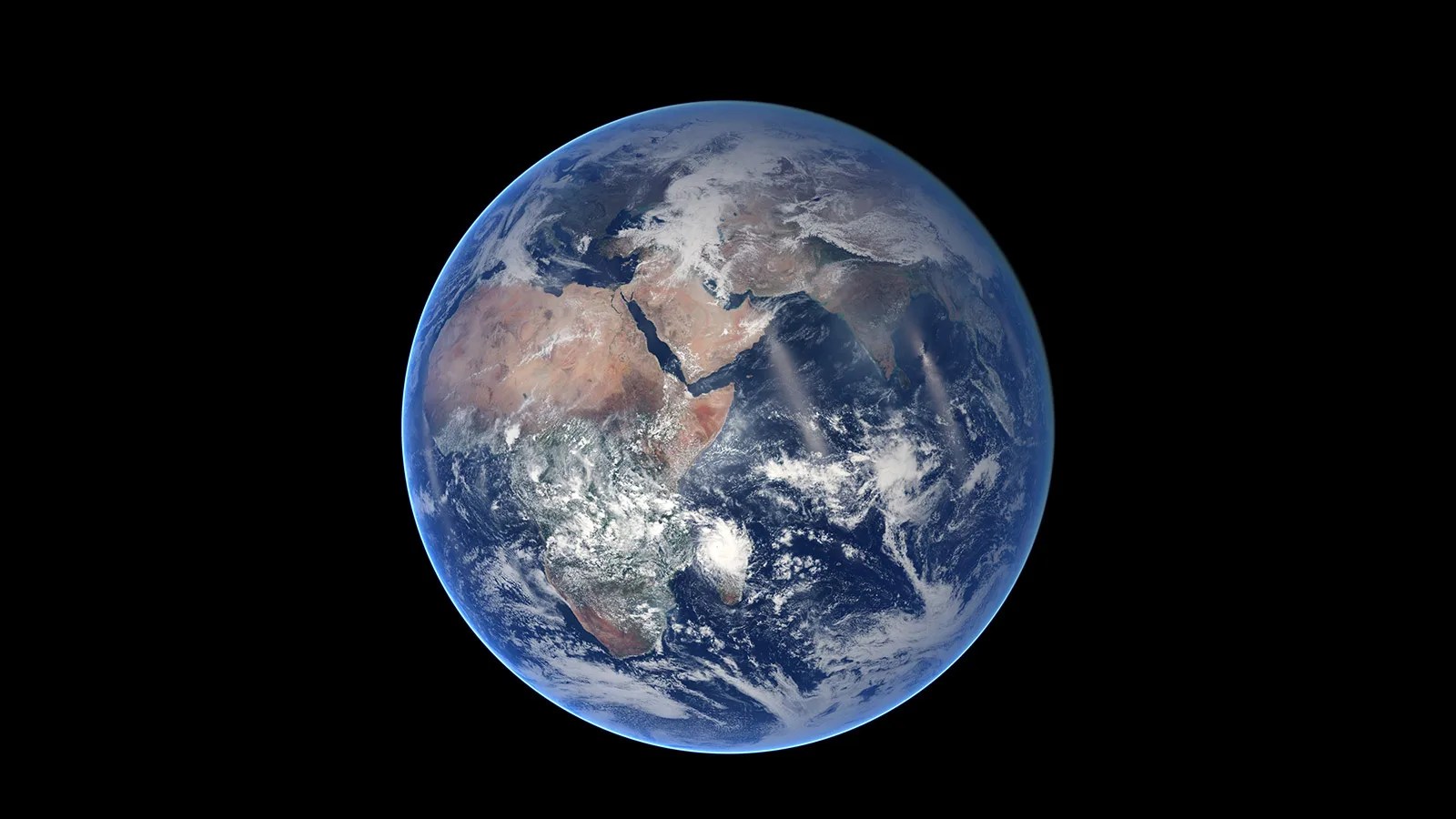
The first movement is the one under every other fact: Earth spins. NASA gives the rotation period as 23.9 hours, and that spin slightly changes the planet's shape. Earth is not a perfect mathematical ball. It is an oblate planet, a little wider at the equator than from pole to pole, because rotating material feels an outward effect strongest around the middle. NASA's Earth facts page lists the equatorial diameter at 7,926 miles, or 12,756 kilometers, which is the scale of the body doing the spinning (NASA Earth facts).
That is why "round Earth" and "not a perfect sphere" are not contradictions. Round is the big answer; oblate is the better answer. The same thing happens in ordinary life at smaller scale when a spinning water droplet or soft rotating body spreads outward. Earth is much more rigid than a droplet, but over planetary time and planetary mass, rotation still leaves a measurable signature.
The crust is recycled, not just cracked
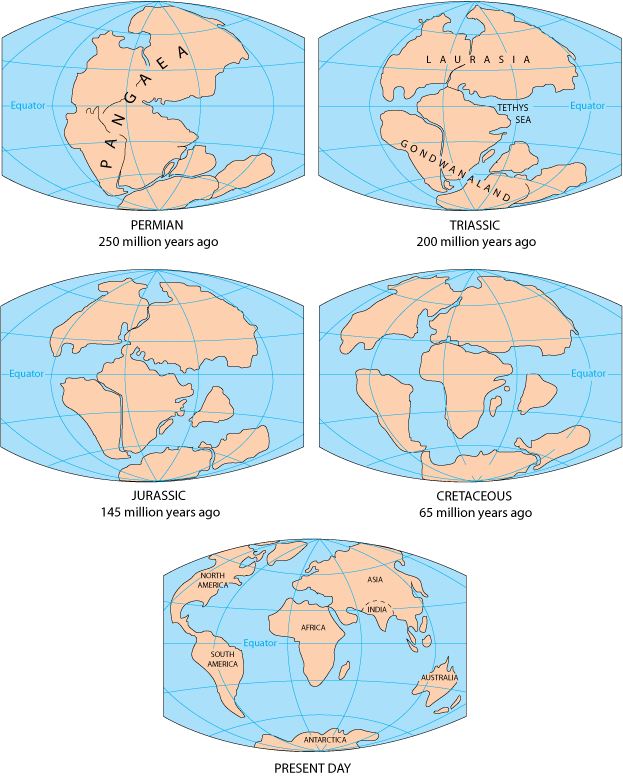
Plate tectonics is often introduced as "continents move," but that is the shallow version. The deeper idea is that Earth's outer shell is broken into plates that interact: separating at ridges, sliding past each other, colliding into mountains, and diving back into the mantle at subduction zones. USGS's This Dynamic Earth frames plate tectonics as the theory that explains volcanoes, earthquakes, mountain belts, and the distribution of major seafloor features (USGS This Dynamic Earth).
That means the surface beneath our feet is not a permanent crustal museum. Oceanic crust can be born at mid-ocean ridges and destroyed at trenches. Continents can assemble, split, and drift. The pace is tiny compared with a human walk, but over millions of years tiny motion becomes geography. A few centimeters per year is boring until you multiply it by the age of an ocean.
The useful mental model is a conveyor belt with scars. Earthquakes and volcanoes are not random decorations on the map. They cluster where the moving pieces touch. Mountain ranges are not just piles of rock; they are collision records. The planet's face is being edited slowly enough to miss and powerfully enough to rearrange the world.
The magnetic field has a moving map
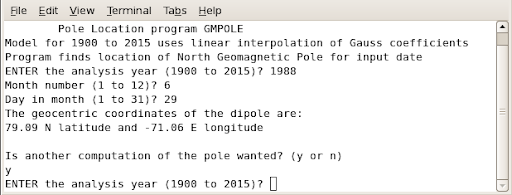
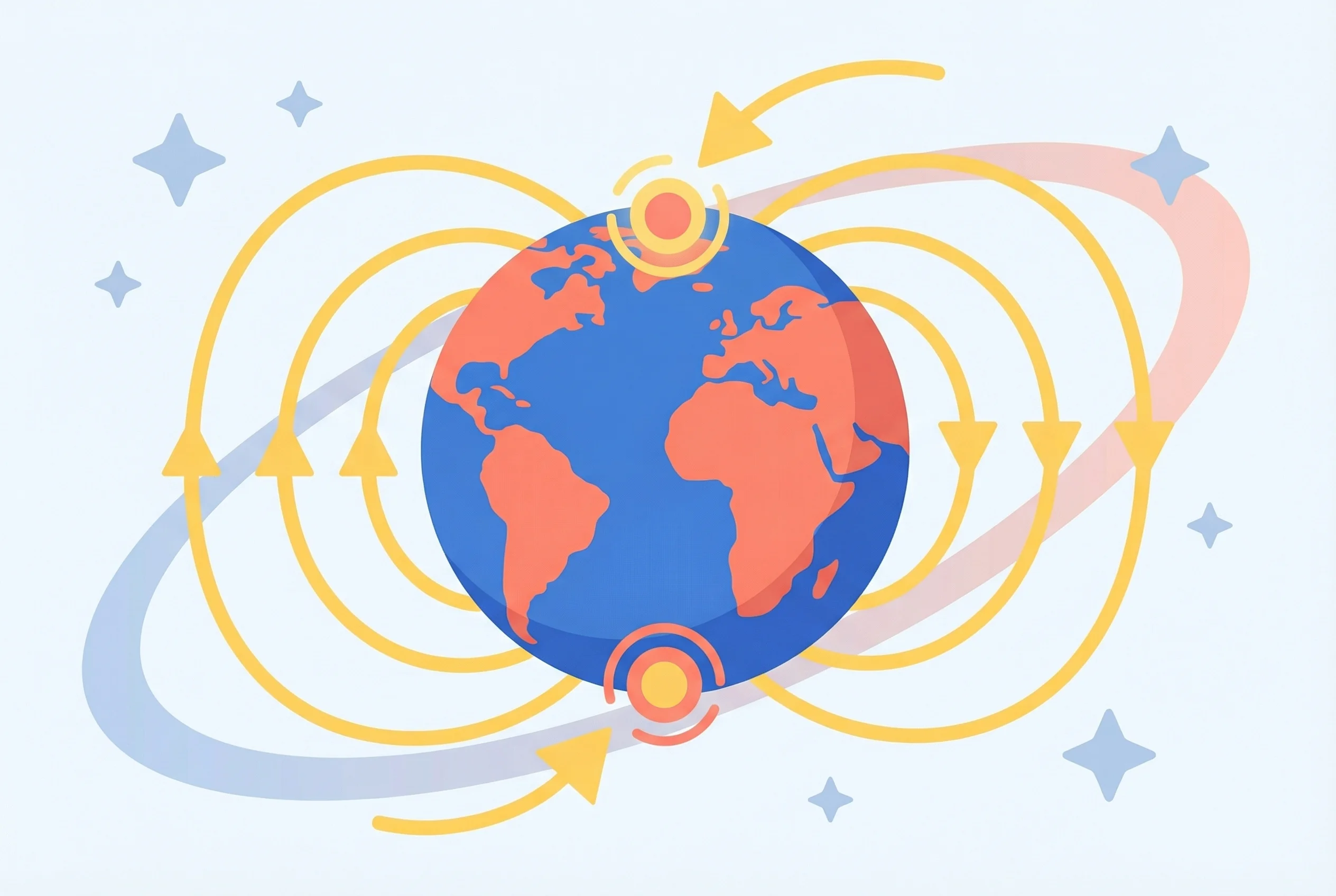
A compass feels like it points to one fixed truth, but the magnetic poles move. NOAA's National Centers for Environmental Information explains that dip poles migrate over time and gives a 2025 modeled location for the North Magnetic Pole of 85.762 degrees north and 139.298 degrees east (NOAA/NCEI: Wandering of the Geomagnetic Poles). That is not a trivia footnote. It is why magnetic reference models are updated.
The mechanism sits deep inside Earth. The magnetic field is tied to motion in the electrically conducting outer core. The result is a planetary-scale shield and navigation system that changes because the engine underneath it changes. It is steady enough to help a compass, but not frozen enough to be ignored.
This is one of the cleanest examples of half-knowing. Most of us know "Earth has a magnetic field." The gap is that the field is not a painted line from a textbook diagram. It is dynamic, measured, revised, and tied to the same living interior that helps make Earth geologically restless.
The atmosphere stays because of gravity, but it still leaks
Earth's air feels like a closed blanket, but the top of the atmosphere is not a hard lid. NOAA NESDIS gives the short answer to why the atmosphere does not drift away: Earth's gravity is strong enough to hold onto it (NOAA NESDIS: Why does the atmosphere not drift off into space?). That is the main closure. Gravity wins, so we have air.
But the more interesting closure has a caveat. NASA Earth Observatory reports that Earth loses several hundred tons of atmosphere to space every day, with oxygen among the particles that can escape after energetic collisions connected to auroras (NASA Earth Observatory: mapping atmosphere escape). That sounds enormous until you compare it with the full mass of the atmosphere. The leak is real, but not an emergency drain.
So the honest fact is not "the atmosphere is safe forever" or "Earth is losing its air." It is a balance. Gravity, temperature, magnetic conditions, chemistry, and solar energy all matter. A planet can hold an atmosphere and still lose a little from the edges. The boundary between Earth and space is less like a wall and more like a long, thinning negotiation.

The Moon is changing Earth's timing
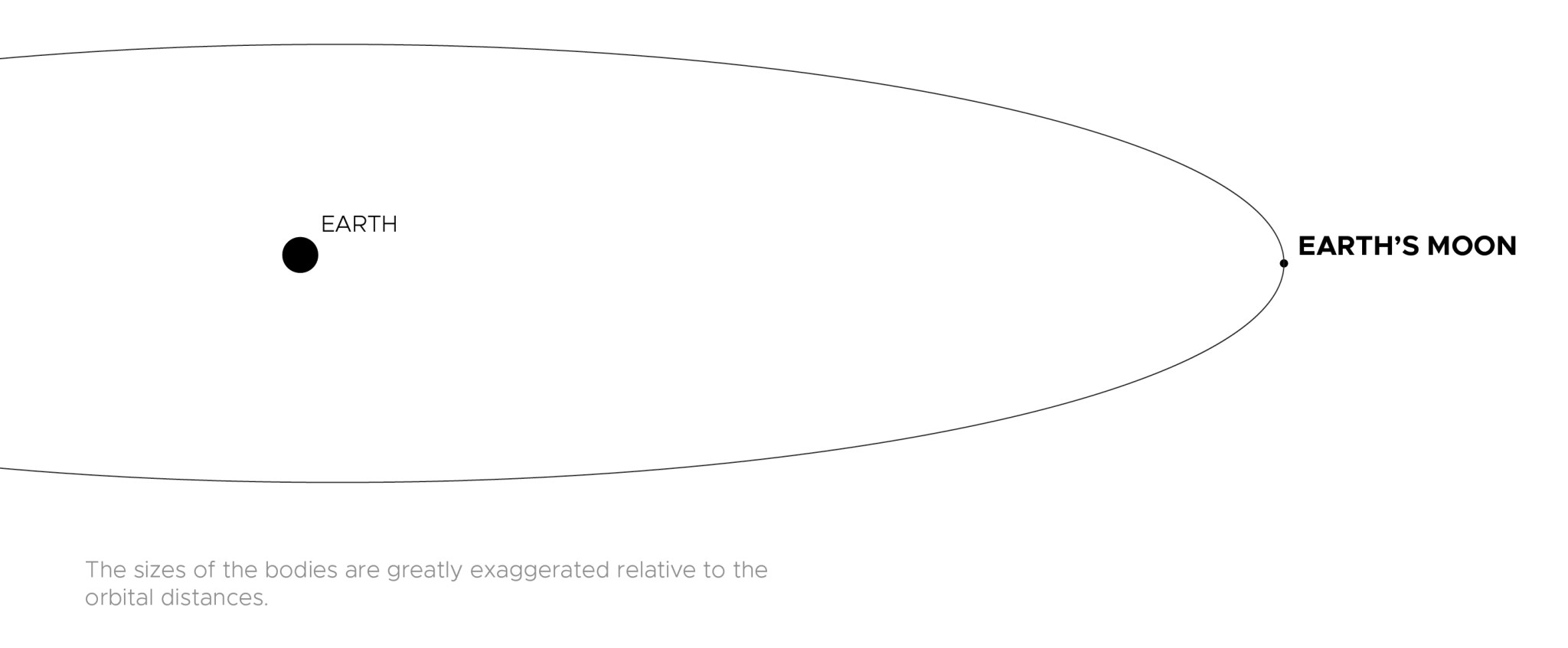
The Moon is not simply orbiting as a night-light. It raises tides, and those tidal interactions exchange energy and angular momentum between Earth and Moon. NASA's Moon facts page states that the Moon is slowly moving away from Earth, getting about an inch farther away each year (NASA Moon facts). The exact rate is often rounded differently in different contexts, so the important point is the direction and scale: slow, measurable recession.
That fact changes the emotional size of the sky. The Moon looks constant because one human life is too short to notice the drift. But laser ranging and orbital physics can measure what your eyes cannot. The same relationship that gives us tides is also part of why Earth's rotation changes over long periods.
The Moon is close enough to shape our oceans, far enough to be a world, and slowly moving farther away while we watch without seeing it.
Earth is still hot inside
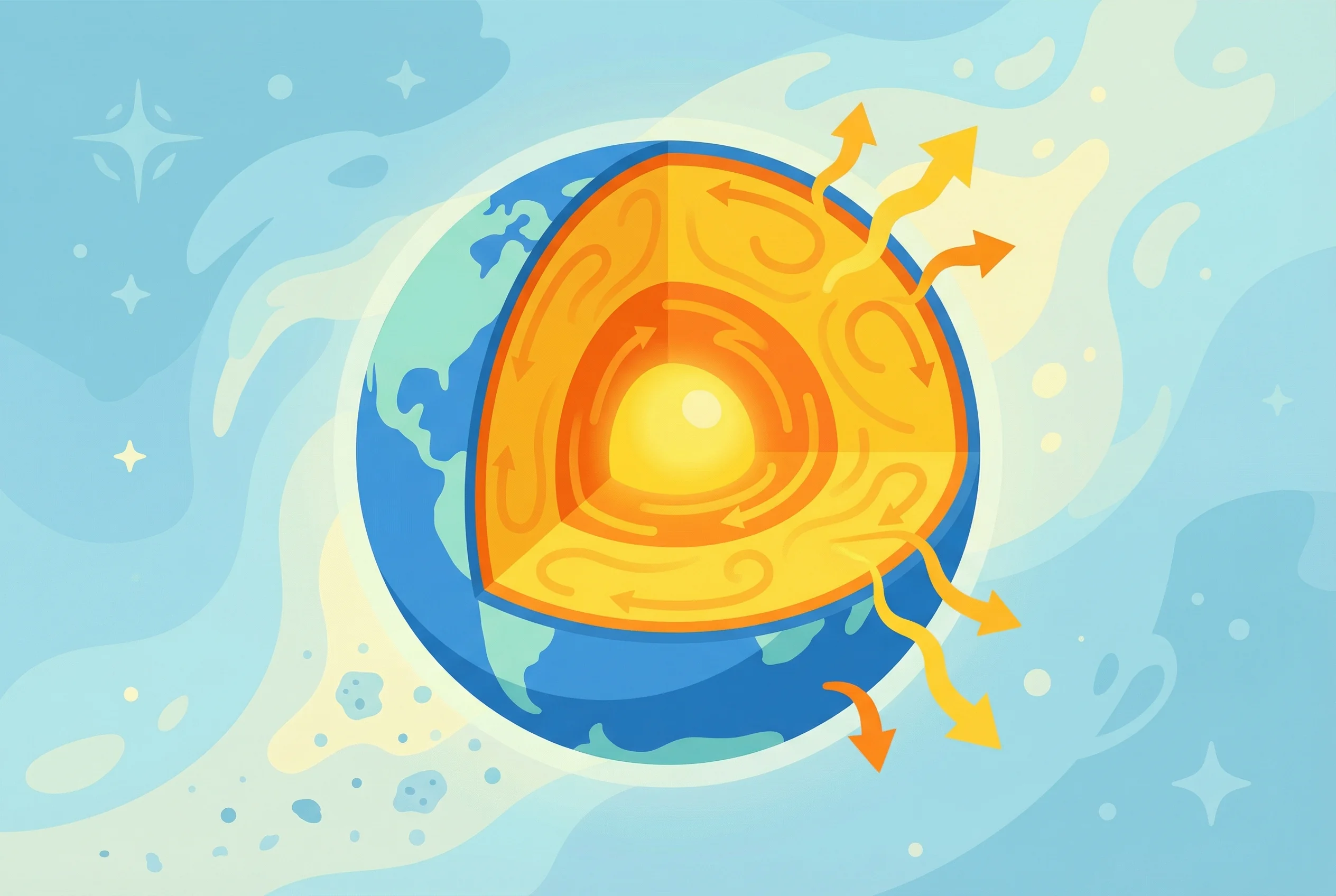
Plate tectonics, volcanism, and the magnetic field all point back to an uncomfortable truth: Earth is not cold rock all the way down. USGS describes Earth as a source of heat that continuously produces heat at depth, primarily through the decay of naturally radioactive elements such as uranium, thorium, and potassium (USGS: Geothermal Energy, Clean Power From the Earth's Heat). Some heat is also leftover from formation, but the source mix is a research topic, so it is safer not to pretend the exact budget is simple.
The payoff is that Earth has an internal engine. Heat escaping from the interior helps drive mantle motion, melts rock in some settings, feeds geothermal systems, and keeps the planet from being merely a cooled stone. This is why an Earth fact can be small and huge at the same time. A hot spring, a volcano, a spreading ridge, and a compass needle all point toward a planet with activity below the surface.

What people usually miss
The common mistake is treating facts about Earth as a postcard list. Highest mountain, deepest ocean, biggest continent, repeat. Those facts can be useful, but they do not explain why the planet works. The better frame is motion at different speeds. Earth spins in hours, orbits in a year, circulates air in weather patterns, moves plates over millions of years, shifts magnetic poles over decades and centuries, and loses interior heat over geologic time.
The second missed point is scale. A movement can be too slow for the body and still be fast for geology. A leak can sound large in tons and still be tiny for a planet. A Moon moving about an inch a year can be invisible at bedtime and meaningful in orbital history. Curiosity gets stronger when the answer closes one scale and opens another.
Related videos
- Kurzgesagt: Everything You Need to Know About Planet Earth
- Crash Course Geography: The Plate Tectonics Revolution
FAQ
What are the best fun facts about the earth?
The best ones explain a mechanism: Earth bulges because it spins, plates move because the outer shell is active, the magnetic poles wander, the atmosphere mostly stays because of gravity, and the Moon is slowly moving away.
Is Earth perfectly round?
No. Earth is round in the everyday sense, but rotation makes it slightly wider around the equator than pole to pole. That small difference is measurable at planetary scale.
Why do tectonic plates matter for Earth facts?
They turn geography into a moving story. Plate motion helps explain earthquakes, volcanoes, mountain belts, ocean basins, and why the surface we treat as permanent is actually being recycled.
Is Earth losing its atmosphere?
Yes, but slowly. NASA reports daily atmospheric escape at the edge of space, while NOAA explains that gravity is strong enough to keep the atmosphere from simply drifting away.
What does this have to do with AIgneous Million Whys?
Million Whys is built for this kind of closure: the familiar thing you half-know becomes stranger and clearer at the same time. "Earth is our planet" is the doorway; the spark is realizing it is still moving on clocks too large for a normal day.
Keep reading
Sources
NOAA/NCEI: Wandering of the Geomagnetic Poles
NOAA NESDIS: Why Does the Atmosphere Not Drift off Into Space?
NASA Earth Observatory: Toward Mapping the Atmosphere's Escape from Earth
Curious? Try one 👇
Why is the sky blue?
Jump into the daily quiz →Keep Exploring

Related Posts
Earth Day 2026: 12 Weird Whys About the Planet You Live On
From a 19.5-hour day stuck for 1.5 billion years to a mantle-wind black hole beneath Tibet, 12 mechanism-rich, verifiably true facts about Earth — each a 'small why' that changes how you see the planet. Earth Day 2026 edition.
Fun Facts About Weather: Everyday Sky Physics
Fun facts about weather, explained through why raindrops flatten, clouds float, thunder rolls, snow survives warm layers, fog forms, and rainbows circle.
Facts About Ice: Why Frozen Water Gets Weird
Facts about ice: why frozen water floats, expands, makes six-sided snowflakes, turns slippery, rejects sea salt, reflects sunlight, and shapes life on Earth.