

Why Does Heat Kill? The Body's Cooling Limit
On this page· 16
Why does heat kill when the number on the thermometer does not look instantly lethal? The trap is that heat does not have to cook the body from the outside. It only has to break the cooling system from the inside. During the late-June 2026 European heatwave, Al Jazeera reported that WHO chief Tedros Adhanom Ghebreyesus had cited more than 1,300 excess deaths across Europe since June 21, while one French town reached 44 C (Al Jazeera). The curious part is not just that it was hot. It is how ordinary human physiology runs out of moves.
TL;DR
Heat kills when the body can no longer dump internal heat fast enough. Sweating, skin blood flow, breathing, and behavior normally keep core temperature near a narrow range, but humidity, long exposure, dehydration, medications, age, and illness can close those escape routes. The danger is cumulative: a hot night, a sealed room, or one extra hour of work can push a strained cooling loop into heat stroke.
Short answer: heat becomes deadly when heat gain exceeds heat loss long enough for core temperature and cellular stress to rise. The body tries to move warm blood to the skin and evaporate sweat. If evaporation fails, fluid runs low, the heart cannot keep up, or the brain begins to malfunction, heat exhaustion can slide into heat stroke, a medical emergency that the WHO describes as having a high case-fatality rate (WHO).

Curious? Try one 👇
Why is the sky blue?
Jump into the daily quiz →Why a mild 40 C can be fatal
Forty degrees Celsius sounds like a single weather fact, but the body experiences it as a balance sheet. Metabolism makes heat all the time. Walking, climbing stairs, carrying groceries, or working outdoors adds more. In comfortable conditions, the body pays that bill by sending blood toward the skin, radiating heat into the air, and evaporating sweat. At 40 C, the air is already near or above skin temperature, so dry heat transfer becomes weak. The body leans harder on sweat.
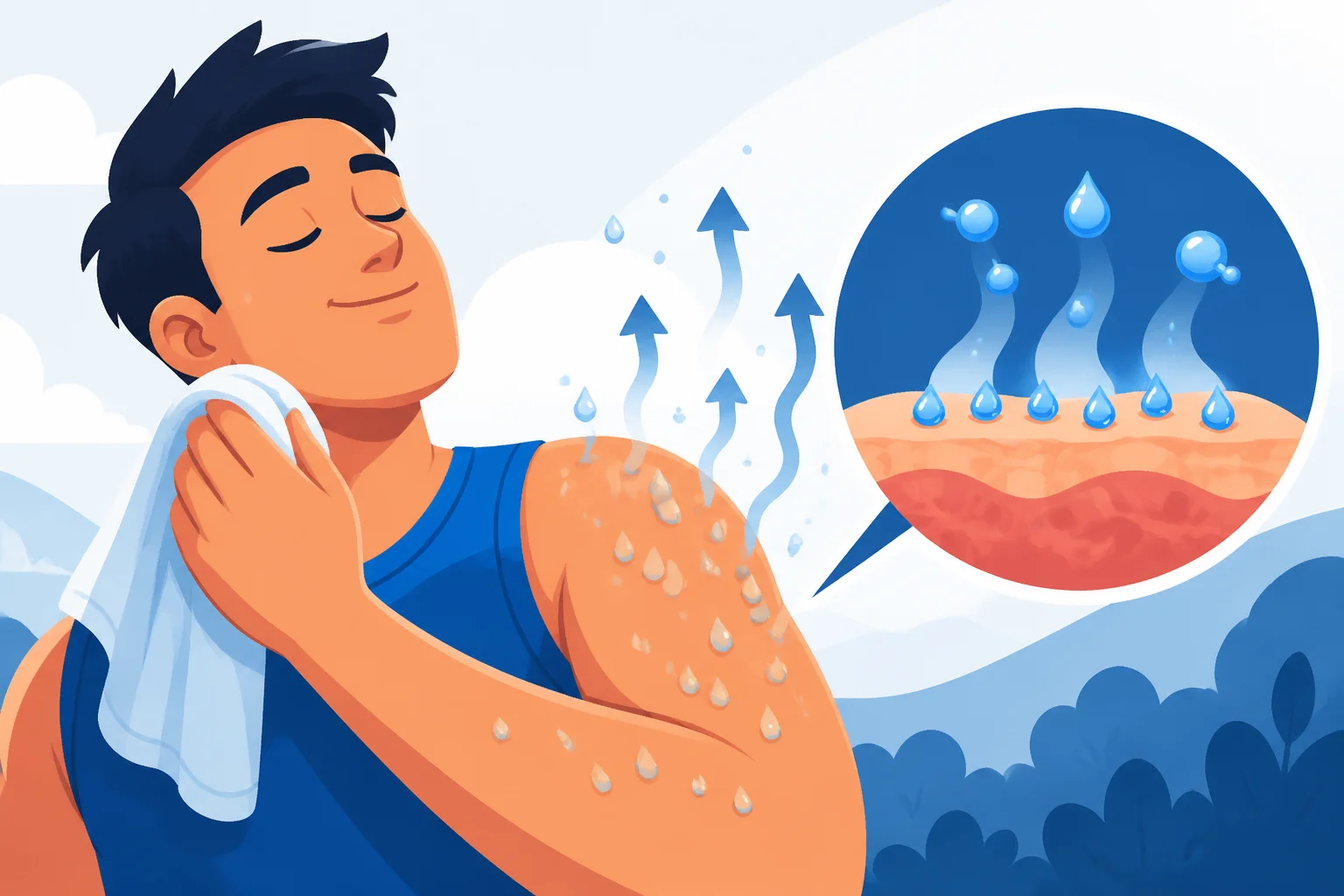
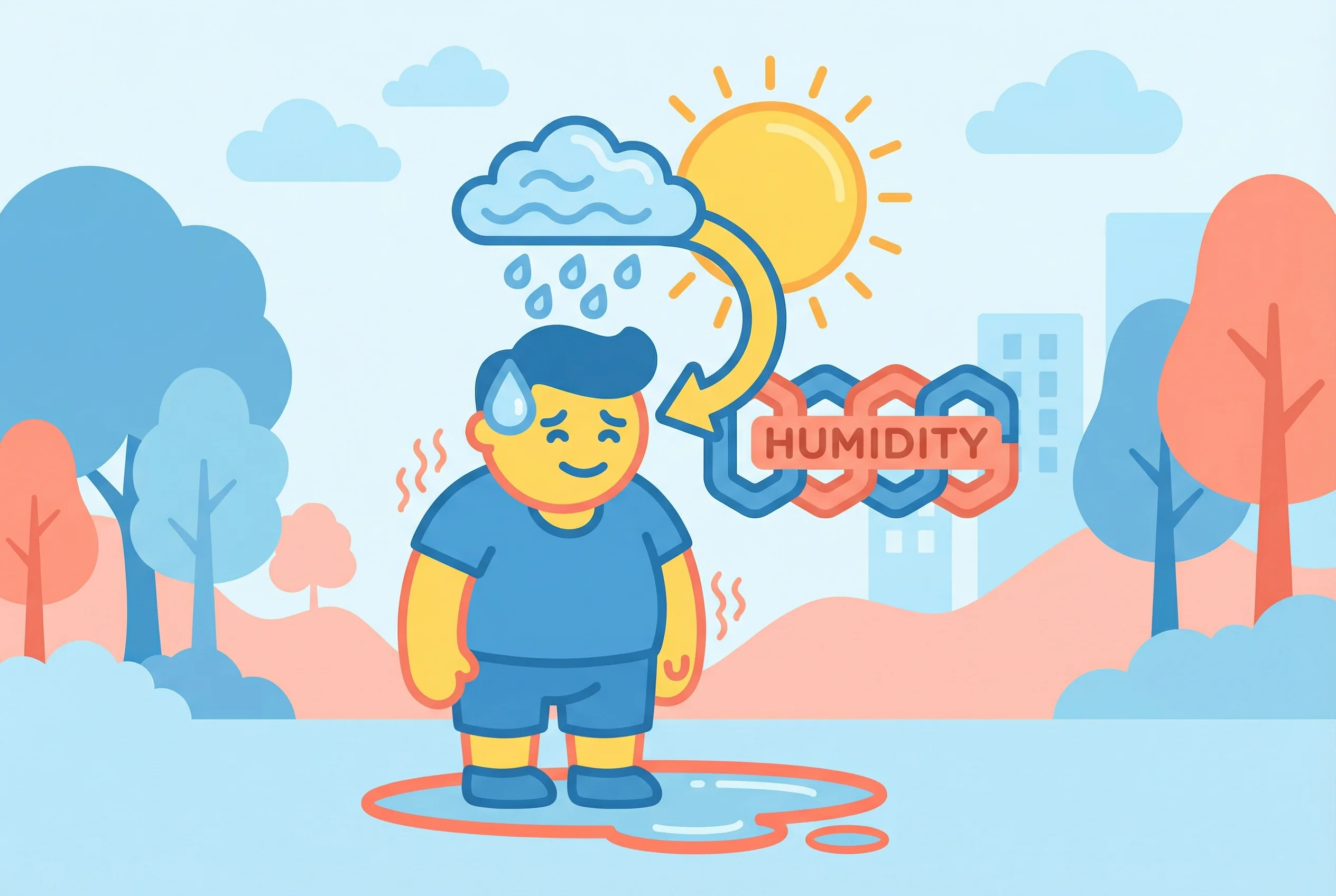
That is why the same temperature can feel merely miserable in one place and dangerous in another. When air is dry and shade is available, sweat can evaporate quickly. When humidity is high, the air is already loaded with water vapor, so sweat sits on the skin instead of carrying heat away. You may feel drenched and still be losing the fight.
The CDC puts the early symptom list in everyday language: cramps, unusually heavy sweating, shortness of breath, dizziness, headache, weakness, and nausea can all mean the body is overheating (CDC). None of those symptoms is mysterious. They are the cost of rerouting blood, losing salt and water, and trying to keep the brain supplied while the cooling system is under load.
The cooling loop: blood, sweat, breathing, behavior
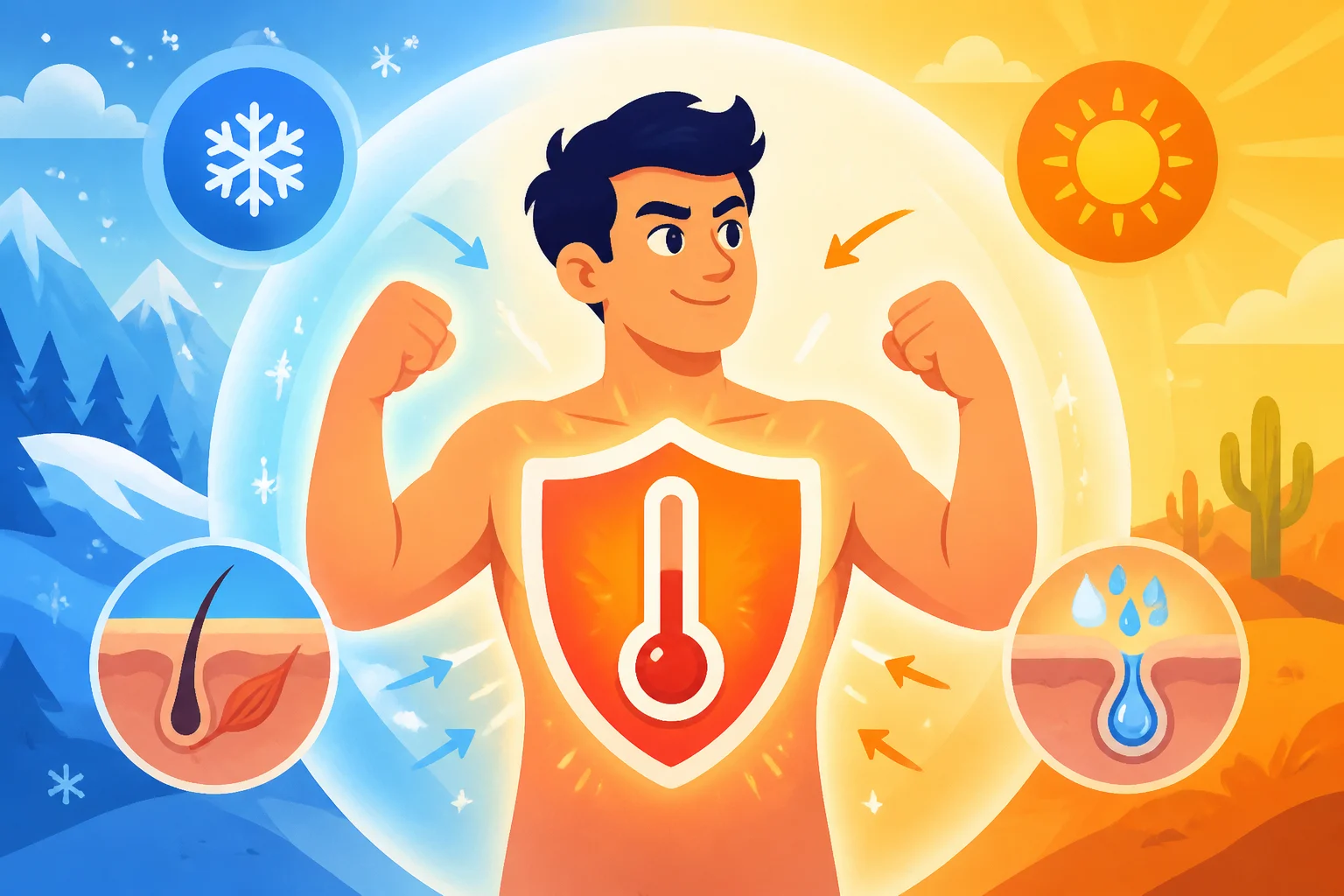
The body does not have one air conditioner. It has a loop. The brain senses rising temperature. Blood vessels near the skin widen. Sweat glands release fluid. Evaporation pulls heat away. Breathing and behavior help: you slow down, seek shade, drink, remove layers, or find cooler air. That loop is elegant because it is small and automatic. It is also fragile because every part depends on the others.
Sweat is the easiest part to notice, but skin blood flow is just as important. To lose heat, warm blood has to reach the skin. That creates a competition: the skin wants more blood for cooling, while muscles, brain, kidneys, and gut still need circulation. In a healthy, hydrated person at rest, the heart may manage. In an older adult, a person with heart disease, or someone who is dehydrated, the same heat demand can become a circulation problem.

The small hidden lesson is that sweating is not proof of safety. Sweating means the system is trying. It does not prove the system is winning. If sweat cannot evaporate, or if fluid loss becomes too large, the cooling loop can become a water-loss loop. That is why heat is not only about the highest afternoon temperature. It is also about shade, airflow, humidity, work rate, sleep, and whether the body gets time to reset.
When humidity closes the exit door
Wet-bulb temperature is one way scientists describe the problem. It combines heat and humidity into a measure of how well evaporation can cool a wetted surface. Sherwood and Huber's 2010 PNAS paper argued that sustained wet-bulb temperatures near 35 C mark a severe human adaptability limit because metabolic heat can no longer be dissipated effectively (Sherwood and Huber, 2010). That number is not a casual "feels like" index. It is about whether evaporation can do its job.
There is an important caveat. Later laboratory work found that uncompensable heat stress can occur below 35 C wet-bulb in young, healthy adults under realistic conditions, especially when people are moving or wearing clothing (Vecellio et al., 2022). The practical lesson is humbler and more useful: there is no magic single outdoor number that separates safe from fatal. The threshold moves with humidity, exertion, acclimatization, age, health, clothing, wind, shade, and how long the exposure lasts.

Why some bodies run out of moves sooner
Heat deaths are rarely distributed evenly. WHO names older people, infants, pregnant people, outdoor workers, athletes, people living in poverty, and people with chronic disease as groups at higher risk during heat stress (WHO). That list is not just demographic. It maps to cooling mechanics.
Older adults may sweat less efficiently, feel thirst less strongly, or have cardiovascular limits that make it harder to move extra blood to the skin. Some people cannot leave hot apartments, cannot afford air conditioning, or live in neighborhoods where asphalt, dark roofs, and low tree cover keep heat trapped after sunset. A hot night matters because the body does repair work during cooler hours. If the room never cools, yesterday's heat debt carries into today.
Medication is another underappreciated layer. CDC clinical guidance notes that diuretics, anticholinergic agents, some psychotropic medications, and certain cardiovascular drug combinations can increase risk during heat exposure (CDC medication guidance). That does not mean people should stop prescribed medicine on their own. It means heat planning should include the real body someone has, not an imaginary healthy adult standing in a weather app.

The heat-stroke timeline is a cascade, not a switch
People often imagine heat stroke as a sudden line: fine, then not fine. The biology is more like a cascade. First the body compensates. Heart rate rises. Skin vessels widen. Sweat output increases. You slow down without deciding to. If fluid and salt loss mount, heat exhaustion can appear: headache, nausea, dizziness, weakness, heavy sweating, and reduced urine are warning signs the CDC lists for heat illness.
If cooling does not happen, the brain becomes part of the signal. Confusion, altered mental status, slurred speech, loss of consciousness, seizures, very high body temperature, or collapse are not "tough it out" symptoms. They point toward heat stroke or severe heat illness. The dangerous part is that judgment is one of the things heat can damage. A person may insist they are fine at exactly the moment they are losing the ability to judge.
Inside the body, high temperature and poor circulation stress proteins, cell membranes, the gut barrier, kidneys, liver, heart, and brain. This is why rapid cooling matters. Heat stroke is not just a high number on a thermometer; it is a system-wide failure mode where time at high core temperature increases the risk of organ injury.
What people usually miss
The biggest missed point is that heat danger is cumulative. A person may survive one hot afternoon and still be at risk after three hot nights, poor sleep, dehydration, and no real cooling break. That is why heatwaves kill more quietly than storms. The harm accumulates indoors, in bedrooms, on job sites, in transit, and in bodies that looked fine yesterday.
The second missed point is that "I am sweating" is not the same as "I am cooling." Sweat has to evaporate. A soaked shirt in still, humid air can be evidence of a failing exit route, not evidence that the exit route is working.
The third missed point is that curiosity is protective here. Knowing the mechanism changes behavior. If heat death is just "too hot," the advice sounds vague. If the mechanism is "my body needs water, airflow, shade, evaporation, and cool recovery time," the next move becomes concrete.

Related videos
CBS News: More than 1,300 heat-related deaths across Europe since June 21, WHO chief says
FAQ
Why does heat kill people even if they are in the shade?
Shade removes direct solar load, but it does not guarantee cooling. If the air is hot, humid, and still, sweat may not evaporate well, and the body can keep storing heat.
What temperature can humans survive?
There is no single safe cutoff. Survival depends on humidity, duration, exertion, shade, airflow, clothing, health, hydration, and access to cooling. Wet-bulb temperature is useful because it asks whether evaporation can still remove heat.
How does heat cause death?
Heat can cause death by pushing the body into heat stroke: core temperature rises, the brain malfunctions, circulation is strained, and organs can be injured if rapid cooling does not happen.
Why are hot nights so dangerous?
Hot nights prevent recovery. If the body cannot cool during sleep, dehydration, cardiovascular strain, and heat stress can carry into the next day before the next heat peak even begins.
Can drinking water alone prevent heat stroke?
Water helps, but it is not enough by itself. The body also needs lower heat load, rest, shade or air conditioning, airflow, and time for sweat to evaporate. Severe symptoms need medical help, not just more water.
What does this have to do with AIgneous Million Whys?
This is the kind of "half-known" question Million Whys is built around. Everyone knows heat is dangerous; the useful closure is understanding the cooling loop, so a vague warning becomes a concrete mental model.
Curious? Try one 👇
Why is the sky blue?
Jump into the daily quiz →Keep Exploring
Related Posts
Wet Bulb Temperature: Why Humid Heat Turns Deadly
Wet bulb temperature explains why humid heat can turn dangerous fast: sweat stops cooling, 35 C becomes a hard limit, and WBGT shows real risk right now.
Fun Facts About Human Body: Everyday Biology
Fun facts about human body biology: why blinking, heart rate, gut rumbles, body clocks, and sneezing work as tiny automatic survival systems inside you.
Urban Heat Island Effect: Why Cities Stay Hotter
Urban heat island effect, explained: why asphalt, buildings, lost trees, waste heat, and warm nights make city blocks hotter than parks, and how cities cool.