


Why Adults Still Get Excited About Slides — and the Cultural Script That Makes Them Pretend Otherwise
Walk through a public park with any adult friend, point out a small playground slide, and watch their face for a half-second. There is almost always a flash — eyes widen, a small grin, an involuntary forward lean — before the adult brain catches up and produces the social face: "that's for kids." The flash is the honest signal. The composed face is the cultural script.
The interesting question is not why the script exists. It is what the script is suppressing. The flash is not a malfunction, it is not regression, and it is not nostalgia for a slide you barely remember. It is a layered, well-studied response that runs through your visual cortex, your motor cortex, your mammalian play system, and out into a real, delivered pleasure that the rest of your day rarely offers. Your culture trained you to hide it, and trained you so well that you can probably no longer tell whether you are hiding the urge or whether you have stopped having it.

TL;DR
Adults still get genuine pleasure from sliding on small playground slides. Your brain predicts the pleasure (which is why you feel the urge) and delivers it (which is why people who try it report that it was, in fact, fun). What you have been trained to suppress is not a weak experience but a real one.
- The urge is not childish — your motor cortex automatically activates whenever you see a slide-shaped object, regardless of your age.
- Public playground slides are kid-sized for engineering and insurance reasons (ASTM F1487 covers ages 2–12 only), not because adults are not supposed to enjoy them.
- Water-park slides and SlotZilla offer an additional tier of intense thrill, not a substitute for basic slide pleasure — the two are complementary, not in competition.
- "Adults don't enjoy slides" is a display rule about what you may show in public, not about what you may feel. The kidulting industry — adult ball pits, immersive play pop-ups — exists because the underlying demand is real and the only barrier is permission.
- Next time you feel the flash: notice it. The pleasure is yours; the embarrassment is borrowed.
Curious? Try one 👇
Why is the sky blue?
Jump into the daily quiz →The Short Answer
The cultural belief that "slides are for kids" is doing a great deal of hidden work. It frames the question as "why do some adults still want to slide?" — making the urge sound like a leftover from childhood that you should have outgrown. The honest framing is the reverse: nearly every adult, in nearly every culture, gets the urge when they see a slide, gets pleasure when they actually slide, and is trained from a very young age to suppress the visible signs of both. What needs explaining is not the urge. What needs explaining is the suppression.
The full answer unfolds in several stages. Your visual cortex automatically activates motor circuits when you see a slide-shaped object — a process called affordance perception, well-mapped in modern neuroscience. That activation rides on top of the PLAY system, one of seven primary affective systems Jaak Panksepp identified in mammalian brains, which does not switch off in adulthood. When you actually slide, the pleasure delivers — recent peer-reviewed work on "kidulting" shows this is measurable and real, not merely nostalgia. ASTM F1487 plus a near-universal display rule together do the cultural work of keeping adults off the slide in public — but neither has anything to do with whether the experience would be enjoyable.
Your Motor Cortex Moves Before You Do
The psychologist James Gibson proposed in 1979 that we do not perceive objects as collections of properties (height, color, material) but as affordances — as opportunities for action. A handle affords grasping. A step affords sitting. A slide affords sliding. According to Gibson, the action possibility is part of what we see, not something we infer afterward.
Modern neuroscience has turned this from a philosophical claim into a measurable one. fMRI and TMS studies show that simply looking at an object that affords action automatically activates the motor cortex regions that would execute it — specifically the bilateral superior parietal cortex, the intraparietal sulcus, the premotor cortex, and the supplementary motor area. So-called "canonical neurons," first identified in macaque premotor cortex, fire when the animal merely sees a graspable object, with no movement required. The motor system is partially online whenever a relevant object is in your visual field.
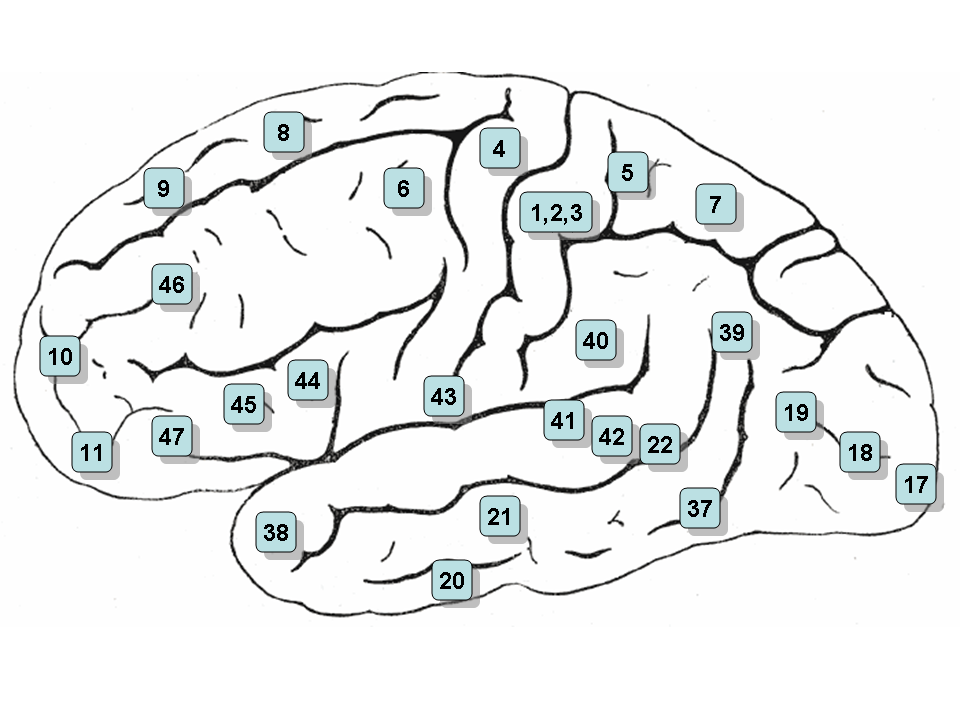
The crucial point: this activation depends on the shape of the object, not on a calculation of whether using it would be satisfying. Your premotor cortex does not run a cost-benefit analysis on slide enjoyment before firing. It sees a slide-shape, and the simulated motor pattern lights up. The flash you feel is downstream of that activation, not upstream of it. By the time your conscious brain says "that's for kids," the urge has already been processed and is already on the table.
Mammals Have a Play System, and It Does Not Switch Off
The neuroscientist Jaak Panksepp spent forty years arguing that mammalian brains contain seven hard-wired primary affective systems: SEEKING, RAGE, FEAR, LUST, CARE, PANIC, and PLAY. Each runs on a specific subcortical circuit. The PLAY system, in Panksepp's mapping, runs through the thalamic intralaminar nuclei, the frontal cortex, the striatum, and ascending dopamine pathways, with modulation from cholinergic, opioid, and cannabinoid signals.
What is often missed about Panksepp's model is that PLAY does not exist primarily to help juveniles develop. A 2025 narrative review in Frontiers in Neuroscience argues that play has a bimodal function across the mammalian lifespan: motor and social development in juveniles, and neural maintenance and regeneration in adults and aging individuals. The same reviewers note that social playfulness in older adults may be a neuroprotective input against cognitive decline. The system does not turn off after adolescence. It changes function.
This matters for the slide question because the affordance signal does not just produce a motor twitch. It is wrapped in the affective output of the PLAY system, which gives the twitch its felt quality of wanting. You do not just simulate sliding. You feel the desire to slide, because PLAY is doing what it has always done — attaching positive valence to play-coded actions.
The Pleasure Is Real and Delivered
It is one thing to predict an urge. It is another to claim the pleasure is real when the urge is acted on. Here the most direct evidence comes from a body of work on what researchers have started calling "kidulting" — adults engaging with toys, games, and play formats originally coded as childhood activities. A 2024 peer-reviewed editorial in Cyberpsychology, Behavior, and Social Networking argued that kidulting functions as a measurable form of self-care, with documented links to dopamine release, stress reduction, and improvements in self-reported well-being. The same review explicitly listed activities like "riding swings in the park" alongside Lego, plush toys, and coloring books.
The market validates the lab work. The U.S. Toy Association reported that during 2020–2022, roughly 58% of American adults bought toys for their own use, not for children. Adult ball pits in U.S. cities sell tickets. Adult trampoline parks, adult bounce houses, immersive play pop-ups (Bubble Planet, Color Factory, Meow Wolf) have built durable businesses around exactly the experience that kid playground equipment delivers, in a context that gives adults explicit permission to enjoy it. If the underlying experience were unsatisfying for adult bodies, none of this would be commercially viable.
What is happening when you actually slide, in plain terms: the predictive motor simulation gets executed; the PLAY system confirms its prediction with a small dopaminergic reward; and the result is the same brief lift you saw on your friend's face when they got off the slide. It is not nostalgia. It is the system doing its job.
Why SlotZilla and Water Slides Exist (Without Replacing the Small Slide)

If basic slide pleasure is real and delivered for adults, why does an entire industry exist around adult-grade slides — water parks, ski tubing, alpine slides, the 35-meter SlotZilla zip-slide on Las Vegas's Fremont Street, the indoor slides at the Hyatt LA and SFO airport?
The answer is that those slides offer a different tier of experience, not a substitute for the basic one. SlotZilla provides a 72 km/h descent over 520 meters with a launch system, body harness, and trained operators. A neighborhood playground slide provides a controlled three-second pleasure with no equipment beyond your own clothing. Both are pleasurable; they sit at different points on a stimulation curve. Marvin Zuckerman's sensation-seeking framework describes this curve: humans differ in their preferred level of arousal, and the same individual prefers different intensities at different moments. A neighborhood slide and a water-park slide are not in competition for the same need. They are in series.
This explains a fact that would otherwise be puzzling: adults will pay real money for water-park admission, even though small free slides are available everywhere. The willingness to pay does not mean the small free slide is unsatisfying. It means the adult-grade slide offers an additional, more intense product that the small slide cannot. Both products have a market. The kidulting research suggests they are complementary products, not substitute products.
ASTM F1487, Insurance, and the Boston Cop
If slide pleasure is real for adults, and adults will pay for additional slide products, why does the public, free, neighborhood version come almost exclusively in kid-sized form? The answer is engineering economics, not cultural preference.
The relevant standard is ASTM F1487, "Standard Consumer Safety Performance Specification for Playground Equipment for Public Use." It defines its scope explicitly: equipment intended for "users from the 5th-percentile 2-year-old through the 95th-percentile 12-year-old." Public playgrounds in the United States are designed, procured, inspected, and insured against this standard. There is no equivalent ASTM standard for adult public play equipment. The reason is straightforward: adult bodies are heavier, stronger, and more variable; an adult on a kid-rated slide can produce outputs the engineering envelope was not built for; and no municipality wants the liability.

The point was made memorably in July 2023, when a Boston police officer attempted to slide down a new public slide installed in the City Hall Plaza renovation. The slide was rated for ages 5–12. The officer was not. Biomechanics analyses by HuffPost and Slate concluded that the combination of the officer's synthetic uniform fabric (very low friction against the metal slide) and the slide's curved profile caused him to be ejected from the end at high speed. He hit his head and required medical attention. The video went viral. The City installed restrictions to keep adults off.
This event is sometimes told as an indictment of adult slide use, but it is the opposite. It is a clean illustration of the engineering envelope of ASTM F1487. The slide was working exactly as designed — for a 30-kilogram child wearing a cotton t-shirt. An 80-kilogram adult in low-friction synthetic fabric exceeded the envelope and the equipment behaved badly, in the same way that a passenger car's airbag system would behave badly if you dropped a 200-kilogram object onto it. The lesson is about scope of design, not about whether adults can enjoy slides.
Combined: the slides you see in everyday public space are kid-sized because that is what the engineering and insurance system in your country knows how to build cheaply and safely. Free, public, adult-grade slides almost do not exist. The closest functional equivalents — natural sand dunes, snow slopes, polished rock chutes in canyons — are governed by physics, not by ASTM. Everything else is gated behind a ticket.
What the Cultural Script Is Actually Suppressing

So we have a public space full of pleasurable but kid-sized equipment, and adults whose brains keep firing the urge every time they walk past it. What closes the loop is the display rule: the social convention about what emotions and behaviors are appropriate to show in public.
The psychologist Paul Ekman introduced display rules in the 1970s to explain why members of different cultures showed the same underlying emotions but expressed them differently in public. David Matsumoto's later cross-cultural work documented that display rules vary not only across cultures but across life stages. Adults are trained from late childhood onward to suppress visible enjoyment of behaviors coded as juvenile. The training is so effective that most adults experience the suppression as the absence of the underlying urge — they say, sincerely, "I don't want to slide," when in fact they want to slide and have learned to overwrite the want very quickly.
Display rules are about showing, not about feeling. This is the crucial distinction Ekman made and that the kidulting research empirically confirms. When an adult joins an adult ball pit pop-up or pays for an adult trampoline park, the activity is identical to what a child does in the equivalent kid-coded venue. What changes is the permission frame: a ticket, a brand, an adult-only label, an event hashtag, a private indoor venue. The frame says, in social grammar, "this is sanctioned for you here." Once the permission frame is in place, the display rule lifts, the urge is no longer hidden, and the adult enjoys the pleasure that was always available.
This is why the kidulting industry can charge for what the public playground gives away. It is not selling a different physical product. It is selling permission.
What the 28-Year-Old at the Slide Tells You
Pull all the layers together and the small park moment looks different. Your friend at the slide is not regressing, not nostalgic, not eccentric. Their visual cortex saw a slide-shape and activated their motor cortex. Their PLAY system attached positive valence and produced the urge. The pleasure that would follow if they slid is real, predicted, and (the kidulting literature suggests) delivered. The only thing standing between them and that pleasure is the display rule that they almost-but-not-quite chose to override for that half-second.
The flash on your friend's face is what the system looks like when the display rule briefly fails. You saw a 28-year-old being honest with a circuit they never lost. The interesting question is not why they were excited. The interesting question is why the rest of the time, with the same urge firing constantly, the rest of us are so good at hiding it that we have started to believe we no longer have it.
FAQ
Is the urge to slide actually universal in adults, or is this just a narrative?
The urge has not been measured in a single large representative survey, but the convergent evidence is strong: affordance perception is automatic and well-replicated in fMRI/TMS studies, the PLAY system in adult mammals is established in affective neuroscience, and the kidulting market data shows that when adults are given permission frames they pay to engage with childhood-coded activities. The cultural belief that adults "outgrow" the urge is not supported by either the neuroscience or the market behavior.
If the pleasure is real, why does my own brain tell me sliding would be silly?
That is the display rule speaking, not the reward system. Display rules are learned in late childhood and adolescence and become so automatic that most adults experience them as their own preference rather than as a learned overlay. The test is what happens in private or in adult-permissioned settings: in those contexts, the suppression lifts almost immediately for most people, which is the signature of a display rule rather than an absent urge.
So what about the Boston police officer who got launched off the City Hall slide?
That is a story about engineering scope, not about adult enjoyment. ASTM F1487 designs public playground slides for the 5th-percentile 2-year-old through the 95th-percentile 12-year-old. An 80-kilogram adult in low-friction uniform fabric is outside that envelope. The slide behaved correctly for the body it was designed for. The officer hit his head because he was outside the design specification, not because adults cannot enjoy slides — every TikTok user who saw the video and queued up to try it for themselves was, in a roundabout way, demonstrating that adults very much can.
Why doesn't this apply to other "kids' things" — coloring books, cartoons, stuffed animals?
It does. The kidulting research treats them all in the same frame. Lego's largest customer segment is adults; coloring books for adults are a bestselling publishing category; Pokémon, Disney, and animation studios have built entire product lines around adult collectors. The same display-rule + permission-frame logic applies. Slides are interesting precisely because they are one of the few cases where the public physical infrastructure exists everywhere and is free — but the display rule remains strong enough to keep adults off it most of the time.
Is there an actual "right" age to stop sliding?
No. Panksepp's PLAY system runs on the same circuit at every life stage. The 2025 Frontiers review on the neurobiology of play notes that adult and aging mammals likely benefit from continued play engagement through neural maintenance pathways. There is no neuroscientific basis for a cutoff. There is only the display rule.
What does this have to do with AIgneous Million Whys?
Million Whys is built on the conviction that the most useful questions are the ones whose answers reorganize how you see something familiar. "Why do I still want to go on the slide?" sounds like a small, embarrassing personal question. The answer turns out to be a stack involving Gibson's affordances, Panksepp's affective neuroscience, ASTM engineering standards, Ekman's display rules, and the entire kidulting economy — and it ends with a small permission to enjoy something you were already going to enjoy anyway. Each daily quiz is engineered to do that small reorganization.
Keep reading
Sources
- Cortical processing of object affordances for self and others' action — PMC review of fMRI/TMS evidence on affordance perception
- Does visual perception of object afford action? Evidence from a neuroimaging study — PubMed
- The neurobiology of play: a narrative review of evidence from mice and humans for advancing neurorehabilitation — Frontiers in Neuroscience (2025)
- Selected Principles of Pankseppian Affective Neuroscience — Frontiers (2018)
- Jaak Panksepp — Wikipedia overview of the seven primary affective systems including PLAY
- Liebert 2024: Nostalgia as Self-Care: Embracing the Kidult Culture — peer-reviewed editorial in Cyberpsychology, Behavior, and Social Networking
- U.S. Toy Association: Adults buying toys for themselves (2022 industry data)
- ASTM F1487: Standard Consumer Safety Performance Specification for Playground Equipment for Public Use
- HuffPost biomechanics analysis of the 2023 Boston City Hall Plaza slide incident
- Paul Ekman: display rules — primary source on the cultural-display-rule framework
Curious? Try one 👇
Why is the sky blue?
Jump into the daily quiz →Keep Exploring
Related Posts
Why Can't You Tickle Yourself? Brain Prediction
Why can't you tickle yourself? Your cerebellum predicts your own touch, cancels the surprise, and shows how the brain labels self-made sensation clearly.
Neuroscience of Curiosity: Why Wonder Sticks
The neuroscience of curiosity explains why small daily wonders prime reward, memory, and better questions without turning learning into homework or hype.
Why Are Fun Facts Interesting? Memory Science
Why are fun facts interesting? Cognitive science says surprise creates a curiosity gap, primes memory, and turns answers into satisfying closure that sticks.