

10 Easy Trivia Questions for Adults with Answers
On this page· 23
Can you name the answer to a trivia question without being able to explain why it's right? Knowing that ice floats is useful, but understanding why makes a glass of water, a frozen pond, and an iceberg part of the same story.
These easy trivia questions for adults turn familiar experiences into small discoveries. They invite you to predict an answer, consider a tempting alternative, and connect what you've learned to another question. You don't need specialist knowledge, and an incorrect guess is a perfectly good starting point.
Try them over dinner, during a quiet break, or alongside puzzle games for family fun. If you're playing with others, ask everyone to explain their reasoning before revealing the answer. Someone who guesses incorrectly may still notice something worth discussing.
Try this approach: Read the question, make a prediction, then explain the answer in your own words before moving on.
There's no need to chase a perfect score. Start with the everyday mystery that catches your attention, whether that's a floating ice cube, a tearful encounter with an onion, or bread that seems to harden in the wrong place.
1. Why does ice float on water?
Answer: Water expands as it freezes, making ice less dense than liquid water.
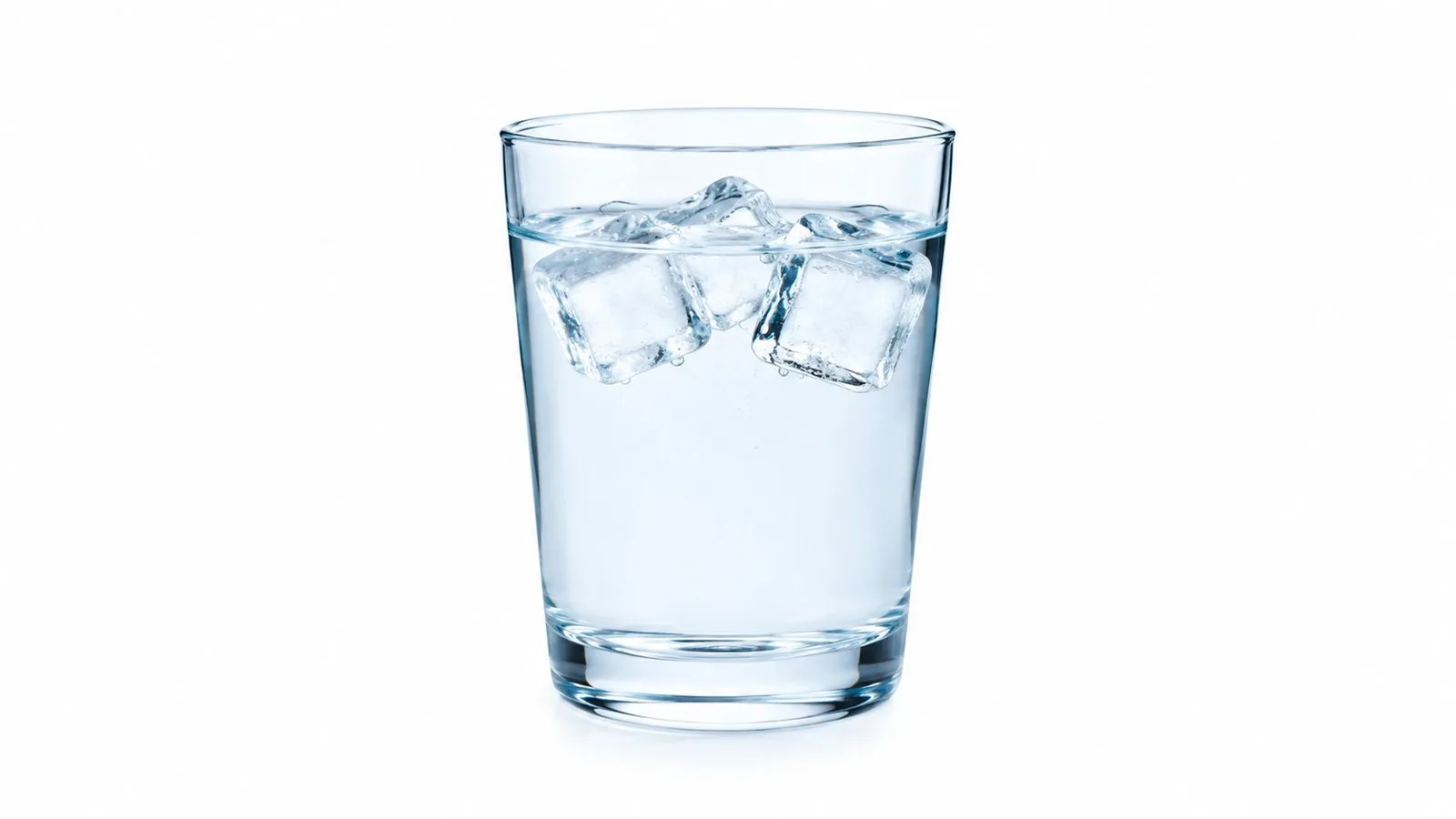
Drop an ice cube into a glass, and it settles partly below the surface rather than sinking to the bottom. The important difference isn't that one substance is solid and the other is liquid. It's how much mass occupies the same amount of space, which is what density describes.
As water freezes, its molecules arrange themselves into an open crystal structure. That arrangement holds them farther apart than they typically are in liquid water, so the frozen water takes up more space.
Why the tempting answer falls short
It's tempting to say that ice floats because it's lighter than water. That needs a qualification: a large block of ice can weigh more than a small glass of water. Ice is less dense, not automatically lighter regardless of size.
This also explains why a lake can develop a frozen surface while water remains underneath. The floating ice forms a layer above the liquid rather than continually sinking.
- Everyday connection: Watch an ice cube shrink in a drink and notice how much remains below the surface.
- Follow-up question: Would the same ice cube float at exactly the same level in fresh water and salt water?
The follow-up keeps the principle intact while changing the surrounding liquid. Floating depends on the relationship between the object and the fluid, not just on the object alone.
Question 1 of 6
Why does ice float on water?
2. Why is the sky blue?
Answer: Rayleigh scattering causes shorter blue wavelengths of sunlight to scatter more strongly than longer red wavelengths.
Sunlight contains a range of visible colors. As it passes through the atmosphere, gas molecules scatter some of that light in different directions, with shorter wavelengths scattering more strongly.
That scattered blue light reaches your eyes from across the sky. You don't have to look toward the Sun to see it, because the atmosphere redirects light toward you from elsewhere.

Why it isn't a reflection of the ocean
The ocean explanation sounds reasonable because both water and sky can appear blue. But the sky is also blue above inland places, far from any visible sea. The atmosphere's interaction with sunlight explains the color without requiring an ocean underneath.
There's another useful distinction: scattering doesn't mean the air manufactures blue light. It changes the direction of light that's already present in sunlight.
For a closer look at the mechanism, explore why the sky is blue. Then carry the same idea into an evening observation: why do sunsets look red or orange?
You're no longer memorizing separate sky colors. You're asking how the route sunlight takes through the atmosphere changes the light that reaches your eyes.
Question 2 of 6
Why is the sky blue?
3. Why do we have seasons?
Answer: Earth's tilted axis changes the angle and duration of sunlight each hemisphere receives during its orbit.
A common guess is that summer happens when Earth moves closer to the Sun. The difficulty is that the hemispheres experience opposite seasons: Australia can have summer while northern countries have winter.
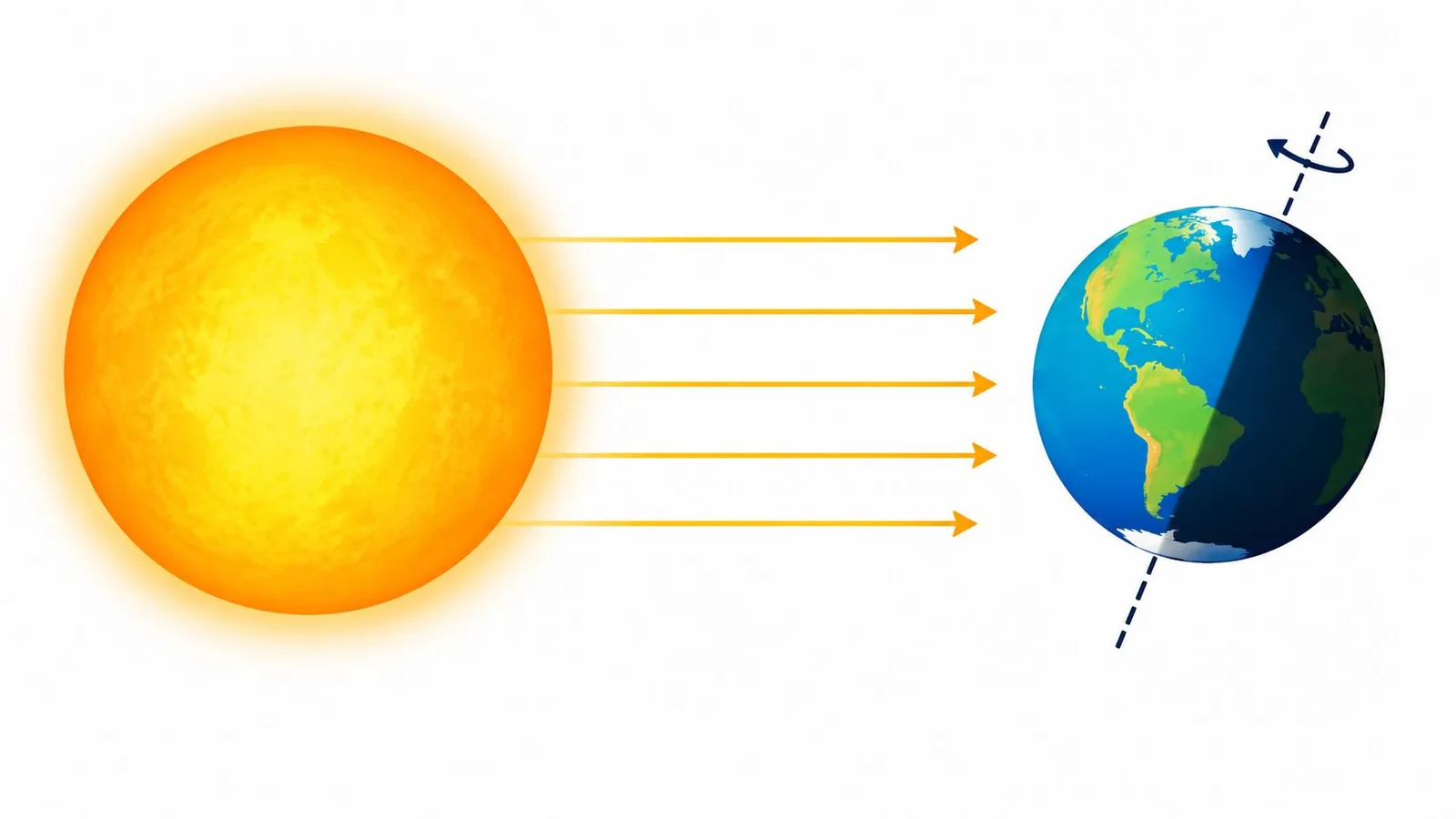
Earth's tilt provides the explanation. When a hemisphere leans toward the Sun, sunlight arrives more directly and daylight lasts longer. When it leans away, sunlight arrives at a shallower angle and days are shorter.
Try the flashlight comparison
Shine a flashlight straight onto a surface, then tilt the beam. The angled beam spreads across a larger area rather than remaining concentrated in a smaller patch. This provides a simple way to think about the effect of sunlight arriving at different angles.
Earth's daily rotation and its seasonal changes aren't the same process. Rotation produces the regular alternation between day and night; the tilted axis matters for how daylight changes through the year.
- Tempting alternative: Distance from the Sun alone doesn't explain opposite seasons in the hemispheres.
- Everyday connection: Compare daylight duration where you live during different parts of the year.
- Follow-up question: Why do places near the equator experience smaller changes in daylight duration?
The useful idea is to separate distance, angle, and duration rather than treating warmth as a question of distance alone.
4. Why do onions make you cry?
Answer: Cutting an onion releases an irritating gas that triggers tear production.
The answer begins at the chopping board, not inside your emotions. When you cut through onion cells, you bring substances together that were previously separated. Their reactions produce a volatile sulfur compound that can travel through the air toward your eyes.
Once that irritant reaches the eye's surface, your body responds by producing tears. The tears are a protective response, helping flush away something irritating.
Why acidity isn't the best explanation
You might guess that onion juice splashes into your eyes or that a strong smell makes you emotional. Neither explanation captures the key mechanism: an airborne irritant can reach your eyes even when the onion never touches your face.
Think about slicing an onion while preparing soup. Your eyes may begin watering while your hands remain well below your face, which makes more sense once you know a gas is involved.
The visible response is tears, but the starting event is damage to the onion's cells.
A sharp knife is relevant because a cleaner cut can damage fewer cells than a blade that crushes its way through. That doesn't make every onion tear-free, but it connects an ordinary kitchen tool to the underlying process.
A useful follow-up is why some onions taste milder than others. Instead of treating all onions as chemically identical, you can begin asking how their composition affects both cooking and the experience of preparing them.
Question 3 of 6
Why does cutting an onion not make your eyes tear until its chemical irritant reaches the tear film?
5. Why do we see lightning before we hear thunder?
Answer: Light travels much faster than sound, so the flash reaches us before the thunder does.
The delay doesn't mean the storm waits before producing its sound. Lightning rapidly heats the surrounding air, creating the disturbance we hear as thunder. Light and sound then travel toward you at very different speeds.
The visible flash arrives first. The sound takes longer to cover the distance between the lightning and your position.

Separate the event from its arrival
A tempting answer is that lightning happens first and thunder happens afterward as an unrelated second event. A better explanation distinguishes what happens at the storm from when its effects reach you.
You can make a similar observation when watching a distant activity that produces both a visible movement and a sound. The movement and sound may appear out of step because your eyes and ears receive their signals at different times.
- What the delay means: A longer gap can indicate that the lightning occurred farther away.
- What it doesn't mean: The flash-to-thunder gap isn't a reason to stay outside observing a storm.
- Follow-up question: Why does sound need a material such as air to travel through, while light can cross space?
Make this an observation from a sheltered indoor location, not an outdoor experiment. Understanding the timing is interesting; approaching a storm to investigate it isn't necessary.
6. Why do chili peppers feel hot?
Answer: Capsaicin activates a heat-sensitive receptor called TRPV1 in your mouth and skin.
A chili pepper doesn't need to be warm to produce a burning sensation. Capsaicin interacts with sensory nerve endings involved in detecting heat, so your nervous system receives a signal associated with burning.
That's why a cold spicy sauce can still feel hot. The food's temperature and the sensation it produces are different things.
Compare the sensation with the temperature
The tempting alternative is that peppers contain physical heat that they release when you bite them. But a pepper taken from the refrigerator can still produce the familiar burn. Its actual temperature doesn't explain the whole experience.
This is a useful example of how perception depends on the body's response to a substance. Your mouth isn't merely reporting a thermometer reading; its receptors respond to particular chemical interactions.
- Everyday example: Compare the warmth of a freshly cooked dish with the lingering burn of chili in that dish.
- Related mechanism: The explanation of why onions make you cry offers another example of food chemicals triggering a bodily response.
- Next question: Why can milk help with the sensation of chili heat?
You don't need to eat an especially hot pepper to understand the distinction. Start with something familiar and ask whether you're noticing temperature, chemical irritation, or both.
Question 4 of 6
Why does eating spicy food make your mouth feel like it's burning?
7. Why do we get goosebumps?
Answer: Tiny muscles attached to hair follicles contract, making the hairs stand up.
A chilly room can trigger goosebumps, but so can a moving piece of music or an unsettling scene in a film. The visible bumps appear when small muscles associated with hair follicles contract.
This response is called piloerection. It belongs to the body's automatic responses rather than requiring you to decide consciously to raise each hair.
An old reflex in everyday life
A tempting explanation is that your skin shrinks when you're cold. That doesn't explain why an emotional moment can produce the same appearance. The shared feature is the muscle response around the follicles, not cold acting directly on the skin.
In animals with thick fur, raised hairs can help trap insulating air or make the animal look larger. Humans retain the reflex even though our comparatively sparse body hair makes the effect less useful.
Observation prompt: Next time you notice goosebumps, ask whether the trigger was temperature, emotion, or surprise.
For more context, explore why we get goosebumps. It's a reminder that an ordinary sensation can connect body structure, automatic nervous-system responses, and evolutionary history.
A natural follow-up is why we shiver. Goosebumps and shivering can both accompany cold, but they aren't interchangeable actions. Asking how each works moves you from naming a reaction to understanding what the body is doing.
8. Why does the same side of the Moon always face Earth?
Answer: Tidal locking has synchronized the Moon's rotation with its orbit around Earth.
The tempting answer is that the Moon doesn't rotate. In fact, it must rotate to keep approximately the same face directed toward Earth as it travels around us.
The key is the match between those movements. The Moon turns on its axis in the same time it takes to complete an orbit, a relationship called tidal locking.
Try it with a chair
Place a chair in the middle of a room and walk around it while keeping your face toward it. As you move, you'll have to turn your body. Someone watching from elsewhere in the room would see that you're rotating.
Now consider walking around the chair while always facing the same wall. Different sides of your body would face the chair as you moved. That's why not rotating wouldn't preserve the same Moon-facing-Earth arrangement.
- Tempting alternative: Seeing the same face doesn't mean there's no rotation.
- Everyday model: Walking around a fixed object makes the relationship easier to visualize.
- Follow-up question: Why can observers on Earth see slightly different portions of the Moon's surface over time?
That follow-up introduces libration, the apparent wobbling that complicates the simple same-face description. The basic answer remains useful, while the next question adds nuance rather than overturning what you've learned.
Question 5 of 6
Why can we only see one side of the Moon?
9. Why do we have leap years?
Answer: Earth's orbit doesn't fit an exact whole number of days, so calendars need occasional adjustments.
A calendar organizes time into neat boxes. Earth's motion doesn't follow those boxes exactly, which creates a mismatch between a whole-day calendar year and the seasonal year.
Leap days help correct that mismatch. Without adjustments, calendar dates would gradually shift in relation to the seasons they're intended to track.
Why a day isn't being created
It's tempting to think a leap year means Earth has suddenly taken longer to orbit the Sun. The extra calendar day isn't a new astronomical event. It's a bookkeeping adjustment that accounts for a fraction of time the ordinary calendar leaves out.
Think of measuring a tabletop with a ruler whose marks don't divide its length neatly. Ignoring the leftover fraction doesn't make it disappear; repeated measurements would keep leaving something unaccounted for.
Leap-year rules also include exceptions. The familiar repeating pattern is a useful introduction, but a full explanation needs those refinements to describe how the calendar stays aligned.
- Everyday example: A birthday on a leap day makes the adjustment visible in someone's life.
- Underlying idea: Human systems of measurement often need corrections because nature doesn't divide into convenient units.
- Follow-up question: Why did people choose the current arrangement of months?
That question shifts from astronomy into history. Earth's motion explains the need for adjustment, while human decisions explain how a calendar expresses it.
10. Why does bread go stale faster in the refrigerator?
Answer: Refrigeration speeds up starch retrogradation, a process that makes bread's crumb firmer.
Bread can feel stale even when it hasn't lost all its moisture. After baking, starch molecules gradually rearrange into more ordered structures, changing the texture of the crumb.
That process is called retrogradation. Refrigerator temperatures can accelerate it, which explains why putting bread beside the milk isn't always the best way to preserve a soft texture.
Staling and drying aren't identical
The tempting answer is that stale bread is just dry bread. Drying can contribute to an unpleasant texture, but it doesn't explain every change. Bread can become firmer while stored in packaging because its internal starch structure is changing.
This also explains why storage decisions involve more than one goal. Keeping bread soft, limiting mold, and preserving it for longer aren't identical problems, so a method that helps with one may have a drawback for another.
Kitchen distinction: A refrigerator and a freezer don't have the same effect on bread's texture.
For plain bread you won't use soon, freezing is generally a more suitable texture-preserving option than refrigeration. Follow package guidance, especially when a product contains fillings or other perishable ingredients.
The follow-up question is why toast can make stale bread appealing again. Heating changes the experience, but it doesn't turn spoiled bread into safe food. Keep texture changes separate from signs that food should be discarded.
Question 6 of 6
Why does bread become stale faster in the fridge than on the counter?
10 Easy Trivia Questions for Adults Compared
| Topic | Core scientific explanation | Learning complexity 🔄 | Resources ⚡ | Expected learning outcome 📊 | Ideal use and key advantage ⭐💡 |
|---|---|---|---|---|---|
| Why ice floats | Hydrogen bonds form an open crystal structure, making ice less dense than liquid water. | Low; clarify that density, not weight alone, explains floating. | Ice and water optional. | Connects density to floating and lake insulation. | Everyday science; introduces molecular structure. |
| Why the sky is blue | Air molecules scatter shorter blue wavelengths more strongly than longer red wavelengths. | Medium; distinguish Rayleigh scattering from cloud scattering. | Sky image or sunlight diagram optional. | Explains blue skies and leads naturally to red sunsets. | Visual science lessons; links familiar sights to light physics. |
| Why we have seasons | Earth's 23.4° axial tilt changes sunlight angle and day length across the year. | Medium; address the misconception that seasons are caused by distance from the Sun. | Globe and lamp or flashlight. | Explains opposite hemispheric seasons and seasonal temperature changes. | Classroom demonstrations; corrects a common misconception. |
| Why onions make you cry | Damaged onion cells release a volatile compound that irritates the eyes and triggers tears. | Medium; the chemical pathway can be simplified. | Onion and cutting board optional. | Shows how chemistry can trigger a biological response. | Kitchen science; highly relatable everyday example. |
| Why lightning is seen before thunder | Light travels much faster than sound, so the flash reaches observers first. | Low; distance estimates are approximate. | Stopwatch optional. | Explains the flash-to-thunder delay and a rough distance estimate. | Storm safety education; offers a memorable practical rule. |
| Why chili peppers feel hot | Capsaicin activates TRPV1 receptors, producing a burning sensation without actual heat. | Medium; distinguish sensation from temperature and taste. | Pepper or Scoville scale chart optional. | Connects spicy sensations to pain and temperature receptors. | Food science; invites follow-ups about milk and pain relief. |
| Why we get goosebumps | Small muscles attached to hair follicles contract in response to cold or emotion. | Low; the evolutionary explanation should be presented as an interpretation. | None required. | Links a familiar reflex to the nervous system and evolution. | Biology lessons; accessible bridge to animal responses. |
| Why the same side of the Moon faces Earth | Tidal forces synchronized the Moon's rotation period with its orbital period. | Medium; clarify that the Moon does rotate. | Diagram or orbit model optional. | Explains tidal locking and why libration reveals more than half the Moon over time. | Astronomy education; corrects a common misconception. |
| Why we have leap years | Calendar adjustments compensate for the solar year being about 365.2422 days. | Medium; explain the Gregorian century-year exception. | Calendar or year examples optional. | Explains leap days and how they keep seasons aligned with the calendar. | Calendar and history lessons; connects astronomy with mathematics. |
| Why bread goes stale faster in the refrigerator | Refrigeration speeds starch retrogradation, which firms the bread's crumb. | Medium; distinguish staling from simple moisture loss. | Bread stored at different temperatures optional. | Clarifies how storage temperature affects bread freshness. | Practical food science; supports better storage choices. |
Keep the Questions Going Beyond the Quiz
The strongest trivia habit isn't chasing a perfect score. It's noticing which answer leaves you wanting to understand something else. Perhaps the Moon explanation made sense only after you walked around a chair, or the bread question changed how you think about the word stale.
Choose an answer and explain it from memory. Then identify the point where your explanation becomes uncertain: what exactly does scattering mean, how does a receptor send a signal, or why does salt water affect floating? That uncertainty gives you a specific next question rather than a vague intention to learn more.
Turn an answer into a learning routine
Research on spaced retrieval practice supports returning to material across separated sessions rather than concentrating every attempt into one sitting. You can apply that idea casually: revisit a question later, attempt the explanation before looking, and check the part you found difficult.
Keep the process friendly rather than turning every conversation into an examination.
- Explain the cause: Say why the answer works, not just what the answer is.
- Revisit the alternative: Explain why the tempting wrong answer seemed plausible and where it falls short.
- Ask something connected: Change a condition, compare another example, or investigate an unfamiliar term.
Saying an explanation aloud can also become a shared activity. If you enjoy learning through participation, these gamified speaking practice examples offer another direction to explore.
Million Whys is designed around this curiosity-first routine. It offers short daily questions, explanations for every answer choice, and optional follow-up rabbit holes, so an incorrect prediction can lead somewhere useful instead of ending at a score.
Easy trivia questions for adults don't have to be intellectually shallow. An accessible question can introduce a worthwhile distinction: sensation versus temperature, rotation versus orbit, or drying versus staling. Pick the distinction you'd most enjoy explaining to someone else, try it without looking, and let their next question guide what you explore.
Igneous AI, LLC develops Million Whys, a daily trivia and micro-learning platform with short interactive questions and explanations for correct and incorrect choices. Visit Igneous AI, LLC to try a daily why-question, make your prediction, and follow the explanation into something you'd like to understand better.
Keep Exploring
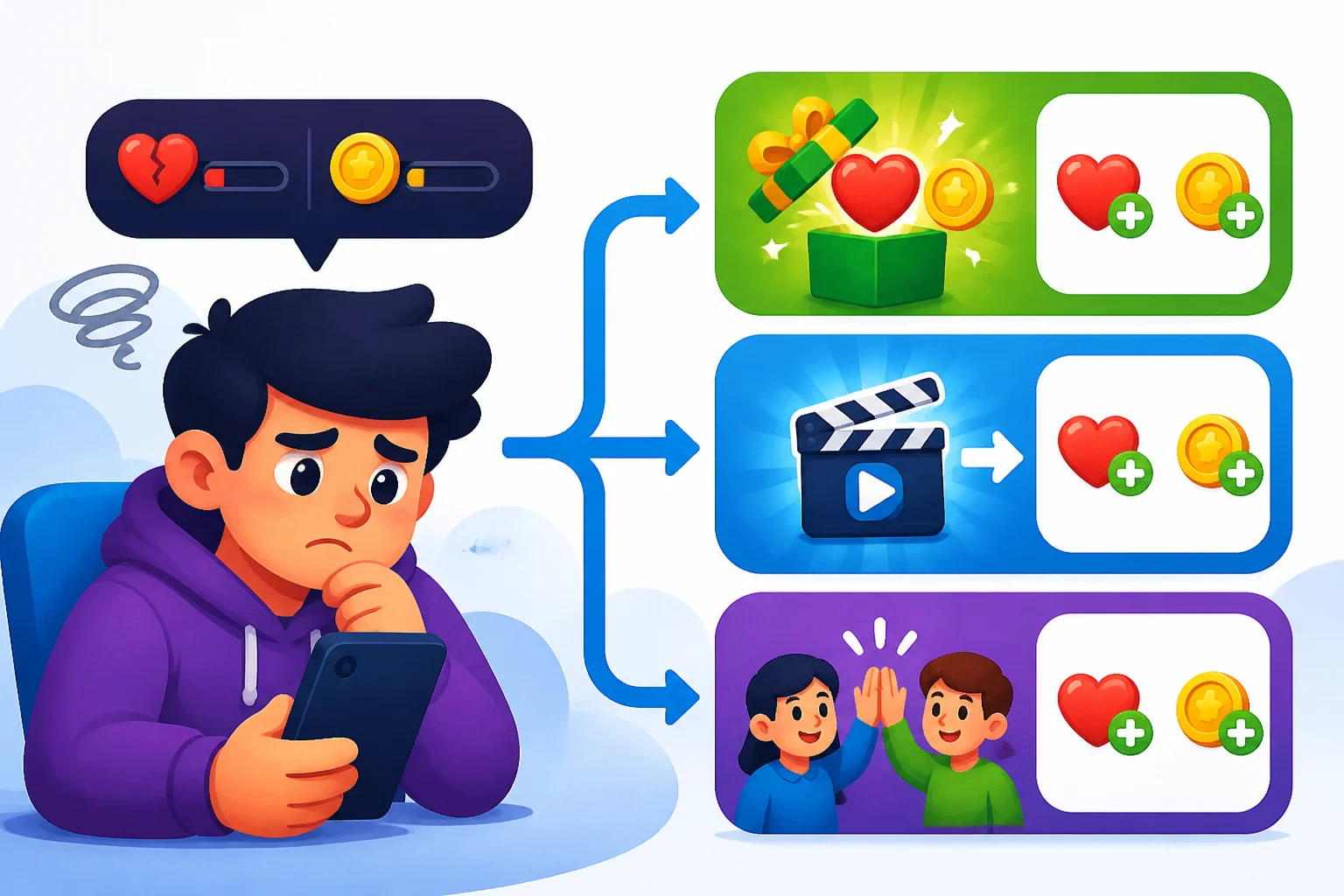
QuizzLand is a level-based trivia game that explains answers and uses lives and coins. How does it let a player who runs low on those resources get more?
Film, TV & Games
Why does finally getting the answer to a trivia question help you remember not just the answer but also some unrelated details from that moment?
Psychology & Behavior
When a trivia question makes you itch for the answer, why can that answer stick better?
Psychology & Behavior
Related Posts
Trivia for Adults: A Curiosity-First Guide
Trivia for adults works best when it fits real adult learning: quick questions, clear mechanisms, no classroom pressure, and curiosity that compounds daily.
History Trivia Questions and Answers
History trivia questions with answers for curious adults: explore flags, aqueducts, armor, greetings, Easter customs, and Marco Polo in quick cards today.
Fun Quiz Questions and Answers to Play Anywhere
A fun quiz with quick multiple-choice questions, explained answers, and playful rounds for parties, meetings, or a 10-second curiosity break for adults.