

Why Do We Get Goosebumps? The Fur Reflex Left Behind
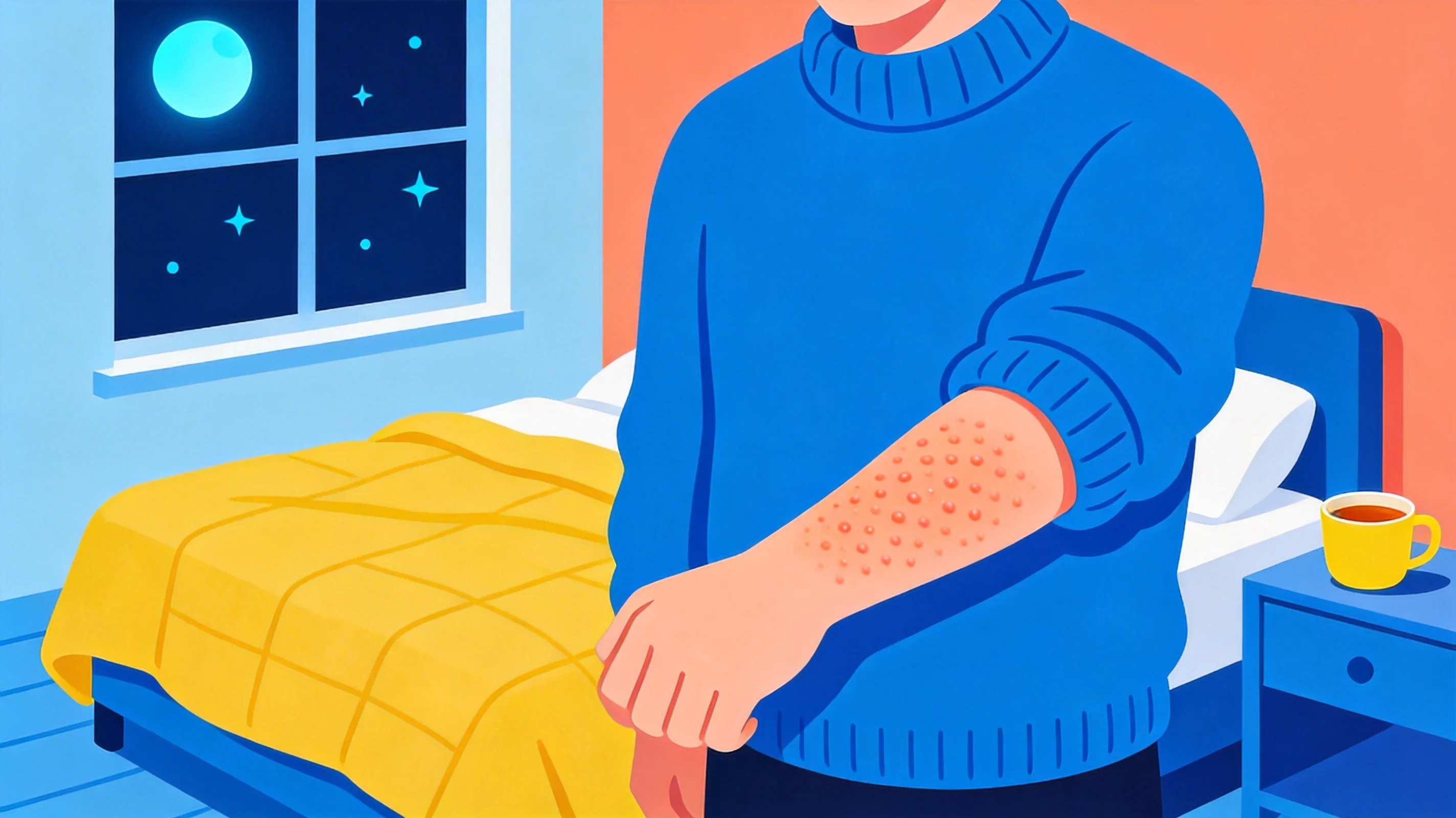
Why do we get goosebumps when the room is warm, the song is good, or the scary part has not even happened yet? Your skin is running an old body program with surprisingly modern uses. Tiny muscles at the base of your hairs contract, the hairs tilt upward, and the bumps appear. On a furry animal, that can help trap air or make the body look larger. On us, it mostly leaves a visible receipt: your nervous system found something worth reacting to.
TL;DR
Goosebumps, or piloerection, happen when the sympathetic nervous system activates tiny arrector pili muscles attached to hair follicles. The old mammal logic was useful for insulation and threat display, but humans also get goosebumps from awe, music, fear, memory, and emotional prediction. The bumps are not the point; they are the skin-level trace of a deeper arousal system.
Short answer: we get goosebumps because arrector pili muscles contract under sympathetic control. Cold, fear, and strong emotion can all trigger that pathway. In humans the reflex is partly vestigial, because we no longer have thick fur to fluff, but the same machinery still connects body temperature, threat readiness, hair follicles, and emotional chills.
This sits in the same body-mechanism cluster as why music gives you chills and why people say bless you when you sneeze: small involuntary body events that turn out to carry a whole social or nervous-system story.

Curious? Try one 👇
Why is the sky blue?
Jump into the daily quiz →The tiny muscle that makes skin answer
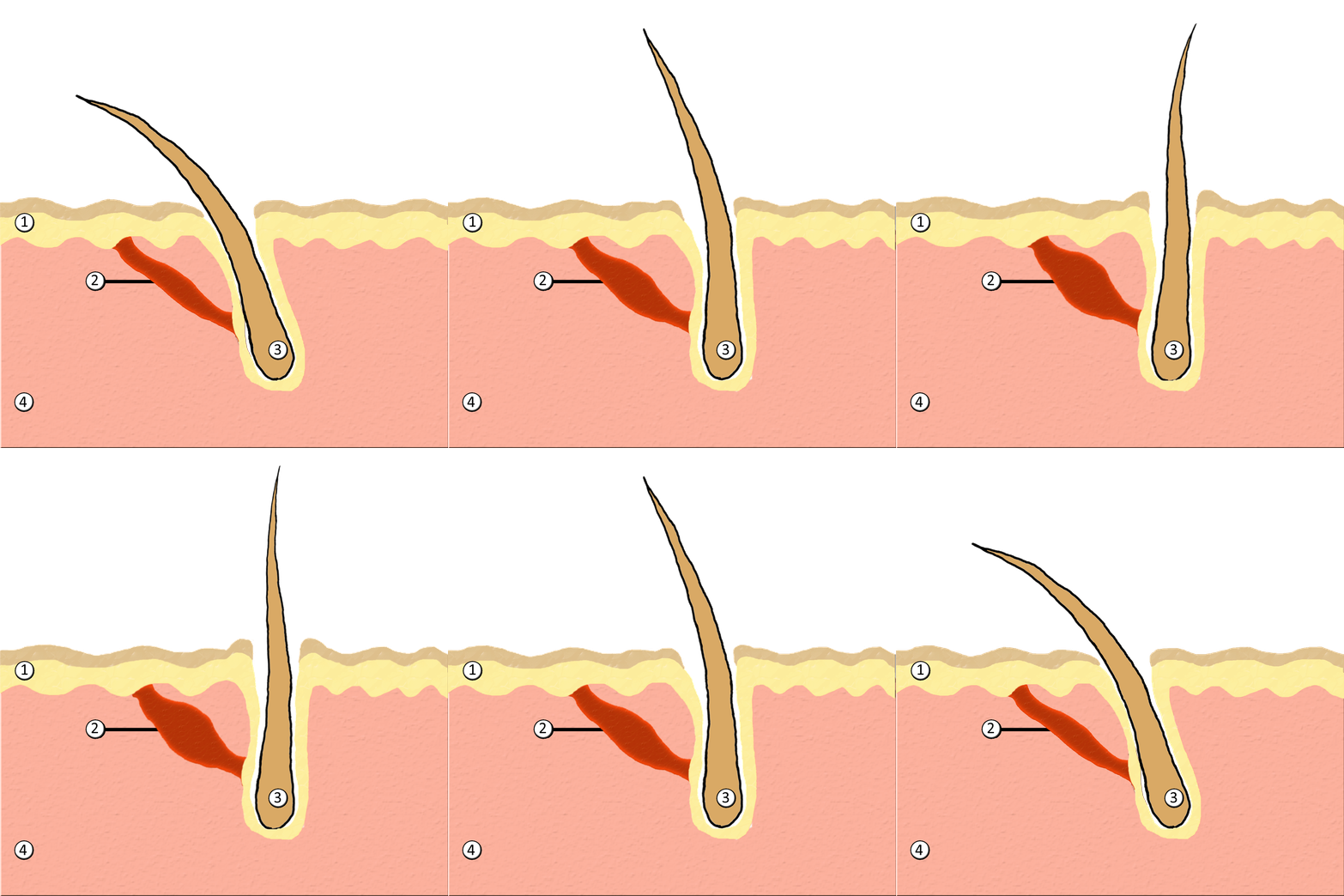
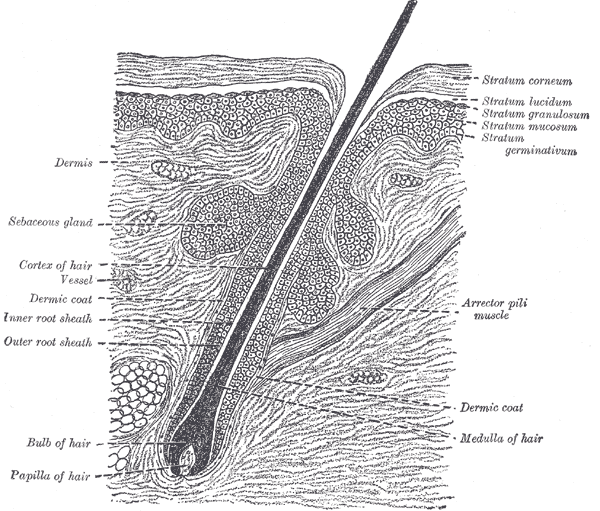
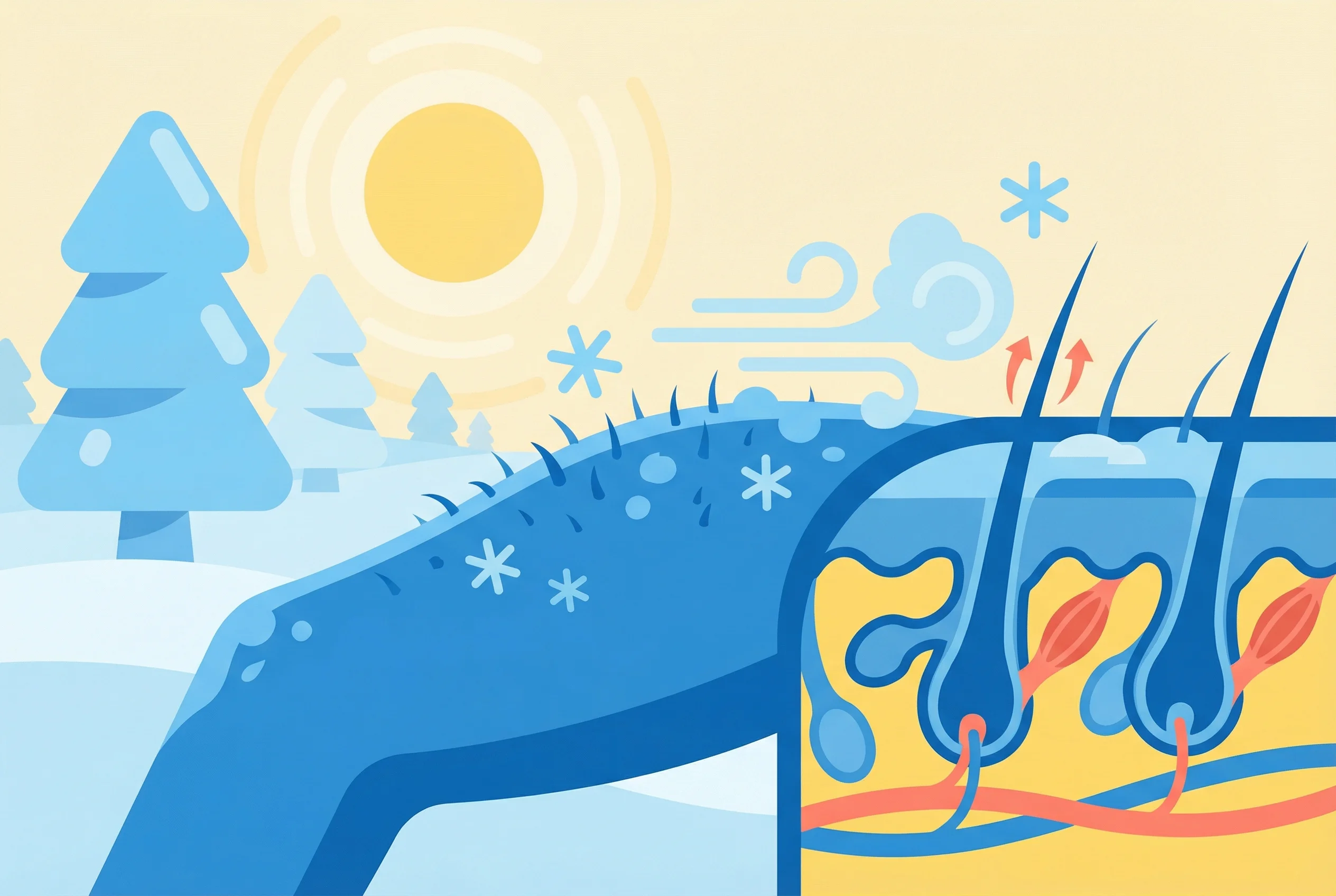
Each goosebump starts below the visible bump. Hair follicles are connected to small smooth muscles called arrector pili. When those muscles contract, they tug the hair follicle and make the hair stand more upright. Cleveland Clinic's plain-language summary calls goosebumps an involuntary reaction tied to the sympathetic nervous system, with tiny muscles contracting at the base of hair follicles (Cleveland Clinic). A research review describes the arrector pili muscle as a small band of smooth muscle connecting the hair follicle to surrounding connective tissue (Torkamani et al., 2014).
That muscle is not under ordinary conscious control. You can decide to raise your arm, but you usually cannot decide to raise every arm hair. The pathway belongs to the autonomic nervous system, the same broad system that adjusts heart rate, sweating, and blood vessel tone without asking for a meeting. Goosebumps are weird because a hidden automatic signal becomes visible on the skin.
The name is literal enough to be useful. Plucked goose skin has raised follicles where feathers used to be. Human goosebumps resemble that surface, even though our hair is much finer. The phrase makes the reflex sound silly. The anatomy is not silly at all.
Cold goosebumps are old fur logic
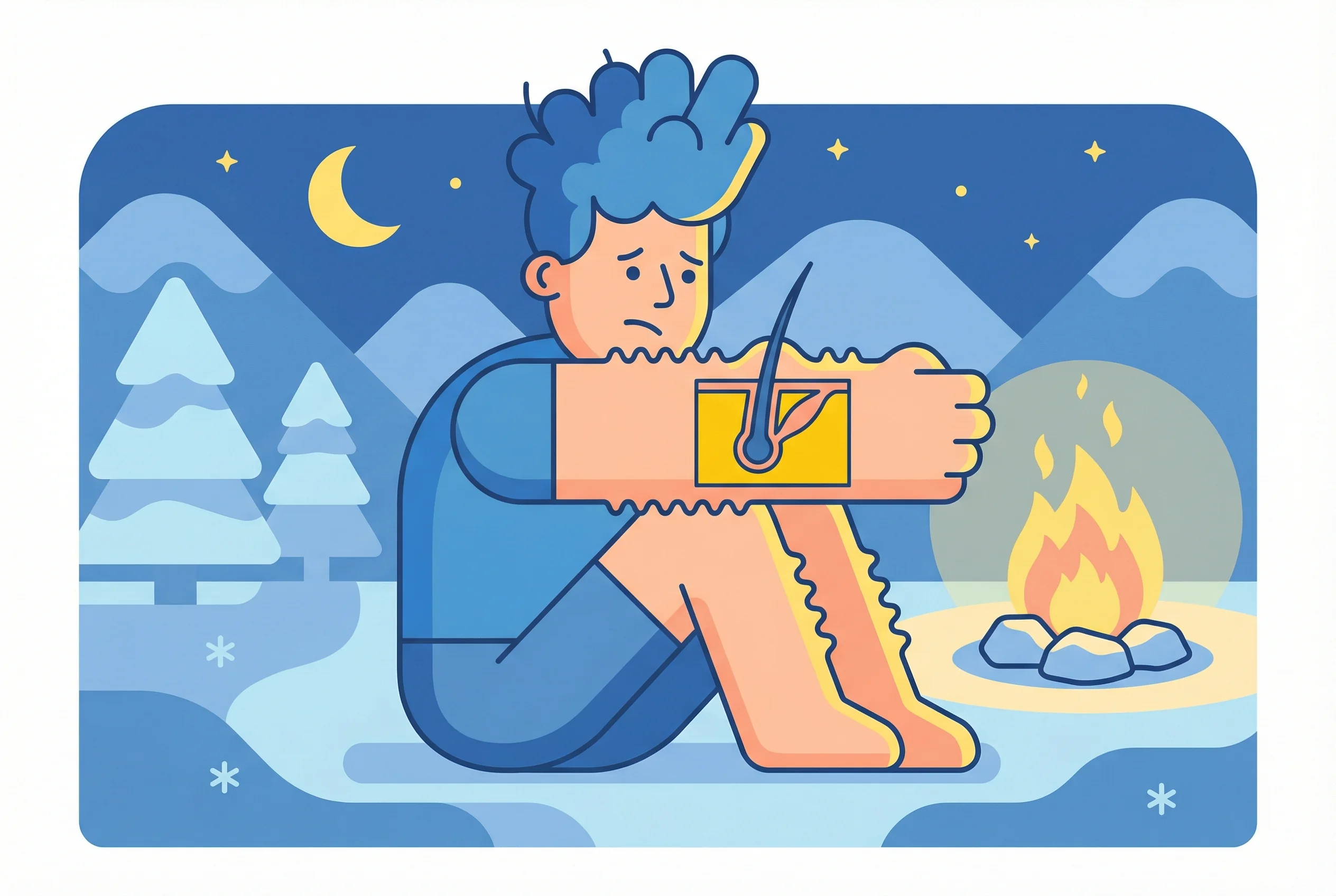
For a mammal with dense fur, raising hairs can trap more still air near the skin. Still air is insulation. A frightened or angry animal can also look larger when its hair stands up. That is the old evolutionary story: piloerection can help with warmth and display when the body has enough hair for the effect to matter.
Humans kept the machinery but lost most of the payoff. Our arm hairs do not puff into a meaningful winter coat, and a goosebumped forearm will not intimidate a predator. That is why goosebumps are often described as vestigial. The word should not mean "useless junk." It means a trait can be a leftover of an older function while still being wired into living systems.
NIH's summary of Harvard-led work identifies the trio behind the reflex: arrector pili muscles, sympathetic nerves, and hair follicles (NIH Research Matters). The underlying Cell paper goes further, showing in mice that the cell types involved in goosebumps also form a niche that regulates hair follicle stem cells (Shwartz et al., 2020). So the old fur reflex is not just a party trick. It is embedded in skin maintenance and hair biology.

Fear uses the same switch
Cold is not the only route. Fear, startle, awe, and intense anticipation can activate sympathetic arousal too. Your body does not run a separate goosebump system for every feeling. It has a general readiness system that can change heart rate, skin conductance, sweating, breathing, and hair position depending on context.
This is why a horror scene can give you goosebumps before anything touches you. The skin is not responding to temperature. It is responding to prediction. Something in the scene has opened a threat-shaped gap: your brain expects an event, the body prepares, and the hair-follicle machinery comes along for the ride. The same visible bumps can therefore mean "I am cold," "I am scared," or "something emotionally large is about to land."
The useful thing to notice is timing. Goosebumps often arrive during the build, not only after the reveal. That makes them a close cousin of curiosity: the gap matters before closure. Your skin can react while the answer is still on the way.
Music chills are not just cold with a soundtrack
Music goosebumps are the case that makes the old explanation feel too small. A chorus rises, a harmony resolves, or a voice enters after a long wait, and your skin acts as if the room changed temperature. Researchers often call this frisson or aesthetic chills. The mechanism is not identical to cold piloerection, but it can recruit the same visible output.
McGill's summary of work from Robert Zatorre and Valorie Salimpoor's group reports that pleasurable music can release dopamine and that anticipation before the peak matters too (McGill Newsroom). A 2024 review of aesthetic chills describes the field as a way to study how bodily sensations shape emotion and consciousness, with auditory stimuli such as music among the common triggers (Iglesias-Parro et al., 2024).
Here is the closure loop in miniature. Music teaches your brain a pattern, delays or bends that pattern, then resolves it. If the gap is too obvious, nothing happens. If it is too confusing, nothing lands. In the half-knowing middle, the body leans forward. When the resolution arrives, the answer is felt before it is verbalized. Goosebumps are the skin's applause.
That does not mean every chill is the same. Cold goosebumps are more about temperature defense, fear goosebumps are closer to threat readiness, and music chills are wrapped in prediction and reward. The shared output can fool us into thinking there is one cause. The better closure is that the body reuses a useful signal path for several different kinds of "pay attention."

What people usually miss
The common explanation says goosebumps are a useless leftover from when humans had fur. That is partly right and too flat. It explains why cold piloerection once helped. It does not explain why the reflex is wired into emotion, why music can trigger it, or why the skin-hair-follicle system still matters biologically.
The better answer has two layers. Layer one is anatomy: arrector pili muscles pull hair follicles. Layer two is meaning: the sympathetic nervous system fires when the body detects cold, threat, awe, or a powerful pattern about to close. Goosebumps are not the cause of the feeling. They are the trace the feeling leaves on the body's surface.
That is why the reflex feels oddly intimate. A thought, memory, chord change, or movie scene becomes a physical texture. The outside of your arm briefly reports what the inside of your nervous system is doing.

Related videos
Why Do We Get Goose Bumps? - NPR's Skunk Bear
The Science of Goosebumps and Music Chills - AsapSCIENCE
FAQ
Are goosebumps the same thing as chills?
Not exactly. Goosebumps are the visible piloerection on the skin. Chills are the subjective wave, shiver, or rush people feel. They often happen together, especially during cold or emotional arousal, but one can occur without the other.
Why do I get goosebumps when I am not cold?
Strong emotion, fear, awe, music, memory, or anticipation can activate sympathetic arousal. The same body system that reacts to cold can also react when the brain detects something emotionally important or prediction-rich.
Are goosebumps useful for humans?
They are not very useful as insulation because humans do not have dense fur. But the underlying skin system is still biologically active, and research in mice links the goosebump machinery to hair follicle stem-cell regulation.
Why does music give some people goosebumps?
Music can build expectation and then close it in a rewarding way. Studies of music-induced chills link the experience to reward, anticipation, and emotional arousal, which can recruit the same skin response that makes hair stand up.
Can everyone get goosebumps on purpose?
No. Most goosebumps are automatic. Some people report voluntary piloerection, but that ability appears unusual and is not the normal way the reflex works.
What does this have to do with AIgneous Million Whys?
Million Whys is built around the same shape: a visible gap, a moment of anticipation, and real closure. Goosebumps are a reminder that good questions are not just information requests. Sometimes the body notices the answer arriving.
Keep reading
Sources
Cleveland Clinic - Why You Have Goosebumps on Your Skin
Torkamani et al. - Beyond Goosebumps: Does the Arrector Pili Muscle Have a Role in Hair Loss?
NIH Research Matters - What goosebumps are for
Shwartz et al. - Cell types promoting goosebumps form a niche to regulate hair follicle stem cells
McGill Newsroom - Musical chills: why they give us thrills
Iglesias-Parro et al. - The neurobiology of aesthetic chills
Curious? Try one 👇
Why is the sky blue?
Jump into the daily quiz →Keep Exploring
Related Posts
Why Does Music Give You Chills? Frisson Explained
Why does music give you chills? Frisson explained through dopamine, prediction, goose bumps, musical surprise, and why some songs create real closure.
Why Do Songs Get Stuck in Your Head?
Why do songs get stuck in your head? Earworm science explains catchy hooks, mental replay, stress, boredom, chewing gum, and practical ways to stop the loop.
Why Is Yawning Contagious?
Why is yawning contagious? Research points to automatic motor imitation, but empathy, brain cooling, and animal evidence make the full answer less tidy.