

Backrooms Psychology Viral: Why It Worked
Backrooms Psychology Viral: Why It Worked
Backrooms psychology viral is a weird phrase for a weird phenomenon: one anonymous image of a yellow, empty commercial space became a shared nightmare, a YouTube horror language, a game ecosystem, and eventually mainstream movie material. The image is not a monster. It is not gore. It is just a room that feels like it should have people in it, and somehow that absence does more work than a creature ever could.
TL;DR
The Backrooms went viral because it created a clean, closable information gap with no satisfying final answer. The space is familiar enough to recognize and wrong enough to disturb. Liminal architecture, missing context cues, collaborative internet lore, and found-footage restraint let millions of people project their own fear into the same empty room.
The short answer: the Backrooms works because it sits in the half-known zone. You know the carpet, the fluorescent lights, the office partitions, the mall corridor, the service hallway. You do not know why the room is empty, where the exit is, or whether anything is around the corner. That is Loewenstein's curiosity mechanism in horror clothing: the gap is visible, and your brain wants closure.

Curious? Try one 👇
Why is the sky blue?
Jump into the daily quiz →Backrooms Psychology Viral Started With One Almost-Normal Room
The now-famous image was traced in 2024 to a real renovation photo from a former furniture store in Oshkosh, Wisconsin. The Internet Archive reports that the image, DSC001561.JPG, came from renovation photos for a HobbyTown project, with metadata showing a June 12, 2002 date (Internet Archive). Wisconsin Public Radio later summarized the same Oshkosh origin and noted that the photo was later shared on 4chan in 2019 (WPR, 2026).
The viral magic is that the origin did not look designed. It looked found. The photo has low resolution, beige-yellow walls, carpet, and fluorescent lights. It is ordinary enough to feel like somewhere you might have passed on the way to a bathroom, office, hobby store, hotel conference room, or abandoned mall. But it is also wrong: no windows, no furniture, no human purpose, no obvious path. That combination makes the mind start filling blanks.

Know Your Meme documents the 2019 /x/ thread where an anonymous user asked for "disquieting images" that felt off, and another user attached the now-famous "noclip out of reality" story to the room (Know Your Meme). The text gave the image a mechanism without over-explaining it. You did not enter a haunted house. You slipped out of reality in the wrong place.
Backrooms Psychology Viral Relies on Liminal Space
A liminal space is a threshold space: a corridor, hallway, stairwell, airport terminal, parking structure, empty mall, or service area. It is supposed to be passed through, not lived in. Psychology Today's 2026 article on liminal spaces and Backrooms argues that these spaces unsettle us because they highlight ambiguity and transition, and because the brain uses boundaries and context cues to structure memory and navigation (Psychology Today).

That maps neatly onto the Backrooms. A hallway is not scary when it connects two known places. It becomes scary when it seems to connect to more hallway forever. The Backrooms turns a transition into a destination. It traps you in the part of a building your brain expects to finish quickly.
The emptiness matters too. A normal office, mall, or hotel corridor is full of social cues: footsteps, signs, open doors, desks, furniture, cleaning carts, music, voices. Remove those cues and the same architecture becomes a question. Where did everyone go? Was I supposed to be here? Why is the light still on?
Backrooms Psychology Viral Works Because Familiarity Turns Wrong
The Backrooms is not alien in the usual horror sense. It is too familiar. Kotaku's analysis of the creepypasta points to the wrongness inside the ordinary: wallpaper instead of paint, doorways without doors, strange wall heights, and fluorescent lights that feel slightly misplaced (Kotaku). You do not need a monster because the room itself has become a broken expectation.

This is why the Backrooms can feel nostalgic and dreadful at the same time. Many people grew up around similar spaces: suburban malls, office parks, school hallways, hotel corridors, carpeted conference centers, fluorescent basements. The image pulls on a memory drawer that is not personal enough to be one place, but not generic enough to be nowhere. It feels like a place your brain has filed and failed to label.
That half-recognition is powerful. A completely alien landscape gives you less to do; you can file it under fantasy. A slightly wrong hallway keeps arguing with your memory. You keep scanning for the ordinary detail that would make it safe, and the detail never arrives.
Backrooms Psychology Viral Spread Through Collaborative Closure
The original Backrooms post did not explain everything. That restraint made it shareable. Internet users could add levels, entities, maps, games, videos, theories, and counter-theories. The Internet Archive notes that the unknown origin of the photo was part of its power for years; people kept trying to solve and extend a puzzle that began with missing context (Internet Archive).

This is the same demand-side knowledge pattern that makes curiosity communities grow. A top-down author can invent lore, but a viral myth becomes much larger when the audience can ask, "What else is in there?" The Backrooms gave people a shared primitive: empty yellow rooms, exitless corridors, reality slipping. Anyone could build from that without asking permission.
Kane Parsons' 2022 found-footage video then turned the static gap into motion. WPR quotes an anthropology researcher saying Parsons' series "blew the whole concept open," and points to one of the videos having tens of millions of views (WPR). The found-footage format matters because it keeps the answer just out of reach. The camera sees enough to prove the space is real inside the fiction, but not enough to map it.
Backrooms Psychology Viral Is About No Exit, Not Jump Scares
Most horror gives you a threat. The Backrooms gives you a situation. You are in the wrong place, the place keeps going, and the rules are unclear. That is a more durable fear because it keeps the brain in active prediction mode. You are not only asking "what is behind me?" You are asking "what kind of world lets this exist?"

Psychology Today's liminal-space piece points to context cues as a stabilizer. Windows, landmarks, distinctive rooms, and clear boundaries help you orient. The Backrooms removes those supports. Repetition becomes hostile. Similar rooms do not reassure you; they make memory harder. Did you already turn here? Is this new? Are you moving or looping?
That is why the best Backrooms material is often restrained. Too much lore can close the gap too quickly. A monster gives your fear a face. An explanation gives your fear a folder. The empty room gives your fear a job.
What People Usually Miss
The Backrooms did not go viral because yellow wallpaper is scary. It went viral because the image made a precise kind of gap: familiar enough to enter, empty enough to question, unresolved enough to invite collaboration. The room is a curiosity machine with horror lighting.
People also miss that the solved origin does not ruin the phenomenon. Knowing that the photo came from an Oshkosh renovation closes one layer and opens another. Why did this mundane renovation image become a modern myth? Why did so many people recognize the feeling? Why did a dead commercial interior become more memorable than thousands of designed monsters?
That is the satisfying part. The Backrooms gives a real example of how curiosity compounds. One person posts a strange image. Another person adds a premise. Others build maps, games, videos, and investigations. Years later, people trace the source photo and the myth does not disappear. It grows a new layer: the mystery of why the mystery worked.
Related Videos
- Kane Pixels: The Backrooms (Found Footage)
- Kane Parsons on the psychology of liminal spaces and Backrooms
FAQ
Why did the Backrooms go viral?
The Backrooms went viral because it combined a familiar empty space, a simple "noclip" premise, and enough missing information for people to add their own fear, lore, and theories.
What is liminal space horror?
Liminal space horror uses transitional places such as hallways, malls, airports, stairwells, and offices after their normal context has been removed. The fear comes from being stuck in a place meant to be passed through.
Where did the original Backrooms image come from?
The image was traced to renovation photos from a former furniture store that became a HobbyTown-related space in Oshkosh, Wisconsin. The Internet Archive identified metadata for the famous image from June 12, 2002.
Why are empty office spaces creepy?
They are built for human activity, so when the people, furniture, signs, and purpose disappear, the brain keeps searching for context. That mismatch between expected use and actual emptiness creates unease.
What does this have to do with AIgneous Million Whys?
MillionWhys is built around the same curiosity engine, without the horror: a visible gap, a guess, and real closure. The Backrooms shows how powerful a question can be when it is familiar enough to enter and strange enough to keep asking about.
Keep reading
Sources
Internet Archive: The Backrooms of the Internet Archive
Wisconsin Public Radio: Horror film Backrooms inspired by a meme born in Oshkosh
Psychology Today: From Horror to Healing: The Neuroscience of Liminal Spaces
Curious? Try one 👇
Why is the sky blue?
Jump into the daily quiz →Keep Exploring
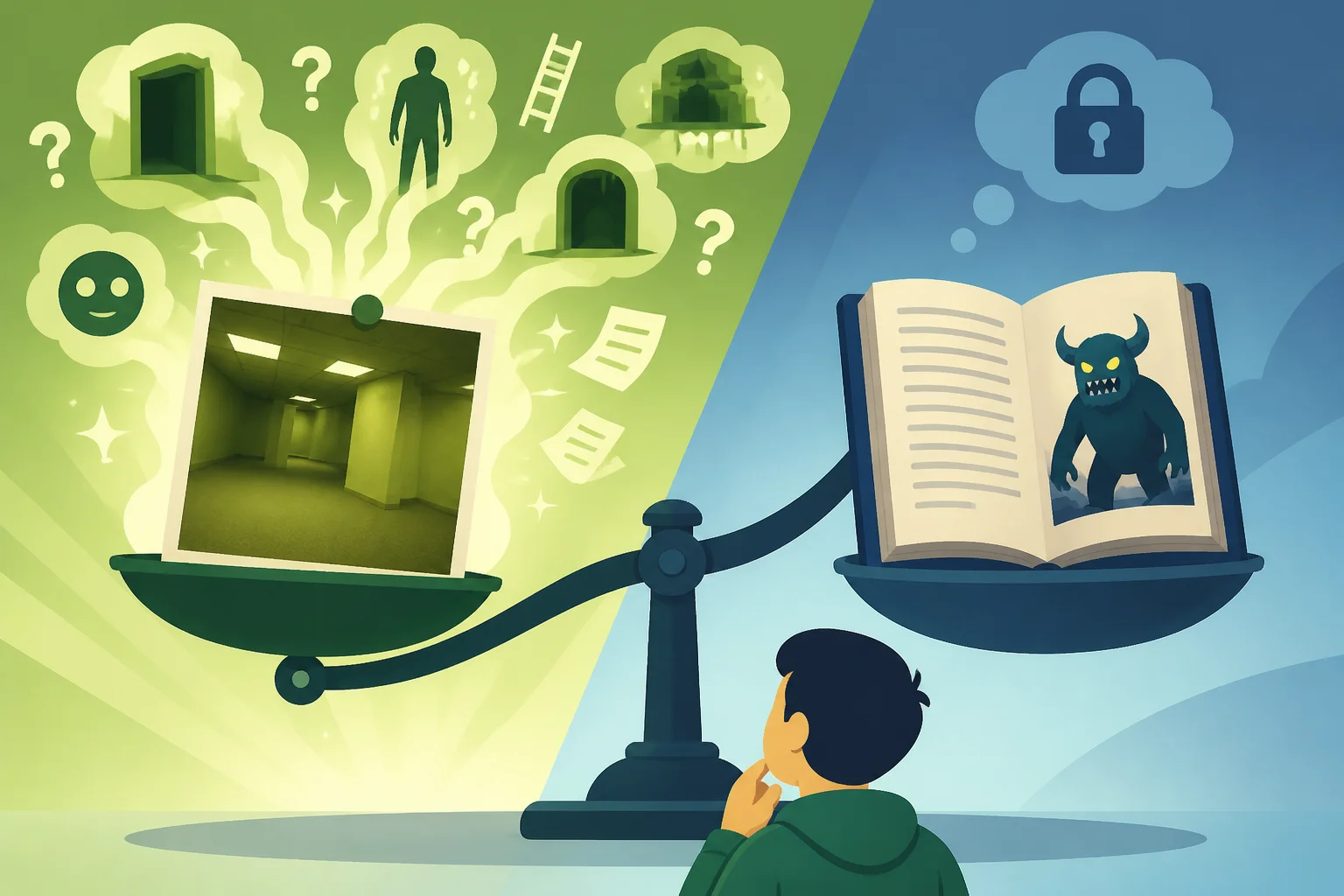
Why could one vague Backrooms photo grow more lore than a finished monster story?
History & Culture
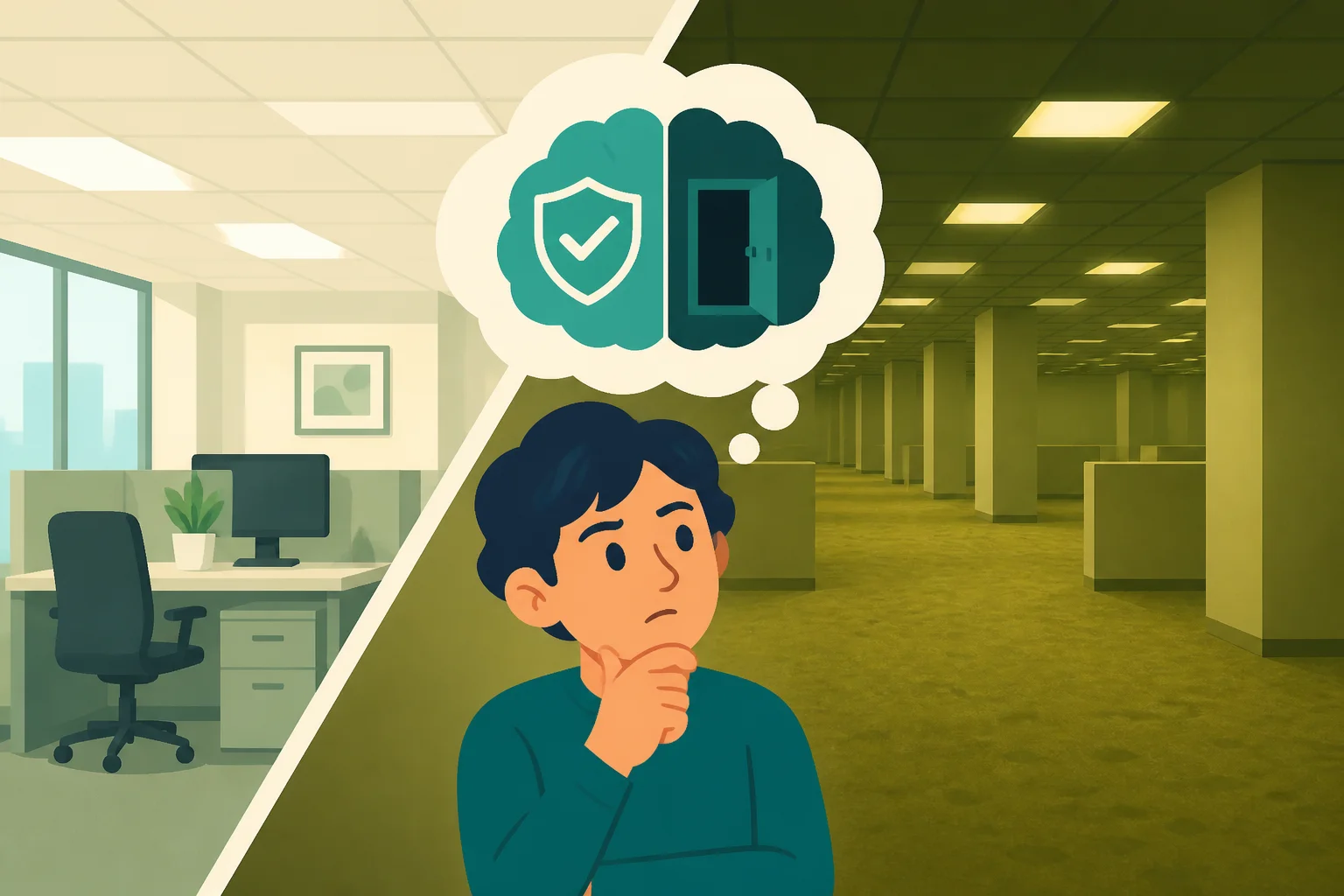
Backrooms-style empty offices look normal, not gothic. Why can that make them creepier?
Psychology & Behavior
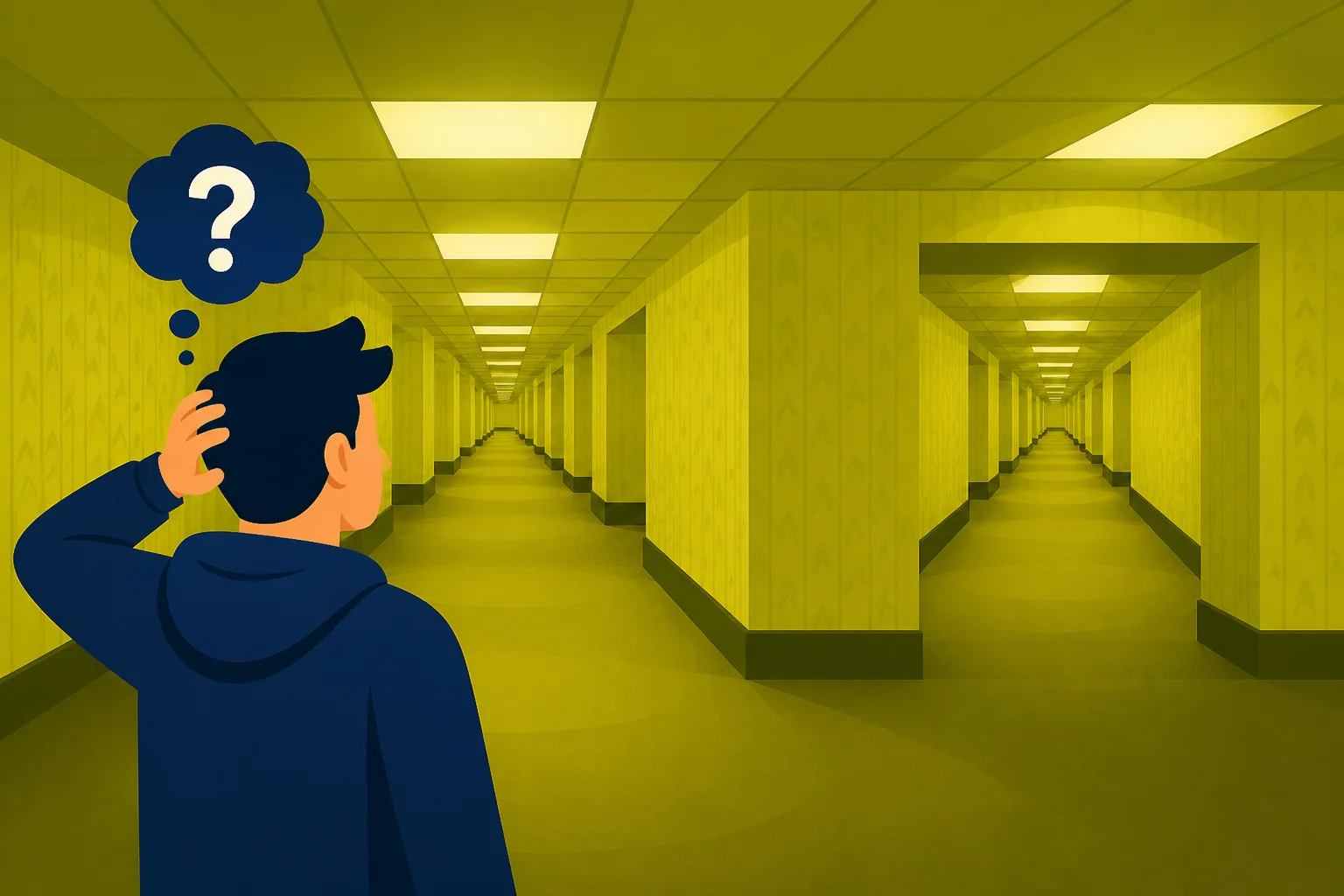
Backrooms corridors repeat with few landmarks. Why does that raise unease?
Psychology & Behavior
Related Posts
Why Does Deja Vu Happen? A Brain Familiarity Glitch
Why does deja vu happen? Memory science explains familiarity glitches, temporal-lobe signals, spatial resemblance, epilepsy warnings, and real closure.
Neuroscience of Curiosity: Why Wonder Sticks
The neuroscience of curiosity explains why small daily wonders prime reward, memory, and better questions without turning learning into homework or hype.