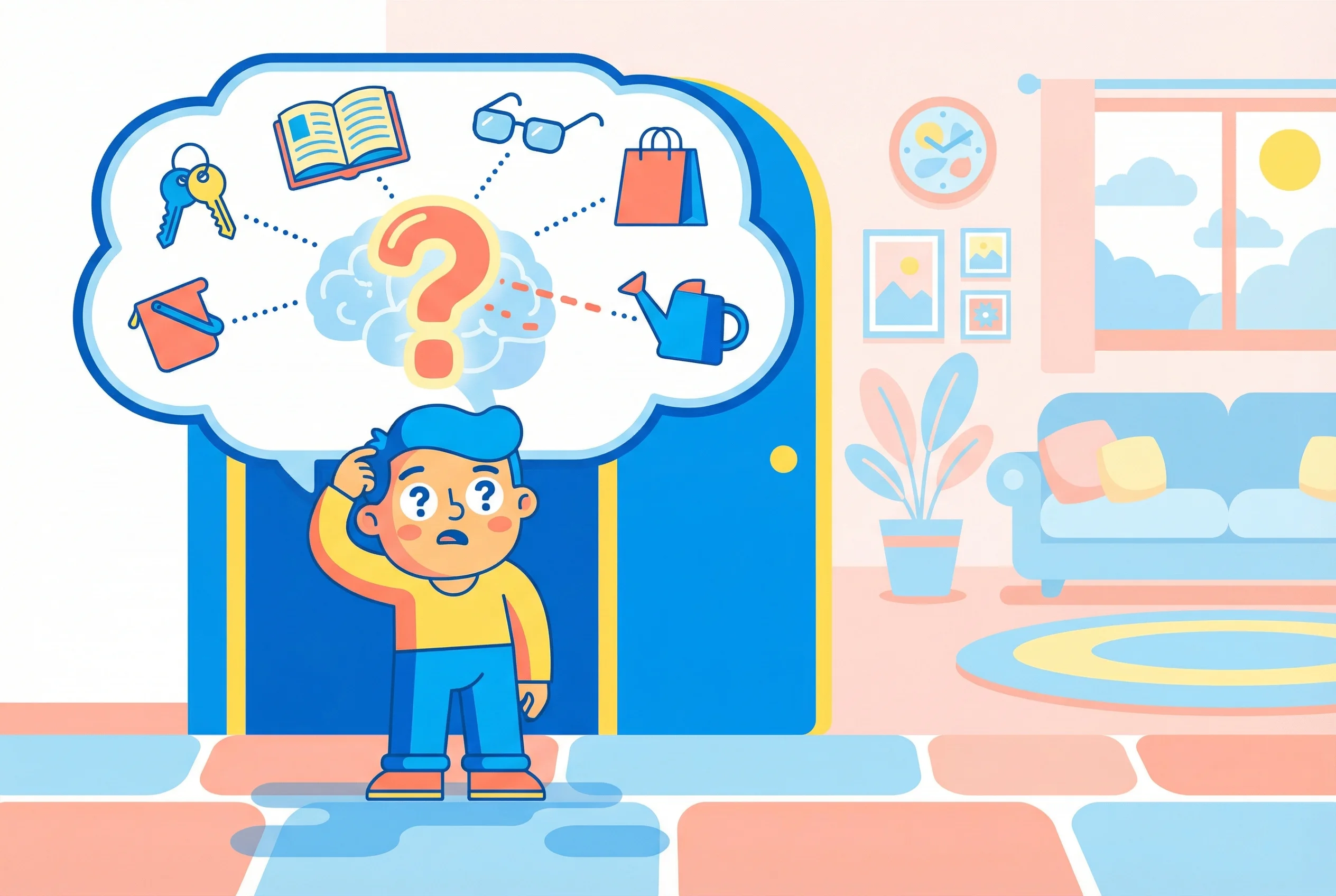
Did you know your brain quietly drops a memory the moment you walk through a doorway? Or that the holes in cheese form for the same reason bread rises? These did you know facts jump from the quirks of your mind to the food on your plate and what your body does under pressure — guess each one first, then tap for the why.
Weird Facts About How Your Mind Works
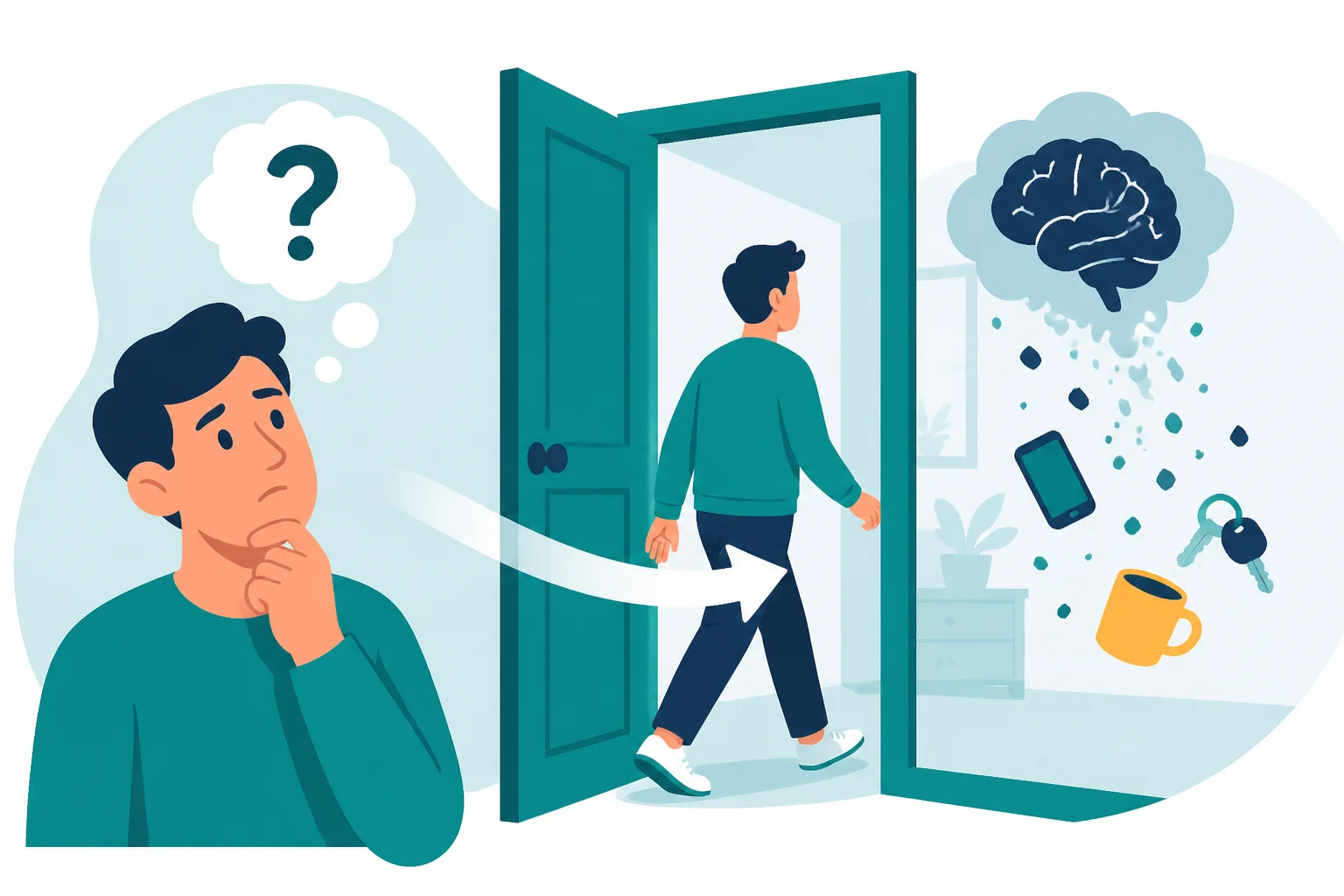
AThe brain creates 'event boundaries' when entering new spaces, separating memories
✓Correct! This is called the 'doorway effect.' Research shows that passing through doorways signals the brain to file away memories from the previous room and prepare for new information. Doorways act as 'event boundaries' that compartmentalize our experiences. Going back to the original room often helps you remember because you return to the same mental context.
BNew rooms have different air pressure that temporarily affects brain function
✗Wrong. While air pressure changes can affect us (like on airplanes), normal room-to-room pressure differences are too small to impact brain function. The forgetting happens due to how our brain organizes memories by location and context, not physical environmental factors like air pressure.
CThe eyes need time to adjust to new lighting, pausing memory recall
✗Wrong. Our eyes adapt to lighting changes in milliseconds, far too quickly to explain the doorway effect. The forgetting occurs because the brain treats the new room as a separate 'mental chapter,' filing away the previous room's context. Vision adjustment does not pause our memory systems.
AOur brain misinterprets normal nerve signals as phone vibrations
✓Correct! This is called 'phantom vibration syndrome.' Your brain becomes hypersensitive to sensations in the leg pocket area where you carry your phone. Normal nerve signals from muscle twitches, fabric friction, or blood flow get misinterpreted as phone vibrations because your brain is constantly anticipating notifications. Studies show up to 90% of phone users experience this occasionally.
BStatic electricity from our clothes creates real vibrations
✗Wrong. While static electricity can create small shocks, it does not produce sustained vibrations that mimic phone alerts. The sensation comes entirely from within your nervous system misinterpreting signals, not from any external physical vibration. Static discharge feels distinctly different from a vibration pattern.
CPhone signals can still reach us even when the phone is off
✗Wrong. Phone signals are radio waves that interact with the phone's antenna and circuitry, not directly with human tissue. When your phone is off or not actually vibrating, no physical signal reaches your body. The sensation is purely neurological - your brain creating a false perception based on learned expectations and pattern recognition.
AYour brain records more detailed memories during danger
✓Correct! When facing danger, your brain's amygdala activates and causes you to form much more detailed memories of the event - recording sights, sounds, and sensations at a higher 'frame rate.' Later, when you recall the memory, your brain has so much information to review that it feels like the event lasted longer than it actually did. Time itself did not slow down, but your memory made it seem that way.
BYour heartbeat actually slows down when you are scared
✗Wrong. Your heartbeat actually speeds up significantly when you are scared, not slows down. The fight-or-flight response causes your heart to pump faster to prepare your body for action. The slowing of time is a memory illusion, not a physical change in your body's rhythm.
CAdrenaline makes your body move in slow motion
✗Wrong. Adrenaline actually makes you move faster and react more quickly, not slower. It increases your muscle strength and reaction speed to help you escape danger. The 'slow motion' feeling is just how your brain remembers the event afterward, not how your body actually moved during it.
AThe brain consolidates memories during sleep, replaying daytime experiences
✓Correct! During sleep, especially REM sleep, your brain processes and consolidates memories from the day. This 'memory consolidation' helps strengthen important neural connections and integrate new information with existing knowledge. Recent experiences are fresh in your short-term memory, making them more likely to appear in dreams as your brain sorts through and organizes them.
BDreams are random images with no connection to real memories
✗Wrong. Dreams are not random at all. Research shows dreams have meaningful connections to our waking life, emotions, and memories. Studies using brain imaging reveal that the same brain regions active during daytime experiences light up during dreams, proving dreams process real memories rather than generate random noise.
CThe eyes record everything we see and replay it automatically at night
✗Wrong. While eyes capture visual information during the day, they do not 'record' or 'store' anything like a camera. Memory storage and dream generation happen in the brain, not the eyes. The eyes simply transmit signals to the brain, which then processes, interprets, and later incorporates these experiences into dreams during sleep.
ABecause phones provide security and connection to help and information
✓Correct! Modern smartphones serve as our lifeline to emergency services, GPS navigation, communication with loved ones, and access to information. When battery runs low, our brain perceives a potential loss of these critical resources, triggering a mild stress response. This phenomenon is so common that psychologists have named it 'nomophobia' - the fear of being without mobile phone contact. Studies show that over 60% of smartphone users experience anxiety when their battery drops below 20%.
BBecause the phone will permanently lose all stored data
✗Wrong. Phones do not lose data when the battery dies. All information is stored in non-volatile memory, which retains data even without power. When you recharge and restart your phone, everything remains exactly as it was. The anxiety comes from temporary loss of access to services, not fear of data loss. Modern phones also have backup systems and cloud storage to protect important information.
CBecause low battery releases electromagnetic waves that affect mood
✗Wrong. Low battery does not emit any special electromagnetic waves or radiation that affects human mood. The battery simply provides less voltage to power the device, but this does not change the type or intensity of normal phone signals. The anxiety is purely psychological, stemming from our dependence on phone functions, not from any physical effect of the battery state on our bodies. All electromagnetic emissions from phones remain constant regardless of battery level.
AReduces gray matter in social regions
✓Loneliness activates the stress response, raising cortisol levels that can kill neurons and shrink gray matter in areas critical for social processing, such as the left posterior superior temporal sulcus. Over time, this structural change makes it harder to understand others' feelings and connect with people.
BStrengthens emotional memory circuits
✗This misconception assumes that loneliness sharpens emotional memory. In reality, chronic loneliness impairs cognitive functions like attention and memory consolidation. For instance, cortisol from stress actually weakens the encoding of new memories, not strengthen them.
COnly affects emotional state, not structure
✗It's a common myth that loneliness is purely emotional. In fact, brain scans of lonely individuals show reduced gray matter density in social brain regions, and lower white matter integrity in the fornix, which is similar to changes seen in aging and dementia.
Random Facts About the Food on Your Plate
AIt aligns gluten proteins into elastic networks
✓Correct! When you knead dough, two wheat proteins (gliadin and glutenin) combine with water to form gluten. The mechanical action of kneading aligns these gluten strands into organized, springy networks that can stretch and trap gas bubbles produced by yeast. This is why bread dough becomes smooth, elastic, and can be stretched thin without tearing - the gluten network acts like tiny springs throughout the dough.
BIt adds air bubbles that make the dough expand
✗Wrong. While kneading does incorporate some air, this is not what creates stretchiness. The air bubbles you see are mainly produced later by yeast fermentation. Kneading's main job is developing gluten proteins into elastic networks. Without proper gluten development, dough would tear easily even if it contained air bubbles.
CIt breaks down starch into sticky sugar chains
✗Wrong. Kneading does not break down starch molecules. Starch breakdown happens during fermentation when enzymes convert starch to sugars that feed the yeast, but this is a chemical process, not a mechanical one. The stretchy quality comes from gluten protein development, not starch transformation. In fact, over-kneading can eventually break down the gluten network you worked to build.
ARaw onions are less ripe
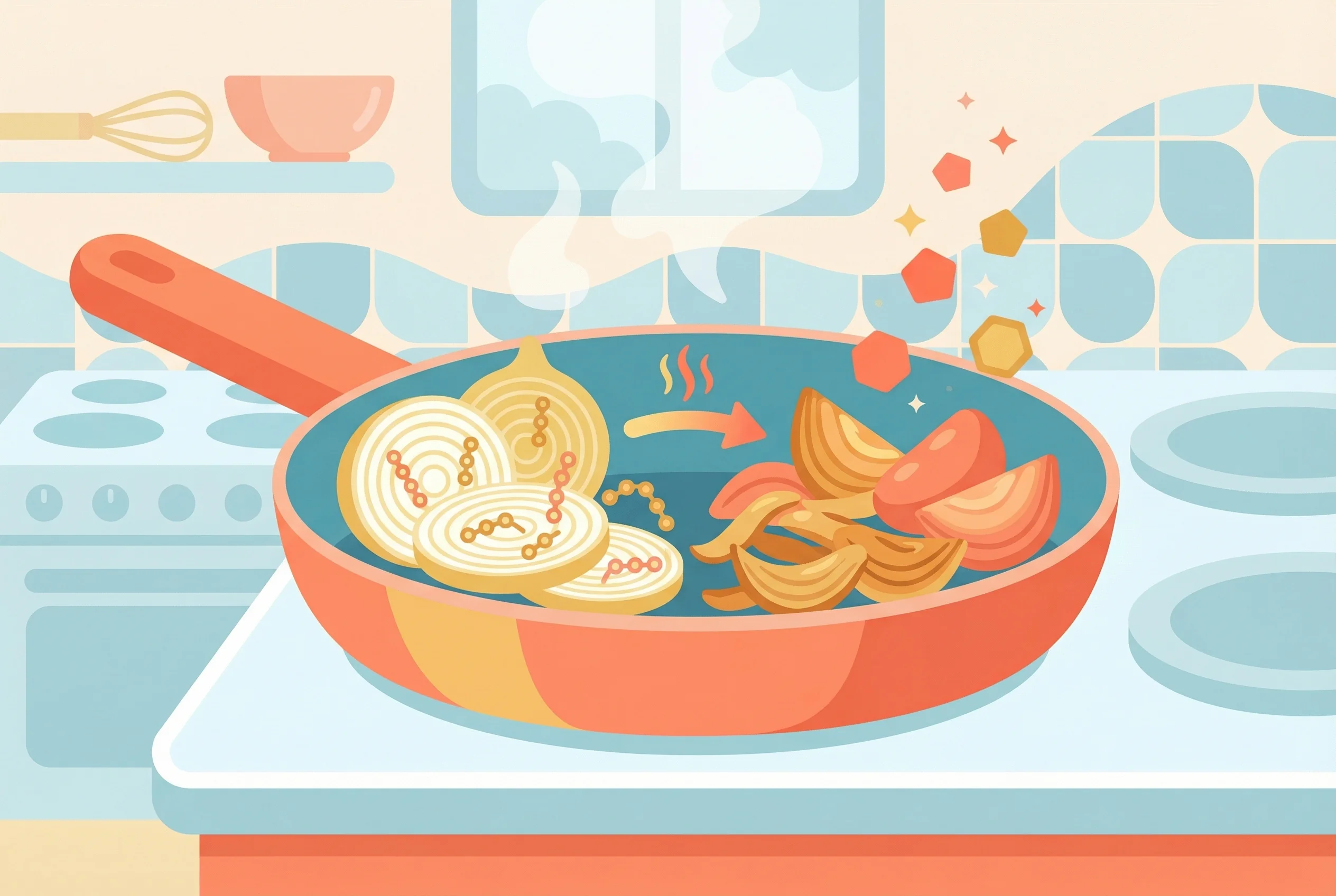
✗Wrong. Raw and cooked onions are the same ripeness. Heat chemically transforms the compounds responsible for onion flavor.
BHeat converts sulfur compounds
✓Correct! Raw onions contain sulfur compounds that taste sharp and make you cry. When cooked, heat breaks down these harsh sulfurs (like propanethial S-oxide) and converts them into sweeter, milder compounds. Caramelization of onion sugars also adds sweetness. Same onion, completely different chemistry!
CCooking adds salt and seasoning
✗Wrong. Even plain cooked onions without seasoning taste different from raw. The change is chemical transformation from heat, not added ingredients.
ANot enough water in pot
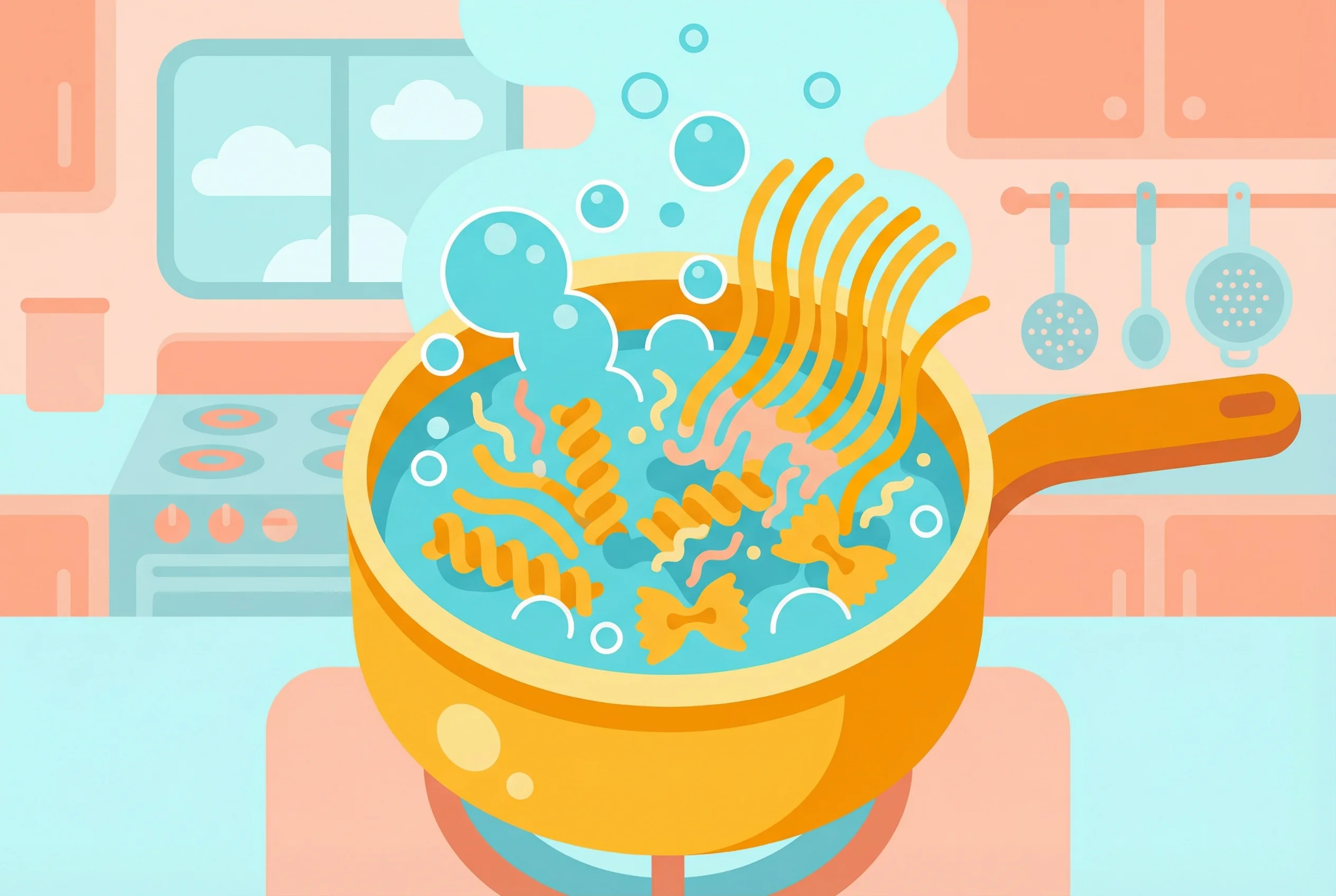
✗Wrong. More water helps prevent sticking by diluting released starch, but the root cause is starch on pasta surfaces binding together.
BStarch gelatinizes on surface
✓Correct! Pasta surfaces release starch granules during cooking. These granules absorb water, swell, and become sticky gel (gelatinization). When pasta touches, the gelatinized starch acts like glue! Stirring prevents contact, and rinsing removes surface starch (but also removes sauce-gripping ability). Adding oil coats pasta, preventing starch adhesion.
CBoiling too rapidly
✗Wrong. Boiling intensity doesn't cause sticking—it's surface starch gelatinizing. Vigorous boiling actually helps by keeping pasta moving.
ABeneficial bacteria produce acid that kills harmful microbes and creates vitamins
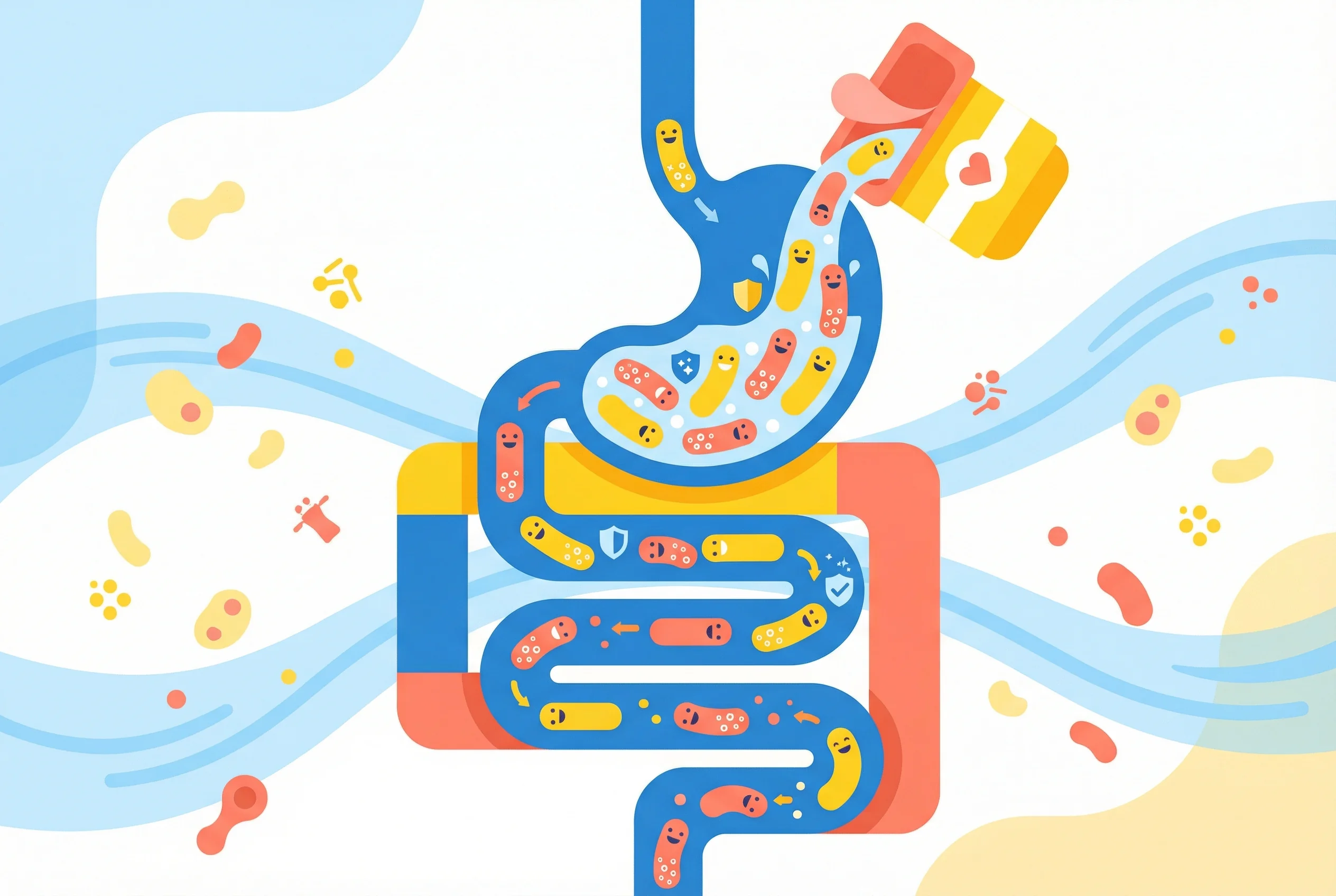
✓Correct! During fermentation, beneficial bacteria like Lactobacillus convert sugars into lactic acid, lowering pH to around 4.0-4.5, which inhibits spoilage bacteria. These microbes also synthesize B vitamins, vitamin K, and produce probiotics that support gut health. The acidic environment acts as a natural preservative, allowing foods to last months without refrigeration.
BHeat from fermentation sterilizes the food and seals it from air exposure
✗Wrong. Fermentation is actually a cool-temperature process, typically occurring at 15-25°C (59-77°F). It does not generate significant heat, and the process specifically requires some oxygen initially for most fermentations. The preservation comes from acid production, not heat sterilization or air sealing.
CSugar crystallization forms a protective barrier preventing bacterial growth
✗Wrong. While some sugars are present in fermented foods, they are consumed by bacteria rather than crystallizing. Fermentation actually breaks down sugars into acids and other compounds. The preservation mechanism is the acidic environment created by lactic acid, not any physical barrier from sugar crystals.
ABeneficial bacteria ferment milk
✓Correct! Yogurt is made by adding beneficial bacteria (mainly Lactobacillus bulgaricus and Streptococcus thermophilus) to warm milk. These bacteria ferment lactose (milk sugar) into lactic acid, which thickens milk and gives yogurt its tangy taste. These living cultures are probiotics—good bacteria that can benefit gut health!
BNatural fruit sugars grow microbes
✗Wrong. Probiotics come from bacterial cultures added to milk, not from fruit. Fruit-flavored yogurt is made after fermentation.
CPreservatives create probiotics
✗Wrong. Preservatives kill bacteria, not create them. Probiotics are living bacteria deliberately added to ferment milk into yogurt.
ABacteria produce carbon dioxide
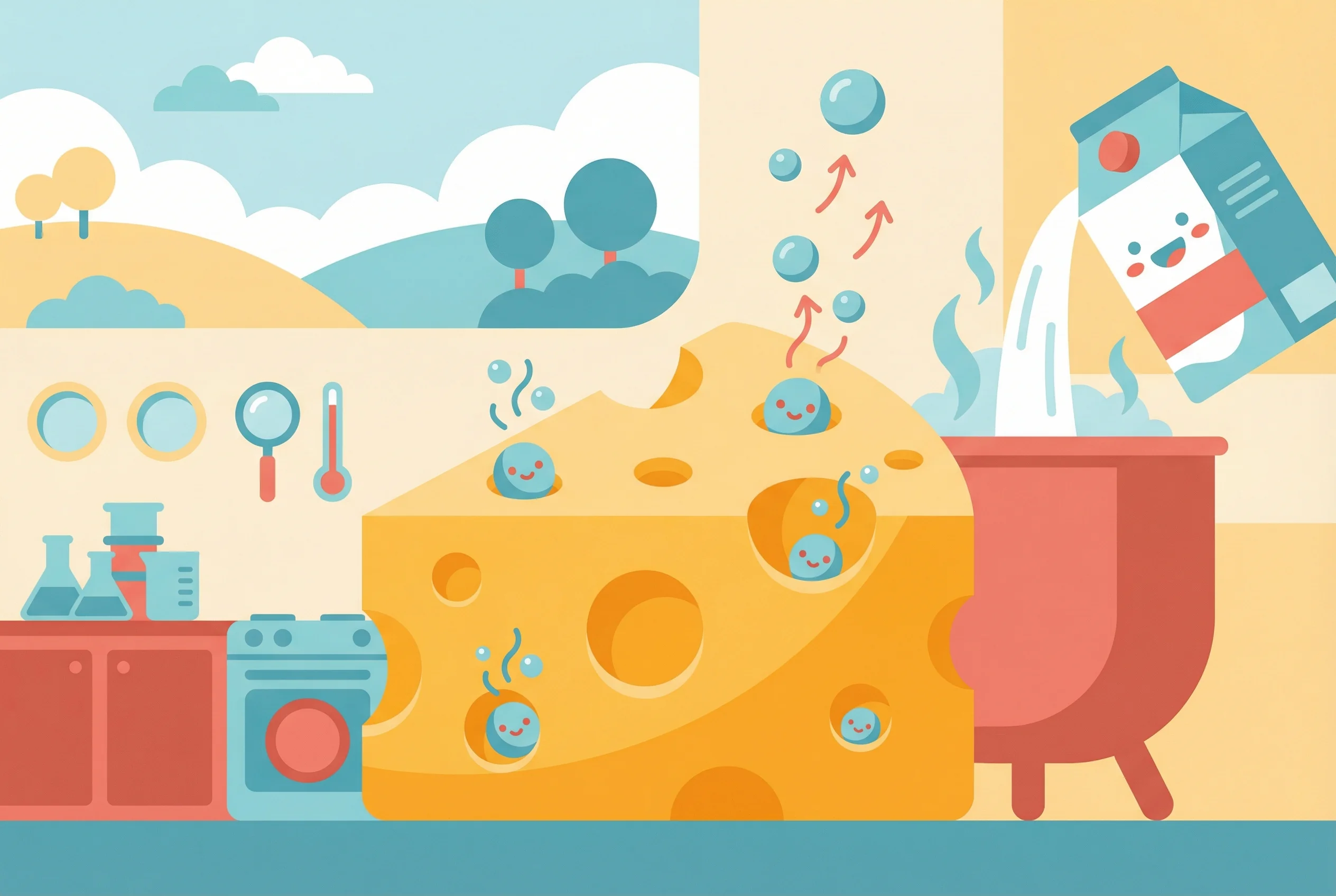
✓Correct! Swiss cheese holes (eyes) form from Propionibacterium freudenreichii bacteria added during cheese-making. These bacteria consume lactic acid and produce carbon dioxide gas. As cheese ages, CO2 bubbles get trapped in the elastic curd, forming holes. More bacteria = more holes. Modern clean milk produces fewer holes (less hay dust for bubbles to nucleate on)!
BMold eats passages through cheese
✗Wrong. Mold grows on cheese surfaces (like blue cheese veins), but Swiss cheese holes are gas bubbles from bacterial CO2 production.
CCheese shrinks leaving gaps
✗Wrong. Cheese doesn't shrink enough to create large holes. Holes are CO2 gas pockets from bacterial fermentation.
Unbelievable but True Facts About Your Body in Sport
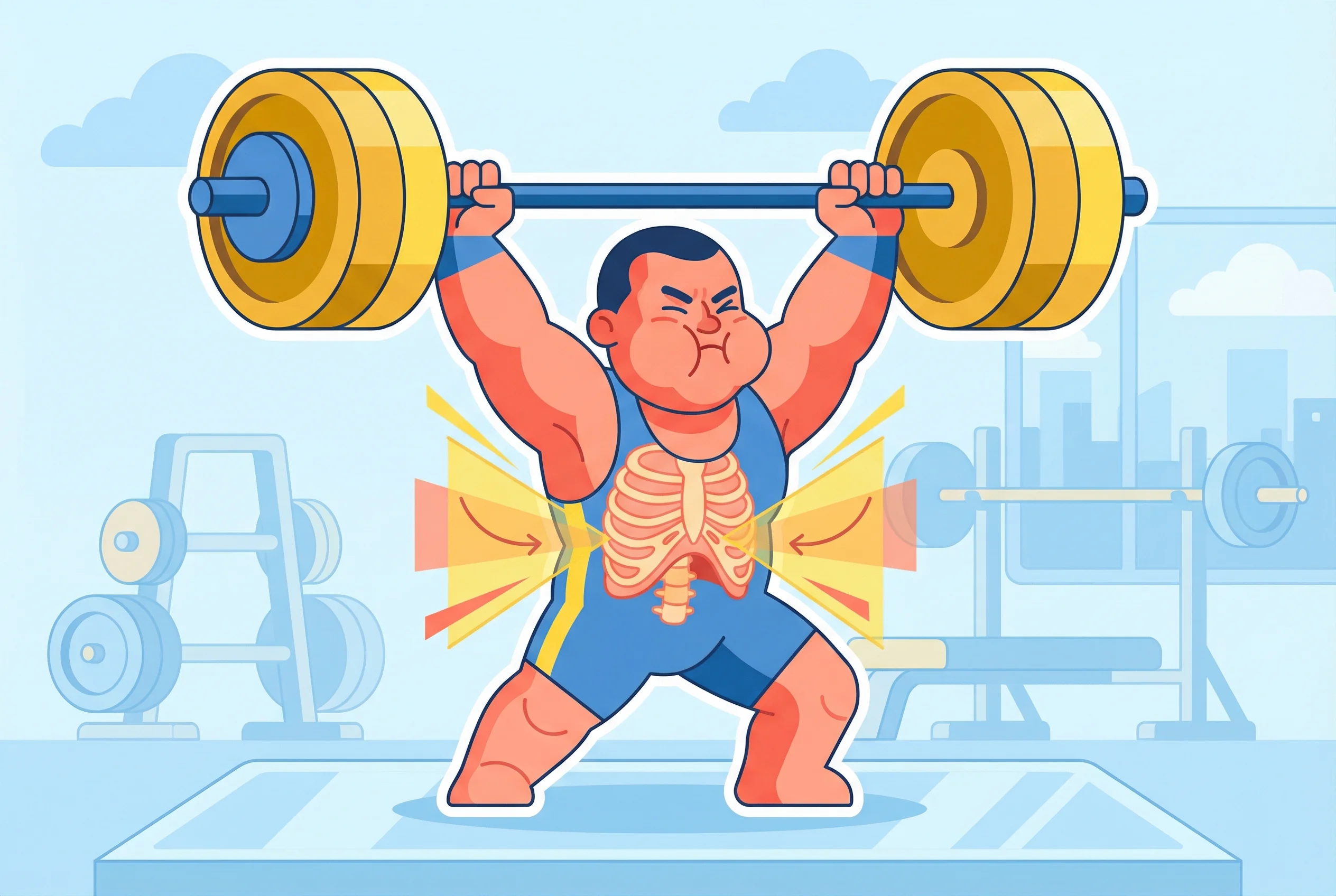
APrevents muscle shaking
✗Wrong. Breath-holding doesn't prevent shaking. It creates intra-abdominal pressure to stabilize the spine during heavy lifts.
BReduces heart rate
✗Wrong. Holding breath during exertion actually temporarily raises heart rate and blood pressure. The benefit is spinal stability, not cardiovascular.
CCreates core stability
✓Correct! Holding breath while bracing your core creates intra-abdominal pressure—like inflating a balloon in your torso. This stiffens your spine, preventing injury during maximum lifts. It's called the Valsalva maneuver!
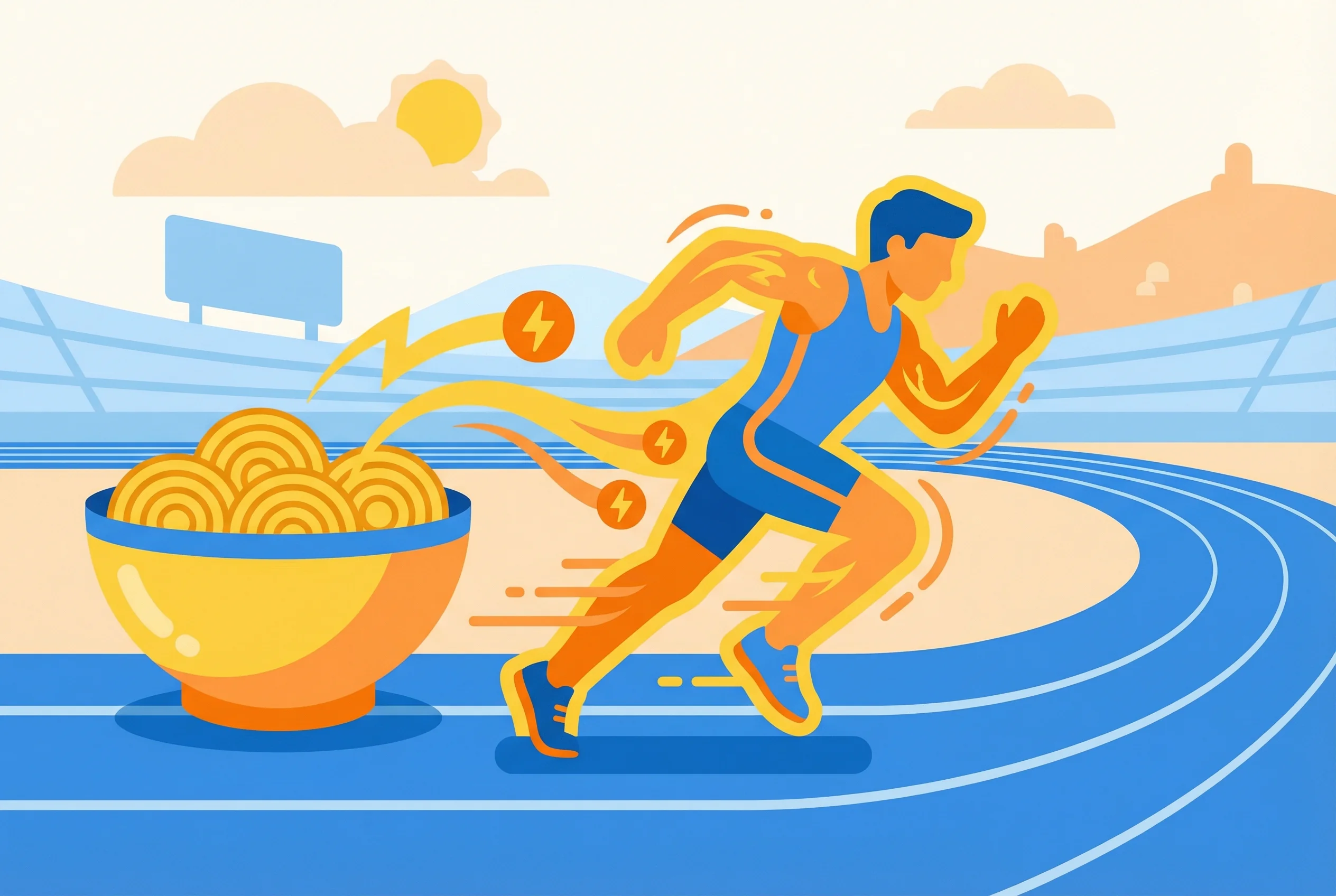
AStores glycogen for energy
✓Correct! Glycogen storage! Carbohydrates convert to glucose → stored as glycogen in muscles and liver. During endurance exercise (>90 min), body depletes glycogen—'hitting the wall' (fatigue). Carb-loading (eating extra carbs 2-3 days before): maximizes glycogen stores (~2× normal). More fuel = better endurance performance! Marathon runners, cyclists benefit most. Not useful for short events (<90 min). Modern protocol: 8-12g carbs/kg body weight. Also drink fluids—glycogen binds water (3g water per 1g glycogen)!
BIncreases muscle mass quickly
✗Wrong. Carbs don't build muscle—protein does. Carb-loading stores glycogen (fuel) for endurance, not muscle growth.
CBoosts protein synthesis
✗Wrong. Protein drives synthesis, not carbs. Carbohydrates store as glycogen—primary fuel for prolonged exercise preventing fatigue.
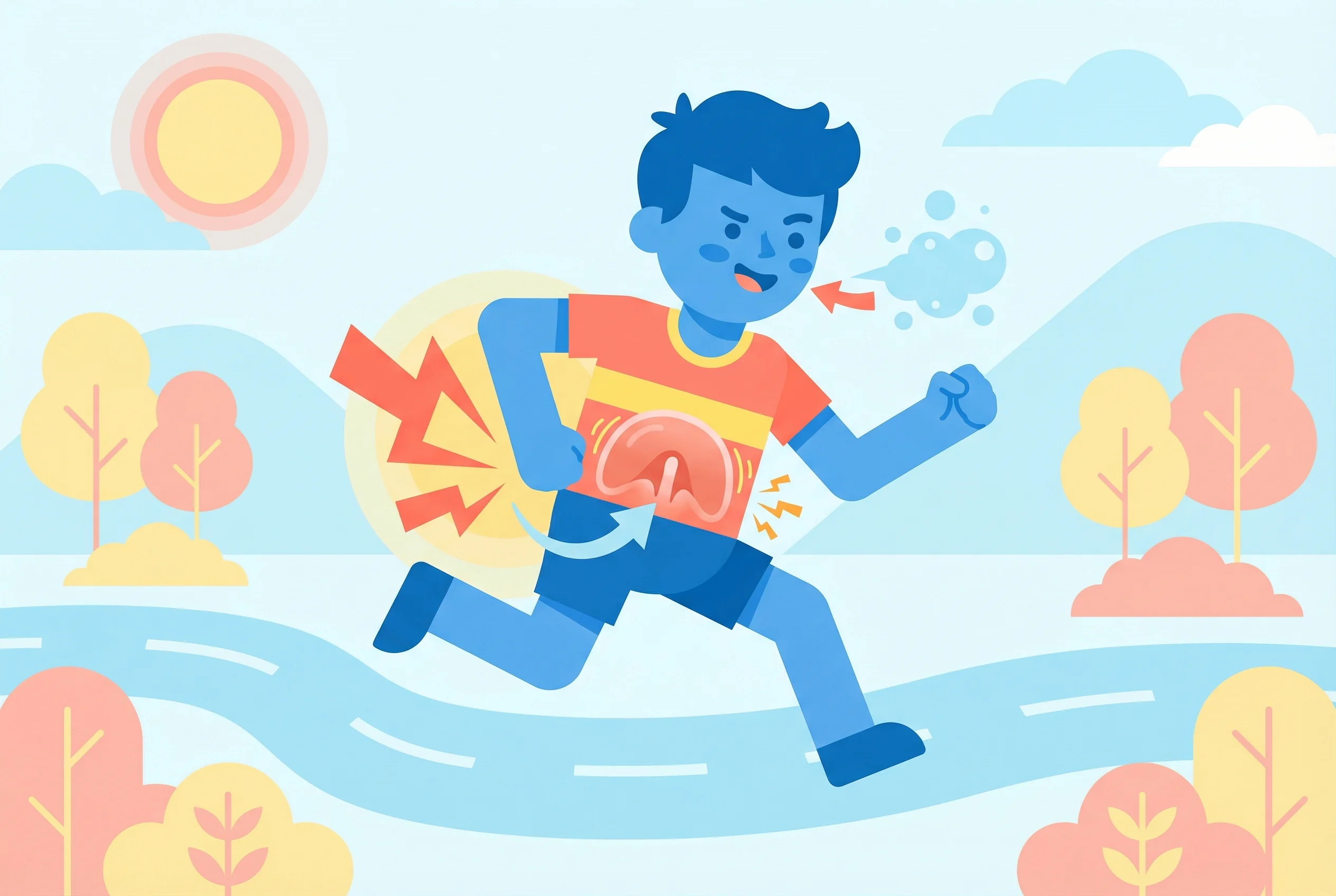
ALungs expand too much
✗Wrong. Lung expansion doesn't cause stitches. Current theory: diaphragm muscle spasms from inadequate blood flow during intense exercise.
BDiaphragm muscle cramps
✓Correct! Diaphragm theory! Side stitch (ETAP—exercise-related transient abdominal pain): sharp pain below ribs. Likely cause: diaphragm muscle cramps from: (1) Inadequate blood flow (diverted to legs). (2) Repetitive jolting stresses ligaments supporting organs, pulling on diaphragm. (3) Eating before running makes it worse. Prevention: proper breathing (deep belly breaths), gradual intensity increase, avoid food 2-3 hours before. Treatment: slow down, deep breathing, press on area. Common in running/swimming!
CRib bones rub together
✗Wrong. Bones don't cause pain. Stitch from diaphragm cramping likely due to blood flow issues and organ ligament stress during running.
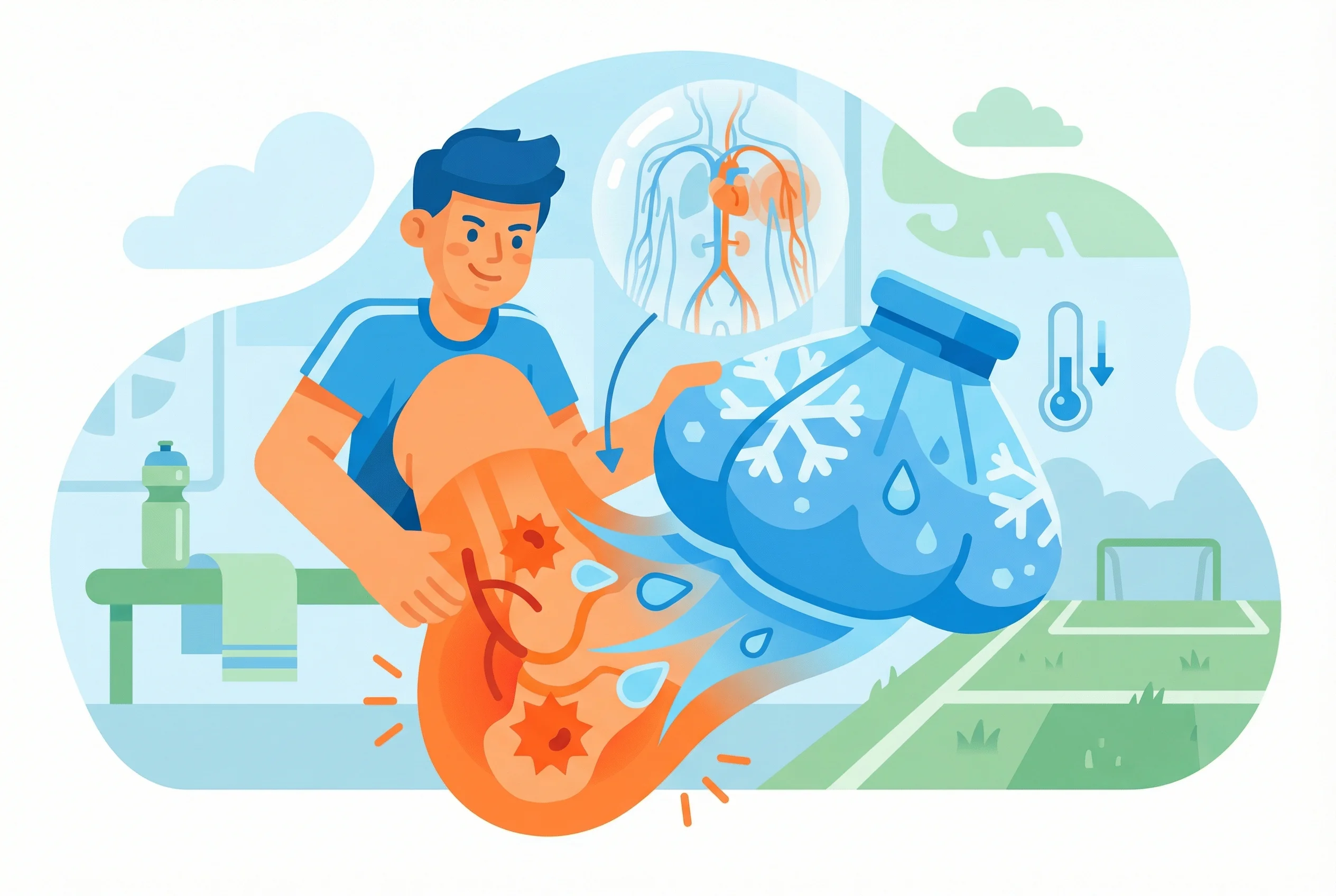
AReduces swelling and inflammation
✓Correct! Cold therapy (cryotherapy)! Ice application causes vasoconstriction—blood vessels narrow. Benefits: (1) Reduces blood flow to injured area—limits swelling/edema. (2) Decreases inflammation—less secondary tissue damage. (3) Slows cellular metabolism—reduces oxygen demand, prevents cell death. (4) Numbs nerve endings—pain relief. RICE protocol: Rest, Ice, Compression, Elevation. Apply ice 15-20 min intervals first 48-72 hours. Don't apply directly (use towel)—prevents frostbite. After initial period, heat promotes healing!
BIce speeds tissue healing
✗Wrong. Ice doesn't speed healing—it slows metabolism to prevent further damage. After inflammation phase, heat promotes blood flow for healing.
CCold prevents infection
✗Wrong. Ice doesn't prevent infection. It reduces inflammation and swelling by constricting blood vessels, limiting secondary tissue damage.
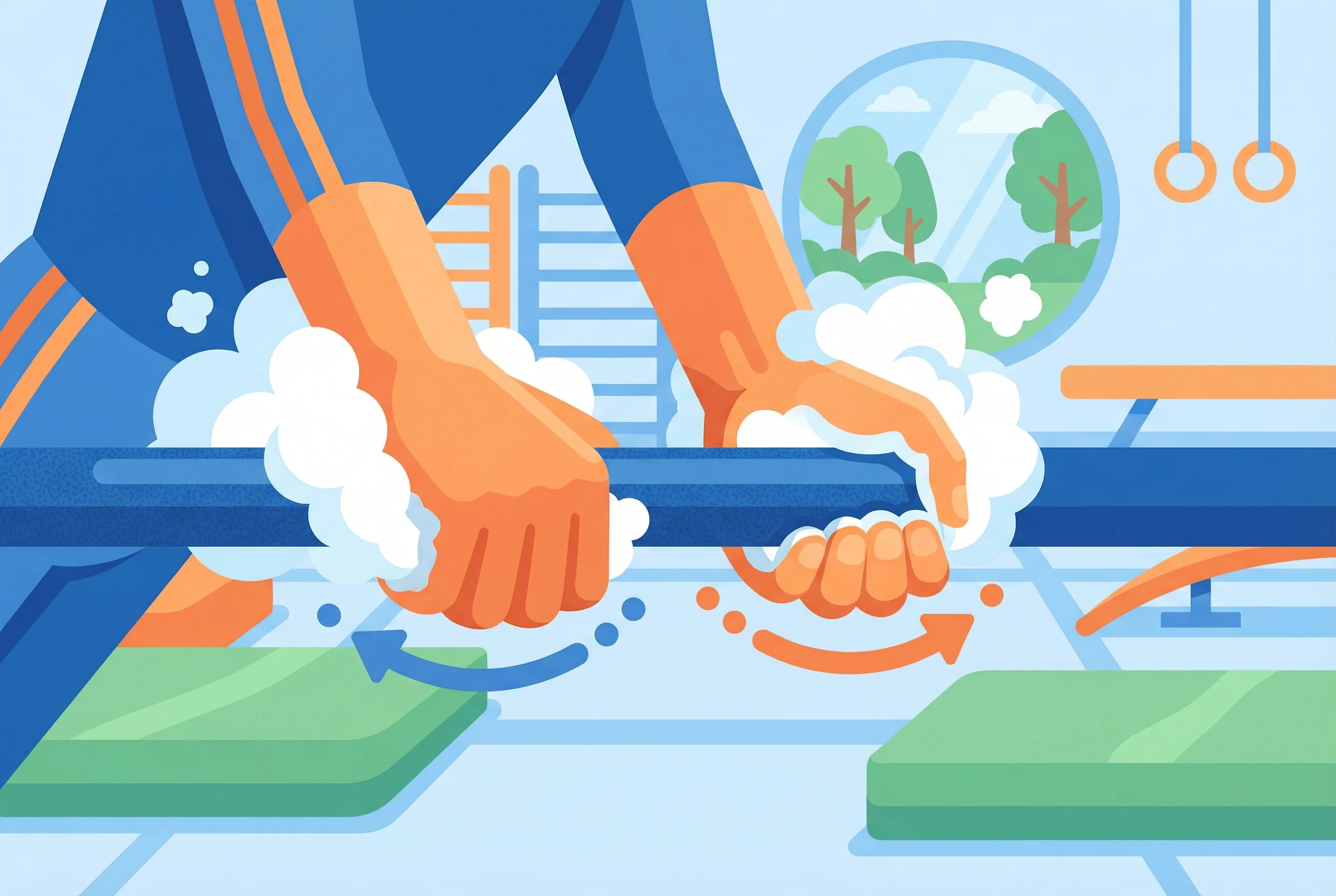
AAbsorbs sweat improving grip
✓Correct! Moisture management! Chalk (magnesium carbonate—MgCO₃): highly absorbent powder. Hands sweat during intense exercise—moisture makes bars, rings, beam slippery. Chalk absorbs sweat—maintains dry, high-friction contact. Prevents dangerous slips during skills. Also used in: rock climbing, weightlifting, pole vault. Liquid chalk (chalk + alcohol) alternative—less messy. Some competitions limit chalk use (floor exercise). Physics: dry surfaces have higher friction coefficient than wet!
BMarks hand positions
✗Wrong. Chalk doesn't mark positions—it absorbs sweat for grip. Gymnasts memorize hand placements through repetition.
CCools hands during routines
✗Wrong. Chalk doesn't cool hands. It's absorbent powder that removes moisture (sweat) maintaining friction for safe grip.
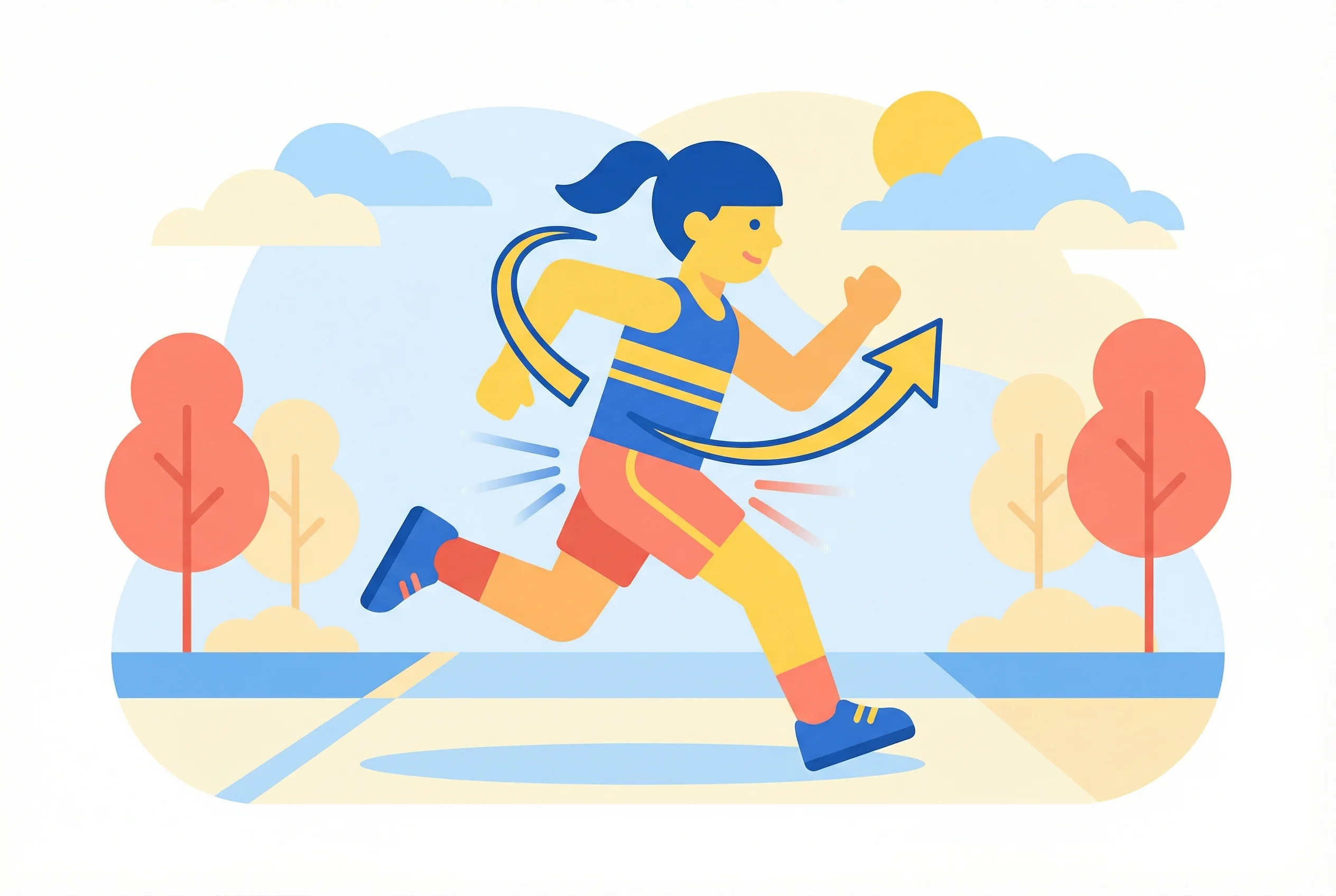
ABalances rotational momentum
✓Correct! Angular momentum balance! Running: legs drive body forward. Each leg swing creates rotational torque on torso (Newton's 3rd law—action/reaction). Without arm swing: torso would rotate excessively—unstable, inefficient. Arms swing opposite to legs: right arm forward with left leg, vice versa. Angular momentum cancels out—torso stays stable. More efficient biomechanics. Faster running = more vigorous arm swing (greater momentum to balance). Tying arms behind back makes running very difficult—research shows ~10% more energy!
BIncreases oxygen to muscles
✗Wrong. Arm position doesn't affect oxygen delivery. Arms balance rotational momentum from leg swing—prevents torso rotation.
CMakes running feel easier
✗Wrong. Proper arm swing does make running more efficient, but mechanism is balancing angular momentum—not psychological.
Frequently Asked Questions
What’s a good ‘did you know’ fact to share?
Try the doorway effect — you forget what you came for the instant you change rooms because your brain files the old room away. Or the phantom phone buzz. Both are in the quiz above with the why.
What are some weird facts that sound fake but are true?
Loneliness physically reshapes the brain, cheese gets its holes from gas-producing bacteria, and your sense that time slows in a scary moment is your memory recording in higher detail. All three are above.
Why do we forget what we came for when we walk into a room?
Crossing a doorway acts as an ‘event boundary’ — your brain treats the new room as a fresh scene and tucks away the plan you made in the last one. The card above has the full explanation.