

Why No AC in Europe? Heat, Homes, and Habits
On this page· 17
Why no AC in Europe? The short version is not that Europeans enjoy suffering through heat. For most of the 20th century, many European homes were built around mild summers, thick walls, shutters, cross-breezes, and high energy prices rather than mechanical cooling. Then heatwaves got sharper. The June 2026 heatwave made the old bargain feel newly strange: streets, schools, hospitals, apartments, and power systems were all being asked to handle a climate they were not designed around.
TL;DR
Europe has less air conditioning because its climate, building stock, energy prices, regulations, and cultural norms made AC feel optional for decades. That is changing. The honest answer is not "Europe should copy America" or "AC is always bad"; it is that hotter summers are forcing Europe to decide where cooling is a health necessity, where passive design still works, and how to avoid making the grid and streets hotter in the process.
Short answer: Europe historically had far lower residential AC ownership than the United States. The IEA's 2018 Future of Cooling report put household AC ownership at less than 10% in Europe and over 90% in the United States and Japan; a later IEA commentary described European ownership as still relatively low, around 20%. The gap exists because Europe had less cooling demand, older buildings, higher energy prices, denser cities, and stronger resistance to wasting energy on cold indoor air.

Curious? Try one 👇
Why is the sky blue?
Jump into the daily quiz →The Statistic That Shocked Americans
The most viral comparison is simple: air conditioning is normal in American homes and much less normal in European ones. The exact European number depends on year and definition, but the direction is stable. The IEA wrote in 2018 that household AC ownership was less than 10% in Europe, compared with more than 90% in the United States and Japan. By 2025, the IEA described total European ownership as still low at about 20%. Euronews, citing IEA data, put Europe at 19% in 2022 and the United States at 90%.

That gap can look irrational during a heatwave, but it is historically coherent. Many European regions did not need compressor cooling for most summer days. People used shutters, night ventilation, awnings, stone walls, fans, public shade, and altered routines. In a climate where extreme heat was occasional, installing and running AC in every home felt expensive, noisy, ugly, and environmentally excessive.
Climate Norms Built for Mild Summers
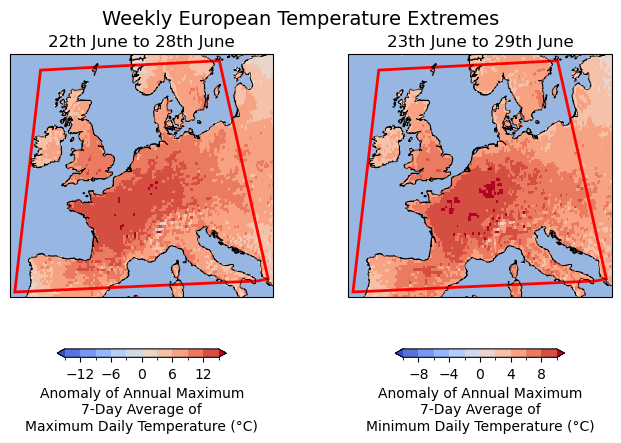
The old European cooling model was passive. Keep sunlight out during the day, open windows at night, and rely on thermal mass to slow indoor warming. That works best when nights cool down. The problem with modern heatwaves is not only the daytime high; it is the warm night that prevents the reset. World Weather Attribution reported that the June 2026 heatwave was breaking June and annual records across France, Germany, Italy, Spain, and southern England, with many places 5-12°C above seasonal averages.

That turns a design strength into a weakness. Thick masonry can buffer a short hot afternoon. After several hot days and warm nights, it can become a heat battery. A top-floor Paris apartment, a London row house, or an old school with poor insulation may no longer cool enough overnight. This is why the question changed from "why do Europeans dislike AC?" to "which buildings now need active cooling for health?"
Stone, Concrete, Shutters, and Old Rules
European buildings are also physically harder to retrofit. Many homes are old, rented, apartment-based, listed, or governed by facade rules and homeowner associations. A split AC unit needs an outdoor condenser, condensate drainage, electrical capacity, and permission to alter the building exterior. Portable units avoid some permission problems but are less efficient and often vent hot air through a window, which can create its own awkward sealing problem.

American suburban housing took a different path. Detached homes, ducted forced-air heating, cheaper historical energy, and hotter regional summers made whole-home cooling easier to normalize. Europe did not simply forget to install AC. Its housing, climate assumptions, and infrastructure made a different default feel reasonable until the heat curve moved.
Energy Costs, Grid Stress, and Policy Caution
AC saves lives during extreme heat, but it also increases electricity demand. The IEA warned in The Future of Cooling that without better efficiency standards, cooling could become a major driver of global electricity-demand growth. Its efficient-cooling scenario found that better policies could double average AC efficiency and cut future cooling energy demand by 45% compared with the reference path.
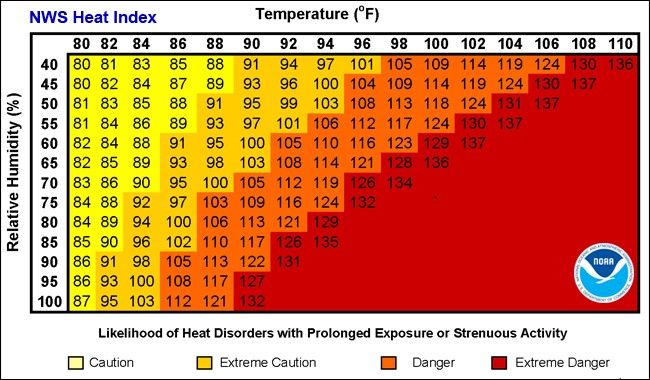
The European Commission's product-policy page shows why regulators watch this closely: the EU27 had about 57 million room air conditioners in use in 2020 and expected 104 million by 2030. That is growth, not stasis. The policy question is how to add cooling without creating a summer electricity crunch, worsening outdoor urban heat, or locking households into inefficient machines. The answer is usually a bundle: efficient heat pumps, insulation, shading, cool roofs, trees, building retrofits, and targeted AC for vulnerable spaces.
Cultural Attitude: Sweating Was Normal, Waste Was Not
There is a cultural layer too. In parts of Europe, a slightly warm room has long been treated as a seasonal inconvenience rather than a technical failure. Restaurants, trains, schools, and homes might be warm because "it is summer." Meanwhile, very cold indoor air can read as wasteful or unhealthy, especially in countries where environmental politics and high energy prices shaped everyday norms.
That attitude is not pure stubbornness. Air conditioning can dump waste heat into already hot streets, and if powered by dirty electricity it can add to the emissions problem that worsens heatwaves. But the opposite error is now visible: treating cooling as frivolous when indoor heat is harming older people, patients, workers, children, and people in badly ventilated homes. The new norm is likely to be more nuanced than the old one.
What Changes After 2026
The 2026 heatwave accelerated a debate that had already begun. World Weather Attribution's analysis emphasized that heat risk concentrates in cities where urban heat islands, aging buildings, and unequal access to cooling overlap. Reporting during the heatwave described school closures, hospital pressure, transport disruption, and renewed political arguments over whether AC belongs in schools, hospitals, offices, and homes.

The likely future is not a single European pivot to American-style whole-home cooling. It is a tiered answer. Critical facilities need reliable cooling first: hospitals, care homes, schools, transit shelters, and public cooling centers. Homes need better passive protection where it still works: shading, insulation, ventilation, trees, and reflective surfaces. Many apartments will still add efficient heat pumps or AC, because the climate baseline has shifted. The old "no AC" identity is already giving way to a more practical question: where does cooling create real closure, and where does it create the next problem?
What People Usually Miss
The mistake is turning this into a personality contest between continents. "Americans are wasteful" and "Europeans are irrational" are both too easy. The better answer is infrastructural. Cooling habits follow buildings, grids, prices, climate memory, and social norms. Once those conditions change, the habit changes too.
Another missed point: air conditioning is not only a comfort device. In dangerous heat, it is a health technology. But it is also not the only adaptation technology. A city that installs AC everywhere while ignoring shade, insulation, ventilation, and grid capacity may cool rooms while heating streets. Europe has been slow on AC, but the best version of catching up should not be just buying machines. It should be learning which heat problems need machines and which need better buildings.
Related videos
FAQ
Why don't European homes have air conditioning?
Many were built for historically mild summers, high energy prices, dense cities, and passive cooling methods like shutters and night ventilation. Retrofitting old apartments can also be technically and legally harder than installing AC in newer detached homes.
What percent of Europe has air conditioning?
It depends on source and year. The IEA put household ownership below 10% in Europe in 2018, while later IEA-linked estimates describe Europe closer to about 20% in the early 2020s. The United States is around 90% by comparison.
Is air conditioning bad for climate change?
Inefficient cooling can raise electricity demand and add waste heat outdoors. Efficient AC and heat pumps, clean electricity, insulation, shade, and better building design can reduce those harms while still protecting people during dangerous heat.
Will Europe start using more AC?
Yes, the trend is already upward. The European Commission reported 57 million room air conditioners in use in the EU27 in 2020 and expected 104 million by 2030. The harder question is how efficient and equitable that cooling will be.
Why is AC less common in France and the UK?
Both countries historically had milder summers than many AC-heavy regions, and many homes are old, rented, or hard to retrofit. As heatwaves become longer and nights stay warmer, that old assumption is breaking fastest in top-floor apartments, schools, hospitals, and dense cities.
What does this have to do with AIgneous Million Whys?
This is a Million Whys kind of question because the satisfying answer is not a stereotype. It is climate memory, building physics, energy systems, culture, and health risk all meeting in one everyday object: the AC unit you either have or suddenly wish you had.
Curious? Try one 👇
Why is the sky blue?
Jump into the daily quiz →Keep Exploring
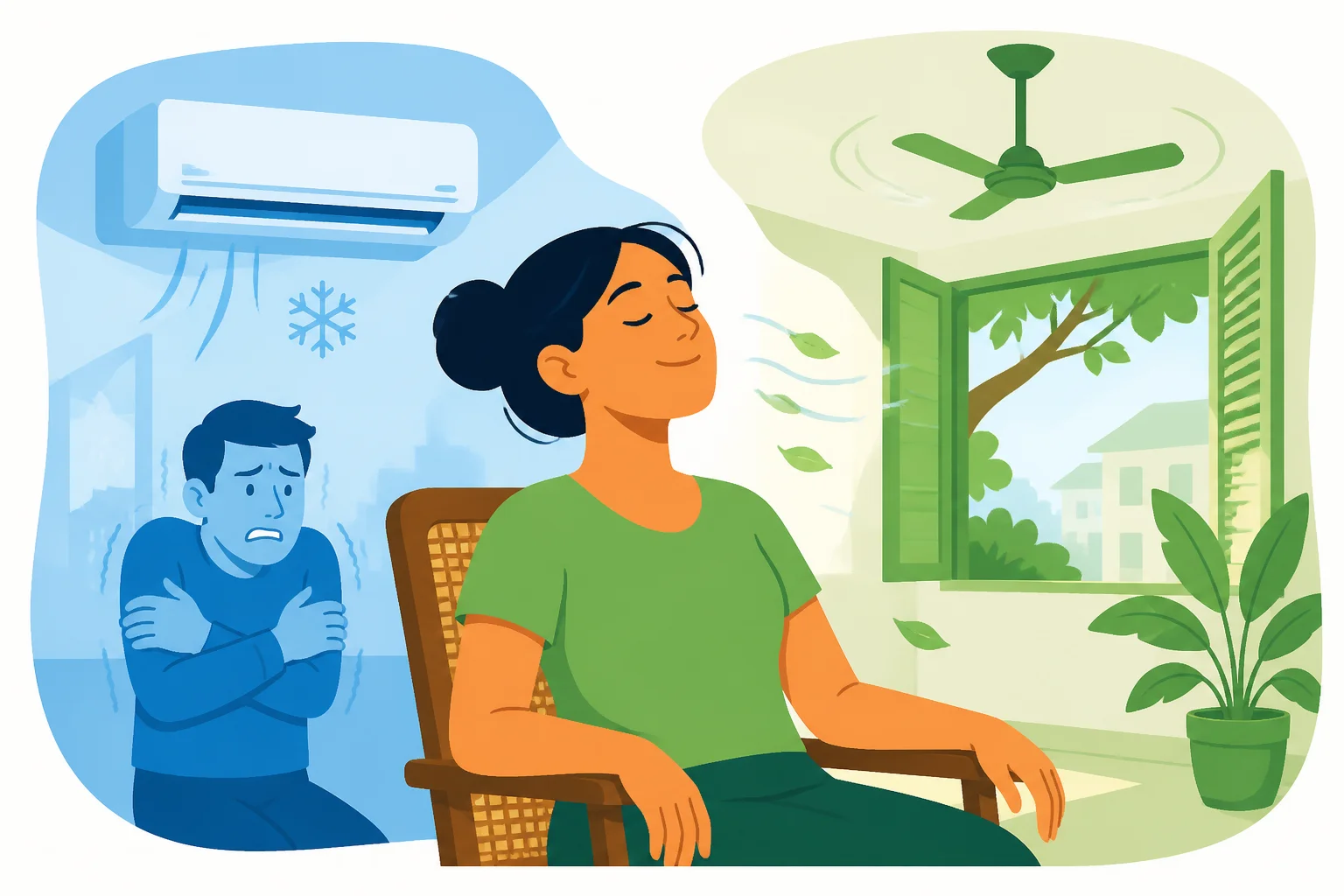
Why do people in buildings without air conditioning often feel comfortable at temperatures that standard comfort calculations predict will bother most of them?
Psychology & Behavior
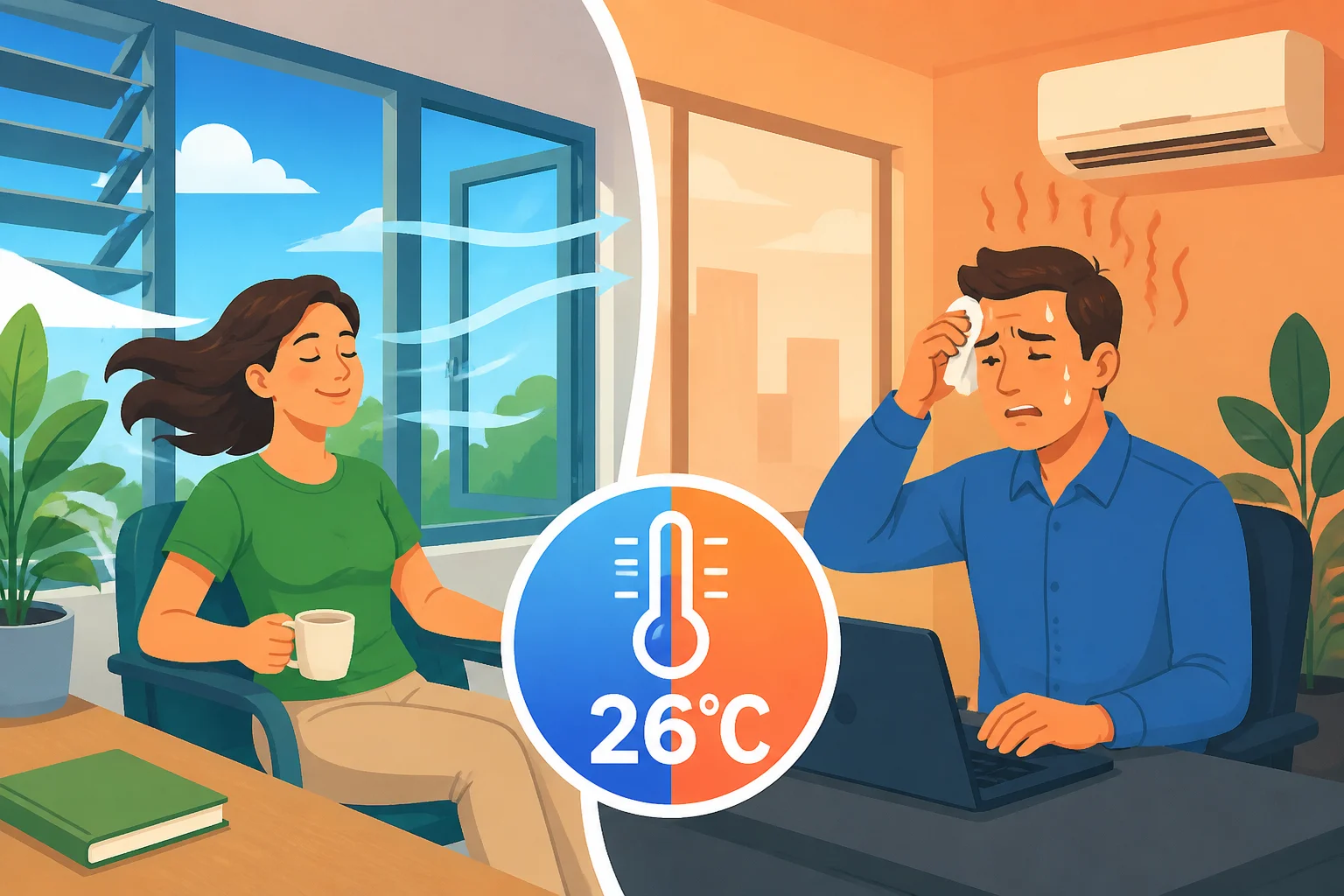
Why might 26 C feel acceptable in a breezy naturally ventilated summer building but too warm in a sealed winter office?
Physics in Daily Life
How does a wall-mounted AC make a room cooler on a hot day?
Physics in Daily Life
Related Posts
Wet Bulb Temperature: Why Humid Heat Turns Deadly
Wet bulb temperature explains why humid heat can turn dangerous fast: sweat stops cooling, 35 C becomes a hard limit, and WBGT shows real risk right now.
Why Do Heatwaves Cause Power Outages?
Why do heatwaves cause power outages? AC demand, overheated transformers, sagging lines, plant cooling constraints, solar ramps, and thin grid margins.