

Trivia vs Flashcards: Which Helps Memory?
Trivia vs flashcards looks like a contest between two familiar formats, but the more interesting answer starts one layer down. Both are retrieval tools. Both ask you to pull something from memory before the answer is shown. Both can beat passive re-reading when the goal is to remember. The difference is not whether retrieval works. The difference is what kind of life each format fits: a deck for material you already chose, or a question that lets curiosity choose the next doorway.
TL;DR
Trivia vs flashcards is not a winner-takes-all comparison. Flashcards are better when you have a fixed body of material to retain over months, especially with spaced repetition. Trivia is better when you want broad, low-friction curiosity: one question, one commitment, one explanation, and then the next gap.
Short answer: use flashcards when you can name the exact material you need to remember later. Use trivia when you do not yet know what will catch your attention and you want a small daily way to learn across topics. The cognitive engine is shared retrieval practice; the product experience is completely different.

Curious? Try one 👇
Why is the sky blue?
Jump into the daily quiz →Trivia vs flashcards starts with retrieval practice
The shared mechanism is the testing effect: trying to retrieve information strengthens later memory more than simply seeing the information again. Roediger and Karpicke's 2006 Psychological Science paper, Test-Enhanced Learning, studied learners using educationally relevant text materials. Its abstract puts the core point plainly: taking a memory test not only assesses knowledge, it enhances later retention.
This is why both flashcards and trivia can be real learning formats. A flashcard asks, "What is on the other side?" A trivia question asks, "Which answer do you think is right?" In both cases, the learner has to commit before the reveal. That commitment is the hinge. Without it, the format turns into reading. With it, the brain has to search, predict, and then update.
Karpicke and Roediger's 2008 Science paper, The Critical Importance of Retrieval for Learning, sharpened the point: once material could be recalled, repeated studying did little for delayed recall, while repeated testing produced a large positive effect. The same paper noted that students' predictions of their own performance were not well aligned with what they later remembered. In other words, the easy-feeling method can be the weaker one.
That last point is the quiet reason retrieval formats matter for adults. Passive review often feels fluent because the answer is right there. The page looks familiar. The paragraph sounds familiar. The learner mistakes recognition for ownership. Retrieval interrupts that illusion. It asks the brain to produce, choose, or reconstruct before the answer appears. The moment can be mildly uncomfortable, but the discomfort is useful because it exposes what is actually retrievable.
Trivia and flashcards both create that moment. A flashcard hides the answer until you commit. A trivia card hides the correct option until you choose. The best versions of both formats make the reveal explanatory, not merely evaluative. The reveal should say, "Here is why," not only "correct" or "wrong." That is where memory and curiosity meet.
Why flashcards work best for chosen material
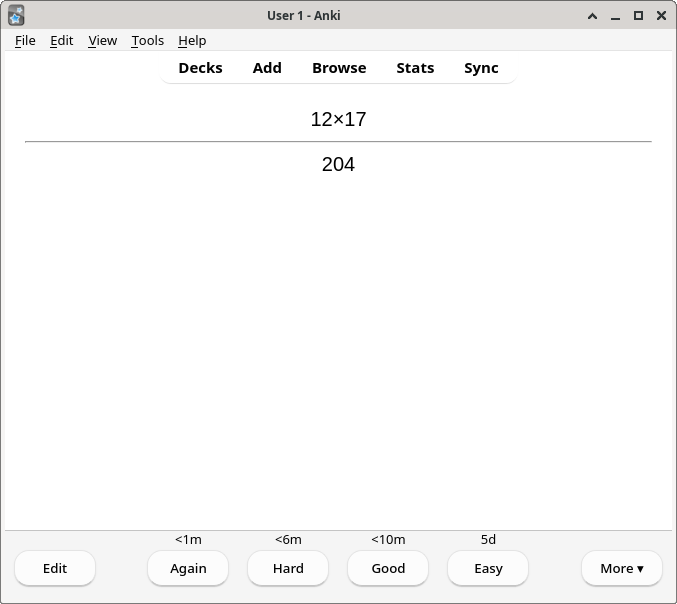
Flashcards are excellent when the target is clear. Vocabulary. Anatomy. Legal definitions. Chemical structures. Bird calls. Anything where you can say, "I need to remember this exact set later." The card creates a compact retrieval attempt, and spaced repetition decides when to bring the item back.
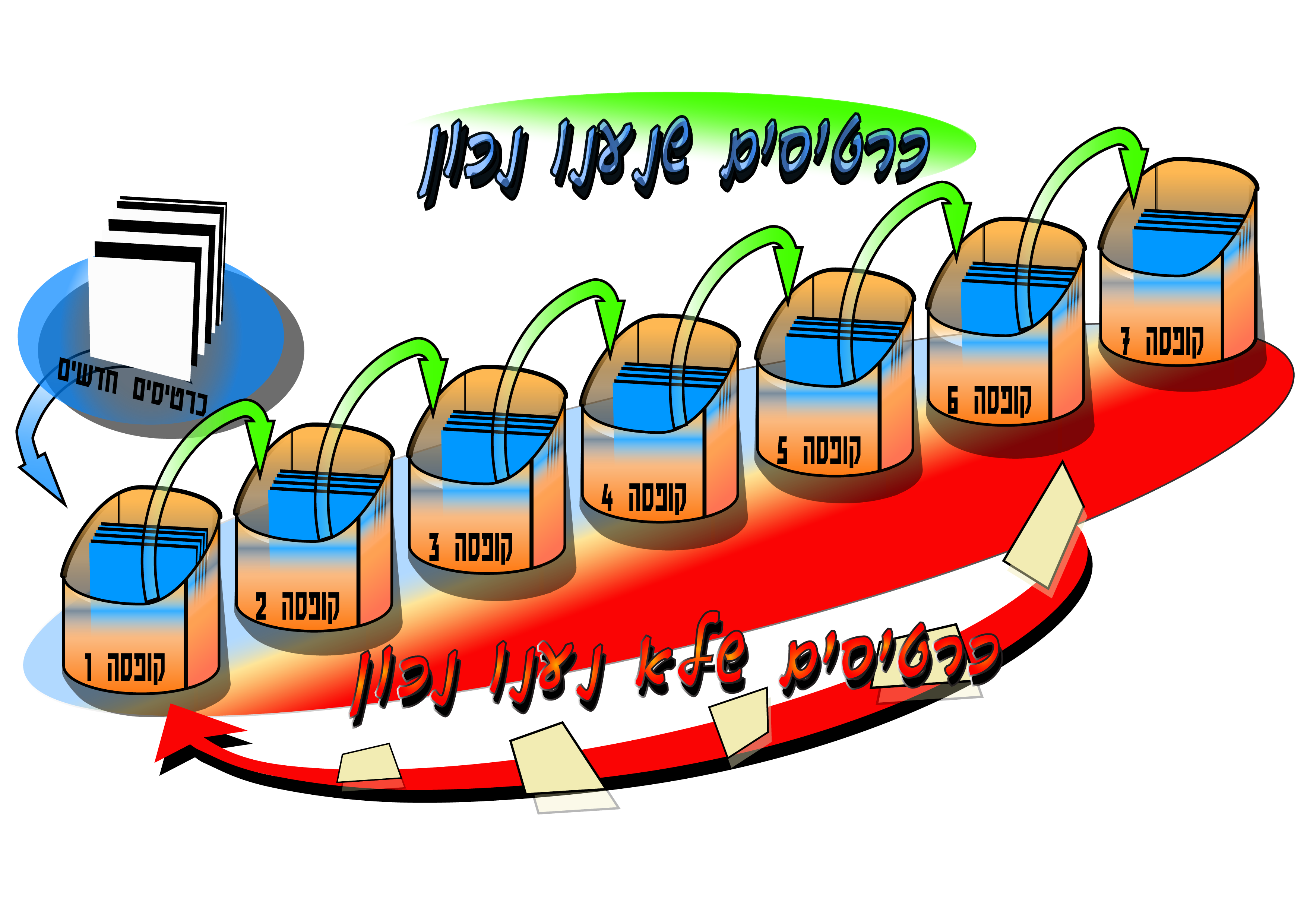
Anki's own manual explains the logic in two parts: active recall testing and spaced repetition. Its background page says Anki's spaced repetition system was based on an older SuperMemo algorithm called SM-2, with FSRS now integrated as an alternative. Anki's FAQ adds that SM-2 defines early intervals such as one day and six days, while Anki lets users control initial learning steps. The exact algorithm matters less than the product contract: the deck returns what you are likely to forget before it fully disappears.
That makes flashcards powerful but also demanding. You have to create or choose a deck, maintain it, review due cards, and accept that yesterday's curiosity may become tomorrow's obligation. For serious retention, that is a feature. For broad adult curiosity, it can be friction. A deck asks you to know the body of knowledge before the habit begins.
The cleanest use case is language vocabulary. You know the target set. You know that forgetting is costly. You know that the same item needs to return several times. A spaced deck is exactly the right machine. The same logic applies to anatomy labels, formulas, musical intervals, professional terms, and any domain where the knowledge unit is stable enough to be rehearsed.
Flashcards become less natural when the goal is exploration. If you are not sure whether you care about marine biology, memory science, weather, or ancient engineering, a deck can feel like choosing a hallway before you have opened any doors. Trivia is better at the doorway stage. It samples the world. Once a sample catches, you can always graduate the topic into deeper reading or a flashcard deck.
Why trivia questions work for broad curiosity
Trivia is weaker than flashcards if your goal is to master a fixed deck. It is stronger when the question is earlier: "What do I want to know today?" A good trivia card does not require deck-building. It creates the gap for you, asks for a guess, then gives a reason. The explanation is what keeps it from becoming empty fact recall.
Multiple choice can still be a legitimate retrieval format when the alternatives are plausible. Little, Bjork, Bjork, and Angello's 2012 paper, Multiple-Choice Tests Exonerated, at Least of Some Charges, tested whether multiple-choice questions could trigger productive retrieval processes when alternatives were plausible enough. Their work is a useful corrective to the idea that only free recall "counts." Recognition can be shallow, but it does not have to be.
That distinction matters for curiosity products. A lazy multiple-choice question says, "Which one is obviously correct?" A useful one says, "Here are several plausible doors. Commit to one, then see why." The reveal gives closure, and the wrong answers can teach if they explain the misconception instead of merely marking failure.
This is why the answer explanation matters more than the scoreboard. In a pub quiz, the payoff is often being right before someone else. In a curiosity product, the payoff is understanding why the right answer is right. A wrong option can be useful if it represents a real misconception. For example, "the ocean reflects the sky" is a tempting explanation for why the sky is blue, but the better answer involves scattering. The wrong option creates a bridge from the user's existing guess to the real mechanism.
That bridge is what makes trivia suitable for broad learning. You do not need to already own the material. The card can meet you at the surface, then pull you one layer down. Flashcards usually review what has already been introduced. Trivia can introduce and retrieve in the same tiny loop.

Flashcards vs quizzes: the hidden cost is setup
The honest flashcard downside is not that flashcards fail. They often work beautifully. The hidden cost is setup and maintenance. Before a flashcard can help, someone must decide what belongs in the deck, phrase the prompt, decide the answer, review due cards, and keep the system alive. For a course, exam, language, or professional skill, that work can be worth it.
For casual curiosity, setup changes the mood. Imagine being curious about why ice floats, why coffee affects digestion, why old songs unlock memory, and why birds fly in a V. Making a deck for those questions is already a project. Answering one question at a time is closer to the way curiosity naturally arrives.
Karpicke and Blunt's 2011 Science paper, Retrieval Practice Produces More Learning than Elaborative Studying With Concept Mapping, is useful here because it separates effort from appearance. Retrieval can outperform methods that feel rich or organized. The lesson for trivia is not "avoid structure forever." It is that structure should emerge from answered questions, not block the first question from happening.
Deck-building can be a good learning activity when you are ready for it. Writing a clean card forces you to decide what the question is, what answer counts, and what context should be attached. But that is exactly why it is not always the right first step. If the learner only has ten seconds and a loose curiosity, requiring them to author a memory system is backwards. The product should provide the first good question, then let deeper structure follow interest.
This is the heart of the MillionWhys position: learning input is naturally fragmented. The first contact is usually not "I would like a complete course on atmospheric optics." It is "Why is the sky blue?" If the answer gives real closure, the learner may later want Rayleigh scattering, wavelengths, sunsets, ocean color, and vision. Structure emerges from a chain of answered fragments. A flashcard deck can help after the chain becomes a chosen path.
Spaced repetition vs trivia: different time horizons
Spaced repetition is optimized for future recall. It asks: when should this item return so you remember it later? That is exactly the right question for a language learner, medical student, musician, or anyone maintaining a known memory set. The longer the horizon and the clearer the material, the more flashcards make sense.
Trivia asks a different question: what gap is worth closing right now? Its strength is not perfect month-12 recall of every item. Its strength is low-friction breadth. You can use it during a commute, while waiting for coffee, or in the minute when you would otherwise open a feed and leave with nothing but residue. A good trivia explanation gives you a handle: a mechanism, a reason, a small story you can retell.
These goals can complement each other. A trivia question can surface a topic you care about; flashcards can preserve the material you decide is worth keeping. In MillionWhys terms, curiosity is the demand signal. Flashcards are one possible retention system after demand is known. Confusing those stages is where people pick the wrong tool.
| Goal | Better first tool | Why |
|---|---|---|
| Remember a known vocabulary list | Flashcards | The material is fixed, and spaced repetition can schedule review. |
| Learn one surprising thing during a spare minute | Trivia | The question creates the gap and closes it without setup. |
| Prepare for a certification or course | Flashcards | You know what must be retained and can accept review overhead. |
| Explore across science, history, psychology, and daily life | Trivia | The goal is breadth and curiosity before memorization. |
| Turn a new interest into long-term retention | Both | Use trivia to discover the interest, then cards for the details worth keeping. |

Are flashcards good for memory or just memorization?
Flashcards are often criticized as rote memorization. Sometimes that criticism is fair. A bad card can train isolated facts with no context. But a good card can be conceptual, applied, and connected. The format is not the villain; shallow prompts are.
The same is true for trivia. A bad trivia card asks for a disconnected fact and celebrates speed. A good trivia card asks a question that exposes a mechanism. "What gas do plants take in?" is a fact check. "Why do plants take in carbon dioxide but still need oxygen?" opens a system. The second question leaves a trace because it changes how you see the first answer.
So the better axis is not flashcards versus trivia. It is memorization-led versus mechanism-led. Flashcards can be mechanism-led. Trivia can be empty. The best format is the one that makes you retrieve, then explains enough that the answer attaches to a reason.
A mechanism-led flashcard might ask, "Why does retrieval practice improve later recall?" instead of "Define retrieval practice." A mechanism-led trivia card might ask, "Why does testing yourself often beat re-reading?" instead of "Who wrote the 2006 testing-effect paper?" The first kind of question gives the learner a model. The second kind can still matter in scholarship, but it is not the everyday curiosity payoff.
For most adults, the useful question is not "Can I recite the citation?" It is "Can I use the idea later?" If a trivia answer teaches that retrieval strengthens memory because the brain has to reconstruct the answer, that idea can travel. The next time you re-read notes and feel productive, you may ask yourself whether you can actually retrieve the point. That is learning leaving the page.
Best trivia for adults avoids pub-quiz pressure
Adults do not need trivia to feel like a classroom worksheet or a pub-quiz buzzer. The better lane is slower and more curious: one question at a time, no social humiliation, no leaderboard pressure, and a reveal that cares more about why than whether you were fast. That fits the research better than speed games do, because retrieval needs commitment and feedback, not panic.
This is also where the anti-study framing matters. MillionWhys is not trying to become a flashcard deck for exams. It is closer to a demand-side knowledge commons: people reveal what they are curious about, AI helps turn those questions into fact-checked answers, and the shared pool becomes a map of what humans keep wondering. That is not a syllabus. It is a living trail of questions.
The daily unit stays small because curiosity arrives small. A question, a guess, an answer, and the next gap. If the answer is satisfying, you might keep going. If you leave after one, you still leave with closure. That is the difference between a curiosity loop and a guilt loop.
Anki alternative or trivia habit: use the honest decision rule
Many searches for "Anki alternative" or "flashcards vs quizzes" hide two very different needs. Some people want the Anki job with a friendlier interface: same spaced repetition goal, less friction, better cards, nicer sync, or a different algorithm. Other people do not want a deck at all. They want a daily learning habit that does not begin with curriculum management.
The honest decision rule is simple. If you would be upset to forget a specific item three months from now, put it in a spaced system. If you mostly want to become the kind of person who notices and answers more questions, start with trivia. One preserves known material. The other expands the surface area of what you might care about.
This distinction prevents overclaiming. Trivia is not a complete substitute for Anki in medical school or language learning. Flashcards are not a substitute for curiosity when you have not chosen a domain. The tools are neighbors, not enemies. The mistake is asking one to do the other's job.
What people usually miss
The "which is better?" version of trivia vs flashcards is malformed. Both formats can work because both can make you retrieve. The real choice is whether you already know the material you want to retain. If yes, flashcards are probably the stronger tool. If no, trivia is often the better doorway because it lets interest find the material before you organize it.
The second missed point is emotional. Flashcards are a promise to your future self: "I will come back to this." Trivia is an invitation to your present self: "Do you want to know this right now?" Adults need both at different moments. But if the goal is to bring curiosity back into idle time, the invitation is usually the better first move.
The third missed point is that broad learning has its own dignity. Not every useful learning act needs to become a deck, a course, or a credential. Sometimes the right outcome is that the next time someone mentions sleep, clouds, birds, memory, or old maps, you have one more mechanism to connect. That connection may be small, but it compounds because it changes what future questions can attach to.
Related videos
- The Testing Effect & Retrieval practice: the number 1 study hack
- Henry Roediger - Retrieval Practice to Enhance Learning and Retention
FAQ
Trivia vs flashcards: which is better for memory?
Flashcards are usually better for long-term retention of a chosen set of material. Trivia is better for broad curiosity, quick retrieval, and discovering what you might want to learn more deeply later.
Are flashcards good for adult learning?
Yes, when the adult learner has a clear target: vocabulary, anatomy, formulas, names, procedures, or any body of material that needs review over time. They are less natural for open-ended curiosity.
Do multiple-choice trivia questions count as retrieval practice?
They can. Multiple-choice questions are strongest when the wrong options are plausible and the learner commits before seeing feedback. If the options are silly or obvious, the retrieval demand is much weaker.
When should I use Anki instead of trivia?
Use Anki when you can name the exact material you want to remember months from now and you are willing to maintain reviews. Use trivia when you want a low-friction way to learn something new without building a deck first.
What does this have to do with AIgneous Million Whys?
AIgneous Million Whys lives on the trivia side of the comparison: one curiosity-led question, one committed answer, one explanation, and no exam-cram mood. It is for turning idle moments into small closures that compound.
Keep reading
Sources
Roediger and Karpicke 2006: Test-Enhanced Learning
Karpicke and Roediger 2008: The Critical Importance of Retrieval for Learning
Karpicke and Blunt 2011: Retrieval Practice Produces More Learning than Concept Mapping
Little, Bjork, Bjork, and Angello 2012: Multiple-Choice Tests Exonerated
Anki Manual: Background on active recall and spaced repetition
Curious? Try one 👇
Why is the sky blue?
Jump into the daily quiz →Keep Exploring

Related Posts
Free Flashcard App: What It Can and Can't Teach
Looking for a free flashcard app? Compare Anki, Knowt, Brainscape, and MillionWhys for memory, spaced repetition, and curiosity-first learning.
Best Flashcard Apps: 7 Tools Compared
Best flashcard apps compared for adults: Anki, Quizlet, RemNote, Brainscape, Cram, Knowt, Mochi, and one curiosity-first alternative before decks form.
Trivia for Adults: A Curiosity-First Guide
Trivia for adults works best when it fits real adult learning: quick questions, clear mechanisms, no classroom pressure, and curiosity that compounds daily.