
Apps Like Quizlet for Curious Learners
Apps like Quizlet are easiest to compare once you name the job. If you already have vocabulary, formulas, dates, or definitions to remember, a flashcard app is the right shape. If what you want is the small spark of learning something unexpected in an idle minute, a deck of cards may be the wrong doorway. The better question is not "which app copies Quizlet?" It is "am I trying to memorize known material, or discover the next thing I am curious about?"
TL;DR
Apps like Quizlet split into two families: memory tools for material you already chose, and curiosity tools for discovering what you did not know to ask. Quizlet, Anki, and Brainscape are strongest when the content is already known and card-shaped. MillionWhys fits a different intent: one short, fact-checked question at a time, no fixed subject ceiling, and no study-tool guilt.
Short answer: Use Quizlet if you want a polished flashcard-and-study platform; use Anki if you want deep spaced repetition control; use Brainscape if you like confidence-rated flashcards; use Brilliant if you want interactive STEM lessons; use MillionWhys if the itch is not "help me cram this deck" but "give me one good question that closes a gap and opens the next one."

Curious? Try one 👇
Why is the sky blue?
Jump into the daily quiz →Start with the real difference: recall vs curiosity
Quizlet describes itself as a learning platform where a free account can study with flashcards, practice questions, interactive diagrams, and activities; paid subscriptions add or extend tools such as Study Guides, Learn, Test, Expert Solutions, offline studying, progress, and study controls (Quizlet Help Center). That is a strong product if your learning object already exists: a biology term list, a Spanish vocabulary set, a history-date deck, a teacher's shared review set.
The hidden assumption is that the user knows what needs to be turned into cards. That is often true for classes and certification work. It is less true for everyday curiosity. You may not wake up knowing you want a deck about why stars twinkle, why a straw looks bent in water, why dark clothes heat up, or why a bridge can shake when people march. You discover those gaps by bumping into a question.
That is where the MillionWhys worldview matters. Learning input is naturally fragmented: one question, one answer, one little closure. Structure is the output, not the starting condition. AI should not alienate people into colder productivity machinery; used well, it lets people return to the natural rhythm of wondering, checking, and connecting. The best app is therefore not always the app with the biggest deck. Sometimes it is the app that makes the next question visible.

Quizlet is for making known material reviewable
The case for Quizlet is straightforward: when your material is already bounded, cards are efficient. The product's official help page lists flashcards, practice questions, interactive diagrams, and activities as free-account study options, and its subscriptions organize around extended access to advanced study modes and controls. That makes Quizlet a good fit for "I have a chapter list" or "my class already has a set."
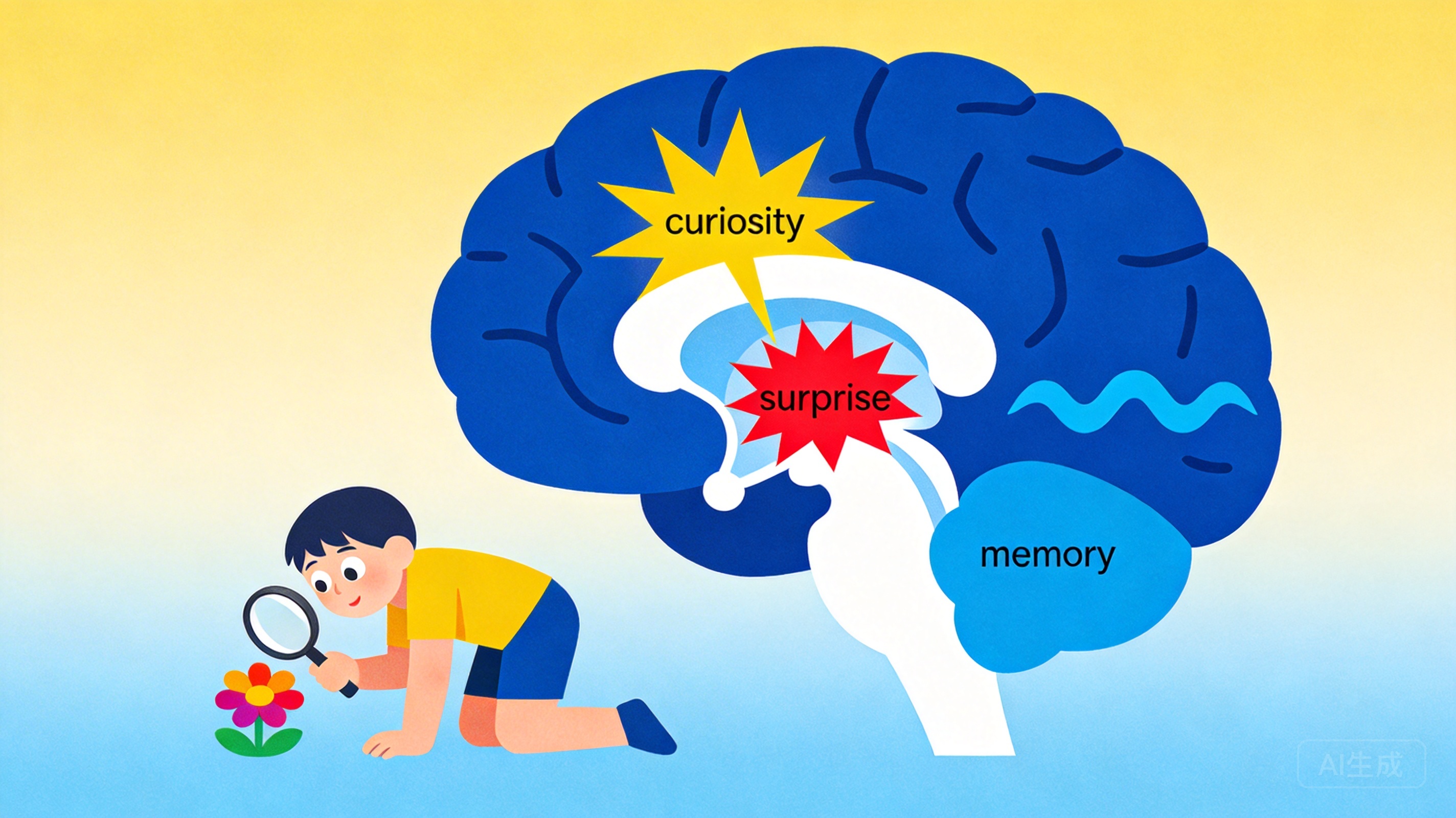
What people sometimes miss is that a good memory tool can still be the wrong discovery tool. A flashcard asks you to retrieve something the system has already decided is worth retrieving. A curiosity loop asks you to notice a gap you half-recognize, make a guess, then get a real explanation. Loewenstein's information-gap theory is useful here: curiosity peaks when you know enough to feel the missing piece, not when a system merely hands you a list (Loewenstein, 1994).

Anki is the power-user memory engine
Anki's own manual opens with two core ideas: active recall testing and spaced repetition (Anki Manual). That makes it unusually strong for people who are willing to design their own memory system. You can tune cards, intervals, decks, add-ons, media, and review flow. If Quizlet feels like a polished study platform, Anki feels like a workshop.
The tradeoff is friction. Anki rewards users who want control and do not mind setup. It is excellent when the job is long-term retention of specific facts. It is less natural when you have ten seconds in a coffee line and want the phone to leave one useful residue instead of another blank scroll.
Brainscape is for confidence-rated flashcards
Brainscape's help center says its free Basic plan lets individual learners create and study their own flashcards, study shared flashcards, and try AI flashcard creation with limited free access; its paid Pro tier adds optional perks (Brainscape Help Center). The distinctive idea is confidence-based repetition: you rate how well you know a card, and the system uses that signal to decide when it returns.
That can be a good middle ground if Quizlet feels too broad and Anki feels too mechanical. But the primitive is still the same: a card built from known material. Brainscape helps you remember a chosen object. It does not solve the "I do not know what I want to know yet" problem.
Brilliant and Blinkist are not Quizlet clones
Some searches for apps like Quizlet are really searches for "a better way to learn with my phone." In that broader set, Brilliant and Blinkist belong in the comparison, but not as flashcard clones. Brilliant positions itself around interactive learning and paid plans for structured math, data, science, and computer science courses (Brilliant Help Center). Blinkist says it offers book summaries and guides in formats such as Blinks, Shortcasts, and guides (Blinkist Help Center).
Those are useful tools, but they solve different jobs. Brilliant asks for focused lesson time. Blinkist starts from books and expert/editorial selection. MillionWhys starts from the smallest possible discovery unit: a question you can answer, miss, or be surprised by, then understand in a concise explanation.

The comparison table
| App | Best for | Learning unit | Curriculum source | Pressure model |
|---|---|---|---|---|
| Quizlet | Studying known material with flashcards and study modes | Set, card, practice question, test | User, class, or shared study material | Study progress and subscription tools |
| Anki | Power-user spaced repetition | Card review | User-built decks and shared decks | Review queue and interval schedule |
| Brainscape | Confidence-rated flashcards | Card plus confidence rating | User, shared, or premium decks | Adaptive repetition based on confidence |
| Brilliant | Interactive STEM learning | Structured lesson | Expert/editorial curriculum | Course progress |
| Blinkist | Short-form book ideas | Summary or guide | Book catalog and editorial selection | Completion of short content |
| MillionWhys | Everyday curiosity and general knowledge | One question plus explanation | Community curiosity plus fact-checking | Curiosity sparks, not streak guilt |
What people usually miss
The mistake is treating "apps like Quizlet" as a feature checklist. Flashcards? AI generator? Tests? Offline mode? Those features matter, but they do not answer the deeper question: is the learner trying to retain a known syllabus or discover an unknown gap?
A fixed deck is powerful once the target is known. Curiosity is different. It starts from a half-known feeling: "Wait, why does that happen?" If the system closes that gap with a real explanation, the answer is satisfying. If the explanation also reveals the next nearby gap, knowledge compounds. That is the difference between a memory loop and a curiosity loop.
The MillionWhys angle: not a deck, a demand-side commons
MillionWhys is not trying to be Quizlet with a different skin. The product bet is more specific: humans are good at curiosity, AI is good at turning questions into fact-checked knowledge, and the shared pool should grow from what people actually wonder about. That is why the curriculum is emergent rather than fixed. One person's "huh, why?" becomes another person's discovery.
That is also why the tone should not feel like exam prep. The unit is ten seconds, not ten minutes. The reward is closure, not a grade. The habit forms because a question feels alive enough to answer, not because a streak is threatening you from the corner of the screen.
Related videos
How to Study for Exams - Spaced Repetition — useful for understanding the memory-tool side of the comparison.
FAQ
What are the best apps like Quizlet?
For flashcards, compare Quizlet, Anki, and Brainscape first. For broader learning, add Brilliant, Blinkist, Khan Academy, and MillionWhys depending on whether you want lessons, summaries, courses, or curiosity questions.
Is Anki better than Quizlet?
Anki is better if you want deep spaced repetition control and do not mind setup. Quizlet is easier if you want polished shared sets, study modes, and a mainstream interface.
Is there a free alternative to Quizlet?
Anki is free on desktop and Android through AnkiDroid, while Brainscape says its Basic plan lets users create and study their own flashcards for free. The right free option depends on whether you want control, convenience, or a different learning unit.
What app should I use if I do not want flashcards?
Use Brilliant for interactive STEM lessons, Blinkist for book summaries, Khan Academy for structured academic topics, or MillionWhys for short general-knowledge questions driven by curiosity rather than a deck.
What does this have to do with AIgneous Million Whys?
AIgneous Million Whys is for the searcher who likes the usefulness of learning apps but does not want a study-tool frame. It turns idle moments into one question, one answer, and one satisfying piece of closure, then lets the next question appear naturally.
Sources
Quizlet Help Center: Subscribing to Quizlet
Brainscape Help Center: Is Brainscape free?
Brilliant Help Center: Pricing and Plans
Curious? Try one 👇
Why is the sky blue?
Jump into the daily quiz →Keep Exploring

Related Posts
Apps Like Quizlet But Free: Which Fit Wins
Apps like Quizlet but free compared: Knowt, Anki, Brainscape, and MillionWhys for flashcards, spaced repetition, and curiosity-first learning.
Quizlet Free Alternatives for Curious Learners
Quizlet free alternatives for curious learners: compare Anki, Knowt, RemNote, Brainscape, and MillionWhys without turning wonder into exam cramming today.
Best Flashcard Apps: 7 Tools Compared
Best flashcard apps compared for adults: Anki, Quizlet, RemNote, Brainscape, Cram, Knowt, Mochi, and one curiosity-first alternative before decks form.