

Free Quizlet Alternatives and Apps Like Quizlet, Compared
On this page· 16
If you searched for Quizlet free alternatives, the real question is probably not "which app copies Quizlet with a lower price?" It is: what kind of learning moment are you trying to protect? Flashcards are excellent when you already know what material you need to remember. Curiosity is different. Sometimes you have a few idle seconds, a half-known gap, and the itch of wanting the world to click into place.
TL;DR
For classic flashcard memorization, Anki is the strongest free alternative to Quizlet because its desktop app, AnkiWeb sync, and AnkiDroid path are free. Knowt, Brainscape, and RemNote are useful if you want AI study tools, polished mobile workflows, or notes-plus-cards. MillionWhys is the different option: not a cram deck, but a curiosity-first loop for learning one satisfying why at a time.
The short answer: choose Anki if you want free, powerful spaced repetition; choose Knowt or RemNote if your study workflow starts from notes, PDFs, or AI-generated cards; choose Brainscape if you like guided flashcard confidence ratings; and choose MillionWhys if your problem is not "I have a deck to memorize" but "I want my spare phone moments to leave me knowing something real."

Curious? Try one 👇
Why is the sky blue?
Jump into the daily quiz →First decide what job Quizlet was doing for you
Quizlet is still good at the job it was built around: turning known material into studyable sets. Its current Google Play listing describes flashcards, practice questions, personalized practice tests, AI tools, study guides, and homework support, and it lists in-app purchases for Quizlet Plus (Google Play: Quizlet). That is not a criticism. It means Quizlet is a study system: you bring a subject, a class, a test, or a deck, and the app helps you work through it.
The mismatch starts when someone uses "free Quizlet alternative" to mean three different things at once. One person wants spaced repetition without a subscription. Another wants AI to turn notes into flashcards. A third wants a daily learning habit that does not feel like school. Those are not the same need, so the best alternative changes.
MillionWhys comes from the third need. In our internal positioning, learning input is naturally fragmented: one small question, then one closure, then a new gap appears. Structure is the output, not the starting point. That is why a curiosity app should not pretend to be a giant course binder. It should let one real "wait, why?" moment complete, then let the next one appear naturally.

Anki: the strongest free choice for spaced repetition
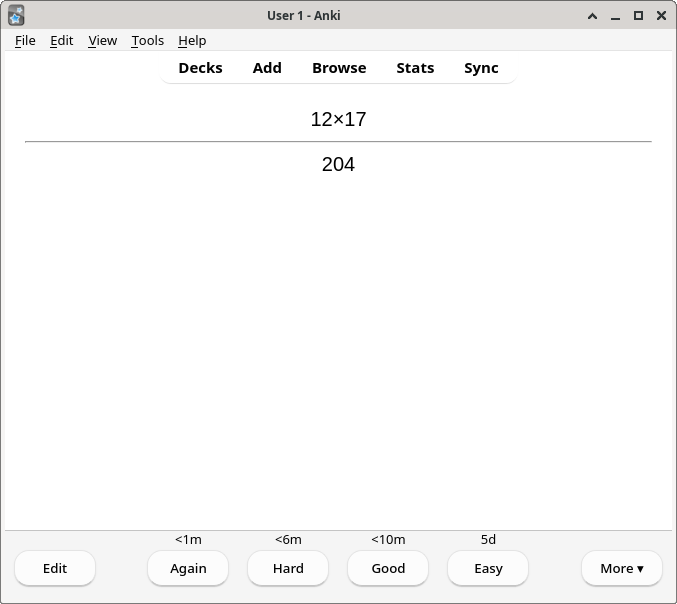
Anki is the obvious first stop if your main need is durable memory. The official Anki site says the desktop version is free for Windows, macOS, and Linux, and that the free AnkiWeb sync service lets you sync cards across devices (Anki official downloads). The same page distinguishes the official iOS app, AnkiMobile, from AnkiDroid on Android. In plain English: the free path is very strong, especially on desktop and Android; iPhone users should check the official iOS app details before assuming every platform is free.
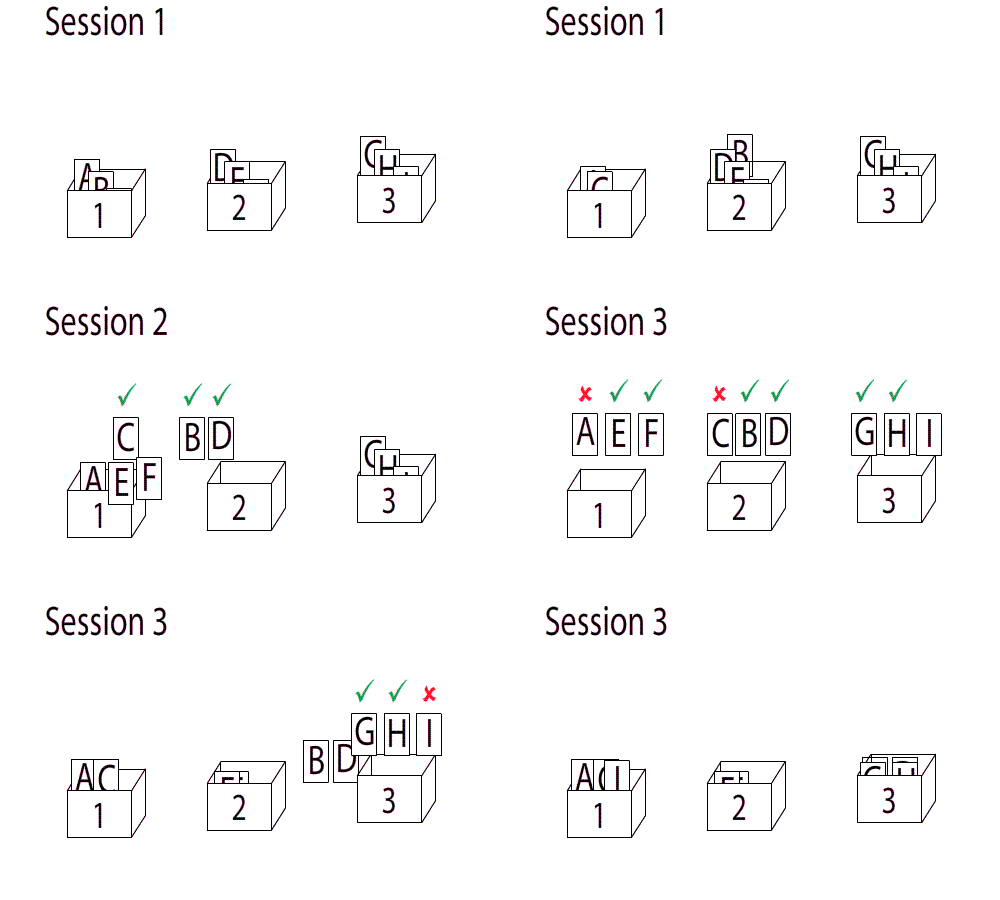
Anki is powerful because it is honest about memory. It asks you to recall, rate how well you remembered, and return when the card is scheduled. That is active recall plus spaced repetition, not a motivational wrapper. If you have a medical deck, a language deck, or a personal knowledge deck, Anki is often the best free alternative to Quizlet.
But Anki is not trying to be charming. It rewards setup, discipline, and deck hygiene. That can be perfect for serious memorization and too heavy for idle curiosity. If the question in your head is "why does ice float?" or "why did countries invent flags?", making a deck first is friction. You wanted closure, not a content-management task.
Knowt, Brainscape, and RemNote: free tiers with different centers of gravity
Knowt positions itself around AI study tools and subscription plans; its official plans page is the safest place to check current limits because pricing and included features can change (Knowt plans). For a student who wants notes, generated flashcards, and a more modern Quizlet-like surface, it can be a reasonable comparison point.
Brainscape is more explicitly a flashcard platform. Its pricing page describes plans for individuals, teachers, organizations, and certified flashcard content (Brainscape pricing). The product's learning angle is confidence-based repetition: you rate how well you know a card, then the system brings it back accordingly. That is useful when your content is already card-shaped.
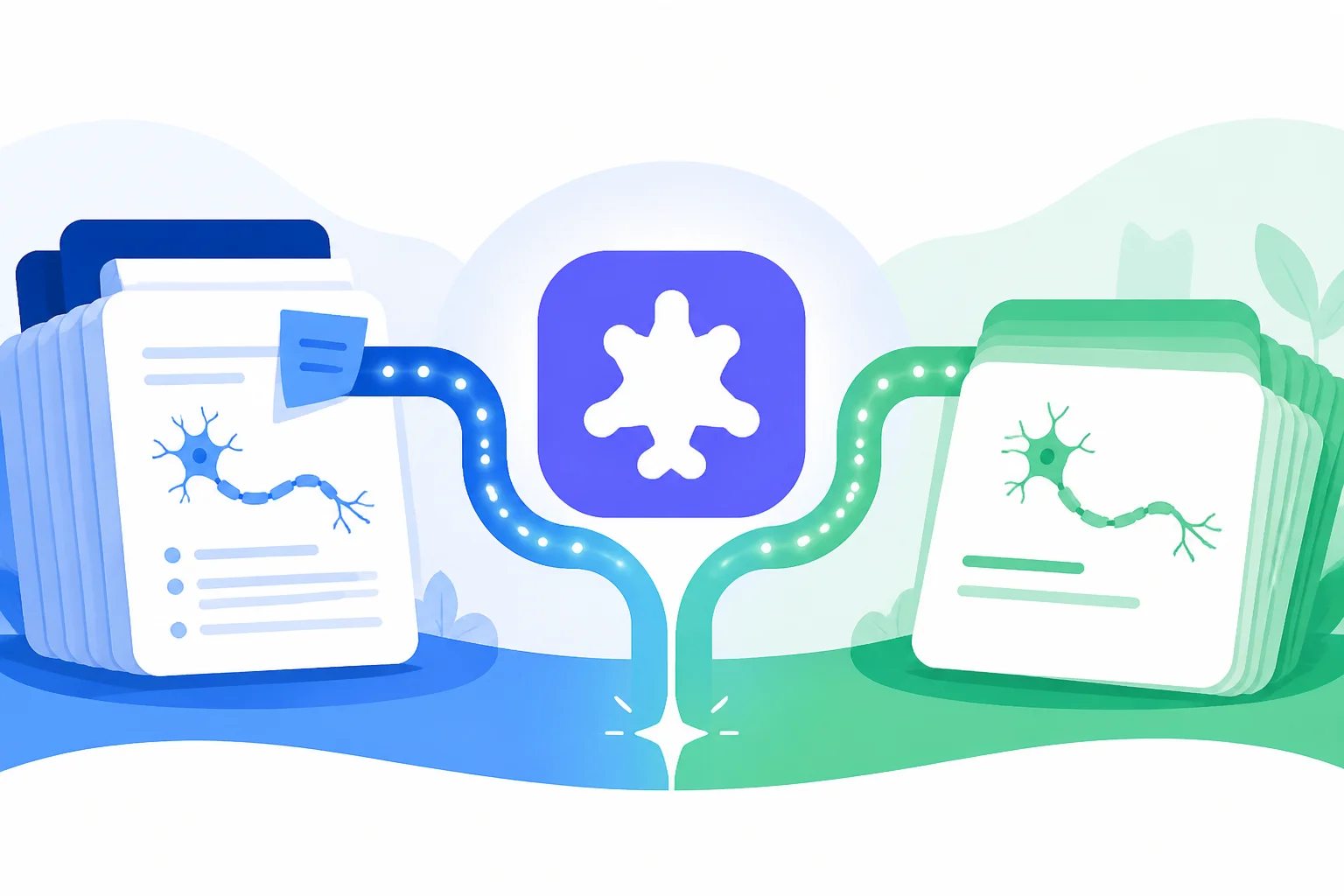
RemNote sits closer to the notes-to-memory side. Its pricing page's structured data lists a Free plan with unlimited notes and flashcards, unlimited synced devices, and limited-use Pro features; it also lists paid Pro and Pro-with-AI plans with PDF, image occlusion, templates, exam scheduling, handwritten notes, and AI-credit differences (RemNote pricing). If your learning starts in documents, lectures, or PDFs, RemNote may fit better than Quizlet because the cards live beside the notes.
The pattern is clear: these are free or partly free alternatives to Quizlet, but most of them still assume a study object. You have notes, decks, textbooks, classes, PDFs, or a test-shaped goal. That is useful. It is just not the whole territory of learning.
Apps like Quizlet that are not flashcard tools
Search for apps like Quizlet and half the results are not really flashcard tools at all. Brilliant teaches structured courses in math, logic, and science — excellent if you want a curriculum, but it replaces the classroom, not the deck of cards. Blinkist compresses nonfiction books into summaries; you consume ideas, but nothing in it asks you to retrieve them later, which is the part that makes Quizlet-style practice stick. If those sound closer to what you actually want, we compared them properly in Brilliant App Alternatives and Blinkist Alternatives.
The honest test: if your goal is remembering material you already collected, stay with the flashcard tools above. If your goal is understanding new things a few minutes at a time, a question-first app — one that asks before it explains — fits better than either a deck or a summary.
The curiosity alternative: learning without turning everything into homework
Here is the part people usually miss: "free" is not only a price. It can also mean free from the emotional shape of school. If every learning app asks you to import notes, build decks, finish lessons, protect streaks, and measure progress like a class, then curiosity gets squeezed into a productivity costume.
MillionWhys is built on a different bet: humans are naturally curious, but modern learning tools often add too much ceremony before the first satisfying answer. The smallest useful unit is not a chapter or a deck. It is one question with a real information gap. Loewenstein's information-gap theory describes curiosity as the tension between what you know and what you realize you do not know; our own product thesis treats closure as the payoff, not endless stimulation. The loop is simple: see the gap, make a prediction, get the explanation, and leave with the world slightly less blurry.
That makes MillionWhys a poor replacement if you need to memorize 400 anatomy terms by Friday. Use Anki, RemNote, Brainscape, Knowt, or Quizlet for that. But it makes MillionWhys a strong replacement for a different habit: the moment when you would otherwise scroll, feel the itch of half-knowing something, and want one tiny answer that compounds into the next question.

Comparison table: which free Quizlet alternative fits?
| Tool | Best fit | Free angle | What it is not |
|---|---|---|---|
| Anki | Spaced repetition for known material | Free desktop, AnkiWeb sync, strong Android path | A light curiosity feed |
| Knowt | AI-assisted notes, flashcards, and study materials | Check current free limits on its plans page | A non-study curiosity ritual |
| Brainscape | Confidence-rated flashcards and certified decks | Plan details vary by individual, teacher, or org use | A question-first commons |
| RemNote | Notes, PDFs, flashcards, and spaced repetition together | Free plan lists unlimited notes and flashcards | A tiny 10-second discovery loop |
| MillionWhys | Curious adults replacing idle scrolls with real answers | Question-first learning without deck setup | A cram deck or test-prep system |
What people usually miss
The usual comparison treats learning apps like a shelf of features: flashcards, AI, tests, notes, streaks, sync, offline access. Features matter, but they do not tell you what emotional contract the app is making with you. Quizlet says: bring me the material, and I will help you study it. Anki says: bring me cards, and I will make forgetting harder. RemNote says: put your notes and memory work in one place. MillionWhys says: bring one spark of curiosity, or borrow someone else's, and close it in seconds.
That last contract is not softer. It is just earlier in the learning chain. Before a subject becomes a deck, it is a question. Before a curriculum becomes a map, it is a crowd of small whys. A demand-side knowledge commons starts there: with what people actually wonder, not only what a class already assigned.
Related videos
FAQ
What is the best free alternative to Quizlet?
For pure flashcards and spaced repetition, Anki is the strongest free alternative for many learners because its desktop app and AnkiWeb sync are free. Platform details matter, especially on iOS, so check the official Anki download page.
Is Quizlet still worth using?
Yes, if your goal is studying known material through flashcards, practice questions, study guides, and tests. The point of looking at alternatives is not that Quizlet is bad; it is that some learning moments are not deck-shaped.
Which Quizlet alternative is best for AI-generated flashcards?
Knowt and RemNote are both worth checking if your workflow starts from notes, PDFs, or generated study materials. Their plan limits and AI features can change, so use their official pricing pages for the current details.
Which option is best if I hate streak pressure?
Use a tool that rewards the learning act itself rather than attendance theater. Anki can be very neutral if you configure it well; MillionWhys is explicitly designed around curiosity closure rather than guilt-based streak pressure.
What does this have to do with AIgneous Million Whys?
Million Whys is the curiosity-first branch of this comparison: a 10-second question, a prediction, a fact-checked explanation, and no fixed curriculum ceiling. It is for the moment before "I should make a deck" when the real spark is simply "wait, why?"
Curious? Try one 👇
Why is the sky blue?
Jump into the daily quiz →Keep Exploring

Why does self-quizzing help you remember better than re-reading notes?
Psychology & Behavior
How does RemNote keep your notes and your flashcards from becoming two separate piles of work?
Technology
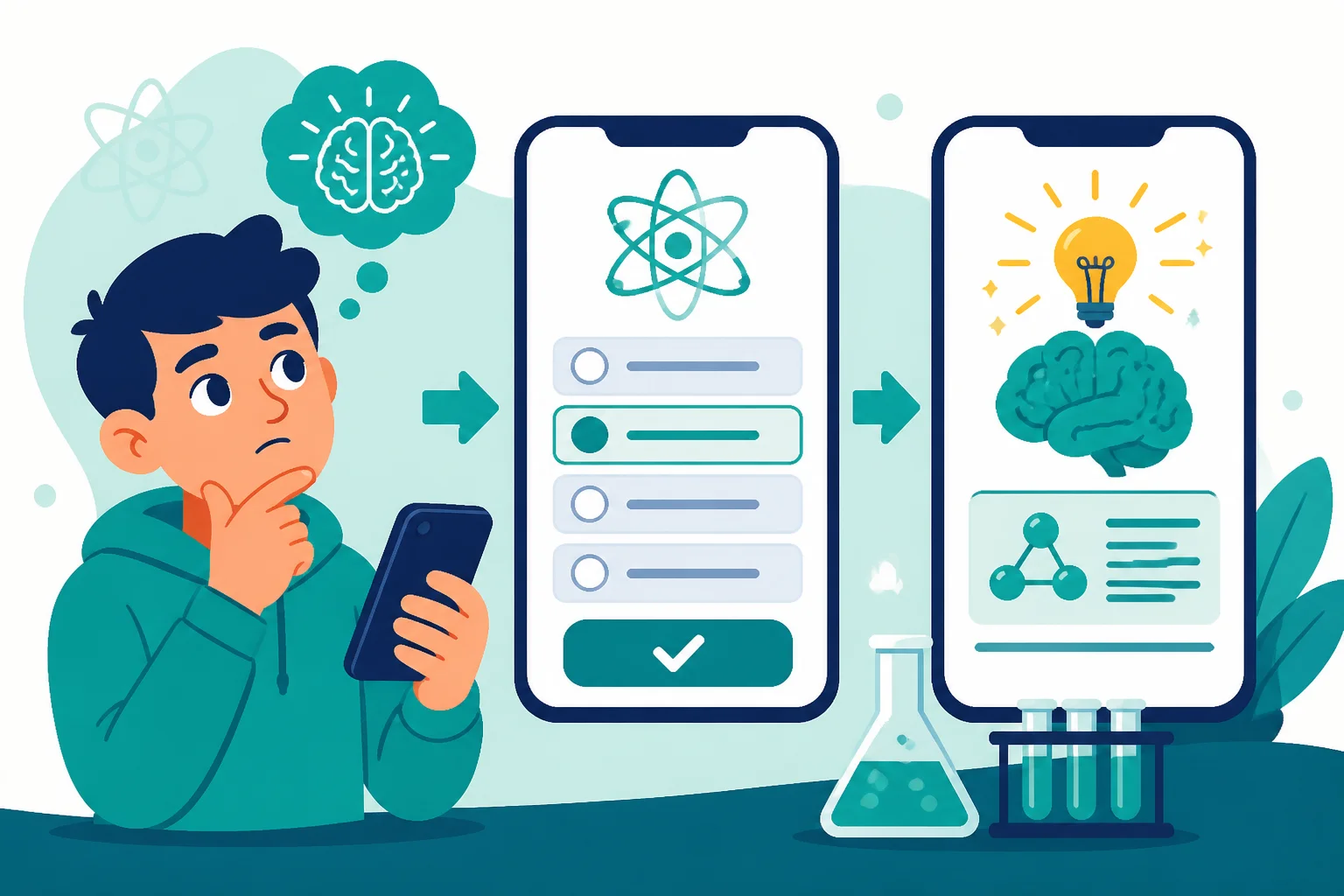
Why do free daily quiz apps make you commit to a guess before they explain the answer?
Psychology & Behavior
Related Posts
Anki Alternatives: Pick by Learning Job
Anki alternatives split serious spaced repetition from casual curiosity. Compare AnkiMobile, RemNote, Mochi, Brainscape, Quizlet, Imprint, and Million Whys.
Free Flashcard App: What It Can and Can't Teach
Looking for a free flashcard app? Compare Anki, Knowt, Brainscape, and MillionWhys for memory, spaced repetition, and curiosity-first learning.
Best Flashcard Apps: 7 Tools Compared
Best flashcard apps compared for adults: Anki, Quizlet, RemNote, Brainscape, Cram, Knowt, Mochi, and one curiosity-first alternative before decks form.