

Trivia App for Groups: 6 Honest Picks
On this page· 19
The most useful question about a trivia app for groups is not “Which one has the biggest library?” It is: What kind of togetherness do you actually have tonight? A sofa, one television, and several loud friends is a different problem from six people answering whenever their trains get home. The right app should fit the room—or the lack of one—before anyone argues about who knows more useless facts.
TL;DR
Kahoot is the cleanest hosted quiz with a shared focal point; Jackbox is the stronger loud-party choice; Trivia Crack works well for turn-based competition; Sporcle is the closest thing to a hosted pub-trivia night; and TriviaMaker gives a host the most control over a custom game. Million Whys fits a quieter, asynchronous lane: one shared link, the same generated question set, comparable scores, and explanations that close each little “wait, why?” gap.
Short answer: choose Jackbox for performance and laughter, Kahoot or TriviaMaker when someone wants to host, Sporcle for a trivia-night structure, Trivia Crack when friends like trading turns, and Million Whys when the group cannot be online together but still wants a fair common set with something worth learning after each guess.

How we picked: start with the shape of the group
“Multiplayer” hides different mechanics. One app needs a presenter and television; another lets players drift in when free. Some are party games containing trivia; others care about the explanation after the answer. We compared six options on five practical questions.
- Does everyone receive the same questions? Comparable scores mean less if each person gets a different draw.
- Must everyone be present at once? Live timing creates energy, but it can also turn scheduling into the hardest question of the night.
- Is a host or shared screen required? A television is delightful in a living room and inconvenient in a group chat.
- Who supplies the questions? A host-built quiz can be wonderfully personal; a ready-made pool removes preparation.
- What remains after the score? A correct answer is nice. An explanation that makes the answer retellable is a different kind of prize.
That last criterion matters here. Curiosity is strongest when you know enough to notice a gap but not enough to close it. A good choice makes the gap visible; a good explanation gives it an ending. Endless suspense is stimulation. Answer, mechanism, closure—that is knowledge you can carry into the next question.
Quick comparison
| App | Best for | Timing | Host or shared screen? | Question style |
|---|---|---|---|---|
| Kahoot | Meetings, classrooms, structured gatherings | Live or self-paced challenge | Usually host-led; live play often uses a shared screen | Host-created or ready-made quizzes |
| Jackbox | Loud parties and performance | Live | Yes; one host screen, phones as controllers | Party-game prompts and trivia, depending on the title |
| Trivia Crack | Friends trading turns over time | Turn-based; separate challenge modes also exist | No shared screen for Classic mode | Broad general-knowledge categories |
| Sporcle | Hosted pub trivia and venue-style events | Scheduled live events | A live host runs the session | General knowledge and themed events |
| TriviaMaker | Building a custom game show | Usually live; some formats can be assigned | Host-led, with presenter and crowd modes | Seven configurable game formats |
| Million Whys | Async knowledge trivia with explanations | Each person opens the challenge link when free | No host or shared screen | Same generated question set for every challenger |
Kahoot: best for a clear host-and-audience rhythm

Kahoot remains the easiest recommendation when one person wants to run the room. Its own guide says a host launches the game, players join with a PIN, and live questions are typically shown on a big screen while answers arrive from personal devices. It also supports self-paced challenges, so “Kahoot” does not have to mean everyone is live at once. Team modes can use either shared or personal devices, subject to the relevant account and participant limits. Kahoot’s official overview explains both live and challenge play.
Best for: a work social, classroom, family gathering, or video call where someone is happy to present. Even when players use their own phones, live Kahoot still feels like a show with a host—excellent for one tempo, less natural for a group chat spread across a day.
Jackbox: best when the room should be part of the joke

Jackbox is the honest winner for a loud party. One person buys and launches a Party Pack, everyone sees the host screen, and players join at jackbox.tv with the room code; their phones become controllers. Remote groups can screen-share through a video-call service. Those are not inferred features—they are the setup steps in Jackbox’s official how-to-play guide.
Best for: people who want performance, surprise, drawing, bluffing, and the delighted accusation of “you wrote that, didn’t you?” Some titles use trivia, but the broader appeal is party-game theatre. For mechanism-rich knowledge, look elsewhere. To make the sofa loud, start here.
Question 1 of 1
How can remote friends play a Jackbox game when only the host is running it?
Trivia Crack: best for familiar, turn-based rivalry

Trivia Crack fits friends who enjoy a game that can stay alive between other things. In Classic mode, two opponents trade turns; a correct answer keeps the turn, while a miss passes it. The current rules give 20 seconds to answer a question and as long as 36 hours to take a turn, with the match capped at 25 rounds. Players can choose friends or random opponents. Etermax documents those Classic-mode rules directly.
Best for: asynchronous one-to-one rivalry. Etermax also promotes a Challengers mode for invited friends, but Classic remains more duel than hosted group night.
Sporcle: best when you want an actual trivia event

Sporcle is the least app-like choice here—and that is its advantage. It operates a large online quiz platform, but it also runs live events at venues and scheduled virtual pub trivia. Its support material describes host-led virtual games over Zoom, while its broader help pages list live venue events alongside the website and mobile apps. Sporcle’s own “What is Sporcle?” page lays out that range.
Best for: a team that wants a host, a start time, and the social grammar of pub trivia. It is heavier than sharing a link and much better at creating an occasion.
TriviaMaker: best for building your own game show
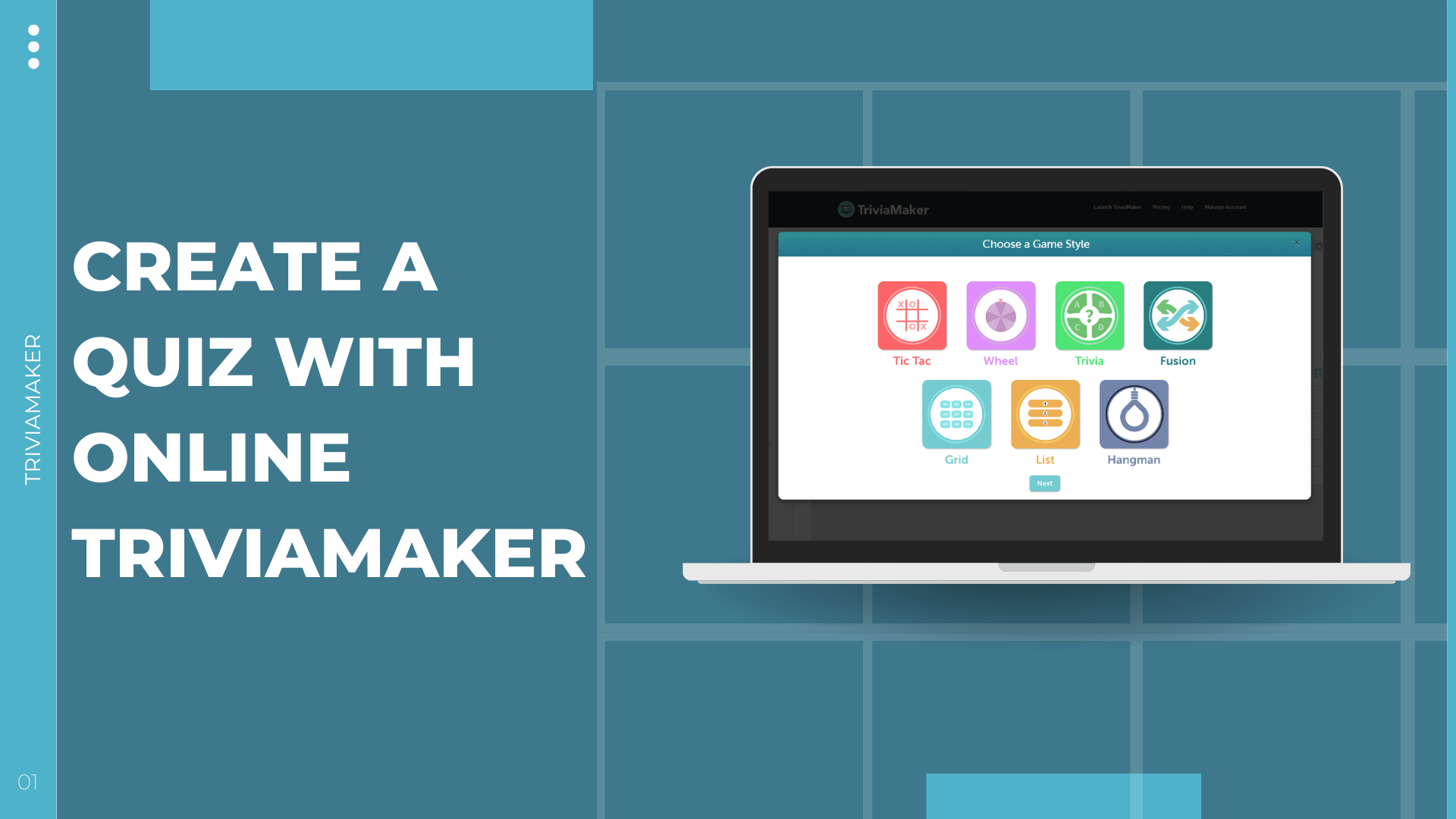
TriviaMaker is for the person who already has opinions about round structure. Its official site lists seven formats—Grid, List, Trivia, Wheel, TicTac, Hangman, and Fusion—and lets players join with a code or QR code without creating their own accounts. As checked on August 25, 2026, the site says its free plan supports up to 20 simultaneous players; paid plans unlock more formats and higher participant limits, beginning at $6.99 per month. The current feature and plan details are on TriviaMaker’s homepage.
Best for: a custom family quiz, fundraiser, or themed night. The price of that control is preparation: the app gives you a stage, not the questions worth asking.
Million Whys: best for the group that cannot share a clock

Million Whys Challenge mode is deliberately smaller and quieter. Finish a generated batch, create a share link, and friends can answer the same question set on their own time, then compare scores. There is no presenter, television, or room code to keep alive. The public Million Whys FAQ confirms the same-set challenge and score-comparison flow.
Best for: a group chat, distributed team, or long-distance family. The score is not the entire point: an explanation resolves the mechanism after the guess, turning one person’s half-known “surely it’s B?” into common, retellable knowledge.
This is not the loud-party winner; Jackbox is. Nor is it the custom-host winner; TriviaMaker is. Its lane is asynchronous trivia that leaves residue: a satisfying answer, then enough context for the next question to appear. Knowledge can grow from naturally fragmented input—one question, then another—until structure emerges from what the group cared enough to ask.
What people usually miss: “group” is a timing decision
Most comparisons assume every group shares a table. Real friends cross time zones; families have bedtimes; somebody is always making tea when the question appears. Live play converts attention into energy but excludes whoever misses the window. Async play sacrifices the collective countdown and gains participation.
The other distinction is reveal versus closure. A leaderboard reveals who was right; it may not explain why. For party play, the social moment can be enough. For knowledge trivia, explanation finishes the information gap. Choose the payoff that matches why the group gathered.
Related videos
FAQ
What is the best trivia app for a large group in one room?
Kahoot is the simplest structured choice when you have a presenter and display. Jackbox is better when the gathering should feel like a party show, while TriviaMaker suits a host who wants to build a custom format.
Which group trivia apps work without a shared screen?
Trivia Crack Classic works directly on each player’s device, and Million Whys Challenge links do not require a television or presenter. Kahoot also offers self-paced challenges, although its signature live format is host-centered.
What works best for friends in different time zones?
Choose an asynchronous format. Trivia Crack is good for trading turns; Million Whys is better when everyone should answer the same generated set and compare the resulting scores.
Which app is best for pub trivia?
Sporcle is the closest fit when you want a scheduled, host-led event. If you are running the pub night yourself, TriviaMaker gives you more control over formats, questions, and presentation.
Do all trivia apps explain the answers?
No. Feedback depth varies by platform, game, and whoever created the quiz. If knowing why matters as much as knowing who won, inspect the answer experience before committing the group.
What does this have to do with AIgneous Million Whys?
Million Whys is built around the ten-second curiosity loop: notice a gap, choose, read the mechanism, and leave with closure. Challenge mode lets a group share that exact question set asynchronously, so fragmented moments can still compound into common knowledge.
Keep Exploring
Why might MillionWhys-a learning app that asks a multiple-choice question before a fact-checked explanation-let community questions shape future topics instead of following only a fixed course?
Media & Society
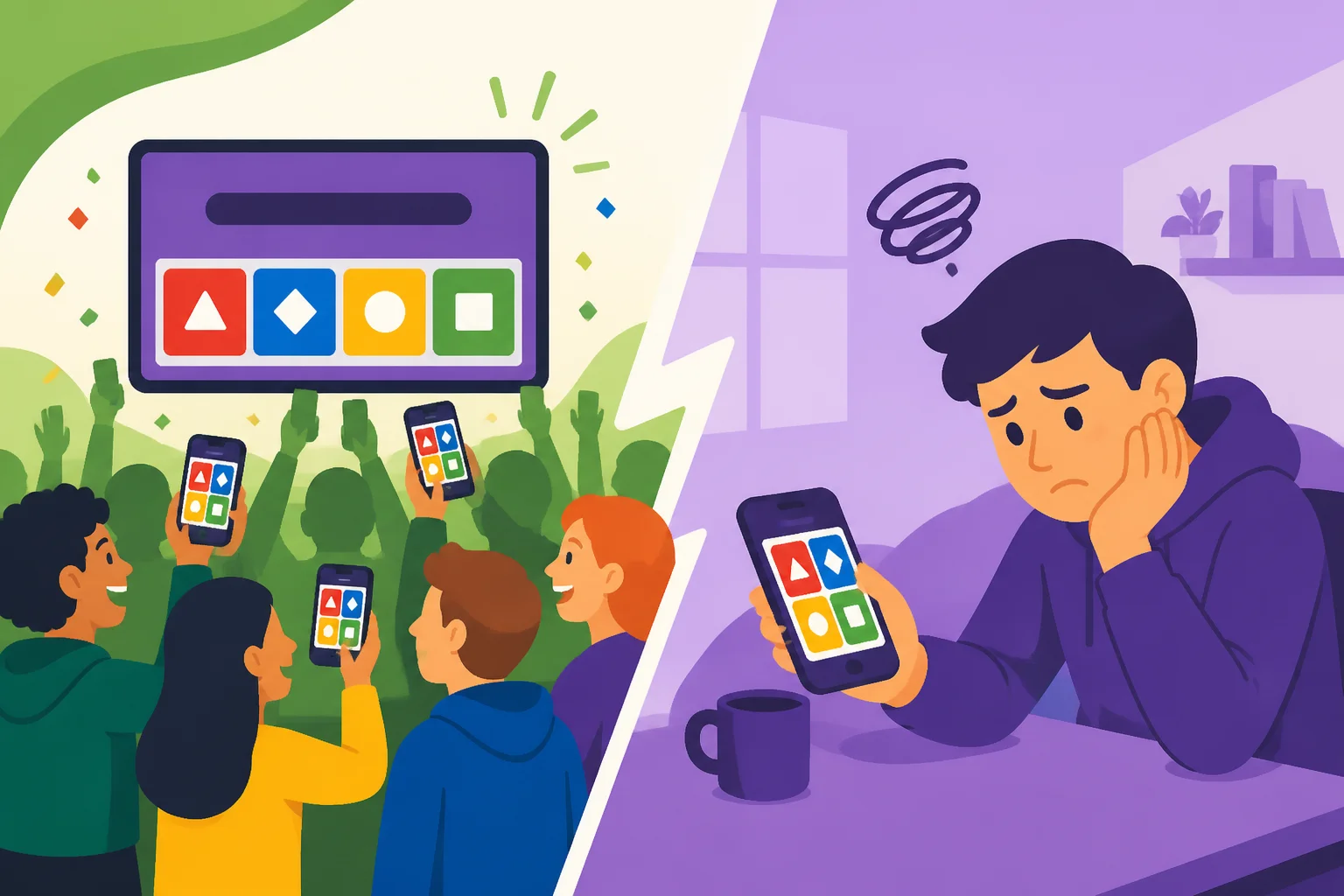
What makes Kahoot work well for a room full of people but feel clumsy when you only want to answer a few questions by yourself?
Technology

Why do free daily quiz apps make you commit to a guess before they explain the answer?
Psychology & Behavior
Related Posts
10 Best Trivia Apps for 2026: Choose by How You Want to Play
Compare 10 trivia apps and web quizzes for reasoning, general knowledge, friend duels, music and parties. Find the format that fits how you want to learn or play.
Best Quiz Apps for Adults: Curiosity Beats Cramming
Best quiz apps for adults should feed curiosity, not homework guilt. Compare MillionWhys, Brilliant, Elevate, Quizlet, Kahoot, Vaia, Brainscape, and Deepstash.
App to Learn New Things: Curiosity, Not Cramming
Looking for an app to learn new things? Compare Million Whys, Brilliant, Khan, Blinkist, and Duolingo by learning moment, not hype.