

10 Best Trivia Apps for 2026: Choose by How You Want to Play
On this page· 26
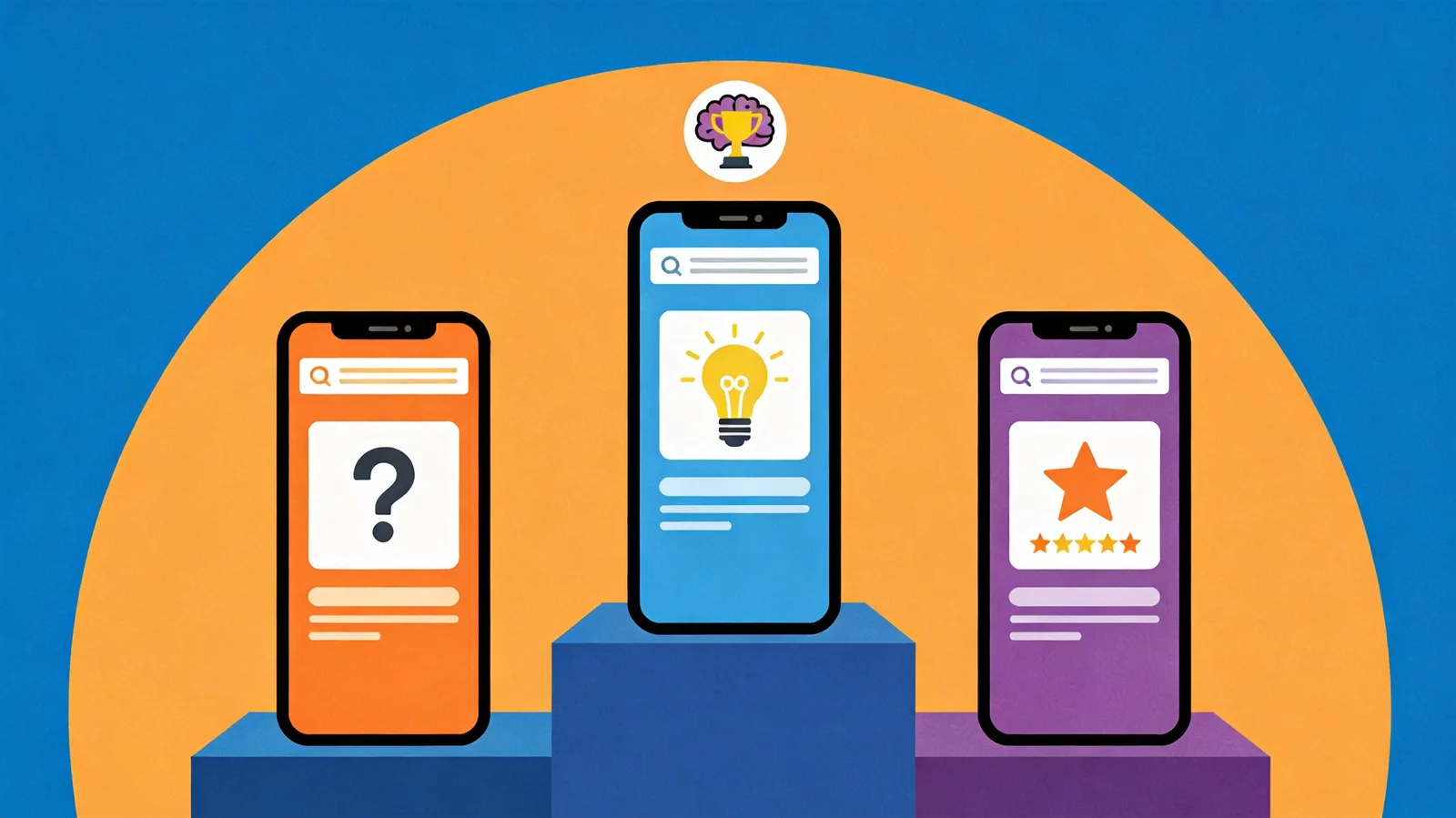
The best trivia app for you depends on what you want from the next question: a contest with friends, a new fact, or a deeper understanding of why something happens. For that last goal, look at the question itself: does it invite you to reason through a cause, weigh plausible explanations, and understand the mechanism behind the answer? That is the experience MillionWhys is built around.
Disclosure: We make MillionWhys and include it alongside alternatives for different interests and play styles.
Choose your starting point
- You want to understand why things happen: choose MillionWhys for questions that invite you to predict a cause, compare possible explanations, and unpack the underlying mechanism. Try its public question before installing.
- You want general-knowledge trivia with explanations: consider QuizzLand, whose developer advertises explanations for each question alongside its trivia levels.
- You want a contest with friends: start with Trivia Crack for general-knowledge duels, or SongPop Classic if recognizing songs is the appeal.
- You want to explore a favorite subject: look at Sporcle’s quiz catalog or JetPunk’s browser quizzes.
- You want a daily web quiz: try Quizl. For a single question with explanations, try MillionWhys’ question of the day.
- You are organizing a group: investigate Kahoot! for a hosted quiz or Psych! for a bluffing game. These serve a different occasion from a personal quiz habit.
Curious? Try one 👇
Why is the sky blue?
Jump into the daily quiz →Three apps to compare first
Start with the experience you want: trivia levels, competition with friends, or reasoning through why things happen.
Compare the experience and free-use considerations
QuizzLand
- Reason to consider it: Trivia levels with explanations
- Free-use considerations: Lives, coins, hints, and videos that can replenish resources
- Source: Developer listing and official site
Trivia Crack
- Reason to consider it: General-knowledge categories and duels
- Free-use considerations: The free listing includes ads and in-app purchases; Prime and Premium are different paid options
- Source: Developer listing and support guide
MillionWhys
- Reason to consider it: Reason through why something happens, compare plausible explanations, then unpack the mechanism
- Free-use considerations: Try the public question of the day without signup
- Source: Product design and public web examples
QuizzLand — a candidate for trivia with explanations
QuizzLand’s developer listing describes a level-based trivia maze, adjustable difficulty, explanations for each question, and solo and multiplayer modes. If you want something to read after an answer, it belongs on your shortlist.
The official site also describes coins and lives, with options to replenish resources through waiting, coins, or suggested videos. Consider whether that resource system suits the way you like to play.
- Choose it for: conventional trivia with an explanation feature.
- Check before committing: whether the explanations answer your follow-up questions, and whether the lives system suits your play style.
Trivia Crack — a candidate for playing against friends
Trivia Crack’s official listing describes duels, category-based questions, and multiple modes. Categories include science, geography, history, sports, art, and entertainment. That makes it a natural option when competition is the main attraction.
Be precise when comparing its paid options. Etermax’s support documentation distinguishes Prime, a subscription with additional benefits, from Premium, a separate app bought once to remove ads. Check the offer for your platform and region before paying.
- Choose it for: general-knowledge competition with other players.
- Check before committing: whether the feedback and interruptions in your preferred free mode suit you.
MillionWhys — go deeper into why things happen
MillionWhys turns everyday curiosity into a short reasoning exercise. Its “why” starts in the question: what causes this, how does it work, and which explanation makes sense? The choices give you possible ways to think about the problem. You make a prediction, then read how the mechanism supports the answer and where the alternatives fall short.
Here, depth means following the causal explanation far enough to question your first intuition. You can engage with a familiar subject without needing an obscure fact before you start.
- Question: a familiar observation becomes a puzzle about cause and effect.
- Choices: plausible explanations give you something to reason with, even when you do not already know the answer.
- Reveal: the feedback unpacks the mechanism and explains why a tempting alternative misses part of the picture.
A concrete example: go one “why” deeper
Here is an example from MillionWhys: “Why is silent flight useful even if a mouse never hears the owl coming?”
Keeping quiet to avoid alerting prey is an intuitive explanation. The question asks you to consider what that explanation leaves unresolved: why would quiet flight still help under the condition in the question? The sample introduces another possible benefit—reducing the owl’s own wing noise may help it hear faint sounds from prey. It also notes that the two explanations can coexist.
That is the deeper “why”: start with an observation, test an intuitive explanation against a condition, and discover another mechanism that helps explain it. The reasoning journey is the reason to try MillionWhys.
Choose it for: understanding how everyday phenomena work and thinking through explanations yourself. Try a question, make your prediction, then inspect the reasoning behind the answer.
Seven more options for different occasions
Sporcle — browse quizzes around a favorite subject
Sporcle’s official mobile guide describes quizzes spanning geography, movies, sports, language, and history, plus account features such as saved playlists and statistics. Consider it when finding another quiz on a specific interest matters more than following a fixed daily sequence.
Trivia Star — try a progression-based quiz game
The developer listing describes categories, levels, hints, rewards, and increasing difficulty. It also advertises paid VIP benefits. Consider it if working through levels appeals to you.
SongPop Classic — identify songs and artists
SongPop Classic centers on recognizing artists and song titles from audio clips. Its developer describes friend challenges, tournaments, and a solo practice mode. Choose it when music recognition is the activity you want; it serves a different need from written general-knowledge questions.
Kahoot! — organize a hosted quiz
Kahoot! provides quiz creation and hosting, with players joining through a game PIN. Its home offering has free and paid plans with different player limits and features. Consider it for an organized game with friends or family. Before planning a larger event, check the current limit for the host account and plan you will use.
Psych! — investigate a party bluffing option
Psych! Outwit Your Friends is listed as a party game by Warner Bros. Consider it for group play; check the available decks for the kind of evening you are planning.
JetPunk — explore quizzes in a browser
JetPunk is a website with featured and user-created quizzes, including geography, history, maps, and typed-answer challenges. Consider it if you prefer opening a quiz in your browser. We include it as a web alternative, rather than treating a website and a native app as identical products.
Quizl — try a daily web quiz
Quizl offers a short multiple-choice quiz in your browser, alongside additional game modes. Consider it for a daily quiz you can open without installing an app.
A useful way to choose between your final two
- Try one question before paying. Notice whether you can reach the kind of game you want without setup that puts you off.
- Look at what the question asks you to do. If you want deeper understanding, look for a cause you can reason through, plausible competing explanations, and feedback that connects the answer to a mechanism.
- Use the same free mode for a short session. Notice actual interruptions. A store’s “contains ads” label cannot tell you how often ads will appear.
- Separate enjoyment from a learning claim. A feature checklist or a short trial cannot prove what you will remember a week later.
Frequently asked questions
Which trivia apps explain the answers?
QuizzLand advertises explanations for each question. If you want to explore why something happens, MillionWhys builds the question around that causal puzzle: consider possible explanations, make a prediction, and read how the mechanism resolves it. Its public browser sample lets you inspect feedback for the correct and incorrect choices.
What does a deeper “why” mean in MillionWhys?
It means thinking through causes and conditions. In the owl example above, the question asks why quiet flight could still help when prey would not hear the owl anyway. That condition prompts you to examine another mechanism: how the owl’s own noise might interfere with its hearing. The depth comes from examining the explanation, rather than needing a more obscure fact to answer.
Is Trivia Crack’s ad-free option only a subscription?
No. Etermax describes both the Prime subscription and a separate Premium app with a one-time purchase. Availability and pricing should be checked in your store.
Can I play a trivia question without installing an app?
Yes. MillionWhys’ question of the day, Quizl, and JetPunk offer browser entry points. Choose according to whether you want a reasoning question, a daily quiz, or a catalog to explore.
Which option should I investigate for a party?
Start with Kahoot! if you want to host a quiz. Psych! is another group-game candidate. For a personal phone quiz or an ongoing duel, return to the shortlist above.
How was this shortlist reviewed?
This guide draws on official product information and limited browser use. It is not a hands-on test of every native app or a comparison of measured learning outcomes.
Try the format before choosing
Curious about why something happens? Try today’s MillionWhys question, reason through the possibilities, and make your prediction. Then open the feedback to see how the mechanism explains the answer—and what the other possibilities leave out.
Looking for a broader comparison? Continue to trivia apps for adults, or try the random trivia generator.
Curious? Try one 👇
Why is the sky blue?
Jump into the daily quiz →Keep Exploring

Why might MillionWhys-a learning app that asks a multiple-choice question before a fact-checked explanation-let community questions shape future topics instead of following only a fixed course?
Media & Society

Why do free daily quiz apps make you commit to a guess before they explain the answer?
Psychology & Behavior
Why would QuizStreak give one daily question with three optional clues that become easier step by step?
Film, TV & Games
Related Posts
Daily Quiz Apps in 2026: Why 5 Questions a Day Beats Cramming
Wordle, Bing's homepage quiz, QuizStreak, Quizl, Duolingo and MillionWhys — what daily quiz apps get right about memory, and which habit is worth keeping.
Trivia App for Groups: 6 Honest Picks
Find the right trivia app for groups: compare Kahoot, Jackbox, Trivia Crack, Sporcle, TriviaMaker, and Million Whys by setup, timing, and group fit today.
Best Quiz Apps for Adults: Curiosity Beats Cramming
Best quiz apps for adults should feed curiosity, not homework guilt. Compare MillionWhys, Brilliant, Elevate, Quizlet, Kahoot, Vaia, Brainscape, and Deepstash.