Why Do Stock Splits Happen? The Denominator Trick
Why do stock splits happen if nothing about the business magically changes? Because a stock split is mostly a denominator trick. The company takes the same pie and cuts it into more slices, so each slice gets cheaper while the total pie stays the same. That sounds almost too simple, which is exactly why the question is interesting: if a split does not make shareholders richer by itself, companies must be doing it for other reasons.
TL;DR
A stock split increases the number of shares while reducing the price per share in the same proportion, so an existing shareholder's ownership percentage is not diluted. Companies usually do it to make the per-share price feel more accessible, improve trading mechanics, widen the pool of possible buyers, or send a signal after a strong run. The split changes the packaging, not the underlying business.
Short answer: companies split stock when the share price has risen enough that management wants a lower quoted price without changing total shareholder equity. A 2-for-1 split turns one $200 share into two $100 shares. You now own more shares, but the same economic claim. The real questions are why the company wants that lower price, who benefits from it, and why markets sometimes react as if the packaging itself mattered.
If this feels like the mirror image of a buyback, that is the right instinct. A buyback reduces the share count; a split increases it. The sibling explainer, why companies buy back stock, looks at the denominator moving in the other direction.

Curious? Try one 👇
Why is the sky blue?
Jump into the daily quiz →The pizza-slice math
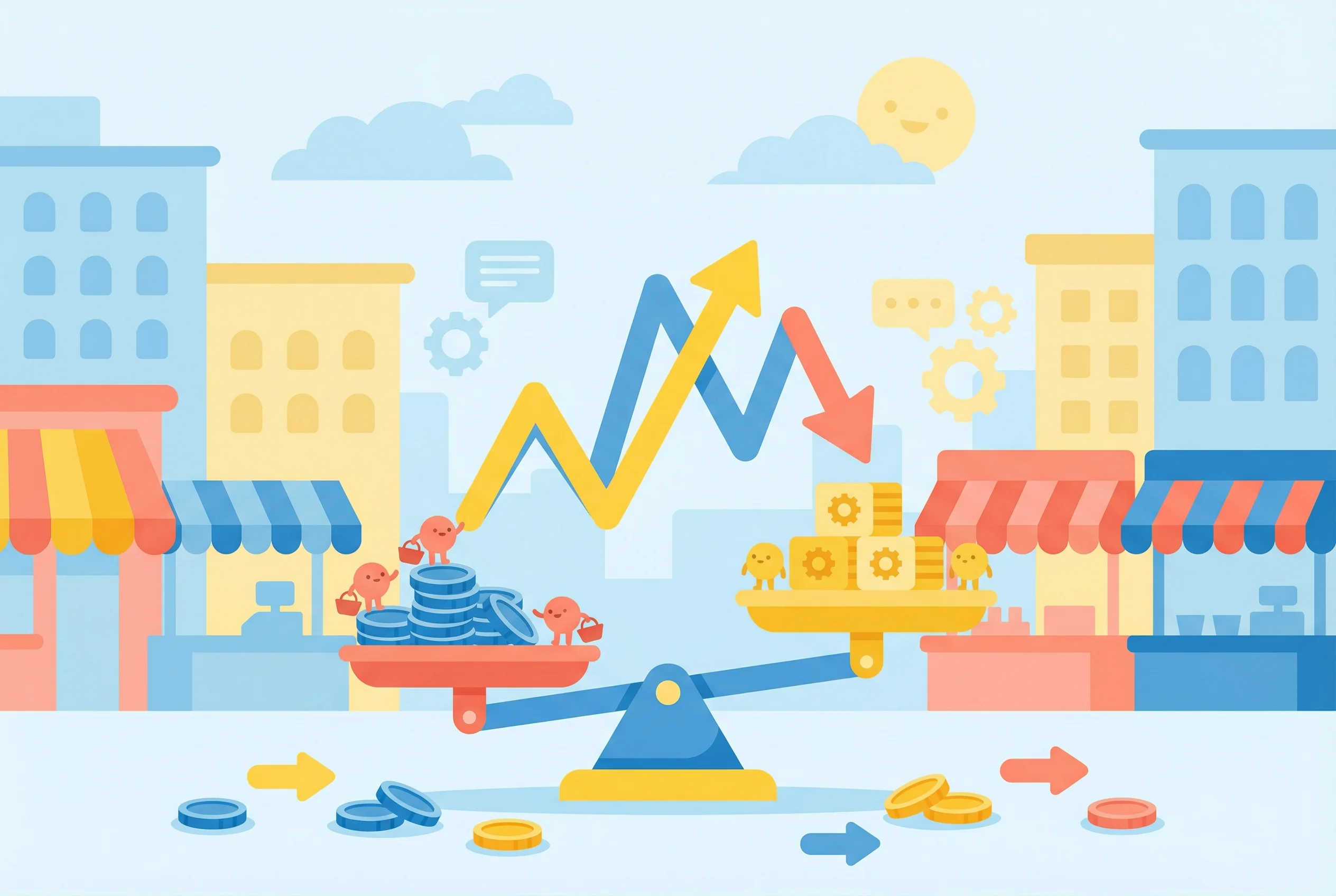
The cleanest way to see a stock split is to ignore the stock chart and count ownership. Suppose a company is worth $1,000 and has 10 shares outstanding. Each share represents one tenth of the company, so the market price is $100 per share. If the company declares a 2-for-1 split, it now has 20 shares. Each share represents one twentieth of the company, so the price adjusts to about $50. You did not get richer. You got two thinner slices.
The SEC puts the same idea plainly: when a company declares a stock split, the share price decreases, but the shareholder's total market value remains the same, and existing ownership interests are not diluted (SEC, Stock Splits). FINRA's investor guide says the same thing from another angle: a split or reverse split does nothing to change the value of a company (FINRA, Stock Splits).
This is why the split itself is not a payday. If someone owned one share at $400 before a 4-for-1 split, they would expect four shares around $100 after the adjustment. The account value is still about $400 before normal market movement. What changes is the unit the market sees. That unit can matter psychologically and mechanically, even though the business did not become four times easier to run overnight.

Why lower the sticker price?
The oldest reason is accessibility. A high per-share price can make a stock feel out of reach to people who buy whole shares. FINRA says companies may decide to split shares to lower the per-share price, because a very high stock price can intimidate some investors (FINRA, Stock Splits). That does not mean the company is suddenly cheaper in valuation terms. It means the ticket size is smaller.
This reason is weaker than it used to be, because many brokerages now offer fractional shares. Schwab, for example, describes Stock Slices as letting investors buy a fractional share of any company in the S&P 500 for as little as $5 (Schwab Stock Slices). If an investor can buy $25 of a $500 stock, a split is no longer the only path to small-dollar access. Still, markets are made of habits as well as math. Some investors like round share counts; some options and employee-equity systems are easier to think about after a split; and a lower quote can make the stock look less forbidding on a screen.
The useful correction is that accessibility is not the same as affordability. A $100 share of a business trading at 80 times earnings is not more affordable than a $500 share of a business trading at 15 times earnings. The split changes the price tag on one share, not the valuation of the company. That is the gap many people feel but do not close.

The signal hiding inside the split
If the math is neutral, why do investors often pay attention anyway? Because companies usually split after the share price has already climbed. A split can be read as management saying, indirectly, that the higher price is not an accident and that the company is comfortable with broader ownership. That signal is not proof. It is a clue about confidence and context.
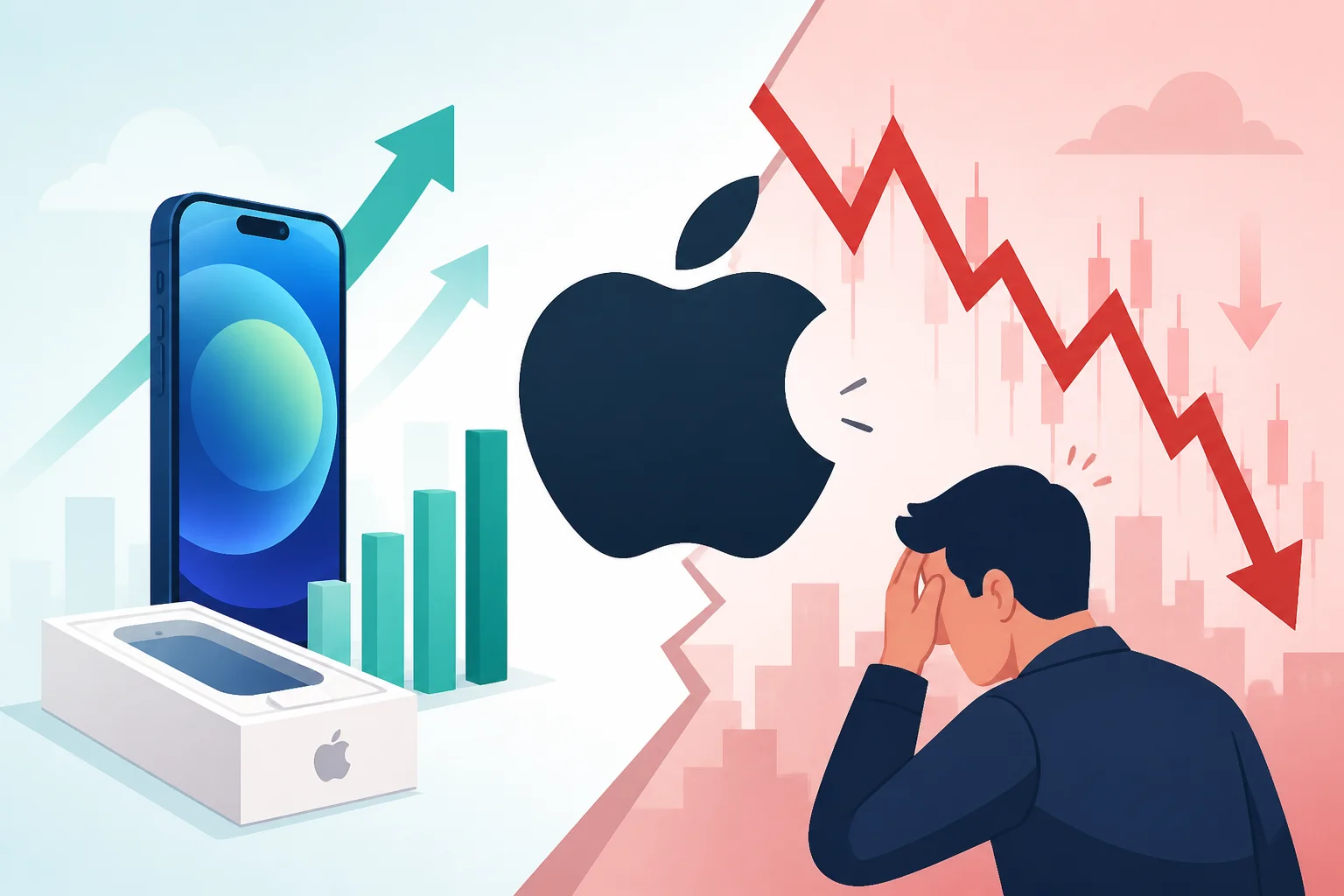
Apple's 2020 split is a clean historical example. In its SEC-filed 2020 press release, Apple said its board approved a 4-for-1 stock split "to make the stock more accessible to a broader base of investors," with shareholders of record receiving three additional shares for each share held and split-adjusted trading beginning on August 31, 2020 (Apple 2020 press release filed with the SEC). Tesla used nearly the same access language in 2022, announcing a 3-for-1 split so stock ownership would be more accessible to employees and investors, with split-adjusted trading beginning August 25, 2022 (Tesla 2022 press release filed with the SEC).
Those examples do not prove splits create value. They show the social meaning of a split. A board does not usually announce one after a stock has collapsed from strength. It announces one after the quoted price has become awkwardly large. The split is a way of saying: the share count needs a new scale for the next phase of trading.

Options, employees, and market plumbing
There is also plumbing under the psychology. Employee stock grants, option contracts, and trading conventions all have to live somewhere in the real market. When a share price gets very high, a standard options contract that controls 100 shares becomes expensive in notional size. A split lowers the per-share price and increases the share count, which can make round-lot thinking and options exposure easier for smaller participants to size.
That does not mean every split improves liquidity in a durable way, and it definitely does not mean every split is good. It means companies are not only writing poetry for retail investors. They are also changing the denomination of a security that has to pass through brokers, compensation plans, option chains, and investor dashboards. Schwab notes that a split reduces cost basis per share by the split ratio while total cost basis remains unchanged, a small tax-and-recordkeeping example of how every downstream system has to adjust (Schwab, What Investors Should Know About Stock Splits).
The denominator trick keeps showing up. Same company. More units. Smaller unit price. A cleaner size for some users of the market machine.

What people usually miss
The biggest mistake is thinking "cheaper share" means "cheaper company." A split can make a stock look approachable while leaving valuation exactly where it was. If the company was expensive relative to earnings, cash flow, or future expectations before the split, it is still expensive after the split. If the business was excellent before the split, it is still excellent after. The wrapper changed.
The second mistake is treating the market reaction as irrational noise. Sometimes people buy after a split announcement because they misunderstand the math. Sometimes they buy because the announcement comes from a company whose price has risen for good reasons. Sometimes index funds, options traders, employee holders, and retail investors are all responding to different parts of the same event. A split is not value creation, but it is still information about how the company wants its shares to circulate.
That is the satisfying closure: a split is boring if you ask "did my slice get bigger?" and interesting if you ask "why did the company cut the pie again?" The first answer is no. The second answer is market design.
Related videos
Forward Stock Splits vs Reverse Stock Splits - Stock Trading 101
What it means to buy a company's stock - Khan Academy
FAQ
Does a stock split make me richer?
No. A split gives you more shares at a proportionally lower price, so your total ownership value is unchanged before ordinary market movement. If the price rises afterward, that rise is a market reaction, not the split math itself.
Why do companies split stock instead of just doing nothing?
They usually want a lower quoted share price, broader access, cleaner trading denominations, or a signal that the stock has reached a new scale after rising. Doing nothing is possible, but some boards prefer a share price that feels easier for investors and employees to handle.
Is a stock split the same as issuing new shares?
No. Issuing new shares can dilute existing ownership if the company sells additional equity. A normal forward split divides existing ownership into more units, so the ownership percentages remain the same.
What is the difference between a stock split and a reverse split?
A forward split turns each share into more shares at a lower price per share. A reverse split combines shares into fewer shares at a higher price per share. In both cases, the proportional ownership is designed to stay the same before market movement.
Should I buy a stock just because it is splitting?
A split alone is not a reason to buy. The business quality, valuation, cash flow, competitive position, and your own risk tolerance matter more than the share count. This article explains mechanics, not investment advice.
What does this have to do with AIgneous Million Whys?
Million Whys is built for questions where the first answer is too neat. "A split makes the stock cheaper" is half an answer; the better closure is seeing the denominator, the psychology, and the market plumbing at the same time.
Keep reading
Sources
Apple 2020 8-K exhibit announcing 4-for-1 split
Tesla 2022 8-K exhibit announcing 3-for-1 split
Charles Schwab - What Investors Should Know About Stock Splits
Curious? Try one 👇