

Interesting Facts About Owls: Silent Hunters
Interesting facts about owls get better when you stop treating them as spooky night symbols and start treating them as engineering problems with feathers. An owl is not just a bird that hunts in the dark. It is a listening dish, a soft-winged aircraft, a fixed-eye camera, a rotating-neck solution, and a pellet-making evidence machine. The familiar "wise owl" image is the least interesting thing about it.
TL;DR
Owls are built around one job: finding small moving animals when light is poor and mistakes are expensive. Their silent flight reduces turbulence and may help both stealth and listening; their facial discs and uneven ears help locate sound; their tube-shaped eyes trade eye movement for image brightness; and their pellets preserve a surprisingly readable record of what they ate. The payoff is not "owls are mysterious." It is that every odd feature closes one hunting problem.
The short answer: owls are fascinating because their weird traits are connected. The big face is not just cute. It funnels sound. The soft feathers are not just pretty. They quiet the wing. The head turn is not a party trick. It compensates for eyes that cannot roll much in their sockets. Once you see the mechanism, owl facts stop feeling like a list and start feeling like a single design argument.
Curious? Try one 👇
Why is the sky blue?
Jump into the daily quiz →Silent flight is a feather-level trick
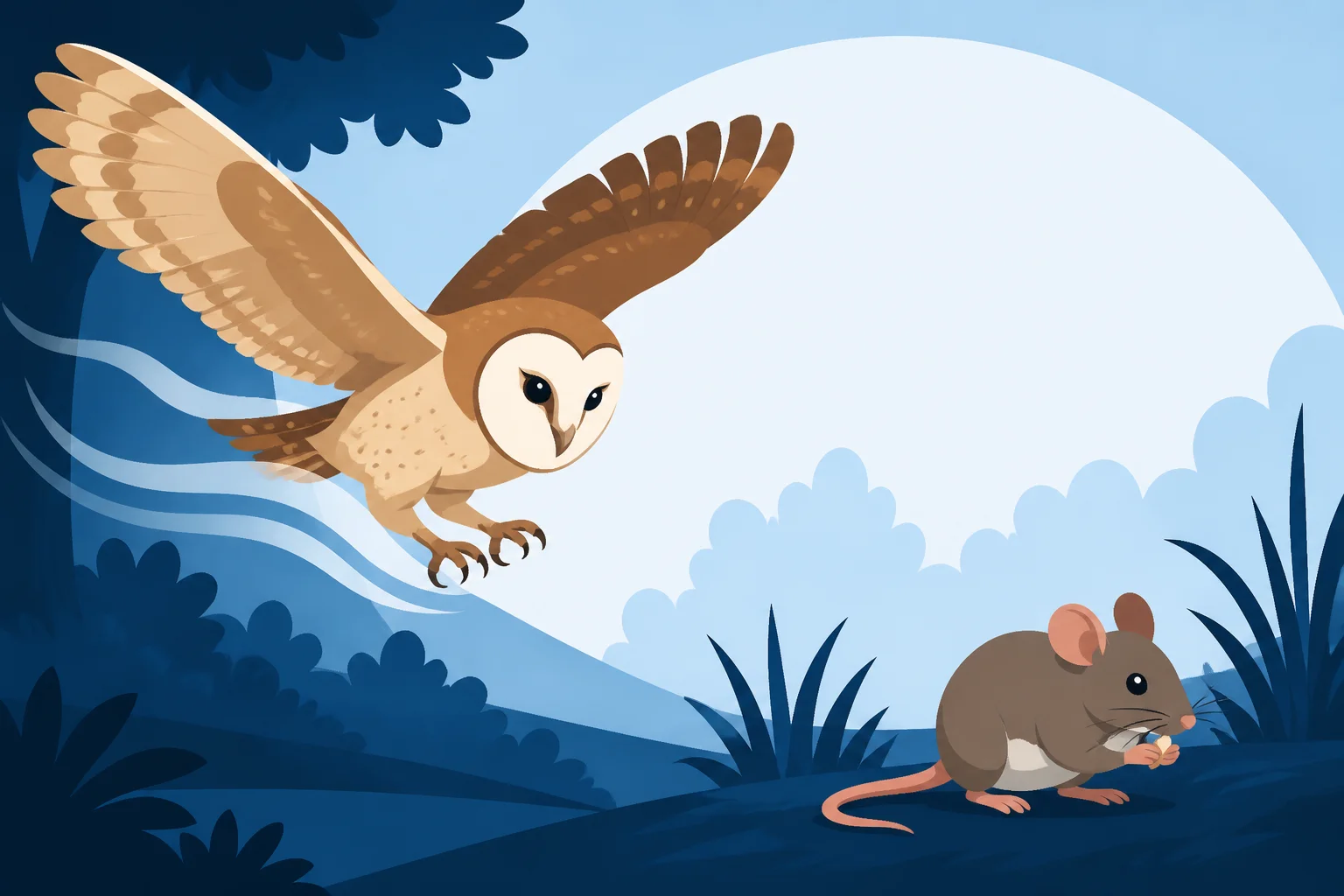
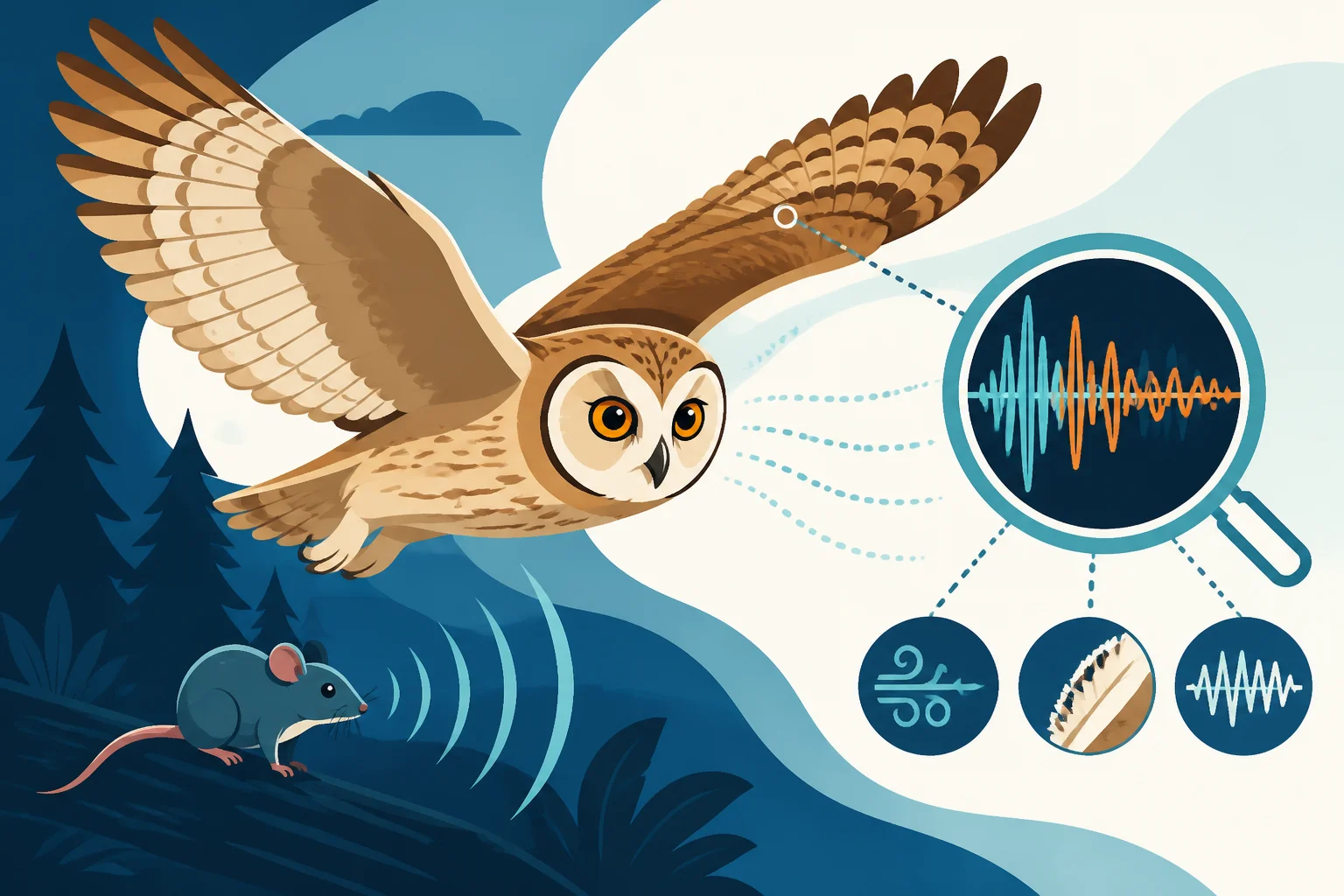
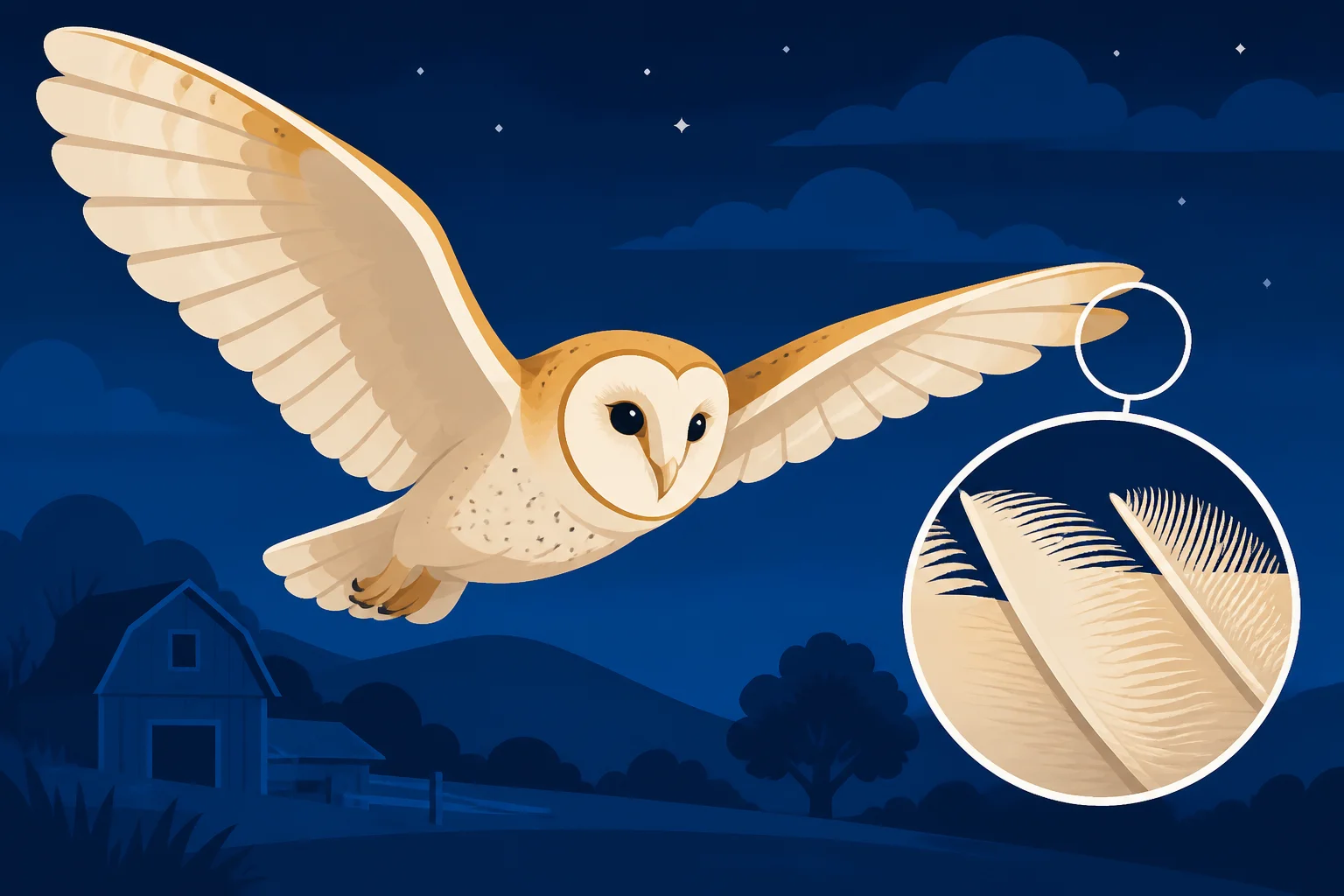
If a hawk is a fast blade, many owls are a quiet glider. Their wings have several noise-reducing features: comb-like leading edges, soft fringes, and velvety surfaces that disturb and absorb the sound of air moving over feathers. Audubon explains the two main hypotheses for why silent flight matters: it may keep prey from hearing the owl, and it may keep the owl's own wing noise from masking the prey sounds it is trying to hear.
That second idea is the neat part. Silence is not only for sneaking. It is also for listening. If your hunting system depends on the scratch of a mouse under grass or snow, your own wingbeat becomes a problem. The wing has to move air without shouting over the evidence.

A 2020 review in Integrative Organismal Biology makes the same point carefully: silent flight is not one feature, but a package of wing morphology, feather structures, and ecological use. Not every owl is equally silent, and not every owl hunts the same way. The satisfying answer is not "owls have magic feathers." It is that wing noise became a solvable survival problem.
The face works like a movable sound dish
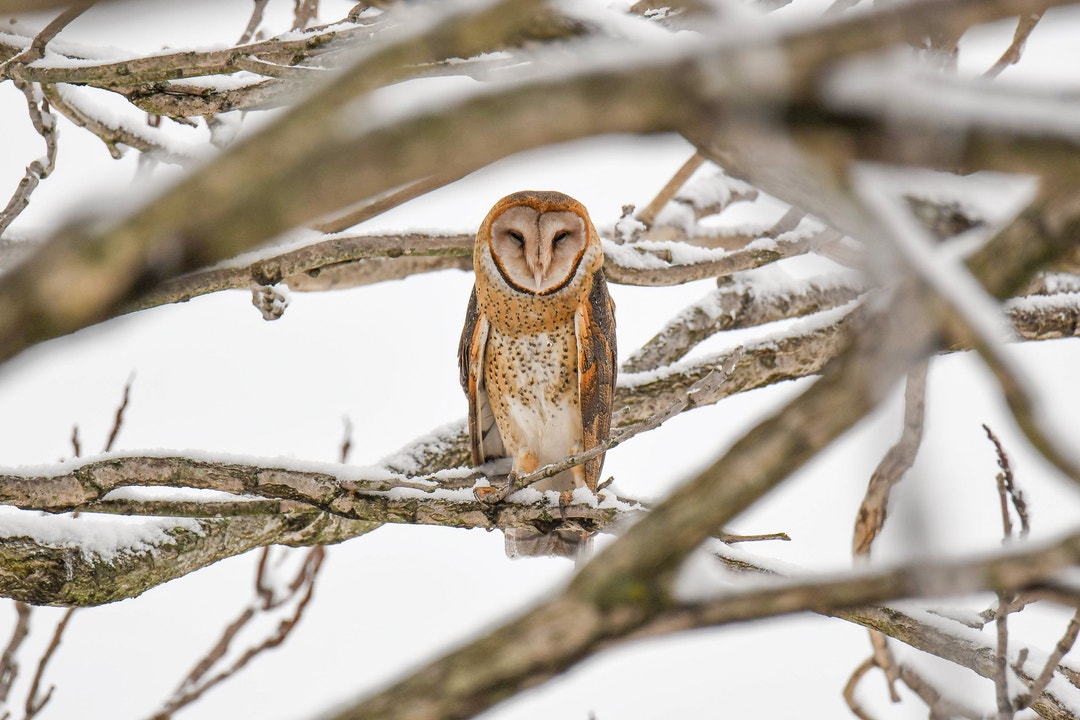
An owl's face is a tool. The facial disc, the round or heart-shaped arrangement of stiff feathers around the eyes and beak, collects and redirects sound toward the ears. In barn owls, that disc is so obvious it looks theatrical, but the function is plain: it helps convert faint rustles into location information.
Audubon's barn owl profile describes the facial disc as a kind of satellite dish and notes that barn owls have an extraordinary ability to locate prey by ear. The face is not decoration. It is part of the hearing system.
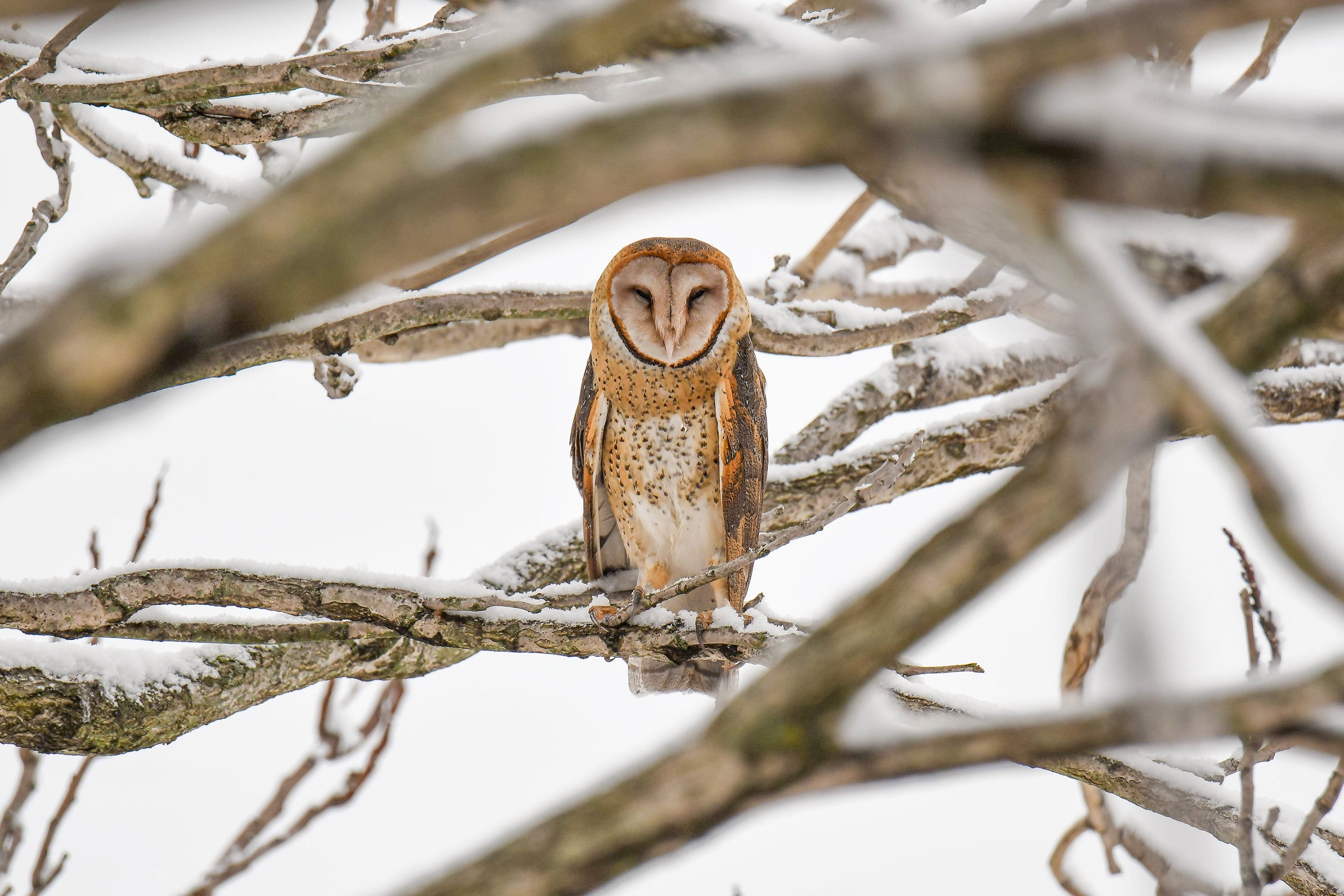
This is where owls become a good curiosity example: the feature everyone recognizes is not there for the reason many people assume. Big eyes draw your attention, but the surrounding feathers are also doing serious work. If you have ever cupped a hand behind your ear to hear better, you have made a crude facial disc with fingers.
Some owl ears are uneven on purpose
Many sound-hunting owls have asymmetrical ear openings. One ear sits higher or has a different shape than the other, so a sound reaches each side in slightly different ways. That lets the brain estimate not just left and right, but height. Cornell's Boreal Owl guide explains that one ear opening is high on the skull and the other much lower, helping the owl judge where a sound comes from. Its Long-eared Owl guide makes the same link between asymmetrical ear openings, facial disks, and precision hunting.

The payoff is almost unfair. A mouse thinks it is hidden because it is under grass, snow, or darkness. The owl is solving a different puzzle: not "can I see it?" but "can I triangulate the tiny sound it makes?" The prey is hiding from eyes while the predator is listening in three dimensions.
Great gray owls make this even more dramatic. Cornell's report on great gray owls hunting voles under snow describes facial discs, asymmetrical ears, and snow that can muffle or distort sound. The related Royal Society paper found that great gray owls use a hunting strategy that helps defeat the acoustic mirage created by snow, especially by approaching from directly above the prey (Proceedings of the Royal Society B).
Owl eyes are bright, fixed tubes
Owls do not scan the world the way humans do. Their eyes are large and tubular, held in a rigid structure, which limits eye movement. The British Trust for Ornithology's owl vision note explains that each eye is held within a rigid tube and that owls cannot roll their eyes the way we can. The benefit is image brightness: the eye shape helps maximize the size and brightness of the image on the retina, useful in low light.

The trade-off is obvious once you feel it. If your eyes cannot move freely, your head has to do more work. That is why the dramatic owl head turn belongs in the same section as the eye. It is not separate trivia. It is the compensation for a high-sensitivity camera system bolted into place.
The 270-degree head turn is a blood-flow problem
Owls are famous for rotating their heads far around, but the mechanism is more interesting than the number. Johns Hopkins researchers reported that owls can rotate their heads by as much as 270 degrees in either direction without damaging blood vessels or cutting off blood supply to the brain. The Johns Hopkins Hub summary says the team found four major biological adaptations that protect blood flow during extreme rotation.
That turns the familiar fact into a better question: if a human tried this, blood vessels and bones would be in danger. So what changed in the owl's neck and vascular system? The answer is not "flexibility" alone. It is flexibility plus protected circulation. Nature did not give owls a swivel for fun. It had to solve the consequences of fixed eyes and stealthy hunting.
Pellets turn dinner into field notes
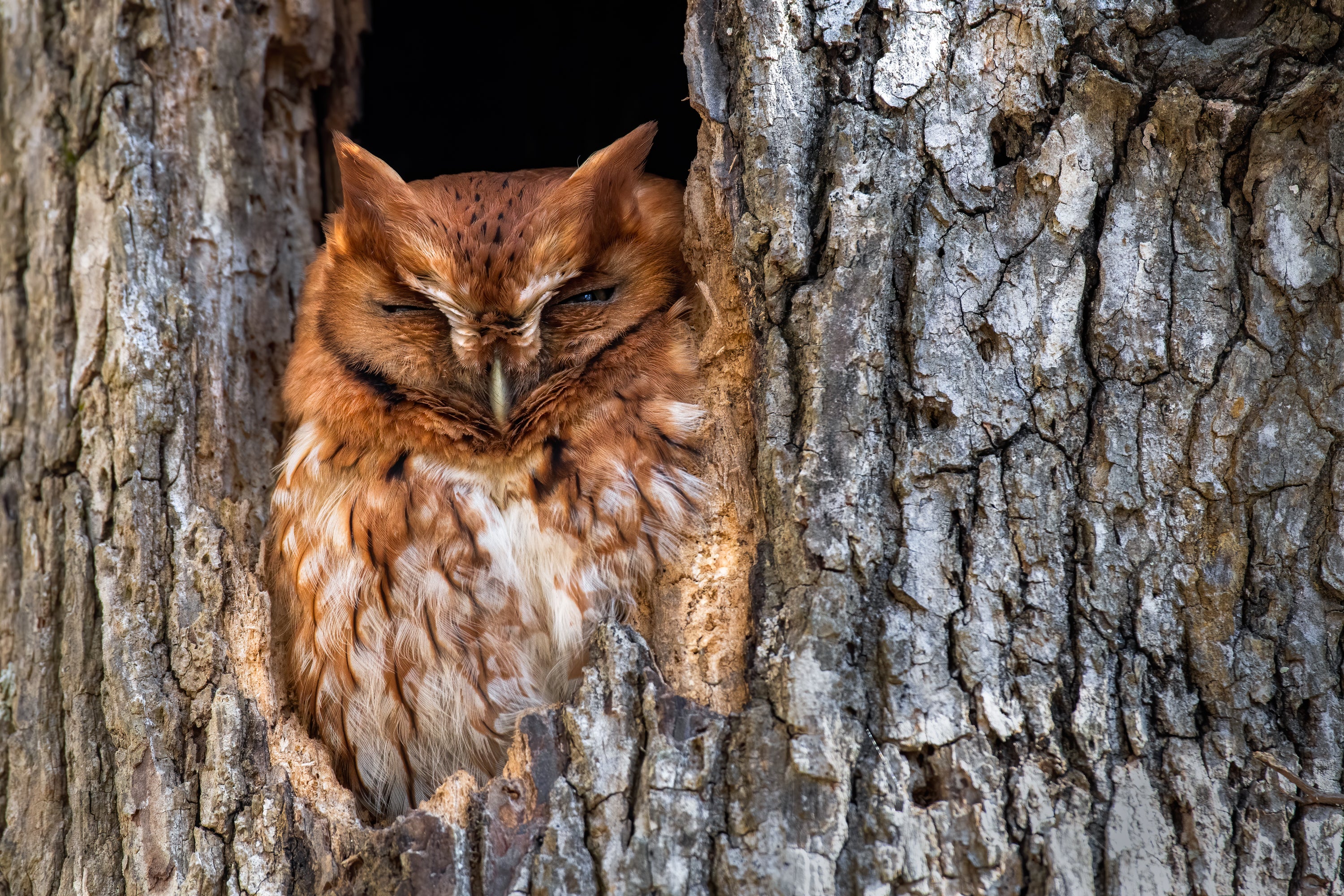
Owls often swallow prey whole or in large pieces. That creates a digestive problem: bones, teeth, fur, and feathers are not useful food. Cornell's All About Birds explains that owls cannot digest those hard parts; soft tissues pass through, while indigestible material gets formed into an oval pellet and regurgitated later. Audubon gives the same basic explanation in its owl pellet guide.
That sounds gross until you realize it is an evidence system. A pellet can tell researchers what an owl has been eating without having to watch every hunt. Bones in the pellet become a rough receipt. For a curiosity engine, that is a perfect closing click: the owl eats in darkness, but the morning pellet leaves a readable trace.
What people usually miss
The common mistake is treating owl facts as separate party facts: silent flight here, big eyes there, head twist somewhere else. The better answer is that these traits form a system. Fixed tube eyes need head rotation. Sound hunting benefits from facial discs, uneven ears, and quiet wings. Swallowing whole prey creates pellets that reveal diet. One mechanism closes one gap, then opens the next.
The second missed point is that "nocturnal" is not the whole explanation. Some owls hunt in daylight, some rely more on sight than sound, and species vary. The owl body plan is a family of solutions, not a single template stamped onto every species. That is why blanket facts like "all owls are silent" or "all owls hunt only at night" are too smooth to be true.
The third missed point is how satisfying the real closure is. Owls feel mysterious because they hide the mechanism in darkness. But once you follow the clues, the mystery becomes more interesting, not less: a face that hears, wings that hush themselves, eyes that trade motion for brightness, and a neck that protects blood while rotating farther than seems reasonable.
Related videos
FAQ
What is the most interesting fact about owls?
The best owl fact is that their silence is not just stealth. Quiet wings may also help owls hear prey by reducing the noise of their own flight.
Can owls really turn their heads 360 degrees?
No. The commonly cited figure is up to about 270 degrees in either direction. That is still extreme, and it depends on special neck and blood-vessel adaptations.
Why are owl eyes so large?
Large, tube-shaped eyes help gather enough light for low-light hunting. The trade-off is that the eyes are relatively fixed, so the owl has to move its head instead.
Do all owls fly silently?
No. Silent flight varies by species and hunting style. Many owls are unusually quiet, but the details depend on wing shape, feather structure, body size, and ecology.
What does this have to do with AIgneous Million Whys?
Owls are exactly the kind of topic Million Whys is built for: a familiar creature, a half-known fact, and then a chain of satisfying closures. One answer turns into the next question, and the knowledge compounds.
Keep reading
Sources
Audubon: The Silent Flight of Owls, Explained
Integrative Organismal Biology: Evolution and Ecology of Silent Flight in Owls
Audubon: 10 Fun Facts About the American Barn Owl
Cornell All About Birds: Boreal Owl
Cornell All About Birds: Great Gray Owls and the Acoustic Mirage
Proceedings of the Royal Society B: Great Gray Owls Hunting Voles Under Snow
British Trust for Ornithology: Owl Vision
Johns Hopkins Hub: How Owls Rotate Their Heads Without Injury
Curious? Try one 👇
Why is the sky blue?
Jump into the daily quiz →Keep Exploring
Why is silent flight useful even if a mouse never hears the owl coming?
Animal Behavior
Owl flight is not magic silence; measurements show the big win is hiding which sounds?
Physics in Daily Life
A barn owl can glide slowly without much wingbeat. What quiets flight before feather tricks?
Animal Behavior
Related Posts
Interesting Facts About Platypus: Nature's Puzzle
Interesting facts about platypus biology: eggs, venom, electric bills, milk without nipples, glowing fur, and why this mammal feels assembled from questions.
Fun Facts About Beavers: Nature's Water Engineers
Fun facts about beavers explain orange teeth, dams, lodges, wetlands, and why these rodents quietly redesign streams for other species.
Fun Facts About Bears: Smell, Sleep, and Cubs
Fun facts about bears: how their smell, winter denning, polar bear fur, seasonal diets, and cub timing reveal clever survival mechanisms in plain English.