

Fun Facts About Bears: Smell, Sleep, and Cubs
Fun facts about bears are better when they start with the trap: bears look like big, blunt-force animals, but many of their strangest advantages are quiet systems. A nose that can read the landscape, a winter metabolism that slows without fully switching off, paws built for digging and fishing, and cubs timed to arrive during the hardest season. The bear is not just strong. It is tuned.
TL;DR
Bears are full of mechanisms hiding inside familiar facts. Black bears can smell astonishingly well, brown bears use claws and omnivorous diets to exploit seasonal food, polar bears look white because pigment-free hair scatters light, and winter denning is not simple sleep. The deeper pattern is adaptation: bears survive by matching energy, timing, and senses to places where food comes in pulses.
Short answer: The best bear facts are about tradeoffs. A bear can be huge because it can store energy fast. It can survive winter because it can lower its metabolism. It can find food because its nose is exceptional. And it can raise cubs because reproduction is timed around fat, denning, and seasonal risk.

Curious? Try one 👇
Why is the sky blue?
Jump into the daily quiz →A bear's nose changes the map
If humans mostly navigate by sight, bears live in a smell-rich world we barely sample. Yosemite National Park's bear series explains that a black bear's nasal mucosa, the scent-processing area inside the nose, is about 100 times greater than ours, and that a black bear's sense of smell is estimated at about seven times stronger than a bloodhound's (National Park Service, Yosemite). That is the first real fact to sit with: for a bear, a hillside is not just trees and rocks. It is a layered history of berries, carrion, humans, cubs, rivals, and wind.
This explains why ordinary campsite mistakes become bear behavior. A cooler, a wrapper, a grill, or a backpack is not "out of sight" to a bear just because it is zipped. Smell leaks. The bear follows the invisible trail because that is exactly what its body is built to do.

The payoff is not "bears are scary." It is more precise: bears are excellent at finding calories before other animals do. In an environment where food appears unpredictably, smell turns scattered opportunities into a map. That is why keeping human food away from bears is not just about protecting people. It protects the bear from learning a bad shortcut.
Brown bears are seasonal opportunists, not one-note predators
The cartoon bear eats salmon forever. The real brown bear eats whatever nutritious thing the season offers. The National Park Service describes brown bears as omnivores that eat plants, berries, fish, and small mammals, and notes their long, strong claws for digging food, picking fruit, and catching prey (NPS Brown Bears). San Diego Zoo adds the same useful correction: most of a brown bear's diet is plant matter, though they also eat meat, fish, carrion, insects, roots, and tubers when available (San Diego Zoo Wildlife Alliance).

That mixed diet is the secret behind the animal's range. A bear does not need the world to serve one perfect meal. It needs timing. Spring plants, summer insects, salmon runs, berries, nuts, roots, carrion, and occasional prey can all become part of the annual energy budget. The famous salmon footage is real, but it is one chapter in a longer food calendar.
There is also a useful human analogy here, if we keep it small. Bears do not "hack" winter. They spend the rest of the year paying for it. The spectacular fall feeding is not indulgence. It is infrastructure. Every berry and fish becomes stored possibility.
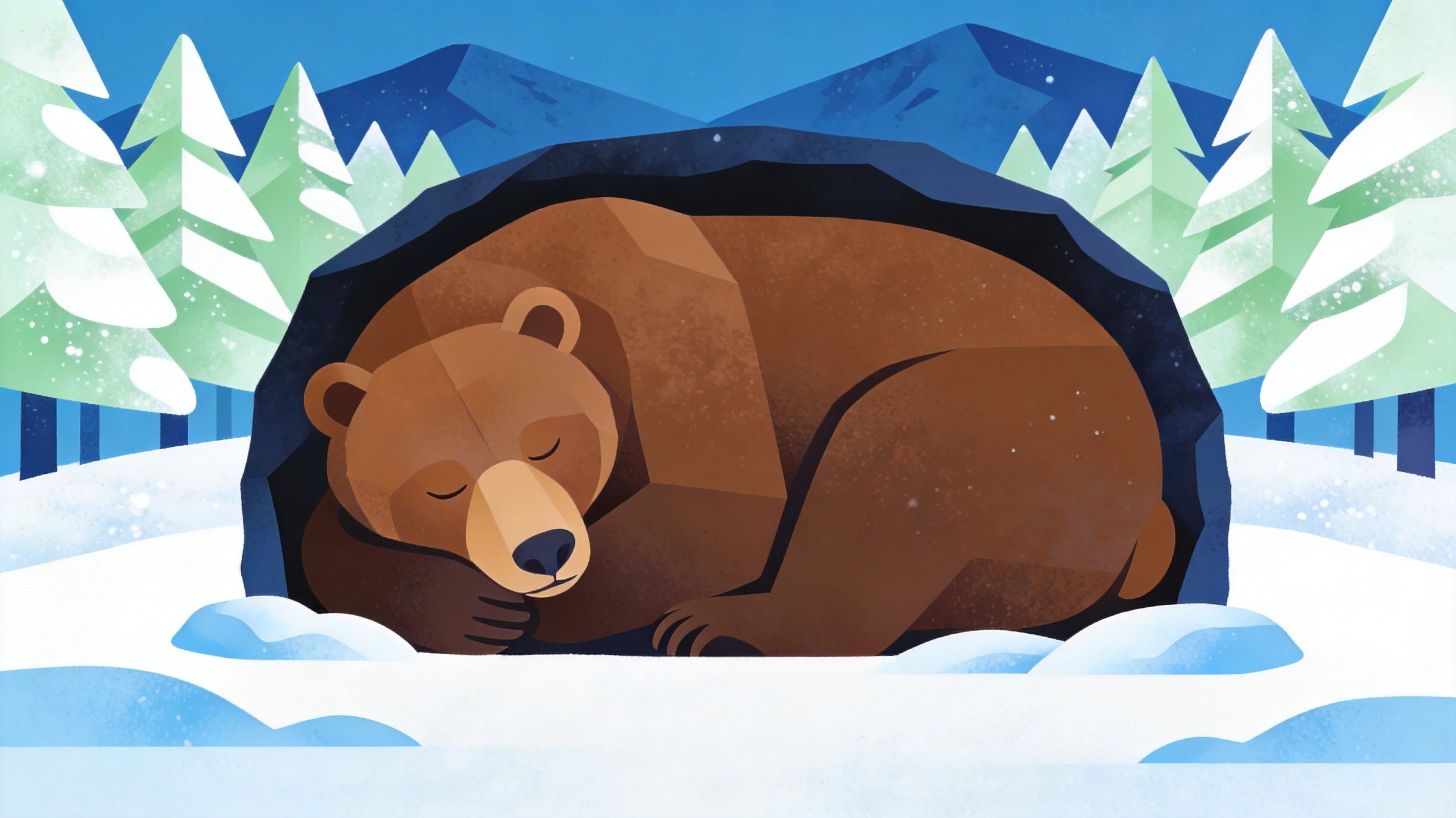
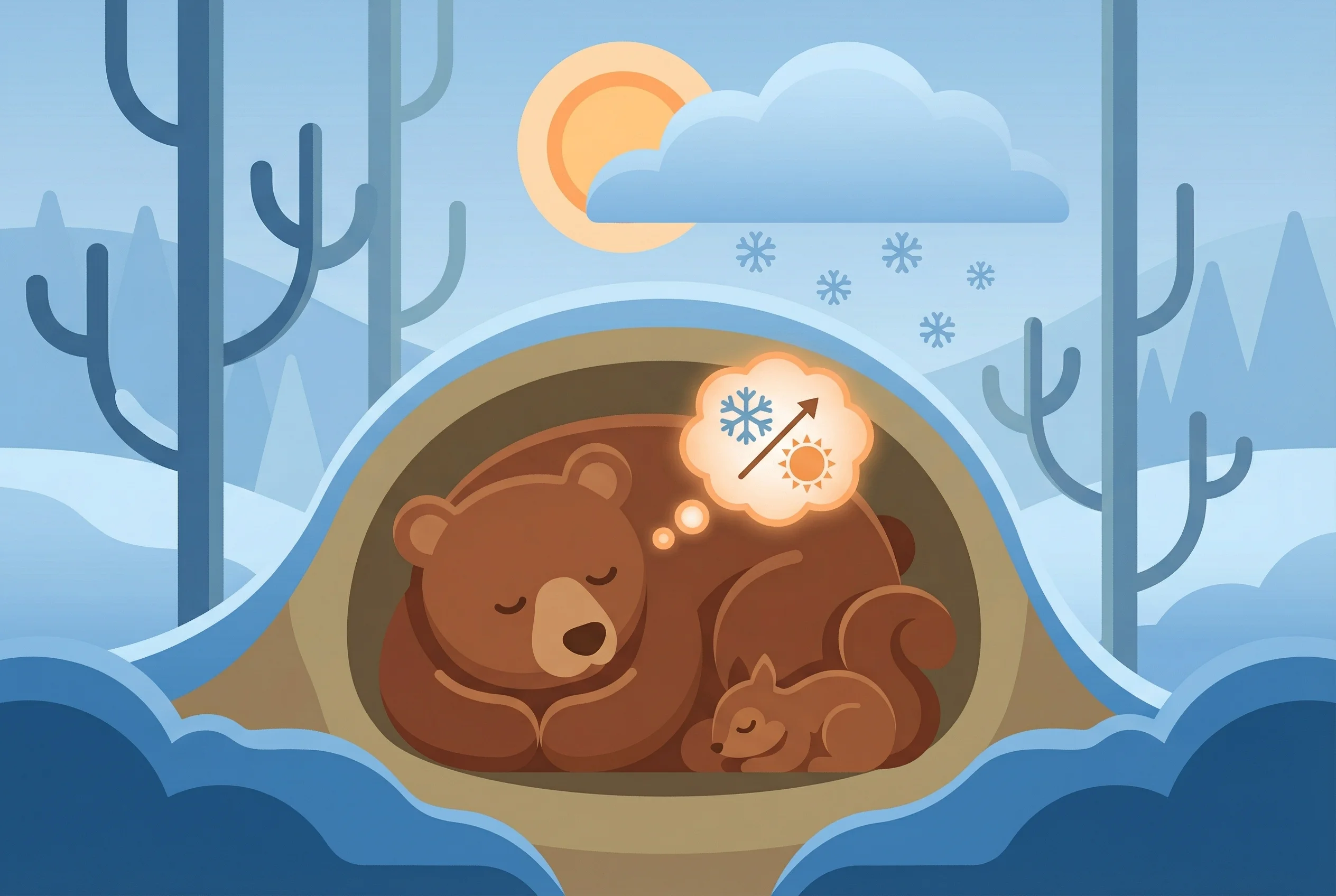
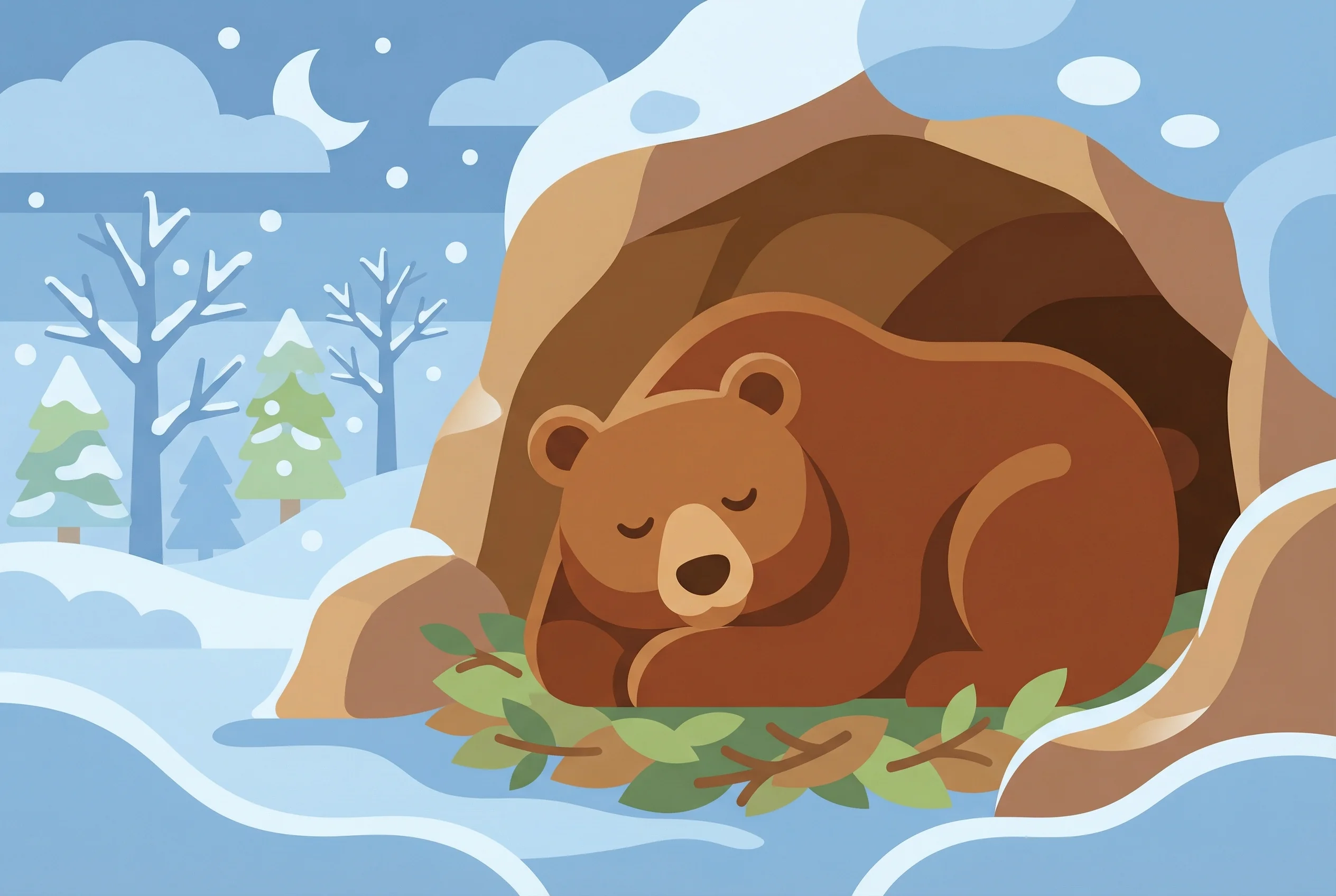
Bear hibernation is not just sleeping for months
People often ask whether bears "really" hibernate. The cleanest answer is that bears enter a winter state commonly called hibernation, but it does not look like the deep torpor of many small mammals. Alaska Department of Fish and Game explains that winter hibernation means bears do not need to eat or drink and rarely urinate or defecate, but they are not simply asleep the whole time (Alaska Department of Fish and Game).

That distinction matters because a sleeping animal is just inactive. A denning bear is doing something more interesting: reducing energy demand while staying responsive enough to protect itself and, for females, give birth and nurse. The body is spending stored fat, conserving water, recycling waste products, and keeping enough alertness to react if the den is threatened or damaged.
This is why "bears sleep all winter" is a thin answer. The better answer is that bears manage scarcity. Winter removes food from the landscape, so the animal switches from daily intake to stored energy. The body becomes a budget.
Polar bears are not actually white
Polar bears are the easiest bear to recognize and one of the easiest to misunderstand. Their fur looks white because light scatters through pigment-free, mostly hollow hairs. Polar Bears International explains that polar bear hair is transparent and mostly hollow, while the apparent white comes from visible light scattering (Polar Bears International). Their skin underneath is dark, and their heavy fat layer and dense coat handle the cold.

The white-looking coat is not just pretty. It is camouflage in a hunting environment where the prey is often a seal near ice. But the interesting correction is that the color is an optical effect, not white pigment. The bear's appearance is made by structure, light, and environment.
This is a good reminder that "fun fact" does not have to mean "random fact." The fun is in the mechanism. A polar bear looks like snow because its hair and habitat cooperate in the viewer's eye.
Cubs are timed around fat and winter
Bear reproduction has its own timing trick. North American Bear Center explains delayed implantation in black bears: mating can happen in late spring or early summer, but the fertilized eggs pause as blastocysts and do not implant in the uterine wall until later in the year; cubs are then born in mid to late January (North American Bear Center). That pause means reproduction is tied to the mother's condition and the seasonal cycle rather than to mating alone.

That fact turns the den into more than a hiding place. For many female bears, it is also a nursery. Cubs can arrive while the outside world is cold and food is scarce, because the mother is living off the fat she built earlier. The cubs are born small and dependent, then emerge into a spring world where feeding opportunities begin to return.
There is a harsh elegance to it. The mother cannot promise the world will be easy, but her body can line up birth, milk, stored fat, and the turn of the season. Survival is timing layered on top of strength.
What people usually miss
The usual bear story is too muscular. It says claws, teeth, size, danger. All true enough, but incomplete. The subtler bear story is about sensing and accounting: smell finds opportunity, omnivory widens the menu, fat stores summer into winter, denning lowers demand, and delayed implantation links reproduction to condition.
That is why bear facts make good 10-second curiosity sparks. Each one starts familiar and then opens. "Bears hibernate" becomes "what kind of hibernation?" "Polar bears are white" becomes "what does white mean if the hair has no pigment?" "Bears love salmon" becomes "how does an omnivore build an annual food calendar?" The answer closes the first gap and reveals the next.
The best bear fact may be that there is no single bear strategy. Black bears, brown bears, polar bears, and sun bears are all working with different habitats and diets. The family resemblance is real, but adaptation is local. Bears are not one solution. They are eight living experiments in how a large mammal can stay alive when the world changes by season.
Related videos
FAQ
What are the most interesting fun facts about bears?
Some of the best are that bears have extraordinary smell, brown bears eat a highly seasonal omnivorous diet, polar bear fur is not truly white, and winter denning is a complex metabolic strategy rather than simple sleep.
Do bears really hibernate?
Yes, but bear hibernation is not identical to the deep torpor seen in some small mammals. Bears lower metabolism and live off stored fat, but they can remain responsive and may wake if disturbed.
Why do polar bears look white?
Their hair is pigment-free and mostly hollow, so it scatters visible light and appears white. The color is an optical effect that helps them blend into Arctic ice and snow.
Are bears carnivores or omnivores?
Most bears are omnivores. Brown bears, for example, eat plants, berries, roots, insects, fish, carrion, and sometimes mammals. Polar bears are the most meat-specialized because they depend heavily on seals.
Why are bear cubs born in winter?
Delayed implantation lets pregnancy line up with the mother's fat reserves and denning season. Cubs are born tiny in the den, nurse from stored energy, and emerge when spring food is becoming available.
What does this have to do with AIgneous Million Whys?
AIgneous Million Whys turns facts like these into small curiosity loops: one question, one answer, real closure, and another gap worth following.
Keep reading
Sources
National Park Service: A Bear's Sense of Smell
National Park Service: Brown Bears
San Diego Zoo Wildlife Alliance: Brown Bear
Alaska Department of Fish and Game: Do Bears Really Sleep All Winter?
Polar Bears International: What Does Polar Bear Fur Feel Like?
Curious? Try one 👇
Why is the sky blue?
Jump into the daily quiz →Keep Exploring
Related Posts
Fun Facts About Hedgehogs: Spines, Sleep, Survival
Fun facts about hedgehogs: how spines, curling, night foraging, hibernation, and connected gardens turn a cute animal into survival engineering today.
Random Animal Facts: Weird Adaptations Explained
Random animal facts explained through real adaptations: polar bear fur, anteater tongues, salmon homing, skunk spray, bee dances, and elephant trunks.
Fun Facts About Beavers: Nature's Water Engineers
Fun facts about beavers explain orange teeth, dams, lodges, wetlands, and why these rodents quietly redesign streams for other species.