

Fun Facts About Hedgehogs: Spines, Sleep, Survival
Fun facts about hedgehogs get much better once you stop treating the animal as a cute ball with legs. A hedgehog is a small survival machine: thousands of keratin spines, a body that can fold its soft parts out of reach, a nose built for night work, and a winter mode that slows life down when food disappears. The satisfying part is that none of those details sits alone. Each one closes one little information gap, then opens the next: why spines, why curling, why night, why hibernation?
TL;DR
Hedgehogs are not tiny porcupines and they do not shoot quills. Their spines are modified hairs made of keratin, most European adults carry roughly 5,000 to 7,000 of them, and the whole defensive trick only works because the animal can tuck its unarmored face, belly, and legs inside the spiny shell. They are also nocturnal omnivores and, in cold climates, true hibernators that use torpor to survive when food is scarce.
The short answer: hedgehogs are interesting because their cuteness is hiding a set of very practical engineering compromises. Spines protect, but they do not help you run fast. Hibernation saves energy, but it makes disturbance costly. A garden can be a refuge, but only if the hedgehog can move through it and find insects, shelter, and quiet.
Curious? Try one 👇
Why is the sky blue?
Jump into the daily quiz →The spines are not quills you can launch
The first hedgehog myth to retire is the porcupine-style projectile myth. San Diego Zoo Wildlife Alliance is blunt about this: hedgehogs cannot shoot their quills, and the spines can fall out or break off much like hair can (San Diego Zoo Animals & Plants). That matters because the defense is not distance. It is contact. A predator has to decide whether a small meal is worth pushing its face into thousands of stiff points.
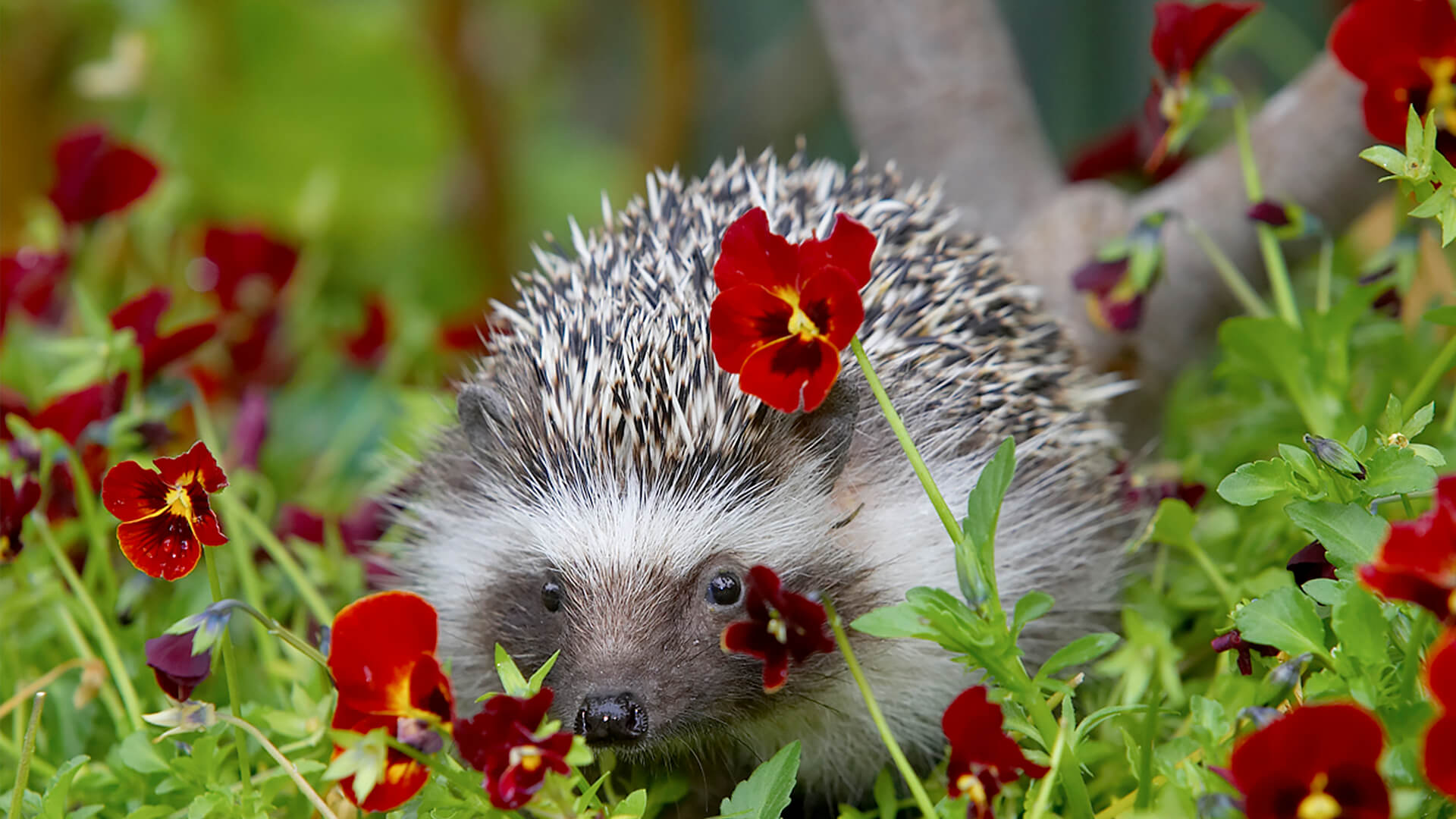
The British Hedgehog Preservation Society describes the back and sides as covered in roughly 25 mm spines, with about 5,000 to 7,000 on an average adult (BHPS basic facts). Hedgehog Street gives the same range and notes that the spines are keratin, the same broad material family as human hair and nails (Hedgehog Street biology). That is the first good closure: the spines are not exotic weapons. They are ordinary mammal hair pushed into an extreme job.

Because the spines are modified hairs, hedgehogs also replace them. Young hedgehogs go through spine replacement as they grow, and adults can lose damaged spines. The animal is not wearing permanent armor in the way a turtle wears a shell. It is maintaining a dense, replaceable jacket of hardened hair. That makes the hedgehog feel less like a cartoon and more like a living compromise: flexible enough to walk, forage, and squeeze through vegetation, but prickly enough that many predators learn to leave it alone.
The ball trick protects the parts with no armor
The spines do not cover everything. The face, chest, belly, throat, and legs are furred, not spiny, according to BHPS (BHPS basic facts). That is why the famous curl matters. The hedgehog is not simply trying to look round. It is moving the vulnerable parts inward and presenting the armored surface outward.
National Geographic describes the same defensive pattern: when attacked, hedgehogs curl into a prickly ball that deters many predators (National Geographic hedgehog facts). The important part is what this defense does and does not solve. It works best against predators that investigate with a nose or mouth. It does not make a hedgehog invincible, and it can become a liability near roads or garden tools, where staying still is not a good escape plan.
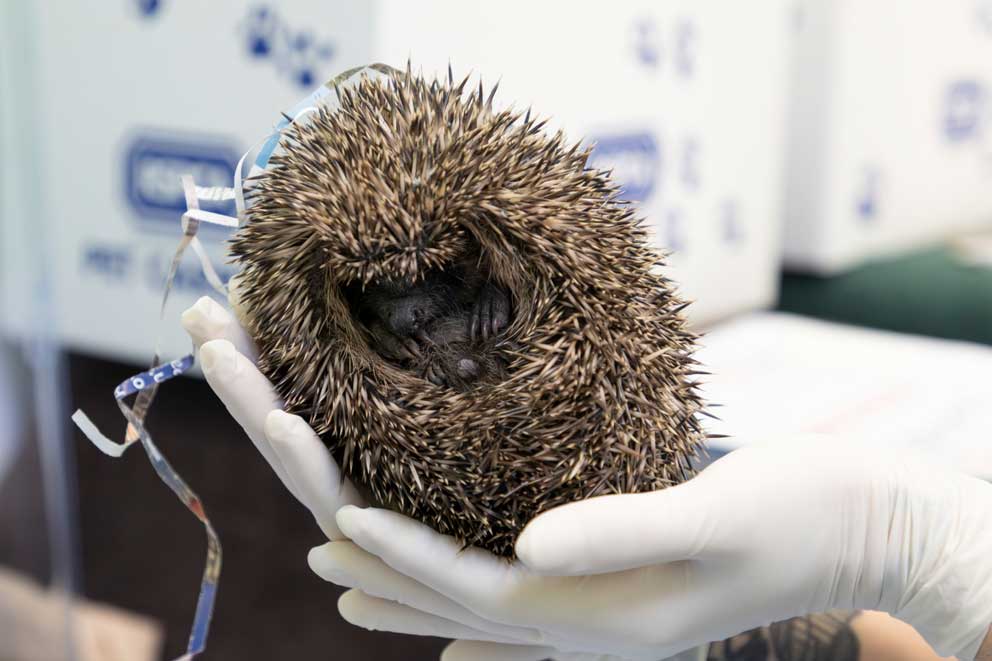
This is a useful way to read animal adaptations in general. A defense mechanism is not a superpower. It is a bargain. The hedgehog buys protection by becoming prickly and compact; the price is that it cannot sprint away like a rabbit or climb away like a squirrel. Once you see the bargain, the animal becomes more interesting than the fact list.
At night, the nose does the heavy lifting
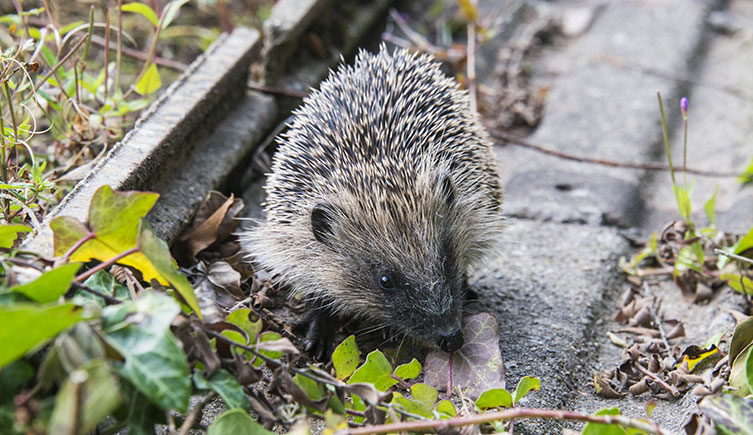
Hedgehogs are mostly night workers. San Diego Zoo notes that they are active at night, digging, chewing, and foraging through the dark hours (San Diego Zoo Animals & Plants). The Natural History Museum describes European hedgehogs as omnivores that eat what they can get into their mouths, including slugs, millipedes, earthworms, beetles, caterpillars, other insects, and some plant material such as fruit and mushrooms (Natural History Museum).
That diet explains the body. A hedgehog does not need to chase antelope-style prey. It needs to search through leaf litter, hedges, lawns, borders, and damp soil for small moving food. The snout, the low body, and the night schedule make sense together. The animal is built for the world just above the ground, where smell and touch often matter more than a grand view.
There is also a human lesson in this, and it is not the exam kind. A hedgehog is a reminder that knowledge often compounds from small, local observations. You notice the spines. Then you notice the soft belly. Then the curl. Then the nocturnal diet. The whole animal assembles from linked questions, not from one grand lecture.
Hibernation is energy economics, not just a nap
Hedgehogs in cold climates can hibernate, but "hibernate" is easy to misread as "sleep for a long time." Hedgehog Street explains it more precisely: during hibernation, hedgehogs drop their body temperature to match the surroundings and enter torpor, slowing normal bodily functions to conserve energy (Hedgehog Street hibernation facts). The same organization notes that the fuel supply comes from fat built up before hibernation and that disturbance can cost precious reserves (Hedgehog Street hibernation).
That is the hidden mechanism: winter is not mainly a temperature problem; it is a food problem. When insects and other invertebrates are scarce, staying warm and active can burn more energy than the animal can earn back. Torpor changes the math. The hedgehog slows down, spends the stored summer and autumn energy carefully, and waits for the landscape to become worth foraging in again.
This is also why wildlife advice tends to be cautious about disturbing nests, clearing leaf piles, or moving hedgehogs casually. A hibernating animal is not being lazy. It is running a low-power survival program. Wake it at the wrong time and it has to spend energy it may not be able to replace.
Gardens can be habitat, or a maze with walls
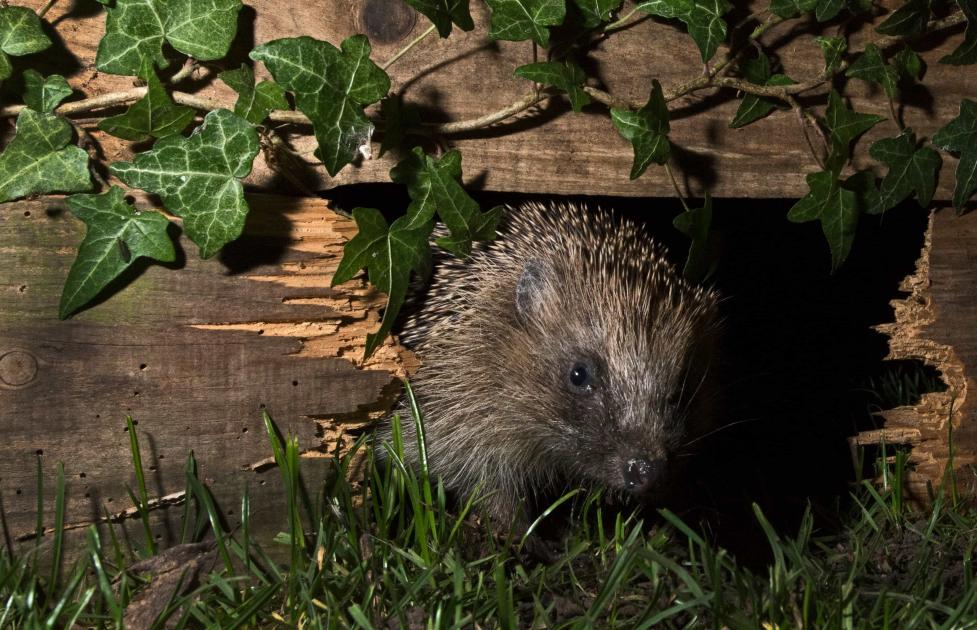
For many people, the hedgehog is a garden animal. That can be good news, but only if the garden behaves like part of a larger habitat. The RSPCA advises making spaces hedgehog-friendly by giving them access, shelter, safe food, and protection from hazards such as garden netting, ponds with no escape route, and tools used without checking first (RSPCA wildlife advice). The Natural History Museum also emphasizes that hedgehogs use gardens, hedgerows, woodland edges, and other connected spaces rather than one sealed square of land (Natural History Museum).
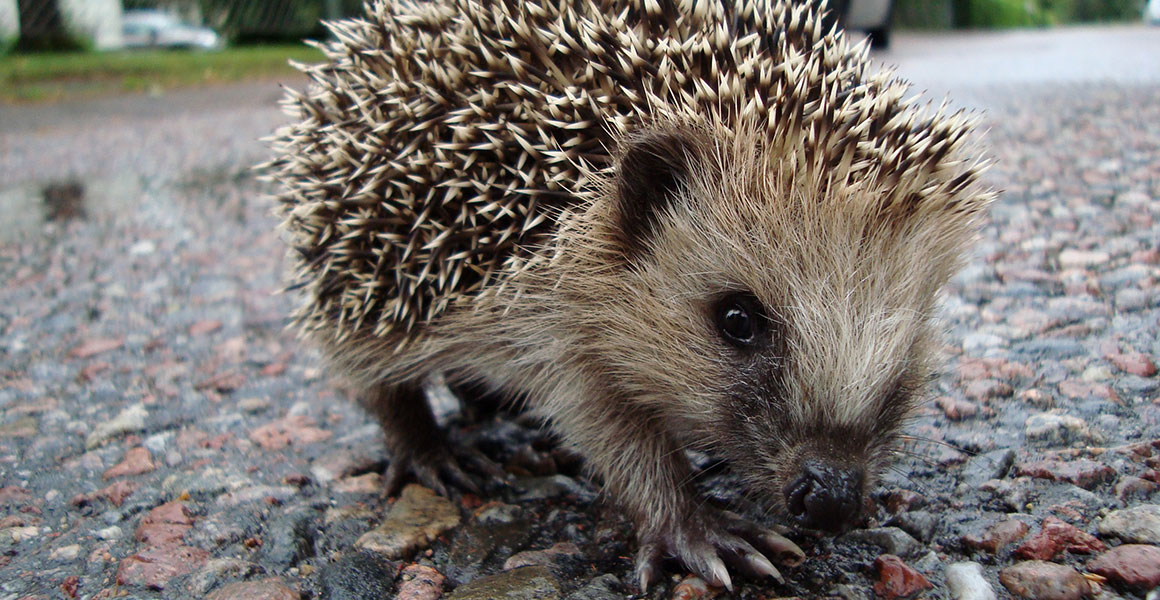
The non-obvious point is that a hedgehog does not experience human property lines. It experiences cover, food, danger, and gaps. A beautiful garden that is fenced like a box may be less useful than a messy connected patch with leaves, insects, and a way through. Once you see that, conservation stops being abstract. The question changes from "do I like hedgehogs?" to "can a small nocturnal mammal actually move through this place?"
What people usually miss
The usual hedgehog fact list stops at "spiky, nocturnal, cute." What people miss is the closure chain. Spines are modified hair, but they only matter because the animal can hide its soft parts. Hibernation saves energy, but only because winter removes the food supply. Gardens help, but only if they connect. A hedgehog is not a random bundle of adorable details. It is a set of small solutions to one repeating problem: how does a slow, snack-sized mammal survive in a world full of mouths, winters, roads, and fences?
Related videos
BBC Earth Kids: Hedgehog goes for his first swim
Did You Know These Hedgehog Facts?
FAQ
How many spines does a hedgehog have?
Several hedgehog conservation sources give roughly 5,000 to 7,000 spines for an average adult. The exact number varies by individual and species, but that range is a useful scale for understanding the defense.
Are hedgehog spines the same as porcupine quills?
No. Hedgehog spines are modified hairs made of keratin, and hedgehogs cannot shoot them. The defense works by curling up and presenting the spines to a predator at close range.
What do hedgehogs eat?
European hedgehogs are omnivores with a strong taste for small invertebrates such as beetles, caterpillars, millipedes, earthworms, and slugs. They may also eat some fruit, mushrooms, eggs, or small animals when available.
Do hedgehogs really hibernate?
Yes, in cold climates many hedgehogs hibernate. More precisely, they enter torpor: body temperature and other functions slow so the animal can conserve energy when food is scarce.
What does this have to do with AIgneous Million Whys?
This is the Million Whys pattern in miniature: a small, half-known thing opens into a satisfying chain of answers. You start with "why are hedgehogs spiky?" and end up understanding defense, nocturnal foraging, hibernation, and connected habitats.
Keep reading
Sources
Hedgehog Street: Hedgehog biology
British Hedgehog Preservation Society: The basic facts
San Diego Zoo Animals & Plants: Hedgehog
Natural History Museum: European hedgehog
Curious? Try one 👇
Why is the sky blue?
Jump into the daily quiz →Keep Exploring

Related Posts
Fun Facts About Bears: Smell, Sleep, and Cubs
Fun facts about bears: how their smell, winter denning, polar bear fur, seasonal diets, and cub timing reveal clever survival mechanisms in plain English.
Fun Facts About Snails: Teeth, Torsion, Slime
Fun facts about snails: how radula teeth, torsion, slime, shell growth, senses, dormancy, and reproduction make slow animals surprisingly strange.
Fun Facts About Penguins: Adaptations Explained
Fun facts about penguins: how feathers, feet, flippers, salt glands, countershading, huddles, and deep dives make impossible adaptations work.