
Interesting Facts About Chocolate Chemistry
Interesting facts about chocolate get much better when you stop treating chocolate as a sweet object and start treating it as a chain of small transformations. A cacao pod does not contain "chocolate flavor" in the way a strawberry contains strawberry flavor. It contains seeds wrapped in pulp, and the familiar snap, gloss, aroma, bitterness, melt, and craving arrive only after microbes, heat, grinding, fat crystals, sugar, and your own reward system each take a turn.
TL;DR
Chocolate is not one ingredient with a cute history. It is cacao biology plus fermentation, roasting chemistry, particle engineering, cocoa-butter crystallization, and human reward design. The satisfying part is that each "why" closes cleanly: fermentation builds flavor precursors, roasting turns them into aroma, conching smooths the texture, tempering chooses the right fat crystal, and the final craving is a mix of sugar, fat, aroma, bitterness, and mild stimulants.
The short answer: chocolate tastes and feels so distinctive because cacao beans are transformed in stages. Fermentation and drying prepare the beans, roasting creates many aroma molecules through Maillard and Strecker reactions, grinding and conching make the particles small and fat-coated, and tempering pushes cocoa butter toward a crystal form that snaps, shines, and melts near mouth temperature.
The cacao pod is only the opening question
A cacao pod looks like it should already know how to become a chocolate bar. It does not. The seeds of Theobroma cacao are embedded in sweet pulp, and fresh beans are bitter, wet, and chemically unfinished. The first real transformation happens during fermentation, when yeasts and bacteria grow in the pulp and change the chemistry around the beans. A review in Molecules describes chocolate production as a sequence of fermentation, drying, roasting, grinding, mixing, conching, and tempering, with major flavor chemistry concentrated in fermentation, drying, roasting, and conching (Barisic et al., 2019).
That is the first good chocolate fact: the flavor begins before the factory. During fermentation, microbes break down sugars and pulp components. The process helps create precursors that later become chocolate aroma. Drying then lowers bean moisture; the chemistry review gives the post-fermentation target as about 6-8%, because too much water invites mold and spoilage.

Roasting turns quiet precursors into chocolate aroma
If fermentation sets the board, roasting moves the pieces. The same Molecules review notes that roasting is usually done at high temperature, often between 120 and 140 degrees C, and is important because Maillard reactions form aroma compounds. In cacao, those reactions help turn fermented-bean precursors into aldehydes, pyrazines, acids, alcohols, and other compounds tied to roasted, nutty, malty, and cocoa-like notes (Barisic et al., 2019).
This is why "raw cacao" and chocolate are not the same experience. The bean has to be transformed. A chocolate bar is not merely cacao plus sugar; it is cacao after controlled microbial life, water removal, heat, grinding, and fat-crystal management. The taste you call chocolate is a history of reactions that happened before you opened the wrapper.

Conching makes rough particles feel like silk
Flavor is only half the trick. Texture matters just as much. Chocolate is a suspension: tiny solid particles of cocoa, sugar, and sometimes milk solids are dispersed in cocoa butter. If those particles are too large or poorly coated, chocolate tastes gritty even if the flavor is good. Conching is the long mixing and heating stage that coats particles with fat, evaporates some volatile acids, reduces moisture, adjusts viscosity, and develops color and flavor (Barisic et al., 2019).
That explains a common mystery: two bars can have similar cacao percentages and still feel completely different. Percentage tells you how much of the bar came from cacao ingredients; it does not tell you the particle size, the conching choices, the sugar balance, the roast, or the temper. A high-cacao bar can be elegant or chalky. A milk chocolate can be carefully engineered or waxy. The label gives you a clue, not the whole map.

Tempering is the snap-and-shine decision
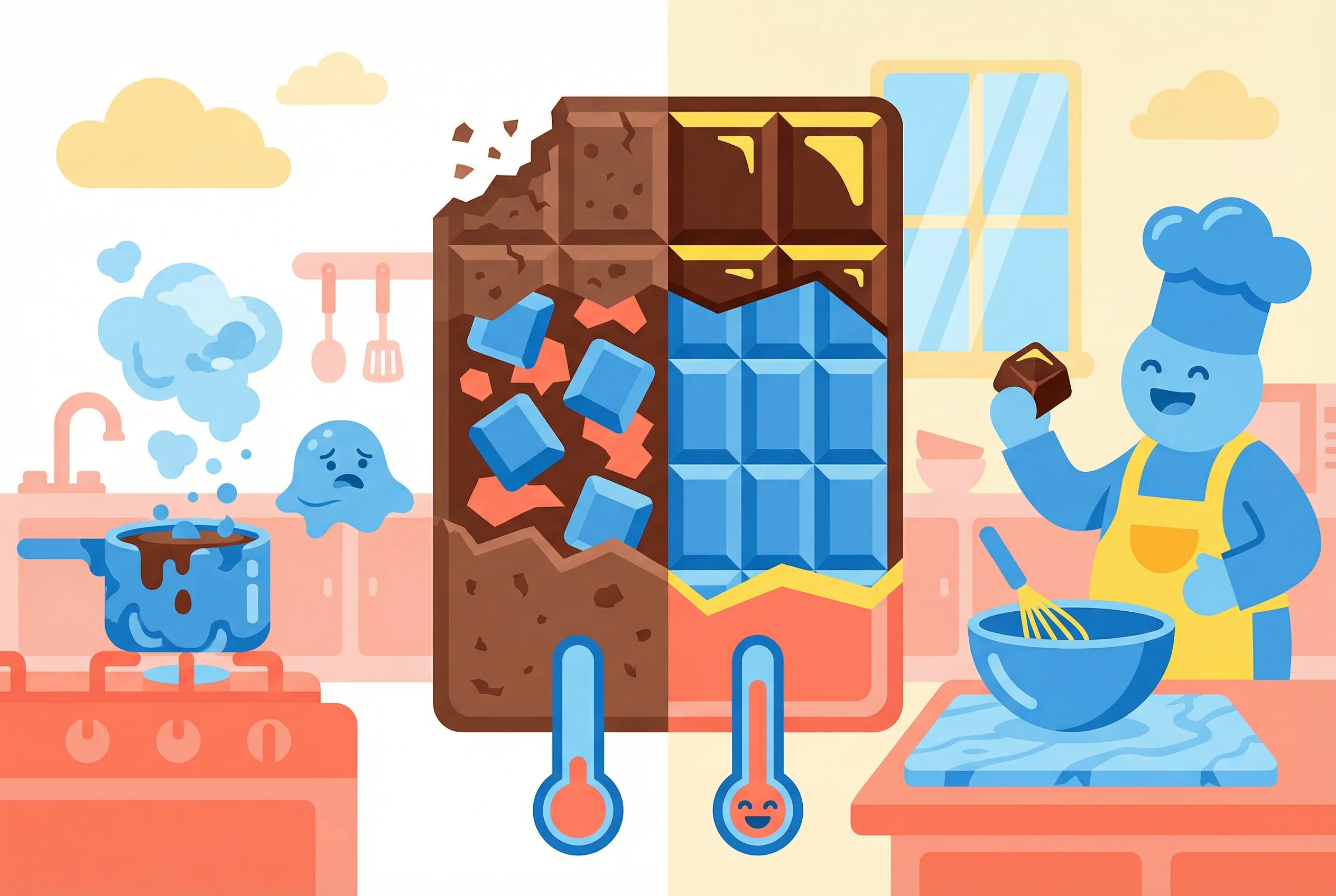
The most satisfying chocolate sound, the clean snap, is not magic. It is fat crystallization. Cocoa butter can arrange itself in multiple crystal forms, and different arrangements create different hardness, gloss, melting behavior, and bloom resistance. A 2025 review, Chocolate Tempering: A Perspective, describes tempering as a critical step that gives chocolate desirable properties such as gloss, snap, and bloom resistance, traditionally by steering cocoa butter polymorphism toward Form V crystals (Mishra et al., 2025).
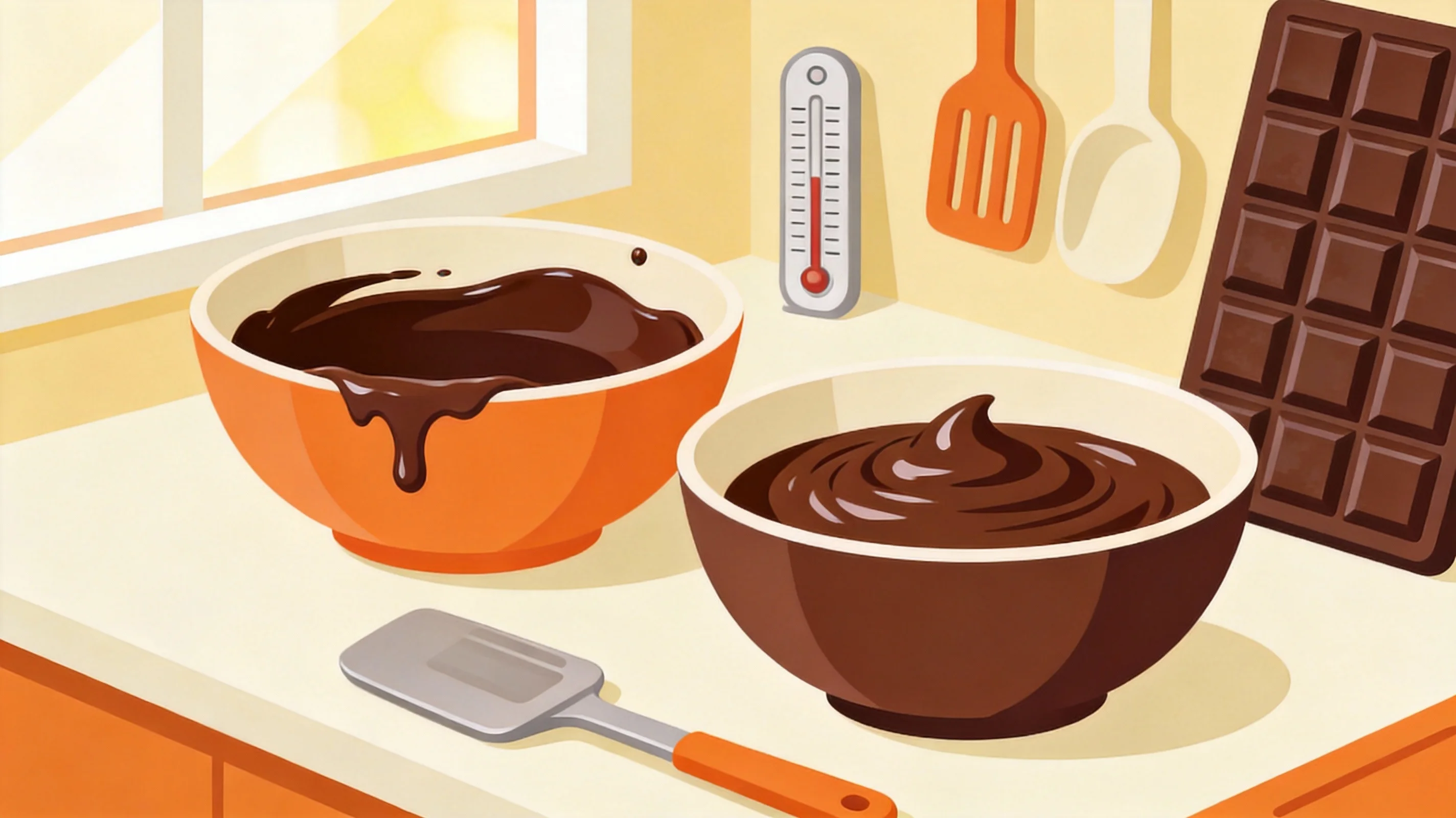
The home-kitchen version sounds simple: melt, cool, warm slightly, and stir. The chemistry is fussier. You are trying to erase unwanted crystal forms, encourage the desirable ones, then keep the chocolate warm enough to work but cool enough that those seeds survive. The Science of Cooking's tempering guide summarizes the practical sensory result: Form V chocolate is glossy, firm, has the best snap, and melts near body temperature (Science of Cooking). That last phrase is the tiny luxury. Good chocolate holds shape in your hand, then gives up in your mouth.

The white dust is usually bloom, not mold
A pale haze on chocolate can look alarming, but it is usually bloom. The mechanism depends on what moved. Fat bloom happens when cocoa butter migrates or recrystallizes at the surface. Sugar bloom happens when moisture dissolves surface sugar and leaves crystals behind as the water evaporates. Tempering helps resist fat bloom because the crystal network is more stable, but storage still matters: heat, temperature swings, and humidity can disturb the system.
The useful closure is that bloomed chocolate is often visually damaged before it is unsafe. It may taste duller or feel grainier because the carefully arranged fat and sugar structure has been disrupted. But the white surface is not automatically mold. The better question is storage quality: did the bar get warm, humid, or repeatedly cooled and warmed?

Dark chocolate is bitter because cacao is chemically busy
Cacao brings fat, carbohydrates, proteins, polyphenols, methylxanthines, acids, and aroma compounds into one food. Harvard's Nutrition Source describes dark chocolate as typically containing 50-90% cocoa solids, cocoa butter, and sugar, while milk chocolate contains a lower share of cocoa solids plus milk ingredients and sugar (Harvard T.H. Chan School of Public Health). That is why darker chocolate tends to be more bitter and more intense: more cocoa solids means more of the compounds that make cacao taste like cacao.
But "dark" does not mean automatically medicinal. Harvard also points out that dark chocolate is calorie-dense and that flavanol content is not listed on nutrition labels. It notes that natural cocoa retains more flavanols than Dutch-processed cocoa, which is treated with alkali for flavor and color. The honest chocolate fact is narrower and better: cacao can contain interesting plant compounds, but a candy bar is still a food matrix of cocoa, fat, and sugar. Curiosity should make the claim sharper, not bigger.

Chocolate craving is not one chemical pressing a button
People love tidy explanations for craving: it must be caffeine, or theobromine, or phenylethylamine, or magnesium, or childhood memory. The real answer is less single-key and more interesting. Chocolate combines sugar, fat, aroma, bitterness, melt, learned reward, and mild methylxanthines. PubMed's abstract for a controlled study on caffeine and theobromine in chocolate concludes that methylxanthines in amounts found in a 50 g chocolate portion may contribute to liking, especially for dark chocolate (Smit and Blackburn, 2005). "Contribute" is the important word. It is not the whole spell.
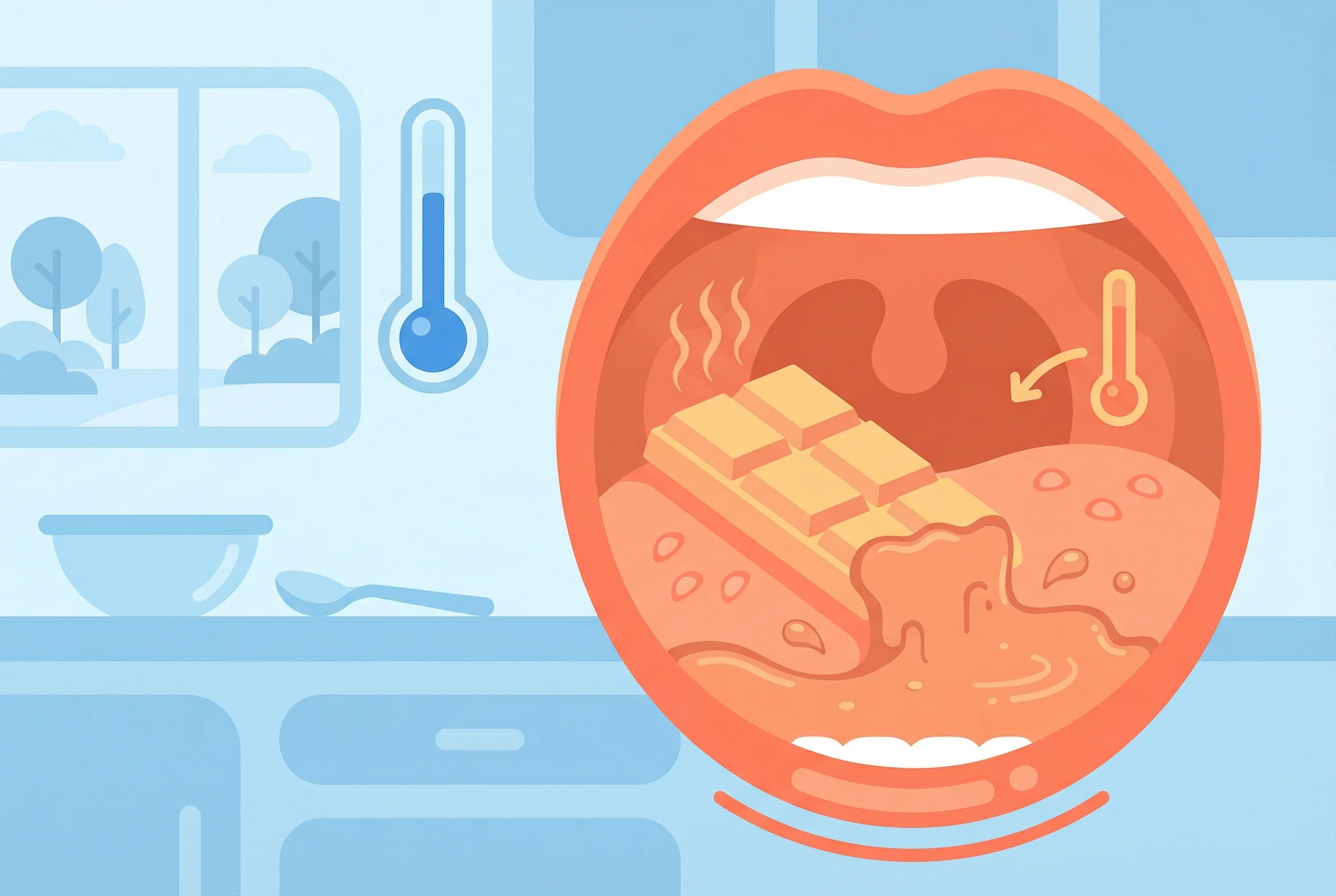
The texture is part of the craving because cocoa butter melts near body temperature when the crystal structure is right. The flavor is part of it because roasting creates volatile compounds that your nose reads before your tongue finishes. Sugar and fat are part of it because your brain is very good at noticing energy-dense foods. Bitterness is part of it because adult taste can learn to enjoy a controlled edge. Chocolate is craveable because it closes several loops at once: aroma, sweetness, melt, bitterness, memory, and the small stimulant nudge.

What people usually miss
The common mistake is asking, "What is the secret ingredient in chocolate?" There is no single secret ingredient. The more useful frame is sequence. Cacao has potential; fermentation creates precursors; roasting creates aroma; conching changes texture and volatility; tempering sets the fat crystals; storage either preserves or ruins that order; your mouth and brain finish the experience. Chocolate is not just a flavor. It is a chain of closures.
That is also why chocolate is a perfect curiosity object. Almost everyone half-knows it: beans, sugar, candy, maybe fermentation, maybe tempering. The half-knowing is the spark. Once you see the chain, the bar stops being ordinary without becoming mystical. It becomes a tiny edible factory record.
Related videos
The history of chocolate - Deanna Pucciarelli, TED-Ed
Science: How to Temper Chocolate with This Easier Method - America's Test Kitchen
FAQ
What are the most interesting facts about chocolate?
The best facts are mechanism facts: cacao beans need fermentation before they can become chocolatey, roasting creates many aroma compounds, cocoa butter has multiple crystal forms, tempering chooses the snap-and-shine form, and bloom is usually a fat or sugar structure problem.
Why does chocolate melt in your mouth?
Cocoa butter is the key. When chocolate is properly tempered, the desirable crystal structure gives it firmness and gloss at room temperature while still letting it melt near mouth temperature.
Why does dark chocolate taste bitter?
Dark chocolate contains a higher share of cocoa solids than milk chocolate, so it carries more cacao polyphenols, methylxanthines, acids, and roast-derived compounds. Sugar can balance those notes, but it does not erase them.
Is white stuff on chocolate mold?
Usually it is bloom, not mold. Fat bloom comes from cocoa butter migration or recrystallization; sugar bloom comes from moisture dissolving surface sugar and leaving crystals behind. It can hurt texture and appearance even when it is not a safety issue.
What does this have to do with AIgneous Million Whys?
Chocolate is exactly the kind of everyday object that rewards a good "why." A small information gap opens, a real answer closes it, and the closure creates the next question. Million Whys is built for that 10-second curiosity loop: one question, one satisfying mechanism, then another spark.
Sources
Barisic et al. 2019: The Chemistry behind Chocolate Production
Mishra et al. 2025: Chocolate Tempering: A Perspective
Harvard T.H. Chan School of Public Health: Dark Chocolate
Science of Cooking: Why is Chocolate Tempered?
Smit and Blackburn 2005: Reinforcing effects of caffeine and theobromine as found in chocolate
Keep Exploring
Related Posts
Chemistry Trivia Questions With Answers
Chemistry trivia questions with answers about onions, popcorn, soap, bubbles, metals, dry ice, boiling, tarnish, and everyday reactions explained simply.
Food Trivia Questions & Answers
Food trivia questions and answers about bread, pasta, coffee, onions, steak, fermentation, and flavor science, with instant explanations for every choice.
Fun Facts About Human Body: Everyday Biology
Fun facts about human body biology: why blinking, heart rate, gut rumbles, body clocks, and sneezing work as tiny automatic survival systems inside you.