Best Microlearning Apps for Work: Honest Picks
On this page· 15
The best microlearning apps for work do not all solve the same problem. Some are real workplace training systems: they assign lessons, track completions, report progress, and help managers prove that a team actually saw the material. Others are better for the private five-minute gap between meetings, when one person wants a small piece of knowledge that closes cleanly instead of another dashboard. Mixing those jobs is how comparison lists get mushy.
TL;DR
If you are choosing for a team, start with workplace platforms such as SC Training, Axonify, and 7taps, because they are built around authoring, rollout, reporting, and frontline access. If you are choosing for yourself between meetings, compare Million Whys, Imprint, Blinkist, and Brilliant by learning unit: a question, a visual card, a book summary, or an interactive STEM lesson. Million Whys is ours, and it is not an enterprise LMS; its honest slot is curiosity-led personal microlearning, not compliance training.
Short answer: for a team, choose the microlearning app whose reporting and deployment model fits the workday. For yourself, choose the one whose smallest unit you will actually want to finish. A course admin needs control and evidence. A curious adult needs a gap that opens, closes, and leaves the next question a little easier to ask.
First split: team rollout or personal curiosity?
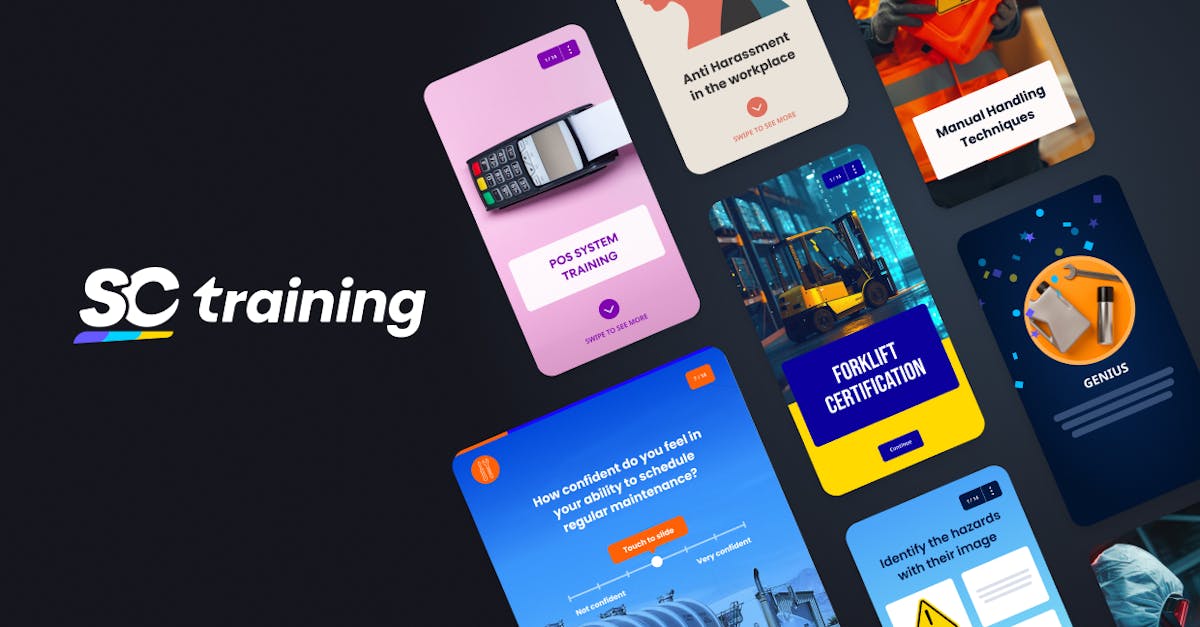
Workplace microlearning usually means a manager, L&D lead, or operations owner needs short training that can reach people without pulling them away from work. SC Training describes itself as a mobile-first microlearning LMS for frontline teams and says teams can onboard, train, and upskill in less than five minutes a day (SC Training). That is a very different job from a professional opening an app in the coffee line because they want to learn one thing before the next call.
The Million Whys positioning matrix draws the line in a useful way: 10 seconds, not 10 minutes; curiosity, not guilt; emergent curriculum, not a fixed catalog. That does not make Million Whys a better LMS. It makes it a different kind of small learning surface. The team side needs assignment, governance, and measurement. The individual side needs a satisfying information gap and real closure.
For a team: SC Training, Axonify, and 7taps
SC Training is the most obvious first stop if you want a mobile-first workplace LMS rather than a personal learning app. Its own site calls it SC Training, formerly EdApp, and emphasizes bite-sized training, course creation, an editable course library, and mobile delivery (SC Training formerly EdApp; SC Training features). I would shortlist it for frontline teams that need onboarding, safety, product knowledge, or repeatable operating procedures in a phone-friendly format. I would not pick it if your real need is one adult trying to stay curious between meetings.

7taps is a lighter-looking workplace authoring and rollout tool. Its homepage frames the product as an enterprise-ready microlearning platform, and its pricing page lists a Free plan at $0 forever and a Starter plan at $4,995 per year (7taps; 7taps pricing). That makes the pricing unusually concrete compared with many B2B learning products. Its fit is strongest when a team wants to turn existing know-how into short mobile courses quickly, especially when link-based delivery and fast authoring matter more than a heavy LMS ecosystem.

Axonify is best treated as a frontline enablement platform rather than a simple card builder. Axonify describes its method around tying learning to behaviors and business results, and its public materials emphasize frontline microlearning, reinforcement, communication, and measurement (Axonify method; Axonify microlearning resources). I did not find a public self-serve price on official Axonify pages during this cron run, so I would not quote one. For procurement, assume you need a demo or sales conversation.
Question 1 of 2
7taps, which lets teams build short phone-sized training courses, keeps one plan at $0 forever and prices its next tier at $4,995 a year. What is that $4,995 actually adding?
For yourself between meetings: Million Whys, Imprint, Blinkist, Brilliant
This is where the workplace keyword can quietly change meaning. A professional may search for microlearning at work because they want something useful during tiny breaks, not because they own a training budget. If that is you, admin dashboards are not the point. The point is whether the smallest unit leaves residue: a clearer idea, a better question, or one fact you can retell.

Million Whys is ours, so here is the plain disclosure: it is not an enterprise LMS. There are no seats, admin console, SCORM packages, compliance assignments, or completion dashboards. Its honest fit is personal curiosity microlearning: one why-question, multiple choices, explanations for every option, and a short closure loop. The official FAQ says the core app is free to use, with some advanced features and subscriber perks in Premium (Million Whys FAQ). It belongs in this list only for the person who wants work breaks to feel more like curiosity compounding than task completion.
Imprint is a visual microlearning app for complex knowledge, with animated or visual summaries across topics such as psychology, philosophy, history, finance, leadership, business, health, science, and technology. Its Google Play listing says chapters can be completed in two minutes or less, and the App Store page describes auto-renewing monthly and yearly subscriptions for full catalog access (Imprint on Google Play; Imprint on the App Store). It is stronger when you want a polished visual path than when you want a question from your own curiosity.

Blinkist is a book and podcast summary product. Its official pricing page says Premium includes 9,000+ book and podcast summaries and read-or-listen summaries in 15 minutes, with a listed 12-month Premium offer shown during this check (Blinkist pricing). Blinkist is a good fit when the unit you want is someone else's book compressed into a usable brief. It is less suited to open-ended curiosity because the catalog starts from published material, not from what you just wondered.

Brilliant is the better personal pick when the desired microlearning is interactive STEM. Its App Store listing presents math, data, computer science, and science learning, while Brilliant's help center says Premium pricing varies by plan type and subscription length (Brilliant on the App Store; Brilliant pricing help). It is more structured than Million Whys, more interactive than Blinkist, and more course-like than Imprint.
Question 2 of 2
How does Blinkist make a nonfiction book or podcast fit its roughly 15-minute format in text or audio?
Quick comparison
| App | Best for | Smallest learning unit | Workplace fit | Pricing note |
|---|---|---|---|---|
| SC Training | Frontline team training | Mobile microlesson | Strong: LMS, library, reporting | Official pages invite free signup/demo; verify plan details before buying |
| Axonify | Frontline enablement | Reinforcement and behavior-linked learning | Strong: enterprise workflow and measurement | Public official price not found; request quote |
| 7taps | Fast course creation and rollout | Link-shared micro-course | Strong for lightweight team programs | Free plan and Starter annual price listed publicly |
| Million Whys | Personal curiosity between meetings | One why-question with answer closure | Weak for admin; strong for individual habit | Core app free; Premium perks exist |
| Imprint | Visual knowledge cards | Short visual chapter | Personal development, not team LMS | Monthly/yearly subscription terms listed in stores |
| Blinkist | Book and podcast summaries | 15-minute summary | Personal or team reading perk, not LMS | Official pricing page lists Premium and Pro offers |
| Brilliant | Interactive STEM | Interactive lesson | Personal/course learning, not compliance | Pricing varies by plan and subscription length |
What people usually miss
The usual mistake is ranking apps by how short they are. Short is only the container. The learning unit is the thing that matters. A compliance microlesson, a STEM puzzle, a book summary, a visual card, and a why-question all fit in a workday gap, but they create different kinds of closure.
For workplace buyers, closure means the team saw the material, understood the procedure, and left a record. For an individual, closure means the mental itch actually got answered. This is why Million Whys should not pretend to be an LMS and why an LMS should not pretend to be a curiosity habit. Different gaps deserve different tools.
Related videos
FAQ
What are the best microlearning apps for work if I manage a team?
Start with SC Training, Axonify, and 7taps. They are built for workplace rollout, authoring, delivery, and reporting. Then compare the actual workflow: who creates content, how learners receive it, what data managers see, and how much procurement friction the team can tolerate.
What should I use if I only want to learn during small work breaks?
Use a personal app rather than an LMS. Million Whys fits one-question curiosity, Imprint fits visual lessons, Blinkist fits book summaries, and Brilliant fits interactive STEM. The best choice is the unit you will finish without feeling managed.
Is microlearning the same as flashcards?
No. Flashcards are one microlearning format, usually for remembering known material. Workplace microlearning can include short lessons, scenarios, quizzes, videos, and nudges. Curiosity microlearning can begin with a question you did not know you had.
Should Million Whys be used for employee compliance training?
No. Million Whys is not built for compliance, seat management, assignments, audit trails, or manager reporting. Use a workplace platform for those jobs. Use Million Whys when the job is personal curiosity and daily knowledge closure.
How should I compare microlearning prices?
Separate self-serve consumer subscriptions from team software. Consumer apps often list monthly or annual subscriptions in app stores. B2B platforms may show free trials, annual starter plans, or contact-sales pricing. Verify the current price on the official page before buying.
What does this have to do with AIgneous Million Whys?
Million Whys is the curiosity side of microlearning: a 10-second question, a choice, and an explanation that closes the gap. It belongs at work only when the workday has small human gaps where you want to know one real thing, not when a manager needs an LMS.
Keep Exploring
Related Posts
Best Free Microlearning Apps 2026
Best free microlearning apps 2026: compare Duolingo, Khan Academy, Brilliant, Quizlet, Anki, Deepstash, and MillionWhys for tiny curiosity-led learning.
App to Learn New Things: Curiosity, Not Cramming
Looking for an app to learn new things? Compare Million Whys, Brilliant, Khan, Blinkist, and Duolingo by learning moment, not hype.
Best Mobile Learning Apps 2026: Curiosity Wins
Best mobile learning apps 2026 compared by learning unit, pressure, cost signals, and curiosity fit, from Duolingo and Khan Academy to MillionWhys today.