Best Lifelong Learning Apps 2026: Curious Adults
On this page· 16
The best lifelong learning apps in 2026 are not all trying to solve the same problem. Some help you finish a credential, some explain math by making you do the next step, some compress books, and some keep a small daily curiosity loop alive. The useful question is not "which app is best?" It is: which app fits the kind of learning you can actually return to tomorrow?
TL;DR
For lifelong learning, choose by learning unit. Coursera is strongest for structured career courses, Khan Academy for free academic refreshers, Brilliant for interactive STEM practice, Blinkist for nonfiction sampling, Duolingo for languages, and MillionWhys for 10-second curiosity across topics. The best lifelong learning app is the one whose smallest unit matches your real day.
Short answer: If you want career credentials, start with Coursera. If you want free academic lessons, start with Khan Academy. If you want interactive STEM, look at Brilliant. If you want compressed nonfiction, compare Blinkist. If you want language habit, use Duolingo. If you want a daily general-knowledge habit that starts from curiosity rather than a syllabus, use MillionWhys.

What lifelong learning really asks of an app
UNESCO describes lifelong learning as learning across the whole lifespan, in many settings, and through formal, non-formal, and informal modes. That definition matters because most app roundups quietly shrink lifelong learning into job skills. Career learning is real. So is learning because you still want the world to make more sense when school is long over.
That broader frame changes the app criteria. A good lifelong learning app should answer four questions. What is the smallest learning unit? Who decides the curriculum? Does the app create real closure, or does it keep you browsing without landing? And when you stop using it for a week, does it help you come back, or punish you for being a person with a life?

The comparison table: best lifelong learning apps 2026
Here is the clean version. This is not a ranking from "smart" to "less smart." It is a map of learning jobs. The adult who wants a Google certificate, the adult who forgot algebra, and the adult who keeps asking why snowflakes have six sides do not need the same product.
| App | Best for | Smallest unit | Curriculum source | What to verify before paying |
|---|---|---|---|---|
| Coursera | Career skills, certificates, university-backed courses | A course module, video, quiz, or assignment | Universities and companies | Whether the course or certificate is included in your plan |
| Khan Academy | Academic refreshers and structured foundations | A lesson, article, video, or practice set | Standards-aligned academic library | Whether the topic level matches adult self-study needs |
| Brilliant | Interactive math, programming, data, AI, and science practice | An interactive problem step | Expert-built course catalog | Free limits vs. Premium access and whether Koji matters to you |
| Blinkist | Sampling nonfiction ideas quickly | A short book summary or audio guide | Editorial nonfiction catalog | Whether summaries are enough, or you want the full book |
| Duolingo | Language, math, music, and chess habit loops | A quick lesson | Prebuilt courses | Whether streak pressure helps you or starts to feel like homework |
| MillionWhys | General knowledge and curiosity across subjects | One 10-second question plus explanation | Community curiosity turned into fact-checked questions | Whether you want a curiosity loop, not a credential path |
Coursera: best when the outcome needs structure
Coursera belongs near the top of any lifelong learning list because it solves a specific adult problem: "I need a structured path and some outside credibility." Its Coursera Plus page advertises access to more than 10,000 courses, and at verification on June 10, 2026, it showed both monthly and annual subscription options. That is a very different promise from a curiosity app. It is for people who want a course path, a professional certificate, or a university/company-backed sequence.
The tradeoff is friction. A course is useful because it has a shape. That same shape can make it harder to restart after a busy week. Coursera is best when the learning target is named in advance: data analysis, project management, machine learning, business writing. If the real itch is "I want to learn something small and surprising before bed," Coursera may be more structure than the moment needs.
Question 1 of 3
What does a Coursera Plus monthly or annual subscription actually unlock?
Khan Academy and Brilliant: foundations versus active problem solving
Khan Academy is the safest recommendation for free academic refreshers. Its own homepage frames the library around free courses, lessons, and practice across math, science, economics, history, and more. For adults, the win is not that it feels adult-branded. It is that the explanations are clear enough to revisit a forgotten foundation without pretending you are taking a lifestyle masterclass.
Brilliant solves a different lifelong learning job. Its Premium page emphasizes unlimited access to 40+ courses, and its help page says Free has daily limits while Premium removes those limits and gives full access to Koji. The practical difference is interaction. Brilliant is strongest when you learn by doing the next puzzle-like step: logic, probability, programming, data, AI, or physics. If Khan Academy says "here is the explanation," Brilliant says "try the next move."


Blinkist and Duolingo: fast input versus daily habit
Blinkist is useful when the job is idea sampling. Its support page says the Basic plan gives one hand-picked title daily, while paid subscriptions unlock broader access. Its public marketing also positions the format around short nonfiction summaries, often read or listened to in about 15 minutes. That is a good lifelong learning unit if your question is "what is the core idea of this book?" It is weaker if your question is "can I test what I know and feel the click of an answer?"
Duolingo belongs here because it proved a habit loop can make learning feel light. Its course page lists languages and other subjects, and its 2025 language report says it offers 280+ courses teaching 40+ languages plus chess, all for free. For language learners, that is hard to beat. But for general curiosity, the fixed course tree is the wrong shape. If your brain asks why thunder follows lightning, the Spanish path will not answer back.

Question 2 of 3
Duolingo offers 280+ free courses across 40+ languages, plus chess - so why can't it answer a random question like why leaves change color?
MillionWhys: best for curiosity that starts in fragments
MillionWhys is not trying to be Coursera without certificates or Duolingo without languages. The product thesis is different: learning input is natively fragmented. In real life, curiosity arrives as one question at a time. Why does wind feel colder? Why do passwords need special characters? Why do skunks spray? The structure comes later, as those fragments start to connect.
That is why the smallest unit is one question, one answer choice, and one explanation. It is built for the 10-second window: the elevator, the coffee line, the moment you almost open a feed. The payoff is not a badge. It is the little closure after an information gap gets resolved. Loewenstein's classic review of curiosity explains the information-gap idea: curiosity is sparked when attention lands on the gap between what you know and what you want to know. MillionWhys designs around that moment instead of burying it inside a course outline.

Question 3 of 3
What makes a small, specific missing fact feel more curiosity-provoking than a huge unfamiliar topic?
What people usually miss
Most "best lifelong learning apps" pages rank by content volume. That is understandable, but incomplete. A huge catalog can be a library, or it can be another place to get lost. The more important question is what the app does with a half-known thought.
If you already know the destination, choose structure. Coursera, Khan Academy, and Brilliant are strong there. If you want a compact stream of ideas, Blinkist fits. If you want language practice, Duolingo is built for that rhythm. If you want idle moments to produce small, real pieces of understanding, choose a question loop. Curiosity is not a decorative mood. It is the engine that gets an adult to come back without being guilted into attendance.
Related videos
Barbara Oakley: Learning How to Learn | Talks at Google
Daphne Koller: What we are learning from online education | TED
FAQ
What is the best lifelong learning app in 2026?
For structured career learning, Coursera is the strongest general pick. For free academic foundations, Khan Academy is hard to beat. For general curiosity in tiny daily moments, MillionWhys is the better fit.
Are lifelong learning apps only for career skills?
No. UNESCO's framing includes formal, non-formal, and informal learning across life. Career skills matter, but so do science, history, culture, psychology, and the small questions that make ordinary life less flat.
Which app is best for adults who do not want homework?
Use an app with a small learning unit. Blinkist works for short nonfiction summaries, Duolingo works if the subject is language, and MillionWhys works if you want one curious question at a time without a course commitment.
Should I pay for a learning app?
Pay when the paid plan unlocks the actual learning job you need. Coursera and Brilliant can be worth it for structured paths or unlimited practice. If you only need free academic refreshers, Khan Academy is a strong starting point.
What does this have to do with AIgneous Million Whys?
AIgneous Million Whys is built for the part of lifelong learning that starts as curiosity, not obligation. It turns one small question into a fact-checked answer, then lets that knowledge compound into the next question.
Keep Exploring
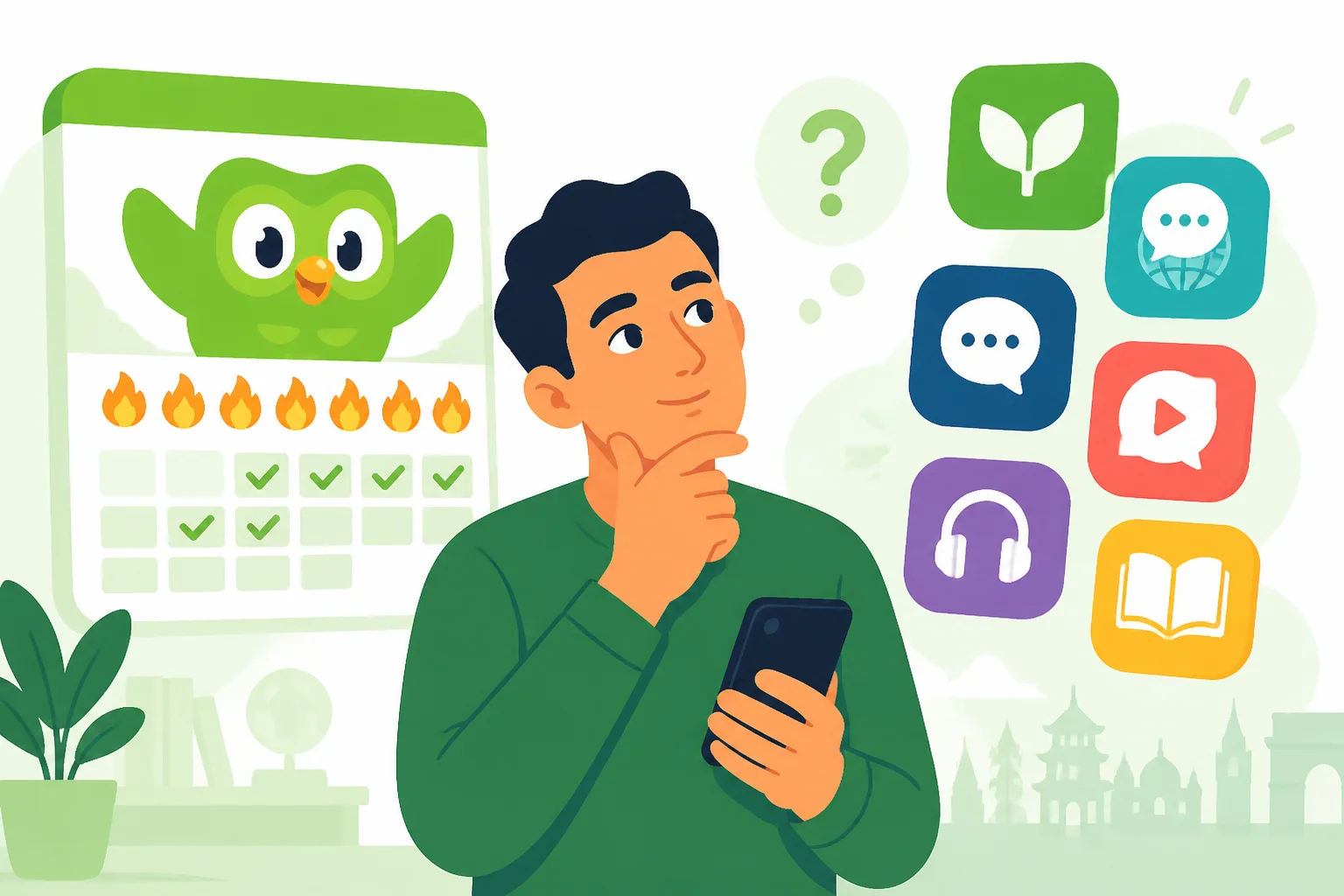
Why do plenty of adults keep a long Duolingo streak and still go looking for a different learning app?
Language & Linguistics
What makes Khan Academy's iOS and Android apps different from most free learning apps?
Technology
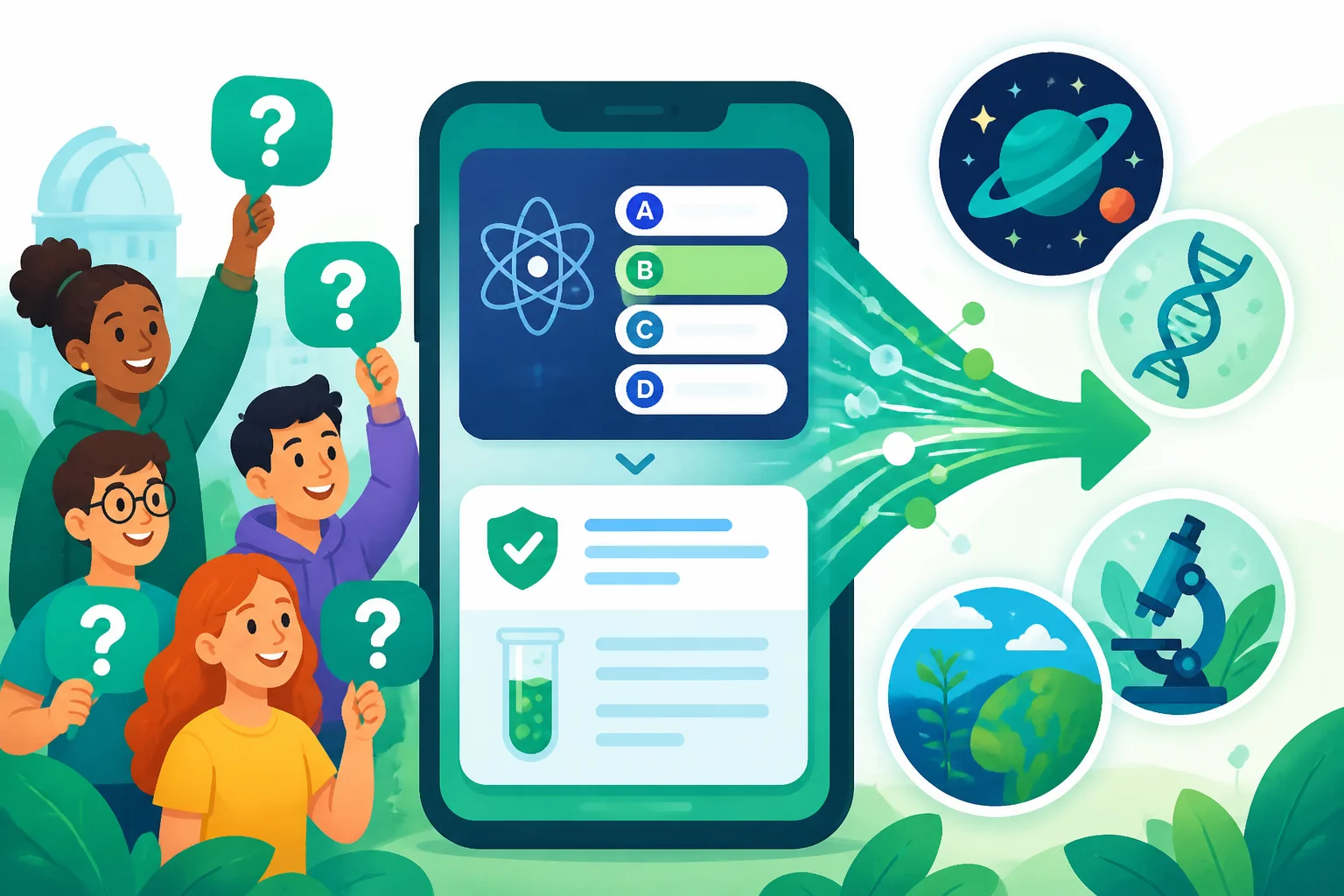
Why might MillionWhys-a learning app that asks a multiple-choice question before a fact-checked explanation-let community questions shape future topics instead of following only a fixed course?
Media & Society
Related Posts
Best Educational Apps for Adults 2026
Best educational apps for adults 2026: compare Coursera, Khan Academy, Brilliant, Skillshare, Duolingo, Blinkist, and MillionWhys by real adult fit today.
Best Apps for Learning Skills: 2026 Guide
Looking for the best apps for learning skills? Compare Brilliant, Coursera, Khan, Skillshare, Quizlet, and MillionWhys for curious adult learners today.
Best Knowledge Apps 2026: Curious Picks
Best knowledge apps 2026 compared for curious adults: Million Whys, Kinnu, Imprint, Blinkist, Brilliant, Khan, Nerdish, Deepstash, with current prices.