Best Knowledge Apps 2026: Curious Picks
If you are comparing the best knowledge apps 2026, do not start with the biggest catalog. Start with the smallest unit your real day can hold. Some apps give you a course. Some give you a book summary. Some give you a memory system. The useful question is: will this app close one real information gap, or will it leave you with another inbox?
TL;DR
The best knowledge apps in 2026 split into four jobs: structured foundations, interactive practice, book-summary sampling, and curiosity-first discovery. Khan Academy, Brilliant, Imprint, Blinkist, Kinnu, Nerdish, and Deepstash each do one of those jobs well. AIgneous Million Whys is ours, and it earns a place only when you want a 10-second general-knowledge habit built around one question, one answer, and the satisfying closure of knowing why.
Short answer: choose Khan Academy for free foundations, Brilliant for interactive STEM, Imprint for visual lessons, Blinkist for book summaries, Kinnu for guided knowledge paths, Nerdish for short articles, Deepstash for idea snippets, and Million Whys for curiosity-led questions that can begin anywhere.

Curious? Try one 👇
Why is the sky blue?
Jump into the daily quiz →How we picked
A knowledge app is not automatically good because it has more content. A huge catalog can become another closet you feel guilty about. For this list, the test was practical: does the app create real closure, not just stimulation? Does it explain the mechanism, not only hand you a label? Can a busy adult use it without pretending they have a clean 30-minute block?
This matches the Million Whys education thesis: learning input is natively fragmented. People usually begin with a half-known gap, not a syllabus. Loewenstein's information-gap theory gives the psychology language for that itch: curiosity becomes strongest when you know enough to notice what you do not know (Loewenstein, 1994).
One more filter: pressure is not the same as progress. Streaks, badges, and notifications can help a habit start, but they can also turn learning into attendance. For a curiosity app, the better signal is whether you leave with a cleaner model of the world than you had a minute ago.
| App | Best for | Smallest useful unit | Price checked Aug. 3, 2026 | Limitation |
|---|---|---|---|---|
| AIgneous Million Whys | Curiosity-first general knowledge | One 10-second why-question | Free to download; web daily play is free/no signup | Not a certificate course |
| Kinnu | Guided knowledge paths | Short lessons and recall prompts | App Store lists it as free to download | Still app-designed paths |
| Imprint | Visual explainers | Illustrated 5-10 minute lessons | Official offer showed $52.49 first year, then $74.99/year | Editor-chosen catalog |
| Blinkist | Sampling nonfiction books | About a 15-minute summary | Free Basic daily title; paid annual billing on pricing page | Conclusions before mechanisms |
| Brilliant | Interactive STEM thinking | Math, science, coding problems | Subscribe page showed annual, monthly, and family Premium plans | Focused STEM posture |
| Khan Academy | Free structured foundations | Video lesson plus practice | Independent learners, teachers, and parents are 100% free | Classroom-shaped |
| Nerdish | Concise daily articles | One short article | Official site says free to download | Reading-first |
| Deepstash | Idea snippets | Short idea cards | Official site says free to start; App Store exposed a Pro yearly purchase | Easy to collect more than close |
1. Million Whys: best for curiosity that starts anywhere
Disclosure first: Million Whys is ours. It should not be your pick for certificates, company training, or a full course. Its job is smaller: answer one why-question, see why each option was right or wrong, and leave with a mechanism attached.
The important difference is curriculum source. A fixed course begins with what an editor shipped. Million Whys begins with what people actually wonder: why glaciers are blue, why companies buy back stock, why oases appear in deserts. Users ask, AI helps turn those sparks into fact-checked questions, and the shared pool becomes a demand-side knowledge commons.
2. Kinnu: best for guided general-knowledge paths
Kinnu is a close neighbor in spirit. Its App Store description talks about following curiosity, lasting knowledge, and replacing doomscrolling, and the listing shows the app as free to download. Choose it if you like your curiosity arranged into paths instead of starting from a single question.

3. Imprint: best for visual explainers
Imprint is the polished visual-learning pick. Its official site frames the product around interactive visual learning, storytelling, and bite-sized lessons; the subscription offer page checked for this article showed $52.49 for the first year, then $74.99/year. It is excellent when the diagram is the point, and less ideal when your curiosity is too small or odd for a catalog item.
4. Blinkist: best for sampling nonfiction quickly
Blinkist is a book-summary app with a learning use case. Its support center says the free Basic plan gives access to one pre-selected daily title; the pricing page carries current subscription offers. Use it when you want to decide whether a book is worth reading. The limitation: a summary can hand you a conclusion before you have wrestled with the mechanism.
5. Brilliant: best for interactive STEM thinking
Brilliant is strongest when the thing you want to learn is math, science, or coding through active problem solving. Its Premium page says it unlocks math, science, and computer science courses, and its subscribe page showed annual, monthly, and family plans. That is a real learning posture, not a spare-second habit.
6. Khan Academy: best free structured foundation
Khan Academy remains the safest free recommendation for school-shaped subjects. Its pricing page states that Khan Academy is 100% free for independent learners, teachers, and parents. The boundary is format: it gives you a reliable path through a subject, not a curiosity feed for one strange question after dinner.
7. Nerdish: best for short daily articles
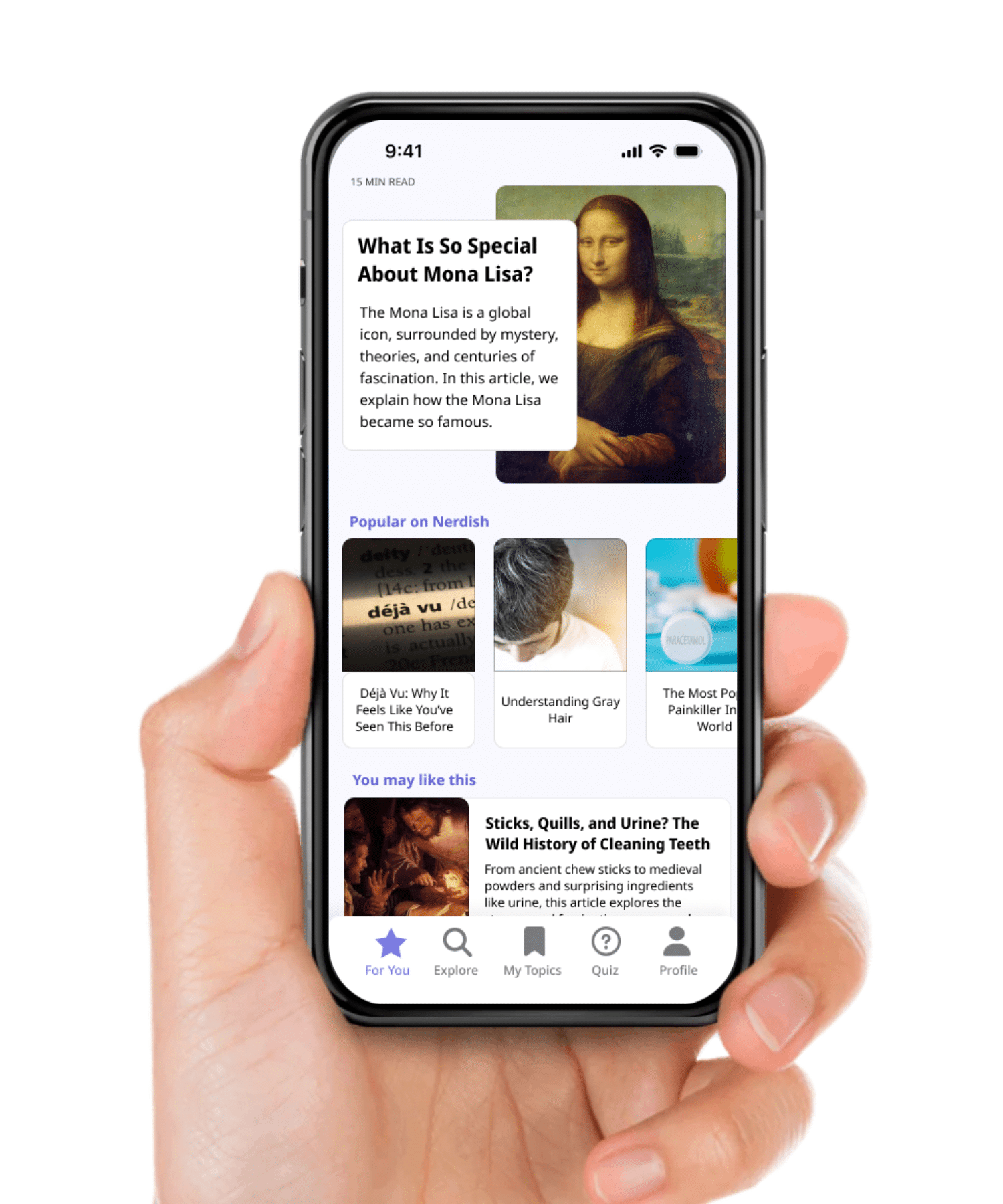
Nerdish presents itself as a general-knowledge app for adults, with bite-sized articles across history, science, art, famous people, food, and everyday wonders. Its site says it is free to download. It fits readers who want a concise article more than a prediction-and-answer loop.
8. Deepstash: best for idea snippets
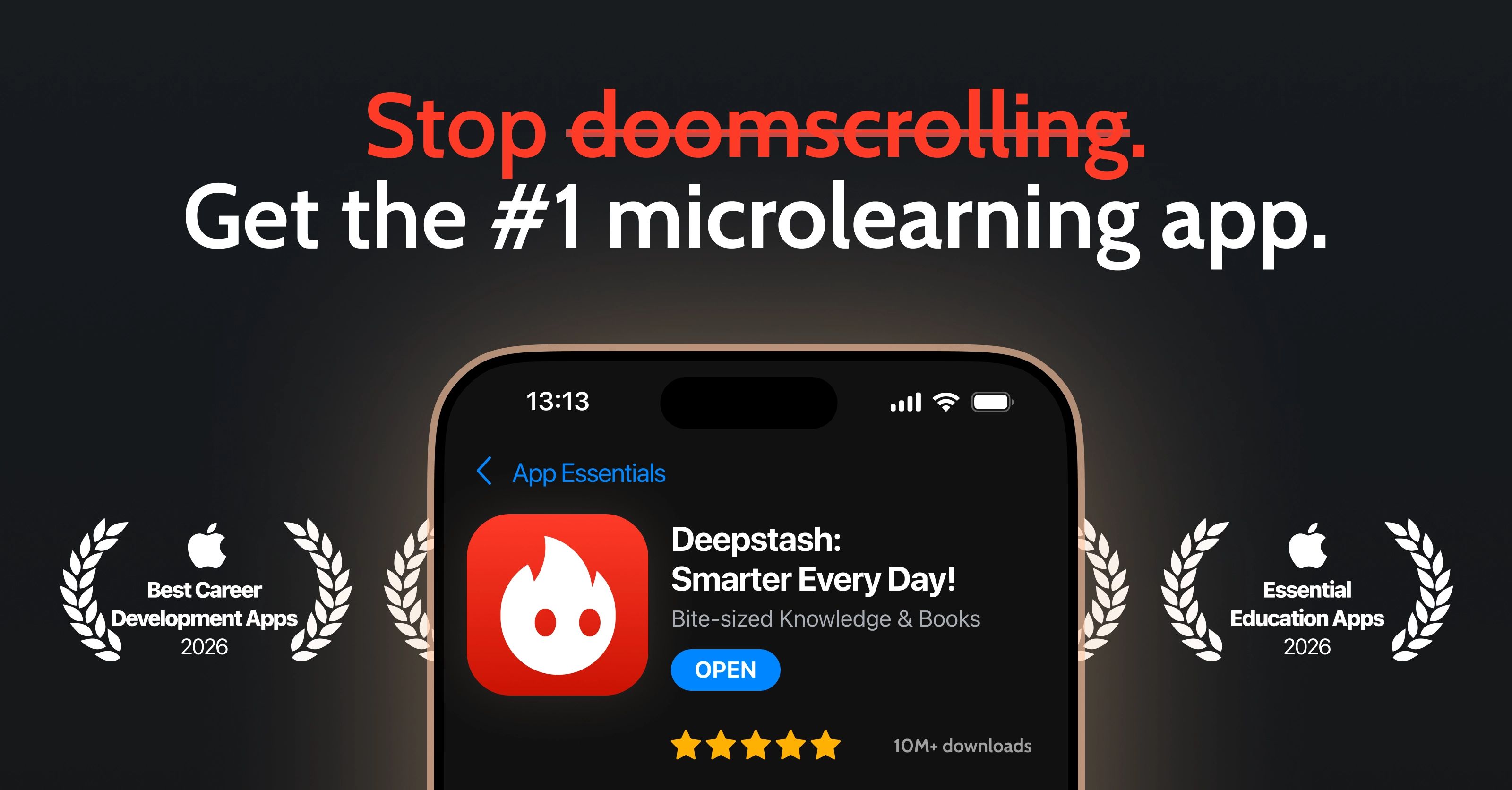
Deepstash describes itself as a way to replace doomscrolling with microlearning and says it has 10M+ downloads. Its homepage says it is free to start; the App Store page checked for this article exposed a Pro yearly purchase. Deepstash is good at idea capture. The risk is saving more ideas than you understand.
What people usually miss
The usual comparison asks which app has the most content. That is backwards. More content can make the gap less visible, because you are staring at a shelf instead of a question. A course helps when you have a declared project. A visual lesson helps when you want guided explanation. A book summary helps when you are choosing what to read. A curiosity question helps when you are half-knowing something and need the answer to click before the moment disappears.
Related videos
For a broader view of short learning units, watch Josh Kaufman's TEDx talk The first 20 hours — how to learn anything. For structured foundations, Sal Khan's TED talk Let's use video to reinvent education explains why video lessons became powerful.
FAQ
What are the best knowledge apps 2026 for adults?
The best knowledge apps 2026 for adults are Khan Academy for free foundations, Brilliant for interactive STEM, Imprint for visual lessons, Blinkist for book summaries, Kinnu for guided knowledge paths, Nerdish for short articles, Deepstash for idea snippets, and Million Whys for 10-second curiosity questions.
Which knowledge app is best if I only have one minute?
Use a question-first app if you have one minute, because the smallest useful unit is already complete: prediction, answer, explanation, closure.
Are free knowledge apps good enough?
Sometimes. Khan Academy is unusually strong because its core library is free. Other apps are free to download but may reserve depth, catalog access, or convenience for paid tiers.
Is a knowledge app the same as a study app?
No. A study app usually begins with a subject, a goal, and a path. A knowledge app can begin with curiosity: a thing you almost understand, a fact you want explained, or a question that suddenly becomes hard to ignore.
What does this have to do with AIgneous Million Whys?
Million Whys is our attempt to build around the smallest real unit of curiosity: one why-question, one prediction, one satisfying explanation. If you need a course, choose a course. If you need one gap closed before your coffee cools, that is our lane.
Keep reading
Sources
AIgneous Million Whys homepage
Kinnu App Store listing
Imprint subscription offer page
Blinkist Help Center: cost and free Basic plan
Blinkist pricing page
Brilliant Premium subscribe page
Khan Academy pricing
Nerdish official site
Deepstash official site
George Loewenstein, The Psychology of Curiosity
Curious? Try one 👇
Why is the sky blue?
Jump into the daily quiz →Keep Exploring
Related Posts
Best Lifelong Learning Apps 2026: Curious Adults
Best lifelong learning apps 2026 for adults: compare Coursera, Khan, Brilliant, Blinkist, Duolingo, and MillionWhys by learning fit.
Imprint App Alternatives for Curious Adults
Imprint app alternatives for curious adults: compare Million Whys, Kinnu, Brilliant, Blinkist, Nerdish, and Khan Academy by price, pace, fit, and habit.
Best Educational Apps for Adults 2026
Best educational apps for adults 2026: compare Coursera, Khan Academy, Brilliant, Skillshare, Duolingo, Blinkist, and MillionWhys by real adult fit today.