
Best Apps for Learning Skills: 2027 Guide
On this page· 22
The best apps for learning skills are not all trying to do the same job. Some are built for credentials, some for creative practice, some for classroom foundations, and some for the tiny "wait, why?" moments that make understanding compound. The useful question is not "which app is best?" but "what kind of skill are you trying to grow, and how much attention can you give it today?"
TL;DR
If you want career credentials, start with Coursera. If you want hands-on math and science intuition, try Brilliant. If you want creative project classes, Skillshare fits. Khan Academy is the strongest free foundation builder, and Quizlet is still centered on flashcards and recall. MillionWhys is different: it is for curious adults who want understanding to grow from short, satisfying questions instead of from a fixed syllabus.
Short answer: for your 2027 learning plan, the best apps for learning skills are Brilliant for interactive STEM intuition, Coursera for career-linked courses and certificates, Khan Academy for free academic foundations, Skillshare for creative production, Quizlet for flashcard-style recall, and MillionWhys for curiosity-first general knowledge. Pick by session length and learning primitive: course, class, practice set, flashcard, or one question with closure.
For the comparison angles that matter most: Khan Academy is the best starting point for beginners, because it is free. Coursera is the best pick for career growth, with Coursera Plus at $399/year for certificates. For focused STEM practice, Brilliant is a paid option at $20/month billed annually. The best free option overall is Khan Academy, with MillionWhys' core daily experience free and requiring no signup.
Curious? Try one 👇
Why is the sky blue?
Jump into the daily quiz →How I Picked These Apps
This guide compares each app's learning format, intended use, and official product information. Prices were checked on November 18, 2026, as a reference for planning your 2027 learning; regional offers and checkout prices may differ.
Three things disqualified an app from this list: paywalling the core learning loop before you can tell whether it works for you, pressuring you with resume guilt before you have a goal, and having no usable mobile path for dead minutes.
Qustodio's 2023 report found children spent an average of only 6 minutes per day on educational apps across the countries covered, a 14% decline from 2022. That overall figure hides important differences: Quizlet users spent about 10 minutes per day globally, while children in Australia spent an average of 18 minutes daily on Mathletics and another 18 minutes on Reading Eggs. In Spain, users of Smartick averaged 30 minutes per day. Read the Qustodio education data report for the full breakdown. While those figures track younger learners, they underscore that short sessions are common, so apps rewarding brief engagement rather than punishing it tend to survive daily use.
First, decide what "skill" means
People use "learning skills" to mean very different things. One person means "I need Python for a promotion." Another means "I want to understand why bridges do not fall down." A third means "I have five minutes before the train arrives and I want my phone time to leave a trace." Those are not the same job.
That distinction matters because learning apps encode a theory of attention. Brilliant says: give me focused time and I will walk you through interactive problem solving. Coursera Plus says: give me a course arc and I will connect you to universities, companies, and credentials. Khan Academy says: foundations should be available to anyone, anywhere. MillionWhys starts one layer smaller: human learning begins as a question, and the structure grows after enough questions have clicked shut.
Learning apps differ less by screen shape than by the unit of attention they ask from you.
Comparison table: what each app is actually good at
| App | Best fit | Typical unit | Curriculum source | Watch-out | Price (checked November 2026) | Best for |
|---|---|---|---|---|---|---|
| Brilliant | STEM intuition | Interactive lesson | Expert-built math, science, and CS paths | Needs focused attention | $20/mo billed annually | Curious adults who like doing the idea |
| Coursera | Career or credential skills | Course or certificate | University and company partners | Can become resume-first instead of curiosity-first | $399/yr standard (Plus, annual; promotions vary) | Career changers |
| Khan Academy | Foundational academic topics | Video, exercise, lesson | Nonprofit curriculum team | Strongest for school-shaped foundations | Free | Beginners |
| Skillshare | Creative production | Project class | Creator and teacher marketplace | Best when you make something, not just watch | $167.88/yr billed annually | Creators |
| Quizlet | Recall and practice | Flashcard set or test mode | User-created study sets plus AI tools | Great for remembering terms; thinner for open-ended curiosity | Freemium | Students |
| MillionWhys | Curious adult general knowledge | One 10-second question | Community curiosity plus fact-checked AI generation | Not a credential platform | Free | Curious adults |
If you want one line: start with Khan Academy if you are a beginner rebuilding foundations, and choose Coursera if the goal is career growth and a credential someone else will recognize.
Brilliant: best for interactive STEM intuition
Brilliant is strongest when the skill is conceptual: probability, algorithms, data analysis, circuits, neural networks. Its Premium page lists unlimited access to 40+ interactive courses, real-time feedback, daily lessons, and one subscription across devices. The individual annual plan was shown at $20/month billed annually when checked on November 18, 2026.
The payoff is that Brilliant makes you do the idea. You are not just reading about Bayes' theorem; you are nudged through a sequence of small decisions until the concept has handles. That is excellent for adults who can sit down for a short focused block. It is less ideal for the scattered ten-second window where you are not ready to enter a course but you are ready to satisfy one sharp question.
Because the lesson makes you do the idea, it suits a focused block rather than a ten-second window.
Brilliant fits focused STEM practice: less idle curiosity, more structured problem solving.
Coursera: best for credentials and career skills
Coursera Plus is the obvious choice when "skill" means a visible career asset. Coursera says Plus gives access to 10,000+ courses in areas such as AI, business, and technology from 350+ universities and companies; its page lists a standard annual Coursera Plus price of $399/year, with promotional offers and monthly options that vary by date and checkout region.
That makes Coursera valuable when you need a course arc, a certificate, or a recognized institution behind the material. The tradeoff is emotional: credential platforms can make learning feel like a second inbox. If your real need is "I want to keep my curiosity alive after work," a certificate-first app may be too heavy for the moment you're in.
An unfinished Coursera course sits in your account the way an unread email does, and at $399/year the subscription turns "someday" into a recurring line item. Worth it only if the certificate has a destination.
Coursera is strongest when the skill is career-shaped and a credential matters.
Khan Academy: best free foundation builder
Khan Academy's mission is unusually clear: a free, world-class education for anyone, anywhere. Its help center states that Khan Academy's library of videos, articles, practice questions, and lessons is completely free. That makes it hard to beat for foundations: algebra, statistics, biology, economics, computing basics, test-adjacent subjects, and the classic "I missed this in school" gap.
For adult learners, Khan is a good repair shop. It helps rebuild a foundation that a course or job might assume you already have. But it still works like a curriculum. MillionWhys comes from a different bet: learning input is natively fragmented. A single question can be a legitimate starting point, and enough answered questions can grow into structure without pretending you enrolled in a class.
Where recall beats a course: since recall is the bottleneck, Khan's practice exercises and Quizlet's test mode are what cement a topic after the video — the lecture is the easy part, and the retrieval is where the learning sticks.
Khan Academy is the best default when the missing skill is a free academic foundation.
Skillshare: best for creative project momentum
Skillshare's pricing page lists an annual membership at $167.88/year, billed annually, and describes thousands of creative classes across design, art, entrepreneurship, photography, video, freelancing, and related fields. It is strongest when a skill needs output: a logo, a watercolor piece, a short film, a portfolio habit.
The best use of Skillshare is not passive watching. It is watching just enough to make something and then returning with a better question. That is the same closure loop in a longer form: you notice a gap, close part of it through practice, and suddenly see the next gap more clearly.
Skillshare works best when the learning residue is a created object, not just a completed video.
Quizlet: best for recall, not open-ended understanding
Quizlet is still the strongest name here for flashcards and practice. Its feature pages describe flashcard creation, Learn mode, practice tests, study guides, AI-generated materials, and homework-help style tools. That makes sense for vocabulary, terminology, anatomy labels, formulas, and any domain where recall is the bottleneck.
The limitation is not that recall is bad. Recall is useful. The limitation is that flashcards often begin after someone else has decided what the terms are. Curiosity begins earlier, at the moment before the term exists for you: "why is this happening?" If you are trying to memorize a set, Quizlet fits. If you are trying to turn idle wonder into real knowledge, the question-first format is a better primitive.
Quizlet is strongest when the task is remembering known terms, and noticeably weaker the moment the question has no single accepted answer.
Quizlet is strong when the task is remembering known terms; curiosity apps begin before the terms are fixed.
Best Apps for Learning Skills by Category
Language. Duolingo remains the biggest name in mobile learning: it reported 97.6 million monthly active users and 7.4 million paid subscribers in Q1 2024, up 54% year over year, per its Q1 2024 shareholder release. Is Babbel or Duolingo better? Duolingo wins on free access, gamified streaks, and breadth of languages; Babbel wins on structured, conversation-oriented lessons for a smaller set of languages. Pick Duolingo to build a daily habit, Babbel if you want phrasebook-practical dialogues fast.
Coding. Mimo offers bite-sized mobile coding practice; Brilliant has interactive computer science paths for building intuition; Coursera carries certificate-backed programs from universities and companies when the goal is a hireable credential.
Music. Skillshare classes cover theory and production, while Yousician-style practice apps listen to your instrument and score your playing in real time. For guitarists specifically, TrueFire has described an iOS app with ear training and fretboard recognition workouts — see the details over at TrueFire.
Career skills. Coursera covers credentialed routes; LinkedIn Learning-style platforms cover soft-skill and tool-specific paths. When evaluating the best apps for learning new skills for adults or the best learning apps for professionals, consider whether the skill is a formal job requirement or sharper judgment. If the skill is judgment rather than a job requirement, the short-question format is the lighter daily entry point.
What people usually miss
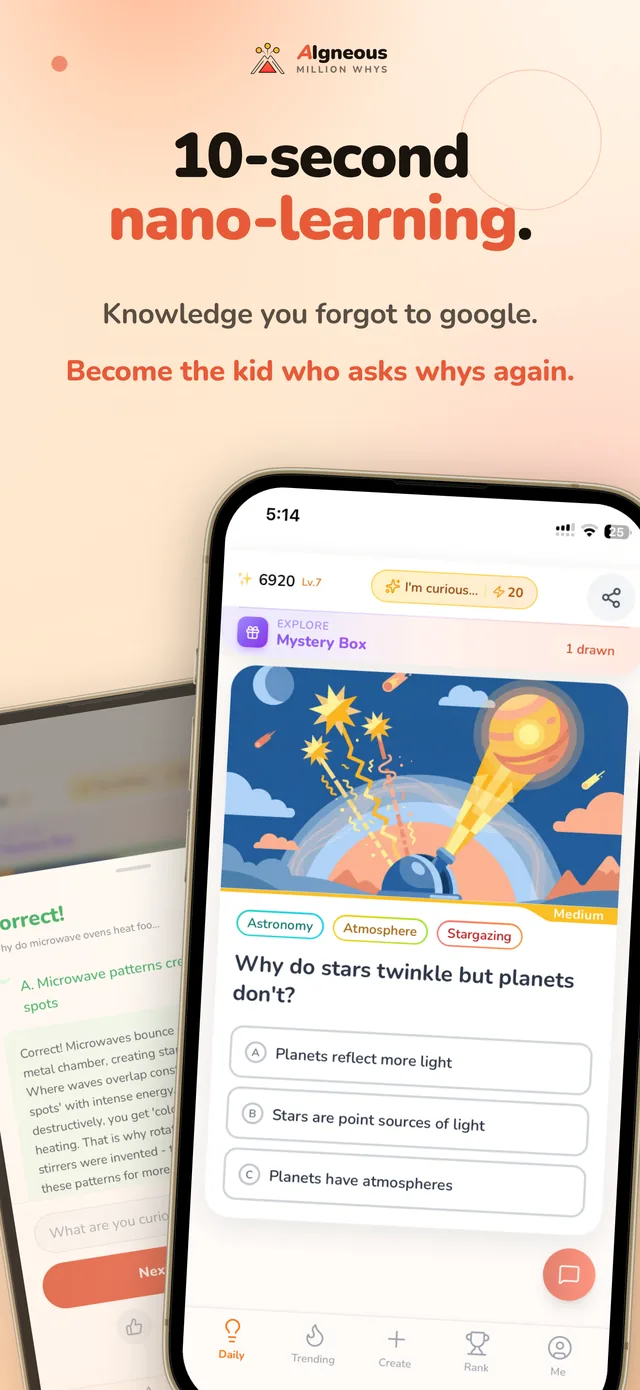
The obvious comparison is price and course count. The better comparison is the pressure model. Does the app make you feel behind? Does it punish absence? Does it require a neat goal before you can begin? Adult learning often fails because the doorway is too formal for the actual moment. You do not always have a 30-minute lesson in you. Sometimes you have one question.
That is why MillionWhys is not trying to be a cheaper Coursera, a broader Brilliant, or a flashcard competitor. It is built around the smallest satisfying loop: see a question, feel the information gap, make a guess, read the explanation, and leave with closure. The curriculum is not editor-shipped. It emerges from what people wonder about. That loop is easiest to judge by running it: the random trivia question generator deals one question at a time, holds the choices back until you ask for them, and ends every card with the mechanism.
A practical decision framework, mapped to the apps above:
- If you need a certificate for a job change → Coursera.
- If you want to rebuild math foundations → Khan Academy or Brilliant.
- If you learn by making things → Skillshare.
- If you only have dead minutes in a day → MillionWhys.
- If you must memorize a fixed term set → Quizlet.
Question: Why can answering one question at a time teach you something, even if you never sign up for a full course?
- Short facts are easier to remember than long lessons.
- Your guess makes you notice what you don't know.
- Points and streaks keep you coming back long enough to learn.
Of these apps, the question-first format is the one we would reach for in a dead-minute window, because the others assume a block of focus.
FAQ
What is the best app for learning skills overall?
There is no single overall winner. Coursera is best for career-linked courses, Brilliant for interactive STEM thinking, Khan Academy for free foundations, Skillshare for creative projects, Quizlet for recall, and MillionWhys for curiosity-first general knowledge.
Which app is best for adults with very little time?
If you have 10 seconds, MillionWhys fits the smallest window. If you have 10 to 30 focused minutes, Brilliant, Skillshare, and Khan Academy become more useful. If you can commit to weeks, Coursera makes more sense.
Are paid learning apps worth it?
They are worth it when the paid feature matches your real bottleneck: guided practice, credentials, offline access, premium exercises, or a class catalog you will use. They are not worth it when you are buying guilt instead of curiosity.
What is a good AI learning app?
Three fits come to mind. Quizlet uses AI to generate study materials and practice tests from your own sets. Brilliant's interactive lessons give real-time feedback as you work through a problem. MillionWhys generates fact-checked curiosity questions with AI, personalized to the topics you follow — and its core daily experience is free with no signup.
What apps help students learn?
Khan Academy for academic foundations, Quizlet for recall and test practice, and Brilliant for STEM problem solving. Together they cover understanding, remembering, and applying — the three things a student needs to do.
What are some good apps to help me become smarter?
Think in terms of daily reps rather than courses. Brilliant gives reasoning reps through short interactive problems; MillionWhys gives curiosity reps through one satisfying question with closure. A few minutes of either, most days, compounds faster than an occasional long lesson.
Is MillionWhys a skill-learning app?
Not in the credential sense. MillionWhys is for the deeper skill underneath many skills: noticing good questions, closing information gaps, and letting small pieces of understanding compound over time.
What does this have to do with AIgneous Million Whys?
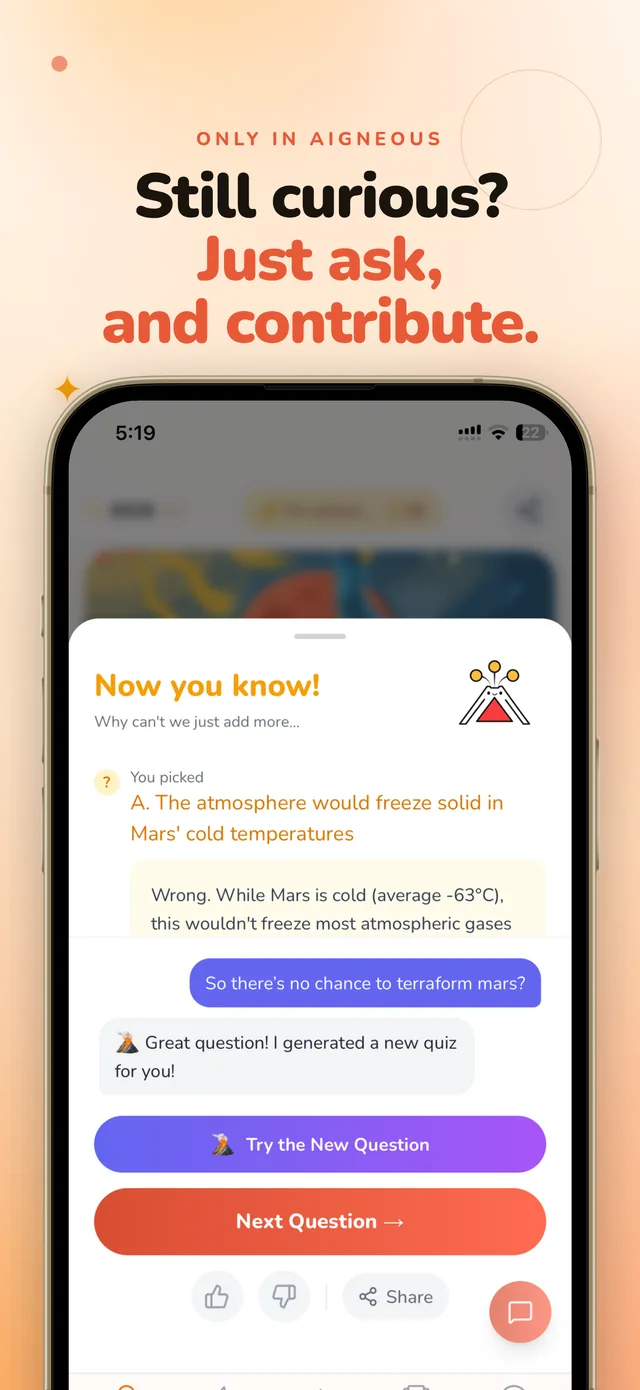
AIgneous Million Whys is our bet that learning begins as curiosity, not compliance. One 10-second question can close a real gap, and enough closed gaps can grow into a living curriculum shaped by what people wonder about.
Curious? Try one 👇
Why is the sky blue?
Jump into the daily quiz →Keep Exploring
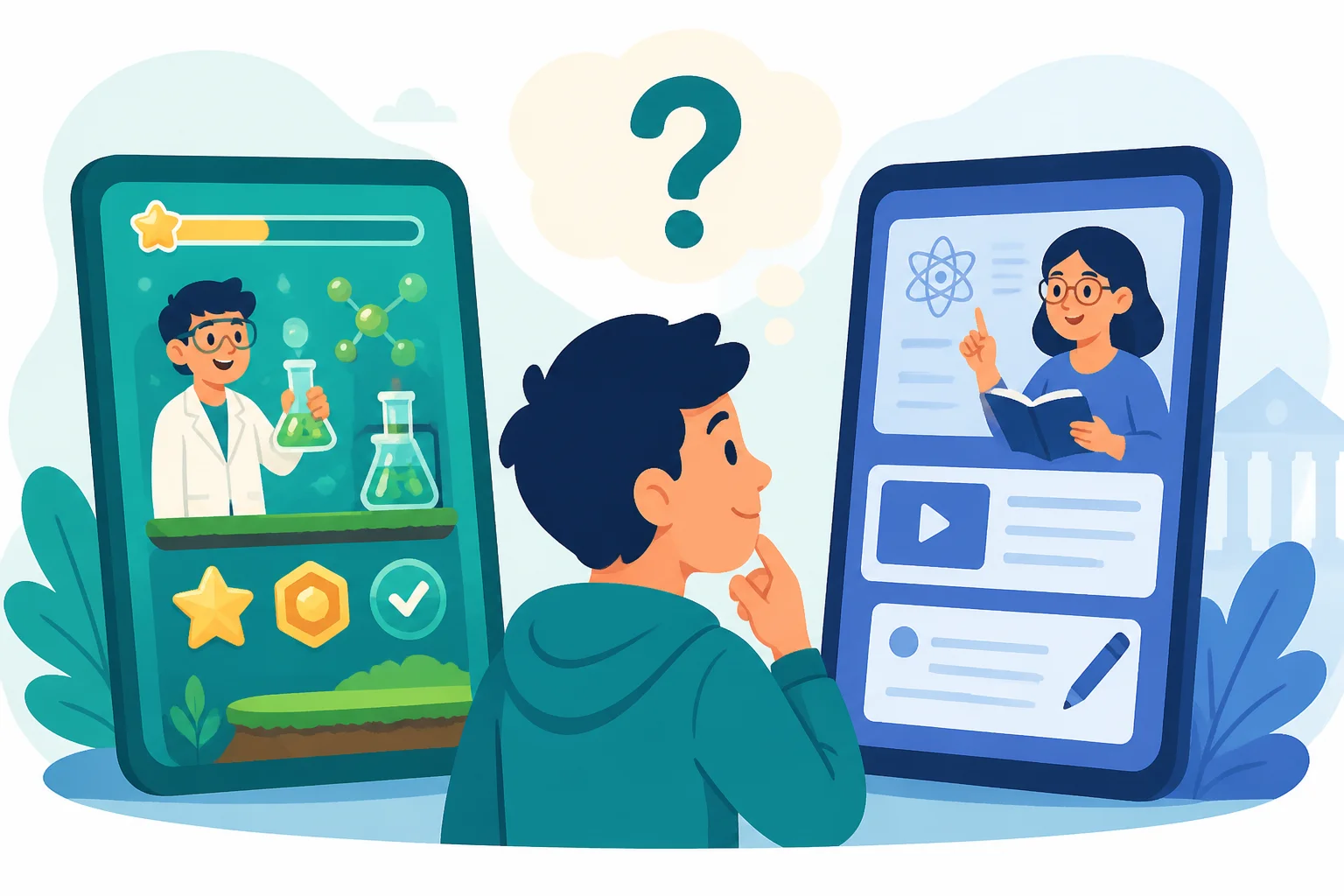
Why do daily learning apps feel so different to use, even when they cover the same subjects?
Technology
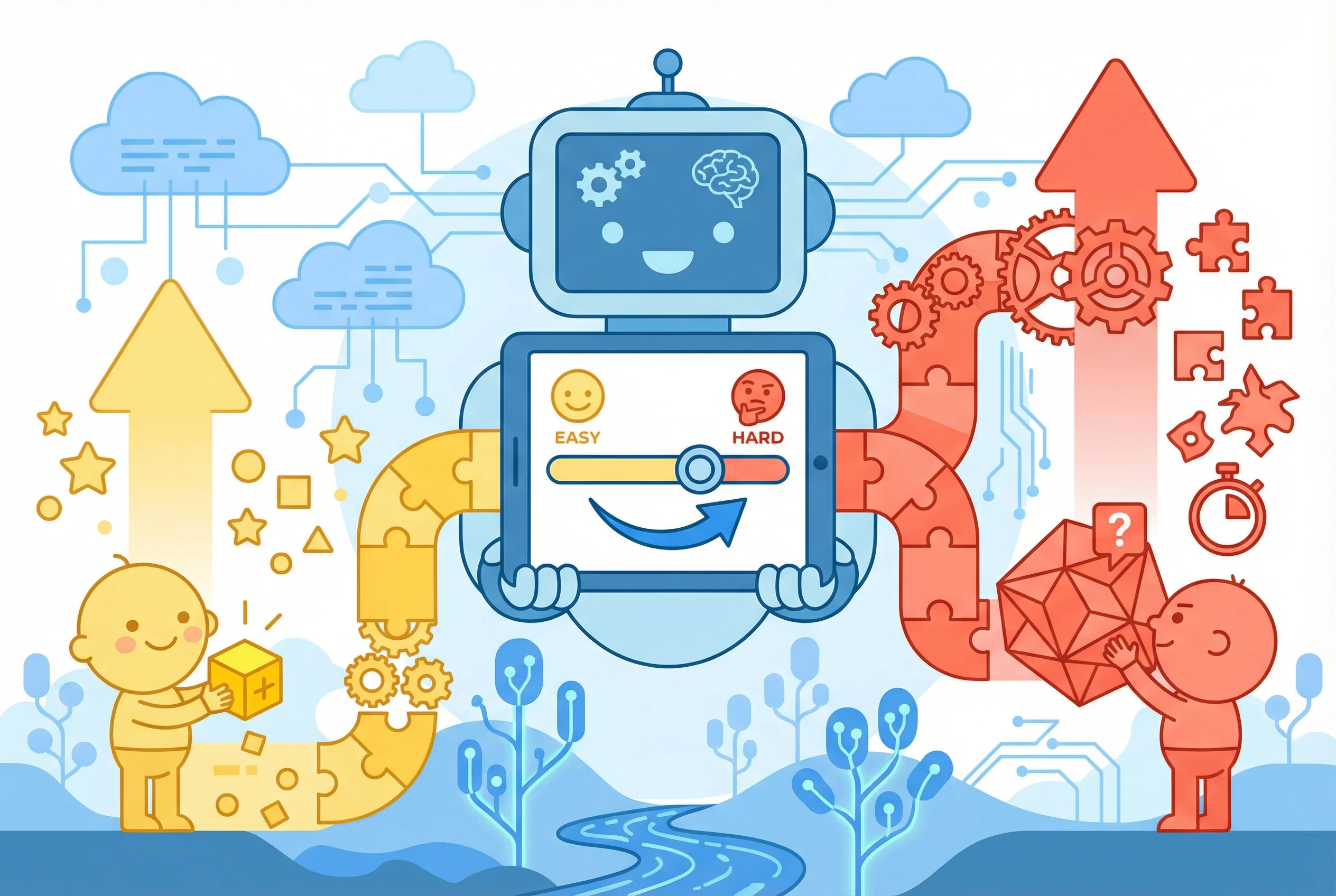
Why do learning apps make questions harder or easier as you use them?
Psychology & Behavior
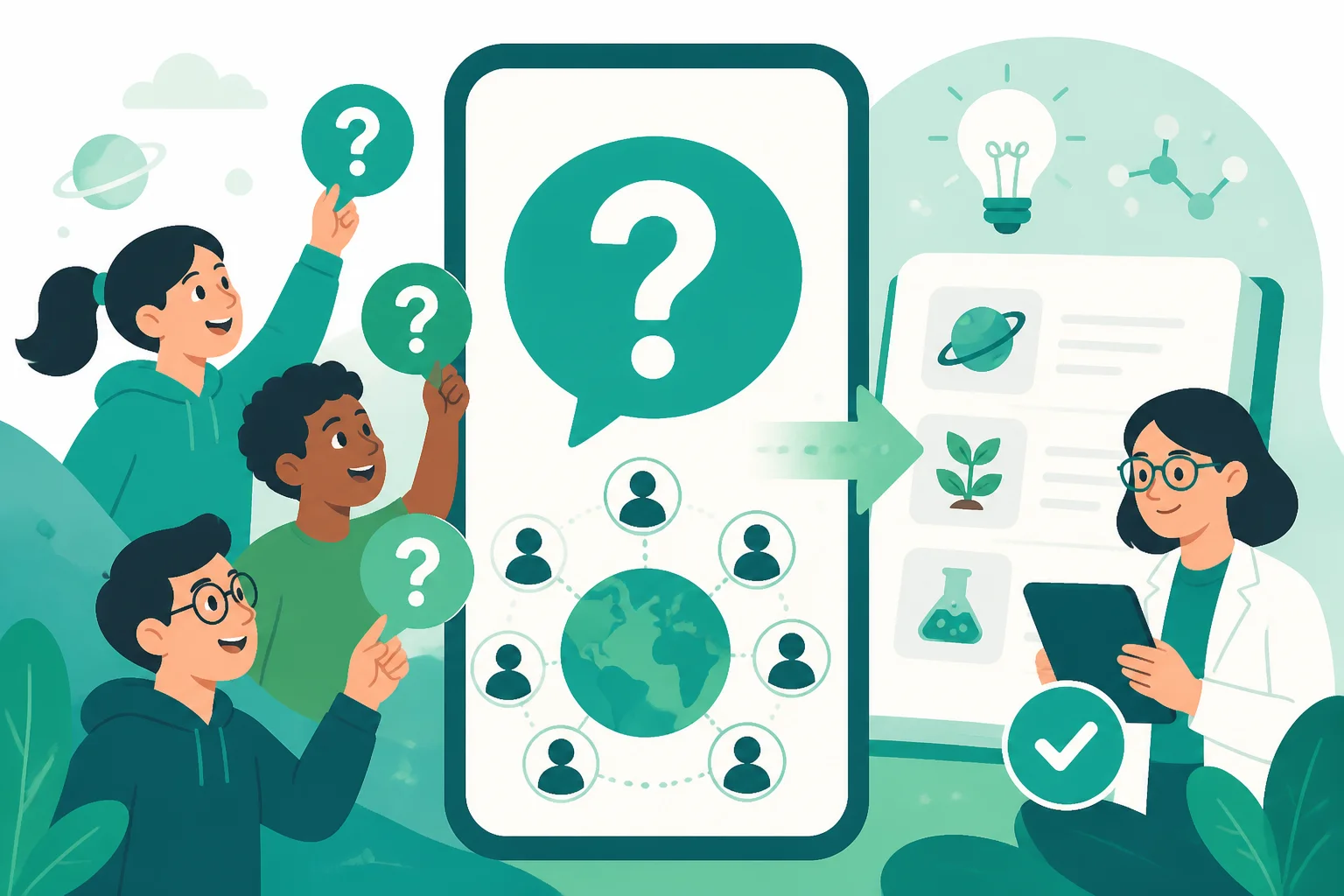
Why would a learning app invite users to submit their own "why?" questions, instead of only publishing the facts its editors pick?
Psychology & Behavior
Related Posts
Best Apps for Learning Skills: 2026 Guide
Looking for the best apps for learning skills? Compare Brilliant, Coursera, Khan, Skillshare, Quizlet, and MillionWhys for curious adult learners today.
Best Educational Apps for Adults 2026
Best educational apps for adults 2026: compare Coursera, Khan Academy, Brilliant, Skillshare, Duolingo, Blinkist, and MillionWhys by real adult fit today.
App to Learn New Things: Curiosity, Not Cramming
Looking for an app to learn new things? Compare Million Whys, Brilliant, Khan, Blinkist, and Duolingo by learning moment, not hype.