Why Do Cats Knead? Kitten Instincts and What It Means
On this page· 12
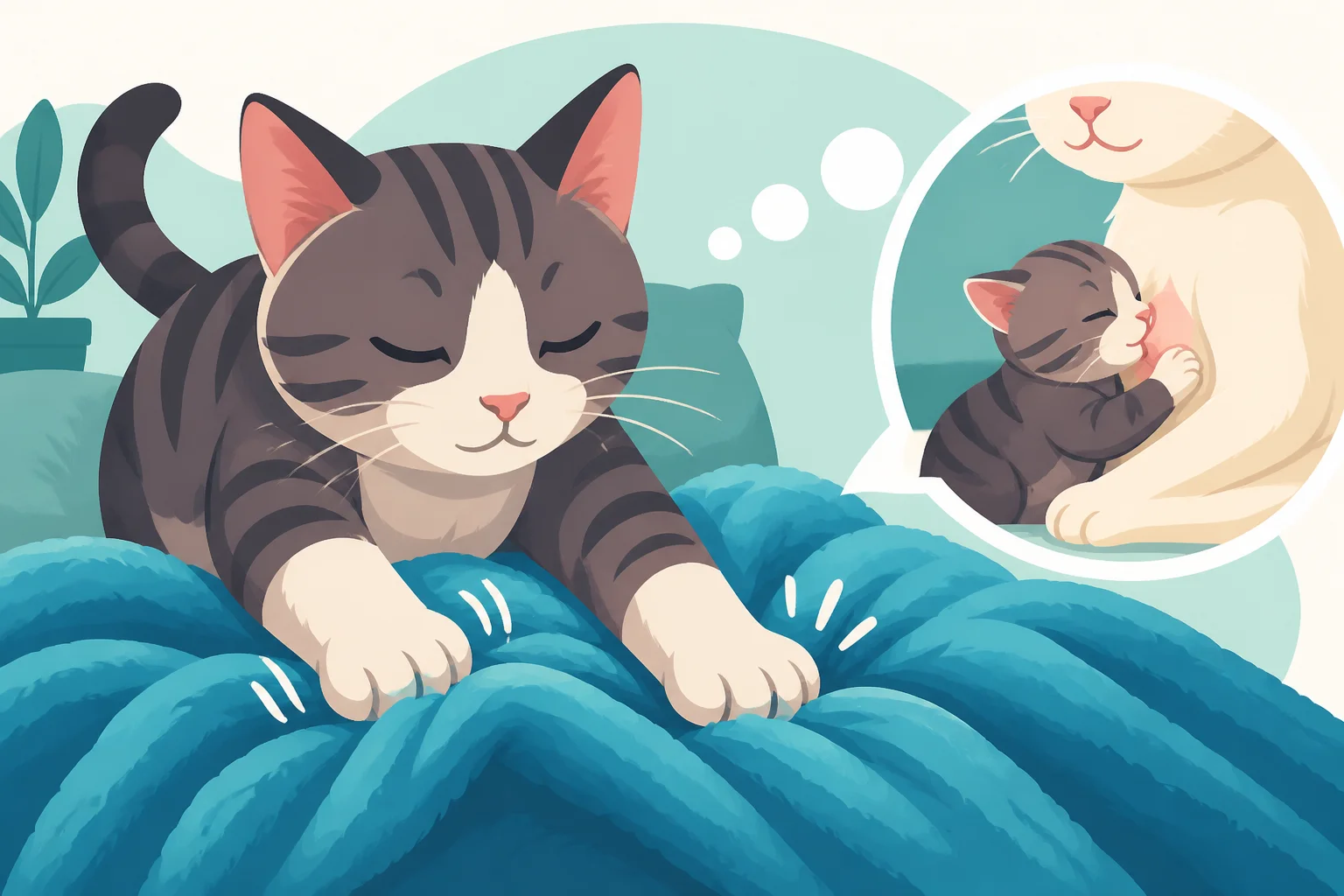
Cats knead because the motion starts as a nursing behavior kittens use to stimulate milk flow, and adult cats often keep it for comfort and closeness. If that's true, why do we force every kneading cat into one explanation, either affection or territory, as if those answers can't overlap? A cat pressing your lap, a blanket, or its bed may be reusing one early movement for several purposes at once. To understand why do cats knead, you need to read the surface, timing, and body language, not just the paws.
What Kneading Is and Where It Starts
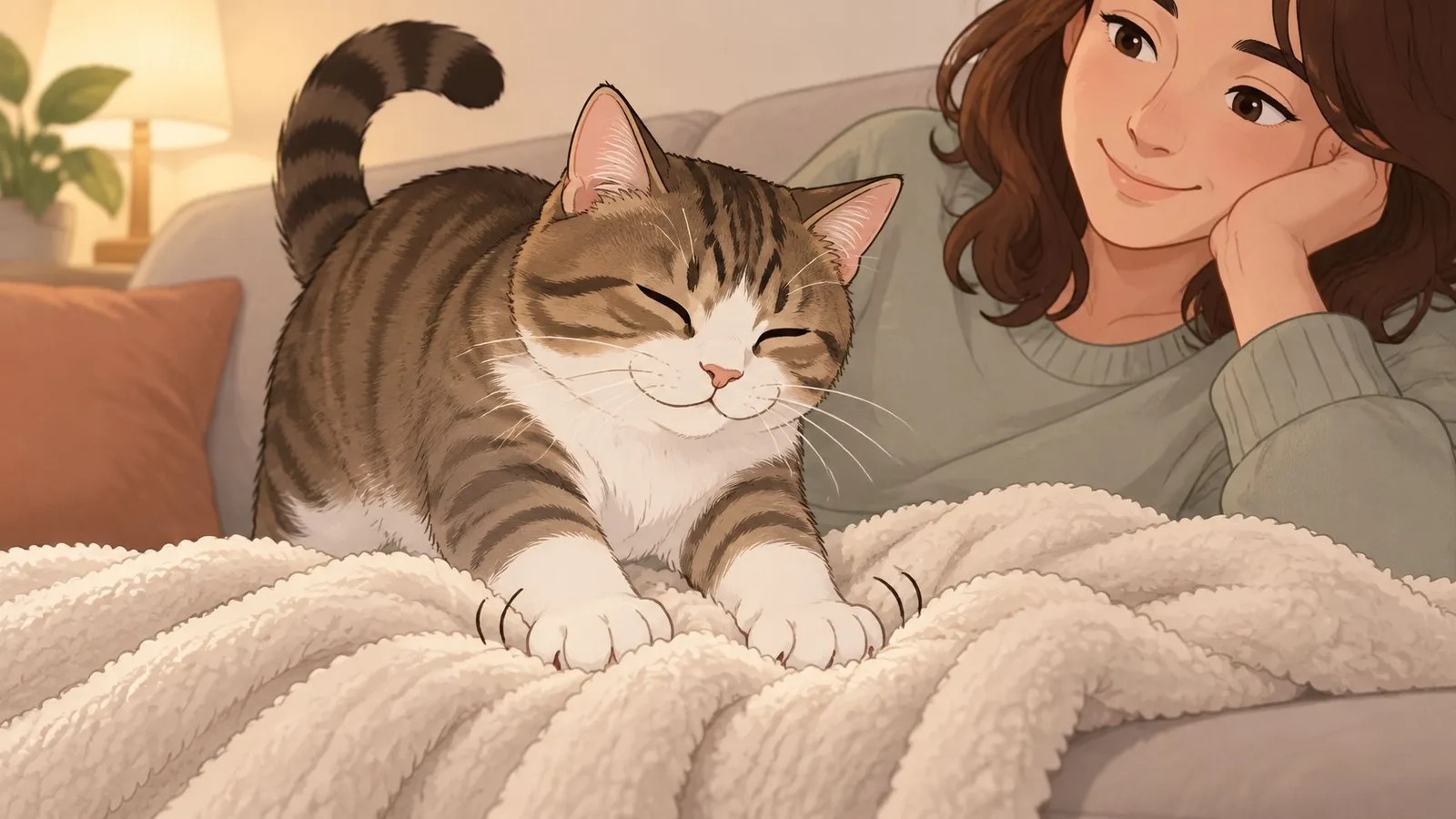
Kneading is the slow, rhythmic pressing of the left and right forepaws in turn into a soft surface. Owners often call it making biscuits because it resembles hands working dough. A cat may keep its claws mostly tucked in or extend them slightly with each push. Many cats purr, narrow their eyes, or settle their weight forward while they do it.
The movement isn't taught by people. It begins when a newborn kitten presses against its mother's body while feeding. Later, the same cat may direct it toward a cushion, a folded sweater, another animal, or you. The target changes, but the alternating motion stays recognizable.
Reading the Pattern Across Life
This overview shows where the paws land at different stages and what the action most likely does. Read it left to right. The setting changes across the rows, while the basic motor pattern remains the same.
| Stage | Where the paws press | What it does | What owners see |
|---|---|---|---|
| Newborn kitten suckling | Mother's mammary area or abdomen | Stimulates milk flow | Rhythmic alternating paws |
| Weaned kitten | Littermates, blankets, soft bedding | Reuses the nursing comfort pattern | Kneading during play and rest |
| Relaxed adult | Blanket, cushion, clothing | Comfort and self-soothing | Kneading with purring or slow blinking |
| Adult on a trusted person's lap | Owner's lap or body | Affiliative, social signalling | Kneading while seeking close contact |
The newborn row describes a feeding function with a clear physical result. The later rows are interpretations based on context because an adult cat isn't obtaining milk from a blanket. A kitten that kneads bedding after play may be winding down. An adult that climbs into your lap, kneads, and leans into your hand is adding social contact to that earlier pattern.
The paws alone can't tell you the motive. The place, moment, and rest of the cat's body give the motion its meaning.
Treat the table as a guide to likely meanings, not a set of certainties. The adult function is only partly understood, partly because carefully controlled research on feline behavior is limited. That limit matters. It stops us from turning a plausible explanation, such as comfort or affiliation, into a claim that every kneading cat feels exactly the same thing.
Curious? Try one 👇
Why is the sky blue?
Jump into the daily quiz →How Kneading Begins in Kittenhood
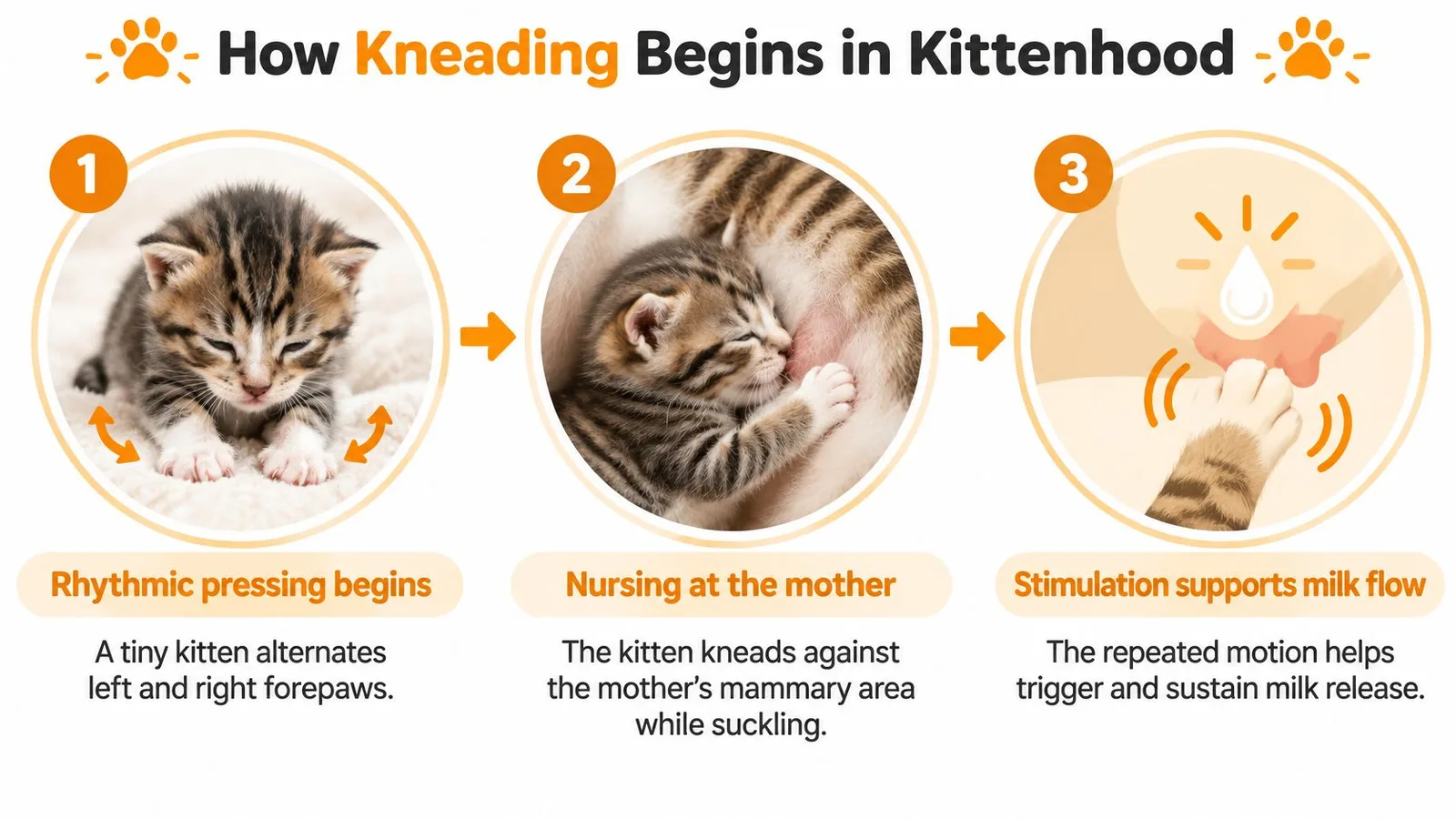
A newborn kitten begins life with its eyes closed, guided largely by warmth, touch, and smell. When it finds a nipple and starts suckling, its forepaws press rhythmically against the mother's mammary area. One paw pushes, then the other. The KUT explainer on why cats knead with their paws describes this as an instinctive nursing action that helps stimulate milk flow and is associated with oxytocin, a hormone involved in maternal bonding and milk release.
Nobody demonstrates the movement first. It appears during the earliest feeding stage, built into the sequence of finding the mother, suckling, feeling warmth, and falling asleep full. Because feeding and safety arrive together, the paw motion becomes linked with a settled state.
From Nursing to Weaning
As kittens grow, they spend more time exploring, playing, and eating away from the mother. Weaning ends their dependence on milk, but it doesn't necessarily erase the movements that accompanied feeding. A young kitten may knead a littermate while they pile together to sleep. Another may press a soft toy or blanket after a meal.
Think of it as a childhood song the body remembers without trying. The adult cat doesn't need the original situation for the familiar rhythm to return. Softness under the paws, warmth, and a quiet setting can be enough to bring it out.
This is why kneading is usually described as a retained juvenile behavior. That phrase means a behavior from early life continues into adulthood. It doesn't mean the adult expects milk from your jumper or mistakes you for its mother.
Owners sometimes lump every repeated animal action together, but different types of behaviors develop for different reasons. Kneading starts as an inherited feeding pattern first. Only later does the cat attach it to particular people, places, and resting routines.
Why Adult Cats Keep Kneading
Adult kneading doesn't need one winner among affection, scent, nesting, and leftover kitten behavior. Several motives can operate together. A cat may feel relaxed, enjoy close contact, and leave scent while pressing the same blanket it uses every evening.
The PetMD guide to why cats knead connects adult kneading with social affiliation, tactile or pheromone communication, relaxation, and preparing a resting surface. It also explains neoteny, the retention of juvenile traits in adulthood, without suggesting that the cat literally believes a person is its mother.
Four Motives That Can Overlap
- Comfort and self-soothing: The repeated pressure occurs as the cat relaxes, often with purring, loose muscles, and half-closed eyes.
- Affiliation: A cat chooses a trusted person's lap or side and stays close, sometimes turning toward touch or settling after kneading.
- Nest preparation: Before sleep, the cat presses and rearranges bedding, circles, and then lies down in the worked area.
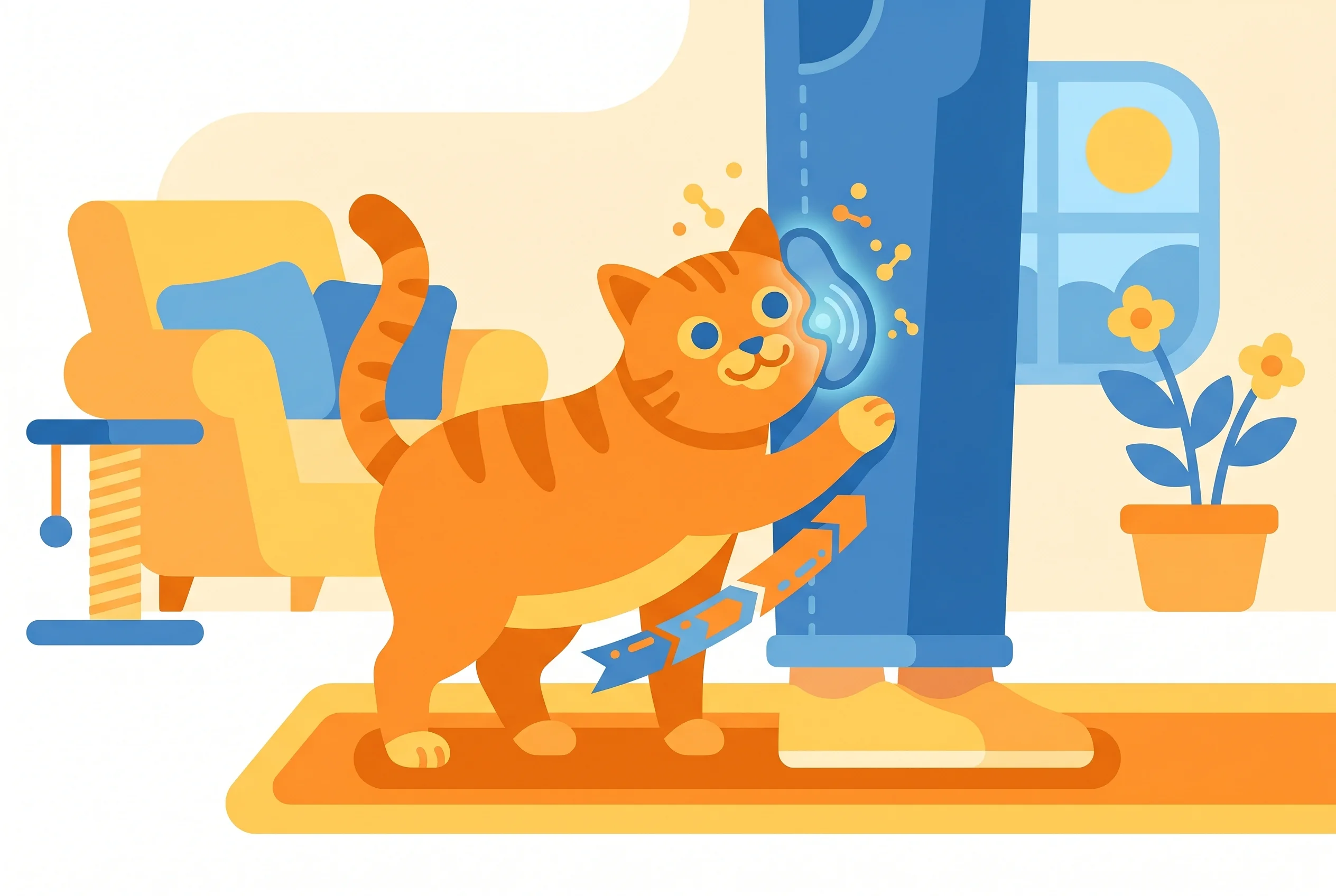
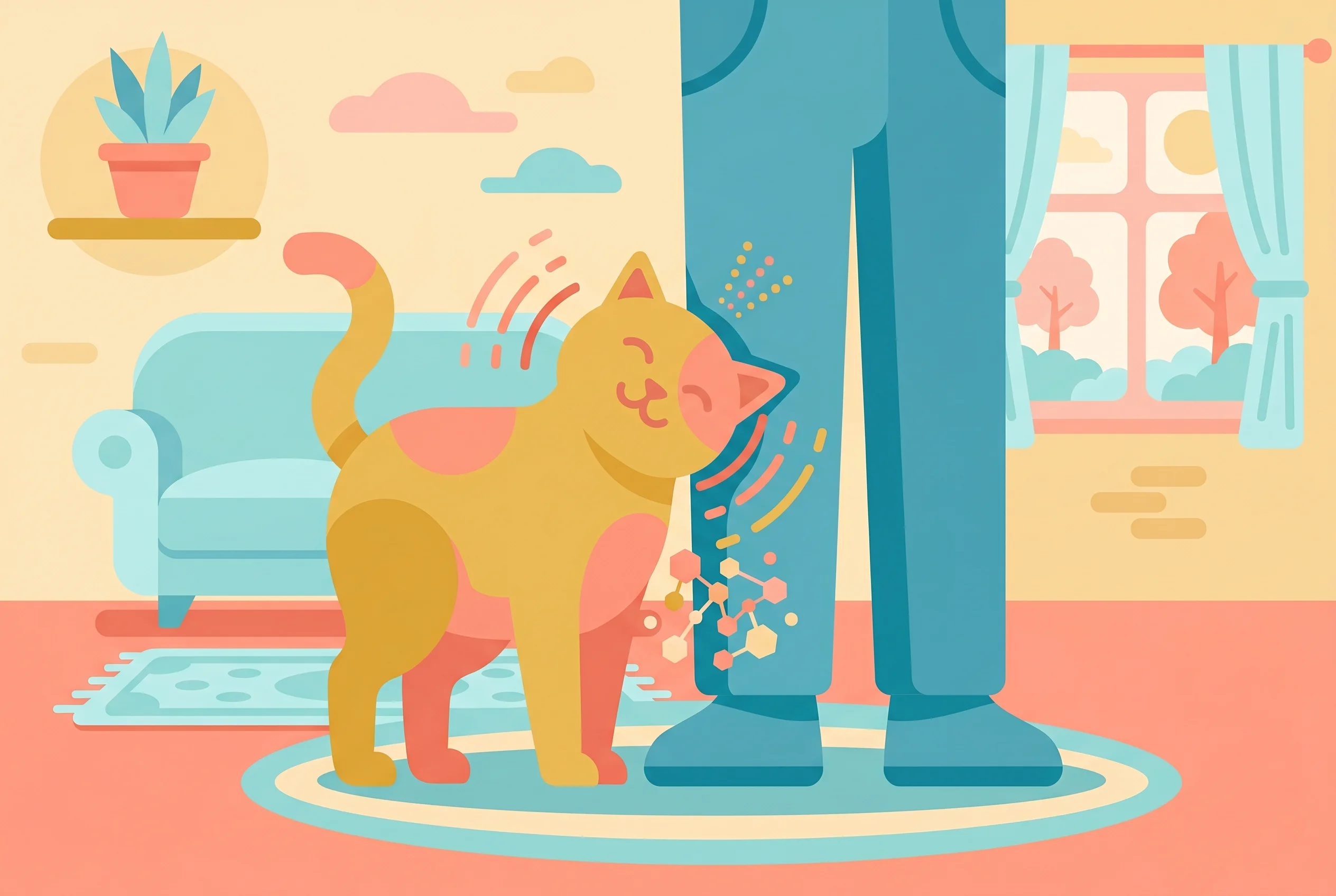
- Scent information: Glands in the paws may deposit chemical information onto the surface during contact.
That last point causes the most confusion. Leaving scent isn't the same as claiming a person as property. Cats use scent to make places smell familiar and to communicate information other cats can detect. Calling every lap knead possessive turns a subtle chemical signal into a human story about ownership.
Context helps you weigh the possibilities. Kneading bedding immediately before a nap points more toward comfort or nest preparation. Kneading your thigh while looking at you, purring, and accepting strokes points more toward affiliation. Both cats may also leave scent because their paws are in contact with the surface.
Practical rule: Name what you can observe before you name a motive. Note the surface, the time, the ears, eyes, tail, posture, and what the cat does next.
Even then, stay modest about certainty. Motivation can't be assigned confidently from paw movement alone. A tense cat with a flicking tail and fixed stare isn't sending the same overall signal as a loose-bodied cat that kneads, sighs, and curls up to sleep.
Reading Kneading in Everyday Moments
Everyday interpretation works best when you compare complete scenes. The table below pairs common situations with the most likely reading and a sensible response. Use it as a starting point, then check whether the pattern matches your cat's normal routine.
| Scenario | Most likely reading | Sensible owner response |
|---|---|---|
| Kneading your lap while purring and blinking slowly | Affiliative, relaxed contact | Stay still and enjoy it |
| Pressing a blanket before lying down | Comfort or nest preparation | Offer a thick washable blanket |
| Kneading with drooling or blanket sucking | Retained nursing comfort sequence | Allow it and check for fabric ingestion |
| Kneading with pacing, yowling or appetite change | Possible stress or medical issue | Book a veterinary check |
| Kneading a bed after moving to a new home | Settling into an unfamiliar space | Keep routines steady and give time |
Start With the Two Clearest Scenes
A cat on your lap with slow blinks, forward or neutral ears, and a relaxed tail is choosing contact. Sit still if you're comfortable, and let the cat decide when to stop. Reaching suddenly for the paws can turn a calm interaction into a startling one.
A cat pressing its blanket before lying down is focused on the resting place rather than on you. Give it a washable layer that can take claws and repeated washing. If the cat circles, kneads, and then sleeps in that spot, the nest preparation reading fits well.
Watch the Accompanying Behavior
Drooling or sucking a blanket while kneading can echo the full nursing comfort sequence. In a relaxed cat that stops easily and doesn't swallow material, it's usually benign. Check the fabric for holes, loose threads, or missing pieces, because swallowing changes the problem from comfort to safety.
Pacing, yowling, poor appetite, hiding, or a tense body tells a different story. Kneading in that cluster shouldn't be interpreted on its own. The change around it matters more than the paw movement.
After a house move, a cat may knead bedding repeatedly while learning new sounds and smells. Keep feeding times, resting places, and quiet time predictable. If you're also addressing digestive upset during a stressful transition, your vet may discuss whether cat probiotics fit the cat's overall care plan. That's a health question, not a way to stop normal kneading.
This scene-by-scene approach resembles reading any animal signal, including why dogs wag their tails. One movement can carry different meanings depending on posture and setting. Track your cat's pattern for a week, noting when it happens and what occurs before and after. That record beats guessing from a single episode.
How to Live With Kneading Comfortably
Let harmless kneading continue. The VCA Hospitals guidance on cat kneading advises owners to allow the behavior unless it causes injury or ingestion of fabric, keep claws trimmed, and place a thick washable blanket between the claws and skin. It also warns against abruptly punishing a cat because punishment can disrupt a behavior that normally occurs during relaxation and social bonding.
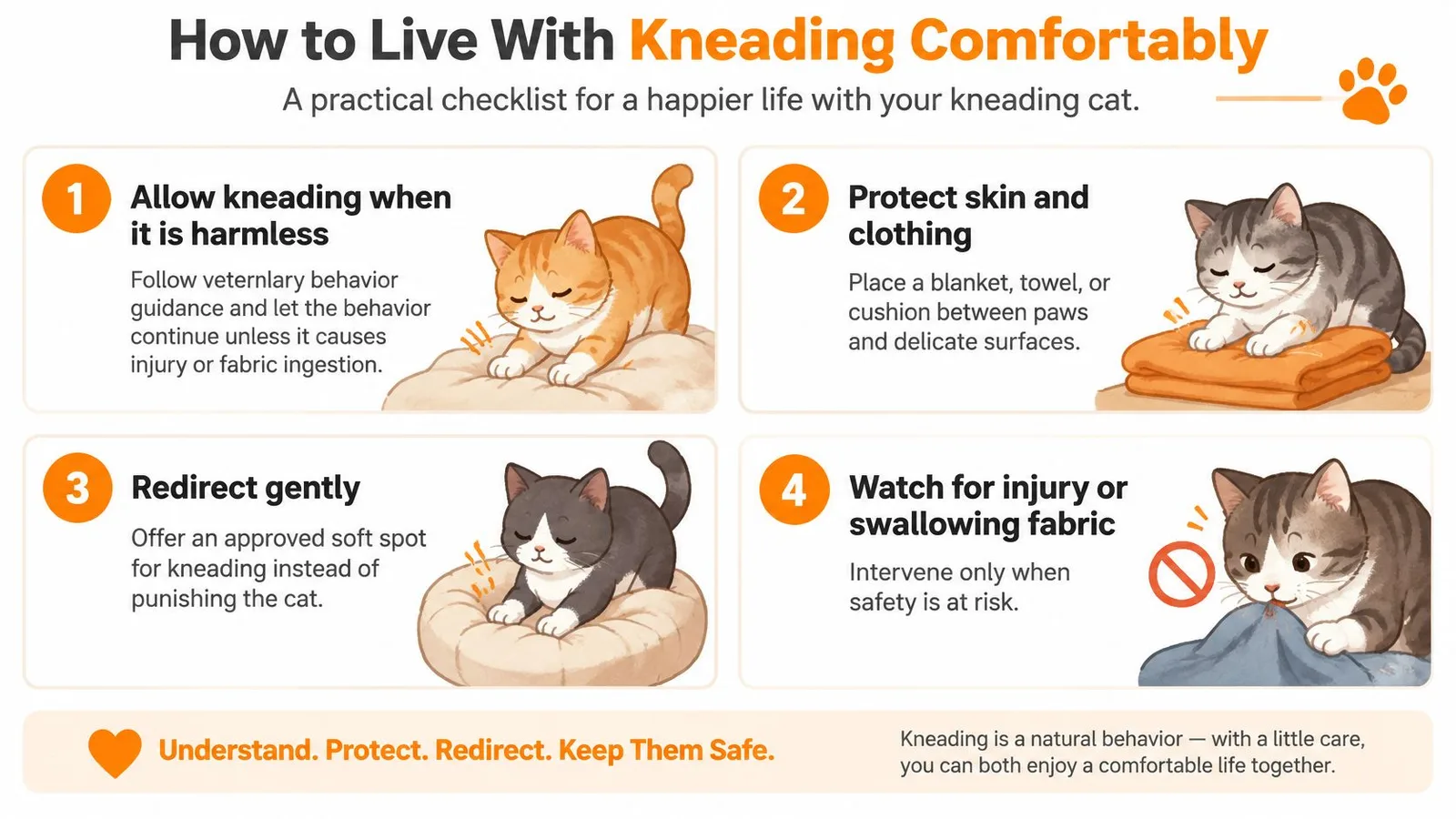
Start with protection rather than correction. Lay a folded fleece or cotton blanket across your lap before your cat settles. Trim only the sharp claw tips, a little at a time, and stop if your cat struggles so claw care doesn't become a battle.
| Owner problem | Practical fix | Trade-off |
|---|---|---|
| Claws catching clothing or skin | Trim claws regularly and place a thick washable blanket between claws and skin | Needs regular handling and may meet resistance at first |
| Kneading ruins bedding | Keep a thick washable blanket on the spot | The cat may move to another surface |
| Fabric swallowed during kneading | Remove loose threads and wool items | Requires checking bedding regularly |
| Kneading wakes you at night | Offer a dedicated kneading blanket near your sleeping spot | Works best when placed where the cat already rests |
| Pressing too hard on a sensitive spot | Gently move the cat or redirect with a toy | Small interruption; avoid punishment |
A dedicated blanket works because you're offering a better version of what the cat already wants, a soft and familiar surface. Put it beside you on the sofa or at the foot of the bed, not across the room. If your cat ignores a new bed entirely, understanding why cats reject their beds can help you adjust placement, size, and texture instead of buying replacements at random.
When pressure hurts, slide the blanket and cat slightly to one side or stand up calmly. A wand toy can redirect an alert cat, but don't turn every sleepy knead into play. Most cases need simple management, not training. A relaxed cat kneading on you is usually telling you it feels comfortable there.
When to Allow Kneading and When to Call a Vet
Allow kneading when your cat is relaxed, eats normally, uses the litter box as usual, and stops without distress. Short sessions on a favorite blanket or lap, followed by rest or calm contact, fit ordinary comfort behavior. You don't need to interrupt a behavior just because it looks kittenish.
Call a vet when the pattern changes sharply or arrives with other problems. Duration alone isn't the only clue. Look at intensity, distress, damage, and what else has changed in the cat's health or routine.
Warning Signs Worth Checking
- Sudden, intense increase: Kneading becomes much more frequent or hard for the cat to stop.
- Compulsive sucking: Wool sucking, blanket sucking, or chewing continues despite redirection.
- Visible anxiety: The cat paces, hides, vocalizes, or seems unable to settle.
- Appetite or weight change: Eating drops or rises alongside the new behavior.
- Other abnormal behavior: Litter habits, sleep, grooming, or social behavior change at the same time.
Compare two cats. One kneads your lap each evening, purrs for a few minutes, and falls asleep. The other suddenly kneads for long periods, sucks fabric until the blanket is wet, paces afterward, and leaves food unfinished. The first pattern needs a lap blanket. The second needs a veterinary assessment.
Keep the behavior when the cat is relaxed and safe. Manage it when claws or fabric create risk. Seek veterinary advice when the change is sudden or paired with symptoms.
For one week, write down when and where your cat kneads, what happened just before, and what the cat did afterward. Add notes on appetite, sleep, play, and any fabric chewing. Bring that simple record to the appointment if the pattern worries you. It gives the vet concrete information instead of a vague report that the kneading seems different.
Don't punish a cat for showing a warning sign. If kneading has become frantic or compulsive, scolding adds stress without identifying pain, anxiety, nausea, or another underlying cause. Calm observation protects both the relationship and the cat.
Turn that moment of wondering why your cat is making biscuits into a daily habit of learning with short, explained why-questions across animals, science, history, and everyday life. Visit Million Whys to try a 10-second question, see why every answer option is right or wrong, and follow your next curiosity wherever it leads.
Curious? Try one 👇