


Who Invented Homework? Not the Man the Internet Keeps Citing
On this page· 17
Google "who invented homework" and the internet hands you a name: Roberto Nevilis, a teacher in Venice, Italy, who supposedly invented homework in 1905 — or in 1095, depending on which site you land on. The two dates are 810 years apart. That alone should make you suspicious. Here's the bigger problem: there is no evidence Roberto Nevilis ever existed.
TL;DR
The "Roberto Nevilis invented homework" story is an internet myth with no historical record behind it. Homework wasn't invented by anyone — it was formalized by Prussia's compulsory school system in the early 1800s, imported to America by Horace Mann, banned for young children by California in 1901, and revived as a Cold War weapon after Sputnik. The research on whether it works is far messier than either side admits.
The short answer
No single person invented homework. Assigned practice at home is as old as formal teaching itself, but homework as a standard feature of mass schooling traces to Prussia's compulsory education system in the early 19th century, which American reformers like Horace Mann deliberately copied. The Nevilis story is a fabrication that spread through homework-help websites in the early 2000s — and it now outranks the real history on Google.
The inventor who never existed
The Nevilis claim fails every basic test. Fact-checks that have gone looking find no birth record, no Italian educational archive entry, no mention in any academic history of education — nothing before internet forum posts from the early 2000s. The story can't even keep its own details straight: some versions say 1905, others say 1095, and both circulate side by side.
The myth survives for a mechanically interesting reason: the sites most motivated to answer "who invented homework" are homework-help and essay-writing services chasing search traffic from procrastinating students. They copy each other, each copy adds apparent legitimacy, and a fake Venetian teacher becomes "common knowledge." It is a textbook citogenesis loop — a claim that exists only because other pages repeat it.
Question 1 of 5
Why did the unsupported story that an Italian teacher named Nevilis invented homework come to seem credible online?
What actually happened: homework is older than the word

Students practicing at home shows up in anecdotes from antiquity — popular histories point to Pliny the Younger encouraging students of oratory to rehearse at home in 1st-century Rome. But that was an individual teacher's habit, not a system.
The system came from Prussia. In the early 1800s, Prussia built the world's first state-run compulsory school network — the Volksschule — with trained teachers, standardized grades, and required attendance. Assigned at-home study was part of the package: the state now claimed hours of a child's day outside the school building. That was genuinely new, and it's the actual origin of homework as a default institution.

American reformers went to look. Horace Mann — Massachusetts' first secretary of education and the loudest advocate of the "common school" — toured Prussian schools in 1843 and pushed the model hard back home. Massachusetts passed the first US compulsory attendance law in 1852, and the Prussian package, homework included, spread across American public schooling in the second half of the 19th century.
Question 2 of 5
Why did homework become a standard part of schooling in the 19th century rather than remain an occasional teacher's assignment?
1901: the year California banned homework

Here's the part almost nobody knows: within two generations, America tried to abolish it. Historians Brian Gill and Steven Schlossman documented the campaign in "A Sin Against Childhood" (American Journal of Education, 1996). Starting around 1897, progressive educators and physicians argued that home study damaged children's health and stole time from play, fresh air, and family. The Ladies' Home Journal — then one of the biggest magazines in the country — ran a full crusade against homework under editor Edward Bok, branding it "a national crime at the feet of American parents."
The campaign won real victories. In 1901, California banned homework outright for children under 15 and capped it for older students — a state law that stayed on the books until 1917. School districts around the country followed with their own restrictions. Homework, in other words, is not a timeless constant of education: a US state outlawed it for most students for a decade and a half, on health grounds.
Question 3 of 5
Why did California's 1901 law ban homework for children under 15 and limit it for older students until 1917?
Sputnik flipped the switch

Anti-homework sentiment persisted into the 1940s. What killed it wasn't pedagogy — it was geopolitics. On October 4, 1957, the Soviet Union launched Sputnik 1, and American education became a national-security problem overnight. Congress passed the National Defense Education Act within a year, and homework was recast as an instrument of national competitiveness. Gill and Schlossman trace the reversal in "A Nation at Rest" (2003): the same practice condemned as child abuse in 1900 became patriotic duty by 1958.
The pattern repeated in 1983, when the A Nation at Risk report warned of "a rising tide of mediocrity" in US schools and recommended — among other things — more homework. Each swing of the pendulum tracked a national anxiety, not new evidence about learning.
Question 4 of 5
Why did Sputnik 1 help turn American homework from a child-health concern into a tool of national competition?
Does it actually work? The research is messier than both sides claim
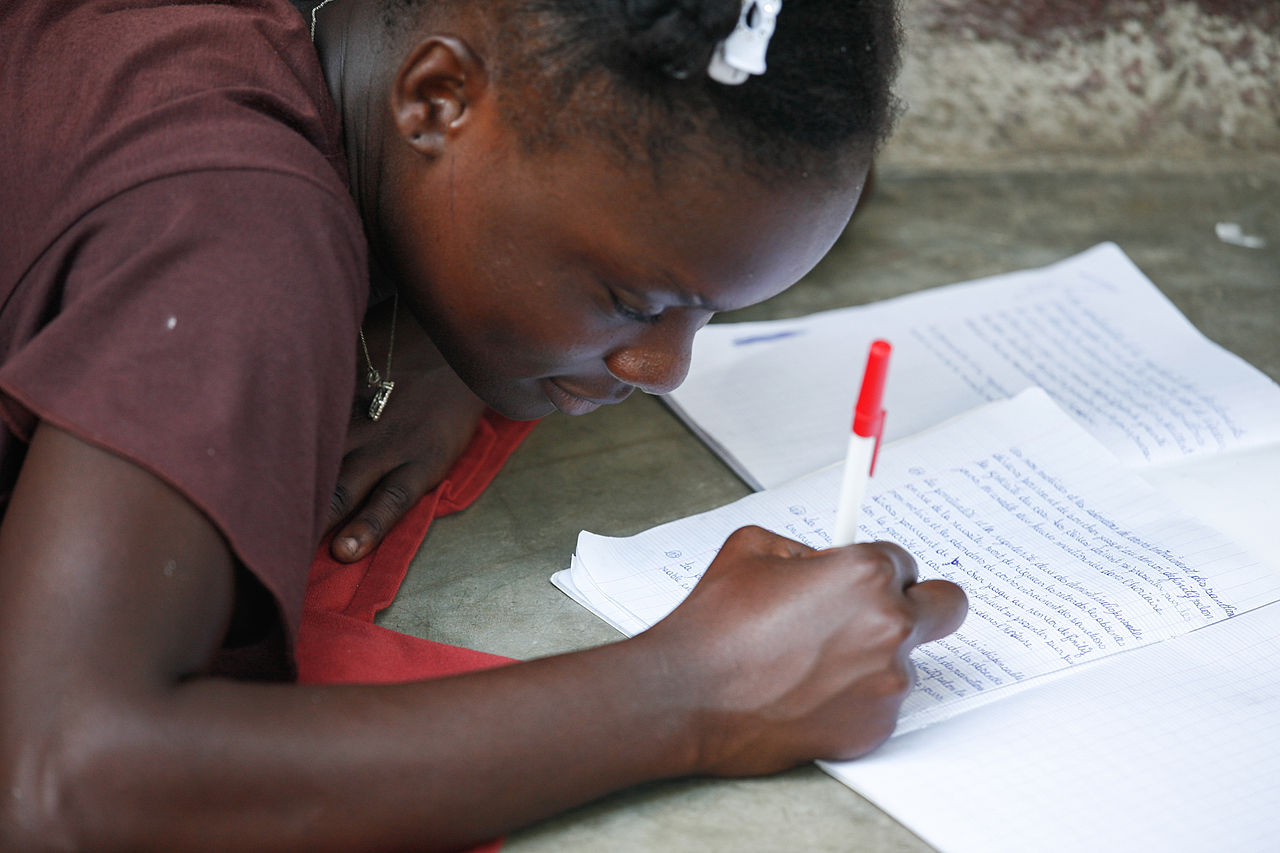
The most comprehensive evidence review remains the 2006 synthesis by Harris Cooper's team at Duke, covering research from 1987 to 2003. Its findings cut both ways. For students in grades 7–12, homework showed a consistent positive association with achievement. For elementary students, the relationship was weak to nonexistent. Cooper's practical takeaway is the "10-minute rule": about 10 minutes per night per grade level — 10 minutes for first grade, scaling to roughly two hours by senior year — beyond which returns flatten or reverse.
Globally, the load varies enormously. The OECD's PISA program measured homework time across 38 systems in 2014: 15-year-olds averaged about 4.9 hours a week, but Shanghai students reported 13.8 hours while students in Finland and South Korea — both top performers — reported under three. The same OECD report found homework time correlates with family wealth within countries, which is why it titled the analysis "Does homework perpetuate inequities in education?"
Question 5 of 5
Why did the 2006 homework synthesis argue against simply assigning more homework to every student, from elementary school through grade 12?
What people usually miss
The reason "who invented homework" has a fake answer is that the true answer has the wrong shape. Brains want an inventor story — one person, one date, one decision. What history actually offers is a policy pendulum: homework expands when a society is anxious about falling behind (Prussia building a state, post-Sputnik America, post-1983 America) and contracts when it's anxious about childhood itself (the 1900s health crusade, recurring modern bans in some districts). Once you see that, today's homework debates stop looking like new science and start looking like the same century-old argument wearing new data.
It also explains the myth's stickiness: a fabricated Venetian schoolmaster is more retellable than "a 19th-century Prussian administrative innovation." The fix is the habit this article just walked through — when every source repeats the same suspiciously tidy fact, check whether any of them cites something that isn't another blog.
Watch: the history in motion
- When Homework Was Banned — HISTORY — the official HISTORY channel on the Ladies' Home Journal crusade and early-1900s bans.
- Who Invented Homework? — Colossal Questions — a quick kid-friendly walkthrough of the real timeline.
FAQ
Did Roberto Nevilis invent homework?
No. There is no historical record of Roberto Nevilis — no archive entry, no academic citation, nothing before early-2000s internet posts. The claim's own dates (1095 vs. 1905) contradict each other. He appears to be a fabrication amplified by homework-help websites.
Was homework really illegal anywhere?
Yes. California banned homework for children under 15 in 1901 and limited it for older students; the law lasted until 1917. Several US school districts enacted similar restrictions during the era's anti-homework movement.
Who brought homework to American schools?
No single person, but Horace Mann is the key importer: after touring Prussia's compulsory school system in 1843, he championed its model — trained teachers, graded classrooms, at-home study — for American common schools.
Does homework improve grades?
It depends on age. The Duke synthesis of 1987–2003 research found a consistent positive association for grades 7–12, but little to none for elementary students. More is not better: benefits flatten past roughly the "10 minutes per grade level" line.
Which country assigns the most homework?
Among systems in the OECD's 2014 PISA analysis, Shanghai reported the most — 13.8 hours a week for 15-year-olds, against a ~4.9-hour average. Finland and South Korea assigned under three hours while still ranking near the top of achievement tables.
What does this have to do with AIgneous Million Whys?
Million Whys is built on the same move this article makes: take a question everyone thinks has an obvious answer, and show the mechanism underneath. If you enjoyed pulling one thread of received wisdom, the daily question gives you a new one every day — with the why, not just the answer.
Sources
- Gill & Schlossman, "A Sin Against Childhood": Progressive Education and the Crusade to Abolish Homework, 1897–1941 — American Journal of Education 105(1), 1996
- Gill & Schlossman, "A Nation at Rest: The American Way of Homework" — Educational Evaluation and Policy Analysis 25(3), 2003
- Cooper, Robinson & Patall, "Does Homework Improve Academic Achievement? A Synthesis of Research, 1987–2003" — Review of Educational Research 76(1), 2006
- OECD, "Does Homework Perpetuate Inequities in Education?" — PISA in Focus No. 46, 2014
- Loveless, "Homework in America" — Brookings Institution, 2014
- Through Education, "Debunking Myths: No, 'Roberto Nevilis' Didn't Invent Homework"
Keep Exploring
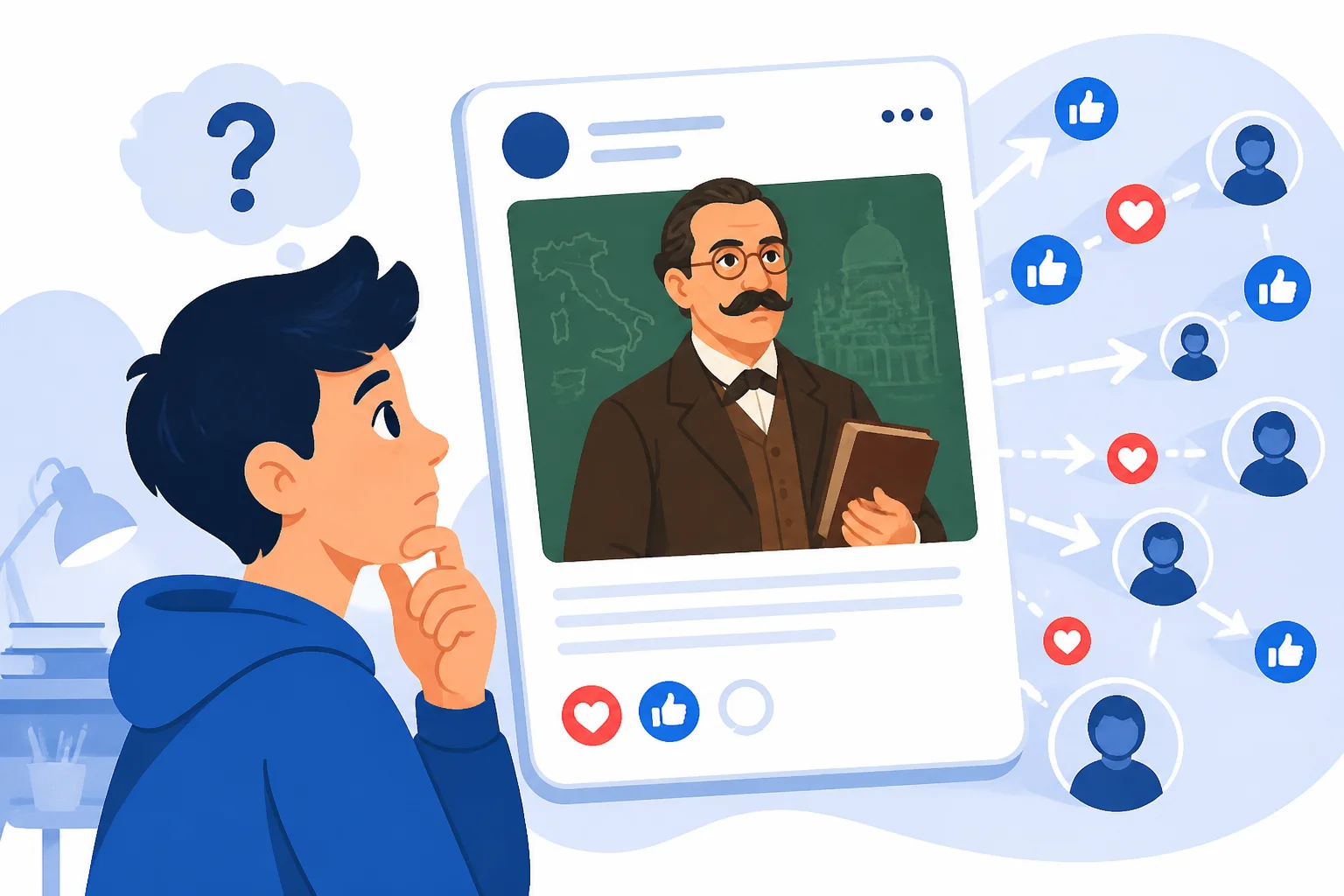
Why did the unsupported story that an Italian teacher named Nevilis invented homework come to seem credible online?
Media & Society
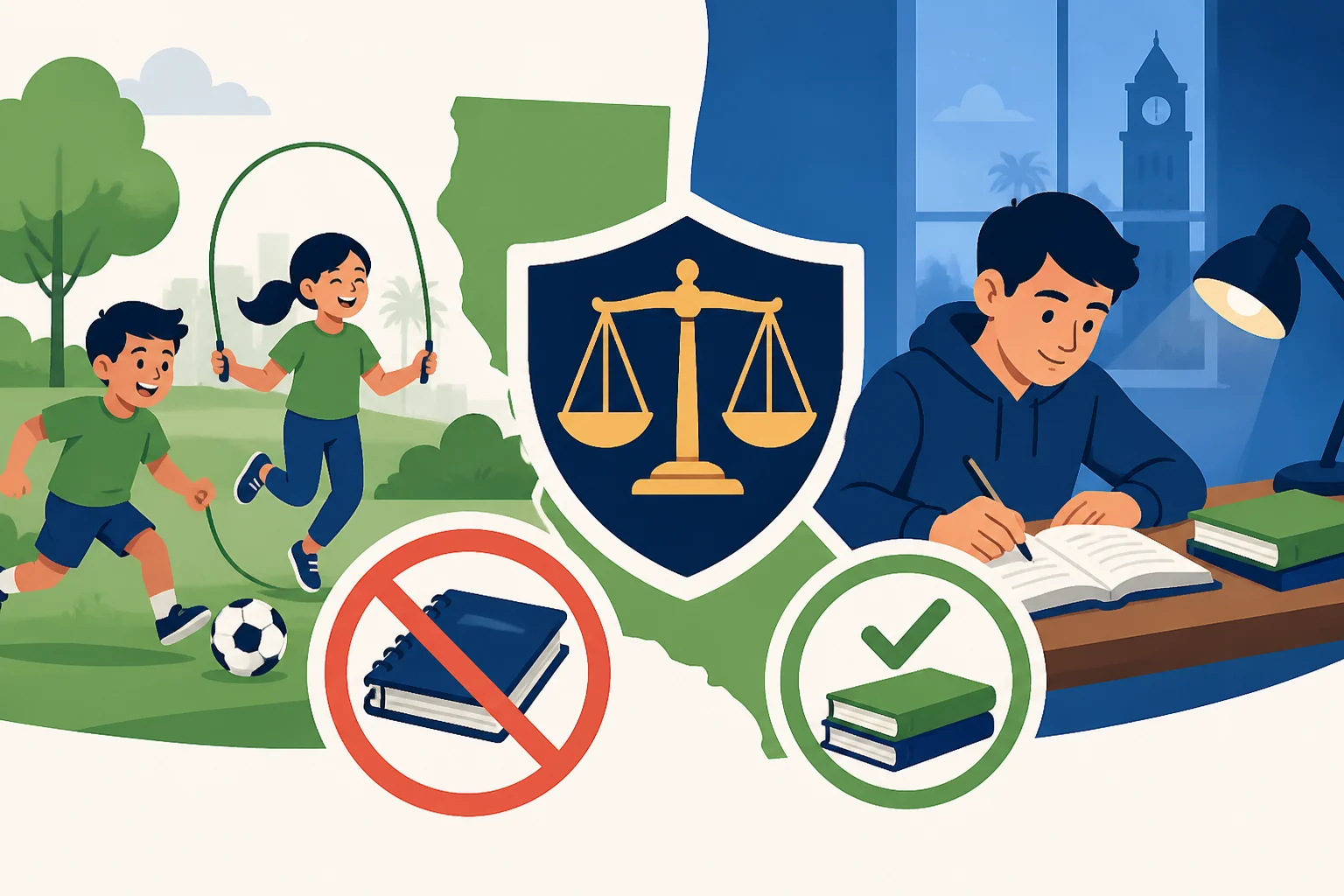
Why did California's 1901 law ban homework for children under 15 and limit it for older students until 1917?
Politics & Law

Why did homework become a standard part of schooling in the 19th century rather than remain an occasional teacher's assignment?
History & Culture